Skip to content

Act I · c. 315,000 years ago to the contact era

Power held down:
foragers and the first politics

315 ka – 2020 on the whole story's log time scale

The question this page answers

Were our ancestors egalitarian, and if so, how did they keep it that way?

Short answer Recorded mobile foragers are strikingly egalitarian, and they keep it that way on purpose, by mocking, resisting and leaving would-be bosses. Whether that was the rule for 300,000 years is disputed: rich Ice Age burials, seasonal hierarchies and ranked, storing foragers such as the Northwest Coast peoples and the Calusa show how much foragers varied. 1,2,3,4 Debated Ethnography Excavation Ancient DNA

  • Egalitarian by design. Equality among foragers is not an absence of hierarchy but its reversal: the weak combine forces to dominate the strong. 1,5,4
  • Varied, sometimes hierarchical. Evidence from 34 world regions and 27 Middle Stone Age sites shows non-farming peoples often living in groups more sedentary, unequal, large and politically stratified than the 'nomadic-egalitarian model' assumes. 3
The full debate and the 6 cases behind it
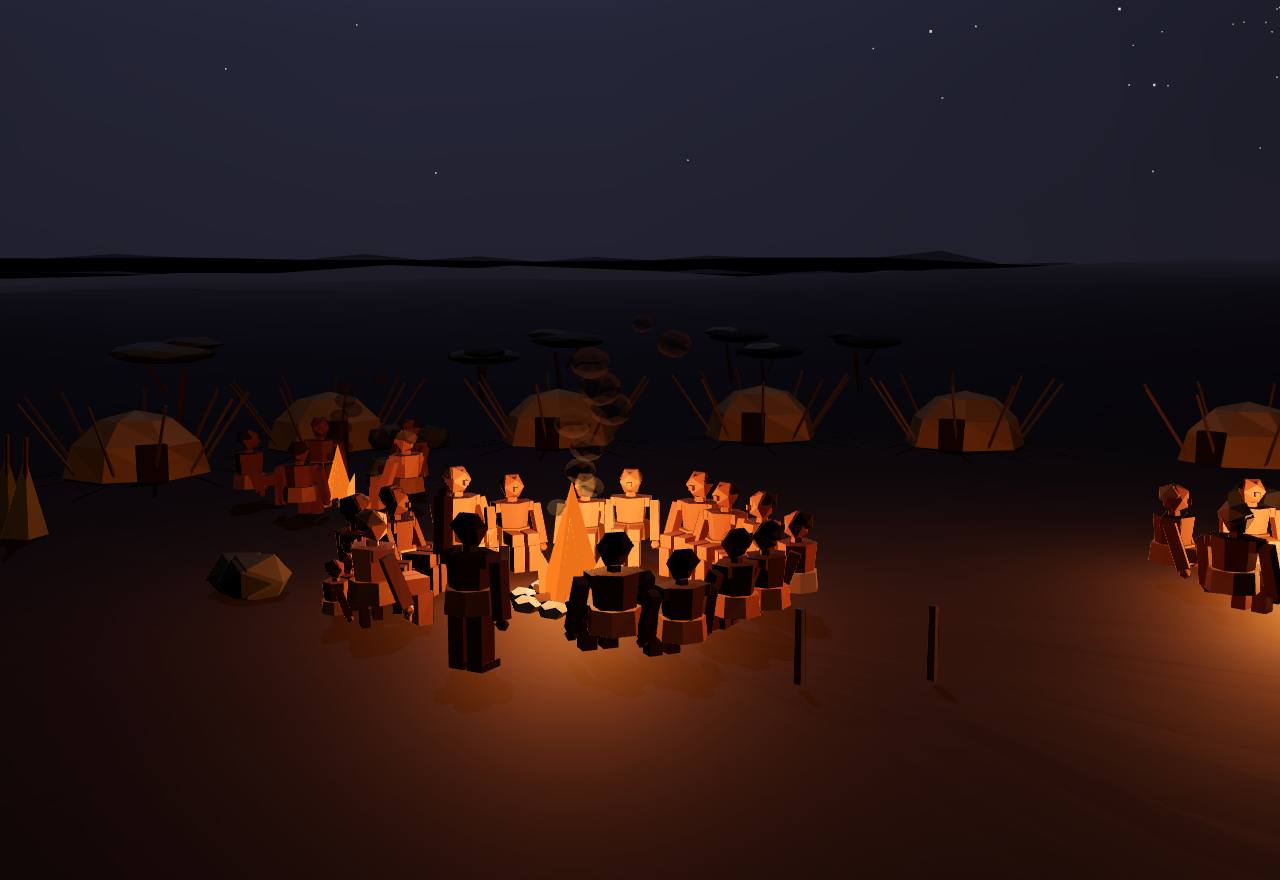
A camp of about thirty people in dry bush under the Milky Way, modelled on recorded mobile foragers such as the Ju/'hoansi. At night most sit around three fires listening to a storyteller at the main hearth; by day they gather in small knots by their grass shelters, working and arguing over food and fairness.

A forager camp of about thirty people, at night

The evidence on the map

Where and when

9 cases in 5 regions, 315 ka to 2020. Select a dot to jump to its case.

  • Site
  • Recorded society
  • Culture
  • under way at the slider date
  • already over
Cases on this page: place, dates and kind
CasePlaceRegionDatesKind
Jebel Irhoud Jebel Irhoud, Morocco Africa 350 ka – 280 ka Site
Recorded mobile foragers Dobe, Botswana (Ju/'hoansi), one of the studied groups Africa 1974 – 2013 · recorded 1974–2013 Recorded society
Sunghir Sunghir, Vladimir, Russia Europe 35 ka – 34 ka Site
Saint-Germain-la-Rivière Saint-Germain-la-Rivière, Gironde, France Europe 16 ka – 15 ka Site
Societies that changed with the seasons Great Plains (Cheyenne, Lakota), one of the recorded cases North America 1904 – 1948 · recorded 1904–1948 Recorded society
The Northwest Coast Sitka, Alaska (Tlingit country) North America 2,000 BCE – 1890 · recorded 1830–1890 Recorded society
Jōmon Japan and Sannai Maruyama Sannai Maruyama, Aomori, Japan East Asia 16 ka – 300 BCE Culture
The Calusa of Mound Key Mound Key, Estero Bay, Florida North America 885 CE – 1700 Culture
Chinchorro Arica, Atacama coast, Chile Andes 8,050 BCE – 2,450 BCE Culture

Map: Natural Earth (public domain), equirectangular. Positions are approximate; dots pushed apart to stay clickable are tied to their true spot by a line.

Movement 1 of 5c. 315,000 years ago

Our species

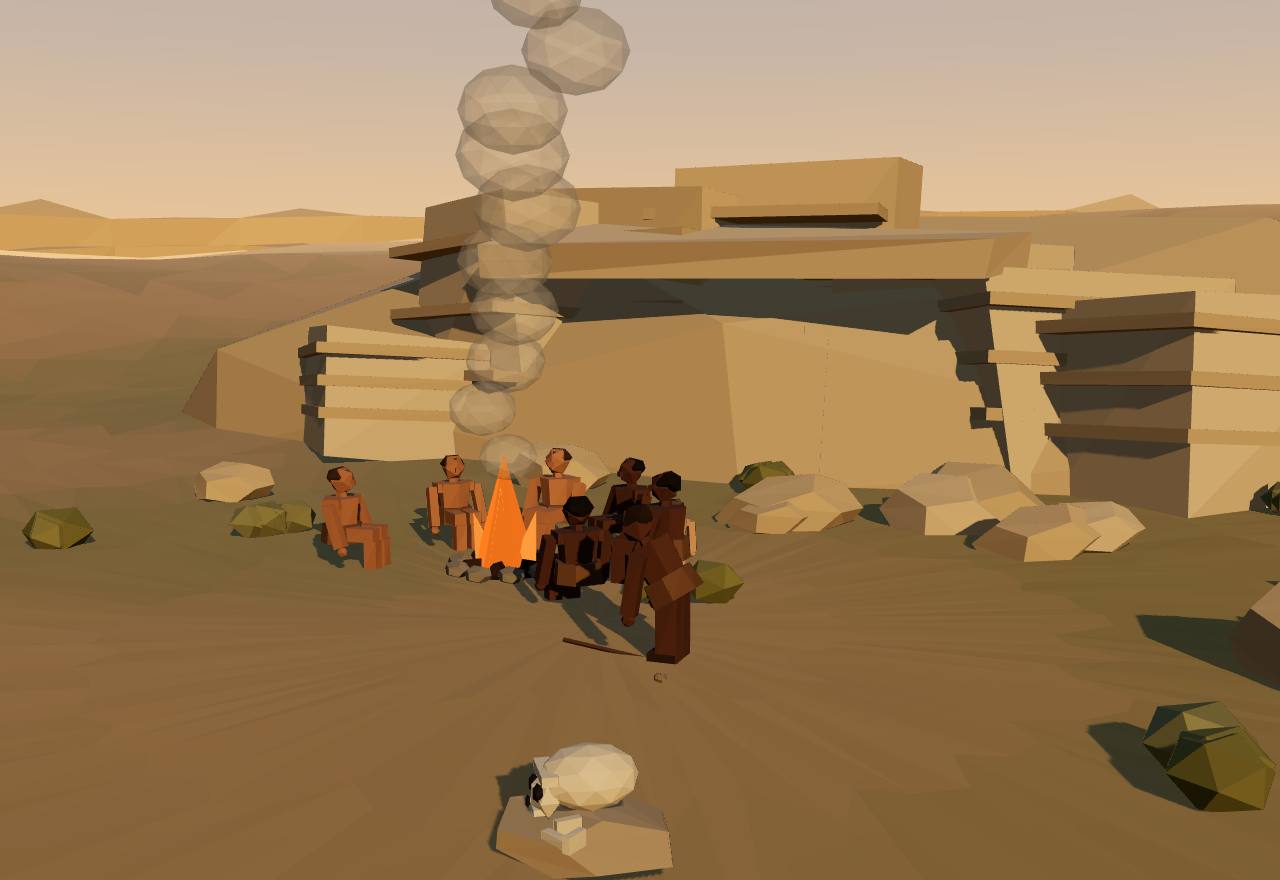
Late afternoon at the mouth of a limestone cave in the hills of north-west Africa. A small group of early Homo sapiens sits at a hearth where flint tools lie in the embers, the burnt flints by which the site was later dated; one person knaps a point. Gazelles graze on the open steppe below, and at the front lie the long, low skull and jaw of one of the people buried here.

Jebel Irhoud, about 315,000 years ago

Site Jebel Irhoud, Morocco 350 ka – 280 ka

Jebel Irhoud

Region: Africa

A collapsed cave in a Moroccan hillside, 55 km south-east of Safi, holds the oldest fossils yet assigned to our own lineage. They tell us when and where Homo sapiens appeared, and almost nothing about how these people lived together.

What the evidence says

Burnt flint tools found with the new fossils are dated by thermoluminescence to 315,000 ± 34,000 years ago; a tooth from the Irhoud 3 jaw gives 286,000 ± 32,000 years by uranium-series and electron spin resonance. That almost doubles earlier estimates for these layers. 6 Consensus Dating

The layer holds at least five individuals (three adults, one adolescent and a child of about 7.5). Their faces, jaws and teeth fall within the range of living people, but the braincase is long and low rather than globular: brain shape changed later than the face. 7 Consensus Bioarchaeology Excavation

The fossils lie with Middle Stone Age tools such as Levallois flakes, unifacial points and scrapers. Our species and this toolkit appear close together in time, which the dating team reads as a larger, potentially pan-African origin for both. 6 Consensus Excavation Dating

Many researchers now argue that Homo sapiens evolved in a set of interlinked groups across Africa whose connections changed through time, not in one population or region; Jebel Irhoud, far from East Africa, is one strand of that evidence. 8,7 Debated Excavation Ancient DNA

None of this evidence shows how these people organised themselves. What the rest of this page offers is later archaeology and comparison with recorded hunter-gatherers: informative, but not a time machine. 7,4 Consensus Excavation Ethnography

How power worked · 5 unknown

Who rules
Unknown
Why?

Nothing at the site shows how these groups were led; the finds are bones, stone tools and burnt flint.

How chosen
Unknown
Why?

No burial, image or structure survives to show how anyone came to lead.

Limits on power
Unknown
Why?

Nothing survives to show what held leaders back, if there were any.

Scale
Band range Debated
Claim to rule
Unknown
Why?

Beliefs about authority leave no trace this far back.

Who has a say
Unknown
Why?

No evidence survives of who took part in decisions.

How we know

4 lines of evidence · Dating, Bioarchaeology, Excavation

  1. Dating

    Thermoluminescence on fire-heated flint artefacts from the new excavations, directly associated with the fossils: a weighted average of 315 ± 34 thousand years. 6

  2. Dating

    Uranium-series with electron spin resonance on a tooth of the Irhoud 3 mandible, recalculated: 286 ± 32 thousand years. An earlier direct date had given about 160,000 years, and the first finds of the 1960s had been put at about 40,000. 6,7

  3. Bioarchaeology

    Shape analysis of the new skull (Irhoud 10), the adult jaw (Irhoud 11) and many teeth, compared with fossil and living humans. 7

  4. Excavation

    Middle Stone Age stone tools from the same layers: Levallois flakes, points and scrapers, many of flint. 6

In Seshat

Not coded in Seshat. The Seshat Global History Databank (Equinox-2020) has no polity for this case.
Movement 2 of 5Recorded mobile foragers, 1974–2013

Bands and levelling

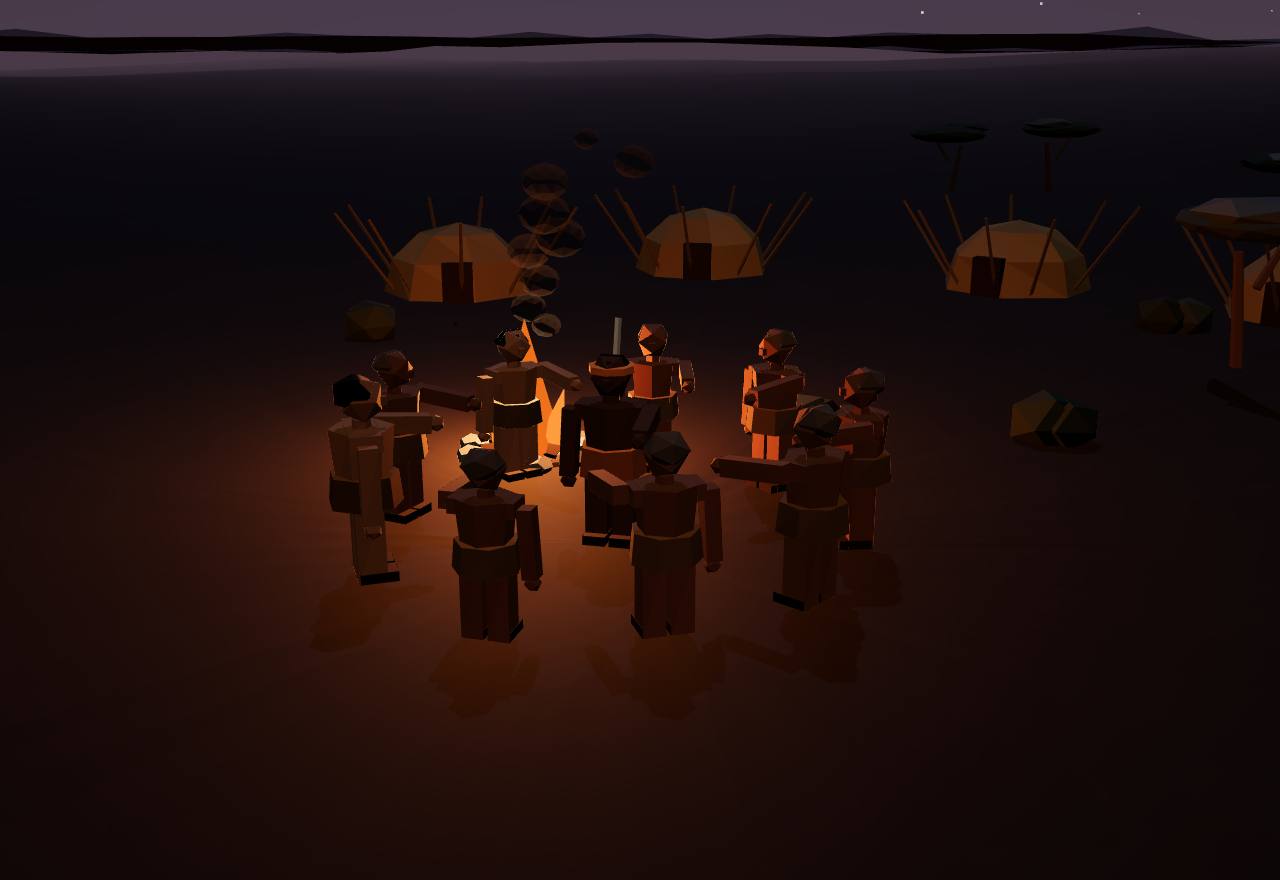
A model, not a reconstruction: a forager camp at dusk where one man tries to take more than his share. As the simulator's dominance index rises he stands taller over a seated, scattered band with the food heaped by him; when the others combine against him they stand in a ring around him and he is cut down to size.

Levelling a would-be boss (the simulator's camp)

Recorded society Dobe, Botswana (Ju/'hoansi), one of the studied groups 1974 – 2013

Recorded mobile foragers

Region: Africa

Recorded 1974–2013 — analogy, not ancient evidence. Observers wrote this down in the last centuries; using it for the deep past is an inference.

Fieldworkers have lived with mobile hunter-gatherers such as the Ju/'hoansi of the Kalahari, the Hadza of Tanzania, the Agta of the Philippines and the Mbendjele BaYaka of Congo. They describe small, fluid camps where nobody may give orders, and where people work hard to keep it that way.

What the evidence says

Christopher Boehm describes forager egalitarianism as hierarchy turned upside down: the weak combine forces to dominate the strong and put down would-be aggressors. 1 Consensus Ethnography

Among the Ju/'hoansi, criticism and complaint took up about a third of daytime talk; envy drove about a third of it, and the levelling of 'big shots' was everybody's sport. When talk could not settle a quarrel, people voted with their feet and left. 2 Consensus Ethnography

Of 174 long conversations recorded in 1974 at /Kae/kae and Dobe in Botswana, daytime talk was 31% economic matters, 34% complaint and criticism and 16% joking; by firelight, 81% was stories. Fire extended the day into a time for stories that bind people far beyond the camp. 2 Consensus Ethnography

Census data from 32 present-day forager societies (5,067 people; a mean band of 28.2 adults) show that either sex may stay or move, adult brothers and sisters often live together, and most people in a residential band are not genetically related to one another. 10 Consensus Ethnography

Among the Hadza, a survey of 205 adults in 17 camps mapped 1,263 campmate and 426 gift ties: people prefer kin but also form many ties with non-kin, and cooperators cluster together, up to two steps apart in the network. 11 Consensus Ethnography

An agent-based model suggests why: even if everyone tries to live with as many kin as possible, camps end up less related when men and women have an equal say in where to live, closely matching the camps of the Agta and Mbendjele BaYaka. 12 Debated Model Ethnography

How power worked

Who rules
Whole band, by consensus Consensus
How chosen
Consensus Debated
Limits on power
Custom and kin Consensus
Scale
Band range Consensus
Claim to rule
Group consent Debated
Who has a say
All adults in the band Debated

How we know

5 lines of evidence · Ethnography, Model

  1. Ethnography

    Summaries of 174 conversations of five or more adults lasting over 20–30 minutes, /Kae/kae and Dobe, July–August and November 1974, an unusually long dry and hungry spell; 68 firelight stories recorded 2011–2013. 2

  2. Ethnography

    Band censuses from published and unpublished fieldwork in 32 forager societies, counting who lives with whom rather than relying on rules of residence after marriage. 10

  3. Ethnography

    Hadza adults named campmates and gift partners from posters of photographs of a census of 517 adults. 11

  4. Model

    A simulation of camp assortment in which men and women, or only one sex, choose camp members, compared with Agta and Mbendjele co-residence data. 12

  5. Ethnography

    A compilation of 1,189 group-size estimates for 339 hunter-gatherer societies from Binford's ethnographic database. 15

Reverse-dominance simulator

Model, not evidence

A seeded toy model of 25 people over 200 seasons. Each season the strongest, richest member tries to take a share of everyone's food. The others may band together against the grab, mock it, or walk away. It is inspired by Christopher Boehm's reverse dominance hierarchy and Sergey Gavrilets's coalition model, and reproduces neither: it shows how the arguments work, not what happened. 1,18

Ordinary members band together against anyone who grabs, mock the 'big shots' and walk away when talk fails: would-be bosses are kept down. 1,2

Seed 7

Last 50 seasons: dominance 0.01, Gini of food held 0.05.

Dominance and Gini by season (seed 7, default settings)
SeasonDominanceGini
10.010.05
200.010.05
400.000.05
600.000.05
800.000.04
1000.010.05
1200.000.04
1400.010.05
1600.010.05
1800.010.05
2000.000.05

Who lives in a band

Data: published values; illustrative layout

A band of 28 adults, seen from one of them

Censuses of 32 forager societies (5,067 people) give a mean band of 28.2 adults, in which most people are not genetically related to one another 10 . Close relatives make up less than 10% of a camp 11 : here 2 of 27.

One person Close kin (parent, child, sibling) Close kin (parent, child, sibling) Other co-residents: distant kin, in-laws and, mostly, unrelated people Other co-residents: distant kin, in-laws and, mostly, unrelated people Other co-residents: distant kin, in-laws and, mostly, unrelated people Other co-residents: distant kin, in-laws and, mostly, unrelated people Other co-residents: distant kin, in-laws and, mostly, unrelated people Other co-residents: distant kin, in-laws and, mostly, unrelated people Other co-residents: distant kin, in-laws and, mostly, unrelated people Other co-residents: distant kin, in-laws and, mostly, unrelated people Other co-residents: distant kin, in-laws and, mostly, unrelated people Other co-residents: distant kin, in-laws and, mostly, unrelated people Other co-residents: distant kin, in-laws and, mostly, unrelated people Other co-residents: distant kin, in-laws and, mostly, unrelated people Other co-residents: distant kin, in-laws and, mostly, unrelated people Other co-residents: distant kin, in-laws and, mostly, unrelated people Other co-residents: distant kin, in-laws and, mostly, unrelated people Other co-residents: distant kin, in-laws and, mostly, unrelated people Other co-residents: distant kin, in-laws and, mostly, unrelated people Other co-residents: distant kin, in-laws and, mostly, unrelated people Other co-residents: distant kin, in-laws and, mostly, unrelated people Other co-residents: distant kin, in-laws and, mostly, unrelated people Other co-residents: distant kin, in-laws and, mostly, unrelated people Other co-residents: distant kin, in-laws and, mostly, unrelated people Other co-residents: distant kin, in-laws and, mostly, unrelated people Other co-residents: distant kin, in-laws and, mostly, unrelated people Other co-residents: distant kin, in-laws and, mostly, unrelated people
Illustrative layout: positions are a seeded spring model, not a map of a real camp.
  • One person
  • Close kin (parent, child, sibling)
  • Other co-residents: distant kin, in-laws and, mostly, unrelated people
Who lives in a forager band
Societies with censuses32
People counted5,067
Mean band (adults)28.2
Close kin (first-order relatives)under 10%
Co-residents genetically relateda minority

Movement 3 of 5c. 34,000 and 16,000 years ago

Rank in the Ice Age?

2 cases: Sunghir · Saint-Germain-la-Rivière

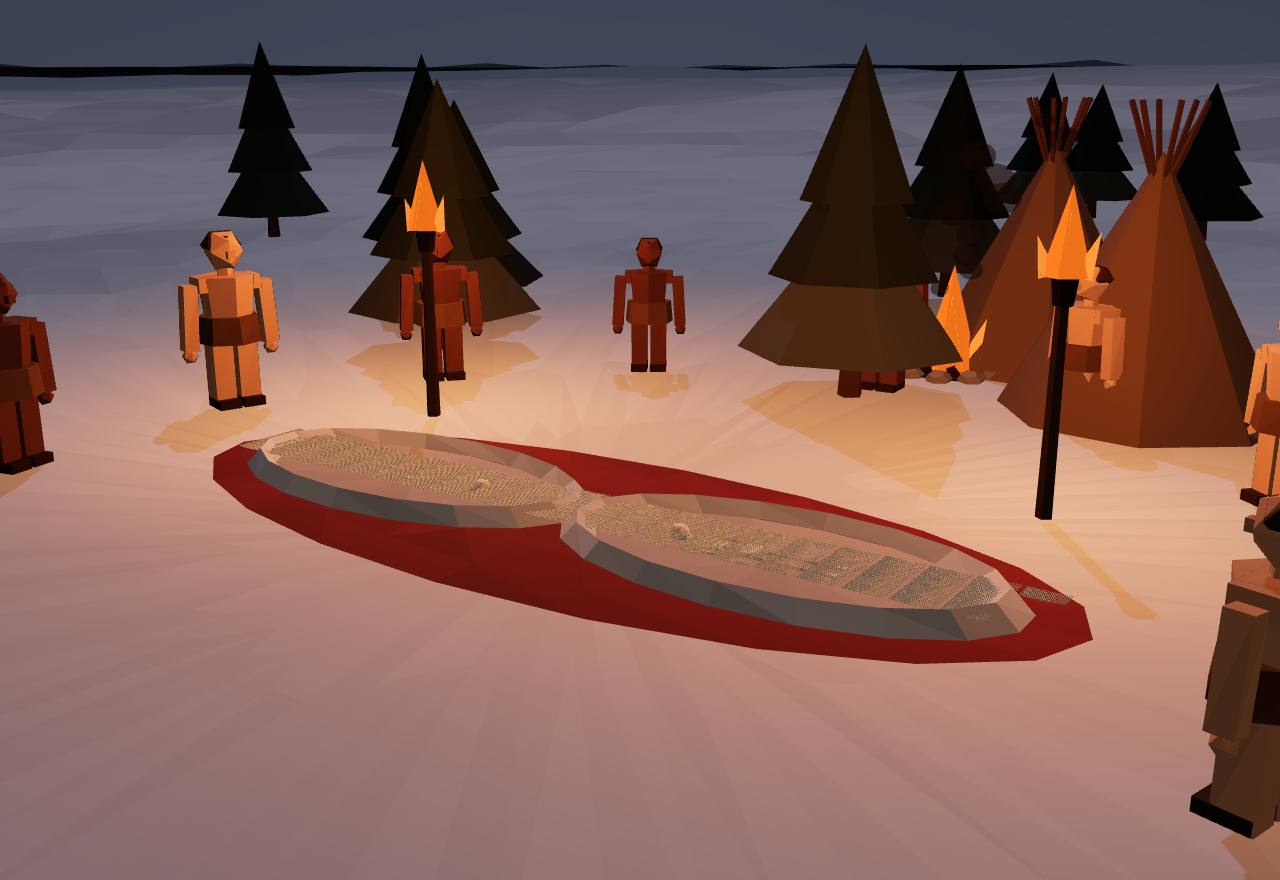
A winter night on the Russian plain, about 34,000 years ago: people with torches stand around an open grave dusted with red ochre. In one view a man lies covered in rows of mammoth-ivory beads, about 3,000 of them; in the other two boys lie head to head under about 5,000 and 5,400 smaller beads, each bead drawn.

Sunghir, Russia, about 34,000 years ago

Site Sunghir, Vladimir, Russia 35 ka – 34 ka

Sunghir

Region: Europe

On the edge of today's Vladimir, east of Moscow, people of the last Ice Age buried a man and, in a second grave, two boys, under thousands of mammoth-ivory beads. The graves are the richest of their time, and they are the oldest case for rank before farming.

What the evidence says

The Sunghir burials date to about 34,000 calibrated years ago (about 30,000 radiocarbon years); the genetic study gives 34,600 to 33,600 years for Sunghir 1–4. They are among the oldest securely dated burials of modern humans in Europe. 21,16 Consensus Dating

Sunghir 1, a man of 35 to 45, lay under about 3,000 mammoth-ivory beads, with 25 ivory arm bands and 12 pierced fox canines on his forehead. The two boys in grave 2, about 12 and 10 years old, were covered with about 5,000 and 5,400 smaller beads, each about two-thirds the size of the man's: some 13,400 beads in all. One estimate puts the work on the beads alone at about ten thousand hours. 21,4 Consensus Excavation

The boys lay head to head, beside 16 mammoth-ivory spears from 0.27 to 2.47 m long, with ivory discs, pierced antlers, a carved mammoth and more than 250 fox canines sewn as a belt: a major manufacturing effort for a mobile people. 21 Consensus Excavation

Trinkaus and Buzhilova read the elaboration of grave 2 as a status ascribed to the boys, beyond what they could have earned in a decade of life. Whether that means inherited rank is the open question. 21 Debated Excavation Bioarchaeology

Both boys show repeated stress in their tooth enamel, and Sunghir 3's thigh bones are exceptionally short and bowed. About a third of well-preserved Mid Upper Palaeolithic burials show marked abnormalities, and Formicola argues that such people may have been singled out for special treatment, possibly even sacrifice. 21,22 Debated Bioarchaeology

Ancient genomes of four Upper Palaeolithic individuals show they were all male and none were closely related (third degree or closer), not even the two boys buried together: a pattern like living hunter-gatherers, with small residential groups inside a wider mating network. 16 Consensus Ancient DNA

How power worked · 5 unknown

Who rules
Unknown
Why?

The graves show who was honoured in death, not who decided anything in life; no structure or image shows a leader.

How chosen
Unknown
Why?

The children's goods were more than a decade of life could earn, but whether that marks an inherited office, a kin group's standing or ritual selection is exactly what is debated.

Limits on power
Unknown
Why?

Nothing survives to show what held anyone's authority back.

Scale
Band range Debated
Claim to rule
Unknown
Why?

Ochre, beads and a hollowed human thigh bone show elaborate belief about the dead, but not what, if anything, made authority rightful.

Who has a say
Unknown
Why?

No evidence survives of who took part in decisions.

How we know

4 lines of evidence · Dating, Excavation, Bioarchaeology, Ancient DNA

  1. Dating

    Radiocarbon dates on animal and human bone, most of them minimum ages, converge on about 34,000 calibrated years ago (Greenland Interstadial 6). 21,16

  2. Excavation

    O. N. Bader's excavations of 1957–1977 uncovered about 4,500 m² of an estimated 10,000 m² of deposits, including graves 1 and 2 and the isolated Sunghir 5 skull. 21

  3. Bioarchaeology

    Skeletal study of seven individuals: ages, a fatal cut to the neck of Sunghir 1, enamel defects and bowed thigh bones in the boys, and a hollowed thigh bone of another adult (Sunghir 4) filled with ochre and laid in grave 2. 21

  4. Ancient DNA

    Five genomes sequenced; one (Sunghir 6) turned out to be about 900 years old and was dropped, leaving four Upper Palaeolithic genomes. 16

In Seshat

Not coded in Seshat. The Seshat Global History Databank (Equinox-2020) has no polity for this case.
Objects

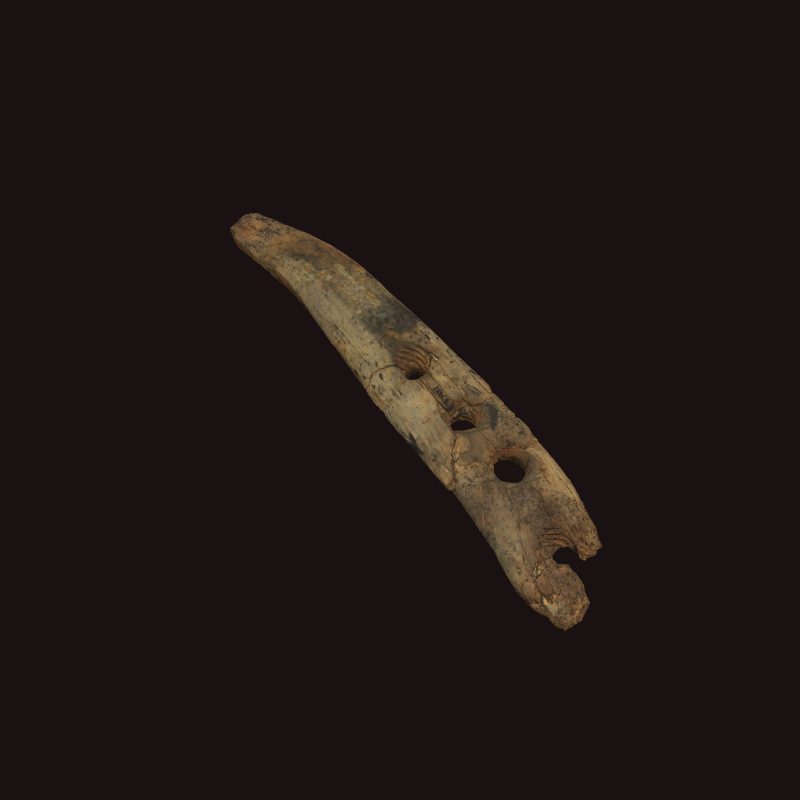
Perforated baton of mammoth ivory with four spirally grooved holes, used to make rope (Aurignacian, more than 35,000 years old)
Perforated baton of mammoth ivory with four spirally grooved holes, used to make rope (Aurignacian, more than 35,000 years old), 35 ka. Hohle Fels Cave, Ach Valley, Swabian Jura; found in 13 refitting pieces in 2015 (University of Tübingen excavations). 24,25 3D scan: N. J. Conard and V. Rots, via Dryad (source record) · CC0

Site Saint-Germain-la-Rivière, Gironde, France 16 ka – 15 ka

Saint-Germain-la-Rivière

Region: Europe

A single burial in south-western France, excavated in the 1930s, carried a necklace of rare red deer teeth. Its re-study is one of the clearest arguments that some Ice Age foragers were unequal.

What the evidence says

The Saint-Germain-la-Rivière burial is dated to 15,570 ± 200 BP, contemporary with the Magdalenian sites and burials it is compared with. 23 Consensus Dating

The grave held a great number of perforated red deer canines, mostly from young stags, at a time when red deer are almost absent from the animal bones of south-western French sites. 23 Consensus Excavation

Wengrow and Graeber, summarising the study, describe the grave as that of a young woman, about 16,000 years old, with ornaments worn at the stomach and pelvis, made on shell and on the teeth of young stags hunted some 300 km away in the Spanish Basque country. 4,23 Consensus Excavation Bioarchaeology

The teeth's rarity, probable exotic origin, few matching pairs and uniform working suggest they came through long-distance exchange and were prestige items. 23 Debated Excavation

Vanhaeren and d'Errico argue that, as in a number of recorded hunter-gatherer societies, these goods marked the buried person's place in a privileged social group, against the supposed egalitarianism of Upper Palaeolithic societies. 23 Debated Excavation Ethnography

How power worked · 6 unknown

Who rules
Unknown
Why?

One grave cannot show who led, or whether anyone did.

How chosen
Unknown
Why?

Nothing shows how the buried person came by the goods: inheritance, exchange or achievement.

Limits on power
Unknown
Why?

Nothing survives to show what held authority back.

Scale
Unknown
Why?

The teeth point to long-distance exchange, but no settlement pattern shows the size of the community.

Claim to rule
Unknown
Why?

Beliefs about authority leave no trace in this grave.

Who has a say
Unknown
Why?

No evidence survives of who took part in decisions.

How we know

2 lines of evidence · Dating, Excavation

  1. Dating

    One date of 15,570 ± 200 BP, as given in the study's abstract (which does not say whether it is calibrated). 23

  2. Excavation

    Archaeozoological and technological study of the ornaments, compared with ornaments and animal bones from contemporary Magdalenian sites and burials. 23

In Seshat

Not coded in Seshat. The Seshat Global History Databank (Equinox-2020) has no polity for this case.
Movement 4 of 5Recorded 1904–1948; argued for the Ice Age

Seasonal politics

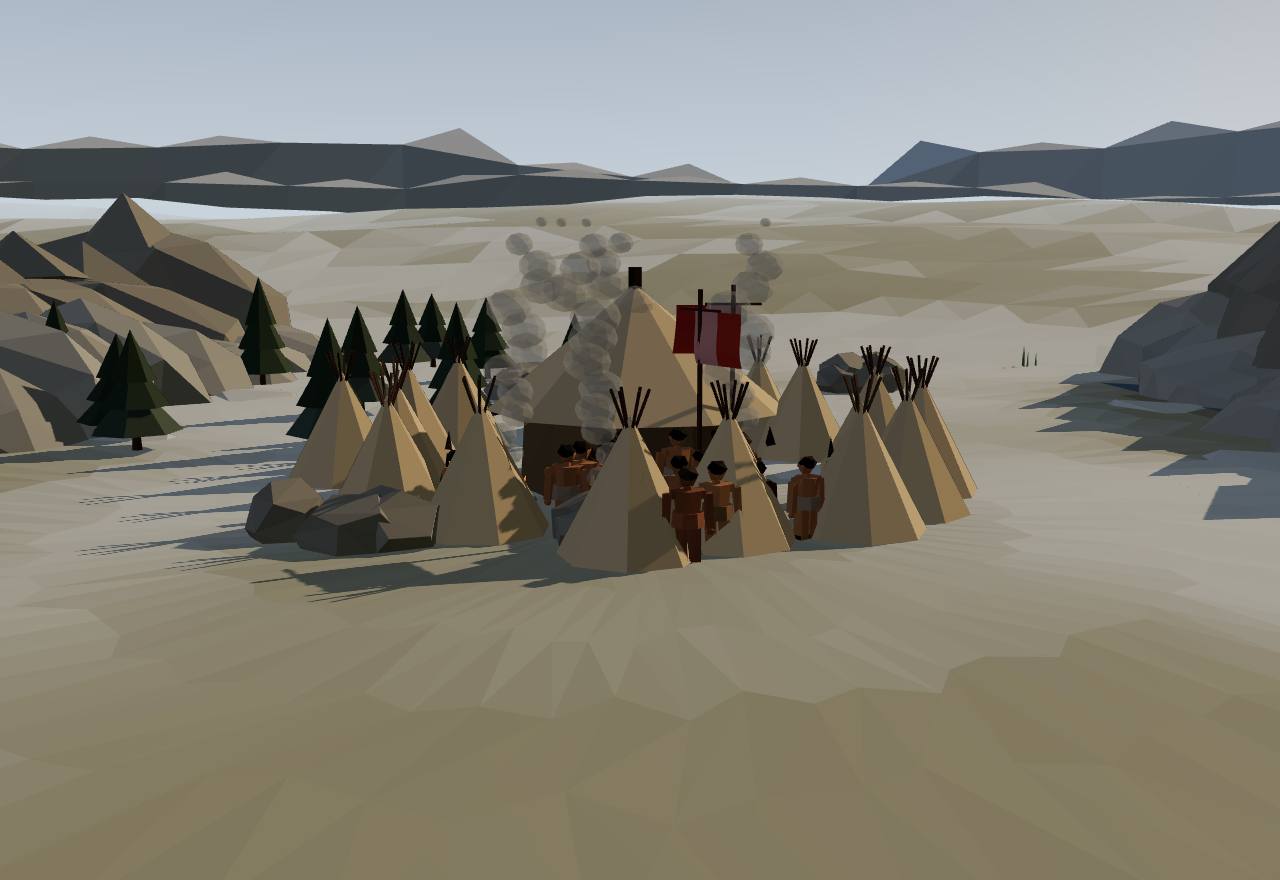
A wide valley between rocky ridges, drawn after recorded societies such as the Inuit and the Kwakwaka'wakw. In winter the whole people gathers in one camp of tents and a great lodge, fires burning and figures crowding the open ground; in summer the same valley holds only a few family camps, far apart, each with its own small fire.

One valley, two seasons

Recorded society Great Plains (Cheyenne, Lakota), one of the recorded cases 1904 – 1948

Societies that changed with the seasons

Region: North America

Recorded 1904–1948 — analogy, not ancient evidence. Observers wrote this down in the last centuries; using it for the deep past is an inference.

Early 20th-century anthropologists noticed that some peoples lived under two political orders a year: one when they scattered, another when they gathered. The Inuit, the Kwakwaka'wakw of the Northwest Coast, the Cheyenne and Lakota of the Plains and the Nambikwara of Brazil are the classic cases.

What the evidence says

Marcel Mauss and Henri Beuchat (1904–5) described Inuit life in two halves. In summer, families dispersed under the authority of a single male elder and property rights were clearly asserted; in the communal winter houses, generosity trumped accumulation and authority rested on charisma and persuasion instead of coercion. 4 Consensus Ethnography

Among the Kwakiutl (Kwakwaka'wakw), inequality peaked in the winter settlements, organised around religious confraternities in which nobles and commoners formed a hierarchy; in summer they broke into smaller, less formal clan groups, and people even took different names in each season. 4 Consensus Ethnography

In late summer, small mobile bands of Cheyenne and Lakota gathered for the buffalo hunt. A police force of 'soldiers' then confiscated game taken out of turn, whipped offenders and destroyed their property; when the camp dispersed, its power lapsed, and offices rotated so that those who held coercive power one year were subject to it the next. 4,3 Consensus Ethnography

Claude Lévi-Strauss described the Nambikwara of Mato Grosso living in hilltop villages of several hundred people in the rainy season, when they gardened, and in small foraging bands the rest of the year. Chiefs won followers by guiding the dry-season treks; in the villages their role was arbitration and diplomacy. Later fieldwork found more overlap between the seasons than he described. 26,4 Debated Ethnography

Wengrow and Graeber note that the rich burials and art of Ice Age Europe often cluster at seasonal gathering places along river corridors, and argue that Ice Age people too moved knowingly between political orders. Scheidel replies that such switching over 40,000 years is not impossible, but surely impossible to know. 4,27 Speculative Ethnography Excavation

How power worked · 1 unknown

Who rules
Council of elders or heads Debated
How chosen
Mixed Debated
Limits on power
Custom and kin Debated
Scale
Band range Consensus
Claim to rule
Group consent Debated
Who has a say
Unknown
Why?

Who had a say changed with the season (an elder's word in the Inuit summer, open persuasion around the winter hearth), so no single value fits.

How we know

2 lines of evidence · Ethnography

  1. Ethnography

    Mauss and Beuchat's Seasonal Variations of the Eskimo (1904–5), Lowie's 1948 lecture on the Plains, and Lévi-Strauss's 1944 study of Nambikwara chieftainship, as reviewed by Wengrow and Graeber. 4,26

  2. Ethnography

    Paul Aspelin's fieldwork among the Nambikwara some thirty years after Lévi-Strauss, which found the dry- and wet-season economies overlapped more than the first accounts said. 4

Movement 5 of 5Fishers, nut gatherers and kings without farms

Complex hunter-gatherers

4 cases: The Northwest Coast · Jōmon Japan and Sannai Maruyama · The Calusa of Mound Key · Chinchorro

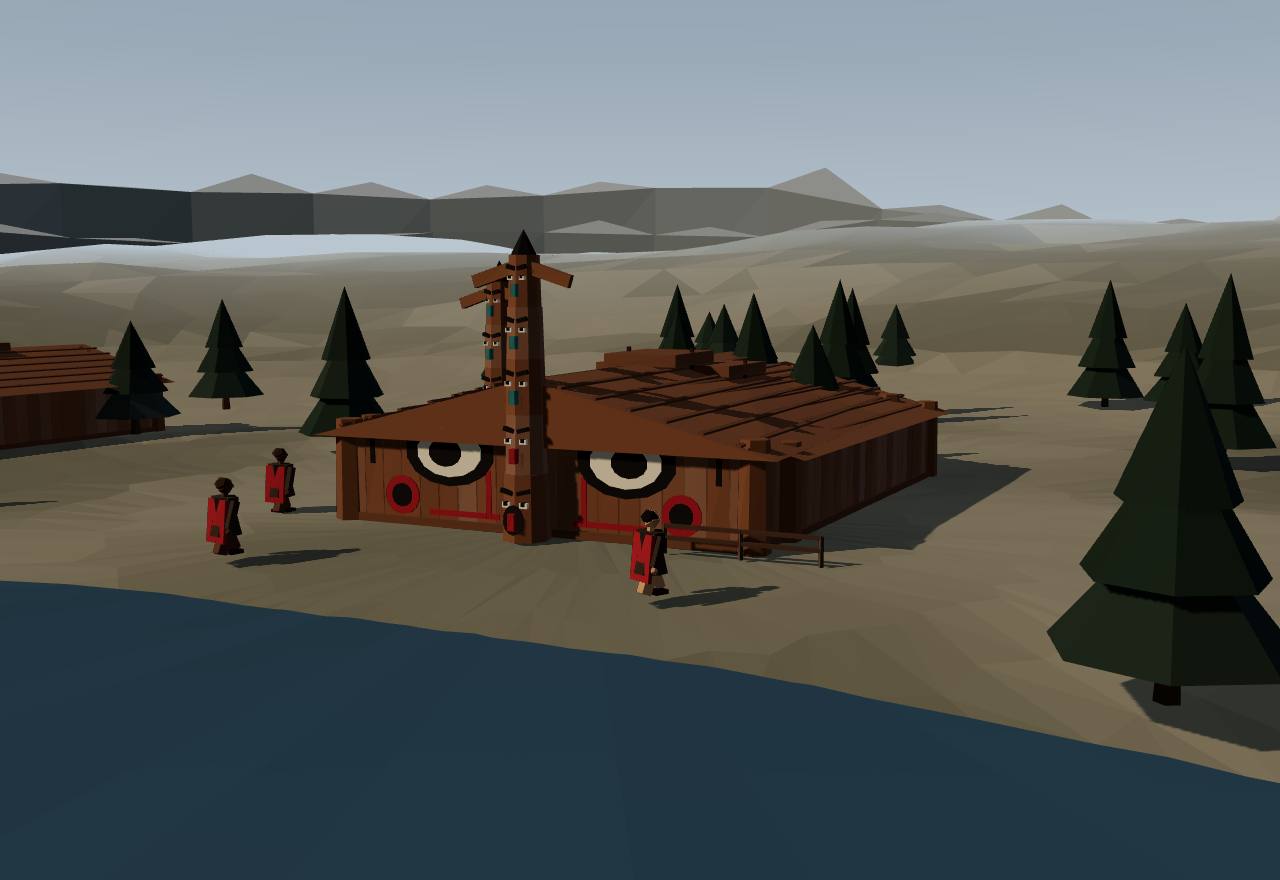
A row of cedar plank houses with painted fronts and a carved house pole faces a grey beach, with forest and snowy mountains behind. In the feast view the front of the chief's house is opened: guests sit in two rows along the sides facing each other, the hosts stand at the front by the door, and the chief's place at the rear is marked by the lineage crests.

A plank-house village on the Northwest Coast

Recorded society Sitka, Alaska (Tlingit country) 2,000 BCE – 1890

The Northwest Coast

Region: North America

Recorded 1830–1890 — analogy, not ancient evidence. Observers wrote this down in the last centuries; using it for the deep past is an inference.

From Alaska to Washington State, peoples such as the Tlingit and the Kwakwaka'wakw lived by salmon and other fish, without farming, in great cedar-plank houses. They had nobles, commoners and slaves, and hereditary titles fought over at feasts.

What the evidence says

Among the 19th-century Tlingit, each house was a matrilineage owning lands, names and ceremonial property. House heads and their close kin formed the aristocracy, their junior kin the commoners; slaves, captives and some impoverished Tlingit were not granted full personhood. Rank was inexact, disputed, and tested in the potlatch. 29 Consensus Ethnography

At a memorial potlatch the hosts seated their guests by rank, and the seating was their public statement of the current hierarchy; the order and size of the gifts confirmed it. A guest who felt slighted might try to leave, and the hosts quickly offered another seat or a larger gift. 29 Consensus Ethnography

The plank house itself was the seating plan: guests sat along the two sides facing each other, the hosts stood at the front near the door, its least conspicuous part, and the rear belonged to the house chief and the lineage crests. Archaeologists find that even the most hierarchical households kept strong communal practices, and both show in the layout of the houses. 29,30 Consensus Ethnography Excavation

When a chief died, his would-be successors competed for his title by giving the most wealth to his memorial potlatch; the head host gave last and most. Yet a potlatch needed the cooperation of the entire matrilineal group, and even a child's small gift was welcomed. 29 Consensus Ethnography

Slave raids between groups were endemic from Alaska to Washington State, owning slaves was a mark of noble status, and census figures of the early to mid-19th century record captives as up to a quarter of a group's population. 31 Consensus Ethnography Texts

Archaeological signs (fortifications, warfare, very unequal treatment of the dead) point to some form of household bondage on the coast at least as far back as the Middle Pacific period, about 1850 BC, when the focused harvesting of salmon and other migrating fish also began; larger houses that could hold dances and feasts appear later, in the late prehistoric period. 31,32 Debated Excavation

How power worked

Who rules
Chief Consensus
How chosen
Heredity Debated
Limits on power
Custom and kin Debated
Scale
Village Consensus
Claim to rule
Kinship and descent Consensus
Who has a say
Lineage heads Debated

How we know

4 lines of evidence · Ethnography, Texts, Excavation

  1. Ethnography

    Earlier accounts of the Tlingit potlatch (Veniaminov to de Laguna) reread with the author's own fieldwork of 1979–80 and 1984, describing the ritual of about 1830–1890. 29

  2. Texts

    Census figures of the early to mid-19th century on the share of captives, compiled by later historians. 31

  3. Excavation

    A comparative study of Northwest Coast households and the spatial order of their plank houses. 30

  4. Excavation

    Village and house-size surveys in the Tsimshian area: no distinctly larger buildings in Late Middle Period villages (500 BCE to 500 CE), larger houses later. 32

Culture Sannai Maruyama, Aomori, Japan 16 ka – 300 BCE

Jōmon Japan and Sannai Maruyama

Region: East Asia

For more than ten thousand years the Jōmon people of Japan fished, gathered nuts and made pottery without farming. Sannai Maruyama in the far north, the largest Jōmon site, shows how a forager settlement could grow big, then shrink again.

What the evidence says

Sannai Maruyama in Aomori Prefecture, occupied about 3900–2300 cal BC through twelve pottery phases, has yielded more than 600 pit-dwellings, making it the largest known Jōmon site. 34 Consensus Excavation Dating

It was not large for most of that time: of 277 dwellings that can be dated to a phase, only two phases (Upper-Ento-d and -e) have more than 50, and the curve rises and falls rather than climbing smoothly. The peak, in Upper-Ento-e, is made up mostly of very small dwellings, which may mean a seasonal base or gathering place. 34 Consensus Excavation

Two long-houses, about 32 m long (given up in the Enokibayashi phase) and about 23 m (Daigi 10), with repeated sets of post-holes from long use, may reflect changes in social organisation or residence. 34 Speculative Excavation

More than 1,600 clay figurines, most from Middle Jōmon midden mounds, came from the site, where other Aomori sites of the time usually yield 20 or fewer; their numbers drop sharply after Upper-Ento-e. 34 Consensus Excavation

Habu argues that the change began in food-getting: grinding stones, for nuts such as chestnut, rise phase by phase and then give way to arrowheads. A system that had become highly specialised was vulnerable, and she sees overspecialisation, more than a cooling climate, as the deeper cause of decline. 34 Debated Excavation

Seshat codes the Jōmon of the Kansai region, far to the south-west of Sannai Maruyama, as quasi-polities: a settlement hierarchy of one to two levels and a largest settlement of 400–500 people in the Early and Middle Jōmon. Seshat Debated Survey Excavation

How power worked · 5 unknown

Who rules
Unknown
Why?

Habu's evidence is houses, tools, figurines and mounds; nothing in it shows who led the settlement or whether anyone did.

How chosen
Unknown
Why?

No burial or building at the site has been shown to mark an office or how it was filled.

Limits on power
Unknown
Why?

Nothing in the evidence shows what limited authority.

Scale
Village Debated
Claim to rule
Unknown
Why?

More than 1,600 clay figurines point to intense ritual, but not to a claim about who had the right to rule.

Who has a say
Unknown
Why?

No evidence survives of who took part in decisions.

How we know

4 lines of evidence · Dating, Excavation, Survey

  1. Dating

    A pottery-phase sequence of twelve phases (Lower-Ento-a to Daigi 10), tied to calendar years by radiocarbon: about 3900–2300 cal BC. 34

  2. Excavation

    648 pit-dwellings identified by 1998 in excavations begun in 1994 ahead of a baseball stadium (halted to preserve the site); 277 can be dated to a phase by their pottery. 34

  3. Excavation

    Diet is inferred mainly from the proportions of stone tools, because animal and plant remains survive mostly in Early Jōmon layers. 34

  4. Survey

    Seshat's coding of the Kansai Jōmon phases, a regional summary by its research assistants, not a study of this site. Seshat

In Seshat

PhaseSettlement tiersAdmin levelsLargest settlement (people)
Incipient Jomon13600–9200 BCE 1 — —
Initial Jomon9200–5300 BCE 1–2 — —
Early Jomon5300–3500 BCE 1–2 — 400–500
Middle Jomon3500–2500 2 — 400–500
Late Jomon2500–1200 BCE 2 — 400–500
Final Jomon 1–2 — 400–500

Seshat Equinox-2020, CC BY 4.0; values and ranges as Seshat codes them; "—" = not coded. Bars: log scale. Attribution ↓

Objects

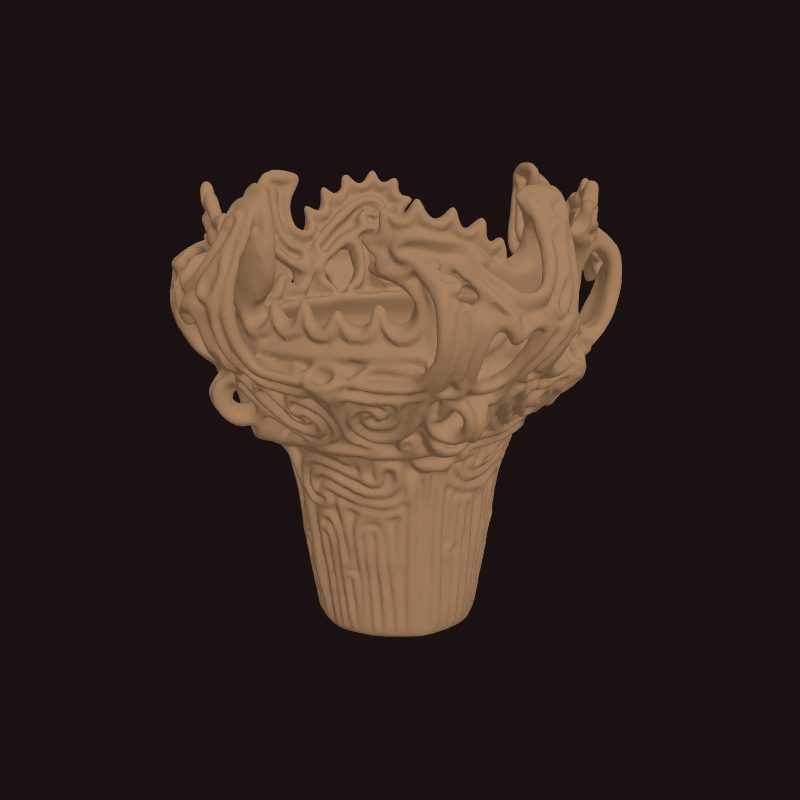
Kaen doki, the flame-rimmed cooking vessel that names the type, from the Umataka site (Middle Jōmon, about 5,000 years ago)
Kaen doki, the flame-rimmed cooking vessel that names the type, from the Umataka site (Middle Jōmon, about 5,000 years ago), 3,000 BCE. Excavated at the Umataka site in 1936; Nagaoka City, Niigata. 35 3D data: Kyushu National Museum, Otsuka Ohmi Ceramics and Nagaoka City (source record) · CC0
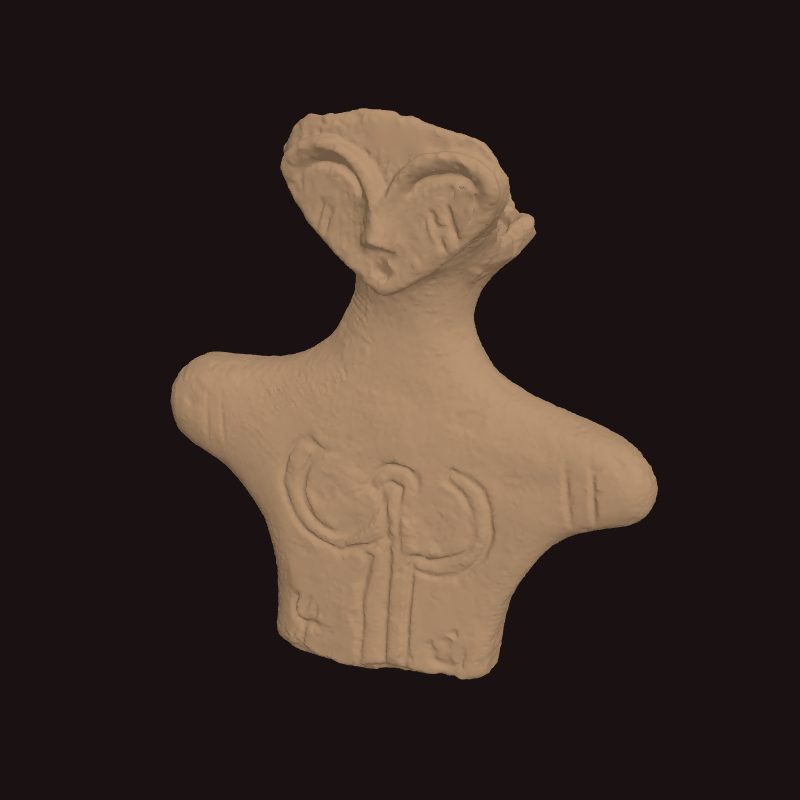
Clay figurine (dogū) called “Miss Umataka”, a kappa-type figure with a dished crown, 18 cm high (Jōmon)
Clay figurine (dogū) called “Miss Umataka”, a kappa-type figure with a dished crown, 18 cm high (Jōmon), 3,000 BCE. Said to have been found at the Umataka site in 1936 with the flame vessel; Nagaoka City, Niigata (Important Cultural Property). 36 3D data: Otsuka Mokkei Seisakusho and Nagaoka City (source record) · CC0

Culture Mound Key, Estero Bay, Florida 885 CE – 1700

The Calusa of Mound Key

Region: North America

When the Spanish reached south-west Florida in the 16th century, they met a kingdom of fishers, not farmers. Its capital, Mound Key, is an island built of shell, with walled pens where live fish were kept.

What the evidence says

In the 16th century Mound Key was the capital of the Calusa kingdom, which stretched from the Florida Keys to just south of Tampa Bay. The Calusa were fisher-gatherer-hunters, numbered about 20,000, and were the most politically complex polity in Florida. 37 Consensus Texts Excavation

Two shell-walled watercourts open onto the island's Grand Canal: the East Court about 42 by 70 m and the West Court about 50 by 75 m, together enclosing some 6,000 m², with walls about 1 m high and 10–12 m gaps where gates probably stood. 37 Consensus Survey Excavation

The courts were most likely traps and holding pens for live fish, mainly mullet, whose scales fill the court muds but not the bay floor: mass capture and short-term storage that could have provided a primary surplus food. 37 Debated Excavation

Radiocarbon dating places the building of the watercourts between AD 1300 and 1400, a few centuries after the Grand Canal (begun about cal AD 885–1010). 37 Consensus Dating

According to Spanish documents, the ruling elite controlled surplus production and distribution, warriors and royalty did not produce their own food, and the house of the mid-16th-century king Caalus on mound 1 could hold 2,000 people; there Pedro Menéndez de Avilés met him in 1566. 37 Consensus Texts Excavation

How power worked · 3 unknown

Who rules
King Consensus
How chosen
Unknown
Why?

The study used here is silent on how Calusa kings came to rule.

Limits on power
Unknown
Why?

Building the watercourts needed collective buy-in from large parts of society, but no rule that bound the king is recorded in this source.

Scale
Territorial state Debated
Claim to rule
Unknown
Why?

The sources used here describe the king's house and power, not what made that power rightful.

Who has a say
A narrow elite Debated

How we know

4 lines of evidence · Dating, Survey, Excavation, Texts

  1. Dating

    22 AMS radiocarbon dates from cores and excavation units, combined in Bayesian models (68% ranges). 37

  2. Survey

    LiDAR elevation models and ground-penetrating radar map the watercourt walls and the 365 m Grand Canal. 37

  3. Excavation

    Fish scales, mostly mullet, from the court sediments; experiments on how long each court holds water between tides. 37

  4. Texts

    16th-century Spanish documents on the Calusa king, his house and who did not produce food. 37

In Seshat

Not coded in Seshat. The Seshat Global History Databank (Equinox-2020) has no polity for this case.
Culture Arica, Atacama coast, Chile 8,050 BCE – 2,450 BCE

Chinchorro

Region: Andes

On the desert coast of northern Chile and southern Peru, fishing people began to mummify their dead some 7,000 years ago: the oldest artificial mummies known. Why then, and why there?

What the evidence says

The oldest known artificial mummification, about 7,000–8,000 calibrated years ago, comes from the Chinchorro coast of northern Chile and southern Peru, at sites such as Camarones, Arica and Pisagua; the practice had practically disappeared by about 4,400 years ago. 38 Consensus Dating Excavation

In the early period only infants and children were mummified, which suggests the practice did not begin as ancestor worship. 38 Consensus Bioarchaeology Excavation

Summed probabilities of 460 radiocarbon dates from 131 sites suggest coastal populations rose sharply about 7,000 years ago and peaked by 6,000, at a time of more fresh water and rich upwelling seas. 38 Debated Dating Model

Marquet and colleagues argue that larger, denser groups, of perhaps 50–150 people living among their naturally mummified dead in the hyperarid desert, sped up cultural innovation, as models of cultural evolution predict. 38 Speculative Model Excavation

Several mummy styles overlapped in time, which the authors call suggestive of social differentiation; they do not claim a ranked society, and say they cannot yet tell whether the practice signalled control over resources. 38 Speculative Excavation

How power worked · 5 unknown

Who rules
Unknown
Why?

The mummies and shell middens show nothing of who led, or whether anyone did.

How chosen
Unknown
Why?

Nothing shows how anyone came to lead.

Limits on power
Unknown
Why?

Nothing survives to show what held authority back.

Scale
Village Speculative
Claim to rule
Unknown
Why?

The elaborate treatment of the dead shows strong belief, but its authors stress they cannot say whether it signalled control over resources.

Who has a say
Unknown
Why?

No evidence survives of who took part in decisions.

How we know

3 lines of evidence · Dating, Excavation, Model

  1. Dating

    460 calibrated radiocarbon dates from 131 coastal sites, summed as a proxy for population. 38

  2. Excavation

    Burials within shell middens and living areas, from Camarones 14 (the oldest mummification) to Morro-1 in Arica, the largest coastal settlement known. 38

  3. Model

    Henrich's model of population size and cultural innovation, with the authors' own demographic model of how many dead a living person would meet. 38

In Seshat

Not coded in Seshat. The Seshat Global History Databank (Equinox-2020) has no polity for this case.
Across the cases

Threads

The questions that cut across the sites and societies above. Each gives a short, badged answer, the cases it rests on, and the positions in the debate with their sources.

Lead thread 6 cases

Were our ancestors egalitarian, and if so, how did they keep it that way?

Short answer Recorded mobile foragers are strikingly egalitarian, and they keep it that way on purpose, by mocking, resisting and leaving would-be bosses. Whether that was the rule for 300,000 years is disputed: rich Ice Age burials, seasonal hierarchies and ranked, storing foragers such as the Northwest Coast peoples and the Calusa show how much foragers varied. 1,2,3,4 Debated Ethnography Excavation Ancient DNA

Thread 4 cases

Did bands have leaders at all?

Short answer Yes, but leaders who persuade rather than command. Among egalitarian foragers leadership is situational, earned and non-coercive; it becomes more institutional and coercive where settlements are permanent and wealth can be monopolised. 13,14 Debated Ethnography

Thread 5 cases

Does storable wealth create inequality?

Short answer It depends on the kind of wealth. In 21 small-scale societies, hunter-gatherers passed little wealth to their children (a transmission coefficient of 0.19, Gini 0.25), while herders (0.43, 0.42) and farmers (0.36, 0.48) passed on much more: what can be defended and handed down makes inequality last. 33,20,19 Debated Ethnography Model

Thread 3 cases

Is there a natural group size?

Short answer Forager societies nest groups inside groups, each level about 3.8 times the one below: families of about 4.5, dispersed groups of about 16, gatherings of about 54 and 165, and populations of about 840. A single natural number such as 150 does not survive re-analysis. 15,41 Debated Ethnography Model

Data

In numbers

What recorded societies look like

Data: D-PLACE Ethnographic Atlas (dplace-data v2.2.1), CC BY 4.0

The Ethnographic Atlas codes 1,291 societies as ethnographers recorded them. Each is grouped here by its main source of food (variable EA042). These are recent societies, many living beside farmers and states: they show the range of what foragers have done, not what Ice Age people did. 43

Jurisdictional hierarchy beyond local community EA033

233 of 291 coded foraging societies (80%) have no political authority above the local community, against 292 of 864 farming, herding or mixed ones (34%).

  • Gathering100 coded · 3 not coded 90 10
  • Hunting74 coded · 3 not coded 54 20
  • Fishing117 coded · 4 not coded 89 25
  • Farming, herding or mixed864 coded · 125 not coded 292 286 160 83
  • Acephalous
  • One level
  • Two levels
  • Three levels
  • Four levels

Source: D-PLACE (dplace-data v2.2.1, Ethnographic Atlas), CC BY 4.0, snapshot fetched 2026-11-15. “Foraging” here means gathering, hunting or fishing is the largest food source; fishing peoples include the ranked societies of the Northwest Coast.

Seshat panels: Jōmon Japan and Sannai Maruyama

Side by side

Compare

The six axes for any two to four cases. A spoke at the centre with a "?" is unknown or not coded, not a score of zero.

Recorded mobile foragers The Northwest Coast The Calusa of Mound Key ? = unknown or not coded
Comparison: Recorded mobile foragers, The Northwest Coast, The Calusa of Mound Key
AxisRecorded mobile foragersThe Northwest CoastThe Calusa of Mound Key
Who rulesWhole band, by consensusChiefKing
How chosenConsensusHeredityUnknown
Limits on powerCustom and kinCustom and kinUnknown
ScaleBand rangeVillageTerritorial state
Claim to ruleGroup consentKinship and descentUnknown
Who has a sayAll adults in the bandLineage headsA narrow elite

Objects

Artefacts

What comes next

What comes next

After 2020 villages, monuments and the first inequality

Or return to the whole history of governance at chapter 1.

Sources

Bibliography

How we know: the basis tags

Excavation
Stratified archaeology: architecture, artefacts and their context in the ground.
Dating
Laboratory dates: radiocarbon, luminescence (OSL/TL), uranium series.
Bioarchaeology
Human remains: skeletons, teeth, isotopes, health and diet.
Ancient DNA
Genomes recovered from ancient human remains.
Ethnography
Societies recorded by observers in the last few centuries, used as analogy for the past.
Texts
Written sources: tablets, inscriptions, later chronicles.
Model
A simulation or formal model: it shows what follows from assumptions, not what happened.
Survey
Regional settlement survey and remote sensing (aerial, satellite, geophysics).

Evidence badges: ● Consensus broad agreement among specialists · ◐ Debated specialists disagree · ○ Speculative a hypothesis with limited evidence.

Peer-reviewed papers 35

  1. Wiessner, P. W. (2014). Embers of society: Firelight talk among the Ju/’hoansi Bushmen. Proceedings of the National Academy of Sciences 111. Ju/'hoan day talk (practicalities, sanctioning gossip) versus night talk by the fire (stories, networks, healing rifts).
  2. Singh, M., Glowacki, L. (2022). Human social organization during the Late Pleistocene: Beyond the nomadic-egalitarian model. Evolution and Human Behavior 43. Challenges the 'nomadic-egalitarian model' with a 'diverse histories model', reviewing 34 world regions of non-agricultural societies.
  3. Wengrow, D., Graeber, D. (2015). Farewell to the 'childhood of man': ritual, seasonality, and the origins of inequality. Journal of the Royal Anthropological Institute 21.
  4. Woodburn, J. (1982). Egalitarian Societies. Man 17(3).
  5. Richter, D., Grün, R., Joannes-Boyau, R., et al. (2017). The age of the hominin fossils from Jebel Irhoud, Morocco, and the origins of the Middle Stone Age. Nature 546.
  6. Hublin, J.-J., Ben-Ncer, A., Bailey, S. E., et al. (2017). New fossils from Jebel Irhoud, Morocco and the pan-African origin of Homo sapiens. Nature 546.
  7. Scerri, E. M. L., Thomas, M. G., Manica, A., et al. (2018). Did our species evolve in subdivided populations across Africa, and why does it matter?. Trends in Ecology & Evolution 33.
  8. White, T. D., Asfaw, B., DeGusta, D., et al. (2003). Pleistocene Homo sapiens from Middle Awash, Ethiopia. Nature 423.
  9. Hill, K. R., Walker, R. S., Božičević, M., et al. (2011). Co-residence patterns in hunter-gatherer societies show unique human social structure. Science 331.
  10. Apicella, C. L., Marlowe, F. W., Fowler, J. H., et al. (2012). Social networks and cooperation in hunter-gatherers. Nature 481. Hadza social networks and public-goods giving: cooperators cluster with cooperators, camps differ more than individuals within them.
  11. Dyble, M., Salali, G. D., Chaudhary, N., et al. (2015). Sex equality can explain the unique social structure of hunter-gatherer bands. Science 348. Why forager camps hold many unrelated people: a model where men and women both choose where to live.
  12. Glowacki, L., von Rueden, C. (2015). Leadership solves collective action problems in small-scale societies. Philosophical Transactions of the Royal Society B: Biological Sciences 370. Tsimane and Nyangatom leaders: who leads, and leadership becoming more institutional where collective action failure threatens the group.
  13. Garfield, Z. H., von Rueden, C., Hagen, E. H. (2019). The evolutionary anthropology of political leadership. The Leadership Quarterly 30. Review of political leadership and followership as studied by evolutionary anthropologists, across cultures.
  14. Hamilton, M. J., Milne, B. T., Walker, R. S., et al. (2007). The complex structure of hunter–gatherer social networks. Proceedings of the Royal Society B: Biological Sciences 274. 1189 groups in 339 forager societies nest in self-similar levels with a branching ratio close to 4.
  15. Sikora, M., Seguin-Orlando, A., Sousa, V. C., et al. (2017). Ancient genomes show social and reproductive behavior of early Upper Paleolithic foragers. Science 358. Genomes of the Sunghir individuals (about 34,000 years ago): buried together but not closely related, part of a wider mating network.
  16. Gavrilets, S. (2012). On the evolutionary origins of the egalitarian syndrome. Proceedings of the National Academy of Sciences 109. Evolutionary model: siding with the victim against bullies, through efficient coalitions, can evolve and sharply cut within-group inequality.
  17. Mattison, S. M., Smith, E. A., Shenk, M. K., Cochrane, E. E. (2016). The evolution of inequality. Evolutionary Anthropology 25.
  18. Smith, E. A., Hill, K., Marlowe, F. W., et al. (2010). Wealth Transmission and Inequality among Hunter‐Gatherers. Current Anthropology 51. Gini coefficients and intergenerational transmission of embodied, material and relational wealth among foragers: low to moderate.
  19. Trinkaus, E., Buzhilova, A. P. (2018). Diversity and differential disposal of the dead at Sunghir. Antiquity 92.
  20. Formicola, V. (2007). From the Sunghir Children to the Romito Dwarf: Aspects of the Upper Paleolithic Funerary Landscape. Current Anthropology 48.
  21. Vanhaeren, M., d'Errico, F. (2005). Grave goods from the Saint-Germain-la-Rivière burial: Evidence for social inequality in the Upper Palaeolithic. Journal of Anthropological Archaeology 24.
  22. Conard, N. J., Rots, V. (2024). Rope making in the Aurignacian of Central Europe more than 35,000 years ago. Science Advances 10. The perforated mammoth-ivory baton from Hohle Fels, refitted from 13 pieces; use-wear and experiments show it was a tool for making rope.
  23. Lévi-Strauss, C. (1944). The Social and Psychological Aspect of Chieftainship in a Primitive Tribe: the Nambikuara of Northwestern Mato Grosso. Transactions of the New York Academy of Sciences 7. Nambikwara chiefship as consent and generosity (no abstract in Crossref/OpenAlex/Semantic Scholar; read the article). Crossref title carries the prefix 'SECTION OF ANTHROPOLOGY:'.
  24. Scheidel, W. (2022). Resetting History’s Dial? A Critique of David Graeber and David Wengrow, The Dawn of Everything: A New History of Humanity. Cliodynamics: The Journal of Quantitative History and Cultural Evolution. Critical commentary on Graeber and Wengrow's The Dawn of Everything.
  25. Kan, S. (1986). the 19th‐century Tlingit potlatch: a new perspective. American Ethnologist 13. The Tlingit memorial potlatch as it existed c. 1830–1890: ranked seating, gift order, houses and titles.
  26. Coupland, G., Clark, T., Palmer, A. (2009). Hierarchy, Communalism, and the Spatial Order of Northwest Coast Plank Houses: A Comparative Study. American Antiquity 74. Hierarchy and communal practice materialised together in the layout of plank houses.
  27. Wengrow, D., Graeber, D. (2018). “Many Seasons Ago”: Slavery and Its Rejection among Foragers on the Pacific Coast of North America. American Anthropologist 120. Northwest Coast slavery and ranked households, and California's self-conscious rejection of them (schismogenesis).
  28. Borgerhoff Mulder, M., Bowles, S., Hertz, T., et al. (2009). Intergenerational Wealth Transmission and the Dynamics of Inequality in Small-Scale Societies. Science 326. Transmission of network, material and embodied wealth in foraging, herding, farming and horticultural societies, and the inequality each pattern goes with.
  29. Habu, J. (2008). Growth and decline in complex hunter-gatherer societies: a case study from the Jomon period Sannai Maruyama site, Japan. Antiquity 82. Sannai Maruyama (3900–2300 BC) over 1500 years: growth to a peak, then decline to a smaller settlement with larger buildings.
  30. Thompson, V. D., Marquardt, W. H., Savarese, M., et al. (2020). Ancient engineering of fish capture and storage in southwest Florida. Proceedings of the National Academy of Sciences 117. Calusa shell-walled watercourts for capturing and storing fish, linked to a growing population and complex governance.
  31. Marquet, P. A., Santoro, C. M., Latorre, C., et al. (2012). Emergence of social complexity among coastal hunter-gatherers in the Atacama Desert of northern Chile. Proceedings of the National Academy of Sciences 109. Chinchorro artificial mummification appearing with wetter, more productive coasts and larger populations.
  32. von Rueden, C. R., Jaeggi, A. V. (2016). Men’s status and reproductive success in 33 nonindustrial societies: Effects of subsistence, marriage system, and reproductive strategy. Proceedings of the National Academy of Sciences 113. Meta-analysis of 288 results from 33 societies: status predicts men's reproductive success, foragers included.
  33. Arnold, J. E. (1996). The archaeology of complex hunter-gatherers. Journal of Archaeological Method and Theory 3. Defining and recognising complex hunter-gatherers archaeologically (no abstract in Crossref/OpenAlex/Semantic Scholar; read the article).
  34. Lindenfors, P., Wartel, A., Lind, J. (2021). 'Dunbar's number' deconstructed. Biology Letters 17.
  35. Dunbar, R. I. M. (1992). Neocortex size as a constraint on group size in primates. Journal of Human Evolution 22.

Academic books 4

  1. Boehm, C. (1999). Hierarchy in the Forest: The Evolution of Egalitarian Behavior. Harvard University Press.
  2. Kelly, R. L. (2013). The Lifeways of Hunter-Gatherers: The Foraging Spectrum. Cambridge University Press. Variation among living foragers in mobility, sharing, land tenure and politics; warns against ethnographic analogy as a picture of the past.
  3. Graeber, D., Wengrow, D. (2021). The Dawn of Everything: A New History of Humanity. Farrar, Straus and Giroux.
  4. Hayden, B. (2018). The Power of Ritual in Prehistory: Secret Societies and Origins of Social Complexity. Cambridge University Press. Chapter 2 (open access): complex hunter-gatherers of the American Northwest, secret societies and rank.

Datasets 2

  1. Conard, N. J., Rots, V. (2024). Data from: Rope making in the Aurignacian of Central Europe more than 35,000 years ago. Dryad (DataCite DOI 10.5061/dryad.xd2547dqb; Zenodo mirror). 3D scan of the Hohle Fels perforated baton (PLY and STL); CC0.
  2. Kirby, K. R., Gray, R. D., Greenhill, S. J., et al. (2016). D-PLACE: A Global Database of Cultural, Linguistic and Environmental Diversity. PLOS ONE 11. The paper presenting D-PLACE: geography, language, culture and environment for over 1400 societies; cite with the data version used.

Primary sources 2

  1. Kyushu National Museum, Otsuka Ohmi Ceramics, Nagaoka City (2018). Kaen doki (flame-rimmed vessel) from the Umataka site, 3D data. Wikimedia Commons, published by Nagaoka City, Niigata. The first flame-rimmed vessel found at Umataka (1936), Middle Jōmon, about 5,000 years ago; CC0.
  2. Otsuka Mokkei Seisakusho, Nagaoka City (2019). Clay figurine (dogū) “Miss Umataka”, 3D data. Wikimedia Commons, published by Nagaoka City, Niigata. Kappa-type dogū, 18 cm, said to come from Umataka with the flame vessel; Important Cultural Property; CC0.

Quantitative values from the Seshat Global History Databank (Equinox-2020), licensed CC BY 4.0. Dataset: Seshat Equinox Packaged Data (v.1). See also Seshat: The Global History Databank (Turchin et al. 2015).