✶ Learn · History of governance
Three hundred thousand years
of deciding who decides.
From bands that cut would-be bosses down to size, through the first kings, assemblies and empires, to written constitutions and mass elections. Every claim is sourced and marked as consensus, debated or speculative.
Jebel Irhoud, Morocco, about 315,000 years ago
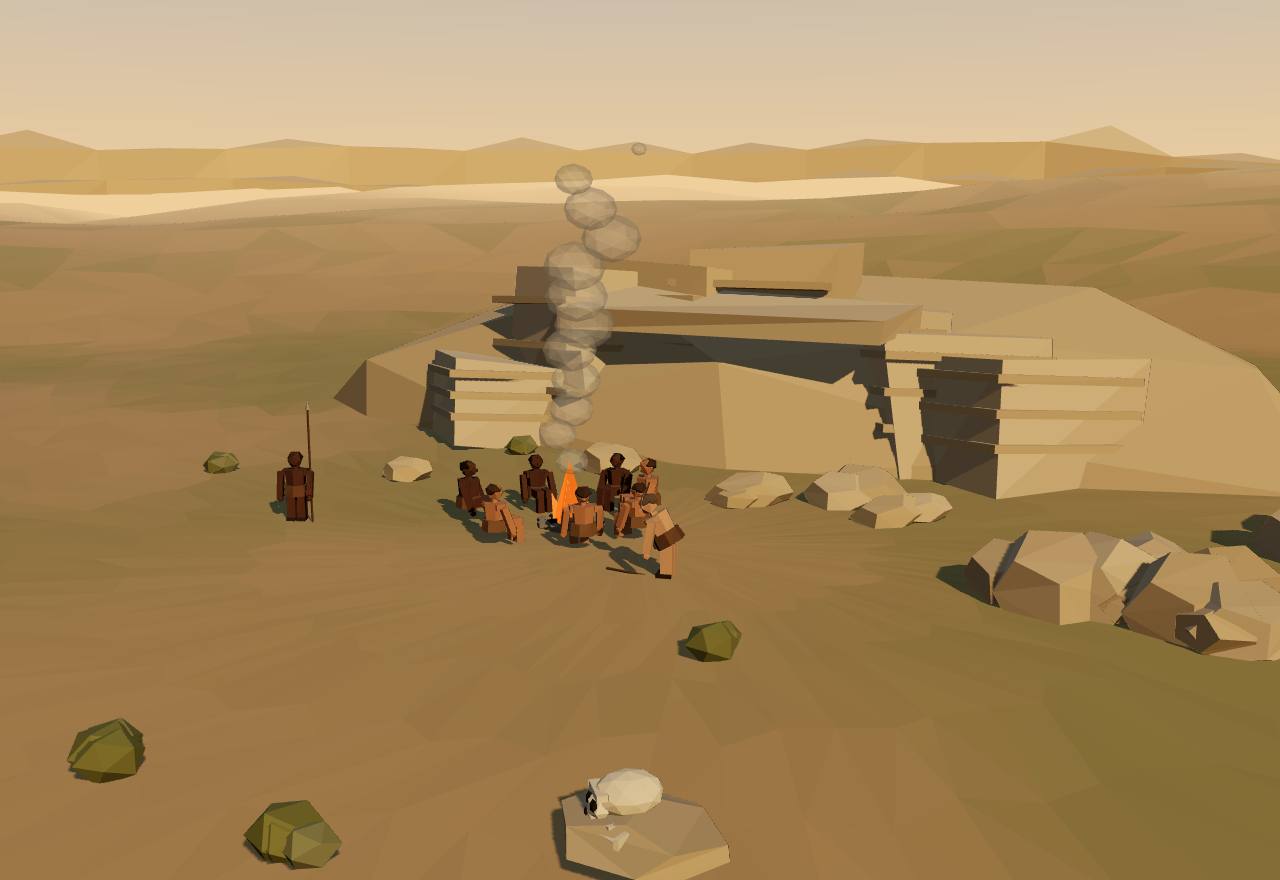
A forager band at night
Two seasons, two societies
A Natufian hamlet in the Levant
Göbekli Tepe, south-east Anatolia
Çatalhöyük, central Anatolia
A Trypillia mega-site, Ukrainian forest-steppe
Uruk, southern Mesopotamia, about 3200 BCE
A royal court in Babylon, about 1750 BCE
Five ways to govern, 1000 BCE – 500 CE
After Rome: Constantinople and the western kingdoms
Abbasid Baghdad, late eighth century
Lords, charters and parliaments, 800–1500
Steppe, Africa and the Americas, 1100–1600
Gunpowder empires and absolute kings, 1450–1789
Constitutions written, 1776–1830
Mass politics, 1830–1945
Decolonisation to today
How power worked
- Who rules
- Unknown
Why?
No evidence survives of how these groups were led. Chapter 2 shows what recent foragers suggest.
- How chosen
- Unknown
Why?
No evidence survives of how anyone came to lead. See chapter 2.
- Limits on power
- Unknown
Why?
Nothing survives to show what held leaders back. See chapter 2.
- Scale
- Band range Consensus
Why?
- Claim to rule
- Unknown
Why?
Beliefs about authority leave no trace this far back.
- Who has a say
- Unknown
Why?
No evidence survives of who took part in decisions. See chapter 2.
Act 1 · Deep time
1 · ≈315,000 years ago
Our species appears
Fossils from Jebel Irhoud in Morocco, dated to about 315,000 years ago, show an early form of Homo sapiens with a modern-looking face and teeth but a more primitive, elongated braincase. 1,2 Consensus
Our species probably did not arise in one cradle but across Africa, in populations that split and remixed over hundreds of thousands of years. 3,1 Debated
Nothing survives of how these people organised themselves. What follows draws on later archaeology and on comparisons with recent hunter-gatherers, which is informative but not a time machine. 4,5 Consensus
2 · 300,000 – 15,000 years ago
Bands: power held down
In recorded mobile forager societies, people actively level would-be leaders through ridicule, disobedience, desertion and, in extreme cases, execution. Christopher Boehm called this a 'reverse dominance hierarchy'. 7 Consensus
James Woodburn distinguished 'immediate-return' foragers, who consume food soon after getting it and accumulate little, from 'delayed-return' groups whose stored food and equipment create lasting claims; the first are the most strongly egalitarian. 5 Consensus
Across 32 present-day forager societies, most members of a residential band were genetically unrelated to one another: men and women alike could move between bands, so bands were wide networks rather than single families. 8 Consensus
Projecting recent foragers back across 300,000 years is an assumption: today's foragers live on the margins of farming societies and states. 4,5 Consensus
3 · ≈40,000 – 12,000 years ago
Seasonal politics
A range of recorded societies, from the Inuit to the peoples of the Great Plains, changed their political order with the seasons: scattered and loosely organised for part of the year, gathered under temporary authorities for the rest. 4 Consensus
David Wengrow and David Graeber argue that Ice Age people may likewise have moved knowingly between political arrangements, so that hierarchy was not a one-way outcome of farming. 4,14 Speculative
4 · ≈15,000 – 11,600 years ago
Settling down
5 · ≈9600 – 8000 BCE
Monuments before farms
At Göbekli Tepe, from the tenth millennium BCE, people built round enclosures of carved T-shaped limestone pillars, the central ones about 5.5 m tall. No domesticated plants or animals are known from the site: the builders were still hunter-gatherers. 18 Consensus
Building them required organising large groups. The first excavators read the enclosures as ritual centres where feasts drew and fed workers from scattered groups; later excavations found houses and rock-cut cisterns for rainwater, suggesting that people also lived on the site. 18,19 Debated
6 · ≈9000 – 5000 BCE
Farming and the first inequality
Çatalhöyük grew into a dense farming town with no palace or temple district. Its excavator describes the crowded middle phase as an 'aggressively egalitarian' community; after about 6500 BCE people grew more mobile and households more economically independent. 21 Consensus
Measured by the spread of house sizes, wealth gaps generally grew with farming and with larger polities, and after the Neolithic grew wider in Eurasia than in North America and Mesoamerica. The authors credit Eurasia's large domesticable animals, which made extensive farming pay and later carried mounted warrior elites. 22 Debated
Samuel Bowles estimates that the first farmers' cereal cultivation yielded no more food per hour of work than foraging. He and Jung-Kyoo Choi argue that farming spread instead because crops, houses and animals could be clearly marked out and defended as private property. A wider review ties lasting inequality to wealth that can be defended and handed down. 23,24,15 Debated
7 · ≈4100 – 3600 BCE
Big without bosses?
Trypillia mega-sites in today's Ukraine covered up to about 3 km², with houses in concentric rings and larger 'assembly houses' in each quarter. Houses fall in a narrow size range, no palace has been found and prestige goods are rare. 25 Consensus
How many people lived in them at once is disputed: estimates range from a few thousand, perhaps only for part of the year, to more than 10,000 at the peak. 25,26 Debated
Act 2 · First states
8 · ≈5500 – 3100 BCE
Chiefs and the first states
By about 3200 BCE Uruk covered some 250 hectares, far larger than any contemporary rival and probably the largest settlement in the world. Its economy centred on large institutional households, often called temples, that organised labour and pooled grain. 28 Consensus
Robert Carneiro argued that states form where growing populations farm land hemmed in by desert, mountains or sea, so that those defeated in war cannot simply move away and are forced into subordination. 29 Debated
Joram Mayshar, Omer Moav and Luigi Pascali argue that hierarchy and early states arose where people came to depend on cereals, which ripen at one time, store well and are easy to see, measure and tax, rather than where land was simply most productive. Their tests on several worldwide datasets find an effect of cereal farming on hierarchy but none of land productivity. 30,31 Debated
In southern Iraq, settlements left behind when a river shifted its course were more likely to form states, dig canals and pay tribute. The authors read this as government arising to coordinate irrigation that households could no longer manage alone. 32 Debated
Across 414 societies from 30 world regions over the last 10,000 years, measures of scale, hierarchy, government, infrastructure, writing and money rise together: a single dimension captures about three-quarters of the variation in social complexity. 33 Consensus
9 · ≈3100 – 1750 BCE
Writing, law, kings
Writing appeared in Mesopotamia around 3200 BCE, first as a tool of administration: accounts of grain, rations, animals and workers kept by large institutional households. It was one of several independent inventions of writing: Egypt's began at about the same time, and writing was invented again, later, in China and in Mesoamerica. 38,39,28 Consensus
King Hammurabi of Babylon (reigned about 1792–1750 BCE) set up stelae inscribed with some 280 legal rulings, building on earlier collections such as that of Ur-Namma of Ur. 40 Consensus
The prologue says the gods named Hammurabi 'to make justice prevail in the land': the laws are presented as the just king's work under divine mandate, not as limits his subjects placed on him. 40 Consensus
10 · ≈1000 BCE – 500 CE
Councils, assemblies, empires
In the democracy that grew from Cleisthenes' reforms of 508/7 BCE, adult male citizens voted directly in the Assembly, and by the fourth century most public offices were filled by lot; women, slaves and resident foreigners were excluded. 41 Consensus
The Roman Republic combined elected annual magistrates, a powerful Senate and popular assemblies that voted in groups rather than as individuals: by wealth classes in the centuriate assembly, which favoured the rich, and by tribes in the tribal assemblies. 42,43 Consensus
The Achaemenid kings ruled an empire stretching from the Aegean to the Indus through provincial governors (satraps), a network of royal roads with way stations, and bargains with local elites and sanctuaries, which often kept their own laws and cults. 44 Consensus
The Qin unification of 221 BCE, continued by the Han, ruled a vast territory through a centralised bureaucracy of appointed officials. David Stasavage stresses that China's bureaucracy was older still and let rulers govern without having to win the consent of councils or assemblies. 45 Consensus
In northern India some polities of the mid-first millennium BCE, the gaṇas or saṅghas, were governed by assemblies drawn from leading clans rather than by a single king. 46,45 Debated
David Stasavage argues that 'early democracy', rule through councils or assemblies that rulers had to consult, was common across the world, especially in small polities where rulers lacked a bureaucracy able to assess and tax output without consent. 45 Debated
A test of 'Axial Age' theories against Seshat data found that traits said to mark an Axial transformation between 800 and 200 BCE, such as moralising religion, appeared across Afro-Eurasia hundreds and in some cases thousands of years earlier. 47 Debated
Act 3 · Worlds of rule
11 · ≈300 – 800 CE
Successor states
The Roman Empire did not end in 476. Its eastern half, governed from Constantinople, kept Roman law, taxation and an imperial bureaucracy for centuries. After crusaders sacked Constantinople in 1204 it shrank to a small state, which the Ottomans ended in 1453. 49 Consensus
In the west, the provinces passed in the fifth century to Germanic kings who rewarded their armed followers through grants of land or shares of tax revenue (historians disagree which). Over the next two centuries the Roman land tax withered across most of the west, and kings ruled more through landholding and personal loyalty than through taxation. 50,51,52 Debated Read more: The Frankish kingdoms, phase by phase
Iran's Sasanian kings kept the throne in one house. Procopius reports that no man of common birth could lawfully be made king of the Persians unless the royal family were extinct, and when the nobles deposed Kavād in the 490s they would not kill a man of royal blood: they imprisoned him and enthroned his brother. 53,54 Consensus Read more: Kavād, Mazdak and Ḵosrow I
- Byzantium: the Roman empire in the East →
- Rome →
- Iran between Rome and Islam: Parthians and Sasanians →
- Latin Europe: Franks, emperors, charters and parliaments →
- North India and the Deccan: Guptas to Vijayanagara →
- Sui, Tang and Song China →
- Aksum, Zagwe and Solomonic Ethiopia →
- The Tamil kingdoms: Pallavas, Cholas, Pandyas, Cheras →
12 · 632 – 1258
Caliphs and sultans
After Muhammad's death in 632 his leading companions chose his successors, the caliphs, from among themselves; Shi'i Muslims hold instead that Muhammad had designated his cousin and son-in-law Ali, who became caliph only in 656. After the first civil war the office became dynastic, held by the Umayyads from 661 and the Abbasids from 750. 57,58 Consensus
By the ninth century Islamic law was being worked out by religious scholars from the Quran and the Prophet's example, not decreed by caliphs. Rulers appointed the judges (qadis) who applied it, but the law itself had a source of authority outside the ruler. Patricia Crone and Martin Hinds argue that the early caliphs had claimed religious authority for themselves; the last major attempt to assert it, the Abbasid 'inquisition' (mihna) of 833–848, which tried to force scholars to accept an official doctrine, was abandoned. 59,57,60 Consensus
From the ninth century Muslim rulers increasingly relied on slave-soldiers (mamluks) brought from outside the Muslim world rather than on local landholders, and by the tenth century real power had passed from the caliphs to military rulers styled emirs and, from the eleventh century, sultans. Lisa Blaydes and Eric Chaney argue that mamluk armies left local notables little bargaining power against the ruler. 57,61 Debated
13 · 800 – 1500
Lords, charters, parliaments
Iceland's Althing, founded around 930, met each summer in the open at Þingvellir. Chieftains made law in its law council and cases were heard in its courts, with free farmers attending as the chieftains' followers; Iceland had no king until it submitted to Norway in 1262–64. 62 Consensus
Medieval European kings raised armies through lords who held land in return for military service. Lisa Blaydes and Eric Chaney find that rulers' reigns in western Europe and the Muslim world were of similar length in the eighth century, but European kings came to reign increasingly longer as these feudal arrangements took hold; they argue that lords' bargaining power constrained kings and so stabilised their rule. 61 Debated
In 1188 King Alfonso IX of León met bishops, magnates and elected citizens of each city in what is usually counted as the first parliament. Over the next three centuries assemblies of clergy, nobles and townsmen, whose main functions included granting taxes, spread across Latin Europe. 63,45 Consensus Read more: Magna Carta and Parliament
Magna Carta (1215) promised that no scutage or aid, beyond three customary cases, would be levied without the 'common counsel' of the kingdom, given by an assembly of prelates, earls, greater barons and the king's other tenants-in-chief, and that no free man would be imprisoned except by the lawful judgement of his peers or the law of the land. King John had the pope annul it within months. It was reissued in 1216, 1217 and 1225 without the clause on consent to taxation, and later kings confirmed it again and again in return for grants of taxation. 64,65,66 Consensus Read more: Magna Carta and Parliament
- Latin Europe: Franks, emperors, charters and parliaments →
- Norse assemblies: Iceland, Norway and the Isles →
- Venice and the Italian communes →
- Kievan Rus and Novgorod →
- Byzantium: the Roman empire in the East →
- The Tamil kingdoms: Pallavas, Cholas, Pandyas, Cheras →
- Japan: from the ritsuryō state to the shogunates →
14 · 1100 – 1600
Steppe, Africa and the Americas
Mongol leadership had no strict rule of inheritance: a new khan was chosen at a kurultai, an assembly of Mongol leaders, and Genghis Khan was proclaimed at one in 1206. Kurultais survived the conquest of China but lost much of their force. Kublai Khan was proclaimed at one in 1260 while his brother Ariq Böke was proclaimed at a rival one, and Kublai's Yuan successors were still confirmed at kurultais, as Temür was at Shangdu in 1294, though these increasingly ratified choices already made at court. 45,72,73 Consensus
The Mali empire, founded in the thirteenth century, was ruled by kings styled mansa. Provinces near its core were governed by the mansa's appointees, while on its fringes subject kingdoms kept their own rulers and paid tribute. 74,75,76 Consensus Read more: Mali, phase by phase
The Inca empire taxed labour rather than goods. Subject households owed turns of work (mit'a) on state and religious lands, in armies and on building projects, and were counted in decimal units, from 10 up to 10,000 households, each under an official of matching rank, with records kept on knotted cords (khipus). 77,78 Consensus
In a sample of 30 premodern states, Richard Blanton and Lane Fargher found that states drawing their revenue mainly from their own taxpayers, rather than from external sources such as tribute or trade tolls, tended to be more 'collective': they provided more public goods and built more bureaucracy, and, less strongly, placed more checks on rulers. 48 Debated
Tlaxcala, an independent neighbour of the Aztec capital, had no single supreme ruler: a council of titled lords, estimated at between 50 and 200 members, decided on war and peace and appointed officials. Cortés likened it to Venice or Genoa, and Fargher, Blanton and Verenice Heredia Espinoza count it among the most collective states in history. 45,79 Debated Read more: Tlaxcala's council, in depth
The Haudenosaunee (Iroquois) Confederacy, which still exists, unites six nations under the Great Law of Peace: it was founded by five, the Mohawk, Oneida, Onondaga, Cayuga and Seneca, and the Tuscarora joined in the early eighteenth century. Its council is made up of chiefs who hold their titles in particular clans. Traditionally a clan mother names a new chief, whom the council confirms, and clan mothers can also remove chiefs. 80,81,45 Consensus
- The steppe empires →
- Ghana, Mali and Songhai →
- The Maya: Classic kings to the League of Mayapán →
- Central Mexico: Teotihuacan to the Triple Alliance →
- The Andes: Wari, Tiwanaku and the Inca →
- The Haudenosaunee Confederacy · coming
- Great Zimbabwe and the Swahili coast →
- Aksum, Zagwe and Solomonic Ethiopia →
- Southeast Asia: Funan to Angkor and Majapahit →
15 · 1450 – 1789
Gunpowder empires and absolutism
Historians of the 'military revolution' argue that from the sixteenth century gunpowder warfare made money ever more decisive in war, so that European rulers who could raise taxes and build bureaucracies to collect them grew stronger, while divided states fell behind. Yet two of the most effective tax-raisers, Britain and the Dutch Republic, raised their taxes through parliaments, and Mark Dincecco finds that European states' revenues were highest where government was both centralised and limited. 84,85,86 Debated
From the mid-fifteenth century French kings levied taxes, such as the taille, that needed no assembly's approval. Parliaments lost influence across southern and central Europe while gaining it in the Netherlands and Britain, and the French Estates-General did not meet between 1614 and 1789. 63,45 Consensus
Powerful states without assemblies grew outside Europe too. Under Akbar (reigned 1556–1605) the Mughal Empire assessed land revenue by surveying fields and their yields, assigned much of it to military officers as salary grants (jagirs), and collected it through local landholders (zamindars), while China's Ming and Qing emperors ruled through an inherited bureaucracy but deliberately kept taxes light. When and why Europe pulled ahead of Asia is disputed. 87,45,88 Debated
The Ottoman sultans paid much of their cavalry by assigning them the taxes of rural districts (timars), held at the sultan's pleasure rather than inherited, and through the devshirme levied boys from Christian villages to be converted and trained as janissary soldiers and palace officials, a ruling elite that owed its position to the sultan. 89 Consensus
Not every large state moved towards absolutism. In the West African kingdom of Oyo, a council of non-royal chiefs, the Oyo Mesi, chose the king (alafin) from the royal lineage and could, according to Oyo tradition, compel him to take his own life. In 1754 their leader, the Basorun Gaha, forced two kings in turn to do so and dominated the capital until an alafin overthrew him in 1774. 90,91 Consensus
- Ottoman Empire · coming
- Mughal Empire · coming
- Tokugawa Japan · coming
- Qing China · coming
- Absolutist France · coming
- Dutch Republic · coming
- North India and the Deccan: Guptas to Vijayanagara →
- Japan: from the ritsuryō state to the shogunates →
Act 4 · The modern state
16 · 1688 – 1830
Revolutions and constitutions
Written national constitutions spread from the late eighteenth century. The Comparative Constitutions Project counts 56 new constitutions in 29 countries between 1789 and 1830, among them those of the United States (drafted in 1787, in force from 1789), France (1791), Poland–Lithuania (1791), Spain (Cádiz, 1812) and the new states of Latin America. 95 Consensus
Revolutionaries in America and France located the source of political authority in the people or the nation. The US Declaration of Independence (1776) held that governments derive 'their just powers from the consent of the governed', and France's Declaration of the Rights of Man and of the Citizen (1789) that 'the principle of all sovereignty resides essentially in the nation'. 96,97 Consensus
Haiti's revolution (1791–1804) went furthest. It began as a mass uprising of enslaved people in the French colony of Saint-Domingue, brought the abolition of slavery there in 1793 and led France to abolish slavery throughout its colonies in 1794; in 1804, after defeating Napoleon's attempt to retake the colony, it ended in an independent state. 98 Consensus
In practice the vote stayed narrow. In the early United States most states let only men who owned property or paid taxes vote; New Jersey, unusually, let propertied women vote too, until 1807. 94 Consensus
- Britain: the parliamentary road · coming
- Age of revolutions · coming
17 · 1830 – 1945
Mass politics and empire
The vote widened, unevenly. In the United States most states had dropped property requirements for white men by the 1850s, but Black voters in the South were largely shut out from the 1890s until the 1960s, and the Constitution barred denying the vote on account of sex only in 1920. New Zealand, in 1893, was the first self-governing country to give women the vote in national elections. 94,102 Consensus
Empires still ruled much of the world. When the United Nations was founded in 1945, some 750 million people, nearly a third of the world's population, lived in territories dependent on colonial powers, which its Charter described as territories 'whose peoples have not yet attained a full measure of self-government'. 103,104 Consensus
After 1917 communist and then fascist regimes created a new kind of state run by a single mass party, which mobilised the population behind an official ideology while abolishing competitive elections. 105 Consensus
Constitutions spread beyond Europe and the Americas. The Ottoman Empire adopted one in 1876, with a parliament whose lower chamber was elected, though Sultan Abdülhamid II suspended it in 1878 until the revolution of 1908; Japan's Meiji constitution of 1889 created a Diet with an elected lower house but limited powers under the emperor; and Iran's constitutional revolution of 1906 forced the shah to accept a constitution and an elected assembly, the Majlis. 106,107,108 Consensus
- Soviet Union · coming
18 · 1945 – today
Decolonisation to today
Empires broke up after 1945. According to the United Nations, some 80 former colonies have since gained independence, and its membership has grown from 51 states in 1945 to 193, nearly four times as many, a total unchanged since South Sudan joined in 2011. 103,111 Consensus
Samuel Huntington described democratisation as coming in waves, each of the first two followed by a reverse wave: a long first wave from 1828 to 1926, a short second wave from 1943 to 1962, and a third that began with Portugal's revolution in 1974. 112 Consensus
Anna Lührmann and Staffan Lindberg, using V-Dem data, argue that a 'third wave of autocratisation' is under way. What is new, they find, is that it mainly affects democracies, which decline gradually under a legal façade; writing in 2019, they judged the declines relatively mild, with the share of democracies still close to its all-time high. 113 Debated
As of 2026, the V-Dem Institute's latest Democracy Report counted 92 autocracies and 87 democracies at the end of 2025, with 74% of the world's population living in autocracies. By its measure the level of democracy enjoyed by the average person had fallen back to where it stood in 1978. 114 Consensus
Continue with forms of government, civics and the right to vote, or open a country edition.
- Colour = who rules:
- 0 Concentrated
- 1 Narrow
- 2 Bounded
- 3 Shared
- 4 Widely shared
- Not coded / page coming
| Polity | Region | From | To | Who rules (first phase) |
|---|---|---|---|---|
| Jebel Irhoud · prehistory case | Africa | 350 ka | 280 ka | Unknown |
| Sunghir · prehistory case | Europe | 35 ka | 34 ka | Unknown |
| Jōmon Japan and Sannai Maruyama · prehistory case | East Asia | 16 ka | 300 BCE | Unknown |
| Saint-Germain-la-Rivière · prehistory case | Europe | 16 ka | 15 ka | Unknown |
| Natufian hamlets · prehistory case | Levant & Anatolia | 15 ka | 9,650 BCE | Unknown |
| Shubayqa 1 · prehistory case | Levant & Anatolia | 15 ka | 9,650 BCE | Unknown |
| Hilazon Tachtit · prehistory case | Levant & Anatolia | 12 ka | 12 ka | Unknown |
| Göbekli Tepe · prehistory case | Levant & Anatolia | 9,500 BCE | 8,000 BCE | Unknown |
| Jerf el Ahmar · prehistory case | Levant & Anatolia | 9,200 BCE | 8,700 BCE | Unknown |
| Chinchorro · prehistory case | Andes | 8,050 BCE | 2,450 BCE | Unknown |
| Çatalhöyük · prehistory case | Levant & Anatolia | 7,100 BCE | 5,950 BCE | Unknown |
| Linear Pottery (LBK) farmers · prehistory case | Europe | 5,600 BCE | 4,900 BCE | Unknown |
| Ubaid villages and the Eridu temples · prehistory case | Mesopotamia | 5,500 BCE | 4,000 BCE | Unknown |
| Susiana: Susa I to Susa II · prehistory case | Iran | 4,300 BCE | 3,100 BCE | Unknown |
| Tell Brak · prehistory case | Mesopotamia | 4,200 BCE | 3,400 BCE | Unknown |
| Trypillia mega-sites · prehistory case | Europe | 4,130 BCE | 3,525 BCE | Council of elders or heads |
| Uruk · prehistory case | Mesopotamia | 4,000 BCE | 3,100 BCE | King |
| Naqada and Hierakonpolis · prehistory case | Nile | 3,800 BCE | 3,085 BCE | King |
| Early Harappan towns · prehistory case | South Asia | 3,300 BCE | 2,600 BCE | Unknown |
| Longshan walled towns · prehistory case | East Asia | 3,000 BCE | 2,000 BCE | Chief |
| Durrington Walls and Stonehenge · prehistory case | Europe | 2,600 BCE | 2,400 BCE | Unknown |
| Shimao · prehistory case | East Asia | 2,300 BCE | 1,800 BCE | Unknown |
| The Northwest Coast · prehistory case | North America | 2,000 BCE | 1890 | Chief |
| Erlitou · prehistory case | East Asia | 1,900 BCE | 1,500 BCE | King |
| San José Mogote · prehistory case | Mesoamerica | 1,550 BCE | 500 BCE | Chief |
| Monte Albán · prehistory case | Mesoamerica | 500 BCE | 200 CE | King |
| The Calusa of Mound Key · prehistory case | North America | 885 CE | 1700 | King |
| Hawaiʻi: chiefs become kings · prehistory case | Pacific | 1000 CE | 1778 | Divine king |
| Big-men and chiefs · prehistory case | Pacific | 1827 | 1962 | Chief |
| Societies that changed with the seasons · prehistory case | North America | 1904 | 1948 | Council of elders or heads |
| Recorded mobile foragers · prehistory case | Africa | 1974 | 2013 | Whole band, by consensus |
| Rome | Mediterranean | 753 BCE | 476 CE | King |
| Sumer | Mesopotamia | 4,000 BCE | 1,763 BCE | Clerical rule |
| Akkad | Mesopotamia | 2,324 BCE | 2,142 BCE | King |
| Egypt | Nile | 3,100 BCE | 30 BCE | Divine king |
| India: Indus, Maurya and the South | South Asia | 2,600 BCE | 300 CE | Not coded |
| China: Shang to Han | East Asia | 1,600 BCE | 220 CE | King |
| Achaemenid Persia | Iran | 550 BCE | 330 BCE | Emperor |
| Greece: Athens, Sparta and the leagues | Mediterranean | 800 BCE | 146 BCE | Not coded |
| Byzantium: the Roman empire in the East | Mediterranean | 476 CE | 1453 CE | Emperor |
| The caliphates | Levant & Anatolia | 632 CE | 1258 CE | Caliph |
| Latin Europe: Franks, emperors, charters and parliaments | Europe | 481 CE | 1500 | Not coded |
| The steppe empires | Steppe | 552 CE | 1368 CE | King |
| Ghana, Mali and Songhai | West Africa | 700 CE | 1591 | King |
| The Maya: Classic kings to the League of Mayapán | Mesoamerica | 250 CE | 1517 | King |
| Central Mexico: Teotihuacan to the Triple Alliance | Mesoamerica | 100 CE | 1521 | Not coded |
| The Andes: Wari, Tiwanaku and the Inca | Andes | 500 CE | 1572 | Not coded |
| Sui, Tang and Song China | East Asia | 581 CE | 1279 CE | Emperor |
| The Haudenosaunee Confederacy | North America | 1300 CE | present | Not coded |
| The Tamil kingdoms: Pallavas, Cholas, Pandyas, Cheras | South Asia | 300 CE | 1335 CE | King |
| North India and the Deccan: Guptas to Vijayanagara | South Asia | 320 CE | 1565 | King |
| Iran between Rome and Islam: Parthians and Sasanians | Iran | 330 BCE | 651 CE | King |
| Norse assemblies: Iceland, Norway and the Isles | Europe | 800 CE | 1397 CE | Citizen assembly |
| Kievan Rus and Novgorod | Europe | 880 CE | 1478 CE | King |
| Venice and the Italian communes | Mediterranean | 697 CE | 1500 | Elected magistrates |
| Aksum, Zagwe and Solomonic Ethiopia | Africa | 100 CE | 1529 | King |
| Great Zimbabwe and the Swahili coast | Africa | 900 CE | 1550 | Chief |
| Southeast Asia: Funan to Angkor and Majapahit | Southeast Asia | 225 CE | 1518 | King |
| Japan: from the ritsuryō state to the shogunates | East Asia | 645 CE | 1573 | King |
| Ottoman Empire | Levant & Anatolia | 1299 CE | 1922 | Not coded |
| Mughal Empire | South Asia | 1526 | 1857 | Not coded |
| Tokugawa Japan | East Asia | 1603 | 1868 | Not coded |
| Qing China | East Asia | 1644 | 1912 | Not coded |
| Absolutist France | Europe | 1610 | 1789 | Not coded |
| Dutch Republic | Europe | 1579 | 1795 | Not coded |
| Britain: the parliamentary road | Europe | 1688 | present | Not coded |
| Age of revolutions | North America | 1776 | 1830 | Not coded |
| Soviet Union | Steppe | 1922 | 1991 | Not coded |
Spans run 4,000 BCE to today. Grey bars: pages coming in later releases.
Sources
Bibliography
Peer-reviewed papers 45
- Hublin, J.-J., Ben-Ncer, A., Bailey, S. E., et al. (2017). New fossils from Jebel Irhoud, Morocco and the pan-African origin of Homo sapiens. Nature 546.
- Richter, D., Grün, R., Joannes-Boyau, R., et al. (2017). The age of the hominin fossils from Jebel Irhoud, Morocco, and the origins of the Middle Stone Age. Nature 546.
- Scerri, E. M. L., Thomas, M. G., Manica, A., et al. (2018). Did our species evolve in subdivided populations across Africa, and why does it matter?. Trends in Ecology & Evolution 33.
- Wengrow, D., Graeber, D. (2015). Farewell to the 'childhood of man': ritual, seasonality, and the origins of inequality. Journal of the Royal Anthropological Institute 21.
- Woodburn, J. (1982). Egalitarian Societies. Man 17(3).
- White, T. D., Asfaw, B., DeGusta, D., et al. (2003). Pleistocene Homo sapiens from Middle Awash, Ethiopia. Nature 423.
- Hill, K. R., Walker, R. S., Božičević, M., et al. (2011). Co-residence patterns in hunter-gatherer societies show unique human social structure. Science 331.
- Dunbar, R. I. M. (1992). Neocortex size as a constraint on group size in primates. Journal of Human Evolution 22.
- Lindenfors, P., Wartel, A., Lind, J. (2021). 'Dunbar's number' deconstructed. Biology Letters 17.
- Vanhaeren, M., d'Errico, F. (2005). Grave goods from the Saint-Germain-la-Rivière burial: Evidence for social inequality in the Upper Palaeolithic. Journal of Anthropological Archaeology 24.
- Trinkaus, E., Buzhilova, A. P. (2018). Diversity and differential disposal of the dead at Sunghir. Antiquity 92.
- Formicola, V. (2007). From the Sunghir Children to the Romito Dwarf: Aspects of the Upper Paleolithic Funerary Landscape. Current Anthropology 48.
- Mattison, S. M., Smith, E. A., Shenk, M. K., Cochrane, E. E. (2016). The evolution of inequality. Evolutionary Anthropology 25.
- Richerson, P. J., Boyd, R., Bettinger, R. L. (2001). Was Agriculture Impossible during the Pleistocene but Mandatory during the Holocene? A Climate Change Hypothesis. American Antiquity 66.
- Bar-Yosef, O. (1998). The Natufian culture in the Levant, threshold to the origins of agriculture. Evolutionary Anthropology 6.
- Dietrich, O., Heun, M., Notroff, J., Schmidt, K., Zarnkow, M. (2012). The role of cult and feasting in the emergence of Neolithic communities. New evidence from Göbekli Tepe, south-eastern Turkey. Antiquity 86.
- Clare, L. (2020). Göbekli Tepe, Turkey. A brief summary of research at a new World Heritage Site (2015–2019). e-Forschungsberichte des DAI 2020(2), doi:10.34780/efb.v0i2.1012.
- Banning, E. B. (2011). So Fair a House: Göbekli Tepe and the Identification of Temples in the Pre-Pottery Neolithic of the Near East. Current Anthropology 52.
- Hodder, I. (2014). Çatalhöyük: the leopard changes its spots. A summary of recent work. Anatolian Studies 64.
- Kohler, T. A., Smith, M. E., Bogaard, A., et al. (2017). Greater post-Neolithic wealth disparities in Eurasia than in North America and Mesoamerica. Nature 551.
- Bowles, S. (2011). Cultivation of cereals by the first farmers was not more productive than foraging. PNAS 108.
- Bowles, S., Choi, J.-K. (2013). Coevolution of farming and private property during the early Holocene. PNAS 110.
- Ohlrau, R. (2022). Trypillia Mega-Sites: Neither Urban nor Low-Density?. Journal of Urban Archaeology 5.
- Carneiro, R. L. (1970). A Theory of the Origin of the State. Science 169.
- Mayshar, J., Moav, O., Pascali, L. (2022). The Origin of the State: Land Productivity or Appropriability?. Journal of Political Economy 130.
- Allen, R. C., Bertazzini, M. C., Heldring, L. (2023). The Economic Origins of Government. American Economic Review 113.
- Turchin, P., Currie, T. E., Whitehouse, H., et al. (2018). Quantitative historical analysis uncovers a single dimension of complexity that structures global variation in human social organization. PNAS 115.
- Norenzayan, A., Shariff, A. F., Gervais, W. M., et al. (2014). The cultural evolution of prosocial religions. Behavioral and Brain Sciences 39, e1 (online 2014, in print 2016).
- Beheim, B., Atkinson, Q. D., Bulbulia, J., et al. (2021). Treatment of missing data determined conclusions regarding moralizing gods. Nature 595.
- Whitehouse, H., François, P., Savage, P. E., et al. (2019). Complex societies precede moralizing gods throughout world history. Nature 568. Retracted 2021 notice
- Whitehouse, H., François, P., Savage, P. E., et al. (2023). Testing the Big Gods hypothesis with global historical data: a review and 'retake'. Religion, Brain & Behavior 13.
- Mullins, D. A., Hoyer, D., Collins, C., et al. (2018). A Systematic Assessment of 'Axial Age' Proposals Using Global Comparative Historical Evidence. American Sociological Review 83.
- Shahbazi, A. Sh. (2005). Sasanian dynasty. Encyclopaedia Iranica, online edition (published 20 July 2005). Read in full (Wayback snapshot of iranicaonline.org/articles/sasanian-dynasty/, 8 Nov 2026). Carries the page’s Sasanian narrative; Shahbazi’s own judgements are attributed to him.
- Blaydes, L., Chaney, E. (2013). The Feudal Revolution and Europe's Rise: Political Divergence of the Christian West and the Muslim World before 1500 CE. American Political Science Review 107.
- van Zanden, J. L., Buringh, E., Bosker, M. (2012). The rise and decline of European parliaments, 1188–1789. Economic History Review 65.
- Brown, E. A. R. (1974). The Tyranny of a Construct: Feudalism and Historians of Medieval Europe. The American Historical Review 79. Read in a course copy of the JSTOR file; always paired with an abstract or open source.
- Julien, C. J. (1988). How Inca Decimal Administration Worked. Ethnohistory 35(3).
- Fargher, L. F., Blanton, R. E., Heredia Espinoza, V. Y. (2022). Collective Action, Good Government, and Democracy in Tlaxcallan, Mexico: An Analysis Based on Demokratia. Frontiers in Political Science 4. Open access (Frontiers); full text at https://www.frontiersin.org/articles/10.3389/fpos.2022.832440/full, read for the aztec page (the Tlaxcaltecan section, discussion and conclusion).
- Tooker, E. (1988). The United States Constitution and the Iroquois League. Ethnohistory 35(4).
- Gennaioli, N., Voth, H.-J. (2015). State Capacity and Military Conflict. Review of Economic Studies 82(4).
- Dincecco, M. (2009). Fiscal Centralization, Limited Government, and Public Revenues in Europe, 1650–1913. Journal of Economic History 69(1).
- Law, R. C. C. (1971). The constitutional troubles of Ọyọ in the eighteenth century. Journal of African History 12(1).
- Lührmann, A., Lindberg, S. I. (2019). A third wave of autocratization is here: what is new about it?. Democratization 26.
- Lührmann, A., Tannenberg, M., Lindberg, S. I. (2018). Regimes of the World (RoW): Opening New Avenues for the Comparative Study of Political Regimes. Politics and Governance 6.
- Little, A., Meng, A. (2024). Measuring Democratic Backsliding. PS: Political Science & Politics 57(2).
Academic books 50
- Boehm, C. (1999). Hierarchy in the Forest: The Evolution of Egalitarian Behavior. Harvard University Press.
- Graeber, D., Wengrow, D. (2021). The Dawn of Everything: A New History of Humanity. Farrar, Straus and Giroux.
- Gaydarska, B. (2020). Early Urbanism in Europe: The Trypillia Megasites of the Ukrainian Forest-Steppe. De Gruyter (open access).
- Ohlrau, R. (2020). Maidanets'ke. Development and decline of a Trypillia mega-site in Central Ukraine. Sidestone Press (Scales of Transformation 7, open access).
- Algaze, G. (2008). Ancient Mesopotamia at the Dawn of Civilization: The Evolution of an Urban Landscape. University of Chicago Press.
- Scott, J. C. (2017). Against the Grain: A Deep History of the Earliest States. Yale University Press.
- Nissen, H. J., Damerow, P., Englund, R. K. (1993). Archaic Bookkeeping: Early Writing and Techniques of Economic Administration in the Ancient Near East. University of Chicago Press.
- Woods, C., with Emberling, G., Teeter, E. (eds) (2010). Visible Language: Inventions of Writing in the Ancient Middle East and Beyond. Oriental Institute Museum Publications 32 (open access).
- Ober, J. (2008). Democracy and Knowledge: Innovation and Learning in Classical Athens. Princeton University Press.
- Lintott, A. (1999). The Constitution of the Roman Republic. Oxford University Press.
- Briant, P. (trans. P. T. Daniels) (2002). From Cyrus to Alexander: A History of the Persian Empire. Eisenbrauns.
- Stasavage, D. (2020). The Decline and Rise of Democracy: A Global History from Antiquity to Today. Princeton University Press.
- Thapar, R. (2002). Early India: From the Origins to AD 1300. University of California Press.
- Blanton, R., Fargher, L. (2008). Collective Action in the Formation of Pre-Modern States. Springer.
- Herrin, J. (2007). Byzantium: The Surprising Life of a Medieval Empire. Princeton University Press.
- Wickham, C. (2005). Framing the Early Middle Ages: Europe and the Mediterranean, 400–800. Oxford University Press.
- Ward-Perkins, B. (2005). The Fall of Rome and the End of Civilization. Oxford University Press.
- Goffart, W. (1980). Barbarians and Romans, A.D. 418–584: The Techniques of Accommodation. Princeton University Press.
- Brown, P. (1971). The World of Late Antiquity, AD 150–750. Thames & Hudson.
- Crone, P. (2004). Medieval Islamic Political Thought. Edinburgh University Press (US edition: God's Rule: Government and Islam).
- Madelung, W. (1997). The Succession to Muhammad: A Study of the Early Caliphate. Cambridge University Press.
- Hallaq, W. B. (2009). An Introduction to Islamic Law. Cambridge University Press.
- Crone, P., Hinds, M. (1986). God's Caliph: Religious Authority in the First Centuries of Islam. Cambridge University Press.
- Byock, J. L. (2001). Viking Age Iceland. Penguin Books.
- Holt, J. C. (3rd ed., rev. G. Garnett and J. Hudson) (2015). Magna Carta. Cambridge University Press.
- Vincent, N. (2012). Magna Carta: A Very Short Introduction. Oxford University Press.
- Reynolds, S. (1994). Fiefs and Vassals: The Medieval Evidence Reinterpreted. Oxford University Press.
- Ganshof, F. L. (trans. P. Grierson) (1952). Feudalism. Longmans.
- Stephenson, C. (1942). Mediaeval Feudalism. Cornell University Press (Internet Archive). Ch. 1; a later Cornell paperback printing, noisy OCR.
- Reynolds, S. (1994). The Problem of Feudalism. Fiefs and Vassals: The Medieval Evidence Reinterpreted, Oxford University Press. The chapter abstract and the book's abstract on Oxford Academic.
- Rossabi, M. (1994). The reign of Khubilai khan. In H. Franke and D. Twitchett (eds), The Cambridge History of China, vol. 6, Cambridge University Press.
- Hsiao Ch'i-ch'ing (1994). Mid-Yüan politics. In H. Franke and D. Twitchett (eds), The Cambridge History of China, vol. 6, Cambridge University Press.
- Levtzion, N. (1973). Ancient Ghana and Mali. Methuen.
- Murra, J. V. (1980). The Economic Organization of the Inka State. JAI Press.
- Fenton, W. N. (1998). The Great Law and the Longhouse: A Political History of the Iroquois Confederacy. University of Oklahoma Press.
- Grinde, D. A., Johansen, B. E. (1991). Exemplar of Liberty: Native America and the Evolution of Democracy. American Indian Studies Center, UCLA.
- Dincecco, M. (2017). State Capacity and Economic Development: Present and Past. Cambridge University Press (Elements in Political Economy).
- Richards, J. F. (1993). The Mughal Empire. Cambridge University Press (The New Cambridge History of India I.5).
- Pomeranz, K. (2000). The Great Divergence: China, Europe, and the Making of the Modern World Economy. Princeton University Press.
- Barkey, K. (2008). Empire of Difference: The Ottomans in Comparative Perspective. Cambridge University Press.
- Law, R. (1977). The Oyo Empire, c.1600–c.1836: A West African Imperialism in the Era of the Atlantic Slave Trade. Clarendon Press.
- Keyssar, A. (2009). The Right to Vote: The Contested History of Democracy in the United States (rev. ed.). Basic Books.
- Dubois, L. (2004). Avengers of the New World: The Story of the Haitian Revolution. Harvard University Press.
- Elkins, Z., Ginsburg, T., Melton, J. (2009). The Endurance of National Constitutions. Cambridge University Press.
- Grimshaw, P. (1987). Women's Suffrage in New Zealand (rev. ed.). Auckland University Press.
- Linz, J. J. (2000). Totalitarian and Authoritarian Regimes. Lynne Rienner Publishers.
- Hanioğlu, M. Ş. (2008). A Brief History of the Late Ottoman Empire. Princeton University Press.
- Jansen, M. B. (2000). The Making of Modern Japan. Belknap Press of Harvard University Press.
- Sohrabi, N. (2011). Revolution and Constitutionalism in the Ottoman Empire and Iran. Cambridge University Press.
- Huntington, S. P. (1991). The Third Wave: Democratization in the Late Twentieth Century. University of Oklahoma Press.
Datasets 3
- Bennett, J. S., Mutch, E., Tollefson, A., et al. (2025). Cliopatria - A geospatial database of world-wide political entities from 3400BCE to 2024CE. Scientific Data 12. Cliopatria: open geospatial dataset of over 1600 political entities, 3400 BCE–2024 CE.
- Elkins, Z., Ginsburg, T. (2026). Chronology of Constitutional Events, Version 6.0. Comparative Constitutions Project.
- Nord, M., Altman, D., Fernandes, T., Good God, A., Lindberg, S. I. (2026). Democracy Report 2026: Unraveling The Democratic Era?. V-Dem Institute, University of Gothenburg (March 2026; based on V-Dem dataset v16). Figures describe the world at the end of 2025. Accessed 14 November 2026.
Primary sources 18
- Roth, M. T. (1997). Law Collections from Mesopotamia and Asia Minor (2nd ed.). Scholars Press (SBL Writings from the Ancient World 6).
- Polybius (trans. W. R. Paton) (150 BCE). The Histories, Book VI. Loeb Classical Library / LacusCurtius.
- Procopius, trans. H. B. Dewing (1914). History of the Wars, Books I and II: The Persian War. London: Heinemann (Loeb); Project Gutenberg e-text 16764. Read I.19–20: Auxomis and Adulis, sewn boats, Hellestheaeus's war on the Homeritae, Esimiphaeus and Abramus, Justinian's embassy of Julianus and the silk plan. The e-text prints no section numbers; chapters are cited.
- King John of England (trans. Avalon Project, Yale Law School) (1215). Magna Carta. The Avalon Project, Lillian Goldman Law Library.
- Ibn Baṭṭūṭa, trans. H. A. R. Gibb (1929). Travels in Asia and Africa (1325-1354). London: Routledge (Broadway Travellers); archive.org scan. Read ch. XIV, pp. 317–335 (Walata, Mali under Mansa Sulayman, 28 June 1352 – 27 February 1353, the pempi audience, Timbuktu, Gao) and Gibb's notes 6, 19 and 21 to that chapter, pp. 377–381 (the site of Malli, a summary chronology after Delafosse). Gibb's translation is probably still in copyright: linked and quoted briefly, not copied.
- al-Saʿdī, trans. O. Houdas (1900). Tarikh es-Soudan par Abderrahman ben Abdallah ben 'Imran ben 'Amir es-Sa'di. Traduit de l'arabe par O. Houdas. Paris: E. Leroux; archive.org scan. Read chs. III–V and VII (Kankan Musa, the kingdom of Melli, Djenné, Timbuktu), X (scholars, extracts), XII–XXI (Sonni ʿAli, every askia, Tondibi) and XXIV (the scholars' arrest, 1593–94). Al-Saʿdī wrote in Timbuktu in the 1650s; Houdas converts his hijri dates.
- Ibn Khaldūn, trans. W. Mac Guckin de Slane (1854). Histoire des Berbères et des dynasties musulmanes de l'Afrique septentrionale, tr. par le baron de Slane. Algiers: Imprimerie du Gouvernement, t. II; archive.org scan (Public Domain Mark). Read t. II pp. 109–116, the chapter on the kings of the Blacks: Ghana's fall to the Almoravids and the Sosso, then every king of Mali from Mari Jata to Mahmud (792 AH, 1390), with reign lengths, how each came to the throne and how each left it, from informants Ibn Khaldūn names (shaykh ʿUthmān of Ghana in 796 AH, Ibn Wasūl in 776 AH).
- Bossuet, J.-B. (1709). Politique tirée des propres paroles de l'Écriture sainte. Written for Louis XIV's heir, published posthumously; 1821 edition, Internet Archive.
- Parliament of England (Avalon Project, Yale Law School) (1689). Bill of Rights. The Avalon Project, Lillian Goldman Law Library.
- Second Continental Congress (Avalon Project, Yale Law School) (1776). Declaration of Independence. The Avalon Project, Lillian Goldman Law Library.
- National Constituent Assembly of France (trans. Avalon Project, Yale Law School) (1789). Declaration of the Rights of Man and of the Citizen. The Avalon Project, Lillian Goldman Law Library.
- Constitutional Convention (Avalon Project, Yale Law School) (1787). The Constitution of the United States. The Avalon Project, Lillian Goldman Law Library.
- National Constituent Assembly of France (Conseil constitutionnel) (1791). Constitution de 1791. Conseil constitutionnel, Les constitutions dans l'histoire.
- United Nations (2026). Decolonization (Global Issues). United Nations. Official UN summary of decolonization since 1945. Accessed 14 November 2026.
- United Nations (1945). Charter of the United Nations, Chapter XI: Declaration Regarding Non-Self-Governing Territories. United Nations.
- Empire of Japan (National Diet Library) (1889). The Constitution of the Empire of Japan. National Diet Library, Birth of the Constitution of Japan.
- Extraordinary Eighth Congress of Soviets of the USSR (Bucknell University) (1936). Constitution (Fundamental Law) of the Union of Soviet Socialist Republics. Bucknell University, Russian Program.
- United Nations (2026). Growth in United Nations membership. United Nations. Official membership record, 1945–2011. Accessed 14 November 2026.
Quantitative values from the Seshat Global History Databank (Equinox-2020), licensed CC BY 4.0. Dataset: Seshat Equinox Packaged Data (v.1). See also Seshat: The Global History Databank (Turchin et al. 2015).