The first empire? Sargon and his heirs, c. 2324–2142 BCE
Akkad
2,324 BCE – 2,142 BCE
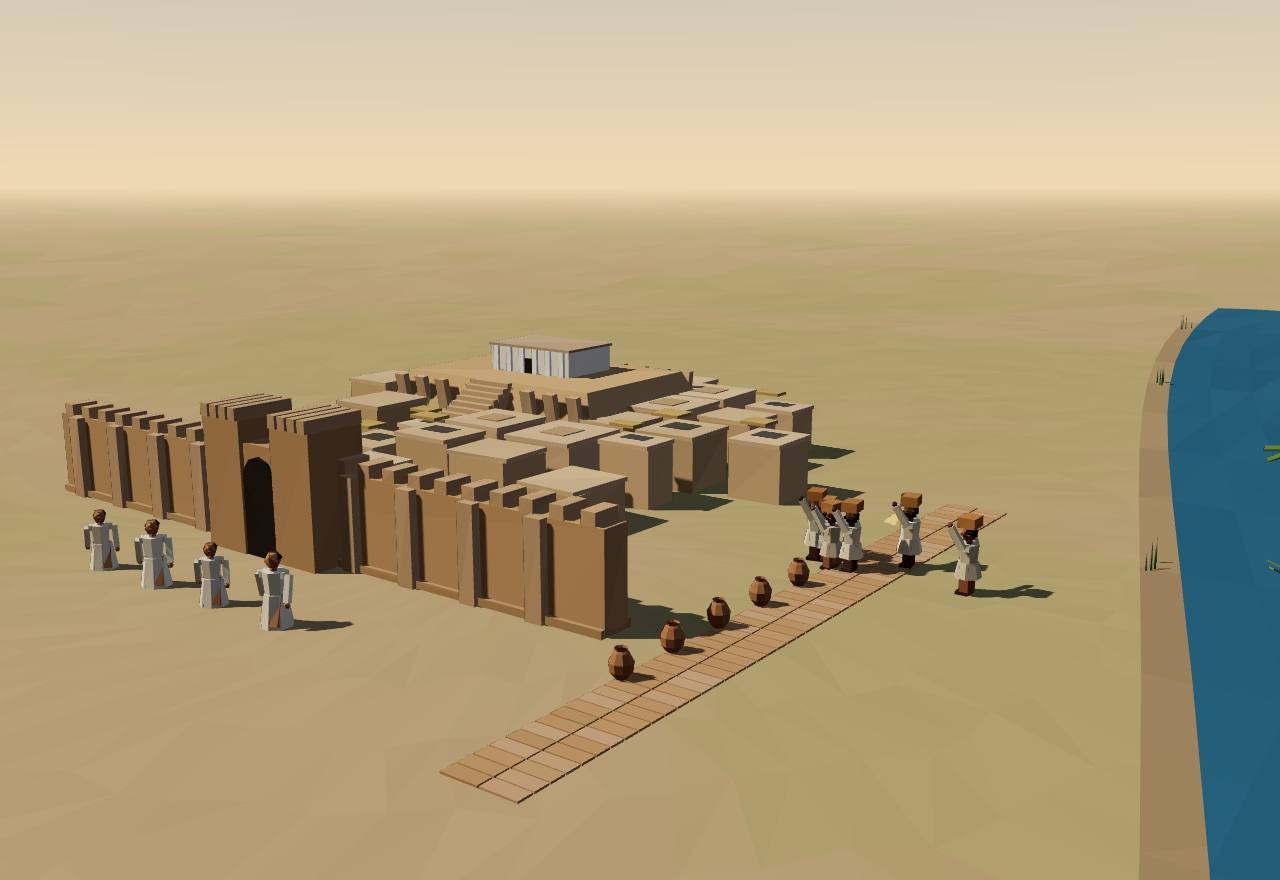
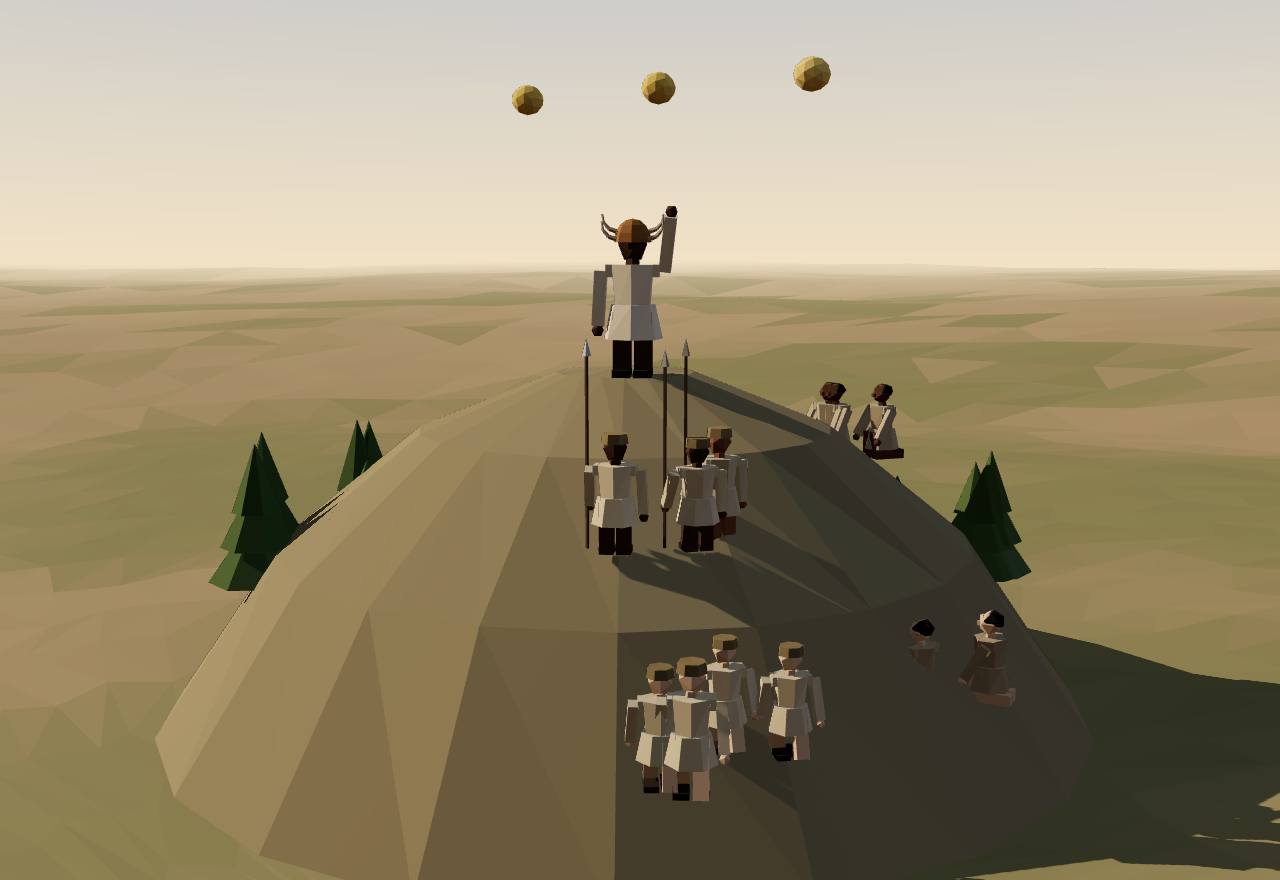
Agade, imagined: its site has not been found
2,324 BCE – 2,284 BCE
Sargon's conquest
A king from a city nobody had heard of defeated the lord of Uruk, led him in a neck stock to the gate of Enlil, and claimed every land from the Gulf to the Mediterranean. His city, Agade, has never been found.
Terms: Akkad: Sargon's conquest
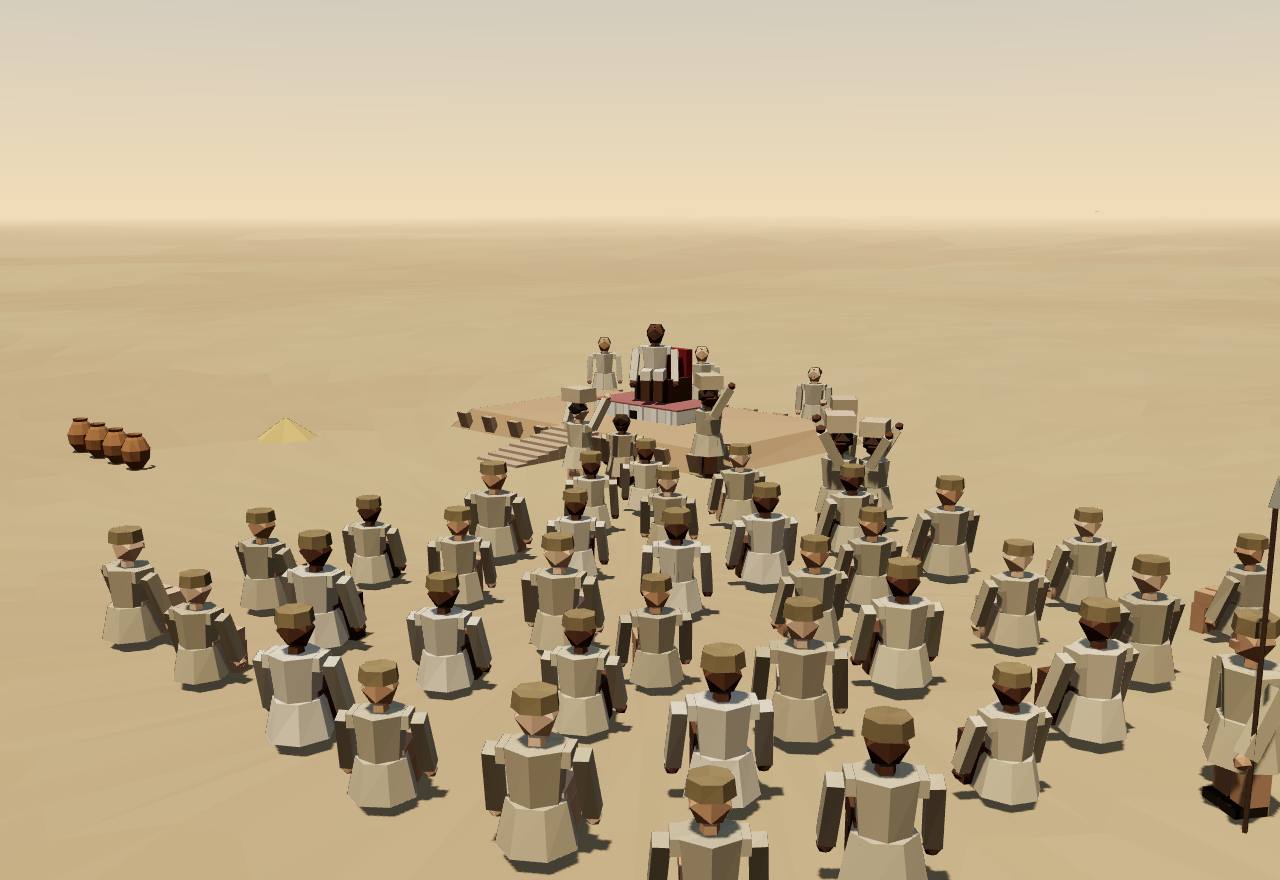
The men who ate bread before Sargon
Nothing contemporary explains how Sargon came to power. The later King List says that Sargon, 'whose father was a gardener, the cupbearer of Ur-Zababa, became king, the king of Agade, who built Agade'. ARCANE III notes that 'before Sargon, Akkad was not known as a city' and that compelling contemporary evidence for his rise 'is not available'. 6,1 Debated Texts
Sargon's own inscription says he destroyed Uruk, and that 'with Lugalzagesi, the king of Uruk, weapons he made clash and then seized him. In a (neck) stock to the gate of Enlil he brought him.' Another copy counts 'fifty governors' beaten at Uruk. ARCANE III puts the victory around his 25th to 30th year, in a reign of 40 years, so he ruled the north for decades before the south. 4,7,1 Consensus Texts
The same inscription claims a new kind of rule: Enlil gave him the land from the Upper Sea to the Lower, and 'from the Sea the Lower' on, '(only) citizens of Agade the governorships held'. The men of Mari and Elam 'stood (to serve)' before him. 4 Consensus Texts
Sargon boasts that he won 34 battles and that '5,400 men daily before him ate bread': a force fed by the palace, not called up for one war. Seshat codes professional soldiers and officers as present, with five to six levels of military command. 5 Seshat Consensus Texts
'The boats of Meluhha, the boats of Magan, and the boats of Dilmun at the quay of Agade he tied up', the inscription goes on; in Tuttul the god Dagan gave him 'the Upper Land', Mari, Iarmuti and Ebla 'as far as the Forest of Cedars and the Mountains of Silver'. 5 Consensus Texts
Sargon's reach was smaller than his titles. ARCANE III finds that he 'left relatively few traces beyond Babylonia': an Akkadian presence in Upper Mesopotamia 'only starts with his sons', while northern Babylonia and the Diyala 'may have been under Sargon's rule decennia before the South, Elam or Mari'. 1 Debated Texts Excavation
'It is assumed that Sargon installed his daughter Enheduana as en priestess of Nanna at Ur', after his conquest of Sumer, though ARCANE III adds that she may have been installed by his successors. In a hymn in her name she says: 'I, En-hedu-ana the en priestess, entered my holy jipar in your service.' 1,8 Debated Texts
Agade has not been found. J. Reade's proposal to look near the confluence of the Adhem and the Tigris 'has been largely accepted', because it explains the dynasty's ties to the Diyala and its long hold on Upper Mesopotamia; A. George argues for Baghdad, near the Diyala's mouth. 1 Debated Texts Survey
Most of what Sargon and his sons said about themselves is known only because later scribes copied the inscriptions on their statues and socles (one copy notes that it 'is written in front of Lugalzagesi'); ARCANE III notes that the deeds in the inscriptions 'mainly survived in Old Babylonian copies'. 1,7 Consensus Texts
How power worked King · Conquest or coup · Empire · 1 unknown
How power worked
- Who rules
- King Consensus
Why?
- How chosen
- Conquest or coup Consensus
Why?
- Limits on power
- Unknown
Why?
No source from Sargon's reign shows a council, assembly or court able to check him: the inscriptions speak only of the gods' favour, which is silence rather than evidence either way.
- Scale
- Empire Debated
Why?
- Claim to rule
- Divine mandate Consensus
Why?
- Who has a say
- A narrow elite Consensus
Why?
2,284 BCE – 2,261 BCE
Rimush and Manishtushu
Sargon's sons inherited a conquest, not a settled state. Rimush fought the Sumerian cities three times and swore his body counts were true; Manishtushu sailed across the Gulf, and bought land, field by field, from the kin groups that owned it.
Terms: Akkad: Rimush and Manishtushu
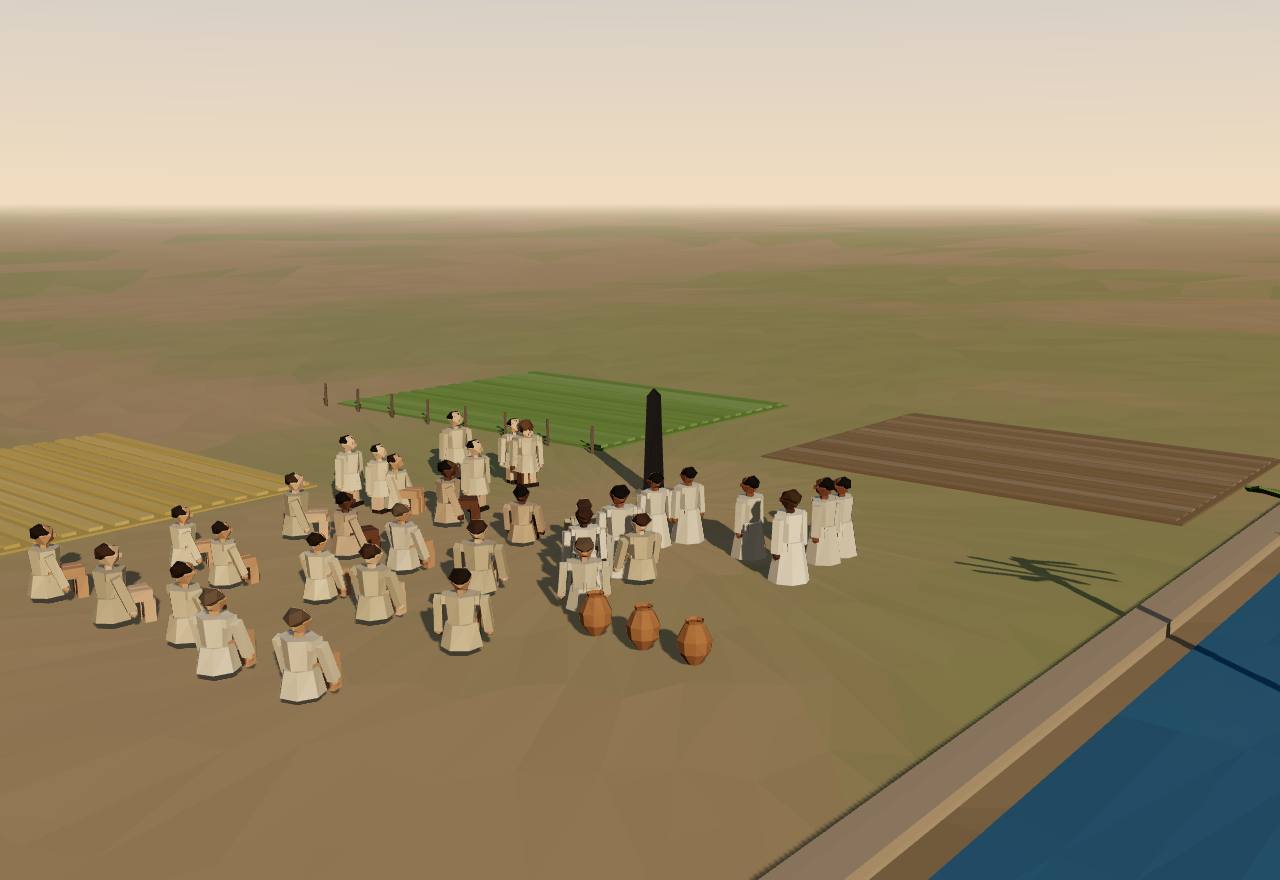
Manishtushu buys a field near Kish
Even the order of the sons is uncertain. The standard King List has Rimush succeed Sargon, followed by 'Man-ištišu, the older brother of Rimuš', for 22 or 24 years together; the older Ur III version reverses them, giving Manishtushu 15 years and Rimush 8. ARCANE III uses 23 years for both, 2284–2262 BCE. 6,1 Debated Texts
Rimush says that 'in battle over Sumer completely three times he was victorious', captured the king of Ur and the governors, and took their tribute 'as far as the Sea Lower'. At Adab and Zabalam alone he claims 15,718 men struck down and 14,576 captives; ARCANE III dates the capture of Meskigala of Adab to his first or second year. 11,12,1 Consensus Texts
The numbers come with an oath. 'By the gods Šamaš and Ilaba I swear: these are not falsehoods, (but) it is indeed true', Rimush's inscriptions end, and Manishtushu used the same formula. Several of the numerals are damaged, and CDLI marks some as RIME's readings. 13,14,11 Consensus Texts
No archive runs on from the Early Sargonic tablets to the Classic Sargonic ones. One explanation ARCANE III reports (after Sommerfeld) is that Rimush 'killed most of the Sumerian élite when he suppressed a southern revolt'; the other is simply a gap in time. 1 Speculative Texts
In 'the year third' of his reign Rimush fought Parahšum and Elam and says that 'Elam he ruled'. Vessels from the Elamite booty found at Brak and at Tuttul show an Akkadian presence in Upper Mesopotamia, which ARCANE III says 'only starts with' Sargon's sons. 13,1 Consensus Texts Excavation
Manishtushu claims to have crossed the Lower Sea, beaten 32 cities that assembled against him, and brought back black stone, which 'in boats he loaded' and moored at the quay of Agade. 14 Consensus Texts
Manishtushu's obelisk records the king buying eight parcels of land, 9,723 iku (3,430 ha), 'each from several sellers of the same kinship grouping', around Dur-Sin, Girtab, Marda and Kish. For one field, 190 men of Dur-Sin were 'eaters of bread' at the closing feast and 49 citizens of Akkade witnessed for the buyer. 15 Consensus Texts
Both brothers say their power came from Enlil: Rimush, 'assuredly the kingship Enlil gave to him'; Manishtushu, 'the god Enlil made him great, his name he called, and the scepter of kingship he gave to him'. 11,16 Consensus Texts
Cliopatria draws the Akkadian Empire for 2300–2251 BCE at about 390,000 km², and keeps a separate 'Sumerian City-States' polygon of about 8,300 km² beside it. (City positions on this page's maps are from Reba, Reitsma and Seto's dataset.) 10,17 Debated
How power worked King · Heredity · Empire · 1 unknown
How power worked
- Who rules
- King Consensus
Why?
- How chosen
- Heredity Consensus
Why?
- Limits on power
- Unknown
Why?
The inscriptions and the obelisk show no body that could check the king; the land sales were bought, not refused, and nothing says the sellers could refuse.
- Scale
- Empire Consensus
Why?
- Claim to rule
- Divine mandate Consensus
Why?
- Who has a say
- A narrow elite Consensus
Why?
How far did Akkad reach? The map, slice by slice
Data: Cliopatria (CC BY 4.0), Reba et al. 2016
Cliopatria draws the Akkadian Empire in three slices; Agade is not on the map because its site has not been found. 10,17 ARCANE III is more cautious about the west: Sargonic rule "did not apparently extend much beyond the Habur region and the Euphrates valley at Mari". 1
| Slice | Area |
|---|---|
| 2,300 BCE–2,251 BCE | about 390,000 km² |
| 2,250 BCE–2,201 BCE | about 527,000 km² |
| 2,200 BCE–2,101 BCE | about 297,000 km² |
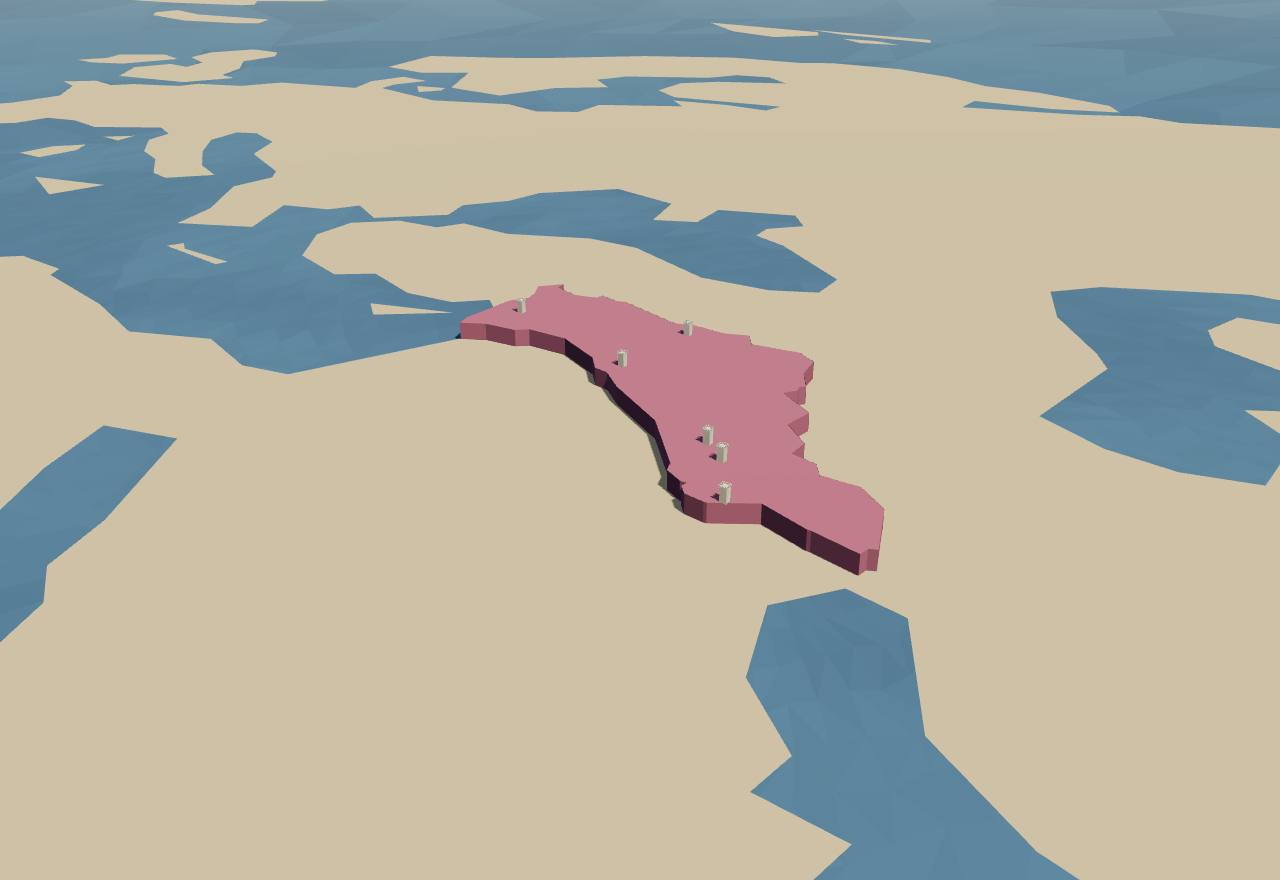
The Akkadian Empire on Cliopatria's map, 2300–2101 BCE
Territory: Cliopatria (CC BY 4.0), simplified. Height fixed: population not coded in Seshat.
2,261 BCE – 2,205 BCE
Naram-Sin, god of Agade
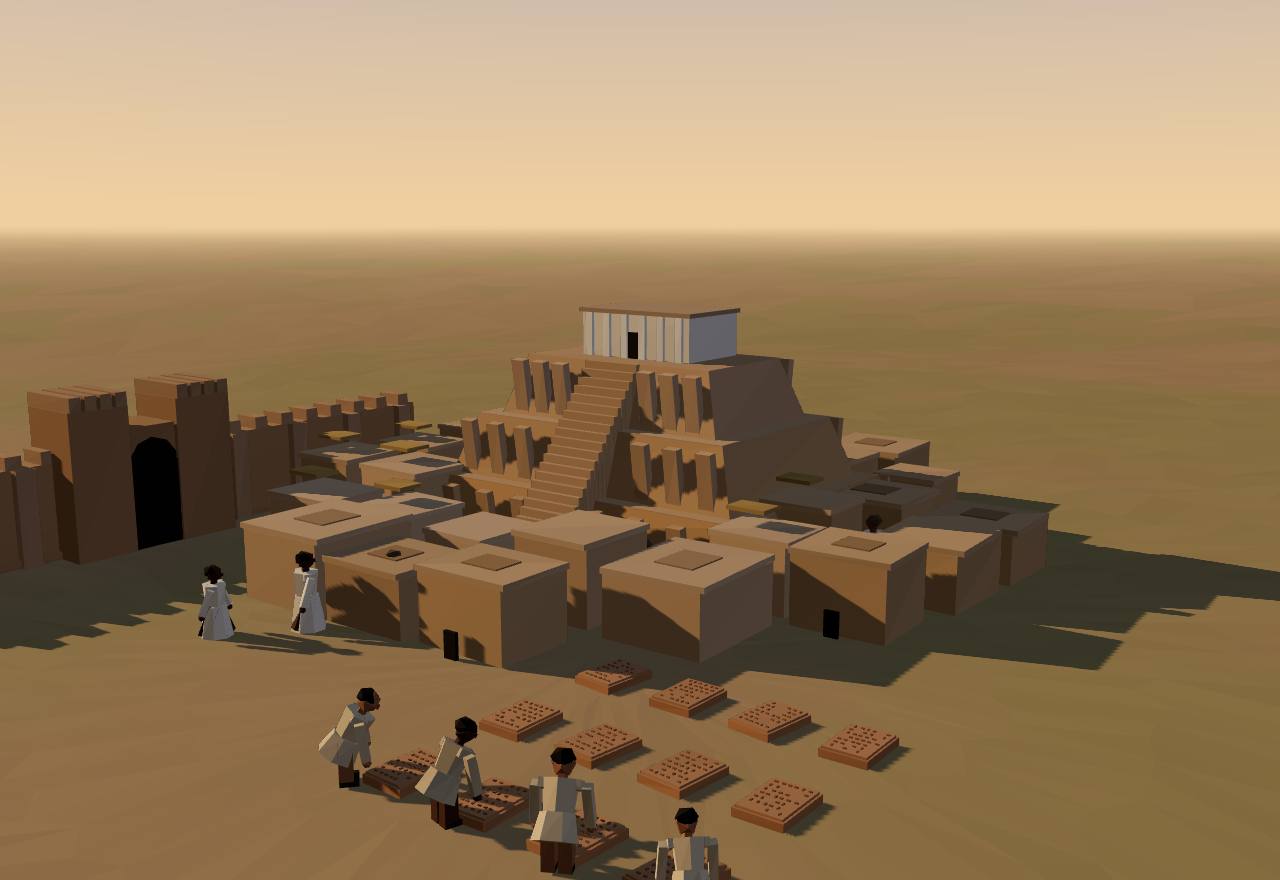
When the cities of Babylonia rose against him, Naram-Sin won nine battles in a year. Then his own citizens asked the gods to make him the god of their city, and built him a temple. On his victory stele he wears a horned tiara.
Terms: Akkad: Naram-Sin, god of Agade
Naram-Sin's victory stele, and its scene set out in the round
The 'Great Revolt' was led by Iphurkishi of Kish and Amargirid of Uruk; Upper Mesopotamia 'remained loyal'. Naram-Sin's own account: 'when the world quarters the four together revolted against him, through the love which the goddess Ištar showed him, in nine battles during one year he was victorious, and the kings which had risen (against him) he captured.' 1,18 Consensus Texts
Because he had saved 'the foundations of his city', the people of Agade asked Ištar, Enlil, Dagan, Ninḫursag, Ea, Sin, Šamaš and Nergal for him to be 'the god of their city Agade', and 'in the middle of Agade a temple to him they built'. ARCANE III: 'the deification of Naramsuen after the Great Revolt became a model for future generations.' 18,1 Consensus Texts
After the revolt the king's name was written with the sign for a god in front of it; all of his brick stamps from Nippur, Lagaš, Ur, Adab and Brak do so. How far the sign dates a text is argued: 'from its absence nothing can be concluded' (A. Westenholz), and 'scribes in Akkad did not make much use of the dingir-sign, while scribes in Sumer often did' (B. Foster). 1 Debated Texts
Naram-Sin's reign is given as 56 years in some King List copies and 37 in others; the Ur III copy's 54½ confirms the higher figure, and ARCANE III dates him 2261–2206 BCE. Westenholz put the Great Revolt in his last seven years or so; ARCANE III prefers his twenties, because so much happened both before and after the deification. 1,6 Debated Texts
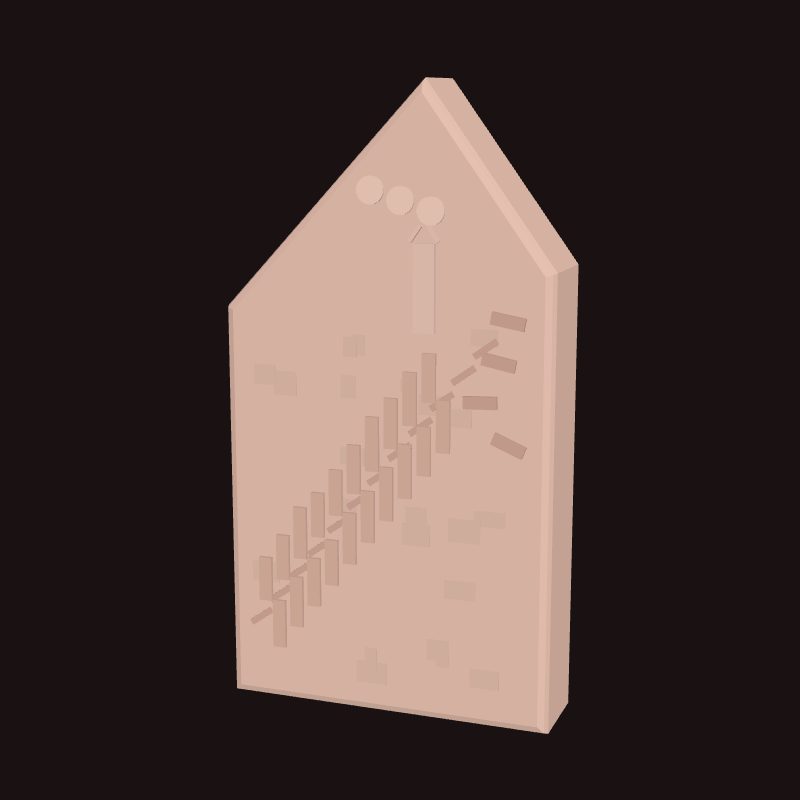
His victory stele, of pink and beige limestone and 2 m high, shows Akkadian soldiers, their enemies and a wooded mountain, and the king in a horned tiara, carrying a bow, an arrow and an axe, beneath three sun discs. Its inscription names victories over the Lullubi. An Elamite king, Shutruk-Nahhunte, carried it from Sippar to Susa as booty in the 12th century BCE; it was dug up there in 1898. 19 Consensus Excavation Texts
Under Naram-Sin a 'classic' Sargonic style developed in art, 'especially glyptics', and in the way tablets were written. ARCANE III links its spread to the building programme after the deification and 'the renewal of the country's administration following the revolt'. 1 Consensus Texts Excavation
In the hymn later copied under her name, Enheduana is driven out by Lugal-ane, who 'has stripped An of the E-ana': 'He stripped me of the rightful crown of the en priestess.' ARCANE III reads this as setting her still alive at the time of the Great Revolt; Naram-Sin later installed his own daughter, Enmenana, at Ur. 8,1 Debated Texts
Seshat codes 'rulers are gods' as present only for 2191–2154 BCE on its own chronology, and inferred absent before and after: divinity belonged to one king, not to the office. It codes the empire at 450,000–1,000,000 km² with five administrative levels and full-time bureaucrats. Seshat Consensus
At its widest in Cliopatria (2250–2201 BCE) the Akkadian Empire covers about 527,000 km², about a third more than its slice for 2300–2251 BCE. 10 Debated
How power worked Divine king · Heredity · Empire · 1 unknown
How power worked
- Who rules
- Divine king Consensus
Why?
- How chosen
- Heredity Consensus
Why?
- Limits on power
- Unknown
Why?
The Bassetki inscription shows the citizens of Agade acting to deify the king, not to restrain him; no source shows a council, assembly or court that could.
- Scale
- Empire Consensus
Why?
- Claim to rule
- Divine mandate Consensus
Why?
- Who has a say
- A narrow elite Debated
Why?
Read the stele
Schematic after the Louvre's description
A schematic, not a copy: the slab's outline and the rising diagonal of its scene, with a marker for each element the Louvre lists. Choose a marker to read it. 19
The king
Naram-Sin in a horned tiara, with a bow, an arrow and an axe. The Louvre's list calls the headdress a 'tiare à cornes'. 19
Three sun discs
Three radiant discs above the summit, which the Louvre lists as sun discs. 19
Akkadian soldiers
Two kinds of Akkadian soldier: bearded men in helmets with axes and a standard, and beardless men in helmets with axes, picks and bows. 19
The enemy
Several enemies, the Lullubi, whom Naram-Sin's inscription says he defeated. 19
Mountain and forest
A mountain with a forest: the Louvre lists both in the decor. Its position here is the schematic's. 19
Naram-Sin's inscription
Above the king, little is left of his inscription: his titles, the victories over the Lullubi and a dedication, probably to Šamaš. 19
An Elamite king's inscription
On the mountain, a later inscription of Shutruk-Nahhunte, king of Elam, says he brought the stele from Sippar. It was found on the acropolis of Susa on 6 April 1898. 19
A temple for Naram-Sin in the middle of Agade (imagined)
2,205 BCE – 2,142 BCE
Collapse and the Gutians
Under Naram-Sin's son the far provinces broke away. After him the King List asks 'who was king?', four men ruled in three years, and two last kings held a shrinking Akkad. Later scribes blamed Naram-Sin for angering Enlil; modern scholars argue over drought.
Terms: Akkad: Collapse and the Gutians
Tell Leilan on the Habur plains, before and after the drought
Naram-Sin's son Šar-kali-šarri ruled 25 (or 24) years, which 15 or 16 known year names roughly confirm; his year names commemorate battles against Amorites, Gutians and Elamites. One King List manuscript ends 'the dynasty of Sargon' with him. 1,6 Consensus Texts
'Towards the end of Sharkalisharri's reign, the more distant provinces were defecting from Akkad's rule': Ititi attacked Gasur, Epirmubi, the former governor of Susa, declared independence, and Lagaš broke away under Puzurmama at the latest. 1 Consensus Texts
Then the King List asks: 'Then who was king? Who was the king?' Irgigi, Imi, Nanûm and Ilulu 'ruled for only 3 years'. Dudu followed for 21 years and his son Šu-Durul for 15: 39 years now called the Late Akkad dynasty. 6,1 Consensus Texts
How much Late Akkad ruled is argued. Dudu and Šu-Durul 'are generally thought to have ruled over a very restricted region around Akkad', yet finds naming Šu-Durul, 'the mighty one, king of Akkad', run from Adab in the south to Brak and Titriş Höyük in the north-west. 1 Debated Texts Excavation
The Gutian 'dynasty' is known almost only from the King List, whose copies give it 91 to 125 years; modern estimates of the Gutian period run from about 40 to 150 years. Piotr Michalowski: 'there is absolutely no reason to trust the data contained in the King List'. 1 Debated Texts
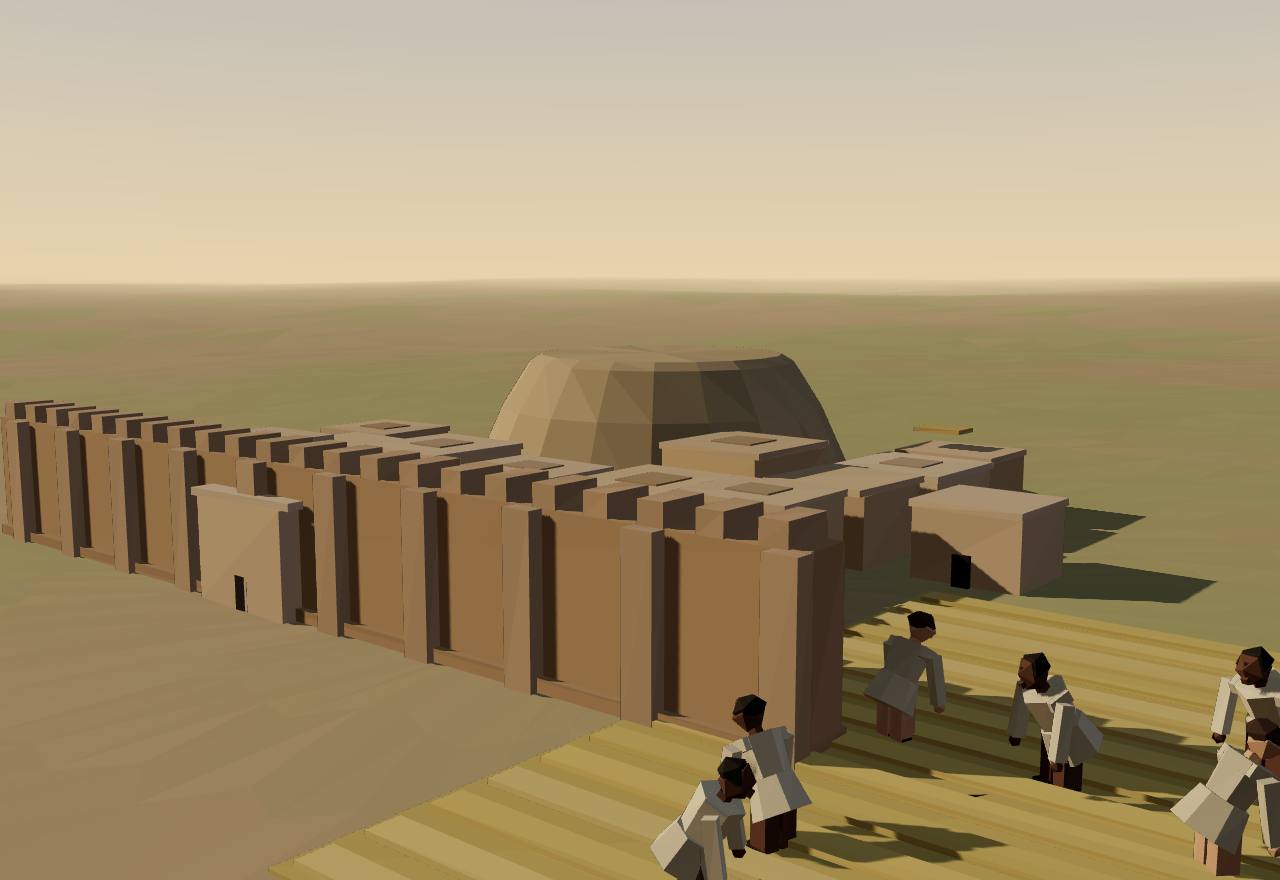
At Tell Leilan in the Habur plains, Weiss and colleagues found that 'at 2200 B. C., a marked increase in aridity and wind circulation' degraded farming and 'evidently caused abandonment of Tell Leilan, regional desertion, and collapse of the Akkadian empire'. A stalagmite in northern Iran later dated a dust event from 4.26 ± 0.066 thousand years before 1950, lasting about 290 years, statistically indistinguishable from the abandonment at 4.19 ± 0.02. 20,2 Debated Excavation Dating
Critics question the readings of the texts, the absolute dates and whether Akkad depended on the Habur at all; later work found the abandonment of northern sites 'much less than Weiss and colleagues had supposed', with 'continued settlement at most major urban sites'. Middleton concludes that 'the Akkadian collapse seems best understood as a political collapse'. 9 Debated Survey Excavation
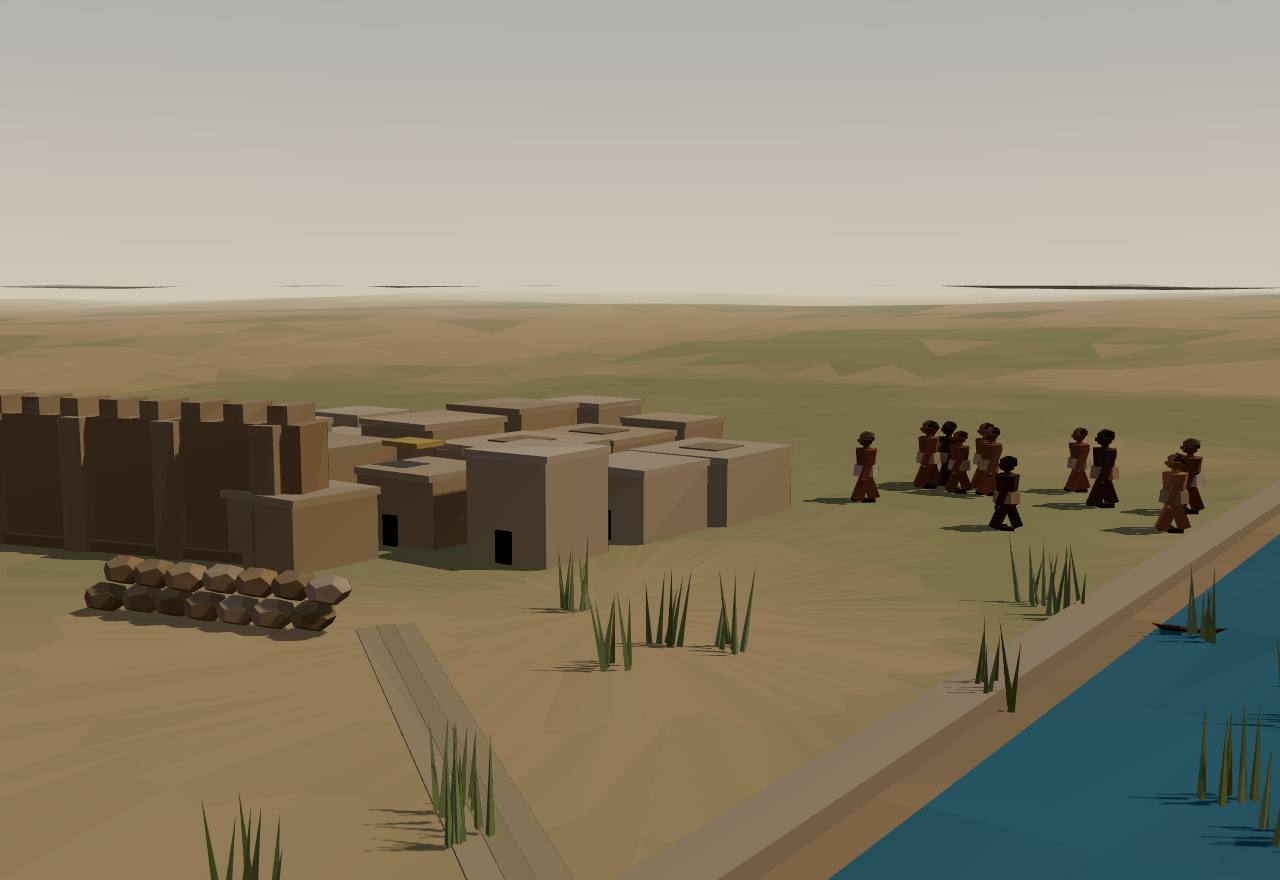
Later scribes had their own verdict. In The Cursing of Agade, known from Ur III fragments and Old Babylonian copies, Naram-Sin tears down Enlil's temple, and Enlil sends the Gutians, 'an unbridled people, with human intelligence but canine instincts': 'Messengers no longer travelled the highways, the courier's boat no longer passed along the rivers.' 21 Consensus Texts
How power worked King · Heredity · Territorial state · 2 unknown
How power worked
- Who rules
- King Consensus
Why?
- How chosen
- Heredity Debated
Why?
- Limits on power
- Unknown
Why?
For Šar-kali-šarri and the Late Akkad kings the sources are year names and a few inscriptions; none says anything about checks on the king.
- Scale
- Territorial state Debated
Why?
- Claim to rule
- Divine mandate Debated
Why?
- Who has a say
- Unknown
Why?
Too few documents survive from the anarchy and the Late Akkad years to say who took part in decisions.
Three clocks for one collapse
Data: ARCANE III dates, Carolin et al. 2019, Weiss et al. 1993
Two clocks run side by side. The kings are dated by the Middle Chronology (±30 years); the dust and the abandoned towns by uranium-thorium and radiocarbon ages, converted here from thousands of years before 1950. 1,2
Scroll the timeline sideways; the table below lists every event.
| Lane | When | What | Evidence |
|---|---|---|---|
| Kings and revolts | 2,324 BCE–2,285 BCE | Sargon 1 | Consensus |
| Kings and revolts | 2,284 BCE–2,262 BCE | Rimush and Manishtushu 1 | Consensus |
| Kings and revolts | 2,261 BCE–2,206 BCE | Naram-Sin (the Great Revolt probably in his twenties) 1 | Consensus |
| Kings and revolts | 2,205 BCE–2,181 BCE | Šar-kali-šarri (distant provinces defect late in his reign) 1 | Consensus |
| Kings and revolts | 2,180 BCE–2,142 BCE | Anarchy, Dudu, Šu-Durul 1,6 | Consensus |
| Kings and revolts | 2,180 BCE–2,111 BCE | Gutian period (length estimated at 40–150 years; ARCANE uses 70 ± 30) 1 | Debated |
| Settlement in the north | 2,310 BCE | Northern cities taken into the empire (about 4.26 ka) 2 | Debated |
| Settlement in the north | 2,240 BCE–1,950 BCE | Leilan and its region abandoned (4.19 ± 0.02 ka; settlement returns about 3.90 ka) 2,20 | Debated |
| Settlement in the north | 2,240 BCE–1,950 BCE | Critics: most major sites stayed occupied 9 | Debated |
| Dust and drought | 2,560 BCE–2,450 BCE | First dust event (4.51–4.40 ka, about 110 years) 2 | Consensus |
| Dust and drought | 2,310 BCE–2,020 BCE | Second, larger dust event (from 4.26 ± 0.066 ka, about 290 years) 2 | Consensus |
| Dust and drought | 2,200 BCE | Aridity 'at 2200 B. C.' (Weiss) 20 | Debated |
Agade cursed, as the later poem imagines it
Artefacts
 Model, not a scan
 Model, not a scan
 Model, not a scan
In numbers
- Marks, by Seshat polity:
- Akkadian Empire
- Background bands, by phase:
- Sargon's conquest
- Rimush and Manishtushu
- Naram-Sin, god of Agade
- Collapse and the Gutians
Not coded in Seshat
| Seshat polity | Years | Value |
|---|---|---|
| Akkadian Empire | 2,270 BCE – 2,083 BCE (whole period) | 450,000–1,000,000 |
| Seshat polity | Years | Value |
|---|---|---|
| Akkadian Empire | 2,270 BCE – 2,083 BCE (whole period) | 20,000–40,000 |
| Seshat polity | Years | Value |
|---|---|---|
| Akkadian Empire | 2,270 BCE – 2,083 BCE (whole period) | 5 |
| Seshat polity | Years | Value |
|---|---|---|
| Akkadian Empire | 2,270 BCE – 2,083 BCE (whole period) | 4–5 |
| Seshat polity | Years | Value |
|---|---|---|
| Akkadian Empire | 2,270 BCE – 2,083 BCE (whole period) | 5–6 |
Not coded in Seshat: population.
Values as Seshat codes them: bands are ranges, dots single values, flat bars values given for a whole period, hatching “unknown”; from one Seshat polity to the next, marks alternate between a light tone and a darker one with dashed joining lines (the key above names each polity). Source: Seshat Global History Databank (Equinox-2020), CC BY 4.0.
Governance fingerprint
Seshat's institutional variables, phase by phase. Hover or focus a cell for the values and years.
- Present
- Inferred present
- Absent
- Inferred absent
- Unknown
- Not coded in Seshat
- Mixed: present in one Seshat polity or period, absent in another
The axes against Seshat
7 agree, 0 disagree, 1 mixed.
- Mixed Naram-Sin, god of Agade: who rules coded “Divine king”, which implies rulers are gods present; Seshat has it present in one polity or period and the opposite in another.
Show the 7 pairs that agree
- Agree Sargon's conquest: claim to rule coded “Divine mandate”, which implies rulers legitimated by gods present; Seshat has it inferred present.
- Agree Rimush and Manishtushu: claim to rule coded “Divine mandate”, which implies rulers legitimated by gods present; Seshat has it inferred present.
- Agree Rimush and Manishtushu: how chosen coded “Heredity”, which implies elite status hereditary present; Seshat has it inferred present.
- Agree Naram-Sin, god of Agade: claim to rule coded “Divine mandate”, which implies rulers legitimated by gods present; Seshat has it inferred present.
- Agree Naram-Sin, god of Agade: how chosen coded “Heredity”, which implies elite status hereditary present; Seshat has it inferred present.
- Agree Collapse and the Gutians: claim to rule coded “Divine mandate”, which implies rulers legitimated by gods present; Seshat has it inferred present.
- Agree Collapse and the Gutians: how chosen coded “Heredity”, which implies elite status hereditary present; Seshat has it inferred present.
Only pairs where an axis value on its own implies a Seshat variable are compared; the rest is not counted as disagreement.
Source: Seshat Global History Databank (Equinox-2020), CC BY 4.0.
Compare
| Axis | Akkad | Sumer: Uruk and Jemdet Nasr | Achaemenid Persia: Cyrus and Cambyses | Egypt: Unification and the first dynasties |
|---|---|---|---|---|
| Who rules | King | Clerical rule | Emperor | Divine king |
| How chosen | Conquest or coup | Unknown | Conquest or coup | Heredity |
| Limits on power | Unknown | Council | Custom and kin | Unknown |
| Scale | Empire | City-state | Empire | Territorial state |
| Claim to rule | Divine mandate | Divine mandate | Divine mandate | Divine mandate |
| Who has a say | A narrow elite | Unknown | A narrow elite | A narrow elite |
Legacy
Naram-Sin's deification after the Great Revolt 'became a model for future generations'. 1 Consensus
Sargon 'has become one of the most prominent rulers of ancient Mesopotamia'; 'in later periods he counted as an exemplary successful ruler', and his inscriptions survive mostly in copies made centuries after his death. 1 Consensus
Agade itself became a warning: The Cursing of Agade, known from copies of the Ur III and Old Babylonian periods, ends 'Inana be praised for the destruction of Agade!' 21 Consensus
See also forms of government.
Sources
Bibliography
23 sources, numbered as cited: 4 papers · 2 books · 3 datasets · 14 primary sources
- Book Sallaberger, W., Schrakamp, I. (eds) (2015). History & Philology (ARCANE III: Associated Regional Chronologies for the Ancient Near East). Brepols, Turnhout. Part I (Sallaberger & Schrakamp), posted by the editor: §§ 1–2 (the Sumerian King List), 8 (the Gutian period) and 10 (tables 38–39, Middle Chronology dates) read.
- Paper Carolin, S. A., Walker, R. T., Day, C. C., Ersek, V., Sloan, R. A., Dee, M. W., Talebian, M., Henderson, G. M. (2018). Precise timing of abrupt increase in dust activity in the Middle East coincident with 4.2 ka social change. Proceedings of the National Academy of Sciences 116 (1). Read in full (PMC6320537). Published online December 2018, in the January 2019 issue. 'ka' = thousand years before 1950 CE.
- Dataset The Pennsylvania Sumerian Dictionary Project (2024). The electronic Pennsylvania Sumerian Dictionary (ePSD2), version 2.7.2: entries for the Akkad page. Oracc, University of Pennsylvania. Cuneiform (Unicode) and glosses copied from the entries for Agade (o0043186), lugal (o0033341), ensik (o0027087), diŋir (o0025832), erin (o0027202), namlugal (o0035108) and Gutium (o0044853), read 15 Nov 2026 on the live Oracc site (its TLS chain fails automated checks, so the link is the Internet Archive copy of the home page). Licence CC BY-SA.
- Primary Cuneiform Digital Library Initiative (transliteration and translation D. A. Foxvog) (2014). Sargon of Agade, statue inscription, Sumerian and Akkadian (RIME 2.01.01.01 composite, P461926). CDLI. Composite and line-by-line translation read in full: the victory over Lugalzagesi and 'citizens of Agade' holding the governorships 'from the Sea the Lower' to the Upper.
- Primary Cuneiform Digital Library Initiative (transliteration and translation D. A. Foxvog) (2014). Sargon of Agade, statue inscription, Sumerian and Akkadian (RIME 2.01.01.11 composite, P461937). CDLI. Read in full: 34 battles; the boats of Meluhha, Magan and Dilmun at the quay of Agade; Dagan gives the Upper Land; '5,400 men daily before him ate bread'.
- Primary Black, J. A., Cunningham, G., Ebeling, J., Flückiger-Hawker, E., Robson, E., Taylor, J., Zólyomi, G. (2006). The Sumerian king list: translation (ETCSL 2.1.1). The Electronic Text Corpus of Sumerian Literature, Oxford. Translation follows manuscript WB unless noted; composite text with line numbers at https://etcsl.orinst.ox.ac.uk/section2/c211.htm. Read in full.
- Primary Cuneiform Digital Library Initiative (transliteration and translation D. A. Foxvog) (2014). Sargon of Agade, statue inscription, Akkadian (RIME 2.01.01.02 composite, P461927). CDLI. Read in full: 'fifty governors' defeated at Uruk; the colophon says it was 'written in front of Lugalzagesi'.
- Primary Black, J. A., Cunningham, G., Ebeling, J., Flückiger-Hawker, E., Robson, E., Taylor, J., Zólyomi, G. (2006). The exaltation of Inana (Inana B): translation (ETCSL 4.07.2). The Electronic Text Corpus of Sumerian Literature, Oxford. Read in full. ARCANE III calls it Ninmeshara and dates its setting to the Great Revolt.
- Paper Middleton, G. D. (2012). Nothing Lasts Forever: Environmental Discourses on the Collapse of Past Societies. Journal of Archaeological Research 20 (3). Author's copy (Knowledge Commons, doi:10.17613/M6D35S); the section 'Northern Mesopotamia and Syria' (pp. 273–274) read closely, the rest skimmed.
- Dataset Bennett, J. S., Mutch, E., Tollefson, A., et al. (2025). Cliopatria - A geospatial database of world-wide political entities from 3400BCE to 2024CE. Scientific Data 12. Cliopatria: open geospatial dataset of over 1600 political entities, 3400 BCE–2024 CE.
- Primary Cuneiform Digital Library Initiative (transliteration and translation D. A. Foxvog) (2014). Rimush of Agade, statue inscription on the battles of Sumer and Kazallu (RIME 2.01.02.04 composite, P461950). CDLI. Read in full. CDLI flags several numerals as RIME's readings ('so RIME'); the total is given as 54,016 men 'including the fallen, including captives'.
- Primary Cuneiform Digital Library Initiative (transliteration and translation D. A. Foxvog) (2014). Rimush of Agade, statue inscription on Adab and Zabalam (RIME 2.01.02.01 composite, P461947). CDLI. Read in full: 15,718 men struck down, 14,576 captives, Meskigala of Adab captured (numerals partly damaged).
- Primary Cuneiform Digital Library Initiative (transliteration and translation D. A. Foxvog) (2014). Rimush of Agade, statue inscription on Elam and Parahshum (RIME 2.01.02.06 composite, P461952). CDLI. Read in full: the campaign 'in the year third' of his reign; 'these are not falsehoods, (but) it is indeed true'.
- Primary Cuneiform Digital Library Initiative (transliteration and translation D. A. Foxvog) (2014). Manishtushu of Agade, statue inscription on Anshan and Shirihum (RIME 2.01.03.01 composite, P461968). CDLI. Read in full: 32 cities across the Lower Sea; black stone quarried and moored at the quay of Agade.
- Book Gelb, I. J., Steinkeller, P., Whiting, R. M. (1991). Earliest Land Tenure Systems in the Near East: Ancient Kudurrus (OIP 104), text volume. Oriental Institute of the University of Chicago. No. 40, the Manishtushu Obelisk (Louvre SB 20), pp. 116–119: description, structure and the sample interpretation of transaction A1, read.
- Primary Cuneiform Digital Library Initiative (transliteration R. K. Englund and D. A. Foxvog) (2014). Manishtushu of Agade, dedication (RIME 2.01.03.02 composite, P461969). CDLI. Read in full (fragmentary): 'the god Enlil made him great, his name he called, and the scepter of kingship he gave to him'.
- Dataset Reba, M., Reitsma, F., Seto, K. C. (2016). Spatializing 6,000 years of global urbanization from 3700 BC to AD 2000. Scientific Data 3. Geocoded city populations 3700 BC–AD 2000 from Chandler and Modelski, with a reliability ranking.
- Primary Cuneiform Digital Library Initiative (transliteration and translation D. A. Foxvog) (2014). Naram-Sin of Agade, the Bassetki statue inscription (RIME 2.01.04.10 composite, P461986). CDLI. Read in full. The witness, a copper statue from Bassetki (IM 077823, 67 × 67 × 43 cm), is CDLI P216558.
- Primary Musée du Louvre, Département des Antiquités orientales (2026). Stèle de Naram-Sin (Sb 4). Collections du Louvre. Record read 15 Nov 2026 (JSON at the same address + .json): pink and beige limestone, 200 × 105 × 27 cm, the decor list (horned tiara, three sun discs, mountain, forest), the inscriptions and the find (Susa acropolis, 6 April 1898, taken from Sippar by Shutruk-Nahhunte).
- Paper Weiss, H., Courty, M.-A., Wetterstrom, W., Guichard, F., Senior, L., Meadow, R., Curnow, A. (1993). The Genesis and Collapse of Third Millennium North Mesopotamian Civilization. Science 261 (5124). Abstract read (the article is closed); the argument as Middleton (2012) and Carolin et al. (2019) summarise it.
- Primary Black, J. A., Cunningham, G., Ebeling, J., Flückiger-Hawker, E., Robson, E., Taylor, J., Zólyomi, G. (2006). The cursing of Agade: translation (ETCSL 2.1.5). The Electronic Text Corpus of Sumerian Literature, Oxford. Old Babylonian version and the Ur III fragments from Nippur, read in full.
- Paper Butzer, K. W. (2012). Collapse, environment, and society. Proceedings of the National Academy of Sciences 109 (10). Main text read (PMC3309741); the SI Text on the Akkadian collapse could not be downloaded (bot check), so only the main text's statements are used.
- Primary The Metropolitan Museum of Art (2026). Cylinder seal, Akkadian, ca. 2350–2150 BCE, lapis lazuli (1999.325.8). The Met Collection. Record read through the Met Open Access API, 15 Nov 2026 (the collection web page refuses automated checks): H. 2.7 cm, diam. 1.3 cm; public domain.
Quantitative values from the Seshat Global History Databank (Equinox-2020), licensed CC BY 4.0. Dataset: Seshat Equinox Packaged Data (v.1). See also Seshat: The Global History Databank (Turchin et al. 2015).