Kingship from Narmer to Cleopatra
Egypt
3,100 BCE – 30 BCE
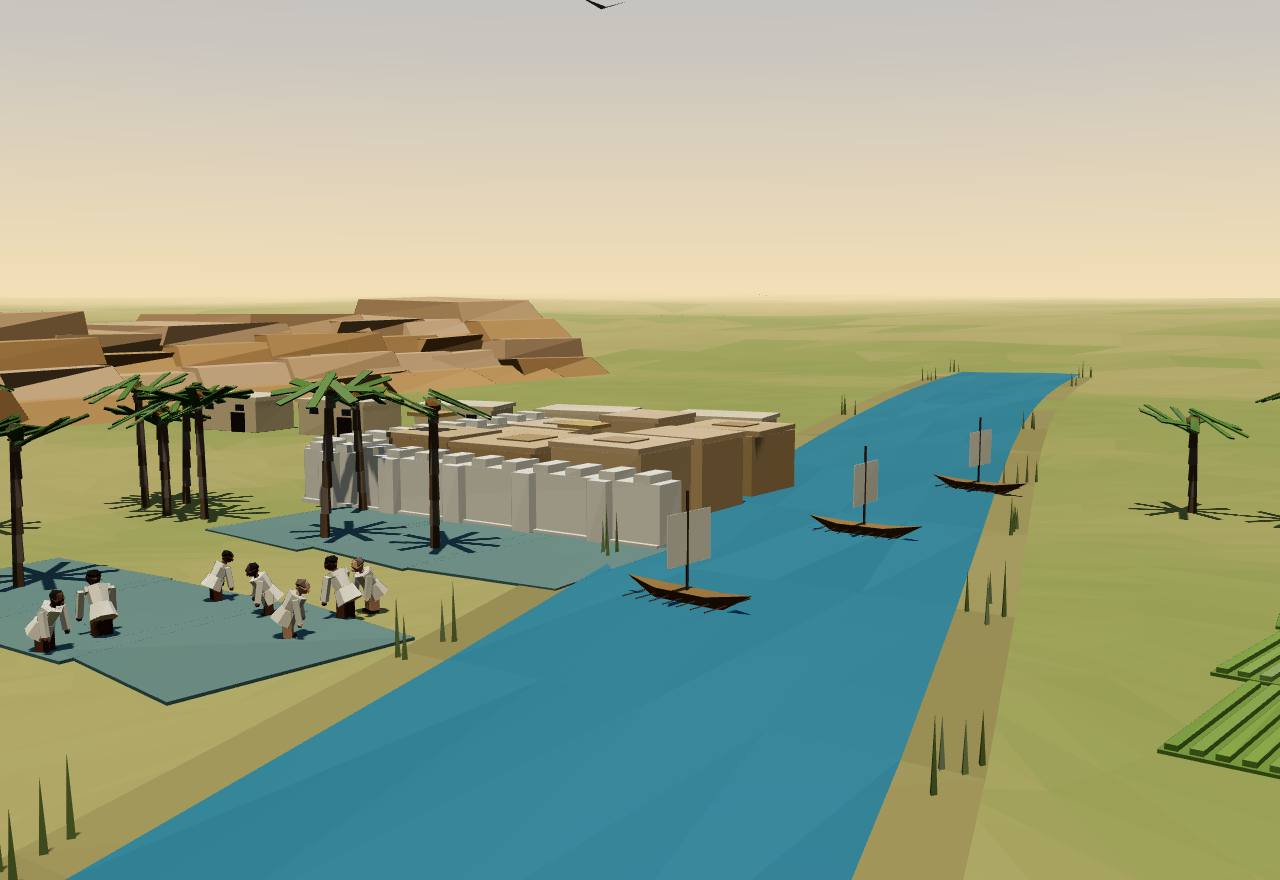
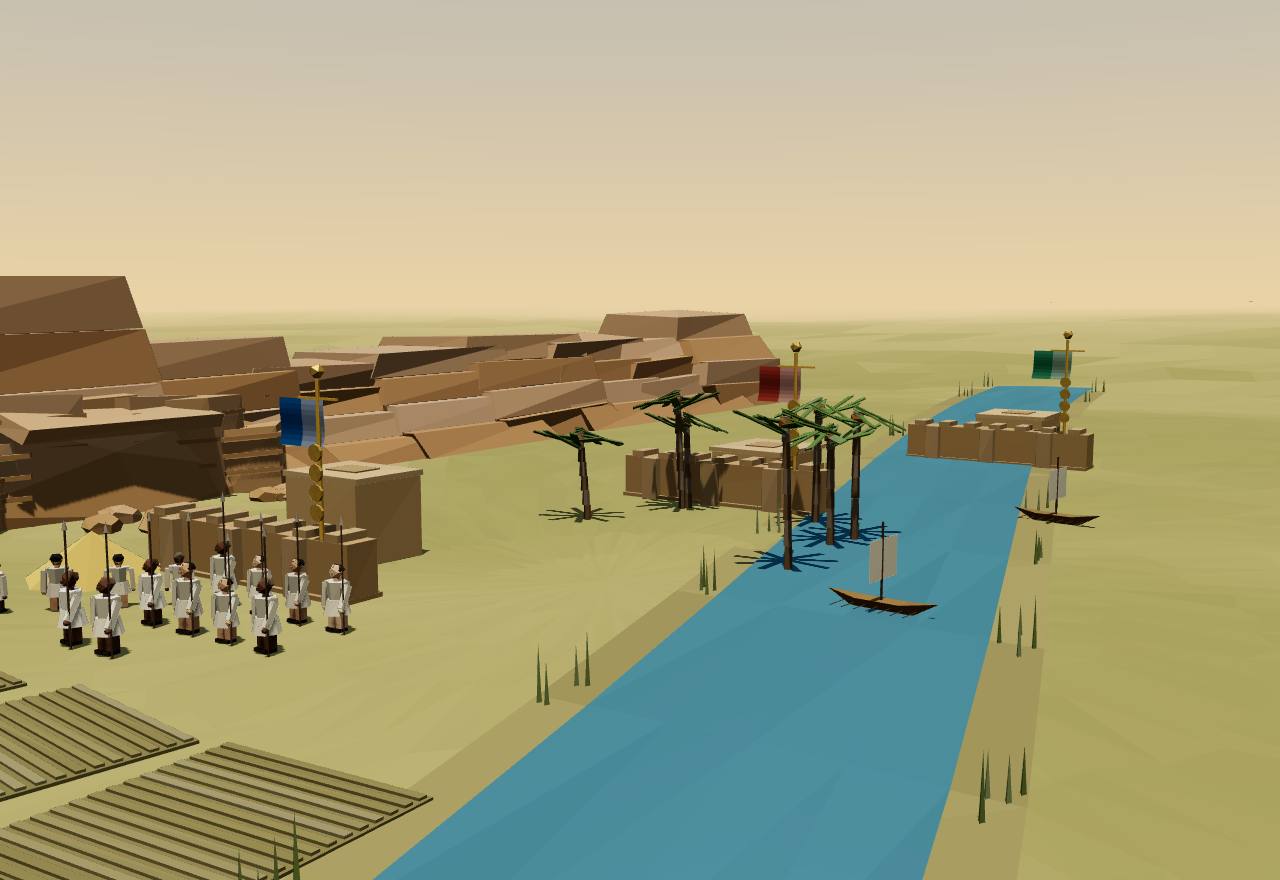
The Nile valley at Memphis, c. 3000 BCE
3,100 BCE – 2,686 BCE
Unification and the first dynasties
Around 3100 BCE one line of Upper Egyptian kings came to rule the whole valley and the Delta. They ruled as gods on earth, from Memphis, through a court that counted, stored and taxed.
Terms: Egypt: Unification and the first dynasties
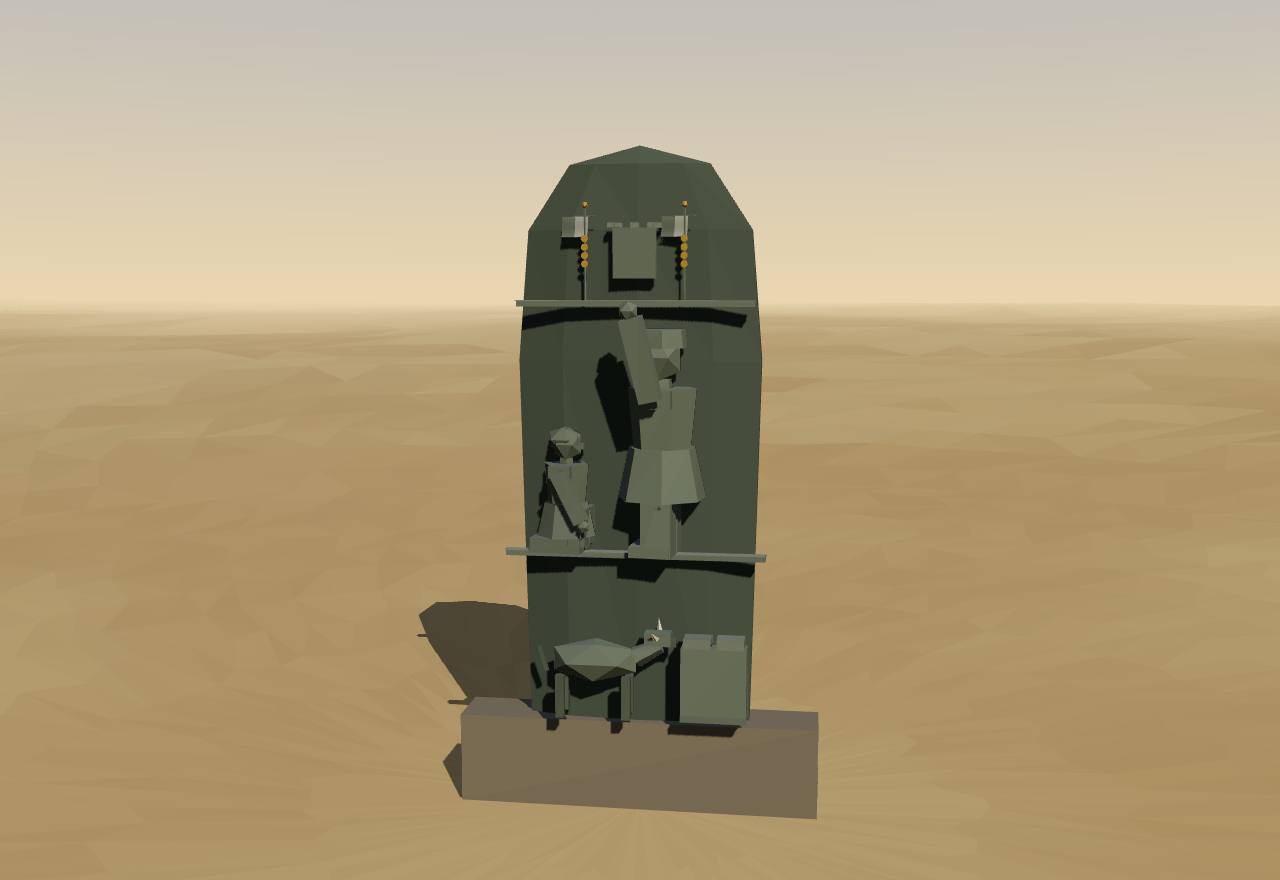
Reading a ceremonial palette (model, not a scan)
Most scholars agree that unification began in Upper Egypt and spread until it took in the land from Elephantine to the Delta. Only with the kings Ka and Narmer do objects of a single ruler turn up consistently from Upper Egypt to the southern Levant. 6 Consensus Excavation
Rulers commissioned large ceremonial palettes and maceheads, the Narmer Palette among them, 'to materialize ideologies of kingship' (Stevenson). Their scenes of a king striking down enemies are now often read as symbolic rather than as a record of conquest (Campagno); in Toby Wilkinson's words the palette recalls the unification 'in ritual if not in fact'. 1,6,7 Debated Excavation
Kings wrote their names inside a serekh, a rectangular frame, and serekhs of the Dynasty 0 rulers Ka and Narmer are numerous. The new state was, in Alice Stevenson's words, 'headed by the institution of divine kingship', and Seshat codes the rulers of Dynasties 1 and 2 as gods. 1 Seshat Consensus Excavation Texts
Memphis was Egypt's preeminent urban centre, and Seshat records it as the capital of Dynasties 1 and 2. No plan of the early city survives. 1 Seshat Consensus Excavation
At least 318 people were buried around the tomb of king Djer at Abydos, and roughly 2,000 around the First Dynasty royal monuments at Abydos, Saqqara, Abu Rawash and Giza. From Djer's reign each of these burials was marked by a rough stela giving the person's name and administrative title. 1 Consensus Excavation Bioarchaeology
By Dynasty 2 the treasury, which funded the state and its projects, had become the most important department of government, closely followed by the royal household; the royal annals on the Palermo Stone suggest a regular census of the country's agricultural and mineral wealth from early in the dynasty. How far this reached is uncertain: the evidence for early royal administration is 'confined to the central court' (Stevenson). 5,1 Consensus Texts
The great tombs show what the court could command. First Dynasty mastaba 3504 at Saqqara, 49.5 by 20 m and the largest structure of its time, had 68 storerooms holding around 2,500 pottery and 1,500 stone vessels, a bench outside set with 300 pairs of real bull horns, and the bodies of 62 men, women and children in trenches around it. 1 Consensus Excavation Bioarchaeology
Seshat estimates the First Dynasty state at 50,000–110,000 km² with 0.9–1.1 million people. For Dynasty 2 it gives 100,000 km² in the 29th century BCE, 267,000 km² in the 28th and 300,000 km² by 2700–2651 BCE, with 1.1–1.2 million people. Seshat Consensus Survey
Succession is glimpsed rather than documented. An heir may have confirmed his right to the throne by taking part in his predecessor's burial (Wilkinson, after Hoffman), and a woman named Nimaathap appears as 'mother of the king's children' under Khasekhemwy and as 'king's mother' under Netjerykhet (Djoser). Late in Dynasty 2 Khasekhemwy ran a programme to reunite Lower and Upper Egypt, announced in his name, 'the two powers have appeared'. 7,5 Debated Texts Excavation
How power worked Divine king · Heredity · Territorial state · 1 unknown
How power worked
- Who rules
- Divine king Consensus
Why?
- How chosen
- Heredity Debated
Why?
- Limits on power
- Unknown
Why?
Seshat codes constraint by the government as both absent and present for Dynasties 1 and 2, and by anyone else as suspected unknown; no source read for this page describes a body that could check the king.
- Scale
- Territorial state Consensus
Why?
- Claim to rule
- Divine mandate Consensus
Why?
- Who has a say
- A narrow elite Consensus
Why?
2,686 BCE – 2,160 BCE
The pyramid state
Dynasties 3 to 8. The pyramid builders ran the first state that could organise labour across the whole country; by the end, the provinces were in the hands of families who held their offices as of right.
Terms: Egypt: The pyramid state
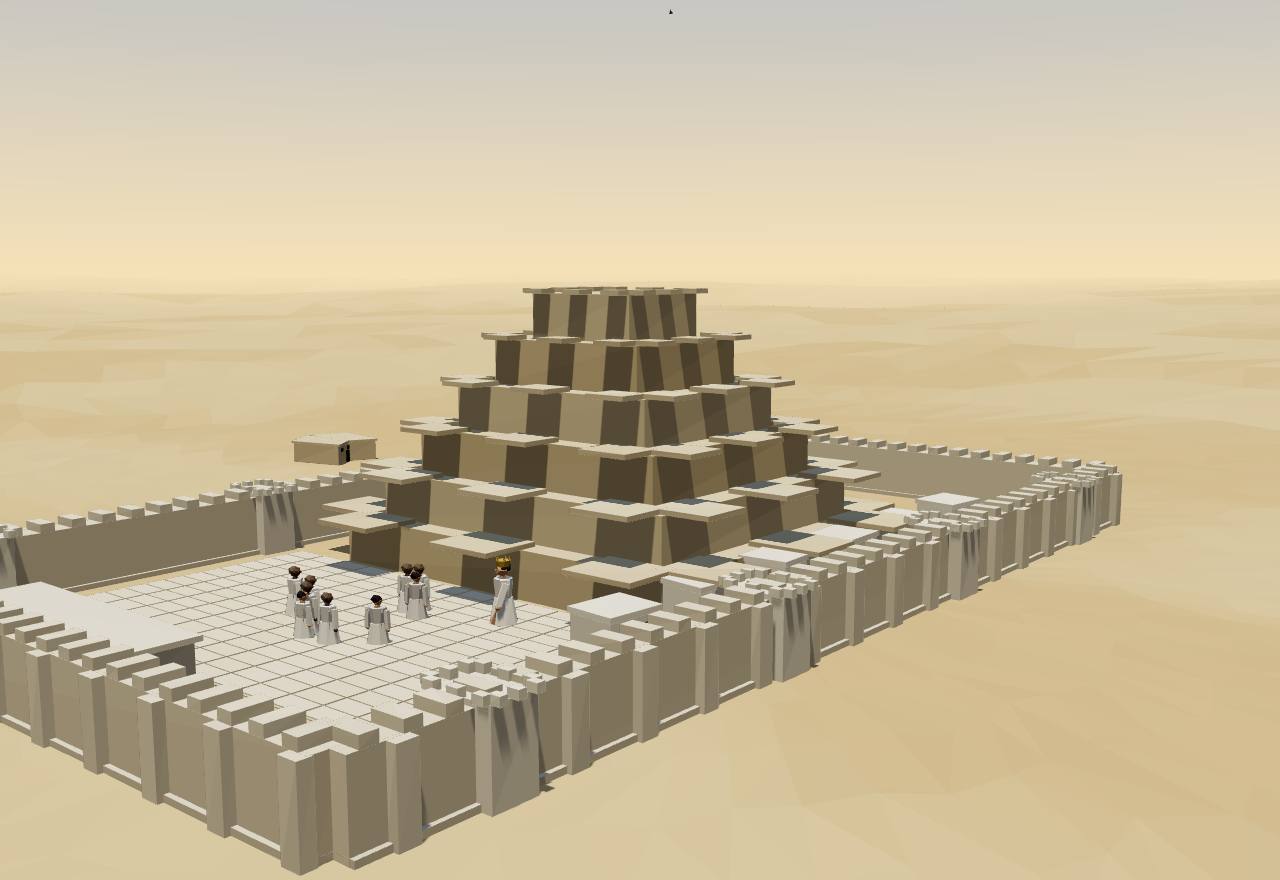
The Step Pyramid complex of Djoser, Saqqara
Under Netjerykhet (Djoser) of Dynasty 3, officials of apparently non-royal origin rose to high posts, among them Imhotep, 'presumed architect of the Step Pyramid complex'. The office of vizier, 'a single individual, directly responsible to the king for the workings of the entire national administration', is first attested in inscriptions from that complex. 5 Consensus Texts Excavation
Pyramid building absorbed enormous resources and shows a new scale of organisation and centralisation. The royal annals credit Sneferu with seizing 7,000 Nubian captives and 200,000 cattle and creating 35 estates; such domains were agricultural estates the kings set up for taxation. 8 Consensus Texts Excavation
South of the 200-metre stone Wall of the Crow at Giza lay a planned settlement of long mud-brick galleries, probably dormitories for crews of young men organised in gangs and phyles, with bakeries and breweries beside them. Mark Lehner estimates about 10,000 people quarried, hauled and set the stone, and perhaps 20,000 in all at any one time. 8,9,10,11,12 Debated Excavation
Work was paid in rations and counted by scribes. In the Abusir temple papyri, the daily bread and beer of each phyle (work team) is recorded month by month, the phyles serving in a ten-month rotation, and one monthly sum mentions more than 3,000 loaves. 11 Consensus Texts
Kings ruled as keepers of maat, right order: Sneferu's Horus name read 'Lord of Maat', Userkaf's 'He who has established order', and Radjedef is the first king called 'son of Ra'. Miroslav Bárta reads the Pyramid Texts carved inside the royal tombs from Unas onwards as a way to strengthen royal power in a 'status race' with wealthy officials. 13,8 Consensus Texts
In Dynasty 5 the vizier's office, until then held by members of the royal family, passed for the first time to officials of non-royal origin. Niuserra created an 'Overseer of Upper Egypt' to control the country south of Memphis, and high officials began to be buried in their home towns rather than at the royal residence. 13 Consensus Texts Excavation
Under Djedkara each nomarch became responsible only for his own nome; under Pepy II the nomarchs of the south were placed under a 'Vizier of the South'. Through Dynasty 6 more posts were taken over by officials in the provinces and 'made de facto inheritable'. 13,14 Consensus Texts
Kings protected temples and pyramid foundations by decree: nine survive from Pepy II, four of them at Coptos for the temple of Min, and eleven from Neferkauhor of Dynasty 8, all at Coptos. Whether such exemptions drained royal income, one proposed cause of decline, is disputed: Juan Carlos Moreno García calls them 'temporary and revocable'. 14,15 Debated Texts
Seshat estimates the Classic Old Kingdom (2650–2350 BCE) at 75,000–350,000 km² and 1–1.5 million people, with seven levels of administration; for the late Old Kingdom it gives 1.5 million people. Seshat Consensus Survey
At the end, 'the territorial entity of the Egyptian state disintegrated; the position of the king, however, was not put into question' (Müller-Wollermann). Manetho's tradition gives Dynasty 7 seventy kings in seventy days, and Khui, the local chief of Abydos, began to write his name in a royal cartouche. 14,13 Consensus Texts
How power worked Divine king · Heredity · Custom and kin
How power worked
- Who rules
- Divine king Consensus
Why?
- How chosen
- Heredity Consensus
Why?
- Limits on power
- Custom and kin Debated
Why?
- Scale
- Territorial state Consensus
Why?
- Claim to rule
- Divine mandate Consensus
Why?
- Who has a say
- A narrow elite Consensus
Why?
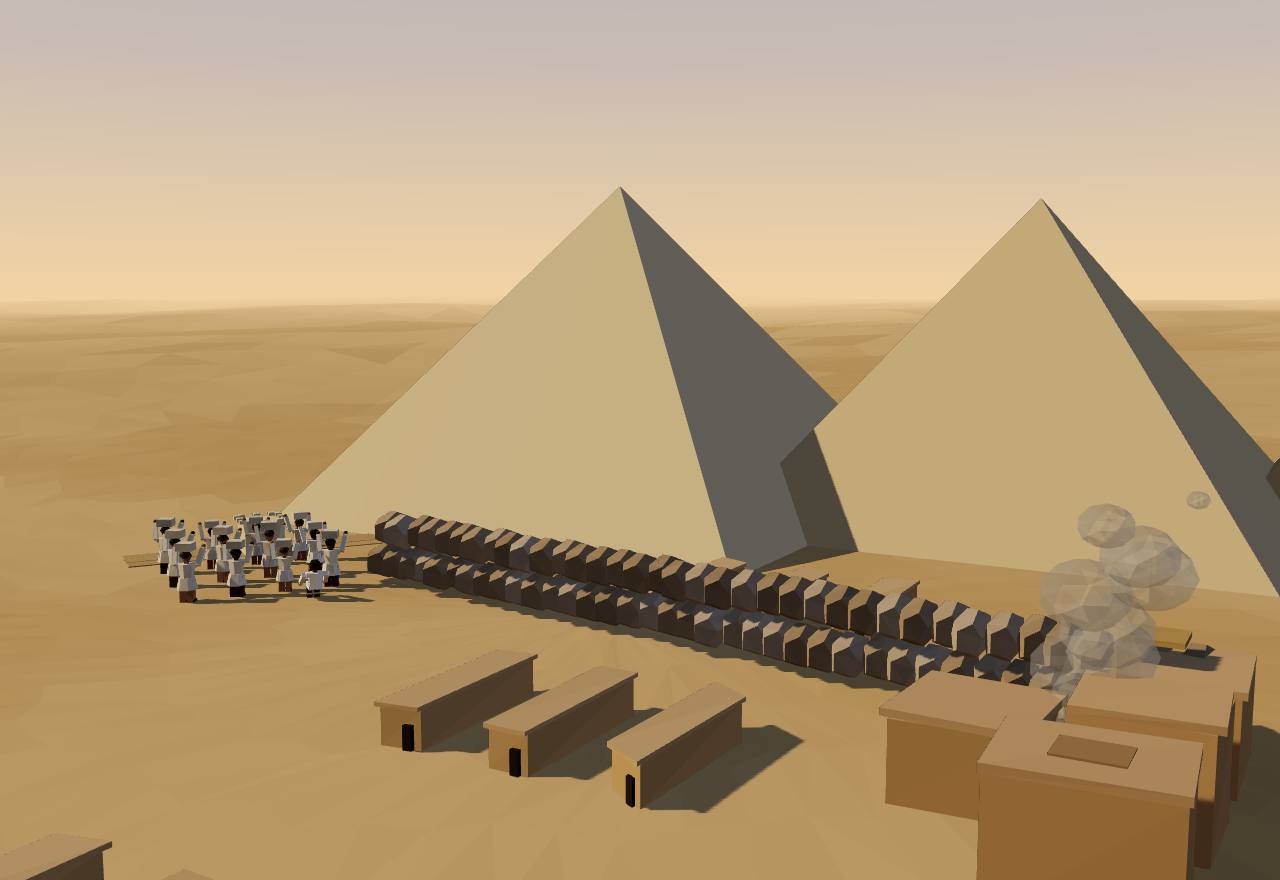
Giza: the pyramids and the workers' town
2,160 BCE – 2,055 BCE
The regions
No king could hold the whole valley. A royal line ruled from Herakleopolis in the north, a rival line rose at Thebes in the south, and between them provincial governors fought, fed their people and boasted of it on their own account.
Terms: Egypt: The regions
The regions: provincial seats in the First Intermediate Period
The royal residence moved from Memphis to Herakleopolis. In Upper Egypt 'coalitions of (some) nomes fought against other coalitions' (Müller-Wollermann); the nomarchs of Thebes, later kings of Dynasty 11, fought their way north, and one of them, Intef, boasts 'I captured the entire Thinite nome'. 14,19 Consensus Texts
Ankhtifi, nomarch at Moalla, tells in his tomb how he took over the neighbouring 2nd nome, rescuing it as he put it from the 'house of Khuu', and so became 'nomarch of the 2nd and 3rd nomes'. His army sought battle near Thebes, and his grain reached as far south as Wawat (Lower Nubia) and as far north as the Abydene nome. 20 Consensus Texts
Ankhtifi claims that, except in his nome, 'all of Upper Egypt was dying of hunger and people were eating their children'. Laurent Coulon reads the many famine texts of the period as a new rhetoric of the nomarch as 'dispenser of food': 'to use these texts as evidence of climatic changes is therefore misleading'. 21 Debated Texts
Kingship itself was not abandoned: 'the position of the king … was not put into question', and Seshat still codes the rulers of the period as gods. Yet 'virtually none of the famine inscriptions' of these governors 'mention the name of any king' (Bell). 14,22 Seshat Consensus Texts
Towns walled themselves in. At Edfu a new enclosure of two walls, 6 m wide together, took in an area twice as large as the Old Kingdom town; 'local power struggles seem to have been frequent events' (Moeller). 23 Consensus Excavation
Seshat's Period of the Regions, ruled from Abydos or Thebes, covers only 20,000–40,000 km² with four levels of administration, against seven in the late Old Kingdom. Cliopatria draws two adjoining kingdoms: a larger Lower Egypt and a smaller Upper Egypt. 24 Seshat Consensus Survey
Nebhepetre Mentuhotep of Thebes overthrew the Herakleopolitan kingdom and reunited Upper and Lower Egypt by force; he is traditionally regarded as the founder of the Middle Kingdom (Bell). Ankhtifi's earlier union of the southern nomes may have helped the Theban victories turn quickly into centralised rule (Manassa). 22,20 Consensus Texts
How power worked King · Heredity · Custom and kin
How power worked
- Who rules
- King Debated
Why?
- How chosen
- Heredity Debated
Why?
- Limits on power
- Custom and kin Debated
Why?
- Scale
- Territorial state Debated
Why?
- Claim to rule
- Divine mandate Debated
Why?
- Who has a say
- A narrow elite Consensus
Why?
Who held the nomes
Data: nome records, as cited
Who held the provinces of Upper Egypt in the First Intermediate Period, where a source says so. Only nome seats named in the sources read are shown; the map is schematic, with east–west distances stretched 2.2 times so the valley can be read. 23,20,27,22,19,14
- Ankhtifi of Moalla
- Thebes (the later Dynasty 11)
- Allied with Thebes
- Herakleopolis (Dynasties 9–10)
- Not attested in the sources read
- Square: a site in the nome, not its seat
| Nome | Seat | Held by |
|---|---|---|
| UE 2 | Edfu | Ankhtifi of Moalla. Ankhtifi annexed the 2nd nome from the 'house of Khuu' and walls went up around the town. 23,20,27 |
| UE 3 | Nekhen (Hierakonpolis) | Ankhtifi of Moalla. Ankhtifi's own nome: he was 'nomarch of the 2nd and 3rd nomes', based at Hefat (Moalla). 20,27 |
| UE 4 | Thebes (Waset) | Thebes (the later Dynasty 11). The ruling nomarchs of the 4th nome were the common enemy of Ankhtifi and of the 5th nome's earlier rulers. 20,27 |
| UE 5 | Coptos | Allied with Thebes. The combined army of Thebes and Coptos refused to meet Ankhtifi's force; the 5th nome's nomarchs had earlier fought Thebes. 20,27 |
| UE 8 | Abydos (site) | Thebes (the later Dynasty 11). Seat of an 'Overseer of Upper Egypt' early in the period; later the Theban Intef 'captured the entire Thinite nome'. 22,19,27 |
| UE 13 | Asyut | Herakleopolis (Dynasties 9–10). Its governors Tefibi and Kheti fought 'the southern nomes'; Kheti names the Herakleopolitan king Merikare. 19,27 |
| UE 15 | Hermopolis | Not attested in the sources read. No source read for this page names its allegiance in the period. 27 |
| UE 20 | Herakleopolis | Herakleopolis (Dynasties 9–10). The royal residence moved here from Memphis at the end of the Old Kingdom. 14,27 |
| LE 1 | Memphis | Not attested in the sources read. 'The situation in Lower Egypt is unclear.' 14,27 |
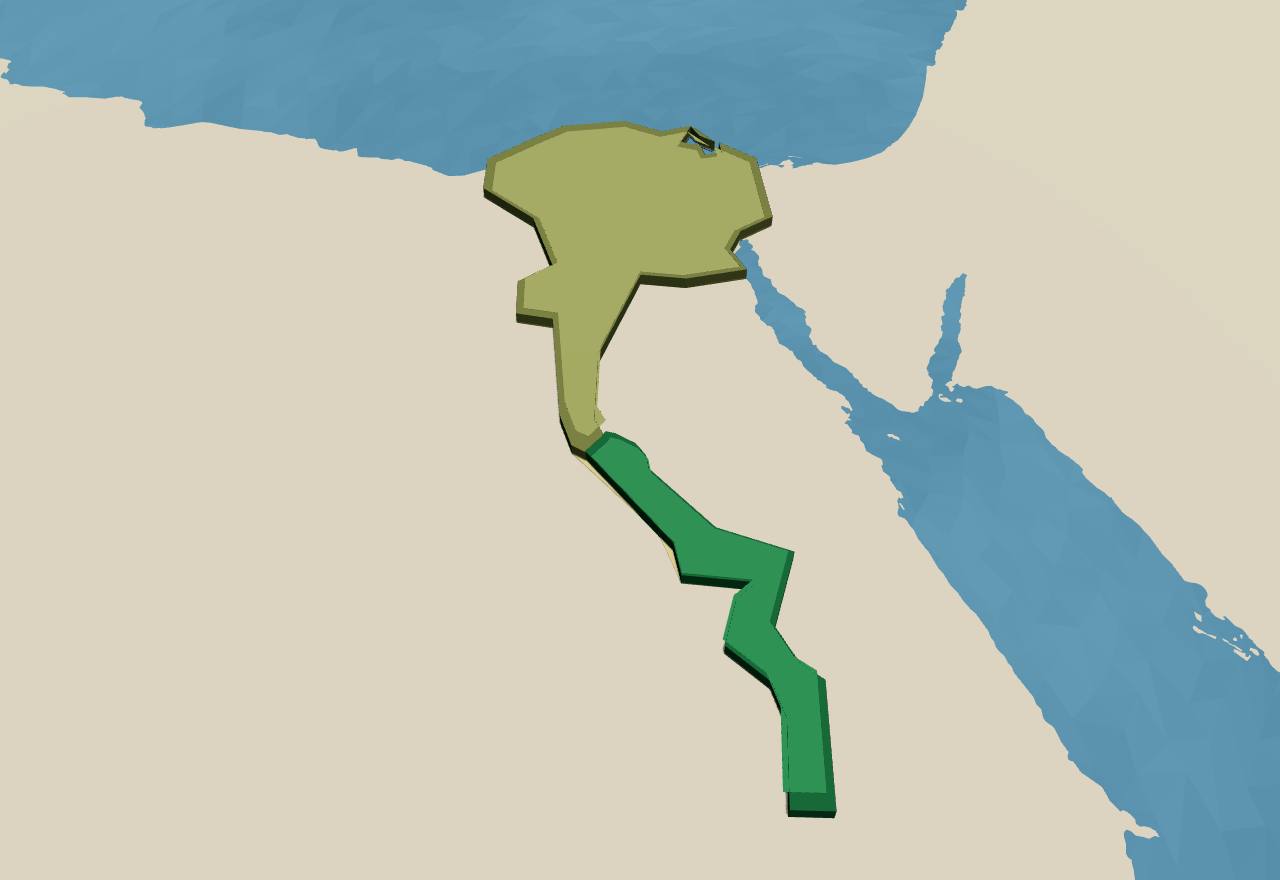
The regions: Upper and Lower Egypt (Cliopatria)
Territory: Cliopatria (CC BY 4.0), simplified. Height fixed: population not coded in Seshat.
2,055 BCE – 1,650 BCE
Reunification
The Theban kings rebuilt a single kingdom, moved the residence north again, and planned towns and frontier forts in straight lines. Provincial governors kept their titles but lost their great tombs.
Terms: Egypt: Reunification
- mnn.w𓏠𓈖𓏌𓅱𓉐 fortress 4
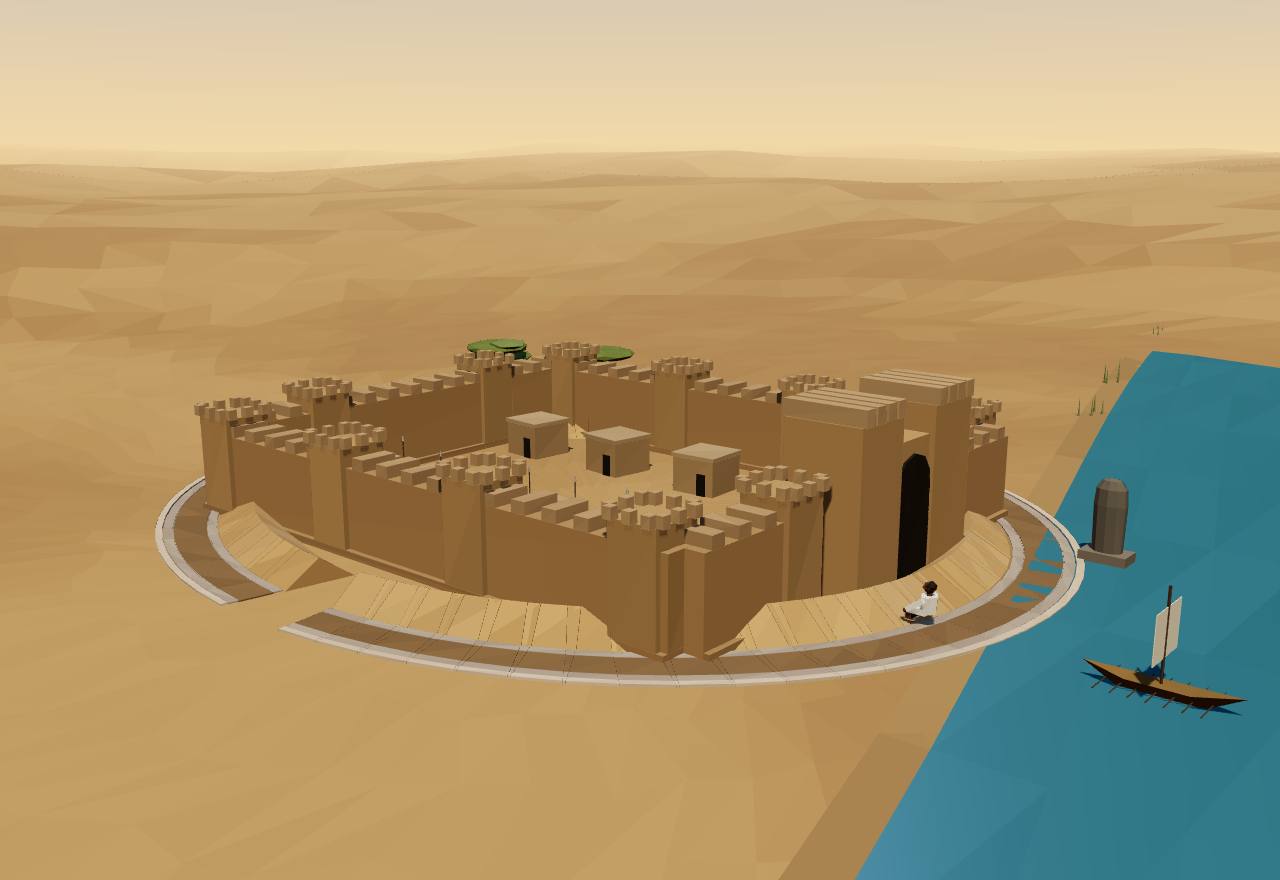
A Middle Kingdom fortress at the Second Cataract
Amenemhat I, founder of Dynasty 12, moved the royal residence north to Itjtawy, between Medum and Memphis. A later governor of the Oryx nome at Beni Hasan credits him with fixing the boundaries between towns, 'establishing their landmarks like the heavens'. 28,19 Consensus Texts
The Teaching of Amenemhat, written in the king's name after an attempt on his life, warns his son: 'Fill not thy heart with a brother, Know not a friend', for 'he who ate my food made insurrection'. Whether Dynasty 12 kings secured the succession by ruling jointly with their sons is debated. 19,28 Debated Texts
The early Middle Kingdom was 'one of the most decentralized periods of Egyptian history', with flourishing local centres. The great tombs of provincial governors end under Senusret III, but their titles carry on, and 'it is unclear what really changed' (Grajetzki). Officials' scarab seals reflect 'a demand for tighter control of commodities'. 28 Debated Excavation Texts
Barry Kemp sees the wish to impose a uniform order on whole communities peaking in the Middle Kingdom, in the geometrically planned town of Kahun and in the fortresses built to hold Nubia. Loyalty was preached too: a treasurer's stela tells readers to worship king Amenemhat III, who 'makes the Two Lands more verdant than does a high Nile'. 16,22 Consensus Texts Excavation
Lower Nubia was placed under permanent Egyptian control behind a chain of mud-brick fortresses, built mainly under Senusret I and Senusret III: Näser counts 13 drowned by Lake Nubia, Eduardo Ferreira lists 15. Buhen measured 215 by 460 m and Mirgissa 190 by 295 m; around the Semna cataract a 7 km fortified border zone of five forts held an estimated 350–700 men. 28,29,30,31 Consensus Excavation
Senusret III set boundary stelae at Semna. The year 8 stela bars Nubians from crossing the boundary by water or by land, except to trade at Iken; the year 16 stela declares 'I have made my boundary beyond (that) of my fathers' and disowns any son who will not fight for it: 'he is not my son'. 19 Consensus Texts
The Semna Dispatches, written in a surveillance office at Semna West, logged who came and went: '4 Nehesy-women arrived … It is to do trade that we have come … They went south … after bread and beer were [given to] them'. 32,30 Consensus Texts
Seshat estimates the kingdom at 238,000 km² around 2000 BCE, 413,000 km² by 1900 and 450,000 km² by 1800, with 1.5–2.5 million people. Seshat Consensus Survey
Dynasty 13 had 'about 50 kings ruling for a total of c. 150 years', not one family; some had been high state officials before they became king, while the residence stayed at Itjtawy. 28 Consensus Texts
How power worked Divine king · Heredity · Custom and kin
How power worked
- Who rules
- Divine king Consensus
Why?
- How chosen
- Heredity Debated
Why?
- Limits on power
- Custom and kin Debated
Why?
- Scale
- Territorial state Consensus
Why?
- Claim to rule
- Divine mandate Consensus
Why?
- Who has a say
- A narrow elite Consensus
Why?
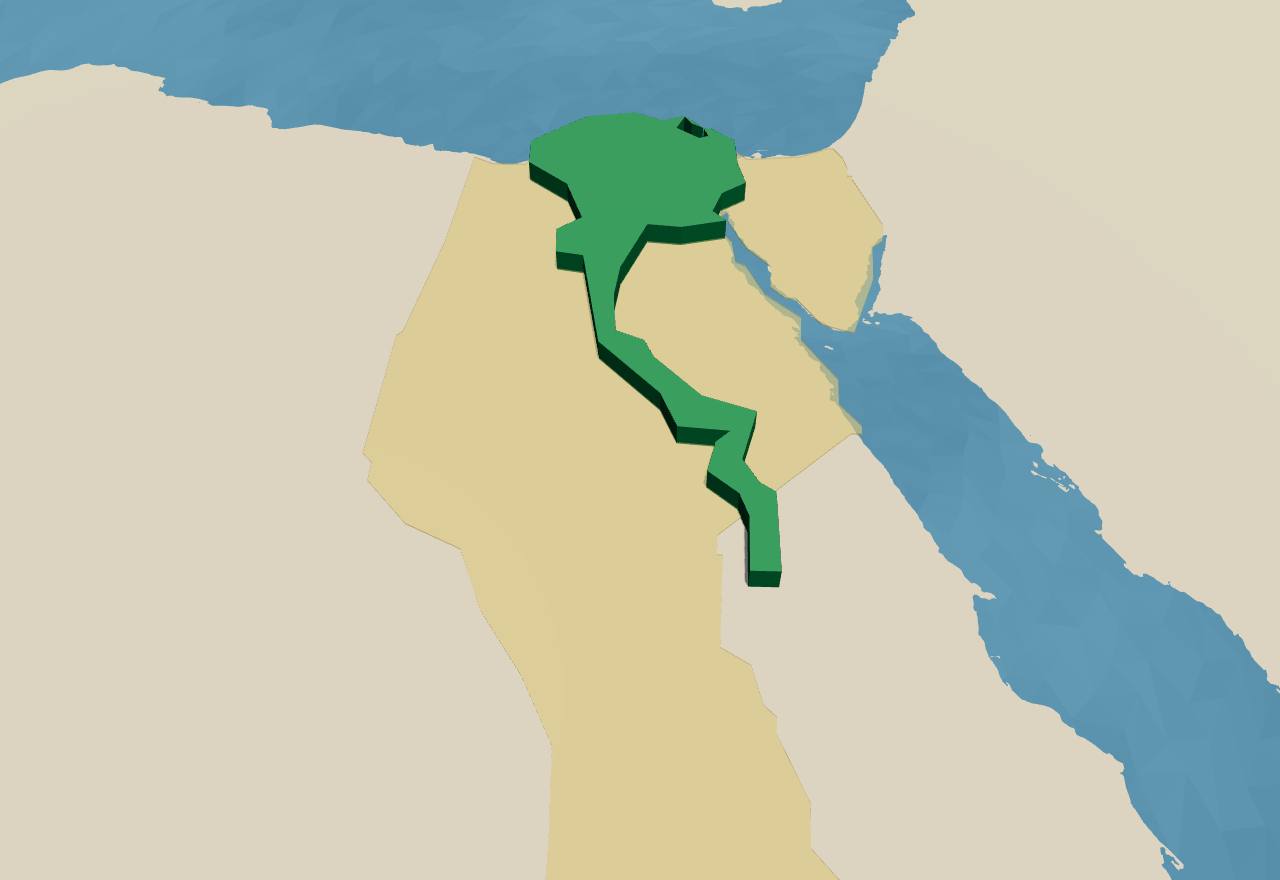
The Middle Kingdom (Cliopatria)
Territory: Cliopatria (CC BY 4.0), simplified. Height: Seshat population, log scale; darker, fixed-height slices are not coded.
1,650 BCE – 1,550 BCE
Hyksos and Thebes
The land split three ways: rulers of Levantine origin at Avaris in the Delta, a Theban kingdom in the south, and the kingdom of Kush beyond the cataracts. The Thebans won.
Terms: Egypt: Hyksos and Thebes
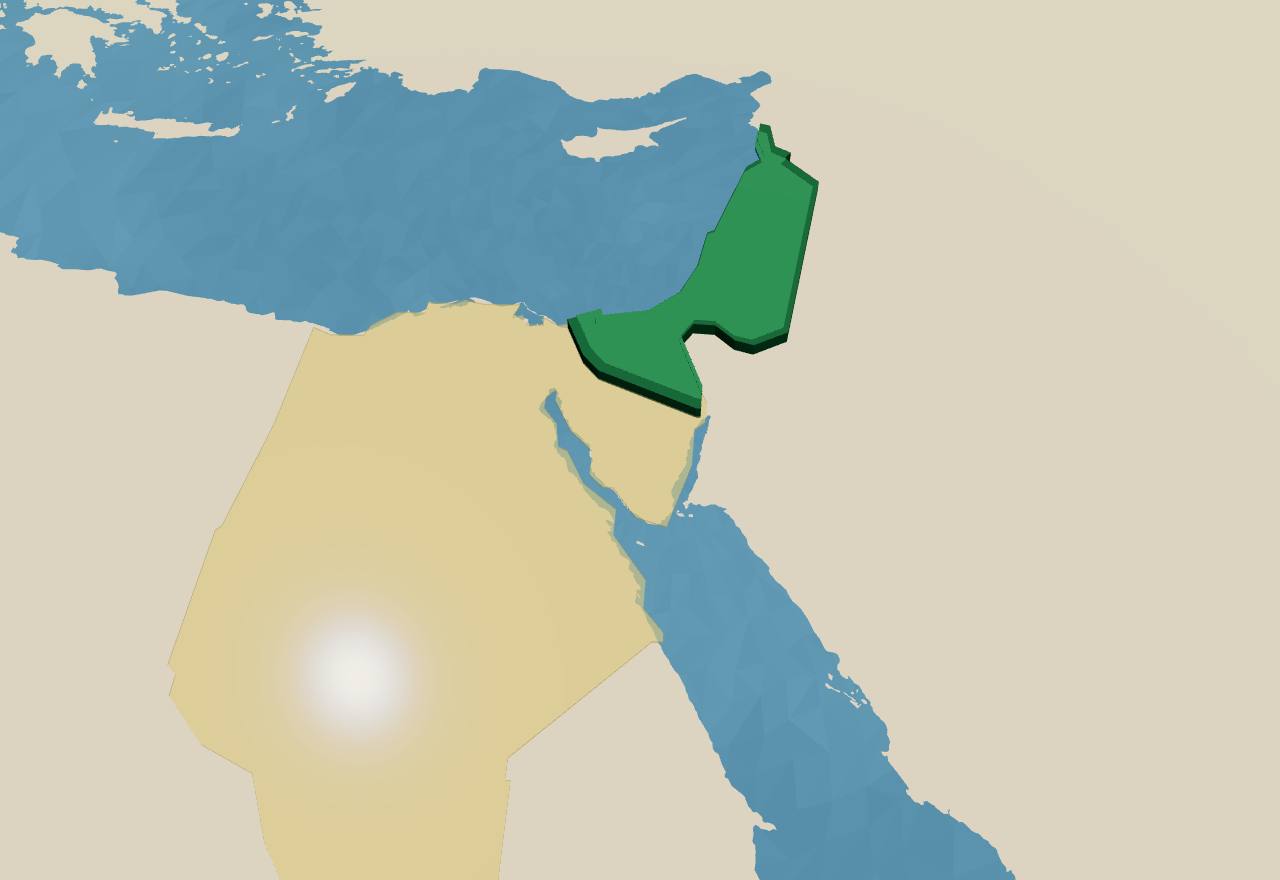
Hyksos, Thebes and Kush (Cliopatria)
Territory: Cliopatria (CC BY 4.0), simplified. Height fixed: population not coded in Seshat.
The territory late Middle Kingdom Egypt had ruled was 'divided between three states': the kingdom of Avaris, whose rulers of Levantine origin are called the Hyksos; the Theban kingdom; and Kush, which reached from the Fourth Cataract into Lower Nubia and was 'the largest of the Second Intermediate Period states'. 33 Consensus Texts Excavation
Some kings of Avaris used the title ruler of foreign lands, which many Egyptologists take as the origin of the Greek word Hyksos. Their kingdom is now seen as 'originally secessionist rather than an expansionist move': they ruled the eastern Delta directly, and other parts of Lower and Middle Egypt through satellite states. 33,34 Debated Texts Excavation
Avaris was, for Manfred Bietak, 'the largest known city in Egypt and the eastern Mediterranean of that time'. A palace of about 10,600 m² stood there in the Hyksos period, and three pits beside it held chopped-off right hands. 33,35 Consensus Excavation
The rulers of all three states 'proclaimed themselves kings and adopted elements of Egyptian royal ideology'. Administration grew simpler, its titles now mostly military and temple ones; a stela from Elkab records the transfer of the town's governorship to Sobeknakht under the Dynasty 16 king Nebiryrau. 33 Consensus Texts
Seqenenra of Thebes 'died in battle judging by his mummy's condition'. His successor Kamose destroyed Middle Egyptian towns loyal to the Hyksos and intercepted a message from the Hyksos king Apep to the ruler of Kush. 34 Consensus Texts Bioarchaeology
Ahmose took Avaris, apparently without large-scale destruction, and then Sharuhen in southern Palestine, the conventional end of the Hyksos period. While he was young his grandmother Tetisheri and later his mother Ahhotep acted as regents. 34 Consensus Texts
Seshat's Thebes–Hyksos polity covers only 10,000–20,000 km², with a largest settlement of 50,000–100,000 people, and codes its centralisation as nominal, loose or a quasi-polity. Cliopatria draws only the Hyksos realm in 1640 BCE; by 1580 BCE it draws the Hyksos, the Theban Seventeenth Dynasty and a Sixteenth Dynasty between them. 24 Seshat Consensus Survey
How power worked King · Conquest or coup · Territorial state · 1 unknown
How power worked
- Who rules
- King Consensus
Why?
- How chosen
- Conquest or coup Debated
Why?
- Limits on power
- Unknown
Why?
The sources read describe wars, offices and royal ideology but no check on any of the three kings; Seshat infers some constraint from within the government and none from outside it.
- Scale
- Territorial state Debated
Why?
- Claim to rule
- Divine mandate Debated
Why?
- Who has a say
- A narrow elite Consensus
Why?
1,550 BCE – 1,069 BCE
Empire
The Theban kings who drove out the Hyksos built an empire from Nubia to Syria. At home Pharaoh ruled through great institutions, the army and above all the temples, whose estates, courts and oracles shaped ordinary lives.
Terms: Egypt: Empire
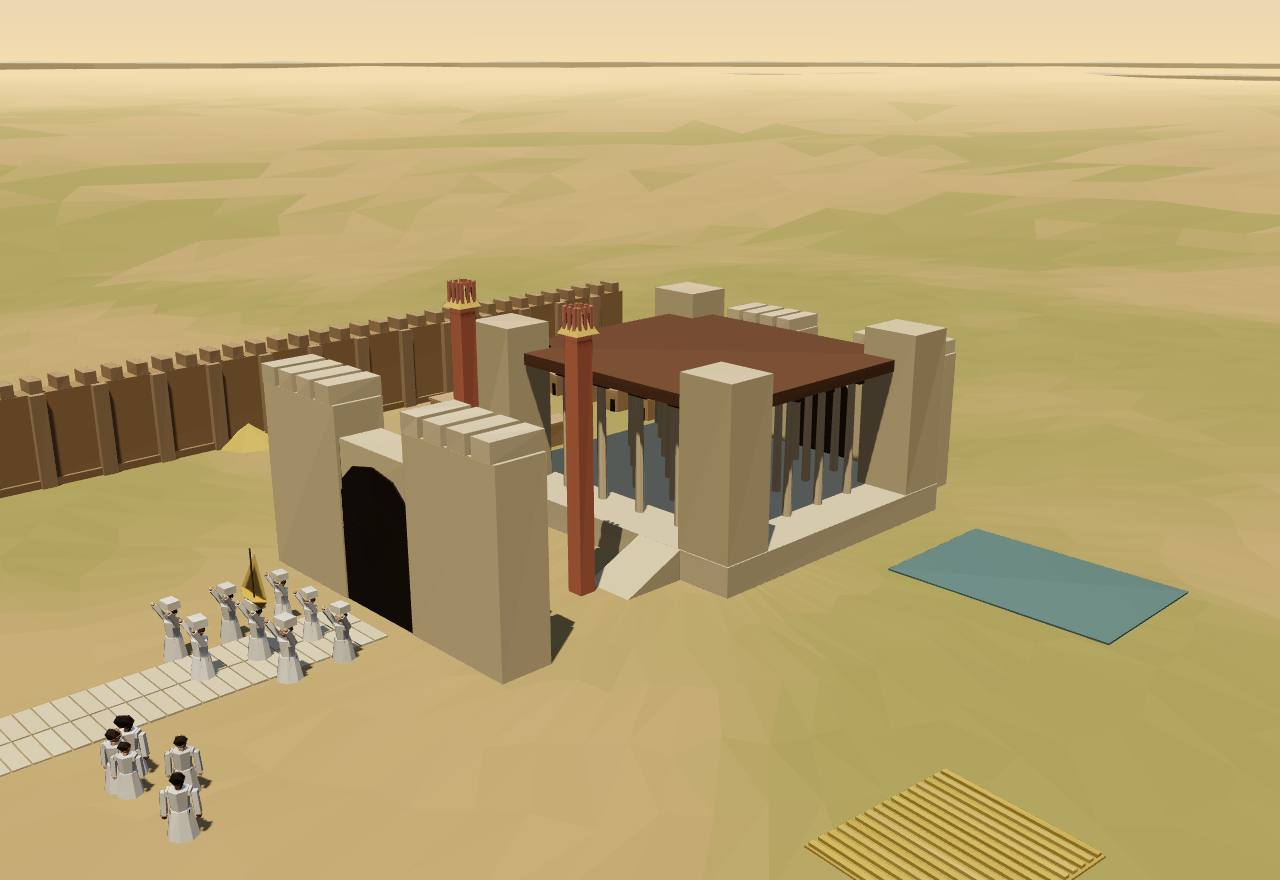
Karnak: the temple of Amun and its estate
The New Kingdom built 'an Egyptian Levantine empire' and ruled Nubia. Ellen Morris distinguishes southern lands subjugated through taxation from northern vassals that 'sent benevolences rather than regular taxes', and calls Thutmose III an 'imperial innovator' whose annual campaigns organised the empire's core (as summarised in Flammini's review). 37,38,39 Consensus Texts Excavation
Nubia was governed by a viceroy, the 'king's son (of Kush) and overseer of the southern foreign countries', an office that grew out of the command of Buhen. Egypt set up civilian settlements on the sites of what were likely armed camps, reshaped Nubia's religious landscape and ran a plantation economy through local Nubian elites. 34,38,39 Consensus Texts Excavation
In Barry Kemp's account, Pharaoh now 'exercised power through institutions, primarily temples and the army, which were sufficiently well established to dilute his power'; Amun was cast as the mythical father of each king. Queens such as Hatshepsut could rule on behalf of a young king, though their titles did not formally show it. 16,40 Consensus Texts
The vizier sat daily in his hall with 'the 40 skins … open before him', hearing petitioners in turn; it was he who brought in and sent out the officials of the districts, and who sent 'the mayors and village sheiks to plow'. Where a law existed for a case he had to judge by it, not by his own discretion. 41,36 Consensus Texts
Akhenaten broke with tradition by promoting only the sun disk Aten and founded a new capital at Amarna, home to the court and some 20,000–50,000 people. Its archive of nearly 400 cuneiform tablets, the Amarna Letters, is mostly diplomatic correspondence. 42,43 Consensus Excavation Texts
At Karnak, Sety I raised a hall of 12 central sandstone columns, about 20 m high, flanked by 122 shorter ones of 14 m, roofed in stone and lit through clerestory grilles. 44,45 Consensus Excavation
Temples were the great landholders. Papyrus Harris I lists 1,071,780 arouras (about 289,000 hectares) of land for the temples of Amun, Ra, Ptah and smaller ones, some 13 to 18 percent of the cultivable land; Ramesses III endowed his own temple at Medinet Habu with 150 priests, a workforce of 65,000 men and almost 2,400 km² of land. Temples were 'clearly separate institutions, but not fully autonomous'. 46,47,48 Consensus Texts
Gods judged too. When a god's image was carried in procession, a forward motion meant yes and a backward one no; someone condemned could appeal to another god's oracle, and at Deir el-Medina oracle hearings fell on the workmen's days off. 36 Consensus Texts
Deir el-Medina, the village of the men who cut the royal tombs, began with a dozen houses under Thutmose I, grew to about 40 under Horemheb and finally held about 68 houses inside a 5,600 m² enclosure. It was under the vizier's direct supervision, and was abandoned under Ramesses XI. 49,36 Consensus Excavation Texts
Local courts (qenbet) of at least three dignitaries, drawn from priests and mayors, met only when needed; the one at Deir el-Medina had a bailiff and a scribe. For serious crimes they decided only whether one had been committed and passed the case to the vizier. Lippert warns that the village was exceptional, so its evidence cannot be generalised. 36 Consensus Texts
In year 29 of Ramesses III the Deir el-Medina workmen went on strike several times over four months, because the authorities could not deliver on time the grain that was their wage, and they went to the West Theban temples to ask for it. Pierre Grandet calls reading this as a first sign of collapse 'emphatically naive': the administration was absorbed in preparing the king's jubilee. 47 Debated Texts
Under Ramesses XI the stage was shared with Herihor, his 'High Priest of Amun', and in the next dynasty the high priest Pinedjem was de facto ruler of Thebes. 44,47 Consensus Texts
Seshat estimates the Thutmosid empire at 650,000 km² in the early 15th century BCE and 1,000,000 km² by the 14th, with 3.35–4.5 million people; the Ramesside state shrinks from 1,000,000 km² in 1293 BCE to 567,000 km² by 1100. Seshat Consensus Survey
How power worked Divine king · Heredity · Custom and kin
How power worked
- Who rules
- Divine king Consensus
Why?
- How chosen
- Heredity Debated
Why?
- Limits on power
- Custom and kin Debated
Why?
- Scale
- Empire Consensus
Why?
- Claim to rule
- Divine mandate Consensus
Why?
- Who has a say
- A narrow elite Consensus
Why?
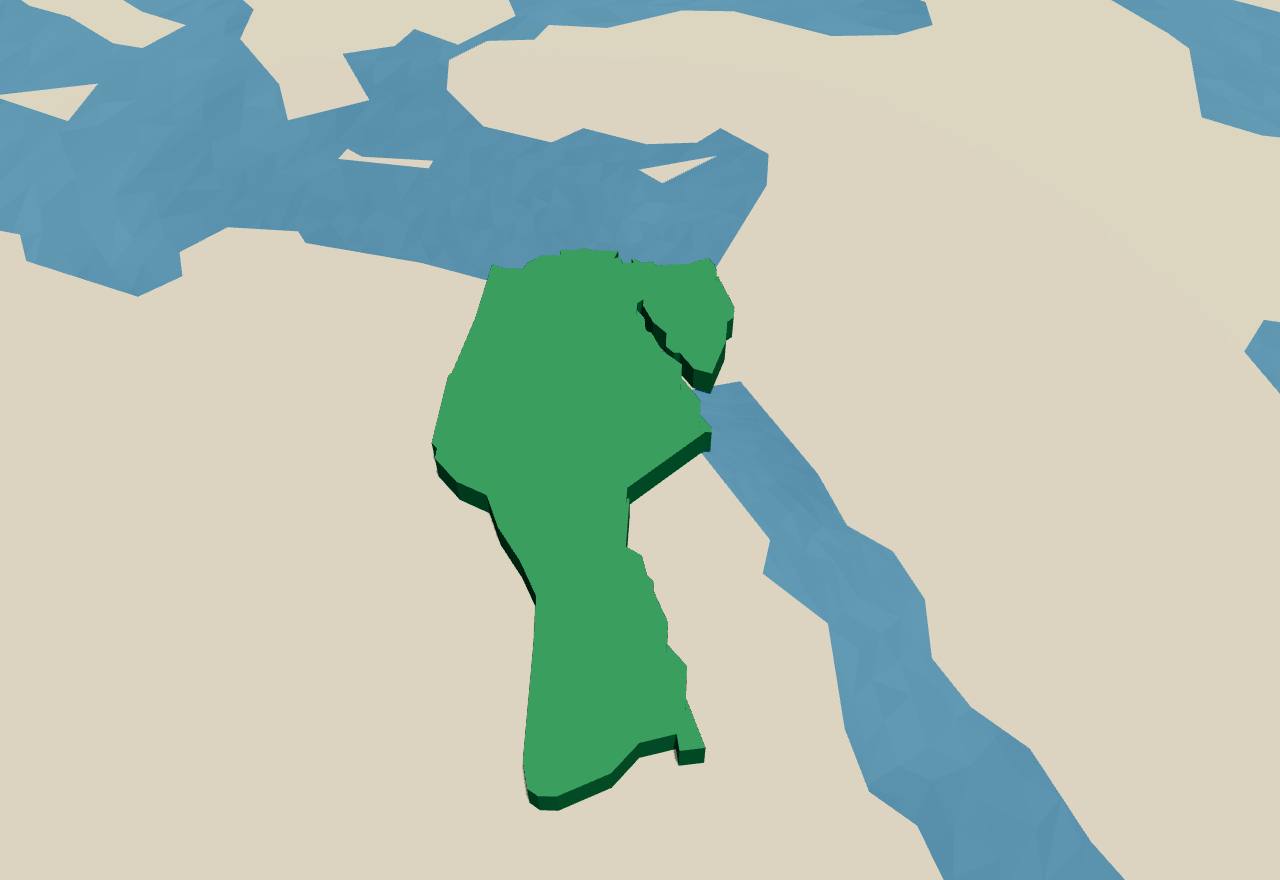
The New Kingdom empire (Cliopatria)
Territory: Cliopatria (CC BY 4.0), simplified. Height: Seshat population, log scale.
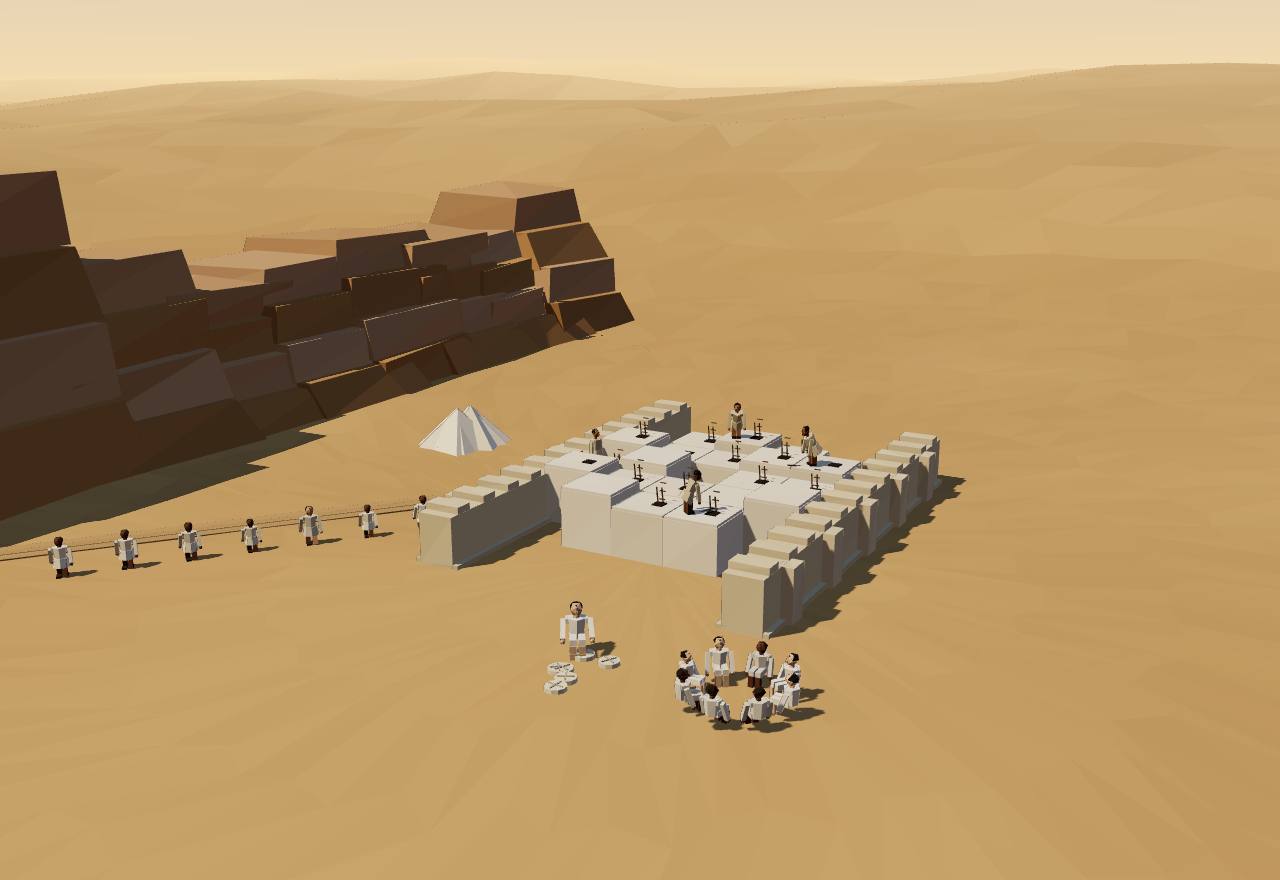
Deir el-Medina: the tomb-builders' village
1,069 BCE – 332 BCE
Libyans, Kushites, Saites, Persians
For seven centuries Egypt was ruled by many hands: kings at Tanis and a state of the god Amun at Thebes, Libyan chiefs, pharaohs from Kush, the Saite kings of the Delta, two spells of Persian rule, and a last native dynasty.
Terms: Egypt: Libyans, Kushites, Saites, Persians
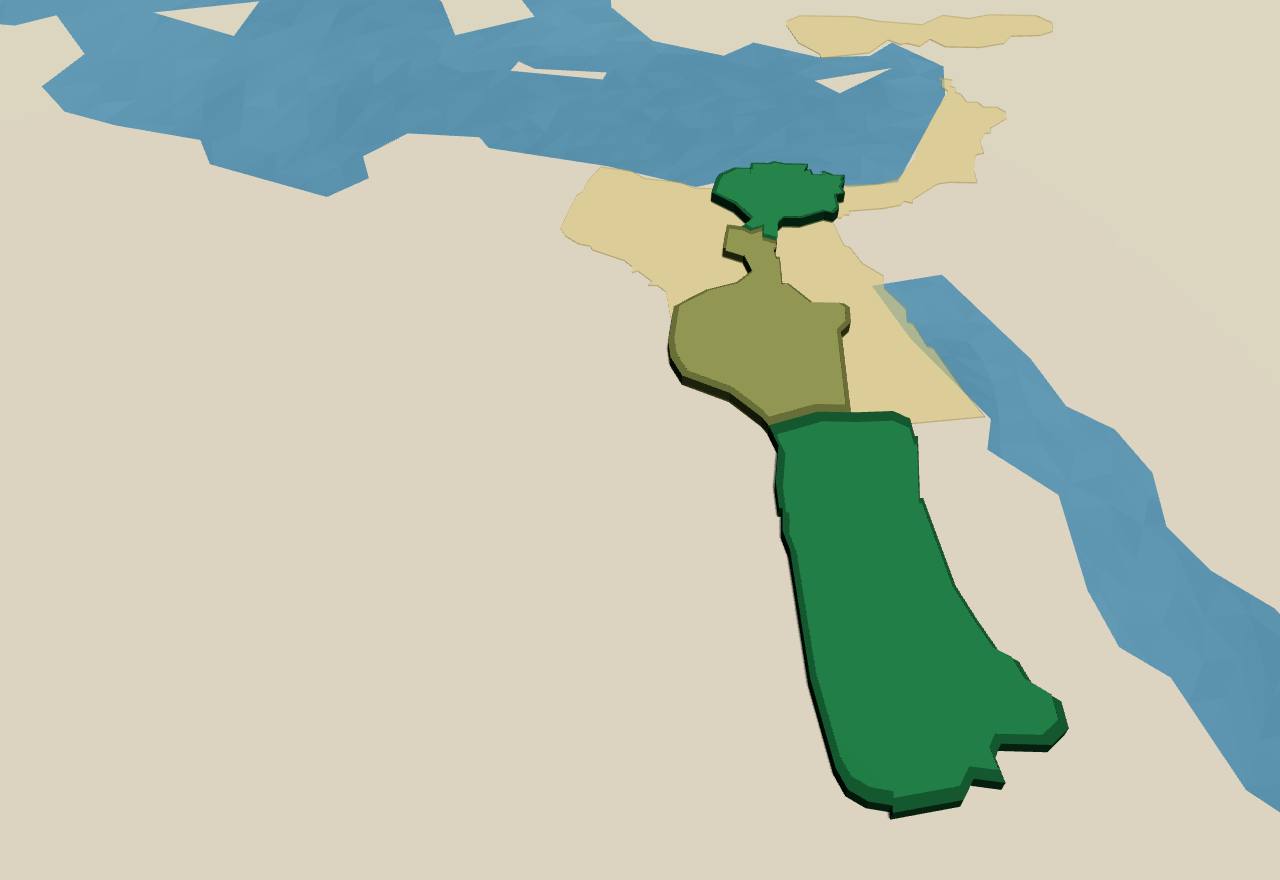
Libyans, Kushites, Saites (Cliopatria)
Territory: Cliopatria (CC BY 4.0), simplified. Height: Seshat population, log scale; darker, fixed-height slices are not coded.
After the New Kingdom, 'the kings, residing at Tanis, reigned in Lower Egypt', while 'the Theban High Priests of Amun, being at the same time military commanders, governed Upper Egypt'. The Tanite kings were formally recognised throughout the country, and in return the south's autonomy was left alone. 52 Consensus Texts
In Dynasties 21 and 22, when Amun became nominally head of the Upper Egyptian state, the god's oracles also took over the notarial work of the courts. 36 Consensus Texts
Gerard Broekman describes Libyan rule as 'a loose confederation reinforced by family alliances and appointments'. As Egyptian king the ruler was supreme, but in the Libyan hierarchy he was the equal of the other great chiefs, obeyed through alliances and agreements; each king tried to place his sons as High Priest of Amun at Thebes and Prophet of Herishef at Herakleopolis. 52 Debated Texts
The Kushite king Piye's victory stela lists the northern rulers he faced: kings such as Namlot and Osorkon, chiefs, and Tefnakht of Sais, at whose heels 'the princes and rulers of walled towns are as dogs'. When four rulers wearing the royal serpent crest came to submit, only Namlot entered Piye's palace, 'because he was pure'; the others were 'unclean and eaters of fish'. 53 Consensus Texts
The Kushite pharaohs of Dynasty 25 ruled Egypt and Nubia together, placing a royal daughter as God's Wife of Amun, the high priestess at Thebes, from Amenirdis I onwards. One reading, which Jeremy Pope reports, sees Piye's campaign as expanding the ritual authority and wealth of a 'segmentary state', 'without the administration of a centralized bureaucracy'. 51 Debated Texts
'With the aid of Greek mercenaries, Psammetichus I (664 – 610 BCE) succeeded in uniting Egypt under his sole rule by defeating various Libyan chieftains.' He had his daughter adopted as God's Wife at Thebes; Amasis later made Naukratis 'a Greek emporion rather than a polis'. 2,53 Consensus Texts Excavation
Persia conquered Egypt twice and ran it as a satrapy (525–402 and 343–332 BCE) under a Persian satrap at Memphis, with Aramaic as the official language of administration. The Egyptian official Udjahorresnet gave Cambyses an Egyptian royal titulary; Darius I reportedly codified Egypt's laws, and a satrap's letters show him deciding priestly appointments at Elephantine. 3,36 Consensus Texts
Dynasties 28 and 29 saw frequent changes of ruler, often violent; Dynasty 30 was 'a strong house'. Nectanebo I presented himself as chosen by the gods from the 'multitude' rather than by dynastic right, and Teos cut temple incomes to 10 percent of their usual size and taxed all revenues, to the indignation of the priests. 54 Consensus Texts
Seshat codes the Libyan-period state as a quasi-polity or nominal state of 190,000–230,000 km², the Kushite realm around 700 BCE as a confederated state of 600,000–700,000 km², and the Saite kingdom at 300,000–400,000 km². Seshat Consensus Survey
How power worked King · Conquest or coup · Custom and kin
How power worked
- Who rules
- King Consensus
Why?
- How chosen
- Conquest or coup Debated
Why?
- Limits on power
- Custom and kin Debated
Why?
- Scale
- Territorial state Debated
Why?
- Claim to rule
- Divine mandate Consensus
Why?
- Who has a say
- A narrow elite Consensus
Why?
332 BCE – 30 BCE
The Ptolemies
Alexander's general Ptolemy and his heirs ruled Egypt from Alexandria for three centuries: Macedonian kings to the Greeks, pharaohs to the temples, and masters of a Greek-speaking bureaucracy over an Egyptian countryside.
Terms: Egypt: The Ptolemies
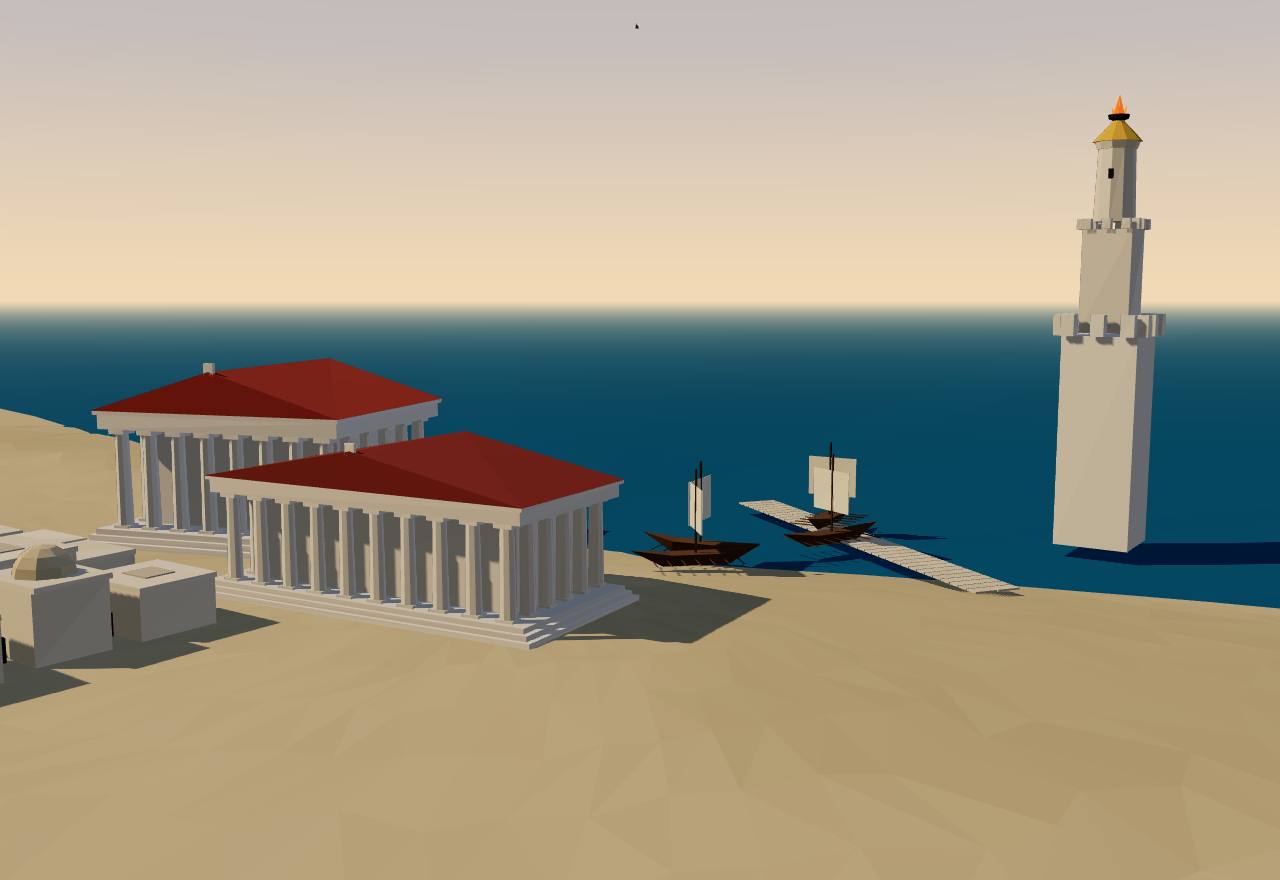
Alexandria under the Ptolemies
Ptolemy II married his sister Arsinoe II, and 'the siblings could thus consolidate their power'. They were worshipped together as the Brother-and-Sister Gods (Theoi Adelphoi), joined to the cult of Alexander at Alexandria; with Arsinoe the Ptolemaic ruler cult began in the Egyptian temples. Seshat codes the rulers as gods from 271 BCE. 56,55 Seshat Consensus Texts
The Ptolemies 'were officially recognized as pharaohs by the temples and even crowned by the high priest of Memphis', yet 'remained fundamentally a foreign dynasty' (Clarysse). Priests met in synods at the court and honoured the kings in decrees set up in hieroglyphic, Demotic and Greek; the best known, the Memphis decree of 196 BCE, is on the Rosetta Stone. 57,58,59,60 Consensus Texts
Greek became the language of administration, but the old structure stayed, with Greek overseers (epistatai) set over Egyptian officials at each level. A finance minister, the dioikētēs, issued orders from Alexandria with almost unlimited competence; in each nome the strategos came to unite 'all the military and civil powers', and the nomarch, where he survived, was his subordinate. 46,55 Consensus Texts
Land was the crown's. Ptolemy I settled roughly 6,500 Macedonian soldiers on heritable plots; in the village of Kerkeosiris royal land made up 52 percent of the 4,000 arouras under cultivation, soldiers' (cleruchic) land about a third and temple land 16 percent. 46 Consensus Texts
The state did not define 'Greek' and 'Egyptian' in law, and almost 150 ethnic labels are attested (Riggs and Baines). Until 118 BCE a lawsuit went to a Greek or an Egyptian court according to the nationality of the parties (Lippert). 61,36 Consensus Texts
The great revolt in the south lasted from about 207 to 186 BCE: rebel pharaohs were crowned at Thebes, no tax receipts survive from the south for 205–186, and the general Komanos finally defeated the rebel Chaonnophris in 186. 57,62 Consensus Texts
Volcanic eruptions suppressed the Nile's summer flood: in the Islamic Nilometer record, eruption-year floods averaged 22 cm lower. Across the Ptolemaic period revolts began more often in and just after eruption years, and the priestly Canopus decree of 238 BCE refers to Nile failure in the preceding years. 62 Debated Texts Model
Seshat estimates the early kingdom at 1,000,000 km² and 7 million people; by 200 BCE it gives 833,000 km², by 100 BCE 373,000 and by 50 BCE 107,000, as the kingdom lost its rain-fed territories overseas after 195 BCE. 62 Seshat Consensus Survey Texts
After her naval defeat by Rome at Actium in 31 BCE, Cleopatra VII died by suicide in 30 BCE, and Octavian conquered Egypt. 62,56 Consensus Texts
How power worked Divine king · Heredity · None in practice
How power worked
- Who rules
- Divine king Consensus
Why?
- How chosen
- Heredity Consensus
Why?
- Limits on power
- None in practice Debated
Why?
- Scale
- Empire Debated
Why?
- Claim to rule
- Divine mandate Debated
Why?
- Who has a say
- A narrow elite Consensus
Why?
Eruptions, floods and revolts
Data: Manning et al. 2017
Volcanic eruptions cool the monsoon that feeds the Nile flood. J. G. Manning and colleagues set the eruption years from ice cores beside the dated revolts, priestly decrees and wars of Ptolemaic Egypt. Shown here: only the dates their article names in its text (10 of its 18 eruption years). 62
- Eruption
- Revolt begins
- Priestly decree
- War ends
- End of the dynasty
| Year | Event | In the article's words |
|---|---|---|
| 301 BCE | Eruption: Eruption | “omitting eruptions dated to 301 and 299 BCE that fall outside the window” (of the statistical test) 62 |
| 299 BCE | Eruption: Eruption | “omitting eruptions dated to 301 and 299 BCE that fall outside the window” 62 |
| 247 BCE | Eruption: Major eruption | “major eruptions in 247 and 244 BCE” 62 |
| 245 BCE | Revolt begins: Ptolemy III recalled by revolt at home (2 years after a named eruption) | “In 245 BCE, during the third war, … Ptolemy III ‘had not been recalled to Egypt by disturbances at home …’”; a papyrus “corroborates Ptolemy’s recall to face ‘Egyptian revolt’ at this time” 62 |
| 244 BCE | Eruption: Major eruption | “major eruptions in 247 and 244 BCE” 62 |
| 243 BCE | Priestly decree: Priestly decree (Alexandria) | “supplemented by a new text from Alexandria (243 BCE)” 62 |
| 241 BCE | War ends: Third Syrian War ends | “the third war’s ultimate cessation by 241 BCE” 62 |
| 238 BCE | Priestly decree: Canopus decree | “the priestly Canopus decree of 238 BCE explicitly refers to Nile failure in the preceding years” 62 |
| 209 BCE | Eruption: Tropical eruption | “the great Theban revolt (starting 207 BCE …) that followed a 209 BCE tropical eruption” 62 |
| 207 BCE | Revolt begins: Great Theban revolt begins (2 years after a named eruption) | “the great 20-year Theban revolt starting 207 BCE” 62 |
| 168 BCE | Eruption: Eruption | “The volcanically perturbed 160’s BCE (eruptions in 168, 164, 161 BCE)” 62 |
| 164 BCE | Eruption: Eruption | “eruptions in 168, 164, 161 BCE” 62 |
| 161 BCE | Eruption: Eruption | “eruptions in 168, 164, 161 BCE” 62 |
| 145 BCE ? | Revolt begins: Revolt (onset date ambiguous) (no named eruption in the 8 years before) | “the 145 BCE onset date is ambiguous, with 141 BCE representing a potential alternative” 62 |
| 141 BCE ? | Revolt begins: Revolt (alternative onset date) (no named eruption in the 8 years before) | “with 141 BCE representing a potential alternative” 62 |
| 46 BCE | Eruption: Northern-hemisphere eruption | “closely following a 46 BCE extratropical NH eruption” 62 |
| 44 BCE | Eruption: Third largest eruption in 2,500 years | “the third largest eruption of the past 2500 years in 44 BCE”; Cleopatra released “state-reserved grain during documented Nile failure after eruptions in 46 and 44 BCE” 62 |
| 31 BCE | End of the dynasty: Actium | “her naval defeat by Rome at Actium in 31 BCE” 62 |
| 30 BCE | End of the dynasty: Cleopatra’s death; the dynasty ends | “the Ptolemaic dynasty officially ended with Cleopatra’s suicide in 30 BCE” 62 |
- From the Islamic Nilometer record (622–1902 CE), eruption-year summer floods averaged 22 cm lower than in other years (P < 0.01). 62
- Revolts began more often in eruption years (P < 0.05): across 297–38 BCE, 3 of 10 revolt onsets fell in an eruption year and another 5 within 2 years of one. 62
- The authors warn against monocausal readings: eruptions act as a trigger “against a background of multiple interacting and enabling societal stressors”, among them ethnic tension, taxation and the costs of keeping large armies mobilised. 62
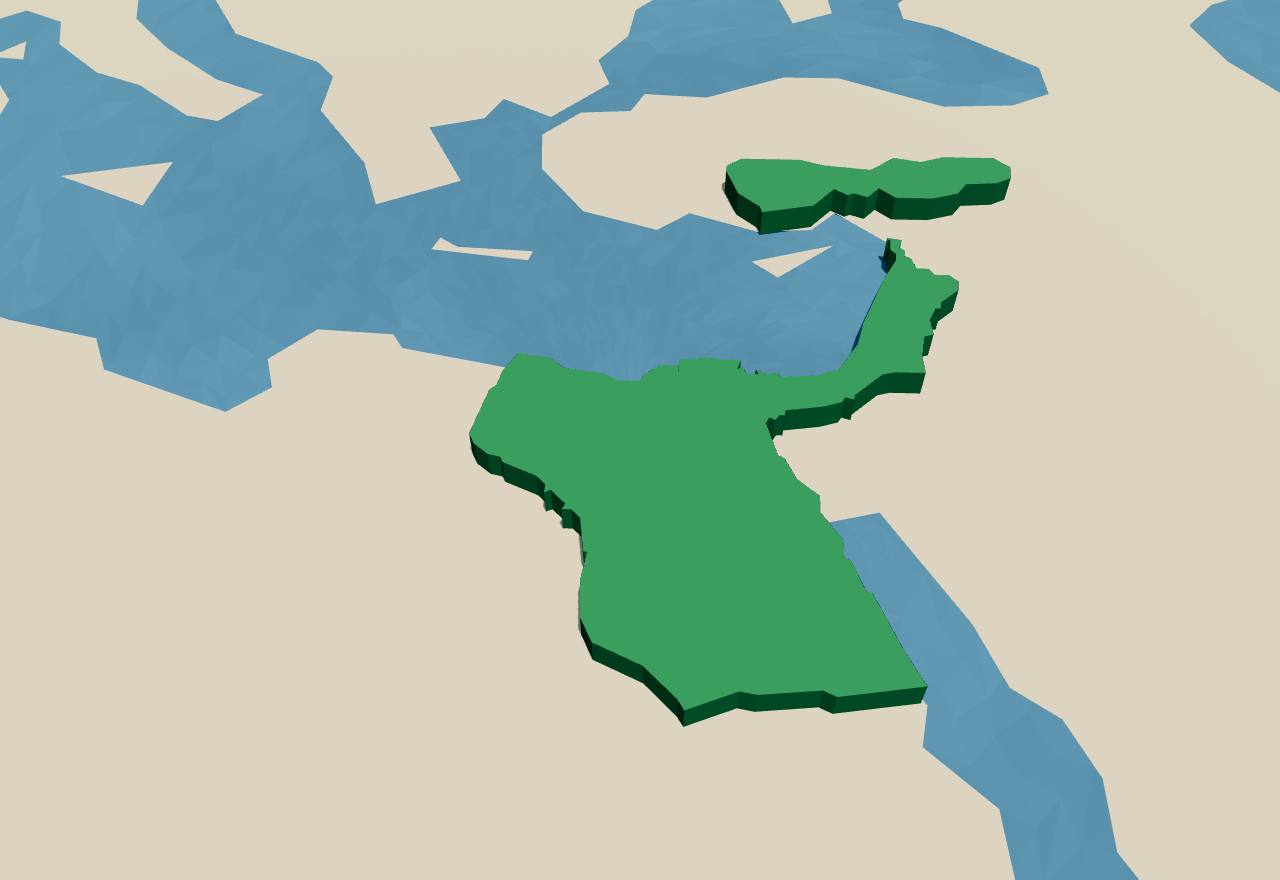
The Ptolemaic kingdom (Cliopatria)
Territory: Cliopatria (CC BY 4.0), simplified. Height: Seshat population, log scale.
Artefacts
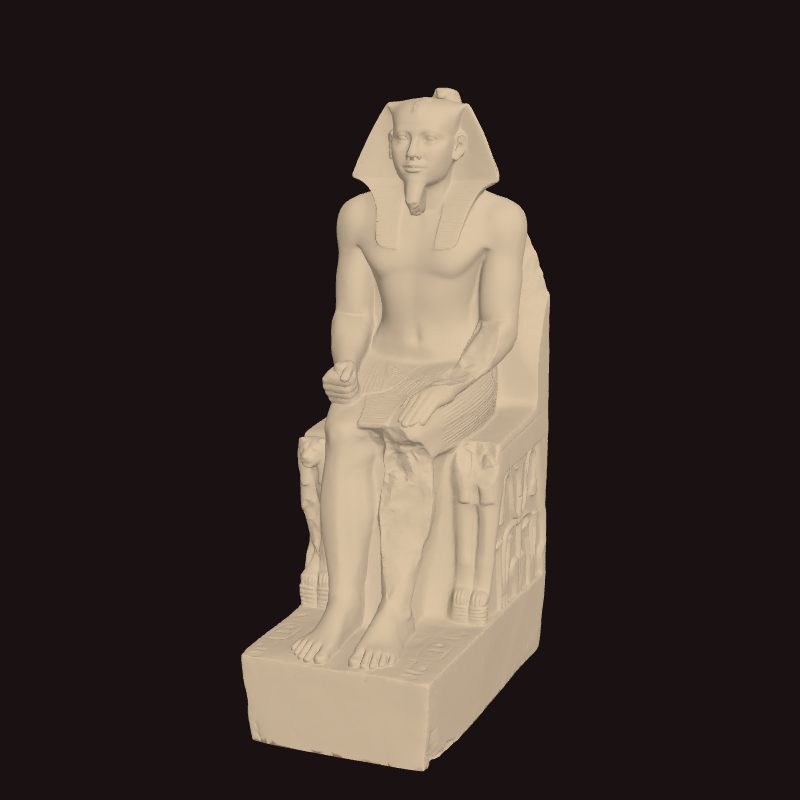 Cast
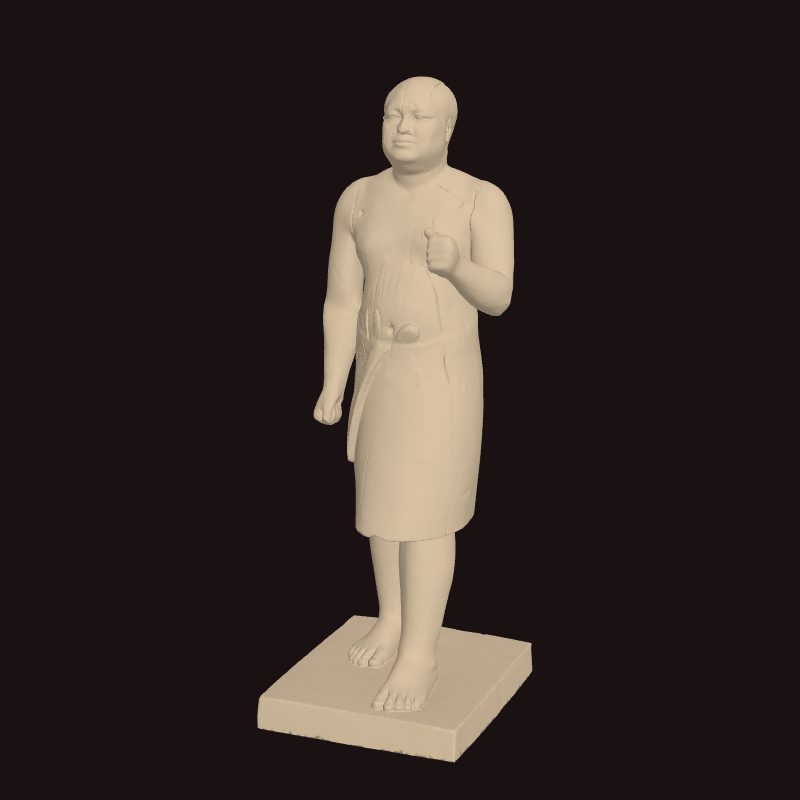 Cast
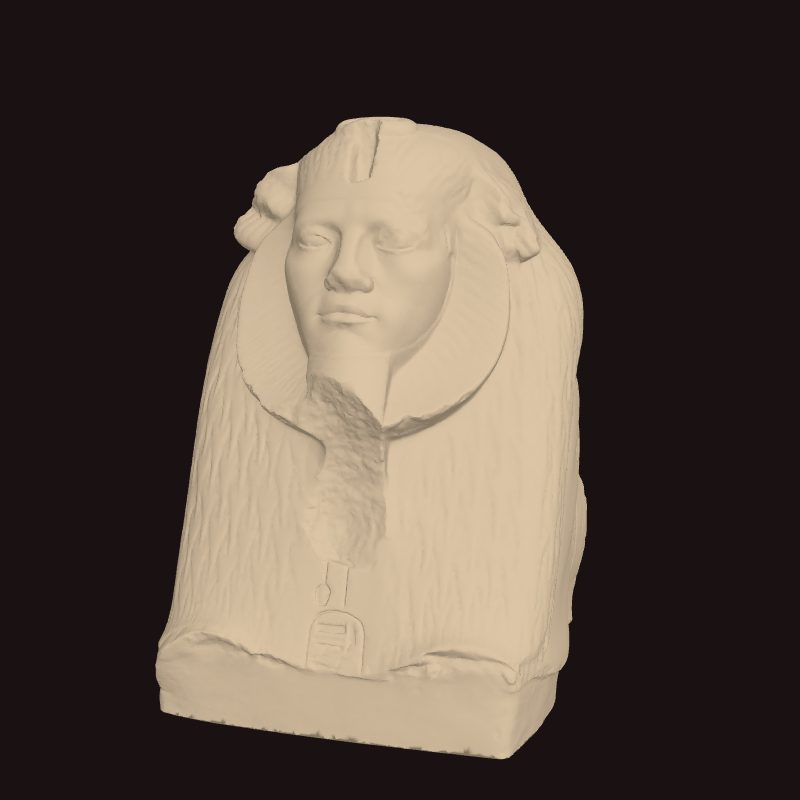 Cast
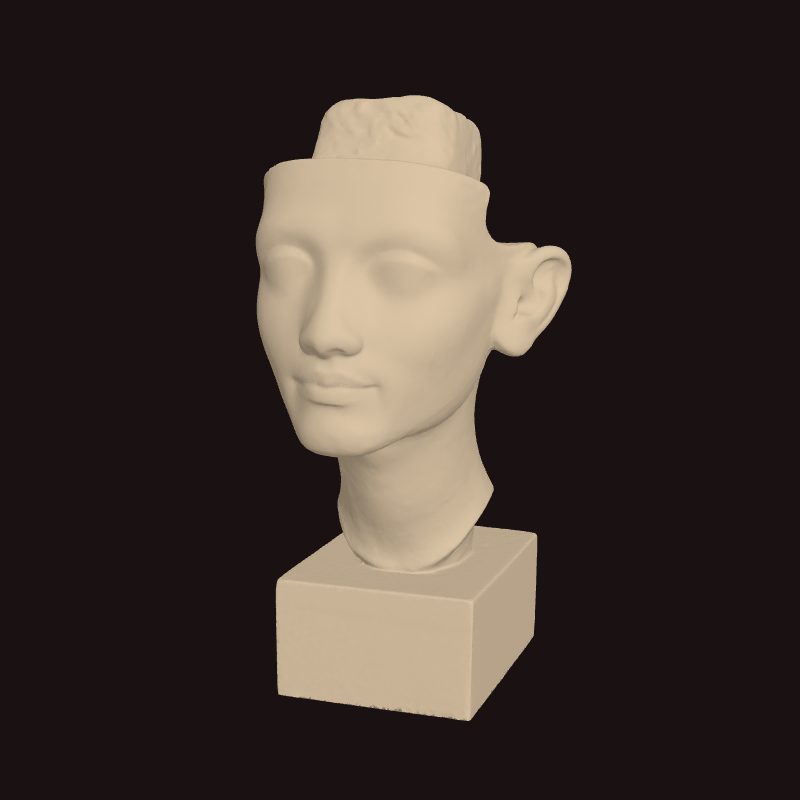 Cast
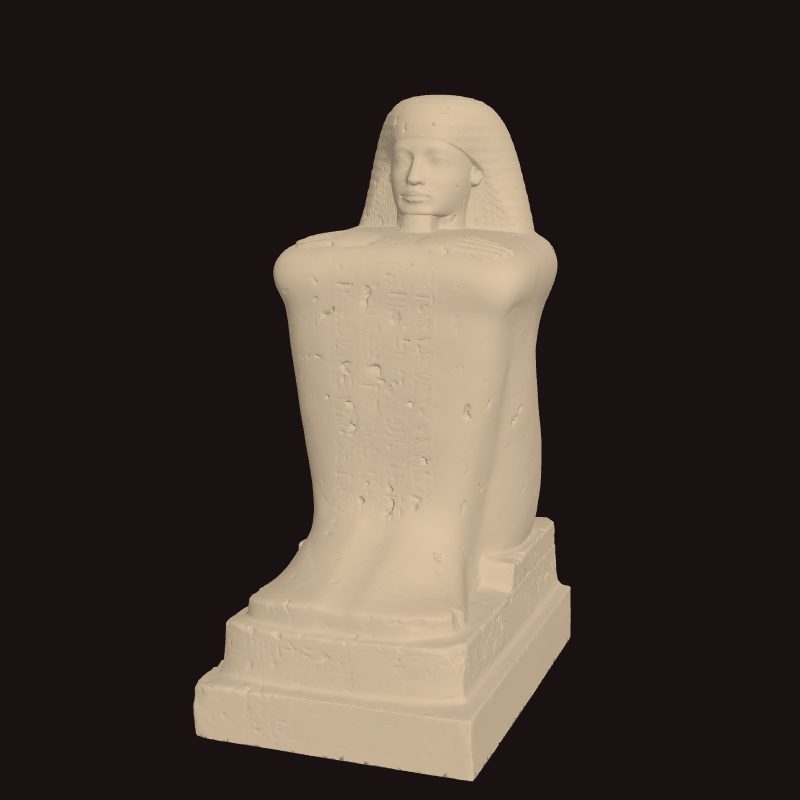 Cast
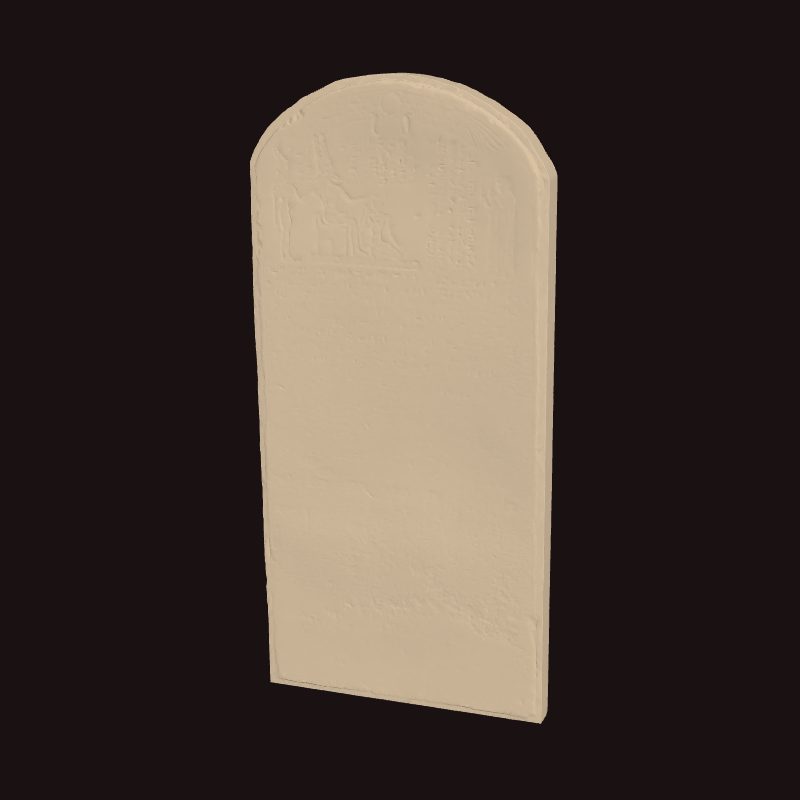 Cast
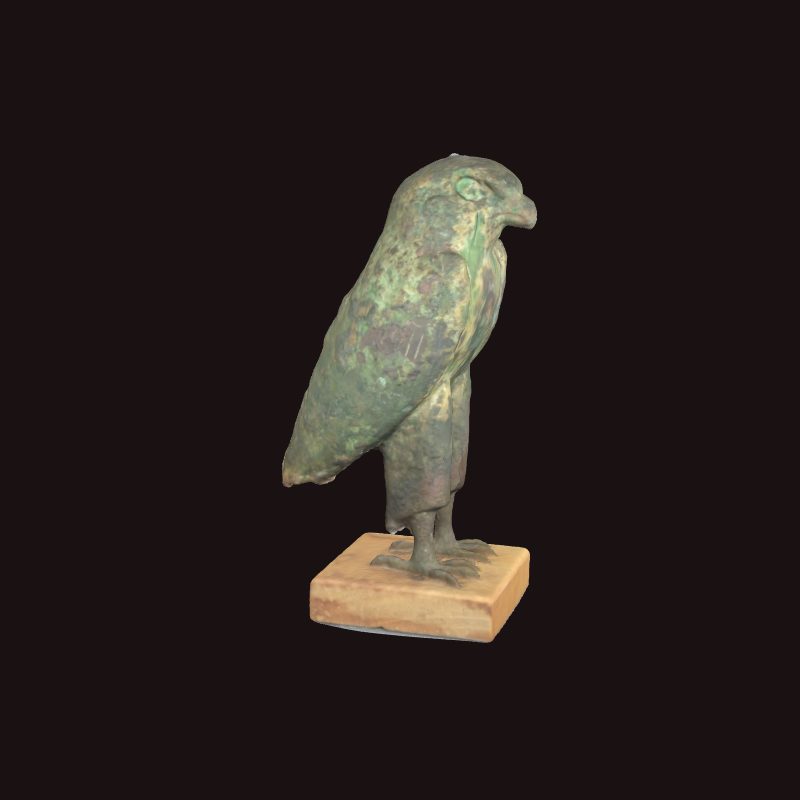
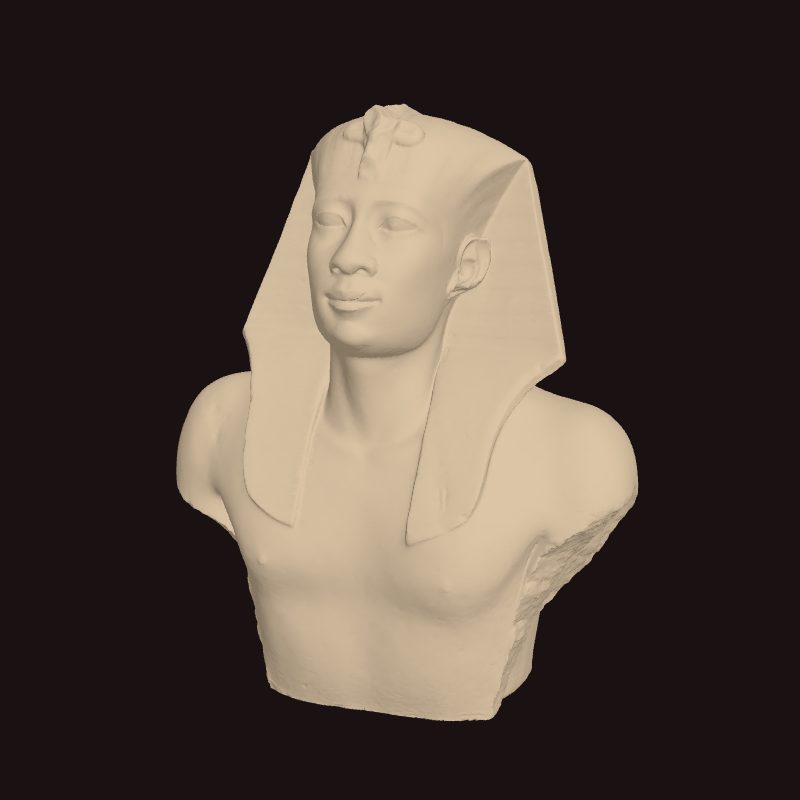 Cast
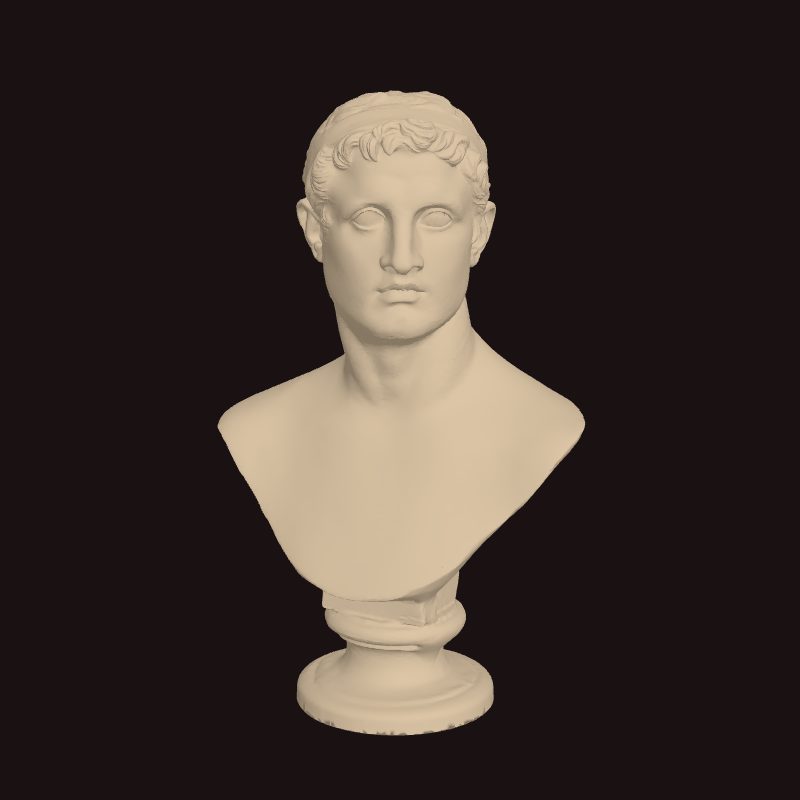 Cast
In numbers
- Marks, by Seshat polity:
- Egypt - Dynasty I
- Egypt - Dynasty II
- Egypt - Classic Old Kingdom
- Egypt - Late Old Kingdom
- Egypt - Period of the Regions
- Egypt - Middle Kingdom
- Egypt - Thebes-Hyksos Period
- Egypt - New Kingdom Thutmosid Period
- Egypt - New Kingdom Ramesside Period
- Egypt - Thebes-Libyan Period
- Egypt - Kushite Period
- Egypt - Saite Period
- Egypt - Inter-Occupation Period
- Ptolemaic Kingdom I
- Ptolemaic Kingdom II
- Background bands, by phase:
- Unification and the first dynasties
- The pyramid state
- The regions
- Reunification
- Hyksos and Thebes
- Empire
- Libyans, Kushites, Saites, Persians
- The Ptolemies
| Seshat polity | Years | Value |
|---|---|---|
| Egypt - Dynasty I | 3,100 BCE – 2,900 BCE (whole period) | 50,000–110,000 |
| Egypt - Dynasty II | 2,900 BCE – 2,801 BCE | 100,000 |
| Egypt - Dynasty II | 2,800 BCE – 2,701 BCE | 267,000 |
| Egypt - Dynasty II | 2,700 BCE – 2,651 BCE | 300,000 |
| Egypt - Classic Old Kingdom | 2,650 BCE – 2,350 BCE (whole period) | 75,000–350,000 |
| Egypt - Late Old Kingdom | 2,350 BCE – 2,150 BCE (whole period) | 75,000–300,000 |
| Egypt - Period of the Regions | 2,150 BCE – 2,016 BCE (whole period) | 20,000–40,000 |
| Egypt - Middle Kingdom | 2,000 BCE | 238,000 |
| Egypt - Middle Kingdom | 1,900 BCE | 413,000 |
| Egypt - Middle Kingdom | 1,800 BCE | 450,000 |
| Egypt - Thebes-Hyksos Period | 1,720 BCE – 1,567 BCE (whole period) | 10,000–20,000 |
| Egypt - New Kingdom Thutmosid Period | 1,500 BCE – 1,451 BCE | 650,000 |
| Egypt - New Kingdom Thutmosid Period | 1,450 BCE – 1,351 BCE | 900,000 |
| Egypt - New Kingdom Thutmosid Period | 1,350 BCE – 1,294 BCE | 1,000,000 |
| Egypt - New Kingdom Ramesside Period | 1,293 BCE | 1,000,000 |
| Egypt - New Kingdom Ramesside Period | 1,200 BCE | 746,000 |
| Egypt - New Kingdom Ramesside Period | 1,100 BCE | 567,000 |
| Egypt - Thebes-Libyan Period | 1,069 BCE – 747 BCE (whole period) | 190,000–230,000 |
| Egypt - Kushite Period | 700 BCE | 600,000–700,000 |
| Egypt - Saite Period | 664 BCE – 525 BCE (whole period) | 300,000–400,000 |
| Egypt - Inter-Occupation Period | 404 BCE – 342 BCE (whole period) | 500,000–600,000 |
| Ptolemaic Kingdom I | 305 BCE – 217 BCE (whole period) | 1,000,000 |
| Ptolemaic Kingdom II | 200 BCE | 833,000 |
| Ptolemaic Kingdom II | 150 BCE | 640,000 |
| Ptolemaic Kingdom II | 100 BCE | 373,000 |
| Ptolemaic Kingdom II | 50 BCE | 107,000 |
| Seshat polity | Years | Value |
|---|---|---|
| Egypt - Dynasty I | 3,100 BCE – 2,900 BCE (whole period) | 900,000–1,100,000 |
| Egypt - Dynasty II | 2,900 BCE – 2,687 BCE (whole period) | 1,100,000–1,200,000 |
| Egypt - Classic Old Kingdom | 2,650 BCE – 2,350 BCE (whole period) | 1,000,000–1,500,000 |
| Egypt - Late Old Kingdom | 2,350 BCE – 2,150 BCE (whole period) | 1,500,000 |
| Egypt - Middle Kingdom | 2,016 BCE – 1,700 BCE (whole period) | 1,500,000–2,500,000 |
| Egypt - New Kingdom Thutmosid Period | 1,550 BCE – 1,293 BCE (whole period) | 3,350,000–4,500,000 |
| Egypt - New Kingdom Ramesside Period | 1,293 BCE – 1,070 BCE (whole period) | 2,000,000–3,000,000 |
| Egypt - Kushite Period | 747 BCE – 656 BCE (whole period) | 2,500,000–3,000,000 |
| Egypt - Saite Period | 664 BCE – 525 BCE (whole period) | 1,800,000–2,500,000 |
| Egypt - Inter-Occupation Period | 404 BCE – 342 BCE (whole period) | 2,500,000–3,000,000 |
| Ptolemaic Kingdom I | 305 BCE – 217 BCE (whole period) | 7,000,000 |
| Ptolemaic Kingdom II | 217 BCE – 151 BCE | 4,000,000 |
| Ptolemaic Kingdom II | 150 BCE – 32 BCE | 4,000,000 |
| Ptolemaic Kingdom II | 150 BCE – 32 BCE | 2,500,000 |
| Seshat polity | Years | Value |
|---|---|---|
| Egypt - Dynasty I | 3,100 BCE – 2,900 BCE (whole period) | 6,000–20,000 |
| Egypt - Dynasty II | 2,900 BCE – 2,687 BCE (whole period) | 6,000–20,000 |
| Egypt - Classic Old Kingdom | 2,650 BCE – 2,350 BCE (whole period) | 30,000 |
| Egypt - Classic Old Kingdom | 2,650 BCE – 2,350 BCE (whole period) | 50,000 |
| Egypt - Late Old Kingdom | 2,350 BCE – 2,150 BCE (whole period) | 30,000–50,000 |
| Egypt - Period of the Regions | 2,150 BCE – 2,016 BCE (whole period) | 30,000 |
| Egypt - Middle Kingdom | 2,016 BCE – 1,700 BCE (whole period) | 30,000 |
| Egypt - Thebes-Hyksos Period | 1,720 BCE – 1,567 BCE (whole period) | 50,000–100,000 |
| Egypt - New Kingdom Thutmosid Period | 1,550 BCE – 1,293 BCE (whole period) | 30,000–100,000 |
| Egypt - New Kingdom Ramesside Period | 1,293 BCE – 1,070 BCE (whole period) | 250,000–300,000 |
| Egypt - Thebes-Libyan Period | 1,070 BCE – 951 BCE | 120,000 |
| Egypt - Thebes-Libyan Period | 950 BCE – 761 BCE | 100,000 |
| Egypt - Kushite Period | 700 BCE | 65,000 |
| Egypt - Saite Period | 664 BCE – 525 BCE (whole period) | 25,000–75,000 |
| Egypt - Inter-Occupation Period | 404 BCE – 342 BCE (whole period) | 50,000–100,000 |
| Ptolemaic Kingdom I | 300 BCE | 100,000 |
| Ptolemaic Kingdom I | 300 BCE | 160,000 |
| Ptolemaic Kingdom II | 217 BCE – 150 BCE | 300,000 |
| Ptolemaic Kingdom II | 149 BCE – 32 BCE | 500,000 |
| Seshat polity | Years | Value |
|---|---|---|
| Egypt - Dynasty I | 3,100 BCE – 2,900 BCE (whole period) | 4 |
| Egypt - Dynasty II | 2,900 BCE – 2,687 BCE (whole period) | 4 |
| Egypt - Classic Old Kingdom | 2,650 BCE – 2,350 BCE (whole period) | 7 |
| Egypt - Late Old Kingdom | 2,350 BCE – 2,150 BCE (whole period) | 7 |
| Egypt - Period of the Regions | 2,150 BCE – 2,016 BCE (whole period) | 4 |
| Egypt - Middle Kingdom | 2,016 BCE – 1,700 BCE (whole period) | 5–7 |
| Egypt - Thebes-Hyksos Period | 1,720 BCE – 1,567 BCE (whole period) | 5–6 |
| Egypt - New Kingdom Thutmosid Period | 1,550 BCE – 1,293 BCE (whole period) | 5–6 |
| Egypt - New Kingdom Ramesside Period | 1,293 BCE – 1,070 BCE (whole period) | 5–6 |
| Egypt - Thebes-Libyan Period | 1,069 BCE – 747 BCE (whole period) | 5–7 |
| Egypt - Kushite Period | 747 BCE – 656 BCE (whole period) | 5 |
| Egypt - Saite Period | 664 BCE – 525 BCE (whole period) | 5 |
| Egypt - Inter-Occupation Period | 404 BCE – 342 BCE (whole period) | 5 |
| Ptolemaic Kingdom I | 305 BCE – 217 BCE (whole period) | 6 |
| Ptolemaic Kingdom II | 217 BCE – 30 BCE (whole period) | 6 |
| Seshat polity | Years | Value |
|---|---|---|
| Egypt - Dynasty I | 3,100 BCE – 2,900 BCE (whole period) | 4–5 |
| Egypt - Dynasty II | 2,900 BCE – 2,687 BCE (whole period) | 4–5 |
| Egypt - Classic Old Kingdom | 2,650 BCE – 2,350 BCE (whole period) | 4–5 |
| Egypt - Late Old Kingdom | 2,350 BCE – 2,150 BCE (whole period) | 4–5 |
| Egypt - Period of the Regions | 2,150 BCE – 2,016 BCE (whole period) | 4–5 |
| Egypt - Middle Kingdom | 2,016 BCE – 1,700 BCE (whole period) | 4–5 |
| Egypt - Thebes-Hyksos Period | 1,720 BCE – 1,567 BCE (whole period) | 4–5 |
| Egypt - New Kingdom Thutmosid Period | 1,550 BCE – 1,293 BCE (whole period) | 5 |
| Egypt - New Kingdom Ramesside Period | 1,293 BCE – 1,070 BCE (whole period) | 4–6 |
| Egypt - Thebes-Libyan Period | 1,069 BCE – 747 BCE (whole period) | 3–5 |
| Egypt - Kushite Period | 747 BCE – 656 BCE (whole period) | 4–5 |
| Egypt - Saite Period | 664 BCE – 525 BCE (whole period) | 4–5 |
| Egypt - Inter-Occupation Period | 404 BCE – 342 BCE (whole period) | 4 |
| Ptolemaic Kingdom I | 305 BCE – 217 BCE (whole period) | 6 |
| Ptolemaic Kingdom II | 217 BCE – 30 BCE (whole period) | 6 |
| Seshat polity | Years | Value |
|---|---|---|
| Egypt - Dynasty I | 3,100 BCE – 2,900 BCE (whole period) | 3–4 |
| Egypt - Dynasty II | 2,900 BCE – 2,687 BCE (whole period) | 3 |
| Egypt - Classic Old Kingdom | 2,650 BCE – 2,350 BCE (whole period) | 3–7 |
| Egypt - Late Old Kingdom | 2,350 BCE – 2,150 BCE (whole period) | 3–7 |
| Egypt - Period of the Regions | 2,150 BCE – 2,016 BCE (whole period) | 3–4 |
| Egypt - Middle Kingdom | 2,016 BCE – 1,700 BCE (whole period) | 3–7 |
| Egypt - Thebes-Hyksos Period | 1,720 BCE – 1,567 BCE (whole period) | 6 |
| Egypt - New Kingdom Thutmosid Period | 1,550 BCE – 1,293 BCE (whole period) | 7 |
| Egypt - New Kingdom Ramesside Period | 1,293 BCE – 1,070 BCE (whole period) | 7 |
| Egypt - Thebes-Libyan Period | 1,069 BCE – 747 BCE (whole period) | 4–6 |
| Egypt - Kushite Period | 747 BCE – 656 BCE (whole period) | 4–6 |
| Egypt - Saite Period | 664 BCE – 525 BCE (whole period) | 6–8 |
| Egypt - Inter-Occupation Period | 404 BCE – 342 BCE (whole period) | 5–9 |
| Ptolemaic Kingdom I | 305 BCE – 217 BCE (whole period) | 9 |
| Ptolemaic Kingdom II | 217 BCE – 30 BCE (whole period) | 7–8 |
Values as Seshat codes them: bands are ranges, dots single values, flat bars values given for a whole period, hatching “unknown”; from one Seshat polity to the next, marks alternate between a light tone and a darker one with dashed joining lines (the key above names each polity). Source: Seshat Global History Databank (Equinox-2020), CC BY 4.0.
Governance fingerprint
Seshat's institutional variables, phase by phase. Hover or focus a cell for the values and years.
- Present
- Inferred present
- Absent
- Inferred absent
- Unknown
- Not coded in Seshat
- Mixed: present in one Seshat polity or period, absent in another
The axes against Seshat
19 agree, 0 disagree, 1 mixed.
- Mixed The Ptolemies: who rules coded “Divine king”, which implies rulers are gods present; Seshat has it present in one polity or period and the opposite in another.
Show the 19 pairs that agree
- Agree Unification and the first dynasties: who rules coded “Divine king”, which implies rulers are gods present; Seshat has it present.
- Agree Unification and the first dynasties: claim to rule coded “Divine mandate”, which implies rulers legitimated by gods present; Seshat has it present.
- Agree Unification and the first dynasties: how chosen coded “Heredity”, which implies elite status hereditary present; Seshat has it present.
- Agree The pyramid state: who rules coded “Divine king”, which implies rulers are gods present; Seshat has it present.
- Agree The pyramid state: claim to rule coded “Divine mandate”, which implies rulers legitimated by gods present; Seshat has it present.
- Agree The pyramid state: how chosen coded “Heredity”, which implies elite status hereditary present; Seshat has it present.
- Agree The regions: claim to rule coded “Divine mandate”, which implies rulers legitimated by gods present; Seshat has it present.
- Agree The regions: how chosen coded “Heredity”, which implies elite status hereditary present; Seshat has it present.
- Agree Reunification: who rules coded “Divine king”, which implies rulers are gods present; Seshat has it present.
- Agree Reunification: claim to rule coded “Divine mandate”, which implies rulers legitimated by gods present; Seshat has it present.
- Agree Reunification: how chosen coded “Heredity”, which implies elite status hereditary present; Seshat has it present.
- Agree Hyksos and Thebes: claim to rule coded “Divine mandate”, which implies rulers legitimated by gods present; Seshat has it present.
- Agree Empire: who rules coded “Divine king”, which implies rulers are gods present; Seshat has it present.
- Agree Empire: claim to rule coded “Divine mandate”, which implies rulers legitimated by gods present; Seshat has it present.
- Agree Empire: how chosen coded “Heredity”, which implies elite status hereditary present; Seshat has it present.
- Agree Libyans, Kushites, Saites, Persians: claim to rule coded “Divine mandate”, which implies rulers legitimated by gods present; Seshat has it present.
- Agree The Ptolemies: claim to rule coded “Divine mandate”, which implies rulers legitimated by gods present; Seshat has it present.
- Agree The Ptolemies: limits on power coded “None in practice”, which implies executive checked by government absent; Seshat has it absent.
- Agree The Ptolemies: how chosen coded “Heredity”, which implies elite status hereditary present; Seshat has it present.
Only pairs where an axis value on its own implies a Seshat variable are compared; the rest is not counted as disagreement.
Source: Seshat Global History Databank (Equinox-2020), CC BY 4.0.
Compare
| Axis | Egypt | Sumer: Uruk and Jemdet Nasr | Achaemenid Persia: Cyrus and Cambyses | China: Shang |
|---|---|---|---|---|
| Who rules | Divine king | Clerical rule | Emperor | King |
| How chosen | Heredity | Unknown | Conquest or coup | Heredity |
| Limits on power | Unknown | Council | Custom and kin | None in practice |
| Scale | Territorial state | City-state | Empire | Territorial state |
| Claim to rule | Divine mandate | Divine mandate | Divine mandate | Divine mandate |
| Who has a say | A narrow elite | Unknown | A narrow elite | A narrow elite |
Legacy
The word pharaoh goes back to the Egyptian pr-ꜥꜣ, 'great house': the palace, and by extension the king who lived in it. 4 Consensus Texts
Egyptian kingship outlived the native dynasties: an Egyptian official gave the Persian Great King an Egyptian royal titulary, and the Macedonian Ptolemies were recognised as pharaohs by the temples and crowned by the high priest of Memphis. 3,57 Consensus Texts
See also forms of government.
Sources
Bibliography
73 sources, numbered as cited: 44 papers · 8 books · 4 datasets · 14 primary sources · 3 popular syntheses
- Paper Stevenson, A. (2016). The Egyptian Predynastic and State Formation. Journal of Archaeological Research 24. Review of Predynastic Egypt: state formation as 'syncopated', with political experimentation and shifting boundaries.
- Paper Pfeiffer, S. (2013). Egypt and Greece Before Alexander. UCLA Encyclopedia of Egyptology. Greek mercenaries and Naukratis.
- Paper Klotz, D. (2015). Persian Period. UCLA Encyclopedia of Egyptology. Egypt as an Achaemenid satrapy.
- Dataset Schweitzer, S. D. (2021). AED – Ancient Egyptian Dictionary: all spellings (Gardiner code and Unicode). Data from the Thesaurus Linguae Aegyptiae (BBAW), CC BY-SA 4.0. Source of every hieroglyphic spelling in the terms rows, by TLA lemma id.
- Paper Wilkinson, T. (2014). Dynasties 2 and 3. UCLA Encyclopedia of Egyptology. Peer reviewed. Treasury, vizier, nomes, census in Dynasties 2–3.
- Paper Campagno, M. (2013). Late Fourth Millennium BCE. UCLA Encyclopedia of Egyptology. Unification, Dynasty 0, the palettes read as symbolic.
- Book Wilkinson, T. A. H. (2002). Early Dynastic Egypt. Routledge. Publisher's description and chapter openings read; chapters are dated 1999 in the eBook.
- Paper Bussmann, R. (2015). Pyramid Age: Huni to Radjedef. UCLA Encyclopedia of Egyptology. Fourth Dynasty state, court titles, informal structures.
- Popular Lehner, M. (2021). Soccer Field Sondages, Palace Promises. AERAgram 22(1–2).
- Popular Ancient Egypt Research Associates (2015). AERAgram 16(1). AERA newsletter (Giza, Heit el-Ghurab).
- Paper Vymazalová, H. (2016). Ration System. UCLA Encyclopedia of Egyptology. Phyles, rations, the Abusir papyri.
- Popular Lehner, M. (interview) (2010). Unearthing the Pyramid Builders' Town (NOVA). PBS NOVA.
- Paper Bárta, M. (2017). Radjedef to the Eighth Dynasty. UCLA Encyclopedia of Egyptology. Fifth–Eighth Dynasty administration, viziers, nomarchs.
- Paper Müller-Wollermann, R. (2014). End of the Old Kingdom. UCLA Encyclopedia of Egyptology. Decentralisation, decrees, the end of the Old Kingdom.
- Paper Moreno García, J. C. (2008). Estates (Old Kingdom). UCLA Encyclopedia of Egyptology. Royal and temple estates; exemptions temporary and revocable.
- Book Kemp, B. J. (2018). Ancient Egypt: Anatomy of a Civilization. Routledge (3rd edition). Chapter abstracts read (chs 3, 5–9).
- Book Moreno García, J. C. (2013). The ‘Other’ Administration: Patronage, Factions, and Informal Networks of Power in Ancient Egypt. Ancient Egyptian Administration (Brill). Pages 1029–1030 read (publisher preview).
- Book Moreno García, J. C. (2013). The Territorial Administration of the Kingdom in the 3rd Millennium. Ancient Egyptian Administration (Brill). Pages 85–86 read (publisher preview).
- Primary Breasted, J. H. (1906). Ancient Records of Egypt, vol. I: The First to the Seventeenth Dynasties. University of Chicago Press. Translations of 1906, public domain; wording dated.
- Paper Manassa, C. (2011). El-Mo’alla to El-Deir. UCLA Encyclopedia of Egyptology. Ankhtifi of Moalla and the southern nomes.
- Paper Coulon, L. (2008). Famine. UCLA Encyclopedia of Egyptology. Famine texts as rhetoric of the nomarch.
- Paper Bell, B. (1971). The Dark Ages in Ancient History. I. The First Dark Age in Egypt. American Journal of Archaeology. Full text read (Digital Giza copy).
- Paper Moeller, N. (2013). Edfu. UCLA Encyclopedia of Egyptology. Edfu's walls in the First Intermediate Period.
- Dataset Bennett, J. S., Mutch, E., Tollefson, A., et al. (2025). Cliopatria - A geospatial database of world-wide political entities from 3400BCE to 2024CE. Scientific Data 12. Cliopatria: open geospatial dataset of over 1600 political entities, 3400 BCE–2024 CE.
- Paper Weiss, H. (2022). Pyramid building and collapse. Proceedings of the National Academy of Sciences.
- Paper Moeller, N. (2006). The First Intermediate Period: A time of Famine and Climate Change?. Ägypten und Levante 15. Full text read (Austrian Academy).
- Dataset Pleiades gazetteer (2026). Pleiades: a gazetteer of past places (place records for the nome seats). Coordinates (reprPoint) for Edfu 785974, Nekhen 786037, Thebes 786017, Coptos 786010, Abydos 756512, Asyut 756593, Hermopolis 756574, Herakleopolis 736920, Memphis 736963. CC BY.
- Paper Grajetzki, W. (2013). Late Middle Kingdom. UCLA Encyclopedia of Egyptology. Centralisation, governors, Nubian forts, Dynasty 13.
- Paper Näser, C. (2018). Shalfak: a Middle Kingdom fortress in Lake Nubia. Egyptian Archaeology 52.
- Paper Ferreira, E. (2019). The Lower Nubian Egyptian Fortresses in the Middle Kingdom: A Strategic Point of View. Athens Journal of History.
- Paper Knoblauch, C. (2026). Pottery Production at the Middle Kingdom Fortress at Uronarti, Sudan. Bulletin de liaison de la céramique égyptienne.
- Paper Kraemer, B.; Liszka, K. (2016). Evidence for Administration of the Nubian Fortresses in the Late Middle Kingdom: The Semna Dispatches. Journal of Egyptian History. Abstract read.
- Paper Ilin-Tomich, A. (2016). Second Intermediate Period. UCLA Encyclopedia of Egyptology. Avaris, Thebes and Kerma.
- Paper Popko, L. (2013). Late Second Intermediate Period to Early New Kingdom. UCLA Encyclopedia of Egyptology. Seqenenra, Kamose, Ahmose; viceroy of Kush; God's Wife.
- Book Bietak, M. (2022). Avaris/Tell el‐Dab'a. The Encyclopedia of Ancient History (Wiley).
- Paper Lippert, S. (2012). Law Courts. UCLA Encyclopedia of Egyptology. Great and local courts, the vizier, oracles.
- Paper Cohen, S. (2016). History of Egypt in Palestine. UCLA Encyclopedia of Egyptology. The Levantine empire.
- Book Morris, E. F. (2018). Ancient Egyptian Imperialism. Wiley. Read through Flammini's review (flammini2021); the publisher blocked the chapter pages.
- Paper Flammini, R. (2021). Book Review: Ancient Egyptian Imperialism. The Journal of Egyptian Archaeology.
- Paper Roth, S. (2009). Queen. UCLA Encyclopedia of Egyptology. Queens as regents.
- Primary Breasted, J. H. (1906). Ancient Records of Egypt, vol. II: The Eighteenth Dynasty. University of Chicago Press. Translations of 1906, public domain; wording dated.
- Paper Williamson, J. (2015). Amarna Period. UCLA Encyclopedia of Egyptology.
- Paper Stevens, A. (2016). Tell el-Amarna. UCLA Encyclopedia of Egyptology. Akhenaten's city.
- Paper Sullivan, E. A. (2010). Karnak: Development of the Temple of Amun-Ra. UCLA Encyclopedia of Egyptology. Karnak building history.
- Dataset Karnak Great Hypostyle Hall Project (2024). Architecture of the Great Hypostyle Hall. University of Memphis.
- Paper Katary, S. (2012). Land Tenure (to the End of the Ptolemaic Period). UCLA Encyclopedia of Egyptology. Temple land, Harris I, Wilbour, Ptolemaic royal and cleruchic land.
- Paper Grandet, P. (2014). Early–mid 20th dynasty. UCLA Encyclopedia of Egyptology. Ramesses III: strikes, Papyrus Harris I, the harem conspiracy.
- Paper Haring, B. (2009). Economy. UCLA Encyclopedia of Egyptology. Temples as separate but not autonomous institutions.
- Paper Toivari-Viitala, J. (2011). Deir el-Medina (Development). UCLA Encyclopedia of Egyptology. The workmen's village.
- Paper Manassa Darnell, C. (2015). Transition 18th–19th dynasty. UCLA Encyclopedia of Egyptology. Horemheb and Ramesses I.
- Paper Pope, J. (2019). 25th Dynasty. UCLA Encyclopedia of Egyptology. The Kushite pharaohs.
- Paper Broekman, G. P. F. (2010). Libyan Rule Over Egypt. The Influence of the Tribal Background of the Ruling Class on Political Structures and Developments during the Libyan Period in Egypt. Studien zur Altägyptischen Kultur 39. Full text read (JSTOR scan hosted by Université Laval, IEAM).
- Primary Breasted, J. H. (1906). Ancient Records of Egypt, vol. IV: The Twentieth to the Twenty-Sixth Dynasties. University of Chicago Press. Translations of 1906, public domain; wording dated.
- Paper Ladynin, I. (2013). Late Dynastic Period. UCLA Encyclopedia of Egyptology. Dynasties 28–30.
- Book Bevan, E. R. (1927). The House of Ptolemy. Methuen (LacusCurtius transcription). An old general history; used for the Ptolemaic offices and the Canopus decree in translation.
- Book Minas-Nerpel, M. (2022). The Creation of New ‘Cultural Codes’ in Ptolemaic Egypt. In J. Spier and S. E. Cole (eds), Egypt and the Classical World (Getty). CC BY-NC 4.0 text.
- Paper Clarysse, W. (2004). The great revolt of the Egyptians (205–186 BC). Lecture, University of California, Berkeley.
- Paper Coppens, F. (2009). Temple Festivals of the Ptolemaic and Roman Periods. UCLA Encyclopedia of Egyptology. Priestly synods.
- Paper Engsheden, Å. (2016). Traditional Egyptian II (Ptolemaic, Roman). UCLA Encyclopedia of Egyptology. Priestly decrees in three versions.
- Primary Simpson, R. S. (1996). The Rosetta Stone: translation of the demotic text. British Museum (archived page).
- Paper Riggs, C.; Baines, J. (2012). Ethnicity. UCLA Encyclopedia of Egyptology. Greek and Egyptian labels under the Ptolemies.
- Paper Manning, J. G.; Ludlow, F.; Stine, A. R.; Boos, W. R.; Sigl, M.; Marlon, J. R. (2017). Volcanic suppression of Nile summer flooding triggers revolt and constrains interstate conflict in ancient Egypt. Nature Communications. Open access, CC BY 4.0; full text read.
- Paper Singh, R.; Tsigaridis, K.; LeGrande, A. N.; Ludlow, F.; Manning, J. G. (2023). Investigating hydroclimatic impacts of the 168–158 BCE volcanic quartet and their relevance to the Nile River basin and Egyptian history. Climate of the Past. Open access; shares two authors with manning2017.
- Primary SMK – Statens Museum for Kunst (2020). Kong Khefren med Horusfalken på trone (KAS37), plaster cast and 3D scan. Royal Cast Collection, Copenhagen. Public Domain Mark 1.0 on the record; original in the Egyptian Museum, Cairo.
- Primary SMK – Statens Museum for Kunst (2020). Stående mand. Portræt af Kaaper, Sheik-el-Beled (KAS2366), plaster cast and 3D scan. Royal Cast Collection, Copenhagen. Public Domain Mark 1.0; original in the Egyptian Museum, Cairo.
- Primary SMK – Statens Museum for Kunst (2020). Hoved og forkrop af sfinx med Amenemhets ansigtstræk (KAS38), plaster cast and 3D scan. Royal Cast Collection, Copenhagen. Public Domain Mark 1.0; original in the Egyptian Museum, Cairo.
- Primary SMK – Statens Museum for Kunst (2020). En ung dronning, Nefertiti (KAS2224), plaster cast and 3D scan. Royal Cast Collection, Copenhagen. Public Domain Mark 1.0; original in the Staatliche Museen zu Berlin.
- Primary Pett, D. (Dejp3) (2019). Colossal sculpture of Ramesses II (photogrammetry STL). Wikimedia Commons. CC BY 4.0, own work; the statue is at Mit Rahina (Memphis).
- Primary SMK – Statens Museum for Kunst (2020). Bek-en-Kons, Amons Profet og bygmester (KAS805), plaster cast and 3D scan. Royal Cast Collection, Copenhagen. Public Domain Mark 1.0; original in the Glyptothek, Munich.
- Primary SMK – Statens Museum for Kunst (2020). Etiopisk stele med kong Taharka? Knælende (KAS1737), plaster cast and 3D scan. Royal Cast Collection, Copenhagen. Public Domain Mark 1.0; original in the Egyptian Museum, Cairo.
- Primary Hunt Museum (2026). Bronze Statue of the god Horus (Share3D). Zenodo. CC BY 4.0 on the record.
- Primary SMK – Statens Museum for Kunst (2020). Portræt af Farao Amasis (KAS576), plaster cast and 3D scan. Royal Cast Collection, Copenhagen. Public Domain Mark 1.0; original in the Museo Archeologico, Florence.
- Primary SMK – Statens Museum for Kunst (2020). Portræt af Ptolemaios II Philadelphos (KAS752), plaster cast and 3D scan. Royal Cast Collection, Copenhagen. Public Domain Mark 1.0; original (a Roman bronze copy from Herculaneum) in the Museo Archeologico Nazionale, Naples.
Quantitative values from the Seshat Global History Databank (Equinox-2020), licensed CC BY 4.0. Dataset: Seshat Equinox Packaged Data (v.1). See also Seshat: The Global History Databank (Turchin et al. 2015).