The King of Kings, his satraps and his roads, 550–330 BCE
Achaemenid Persia
550 BCE – 330 BCE
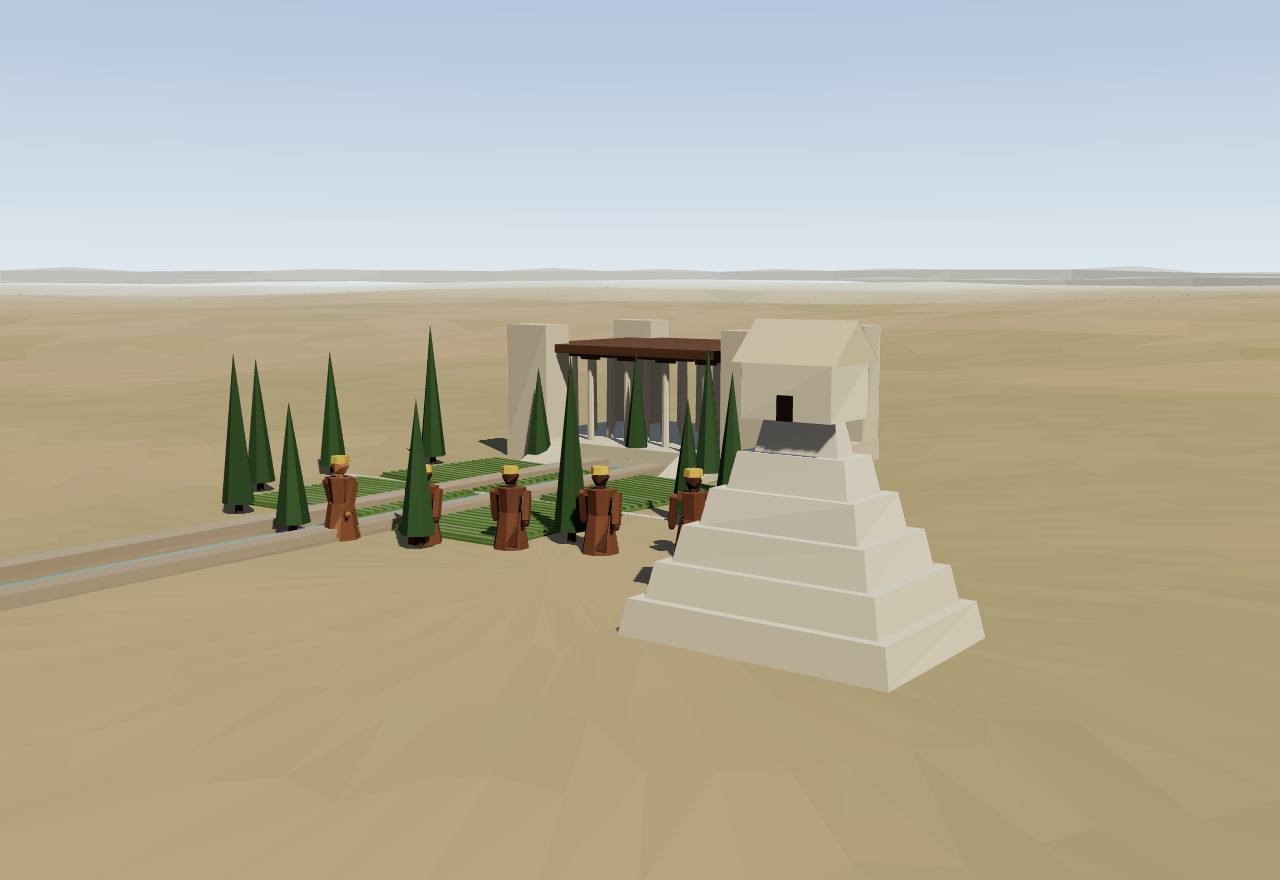
Pasargadae, Cyrus's royal seat, c. 535 BCE
550 BCE – 522 BCE
Cyrus and Cambyses
A king of Anshan in Persis overthrew his Median overlord and, within twenty years, ruled from the Aegean to Central Asia. Cyrus kept the conquered kingdoms' machinery running under his own governors, and let each conquered people's priests describe him in their own words.
Terms: Achaemenid Persia: Cyrus and Cambyses
- xšāyaθiya𐎧𐏁𐎠𐎹𐎰𐎡𐎹 king, as in Darius's opening words at Bisitun: 'I am Darius, the great king' 5,6,7
- Anšan the land in Persis whose kingship the Cyrus Cylinder gives to Cyrus, his father, his grandfather and his ancestor Teispes 8
- Pārsa𐎱𐎠𐎼𐎿 Persia (the land, Fārs) and the Persians; later the name of Persepolis 9,10,7
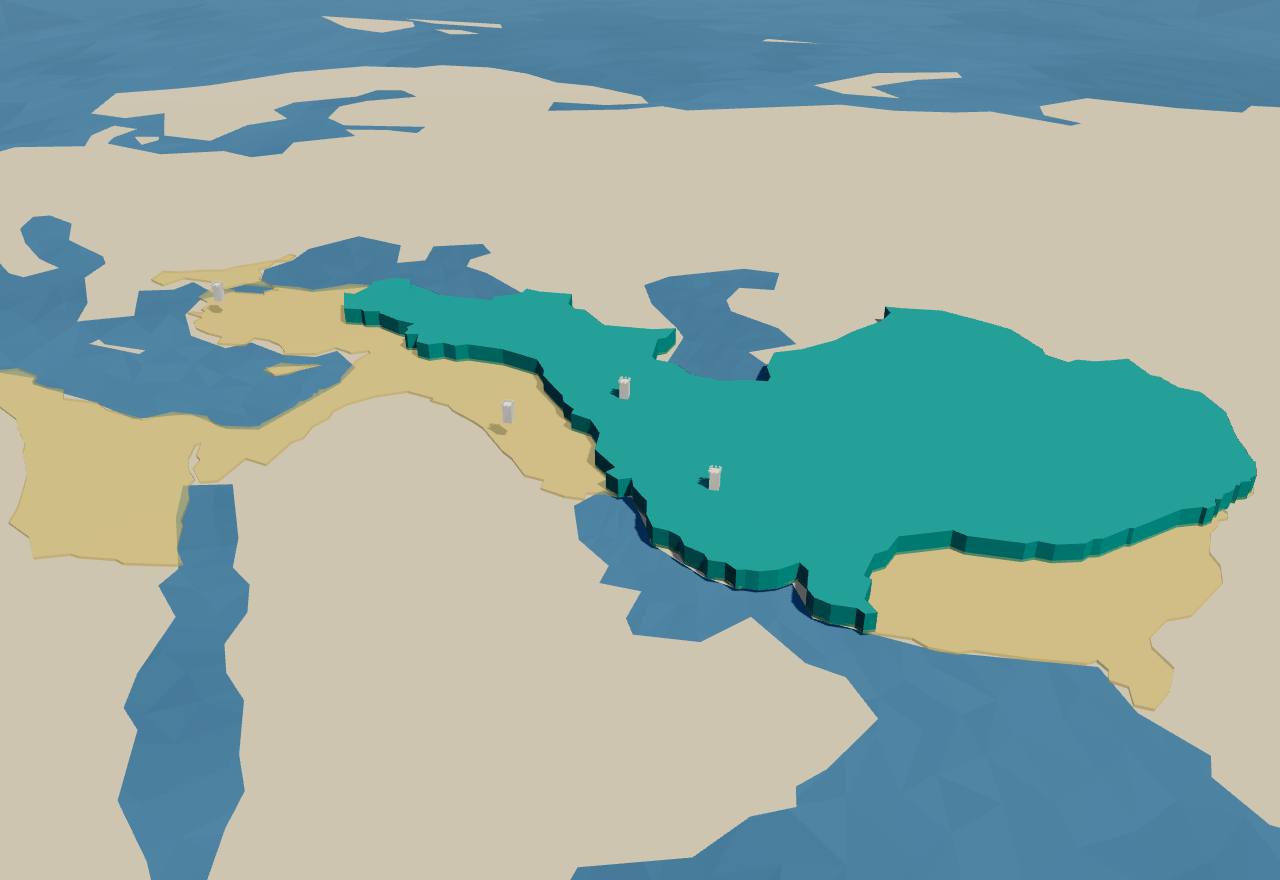
Cyrus's empire on Cliopatria's map, 545–525 BCE
Territory: Cliopatria (CC BY 4.0), simplified. Height fixed: population not coded in Seshat.
Cyrus called himself 'Kūruš the king, an Achaemenid' at Pasargadae, and on the Cyrus Cylinder 'son of Cambyses (I) — great king, king of Anšan — grandson of Cyrus (I) … descendant of Teispes', 'the eternal seed of kingship'. His ancestors had ruled the Persian tribes 'for several generations'. 1,8 Consensus Texts
In 553 BCE Cyrus rebelled against Astyages of Media. A Babylonian chronicle records that Astyages' 'troops revolted against him and he was taken prisoner' and handed to Cyrus, who carried the booty of Ecbatana to Anshan. Parthia, Hyrcania and perhaps Armenia, all once Median, followed in 549–548. 1 Consensus Texts
In October 539 BCE the Persians beat the Babylonians at Opis; Sippar fell on 10 October and Babylon two days later, 'without a struggle' according to the Babylonian chronicle. Herodotus and Xenophon tell instead of a determined resistance. By 535 BCE Cyrus had made Babylonia and 'Across-the-River' one province, and all the lands to the borders of Egypt recognised him. 1 Debated Texts
The Cyrus Cylinder, a clay foundation deposit with forty-five lines of Akkadian found at Babylon's Marduk temple in 1879, says that Marduk 'constantly sought out a righteous king … took Cyrus (II), the king of Anšan, into his hand' and let him enter Babylon 'without a fight or battle'. It was 'composed by priests of Marduk' on Neo-Assyrian models; Cyrus even reports finding an inscription of Ashurbanipal in the wall. 8,1 Consensus Texts Excavation
Conquest did not mean reorganisation. 'As a rule, Achaemenid imperial administration involved no primary administrative (re-)organization of the conquered territories but simply adaptation of existing structures': each defeated king, whether Croesus, Nabonidus, Amasis or Astyages, 'was replaced by a governor', and the old capitals (Sardis, Babylon, Memphis, Ecbatana) kept their rank. 11 Consensus
Herodotus, writing two generations later, says that 'in the reigns of Cyrus and Cambyses after him there was no fixed tribute, but payment was made in gifts', and that the Persians 'called Darius the merchant, Cambyses the master, and Cyrus the father'. 12 Debated Texts
Most building at Pasargadae, Cyrus's seat, took place between 546 and 530 BCE. Stone channels divided the garden before Palace P into four quarters, perhaps the first čahārbāḡ; a winged figure on Gate R puts an Egyptianising crown and an Elamite robe into 'the Assyrian tradition of winged genii', 'a deliberate attempt to co-opt the visual traditions of recently conquered regions'. 13 Debated Excavation
Cyrus died at the end of 530 BCE fighting the Massagetae in Central Asia and was buried at Pasargadae, in a gabled stone chamber on a plinth of six receding tiers that 'originally reached almost eleven meters in height'. Alexander's companions later found it already plundered. 1,13 Consensus Excavation Texts
Herodotus describes 'royal judges', chosen for life, who 'interpret the laws of the land'. Asked by Cambyses whether a law let him marry his sister, they found none, 'but that they had found a law permitting the King of Persia to do whatever he liked'. Cuneiform and Egyptian documents show Cambyses as a trained heir, once 'vice-king of Babylon', far from 'the Herodotean caricature'. 14,15 Debated Texts
Seshat puts the empire's territory at 2.5–4.1 million km² for 539–501 BCE, with Pasargadae and Susa as capitals. Cliopatria's 'Achaemenid Empire' covers about 3.3 million km² in 550–541 BCE, 3.7 million in 540–531 and 4.3 million in 530–501. 16 Seshat Consensus
How power worked Emperor · Conquest or coup · Custom and kin
How power worked
- Who rules
- Emperor Consensus
Why?
- How chosen
- Conquest or coup Consensus
Why?
- Limits on power
- Custom and kin Debated
Why?
- Scale
- Empire Consensus
Why?
- Claim to rule
- Divine mandate Debated
Why?
- Who has a say
- A narrow elite Consensus
Why?
522 BCE – 486 BCE
Darius reorganises the empire
Darius took the throne by killing the reigning king, whom he called an impostor, fought nineteen battles in a year to keep it, and carved his version on a cliff in three languages. His reign also left the archive that shows how the empire actually ran: rations, seals and travel passes.
Terms: Achaemenid Persia: Darius reorganises the empire
- xšāyaθiya xšāyaθiyānām𐎧𐏁𐎠𐎹𐎰𐎡𐎹 𐎧𐏁𐎠𐎹𐎰𐎡𐎹𐎠𐎴𐎠𐎶 king of kings (DB § 1) 5,19,6,7
- dahyāva𐎭𐏃𐎹𐎠𐎺 lands, countries (plural of dahyu-): in Schmitt's reading the royal word for the empire's administrative units 9,11,7
- drauga the lie: Darius's word for rebellion against him 18,19
- pirradaziš Elamite term in the Persepolis tablets, translated 'express messengers', for the fast service on the royal roads 20,21
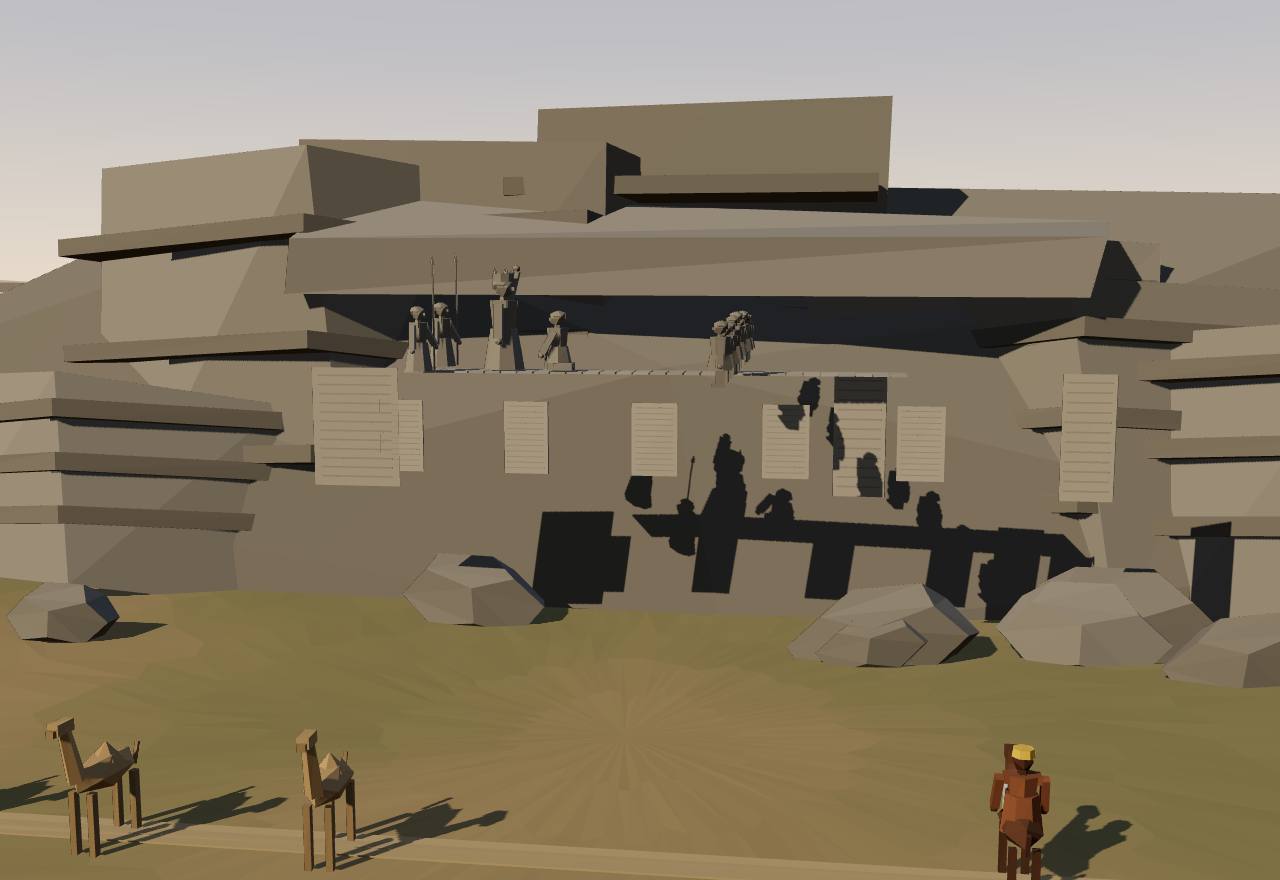
The Bisitun relief, 520–518 BCE
Darius's account: Cambyses had secretly killed his brother Smerdis; on 11 March 522 BCE 'a Magian, Gaumâta by name' rebelled, saying 'I am Smerdis, the son of Cyrus', and seized the kingdom on 1 July. On 29 September Darius 'with a few men slew that Gaumāta the Magian' at a fortress in Media. 19,2 Consensus Texts
Nine 'Liar-Kings' stand roped before Darius on the Bisitun relief, Gaumāta under his foot. Darius claims: 'I fought nineteen battles in a single year and by the grace of Ahuramazda I overthrew nine kings'; Borger showed that his victories from 13 December 522 to 28 December 521 do fit inside his accession year, which had an extra month. 19,2 Consensus Texts
The Bisitun monument was made between 520 and about 518 BCE. Its first text was Elamite, then Babylonian, then Old Persian, a script Darius calls 'my script, which I made'. The inscriptions cover an area 7.80 m high and 22 m long; Darius says he sent it 'everywhere into the lands', and fragments of copies survive at Babylon and, in Aramaic, at Elephantine in Egypt. 2,19 Consensus Texts Excavation
Darius names six Persians 'who were with me when I slew Gaumâta'; Herodotus's list of the Seven matches it but for one name. Herodotus adds that the Seven agreed that any of them might enter the palace unannounced and that the king would marry only within their houses; Briant replies that 'such privileges were never bestowed by Darius or his descendants'. 19,22,18 Debated Texts
Darius's inscriptions describe his rule as command and law: the lands 'brought tribute unto me', and 'whatsoever commands have been laid on them by me, by night or by day, have been performed' (Bisitun); on his tomb, 'the law that is mine they kept' (dātam, Old Persian 'law'). 19,9 Consensus Texts
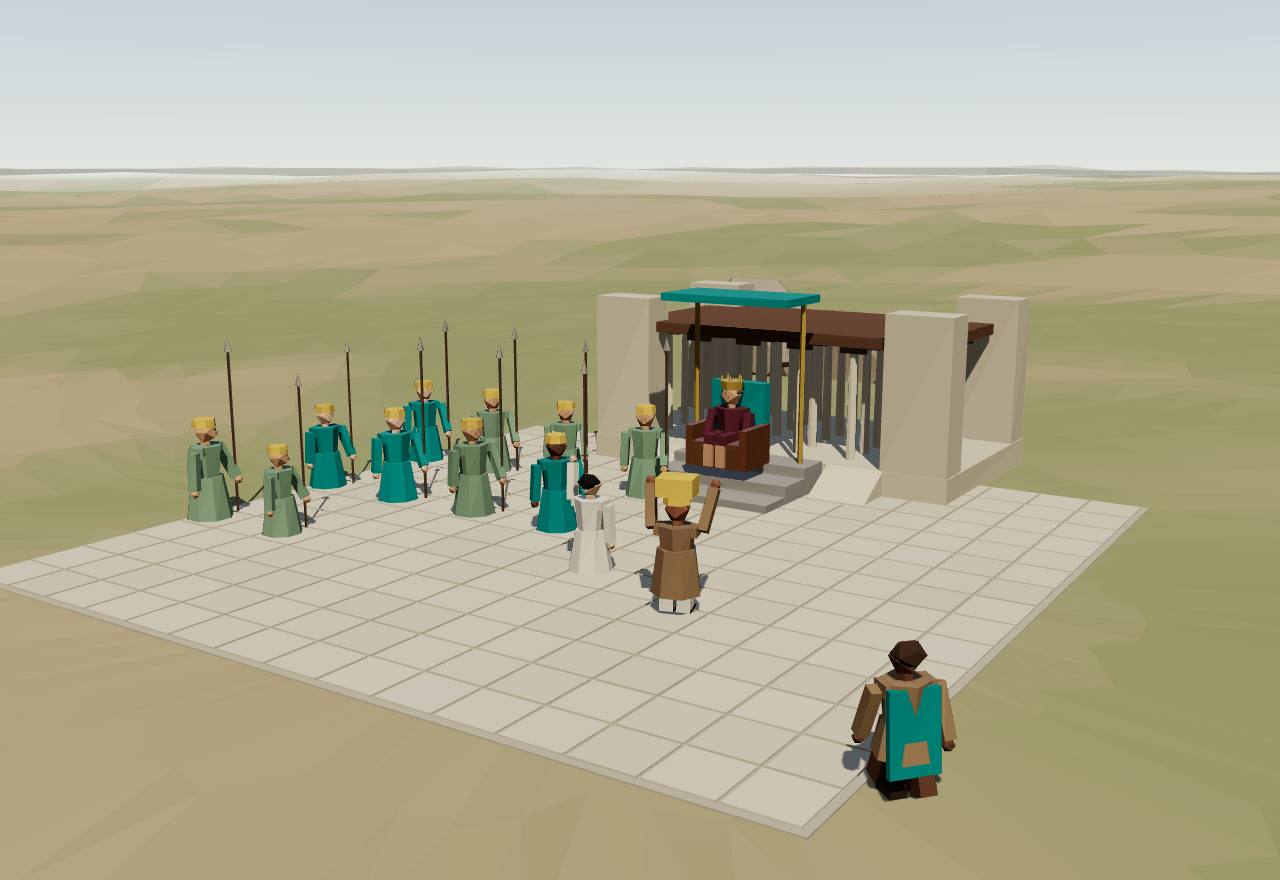
Herodotus tells how Darius disposed of Oroetes, governor at Sardis: his envoy Bagaeus brought letters under the king's seal, which the governor's own royal scribe read aloud ('all of the governors of the King have scribes'). At 'King Darius forbids you to be Oroetes' guard' the spearmen lowered their spears; at the order to kill him, they did. 23 Debated Texts
In 1933 excavators found 'about 30,000 or more' tablets and fragments in the Persepolis fortification wall; the part still in Chicago represents about 15,000–18,000 original documents. About 70 per cent carry Elamite texts, about 5 per cent Aramaic, and about 20 per cent only seal impressions. An agency centred on Persepolis used them to manage grain, fruit, livestock, wine and beer for 'livestock, workers, craftsmen, administrators, travelers, religious personnel, courtiers, and gods'. 3 Consensus Excavation Texts
Between 509 and 494 BCE workers and officials were paid only in kind, never in coin, though Darius had begun to mint darics. The manager of the royal household drew two sheep, 18 bar of flour and 9 marriš of beer and wine a day, 'i.e. 90 to 180 times more than the workmen and couriers'. 24 Consensus Texts
The tablets record provisions for officials and messengers travelling to Susa and Persepolis from Media, India, Arachosia, Bactria and elsewhere, from 'stations with reserves of foodstuffs … at intervals of one day's journey'. Travellers had to show an authorisation from the governor where they set out, so the tablets name satraps, Artaphernes at Sardis among them. 24,3 Consensus Texts
Herodotus counts the royal road from Sardis to Susa as 111 stages and 450 parasangs, 'thirteen thousand and five hundred furlongs', and at 150 furlongs a day reckons 'ninety, neither more nor less' (about 2,500 km in Lendering's rendering). The king's riders were faster: men and horses stood 'at the interval of a day's journey', and neither 'snow nor rain nor heat nor darkness' stopped them. 25,26,21 Consensus Texts
A small dossier of travel rations for express messengers (pirradaziš) shows missions going back and forth between Darius and his brother Artaphernes, satrap at Sardis, before the fall of Miletus in the Ionian revolt (494/3 BCE): the king kept 'his power of decision' at a distance. Colburn argues that roads and the pirradaziš made the empire's size far less of an obstacle than often assumed. 20,27 Consensus Texts
The same storehouses fed the cults of many gods: one priest received grain for Ahuramazdā and for the Iranian Mišduši, another drew issues for Humban, the supreme Elamite god, and for libations to three rivers. Dandamayev concludes that 'the royal administration treated all these gods equally'. 24,3 Consensus Texts
The great satrapies were governed from the capitals of the kingdoms Persia had absorbed: Sardis, Babylon, Memphis, Ecbatana, Bactra and Arachoti 'preserved their exceptional position throughout the Achaemenid epoch', beside the Persian residences at Susa, Pasargadae and Persepolis. 11,24,28 Consensus
Herodotus says Darius 'divided his dominions into twenty provinces, which they call satrapies', fixed each people's tribute, and drew 14,560 Euboic talents a year from Asia and part of Libya. Jacobs, following Altheim, holds that list 'of no use as historical testimony' (see the debate below). 12,11 Debated Texts
Under Darius the empire reached its greatest extent, 'from the Indus River Valley to southeastern Europe and from the western Himalayas to northeast Africa'. Seshat codes 4.8–5.5 million km² for 500–451 BCE, 20–26 million people around 500 BCE, six to eight levels of administration, and indigenous coins from 515 BCE. 29 Seshat Consensus
How power worked Emperor · Heredity · None in practice
How power worked
- Who rules
- Emperor Consensus
Why?
- How chosen
- Heredity Debated
Why?
- Limits on power
- None in practice Debated
Why?
- Scale
- Empire Consensus
Why?
- Claim to rule
- Divine mandate Consensus
Why?
- Who has a say
- A narrow elite Consensus
Why?
The king says: Darius in his own script
Data: ARIo (Schmitt 2009, CC BY-SA 3.0), Unicode Old Persian
Darius's inscriptions all open the same way: "Proclaims Darius the King" (θāti Dārayava.uš xšāyaθiya). Here are three of them in the Old Persian script he says he had made for Bisitun, word by word, with the sign values of the ARIo edition and an English translation. 5,9,2
Bisitun, DB § 1 (Old Persian column i, lines 1–3)
𐎠𐎭𐎶𐎭𐎠𐎼𐎹𐎺𐎢𐏁𐎧𐏁𐎠𐎹𐎰𐎡𐎹𐎺𐏀𐎼𐎣𐎧𐏁𐎠𐎹𐎰𐎡𐎹𐎧𐏁𐎠𐎹𐎰𐎡𐎹𐎠𐎴𐎠𐎶
- adam a-d-m
- Dārayava.uš d-a-r-y-v-u-š
- xšāyaθiya x-š-a-y-θ-i-y
- vazṛka v-z-r-k
- xšāyaθiya x-š-a-y-θ-i-y
- xšāyaθiyānām x-š-a-y-θ-i-y-a-n-a-m
… xšāyaθiya Pārsaiy xšāyaθiya dahyūnām Vištāspahyā puça Aršāmahyā napā Haxāmanišiya
I am Darius, the great king, king of kings, the king of Persia, the king of countries, the son of Hystaspes, the grandson of Arsames, the Achaemenid. 5,19,2,6,7
Carved first in Elamite, then in Babylonian, then in Old Persian, a script that Darius says (§ 70) he had made for this inscription.
Naqsh-e Rostam, tomb of Darius, DNa § 3 (Old Persian lines 18–22)
𐎠𐎭𐎶𐏁𐎠𐎶𐎱𐎫𐎡𐎹𐎧𐏁𐎹𐎡𐎹𐎶𐎴𐎠𐎲𐎠𐎪𐎡𐎶𐎠𐎲𐎼𐏃𐎫𐎹𐏁𐎠𐎶𐏃𐎨𐎠𐎶𐎠𐎰𐏃𐎹𐎠𐎺𐎠𐎤𐎢𐎴𐎺𐎭𐎠𐎫𐎶𐎫𐎹𐎶𐎴𐎠𐎠𐎺𐎮𐎡𐏁𐎠𐎭𐎠𐎼𐎡𐎹
- adamšām a-d-m-š-a-m
- patiyaxšayai̯ p-t-i-y-x-š-y-i-y
- manā m-n-a
- bājim b-a-ji-i-m
- abaraha a-b-r-h
- tayašām t-y-š-a-m
- hacāma h-c-a-m
- aθanhya a-θ-h-y
- ava a-v
- akunava a-ku-u-n-v
- dātam d-a-t-m
- taya t-y
- manā m-n-a
- avadiš a-v-di-i-š
- adāraya a-d-a-r-i-y
I have power over them; they brought me tribute; what was told them by me, they did; the law that is mine they kept. 9,6,7
Trilingual on the façade: Old Persian, Elamite and Akkadian.
Naqsh-e Rostam, tomb of Darius, DNa § 4 (Old Persian lines 38–42)
yadipati maniyāhai̯ ciyākaram …
𐎠𐎺𐎠𐎭𐏃𐎹𐎠𐎺𐎫𐎹𐎠𐎭𐎠𐎼𐎹𐎺𐎢𐏁𐎧𐏁𐎠𐎹𐎰𐎡𐎹𐎠𐎭𐎠𐎼𐎹𐎱𐎫𐎡𐎣𐎼𐎠𐎮𐎡𐎮𐎡𐎹𐎫𐎹𐎡𐎹𐎥𐎠𐎰𐎢𐎶𐎲𐎼𐎫𐎡𐎹
- avā a-v-a
- dahyāva d-h-y-a-v
- tayā t-y-a
- Dārayava.uš d-a-r-y-v-u-š
- xšāyaθiya x-š-a-y-θ-i-y
- adāraya a-d-a-r-y
- patikarā p-t-i-k-r-a
- dīdi di-i-di-i-y
- tayai̯ t-y-i-y
- gāθum g-a-θ-u-m
- baranti b-r-t-i-y
If you were to wonder: “How many (are) those countries that Darius the King held?”, look at the images, who bear the throne. 9,30,6,7
Above the words, thirty figures in the dress of the empire's peoples carry the throne bench.
Sardis to Susa: the courier calculator
Model: Herodotus's figures, your assumption for the relay
Herodotus walks the royal road from Sardis to Susa land by land: 111 stages and 450 parasangs, "the parasang is of thirty furlongs' length", and at 150 furlongs a day "the sum of days spent is ninety". The king's couriers did better: men and horses waited "at the interval of a day's journey", and neither "snow nor rain nor heat nor darkness" stopped them. 25,26 Kilometres follow Lendering's rendering of the road as 2,500 km (about 5.6 km to the parasang). 21
45 days by relay
A lone traveller at the same pace: 89.9 days (Herodotus: 90).
| Land | Stages | Parasangs | On the way |
|---|---|---|---|
| Lydia and Phrygia | 20 | 94.5 | |
| Cappadocia | 28 | 104 | the Halys, with a defile and a great fortress; two defiles and two fortresses at the Cilician border |
| Cilicia | 3 | 15.5 | the Euphrates, a navigable river |
| Armenia | 15 | 56.5 | a fortress |
| Matiene | 34 | 137 | four navigable rivers crossed by ferries: the Tigris, two more of that name, and the Gyndes |
| Cissia | 11 | 42.5 | the Choaspes, on which stands Susa |
| Total | 111 | 450 | 90 days at 150 furlongs a day |
The tablets from Persepolis show the system at work: stations with food stores "at intervals of one day's journey", and express messengers riding between Darius and the satrap at Sardis. 24,20 Herodotus gives the relay no time, so the figure above is a what-if, not a record.
The lands and their seats
Data: Cliopatria (CC BY 4.0), Pleiades, DNa (ARIo)
Where Cliopatria draws the empire, year by year, with the old royal capitals that remained the seats of the great satrapies and the Persian residences of Pasargadae and Persepolis. Satrapy borders are left out: the sources do not fix them, and Herodotus's list of twenty provinces is not evidence for them. 16,11,28
The countries Darius lists on his tomb (DNa § 3)
"These (are) the countries, I have seized outside Persia; I have power over them; they brought me tribute": Media, Elam, Parthia, Areia, Bactria, Sogdia, Chorasmia, Drangiana, Arachosia, Sattagydia, Gandāra, India, the Amyrgian Scythians, the pointed-hat Scythians, Babylonia, Assyria, Arabia, Egypt, Armenia, Cappadocia, Lydia, Ionia, the Scythians beyond the sea, Thrace, the shield-bearing Greeks, the Libyans, Nubia, Mekrania, Carians. 9
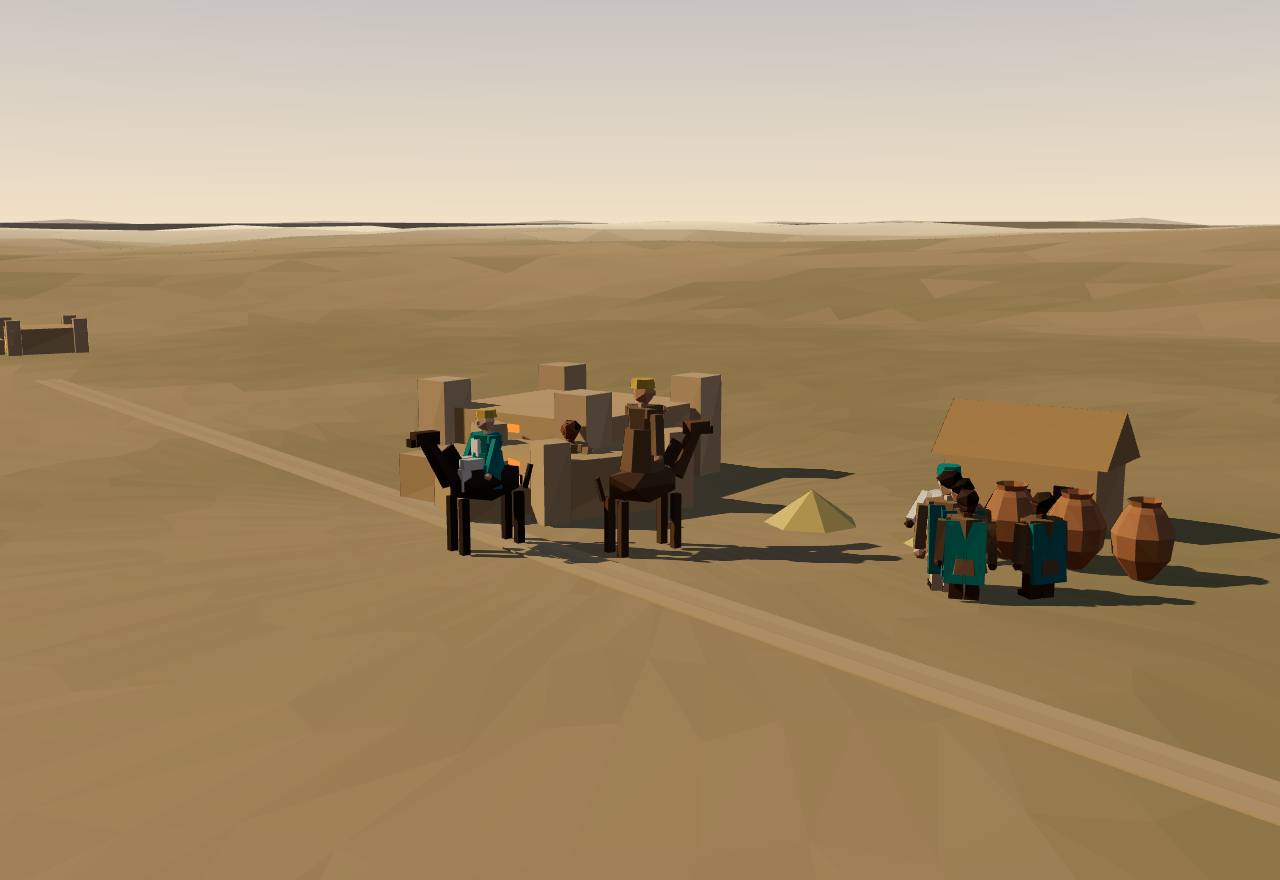
A royal road station, c. 500 BCE
Letters from the king at a satrap's court (after Herodotus)
486 BCE – 330 BCE
Xerxes to Darius III
For a century and a half Darius's heirs ruled the empire he had secured, finishing his halls at Persepolis and cutting their tombs beside his. Their own inscriptions speak of buildings; their politics reach us mostly through Greek writers.
Terms: Achaemenid Persia: Xerxes to Darius III
- bājim𐎲𐎠𐎪𐎡𐎶 tribute (accusative of bāji-): 'they brought me tribute' (DNa § 3) 9,7
- dātam𐎭𐎠𐎫𐎶 law (accusative of dāta-): 'the law that is mine they kept' (DNa § 3) 9,7
- gāθu𐎥𐎠𐎰𐎢𐎶 throne bench, carried on the royal tombs by thirty of the empire's peoples 9,30,7
- apadāna a columned audience hall; the word occurs only in inscriptions of Darius II and Artaxerxes II 31
The Apadana staircase at Persepolis, as its reliefs show it
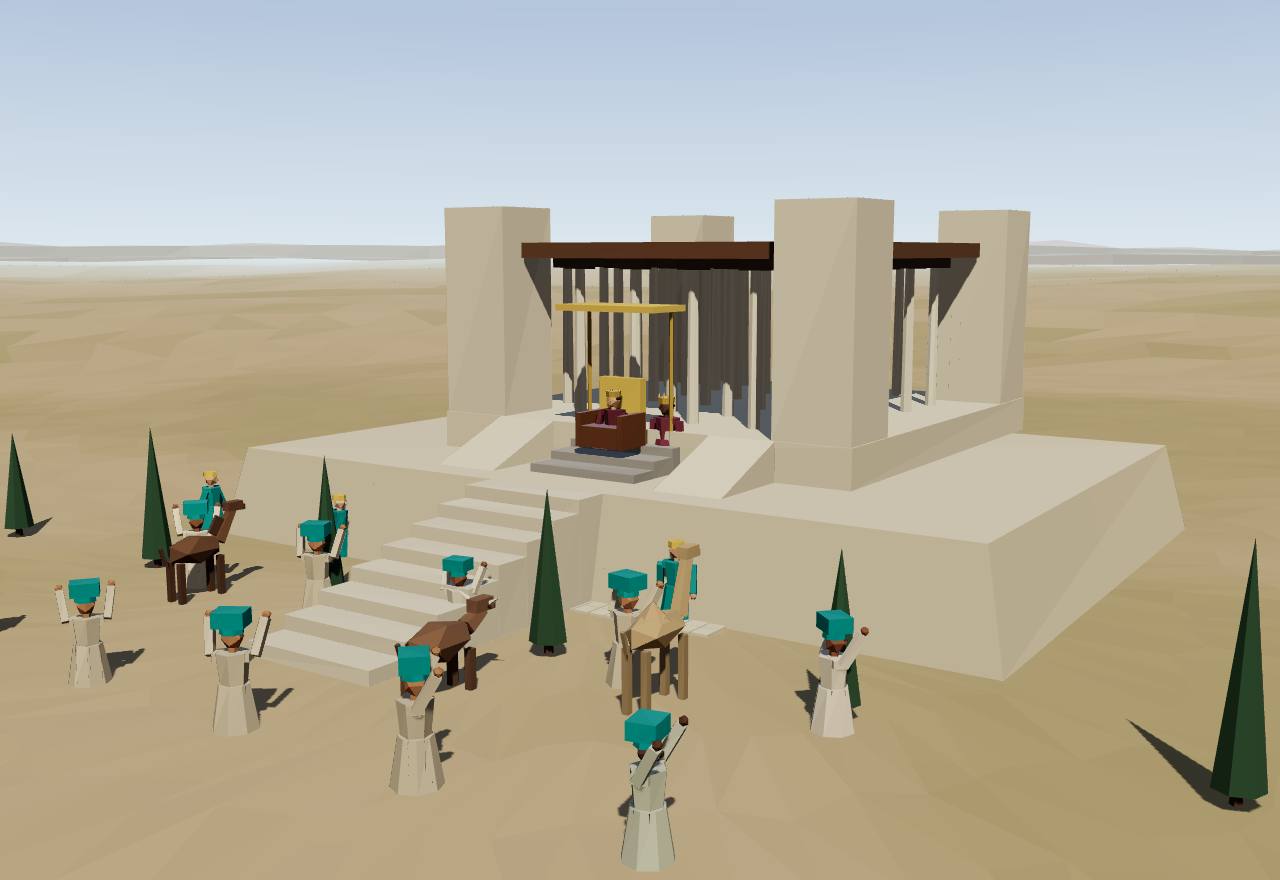
An apadāna was 'at least 109 m square', its hall at least 58 m a side under thirty-six stone columns 'each more than 19 m in height'; the halls of Susa and Persepolis 'could each have held ten thousand persons'. Coins buried with the Persepolis foundation plaques point to about 500 BCE; the reliefs were planned under Darius and carved under Xerxes. 31 Consensus Excavation
On the Apadana stairs 'twenty-three gift-bearing delegations', each in its own dress and divided by cypress trees, climb towards the king; a Persian or Median usher leads each by the hand. They are identified, with 'some uncertainty', by comparing costumes with the throne-bearers named on the royal tombs. 10 Consensus Excavation
The 'Treasure reliefs' once stood at the centre of each carved façade of the Apadana, stressing the crown prince: Stronach reads one of Darius's final concerns as 'a symbol of the assured continuity of his line', and Xerxes' work there as support for 'the continued preeminence of the line of Darius'. 31 Debated Excavation
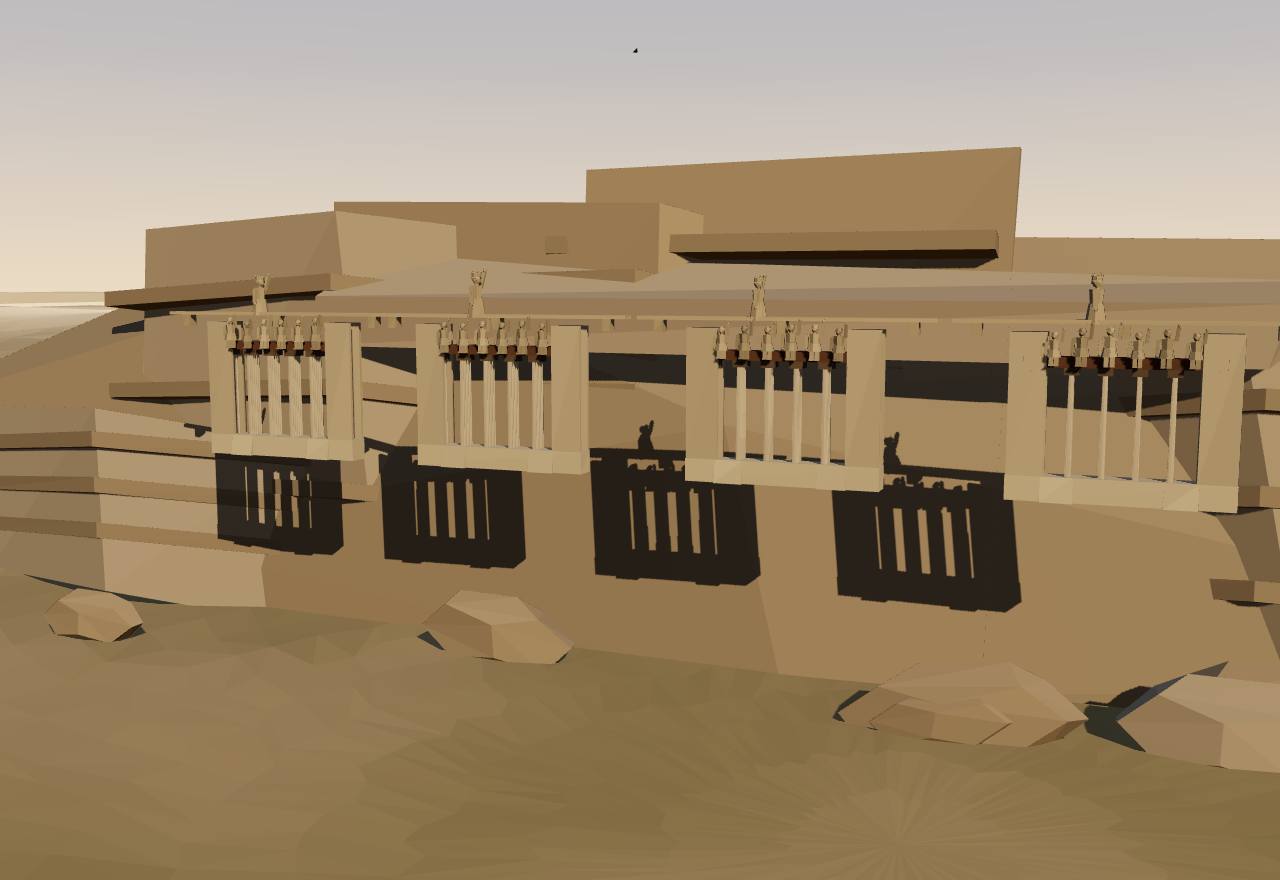
Four royal tombs are cut into the cliff of Naqsh-e Rostam: Darius I's by its inscriptions, the others tentatively Xerxes', Artaxerxes I's and Darius II's. Each façade shows a palace front, and above it a throne bench 'supported by 30 representatives of the empire's peoples': not a real procession but 'a simile of the Achaemenid empire'. 30 Consensus Excavation
Before the march on Athens, Herodotus says, Xerxes 'held a special assembly of the noblest among the Persians, so he could learn their opinions and declare his will before them all': counsel, then the king's will. 32 Debated Texts
Succession was fought over. Darius II, king from 423 BCE, reached the throne after the short reigns of two half-brothers whom Babylonian documents never name, and his reign 'was conspicuous for frequent revolts, led partly by satraps who had acquired a power base in regions where their families had ruled for generations'; Egypt broke away in 404. Views of the reign rest heavily on the Greek writer Ctesias. 4 Debated Texts
Darius III was installed by the general Bagoas after Bagoas murdered Arses and his sons; Darius soon 'eliminated him and assumed full control'. He may once have run the royal postal service. Beaten by Alexander at Issus in late 333 BCE, he died in mid-330. 4 Consensus Texts
The system outlasted its kings. Alexander 'preserved existing administrative structures everywhere, except in the extreme west', so the satrapy lists of his successors still map the late Achaemenid empire; the Persepolis archives show 'systemic continuities in much of the Achaemenid Empire through and after its last years'. 11,3 Consensus
'The Persian Wars are not reflected at all in official documents of the Persian kings', and nor are most conquests: 'Political matters were not a subject of Old Persian royal inscriptions.' The Greek story of Xerxes is a story told from outside. 15 Consensus Texts
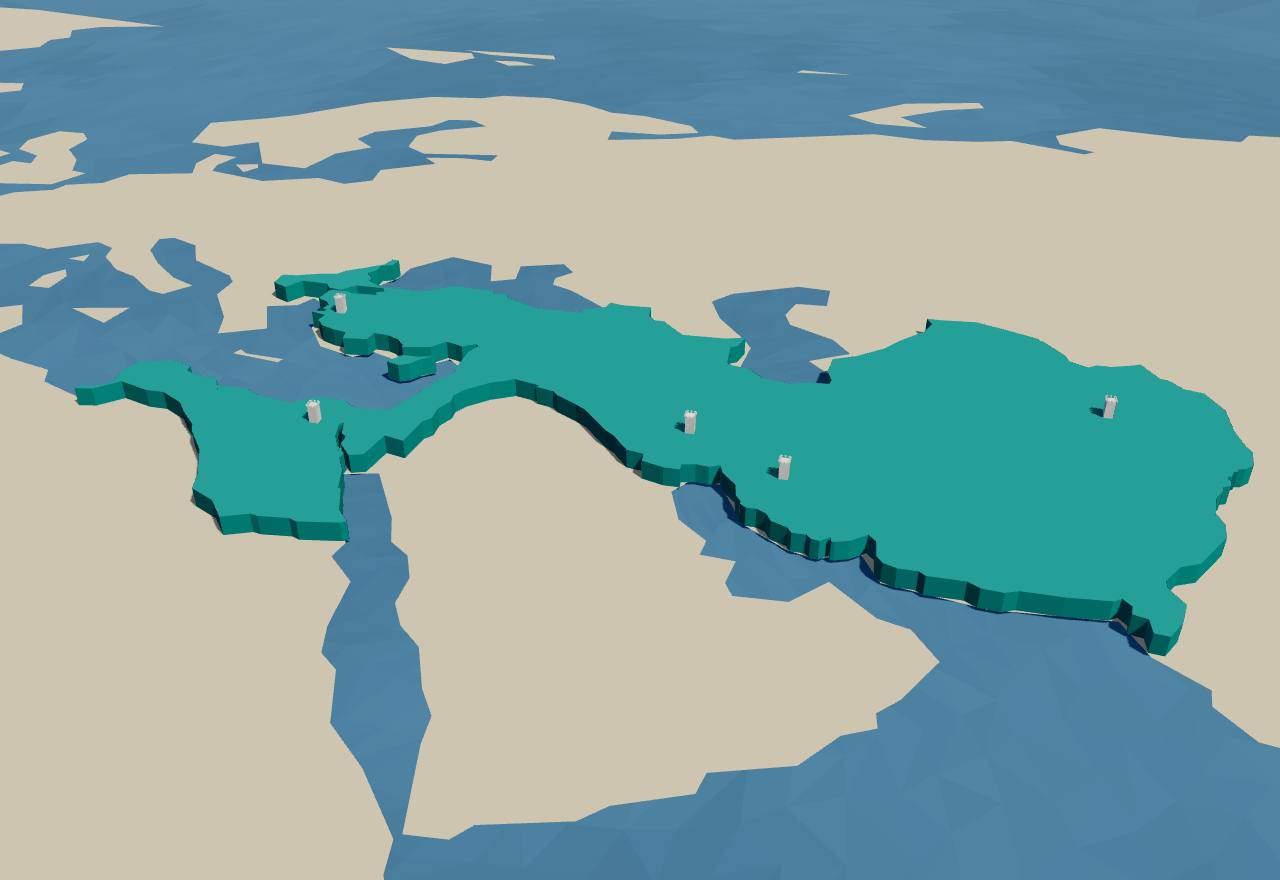
Seshat codes 3.8–4.3 million km² for 450–331 BCE and 17–35 million people around 400 BCE; Cliopatria's polygons shrink from about 5.6 million km² (480–451) to about 4.3 million (383–338) and stand at 4.6 million in 333–332. Persepolis was 'maintained until 330 BCE, when they were looted and burnt by Alexander of Macedon'. 16,10 Seshat Consensus
How power worked Emperor · Heredity · Custom and kin
How power worked
- Who rules
- Emperor Consensus
Why?
- How chosen
- Heredity Debated
Why?
- Limits on power
- Custom and kin Debated
Why?
- Scale
- Empire Consensus
Why?
- Claim to rule
- Divine mandate Consensus
Why?
- Who has a say
- A narrow elite Consensus
Why?
The royal tombs at Naqsh-e Rostam
The empire from Xerxes to Darius III on Cliopatria's map, 480–333 BCE
Territory: Cliopatria (CC BY 4.0), simplified. Height fixed: population not coded in Seshat.
Artefacts
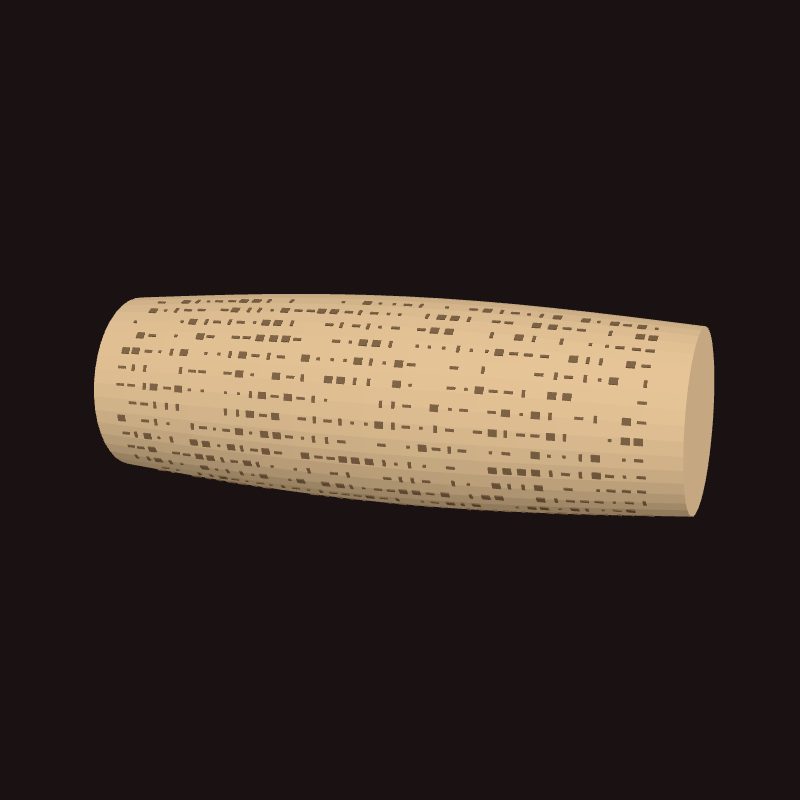 Model, not a scan
 Model, not a scan
 Model, not a scan
In numbers
- Marks, by Seshat polity:
- Achaemenid Empire
- Background bands, by phase:
- Cyrus and Cambyses
- Darius reorganises the empire
- Xerxes to Darius III
| Seshat polity | Years | Value |
|---|---|---|
| Achaemenid Empire | 539 BCE – 501 BCE | 2,500,000–4,100,000 |
| Achaemenid Empire | 500 BCE – 451 BCE | 4,800,000–5,500,000 |
| Achaemenid Empire | 450 BCE – 331 BCE | 3,800,000–4,325,000 |
| Seshat polity | Years | Value |
|---|---|---|
| Achaemenid Empire | 500 BCE | 20,000,000–26,000,000 |
| Achaemenid Empire | 400 BCE | 17,000,000–35,000,000 |
| Seshat polity | Years | Value |
|---|---|---|
| Achaemenid Empire | 550 BCE – 331 BCE (whole period) | 200,000 |
| Seshat polity | Years | Value |
|---|---|---|
| Achaemenid Empire | 550 BCE – 331 BCE (whole period) | 6–8 |
| Seshat polity | Years | Value |
|---|---|---|
| Achaemenid Empire | 550 BCE – 331 BCE (whole period) | 5–6 |
| Seshat polity | Years | Value |
|---|---|---|
| Achaemenid Empire | 550 BCE – 331 BCE (whole period) | 7 |
Values as Seshat codes them: bands are ranges, dots single values, flat bars values given for a whole period, hatching “unknown”; from one Seshat polity to the next, marks alternate between a light tone and a darker one with dashed joining lines (the key above names each polity). Source: Seshat Global History Databank (Equinox-2020), CC BY 4.0.
Governance fingerprint
Seshat's institutional variables, phase by phase. Hover or focus a cell for the values and years.
- Present
- Inferred present
- Absent
- Inferred absent
- Unknown
- Not coded in Seshat
- Mixed: present in one Seshat polity or period, absent in another
The axes against Seshat
6 agree, 0 disagree.
Show the 6 pairs that agree
- Agree Cyrus and Cambyses: claim to rule coded “Divine mandate”, which implies rulers legitimated by gods present; Seshat has it present.
- Agree Darius reorganises the empire: claim to rule coded “Divine mandate”, which implies rulers legitimated by gods present; Seshat has it present.
- Agree Darius reorganises the empire: limits on power coded “None in practice”, which implies executive checked by government absent; Seshat has it absent.
- Agree Darius reorganises the empire: how chosen coded “Heredity”, which implies elite status hereditary present; Seshat has it present.
- Agree Xerxes to Darius III: claim to rule coded “Divine mandate”, which implies rulers legitimated by gods present; Seshat has it present.
- Agree Xerxes to Darius III: how chosen coded “Heredity”, which implies elite status hereditary present; Seshat has it present.
Only pairs where an axis value on its own implies a Seshat variable are compared; the rest is not counted as disagreement.
Source: Seshat Global History Databank (Equinox-2020), CC BY 4.0.
Compare
| Axis | Achaemenid Persia | Akkad: Sargon's conquest | Greece: Athens | India: After the cities: the Vedic age |
|---|---|---|---|---|
| Who rules | Emperor | King | Elected magistrates | Chief |
| How chosen | Conquest or coup | Conquest or coup | Mixed | Mixed |
| Limits on power | Custom and kin | Unknown | Written law | Council |
| Scale | Empire | Empire | City-state | Confederation |
| Claim to rule | Divine mandate | Divine mandate | Law | Divine mandate |
| Who has a say | A narrow elite | A narrow elite | Property owners | A narrow elite |
Legacy
Copied by Henry Rawlinson on ropes in 1835–47, the Bisitun inscription 'alone made it possible to decipher cuneiform writing', a value 'comparable to that of the Rosetta stone for Egyptology'. 2 Consensus
Alexander kept the Persian provinces and their officials, and the satrapies outlived him: in Egypt, Babylonia and Bactria, and in the later secessions of Parthia and Media, politics still followed the units the Achaemenids had governed. 11 Consensus
The four-part garden at Pasargadae may be the first čahārbāḡ, a design that became 'a characteristic mark of later garden design, not only in Iran but even far beyond the bounds of the Near East'. 13 Debated
See also forms of government.
Sources
Bibliography
32 sources, numbered as cited: 14 papers · 1 book · 3 datasets · 11 primary sources · 3 popular syntheses
- Encyclopaedia Dandamayev, M. A. (1993). Cyrus. Encyclopaedia Iranica VI/5, pp. 516–522: iii. Cyrus II the Great; iv. The Cyrus cylinder. Sub-entries iii and iv read in full (https://www.iranicaonline.org/articles/cyrus-iii/, /cyrus-iv/).
- Encyclopaedia Schmitt, R. (1989). Bisotun. Encyclopaedia Iranica IV/3: iii. Darius's inscriptions. Sub-entry iii read in full (https://www.iranicaonline.org/articles/bisotun-iii/).
- Encyclopaedia Stolper, M. W., Henkelman, W. F. M., Dusinberre, E. R. M., Jones, C. E., Garrison, M. B., Azzoni, A. (2017). Persepolis Administrative Archives. Encyclopaedia Iranica: i. Persepolis Fortification Archive; iv. Significance. Sub-entries i and iv read in full.
- Encyclopaedia Shahbazi, A. S. (iii); Sancisi-Weerdenburg, H. (iv); Badian, E. (v) (1994). Darius. Encyclopaedia Iranica VII/1: iii. Darius I the Great; iv. Darius II; v. Darius III. iii read on Darius's accession and veracity; iv and v read in full.
- Primary Heitmann-Gordon, H. (after R. Schmitt 2009), Munich Open-access Cuneiform Corpus Initiative (2019). Darius I 01 (DB), the Bisitun inscription: Old Persian version (ARIo Q007134). Achaemenid Royal Inscriptions online (Oracc), CC BY-SA 3.0. Sign-by-sign transliteration of DB § 1 read in the ARIo JSON export (ario.zip, Q007134). The live Oracc host fails automated TLS checks, so the link is the Internet Archive copy.
- Dataset The Unicode Consortium (2025). Old Persian, range 103A0–103DF (code chart). The Unicode Standard, version 17.0. Sign names (OLD PERSIAN SIGN A … HA, WORD DIVIDER) read from UnicodeData.txt; they map ARIo's sign values to code points.
- Popular Wikipedia contributors (2026). DNa inscription (Old Persian text in Unicode). Wikipedia. Used only as a printed source of the Old Persian glyphs (from Kent's text via Livius); every word shown on this page was checked sign by sign against the ARIo transliteration through the Unicode character names (tests/learn-history-persia.test.ts).
- Primary Bartelmus, A., Novotny, J. (after I. Finkel), MOCCI (2019). Cyrus II 1, the Cyrus Cylinder (ARIo Q006653). Achaemenid Royal Inscriptions online (Oracc), CC BY-SA 3.0. Akkadian transliteration and J. Novotny's English translation, adapted from Finkel's edition, read in full.
- Primary Heitmann-Gordon, H. (after R. Schmitt 2009), Munich Open-access Cuneiform Corpus Initiative (2019). Darius I 19 (DNa), the tomb of Darius at Naqsh-e Rostam (ARIo Q007152). Achaemenid Royal Inscriptions online (Oracc), CC BY-SA 3.0. Old Persian transliteration and English translation read in full (live page and JSON export).
- Encyclopaedia Shahbazi, A. S. (2009). Persepolis. Encyclopaedia Iranica. Sections on the site's purpose, the Apadāna reliefs and the Fortification find read.
- Encyclopaedia Jacobs, B. (2006). Achaemenid Satrapies. Encyclopaedia Iranica. Sections 'Sources' and 'The structure of the imperial administration' read in full.
- Primary Herodotus (trans. A. D. Godley) (430 BCE). The Histories 3.89–97: satrapies, tribute and gifts. Perseus Digital Library. Chapters 3.89, 3.95, 3.96 and 3.97 read. The list of twenty provinces (3.90–94) is the passage Jacobs (Iranica, 'Achaemenid satrapies') rejects as a historical source.
- Encyclopaedia Stronach, D., Gopnik, H. (2009). Pasargadae. Encyclopaedia Iranica. Sections on the tomb of Cyrus, Gate R, the palaces and garden, and the inscriptions read.
- Primary Herodotus (trans. A. D. Godley) (430 BCE). The Histories 3.31: the royal judges. Perseus Digital Library. Read in full; with 1.137 (the law that the king may not kill for a single offence) and 3.128 (Bagaeus and the sealed letters at Sardis).
- Encyclopaedia Rollinger, R. (2003). Herodotus. Encyclopaedia Iranica XII/3: ii. The Histories as a source for Persia and Persians. Sub-entry ii read in full.
- Dataset Bennett, J. S., Mutch, E., Tollefson, A., et al. (2025). Cliopatria - A geospatial database of world-wide political entities from 3400BCE to 2024CE. Scientific Data 12. Cliopatria: open geospatial dataset of over 1600 political entities, 3400 BCE–2024 CE.
- Popular Lendering, J. (2020). Cyrus Cylinder. Livius.org. Introduction read in full; gives fragment A as about 23 cm wide and 8 cm in diameter (BM 90920).
- Encyclopaedia Briant, P. (2000). Gaumāta. Encyclopaedia Iranica X/3. Read in full (https://www.iranicaonline.org/articles/gaumata/).
- Primary Lendering, J. (ed.), after L. W. King and R. C. Thompson (2018). Behistun, Persian text: transliteration and translation. Livius.org. Host: Livius.org (Jona Lendering), an adapted version of the King/Thompson translation of 1907. §§ 1–14, 52, 54–55, 63–64, 68 and 70 read.
- Paper Pirngruber, R. (2021). John Hyland. “The Achaemenid Messenger System and the Ionian Revolt: New Evidence from the Persepolis Fortification Archive”. Abstracta Iranica 42–43 (review of Hyland, Historia 68, 2019). Read in full (CC BY-SA 4.0).
- Popular Lendering, J. (2019). Royal Road. Livius.org. Read in full. Renders Herodotus's 450 parasangs as 2,500 km (about 5.6 km to the parasang) and gives Susa–Persepolis as 23 stages and 552 km from the Fortification tablets.
- Primary Herodotus (trans. A. D. Godley) (430 BCE). The Histories 3.80–88: the debate of the Seven and the choice of Darius. Perseus Digital Library. Written about seventy years after the events, by a Greek from Halicarnassus. Chapters 3.80–84 and 3.88 read, with 6.43 (Mardonius sets up democracies in Ionia, cited by Herodotus as proof that Otanes spoke).
- Primary Herodotus (trans. A. D. Godley) (430 BCE). The Histories 3.128: Bagaeus brings Darius's sealed letters to Sardis. Perseus Digital Library. Read in full: Darius's letters, under his seal, are read out by the governor's royal scribe, and the guard turns on Oroetes.
- Encyclopaedia Dandamayev, M. A. (2002). Persepolis Elamite Tablets. Encyclopaedia Iranica. Read in full.
- Primary Herodotus (trans. A. D. Godley) (430 BCE). The Histories 5.52–54: the royal road from Sardis to Susa. Perseus Digital Library. Chapters 5.52–54 read: stages and parasangs per land, the total of 111 stages and 450 parasangs, 30 furlongs to the parasang and 150 furlongs a day, hence 90 days.
- Primary Herodotus (trans. A. D. Godley) (430 BCE). The Histories 8.98: the angareion, the Persian riding post. Perseus Digital Library. Read in full.
- Paper Colburn, H. P. (2013). Connectivity and Communication in the Achaemenid Empire. Journal of the Economic and Social History of the Orient 56 (1). Only the abstract (Crossref) could be read; cited for its thesis alone.
- Dataset Pleiades contributors (2026). Pleiades: a gazetteer of past places. Institute for the Study of the Ancient World, NYU. Representative points read from the JSON of Sardis (550867), Memphis (736963), Bactra (961886), Babylon (893951), Susa (912936), Ecbatana (903021), Pasargadae (922693) and Persepolis (922695). CC BY.
- Book Waters, M. (2014). Ancient Persia: A Concise History of the Achaemenid Empire, 550–330 BCE. Cambridge University Press. Only the publisher's abstract (Crossref) could be read; cited for the extent under Darius I.
- Encyclopaedia von Gall, H. (2009). Naqš-e Rostam. Encyclopaedia Iranica. Achaemenid section read in full.
- Encyclopaedia Schmitt, R., Stronach, D. (1986). Apadāna. Encyclopaedia Iranica II/2. Read in full (i. Term, Schmitt; ii. Building, Stronach).
- Primary Herodotus (trans. A. D. Godley) (430 BCE). The Histories 7.8: Xerxes summons the noblest Persians before the march on Athens. Perseus Digital Library. Opening of 7.8 read.
Quantitative values from the Seshat Global History Databank (Equinox-2020), licensed CC BY 4.0. Dataset: Seshat Equinox Packaged Data (v.1). See also Seshat: The Global History Databank (Turchin et al. 2015).