City-states, temples and the first kings, c. 4000–1763 BCE
Sumer
4,000 BCE – 1,763 BCE
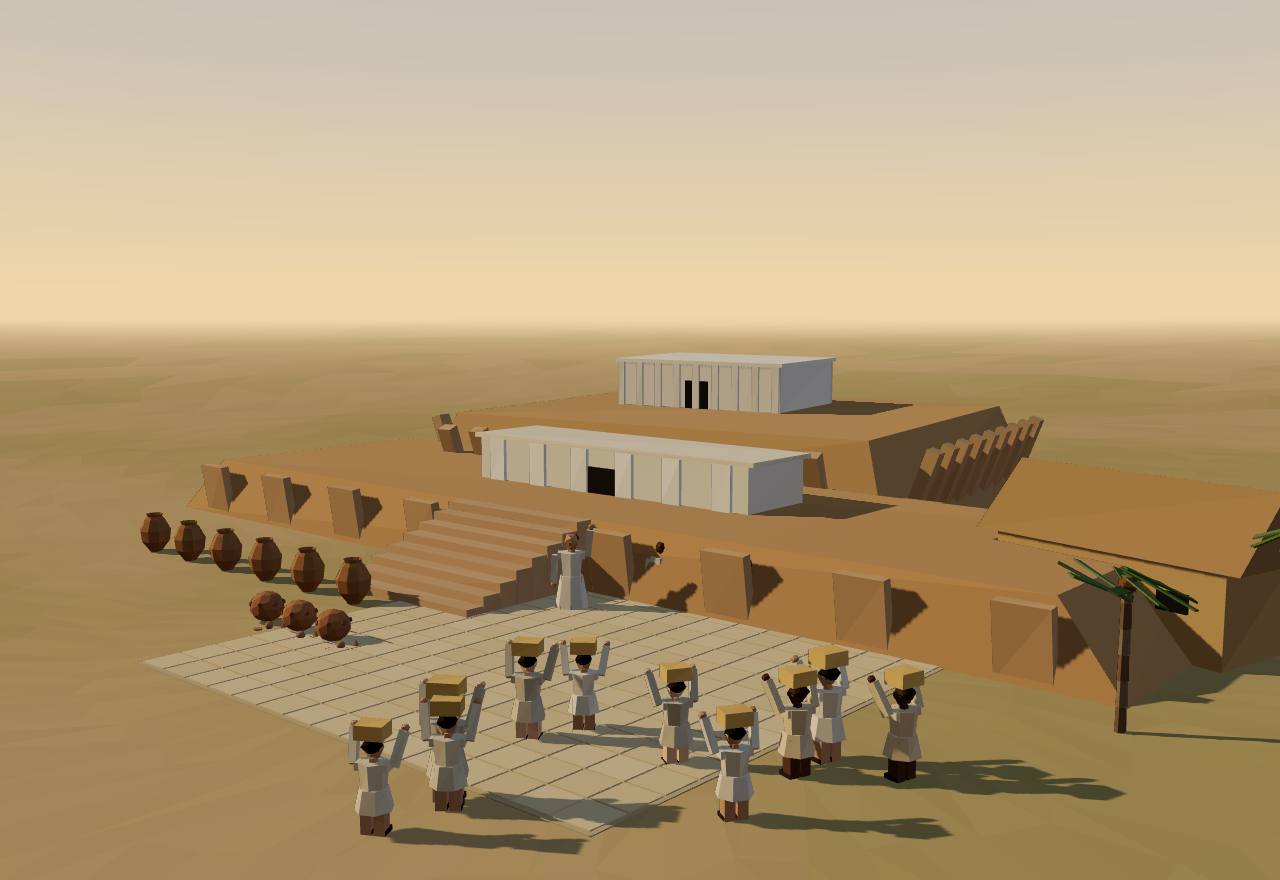
Uruk's sacred precincts, c. 3200 BCE
4,000 BCE – 2,900 BCE
Uruk and Jemdet Nasr
Uruk grew into the largest settlement of its age, and in its sacred precinct, Eana, accountants began to write. The records count rations, animals and workers; they say almost nothing about who ruled or how.
Terms: Sumer: Uruk and Jemdet Nasr
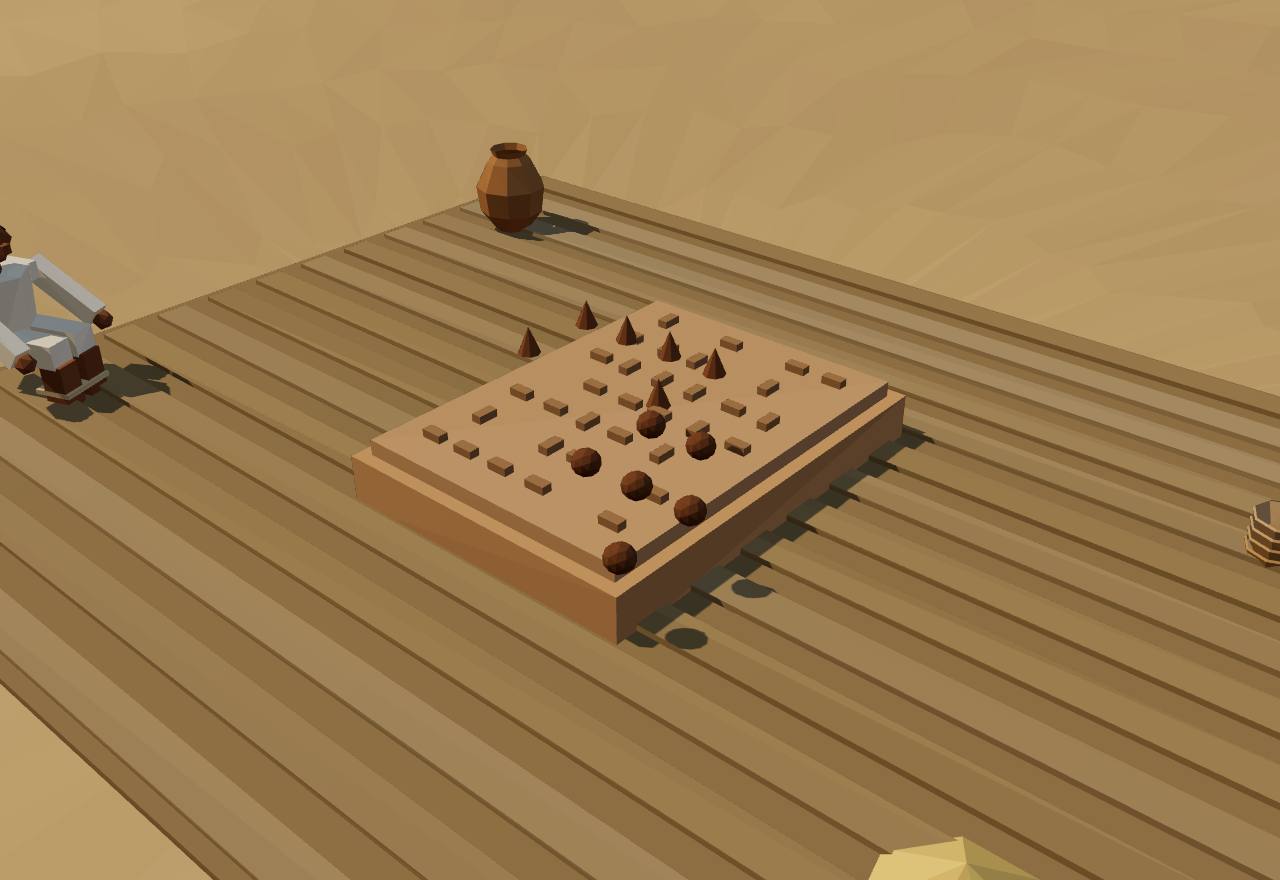
Counting rations on clay
In the Late Uruk period (about 3350–3100 BCE) Uruk swelled to 20,000–50,000 people and 2.5 km², 'nearly twice the size of the next largest settlement'. Seshat puts its largest settlement at 40,000–50,000 people for 3500–3000 BCE and the polity's territory at about 1,600–2,200 km². 3 Seshat Consensus Survey Excavation
The earliest cuneiform comes from the Eana precinct. Script and tablets are phased Uruk IV (about 3200 BCE) and Uruk III, or Jemdet Nasr (about 3100 BCE); some 5,000 tablets were dug up at Uruk between 1928 and 1976, and 'about 90 percent' of the archaic corpus is administrative. 3 Consensus Excavation Texts
At least five counting systems are attested, and which one a scribe used 'depended on what was being counted': people, animals, fish, tools and pots in the sexagesimal system; grain products, cheese and probably fresh fish in the bisexagesimal system, all of which 'appear to belong to a rationing system'. 3 Consensus Texts
Seals show a bearded man in a cross-hatched skirt, mastering animals or standing over bound prisoners. His iconography 'signals the emergence of a powerful ruler', likely the figure later called en, 'whose office combined cultic, military, and political powers'. The same author warns that 'a literal reading of protoliterate seal images will remain unattainable'. 3 Debated Excavation
The Standard Professions List, a school text of some 140 titles copied for centuries, begins with namešda, which a much later text equates with Akkadian šarru, 'king'; in the archaic period it 'may have simply represented the highest-ranking official in the Uruk administration'. 3 Debated Texts
Eana's buildings kept the three-part plan of Ubaid houses at a vast scale: the central hall of 'Temple D' measured 55 by 11 m, against 10 by 3 m at the Ubaid village of Tell Abada. Jason Ur finds the recent critiques of these buildings as temples 'convincing, and particularly so for the "Eanna" structures at Uruk'. 5 Debated Excavation
Cities did not grow only in the south. Tell Brak in northern Syria reached about 130 ha by 3900–3400 BCE, which led its surveyors to call the emergence of Near Eastern urbanism 'a regionally multicentric process'. 6 Debated Survey Dating
Seshat codes Uruk with writing, lists and a four-level settlement hierarchy, but full-time bureaucrats absent and specialised government buildings inferred absent: record-keeping came before any office that the evidence can see. Seshat Debated
How power worked Clerical rule · Council · City-state · 2 unknown
How power worked
- Who rules
- Clerical rule Speculative
Why?
- How chosen
- Unknown
Why?
No text says how the ruler shown on Uruk seals was chosen: the archaic tablets are accounts and word lists.
- Limits on power
- Council Speculative
Why?
- Scale
- City-state Consensus
Why?
- Claim to rule
- Divine mandate Debated
Why?
- Who has a say
- Unknown
Why?
No source says who took part in decisions in the Uruk period.
Count like an Uruk accountant
Model: number systems after Woods 2010
Uruk's accountants did not have one way of writing numbers but several, chosen by what was counted. Enter a quantity and choose the goods: the counter writes it as the archaic scribes would have, largest sign first, using the fewest signs. Sign shapes and values follow Woods (2010), figure 2.9; fractions are left out. 3
Sexagesimal System S: most discrete objects: people and animals, animal products, dried fish, fruit, tools, stones and pots.
75 = 1 × N34 (60) + 1 × N14 (10) + 5 × N1 (1)
| Sign | System S | System B |
|---|---|---|
| largest | N50 = 36,000 | N56 = 7,200 |
| sign 2 | N45 = 3,600 | N54 = 1,200 |
| sign 3 | N48 = 600 | N51 = 120 |
| sign 4 | N34 = 60 | N34 = 60 |
| sign 5 | N14 = 10 | N14 = 10 |
| smallest | N1 = 1 | N1 = 1 |
2,900 BCE – 2,334 BCE
Early Dynastic city-states
For six centuries the southern plain was a patchwork of walled cities, each with its own god, ruler and fields. Kings of Kiš claimed a wider lordship; Lagaš and Umma fought over a border field for generations.
Terms: Sumer: Early Dynastic city-states
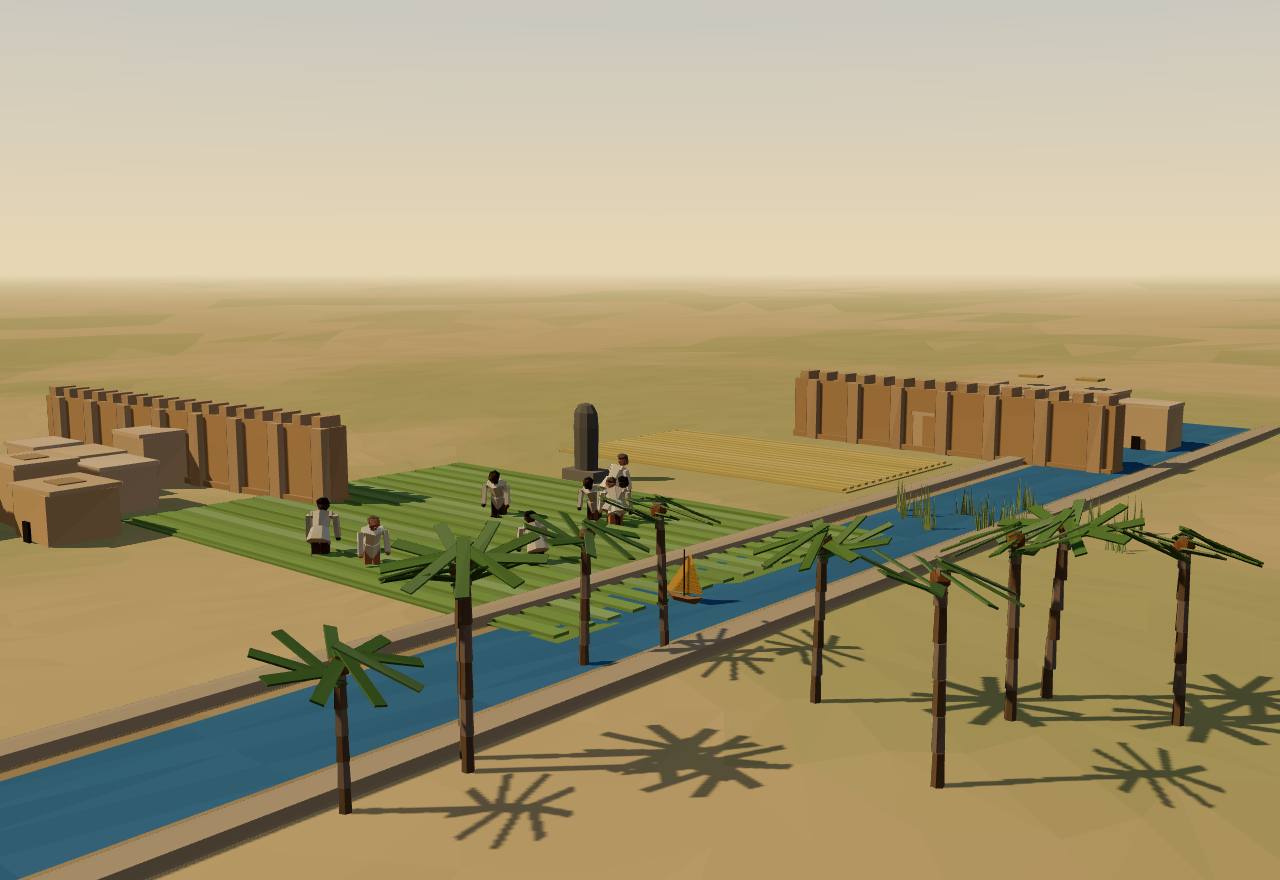
Rival city-states on the canals, c. 2450 BCE
The third millennium was 'the classic period of city-states': up to 78% of people lived in towns of 40 ha or more, and for most of it the plain 'hosted small polities based in a single major city that were unable to expand their control beyond them'. 5 Consensus Survey Texts
Sumerian had no word for 'the state' and no general word for 'office'. The palace was the e₂-gal, the 'great house', and officials held their roles 'by virtue of kinship proximity to elites'. 5 Consensus Texts
George Modelski's estimates, as Reba, Reitsma and Seto mapped them, give Lagaš about 60,000 people in 2500 BCE, Uruk 40,000, Šuruppak 30,000 and Kiš, Nippur and Adab 20,000 each: several cities of similar size, not one capital. The figures are mostly round numbers. 10 Debated Survey
Kiš was a regional centre for northern Babylonia from about 2900 BCE. Royal inscriptions appear about 2700 BCE; Woods's table places King Mebaragesi of Kiš about 2600 BCE and King Mesalim of Kiš, with Adab, Umma and Lagaš under his control, about 2500 BCE. 3 Debated Texts
Lagaš's own account of its border war with Umma, on a cone of Enmetena: Enlil 'demarcated the (border) ground' between the gods of the two cities; Mesilim, king of Kiš, measured it and erected a stele; then Uš, governor of Umma, 'tore out' the stele and marched into the plain of Lagaš, and Ningirsu, Lagaš's god, fought Umma at Enlil's command. 11 Consensus Texts
Titles were political claims. In the same text Mesilim is lugal ('king') of Kiš while Uš is ensi₂ ('governor') of Umma. The independent Early Dynastic rulers of Ur always called themselves lugal, while Umma's scribes would call the ruler of Uruk ensi₂, 'whom they would never call lugal'; whether a given ensi₂ was independent or 'a governor subordinate to an overlord' often 'cannot really be determined'. 11,8 Debated Texts
Rule ran in families: the same inscription names 'Eanatum, governor of Lagaš', as the uncle of Enmetena. 11 Consensus Texts
In the poem Gilgameš and Aga, known from later copies, Gilgameš of Uruk puts Kiš's demand to 'the elders of his city', who in 'the convened assembly' advise submission; he then asks 'the able-bodied men of his city', who answer 'Should we young men not smite it with weapons?', and he takes their advice. 9 Consensus Texts
Uru-inimgina of Lagaš claimed sweeping reforms against officials' abuses. Earlier scholars took the claims at face value and later ones dismissed them 'as mere propaganda'; a 2025 study of the archives finds that his removal of one official, the maškim, really happened, 'the first proof that a measure was implemented'. 12 Debated Texts
Seshat codes Early Dynastic Sumer as a 'quasi-polity' with no capital and only nominal allegiance among its cities: 1,200 to 20,200 km² and 20,200 to 86,300 people, depending on the city and the century. Seshat Consensus
How power worked King · Mixed · Council
How power worked
- Who rules
- King Consensus
Why?
- How chosen
- Mixed Debated
Why?
- Limits on power
- Council Debated
Why?
- Scale
- City-state Consensus
Why?
- Claim to rule
- Divine mandate Consensus
Why?
- Who has a say
- A narrow elite Debated
Why?
City-states on the map
Data: Cliopatria (CC BY 4.0), Reba et al. 2016
Where Cliopatria draws the Sumerian city-states, year by year, with the cities of George Modelski's list as Reba, Reitsma and Seto located them. Circle size follows his population estimates, which stop at 2500 BCE; later frames repeat his last figure. Canals are not drawn: no open, dated dataset of their courses was found. 15,10
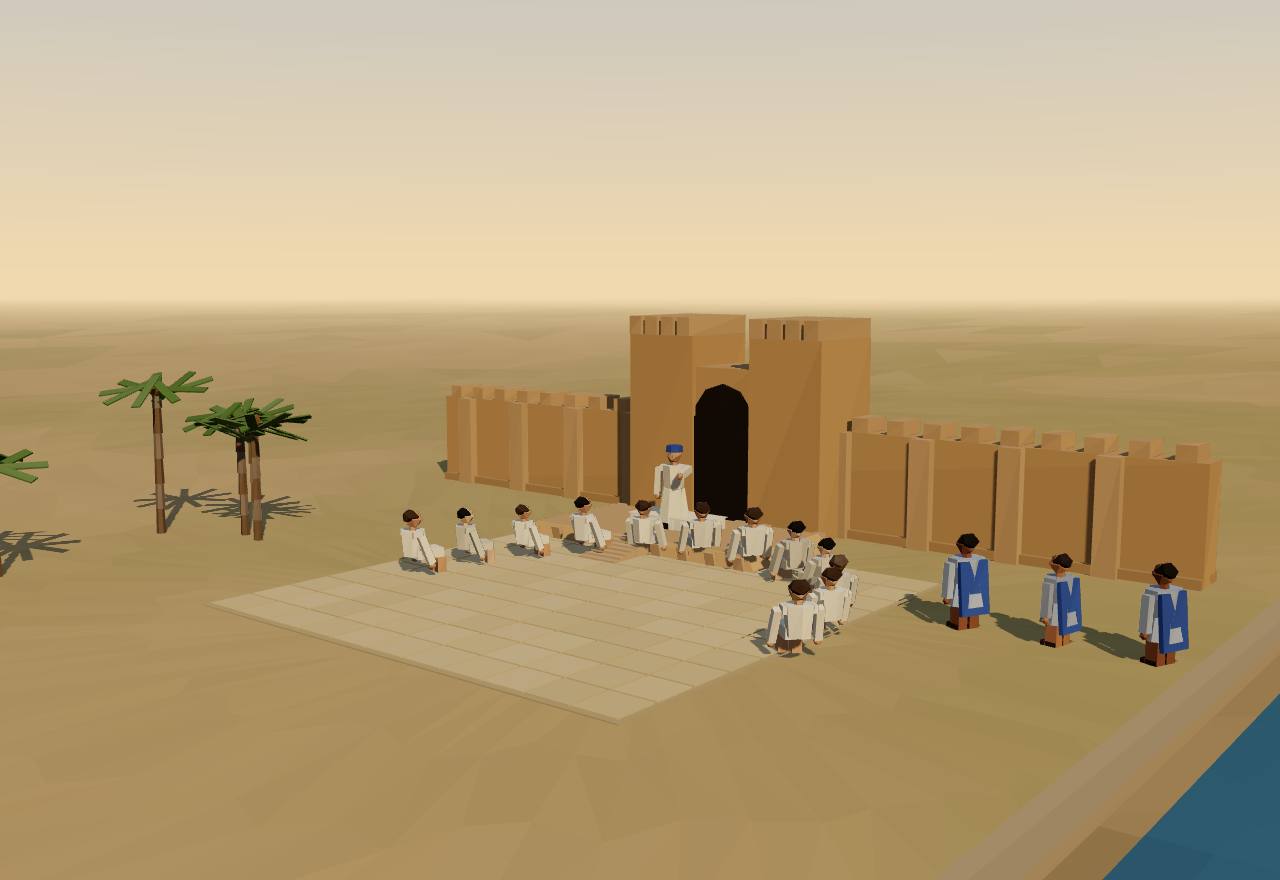
The assembly in Gilgameš and Aga (a literary scene)
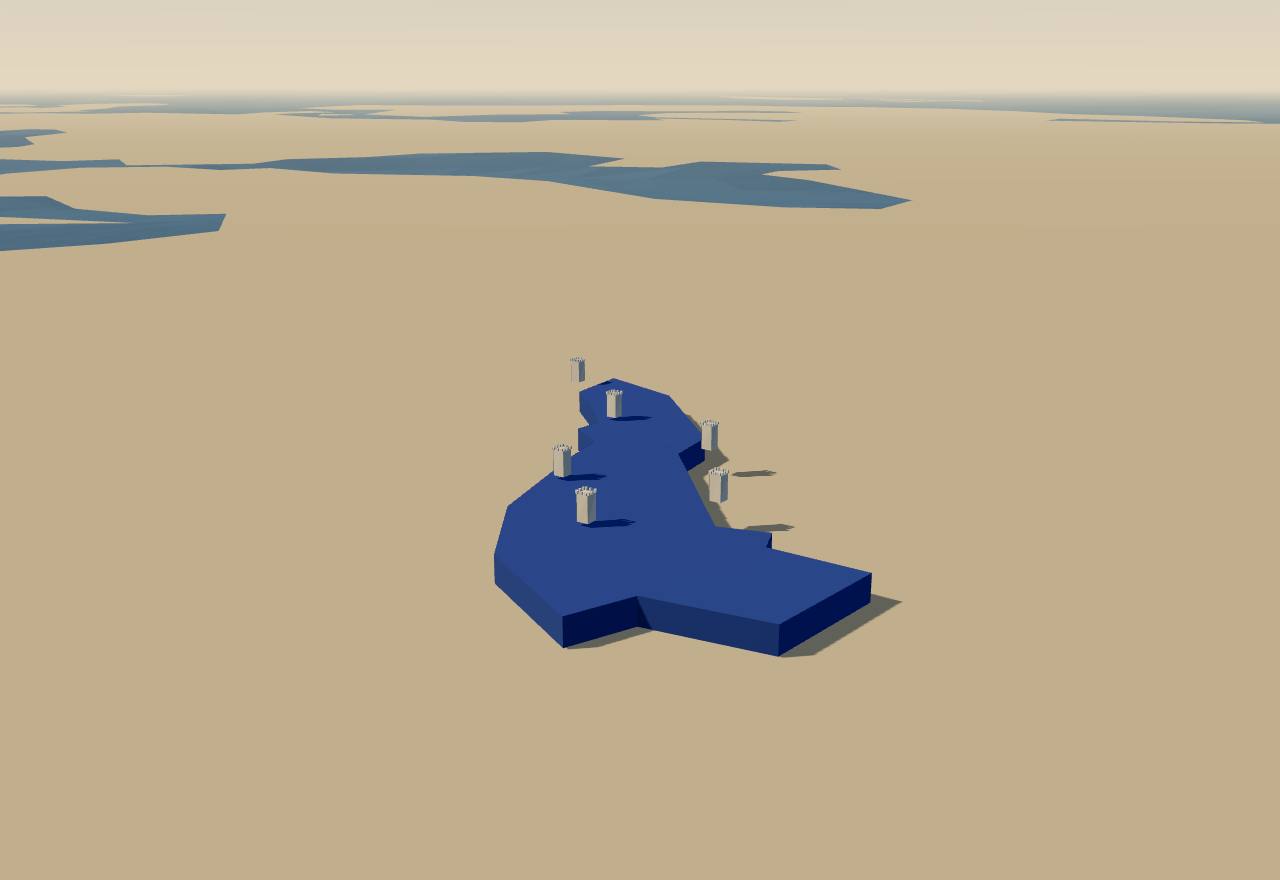
Sumerian city-states on Cliopatria's map, 3400–1765 BCE
Territory: Cliopatria (CC BY 4.0), simplified. Height: Seshat population, log scale; darker, fixed-height slices are not coded.
2,334 BCE – 2,112 BCE
Akkad, the Gutians and Lagaš II
Sargon of Akkad united the southern cities for the first time; in ARCANE's dates he ruled about 2324–2285 BCE (±30), and his dynasty held Babylonia until about 2142. Its story continues on the Akkad page. 2 Consensus Texts
The King List gives the next kingship to 'the army of Gutium', 21 kings in 124 years. Piotr Michalowski calls the 'Gutian period' 'a misnomer': Adab, Umma and perhaps other cities acknowledged Gutian rulers from the eastern highlands, while Girsu, Uruk and Ur 'thrived independently'. 16,17 Consensus Texts
How long the interval lasted is unsettled: estimates of the Gutian period range from 40 years (Hallo) to 100 (Steinkeller), and ARCANE adopts 70 ±30 years. 2 Debated Texts
Lagaš flourished under its 'second dynasty', which the King List does not mention. Gudea reigned not less than 20 years, about 2130–2110 BCE, and may have overlapped with the start of Ur-Namma's reign; Ur-Namma's laws later name Namḫani as the governor of Lagaš he installed. 2,18 Debated Texts
2,112 BCE – 2,004 BCE
The Third Dynasty of Ur
For about a century one family at Ur ruled the whole southern plain. Its kings turned the old city-states into provinces, taxed them in rotation, left some 120,000 tablets, and from Šulgi on were worshipped as gods.
Terms: Sumer: The Third Dynasty of Ur
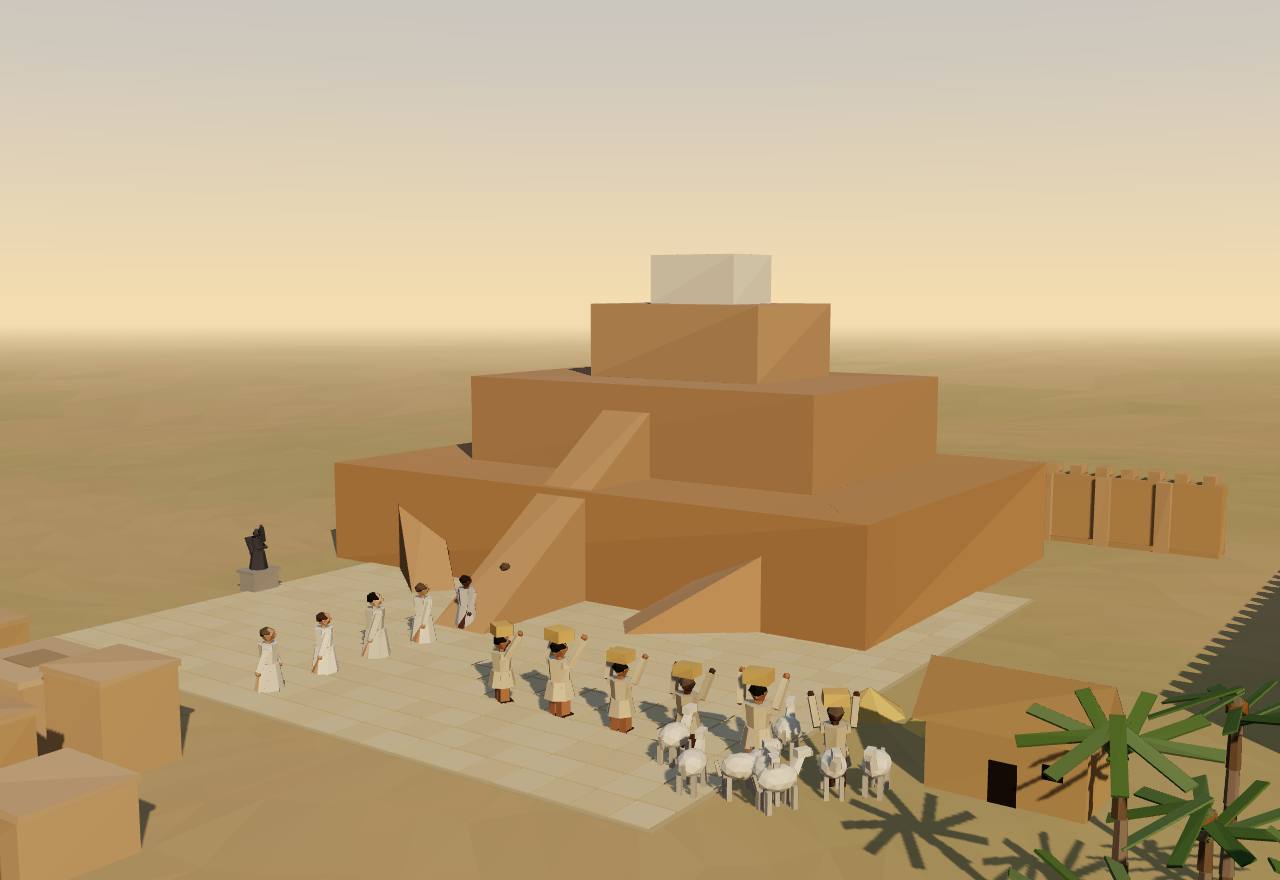
The ziggurat of Ur, c. 2050 BCE
A century or so after Akkad fell, Ur-Namma (2112–2095 BCE) 'founded a new territorial state' with only Akkad as precedent; he and his son Šulgi (2094–2047) imposed common weights and measures, calendars and a standard way of writing on cities used to ruling themselves. 17 Consensus Texts
The core of the state 'was subdivided into over twenty provinces' that 'corresponded very closely to the former city-states'. Their governors (ensi₂) were royal appointees who could in theory be removed, but in practice the office 'tended to be hereditary'; the generals answered to the chancellor and the king, not to the governors. 19 Consensus Texts
Under the bala ('rotation') system the core provinces supplied redistribution centres built by the kings, and the system 'functioned as a central redistribution system, integrating all the provinces into one interdependent whole'. The periphery paid a separate livestock tax delivered to Puzriš-Dagan. 19 Consensus Texts
Šulgi was deified 'no later than the year Šulgi 20'. Statues of the divine king stood in other gods' temples, temple estates of the king were founded in the major cities, and officials took names containing his. Ur-Namma, the founder, 'was not deified'; the Ur III kings styled themselves 'god of the land', not of Ur. Seshat accordingly codes 'rulers are gods' both absent and present. 19,20,21 Seshat Consensus Texts
The prologue of the Laws of Ur-Namma has the king establish 'justice in the country', free cities on which 'servitude was being imposed', standardise the measures from 1 shekel to 1 mina, and decree that 'the orphan to the rich man should not be made subordinate'. Among the laws: 'If a man has committed murder, that man is to be killed'. Piotr Steinkeller argues that Šulgi was the real author. 18,19 Consensus Texts
Puzriš-Dagan (modern Drehem), near Nippur, grew 'from a small settlement concerned with the needs of Šulgi-simti', a queen, into the state's livestock agency, documented in over 13,500 tablets. It worked 'not as a repository of animals, but rather as a repository of tablets', and its directors were close to the throne, among them Babati, brother of queen Abi-simti. 22 Consensus Texts
Ur-Namma began stepped temples at Ur, Eridu, Uruk and Nippur. At Ur the ziggurat's base is 'a rectangle 62.50 m. by 43.00 m.', its first stage rose 11 m above the terrace, and its bricks carry his name; a much later king records that Šulgi finished it. 23,17 Consensus Excavation Texts
The Drehem tablets alone name almost a hundred princes and princesses in two generations, and 'the top echelons of state organizations, including the military, were occupied either by members of the extended royal family or by men who had married into the family of Ur-Namma'. 17 Consensus Texts
Maps simplify this century. Cliopatria's slice for 2100–2001 BCE draws the 'Sumerian City-States' as a strip in the far south and gives most of the plain to a 'Gutian Dynasty', while the Ur III archives show one king's governors in over twenty provinces from Ur to the Diyala. 15,19 Debated
The state came apart under Ibbi-Suen: provinces left from his third year, the general Išbi-Erra declared himself king at Isin (2019 BCE in ARCANE's dates), and for his last sixteen years Ibbi-Suen held only the region of Ur, until an army from Elam devastated the city (2003 BCE). 2,17 Consensus Texts
How power worked Divine king · Heredity · Written law
How power worked
- Who rules
- Divine king Debated
Why?
- How chosen
- Heredity Consensus
Why?
- Limits on power
- Written law Debated
Why?
- Scale
- Territorial state Consensus
Why?
- Claim to rule
- Divine mandate Consensus
Why?
- Who has a say
- A narrow elite Consensus
Why?
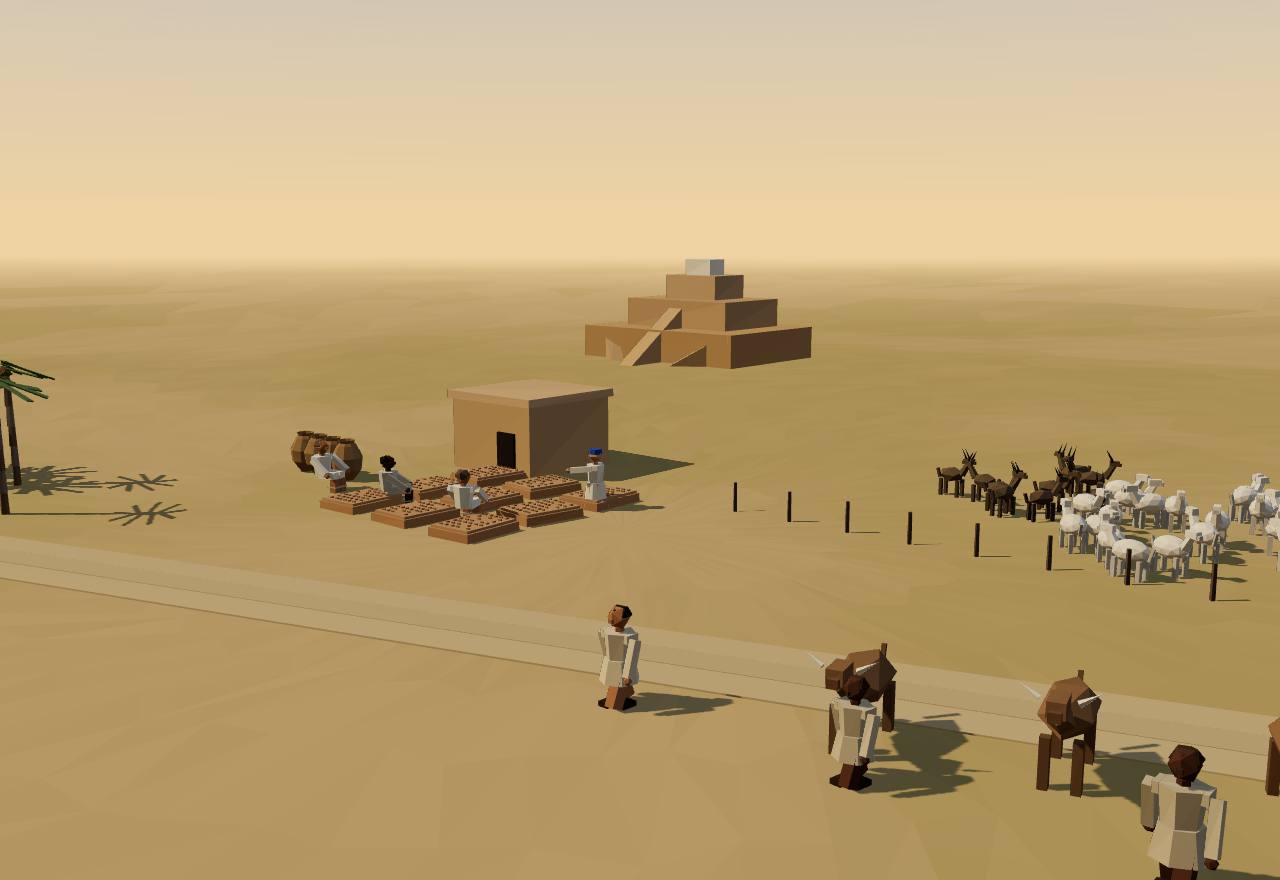
Puzriš-Dagan: animals in, tablets out
2,004 BCE – 1,763 BCE
Isin, Larsa and the end of Sumer
After Ur fell, rival kings at Isin and Larsa each claimed to be its heir. Lipit-Ištar still published his laws in Sumerian, but Akkadian was now the language of government, and local elders and assemblies bargained with kings for control of land and water.
Terms: Sumer: Isin, Larsa and the end of Sumer
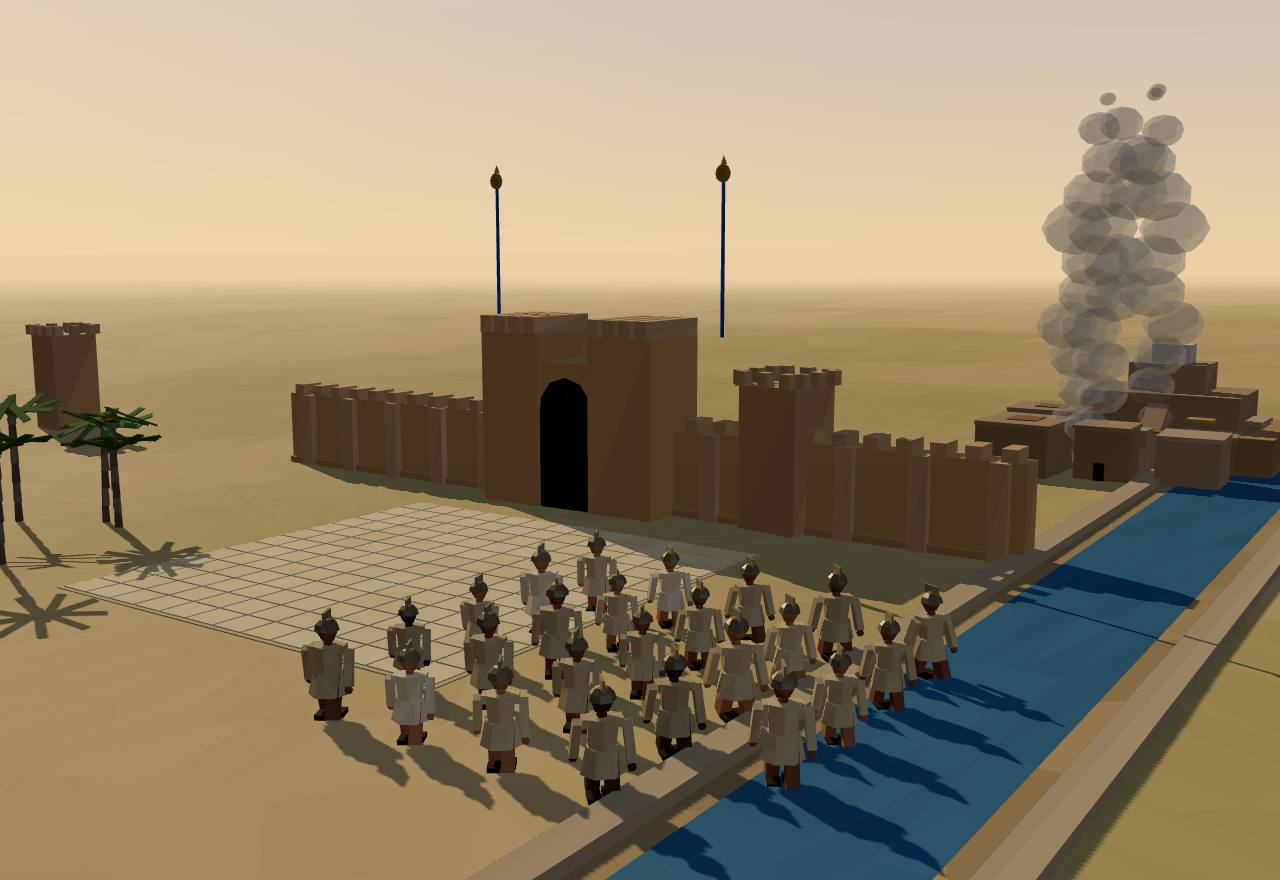
Heirs of Ur: Isin and Larsa, c. 2000–1800 BCE
Išbi-Erra, a general of Ur, 'claimed independence from Ur and declared himself king of Isin (MC 2019) and, as such, successor of the kingship of Ur'; a modern historian calls him someone who 'in a different time might have been called a warlord'. 2,17 Consensus Texts
The prologue of Lipit-Ištar's laws (Isin, 1936–1926 BCE) says Anu and Enlil called him 'to establish justice in the land, to banish complaints, to turn back enmity and rebellion by force of arms, and to bring well-being to the Sumerians and Akkadians', and that he 'procured the freedom' of the sons and daughters of Nippur, Ur and Isin on whom slavery had been imposed. 24,2 Consensus Texts
The laws themselves are cases with set penalties in silver: 'If a man entered the orchard of (another) man and was seized there for stealing, he shall pay ten shekels of silver'; cutting down a tree in another man's garden cost half a mina. 24 Consensus Texts
Below the kings, Old Babylonian towns had a chief (rabiānum), elders, 'the city' and an assembly. Andrea Seri argues that the state 'had to deal with local institutions that were not always willing to accept royal decisions passively', especially over land, while quietly co-opting their leaders; her reviewer cautions that some of her conclusions 'cannot yet be accepted'. 13,14 Debated Texts
Larsa's dynasty traced itself to Naplanum, an Amorite named in many Ur III livestock tablets, among the records of foreign envoys, rulers and governors; in ARCANE's dates Larsa's kings ran from Naplanum (2025 BCE) to Rim-Sin (1822–1763), alongside Isin's from Išbi-Erra (2019) to Damiq-ilišu (1794). 22,2 Consensus Texts
Seshat codes the Isin-Larsa period as a 'quasi-polity' with no single capital and Akkadian as its language, with a formal legal code, courts and professional lawyers present. Seshat Consensus
The fullest copy of the Sumerian King List, a prism from Larsa, was compiled in Sin-magir's eleventh year and ends with the kings of Isin. Its idea that 'only one single city exercised kingship over Babylonia at any given time' suited kings who claimed to be Ur's sole heirs; current consensus holds that the list 'was composed to legitimate the political positions of contemporary rulers'. 2,16 Consensus Texts
On Cliopatria's maps the 'Sumerian City-States' last appear in 1800–1761 BCE, while Babylonia grows from about 7,800 km² (1800–1761) to 97,000 km² (1760–1751) and 220,000 km² (1750–1701). Rim-Sin's reign at Larsa ends in 1763 BCE, during the reign of Hammurapi of Babylon (1792–1750). 15,2 Consensus
How power worked King · Mixed · Written law
How power worked
- Who rules
- King Consensus
Why?
- How chosen
- Mixed Debated
Why?
- Limits on power
- Written law Consensus
Why?
- Scale
- Territorial state Debated
Why?
- Claim to rule
- Divine mandate Consensus
Why?
- Who has a say
- A narrow elite Debated
Why?
One kingship or many? The King List against the dates
Data: Sumerian King List (ETCSL) and modern dates
The Sumerian King List says that kingship 'descended from heaven' and passed from one city to the next, one at a time. Laid end to end, its post-flood dynasties fill 33,685 years. Switch to the historians' dates to see the same dynasties overlap, and the ones the list leaves out. 16,2
historians' dates (ARCANE III, Middle Chronology; Kiš I from Woods) the list's sequence, anchored on Isin in 2019 BCE
| Dynasty | King List (ETCSL) | Historians |
|---|---|---|
| Kiš I | Kic: 23 kings, 24,510 years 3 months and 3½ days (lines 90–94) 16 | En-men-barage-si = King Mebaragesi of Kiš, c. 2600 Debated 3 Woods's table places 'King Mebaragesi of Kish' at about 2600 BCE; the other 22 kings and their reigns of hundreds of years cannot be matched to contemporary records. |
| Uruk I | E-ana / Unug: 12 kings, 2,310 years (lines 130–133) 16 | no contemporary date Includes Enmerkar, Lugalbanda and Gilgameš (126 years). |
| Ur I | Urim: 4 kings, 171 years (lines 143–147) 16 | no contemporary date |
| Awan | Awan: 3 kings, 356 years (lines 155–159) 16 | no contemporary date |
| Kiš II | Kic: 8 kings, 3,195 years (lines 174–178) 16 | no contemporary date |
| Hamazi | Hamazi: 1 king, 360 years (lines 182–185) 16 | no contemporary date |
| Uruk II | Unug: 3 kings, 187 years (lines 190–192) 16 | no contemporary date |
| Ur II | Urim: 3 kings, 582 years (lines 201–204) 16 | no contemporary date |
| Adab | Adab: 1 king, 90 years (lines 207–210) 16 | no contemporary date |
| Mari | Mari: 6 kings, 136 years (lines 219–223) 16 | no contemporary date |
| Kiš III | Kic: 1 king, 100 years (lines 228–231) 16 | no contemporary date One ruler, Kug-Bau, 'the woman tavern-keeper'. |
| Akšak | Akcak: 6 kings, 99 years (lines 239–243) 16 | no contemporary date |
| Kiš IV | Kic: 7 kings, 491 years (lines 255–258) 16 | no contemporary date |
| Lagaš I and Umma | not in the list | ca. 2475–2300 ±30 Debated 2 Not in the King List: 'both the Lagash I rulers of the Presargonic period and the Lagash II dynasty … are missing' (ARCANE). |
| Uruk III (Lugal-zage-si) | Unug: 1 king, 25 years (lines 261–265) 16 | ca. 2324–2300 ±30 Debated 2 |
| Akkad | Agade: 11 kings, 181 years (lines 293–296) 16 | Sargon 2324 to Šu-Durul 2142, ±30 Consensus 2 |
| Uruk IV | Unug: 5 kings, 30 years (lines 304–307) 16 | alongside the late Akkad kings Dudu and Šu-Durul (2177–2142) Debated 2 |
| Gutium | Gutium: 21 kings, 124 years and 40 days (lines 330–334) 16 | 2180 ±30 to 2111 Debated 2 |
| Lagaš II (Gudea) | not in the list | Gudea ca. 2130–2110? Debated 2 Not in the King List; Gudea may have been an early contemporary of Ur-Namma (ARCANE). |
| Uruk V (Utu-hegal) | Unug: 1 king, 427 years (lines 337–340) 16 | 7 years, ending with his victory over Tirigan around 2110 Debated 2 Manuscript WB gives Utu-hegal 427 years; others give 7 years, 6 months and 15 days. |
| Ur III | Urim: 4 kings, 108 years (lines 351–354) 16 | Ur-Namma 2110 to Ibbi-Suen 2003 Consensus 2 The summary line says 4 kings although five are named; Ibbi-Suen lost all but the region of Ur after his 8th year (ARCANE). |
| Isin | Isin: 14 kings, 203 years (lines 376–377) 16 | Išbi-Erra 2019 to Damiq-ilišu 1794 Consensus 2 |
| Larsa | not in the list | Naplanum 2025 to Rim-Sin 1763 Consensus 2 Not in the King List. |
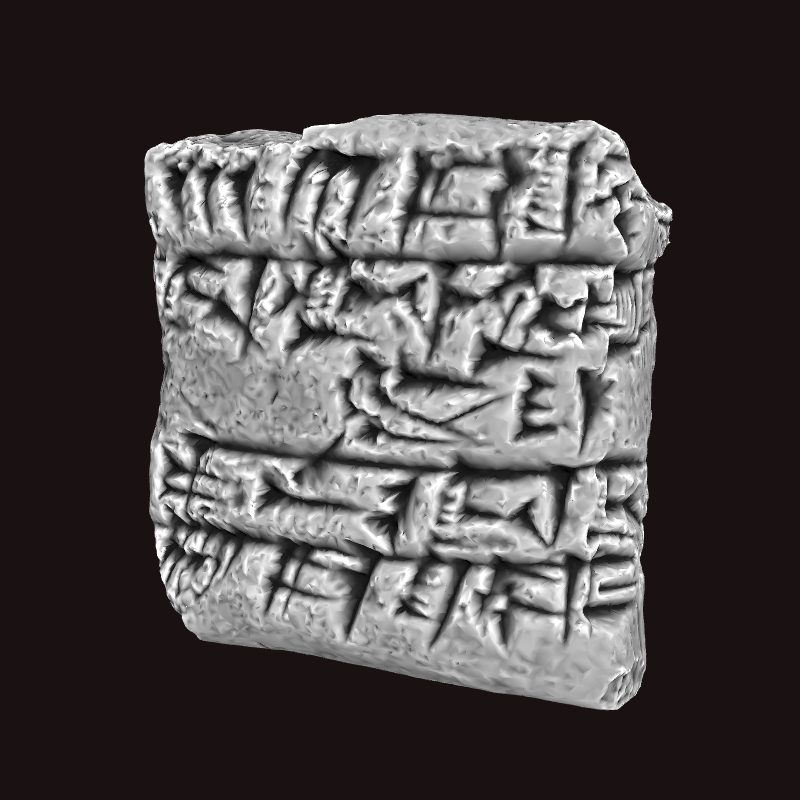
Artefacts
 Model, not a scan
 Model, not a scan
 Model, not a scan
In numbers
- Marks, by Seshat polity:
- Uruk
- Early Dynastic
- Ur - Dynasty III
- Isin-Larsa
- Background bands, by phase:
- Uruk and Jemdet Nasr
- Early Dynastic city-states
- The Third Dynasty of Ur
- Isin, Larsa and the end of Sumer
| Seshat polity | Years | Value |
|---|---|---|
| Uruk | 4,200 BCE – 3,501 BCE | 2,000–2,100 |
| Uruk | 3,500 BCE – 3,000 BCE | 1,600–2,200 |
| Early Dynastic | 2,900 BCE – 2,500 BCE (whole period) | 1,200–20,200 |
| Seshat polity | Years | Value |
|---|---|---|
| Uruk | 4,200 BCE – 3,501 BCE | 20,000–38,540 |
| Uruk | 3,500 BCE – 3,000 BCE | 21,300–41,000 |
| Early Dynastic | 2,900 BCE – 2,500 BCE (whole period) | 20,200–86,300 |
| Ur - Dynasty III | 2,112 BCE – 2,004 BCE (whole period) | 175,000–225,000 |
| Seshat polity | Years | Value |
|---|---|---|
| Uruk | 4,200 BCE – 3,501 BCE | 7,000–20,000 |
| Uruk | 3,500 BCE – 3,000 BCE | 40,000–50,000 |
| Ur - Dynasty III | 2,112 BCE – 2,004 BCE (whole period) | 200,000 |
| Isin-Larsa | 2,004 BCE – 1,763 BCE (whole period) | 175,000–225,000 |
| Seshat polity | Years | Value |
|---|---|---|
| Ur - Dynasty III | 2,112 BCE – 2,004 BCE (whole period) | 4 |
| Isin-Larsa | 2,004 BCE – 1,763 BCE (whole period) | 4 |
| Seshat polity | Years | Value |
|---|---|---|
| Uruk | 4,000 BCE – 2,900 BCE (whole period) | 4 |
| Early Dynastic | 2,900 BCE – 2,500 BCE (whole period) | 4–6 |
| Ur - Dynasty III | 2,112 BCE – 2,004 BCE (whole period) | 4 |
| Isin-Larsa | 2,004 BCE – 1,763 BCE (whole period) | 4 |
| Seshat polity | Years | Value |
|---|---|---|
| Ur - Dynasty III | 2,112 BCE – 2,004 BCE (whole period) | 6–7 |
| Isin-Larsa | 2,004 BCE – 1,763 BCE (whole period) | 6–7 |
Values as Seshat codes them: bands are ranges, dots single values, flat bars values given for a whole period, hatching “unknown”; from one Seshat polity to the next, marks alternate between a light tone and a darker one with dashed joining lines (the key above names each polity). Source: Seshat Global History Databank (Equinox-2020), CC BY 4.0.
Governance fingerprint
Seshat's institutional variables, phase by phase. Hover or focus a cell for the values and years.
- Present
- Inferred present
- Absent
- Inferred absent
- Unknown
- Not coded in Seshat
- Mixed: present in one Seshat polity or period, absent in another
The axes against Seshat
4 agree, 0 disagree, 1 mixed.
- Mixed The Third Dynasty of Ur: who rules coded “Divine king”, which implies rulers are gods present; Seshat has it present in one polity or period and the opposite in another.
Show the 4 pairs that agree
- Agree The Third Dynasty of Ur: claim to rule coded “Divine mandate”, which implies rulers legitimated by gods present; Seshat has it present.
- Agree The Third Dynasty of Ur: limits on power coded “Written law”, which implies formal legal code present; Seshat has it present.
- Agree The Third Dynasty of Ur: how chosen coded “Heredity”, which implies elite status hereditary present; Seshat has it present.
- Agree Isin, Larsa and the end of Sumer: limits on power coded “Written law”, which implies formal legal code present; Seshat has it present.
Only pairs where an axis value on its own implies a Seshat variable are compared; the rest is not counted as disagreement. 5 more pairs have no Seshat value.
Source: Seshat Global History Databank (Equinox-2020), CC BY 4.0.
Compare
| Axis | Sumer | Akkad: Sargon's conquest | Egypt: Unification and the first dynasties | Greece: Athens |
|---|---|---|---|---|
| Who rules | Clerical rule | King | Divine king | Elected magistrates |
| How chosen | Unknown | Conquest or coup | Heredity | Mixed |
| Limits on power | Council | Unknown | Unknown | Written law |
| Scale | City-state | Empire | Territorial state | City-state |
| Claim to rule | Divine mandate | Divine mandate | Divine mandate | Law |
| Who has a say | Unknown | A narrow elite | A narrow elite | Property owners |
Legacy
The sexagesimal system of the Uruk accountants outlived the Sumerians; through the Babylonians and the Greeks it gave us 360 degrees in a circle and 60 minutes in an hour. 3 Consensus
Historians still borrow the King List's frame: names like 'the Third Dynasty of Ur' and 'the Akkad dynasty' are 'borrowed almost directly' from it. 2 Consensus
Lipit-Ištar's laws, in Sumerian, are 'nearly two centuries older than that of Hammurabi, yet clearly related to it': the habit of kings publishing justice in their own name runs from Ur-Namma through Isin to Babylon. 24,18 Consensus
Jacobsen's 1943 thesis of 'primitive democracy' brought Sumer into the long argument about collective government before Greece; it is still contested. 7,5 Debated
See also forms of government.
Sources
Bibliography
26 sources, numbered as cited: 11 papers · 5 books · 4 datasets · 6 primary sources
- Paper Manning, S. W., Griggs, C. B., Lorentzen, B., Barjamovic, G., Bronk Ramsey, C., Kromer, B., Wild, E. M. (2016). Integrated Tree-Ring-Radiocarbon High-Resolution Timeframe to Resolve Earlier Second Millennium BCE Mesopotamian Chronology. PLOS ONE 11 (7). Read in full.
- Book Sallaberger, W., Schrakamp, I. (eds) (2015). History & Philology (ARCANE III: Associated Regional Chronologies for the Ancient Near East). Brepols, Turnhout. Part I (Sallaberger & Schrakamp), posted by the editor: §§ 1–2 (the Sumerian King List), 8 (the Gutian period) and 10 (tables 38–39, Middle Chronology dates) read.
- Book Woods, C., with Emberling, G., Teeter, E. (eds) (2010). Visible Language: Inventions of Writing in the Ancient Middle East and Beyond. Oriental Institute Museum Publications 32 (open access).
- Dataset The Pennsylvania Sumerian Dictionary Project (2024). The electronic Pennsylvania Sumerian Dictionary (ePSD2), version 2.7.2. Oracc, University of Pennsylvania. Cuneiform (Unicode) and glosses copied from the entries for lugal (o0033341), ensik (o0027087), en (o0026952), egal (o0026716), unkin (o0041574), abba (o0023342), ŋuruš (o0029798), bala (o0024854), saŋŋa (o0037381), dubsar (o0026174) and unir (o0041570), read 15 Nov 2026 at https://oracc.museum.upenn.edu/epsd2/ (the live host's TLS chain fails automated checks, so the link is the Internet Archive copy of the home page). Licence CC BY-SA.
- Paper Ur, J. (2014). Households and the Emergence of Cities in Ancient Mesopotamia. Cambridge Archaeological Journal 24. The first Mesopotamian cities as an unintended extension of the household metaphor, not a revolution.
- Paper Ur, J. A., Karsgaard, P., Oates, J. (2007). Early Urban Development in the Near East. Science 317. Variation from the southern Mesopotamian model of urban growth was present at the very start of Near Eastern urbanism.
- Paper Jacobsen, T. (1943). Primitive Democracy in Ancient Mesopotamia. Journal of Near Eastern Studies 2 (3). Read in full (pp. 159–172).
- Paper Notizia, P. (2024). The Burial Pit of the ensi₂ of Gizuna (ŠID.NUNki) and the Cemetery of Ur Between the Late Early Dynastic and Early Sargonic Periods. KASKAL n.s. 1. Open access, read in full.
- Primary Black, J. A., Cunningham, G., Ebeling, J., Flückiger-Hawker, E., Robson, E., Taylor, J., Zólyomi, G. (2006). Gilgamesh and Aga: translation (ETCSL 1.8.1.1). The Electronic Text Corpus of Sumerian Literature, Oxford. A literary text known from Old Babylonian copies. Composite: https://etcsl.orinst.ox.ac.uk/section1/c1811.htm (ab-ba, ĝuruš, unken ĝar-ra). Read in full.
- Dataset Reba, M., Reitsma, F., Seto, K. C. (2016). Spatializing 6,000 years of global urbanization from 3700 BC to AD 2000. Scientific Data 3. Geocoded city populations 3700 BC–AD 2000 from Chandler and Modelski, with a reliability ranking.
- Primary Cuneiform Digital Library Initiative (2026). Enmetena of Lagaš, cone inscription on the Lagaš–Umma border (RIME 1.09.05.01 composite, P431117). CDLI. Composite with English translation read in the inscription view (https://cdli.earth/inscriptions/2330443), lines 1–40; the same text is ETCSRI Q001103.
- Paper Schrakamp, I., Zólyomi, G. (2025). Reevaluating the So-called “Reforms of Urukagina” (2): Their Actual Implementation in the Case of the Maškim Official. Altorientalische Forschungen 52 (1). Abstract read (full text behind a bot check).
- Book Seri, A. (2006). Local Power in Old Babylonian Mesopotamia. Equinox Publishing. Publisher abstract read; read with Dalley's review (dalley2007).
- Paper Dalley, S. (2007). Book Review of Local Power in Old Babylonian Mesopotamia, by Andrea Seri. American Journal of Archaeology 111 (3). Read in full.
- Dataset Bennett, J. S., Mutch, E., Tollefson, A., et al. (2025). Cliopatria - A geospatial database of world-wide political entities from 3400BCE to 2024CE. Scientific Data 12. Cliopatria: open geospatial dataset of over 1600 political entities, 3400 BCE–2024 CE.
- Primary Black, J. A., Cunningham, G., Ebeling, J., Flückiger-Hawker, E., Robson, E., Taylor, J., Zólyomi, G. (2006). The Sumerian king list: translation (ETCSL 2.1.1). The Electronic Text Corpus of Sumerian Literature, Oxford. Translation follows manuscript WB unless noted; composite text with line numbers at https://etcsl.orinst.ox.ac.uk/section2/c211.htm. Read in full.
- Book Michalowski, P. (2011). The Correspondence of the Kings of Ur: An Epistolary History of an Ancient Mesopotamian Kingdom. Penn State University Press (Eisenbrauns). Introduction (pp. 3–12) and chapters on the Gutians and the fall of Ur (pp. 66, 170–185) read.
- Primary Cuneiform Digital Library Initiative (translation updated by R. K. Englund, 2016) (2016). Laws of Ur-Namma, composite text with English translation (RIME 3/2.01.01.20, P432130). CDLI. Prologue and laws read in the inscription view (https://cdli.earth/inscriptions/2269337). Steinkeller 1987 (p. 17, n. 10) holds that Šulgi, not Ur-Namma, was the author.
- Paper Steinkeller, P. (1991). The Administrative and Economic Organization of the Ur III State: The Core and the Periphery. in M. Gibson and R. D. Biggs (eds), The Organization of Power (SAOC 46, 2nd ed.), Oriental Institute, pp. 15–33. First edition 1987. Read in full.
- Paper Michalowski, P. (1991). Charisma and Control: On Continuity and Change in Early Mesopotamian Bureaucratic Systems. in M. Gibson and R. D. Biggs (eds), The Organization of Power (SAOC 46, 2nd ed.), Oriental Institute, pp. 45–57. First edition 1987. Read in full.
- Paper Winter, I. J. (1991). Legitimation of Authority Through Image and Legend: Seals Belonging to Officials in the Administrative Bureaucracy of the Ur III State. in M. Gibson and R. D. Biggs (eds), The Organization of Power (SAOC 46, 2nd ed.), Oriental Institute, pp. 59–100. First edition 1987. Conclusion (p. 76) and notes read.
- Paper Tsouparopoulou, C. (2013). A Reconstruction of the Puzriš-Dagan Central Livestock Agency. Cuneiform Digital Library Journal 2013:2. Read in full (PDF: https://cdli.earth/articles/cdlj/2013-2.pdf).
- Book Woolley, C. L. (1939). Ur Excavations V: The Ziggurat and its Surroundings. British Museum and University of Pennsylvania Museum. Chapter XI, 'The Ziggurat of Ur-Nammu' (pp. 97–100), read.
- Primary Steele, F. R. (1948). The Code of Lipit-Ishtar. American Journal of Archaeology 52 (3). Read in the University of Chicago library's scan of the offprint (prologue pp. 10–12; laws 9–10, p. 15).
- Dataset Homburg, T., Zwick, R., Mara, H., Bruhn, K.-C. (2022). Annotated 3D-Models of cuneiform tablets (HS 1174 and HT 07-31-95). Zenodo record 6506560 (CC BY 4.0). HS 1174 scanned for the Heidelberg HeiCuBeDa corpus, GigaMesh PLY (1.56 M faces), reduced to 150,000 faces for the web. Licence read on the Zenodo record by scripts/history/artefact.ts, 15 Nov 2026; the HeiCuBeDa copy is CC BY-SA and is not used.
- Primary Cuneiform Digital Library Initiative (2026). HS 1174 (P134485): administrative tablet, Nippur, Ur III. CDLI. Record read 15 Nov 2026: 'Administrative tablet excavated in Nippur (mod. Nuffar), dated to the Ur III (ca. 2100-2000 BC) period and now kept in Hilprecht Collection, University of Jena'.
Quantitative values from the Seshat Global History Databank (Equinox-2020), licensed CC BY 4.0. Dataset: Seshat Equinox Packaged Data (v.1). See also Seshat: The Global History Databank (Turchin et al. 2015).