Emperors without a law of succession, made by armies, courts and crowds
Byzantium: the Roman empire in the East
476 CE – 1453 CE
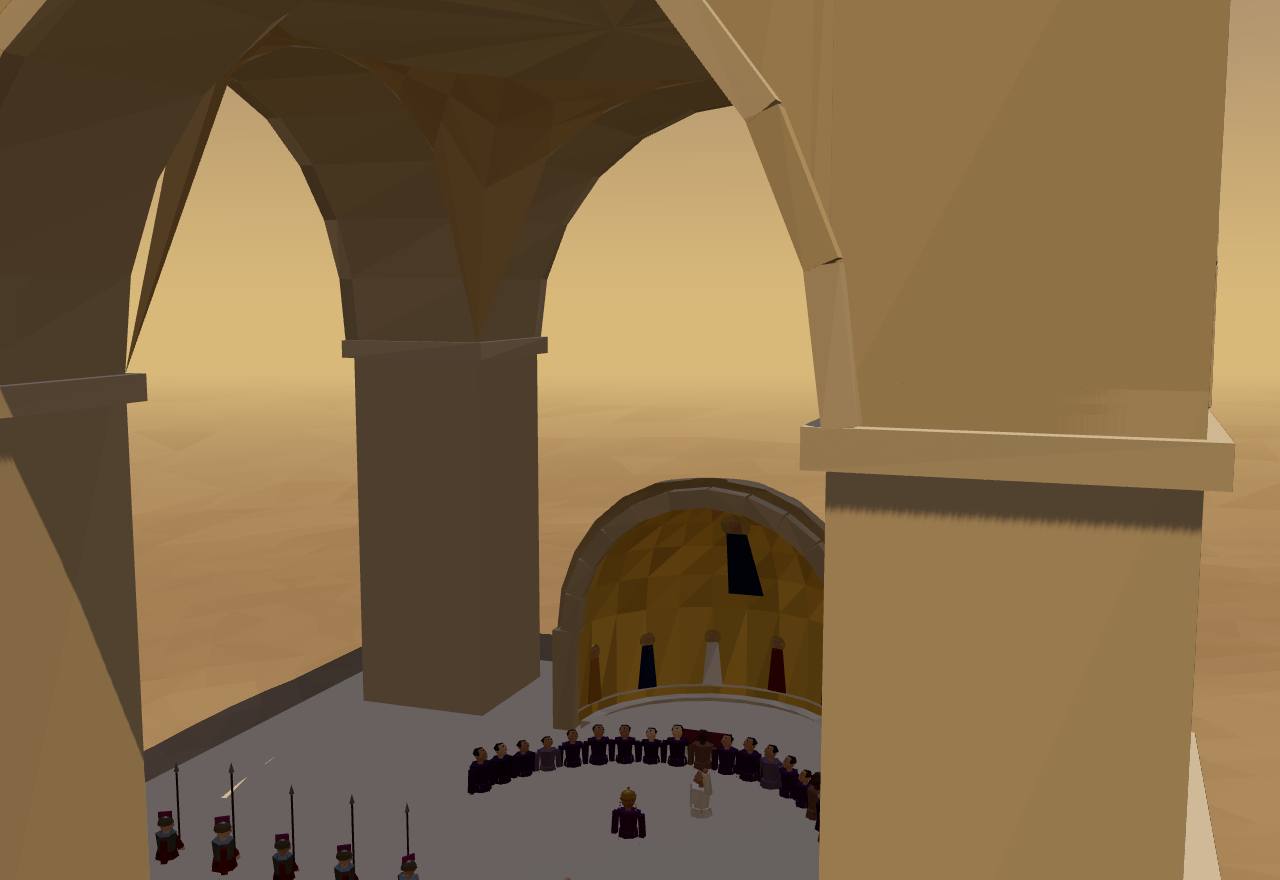
Under the dome of Hagia Sophia
476 CE – 641 CE
After the West: Justinian's empire
After 476 one Roman emperor was left, in Constantinople. No law said who he should be: an empress, the officials, the soldiers or the crowd in the Hippodrome made him. Justinian gathered Roman law into books, kept his throne through a riot that burned the city's great church, and rebuilt it under a gold dome; by 641 the Arab conquests had taken Syria and Egypt.
Terms: Byzantium: the Roman empire in the East: After the West: Justinian's empire
- politeiaπολιτεία the polity, the commonwealth; Kaldellis's case is that it translates the Latin res publica (as printed in Roncaglia's review) 6,7
- ennomos politeiaἔννομος πολιτεία a polity of laws, a lawful republic (as printed in Roncaglia's review) 6,7
- lex regia the 'royal law' by which, in the Institutes, the people conferred their authority and power on the emperor 8
- Nika 'Conquer!', the watchword of the rioters of 532 (Dewing's note) 9
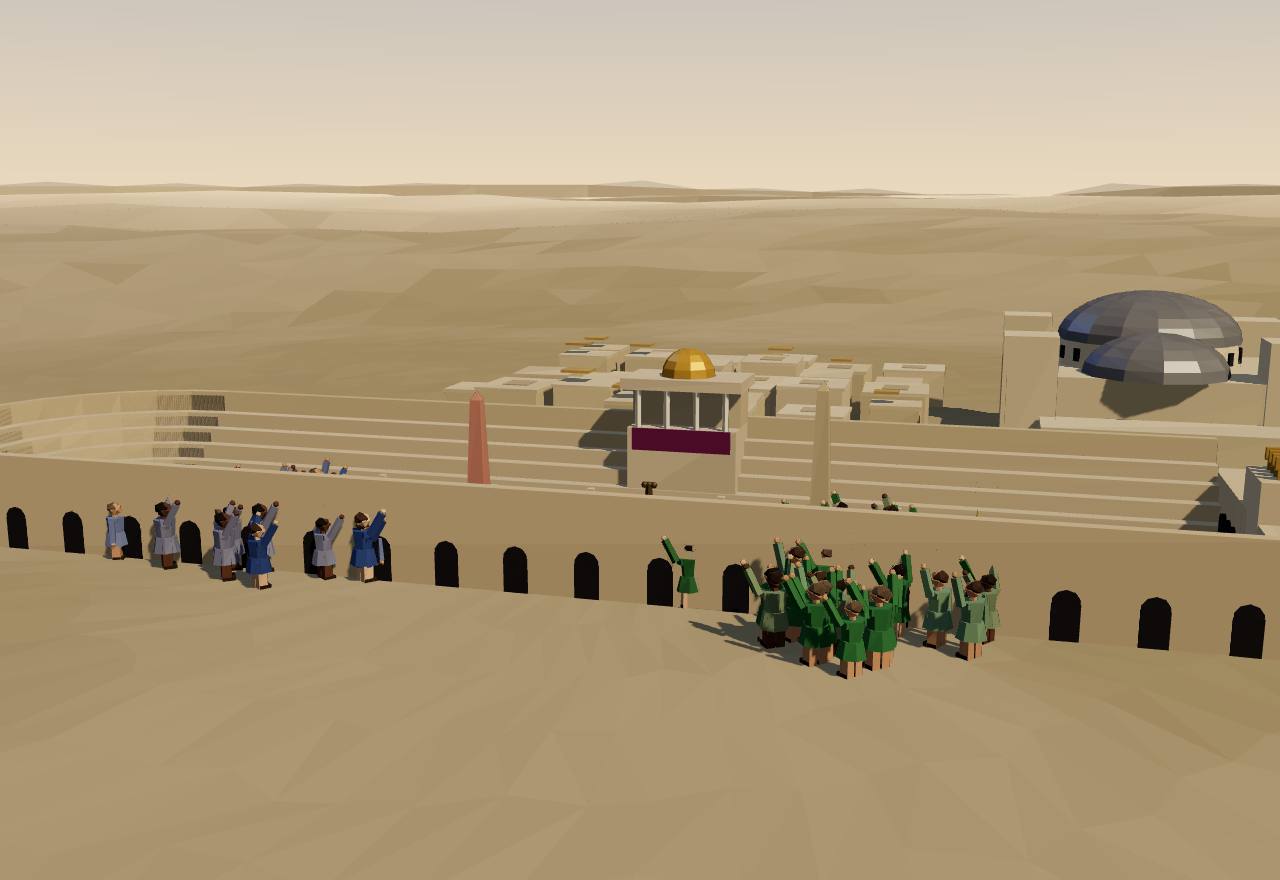
The Hippodrome and the Nika riot
No law named the next emperor. In De Imperatoribus Romanis, Anastasius I (491) was “the choice of Ariadne”, Zeno's widow; Justin I (518) was put forward by the high officials when “the people in the Hippodrome grew impatient”; Justinian (527) had been made co-emperor four months before his uncle died. Dagron, as his reviewer reads him, finds rules of succession “largely lacking in Byzantium”. 10,11,12,13 Consensus Texts
Justinian's Institutes state the legal theory of the office: “what the Emperor determines has the force of a statute, the people having conferred on him all their authority and power by the lex regia”. 8 Consensus Texts
Justinian had the law rewritten. The first Code was dated 7 April 529; the amended edition, in twelve books, holds 4,652 laws. The Digest, fifty books of the older jurists, was finished in under three years and published in December 533. The Institutes open: “The imperial majesty should be armed with laws as well as glorified with arms”. 14,8 Consensus Texts
In 532 the Blue and Green factions, “declaring a truce with each other”, rose together under the watchword Nika (“Conquer”), burned the church of Sophia, proclaimed Hypatius “Emperor of the Romans” and seated him on the emperor's throne in the Hippodrome. Belisarius and Mundus led the troops in; Procopius says that “more than thirty thousand” of the people died. Bury lists other counts: 35,000 in John Malalas, 40,000 in Zonaras, 50,000 in John Lydus. 9,2 Consensus Texts
In Procopius's account, as the emperor's party weighed flight, the empress Theodora spoke: “for one who has been an emperor it is unendurable to be a fugitive … royalty is a good burial-shroud.” Bury judges that “the throne of Justinian was saved through the moral energy of Theodora and the loyal efforts of Belisarius”. 9,2 Consensus Texts
Justinian rebuilt the burned church at once, to plans by Anthemius of Tralles with Isidore of Miletus. Bury dates its dedication to 26 December 537. Procopius describes a golden dome that seems “not to rest upon solid masonry” but “suspended from Heaven”. It fell in May 558; Isidore the Younger rebuilt it, and the church was inaugurated a second time on Christmas Eve 562. 15,2 Consensus Texts
Bury dates the start of the great plague to the summer of 542 and judges that it “probably caused as large a mortality in the Empire as the Black Death”; at its worst, the figure he reports for Constantinople is “10,000 or upward” dead a day. Death tolls like this come from the writers of the time and cannot be checked. 16 Debated Texts
Armies made the last emperors of the phase: in 602 “the army mutinied” and set up the junior officer Phocas; in 610 Heraclius sailed from Carthage, took the city and had Phocas beheaded. He won the Persian war by 628, then lost Syria after the battle of the Yarmuk (634 or 635) and died on 10 February 641, with Alexandria under siege (it fell that December); afterwards, Bury writes, the empire held nothing in the East “south of the Taurus mountains” except Cyprus. 17,18,19 Consensus Texts
Seshat codes the eastern empire around 500 at 1.3–1.5 million km², about 20 million people and a largest city of about 500,000, with eight administrative levels and professional lawyers; it dates the peak to 527–542. Seshat Consensus Survey Texts
How power worked Emperor · Mixed · Written law
How power worked
- Who rules
- Emperor Consensus
Why?
- How chosen
- Mixed Debated
Why?
- Limits on power
- Written law Debated
Why?
- Scale
- Empire Consensus
Why?
- Claim to rule
- Divine mandate Debated
Why?
- Who has a say
- A narrow elite Debated
Why?
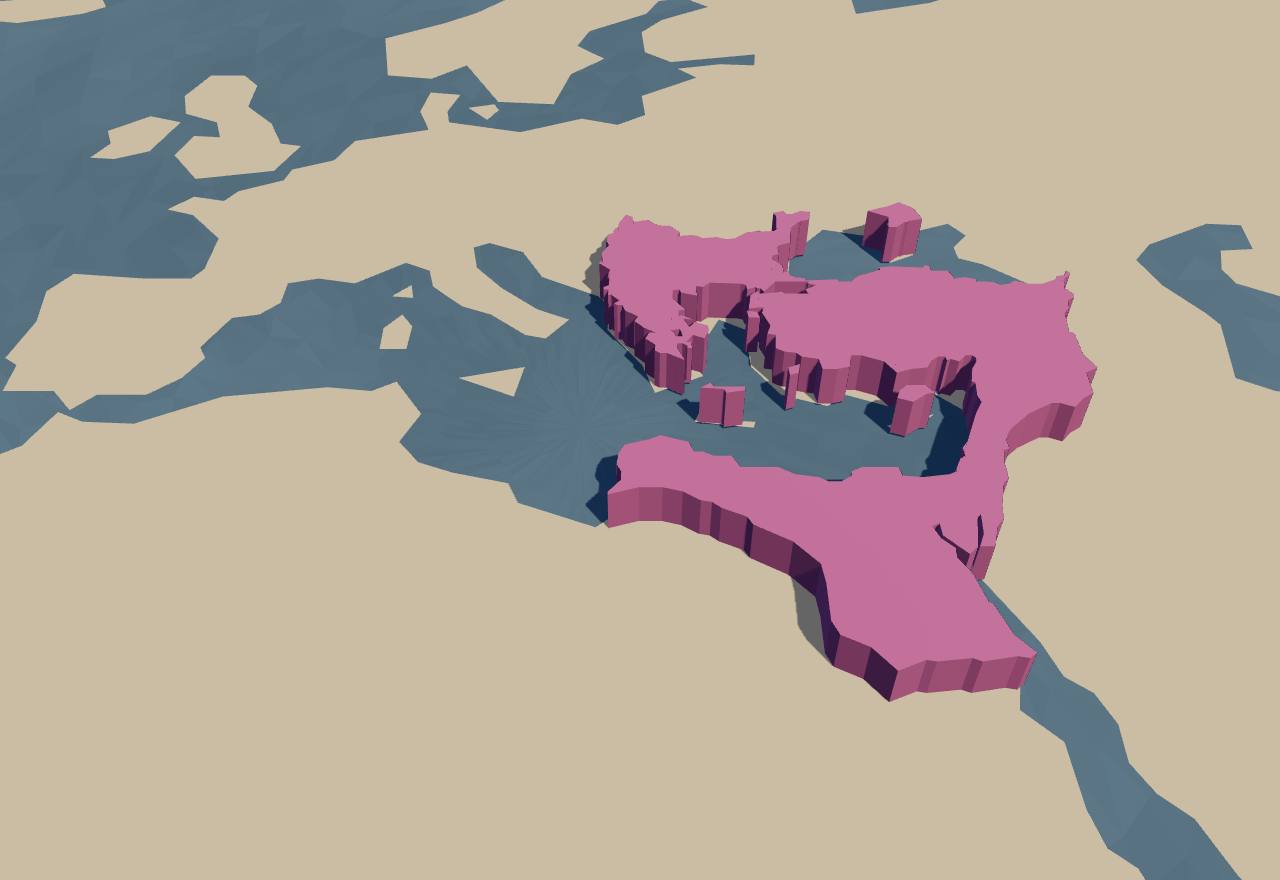
The eastern empire, 490–630 (Cliopatria)
Territory: Cliopatria (CC BY 4.0), simplified. Height: Seshat population, log scale.
641 CE – 1025 CE
Themes, icons and recovery
Without Syria and Egypt, the empire pulled its field armies back into Anatolia. Their commands, later called themata, held the frontier and made and unmade emperors; for a century emperors and churchmen fought over holy images; from the late ninth century a new dynasty rewrote the law and, under Basil II, pushed the frontiers out again.
Terms: Byzantium: the Roman empire in the East: Themes, icons and recovery
- thema, themata a military district under a strategos, later the word for the whole system (as Wilskman defines it); Haldon argues the word is fiscal and ninth-century 22,23
- strategos general; in a thema he held the supreme military and civil authority 22
- stratēgis 'command': Haldon's word for the regional armies before the early ninth century 23
- Ecloga the short law book of Leo III and Constantine V (726 on Freshfield's title page) 3
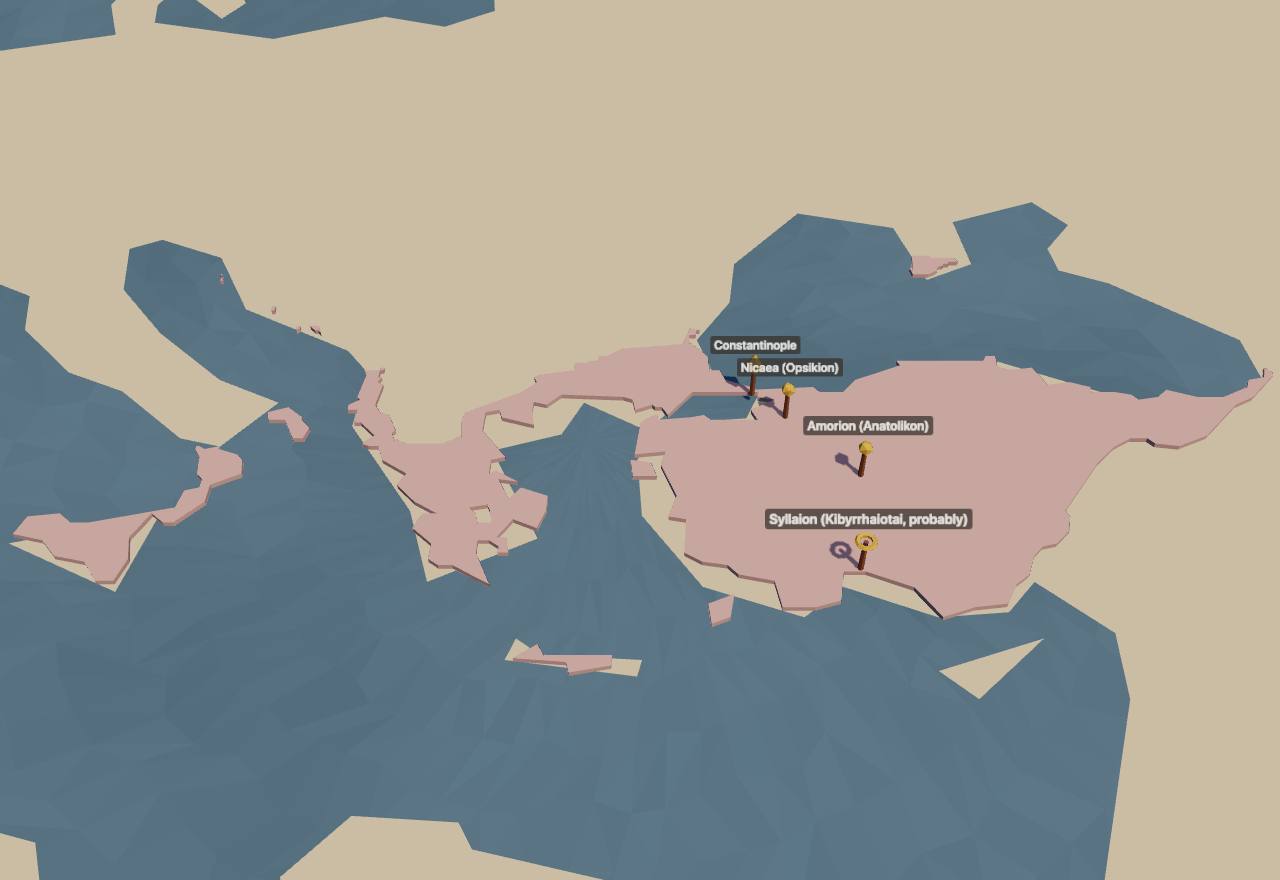
Where the commands sat
Places: 4 cited sites over Cliopatria (CC BY 4.0) territories, drawn flat and low. Constantinople · Nicaea (Opsikion) · Amorion (Anatolikon) · Syllaion (Kibyrrhaiotai, probably) 43,44,26,45,46,27
The themata, as Juho Wilskman sums up the usual picture, were “military districts where a strategos (general) had supreme military and civilian authority and in which his soldiers held parcels of land”. When and how that system arose is the question below. 22,24 Consensus Texts
The defeated armies were pulled back into Anatolia in the seventh century and took the names of new commands: the army of the East reappears as the Anatolikon, the army of Armenia as the Armeniakon, the Thracian army as the Thrakesion. Haldon takes the Opsikion back to the 660s; Eric Ivison places the Anatolikon's headquarters at Amorion, with the first clear reference to its command in 669/670. 25,26 Consensus Texts Excavation
By about 809–819, Haldon writes, Opsikion, Anatolikon, Armeniakon, Thrakesion and Boukellarion “were the only five military commands in Anatolia”. Efi Ragia dates the Thrakesion to Justinian II, “in 687 or a little later”. 23,27 Debated Texts
The armies made emperors. The Opsician troops raised Theodosius III against Anastasius II; Leo III marched with Artabasdos, general of the Armeniakon, and Theodosius abdicated to him on 25 March 717 on the advice of the patriarch and the Senate. Earlier, naval officers had proclaimed Tiberius III (698). 28,29,30 Consensus Texts
Leo III began the policy against religious images (Dumbarton Oaks: “by removing the image of Christ from the Chalke Gate”); a council at Hiera set out its theology in 754; the empress Eirene had icons restored at the Second Council of Nicaea in 787; Leo V brought iconoclasm back in 815; and in 843 the empress Theodora ended it. 31,32,33,34,35,22 Consensus Texts
Almost every source was written by the winners, the supporters of images. Brubaker and Haldon, as Wilskman reports, describe iconoclast policies “as far more moderate than traditionally imagined” and harsh treatment of dissenters as rare, and argue that the iconophiles were the innovators in doctrine. 22 Debated Texts
“I am emperor and priest” is the answer Leo III is supposed to have given the pope, in two possibly forged letters of Gregory II. Dagron, in Shlosser's reading, argues that under Leo III the office “took on a quasi-priestly character” modelled on the Old Testament kings, while the same tradition “prohibited him to ever utter” the phrase. 13 Debated Texts
Leo III and Constantine V issued a short law book, the Ecloga, dated 726 on Freshfield's title page. Its preamble has God bid the emperors, as he bade Peter, “to feed His most faithful flock”, and charges judges with “neither despising the poor nor permitting a transgressor to go unpunished”. Dumbarton Oaks notes that it largely replaced the death penalty with mutilation. 3,31 Consensus Texts
Eirene, regent for her son Constantine VI from 780, had him blinded in 797 and ruled in her own name; at dawn on 31 October 802 “a group of senior patricians, bureaucratic officials and officers of the tagmata” set up Nikephoros I in her place. 36,37 Consensus Texts
The Macedonian emperors rewrote the law: Basil I issued the Epanagoge and began preparing the Basilika, a codification that Leo VI carried on. Leo's Novel 47 abolished the law that let the Senate appoint praetors, “now, when everything is committed to the supervision of the Emperor”. 38,39,40 Consensus Texts
Under Basil II (976–1025) Bulgaria was annexed in 1018 and the Danube frontier restored; Catherine Holmes calls the reign “the apogee of the Middle Byzantine Empire”. A law of 996, Dumbarton Oaks notes, “attempted to curb the influence of powerful individuals”. 41,42 Consensus Texts
Seshat's figures show the crisis and the recovery: about 1.5–2 million km² and 11 million people in 632, 470,000–700,000 km² and 4.5–7 million around 700; then 520,000 km² in 867, 810,000 in 1000 and 1.15 million in 1050, with 10–14 million people around 1000. It dates the peak to 1025. Seshat Consensus Survey Texts
How power worked Emperor · Mixed · Written law
How power worked
- Who rules
- Emperor Consensus
Why?
- How chosen
- Mixed Debated
Why?
- Limits on power
- Written law Consensus
Why?
- Scale
- Empire Consensus
Why?
- Claim to rule
- Divine mandate Consensus
Why?
- Who has a say
- A narrow elite Consensus
Why?
The commands that became themes
Data: Ivison 2007, Ragia 2009, Haldon 2016 and 2017
Seventh-century reading: each is a thema: an army settled in its district. 26,27 Haldon's reading: each is a stratēgis: an army's command, until Nikephoros I's fiscal reform made it a thema. 23
| Command | Before Nikephoros I | Grew from | Seat | Earliest date given | Sources |
|---|---|---|---|---|---|
| Opsikion | a thema from the 7th centurya command (stratēgis) until Nikephoros I | not stated | Nicaea | back into the 660s (Haldon) | 25,26,23 |
| Anatolikon | a thema from the 7th centurya command (stratēgis) until Nikephoros I | the field army of the East (magister militum per Orientem) | Amorion | 669/670, the first clear reference to its command (Ivison) | 26,25,23 |
| Armeniakon | a thema from the 7th centurya command (stratēgis) until Nikephoros I | the troops of the magister militum per Armeniam | not named | not dated | 25,23 |
| Thrakesion | a thema from the 7th centurya command (stratēgis) until Nikephoros I | the Thracian field army, withdrawn into western Anatolia | not named | 687 or a little later, under Justinian II (Ragia) | 25,27,23 |
| Boukellarion | a thema from the 7th centurya command (stratēgis) until Nikephoros I | not stated | not named | one of the five commands in Anatolia c. 809–819 (Haldon) | 23 |
| Kibyrrhaiotai (fleet) | a thema from the 7th centurya command (stratēgis) until Nikephoros I | a maritime force | Syllaion, probably one of its seats (Ragia) | not dated | 27 |
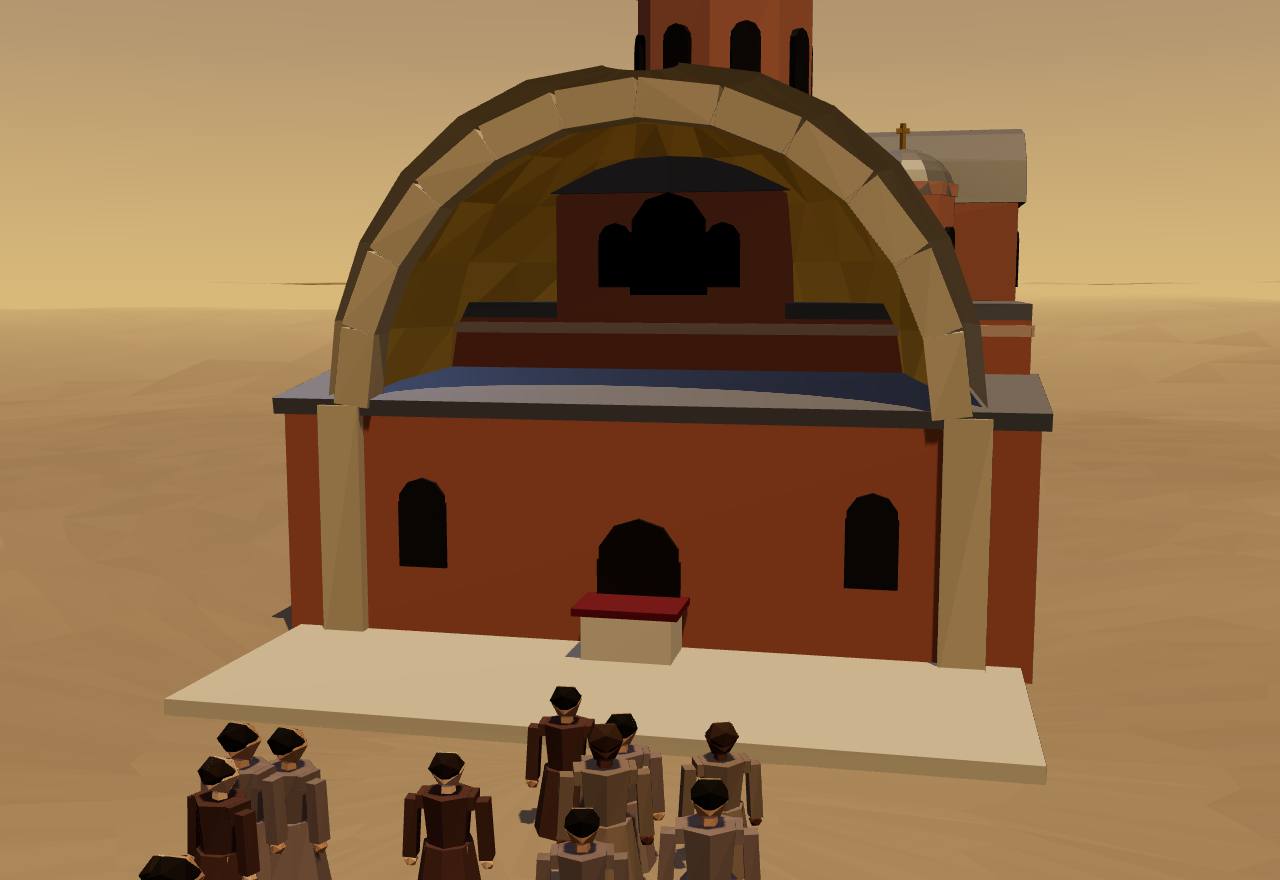
Images taken down and put back
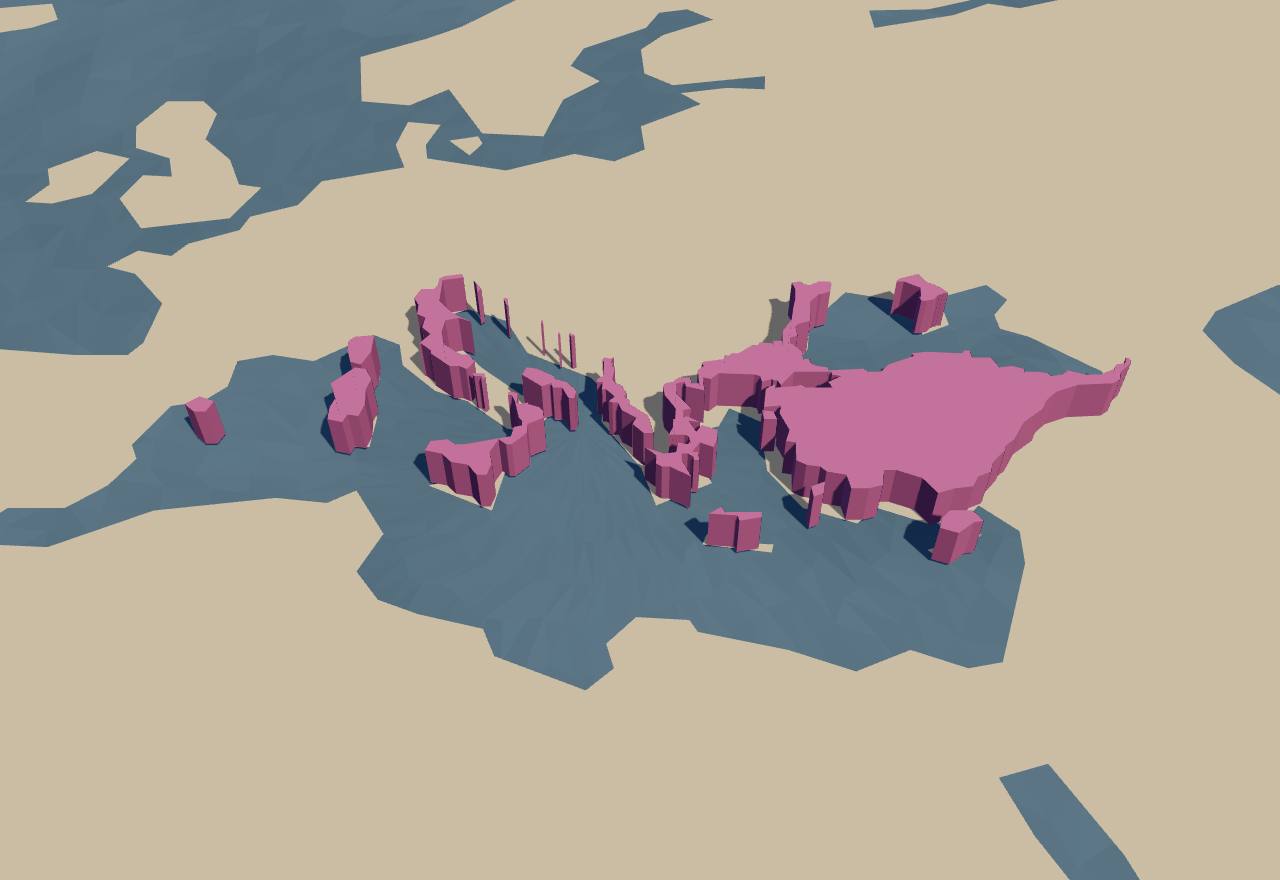
Crisis and recovery, 650–1020 (Cliopatria)
Territory: Cliopatria (CC BY 4.0), simplified. Height: Seshat population, log scale.
1025 CE – 1204 CE
Crisis and the Komnenian family state
After Basil II, thrones changed hands fast: empresses' husbands, palace favourites and provincial generals followed one another, and the people of the capital twice threw an emperor out. In 1081 Alexios Komnenos took the city with an army and governed through his family; the system held for a century, until the Fourth Crusade took Constantinople in 1204.
Terms: Byzantium: the Roman empire in the East: Crisis and the Komnenian family state
- sebastokrator a title Alexios I created for his brother Isaac, “as it were, a second Emperor”, above the Caesar 47
- pronoia (pl. pronoiai) a grant of revenue from land to support a soldier; Cheynet stresses it was not a western fief 48,49
- chrysobull a 'golden bull', an imperial charter sealed in gold 47,50
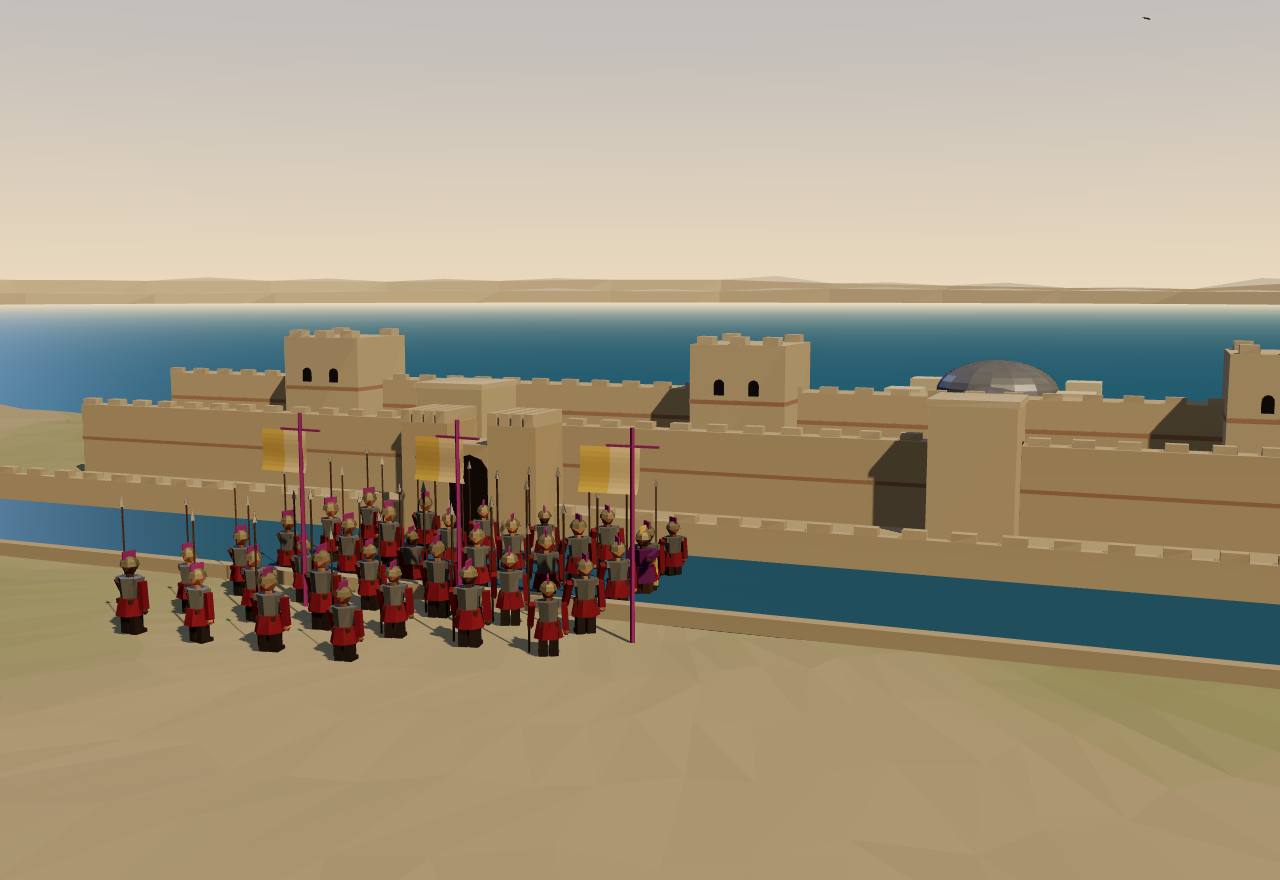
Taking the city: 1081 and 1204
Jean-Claude Cheynet's catalogue of revolts and plots from 963 to 1210 runs to 223 numbered entries. From the 1040s, he writes, great “tyrannies” came every ten years or so (1047, 1056–1057, 1067–1068, 1077–1078, 1081), and in three years at the end six great military revolts followed one another. 48 Consensus Texts
In 1042 Michael V sent away the empress Zoe, whose adopted son he was, and the city rose: Psellus describes a mob running “with some of the biggest stones in the folds of their clothing”. Michael was blinded. Cheynet notes that artisans and merchants took part in the risings against several eleventh-century emperors, and that this stopped with the Komnenoi. 51,48 Consensus Texts
Cheynet's conclusion: the competition for power was “the monopoly of the aristocracy”; teams of the great regional clans alternated in office, which matters more than the old divide between civil and military men; yet “the emperor was not the plaything of the aristocracy”, since he paid its salaries and gave out its dignities (translations ours). 48 Debated Texts
At Manzikert, on 26 August 1071, the emperor Romanos IV was wounded and “led away, a prisoner, to the enemy camp” (Psellus). Georgios Theotokis's study grants that the battle “is widely regarded as one of the most significant turning points in medieval history”, yet argues that “Manzikert was not a disaster”. 52,53 Debated Texts
In 1081 the men of the country towns “flocked to Alexius as volunteers and proclaimed him Emperor”; the Doukas family led the acclamations because his wife Irene was a Doukas. His soldiers came in through the Charisian Gate and “spared neither houses, churches nor even the innermost sanctuaries”. The patriarch Kosmas crowned him. 47,48 Consensus Texts
Alexios ranked his court by kinship: his brother Isaac became sebastokrator, “a second Emperor”, and Anna Komnene calls her father “the inventor of all these new honorary titles”. Cheynet describes the change as a hierarchy “dependent on the degree of kinship with the emperor”, in which loyalty to the person of the ruler overtook loyalty to his office (translation ours). 47,48,54 Consensus Texts
By a golden bull Alexios entrusted “the whole administration” to his mother, Anna Dalassene. Anna Komnene expects that “someone at this point would blame my father's management in transferring the administration of the Empire to the woman's apartments”. 47,55,48 Consensus Texts
Paul Magdalino calls the dynastic system Alexios began “the most stable and enduring that Constantinople had ever known”: the male line died out in 1185, but Alexios's descendants “continued to rule the Byzantine world until its political collapse in 1461”. Dagron, as Shlosser reads him, finds succession “more regulated from the time of Alexios Komnenos”. 54,13 Consensus Texts
Alexios paid Venice for its fleet with a chrysobull: the doge was given the title protosebastos with its salary, and Venetian goods were not to be taxed “in any of the countries under Roman sway”. Its date is argued over: Thomas Madden writes that the consensus favours May 1082; David Jacoby replied on the textual and palaeographic problems. 47,50,56 Debated Texts
Andronikos I, regent for the boy Alexios II, had himself made co-emperor and then had the boy strangled. On 11 September 1185 the crowd broke open the prisons and declared Isaac Angelos emperor; Andronikos was mutilated and killed in the arena. Cheynet: Isaac was “created basileus by the Constantinopolitans” (translation ours). 57,58,48 Consensus Texts
Isaac II was blinded by his brother Alexios III in a coup in the army's camp (1195); the crusaders brought Isaac's son Alexios IV to the city in 1203. The Fourth Crusade then took Constantinople on 12 April 1204 and occupied it the next morning; Niketas Choniates writes that the altar of the Great Church was “broken into bits and distributed among the soldiers”. 48,59,60 Consensus Texts
Seshat codes the Komnenian empire at 400,000–750,000 km² between 1090 and 1150 and 480,000–600,000 km² around 1200, against 1.15 million in 1050, with population estimates around 1200 ranging from 6 to 9 million; it dates the peak to 1180. Seshat Consensus Survey Texts
How power worked Emperor · Heredity · Custom and kin
How power worked
- Who rules
- Emperor Consensus
Why?
- How chosen
- Heredity Debated
Why?
- Limits on power
- Custom and kin Debated
Why?
- Scale
- Empire Consensus
Why?
- Claim to rule
- Divine mandate Consensus
Why?
- Who has a say
- A narrow elite Consensus
Why?
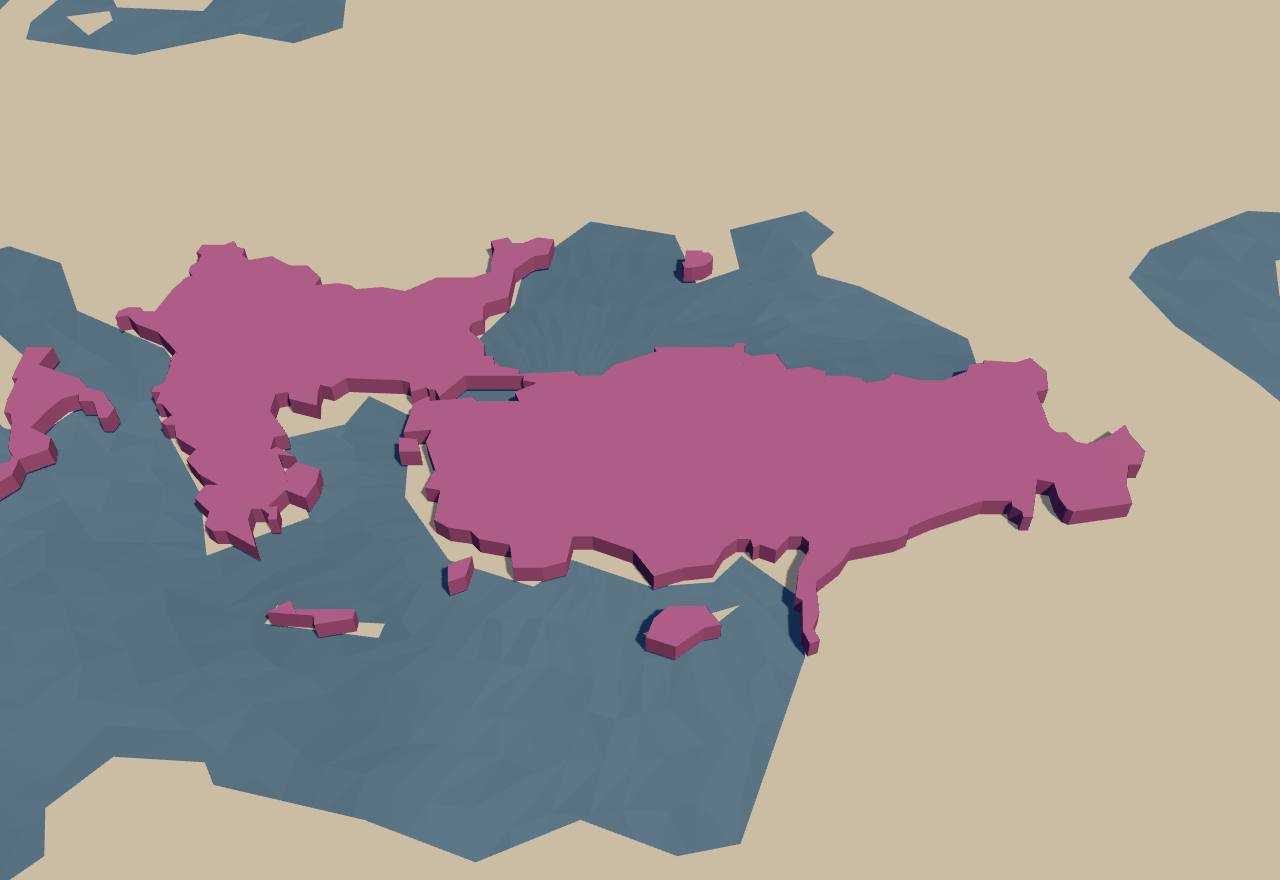
From Basil II's frontiers to 1204 (Cliopatria)
Territory: Cliopatria (CC BY 4.0), simplified. Height: Seshat population, log scale; darker, fixed-height slices are not coded.
1204 CE – 1261 CE
After 1204: successor states
In April 1204 the crusaders took Constantinople and elected one of their own as emperor. Byzantine princes set up rival courts at Nicaea, in Epirus and at Trebizond, each claiming to carry on the Roman empire; Nicaea won back the city in 1261.
As the city fell, Cheynet records, the people had already met in Hagia Sophia in January 1204 to consider who might be emperor (“an entirely subversive undertaking”), and on 12–13 April Constantine Laskaris “won the drawing of lots”, but took no insignia and fled for want of popular support (translations ours). 48 Consensus Texts
Niketas Choniates, who lived through the sack, laments “in the alleys, in the streets, in the temples, complaints, weeping, lamentations, grief”, and that “the violation of the Great Church” cannot be heard of “with equanimity”. 60 Consensus Texts
On the territory stages, the Cliopatria dataset dates all four states from 1206 and runs the Latin and Nicaean empires to 1278, after both had ended: the years sampled lie inside its slices, so the maps show its borders, not exact dates. 65,66 Consensus Texts
The Empire of Nicaea1204 CE – 1261 CENicaea
Theodore Laskaris rallied the notables of the region, had himself crowned by a patriarch elected in exile, and made Nicaea the court that kept the Roman title and the Orthodox patriarchate until Constantinople was retaken.
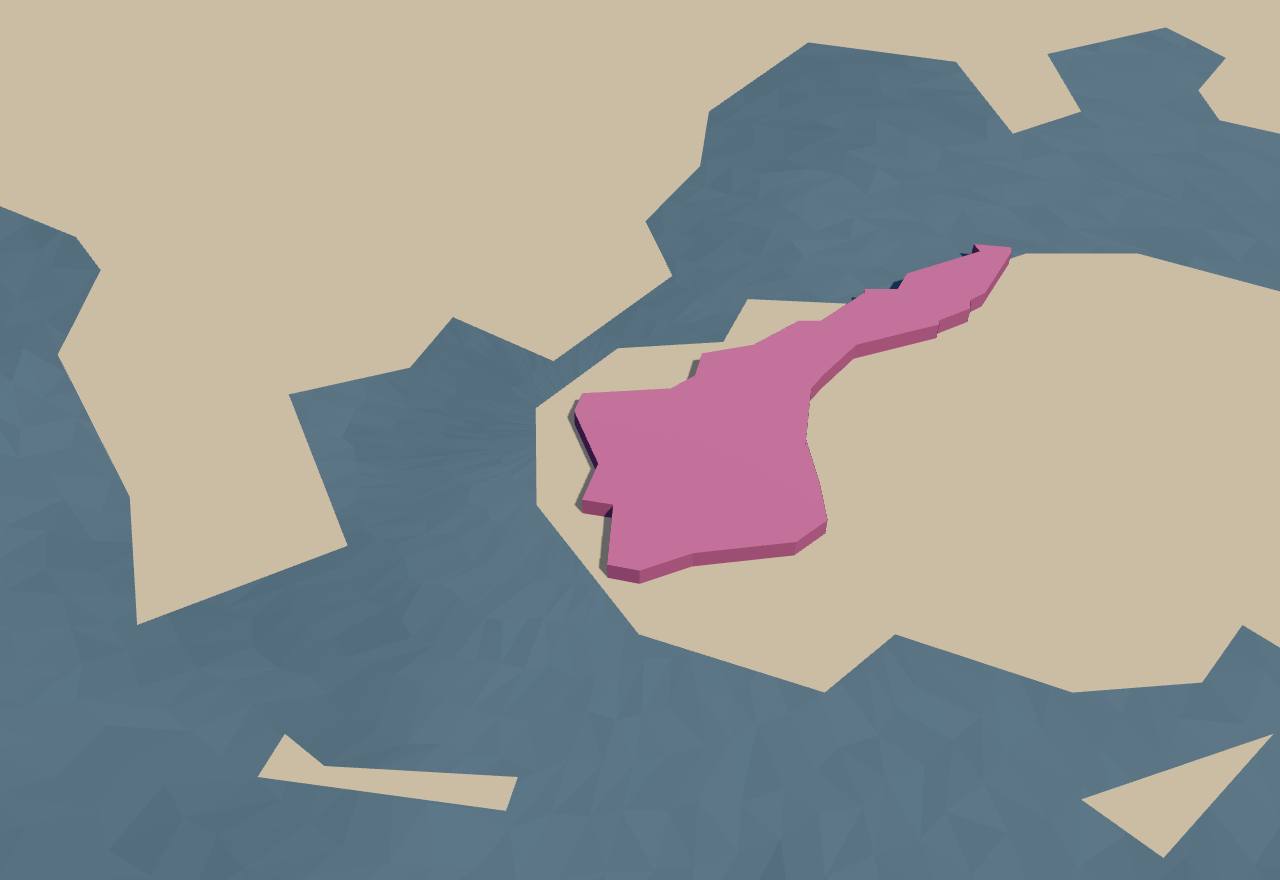
The Empire of Nicaea (Cliopatria)
Territory: Cliopatria (CC BY 4.0), simplified. Height fixed: population not coded in Seshat.
Theodore Laskaris, Cheynet writes, sought and won “after much effort” the support of the region's notables and was proclaimed emperor in the spring or summer of 1205; Finlay adds that Nicaea became the place where the most eminent of “the Greek aristocracy and clergy” assembled. 48,4 Consensus Texts
A new patriarch, Michael Autoreianos, was elected in exile and crowned Theodore. Finlay dates the coronation to 1206, though his own note dates a related papal letter to 1208, so the year is uncertain. Angold: an Orthodox patriarch at Nicaea “allowed them to pose as the guardians of orthodoxy”. 4,67 Debated Texts
Michael Angold argues that the Church, subservient under the Komnenoi, “took the lead in reconstructing Byzantine society” in exile, and that the emperors of Nicaea “laid claim to the authority of their Byzantine predecessors, pending the recovery of Constantinople”. 61,67 Consensus Texts
Finlay observes that “the constitution of the empire recognized no rule of succession which created a positive title to the crown”. In 1222 John Vatatzes, Theodore's son-in-law, “united the suffrages of the civil and military authorities as well as of the clergy” and was saluted emperor although Theodore had four brothers in the army. 4 Consensus Texts
Theodore II hurried the election of a patriarch on his accession in 1254; Arsenios, Finlay notes, was made “deacon, priest, and patriarch” in a single week, and then crowned him. 4 Consensus Texts
Nicaea ran its western conquests through appointed officials: in 1256 the historian George Akropolites was given powers in western Macedonia “to replace, as I wished, the tax collectors and administrators of fiscal affairs, commanders of armies”. 68 Consensus Texts
Milan Vukašinović reads the advice-to-princes texts written at Nicaea and in Epirus as “negotiations” within the Roman elites over the place the emperor should have. 69 Debated Texts
How power worked Emperor · Mixed · Territorial state · 1 unknown
How power worked
- Who rules
- Emperor Consensus
Why?
- How chosen
- Mixed Debated
Why?
- Limits on power
- Unknown
Why?
No source read describes a standing check on the Nicaean emperors; the patriarch's power to crown and to excommunicate was tested only under Michael VIII (next phase).
- Scale
- Territorial state Consensus
Why?
- Claim to rule
- Divine mandate Consensus
Why?
- Who has a say
- A narrow elite Consensus
Why?
The Despotate of Epirus1204 CE – 1261 CEArta
In the west, a branch of the Angeloi held Epirus from Arta and Ioannina. One of them took Thessalonica and was crowned emperor by the archbishop of Ohrid, a rival to Nicaea until his defeat in 1230.
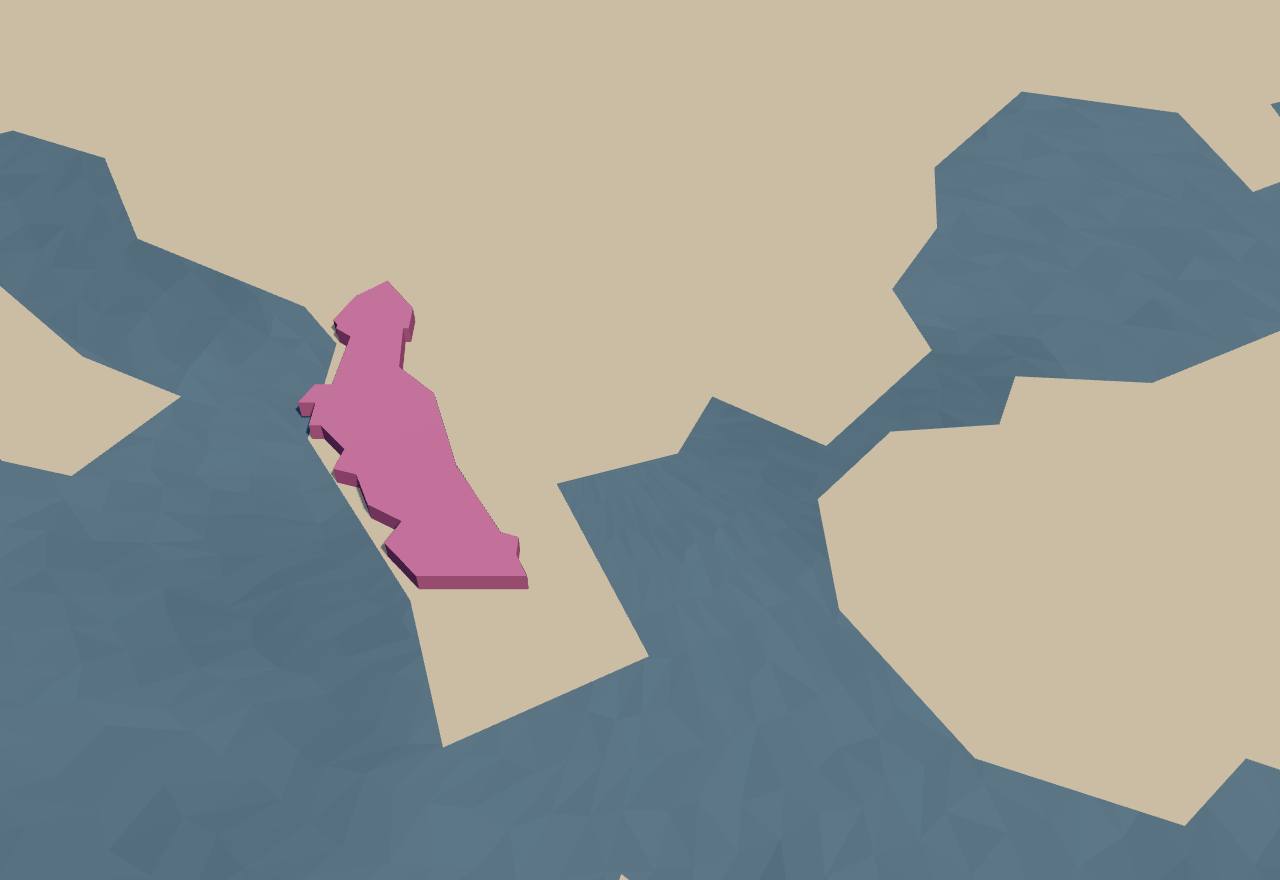
The Despotate of Epirus (Cliopatria)
Territory: Cliopatria (CC BY 4.0), simplified. Height fixed: population not coded in Seshat.
Michael, “a natural son of Constantine Angelos”, set up his authority at Ioannina or Arta (Finlay). Villehardouin has him go to “a city called Arthe”, take “to wife the daughter of a rich Greek” and seize the land. 70,59 Consensus Texts
Finlay judges that the government “was a continuation of the Byzantine forms”: the despotate “was merely a change in the name of the government”. 70 Debated Texts
Despot, Finlay explains, was a Byzantine honorary title, not borne by the family until a Greek emperor conferred it; Michael I acknowledged Theodore I Laskaris as the lawful emperor and was assassinated in 1214. 70 Consensus Texts
Michael's successor, Theodore Komnenos Doukas, took Thessalonica and was crowned emperor there by Demetrios Chomatenos, archbishop of Ohrid, who acted “like a patriarch” with the consent of bishops formally subject to the patriarch at Nicaea. Günter Prinzing dates the coronation to 1227; Finlay gives 1222. 71,70 Debated Texts
Leonela Fundić shows the Epirote court's imperial claim in its art and letters: the metropolitan of Naupaktos hoped to see Theodore “on the imperial throne of Constantinople”. 72 Consensus Texts
Theodore was defeated and captured by the Bulgarians in 1230 and blinded; by 1234 Nicaea had made John, then ruling at Thessalonica, lay aside the imperial title and accept the rank of despot, and “the short-lived empire of Thessalonica ceased to exist” (Finlay). 70 Consensus Texts
Lucien Stiernon explains the despotate's independence by geography: closed off to the east by the Pindus, Epirus was isolated from the central power, a situation that predisposed it to political autonomy. 73 Debated Texts
The despots kept fighting Nicaea: in 1257, Akropolites writes, the Albanians “had all gone over to the renegade despot Michael”. 68 Consensus Texts
How power worked Emperor · Conquest or coup · Territorial state · 1 unknown
How power worked
- Who rules
- Emperor Debated
Why?
- How chosen
- Conquest or coup Debated
Why?
- Limits on power
- Unknown
Why?
No source read describes a standing check on the rulers of Epirus; the bishops' consent to Theodore's coronation was a single act, not an institution.
- Scale
- Territorial state Consensus
Why?
- Claim to rule
- Divine mandate Debated
Why?
- Who has a say
- A narrow elite Debated
Why?
The Empire of Trebizond1204 CE – 1261 CETrebizond
On the Black Sea coast, two princes of the Komnenian family founded an empire at Trebizond with Georgian help. Its Grand Komnenoi outlived Constantinople by eight years.
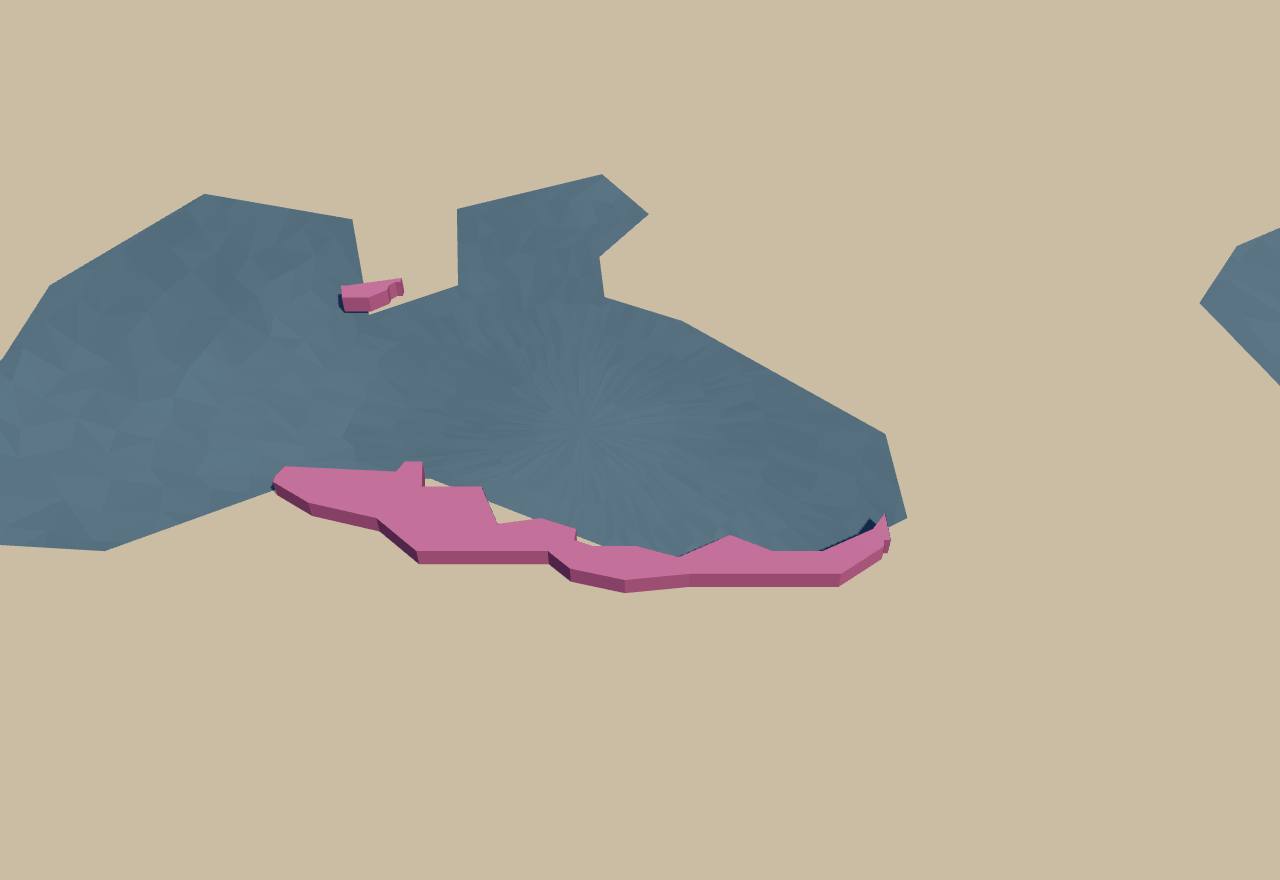
The Empire of Trebizond (Cliopatria)
Territory: Cliopatria (CC BY 4.0), simplified. Height fixed: population not coded in Seshat.
Alexios and David Komnenos escaped to Colchis, where their aunt Thamar “possessed wealth and influence”; Alexios entered Trebizond in April 1204, “proclaimed emperor by his army on crossing the frontier” (Finlay). Michel Kuršanskis notes that historians disagree whether the Georgians conquered part of the empire or only influenced it. 70,74 Debated Texts
To mark his descent from the Komnenoi, Alexios took the name Grand Komnenos; he was twenty-two when he was crowned emperor at Trebizond (Finlay). 70 Consensus Texts
Finlay finds that the coronation ceremony at Trebizond “remained … precisely the same as that of Constantinople”; after 1261 its emperors left the title Emperor of the Romans to Constantinople and called themselves Emperor “of all the East, Iberia and Perateia”. 70 Consensus Texts
Trebizond bought peace from its neighbours: its emperor became “a vassal of the Seljouk empire, by paying an annual tribute”, and in the end the Ottoman sultan fixed the tribute at “three thousand pieces of gold” (Finlay). 70 Consensus Texts
In Finlay's account of the later empire, “the principal nobles of the provinces assumed the rank of petty sovereigns”, and the Scholarioi, a privileged militia in the citadel, “possessed a constitution and a degree of power” of their own. 70 Debated Texts
Rustam Shukurov finds that Italians held “a more prestigious status in the Trapezuntine society” than the Muslim newcomers from the east. 75 Debated Texts
Trebizond outlasted Constantinople: Finlay places its surrender to Mehmed II late in 1461. Ioannis Smarnakis reads Bessarion's praise of the city as the image of a city-state. 70,76 Consensus Texts
How power worked Emperor · Heredity · Territorial state · 1 unknown
How power worked
- Who rules
- Emperor Consensus
Why?
- How chosen
- Heredity Debated
Why?
- Limits on power
- Unknown
Why?
No source read describes a check on the emperors of Trebizond; Finlay's picture of nobles acting as petty sovereigns comes from later centuries.
- Scale
- Territorial state Consensus
Why?
- Claim to rule
- Kinship and descent Debated
Why?
- Who has a say
- A narrow elite Debated
Why?
The Latin Empire1204 CE – 1261 CEConstantinople
In Constantinople the crusaders and Venice set up an emperor by election, divided the land as fiefs and put a Venetian in the patriarch's throne. The empire shrank until only the city was left.
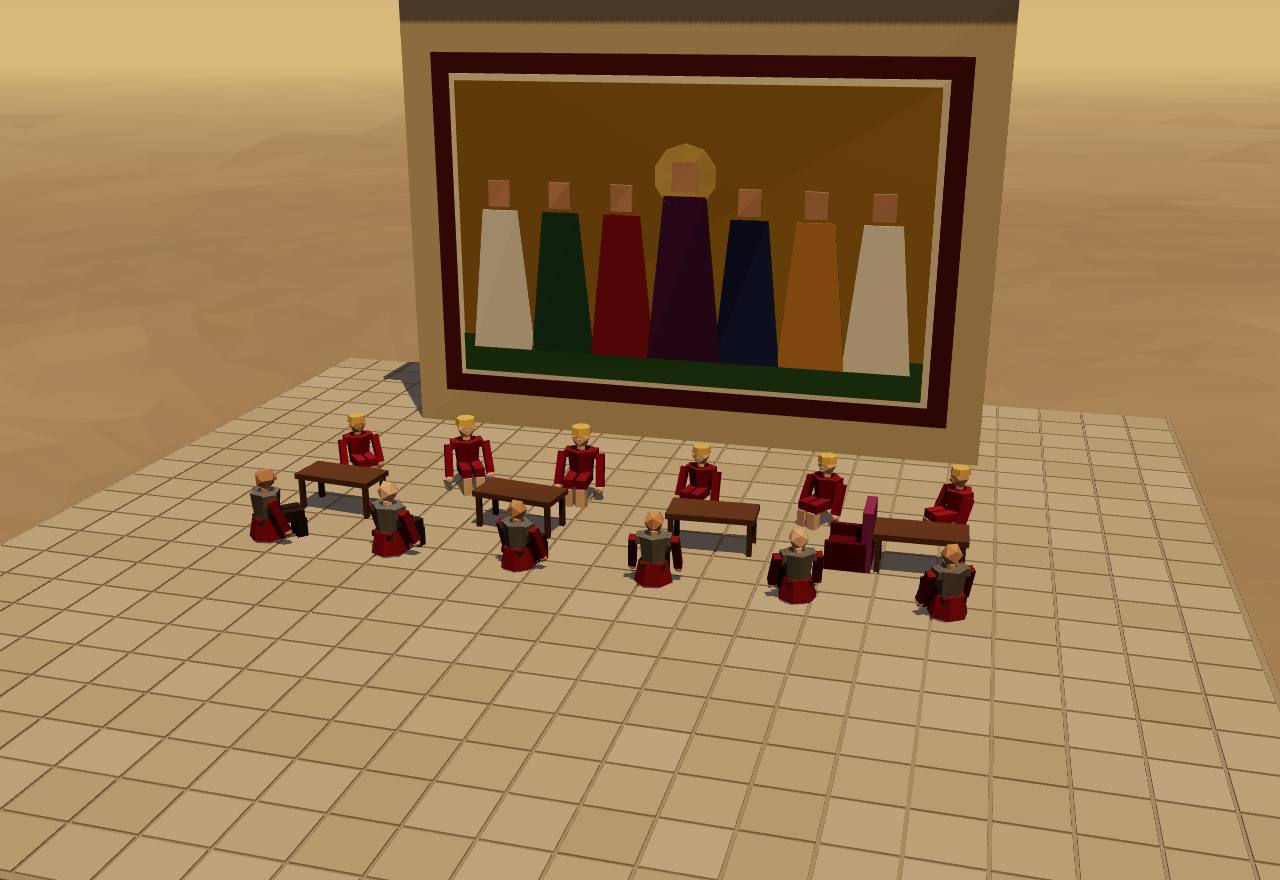
Twelve electors choose an emperor, 1204
Before the assault, in March 1204, Franks and Venetians agreed that “six men should be taken from among the Franks, and six from among the Venetians”, and that these twelve should swear on relics “to elect as emperor the man who … would rule with most profit to the land”. 59 Consensus Texts
The electors met in the palace where the doge of Venice lodged and named Count Baldwin of Flanders and Hainault; he was crowned in St Sophia on 16 May 1204. The other candidate, Boniface of Montferrat, took Salonika and did homage for it. 59 Consensus Texts
Filip Van Tricht describes the conquered lands as fiefs held of the Latin emperor, the greatest of them “largely autonomous regions”; the patriarchate went to the Venetian Thomas Morosini, replacing John X Kamateros. 77 Consensus Texts
At Adrianople in April 1205 Baldwin “was taken alive” by the Bulgarians and died in prison; his brother Henry, first regent, was crowned in St Sophia on 20 August 1206. 59 Consensus Texts
Van Tricht argues that at the local level “existing Byzantine administrative practices were continued to a large degree”, and that Byzantines served the Latin emperor: one Philokales received Lemnos and the title megas doux. 77 Debated Texts
Finlay notes that the empire “was considered elective; but feudal prejudices … stamped its government with an hereditary form”. 70 Debated Texts
Wars with its neighbours shrank the empire “until only the city of Constantinople was left in the hands of the Latin emperor” (Burkhardt); in 1261 a Nicaean force “surprised Constantinople, expelled Baldwin, and put an end to the Latin power” (Finlay). 78,70 Consensus Texts
How power worked Feudal monarch · Election · Council
How power worked
- Who rules
- Feudal monarch Consensus
Why?
- How chosen
- Election Consensus
Why?
- Limits on power
- Council Debated
Why?
- Scale
- Territorial state Debated
Why?
- Claim to rule
- Force Consensus
Why?
- Who has a say
- A narrow elite Consensus
Why?
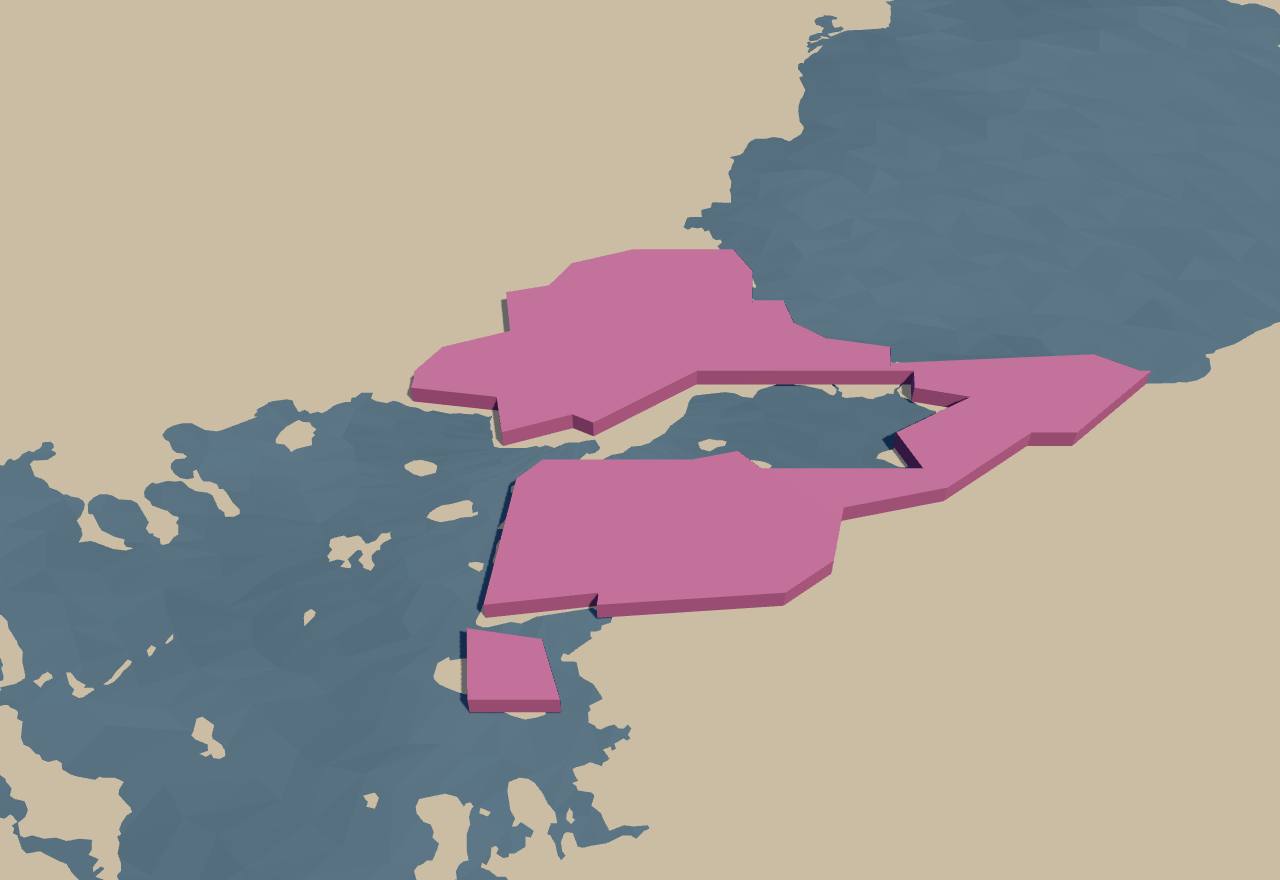
The Latin Empire (Cliopatria)
Territory: Cliopatria (CC BY 4.0), simplified. Height fixed: population not coded in Seshat.
1261 CE – 1453 CE
The Palaiologan empire
Michael VIII Palaiologos took back Constantinople in 1261 and founded the empire's last dynasty. With no fixed rule of succession, the family fought civil wars over the crown, bargained with the popes over Church union and became the Ottoman sultans' tributaries; on 29 May 1453 the city fell and its last emperor was killed.
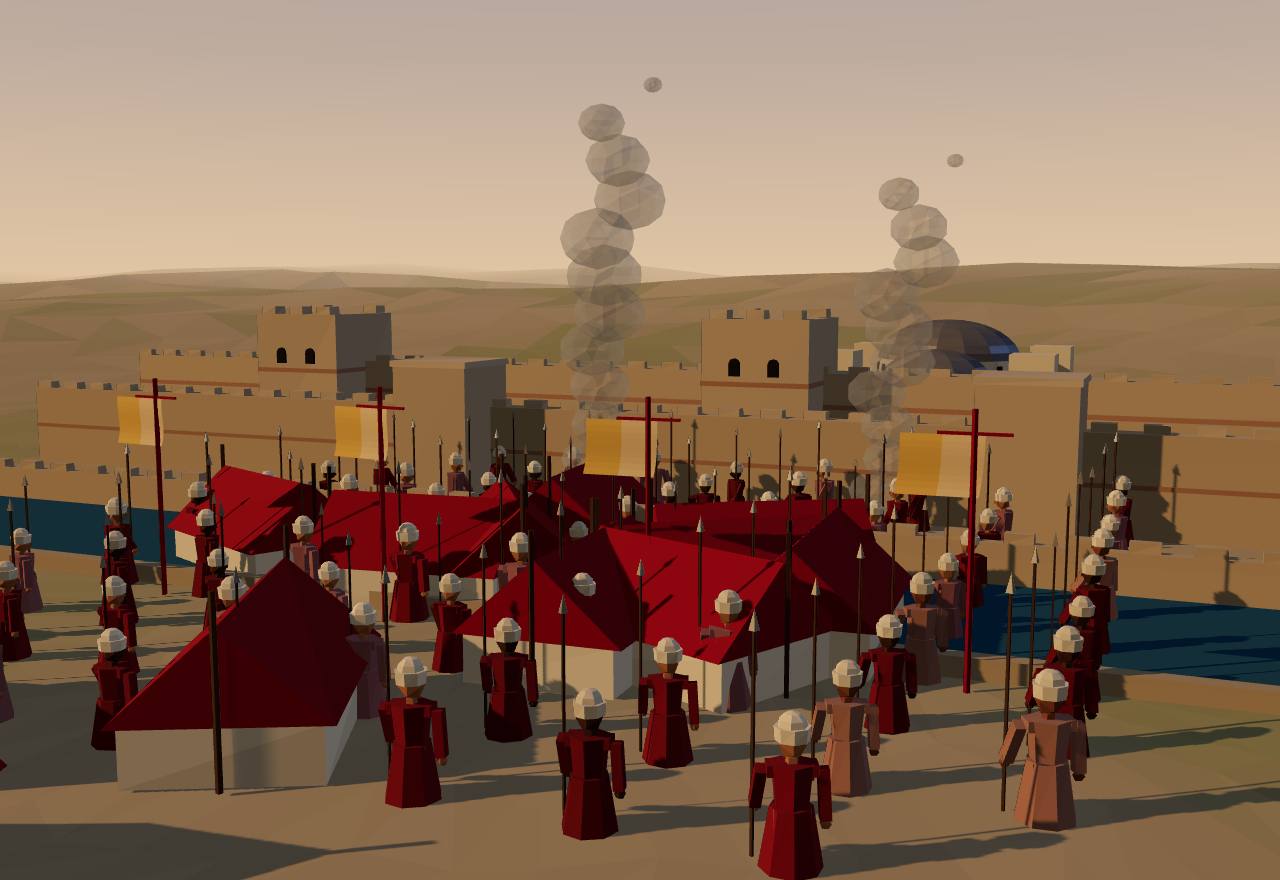
The walls in 1261 and 1453
In 1261 “a chosen body of soldiers” planted ladders where friends inside had promised no resistance, “and the Greek troops entered Constantinople without opposition” (Finlay). Michael VIII, proclaimed on 1 January 1259 as the boy John IV's colleague, had the patriarch crown him again in St Sophia “while the lawful emperor, John IV., was left forgotten”. 4 Consensus Texts
On Christmas Day 1261 Michael had John IV, not yet ten, blinded. The patriarch Arsenios answered “on his own authority” by barring Michael from all religious rites; Palaiologan historians, Maja Nikolić and Bojana Pavlović find, remembered Michael as “a usurper of the throne and rights of his minor predecessor”. 4,79 Consensus Texts
Finlay blames the civil wars on the constitution: “the absence of a strict rule of hereditary succession, and the contempt of the Greek nobles” made the crown a prize. Andronikos III fought his grandfather Andronikos II in 1321–1328 and took the city when soldiers scaled the walls in May 1328. 4 Debated Texts
When Andronikos III died in 1341, leaving John V aged nine, a regency “triumvirate” (the empress Anna of Savoy, the megas doux Alexios Apokaukos and the patriarch John Kalekas) fought John Kantakouzenos; he had himself crowned John VI in 1346 and had to abdicate in 1354. 80,81,4 Consensus Texts
In Thessalonica the revolt was led by the “political” Zealots, who backed John V and the regency (Zykova, translation ours); Finlay notes that the city “long refused to recognize Cantacuzenos as emperor”. 80,4 Consensus Texts
The empire became the Ottomans' client: in Wilhelm Baum's words, “Byzantium had become a client state of the Turks, and was obligated to pay tribute and to enter into military alliance”. Sultans backed rival Palaiologoi: Andronikos IV's coup of 1376 had Murad I's help, John VII's seizure of power in 1390 Bayezid's. 81,4 Consensus Texts
Twice the emperors accepted union with the Church of Rome: it was proclaimed at the Council of Lyon in 1274 and ratified again at Florence on 6 July 1439 (Finlay); later historians, Jacob Van Sickle notes, accused John VIII “of sacrificing the faith for temporal gain”. 4,82 Consensus Texts
Churchmen still tied the faith to the emperor. In 1395 the patriarch Anthony IV wrote to the grand prince of Moscow that “it is impossible for Christians to have a church and no empire”. 83 Consensus Texts
Constantine XI was crowned at Sparta in January 1449 and, Finlay writes, would not have the ceremony repeated in St Sophia, “lest it should give rise to disputes between the unionists and the orthodox”. 4 Consensus Texts
George Sphrantzes, the emperor's friend: “On Tuesday May 29, early in the day, the sultan took possession of our City; in this time of capture my late master and emperor, Lord Constantine, was killed.” He reckons that the Palaiologan dynasty ruled the city “for 194 years, ten months, and four days”. 84 Consensus Texts
The two Greek historians of the fall disagreed about Rome as much as the court had: Ioannis Smarnakis reads Doukas as a firm supporter of union and Sphrantzes as a moderate opponent, each with his own idea of what being Roman meant after 1453. 85 Debated Texts
How power worked Emperor · Heredity · None in practice
How power worked
- Who rules
- Emperor Consensus
Why?
- How chosen
- Heredity Debated
Why?
- Limits on power
- None in practice Debated
Why?
- Scale
- Territorial state Debated
Why?
- Claim to rule
- Divine mandate Consensus
Why?
- Who has a say
- A narrow elite Consensus
Why?
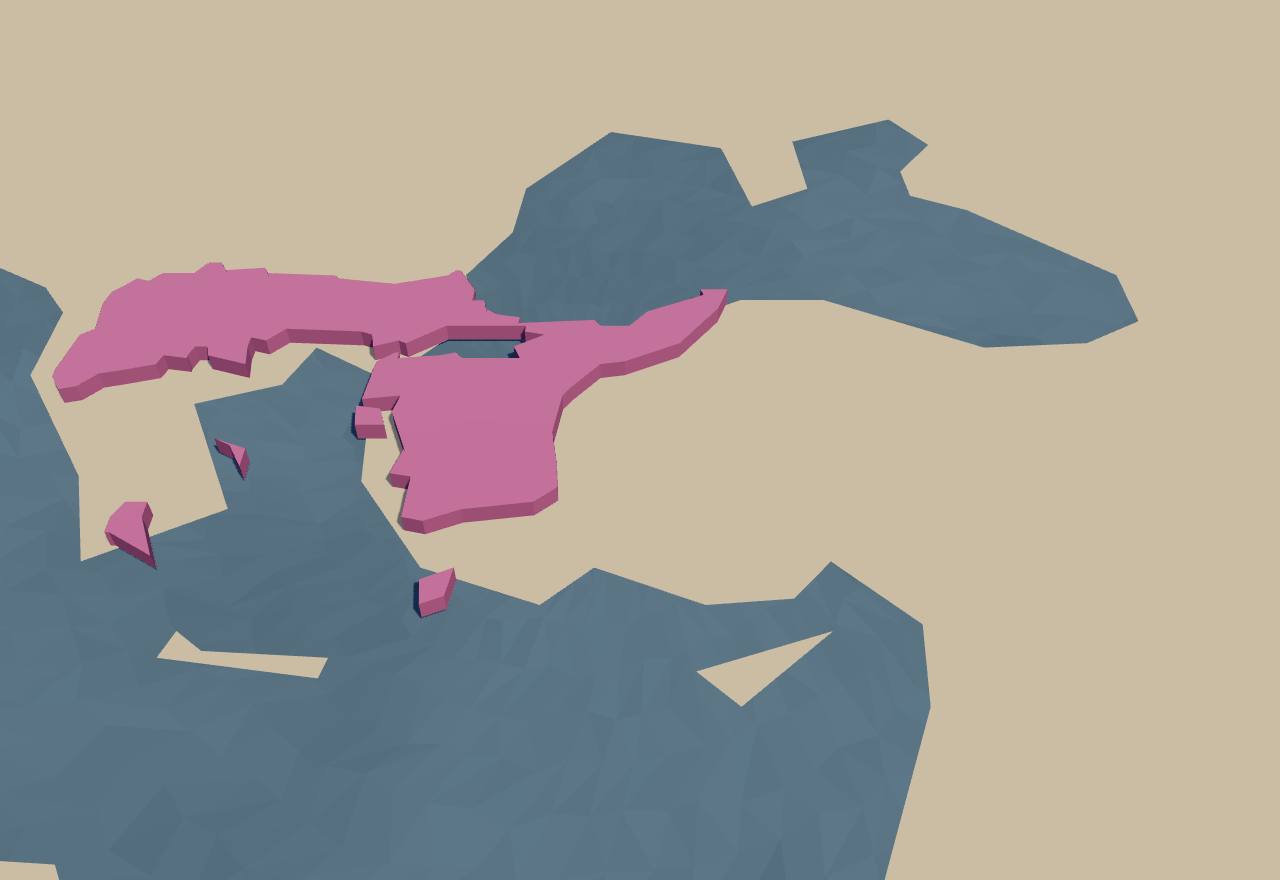
The last empire, 1280–1450 (Cliopatria)
Territory: Cliopatria (CC BY 4.0), simplified. Height fixed: population not coded in Seshat.
Artefacts
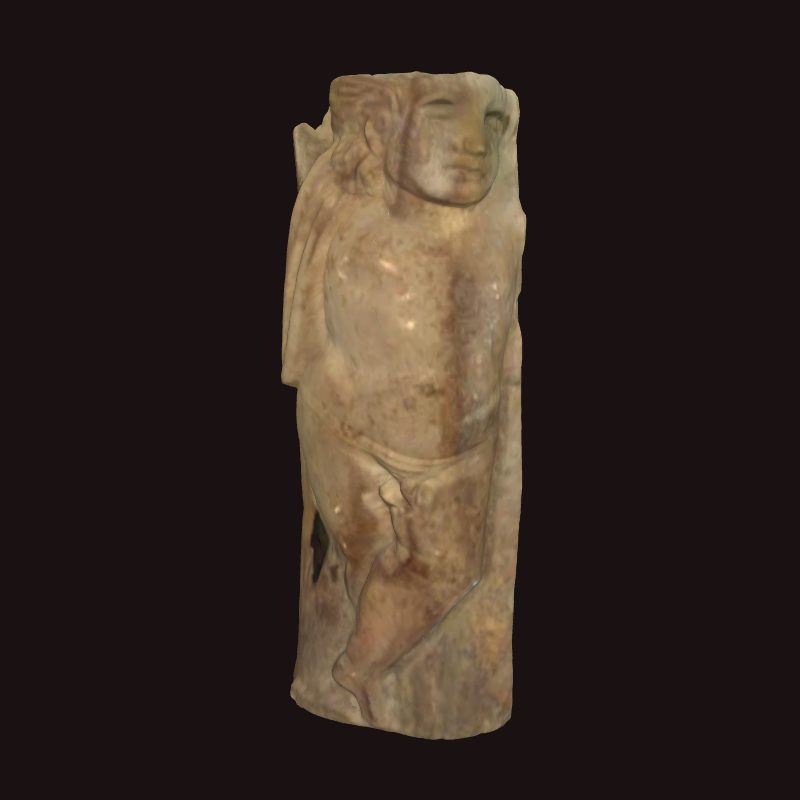
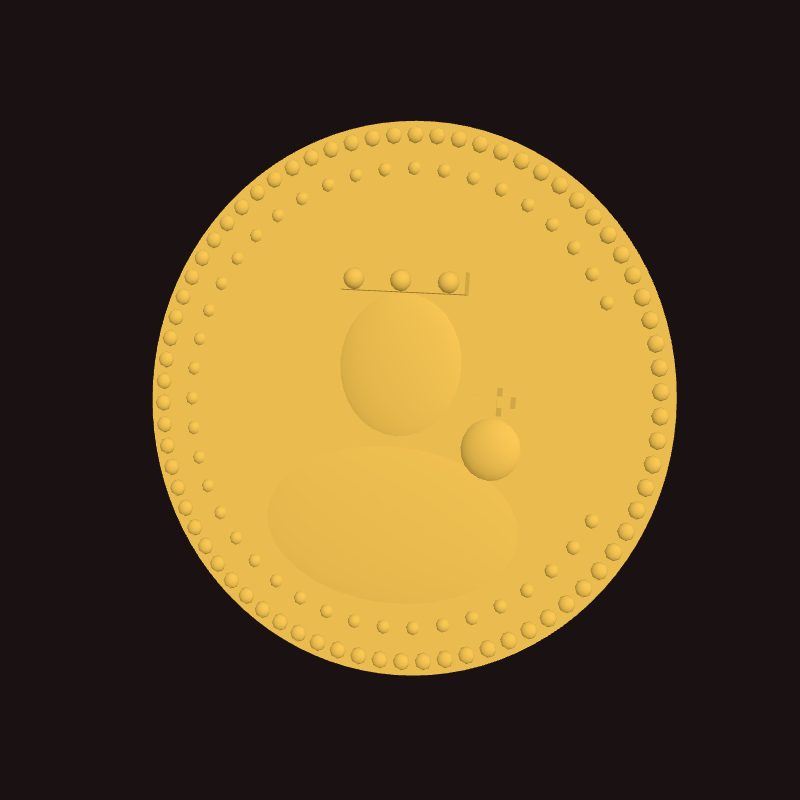 Model, not a scan
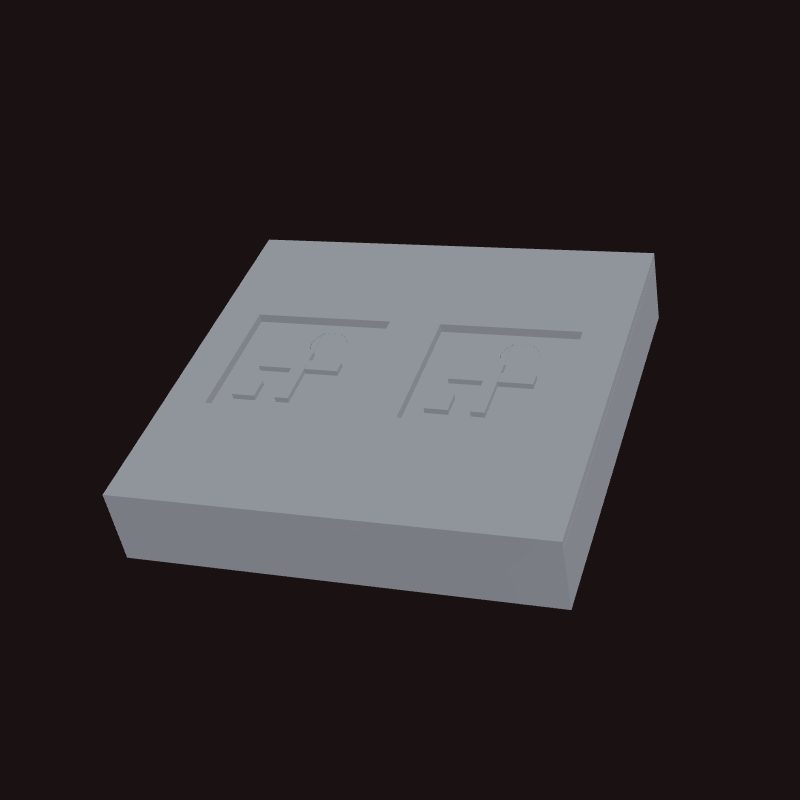 Model, not a scan
In numbers
Who made the emperor?
Data: De Imperatoribus Romanis, Cheynet 1996, Finlay 1877, as cited
66 accessions are shown and 11 more are counted but not drawn, because no source read for this page says how those emperors came to power. Of the 66, 17 reigns ended in deposition and 11 in a killing (28 in all). The line followed is Constantinople, then Nicaea (1205–1261), then Constantinople; the Latin emperors are a case of the 1204 phase. 10,48,4
- Born to it
- a son, brother or grandson of a ruler, or a crowned heir who succeeded him
- Colleague
- a colleague crowned by the reigning emperor who was not his son
- At court
- chosen in the capital by an empress, the officials, the nobles and bishops, or a conspiracy, or by marriage to an empress
- By the city
- made emperor by a rising or assembly of the people of the capital, with or without the Senate
- By soldiers
- proclaimed by an army or fleet, usually in revolt against a living emperor
- Foreign army
- installed by a foreign army or a foreign ruler's backing
66 accessions: 20 born to it, 4 colleague, 20 at court, 5 by the city, 13 by soldiers, 4 foreign army; median reign 7 years. Ended: 29 died in office, 17 deposed, 11 killed, 5 abdicated, 4 not known.
Marks at the end of a bar: ○ died in office · × killed · ▽ deposed · | abdicated · □ conquered
Show the table: Emperors at Constantinople and Nicaea, 491–1453
| Ruler | Years | Came to power | Reign ended | Source |
|---|---|---|---|---|
| Anastasius I | 491 CE – 518 CE | At court | died in office (“the choice of Ariadne”, Zeno's widow) | 10 |
| Justin I | 518 CE – 527 CE | At court | died in office (put forward by the high officials as the Hippodrome crowd grew impatient) | 11 |
| Justinian I | 527 CE – 565 CE | Colleague | died in office (his uncle's co-emperor four months before) | 12 |
| Justin II | 565 CE – 578 CE | At court | died in office (“stage-managed by an inside group of palace officials”) | 89 |
| Tiberius II | 578 CE – 582 CE | Colleague | died in office (made Caesar by Justin II) | 90 |
| Maurice | 582 CE – 602 CE | Colleague | killed (crowned Augustus by Tiberius; murdered by Phocas's men) | 90,91 |
| Phocas | 602 CE – 610 CE | By soldiers | killed (“The army mutinied”) | 17 |
| Heraclius | 610 CE – 641 CE | By soldiers | died in office (a fleet from Carthage) | 18 |
| Constantine III | 641 CE – 641 CE | Born to it | died in office (co-heir under his father's will) | 92 |
| Heraclonas | 641 CE – 641 CE | Born to it | deposed (deposed by the Senate) | 92 |
| Constans II | 641 CE – 668 CE | By the city | killed (crowned “because of public pressure”) | 93 |
| Constantine IV | 668 CE – 685 CE | Born to it | died in office | 94 |
| Justinian II | 685 CE – 695 CE | Born to it | deposed (nose slit, exiled to Cherson) | 95 |
| Leontius | 695 CE – 698 CE | At court | deposed (a general's coup with the Blue faction and the patriarch) | 96 |
| Tiberius III | 698 CE – 705 CE | By soldiers | deposed (proclaimed by naval officers) | 30 |
| Justinian II (again) | 705 CE – 711 CE | Foreign army | killed (returned with a Bulgar and Slav army) | 95 |
| Philippicus | 711 CE – 713 CE | By soldiers | deposed (acclaimed at Cherson; the fleet and army joined) | 97,95 |
| Anastasius II | 713 CE – 715 CE | At court | abdicated (the deposed emperor's first secretary) | 98 |
| Theodosius III | 715 CE – 717 CE | By soldiers | abdicated (raised by the Opsician troops) | 28 |
| Leo III | 717 CE – 741 CE | By soldiers | died in office (with the general of the Armeniakon) | 29,28 |
| Constantine V | 741 CE – 775 CE | Born to it | died in office | 99 |
| Leo IV | 775 CE – 780 CE | Born to it | died in office | 100 |
| Constantine VI | 780 CE – 797 CE | Born to it | deposed (blinded at his mother's order) | 36 |
| Irene | 797 CE – 802 CE | At court | deposed | 36 |
| Nicephorus I | 802 CE – 811 CE | At court | killed (set up by patricians, officials and officers of the tagmata; killed in battle) | 37 |
| Stauracius | 811 CE – 811 CE | Born to it | abdicated (forced into a monastery) | 101 |
| Nicephorus II Phocas | 963 CE – 969 CE | By soldiers | killed (“proclamé basileus par ses troupes”) | 48 |
| John I Tzimiskes | 969 CE – 976 CE | At court | died in office (a palace plot against his uncle) | 48 |
| Basil II | 976 CE – 1025 CE | Born to it | died in office (about twenty when he took up adult rule) | 41,48 |
| Constantine VIII | 1025 CE – 1028 CE | Born to it | died in office (Basil's brother and junior emperor) | 41,48 |
| Romanus III Argyros | 1028 CE – 1034 CE | At court | killed (named by the dying Constantine VIII; married Zoe) | 48 |
| Michael IV | 1034 CE – 1041 CE | At court | died in office (placed on the throne by Zoe) | 48 |
| Michael V | 1041 CE – 1042 CE | At court | deposed (Zoe's adopted son; blinded after the city rose) | 48,51 |
| Zoe and Theodora | 1042 CE – 1042 CE | By the city | not known (proclaimed jointly by the populace with senators; ended by Zoe's marriage) | 102,48 |
| Constantine IX Monomachos | 1042 CE – 1055 CE | At court | died in office (married Zoe) | 48 |
| Theodora | 1055 CE – 1056 CE | Born to it | died in office (last of the Macedonian house; her household forestalled the court) | 48 |
| Michael VI | 1056 CE – 1057 CE | At court | deposed (proposed to Theodora as her successor) | 48 |
| Isaac I Komnenos | 1057 CE – 1059 CE | By soldiers | abdicated (an army revolt decided by a party in the capital) | 48 |
| Constantine X Doukas | 1059 CE – 1067 CE | At court | died in office (proposed with Isaac's own consent) | 48 |
| Romanus IV Diogenes | 1068 CE – 1071 CE | At court | deposed (married the empress Eudokia) | 48 |
| Michael VII Doukas | 1071 CE – 1078 CE | At court | deposed (made sole emperor by the Caesar John Doukas's coup) | 48 |
| Nicephorus III Botaneiates | 1078 CE – 1081 CE | By soldiers | deposed (a provincial revolt; the capital decided) | 48,103 |
| Alexius I Komnenos | 1081 CE – 1118 CE | By soldiers | died in office | 48,47 |
| John II Komnenos | 1118 CE – 1143 CE | Born to it | died in office | 104,48 |
| Manuel I Komnenos | 1143 CE – 1180 CE | Born to it | died in office (chosen by his dying father over an elder brother) | 49 |
| Alexius II Komnenos | 1180 CE – 1183 CE | Born to it | killed | 58,48 |
| Andronicus I Komnenos | 1183 CE – 1185 CE | At court | killed (regent, then co-emperor; killed by the crowd) | 57,48 |
| Isaac II Angelos | 1185 CE – 1195 CE | By the city | deposed (“créé basileus par les Constantinopolitains”) | 48,57 |
| Alexius III Angelos | 1195 CE – 1203 CE | By soldiers | deposed (a coup inside the army's camp; fled in 1203) | 48 |
| Isaac II (restored) | 1203 CE – 1204 CE | By the city | not known (recalled by the Constantinopolitans) | 48 |
| Alexius IV Angelos | 1203 CE – 1204 CE | Foreign army | killed (brought by the crusader army) | 48 |
| Alexius V Doukas | 1204 CE – 1204 CE | At court | deposed (“le candidat de l'aristocratie de cour”; fled the city) | 48 |
| Theodore I Laskaris | 1205 CE – 1222 CE | By the city | died in office (proclaimed with the backing of the notables of Nicaea) | 48,4 |
| John III Vatatzes | 1222 CE – 1254 CE | At court | died in office (Theodore's son-in-law, chosen by the civil and military authorities and the clergy) | 4 |
| Theodore II Laskaris | 1254 CE – 1258 CE | Born to it | died in office (only son of John III) | 4 |
| John IV Laskaris | 1258 CE – 1261 CE | Born to it | deposed (a child; blinded by Michael VIII) | 4 |
| Michael VIII Palaiologos | 1259 CE – 1282 CE | At court | died in office (raised on a shield by bishops and nobles as John IV's colleague) | 4 |
| Andronicus II | 1282 CE – 1328 CE | Born to it | deposed (deposed by his grandson) | 4 |
| Andronicus III | 1328 CE – 1341 CE | By soldiers | died in office (soldiers scaled the walls proclaiming him) | 4 |
| John V | 1341 CE – 1391 CE | Born to it | died in office (a child of nine; twice deposed and restored) | 4,81 |
| John VI Kantakouzenos | 1347 CE – 1354 CE | By soldiers | abdicated (crowned in 1346 in a civil war) | 4,81 |
| Andronicus IV | 1376 CE | Foreign army | not known (a coup with Sultan Murad I; Finlay dates his usurpations 1375–76 and 1379–81) | 81,4 |
| John VII | 1390 CE | Foreign army | not known (seized the city with Bayezid's backing) | 81 |
| Manuel II | 1391 CE – 1425 CE | Colleague | died in office (co-emperor since 1373) | 81 |
| John VIII | 1425 CE – 1448 CE | Born to it | died in office (given the government by Manuel II in 1422) | 81,4 |
| Constantine XI | 1449 CE – 1453 CE | Born to it | killed (John VIII's brother, crowned at Sparta; killed when the city fell) | 4,84 |
| Phase | Shown | Born to it | Colleague | At court | By the city | By soldiers | Foreign army |
|---|---|---|---|---|---|---|---|
| After the West: Justinian's empire | 8 | – | 3 | 3 | – | 2 | – |
| Themes, icons and recovery | 21 | 9 | – | 5 | 1 | 5 | 1 |
| Crisis and the Komnenian family state | 22 | 5 | – | 9 | 3 | 4 | 1 |
| After 1204: successor states | 6 | 2 | – | 3 | 1 | – | – |
| The Palaiologan empire | 9 | 4 | 1 | – | – | 2 | 2 |
Counted, not drawn: Michael I (811), Leo V (813), Michael II (820), Theophilus (829), Michael III (842), Basil I (867), Leo VI (886), Alexander (912), Constantine VII (913), Romanus I (920), Romanus II (959).
- Marks, by Seshat polity:
- East Roman Empire
- Byzantine Empire I
- Byzantine Empire II
- Byzantine Empire III
- Background bands, by phase:
- After the West: Justinian's empire
- Themes, icons and recovery
- Crisis and the Komnenian family state
- After 1204: successor states
- The Palaiologan empire
| Seshat polity | Years | Value |
|---|---|---|
| East Roman Empire | 400 CE | 1,300,000 |
| East Roman Empire | 500 CE | 1,300,000–1,500,000 |
| East Roman Empire | 600 CE | 1,400,000–1,900,000 |
| Byzantine Empire I | 632 CE | 1,500,000–2,000,000 |
| Byzantine Empire I | 700 CE | 470,000–700,000 |
| Byzantine Empire I | 800 CE | 520,000–650,000 |
| Byzantine Empire II | 867 CE | 520,000 |
| Byzantine Empire II | 900 CE | 610,000 |
| Byzantine Empire II | 1000 CE | 810,000 |
| Byzantine Empire II | 1050 CE | 1,150,000 |
| Byzantine Empire III | 1050 CE | 1,115,000 |
| Byzantine Empire III | 1090 CE – 1150 CE | 400,000–750,000 |
| Byzantine Empire III | 1200 CE | 480,000–600,000 |
| Seshat polity | Years | Value |
|---|---|---|
| East Roman Empire | 400 CE | 15,000,000 |
| East Roman Empire | 500 CE | 20,000,000 |
| East Roman Empire | 600 CE | 15,000,000–12,500,000 |
| Byzantine Empire I | 630 CE | 11,000,000 |
| Byzantine Empire I | 700 CE | 4,500,000–7,000,000 |
| Byzantine Empire I | 800 CE | 5,000,000–8,000,000 |
| Byzantine Empire II | 900 CE | 7,500,000–8,500,000 |
| Byzantine Empire II | 1000 CE | 10,000,000–14,000,000 |
| Byzantine Empire III | 1100 CE | 5,000,000–6,000,000 |
| Byzantine Empire III | 1150 CE | 6,000,000 |
| Byzantine Empire III | 1150 CE | 10,000,000 |
| Byzantine Empire III | 1200 CE | 6,000,000 |
| Byzantine Empire III | 1200 CE | 7,300,000 |
| Byzantine Empire III | 1200 CE | 9,000,000 |
| Seshat polity | Years | Value |
|---|---|---|
| East Roman Empire | 400 CE | 300,000 |
| East Roman Empire | 500 CE | 500,000 |
| East Roman Empire | 600 CE | 250,000–150,000 |
| Byzantine Empire I | 630 CE | 150,000 |
| Byzantine Empire I | 700 CE | 80,000–125,000 |
| Byzantine Empire I | 800 CE | 100,000–350,000 |
| Byzantine Empire II | 867 CE | 100,000 |
| Byzantine Empire II | 900 CE | 300,000 |
| Byzantine Empire II | 900 CE | 100,000 |
| Byzantine Empire II | 1000 CE | 200,000 |
| Byzantine Empire II | 1000 CE | 300,000 |
| Byzantine Empire III | 1073 CE – 1204 CE (whole period) | 100,000–400,000 |
| Seshat polity | Years | Value |
|---|---|---|
| East Roman Empire | 395 CE – 631 CE (whole period) | 8 |
| Byzantine Empire I | 632 CE – 866 CE (whole period) | 8 |
| Byzantine Empire II | 867 CE – 1072 CE (whole period) | 8 |
| Byzantine Empire III | 1073 CE – 1204 CE (whole period) | 8 |
| Seshat polity | Years | Value |
|---|---|---|
| East Roman Empire | 395 CE – 631 CE (whole period) | 6 |
| Byzantine Empire I | 632 CE – 866 CE (whole period) | 6 |
| Byzantine Empire II | 867 CE – 1072 CE (whole period) | 6 |
| Byzantine Empire III | 1073 CE – 1204 CE (whole period) | 6 |
| Seshat polity | Years | Value |
|---|---|---|
| East Roman Empire | 395 CE – 631 CE (whole period) | 9 |
| Byzantine Empire I | 632 CE – 866 CE (whole period) | 8 |
| Byzantine Empire II | 867 CE – 1072 CE (whole period) | 8–9 |
| Byzantine Empire III | 1073 CE – 1204 CE (whole period) | 9 |
Values as Seshat codes them: bands are ranges, dots single values, flat bars values given for a whole period, hatching “unknown”; from one Seshat polity to the next, marks alternate between a light tone and a darker one with dashed joining lines (the key above names each polity). Source: Seshat Global History Databank (Equinox-2020), CC BY 4.0.
Governance fingerprint
Seshat's institutional variables, phase by phase. Hover or focus a cell for the values and years.
- Present
- Inferred present
- Absent
- Inferred absent
- Unknown
- Not coded in Seshat
- Mixed: present in one Seshat polity or period, absent in another
Not coded in Seshat: After 1204: successor states: The Empire of Nicaea, After 1204: successor states: The Despotate of Epirus, After 1204: successor states: The Empire of Trebizond, After 1204: successor states: The Latin Empire, The Palaiologan empire. The Seshat Databank has no polity for them, so their six axes rest on the cited scholarship alone.
The axes against Seshat
5 agree, 0 disagree.
Show the 5 pairs that agree
- Agree After the West: Justinian's empire: claim to rule coded “Divine mandate”, which implies rulers legitimated by gods present; Seshat has it present.
- Agree After the West: Justinian's empire: limits on power coded “Written law”, which implies formal legal code present; Seshat has it present.
- Agree Themes, icons and recovery: claim to rule coded “Divine mandate”, which implies rulers legitimated by gods present; Seshat has it present.
- Agree Themes, icons and recovery: limits on power coded “Written law”, which implies formal legal code present; Seshat has it present.
- Agree Crisis and the Komnenian family state: claim to rule coded “Divine mandate”, which implies rulers legitimated by gods present; Seshat has it present.
Only pairs where an axis value on its own implies a Seshat variable are compared; the rest is not counted as disagreement. 1 more pair has no Seshat value.
Source: Seshat Global History Databank (Equinox-2020), CC BY 4.0.
Compare
| Axis | Byzantium: the Roman empire in the East | Rome: The kings | The caliphates: The first four caliphs | Iran between Rome and Islam: The Arsacid (Parthian) empire |
|---|---|---|---|---|
| Who rules | Emperor | King | Caliph | King |
| How chosen | Mixed | Mixed | Mixed | Heredity |
| Limits on power | Written law | Council | Custom and kin | Council |
| Scale | Empire | City-state | Empire | Empire |
| Claim to rule | Divine mandate | Divine mandate | Divine mandate | Kinship and descent |
| Who has a say | A narrow elite | Unknown | A narrow elite | A narrow elite |
Legacy
Historians now write the empire's history as Roman history. Kaldellis's 2023 history asks how “the Roman state persuaded its subjects that it was working in their interests” and why its common identity, “both Roman and Christian”, kept fracturing, in the end over union with the Catholic West. 1 Consensus Texts
Cyril Toumanoff's 1946 study treats caesaropapism in Byzantium and Russia as one historical tendency, while granting that the Byzantine emperor, unlike the Russian ruler, “was never officially the head of the Church”. 62 Debated Texts
The Church outgrew the empire: by the fourteenth century, the Sourcebook's introduction to the patriarch's letter notes, it had “many more adherents outside the city state that the Empire had become, notably in the Slavic world”. 83 Consensus Texts
See also forms of government.
Sources
Bibliography
104 sources, numbered as cited: 25 papers · 48 books · 10 datasets · 13 primary sources · 8 popular syntheses
- Book Kaldellis, A. (2023). The New Roman Empire: A History of Byzantium. Oxford University Press. Abstract read in the Crossref record (the OUP page refused scripted reads).
- Book Bury, J. B. (1923). History of the Later Roman Empire, vol. II, chapter XV (part 2): the Nika revolt and St. Sophia. Macmillan; LacusCurtius transcription (public domain).
- Primary Leo III and Constantine V; tr. E. H. Freshfield (1926). A Manual of Roman Law: The Ecloga published by the Emperors Leo III and Constantine V of Isauria at Constantinople A.D. 726. Cambridge University Press; scan on the Internet History Sourcebooks site (Fordham).
- Book Finlay, G.; ed. H. F. Tozer (1877). A History of Greece, from its Conquest by the Romans to the Present Time, vol. 3: the Byzantine and Greek empires, 1057–1453. Oxford: Clarendon Press; Internet Archive (public domain). A nineteenth-century narrative: used for how the courts were run, with modern work where dates differ.
- Dataset Seshat: Global History Databank (2026). Seshat Databank API (seshat-db.com), social-complexity and general variables. Snapshot of the API responses taken 15 Nov 2026; the site states no licence. Used where Equinox-2020 has no polity for a page's period.
- Paper Roncaglia, A. (2018). Anthony Kaldellis, “The Byzantine Republic. People and Power in New Rome”. Storicamente 14 (review, in Italian).
- Paper Whittow, M. (2015). The Byzantine Republic. People and Power in New Rome – Bryn Mawr Classical Review. Bryn Mawr Classical Review 2015.10.11 (review of Kaldellis 2015).
- Primary Justinian I; tr. J. B. Moyle (1889). The Institutes of Justinian, translated into English (2nd ed.). Oxford: Clarendon Press; Internet Archive (public domain).
- Primary Procopius; tr. H. B. Dewing (1914). History of the Wars, I.24: the Nika insurrection. Loeb Classical Library; LacusCurtius (public domain).
- Book Elton, H. (1998). Anastasius I: De Imperatoribus Romanis, an online encyclopedia of Roman rulers. De Imperatoribus Romanis (DIR), read through the Internet Archive.
- Book Evans, J. A. (1998). Justin I: De Imperatoribus Romanis, an online encyclopedia of Roman rulers. De Imperatoribus Romanis (DIR), read through the Internet Archive.
- Book Evans, J. A. (1998). Justinian I: De Imperatoribus Romanis, an online encyclopedia of Roman rulers. De Imperatoribus Romanis (DIR), read through the Internet Archive.
- Paper Shlosser, F. (2004). Emperor and Priest. The Imperial Office in Byzantium. Translated by Jean Birrell – Bryn Mawr Classical Review. Bryn Mawr Classical Review 2004.09.11 (review of Dagron, Emperor and Priest). Read in full; the page's only reading of Dagron's book, which has no DOI.
- Book Bury, J. B. (1923). History of the Later Roman Empire, vol. II, chapter XXIII: the legislative work. Macmillan; LacusCurtius transcription (public domain).
- Primary Procopius; tr. H. B. Dewing (1940). The Buildings, I.1: the church of Sophia. Loeb Classical Library; LacusCurtius (public domain: the copyright was not renewed).
- Book Bury, J. B. (1923). History of the Later Roman Empire, vol. II, chapter XV (part 3): the great pestilence. Macmillan; LacusCurtius transcription (public domain).
- Book Crow, K. H. (2002). Phocas: De Imperatoribus Romanis, an online encyclopedia of Roman rulers. De Imperatoribus Romanis (DIR), read through the Internet Archive.
- Book Moore, R. S. (1997). Heraclius: De Imperatoribus Romanis, an online encyclopedia of Roman rulers. De Imperatoribus Romanis (DIR), read through the Internet Archive.
- Book Bury, J. B. (1889). A history of the later Roman Empire from Arcadius to Irene, 395 A.D. to 800 A.D., vol. 2. London: Macmillan; Internet Archive (public domain).
- Book Bury, J. B. (1923). History of the Later Roman Empire, vol. I, chapter I: The Empire and its Constitution. Macmillan; LacusCurtius transcription (public domain).
- Book Kaldellis, A. (2015). The Byzantine Republic. Harvard University Press. Not read (publisher pages behind a challenge); the page describes it only through whittow2015 and roncaglia2018.
- Paper Wilskman, J. (2016). Review: Leslie Brubaker - John Haldon: Byzantium in the Iconoclast Era c. 680–850: A History. Cambridge University Press, Cambridge 2011.. Arctos – Acta Philologica Fennica 50: 240–242 (Crossref: issued 2017). Read in full; the page's reading of Brubaker and Haldon 2011, which has no DOI.
- Paper Haldon, J. (2016). A context for two “evil deeds”: Nikephoros I and the origins of the themata. Le saint, le moine et le paysan (Byzantina Sorbonensia 29), Éditions de la Sorbonne.
- Book Haldon, J. F. (1990). Byzantium in the Seventh Century. Cambridge University Press. Publisher's description and chapter first pages read on Cambridge Core.
- Paper Haldon, J. (2017). More Questions about the Origins of the Imperial Opsikion. Prosopon Rhomaikon (Millennium-Studien), De Gruyter; open access (CC BY-NC-ND 4.0).
- Paper Ivison, E. A. (2007). Amorium in the Byzantine Dark Ages (seventh to ninth centuries). Post-Roman Towns, Trade and Settlement in Europe and Byzantium, vol. 2, De Gruyter; open access.
- Paper Ragia, E. (2009). The Geography of the Provincial Administration of the Byzantine Empire (ca 600-1200): I.1. The Apothekai of Asia Minor (7th-8th c.). Byzantina Symmeikta 19: 195–245 (Crossref: issued 2010).
- Book Neil, B. (2000). Theodosius III: De Imperatoribus Romanis, an online encyclopedia of Roman rulers. De Imperatoribus Romanis (DIR), read through the Internet Archive.
- Book Neil, B. (2000). Leo III: De Imperatoribus Romanis, an online encyclopedia of Roman rulers. De Imperatoribus Romanis (DIR), read through the Internet Archive.
- Book Moore, R. S. (1999). Tiberius III: De Imperatoribus Romanis, an online encyclopedia of Roman rulers. De Imperatoribus Romanis (DIR), read through the Internet Archive.
- Popular Dumbarton Oaks (2013). Leo III (717–741): God's Regents on Earth, a thousand years of Byzantine imperial seals. Dumbarton Oaks Research Library and Collection, online exhibit.
- Popular Dumbarton Oaks (2013). Constantine V (741–775): God's Regents on Earth, a thousand years of Byzantine imperial seals. Dumbarton Oaks Research Library and Collection, online exhibit.
- Popular Dumbarton Oaks (2013). Eirene (797–802): God's Regents on Earth, a thousand years of Byzantine imperial seals. Dumbarton Oaks Research Library and Collection, online exhibit.
- Popular Dumbarton Oaks (2013). Leo V (813–820): God's Regents on Earth, a thousand years of Byzantine imperial seals. Dumbarton Oaks Research Library and Collection, online exhibit.
- Popular Dumbarton Oaks (2013). Michael III (856–867): God's Regents on Earth, a thousand years of Byzantine imperial seals. Dumbarton Oaks Research Library and Collection, online exhibit.
- Book Garland, L. (2002). Irene and Constantine VI: De Imperatoribus Romanis, an online encyclopedia of Roman rulers. De Imperatoribus Romanis (DIR), read through the Internet Archive.
- Book Marsh, M. (2012). Nicephorus I: De Imperatoribus Romanis, an online encyclopedia of Roman rulers. De Imperatoribus Romanis (DIR), read through the Internet Archive.
- Popular Dumbarton Oaks (2013). Basil I (867–886): God's Regents on Earth, a thousand years of Byzantine imperial seals. Dumbarton Oaks Research Library and Collection, online exhibit.
- Popular Dumbarton Oaks (2013). Leo VI (886–912): God's Regents on Earth, a thousand years of Byzantine imperial seals. Dumbarton Oaks Research Library and Collection, online exhibit.
- Primary Leo VI; tr. S. P. Scott (1932). The New Constitutions of the Emperor Leo: Novel 47. S. P. Scott, The Civil Law XVII (1932); Droit romain, Université Grenoble Alpes.
- Book Holmes, C. (2003). Basil II: De Imperatoribus Romanis, an online encyclopedia of Roman rulers. De Imperatoribus Romanis (DIR), read through the Internet Archive.
- Popular Dumbarton Oaks (2013). Basil II (976–1025): God's Regents on Earth, a thousand years of Byzantine imperial seals. Dumbarton Oaks Research Library and Collection, online exhibit.
- Dataset Pleiades (Ancient World Mapping Center and Institute for the Study of the Ancient World) (2026). Constantinopolis (Pleiades place 520998). Pleiades gazetteer of ancient places, CC BY 3.0.
- Dataset Pleiades (Ancient World Mapping Center and Institute for the Study of the Ancient World) (2026). Helikore/Nicaea (Pleiades place 511268). Pleiades gazetteer of ancient places, CC BY 3.0.
- Dataset Pleiades (Ancient World Mapping Center and Institute for the Study of the Ancient World) (2026). Amorion (Pleiades place 609302). Pleiades gazetteer of ancient places, CC BY 3.0.
- Dataset Pleiades (Ancient World Mapping Center and Institute for the Study of the Ancient World) (2026). Sillyon (Pleiades place 639109). Pleiades gazetteer of ancient places, CC BY 3.0.
- Primary Anna Comnena; tr. E. A. S. Dawes (1928). The Alexiad. Internet History Sourcebooks, Fordham University (1928 translation).
- Book Cheynet, J.-C. (1996). Pouvoir et contestations à Byzance (963-1210). Éditions de la Sorbonne; OpenEdition Books (open, in French). Read on OpenEdition: the catalogue of revolts (fiches 1–223, books.openedition.org/psorbonne/3844), parts II–III and the conclusion (/3865).
- Book Stone, A. (2003). Manuel I Comnenus: De Imperatoribus Romanis, an online encyclopedia of Roman rulers. De Imperatoribus Romanis (DIR), read through the Internet Archive.
- Paper Madden, T. F. (2002). The chrysobull of Alexius I Comnenus to the Venetians: the date and the debate. Journal of Medieval History 28(1): 23–41.
- Primary Michael Psellus; tr. E. R. A. Sewter (1953). Chronographia, book 5 (Michael V). Internet History Sourcebooks, Fordham University (Yale 1953 translation; copyright not renewed).
- Primary Michael Psellus; tr. E. R. A. Sewter (1953). Chronographia, book 7 (Romanus IV). Internet History Sourcebooks, Fordham University (Yale 1953 translation; copyright not renewed).
- Book Theotokis, G. (2024). The Campaign and Battle of Manzikert, 1071. Amsterdam University Press.
- Book Magdalino, P. (1993). The Comnenian system. The Empire of Manuel I Komnenos, 1143–1180 (CUP), pp. 180–227. Chapter summary read on Cambridge Core.
- Book Angold, M. (1995). Alexius I Comnenus and the church. Church and Society in Byzantium under the Comneni (CUP), pp. 45–72.
- Paper Jacoby, D. (2002). The chrysobull of Alexius I Comnenus to the Venetians: the date and the debate. Journal of Medieval History 28(2): 199–204.
- Book Stone, A. (2004). Andronicus I Comnenus: De Imperatoribus Romanis, an online encyclopedia of Roman rulers. De Imperatoribus Romanis (DIR), read through the Internet Archive.
- Book Stone, A. (2004). Alexius II Comnenus: De Imperatoribus Romanis, an online encyclopedia of Roman rulers. De Imperatoribus Romanis (DIR), read through the Internet Archive.
- Primary Geoffrey de Villehardouin; tr. F. T. Marzials (1908). Memoirs or Chronicle of the Fourth Crusade and the Conquest of Constantinople. Project Gutenberg eBook 6032 (public domain).
- Primary Nicetas Choniates; tr. D. C. Munro (1912). The Sack of Constantinople (1204). Internet History Sourcebooks, Fordham University (Translations and Reprints 3:1, 1912).
- Book Angold, M. (1995). Church and Society in Byzantium under the Comneni, 1081–1261. Cambridge University Press.
- Paper Toumanoff, C. (1946). Caesaropapism in Byzantium and Russia. Theological Studies 7(2): 213–243. Read in full (journal PDF, OCR).
- Book Angold, M. (1995). Church and politics under Manuel I Comnenus. Church and Society in Byzantium under the Comneni (CUP), pp. 73–115.
- Paper Geanakoplos, D. J. (1965). Church and State in the Byzantine Empire: A Reconsideration of The Problem of Caesaropapism. Church History 34(4): 381–403. Only the first-page extract and the notes were readable; the conclusion was not.
- Dataset Seshat Global History Databank (2025). Cliopatria: a geospatial database of political entities (release v0.2.1). GitHub; CC BY 4.0 (the page reads its slices with scripts/history/cliopatria.ts).
- Dataset Bennett, J. S., Mutch, E., Tollefson, A., et al. (2025). Cliopatria - A geospatial database of world-wide political entities from 3400BCE to 2024CE. Scientific Data 12. Cliopatria: open geospatial dataset of over 1600 political entities, 3400 BCE–2024 CE.
- Book Angold, M. (1995). Imperial authority and the orthodox church. Church and Society in Byzantium under the Comneni (CUP), pp. 530–563.
- Primary George Akropolites; tr. R. Macrides (2007). George Akropolites, Warfare in 13th century Byzantium. De Re Militari (excerpt of the OUP 2007 translation, by permission).
- Paper Vukašinović, M. (2015). A cracked mirror? - forming the ideal ruler in Epirus and Nicaea in the first half of the 13th century. Zbornik radova Vizantoloskog instituta 52: 313–329.
- Book Finlay, G.; ed. H. F. Tozer (1877). A History of Greece, from its Conquest by the Romans to the Present Time, vol. 4: mediaeval Greece and the empire of Trebizond. Oxford: Clarendon Press; Internet Archive (public domain). A nineteenth-century narrative: used for how the courts were run, with modern work where dates differ.
- Paper Prinzing, G. (2004). A quasi patriarch in the state of Epirus: The autocephalous archbishop of "Boulgaria" (Ohrid) Demetrios Chomatenos. Zbornik radova Vizantoloskog instituta 41: 165–182.
- Paper Fundić, L. (2014). Art and Political Ideology in the State of Epiros during the Reign of Theodore Doukas (r. 1215-1230). Byzantina Symmeikta 23: 217–250.
- Paper Stiernon, L. (1959). Les origines du despotat d'Épire. À propos d'un livre récent. Revue des études byzantines 17 (Persée; first page read).
- Paper Kuršanskis, M. (1977). L'Empire de Trébizonde et la Géorgie. Revue des études byzantines 35: 237–256 (Persée; first page read).
- Paper Shukurov, R. (2012). Foreigners in the Empire of Trebizond (the Case of Orientals and Italians). Varia Anatolica 25: 71–84.
- Paper Smarnakis, I. (2023). Constructing the image of a city-state 'at the mid-point of Asia'. Bessarion's encomium on Trebizond. Byzantina Symmeikta.
- Paper Van Tricht, F. (2022). Being byzantine in the post-1204 empire of constantinople: continuity and change (politics, government, church and religion). Istorijski časopis 71: 65–119.
- Paper Burkhardt, S. (2016). Latin Empire (Constantinople). The Encyclopedia of Empire (Wiley).
- Paper Nikolić, M.; Pavlović, B. (2017). The image of Michael VIII in the historical works of the Palaiologan period. Zbornik radova Vizantoloskog instituta 54: 143–181.
- Paper Zykova, A. V. (2023). The Tools of the Struggle for Power of the Constantinople Triumvirate and John Kantakouzenos in the Civil War of 1341–1347. Vestnik Volgogradskogo gosudarstvennogo universiteta, ser. 4, 28(6): 310–319 (in Russian).
- Book Baum, W.; tr. E. N. Lane (2002). Manuel II Palaeologus: De Imperatoribus Romanis, an online encyclopedia of Roman rulers. De Imperatoribus Romanis (DIR), read through the Internet Archive.
- Paper Van Sickle, J. N. (2017). Re-evaluating the Role of Emperor John VIII in the Failed Union of Florence. Journal of Ecclesiastical History 68: 40–58.
- Primary Patriarch Anthony IV; tr. D. J. Geanakoplos (1395). Patriarch Anthony: Defending the Emperor, 1395 (letter to Vasily I, grand prince of Moscow). Internet History Sourcebooks, Fordham University (extract).
- Primary George Sphrantzes; tr. M. Philippides (1980). The Siege of Constantinople in 1453, according to George Sphrantzes. De Re Militari (University of Massachusetts Press 1980 translation, by permission).
- Paper Smarnakis, I. (2016). Rethinking Roman Identity after the Fall (1453): Perceptions of ‘Romanitas’ by Doukas and Sphrantzes. Byzantina Symmeikta 25.
- Dataset The Hunt Museum (2026). Bone Plaque (HCM 106), 3D model. Zenodo; licence CC BY 4.0 (read on the record 16 Nov 2026).
- Dataset Cleveland Museum of Art (2026). Solidus of Justinian I (1968.55). Cleveland Museum of Art Open Access (record CC0).
- Dataset The Metropolitan Museum of Art (2026). Lead Ingot with Monograms (2002.212). The Met Collection (Open Access, public domain).
- Book Evans, J. A. (1999). Justin II: De Imperatoribus Romanis, an online encyclopedia of Roman rulers. De Imperatoribus Romanis (DIR), read through the Internet Archive.
- Book Moore, R. S. (2002). Tiberius II Constantine: De Imperatoribus Romanis, an online encyclopedia of Roman rulers. De Imperatoribus Romanis (DIR), read through the Internet Archive.
- Book Baum, W. (2001). Maurice: De Imperatoribus Romanis, an online encyclopedia of Roman rulers. De Imperatoribus Romanis (DIR), read through the Internet Archive.
- Book Moore, R. S. (1996). Constantine III and Heraclonas: De Imperatoribus Romanis, an online encyclopedia of Roman rulers. De Imperatoribus Romanis (DIR), read through the Internet Archive.
- Book Moore, R. S. (1997). Constans II: De Imperatoribus Romanis, an online encyclopedia of Roman rulers. De Imperatoribus Romanis (DIR), read through the Internet Archive.
- Book Moore, R. S. (1997). Constantine IV: De Imperatoribus Romanis, an online encyclopedia of Roman rulers. De Imperatoribus Romanis (DIR), read through the Internet Archive.
- Book Moore, R. S. (1998). Justinian II: De Imperatoribus Romanis, an online encyclopedia of Roman rulers. De Imperatoribus Romanis (DIR), read through the Internet Archive.
- Book Moore, R. S. (1999). Leontius: De Imperatoribus Romanis, an online encyclopedia of Roman rulers. De Imperatoribus Romanis (DIR), read through the Internet Archive.
- Book Neil, B. (2000). Philippicus Bardanes: De Imperatoribus Romanis, an online encyclopedia of Roman rulers. De Imperatoribus Romanis (DIR), read through the Internet Archive.
- Book Neil, B. (2000). Anastasius II: De Imperatoribus Romanis, an online encyclopedia of Roman rulers. De Imperatoribus Romanis (DIR), read through the Internet Archive.
- Book Tougher, S. (2004). Constantine V: De Imperatoribus Romanis, an online encyclopedia of Roman rulers. De Imperatoribus Romanis (DIR), read through the Internet Archive.
- Book Garland, L. (2002). Leo IV: De Imperatoribus Romanis, an online encyclopedia of Roman rulers. De Imperatoribus Romanis (DIR), read through the Internet Archive.
- Book Marsh, M. (2013). Stauracius: De Imperatoribus Romanis, an online encyclopedia of Roman rulers. De Imperatoribus Romanis (DIR), read through the Internet Archive.
- Book Garland, L. (2006). Zoe Porphyrogenita: De Imperatoribus Romanis, an online encyclopedia of Roman rulers. De Imperatoribus Romanis (DIR), read through the Internet Archive.
- Book Maynard, D. R. F. (2021). Nicephorus III Botaniates: De Imperatoribus Romanis, an online encyclopedia of Roman rulers. De Imperatoribus Romanis (DIR), read through the Internet Archive.
- Book Stone, A. (2003). John II Comnenus: De Imperatoribus Romanis, an online encyclopedia of Roman rulers. De Imperatoribus Romanis (DIR), read through the Internet Archive.
Quantitative values from the Seshat Global History Databank (Equinox-2020), licensed CC BY 4.0. Dataset: Seshat Equinox Packaged Data (v.1). See also Seshat: The Global History Databank (Turchin et al. 2015).