Arsacid and Sasanian kings of kings, between Rome and the caliphs
Iran between Rome and Islam: Parthians and Sasanians
330 BCE – 651 CE
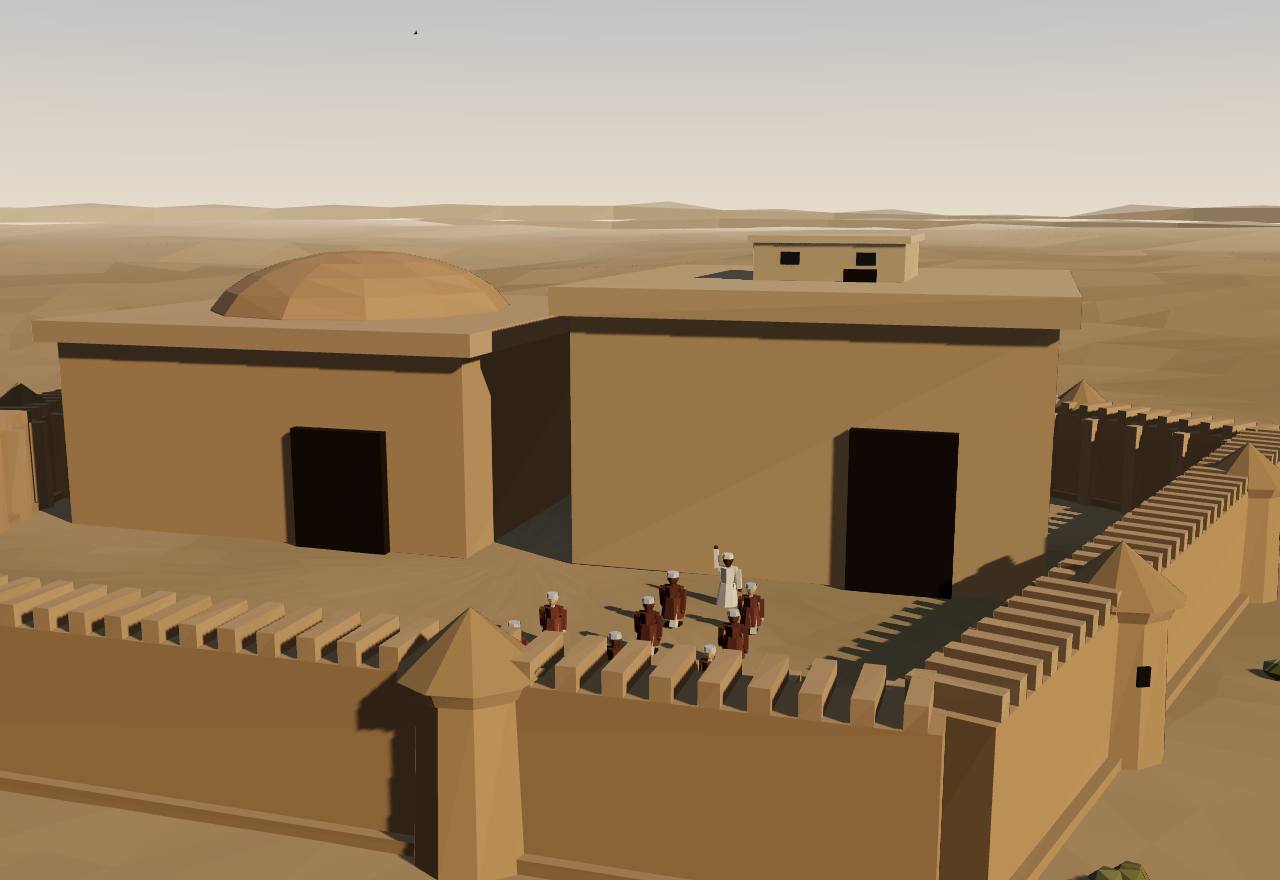
Old Nisa, the Arsacid kings’ ceremonial citadel
330 BCE – 247 BCE
Alexander and the Seleucids
After Gaugamela (‘On 1 October 331 … Darius was defeated and put to flight’) Alexander burnt Persepolis ‘in the spring of 330’; ‘in July, 330, Darius III was murdered as a result of the conspiracy of Bessos’. Briant warns that ‘Military defeat was not followed by an immediate collapse of the empire and a rapid, painless Macedonian takeover.’ 10 Consensus Texts Read more: Persia: Xerxes to Darius III
After Alexander’s death Parthia went to Stasanor, ‘because none of the Macedonians would deign to accept it’ (Justin); ‘After 308 BCE its founder, Seleucus I, had conquered the eastern part of Iran’. 3,2 Consensus Texts
‘In the 240s–230s BC Seleucid hegemony over the Iranian plateau collapsed’, and ‘Seleucid governors in Parthia and Bactria broke away from the Seleucid state to form rival regimes’ (Overtoom). Andragoras, satrap of Parthava, ‘made himself independent’ in about 245 BCE. 11,2 Consensus Texts
Then ‘Arsaces, a Scythian, with some of the Däae (I mean the Aparnians, as they were called, nomads who lived along the Ochus), invaded Parthia and conquered it’ (Strabo), killing Andragoras about 238 BCE. Who he was is unclear: the sources on his ancestry ‘vary irreconcilably’, a Scythian in one account, a Bactrian in another. 12,13,2 Debated Texts
247 BCE – 224 CE
The Arsacid (Parthian) empire
A nomad chief, Arsaces, took Parthia from the Seleucids, and his heirs ruled from the Euphrates to the Indus for more than four centuries. Every king had to be an Arsacid, but the nobles chose which one, sometimes fetching him from Rome; vassal kings and great houses held much of the land.
Terms: Iran between Rome and Islam: Parthians and Sasanians: The Arsacid (Parthian) empire
- basiléōs basiléōn ‘King of the Kings’, the Greek coin title Arsacid kings used more often ‘from Mithradates II onward’ 14
- Arsaces the founder’s name, carried by every king on the coins: ‘they called all their kings thenceforward by the name of Arsaces’ (Justin) 14,3
- Mithradātkert the ancient name of Old Nisa, the dynasty’s ceremonial centre 15
- Pahlav ‘Parthian’; Parthava was first a region, then ‘the name of a people when the Parni invaders started to extend their kingdom’ 2,16
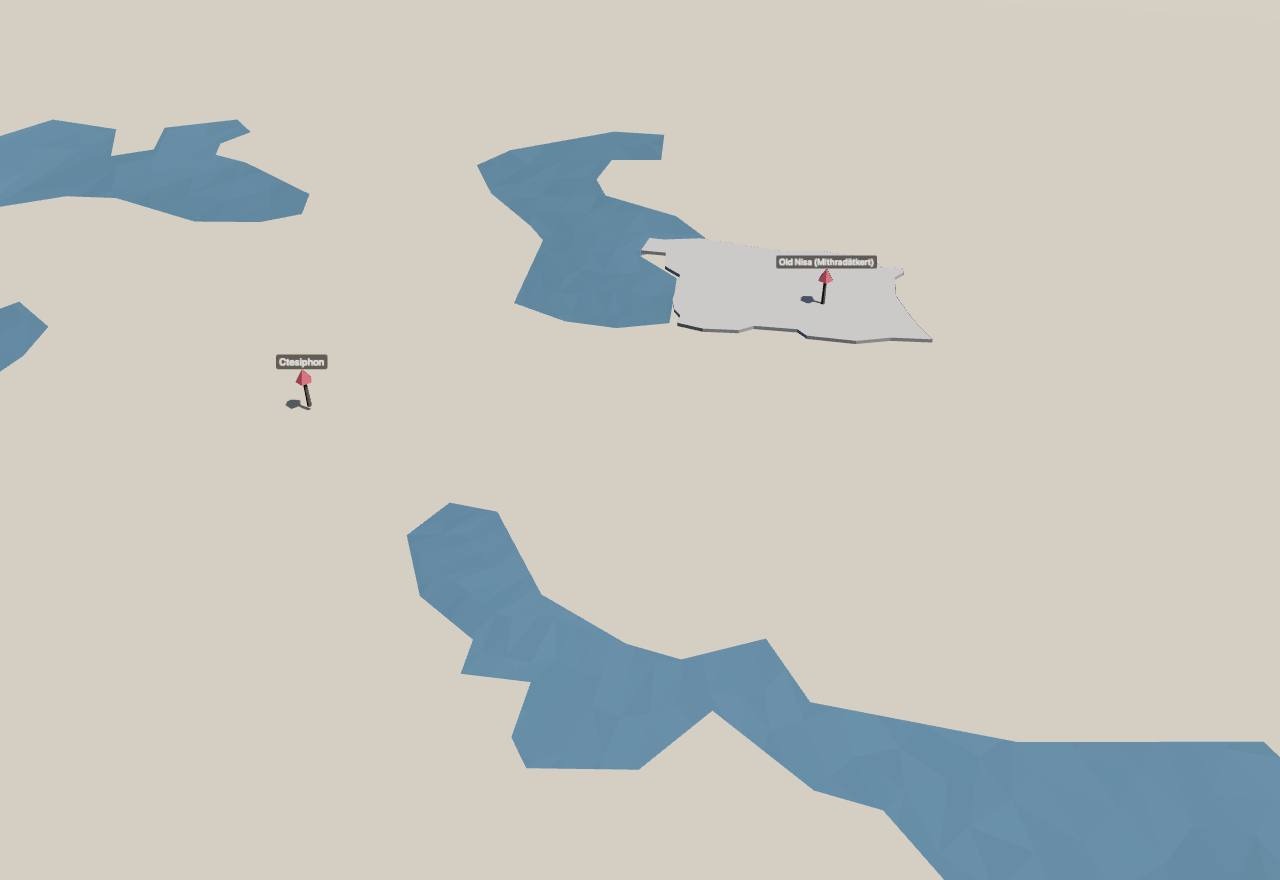
The Parthian empire on Cliopatria’s map, 200 BCE–200 CE
Places: 2 cited sites over Cliopatria (CC BY 4.0) territories, drawn flat and low. Old Nisa (Mithradātkert) · Ctesiphon 26,15,27,5
Strabo, quoting Poseidonius, gives the Parthian constitution in one sentence: ‘the Council of the Parthians … consists of two groups, one that of kinsmen, and the other that of wise men and Magi, from both of which groups the kings were appointed.’ His Loeb editor reads it as kings ‘chosen from the first group by the members of the second’. 12 Debated Texts
Custom favoured the eldest son, but kings could set it aside: ‘It was customary for the eldest son to succeed to the throne, but in this case Phraates I passed over his numerous sons and appointed as king his brother Mithridates.’ Justin tells the same story and adds that the Parthians ‘called all their kings thenceforward by the name of Arsaces.’ 2,3 Consensus Texts
The nobles chose among Arsacids, even ones raised in Rome. ‘The Parthian nobility now turned to one of the sons of Phraates IV who had been sent to Rome’: Vonones was crowned in 8/9 CE, and when he displeased them ‘a rival candidate was set up by a section of the nobility’, Artabanus, ‘crowned king in Ctesiphon in 10/11’. Envoys told Tiberius: ‘Only a name … and an authority were wanted’. 2,17,18 Consensus Texts
Making a king was a noble’s office. In Tacitus ‘the Surena … crowned Tiridates, according to the national usage, with the royal diadem’; when Artabanus II returned, Cinnamus, ‘the nominee of the Parthian senate’, ‘took the diadem from his own brow, and put it on that of his royal rival.’ Justin says a later Mithridates ‘was banished from his kingdom for his cruelty by the Parthian [senate]’. 17,19,3 Consensus Texts
Mithridates II, ‘known as “the Great” and from ca. 109/8 BCE assuming the title “King of Kings,”’ made Adiabene, Gordyene and Osrhoene vassal states. The coins name every king Arsaces with the title ‘Great King’ or, from Mithradates II on, ‘King of the Kings’. 2,14 Consensus Texts Excavation
‘Since its very beginning, the Parthian kingdom was characterised by a strongly decentralised nature’ (Gregoratti): client kings in Persis, Elymais, Characene, Adiabene and Hatra ruled their own lands under an oath to the king of kings, and in crises reached ‘a condition of almost total independence’. Hatra may have been ‘one of the eighteen kingdoms within the Parthian Empire’ that Pliny counts. Seshat codes the state ‘confederated’. 20,21,22 Seshat Consensus Texts
The great houses fought for the king with their own men: ‘As any one is eminent in wealth, so he furnishes the king with a proportionate number of horsemen for war’ (Justin). At Carrhae in 53 BCE the Romans were beaten by ‘the Parthians commanded by a member of the Sūrēn (Lat. Surena) family’; King Orodes II then had the victor executed, which Schippmann reads as a sign of ‘the relatively unlimited power of the supreme monarch’. 3,23,2 Debated Texts
The court moved with the seasons. Nisa was ‘the “home base,” where the treasury and archives were kept’, Asaak ‘the coronation city’ with a fire ‘kept burning for centuries’; from Mithradates I Ctesiphon was ‘the winter residence of the Arsacid kings’, who spent ‘the summer at Ecbatana and in Hyrcania’ (Strabo). 6,5,24 Consensus Texts
Old Nisa, ‘a ceremonial center for the rulers of the Arsacid dynasty’, held a Square Hall whose four central supports were later replaced by ‘massive quadrilobate pilasters made of baked brick, which could support a lantern roof’, its walls in two orders with clay statues in the upper niches, and a Round Hall 17 m across. Invernizzi suggests the buildings ‘may have served as monumental memorials for the cult of the royal ancestors’. 15,25 Debated Excavation
Whether to call Parthia feudal is disputed: ‘Historians differ in their judgment as to whether it is legitimate to talk of a feudal system at this epoch’. Schippmann stresses ‘the latent antagonism between the monarch and the nobility or even, as was frequently the case, the dependence of the ruler on this group’. 2 Debated Texts
‘It was Ardašīr, a minor Parthian vassal in Persis, who was to bring about the demise of the Parthian empire.’ The decisive battle, ‘probably on 28 April 224’, cost the last Arsacid king his life. The client dynasties did not all follow: ‘the feudatory dynasties remained loyal to their former masters’. 2,19 Consensus Texts
How power worked King · Heredity · Council
How power worked
- Who rules
- King Consensus
Why?
- How chosen
- Heredity Debated
Why?
- Limits on power
- Council Debated
Why?
- Scale
- Empire Consensus
Why?
- Claim to rule
- Kinship and descent Debated
Why?
- Who has a say
- A narrow elite Consensus
Why?
224 CE – 488 CE
Ardašīr to Pērōz
A Persian family from Fārs, keepers of a fire temple at Eṣṭaḵr, overthrew the Arsacids and called its realm Ērānšahr. Its kings claimed descent from the gods and carved it on the rocks, yet the Parthian great houses stayed at court, and from the late fourth century the nobles and priests chose, deposed and killed kings almost at will.
Terms: Iran between Rome and Islam: Parthians and Sasanians: Ardašīr to Pērōz
- šāhān šāh ‘King of Kings’; Ardašīr’s coins read MLK’n MLK’’yr’n, ‘King of Kings of Iran’, in Aramaic heterograms read as Persian words 4
- Ērānšahr ‘Empire of the Iranians’, the official name Ardašīr gave his realm (Sprengling’s Parthian: Aryankhshatr, ‘the Aryan empire’) 4,28
- ēhrbed a priest; Kartir’s first title (inscription spelling ʾyhrpt in Middle Persian) 7
- mowbed chief priest (from maγupati); Kartir became ‘mowbed of Ohrmazd’, and under Bahrām II ‘state-wide’ mowbed and judge 7,4
- wispuhrān ‘clan sons’, the great noble houses, second rank below the king of kings after the šahryārān (kings) 4
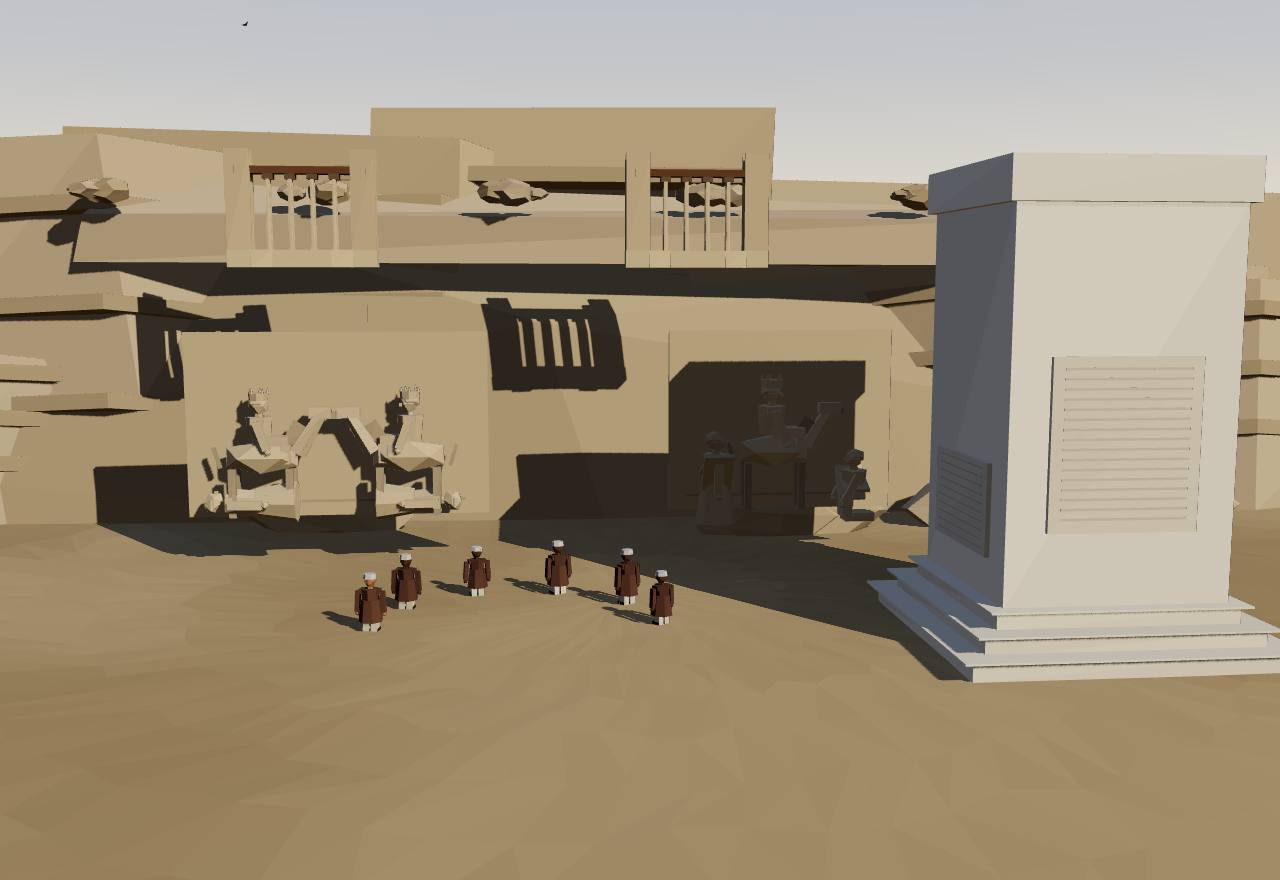
Naqš-e Rostam: investiture, triumph and the Kaʿba-ye Zardošt
The founders were Persians from Fārs. ‘Lord Sāsān’ was ‘the custodian of the “Fire Temple of Anāhid” at Eṣṭaḵr’; his grandson Ardašīr ‘rose in open rebellion in the Seleucid year 523, i.e., 212 CE’, conquered the local rulers of Fārs, and in 224 ‘vanquished Ardavān at the battle of Hormzdagān … and assumed the title “King of Kings of Iran.”’ 4 Consensus Texts
Ardašīr put his claim on his coins: ‘Mazda-worshipping divine [=Majesty] Ardašir King of Kings of Iran whose seed is from gods.’ The reverse shows a fire on an altar, ‘Fire of Ardašir’; ‘The fire of each king was kindled on his accession’, and later kings counted ‘years of the sacred fire’ as regnal years. He named the country Ērānšahr, ‘Empire of the Iranians’. 4 Consensus Texts Excavation
Shahbazi credits Ardašīr with a stronger centre: ‘He replaced vassal kings with his own sons and relatives, and he centralized the state revenue and authority by developing an efficient bureaucracy and by strengthening the military.’ Yet he ‘continued the Arsacid tradition of entrusting high state positions to great noble families such as the Sūrēn, Mehrān, and Kāren’, and the realm was described as ‘the empire of Persians and Parthians’. 4 Debated Texts
Šāpur I’s own inscription lists the men ‘who lived under the rule of Artakhshatr, King of Kings’: after kings of Merv, Kirman and the Sacae and the royal women come ‘Dikhin Varaz; Sasan, the Suren; Sasan, Lord of Andikan; Peroz, the Karen; Guk, the Karen’. Šāpur’s own court list repeats the houses: ‘Artakhshatr Varaz; Artakhshatr Suren; … Artakhshatr Karen’. 28 Consensus Texts
Below the king of kings stood ‘kings (šahryārān)’ who ruled provinces with their own court and army; then the ‘princes (wispuhrān “clan sons,” …) or great noble houses’, above all ‘the Seven’ Magnates, ‘the Varāz, Kāren, Surēn, Mehrān, Spandiāδ, Žik, and Nehābed’, who ‘formed the backbone of the imperial organizations’; then the grandees, the householders and the lesser nobility. 4 Consensus Texts
In his inscription Šāpur claims three wars on Rome: Gordian ‘was killed’, Philip ‘having given us 500,000 dinar as ransom … became tributary to us’, and at Carrhae and Edessa ‘Valerian Caesar himself with (our) own hand(s) (we) made captive.’ Shahbazi adds that the prisoners were ‘settled in royal domains (dstkrt) throughout Iran’. 28,4 Consensus Texts
Because the empire ‘now incorporated so many non-Iranians, Šāpur elaborated his titles to “King of kings of Ērān (Iran) and Anērān (non-Iran),”’ which became the customary title. In Sprengling’s English of the Parthian, Šāpur is ‘King of Kings of Aryans and non-Aryans … who is of the stock of the gods’. 4,28 Consensus Texts
The priest Kartir (Kirdēr in Shahbazi’s spelling) rose under four kings, from ‘ēhrbed’ under Šāpur to ‘mowbed of Ohrmazd’ and, under Bahrām II, ‘state-wide’ mowbed and judge. His inscriptions say that in the empire ‘Jews and (Buddhist) Sramans … and Nasoreans and Christians and Maktak … and Zandiks in the empire became smitten’. Shahbazi ‘regards Kirdēr’s statements as exaggerated’; Skjærvø finds ‘no basis in the inscriptions for assuming that Kartīr initiated a reform’. 7,28,4 Debated Texts
When Bahrām II died in 293, some nobles backed his son, but ‘a larger party pleaded with Narseh, Great king of Armenia’ to take the throne. Narseh’s inscription at Paikuli says he won, and then ‘The assembly then deliberated according to the correct procedure for royal succession instituted by Ardašir I and followed by his successors’; judging him the most qualified, ‘it elected him King of kings’. 4,7 Consensus Texts
From 379 the nobles made and unmade kings: they ‘deposed Ardašir II … when he turned against them’, ‘murdered Šāpur III’, shot Bahrām IV ‘when he tried to tame his commanders’, and killed Yazdegerd I, whom they called the Sinner, because his tolerance ‘so enraged the clergy and aristocracy’. Bahrām V was accepted only after he ‘threatened Ctesiphon with an Arab army’, and was ‘crowned by the mōbedān mōbed (the first recorded instance of such coronation)’. 4 Consensus Texts
Under Šāpur II, during his long wars with Christian Rome, councils of priests ‘proved’ the superiority of the Mazdean faith and the king decreed: ‘we shall not tolerate anyone of false religion’. Shahbazi dates the state church from here, with ‘canonical organization and clerical hierarchy’; but ‘The Jews had their own court’ and ‘Christian courts settled affairs of the Christians’. 4 Debated Texts
Pērōz attacked the Hephthalites in 484 ‘against the advice of his nobles and high priests’, and ‘he and his entire army were annihilated’. The nobles, saying he had ‘acted as a tyrant’, murdered his son and elected his brother Balāš, ‘laying down the rules for him’: ‘We have all willingly and readily chosen you, as a mild man concerned for the country’s welfare’. 4 Consensus Texts
Ardašīr had his kingship carved as a gift of the god. At Naqš-e Rostam two riders face each other, ‘one handing the ribboned diadem or symbol of kingship to the other, and both with defeated enemies lying dead beside them’; labels in three languages read ‘This is the image of the Ohrmazd-worshipping Majesty Ardašir, whose origin is of the gods’ and ‘This is the image of the god Ohrmazd’. For Wiesehöfer, ‘investiture with the Xwarrah’ (the ‘(God-given) fortune’) ‘is always prerequisite for legitimate rulership.’ 29,30 Consensus Texts Excavation
Šāpur’s inscription was cut on the Kaʿba-ye Zardošt, ‘a square tower built of white limestone blocks’ 7.25 m on a side and 14 m high with its plinth and roof, facing the royal tombs: ‘in Greek on the south wall, in Sasanian Pahlawi (Parsik) on the east, and in Parthian (Pahlawik) on the west’. ‘Beneath the Parsik version on the east wall, the high priest Kirdīr had his own inscription incised’. 31,32 Consensus Excavation Texts
Ardašīr’s first city, Ardašīr-ḵorra (Fīrūzābād), was ‘a perfect circle of 1,950 m diameter, divided into twenty sectors’ by radial streets, inside a clay wall and ‘a ditch 35 m wide’. At its centre stood the Ṭerbāl, a stone pier ‘9 m square and more than 30 m high’, which Huff thinks ‘probably symbolized the divine and centralist kingship propagated by Ardašīr’s new state ideology’. Founding it ‘was a major violation of Parthian royal prerogatives’. 33 Debated Excavation
Ardašīr’s two palaces nearby, Qalʿa-ye Doḵtar on its mountain and the larger one by a spring lake, share one plan: ‘ayvān and square domed halls, 14 m wide, as royal audience halls’, courts and upper living rooms. In the city the Taḵt-e Nešīn, ‘probably Ardašīr’s fire temple’, had ‘a brick dome of 14 m in diameter’. ‘The propagation of the dome on squinches above a square hall may be regarded as the most significant Sasanian contribution to Middle-Eastern architecture.’ 33,34 Consensus Excavation
How power worked King · Heredity · Council
How power worked
- Who rules
- King Consensus
Why?
- How chosen
- Heredity Consensus
Why?
- Limits on power
- Council Debated
Why?
- Scale
- Empire Consensus
Why?
- Claim to rule
- Divine mandate Consensus
Why?
- Who has a say
- A narrow elite Consensus
Why?
Šāpur I speaks: the inscription on the Kaʿba-ye Zardošt
Data: Sprengling’s translation of the Parthian text (1953)
Šāpur I had his deeds cut on the walls of the Kaʿba-ye Zardošt, a stone tower facing the royal tombs at Naqš-e Rostam, in three languages: Parthian, Middle Persian, Greek. Sprengling translated from the Parthian, which he judged the original, and spells the kings Shahpuhr (Šāpur) and Artakhshatr (Ardašīr); the passages below are his English, cut to whole clauses (… marks a cut; brackets are his). 28
- Parthian: the language of the Arsacid court; Sprengling translates from it as the original, and only the Parthian version carries the scribe’s signature
- Middle Persian: ‘the language of his own court’, then ‘being developed in priestly schools’
- Greek: kept from the Parthian court; its scribe was ‘apparently the last of his kind at this Persian imperial court’
I (am) the mazda-worshipping divinity Shahpuhr …, King of Kings of Aryans and non-Aryans …, who is of the stock of the gods, son of the mazda-worshipping divinity Artakhshatr …, King of Kings of the Aryans, who is of the stock of the gods, grandson of the divinity Papak, King.
The title claims the gods’ descent and a rule over Iranians and non-Iranians alike, and the line of descent is the legitimacy: grandfather, father, son.
Of the Aryan empire (Parth. Aryankhshatr; Greek tou Arianon ethnous; MP probably Iranshatr) the principalities and provinces … (are) these; Pars …, Parthia …, Khuzistan …, Meshin …, Assyria …, Adiabene …, Arabia …, Atrupatkan …, Armenia … And these many lands … and lordships … and provinces … have become tributary and subject to us.
Ērānšahr, ‘the Aryan empire’, is a list of lands, lordships and kingdoms that pay and obey, not a map with borders.
In the third war, when we attacked Carrhae and Edessa and were besieging Carrhae and Edessa, Valerian Caesar came upon us (having) with (him) … a force of 70 thousands. And on that side of Carrhae and Edessa with Valerian Caesar a great conflict took place. And Valerian Caesar himself with (our) own hand(s) (we) made captive.
Victory is the king’s own: the inscription credits him with taking a Roman emperor ‘with (our) own hand(s)’, the claim the rock reliefs carve.
therefore we too in land upon land have established many Varahran fires and have conferred benefices upon many magi-men and have made great the gods’ worship … one fire, Good Fame of Shahpuhr by name, for our soul (memory) and after-name (name-preservation)
Conquest pays for the cult: fires and priests are endowed by the king, and named fires keep the royal family’s memory.
Those who lived under the rule of Artakhshatr, King of Kings … Dikhin Varaz; Sasan, the Suren; Sasan, Lord of Andikan; Peroz, the Karen; Guk, the Karen … Those who have arisen under our rule … Artakhshatr Varaz; Artakhshatr Suren; Narsakhy, Lord of Andikan; Artakhshatr Karen
Right after the royal family and the chief ministers come men of the great houses, Varaz, Suren and Karen: the Parthian nobility kept its place under the new dynasty.
| House | Under Ardašīr | Under Šāpur |
|---|---|---|
| Varaz | 1 | 1 |
| Suren | 1 | 1 |
| Karen | 2 | 1 |
Counted from the entries quoted above (5 and 4 names); Sprengling notes that under both kings "three of the great families" follow the royal house, "Karen, of which latter Ardashlr [sic] has two, while Shahpuhr lists but one" (Ardashlr is Ardašīr, Shahpuhr Šāpur, in Sprengling’s spellings). The same houses held office for centuries: Kartir, the priest who rose under four kings, appears in Šāpur’s list as the only religious official among the dignitaries. 28,7
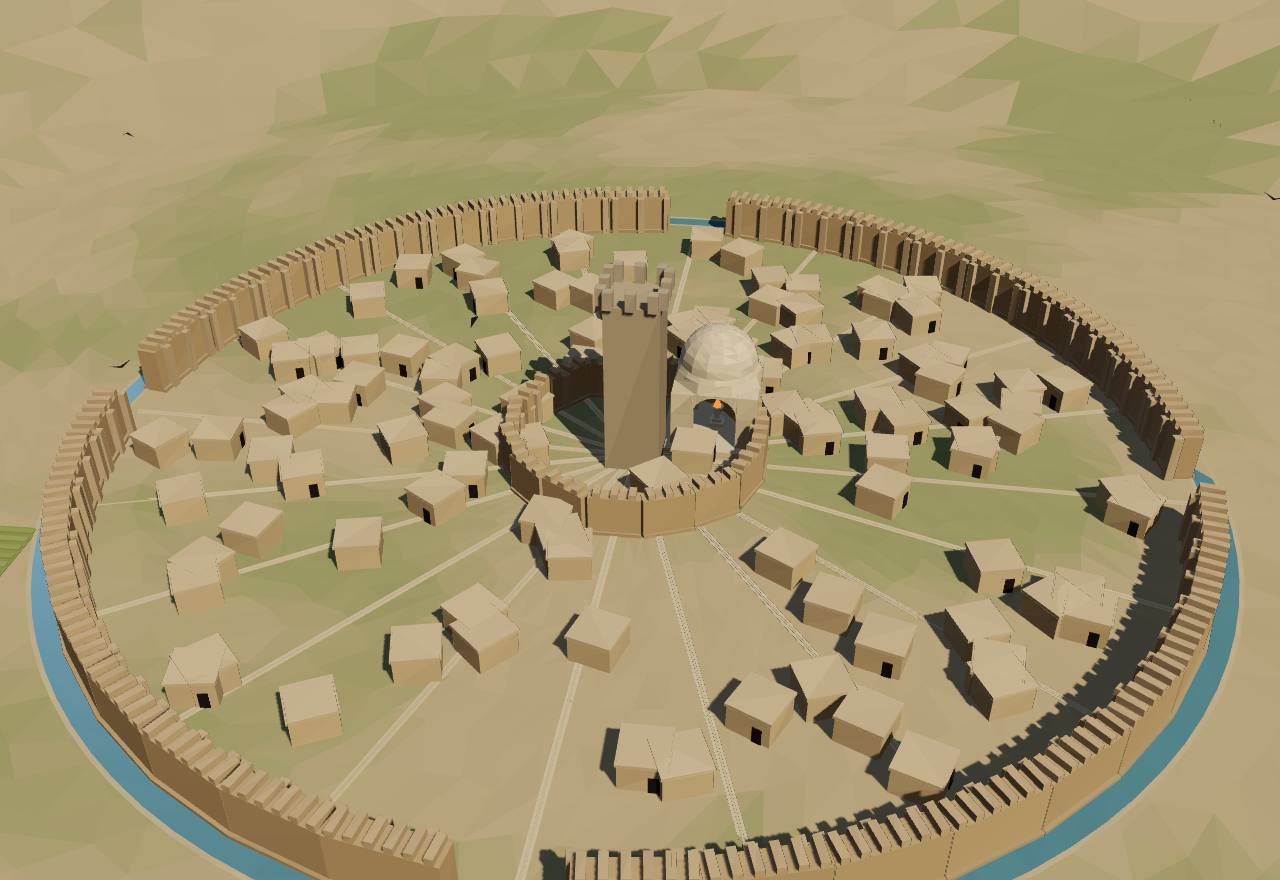
Ardašīr-ḵorra, the round city, about 224
488 CE – 579 CE
Kavād, Mazdak and Ḵosrow I
Kavād came to the throne as the nobles’ choice, backed a movement that preached sharing wealth, was deposed for it and won his throne back with a foreign army. He and his son Ḵosrow I (Khosrow, the Greeks’ Chosroes) then cut the great offices down, reassessed the land tax and took back the right to name the heir.
Terms: Iran between Rome and Islam: Parthians and Sasanians: Kavād, Mazdak and Ḵosrow I
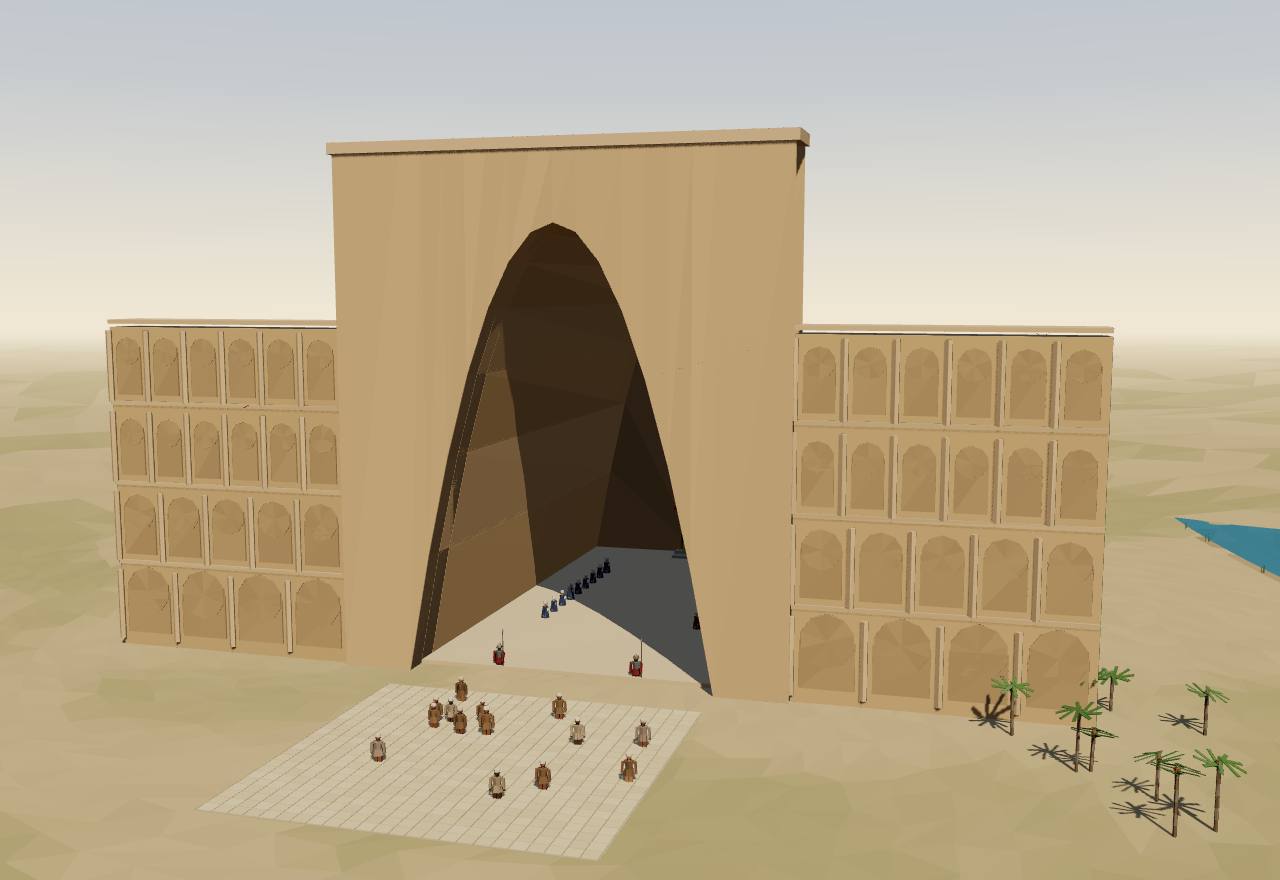
The Ṭāq-e Kesrā at Ctesiphon: an audience, 6th century
When Kavād took the throne in 488 the treasury was empty, ‘a hefty annual tribute had to be paid to the Hephthalites’, Armenia and the Arabs were in revolt, and ‘The nobility had become too powerful and paid no heed to the royal authority, while the commoners had become poor and desperate.’ 4 Consensus Texts
The ‘Mazdakite revolution’, which ‘preached the distribution of wealth and sharing of women’, ‘received regal support’. Procopius says Kavād ‘introduced innovations into the constitution’ including a law ‘that Persians should have communal intercourse with their women’. Shahbazi thinks Kavād wished ‘to rid himself of the yoke of the nobility and Zoroastrian clergy’, but notes that ‘the historicity or at least the principal role of Mazdak is seriously questioned’. 4,8 Debated Texts
Kavād was deposed and held in a castle ‘which it is their habit to call the “Prison of Oblivion.”’ The nobles would not kill him: they were ‘altogether unwilling to put to death a man of the royal blood’. Procopius gives the rule behind it: ‘it is not lawful among the Persians for any man by birth a common citizen to be set upon the throne, except in case the royal family be totally extinct.’ 8 Consensus Texts
The nobility and clergy ‘enthroned his mild-mannered brother, Jāmāsp. Kavād escaped, returned with a Hephthalite army, and regained his throne.’ He then ‘supported Zoroastrian orthodoxy, massacred the Mazdakite heretics, and subjugated the unruly nobility’. 4 Consensus Texts
Kavād took the great offices apart: he abolished the highest post, the Artēštārānsālār, ‘demoted from the first to the third rank the Mōbedān Mōbed’, ‘replaced the Irān-spāhbed (the generalissimo of the empire) by four Spāhbads, each responsible for a quarter (kust) of the empire’, and checked the Wuzurg-framadār, the chief minister. 4 Consensus Texts
‘Kavād re-instituted the right of the king to choose his heir and restricted the role of the magnates and highest clergy in this case to the supervision of the exact execution of the king’s testament.’ Procopius shows the limits: custom called the eldest son, and a second son was barred because ‘it is not lawful for a one-eyed man or one having any other deformity to become king over the Persians.’ Kavād chose Ḵosrow, and at his death ‘the nobility abided by the testament’. 4,8 Consensus Texts
The new land tax was ‘based on a revision of land ownership and on payment in installments and according to a certain percentage of the assessed income’, paid ‘in three or four annual installments’. The poll tax was ‘limited to taxable men only’; ‘all complaints could be directed to the royal chancellery’. Shahbazi judges that the reform ‘severely broke the power bases of the higher nobility while promoting the lower aristocracy’. 4 Consensus Texts
Ḵosrow I put down a plot of ‘all the Persian notables’ and, in Shahbazi’s words, consolidated royal authority ‘through direct taxation and extension of the central bureaucracy in every part of the empire, turning the feudal lords into officials of the central government who were loyal to him rather than to their hereditary families’. 4,8 Debated Texts
In 540 Ḵosrow took and plundered Antioch and ‘deported its population to a section of his capital, al-Madāʾen, which he named Weh-Antioch-Ḵosrow “Ḵosrow’s Better Antiochia,”’ commonly called Rumagān, the Roman town. 4 Consensus Texts
The peace of 562 with Byzantium, as Menander records it, bound Persia to hold the Caucasus passes, freed envoys’ goods from tax and recommended ‘settling disputes between the subjects of the two states by arbitration courts’, with appeal at last ‘to the sovereign of the offender’. 4 Consensus Texts
At Ctesiphon, ‘the capital and coronation city of the Sasanian empire’, ‘stood the Sasanian royal palace, Ayvān-e Kesrā, with its enormous audience hall, still standing today’, once decorated ‘with marble, opus sectile, mosaics, and stucco sculptures’ (opus sectile is cut-stone inlay). It is ‘now generally attributed to Ḵosrow I’; one suggestion links it to his conquest of Antioch in 540. Its vault is about 37 m high and 26 m across (the figures Wikipedia gives). 5,34,38 Debated Excavation Texts
In the hall, writers remembered, Ḵosrow I sat beneath ‘his crown’, a great bowl ‘set with rubies, emeralds and pearls’, ‘suspended by a chain of gold from the top of an arch’: such crowns ‘became so heavy that the monarchs could no longer support their weight.’ Rank was worn: ‘No one without a tiara was allowed to sit at the royal table or offer advice to the king.’ 39,40 Debated Texts
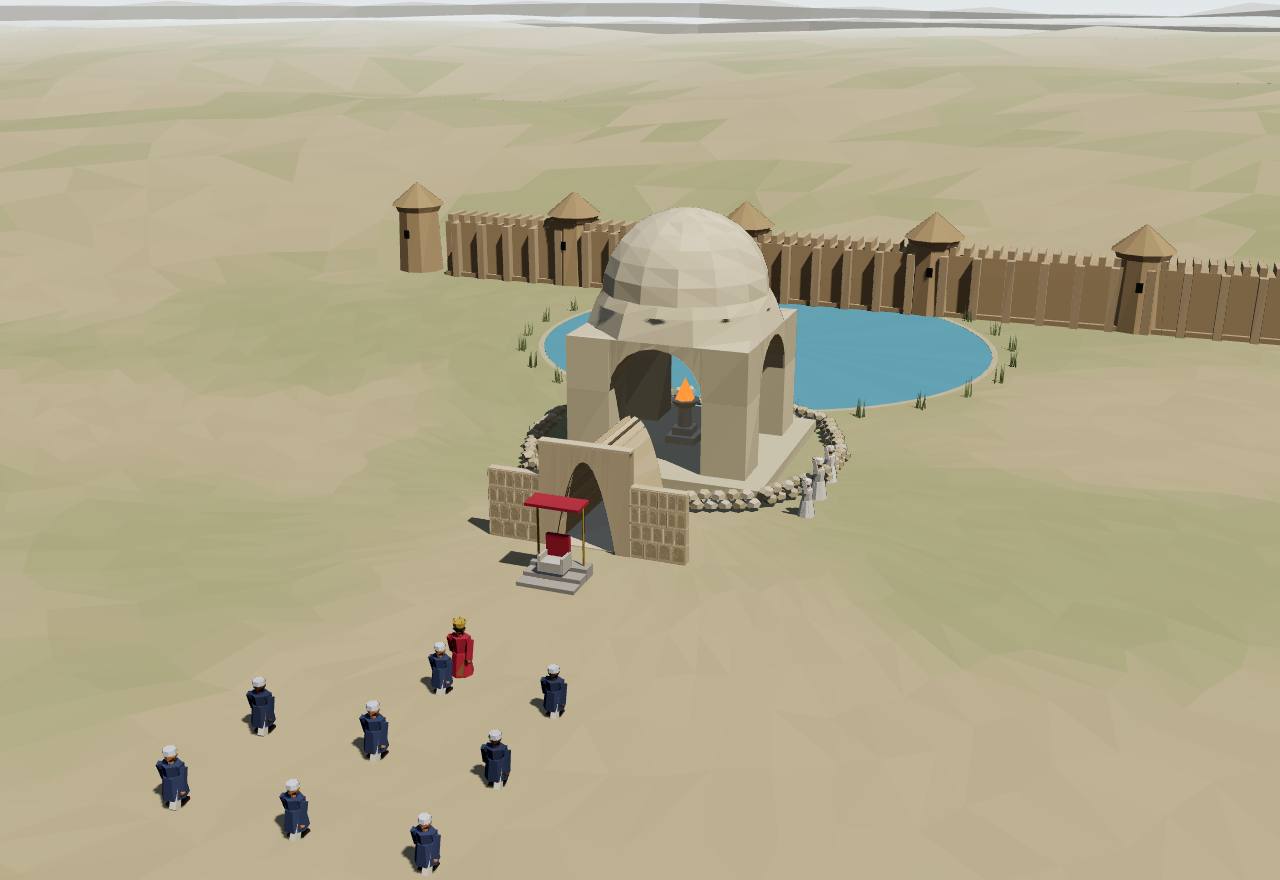
Šiz (Taḵt-e Solaymān) held Ādur Gušnasp, ‘the fire of the warriors and kings and one of the three most revered fires of the Sasanian period’, in a domed čahārṭāq beside a spring lake about 80 m across. ‘In the later Sasanian period it became customary for each king to make a pilgrimage’ there after his coronation; a podium in front of the temple ‘probably carried an open-air throne’, and sealings found in a side room show an office for ‘acts of civil administration, duties of which the Sasanian clergy was in charge.’ 41,5,42 Debated Excavation Texts
How power worked King · Heredity · Custom and kin
How power worked
- Who rules
- King Consensus
Why?
- How chosen
- Heredity Debated
Why?
- Limits on power
- Custom and kin Debated
Why?
- Scale
- Empire Consensus
Why?
- Claim to rule
- Divine mandate Consensus
Why?
- Who has a say
- A narrow elite Consensus
Why?
Šiz: the fire of the warriors and kings
579 CE – 651 CE
Ḵosrow II and the fall
A general of an Arsacid house took the throne and called himself the restorer of the Parthian line; Ḵosrow II won it back with a Roman army, conquered Syria and Egypt and lost everything to Heraclius. The nobles who deposed him then set up and pulled down a king a few months at a time, until the Arab armies took Ctesiphon.
Terms: Iran between Rome and Islam: Parthians and Sasanians: Ḵosrow II and the fall
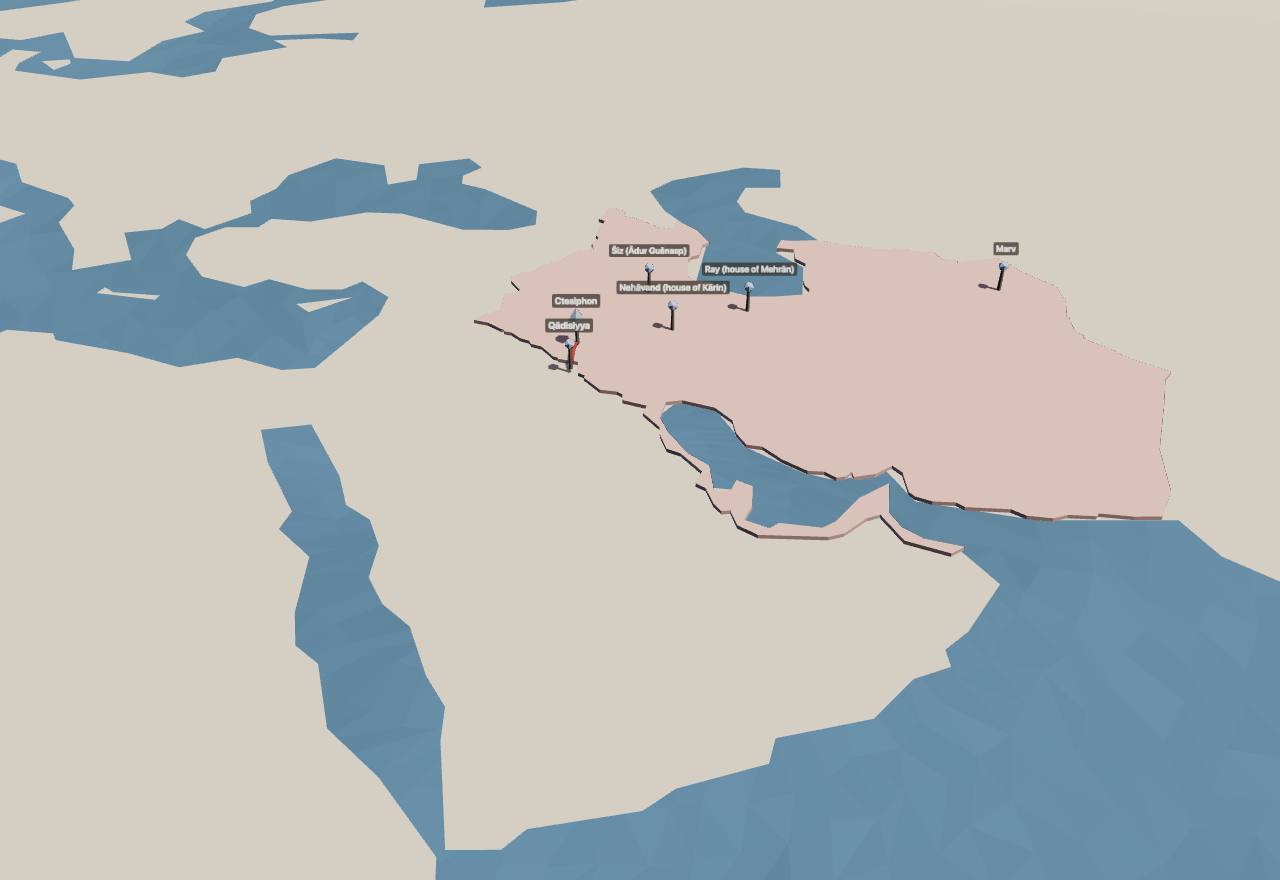
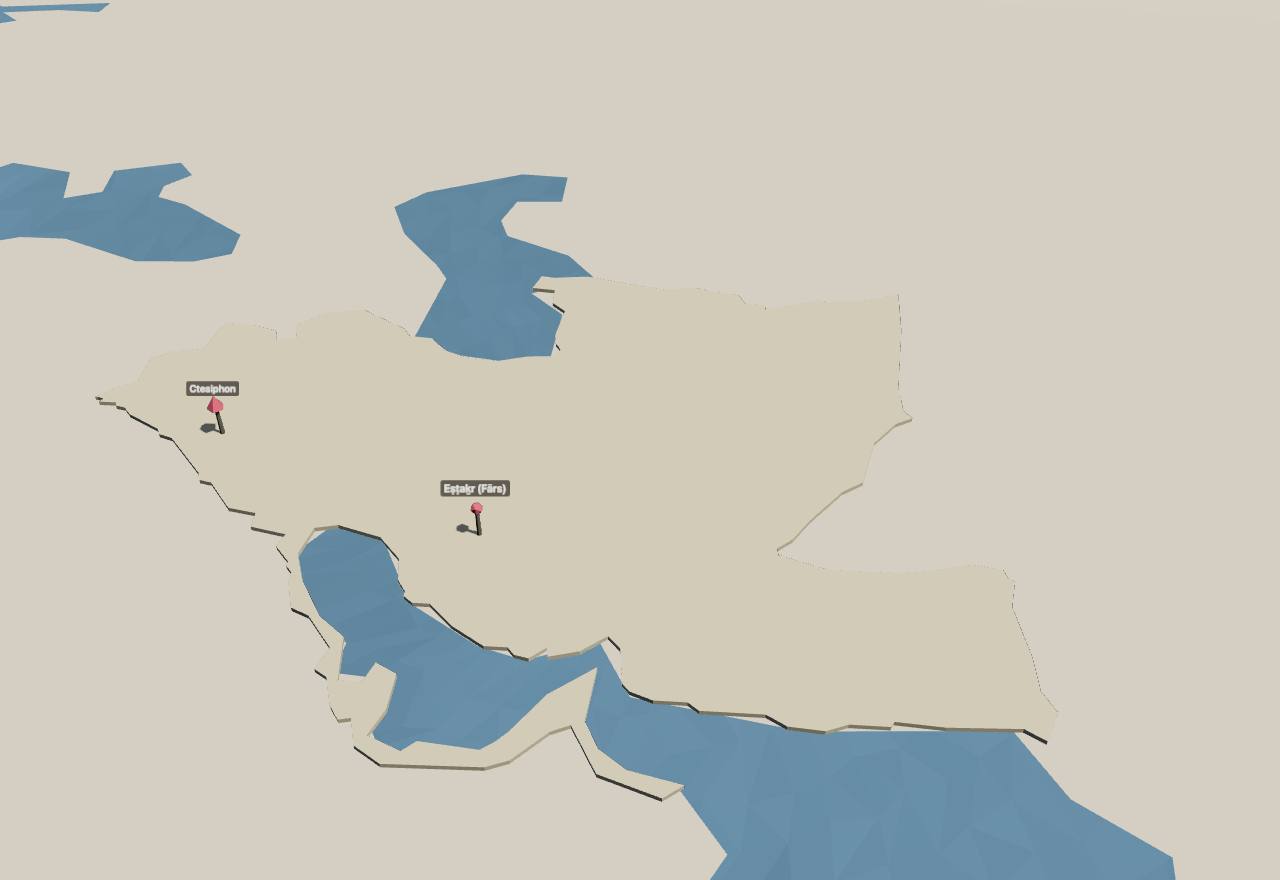
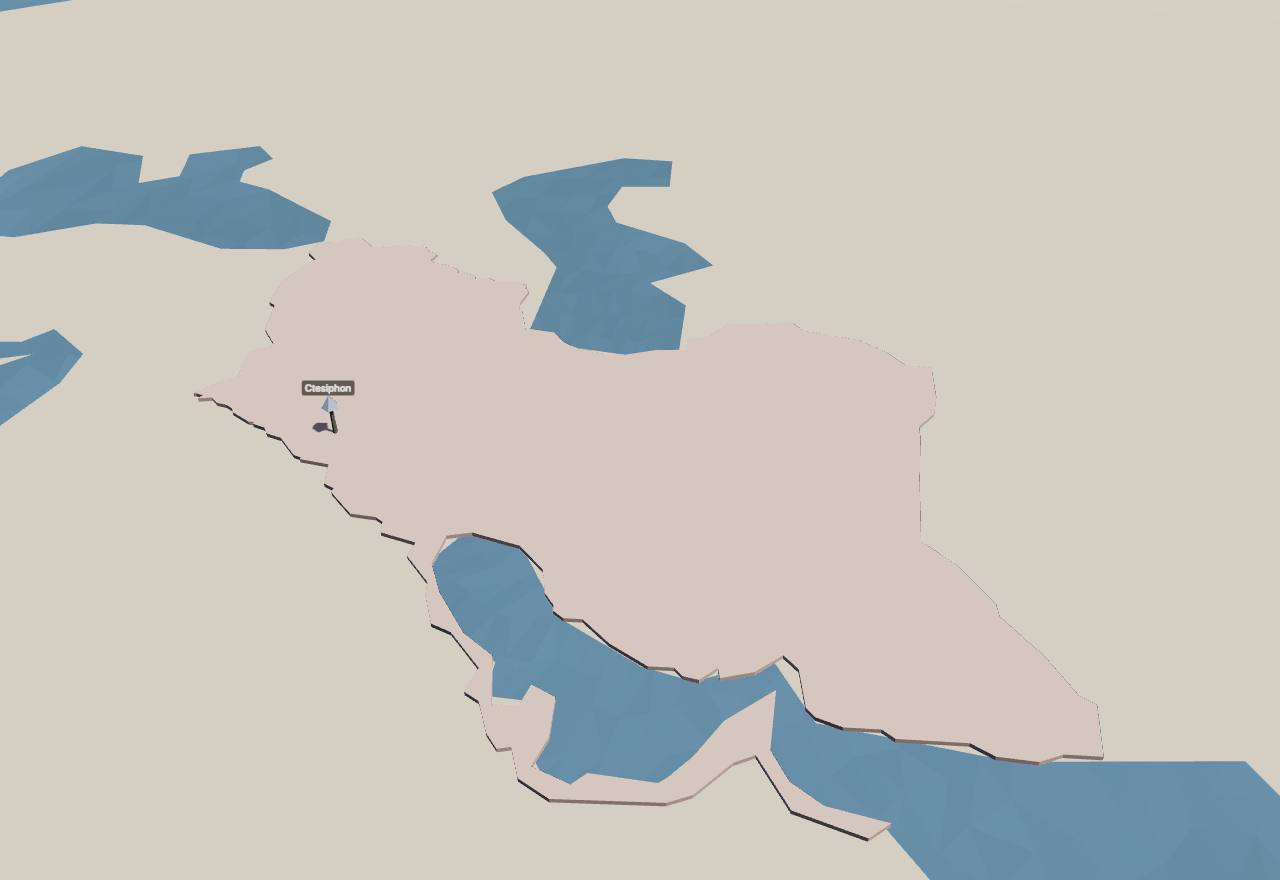
The fall: Cliopatria’s map, 600–640, and the places of the end
Places: 6 cited sites and 1 cited link over Cliopatria (CC BY 4.0) territories, drawn flat and low. Ctesiphon · Šiz (Ādur Gušnasp) · Nehāvand (house of Kārin) · Ray (house of Mehrān) · Qādisiyya · Marv 27,5,44,41,45,43,46,47,4,48
Hormozd IV (579–89) ‘proclaimed that he was on the side of the common people’, refused the clergy’s demand ‘to restrict the non-Zoroastrians of the realm’, and ‘put to death a large number of higher priests and senior officials’. 4 Consensus Texts
His best general, Bahrām Čōbin, was ‘of the Arsacid family of Mehrān’. Driven to rebel, he took Ctesiphon ‘and proclaimed himself King of kings and restorer of the Arsacid dynasty’. 4 Consensus Texts
Magnates of Arsacid lineage killed Hormozd; his son Ḵosrow II fled to Byzantine territory ‘and returned with a Roman army’, ‘proclaiming himself the true expected “Victorious King (Aparvēz …).”’ One of his kingmakers, Bendōy, then ‘publicly denounced the Sasanians as faithless upstart usurpers’; the other, Bestām, ‘carved a kingdom for himself’ for six years. 4 Consensus Texts
From 602 Ḵosrow’s armies took Mesopotamia, Syria and Palestine (‘Jerusalem was captured in 614’), Egypt and Asia Minor: ‘By 616, they were camping at Chalcedon, opposite Constantinople.’ From 622 Heraclius landed behind their lines; in 627 he ‘occupied and pillaged Šiz … and Dastagerd’. 4 Consensus Texts
‘A mutiny ensued, and the warrior aristocracy deposed Ḵosrow and enthroned his son Šērōye’. Ḵosrow ‘was captured, tried, and found guilty of patricide, treason, inhumane behavior towards subjects’, ‘illegal orders, injustice, ruinous avarice’, and executed: a king judged by his nobles. 4 Consensus Texts
Šērōye killed seventeen brothers; plague killed him. ‘The highest aristocracy gained full independence’, and ‘the old animosity between the Parthians (led by Farroḵ Hormozd, the Spāhbed of the north), and the Persians led by Hormozān’ flared up. The general Šahrvarāz took the throne; ‘Nobles killed him after forty days, and two daughters of Ḵosrow reigned in succession’. 4 Consensus Texts
Rostam, son of the murdered Farroḵ Hormozd, ‘murdered the queen, and enthroned Yazdegerd (III), a grandson of Ḵosrow then merely eight years old’. ‘Other nobles enthroned and deposed other candidates (ten in two years).’ 4 Consensus Texts
The Arabs defeated a Persian army ‘at Qādesiya (southwest of Ḥira)’ and took Ctesiphon. ‘Yazdegerd fled from one place to another, begging local lords to help save him and the empire’; the Arabs ‘succeeded in destroying the Persian empire by 650’, and Yazdegerd ‘was betrayed by Māhōy Suri of Marv and murdered in a mill’. 4 Consensus Texts
‘In about 600 Ḵosrow imprudently overthrew the faithful vassal dynasty of the Lakhmids of Ḥira’, removing the buffer between the rich Sasanian provinces and the desert Arabs, who ‘a generation later overran Sasanian territory with remarkable ease’. 4 Debated Texts
Pourshariati redates the conquest: in Lucas’s summary she argues ‘que la conquête de l’Iraq eut lieu entre 628 et 632’ (that Iraq was conquered between 628 and 632), after Heraclius’s invasion, so that the empire was caught between two powers at once; Rezakhani, Lucas notes, criticised her handling of the sources in that chapter. 16,35 Speculative Texts
The great houses outlasted the dynasty. The Kārin, ‘one of the seven great families of the Parthian and Sasanian periods’, drew their power from ‘the great wealth that accrued to them through their dynastic domains’ and ‘the manpower that they could muster in times of war’; in the conquest ‘they seem to have lost a substantial part of their original domains in Nehāvand’ to a rival who made peace with the Arabs. Bahrām Čōbīn’s house, the Mehrān, appears in the same article through ‘Šāpur of Ray of the house of Mehrān’. 43,4 Consensus Texts
How power worked King · Mixed · None in practice
How power worked
- Who rules
- King Consensus
Why?
- How chosen
- Mixed Debated
Why?
- Limits on power
- None in practice Debated
Why?
- Scale
- Empire Consensus
Why?
- Claim to rule
- Divine mandate Consensus
Why?
- Who has a say
- A narrow elite Consensus
Why?
Artefacts
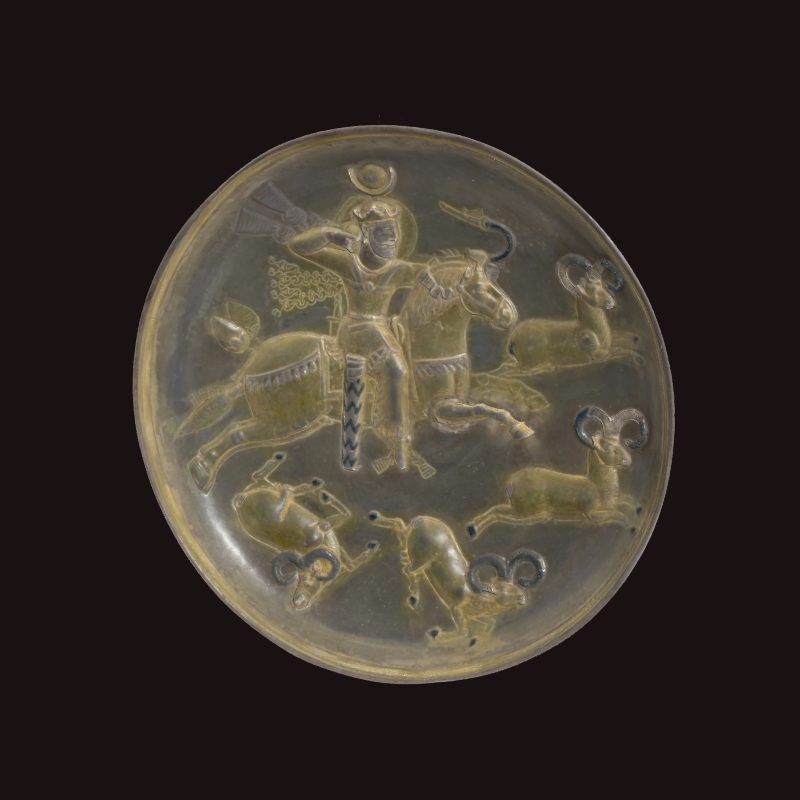
 Model, not a scan
In numbers
How each king of kings came to power, and how each reign ended
Data: Shahbazi 2005 (dates, how each rose and fell)
24 kings of kings from Ardašīr I to Yazdegerd III whose reigns the sources read date. 3 were named by the king before them, 9 simply succeeded a kinsman, 10 were chosen, enthroned or backed by nobles, priests or an assembly, and 2 took the throne by rebellion or the threat of an army. 12 of the 24 reigns ended in a killing or a deposition. Shahbazi’s account names more: Jāmāsp, Bahrām Čōbīn, Ardašīr III, Šahrvarāz and two daughters of Ḵosrow II, whose years it does not give; they are in the notes. 4
24 accessions: 2 rebelled, seized, 3 named by the king, 10 nobles, priests, 9 succeeded kin; median reign 14 years. Ended: 7 died in office, 4 deposed, 8 killed, 1 abdicated, 4 not known.
Marks at the end of a bar: ○ died in office · × killed · ▽ deposed · | abdicated · □ conquered
Show the table: Sasanian kings of kings, 224–650
| Ruler | Years | Came to power | Reign ended | Source |
|---|---|---|---|---|
| Ardašīr I | 224 CE – 240 CE | Rebelled, seized | abdicated (Rose ‘in open rebellion’ in 212, vanquished the Arsacid Ardavān in 224 and ‘assumed the title “King of Kings of Iran.”’ Made his son co-regent; ‘Then Ardašir retired’.) | 4 |
| Šāpur I | 240 CE – 270 CE | Named by the king | not known (His father ‘had made Šāpur, his eldest son, co-regent’; sole ruler from 12 April 240, ‘reigned until May 270’. How the reign ended is not stated.) | 4 |
| Hormozd I | 270 CE – 271 CE | Succeeded kin | died in office (‘died after a short reign (May 270–June 271)’.) | 4 |
| Bahrām I | 271 CE – 274 CE | Nobles, priests | not known (The throne passed ‘not to his son Hormozdak, but to his brother Bahrām’, ‘evidently with the support of the Kirdēr’, the high priest.) | 4 |
| Bahrām II | 274 CE – 293 CE | Succeeded kin | not known (Not described; Kartir’s titles were raised under him. Skjærvø dates the reign 276–93.) | 4,7 |
| Bahrām III | 293 CE – 293 CE | Nobles, priests | deposed (‘some of the Iranian nobility sided with his son Bahrām Sagānšāh’; Narseh ‘vanquished the “rebels.”’) | 4 |
| Narseh | 293 CE – 302 CE | Nobles, priests | died in office (‘The assembly then deliberated according to the correct procedure for royal succession instituted by Ardašir I’ and elected him (Paikuli inscription). ‘Narseh died soon after’ 299.) | 4,7 |
| Hormozd II | 302 CE – 307 CE | Succeeded kin | killed (‘His son Hormozd II (r. 302–307) was challenged domestically’; ‘He was slain in a remote place’.) | 4 |
| Šāpur II | 309 CE – 379 CE | Nobles, priests | died in office (The nobility murdered the heir, imprisoned and blinded his brothers, and ‘proclaimed a younger son [i.e., Šāpur] as King’. Fought Rome until he ‘died in 379’.) | 4 |
| Ardašīr II | 379 CE – 383 CE | Named by the king | deposed (A relief shows Šāpur II ‘giving the diadem of royalty to his brother Ardašir II’. ‘The nobles deposed Ardašir II … when he turned against them’.) | 4 |
| Šāpur III | 383 CE – 388 CE | Succeeded kin | killed (The nobles ‘murdered Šāpur III’.) | 4 |
| Bahrām IV | 388 CE – 399 CE | Succeeded kin | killed (Šāpur III’s son; ‘he was shot to death when he tried to tame his commanders’.) | 4 |
| Yazdegerd I | 399 CE – 421 CE | Succeeded kin | killed (Bahrām IV’s brother and successor; clergy and aristocracy ‘killed him in a remote place and then presented the murder as a God-sent miracle’.) | 4 |
| Bahrām V | 421 CE – 439 CE | Rebelled, seized | not known (The nobles slew Yazdegerd’s heir; Bahrām ‘threatened Ctesiphon with an Arab army’, was accepted, ‘crowned by the mōbedān mōbed’ and ‘had to recognize the nobility’s claimed privileges’.) | 4 |
| Yazdegerd II | 439 CE – 457 CE | Succeeded kin | died in office (‘Bahrām’s successor’; his death ‘inaugurated another period of royal and feudal rivalry’.) | 4 |
| Hormozd III | 457 CE – 459 CE | Succeeded kin | killed (The oldest son; ‘killed by Bahrām the Mehrān, who enthroned his foster son Pērōz’.) | 4 |
| Pērōz | 459 CE – 484 CE | Nobles, priests | killed (Enthroned by Bahrām of the Mehrān house. Attacked the Hephthalites ‘against the advice of his nobles and high priests’; ‘he and his entire army were annihilated’.) | 4 |
| Balāš | 484 CE – 488 CE | Nobles, priests | deposed (The nobility murdered Pērōz’s son and ‘elected Balāš’, ‘laying down the rules for him’; later they ‘deposed and blinded Balāš’.) | 4 |
| Kavād I | 488 CE – 531 CE | Nobles, priests | died in office (Elected by the nobility. Deposed and imprisoned by ‘the nobility and clergy’, who enthroned his brother Jāmāsp; he ‘escaped, returned with a Hephthalite army, and regained his throne’ (Procopius puts his prison in the ‘Prison of Oblivion’). ‘Kavād died in 531’.) | 4,8 |
| Ḵosrow I | 531 CE – 579 CE | Named by the king | died in office (Named heir over his elder brother; ‘the nobility abided by the testament of the late king’. Died ‘of an illness in 579’.) | 4,8 |
| Hormozd IV | 579 CE – 589 CE | Succeeded kin | killed (Magnates of Arsacid lineage ‘seized Hormozd and, with the approval of his son, Kosrow, first blinded and then murdered him’. Bahrām Čōbīn of the Mehrān then took Ctesiphon and proclaimed himself king (no years given).) | 4 |
| Ḵosrow II | 591 CE – 628 CE | Nobles, priests | deposed (Raised by the magnates who killed his father; fled Bahrām Čōbīn and ‘returned with a Roman army’. ‘the warrior aristocracy deposed Ḵosrow’; tried and executed. Years as Lucas prints them.) | 4,16 |
| Kavād II Šērōye | 628 CE – 628 CE | Nobles, priests | died in office (Enthroned by the aristocracy; killed his seventeen brothers; a plague killed him. Then Ardašīr III (murdered by Šahrvarāz), Šahrvarāz himself (killed ‘after forty days’) and ‘two daughters of Ḵosrow’ reigned: no years given.) | 4 |
| Yazdegerd III | 632 CE – 650 CE | Nobles, priests | killed (Rostam ‘murdered the queen, and enthroned Yazdegerd (III)’, then ‘merely eight years old’; ‘Other nobles enthroned and deposed other candidates (ten in two years)’. Accession 16 June 632; ‘betrayed by Māhōy Suri of Marv and murdered in a mill’, 650.) | 4 |
- Marks, by Seshat polity:
- Parthian Empire I
- Parthian Empire II
- Sassanid Empire I
- Sasanid Empire II
- Background bands, by phase:
- The Arsacid (Parthian) empire
- Ardašīr to Pērōz
- Kavād, Mazdak and Ḵosrow I
- Ḵosrow II and the fall
| Seshat polity | Years | Value |
|---|---|---|
| Parthian Empire I | 200 BCE | 280,000 |
| Parthian Empire I | 100 BCE | 2,000,000 |
| Parthian Empire I | 1 CE | 3,000,000 |
| Parthian Empire II | 100 CE | 1,900,000 |
| Parthian Empire II | 200 CE | 1,800,000 |
| Sassanid Empire I | 220 CE – 300 CE | 2,600,000–2,700,000 |
| Sassanid Empire I | 301 CE – 498 CE | 3,100,000–3,200,000 |
| Sasanid Empire II | 499 CE – 540 CE | 3,450,000–3,500,000 |
| Sasanid Empire II | 600 CE | 2,600,000–2,960,000 |
| Seshat polity | Years | Value |
|---|---|---|
| Parthian Empire I | 200 BCE | 50,000–100,000 |
| Parthian Empire I | 100 BCE | 5,450,000 |
| Parthian Empire I | 1 CE | 7,500,000 |
| Parthian Empire I | 1 CE | 15,000,000 |
| Parthian Empire I | 1 CE | 25,000,000 |
| Parthian Empire II | 100 CE | 4,750,000 |
| Parthian Empire II | 200 CE | 5,000,000 |
| Sassanid Empire I | 205 CE – 487 CE (whole period) | 5,000,000 |
| Sasanid Empire II | 499 CE – 550 CE | 8,900,000 |
| Sasanid Empire II | 551 CE – 619 CE | 12,700,000 |
| Sasanid Empire II | 620 CE – 642 CE | 22,100,000 |
| Seshat polity | Years | Value |
|---|---|---|
| Parthian Empire I | 100 BCE | 300,000 |
| Parthian Empire I | 1 CE | 400,000–600,000 |
| Parthian Empire II | 100 CE | 400,000 |
| Parthian Empire II | 200 CE | 20,000–40,000 |
| Sassanid Empire I | 220 CE – 360 CE | 100,000 |
| Sassanid Empire I | 361 CE – 498 CE | 250,000 |
| Sasanid Empire II | 499 CE – 599 CE | 400,000 |
| Sasanid Empire II | 600 CE – 642 CE | 500,000 |
| Seshat polity | Years | Value |
|---|---|---|
| Parthian Empire I | 247 BCE – 40 CE (whole period) | 5–6 |
| Parthian Empire II | 41 CE – 226 CE (whole period) | 5–6 |
| Sassanid Empire I | 205 CE – 487 CE (whole period) | 6 |
| Sasanid Empire II | 488 CE – 642 CE (whole period) | 6 |
| Seshat polity | Years | Value |
|---|---|---|
| Parthian Empire I | 247 BCE – 40 CE (whole period) | 4–5 |
| Parthian Empire II | 41 CE – 226 CE (whole period) | 4–5 |
| Sassanid Empire I | 205 CE – 487 CE (whole period) | 5–6 |
| Sasanid Empire II | 488 CE – 642 CE (whole period) | 6 |
| Seshat polity | Years | Value |
|---|---|---|
| Parthian Empire I | 247 BCE – 40 CE (whole period) | 6 |
| Parthian Empire II | 41 CE – 226 CE (whole period) | 6 |
| Sassanid Empire I | 205 CE – 487 CE (whole period) | 7–9 |
| Sasanid Empire II | 488 CE – 642 CE (whole period) | 7–9 |
Values as Seshat codes them: bands are ranges, dots single values, flat bars values given for a whole period, hatching “unknown”; from one Seshat polity to the next, marks alternate between a light tone and a darker one with dashed joining lines (the key above names each polity). Source: Seshat Global History Databank (Equinox-2020), CC BY 4.0.
Governance fingerprint
Seshat's institutional variables, phase by phase. Hover or focus a cell for the values and years.
- Present
- Inferred present
- Absent
- Inferred absent
- Unknown
- Not coded in Seshat
- Mixed: present in one Seshat polity or period, absent in another
The axes against Seshat
8 agree, 1 disagree.
- Disagree Ḵosrow II and the fall: limits on power coded “None in practice”, which implies executive checked by government absent; Seshat has it present.
Show the 8 pairs that agree
- Agree The Arsacid (Parthian) empire: limits on power coded “Council”, which implies executive checked by government present; Seshat has it inferred present.
- Agree The Arsacid (Parthian) empire: how chosen coded “Heredity”, which implies elite status hereditary present; Seshat has it present.
- Agree Ardašīr to Pērōz: claim to rule coded “Divine mandate”, which implies rulers legitimated by gods present; Seshat has it present.
- Agree Ardašīr to Pērōz: limits on power coded “Council”, which implies executive checked by government present; Seshat has it present.
- Agree Ardašīr to Pērōz: how chosen coded “Heredity”, which implies elite status hereditary present; Seshat has it present.
- Agree Kavād, Mazdak and Ḵosrow I: claim to rule coded “Divine mandate”, which implies rulers legitimated by gods present; Seshat has it present.
- Agree Kavād, Mazdak and Ḵosrow I: how chosen coded “Heredity”, which implies elite status hereditary present; Seshat has it present.
- Agree Ḵosrow II and the fall: claim to rule coded “Divine mandate”, which implies rulers legitimated by gods present; Seshat has it present.
Only pairs where an axis value on its own implies a Seshat variable are compared; the rest is not counted as disagreement.
Source: Seshat Global History Databank (Equinox-2020), CC BY 4.0.
Compare
| Axis | Iran between Rome and Islam: Parthians and Sasanians | Achaemenid Persia: Cyrus and Cambyses | Byzantium: After the West: Justinian's empire | The caliphates: The first four caliphs |
|---|---|---|---|---|
| Who rules | King | Emperor | Emperor | Caliph |
| How chosen | Heredity | Conquest or coup | Mixed | Mixed |
| Limits on power | Council | Custom and kin | Written law | Custom and kin |
| Scale | Empire | Empire | Empire | Empire |
| Claim to rule | Kinship and descent | Divine mandate | Divine mandate | Divine mandate |
| Who has a say | A narrow elite | A narrow elite | A narrow elite | A narrow elite |
Legacy
‘Although its last days were inglorious, the Sasanian state remained the ideal model of organization, splendor, and justice in Perso-Arab tradition; and its bureaucracy and royal ideology were imitated by successor states, especially the Abbasid, Ottoman, and Safavid empires.’ 4 Debated Read more: The Abbasid caliphate
The conquerors kept the coinage: Yazdegerd III’s coins, like Ḵosrow II’s, ‘were used—and continued to be minted, with some gradual alteration in legends—by Arab governors for several generations’. 4 Consensus
Books of kingship outlived the kings. ‘A political testament (ʿahd) ascribed to’ Ardašīr ‘remained the most respected manual on statecraft well into the Islamic period’; Ḵosrow I’s court compiled an official ‘national history’, the Xwadāy-nāmag, and Kalila and Dimna, brought from India, ‘became the highest model of “wisdom literature”’. 4 Consensus
‘Many Iranians, particularly Zoroastrians, took the accession of Yazdegerd (16 June 632), as the beginning of the Era of Yazdegerd; some, however dated from the year of his murder in 650’. 4 Consensus
See also forms of government.
Sources
Bibliography
51 sources, numbered as cited: 28 papers · 2 books · 12 datasets · 6 primary sources · 3 popular syntheses
- Paper Hill, A. M. (2025). A tale of two cities? different dates for the parthian secession from the seleucids, and the revolt of an african hecatompylus. The Classical Quarterly 75.2, 730–746 (CC BY 4.0). Abstract and sections 1–2 read (Cambridge open PDF).
- Encyclopaedia Schippmann, K. (1986). Arsacids. Encyclopaedia Iranica II/5, pp. 525–536: ii. The Arsacid dynasty. Sub-entry ii read in full (iranicaonline.org/articles/arsacids-ii/, rendered in a browser; the page prints no DOI of its own, so the headword’s is given).
- Primary Justin; Watson, J. S. (tr.) (1886). Epitome of the Philippic History of Pompeius Trogus, Books 41–44. London: George Bell (public domain), tertullian.org transcription. Books 41.1–5 and 42.4 read. Watson notes that ‘populorum’ in 41.2 is ‘undoubtedly corrupt’; the transcription’s ‘seriate’ in 42.4 is an OCR slip for ‘senate’.
- Encyclopaedia Shahbazi, A. Sh. (2005). Sasanian dynasty. Encyclopaedia Iranica, online edition (published 20 July 2005). Read in full (Wayback snapshot of iranicaonline.org/articles/sasanian-dynasty/, 8 Nov 2026). Carries the page’s Sasanian narrative; Shahbazi’s own judgements are attributed to him.
- Encyclopaedia Kröger, J. (1993). Ctesiphon. Encyclopaedia Iranica VI/4, pp. 446–448. Read in full.
- Encyclopaedia Shahbazi, A. Sh.; Bosworth, C. E. (1990). Capital cities. Encyclopaedia Iranica IV/7, pp. 768–774. Parthian and Sasanian sections read.
- Encyclopaedia Skjærvø, P. O. (2011). Kartir. Encyclopaedia Iranica XV/6, pp. 608–628. Read in full (Wayback snapshot of iranicaonline.org/articles/kartir/, 26 Sep 2026).
- Primary Procopius, trans. H. B. Dewing (1914). History of the Wars, Books I and II: The Persian War. London: Heinemann (Loeb); Project Gutenberg e-text 16764. Read I.19–20: Auxomis and Adulis, sewn boats, Hellestheaeus's war on the Homeritae, Esimiphaeus and Abramus, Justinian's embassy of Julianus and the silk plan. The e-text prints no section numbers; chapters are cited.
- Dataset Bennett, J. S., Mutch, E., Tollefson, A., et al. (2025). Cliopatria - A geospatial database of world-wide political entities from 3400BCE to 2024CE. Scientific Data 12. Cliopatria: open geospatial dataset of over 1600 political entities, 3400 BCE–2024 CE.
- Encyclopaedia Briant, P. (1985). Alexander the great. Encyclopaedia Iranica I/8, pp. 827–830. Read in full.
- Paper Overtoom, N. L. (2021). A Fight to Reclaim the Central Asian Frontier. The Seleucid and Parthian Rivalry in the 230s BC. Studia Hercynia XXV/1, 105–118 (open access; no DOI). Read in full (Charles University repository, handle 20.500.11956/152283; record linked through an archived copy).
- Primary Strabo; Jones, H. L. (tr.) (1928). Geography, Book XI, Chapter 9. Loeb Classical Library (public domain), LacusCurtius transcription. 11.9.1–3 read, with the Loeb editor’s notes 2–3.
- Encyclopaedia Shahbazi, A. Sh. (1986). Arsacids. Encyclopaedia Iranica II/5, p. 525: i. Origins. Sub-entry i read in full (iranicaonline.org/articles/arsacids-i/); headword DOI.
- Encyclopaedia Alram, M. (1986). Arsacids. Encyclopaedia Iranica II/5, pp. 536–540: iii. Arsacid coinage. Sub-entry iii read in full (iranicaonline.org/articles/arsacids-iii/); headword DOI.
- Encyclopaedia Invernizzi, A. (2000). Nisa. Encyclopaedia Iranica, online edition. Read in full (iranicaonline.org/articles/nisa/).
- Paper Lucas, N. (2021). Parvaneh Pourshariati, Decline and Fall of the Sasanian Empire: The Sasanian-Parthian confederacy and the Arab Conquest of Iran. Bulletin critique des Annales islamologiques. Read in full (OpenEdition, CC BY-NC-SA, in French), 16 Nov 2026.
- Primary Tacitus; Church, A. J.; Brodribb, W. J. (tr.) (1942). The Annals. Perseus Digital Library (public-domain translation). Books 2.1–4, 6.31–44, 11.8–10, 12.10–14 and 15.2 read on Perseus.
- Paper Dąbrowa, E. (2017). Tacitus on the Parthians. Electrum. Read in full (open PDF, ejournals.eu).
- Encyclopaedia Sellwood, D. G. (1983). Adiabene. Encyclopaedia Iranica I/5, pp. 456–459. Read in full.
- Paper Gregoratti, L. (2011). A Parthian port on the Persian Gulf: Characene and its trade. Anabasis. Studia Classica et Orientalia 2 (open access; no DOI). Read in full; the section on the vassal kings of Parthia (pp. 210–211) is the page’s open text on Parthian government.
- Encyclopaedia Schmitt, R. (2003). Hatra. Encyclopaedia Iranica XII/1, pp. 58–61. History section read.
- Encyclopaedia Wiesehöfer, J. (2009). Persis, kings of. Encyclopaedia Iranica, online edition. Read in full.
- Encyclopaedia Shahbazi, A. Sh. (1990). Carrhae. Encyclopaedia Iranica V/1, pp. 9–13. Read in full.
- Primary Strabo; Jones, H. L. (tr.) (1930). Geography, Book XVI, Chapter 1. Loeb Classical Library (public domain), LacusCurtius transcription. 16.1.16 (Ctesiphon) read.
- Popular UNESCO World Heritage Centre (2026). Parthian Fortresses of Nisa. World Heritage List no. 1242 (description CC BY-SA IGO 3.0). Brief synthesis, integrity and outstanding universal value read (the live page refuses scripts; read in a browser and in this Wayback snapshot).
- Dataset Pleiades contributors (2026). Old Nisa. Pleiades gazetteer (CC BY 3.0). Representative point (reprPoint) copied for the map pin.
- Dataset Pleiades contributors (2026). Ctesiphon. Pleiades gazetteer (CC BY 3.0). Representative point (reprPoint) copied for the map pin.
- Primary Sprengling, M. (1953). Third Century Iran: Sapor and Kartir. Chicago: Oriental Institute, University of Chicago (DataCite DOI 10.83354/fxqj-q634; open PDF, CC BY-NC-ND 4.0). Read: the introduction (pp. 1–7), the English translation of Šāpur I’s inscription on the Kaʿba-ye Zardošt (ŠKZ, pp. 14–18) with notes (pp. 21–33), and Kartir’s KZ inscription (pp. 51–52). The PDF’s title page reads 1955; ISAC and DataCite give 1953.
- Encyclopaedia Herrmann, G.; Curtis, V. S. (2002). Sasanian rock reliefs. Encyclopaedia Iranica, online edition. Read in full (Wayback snapshot, 5 Nov 2026).
- Encyclopaedia Wiesehöfer, J. (1986). ARDAŠĪR I i. History. Encyclopaedia Iranica II/4, pp. 371–376. Read in full in this Wayback snapshot (the page prints no DOI of its own).
- Encyclopaedia Gropp, G. (2009). Kaʿba-ye zardošt. Encyclopaedia Iranica XV/3, pp. 271–272. Read in full (Wayback snapshot, 24 Sep 2026).
- Encyclopaedia von Gall, H. (2009). Naqš-e rostam. Encyclopaedia Iranica, online edition. Sasanian sections read (Wayback snapshot, 13 Oct 2026).
- Encyclopaedia Huff, D. (1999). Fīrūzābād. Encyclopaedia Iranica IX/6. Read in full (Wayback snapshot, 19 Oct 2026).
- Encyclopaedia Huff, D. (1986). ARCHITECTURE iii. Sasanian Period. Encyclopaedia Iranica II/3, pp. 329–334. Read in full in this Wayback snapshot (the page prints no DOI).
- Book Pourshariati, P. (2008). Decline and Fall of the Sasanian Empire: The Sasanian–Parthian Confederacy and the Arab Conquest of Iran. London: I.B. Tauris. Crossref abstract read; the book itself was not. Crossref lists no author; she is named in Lucas’s review.
- Book Payne, R. (2015). A State of Mixture: Christians, Zoroastrians, and Iranian Political Culture in Late Antiquity. Berkeley: University of California Press. Publisher’s description and contents read (ucpress.edu, 16 Nov 2026); the book itself was not read.
- Dataset Pleiades contributors (2026). (I)Stakhr. Pleiades gazetteer (CC BY 3.0). Representative point (reprPoint) copied for the map pin.
- Popular Wikipedia contributors (2026). Taq Kasra. Wikipedia (revision 1382056286, 26 Oct 2026; CC BY-SA). Cited only for the vault’s dimensions; the scholarly sources read do not give them.
- Encyclopaedia Peck, E. H. (1993). Crown. Encyclopaedia Iranica VI/4, pp. 408–418: ii. From the Seleucids to the Islamic conquest. Sub-entry ii read (Wayback snapshot, 15 Sep 2026); headword DOI.
- Encyclopaedia Gignoux, Ph. (1993). Courts and courtiers. Encyclopaedia Iranica VI/4, pp. 359–361: ii. In the Parthian and Sasanian periods. Sub-entry ii read (Wayback snapshot, 4 Oct 2026); headword DOI.
- Encyclopaedia Huff, D. (2002). Taḵt-e solaymān. Encyclopaedia Iranica, online edition. Read in full (Wayback snapshot, 7 Nov 2026).
- Popular UNESCO World Heritage Centre (2026). Takht-e Soleyman. World Heritage List no. 1077 (description CC BY-SA IGO 3.0). Description read in a browser (the live page refuses scripts).
- Encyclopaedia Pourshariati, P. (2017). Kārin. Encyclopaedia Iranica, online edition. Read in full (Wayback snapshot, 6 Sep 2026). Pourshariati’s own open text on one of the great houses.
- Dataset Pleiades contributors (2026). Adur Gushnasp/[Shiz]. Pleiades gazetteer (CC BY 3.0). Representative point (reprPoint) copied for the map pin.
- Dataset Pleiades contributors (2026). Nemavand/Laodicea/Niphaunda. Pleiades gazetteer (CC BY 3.0). Representative point (reprPoint) copied for the map pin.
- Dataset Pleiades contributors (2026). Rhaga(i)/Europos/Arsakia/Ray. Pleiades gazetteer (CC BY 3.0). Representative point (reprPoint) copied for the map pin.
- Dataset Wikidata contributors (2026). Battle of al-Qadisiyyah. Wikidata item Q836844 (CC0), coordinate P625. Coordinate 31.583333, 44.5 copied for the pin; Pleiades has no record for Qādisiyya.
- Dataset Pleiades contributors (2026). Alexandria/Antiochia/Merv. Pleiades gazetteer (CC BY 3.0). Representative point (reprPoint) copied for the map pin.
- Dataset The Metropolitan Museum of Art (2026). Plate with king hunting rams (accession 34.33). The Met Collection, object 322973 (Open Access, CC0). Collection API record read 16 Nov 2026 (isPublicDomain true; H. 4.6 cm, Diam. 21.9 cm); the object page’s description and its 3D viewer read in a browser.
- Dataset The Metropolitan Museum of Art (2026). Plate: the king Yazdgard I, slaying a stag (accession 1970.6). The Met Collection, object 326007 (Open Access, CC0). Collection API record and object-page description read 16 Nov 2026 (isPublicDomain true; 3.3 × 23.4 × 23.4 cm). The theme’s silver is taken from this plate.
- Dataset The Cleveland Museum of Art (2026). Drachm: Bust of Hormizd II (obverse); Fire altar with bust (reverse). Cleveland Museum of Art Open Access, 1966.738 (CC0). Open Access API record read 16 Nov 2026 (share_license_status CC0; diameter 2.6 × 0.1 cm; the legends’ English translations).
Quantitative values from the Seshat Global History Databank (Equinox-2020), licensed CC BY 4.0. Dataset: Seshat Equinox Packaged Data (v.1). See also Seshat: The Global History Databank (Turchin et al. 2015).