Successors of the Prophet, from Medina to Damascus, Baghdad, Cairo and Córdoba, 632–1258
The caliphates
632 CE – 1258 CE
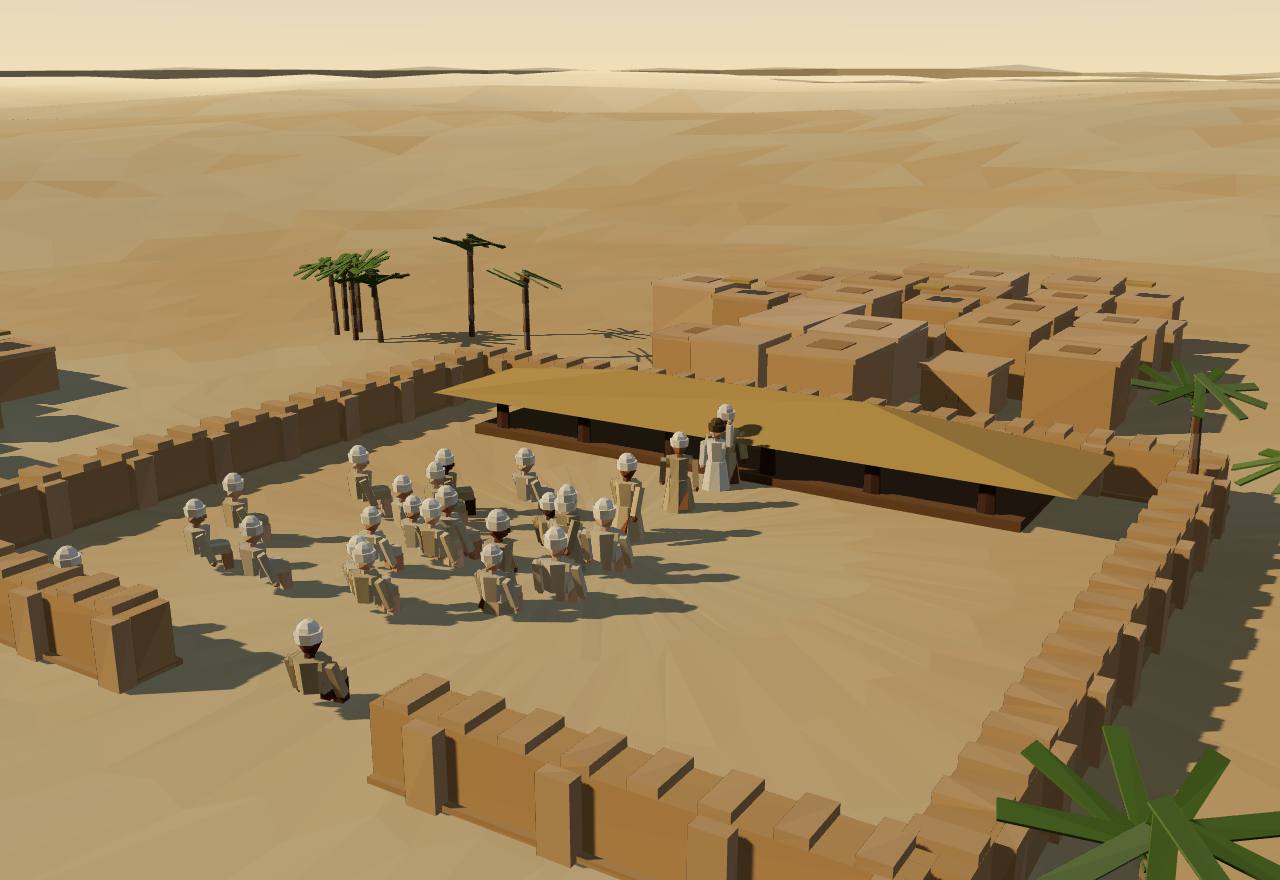
The oath of allegiance in a Medina courtyard, 632, and the council of 644
632 CE – 661 CE
The first four caliphs
When Muhammad died, his community had to decide who would lead it and how. Four of his Companions led it in turn from Medina and Kufa: two chosen in assemblies, one named by his predecessor, one chosen by a council. Three of the four were killed, and the dispute over the succession became a lasting religious divide.
Terms: The caliphates: The first four caliphs
- khilāfa the caliphate, the office of the khalīfa, 'successor' 14
- bayʿa 'the oath of allegiance', given by striking hands with the new leader 14,5
- shūrā 'a council of Muslims', the consultation that chose ʿUthmān in 644 14
- dīvān the register of 'Arab warriors entitled to stipends (ʿaṭāʾ)', and the office that kept it 15
- amṣār garrison cities (singular miṣr): Kufa, Basra, Fusṭāṭ 16,17
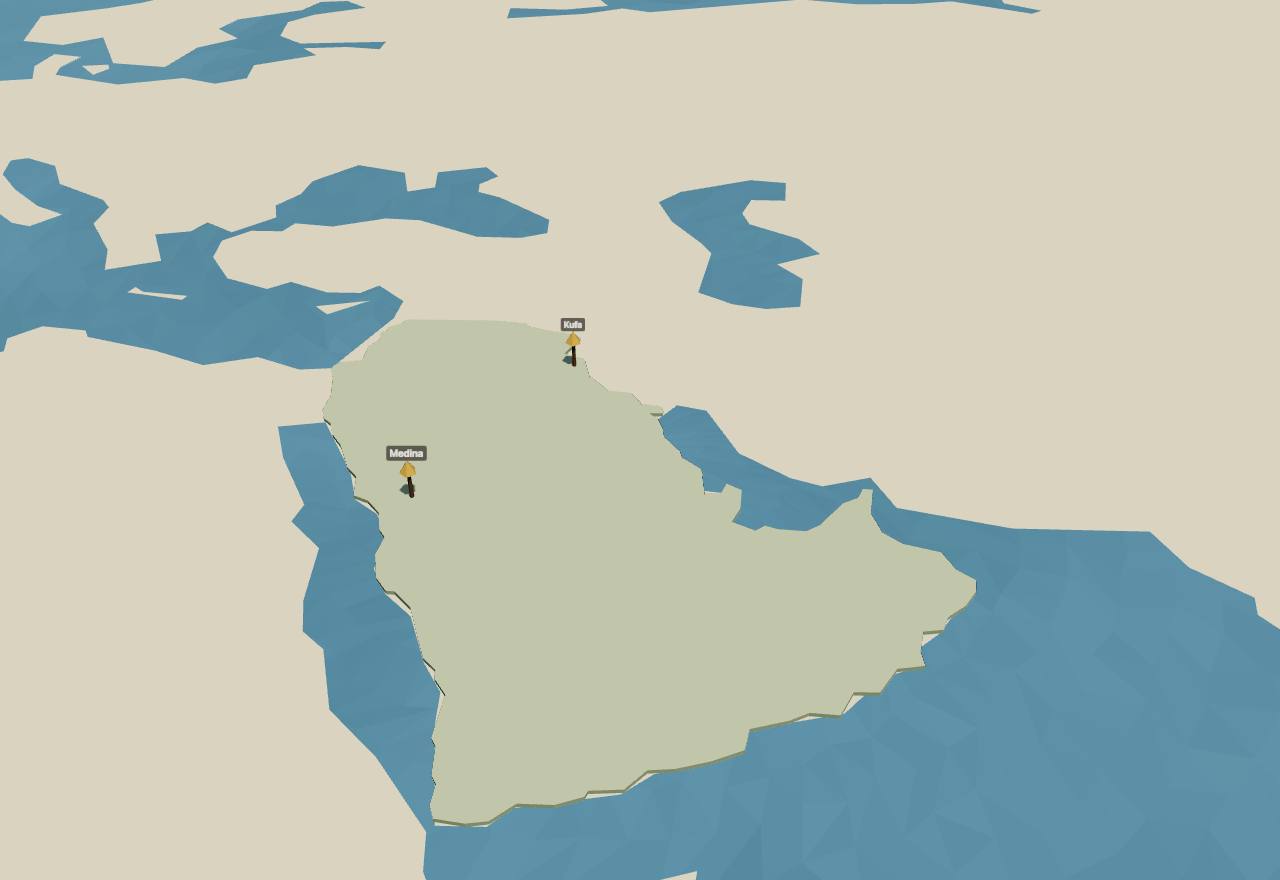
The first caliphs' conquests on Cliopatria's map, 634–656
Places: 2 cited sites over Cliopatria (CC BY 4.0) territories, drawn flat and low. Medina · Kufa 25,3,26,19
At Muhammad's death in 632 'the community split into groups contending for political succession'. The Medinan Helpers (Anṣār) were about to proclaim one of their own, Saʿd b. ʿUbāda; 'Muslim historians agree' that three Emigrants, Abū Bakr, ʿUmar and Abū ʿUbayda, 'rushed to the gathering of the Anṣār and imposed Abū Bakr as caliph'. ʿAlī and the Hashimites withheld their oaths until after the death of Fāṭima. 3,5 Consensus Texts
In the accounts Muir follows, the electors 'struck their hand on his in token of allegiance' and Abū Bakr was saluted as 'Successor of the Prophet'. His first address set a condition on obedience: 'If I do well, support me; if ill, then set me right … when I disobey, then obey me not.' Muir likens the new ruler to a tribal chief whose 'nomination was incomplete till confirmed by their homage'. 5,18 Consensus Texts
Dying in 634, Abū Bakr did not call an assembly: he 'dictated an ordinance appointing Omar his successor' and asked the people whether they were satisfied with a man who was 'none of mine own kin'. They answered, 'Yea, we will obey.' He had reigned two years and three months. 5 Consensus Texts
The conquerors did not settle among the conquered. Kufa 'was founded as a garrison city (meṣr) in 17/638' after the victory at Qādisiyya, and Basra about the same year 'as an encampment and garrison … for the Arab tribesmen'; the camp of Fusṭāṭ in Egypt was founded in 20/641. 'Outside Arabia itself the predominantly Arabian ruling elite of the new state was closely concentrated in the amṣār.' 19,17,16 Consensus Texts
ʿUmar 'is said to have instituted a register (dīvān)' of tax payments and of 'the names of Arab warriors entitled to stipends (ʿaṭāʾ) and the appropriate rates', in the Arabic sources 'in imitation of fiscal and administrative practice in Byzantine Syria and Sasanian Persia'. Muir's sources grade the stipends by 'priority of conversion, affinity to the Prophet, and military service', from 10,000 pieces a year for the Prophet's widows down to 200 for the latest levies. 15,5 Debated Texts
Stabbed in 644, ʿUmar named six leading Companions, ʿAbd al-Raḥmān b. ʿAwf, ʿUthmān, ʿAlī, al-Zubayr, Saʿd and the absent Ṭalḥa, 'to be the Electors of a successor from amongst themselves'. In Muir's account his son ʿAbdallāh, himself excluded, was to 'have the casting vote' on ʿAbd al-Raḥmān's side; the choice was due by the third day, and a resisting minority was to be 'beheaded on the spot'. ʿAbd al-Raḥmān gave up his own claim to arbitrate and asked ʿAlī and ʿUthmān whether they would rule by the Book, the Prophet's example and the precedent of his two successors; ʿUthmān 'answered unconditionally', ʿAlī's answer was, in Poonawala's word, evasive. ʿUthmān was chosen on the first day of the year 24. 5,3 Debated Texts
ʿUthmān's tightening of central control was resented, above all by the Qurʾān-readers (qurrāʾ) of the garrison towns. In mid-35/656 'discontented provincial groups from Egypt, Kūfa … and Baṣra arrived in Medina'; the Kufans, having already deposed their governor, 'took part in the murder of ʿOṯmān in 35/656'. 3,19 Consensus Texts
Invited to take the office, ʿAlī 'agreed only after long hesitation, probably several days after ʿOṯmān's death', and was saluted caliph after binding himself to rule 'according to the Book of the Lord'. Against Muʿāwiya he asserted 'that he was duly elected by the people, who had the right to exercise their judgment'; Muʿāwiya refused him homage. 3,5 Consensus Texts
The first civil war followed: the Battle of the Camel (656), then Ṣiffīn at the end of 36/657, where the refusal of 'the largest bloc in his army to fight' made ʿAlī accept arbitration. Those who protested, crying 'the jurisdiction rests with Allah alone', seceded as the Khārijites. At Adhruḥ in Shaʿbān 38/January 659 ʿAmr b. al-ʿĀṣ declared ʿAlī deposed; in Ramaḍān 40/January 661 a Khārijite struck ʿAlī with a poisoned sword. 3 Consensus Texts
The Kufans backed ʿAlī's son al-Ḥasan, who after seven months surrendered the rule to Muʿāwiya. In Madelung's reading of the sources the terms bound Muʿāwiya to the Book, the Sunna and 'the conduct of the righteous caliphs', and denied him the right to appoint his successor: 'an electoral council (šurā) would be set up for this task'. Muir gives other terms, chiefly money. 6,5 Debated Texts
How power worked Caliph · Mixed · Custom and kin
How power worked
- Who rules
- Caliph Consensus
Why?
- How chosen
- Mixed Debated
Why?
- Limits on power
- Custom and kin Debated
Why?
- Scale
- Empire Consensus
Why?
- Claim to rule
- Divine mandate Debated
Why?
- Who has a say
- A narrow elite Consensus
Why?
ʿUmar's register: who was paid what
Data: the stipend scale as Muir 1883 gives it from the Arabic chronicles
The register paid every Arab Muslim a yearly stipend by rank, judged on three points, 'priority of conversion, affinity to the Prophet, and military service'. Women had 'as a rule, one-tenth of a man's share' (10 %), and warriors of distinction an extra 500. The figures are the tradition's as Muir gives them; Bosworth notes that ʿUmar is only 'said to have instituted' the register. 5,15
A widow of the Prophet received 10,000 a year, 2 times as much as one of the men of Badr (5,000).
| Rank | Pieces a year | Earned by |
|---|---|---|
| The Prophet's widows, the 'Mothers of the Faithful' p. 225 | 10,000 | kinship to the Prophet |
| The 'Three Hundred of Bedr' (Badr) p. 226 | 5,000 | early conversion |
| Those present at Ḥudaybiya and the Pledge of the Tree p. 226 | 4,000 | early conversion |
| Those who took part in 'quelling the Rebellion' p. 226 | 3,000 | military service |
| Fighters in the great battles of Syria and Iraq, and sons of the men of Badr p. 226 | 2,000 | military service |
| Those who took the field after al-Qādisiyya and the Yarmūk p. 226 | 1,000 | military service |
| The latest levies p. 226 | 200 | military service |
| Every infant entered at birth (the minimum) p. 226 | 10 | entered at birth |
661 CE – 750 CE
The Umayyads
Muʿāwiya ruled from Damascus with the Syrian army and made the oath to his son the rule. His successors built the Dome of the Rock, struck coins that carried only words, and put the empire's registers into Arabic, while their armies reached Spain and the Indus. A revolt from Khurasan under black banners ended the dynasty in 750.
Terms: The caliphates: The Umayyads
- dinarالدينار the gold coin; the reform dinar's margin reads 'In the Name of God, this dinar was struck in the year 79' 27,28
- jezya the poll tax on non-Muslims, at first used interchangeably with ḵarāj for tribute in general 29
- ḵarāj the land tax; the central dīvān al-ḵarāj handled 'assessments and receipts' 29,15
- mawāli 'clients', non-Arab converts to Islam (plural of mawlā) 29
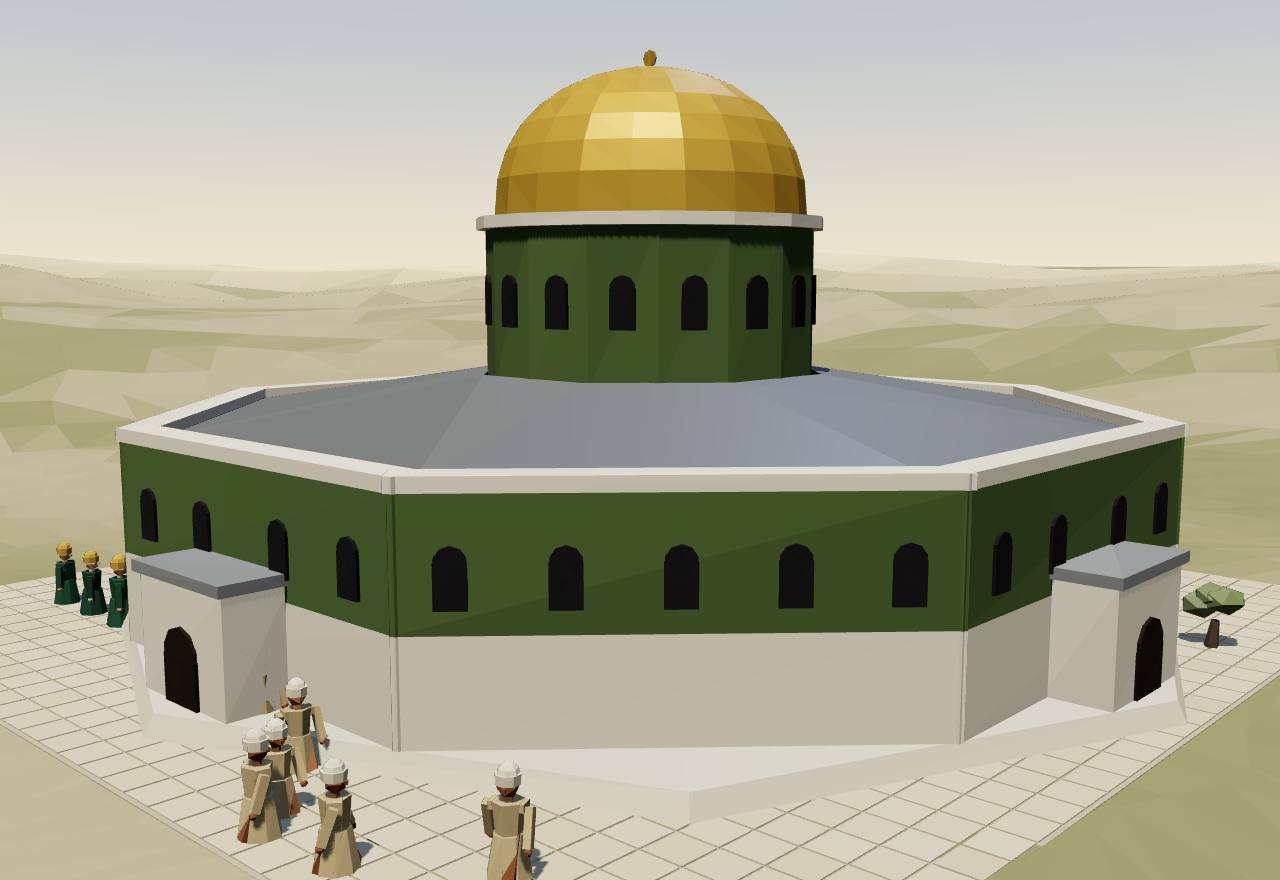
The Dome of the Rock, Jerusalem, AH 72 / 691
'The Jamâa under Muâwia, i.e., the uniting of the congregation of Muhammad under one sceptre, took place in the first half of the year 41, in the summer of 661 A. D.' (Wellhausen). Yet 'it was only in Syria (with Mesopotamia and Egypt) that they had a firm seat. Everywhere else they encountered opposition both secret and open.' 7 Consensus Texts
Muʿāwiya governed through others: 'His prominent Stattholders in the most important provinces were not Umaiyids, and with one exception not even Quraishites.' Ziyād, governor of Iraq 42–53/662–73, and then his sons ruled the east for a decade, and Muʿāwiya 'seems to have been the guiding hand' in forming the new government offices. 7,30,15 Consensus Texts
Muʿāwiya wanted 'during his life-time, to yoke them with the same obligation towards his son Yazîd'. His opponents said 'he was committing an unheard-of innovation in wishing to introduce a succession from father to son, such as existed with the Sasanids and the Byzantines.' Marsham, as Tayyara cites him, argues that the Umayyads turned the oath of allegiance 'from a consensus-based, tribal custom into an instrument of monarchic power'. 7,14,18 Consensus Texts
On 10 Muḥarram 61/10 October 680 al-Ḥusayn, ʿAlī's son, was killed at Karbalāʾ by an Umayyad force instructed not to let him pass 'unless he would sign a pledge of allegiance to the caliph Yazid'. The revolt of ʿAbd Allāh b. al-Zubayr, 'the second fetna (64-73/683-92)', ended Sufyanid rule; the Marwanid Umayyads won it back and retook Kufa in 691. 31,30,19 Consensus Texts
'An inscription in the interior of the building states that it was built in the year A.H. 72 (A.D. 691).' The Dome of the Rock's dome stands on a ring of 'four piers and twelve columns', 20.60 metres across, inside an octagon whose arcades are covered with mosaic 'of glass tesserae and mother-of-pearl' on a gold ground. 32,33 Consensus Excavation Texts
'Gold coins were not issued by Muslims until 72/692'. From 77/696 'new Islamic dinars were minted in Damascus … with Koranic inscriptions in Arabic and a new weight of 4.25 grams', and the silver followed in 79/698 or 80/699. 'All Omayyad reformed gold and silver coins were issued anonymously, with neither caliphs' nor governors' names included.' Al-Balādhurī dates ʿAbd al-Malik's first gold to the year 74: the sources differ by a few years. 28,34,35,36 Debated Texts Excavation
A dinar of the reform in the Met, 2.1 cm across, carries no image at all. Its field reads 'There is no god but God alone. He has no associate.'; its margin, 'In the Name of God, this dinar was struck in the year 79 AH' (698–99 CE). 27 Consensus Excavation
'Greek remained the language of the state registers until the reign of ʿAbd-al-Malik ibn-Marwân, who in the year 81 ordered it changed' (al-Balādhurī, for Syria). In Iraq al-Ḥajjāj switched the Persian registers to Arabic in 78/697 with a Persian secretary's help; 'in the farther provinces like Khorasan, however, the change from Persian did not take place until almost the end of the Omayyad period'. 37,15 Consensus Texts
Taxes kept converts in their place: 'in the late 7th and early 8th century even the mawāli … were forced to pay jezya'. ʿUmar II 'abolished the jezya for new converts and triggered a wave of new converts'; his officials 'continually contended that new conversions were a contrived means to escape taxes'. The grievance fed revolt: the dynasty 'discriminated against non-Arabs and even new Muslims'. 29,30,1 Consensus Texts
Under al-Walīd I the armies reached al-Andalus, Sind and Transoxiana: Ṭāriq crossed into al-Andalus in the year 92, Muḥammad b. al-Qāsim took Sind, and Qutayba b. Muslim 'conquered vast areas of Sogdia, and raided beyond the Jaxartes'. Seshat codes the caliphate's territory at 9 million km² from 700 CE and its people at 23–33 million. 37,36,30 Seshat Consensus Texts
Al-Walīd I took the cathedral of Damascus for his mosque: when the Christians refused his offer, 'they pulled the church down'. Later geographers say he spent on it 'the whole revenues of Syria for seven years' (al-Muqaddasī) or the land tax 'of the Empire during seven years' (Ibn al-Faqīh). UNESCO lists 'the 8th-century Great Mosque of the Umayyads' as the heart of Damascus. 37,33,38 Debated Texts Excavation
In 128/745–46 the ʿAbbasid imam sent Abū Muslim to Khurasan; in 129/747 'he unfurled the ʿAbbasid black banners', registering his followers 'by locality and not by tribe'. Marwān II's army broke on the Greater Zāb in 132/750 ('more were drowned in the Zāb than perished by the sword'), and Marwān was killed in Egypt on 27 Dhu'l-Ḥijja 132/6 August 750. 1,39,40 Consensus Texts
How power worked Caliph · Heredity · Custom and kin
How power worked
- Who rules
- Caliph Consensus
Why?
- How chosen
- Heredity Consensus
Why?
- Limits on power
- Custom and kin Debated
Why?
- Scale
- Empire Consensus
Why?
- Claim to rule
- Divine mandate Debated
Why?
- Who has a say
- A narrow elite Consensus
Why?
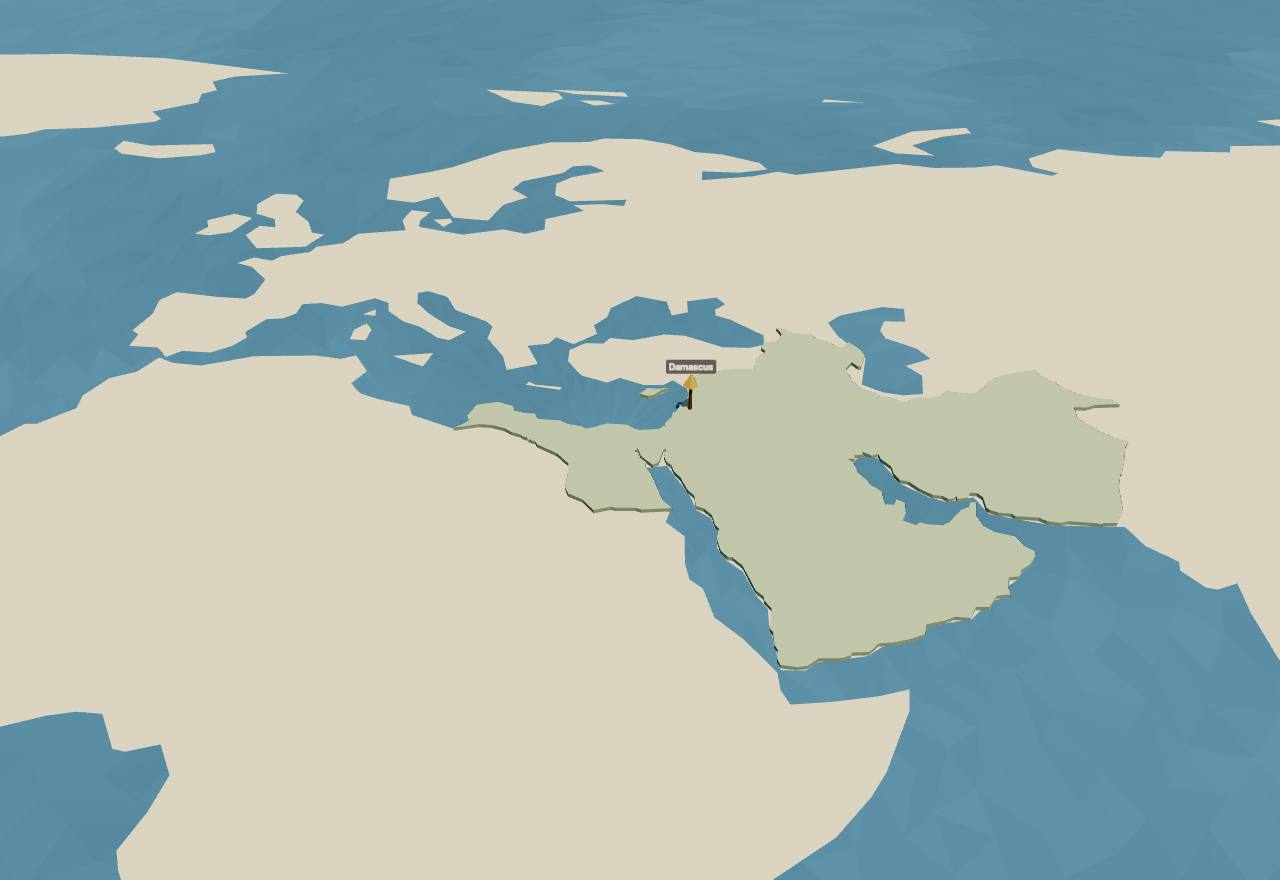
750 CE – 945 CE
The Abbasid caliphate
The Abbasids moved the centre east, to a round city on the Tigris, and governed through viziers and offices staffed by Persian secretaries. Scholars, not caliphs, came to own the law. From the 830s caliphs relied on Turkish slave soldiers; within a generation the soldiers were choosing and killing caliphs, and in 945 a Daylami warlord took Baghdad.
Terms: The caliphates: The Abbasid caliphate
- vezāra the vizierate, which now 'develops under the explicit name' as the head of the offices 39
- Mihna 'the Mohammedan Inquisition', 218–234 AH, on whether the Qurʾān was created 44,45
- ghulam a slave soldier, as the Turkish guards of Samarra are called 46
- Sharīʿa the law worked out by jurists from revelation, 'a moral imperative' rather than a ruler's code 47
- amīr-al-omarāʾ 'commander of commanders', the military office through which warlords ran Baghdad from 936 48
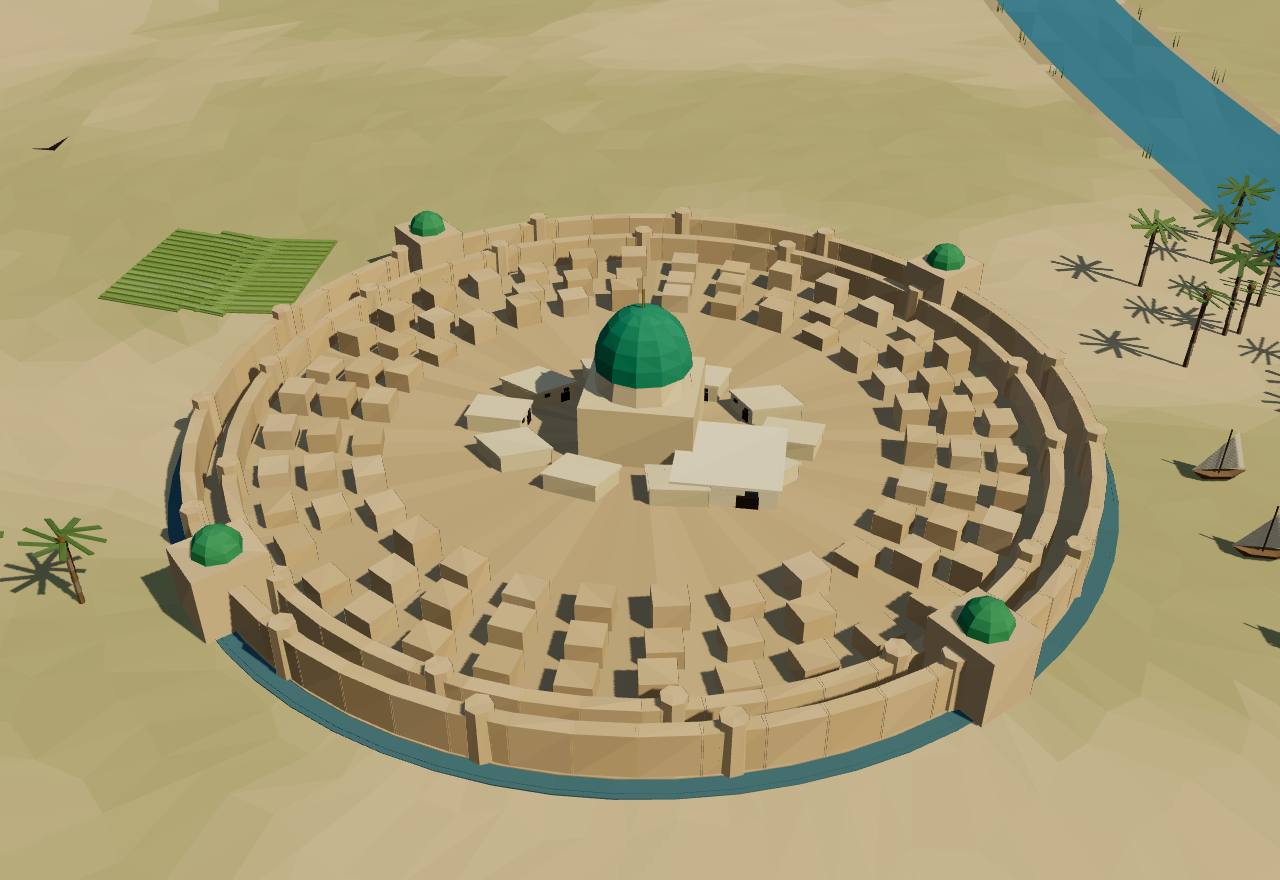
The Round City of Baghdad, 762–766
'Baghdad, whose official name was originally Madīnat-al-Salām, the City of Peace, was founded in 145/762 by the second ʿAbbasid caliph, Abū Jaʿfar al-Manṣūr as his official capital.' 'By the year 149 (a.d. 766)' the Round City was finished, '100,000 craftsmen being constantly employed on the works'. 2,49 Consensus Texts
The city was 'exactly circular in outline', with a water-filled ditch, two walls and 'a third innermost wall round the central area'; its four gates led to Kufa (south-west), Basra (south-east), Khurasan (north-east) and Syria (north-west). Le Strange's sources give its size as 5,000, 4,000 or 2,200 ells from gate to gate; he takes the first, about 2,500 yards, and the main wall as 90 feet high. Kennedy sets it beside the round Sasanian cities of Dārābgerd and Fīrūzābād. 49,2 Debated Texts
At the centre stood the caliph's 'Palace of the Green Dome', about 200 yards square, its dome topped 120 feet up by the figure of a horseman, with the mosque beside it at a quarter of its area. Round the court were the offices: 'the Treasury and the Armoury … the Chancery …, of the Office for the Land Tax, of the Privy Seal, of War … and finally of the Pay Office.' The Green Dome 'only fell to ruin in the year 329 (a. d. 941)'. 49 Consensus Texts
'It is now that the specific office of the vizierate develops', and 'prominent Persian families filled the vizierate and the chief secretarial posts for long periods'. The Barmakid Khālid ran the army and land-tax offices and 'was the first one to replace the scrolls with ledgers'; his son Yaḥyā became Hārūn al-Rashīd's vizier in 170/786 and held the caliphal seal, until Hārūn had Jaʿfar killed in 187/803 and the family's property confiscated. 39,50 Consensus Texts
Hārūn named two sons as heirs in order, al-Amīn and then al-Maʾmūn, had 'two documents … hung up with solemn ceremony in the Kaaba' and the oaths renewed across the empire. Al-Amīn later declared his brother 'altogether deposed from the succession' and had the documents torn up; the civil war ended with 'the victory of Maʾmūn … over his brother Amīn in 198/813'. 13,39 Consensus Texts
In 217–218 AH al-Maʾmūn ordered his governor in Baghdad to examine the scholars on whether the Qurʾān was created; those who would not say so faced 'incarceration, torture and loss of stipends'. Aḥmad b. Ḥanbal was flogged in 220/835. The policy ended under al-Mutawakkil, 'probably between the years 234-237'. Turner calls it 'the first time in Islamic history that a caliph declared a religious doctrine and enforced' it. 45,51,44,52 Debated Texts
The law was not the caliph's. Hallaq: 'the new religion generated a full-fledged, sophisticated law and legal system' within three and a half centuries, and for the first two or three of them legal education was 'largely and deliberately disconnected from politics … which the rulers sought to influence without much success'. Caliphs did appoint the judges: al-Mutawakkil deposed Ibn Abī Duʾād, 'chief Cazee under the three preceding reigns'. 53,54,13 Debated Texts
Al-Muʿtaṣim (218–27/833–42) 'expanded the recruitment of professional soldiers and slaves from the Turkish steppes and from North Africa', eclipsing the Khurasanian guards. In Muir's sources 'thousands of [Turkish slaves] were yearly imported'; friction with Baghdad led to a new capital up the Tigris, where 'the Caliph fell more than ever under the hand of these foreign levies'. The court moved to Samarra in 221/836. 39,13,49 Consensus Texts
Samarra, on the Tigris 125 km north of Baghdad, was founded in 836; its soldiers, living with their families, settled 'dans des maisons et non dans des casernes' (in houses, not barracks), the Turks' main allotment 11 km north of the palace. The city stretched over 45 km with 58 km² built up, and its mosque, built between 849 and 852, has a spiral minaret 52 m high (Northedge). UNESCO records a site 41.5 km long, the capital of 836–892. 55,56 Consensus Excavation Survey
In 247/861 Turkish officers 'rushed in upon the senseless Monarch and despatched him with their swords': al-Mutawakkil was the first of four caliphs to die violently or in captivity within nine years. 'The Turkish chiefs held a conclave to select his successor'; Muir's verdict is that 'the Caliphate no longer depended on Arabian choice'. The court returned to Baghdad in 278/892 or 279. 13,2,49 Consensus Texts
In 324/936 the caliph al-Rāḍī appointed the governor of Wāsiṭ, Ibn Rāʾiq, amīr al-umarāʾ, 'commander of commanders'; the holders acted 'not only as military commanders-in-chief, but to some extent also as viziers'. In 334/945 the office passed to the Daylami Buyids, 'who from 334/945 onwards controlled the caliphs in Baghdad'. 48 Consensus Texts
Seshat codes the early Abbasid caliphate at 8.3 million km² around 800 CE and 1 million by 900, with 23–33 million people falling to 9–11 million, and six levels of administration. 39 Seshat Consensus
How power worked Caliph · Heredity · Written law
How power worked
- Who rules
- Caliph Consensus
Why?
- How chosen
- Heredity Debated
Why?
- Limits on power
- Written law Debated
Why?
- Scale
- Empire Consensus
Why?
- Claim to rule
- Divine mandate Debated
Why?
- Who has a say
- A narrow elite Consensus
Why?
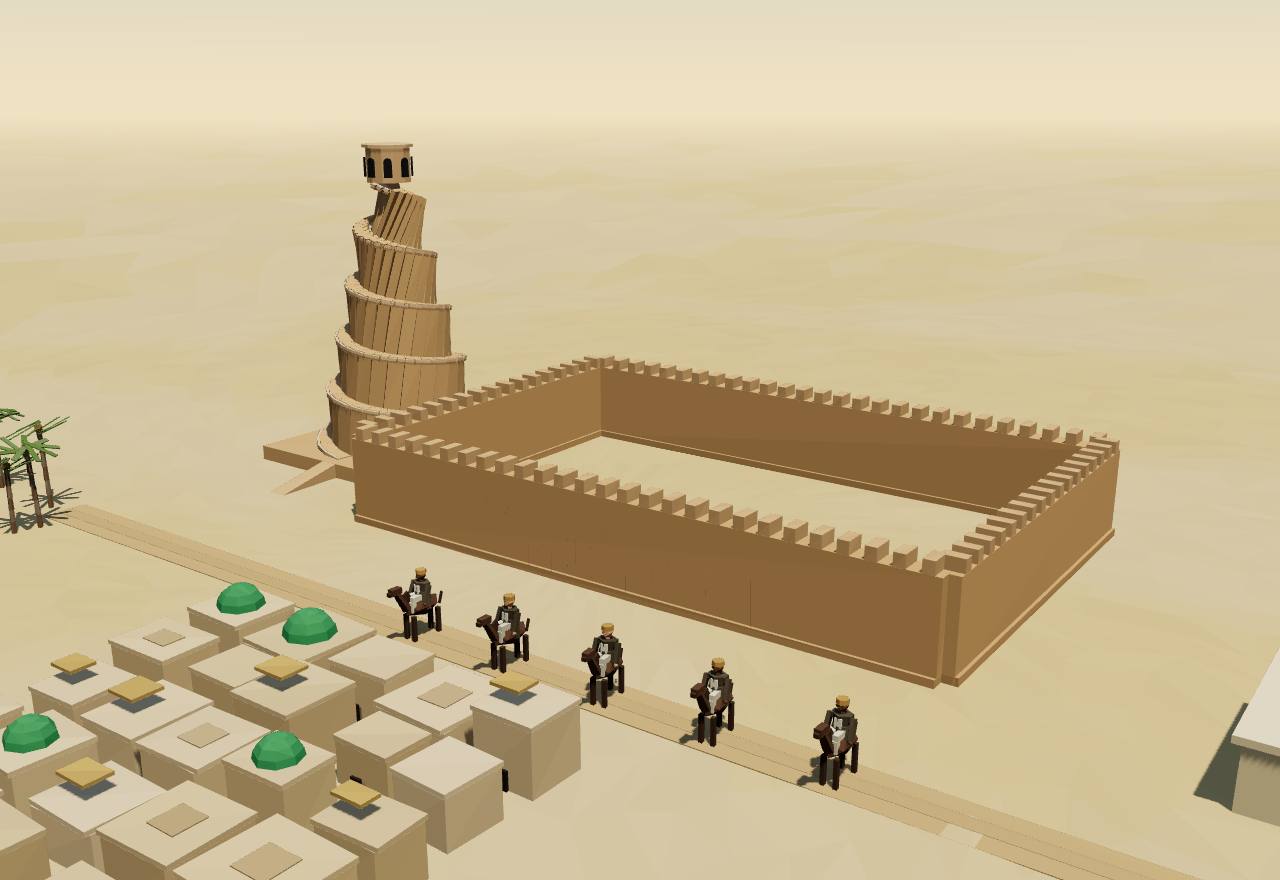
Samarra: the spiral minaret and the soldiers' city, 836–892
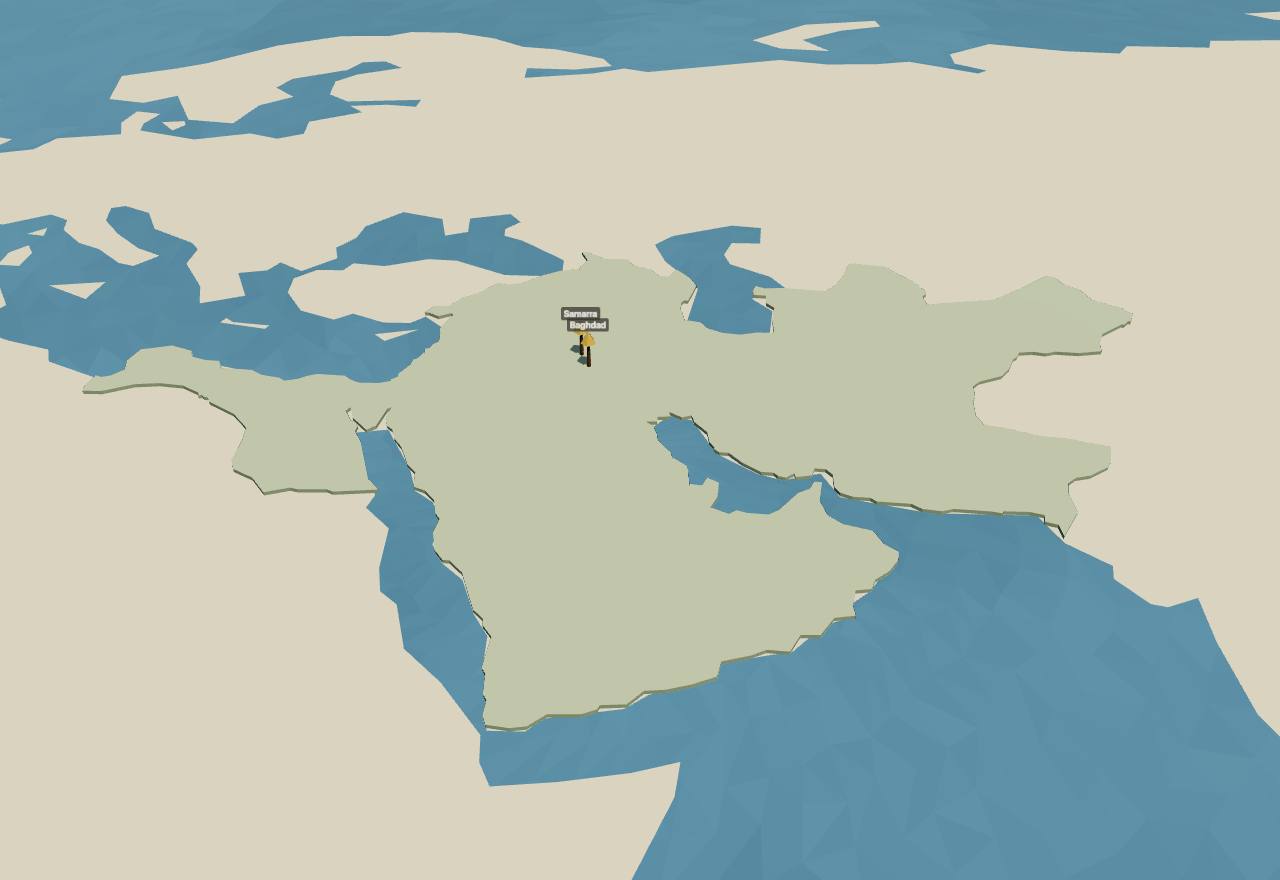
945 CE – 1258 CE
Caliphs, sultans and rival caliphates
By the mid-tenth century three rulers called themselves caliph: an Abbasid in Baghdad who no longer commanded armies, an Ismaili imam in Ifrīqiya and then Cairo, and an Umayyad in Córdoba. Military rulers, amirs and then sultans, held power in the Abbasid lands and sought the caliph's blessing. The Mongols ended the Baghdad line in 1258.
The Fatimid caliphate was 'established in 297/909 in Efrīqīya', and its threat, 'both political and religious', was one of the reasons 'Abd al-Raḥmān III proclaimed himself caliph' in Córdoba in 316/929. For most of the next century there were three caliphs at once. 64,8 Consensus Texts
Cliopatria draws no single caliphal state after 969: its Abbasid Caliphate polygons stop in 969 and resume only in 1202, while the Buyid Dynasty, the Fatimid Caliphate, the Caliphate of Córdoba, the Great Seljuk Empire and the Ayyubid Sultanate cover the same lands in turn. Seshat, too, codes a separate 'Abbasid Caliphate II' only from 1191 to 1258. 20 Seshat Consensus
Baghdad under Buyid and Seljuk sultans945 CE – 1258 CE
The Abbasid caliph stayed in Baghdad as the head of Sunni Islam while Shiʿi Buyid amirs and then Seljuk sultans ruled. He named judges, crowned sultans and lent his name to their coins and sermons; under al-Nāṣir the caliphs won back a state of their own, until the Mongols came.
Terms: The caliphates: Caliphs, sultans and rival caliphates, Baghdad under Buyid and Seljuk sultans
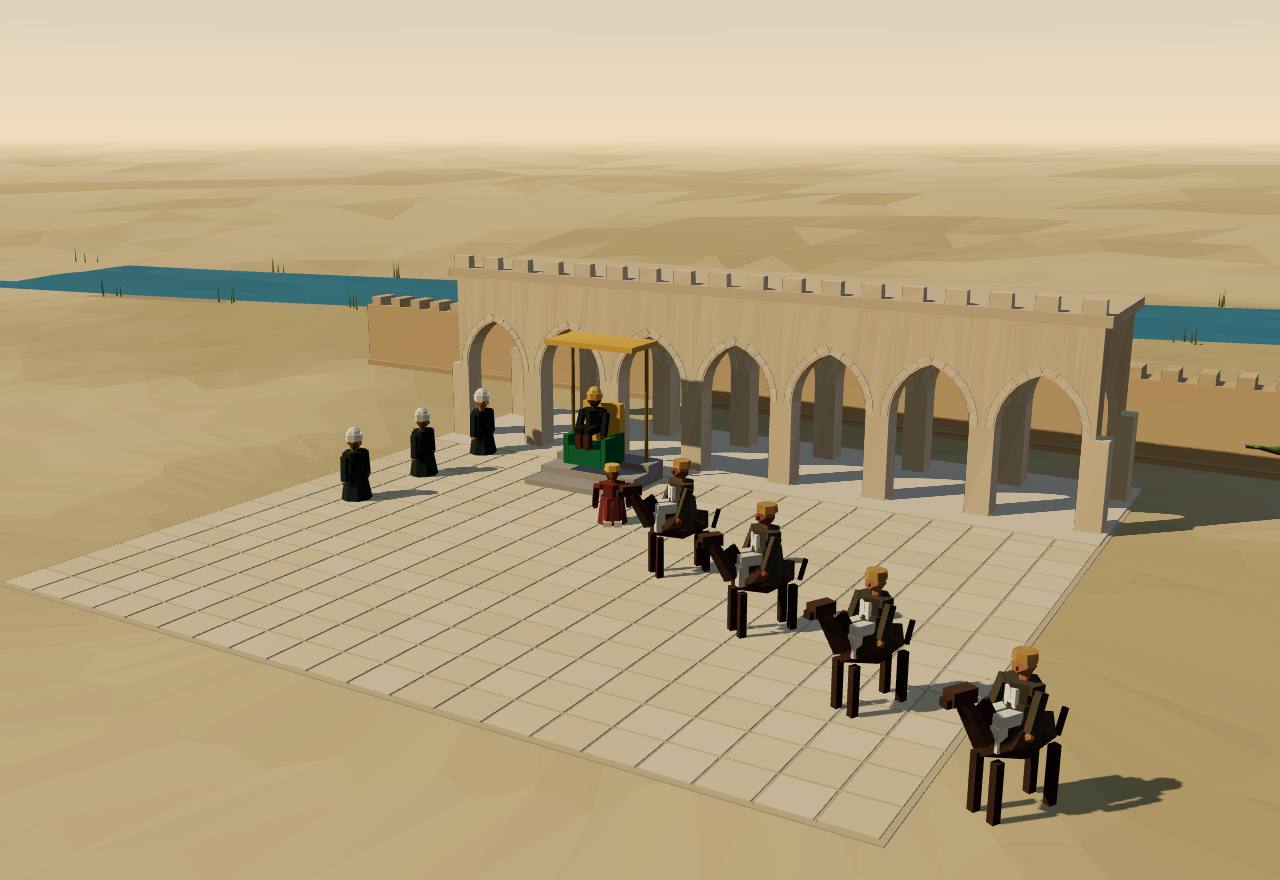
The caliph crowns a sultan, Baghdad 1058; the Mongol siege of 1258
'Aḥmad entered Baghdad without a fight on 11 Jomādā I 334/19 December 945; the office of amīr al-omarāʾ was entrusted to him, and the caliph bestowed upon him the honorific title Moʿezz-al-Dawla.' Within weeks the caliph al-Mustakfī was blinded and deposed. 65,13 Consensus Texts
'The amirs were now working on their own account, and the amount of appanage they granted to the caliph depended on their favor.' The Abbasids' direct power shrank to the Sawād, the farmland round Baghdad; Seshat codes the Buyid confederation at 900,000 km². 65,39 Seshat Consensus Texts
The caliphate 'retained its prestige not only with the amirs but also with the common people, though this prestige could not be translated into actual political power. It was the caliphs who nominated the qāżīs and who were responsible for the religious duties.' In 422/1031 the caliph's envoy al-Māwardī refused a Buyid the title 'exalted sovereign' as fit for the caliph only. 65 Consensus Texts
'In Ramażān 447/December 1055 Ṭoḡrel Beg … entered Baghdad', and the caliph had his name said in the Friday sermon; in 450/1058 the caliph al-Qāʾim crowned him sultan. The same year the general al-Basāsīrī took Baghdad and had the sermon said 'in the name of the Fatimid al-Mostanṣer for a whole year'. 65,64 Consensus Texts
Niẓām al-Mulk, vizier to the sultans Alp Arslan (1063–73) and Malikshāh (1073–92), restored ties with the caliphate, 'apparently intended … to secure their support for his own position', and founded colleges, the Niẓāmiyyas, the most famous in Baghdad in 1066. The jurist al-Juwaynī declared that the vizier 'should replace the incompetent and unlettered Abbasid caliph'. 66 Consensus Texts
Abbasid attempts to reassert their authority 'finally succeed in the caliphate of al-Nasir' (1180–1225), helped by the end of Seljuk power, and his patronage of Sufism and the futuwwa brotherhoods added 'a new dimension in Abbasid religious authority' (El-Hibri). Seshat codes a second Abbasid state from 1191, about 750,000 km² around 1200. 67 Seshat Debated Texts
Summoned by Hülegü, the caliph al-Mustaʿṣim 'did not present himself … a decision he was later to rue'. 'The city was taken on 13 February 1258 and subjected to a week of looting and massacre. The caliph was executed, together with most of his family.' Afterwards 'Baghdad became a provincial centre'. 12,68 Consensus Texts
How power worked Sultan · Conquest or coup · Custom and kin
How power worked
- Who rules
- Sultan Consensus
Why?
- How chosen
- Conquest or coup Consensus
Why?
- Limits on power
- Custom and kin Debated
Why?
- Scale
- Empire Consensus
Why?
- Claim to rule
- Divine mandate Debated
Why?
- Who has a say
- A narrow elite Consensus
Why?
The Fatimid caliphate in Cairo945 CE – 1171 CE
An Ismaili Shiʿi imam proclaimed himself caliph in North Africa in 909 as the rightful heir of ʿAlī and Fāṭima, conquered Egypt in 969 and built Cairo. Succession ran by the imam's designation, until in 1094 a vizier chose the caliph; Saladin ended the dynasty in 1171.
Terms: The caliphates: Caliphs, sultans and rival caliphates, The Fatimid caliphate in Cairo
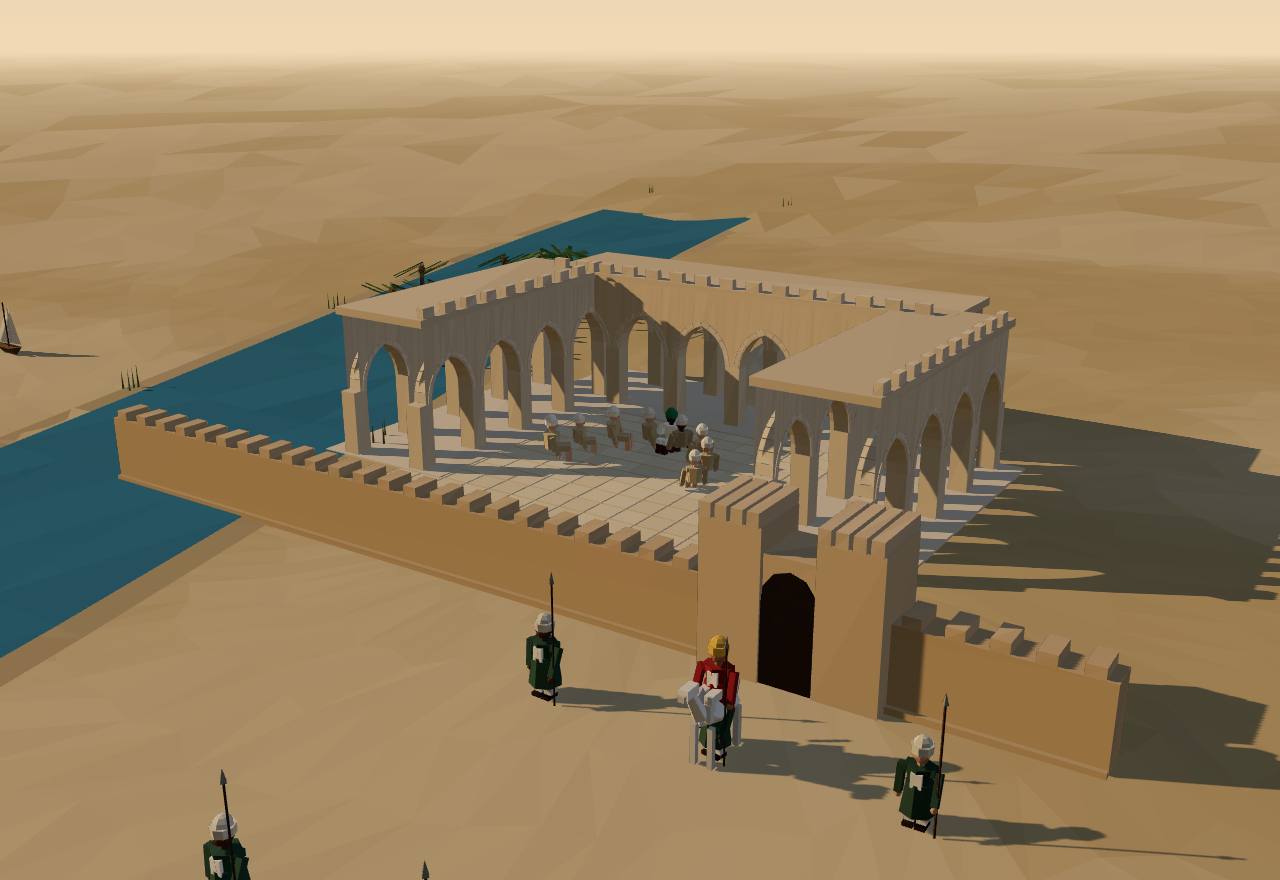
Fatimid Cairo: a mosque court and the city gate
ʿAbd Allāh al-Mahdī 'was acclaimed as caliph in a special ceremony in Sejelmāsa on 7 Du'l-Ḥejja 296/27 August 909', and again on entering Raqqāda 'on 20 Rabiʿ II 297/4 January 910'. Ismaili sources date the state from 297/909, 'the public proclamation … of the Imamate'. 70,71 Consensus Texts
The Fatimid caliph was the Ismaili imam. The imamate was to continue 'on a heredity basis through ʿAli and his wife, Fāṭema …, the Prophet's daughter, succession being based on designation by the Imam of the time'. 71 Consensus Texts
The Fatimids conquered Egypt in 358/969 and moved their seat there in 362/973, to Cairo, 'founded as the headquarter of the Fatimid Caliphate in 969 AD'. Its mosque of al-Azhar 'has been a leading theological and religious academic centre for the entire Islamic world since its foundation in 970 AD' (UNESCO). 64,70,72 Consensus Texts Excavation
Unlike the Abbasids, the Fatimids 'did not discontinue their daʿwa activities after the establishment of their state'; they divided the world into twelve 'islands' (jazāʾer) for the mission. 'Only the imam was the source of the ḥekma', and the caliph-imam al-Ḥākim founded the House of Knowledge (Dār al-ʿIlm) in 395/1005. 64,70 Consensus Texts
In 1094 'Nezār, al-Mostanṣer's heir-designate, was brutally deprived of his succession rights, while his much younger brother al-Mostaʿlī was installed … by the all-powerful Fatimid vizier Afżal.' 'Henceforth, real power in the Fatimid state remained in the hands of the Fatimid viziers who also commanded the troops'. 64,70 Consensus Texts
'The Ayyubid Ṣalāḥ al-Din, the last Fatimid vizier, ended Fatimid rule in 567/1171', 'when the fourteenth and last Fatimid caliph, al-ʿĀżed …, lay dying in Cairo'. Lane-Poole: 'Saladin supplanted the last Fātimid Caliph in 1171 (567).' 70,64,10 Consensus Texts
Seshat codes the Fatimid state at 1.4 million km² around 1000 and 631,000 km² by 1100, with capitals at Mahdia, al-Manṣūriyya and Cairo, and judges and courts present. A gold dinar of al-Ḥākim in the Met, struck at Tyre and dated 388 AH/998 CE, is 2.1 cm across, the size of the Umayyad reform coin. 73 Seshat Consensus
How power worked Caliph · Heredity · Empire · 1 unknown
How power worked
- Who rules
- Caliph Consensus
Why?
- How chosen
- Heredity Debated
Why?
- Limits on power
- Unknown
Why?
The sources read describe the imam's sole authority over doctrine and, after 1094, viziers who held real power, but no institution that could check either; Seshat codes judges and courts as present without saying whether they bound the ruler.
- Scale
- Empire Consensus
Why?
- Claim to rule
- Divine mandate Consensus
Why?
- Who has a say
- A narrow elite Consensus
Why?
The Umayyad caliphate of Córdoba945 CE – 1031 CE
An Umayyad prince who escaped the massacre of 750 founded an emirate in al-Andalus; in 929 his descendant ʿAbd al-Raḥmān III took the title of caliph. The caliphate built Madīnat al-Zahrāʾ and enlarged the Great Mosque of Córdoba, fell under the control of its chamberlain al-Manṣūr, and broke apart in civil war from 1009.
Terms: The caliphates: Caliphs, sultans and rival caliphates, The Umayyad caliphate of Córdoba
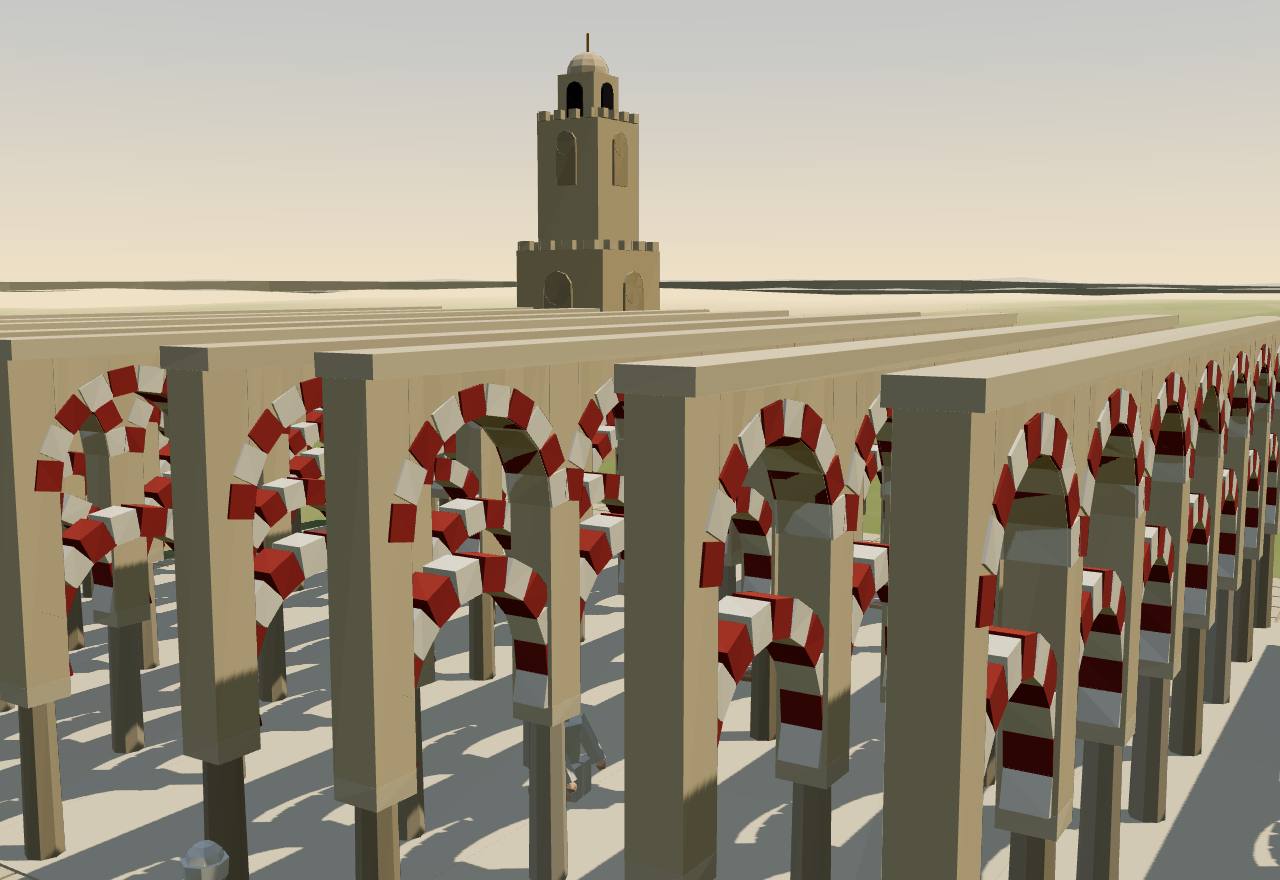
The Great Mosque of Córdoba: the double arches
'In 929, Abderraman III established it as the headquarters of the independent Caliphate' (UNESCO). Fierro: the step he took 'en 316/929 al proclamarse califa' obliged him to justify it and convince his subjects it was needed, against the Fatimids above all. 9,8 Consensus Texts
The dynasty began as a refugee's: after the black flags reached Syria, ʿAbd al-Raḥmān, an Umayyad prince, 'landed in Spain early in 138 A.H.' (755) and 'entered in triumph the palace of Cordova'. Lane-Poole's table runs his line from 756 to 1031. 40,10 Consensus Texts
The Great Mosque was laid out with 'eleven naves perpendicular to the qibla', the central one wider, and roofed on what Souto calls 'un doble orden superpuesto': horseshoe arches on columns, with round arches on piers above them. UNESCO counts 'the use of double arches to support the roof' among elements 'hitherto unheard-of in Islamic religious architecture'. 75,9 Consensus Excavation
Each ruler lengthened the hall: ʿAbd al-Raḥmān II by eight bays from 833; al-Ḥakam II southwards from October 961 to January 967, by twelve bays (Rosser-Owen) or thirteen (Souto). In 951 ʿAbd al-Raḥmān III built a minaret '73 cubits (34 metres) high'. The mosque's 'distinctive repeat unit, of double-tiers of horseshoe arches', was copied by every later builder. 75,77 Debated Excavation Texts
Under the caliph Hishām II (from 976) the chamberlain Muḥammad b. Abī ʿĀmir, al-Manṣūr, governed. His extension of the mosque, begun in 377/987 and inaugurated in Rajab 384/994, added eight aisles and gave it 'its definitive dimensions: a total surface area of 22,400 m², and the capacity of some 40,000 Muslims at prayer', the prayer hall 'almost a square (114.6 m N-S × 128.41 m E-W)'. 77,75,10 Consensus Excavation Texts
Madīnat al-Zahrāʾ, 'built in the mid-10th century CE by the Umayyad dynasty as the seat of the Caliphate of Cordoba', was begun in 936–937 or 940–941 'depending on the source', and 'laid to waste during the civil war that put an end to the Caliphate in 1009-1010'. 78,79 Consensus Excavation Texts
Between 14 February and 14 March 1009, in Ibn Ḥayyān's account, 'the city of Cordoba was taken and the city of al-Zāhira was destroyed; one caliph was deposed'. Civil war 'rocked al-Andalus for the next twenty years, until the caliphate was abolished' in favour of the taifa kings; Lane-Poole's table lists ten reigns between 1009 and 1031. 76,10 Consensus Texts
The title outlived the state. Wasserstein shows 'that the caliphal insitution was not abolished at any stage, and that it served rulers throughout the eleventh century as … an important source of legitimacy'. Seshat has no data for the emirate or caliphate of Córdoba (its records es_cordoba_emirate and es_cordoba_cal are empty); Cliopatria draws the Caliphate of Córdoba from 936 to 1071. 11,20 Debated Texts
How power worked Caliph · Heredity · Territorial state · 1 unknown
How power worked
- Who rules
- Caliph Consensus
Why?
- How chosen
- Heredity Debated
Why?
- Limits on power
- Unknown
Why?
The sources read describe who held power, the caliph and then his chamberlain al-Manṣūr, but not a council or court that could check either; Seshat has no record for the caliphate of Córdoba.
- Scale
- Territorial state Consensus
Why?
- Claim to rule
- Divine mandate Consensus
Why?
- Who has a say
- A narrow elite Consensus
Why?
Artefacts
 Model, not a scan
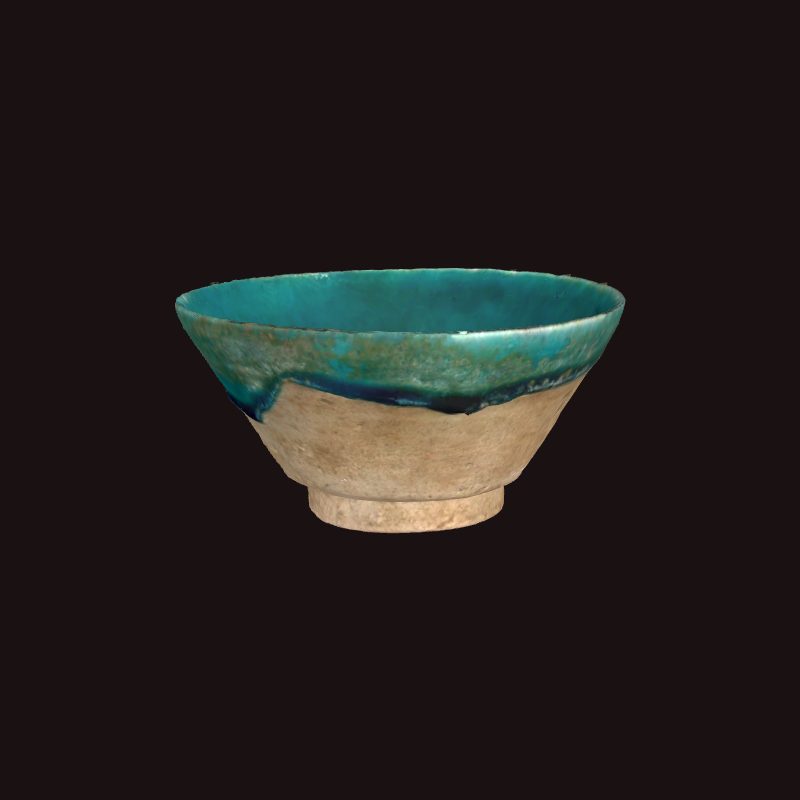
In numbers
How each caliph came to power, and how each reign ended
Data: Lane-Poole 1894 (dates), Muir 1898 (how each rose and fell)
56 caliphs from Abū Bakr to al-Mustaʿṣim. 18 were named heir by the caliph before them, 2 chosen by Companions or a council, 9 by courtiers or notables after a death, 6 proclaimed by a revolt or an army and 5 installed by soldiers, amirs or sultans. 18 of the 56 reigns ended in a killing or a deposition; of the 12 caliphs who came to power between 861 and 945, 7 were killed, deposed or forced to abdicate. Dates are Lane-Poole's; how each rose and fell is in Muir's words, and where he says nothing the row says so. 10,13
56 accessions: 2 council, 18 named heir, 9 notables, 6 revolt or army, 5 soldiers, amirs, 8 kinsman, 8 not stated; median reign 8 years. Ended: 23 died in office, 8 deposed, 10 killed, 3 abdicated, 1 conquered, 11 not known.
Marks at the end of a bar: ○ died in office · × killed · ▽ deposed · | abdicated · □ conquered
Show the table: Caliphs in Medina, Damascus and Baghdad, 632–1258
| Ruler | Years | Came to power | Reign ended | Source |
|---|---|---|---|---|
| Abū Bakr | 632 CE – 634 CE | Council | died in office (Companions 'advanced to strike their hand on that of Abu Bekr'; died of a fever (Muir pp. 4, 84).) | 10,13 |
| ʿUmar | 634 CE – 644 CE | Named heir | killed (Abū Bakr 'dictated an ordinance appointing Omar his successor'; stabbed by Abu Luʾluʾa (pp. 84, 199–201).) | 10,13 |
| ʿUthmān | 644 CE – 656 CE | Council | killed (Chosen by the electors ʿUmar named; killed by rebels in Medina (pp. 199, 207, 245–246).) | 10,13 |
| ʿAlī | 656 CE – 661 CE | Notables | killed (The rebels 'insisted … the Citizens should elect a Caliph'; struck by Ibn Muljam (pp. 248, 302–303).) | 10,13 |
| al-Ḥasan | 661 CE – 661 CE | Notables | abdicated (Kufa did homage 'by common consent'; 'He agreed to abdicate' (pp. 306–307). Not in Lane-Poole's table.) | 10,13 |
| Muʿāwiya I | 661 CE – 680 CE | Revolt or army | died in office (Saluted caliph 'by acclamation' in Syria in 37 AH, sole caliph after al-Ḥasan's abdication (pp. 286, 307, 321).) | 10,13 |
| Yazīd I | 680 CE – 683 CE | Named heir | died in office ('The oath of allegiance was taken by all present to Yezid as the next successor' (pp. 318, 331).) | 10,13 |
| Muʿāwiya II | 683 CE – 683 CE | Kinsman | died in office (Succeeded his father and 'survived but three months' (p. 332).) | 10,13 |
| Marwān I | 683 CE – 685 CE | Notables | killed (The 'chief men of the Court' put him forward; Muir reports he was smothered by Yazīd's widow (pp. 333–334).) | 10,13 |
| ʿAbd al-Malik | 685 CE – 705 CE | Named heir | died in office (Proclaimed 'Heir-apparent' by his father (pp. 334, 357).) | 10,13 |
| al-Walīd I | 705 CE – 715 CE | Named heir | died in office ('Done homage to as next the Throne' (pp. 357, 374–375).) | 10,13 |
| Sulaymān | 715 CE – 717 CE | Named heir | died in office (An attempt to displace him as heir had failed (pp. 374–376, 379).) | 10,13 |
| ʿUmar II | 717 CE – 720 CE | Named heir | died in office (Sulaymān was 'persuaded instead to name Omar'; Muir rejects a report of poison (pp. 379, 383–385).) | 10,13 |
| Yazīd II | 720 CE – 724 CE | Named heir | died in office ('According to his brother Soleiman's last will' (pp. 385, 392).) | 10,13 |
| Hishām | 724 CE – 743 CE | Named heir | died in office (Yazīd II was 'persuaded to nominate as successor his brother Hisham' (pp. 391, 411).) | 10,13 |
| al-Walīd II | 743 CE – 744 CE | Named heir | killed (Named after Hishām; slain in a revolt (pp. 391, 412–414).) | 10,13 |
| Yazīd III | 744 CE – 744 CE | Revolt or army | died in office ('He raised the standard of rebellion'; died after six months (pp. 413, 417).) | 10,13 |
| Ibrāhīm | 744 CE – 744 CE | Named heir | deposed (Named by Yazīd III but 'no general homage was done to him'; his army was routed and he fled (pp. 417–419).) | 10,13 |
| Marwān II | 744 CE – 750 CE | Revolt or army | killed (Marched with 'a heavy force' and was saluted caliph; slain in Egypt (pp. 418–419, 433).) | 10,13 |
| al-Saffāḥ | 750 CE – 754 CE | Revolt or army | died in office (Proclaimed at Kufa by the Hashimite troops; died of smallpox (pp. 439, 446).) | 10,13 |
| al-Manṣūr | 754 CE – 775 CE | Named heir | died in office (Proclaimed at Kufa as the named successor; died near Mecca (pp. 448, 467).) | 10,13 |
| al-Mahdī | 775 CE – 785 CE | Named heir | not known (Heir-apparent before Isa; Muir gives both a poisoned pear and a hunting accident (pp. 461–462, 469, 474).) | 10,13 |
| al-Hādī | 785 CE – 786 CE | Named heir | not known (Proclaimed heir; 'His end is obscure' (pp. 473, 475, 477).) | 10,13 |
| Hārūn al-Rashīd | 786 CE – 809 CE | Named heir | died in office (Second in succession, 'saluted Caliph without opposition' (pp. 473–474, 477, 487).) | 10,13 |
| al-Amīn | 809 CE – 813 CE | Named heir | killed ('Nominated Heir-apparent'; slain in the civil war with his brother (pp. 482, 489, 496).) | 10,13 |
| al-Maʾmūn | 813 CE – 833 CE | Named heir | died in office (Named next heir; reigned after winning the civil war (pp. 482, 496–498, 513).) | 10,13 |
| al-Muʿtaṣim | 833 CE – 842 CE | Named heir | died in office (Al-Maʾmūn proclaimed 'his brother Abu Ishac successor' (pp. 513, 515, 522).) | 10,13 |
| al-Wāthiq | 842 CE – 847 CE | Kinsman | died in office ('Motassim was succeeded by his son Wathic' (pp. 522, 525).) | 10,13 |
| al-Mutawakkil | 847 CE – 861 CE | Notables | killed ('The courtiers … chose instead Motawakkil'; cut down by Turkish officers (pp. 526, 533).) | 10,13 |
| al-Muntaṣir | 861 CE – 862 CE | Revolt or army | not known ('Aided by the Turkish faction'; 'whether a natural death, or poisoned, is uncertain' (p. 534).) | 10,13 |
| al-Mustaʿīn | 862 CE – 866 CE | Soldiers, amirs | abdicated ('The Turkish chiefs held a conclave to select his successor'; forced to abdicate, later killed (pp. 534–535, 538–539).) | 10,13 |
| al-Muʿtazz | 866 CE – 869 CE | Revolt or army | deposed ('The troops rose en masse' and saluted him; deposed and starved (pp. 537–538, 541–542).) | 10,13 |
| al-Muhtadī | 869 CE – 870 CE | Soldiers, amirs | deposed ('The choice of the Turks now fell on his cousin'; died in confinement (pp. 542, 546).) | 10,13 |
| al-Muʿtamid | 870 CE – 892 CE | Notables | died in office ('The leading courtiers brought [him] out from confinement' (pp. 547, 555).) | 10,13 |
| al-Muʿtaḍid | 892 CE – 902 CE | Named heir | died in office (Al-Muʿtamid had to 'recognise Motadhid as Heir-apparent' (pp. 555, 557).) | 10,13 |
| al-Muktafī | 902 CE – 908 CE | Kinsman | died in office ('Succeeded to the Throne' (pp. 557–559).) | 10,13 |
| al-Muqtadir | 908 CE – 932 CE | Notables | killed ('The Vizier … carried his appointment'; slain outside the city gate (pp. 568, 570).) | 10,13 |
| al-Qāhir | 932 CE – 934 CE | Notables | deposed (Chosen by the courtiers; 'his eyes were blinded, and he was cast into prison' (p. 571).) | 10,13 |
| al-Rāḍī | 934 CE – 940 CE | Not stated | died in office (Muir does not say how he came to power (pp. 572, 574).) | 10,13 |
| al-Muttaqī | 940 CE – 944 CE | Notables | deposed (Elected by an assembly of 'the chief men'; deposed and blinded by Tūzūn (pp. 575, 577).) | 10,13 |
| al-Mustakfī | 944 CE – 946 CE | Soldiers, amirs | deposed ('Tuzun installed the blinded Caliph's brother'; blinded in the Buyid sultan's palace (pp. 577–579).) | 10,13 |
| al-Muṭīʿ | 946 CE – 974 CE | Soldiers, amirs | abdicated (Succeeded under the Buyid amir after his cousin's fall; 'forced to abdicate in favour of Taie his son' (pp. 580–582).) | 10,13 |
| al-Ṭāʾiʿ | 974 CE – 991 CE | Kinsman | deposed (Succeeded on his father's forced abdication; deposed by the Buyid ruler (p. 582).) | 10,13 |
| al-Qādir | 991 CE – 1031 CE | Notables | died in office ('Was chosen … recalled and appointed' (pp. 582–583).) | 10,13 |
| al-Qāʾim | 1031 CE – 1075 CE | Kinsman | died in office ('Succeeded by his son'; driven out by al-Basāsīrī for about a year (pp. 583, 585).) | 10,13 |
| al-Muqtadī | 1075 CE – 1094 CE | Kinsman | not known ('Succeeded by his grandson'; Muir does not say how he died (p. 585).) | 10,13 |
| al-Mustaẓhir | 1094 CE – 1118 CE | Kinsman | not known ('Mustazhir succeeded his father' (p. 585).) | 10,13 |
| al-Mustarshid | 1118 CE – 1135 CE | Kinsman | killed (Son of the preceding caliph; 'found murdered, as is supposed, by an emissary of the Assassins' (pp. 586, 588).) | 10,13 |
| al-Rāshid | 1135 CE – 1136 CE | Not stated | deposed ('A council was held, the Caliph deposed' (pp. 588–589).) | 10,13 |
| al-Muqtafī II | 1136 CE – 1160 CE | Soldiers, amirs | not known (His uncle was 'appointed in his stead' after the sultan's council deposed al-Rāshid (pp. 588–589).) | 10,13 |
| al-Mustanjid | 1160 CE – 1170 CE | Not stated | not known (Dates only in the sources read (p. 589).) | 10,13 |
| al-Mustaḍīʾ | 1170 CE – 1180 CE | Not stated | not known (Dates only (Lane-Poole p. 13).) | 10,13 |
| al-Nāṣir | 1180 CE – 1225 CE | Not stated | not known (Dates only (Muir p. 593).) | 10,13 |
| al-Ẓāhir | 1225 CE – 1226 CE | Not stated | not known (Dates only (Muir p. 593).) | 10,13 |
| al-Mustanṣir | 1226 CE – 1242 CE | Not stated | not known (Dates only (Muir p. 593).) | 10,13 |
| al-Mustaʿṣim | 1242 CE – 1258 CE | Not stated | conquered ('In the year 640 A.H. Mustassim became Caliph'; put to death by the Mongols in 656 AH (pp. 595, 597–598).) | 10,13 |
- Marks, by Seshat polity:
- Umayyad Caliphate
- Abbasid Caliphate I
- Abbasid Caliphate II
- Fatimid Caliphate
- Buyid Confederation
- Seljuk Empire
- Ayyubid Sultanate
- Background bands, by phase:
- The first four caliphs
- The Umayyads
- The Abbasid caliphate
- Caliphs, sultans and rival caliphates
| Seshat polity | Years | Value |
|---|---|---|
| Umayyad Caliphate | 700 CE | 9,000,000 |
| Abbasid Caliphate I | 800 CE | 8,300,000 |
| Abbasid Caliphate I | 900 CE | 1,000,000 |
| Buyid Confederation | 932 CE – 1062 CE (whole period) | 900,000 |
| Fatimid Caliphate | 1000 CE | 1,400,000 |
| Fatimid Caliphate | 1100 CE | 631,000 |
| Seljuk Empire | 1100 CE | 4,000,000–4,500,000 |
| Abbasid Caliphate II | 1200 CE | 750,000 |
| Ayyubid Sultanate | 1200 CE | 1,500,000–1,690,000 |
| Seshat polity | Years | Value |
|---|---|---|
| Umayyad Caliphate | 700 CE | 23,000,000–33,000,000 |
| Abbasid Caliphate I | 800 CE | 23,000,000–33,000,000 |
| Abbasid Caliphate I | 900 CE | 9,000,000–11,000,000 |
| Buyid Confederation | 932 CE – 1062 CE (whole period) | 4,500,000–5,500,000 |
| Fatimid Caliphate | 1000 CE | 13,000,000–14,000,000 |
| Fatimid Caliphate | 1100 CE | 3,500,000–4,500,000 |
| Seljuk Empire | 1100 CE | 12,100,000 |
| Abbasid Caliphate II | 1200 CE | 3,900,000 |
| Ayyubid Sultanate | 1200 CE | 9,000,000–9,500,000 |
| Seshat polity | Years | Value |
|---|---|---|
| Umayyad Caliphate | 700 CE | 200,000–400,000 |
| Abbasid Caliphate I | 800 CE | 700,000 |
| Abbasid Caliphate I | 900 CE | 300,000 |
| Abbasid Caliphate I | 900 CE | 900,000 |
| Fatimid Caliphate | 909 CE – 1171 CE (whole period) | 120,000 |
| Buyid Confederation | 950 CE | 500,000–900,000 |
| Buyid Confederation | 1000 CE | 125,000 |
| Seljuk Empire | 1100 CE | 500,000–1,000,000 |
| Abbasid Caliphate II | 1191 CE – 1258 CE (whole period) | 1,000,000 |
| Ayyubid Sultanate | 1200 CE | 200,000 |
| Seshat polity | Years | Value |
|---|---|---|
| Umayyad Caliphate | 661 CE – 750 CE (whole period) | 5–6 |
| Abbasid Caliphate I | 750 CE – 946 CE (whole period) | 6 |
| Fatimid Caliphate | 909 CE – 969 CE | 5 |
| Buyid Confederation | 932 CE – 1062 CE (whole period) | 5 |
| Fatimid Caliphate | 970 CE – 1171 CE | 6 |
| Seljuk Empire | 1037 CE – 1157 CE (whole period) | 5 |
| Ayyubid Sultanate | 1171 CE – 1250 CE (whole period) | 5 |
| Abbasid Caliphate II | 1191 CE – 1258 CE (whole period) | 5 |
| Seshat polity | Years | Value |
|---|---|---|
| Umayyad Caliphate | 661 CE – 750 CE (whole period) | 6 |
| Abbasid Caliphate I | 750 CE – 946 CE (whole period) | 6 |
| Fatimid Caliphate | 909 CE – 1171 CE (whole period) | 6 |
| Buyid Confederation | 932 CE – 1062 CE (whole period) | 4–5 |
| Seljuk Empire | 1037 CE – 1157 CE (whole period) | 4 |
| Ayyubid Sultanate | 1171 CE – 1250 CE (whole period) | 5 |
| Abbasid Caliphate II | 1191 CE – 1258 CE (whole period) | 4–5 |
| Seshat polity | Years | Value |
|---|---|---|
| Umayyad Caliphate | 661 CE – 705 CE | 3 |
| Umayyad Caliphate | 705 CE – 750 CE | 5 |
| Abbasid Caliphate I | 750 CE – 946 CE (whole period) | 6 |
| Fatimid Caliphate | 909 CE – 1171 CE (whole period) | 7–9 |
| Buyid Confederation | 932 CE – 1062 CE (whole period) | 8 |
| Seljuk Empire | 1037 CE – 1157 CE (whole period) | 6 |
| Ayyubid Sultanate | 1171 CE – 1250 CE (whole period) | 7–8 |
| Abbasid Caliphate II | 1191 CE – 1258 CE (whole period) | 5–6 |
Values as Seshat codes them: bands are ranges, dots single values, flat bars values given for a whole period, hatching “unknown”; from one Seshat polity to the next, marks alternate between a light tone and a darker one with dashed joining lines (the key above names each polity). Source: Seshat Global History Databank (Equinox-2020), CC BY 4.0.
Governance fingerprint
Seshat's institutional variables, phase by phase. Hover or focus a cell for the values and years.
- Present
- Inferred present
- Absent
- Inferred absent
- Unknown
- Not coded in Seshat
- Mixed: present in one Seshat polity or period, absent in another
Not coded in Seshat: The first four caliphs, Caliphs, sultans and rival caliphates: The Umayyad caliphate of Córdoba. The Seshat Databank has no polity for them, so their six axes rest on the cited scholarship alone.
The axes against Seshat
8 agree, 0 disagree.
Show the 8 pairs that agree
- Agree The Umayyads: claim to rule coded “Divine mandate”, which implies rulers legitimated by gods present; Seshat has it present.
- Agree The Umayyads: how chosen coded “Heredity”, which implies elite status hereditary present; Seshat has it present.
- Agree The Abbasid caliphate: claim to rule coded “Divine mandate”, which implies rulers legitimated by gods present; Seshat has it present.
- Agree The Abbasid caliphate: limits on power coded “Written law”, which implies formal legal code present; Seshat has it present.
- Agree The Abbasid caliphate: how chosen coded “Heredity”, which implies elite status hereditary present; Seshat has it present.
- Agree Caliphs, sultans and rival caliphates: Baghdad under Buyid and Seljuk sultans: claim to rule coded “Divine mandate”, which implies rulers legitimated by gods present; Seshat has it present.
- Agree Caliphs, sultans and rival caliphates: The Fatimid caliphate in Cairo: claim to rule coded “Divine mandate”, which implies rulers legitimated by gods present; Seshat has it present.
- Agree Caliphs, sultans and rival caliphates: The Fatimid caliphate in Cairo: how chosen coded “Heredity”, which implies elite status hereditary present; Seshat has it present.
Only pairs where an axis value on its own implies a Seshat variable are compared; the rest is not counted as disagreement.
Source: Seshat Global History Databank (Equinox-2020), CC BY 4.0.
Compare
| Axis | The caliphates | Byzantium: After the West: Justinian's empire | Iran between Rome and Islam: The Arsacid (Parthian) empire | The steppe empires: The Türk and Uyghur khaganates |
|---|---|---|---|---|
| Who rules | Caliph | Emperor | King | King |
| How chosen | Mixed | Mixed | Heredity | Heredity |
| Limits on power | Custom and kin | Written law | Council | Custom and kin |
| Scale | Empire | Empire | Empire | Empire |
| Claim to rule | Divine mandate | Divine mandate | Kinship and descent | Divine mandate |
| Who has a say | A narrow elite | A narrow elite | A narrow elite | A narrow elite |
Legacy
The succession disputes of 632–661 outlived the caliphates: the civil war 'resulted in the lasting schism between Sunnite and Shi'ite Islam', and 'the imamate of ʿAlī is a cardinal principle of Shiʿite faith'. 23,3 Consensus
The caliphate itself survived 1258. In Cairo the Mamluk sultan Baybars invested an Abbasid as caliph, and the line lasted 659–923/1261–1517: an instrument 'against the Ilkhanids' and for winning over parts of the elite. Banister argues it was no 'puppet institution without power or influence'; the Ottoman page (coming) takes up the story. 69 Debated
Long after caliphs lost their armies, rulers needed them: sultans were crowned by the Abbasid caliph, and in al-Andalus the caliphal institution served rulers 'throughout the eleventh century as … an important source of legitimacy'. 65,11 Consensus
The law outlasted them too. Hallaq argues that even when legal scholarship came to serve rulers, 'the content of the law and its application remained uncompromised by any political accommodation'. 54 Debated
See also forms of government.
Sources
Bibliography
81 sources, numbered as cited: 40 papers · 25 books · 9 datasets · 2 primary sources · 5 popular syntheses
- Encyclopaedia Yūsofī, Ḡ.-Ḥ. (1983). Abū moslem ḵorāsānī. Encyclopaedia Iranica I/4. Read in full (Wayback, 9 Nov 2026).
- Encyclopaedia Kennedy, H. (1988). BAGHDAD i. The Iranian Connection: Before the Mongol Invasion. Encyclopaedia Iranica III/4, pp. 412–415 (headword DOI 10.1163/2330-4804_EIRO_COM_6367). Read in full.
- Encyclopaedia Poonawala, I. K. (1985). ʿalī b. abī ṭāleb. Encyclopaedia Iranica I/8, pp. 838–848: i. Life. Sub-entry i read in full (Wayback snapshot of iranicaonline.org/articles/ali-b-abi-taleb/ali-b-abi-taleb-i-life/, 28 Oct 2026).
- Encyclopaedia Howard, I. K. A. (1984). Ahl-e bayt. Encyclopaedia Iranica I/6, p. 635. Read in full (Wayback, 23 Sep 2026).
- Book Muir, W. (1883). Annals of the Early Caliphate, from Original Sources. London: Smith, Elder (public domain; archive.org scan). Read in the archive.org text for 632–661. Muir's preface says that after al-Qādisiyya he follows Ibn al-Athīr, not al-Ṭabarī; he is openly hostile to pro-ʿAlid traditions, so the page uses him for events and rules, attributed, not for judgements.
- Encyclopaedia Madelung, W. (2003). Ḥasan b. ʿali b. abi ṭāleb. Encyclopaedia Iranica XII/1, pp. 26–28. Read in full (Wayback, 27 Oct 2026). It prints ʿAlī's death as '19 Ramażān 28/28 January 660', evidently a misprint for 40/661.
- Book Wellhausen, J. (trans. M. G. Weir) (1927). The Arab Kingdom and its Fall. University of Calcutta (public domain; archive.org scan). Read for Muʿāwiya and the succession of Yazīd (pp. 59, 111, 137–143), checked on the page images.
- Paper Fierro, M. (2004). La política religiosa de 'Abd al-Raḥmān III (r. 300/912-350/961). Al-Qanṭara 25 (1) (in Spanish). Read (opening and conclusions).
- Popular UNESCO World Heritage Centre (2026). Historic Centre of Cordoba. World Heritage List no. 313. Read in a Wayback snapshot; it prints the coordinates N37 52 45.1 W4 46 47.
- Book Lane-Poole, S. (1894). The Mohammadan Dynasties: Chronological and Genealogical Tables with Historical Introductions. Internet Archive scan. Read in the text layer: no. 105, the Sultans of Dehli 1206–1554 (pp. 295–303), whose hijri years and A.D. equivalents date the accession rows.
- Book Wasserstein, D. J. (1993). The Caliphate in the West: An Islamic Political Institution in the Iberian Peninsula. Oxford University Press. Crossref abstract read. It prints the start as '316/939'; 316 AH is 929 CE (see the chronology note).
- Encyclopaedia Amitai, R. (2004). Hulāgu khan. Encyclopaedia Iranica. Read in full (Wayback, 31 Oct 2026).
- Book Muir, W. (1898). The Caliphate: Its Rise, Decline, and Fall, from Original Sources. London: Smith, Elder, 3rd edition (public domain; archive.org scan). Read for every accession and death from 632 to 1258 (the accession rows give pages) and for Samarra and the Buyids.
- Paper Tayyara, A. el-R. (2020). Rebellious Son: Umayyad Hereditary Succession and the Origins of Ḥijāzī Opposition. Al-ʿUṣūr al-Wusṭā 28, pp. 116–149 (CC BY-NC-ND). Read in full.
- Encyclopaedia Bosworth, C. E. (1995). Dīvān. Encyclopaedia Iranica VII/4, pp. 432–438: ii. Government office. Sub-entry ii read (Wayback, 12 Nov 2026).
- Paper de Jarmy, A. (2025). Who are the Sābiqūn? From the Companions of the Tree to the Muhājirūn: The Story of a Controversy and its Implications for the Umma (1st–2nd/7th–8th Century). Der Islam 102 (1), pp. 6–38. Read in the author's HAL version (hal-04539950, CC BY-ND); page references are to that PDF.
- Encyclopaedia Donner, F. M. (1988). Basra. Encyclopaedia Iranica III/8, pp. 851–855. 'Foundation and early history' read (Wayback, 11 Nov 2026).
- Book Marsham, A. (2009). Rituals of Islamic Monarchy: Accession and Succession in the First Muslim Empire. Edinburgh University Press. Publisher descriptions read (De Gruyter and EUP pages, Wayback): 'a history of the oath of allegiance by which the caliph was recognised at his accession'; table of contents.
- Encyclopaedia Litvak, M. (2017). Kufa. Encyclopaedia Iranica, online edition. Early-history and Umayyad paragraphs read (Wayback, 5 Oct 2026).
- Dataset Bennett, J. S., Mutch, E., Tollefson, A., et al. (2025). Cliopatria - A geospatial database of world-wide political entities from 3400BCE to 2024CE. Scientific Data 12. Cliopatria: open geospatial dataset of over 1600 political entities, 3400 BCE–2024 CE.
- Book Afsaruddin, A. (2002). Excellence and Precedence: Medieval Islamic Discourse on Legitimate Leadership. Brill (Islamic History and Civilization 36). Publisher description read (Wayback of brill.com/display/title/7252; the live page refuses scripts).
- Paper Monnot, G. (1988). Patricia Crone, Martin Hinds. God's Caliph. Religious Authority in the First Centuries of Islam. Revue de l'histoire des religions 205 (2), pp. 215–216 (review, in French). Review read in full on Persée.
- Book Madelung, W. (1997). The Succession to Muhammad: A Study of the Early Caliphate. Cambridge University Press.
- Paper Stewart, D. (2004). Excellence and Precedence: Medieval Islamic Discourse on Legitimate Leadership by Asma Afsaruddin (Leiden, The Netherlands: E. J. Brill, 2002. 322 pages.). American Journal of Islam and Society 21 (2), pp. 126–129 (review). Review read in full.
- Dataset GeoNames (2026). Madinah, Saudi Arabia. GeoNames geographical database, record 109223 (CC BY 4.0). Coordinates as the record prints them; the pin marks the modern city, not a surveyed medieval site.
- Dataset GeoNames (2026). Kufa, Iraq. GeoNames geographical database, record 99135 (CC BY 4.0). Coordinates as the record prints them; the pin marks the modern city, not a surveyed medieval site.
- Dataset The Metropolitan Museum of Art (2026). Dinar, dated 79 AH/698–99 CE (accession 99.35.2386). The Met Collection, object 453447 (Open Access, CC0). Collection API record read 15 Nov 2026 (isPublicDomain true, Diam. 2.1 cm); the inscriptions and their translation were read on the object page (Wayback, 6 Jun 2026).
- Encyclopaedia Gignoux, Ph., Bates, M. L. (1995). Dinar. Encyclopaedia Iranica VII/4. Read in full (Wayback, 4 Nov 2026).
- Encyclopaedia Moreen, V. B. (2008). Jezya. Encyclopaedia Iranica XIV/6. Read in full (Wayback, 28 Oct 2026).
- Encyclopaedia Luce, M. (2025). Khorasan. Encyclopaedia Iranica XVI, pp. 607–615: iv. The Arab Conquest and Omayyad Period. Sub-entry iv read (Wayback of iranicaonline.org/articles/khorasan-iv-the-arab-conquest-and-omayyad-period/, 10 Nov 2026). The page prints no print date; the year is the web edition's (site metadata, 31 Oct 2025).
- Encyclopaedia Litvak, M. (2010). Karbala. Encyclopaedia Iranica XV/5. History section read (Wayback, 11 Nov 2026).
- Book Richmond, E. T. (1924). The Dome of the Rock in Jerusalem: A Description of its Structure & Decoration. Oxford: Clarendon Press (public domain; archive.org scan, IGNCA). Pp. 2 and 8–15 read on the page images (the OCR misreads the drum diameter, 20.60 m, as 10 60).
- Book Le Strange, G. (1890). Palestine under the Moslems. London: Palestine Exploration Fund (public domain; archive.org scan). Read for the Dome of the Rock's dated inscription (p. 118) and the Damascus mosque (pp. 228, 234).
- Encyclopaedia Album, S., Bates, M. L., Floor, W. (1992). Coins and coinage. Encyclopaedia Iranica VI/1. Early Islamic section read (Wayback, 21 Oct 2026). It prints ʿAbd al-Malik's reign as '75-86/685-705' (65 is meant).
- Encyclopaedia Bates, M. L. (1995). Dirham. Encyclopaedia Iranica VII/4: ii. In the Islamic period. Sub-entry ii read (Wayback, 14 Oct 2026).
- Primary al-Balādhurī (trans. F. C. Murgotten) (1924). The Origins of the Islamic State, Part II. Columbia University (public domain; archive.org scan). Read for Sind (pp. 217–218) and the first gold coinage (pp. 265–266).
- Primary al-Balādhurī (trans. P. K. Hitti) (1916). The Origins of the Islamic State, Part I. Columbia University / Longmans (public domain; archive.org scan). Read for the Damascus mosque, the Syrian registers and the conquest of al-Andalus (pp. 192, 301, 365, 465–466).
- Popular UNESCO World Heritage Centre (2026). Ancient City of Damascus. World Heritage List no. 20. Read in a Wayback snapshot (the live page refuses scripts).
- Encyclopaedia Bosworth, C. E. (1982). ʿabbasid caliphate. Encyclopaedia Iranica I/1, pp. 89–95. Read in full (Wayback, 3 Nov 2026).
- Book Muir, W. (rev. T. H. Weir) (1915). The Caliphate, its Rise, Decline, and Fall. Edinburgh: John Grant (public domain; archive.org scan). Read for the conquest of Spain, the battle of the Zāb and ʿAbd al-Raḥmān's flight (pp. 357–461).
- Book Marsham, A. (2017). “God’s Caliph” Revisited. Oxford Scholarship Online (chapter). Chapter abstract read.
- Book Crone, P., Hinds, M. (1986). God's Caliph: Religious Authority in the First Centuries of Islam. Cambridge University Press.
- Dataset GeoNames (2026). Damascus, Syria. GeoNames geographical database, record 170654 (CC BY 4.0). Coordinates as the record prints them; the pin marks the modern city, not a surveyed medieval site.
- Book Patton, W. M. (1897). Ahmed ibn Hanbal and the Mihna. Leiden: Brill (public domain; archive.org scan). Title page, introduction and the dating of the miḥna read.
- Paper Hurvitz, N. (2001). Who is the accused? The interrogation of Aḥmad Ibn Ḥanbal. Al-Qanṭara 22 (2), pp. 359–373. Read in full.
- Paper La Vaissière, É. de (2004). M. S. Gordon. The Breaking of a Thousand Swords. A History of the Turkish Military of Samarra (A.H. 200-275/815-889 C.E.). Albany, State University of New York Press, 2001, 303 p.. Abstracta Iranica 25 (review, in French). Review read in full (OpenEdition).
- Book Hallaq, W. B. (2009). Sharīʿa: Theory, Practice, Transformations. Cambridge University Press. Book description and the chapter summaries on Cambridge Core read.
- Encyclopaedia Savory, R. M., Bosworth, C. E. (1989). Amīr-al-omarāʾ. Encyclopaedia Iranica I/9, pp. 969–971. Read in full (no DOI found in Crossref).
- Book Le Strange, G. (1900). Baghdad during the Abbasid Caliphate, from Contemporary Arabic and Persian Sources. Oxford: Clarendon Press (public domain; archive.org scan). Chapters II–III (pp. 15–37) read on the Round City; figures checked against a second scan.
- Encyclopaedia Abbas, I. (1988). Barmakids. Encyclopaedia Iranica III/8, pp. 806–809. Read in full (Wayback, 15 Oct 2026).
- Paper Cooperson, M. (2001). Two Abbasid trials: Aḥmad Ibn Ḥanbal and Ḥunayn b. Isḥāq. Al-Qanṭara 22 (2), pp. 375–393. Opening pages read.
- Paper Turner, J. P. (2021). Al-Maʾmūn, the Inquisition, and the Quest for Caliphal Authority. By John Abdallah Nawas. Journal of the American Oriental Society 137 (3), pp. 664–665 (review; print 2017). Review read in full (Crossref dates the online record 2021).
- Book Hallaq, W. B. (2009). The formative period. In Sharīʿa: Theory, Practice, Transformations, Cambridge University Press, pp. 27–71. Cambridge Core chapter summary (its opening paragraphs) read.
- Book Hallaq, W. B. (2009). Legal education and the politics of law. In Sharīʿa: Theory, Practice, Transformations, Cambridge University Press, pp. 125–158. Cambridge Core chapter summary read in full (Crossref gives no year; the book is 2009).
- Book Northedge, A. (2022). Samarra. In Denoix, S. and Renel, H. (eds), Atlas des mondes musulmans médiévaux, CNRS Éditions (CC BY-NC-ND; in French). Read in full on OpenEdition Books.
- Popular UNESCO World Heritage Centre (2026). Samarra Archaeological City. World Heritage List no. 276. Read in a Wayback snapshot (the live page refuses scripts).
- Paper Chaney, E. (2013). Revolt on the Nile: Economic Shocks, Religion, and Political Power. Econometrica 81 (5). Abstract read (OpenAlex; the publisher page names the author, Crossref lists none).
- Book Rubin, J. (2017). Rulers, Religion, and Riches: Why the West Got Rich and the Middle East Did Not. Cambridge University Press. Crossref abstract read. An author copy is listed at digitalcommons.chapman.edu/economics_books/22/ (its PDF refused scripts).
- Paper Blaydes, L., Chaney, E. (2013). The Feudal Revolution and Europe's Rise: Political Divergence of the Christian West and the Muslim World before 1500 CE. American Political Science Review 107.
- Paper Blaydes, L., Chaney, E. (2011). The Feudal Revolution and Europe's Rise: Institutional Divergence in the Christian and Muslim Worlds before 1500 CE (preliminary draft, 1 April 2011). Belfer Center, Harvard Kennedy School (working paper; the APSR 2013 article is blaydes2013). Draft read in full. Its numbers are a draft's: the published article's may differ, so the page quotes the draft as a draft.
- Book Crone, P. (1980). Slaves on Horses: The Evolution of the Islamic Polity. Cambridge University Press. Crossref abstract read: 'Slave soldiers are a distinctively Muslim phenomenon'.
- Dataset GeoNames (2026). Baghdad, Iraq. GeoNames geographical database, record 98182 (CC BY 4.0). Coordinates as the record prints them; the pin marks the modern city, not a surveyed medieval site.
- Dataset GeoNames (2026). Sāmarrā’, Iraq. GeoNames geographical database, record 91597 (CC BY 4.0). Coordinates as the record prints them; the pin marks the modern city, not a surveyed medieval site.
- Encyclopaedia Daftary, F. (1999). Fatimids. Encyclopaedia Iranica IX/4, pp. 423–426. Read in full (Wayback, 17 Nov 2014).
- Encyclopaedia Nagel, T. (1990). Buyids. Encyclopaedia Iranica IV/6, pp. 578–586. Read in full (Wayback, 19 Dec 2024).
- Encyclopaedia Yavari, N. (2015). Neẓām-al-molk. Encyclopaedia Iranica, online edition. Read in full (Wayback, 10 Nov 2026).
- Book El-Hibri, T. (2021). The Caliphate as a Religious Authority (990–1225). In The Abbasid Caliphate: A History, Cambridge University Press. Chapter abstract read (OpenAlex).
- Encyclopaedia Zaryab, A. (2002). BAGHDAD ii. From the Mongol Invasion to the Ottoman Occupation. Encyclopaedia Iranica (headword DOI 10.1163/2330-4804_EIRO_COM_6367). Opening section read.
- Paper Berriah, M. (2023). Mustafa Banister, The Abbasid Caliphate of Cairo, 1261‒1517. Out of the Shadows. Bulletin critique des Annales islamologiques 37 (review). Review read in full on OpenEdition Journals.
- Encyclopaedia Daftary, F. (2007). ISMAʿILISM iii. ISMAʿILI HISTORY. Encyclopaedia Iranica. Fatimid sections read (no sub-entry DOI found).
- Encyclopaedia Nanji, A. (2007). ISMAʿILISM xvii. THE IMAMATE IN ISMAʿILISM. Encyclopaedia Iranica. Read in full (no sub-entry DOI found).
- Popular UNESCO World Heritage Centre (2026). Historic Cairo. World Heritage List no. 89. Read in a Wayback snapshot (the live page refuses scripts).
- Dataset The Metropolitan Museum of Art (2026). Dinar, dated 388 AH/998 CE (accession 39.72). The Met Collection, object 449679 (Open Access, CC0). Collection API record read 15 Nov 2026: a dinar of the Fatimid caliph al-Ḥākim, attributed to Tyre, Diam. 2.1 cm.
- Paper Madelung, W. (2007). Between Revolution and State: The Path to Fatimid Statehood * BY SUMAIYA A. HAMDANI.. Journal of Islamic Studies 18 (3) (review). The review's opening paragraph read (OpenAlex index); the rest is paywalled.
- Paper Souto, J. A. (2007). La Mezquita Aljama de Córdoba. Artigrama 22, pp. 37–72 (in Spanish). Read in full.
- Book Rosser-Owen, M. (2021). Al-Dawla al-ʿĀmiriyya: Constructing the ʿĀmirid State. In Articulating the Ḥijāba, Brill (CC BY-NC-ND 4.0), ch. 1. Read in full.
- Book Rosser-Owen, M. (2021). The Politics of Piety: Al-Manṣūr’s Extension to the Great Mosque of Cordoba. In Articulating the Ḥijāba: Cultural Patronage and Political Legitimacy in al-Andalus, Brill (CC BY-NC-ND 4.0), ch. 5. Chapter read in full (Brill open access).
- Popular UNESCO World Heritage Centre (2026). Caliphate City of Medina Azahara. World Heritage List no. 1560. Read in a Wayback snapshot; it prints the coordinates N37 53 9.2 W4 52 3.7.
- Paper Rodríguez-Pascua, M. A., Perucha, M. A., Silva, P. G., Montejo Córdoba, A., et al. (2023). Archaeoseismological Evidence of Seismic Damage at Medina Azahara (Córdoba, Spain) from the Early 11th Century. Applied Sciences 13 (3), 1601. Crossref abstract read.
- Book Rosser-Owen, M. (2021). Introduction. In Articulating the Ḥijāba, Brill (CC BY-NC-ND 4.0). Read in full.
- Dataset The Hunt Museum (2026). Raqqa-ware Style Bowl. Zenodo 18946970 (3D scan, CC BY 4.0); the Hunt Museum, Limerick, MG 130. Record read 16 Nov 2026: licence cc-by-4.0 (metadata.license.id); edm.xml dcterms:created '13th century AD'; description: 'many characteristics of Raqqa ware (northern Syria)', fritware with a turquoise glaze, 'produced for daily use'.
Quantitative values from the Seshat Global History Databank (Equinox-2020), licensed CC BY 4.0. Dataset: Seshat Equinox Packaged Data (v.1). See also Seshat: The Global History Databank (Turchin et al. 2015).