Türks to the Mongol khanates: khans raised on felt by assemblies of their kin, and how the assembly lost its say
The steppe empires
552 CE – 1368 CE
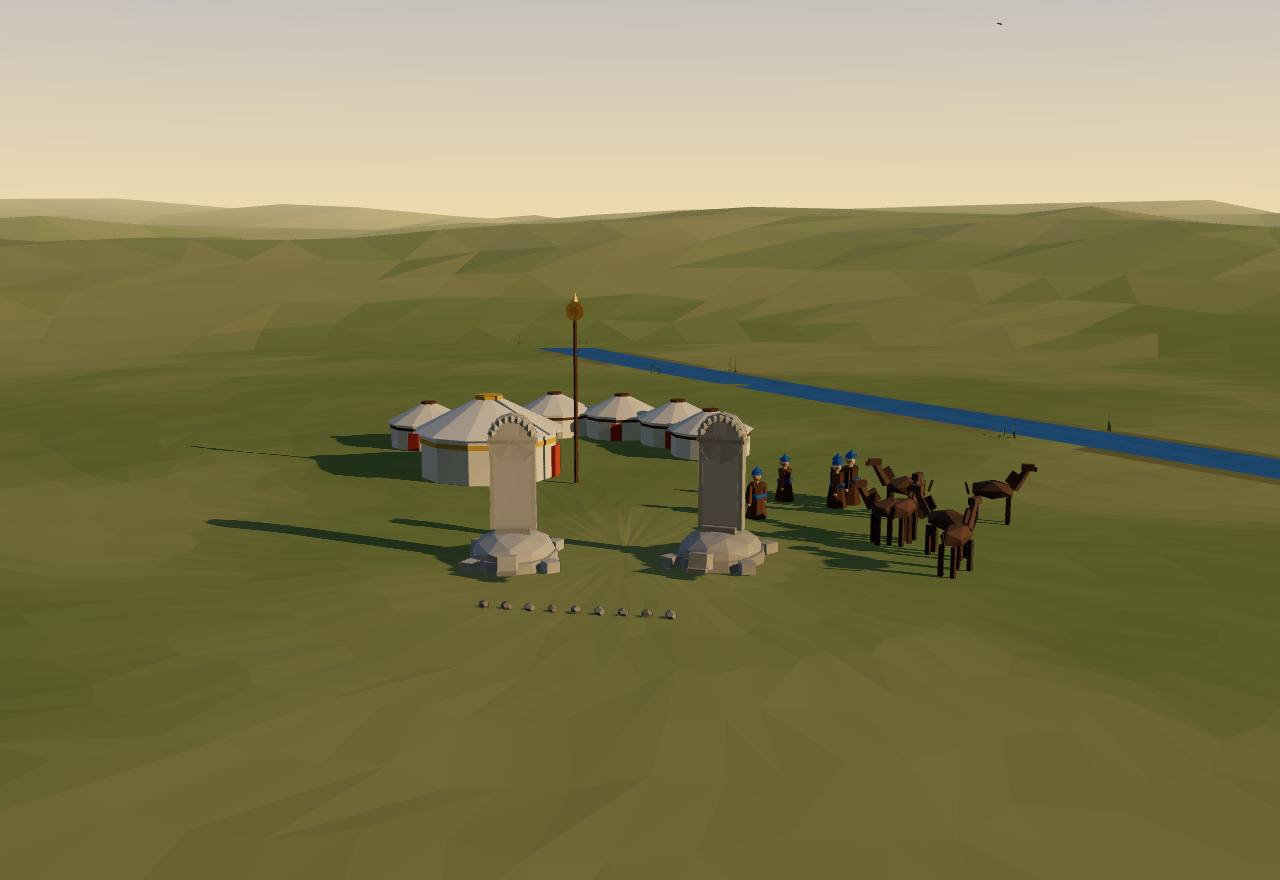
The Orkhon stones
552 CE – 840 CE
The Türk and Uyghur khaganates
In 552 Tumen, chief of the Türks, broke his Rouran overlords and took the title of khagan. For three centuries Türk and then Uyghur khagans ruled the eastern steppe from the forest of Ötükän and the Orkhon valley. Their own stones say Heaven made them khagans; the Chinese histories describe how a khagan was raised on a felt and how the throne passed between brothers.
Terms: The steppe empires: The Türk and Uyghur khaganates
- khagan the supreme ruler of a steppe empire; Tumen styled himself Illig Qaghan in 552 (Zhou shu); Thomsen's translation, quoted on this page, writes kagan 14,15
- khatun the khagan's consort, named beside him: 'my father the kagan and my mother the katun', in Thomsen's spelling (Kül Tegin inscription) 14
- buyruk a high official of the khagan, as the inscription glosses it 14
- balbal a stone set up at a grave for an enemy killed; Bilgä Kagan raised the Kyrgyz khagan ('the Kirghiz kagan') as one 14
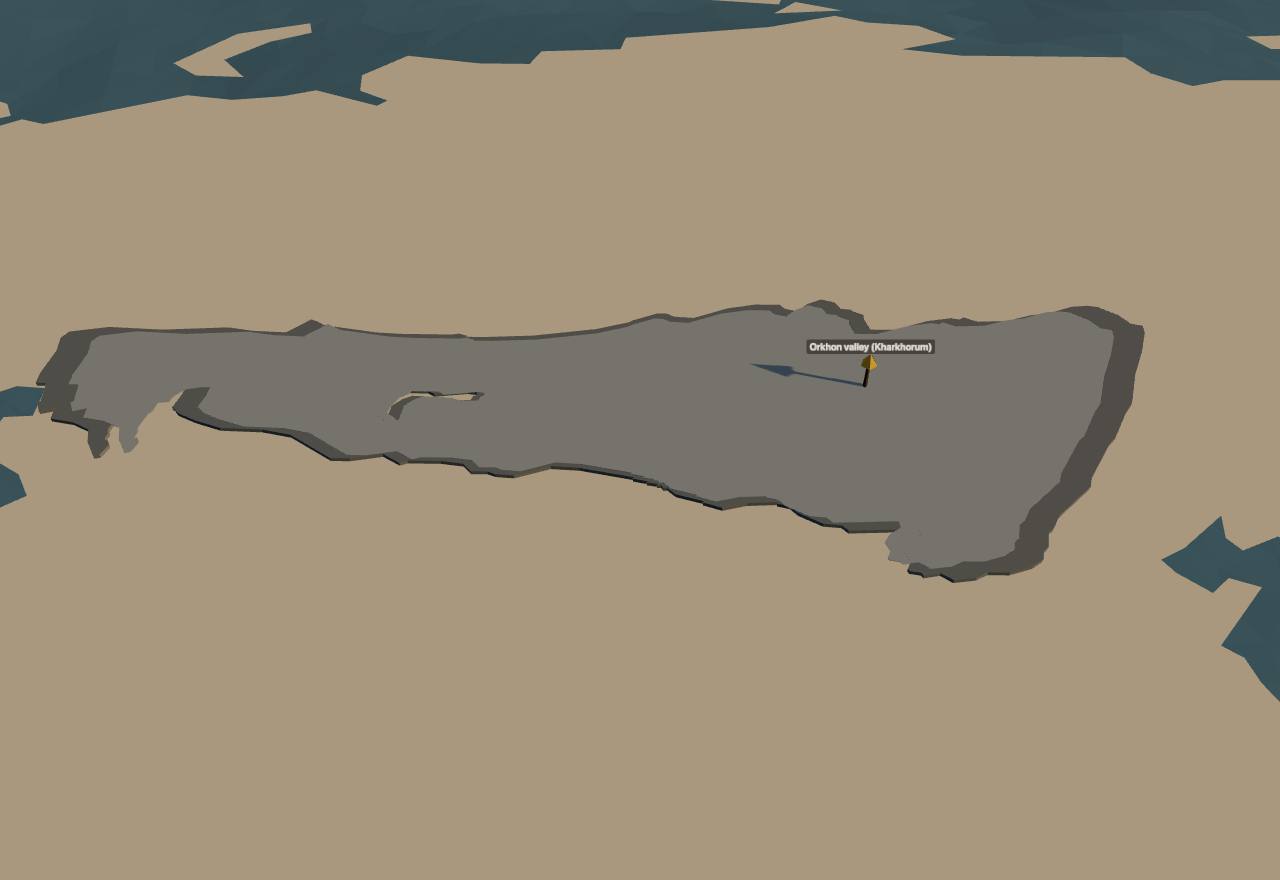
Türks and Uyghurs on Cliopatria's map, 555–840
Places: 1 cited site over Cliopatria (CC BY 4.0) territories, drawn flat and low. Orkhon valley (Kharkhorum) 16
The Zhou history dates the Türk state to the first year of the Western Wei emperor Feidi (552): Tumen routed the Rouran north of Huaihuang, the Rouran khagan Anagui killed himself, and Tumen “styled himself Illig Qaghan, as the chanyu of old”, calling his wife khatun (qatun). When he had earlier asked the Rouran ruler for a bride, the answer was: “You are my smith-slave.” 15 Consensus Texts
The same chapter describes the raising of a khagan. His attendants and great ministers carried him on a felt, turning nine times with the sun, bowing at each turn; then they set him on a horse, tightened a silk cord round his neck until he nearly choked and asked him how many years he could be khagan, and took his answer as the length of his reign. 15 Consensus Texts
The throne passed among brothers as well as sons. Tumen was followed by his son Kele, Kele by his younger brother Sijin (Muhan Qaghan), Sijin by his younger brother Tabo. Two centuries later the Kül Tegin inscription looks back on the founders Bumin and Istämi and what came after them: “their younger brothers became kagans, and their sons became kagans; but the younger brothers were now not like their elder brothers”. 15,14 Consensus Texts
Bilgä Kagan's inscription grounds his rule in Heaven: “Under the will of Heaven, and for that it was my high calling, I became kagan”; Heaven, which had raised up his father the kagan and his mother the katun and given them the kingdom, “has now appointed me as kagan” so that the name of the Turkish people should not perish. 14 Consensus Texts
Rule had a sacred centre. “So long as the Turkish kagan rules in the forest of Mount Ötükän … the kingdom suffers no ill”, Bilgä Kagan tells his begs and peoples; the Zhou history puts the khagan's camp at Dujin mountain, his tent opening to the east to honour the sunrise, and says he led the nobles each year to sacrifice at the ancestral cave and in the fifth month to Heaven. 14,15 Consensus Texts
Below the khagan stood a ladder of titles, “twenty-eight grades in all, all hereditary”, the Zhou history says, beginning with the ones it writes yehu and she. When troops or livestock were levied, the order was counted on a notched stick sent with a gold-tipped arrow sealed in wax. Seshat codes four to five administrative levels and written records for the first khaganate. 15 Seshat Consensus Texts
The Kül Tegin text explains the fall of the first empire to the Tang in its own terms: “want of harmony between the begs and the people”, the Chinese people's “cunning and craft”, and brothers who “chose to take counsel against one another”. Seshat dates the first eastern khaganate 583–630 and the second 682–744. 14 Seshat Consensus Texts
The two monuments stand near Lake Kocho Tsaidam, west of the Orkhon: square monoliths carrying long Turkish inscriptions in runic letters on three sides and a Chinese text on the fourth, “entirely” different in content. UNESCO's Orkhon valley site, which holds remains from the sixth century on, is still grazed by Mongolian herders. 14,16 Consensus Texts Survey
In the third year of Tianbao (744) the Uyghur chief broke the Basmil, took the title of khagan and was invested by the Tang as Huairen Qaghan. The Uyghur empire on the Selenga and Orkhon sent cavalry to save the Tang from An Lushan, built cities on the steppe, raised stelae and made Manichaeism its state religion. Seshat names its capital Ordu Balik. 17,18 Seshat Consensus Texts
It fell from within as much as from outside. In the Kaicheng years a minister killed the khagan; a general then led 100,000 Kyrgyz horsemen against the Uyghur city, killed the new khagan and burned it, and the tribes scattered: the end of the empire in 840, as Drompp dates it. A tree-ring study finds that a drought of nearly seven decades earlier had not broken the empire. 17,18,19 Consensus Texts Dating
How power worked King · Heredity · Custom and kin
How power worked
- Who rules
- King Consensus
Why?
- How chosen
- Heredity Debated
Why?
- Limits on power
- Custom and kin Debated
Why?
- Scale
- Empire Consensus
Why?
- Claim to rule
- Divine mandate Consensus
Why?
- Who has a say
- A narrow elite Consensus
Why?
840 CE – 1162 CE
After the Uyghurs: the steppe without one khagan
When the Kyrgyz burned the Uyghur city in 840 the tribes scattered, the Old Tang history says: one group west to the Qarluqs, one to Tibet, one to Anxi, and thirteen tribes south to the Chinese frontier under a new khagan. Drompp follows the Uyghurs into new states in Gansu and the Tarim basin. 17,18 Consensus Texts
Those Uyghur kingdoms lasted. In 1209, Juvaini relates, the Uyghur ruler, the idi-qut, had the Qara-Khitai agent in his capital killed and went over to Chinggis Khan; Boyle explains the Qara-Khitai as a branch of the Khitan who had moved west after the Jurchen overthrew their Liao dynasty. 3 Consensus Texts
East of them the Khitan ruled as the Liao dynasty until, as Boyle dates it, the Jurchen expelled them from north China in 1123 and took the dynastic title Jin, the “Golden King” of Marco Polo; the Tang–Song page tells the Liao's story. Their fall sent the Qara-Khitai west. 3 Consensus Texts
The tree-ring record from central Mongolia shows the years 1115–1139 and 1180–1190 among the driest of the millennium, the second falling in Temüjin's youth. 20 Consensus Dating
1162 CE – 1206 CE
Temüjin becomes Chinggis Khan
In the twelfth century the Mongols were one people among many on the eastern steppe, raided by their neighbours and taxed by the Jurchen Jin. Temüjin rose in the service of the Kereyit ruler Ong Khan, broke with him, defeated him and brought the tribes under his command. In 1206 an assembly at the source of the Onan gave him the title of khan.
Terms: The steppe empires: Temüjin becomes Chinggis Khan
- qan, Qa'an khan, and the higher title Qa'an the Secret History gives Chinggis (Juvaini: on accession a ruler 'receives one additional name, that of Khan or Qa'an') 1,3
- tarkhan a man freed from levies, given the booty of every campaign and the right to enter the khan's presence unannounced, for himself and his descendants 'to the ninth generation' (Juvaini) 3
- noyan a Mongol commander or lord (Juvaini's 'princes, noyans and emirs') 3
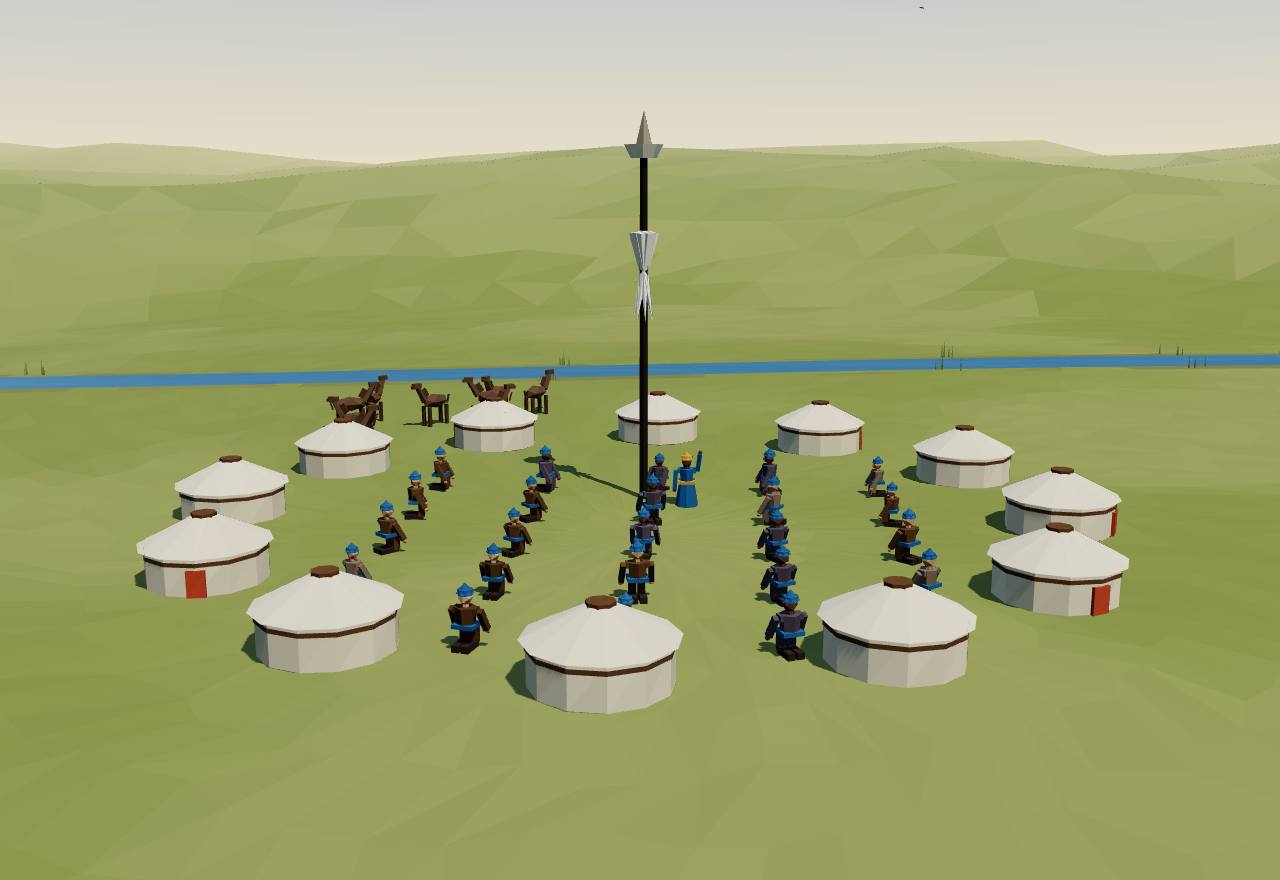
The source of the Onan, 1206
Juvaini, writing for the Mongols' court half a century later, paints the Mongols before Chinggis as poor and leaderless: “they had no chief or ruler. Each tribe or two tribes lived separately … and there was constant fighting”, the Khan of Khitai seized goods from them, and the sign of a great emir was that “his stirrups were of iron”. The picture serves his theme of fortune raising the lowly. 3 Debated Texts
Seshat's “Early Mongols” are small: some 70,000–90,000 km² and 80,000–120,000 people, a largest settlement of about 500, two administrative levels, and no courts, roads or postal stations. Seshat Consensus Texts
Descent mattered from the start. Juvaini says that of the many Mongol tribes the most renowned was the Qiyat, “of which the forefathers and ancestors of Chingiz-Khan were the chieftains and from which they traced their descent”. 3 Consensus Texts
Temüjin rose as the right hand of the Kereyit ruler Ong Khan, whose sons and courtiers turned him against the newcomer. Warned by two youths of a dawn attack, Temüjin moved his tents, fought at Baljuna and won; Juvaini dates it 599 (1202–3), the Yuan history 1203. The two youths were made tarkhan, and even the tent-pitchers and camel-drivers who fought there rose to high office. 3,6 Consensus Texts
Tribes that submitted, such as the Oirat and Qonqurat, joined his commanders; the rest he destroyed, “until all the tribes were of one colour and obedient to his command”. Then, Juvaini says, he “established new laws” and abolished customs such as theft and adultery. 3 Consensus Texts
A shaman named Teb-Tengri announced that God had said: “I have given all the face of the earth to Temüjin and his children and named him Chingiz-Khan.” Chinggis followed his word until the shaman began to want power for himself; at a feast a prince threw him to the ground “so heavily … that he never rose again”. 3 Consensus Texts
“In the Year of the Tiger (1206) they all gathered at the source of the Onan River. They hoisted the white standard with nine tails and there they gave Činggis Qa'an the title of qan.” The Yuan history records the same great assembly of princes and ministers and the nine-tailed white standard. Chinggis then named ninety-five commanders of a thousand. 1,13 Consensus Texts
Ruth Dunnell describes the new Mongol state as rising “in succession to the Kereyit khanate”, its makers drawing on “shared steppe political traditions”: Temüjin did not invent the khanate, he took over a steppe throne. 6 Consensus Texts
A 1,112-year tree-ring record from central Mongolia shows the years 1180–1190 “extremely dry”, a drought that fell in “the turbulent early years” of Temüjin, and then, from 1211 to 1225, fifteen years in which no annual value fell below the long-term mean: the authors call it the Mongol Pluvial. 20 Consensus Dating
How power worked Chief · Conquest or coup · Custom and kin
How power worked
- Who rules
- Chief Consensus
Why?
- How chosen
- Conquest or coup Consensus
Why?
- Limits on power
- Custom and kin Debated
Why?
- Scale
- Confederation Debated
Why?
- Claim to rule
- Kinship and descent Debated
Why?
- Who has a say
- A narrow elite Consensus
Why?
1206 CE – 1260 CE
The united empire
From 1206 to 1260 one great khan ruled from Mongolia an empire whose armies reached north China, Iran and Hungary. He was raised at a quriltai, an assembly of Chinggis's descendants and commanders, and ruled through a decimal army, a personal guard, written orders and a chain of post stations. Each assembly after Chinggis's death was harder to bring together than the last, and in 1260 two of them raised two khans.
Terms: The steppe empires: The united empire
- quriltai the assembly of princes and commanders that raised a khan and decided war and law: 'the which in the Mongol tongue is called quriltai' (Juvaini) 3
- yasa (jasaq) Chinggis's ordinances; Aigle calls the imperial edicts jasaq 3,22
- yosun custom, as distinct from the khan's edicts (jasaq); medieval Muslim authors confused the two (Aigle) 22
- yam, ulagh the post station, and the post horse requisitioned for it (Juvaini; Polo writes Yamb) 3,11
- tümen a unit of ten thousand, the top of the decimal army (Juvaini) 3
- keshig the khan's guard, ten thousand strong under Chinggis 23,1
- darughachi a governor set over a conquered people (Kim) 23
- ulus, ordo the people (nation) under a ruler, and the mobile court at its centre (Kim) 23
- aqa and ini elder and younger kinsmen: in 1251 'Batu is aqa to all the princes. Whatever he commands his word is law' (Juvaini) 4
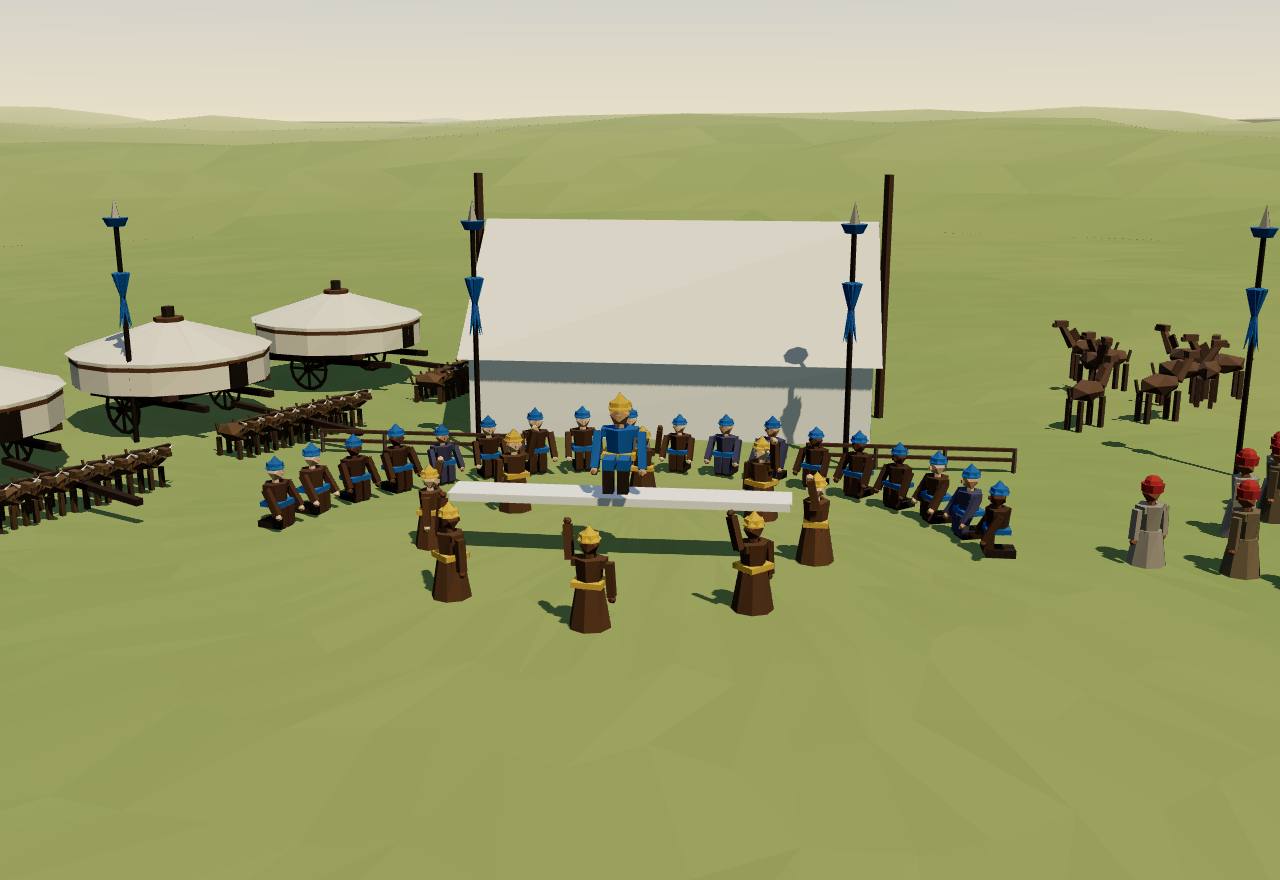
A quriltai: the khan raised on felt
The people were counted into tens, hundreds, thousands and tümens of ten thousand, each under one of its own; Juvaini admires that the Mongols had thereby “abolished the registry of inspection” and that “no attention” was paid “to wealth or power”. No man might leave the unit he was assigned to, nor be taken in by another. In 1206 Chinggis named ninety-five commanders of a thousand. 3,1 Consensus Texts
Chinggis raised his day and night guards to ten thousand, eight thousand dayguards and two thousand nightguards and quiverbearers, drawn from the units of a thousand, and ordered that they “be strengthened and become the main body of the army”. Kim counts the guard (keshig) among the institutions the empire's successors kept. 1,23 Consensus Texts
Writing came in with the empire. Juvaini says that since the Mongols had no script Chinggis had their children taught by the Uyghurs. The Secret History has Chinggis make Šigi Qutuqu judge over all, writing his decisions “in a blue-script register … with white paper”: “Until the offspring of my offspring, let no one alter any of the blue writing.” 3,1 Consensus Texts
Juvaini says the yasas and ordinances were “written down on rolls”, the Great Book of Yasas, kept in the treasury of the chief princes, and brought out whenever “a khan ascends the throne, or a great army is mobilized, or the princes assemble”. Seshat codes the empire with no formal legal code. Whether a written code existed is argued below. 3 Seshat Debated Texts
“Being the adherent of no religion”, Juvaini writes, Chinggis honoured the learned of every sect; his descendants had become Muslims, Christians and Buddhists, “but … they still for the most part … do not swerve from the yasa of Chingiz-Khan, namely, to consider all sects as one”. A khan took one extra name on accession, Khan or Qa'an; everyone else, princes too, was called by his birth name. 3 Consensus Texts
Power was shared out within the family. Chinggis gave his eldest son Jochi the lands from Qayaligh and Khorazm to the farthest Saqsin and Bulghar, Chaghatai the lands from the Uyghur country to Samarqand and Bukhara, Ögedei the Emil and Qobaq; “although authority and empire are apparently vested in one man”, Juvaini writes, “in reality all the children, grandchildren and uncles have their share of power and property”. 3 Consensus Texts
Chinggis named Ögedei and had his sons promise in writing to accept him. After his death the princes came to the Kelüren; for forty days they feasted, changed their robes every day and talked. Ögedei answered that by Mongol custom the heir was the youngest son of the eldest house, his brother Tolui. At last Chaghatai took his right hand and his uncle Otegin his left and set him on the throne, and all knelt three times to the sun. 3,1,2 Consensus Texts
Attendance was not optional. At the great assembly of 1234 Ögedei decreed: “whoever is due at the assembly and does not come, but feasts in private, shall be beheaded”, and set a chief over every ten men in the army. 2 Consensus Texts
The assembly that followed Ögedei's death in 1241 met only in 1246. Carpini, who arrived in July, saw a white tent for over two thousand people, more than four thousand envoys, chiefs who “discussed the election” outside the tent day after day, and on 24 August Güyük set on the throne. Juvaini says the princes chose among Ögedei's sons and that Güyük's mother Töregene favoured him; the Yuan history adds that Ögedei had named his grandson Shiremün. 5,3,2 Consensus Texts
In 1251 Batu, the senior prince, summoned the assembly to his own camp; the princes left the choice to him and gave written undertakings, and he named Möngke. Ögedei's and Güyük's families answered that the khanate “ought to remain in the family of Qa'an or Güyük Khan”. Batu replied that the matter was settled, and Möngke was raised on the Kelüren on 1 July 1251, the day chosen by the astrologers. 4,24 Consensus Texts
Ögedei set up post stations “at every stage”, each with twenty post-horse keepers, and his brothers Chaghatai and Batu linked theirs to his; he counted it the second of his four deeds. Juvaini says each two tümens supplied one station, which was inspected yearly. The Yuan history records Ögedei's order of 1229 fixing a traveller's daily ration. 1,3,25 Consensus Texts
Carpini felt the system from the saddle in 1246: ordered to reach the assembly in time, his escort rode from dawn to night, “as fast as the horses could trot”, on fresh horses through the day, the tired ones being sent back; often they arrived too late to eat. 5 Consensus Texts
Rubruck found Karakorum smaller than the village of Saint-Denis: a Muslim quarter of markets, a Chinese quarter of artisans, palaces for the court's secretaries, twelve temples of different peoples, two mosques and one church, inside a mud wall with four gates where millet, sheep, oxen and carts, and horses were sold. UNESCO's Orkhon valley site includes its remains. 5,16 Consensus Texts Excavation
A Western report of how a khan was raised: Simon of St Quentin, who did not see it himself, says the barons set the khan on a gilded seat, told him “We want, we beg, and we command that you shall have dominion over all of us”, heard him answer “My command shall be my sword”, and then raised him and his wife on a felt. 5 Debated Texts
Dunnell sums up the strain: the early qa'ans' attempts to assert “tighter control over resources inevitably clashed with their kinfolk's customary claims. Tensions erupted into open civil war in 1260.” That spring the princes at Kaiping raised Qubilai, and Möngke's old ministers at Karakorum raised Ariq Böke. 6,8 Consensus Texts
Seshat puts the empire's territory at about 25.2 million km², with capitals at Karakorum and later Khanbaliq, and codes couriers, post stations and a general postal service as present. Seshat Consensus Texts
How power worked Emperor · Election · Custom and kin
How power worked
- Who rules
- Emperor Consensus
Why?
- How chosen
- Election Debated
Why?
- Limits on power
- Custom and kin Debated
Why?
- Scale
- Empire Consensus
Why?
- Claim to rule
- Divine mandate Consensus
Why?
- Who has a say
- A narrow elite Consensus
Why?
Who raised each great khan, and how
Data: the Secret History, Juvaini, Carpini and the Yuan history
17 reigns from Chinggis to Toghon Temür, as the Secret History, Juvaini, Carpini and the Yuan history describe each accession. Before 1260 every great khan was raised by an assembly of princes: Chinggis in 1206, Güyük in 1246 and Möngke in 1251 chosen there, and Ögedei in 1229 named by his father beforehand and confirmed there. In 1260 two assemblies raised two khans, Qubilai at Kaiping and Ariq Böke at Karakorum, and war settled it. Of the 11 Yuan reigns from 1294, 5 began with a crown prince, 3 with an assembly of princes, 2 with a hand-over by the reigning emperor or his widow and 1 with a faction at court; 1 reign ended in a killing and 1 in an abdication. 1,3,5,2,8
17 accessions: 7 chosen by an assembly, 3 named, then confirmed, 1 rival assembly, defeated, 5 crown prince, 1 court faction; median reign 5 years. Ended: 12 died in office, 1 deposed, 1 killed, 1 abdicated, 1 conquered, 1 not known.
Marks at the end of a bar: ○ died in office · × killed · ▽ deposed · | abdicated · □ conquered
Show the table: Great khans and Yuan emperors, 1206–1368
| Ruler | Years | Came to power | Reign ended | Source |
|---|---|---|---|---|
| Chinggis | 1206 CE – 1227 CE | Chosen by an assembly | died in office (All gathered at the source of the Onan, raised the white standard of nine tails and gave him the title of qan (Secret History §202); died on 18 August 1227 (Juvaini, as Boyle converts 4 Ramaḍān 624).) | 1,13,3 |
| Ögedei | 1229 CE – 1241 CE | Named, then confirmed | died in office (Named by Chinggis, who had his sons promise in writing; installed after forty days of feasting and talk on the Kelüren (Juvaini pp. 180–187). The Secret History dates it 1228, Juvaini and the Yuan history 1229.) | 3,1,2 |
| Güyük | 1246 CE – 1248 CE | Chosen by an assembly | died in office (Ögedei had named his grandson Shiremün (Yuan history); the princes weighed Ögedei's sons, and his widow Töregene backed Güyük (Juvaini p. 251). Enthroned 24 August 1246, Carpini watching.) | 3,5,2 |
| Möngke | 1251 CE – 1259 CE | Chosen by an assembly | died in office (Batu's assembly left the choice to Batu, who named Möngke; Ögedei's and Güyük's lines refused the 'covenant'. Raised on the Kelüren on 1 July 1251 (Juvaini ii pp. 557–567); died before Diaoyu fortress.) | 4,24 |
| Qubilai | 1260 CE – 1294 CE | Chosen by an assembly | died in office (The princes of west and east came to Kaiping to urge him to take the throne; 'three times he declined'. His brother was raised by a rival assembly the same spring at Karakorum (next row).) | 8,27 |
| Ariq Böke | 1260 CE – 1264 CE | Rival assembly, defeated | deposed (Raised by Möngke's old ministers 'west of the city of Helin'; the Yuan history calls it usurpation. Surrendered in 1264: his princes spared as 'descendants of Taizu', his counsellors executed.) | 8,9 |
| Temür | 1294 CE – 1307 CE | Crown prince | died in office (Given the crown prince's seal in 1293; after Qubilai's death 'the princes of the left and right wings all assembled' at Shangdu and he was enthroned in the Da'an pavilion.) | 27,28 |
| Qaishan | 1307 CE – 1311 CE | Chosen by an assembly | died in office (Princes and kin 'decided the plan at Helin'; his brother's coup in Dadu removed the empress's faction; enthroned at Shangdu before the assembled princes.) | 28,29 |
| Ayurbarwada | 1311 CE – 1320 CE | Crown prince | died in office (His accession edict: the succession being already decided, there was no need to 'summon the imperial kin to deliberate on whom to raise'; enthroned in the Daming hall at Dadu.) | 29,30 |
| Shidebala | 1320 CE – 1323 CE | Crown prince | killed (Enthroned in the Daming hall; killed at Nanpo in 1323 by the censor-in-chief Tegshi and his fellow conspirators.) | 30,31 |
| Yesün Temür | 1323 CE – 1328 CE | Chosen by an assembly | died in office (Enthroned on the Longju river 'in the great ordo of Chinggis' after the princes, ministers and commanders 'consulted together' (his edict, in vernacular Sino-Mongolian).) | 32,33 |
| Ragibagh | 1328 CE | Crown prince | not known (The crown prince, raised at Shangdu by the minister Dawlat Shah in the ninth month of 1328; the annal read here does not say how his reign ended.) | 33 |
| Tugh Temür | 1328 CE – 1329 CE | Court faction | abdicated (Enthroned at Dadu against the Shangdu court on the 13th of the ninth month of 1328; sent the imperial seals north to his elder brother Qoshila.) | 34,35 |
| Qoshila | 1329 CE – 1329 CE | Named, then confirmed | died in office (Enthroned north of Helin among the princes who travelled with him, having been sent the seals; died suddenly at Wanghuchadu in the eighth month.) | 36,35 |
| Tugh Temür | 1329 CE – 1332 CE | Crown prince | died in office (Qoshila's crown prince, enthroned again the same month.) | 36,35 |
| Irinjibal | 1332 CE – 1332 CE | Named, then confirmed | died in office (The late emperor's empress named Qoshila's younger son; the minister El Temür summoned the princes and the seven-year-old was enthroned in the Daming hall. He died two months later.) | 35,37 |
| Toghon Temür | 1333 CE – 1368 CE | Chosen by an assembly | conquered (Enthroned at Shangdu at the urging of the empress dowager and 'the imperial kin and great ministers'; left Dadu at midnight in 1368 as the Ming army came, and 'the state perished'.) | 37,38 |
Left out (2): Töregene, Ögedei's widow (regent 1241/2–1246), governed between assemblies; not raised as khan 2,3 ; Oghul Qaimish, Güyük's widow (1248–1251), her household and sons were summoned to the 1251 assembly; not raised as khan 4 . The khans of the Ilkhanate, the Golden Horde and the Chaghadaid realm are not on the strip: no source read for this page dates their accessions one by one.
The relay stations: how many, and how fast
Data: the Yuan history's station table · Model, not evidence: travel times from Polo
The Yuan history lists the post stations of China and Mongolia province by province: together 1,400 stations (424 of them by water), 44,301 horses and 5,921 boats. Each bar is one province's count as the table gives it; the table calls overland stations “land” stations in the north and “horse” stations in the south. 25 Rossabi counts “more than 1400” stations in China by the end of Qubilai's reign, as Vér quotes him. 39
Between the stations ran foot posts every 10, 15, 25 li, 5 runners to a post, carrying dispatches 400 li in a day and a night. 25 When Ögedei set the system up, every station was to have 20 post-horse keepers, and each 2 tümens supplied one station. 1,3
Model, not evidence: how long did news take?
Marco Polo puts the stations 25–30 miles apart, one stage being an ordinary day's journey; foot runners brought news from ten days' journey in a day and a night; express riders covered 200–250 miles a day. Pick a route and a way of sending. 11
10 days' journey by foot runners: 24 hours, past about 10 stations.
Polo: news 'from places ten days' journey off in one day and night' (Book II ch. XXVI). Polo: Chandu is 'a distance of ten days' journey' from Cambaluc; fruit picked one morning reached the Kaan 'the evening of the next day' (Book II ch. XXVI).
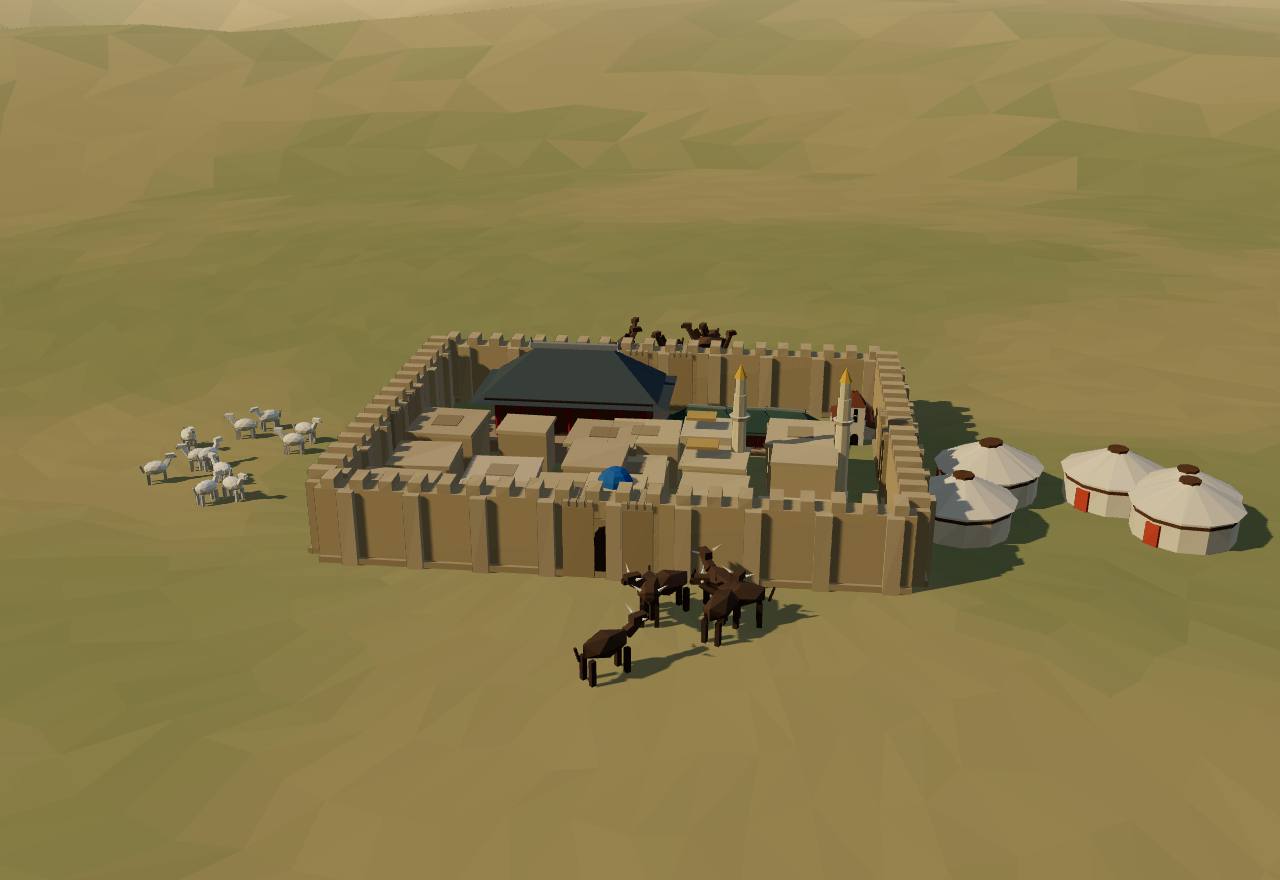
Karakorum, 1254
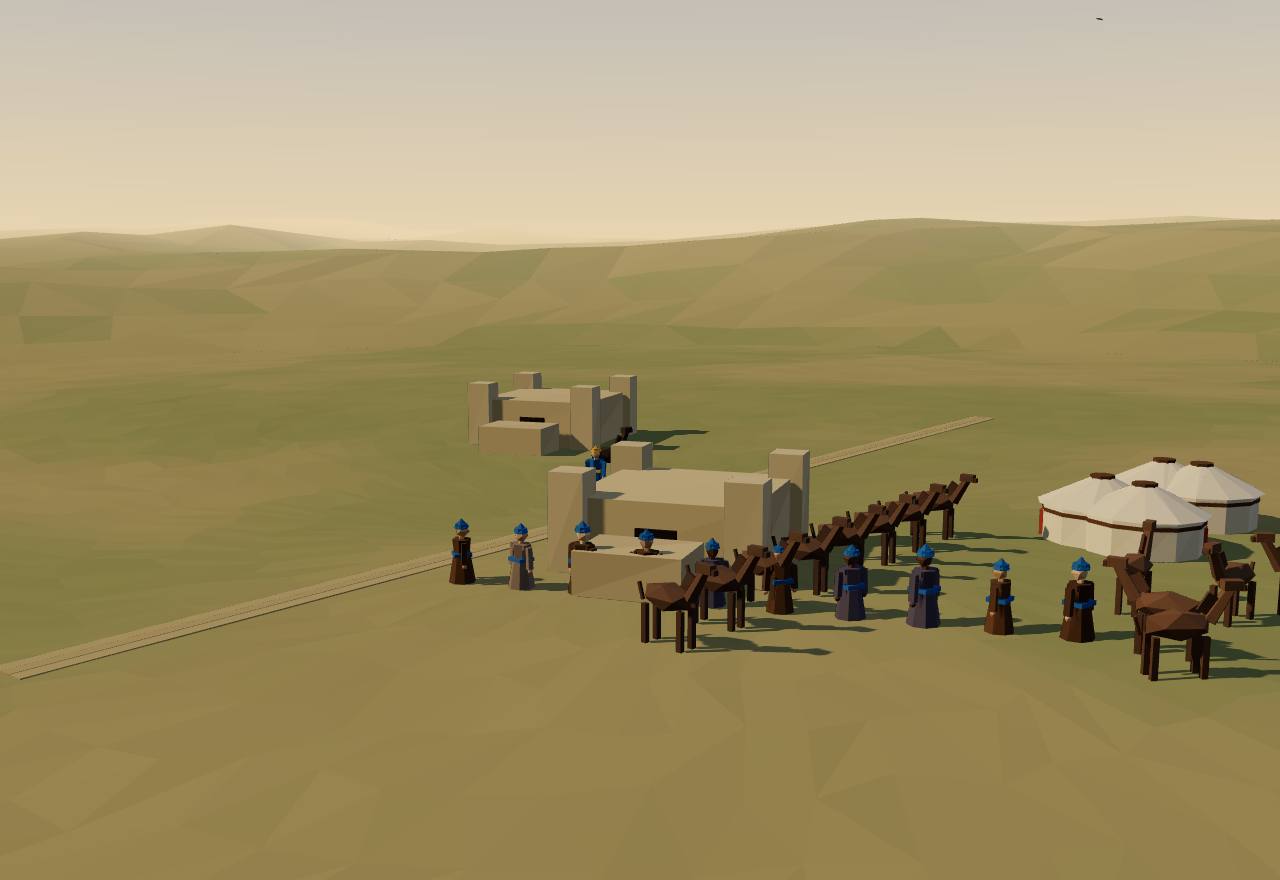
A post road across the steppe
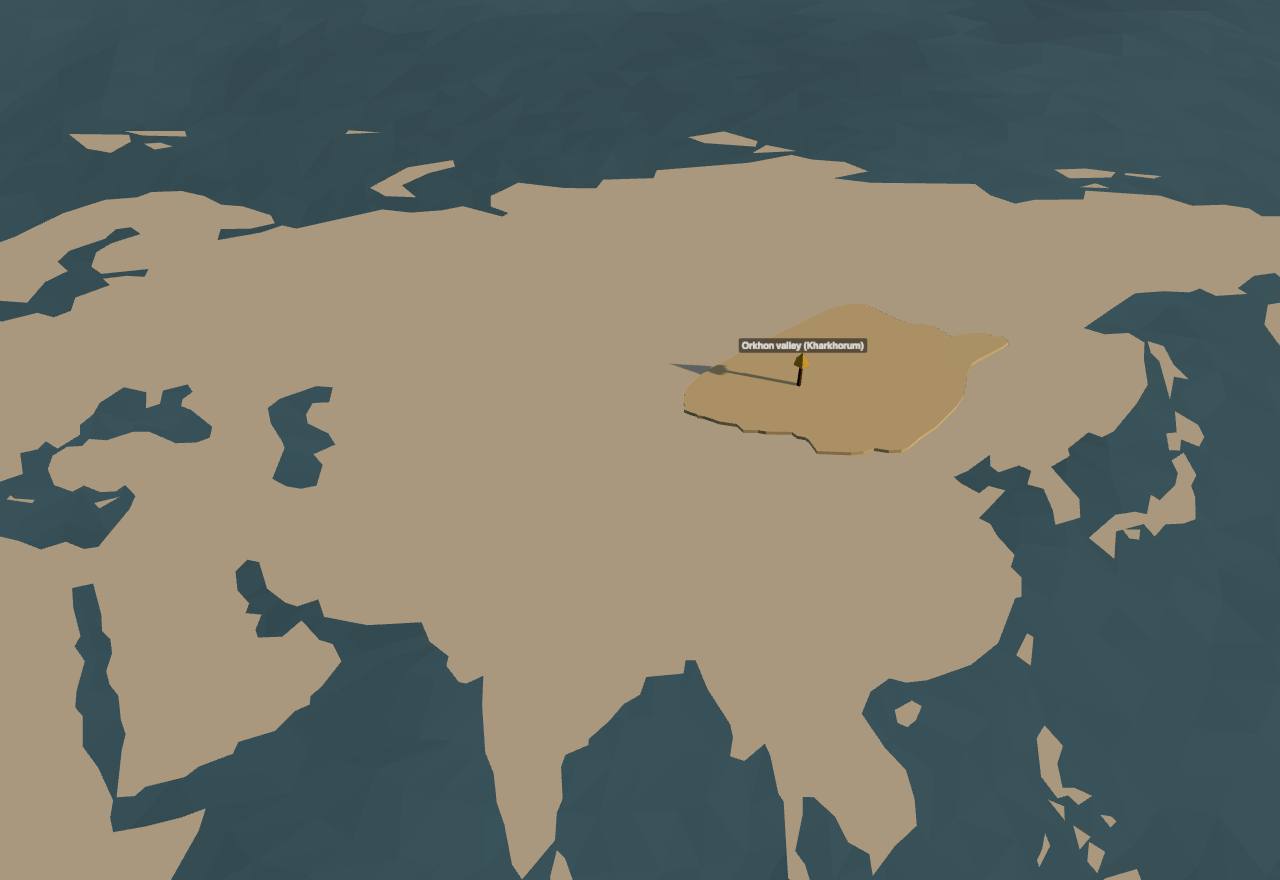
The united empire on Cliopatria's map, 1210–1255
Places: 1 cited site over Cliopatria (CC BY 4.0) territories, drawn flat and low. Orkhon valley (Kharkhorum) 16
1260 CE – 1368 CE
Four khanates
After the civil war of 1260 the empire held together as a family of four realms: the great khan's Yuan in China and Mongolia, Hülegü's Ilkhanate in Iran and Iraq, the Jochid Golden Horde on the western steppe, and the Chaghadaid realm in Central Asia. Each kept the Chinggisid rule that only Chinggis's descendants could be khan, and each bent it to local ways.
The war of 1260 ended in 1264, when Ariq Böke, unable to fight on, came in to Qubilai with his princes and counsellors. The princes were pardoned as “descendants of Taizu” (Chinggis); the counsellors were put to death. 9 Consensus Texts
Favereau and Pochekaev describe the Golden Horde as “politically independent” yet keeping “close ties with the other Mongol khanates until they collapsed gradually in the fourteenth century”. Ibn Battuta, on the travels of 1325–1354, counted Özbeg of the Golden Horde, the sultan of Turkistan beyond the Oxus, the sultan of the two ʿIraqs and the sultan of China among the “seven mighty kings of the world”. 7,12 Consensus Texts
Cliopatria draws one “Mongol Empire” to 1293 and the four khanates only from 1294, so the map on this phase shows a single block for the first three decades of separate rule. 10 Consensus Texts
The Yuan: the great khan in China1260 CE – 1368 CEShangdu (Xanadu)
Qubilai ruled as great khan and Chinese emperor from two capitals, Shangdu and Dadu (Khanbaliq). His successors kept the assembly of princes for every enthronement, but more and more the choice was made at court, and after 1307 it was fought over.
Terms: The steppe empires: Four khanates, The Yuan: the great khan in China
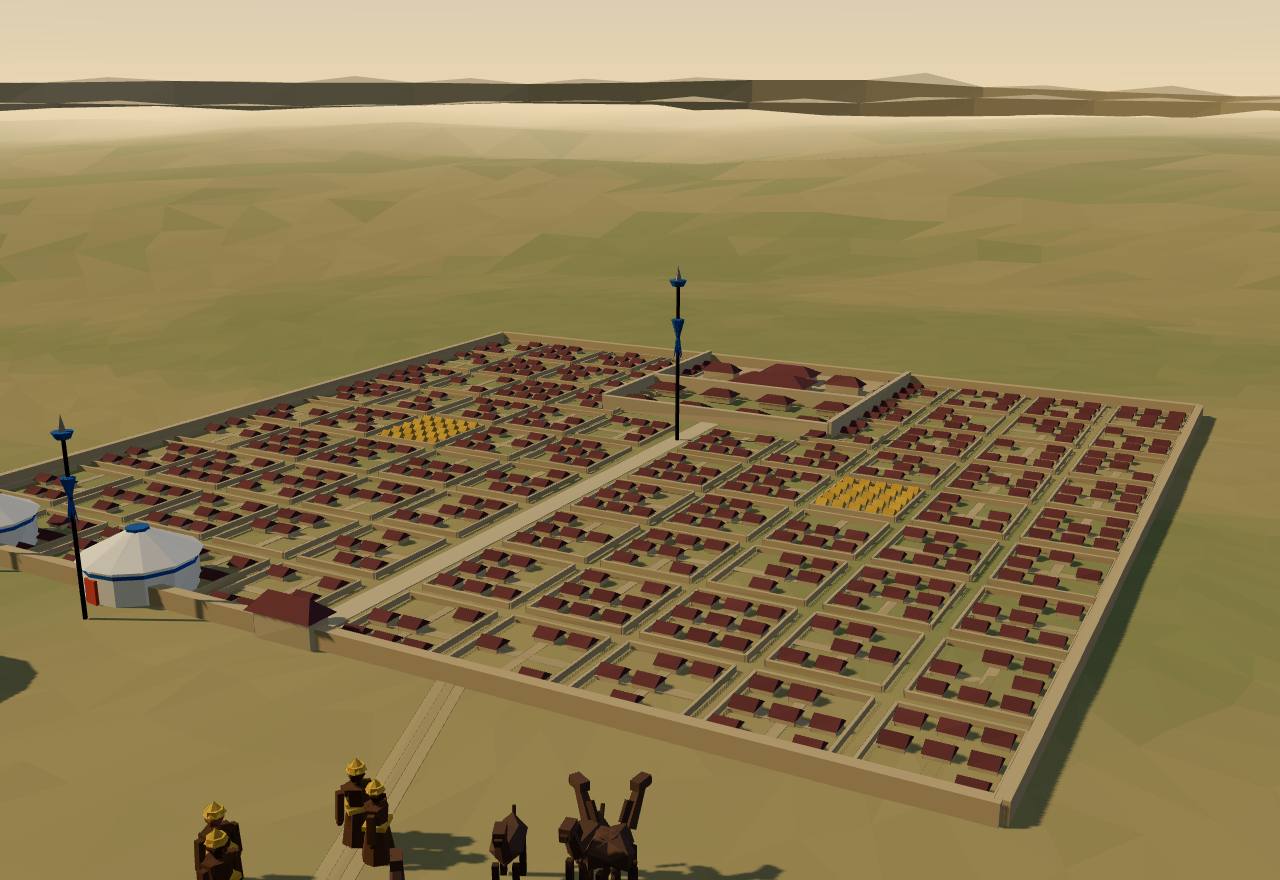
Dadu (Khanbaliq), the great khan's capital
In 1256 Qubilai had a monk choose a site north of the Luan for a city, Kaiping, later Shangdu. UNESCO's record describes it as planned by his adviser Liu Bingzhong by Chinese principles of siting, with temples, palaces and tombs beside “nomadic encampments”: an attempt to join Mongol and Chinese ways in one capital. 8,41 Consensus Texts Survey
Qubilai's successors were still enthroned before the princes. In 1293 his grandson Temür received the crown prince's seal; after Qubilai's death “the princes of the left and right wings all assembled” at Shangdu, where he was enthroned in the Da'an pavilion. He was handed a jade seal reading “Having received the mandate from Heaven, may [the dynasty] live long and prosper”. 27 Consensus Texts
The assembly's part shrank. In 1311 Ayurbarwada's accession edict said that because the succession was already settled, his case was not like those in which, at a ruler's death, the kin were “summoned to deliberate on whom to raise”; he took the throne in the Daming hall at Dadu “after the precedents of Zhou, Han, Jin and Tang”. 29 Consensus Texts
From Temür's death in 1307, Atwood writes, the regime “was roiled by succession conflicts, often pitting steppe-based candidates against those with more experience in the south”. The Yuan history shows the cost: Shidebala killed in his tent at Nanpo in 1323; in 1328 one emperor raised at Shangdu and another at Dadu; Qoshila dead within months of his enthronement in 1329. 42,31,33,34,36 Consensus Texts
Polo describes the new capital, Taidu: four-square, six miles a side, with walls of earth ten paces thick at the foot, twelve gates with a palace over each, and streets “so straight and wide that you can see right along them”, the plots laid out “just like a chess-board”. 11 Consensus Texts
The Yuan history lists the post stations province by province: they add up to 1,400, with 44,301 horses and 5,921 boats besides carts, oxen, sedan chairs in the south and fifteen dog stations in Liaoyang. Vér quotes Rossabi's “more than 1400” stations in China by the end of Qubilai's reign, and an estimate of 750,000 postal households, about six per cent of the population. 25,39 Consensus Texts
Authority travelled as metal tablets. Polo lists silver, gilt and gold tablets by rank of command, inscribed “By the strength of the great God … let all such as will not obey him be slain”. The Yuan history says urgent military business went by gold-lettered round tablets, silver-lettered ones ranking next. The Met's iron pass inlaid with silver reads, in Phags-pa script: “By the strength of Eternal Heaven, an edict of the Emperor [Khan]. He who has not respect shall be guilty.” 11,25,40 Consensus Texts Excavation
In the eighth month of 1368, with Ming armies approaching, Toghon Temür left Dadu by the Jiande gate at midnight; the Ming entered the city and, in the Yuan history's words, “the state perished”. Atwood points to succession conflicts that emptied the treasury and left the regime vulnerable to “severe climate change in the mid-fourteenth century”. 38,42 Consensus Texts
How power worked Emperor · Heredity · Custom and kin
How power worked
- Who rules
- Emperor Consensus
Why?
- How chosen
- Heredity Debated
Why?
- Limits on power
- Custom and kin Debated
Why?
- Scale
- Empire Consensus
Why?
- Claim to rule
- Divine mandate Consensus
Why?
- Who has a say
- A narrow elite Consensus
Why?
The Ilkhanate: Mongol rule in Iran1260 CE – 1335 CESoltaniyeh
Hülegü's descendants ruled Iran and Iraq for eighty years through Persian officials and, later, as Muslim sultans. Their own military aristocracy limited them; when Abu Saʿid died without an heir in 1335 the amirs divided the realm.
Terms: The steppe empires: Four khanates, The Ilkhanate: Mongol rule in Iran
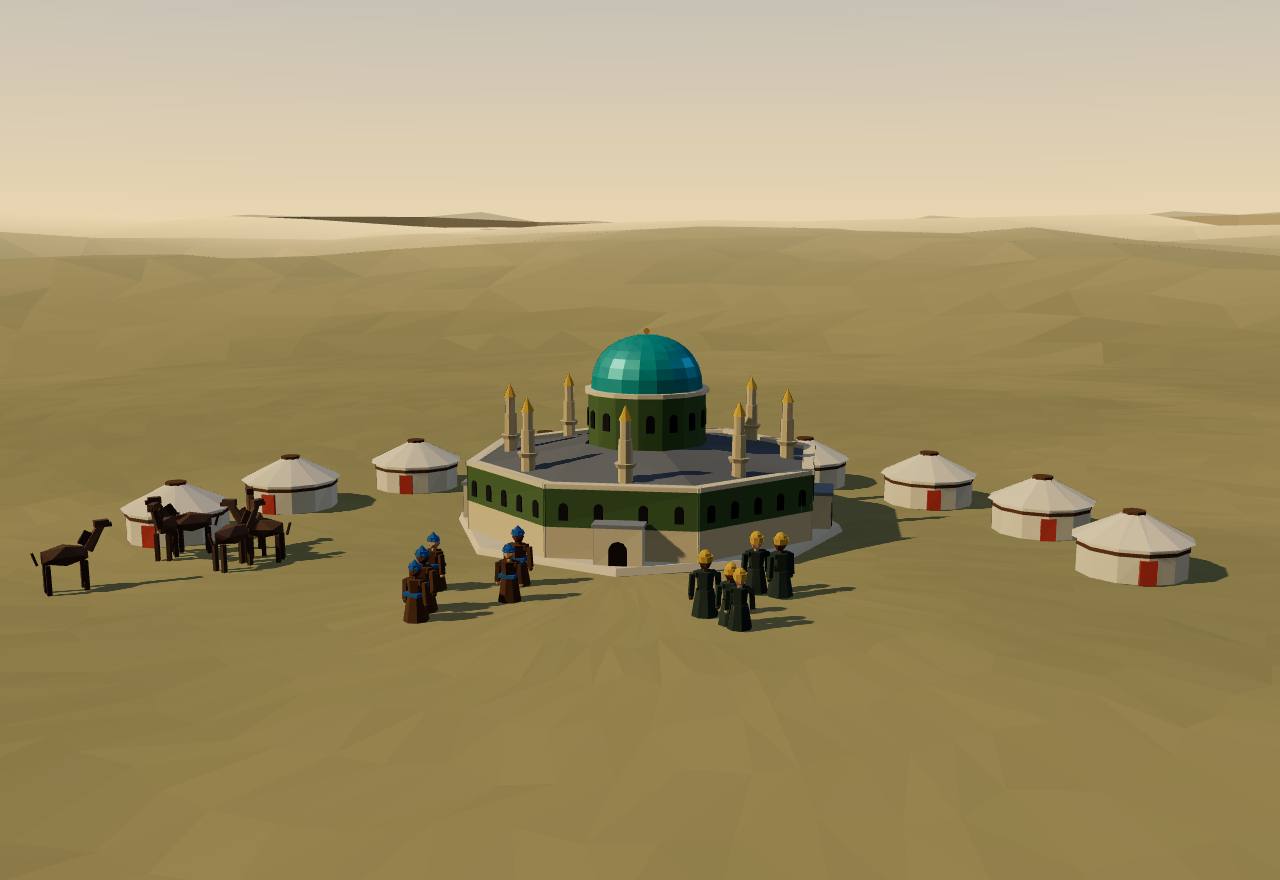
Soltaniyeh: a Mongol sultan's tomb
Kamola and Morgan describe the Ilkhanate as established by Hülegü after 1258 and governed by “employing indigenous administrative elites and adopting local customs”, most notably Islam, “which the Ilkhans themselves adopted as part of their ruling ideology”. 43 Consensus Texts
One such official was Juvaini himself. “When Hülegü appointed me to [the governorship of] Baghdad”, he writes, inheritance taxes were in force; he abolished them, citing the Mongol custom that a dead man's estate goes to his heirs, his apprentice or his slave and never to the treasury. 3 Consensus Texts
Michael Hope argues that Hülegü's army included men who “still adhered to the principles of collegial government”, so he had to rule by them, leaving “a permanent dialectic between the Īlkhān desire for patrimonial rule and the need to appease their military aristocracy”, whose influence grew under Abaqa (1265–82) and Aḥmad Tegüder (1282–4). 44 Debated Texts
The court was not yet Muslim. Abaqa's wife Maria Palaiologina, a Byzantine princess and fervent Christian, stood at the centre of a realm “precariously balanced between Islam, dominant in its territories and Christianity that was prevailing in its court and in the diplomatic relations”, Cabrera Ramos writes. 45 Consensus Texts
Ibn Battuta tells how Sultan Muhammad Khudabanda (Öljeitü) “embraced Islam together with the Tatars” and was persuaded to impose Shiʿism, until the qadi of Shiraz, thrown to his dogs, was not touched by them. Seshat codes the Ilkhans' legitimation by the gods as inferred before 1295 and present from 1295. 12 Seshat Consensus Texts
Öljeitü's mausoleum at Soltaniyeh, “the capital of the Ilkhanid dynasty”, was built in 1302–12: an octagon under a 50-metre dome in turquoise faience ringed by eight minarets, the earliest surviving double-shelled dome in Iran. 46 Consensus Survey
Abu Saʿid “was still a boy when he succeeded his father, and the power was seized by the principal amir, Juban, who left him nothing of sovereignty but the name”, until he broke Chuban. Orders were issued “By order of the Sultan and the Khatuns”. When he died in 1335 “his line became extinct, and the amirs seized the provinces for themselves”. 12 Consensus Texts
David Morgan began his study of “Mongol law in the Īlkhānate” from the oddity that the Persian sources refer to the Great Yasa rarely and vaguely. Seshat nonetheless codes a formal legal code, judges and courts for the Ilkhanate. 26 Seshat Debated Texts
How power worked King · Heredity · Council
How power worked
- Who rules
- King Consensus
Why?
- How chosen
- Heredity Debated
Why?
- Limits on power
- Council Debated
Why?
- Scale
- Empire Consensus
Why?
- Claim to rule
- Divine mandate Consensus
Why?
- Who has a say
- A narrow elite Consensus
Why?
The Golden Horde: the Jochid ulus1260 CE – 1368 CEBolgar
Jochi's descendants ruled the western steppe and held the Russian principalities as vassals. Batu made the great khan of 1251; his line ruled until 1359, when twenty years of rival khans began. Özbeg, whose court Ibn Battuta visited, was a Muslim.
Terms: The steppe empires: Four khanates, The Golden Horde: the Jochid ulus
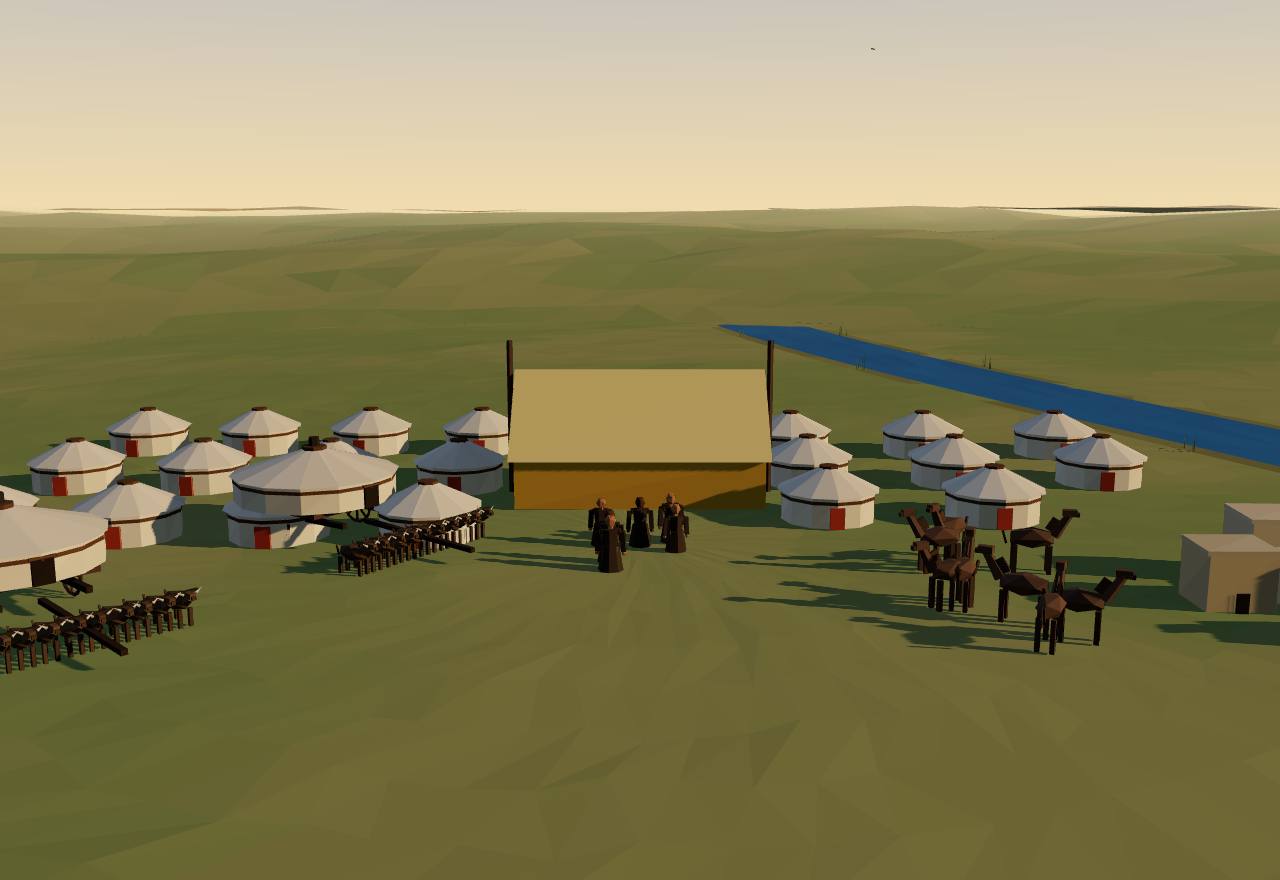
Batu's ordu on the western steppe
Chinggis gave his eldest son Jochi, Juvaini says, the lands from Qayaligh and Khorazm “to the remotest parts of Saqsin and Bulghar and as far in that direction as the hoof of Tartar horse had penetrated”. Favereau and Pochekaev date the Golden Horde as a realm, the Jochid Ulus, to the 1260s, with the Russian principalities among its vassals. 3,7 Consensus Texts
Rubruck, at Batu's camp in 1253, found the ordu “like a great city stretched out about his dwelling, with people scattered all about for three or four leagues”, each knowing on which side of the court to pitch; Batu sat on a long gilded seat with a lady beside him. Two years earlier Batu, “aqa to all the princes”, had made Möngke great khan. 5,4 Consensus Texts
UNESCO's record calls Bolgar on the Volga, the old city of the Volga Bulgars, “the first capital of the Golden Horde in the 13th century”. Seshat names the later capitals Sarai Batu and Sarai Berke and gives Sarai Berke about 75,000 people. 47 Seshat DB Consensus Survey Texts
Ibn Battuta visited Özbeg's camp. Every Friday the khan held audience in the Golden Pavilion on a silver-gilt throne, two khatuns on his right and two on his left, “in view of the whole people, without any screening”; the third khatun, Bayalun, was the daughter of the emperor of Constantinople. Crossing the Qipchaq steppe was possible only by wagon. 12 Consensus Texts
Thomas Tanase reads the Franciscans' cult of a “Coktoganus” near Saray as a window on the struggles after Khan Toqta's death that ended in “the victory of a Muslim khan, Özbek”, and argues that the Coktoganus they honoured really had converted. 48 Debated Texts
After the last Batuid khan, Berdibek, died in 1359, “a high number of power contenders rose” for two decades. Ishayahu Landa finds that none of them “clearly contradicted the idea of the khanate's unity and the overarching ‘Chinggisid principle’”, though the crisis prepared the break-up of the fifteenth century after Toqtamïsh (r. 1380–1406). 49 Consensus Texts
The seshat-db record puts the Golden Horde's peak at six million km² in 1310 and lists, before the conversion to Islam, a family council (quriltai) directly below the khan. Seshat DB Consensus Texts
How power worked King · Heredity · Custom and kin
How power worked
- Who rules
- King Consensus
Why?
- How chosen
- Heredity Debated
Why?
- Limits on power
- Custom and kin Debated
Why?
- Scale
- Empire Consensus
Why?
- Claim to rule
- Kinship and descent Debated
Why?
- Who has a say
- A narrow elite Consensus
Why?
The Chaghadaid realm in Central Asia1260 CE – 1368 CE
Chaghatai's descendants held the lands between the Uyghur country and Bukhara, squeezed between the other khanates. Their khans moved between camp and town, wrote in the Uyghur script and turned Muslim in the fourteenth century, at the cost of a revolt in the name of Chinggis's law.
Terms: The steppe empires: Four khanates, The Chaghadaid realm in Central Asia
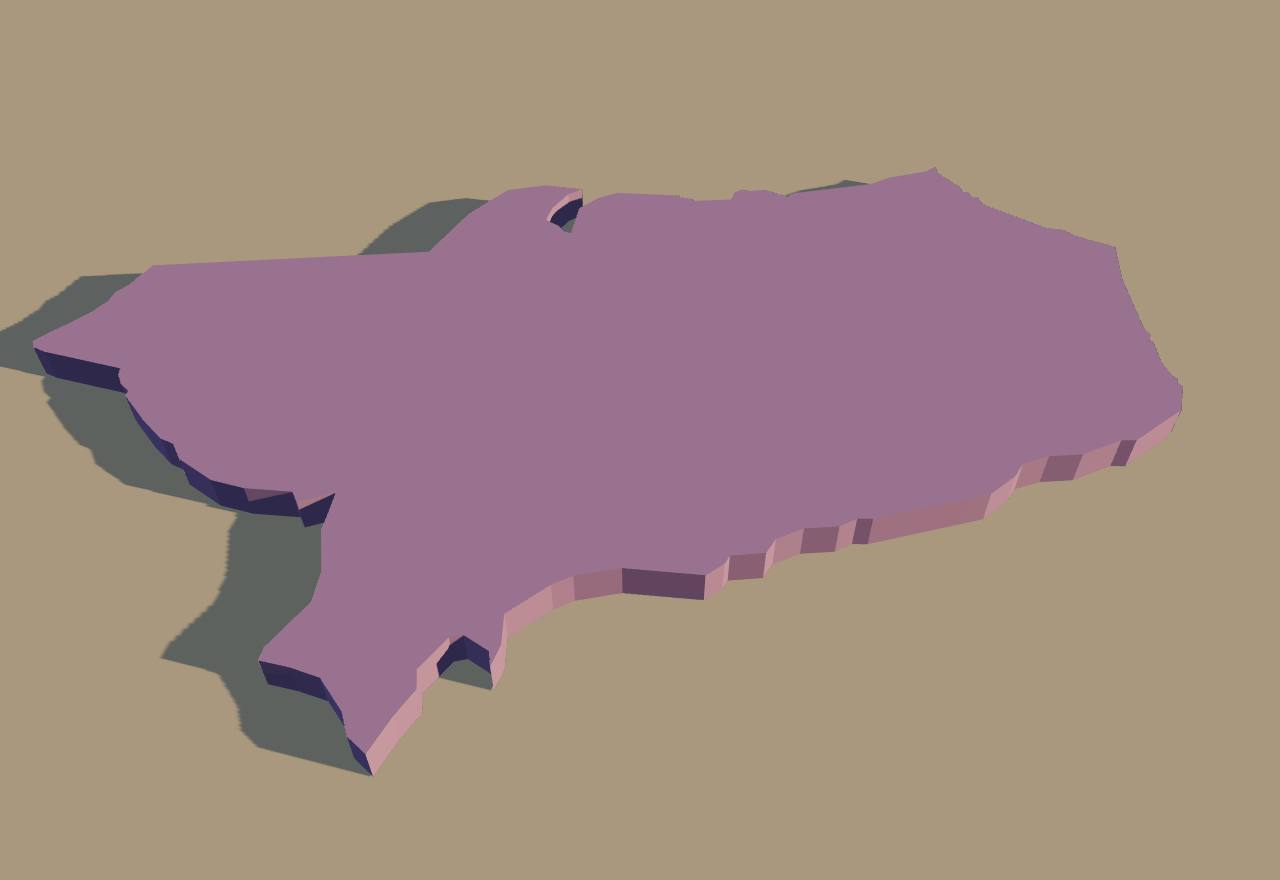
The Chaghadaid realm on Cliopatria's map, 1300–1360
Territory: Cliopatria (CC BY 4.0), simplified. Height: Seshat population, log scale.
Of Chinggis's four sons, Juvaini says, Chaghatai was given “the administration of the yasa and the law, both the enforcement thereof and the reprimanding and chastisement of those that contravened it”, and the lands from the Uyghur country to Samarqand and Bukhara, with his camp at Quyas near Almaligh. 3 Consensus Texts
When Ögedei proposed the post stations, Chaghatai approved “all of them” and linked his own: “From here I shall have post stations connecting with yours. Also, from here I shall send messengers to Batu, and Batu shall have his post stations connected with mine.” 1 Consensus Texts
Michal Biran calls the Chaghadaid Khanate “the least documented but most enduring of the Mongol successor states”: squeezed between the other Chinggisid polities, without a strong settled base, its Mongols called themselves the Middle Mongolian Ulus. It spread Islam in eastern Central Asia and gave its name to the Chaghatay language. 51 Consensus Texts
Its letters, in Biran's study as Souris summarizes it, opened with the formula üge manu, were sealed with the Chaghadaid tamgha and written in the Uyghur alphabet; its subjects called the khan's orders yarligh. 50 Consensus Texts
Ibn Battuta spent fifty-four days with Tarmashirin, “Sultan of Turkistan”, whose lands lay between four great kings, China, India, ʿIraq and Özbeg, all of whom sent him gifts. A Muslim whose two brothers before him “were both infidels”, he heard petitioners on foot on his way back from the mosque, and laughed off an imam who refused to delay the prayer for him. 12 Consensus Texts
Gibb's note gives the sequel: Tarmashirin's conversion “roused the ill-will of the nobles, who charged him with violating the precepts of Chingiz-Khan”; they rose in 1335 or 1336 and he was captured, reportedly killed. Almaligh, the khanate's capital, was ruined in the civil wars that followed. 12 Consensus Texts
Seshat gives the khanate about 3.5 million km² and 1.5–2.5 million people around 1300, with Bukhara as capital, and codes its couriers and post stations as present. Seshat Consensus Texts
How power worked King · Custom and kin · Empire · 2 unknown
How power worked
- Who rules
- King Consensus
Why?
- How chosen
- Unknown
Why?
No source read for this page says how the Chaghadaid khans were chosen; Gibb's note records only how one, Tarmashirin, was overthrown.
- Limits on power
- Custom and kin Debated
Why?
- Scale
- Empire Consensus
Why?
- Claim to rule
- Unknown
Why?
The sources read show a Muslim khan accused of breaking Chinggis's precepts but not the ground on which khans claimed to rule; Seshat codes it 'suspected unknown'.
- Who has a say
- A narrow elite Consensus
Why?
Artefacts
 Model, not a scan
In numbers
- Marks, by Seshat polity:
- Eastern Turk Khaganate
- Second Turk Khaganate
- Uigur Khaganate
- Early Mongols
- Mongol Empire
- Yuan Dynasty
- Il-khanate
- Golden Horde
- Chagatai Khaganate
- Background bands, by phase:
- The Türk and Uyghur khaganates
- Temüjin becomes Chinggis Khan
- The united empire
- Four khanates
| Seshat polity | Years | Value |
|---|---|---|
| Eastern Turk Khaganate | 583 CE – 630 CE (whole period) | 4,500,000–5,000,000 |
| Second Turk Khaganate | 682 CE – 744 CE (whole period) | 3,000,000–4,000,000 |
| Uigur Khaganate | 745 CE – 840 CE (whole period) | 2,000,000–2,500,000 |
| Early Mongols | 1000 CE – 1206 CE (whole period) | 70,000–90,000 |
| Mongol Empire | 1206 CE – 1368 CE (whole period) | 25,221,806 |
| Il-khanate | 1256 CE – 1339 CE (whole period) | 3,800,000 |
| Yuan Dynasty | 1300 CE | 24,000,000–11,000,000 |
| Chagatai Khaganate | 1300 CE | 3,500,000 |
| Golden Horde | 1310 CE | 6,000,000 |
| Seshat polity | Years | Value |
|---|---|---|
| Eastern Turk Khaganate | 583 CE – 630 CE (whole period) | 400,000–500,000 |
| Second Turk Khaganate | 682 CE – 744 CE (whole period) | 400,000–500,000 |
| Uigur Khaganate | 745 CE – 840 CE (whole period) | 400,000–500,000 |
| Early Mongols | 1000 CE – 1206 CE (whole period) | 80,000–120,000 |
| Golden Horde | 1240 CE – 1440 CE (whole period) | 400,000–600,000 |
| Yuan Dynasty | 1300 CE | 60,491,000–85,000,000 |
| Il-khanate | 1300 CE | 5,250,000 |
| Chagatai Khaganate | 1300 CE | 1,500,000–2,500,000 |
| Seshat polity | Years | Value |
|---|---|---|
| Uigur Khaganate | 745 CE – 840 CE (whole period) | suspected unknown |
| Early Mongols | 1000 CE – 1206 CE (whole period) | 500 |
| Golden Horde | 1240 CE – 1440 CE (whole period) | 75,000 |
| Yuan Dynasty | 1300 CE | 800,000 |
| Il-khanate | 1300 CE | 100,000–200,000 |
| Seshat polity | Years | Value |
|---|---|---|
| Eastern Turk Khaganate | 583 CE – 630 CE (whole period) | 4–5 |
| Second Turk Khaganate | 682 CE – 744 CE (whole period) | 4 |
| Uigur Khaganate | 745 CE – 840 CE (whole period) | 4 |
| Early Mongols | 1000 CE – 1206 CE (whole period) | 2 |
| Mongol Empire | 1206 CE – 1368 CE (whole period) | 5 |
| Golden Horde | 1240 CE – 1440 CE (whole period) | 4–5 |
| Il-khanate | 1256 CE – 1339 CE (whole period) | 6 |
| Chagatai Khaganate | 1263 CE – 1487 CE (whole period) | 4–5 |
| Yuan Dynasty | 1271 CE – 1368 CE (whole period) | 8 |
| Seshat polity | Years | Value |
|---|---|---|
| Eastern Turk Khaganate | 583 CE – 630 CE (whole period) | 1–2 |
| Second Turk Khaganate | 682 CE – 744 CE (whole period) | 2 |
| Uigur Khaganate | 745 CE – 840 CE (whole period) | 3 |
| Early Mongols | 1000 CE – 1206 CE (whole period) | 1 |
| Mongol Empire | 1206 CE – 1368 CE (whole period) | 5 |
| Golden Horde | 1240 CE – 1440 CE (whole period) | 6 |
| Il-khanate | 1256 CE – 1339 CE (whole period) | 4–5 |
| Chagatai Khaganate | 1263 CE – 1487 CE (whole period) | 3 |
| Yuan Dynasty | 1271 CE – 1368 CE (whole period) | 7 |
| Seshat polity | Years | Value |
|---|---|---|
| Eastern Turk Khaganate | 583 CE – 630 CE (whole period) | 3–4 |
| Second Turk Khaganate | 682 CE – 744 CE (whole period) | 3–4 |
| Uigur Khaganate | 745 CE – 840 CE (whole period) | 5–6 |
| Early Mongols | 1000 CE – 1206 CE (whole period) | 5 |
| Mongol Empire | 1206 CE – 1368 CE (whole period) | 5 |
| Golden Horde | 1240 CE – 1440 CE (whole period) | 6 |
| Il-khanate | 1256 CE – 1339 CE (whole period) | 6 |
| Yuan Dynasty | 1271 CE – 1368 CE (whole period) | 6 |
| Chagatai Khaganate | 1300 CE | 4–6 |
Values as Seshat codes them: bands are ranges, dots single values, flat bars values given for a whole period, hatching “unknown”; from one Seshat polity to the next, marks alternate between a light tone and a darker one with dashed joining lines (the key above names each polity). Source: Seshat Global History Databank (Equinox-2020), CC BY 4.0; and the Seshat Databank, seshat-db.com (no licence stated; attribution).
Governance fingerprint
Seshat's institutional variables, phase by phase. Hover or focus a cell for the values and years.
- Present
- Inferred present
- Absent
- Inferred absent
- Unknown
- Not coded in Seshat
- Mixed: present in one Seshat polity or period, absent in another
The axes against Seshat
7 agree, 0 disagree.
Show the 7 pairs that agree
- Agree The Türk and Uyghur khaganates: claim to rule coded “Divine mandate”, which implies rulers legitimated by gods present; Seshat has it present.
- Agree The Türk and Uyghur khaganates: how chosen coded “Heredity”, which implies elite status hereditary present; Seshat has it present.
- Agree The united empire: claim to rule coded “Divine mandate”, which implies rulers legitimated by gods present; Seshat has it present.
- Agree Four khanates: The Yuan: the great khan in China: claim to rule coded “Divine mandate”, which implies rulers legitimated by gods present; Seshat has it present.
- Agree Four khanates: The Yuan: the great khan in China: how chosen coded “Heredity”, which implies elite status hereditary present; Seshat has it present.
- Agree Four khanates: The Ilkhanate: Mongol rule in Iran: claim to rule coded “Divine mandate”, which implies rulers legitimated by gods present; Seshat has it present.
- Agree Four khanates: The Ilkhanate: Mongol rule in Iran: how chosen coded “Heredity”, which implies elite status hereditary present; Seshat has it present.
Only pairs where an axis value on its own implies a Seshat variable are compared; the rest is not counted as disagreement. 2 more pairs have no Seshat value.
Source: Seshat Global History Databank (Equinox-2020), CC BY 4.0; Seshat Databank, seshat-db.com (no licence stated; attribution).
Compare
| Axis | The steppe empires | Sui, Tang and Song China: Reunification and the early Tang | The caliphates: The first four caliphs | Kievan Rus and Novgorod: Kievan Rus |
|---|---|---|---|---|
| Who rules | King | Emperor | Caliph | King |
| How chosen | Heredity | Heredity | Mixed | Heredity |
| Limits on power | Custom and kin | Written law | Custom and kin | Written law |
| Scale | Empire | Empire | Empire | Confederation |
| Claim to rule | Divine mandate | Divine mandate | Divine mandate | Kinship and descent |
| Who has a say | A narrow elite | A narrow elite | A narrow elite | A narrow elite |
Legacy
Chinggis's descendants outlasted the empire. The Jochids founded khanates in the Crimea, Central Asia and Siberia, “some surviving into modern times”; the Chaghadaid realm was “the root of two of the most influential early modern empires, the Timurids and Mughals”, and gave its name to the Chaghatay Turkic language. 7,51 Consensus Texts
The rule that only a descendant of Chinggis could be khan held through the Golden Horde's crisis of 1359–1380, Landa argues, and shaped how its realm later divided among branches of Jochi's line. 49 Debated Texts
The word yam stayed in Persian and Turki for a post-house and post-horse and, Yule notes, in Russian “a relic of the Mongol dominion”. Silverstein records the usual view that the Mongols took the system from the Chinese relay through their Uyghur and Khitan advisers. 11,55 Consensus Texts
The envoys' reports were Latin Europe's first close accounts of the Mongol court; Peter Jackson's survey of the West's dealings with the Mongols runs from the first appearance of Chinggis's armies in 1221 to 1410. 5,56 Consensus Texts
The Orkhon valley, where Türk khagans set up their stones and Ögedei built Karakorum, is a World Heritage landscape that “is still grazed by Mongolian nomadic pastoralists”. 16 Consensus Survey
See also forms of government.
Sources
Bibliography
56 sources, numbered as cited: 8 papers · 12 books · 9 datasets · 27 primary sources
- Primary de Rachewiltz, I. (trans.); shorter version ed. J. C. Street (2015). The Secret History of the Mongols: A Mongolian Epic Chronicle of the Thirteenth Century. Western Washington University, CEDAR Books 4 (CC BY-NC-ND 4.0). Read in the open PDF: §202 (the assembly of 1206 at the source of the Onan and the ninety-five commanders of a thousand, pp. 125–126), §203 (Šigi Qutuqu's blue-script register, p. 128), §§224–227 (the ten thousand guards, pp. 143–147), §§254–255 (the succession quarrel and the choice of Ögödei, pp. 171–177), §269 (Ögödei installed in 1228, p. 189) and §§279–281 (the post stations, pp. 202–205).
- Primary Song Lian 宋濂 et al. (compilers) (1370). Yuan shi 元史, juan 2: Taizong 太宗, Dingzong 定宗 (Ögedei, Güyük). Chinese Wikisource (維基文庫), classical Chinese text, no translation. Read Ögedei's enthronement by the assembled princes 'by the testamentary decree of Taizu' (autumn 1229), his assembly decree of 1234 ('whoever is due at the assembly and does not come, but feasts in private, shall be beheaded'), his death (1241); Töregene's regency from 1242; Ögedei's naming of Shiremün as heir; the assembly that chose Güyük, his enthronement (autumn 1246) and death (1248).
- Primary ʿAlāʾ al-Dīn ʿAṭā-Malik Juvainī, trans. J. A. Boyle (1958). The History of the World-Conqueror, vol. I. Manchester University Press / Harvard University Press (UNESCO Persian series); archive.org scan. Read pp. 19–44 (the Mongols before Chinggis; 'Of the laws … and the yasas', pp. 23–34, the yam p. 33; his rise pp. 34–39; his sons and their yurts pp. 39–43; the Uighur idi-qut p. 44), pp. 178–189 (Ögedei's accession, the quriltai of 1229 and Boyle's notes on its date) and pp. 248–253 (Güyük's accession, 1246). Juvaini wrote in 1252–1260 as a Persian official in Mongol service (Hülegü made him governor of Baghdad). Boyle's 1958 translation is probably still in copyright: linked and quoted briefly.
- Primary ʿAlāʾ al-Dīn ʿAṭā-Malik Juvainī, trans. J. A. Boyle (1958). The History of the World-Conqueror, vol. II. Manchester University Press / Harvard University Press (UNESCO Persian series); archive.org scan. Read pp. 549–570: Möngke's accession, Batu's assembly at Ala-Qamaq, the written undertakings, the dissent of Ögedei's and Güyük's lines, and the enthronement on the Kelüren on 1 July 1251 (9 Rabīʿ II 649, as Boyle converts it, p. 567).
- Primary Rockhill, W. W. (trans. and ed.) (1900). The Journey of William of Rubruck to the Eastern Parts of the World, 1253–55, as Narrated by Himself, with Two Accounts of the Earlier Journey of John of Pian de Carpine. London: Hakluyt Society; archive.org scan. Read Carpini's account of Güyük's election, pp. 18–25 (with Rockhill's note on Simon of St Quentin's 'felt' enthronement, p. 21), and Rubruck on the house-carts (p. 55), Batu's ordu (pp. 122–123) and Karakorum (pp. 220–221). Public domain.
- Book Dunnell, R. W. (2023). The Rise of Chinggis Khan and the United Empire, 1206–1260. In M. Biran and Kim H. (eds), The Cambridge History of the Mongol Empire, Cambridge University Press: 19–106. Abstract read (Cambridge Core): the Mongol state in succession to the Kereyit khanate; under Ögödei 'the mission of sacred world conquest' and its governing mechanisms; 'Early qa'ans' ideological prerogatives … clashed with their kinfolk's customary claims … open civil war in 1260'.
- Book Favereau, M., and Pochekaev, R. Yu. (2023). The Golden Horde, c. 1260–1502. In The Cambridge History of the Mongol Empire, Cambridge University Press: 243–318. Abstract read: Jochi's grant; the Jochid Ulus rose in the 1260s with the Russian principalities as vassals; multilateral diplomacy and trade; ties with the other khanates until they collapsed in the fourteenth century; successor khanates in the Crimea, Central Asia and Siberia.
- Primary Song Lian 宋濂 et al. (compilers) (1370). Yuan shi 元史, juan 4: Shizu 世祖 1 (Qubilai). Chinese Wikisource (維基文庫), classical Chinese text, no translation. Read the founding of Kaiping (1256), the faction that planned to raise Ariq Böke, the princes of west and east who came to Kaiping in the third month of 1260 to urge Qubilai to take the throne ('three times he declined'), his enthronement, and Ariq Böke's rival title 'west of the city of Helin (Karakorum)'.
- Primary Song Lian 宋濂 et al. (compilers) (1370). Yuan shi 元史, juan 5: Shizu 世祖 2 (Qubilai). Chinese Wikisource (維基文庫), classical Chinese text, no translation. Read 1264: Ariq Böke, unable to fight on, comes in with his princes and counsellors; the princes are spared as 'descendants of Taizu', his counsellors executed.
- Dataset Bennett, J. S., Mutch, E., Tollefson, A., et al. (2025). Cliopatria - A geospatial database of world-wide political entities from 3400BCE to 2024CE. Scientific Data 12. Cliopatria: open geospatial dataset of over 1600 political entities, 3400 BCE–2024 CE.
- Primary Marco Polo, trans. H. Yule, rev. H. Cordier (1903). The Book of Ser Marco Polo, the Venetian, concerning the Kingdoms and Marvels of the East, vol. 1 (3rd ed.). London: John Murray; Project Gutenberg eBook 10636. Read Book II ch. VII (the tablets of authority; the chapter begins on p. 350), ch. XI (Taidu, from p. 374) and ch. XXVI (the posts and runners, from p. 433, with Yule's notes). The Gutenberg text has no page markers, so the page cites the chapter. Polo's numbers are a traveller's, not a register's. Public domain.
- Primary Ibn Baṭṭūṭa, trans. H. A. R. Gibb (1929). Travels in Asia and Africa (1325-1354). London: Routledge (Broadway Travellers); archive.org scan. Read ch. XIV, pp. 317–335 (Walata, Mali under Mansa Sulayman, 28 June 1352 – 27 February 1353, the pempi audience, Timbuktu, Gao) and Gibb's notes 6, 19 and 21 to that chapter, pp. 377–381 (the site of Malli, a summary chronology after Delafosse). Gibb's translation is probably still in copyright: linked and quoted briefly, not copied.
- Primary Song Lian 宋濂 et al. (compilers) (1370). Yuan shi 元史, juan 1: Taizu 太祖 (Chinggis Khan). Chinese Wikisource (維基文庫), classical Chinese text, no translation. Read the year 1206 (丙寅): the great assembly, the white standard of nine tails, enthronement at the source of the Onan. The Yuan history was compiled in 1369–1370 under the Ming, largely from the Yuan court's own records.
- Primary Ross, E. D. (1930). The Orkhon Inscriptions. Bulletin of the School of Oriental Studies 5(4): 861–876. Ross's English rendering of Vilhelm Thomsen's final Danish translation of the Kül Tegin and Bilgä Kagan inscriptions (735 and 732). The full text is on archive.org (https://archive.org/details/orkhoninscriptions); read the introduction and the south and east faces (I S 1–10, I E 1–26).
- Primary Linghu Defen 令狐德棻 et al. (compilers) (636). Zhou shu 周書, juan 50: Yiyu xia 異域下 (Tujue 突厥). Chinese Wikisource (維基文庫), classical Chinese text, no translation. Read the Tujue (Türk) account: the origin stories, Tumen's title Illig Qaghan after the defeat of the Rouran (first year of Western Wei Feidi, 552), the succession from Tumen to his son Kele and then to Kele's brothers Sijin (Muqan) and Tabo, the enthronement on felt, the hereditary ranks, notched-wood records and the khagan's camp at Dujin (Ötüken).
- Dataset UNESCO World Heritage Centre (2004). Orkhon Valley Cultural Landscape (World Heritage List no. 1081). UNESCO open data, World Heritage List dataset whc001. Record read 16 Nov 2026: pastureland on both banks of the Orkhon with remains from the 6th century, including Kharkhorum, 'the 13th- and 14th-century capital of Chingis (Genghis) Khan's vast Empire'; the grassland 'is still grazed by Mongolian nomadic pastoralists'; 47.4792 N, 102.6785 E.
- Primary Liu Xu 劉昫 et al. (compilers) (945). Jiu Tang shu 舊唐書, juan 195: Huihe 迴紇 (the Uyghurs). Chinese Wikisource (維基文庫), classical Chinese text, no translation. Read the founding (the Tianbao era, 744: the chief defeats the Basmil and takes the title Qutlugh Bilge Kül Qaghan, then is invested by the Tang), the Uyghur horsemen sent to the Tang after 756, and the collapse of the Kaicheng era (836–840): a minister's coup, a general who led 100,000 Kyrgyz horsemen to burn the Uyghur city, and the dispersal of the tribes.
- Book Drompp, M. R. (2017). The Uyghur Empire (744–840). Oxford Research Encyclopedia of Asian History. Abstract read: the empire on the Selenga and Orkhon (744–840); cavalry sent to help the Tang against An Lushan; cities on the steppe; stelae; Manichaeism adopted as the state religion; new Uyghur polities in Gansu and the Tarim after the collapse.
- Paper Di Cosmo, N., Hessl, A., Leland, C., Byambasuren, O., et al. (2018). Environmental Stress and Steppe Nomads: Rethinking the History of the Uyghur Empire (744–840) with Paleoclimate Data. The Journal of Interdisciplinary History 48(4): 439–463. Abstract read: 'a severe drought lasting nearly seven decades did not cause the Uyghur Empire to collapse'; a direct causal link between drought and nomad stability 'is not always justified'.
- Paper Pederson, N., Hessl, A. E., Baatarbileg, N., Anchukaitis, K. J., and Di Cosmo, N. (2014). Pluvials, droughts, the Mongol Empire, and modern Mongolia. Proceedings of the National Academy of Sciences 111(12): 4375–4379. Read in full (PMC3970536): a 1,112-year tree-ring reconstruction of warm-season water balance from Siberian pine in central Mongolia; droughts in 1115–1139 and 1180–1190; the 'Mongol Pluvial' of 1211–1225, when no annual value or its confidence limit fell below the long-term mean; a four-year drought from 1226. The data licence was not checked, so the page quotes the figures and draws no chart.
- Book Di Cosmo, N. (2023). The Climate and Environment of the Mongol Conquest. In The Cambridge History of the Mongol Empire, Cambridge University Press: 603–627 (Crossref indexes the author as 'Cosmo'). Abstract read: four regions surveyed; 'climatic reconstructions contain a high level of uncertainty and are based on different types of proxy data that are difficult to interpret'.
- Paper Aigle, D. (2004). Le grand jasaq de Gengis-khan, l'empire, la culture mongole et la shari'a. Journal of the Economic and Social History of the Orient 47(1): 31–79. Abstract read (English and French): 'Debate was especially focused on whether or not the Mongols possessed a written code of laws'; medieval authors 'confused the imperial edicts (jasaq) with customs (yosun)' and saw the jasaq as an equivalent of the sharīʿa. (A green copy is on HAL, hal-00382303, behind a bot check.)
- Book Kim, H. (2023). Mongol Imperial Institutions. In The Cambridge History of the Mongol Empire, Cambridge University Press: 399–443. Abstract read: ulus (people, nation), the ordo (mobile court), decimal units (mingghan, tümen), the keshig and the tamma garrisons, the darughachi (governor) and jarghuchi (judge), and the postal system (jam).
- Primary Song Lian 宋濂 et al. (compilers) (1370). Yuan shi 元史, juan 3: Xianzong 憲宗 (Möngke). Chinese Wikisource (維基文庫), classical Chinese text, no translation. Read the year 1251: the princes of the west and east and the great commanders 'again assembled' and 'together raised the emperor'; his death before Diaoyu fortress (1259).
- Primary Song Lian 宋濂 et al. (compilers) (1370). Yuan shi 元史, juan 101: Bingzhi 兵志 4: Zhanchi 站赤 (the post stations). Chinese Wikisource (維基文庫), classical Chinese text, no translation. Read the whole Zhanchi section: definitions, Ögedei's orders of 1229 and 1232, the gold- and silver-lettered round tablets for urgent business, the station tallies by province (with horses, carts, boats and the dog stations of Liaoyang) and the foot-relay posts (jidi pu) every 10, 15 or 25 li covering 400 li in a day and a night.
- Paper Morgan, D. O. (1986). The ‘Great Yāsā of Chingiz Khān’ and Mongol law in the Īlkhānate. Bulletin of the School of Oriental and African Studies 49(1): 163–176. Abstract read: 'the vagueness and comparative rarity of references to the ‘Great Yāsā of Chingiz khān’' in the Persian sources, which led Morgan to look again at its origin and nature.
- Primary Song Lian 宋濂 et al. (compilers) (1370). Yuan shi 元史, juan 18: Chengzong 成宗 1 (Temür). Chinese Wikisource (維基文庫), classical Chinese text, no translation. Read 1293–1294: Temür receives the crown prince's seal (1293); after Qubilai's death 'the princes of the left and right wings all assembled' at Shangdu, where he was enthroned in the Da'an pavilion.
- Primary Song Lian 宋濂 et al. (compilers) (1370). Yuan shi 元史, juan 22: Wuzong 武宗 1 (Qaishan). Chinese Wikisource (維基文庫), classical Chinese text, no translation. Read 1307: the princes 'decided the plan at Helin', the palace coup in Dadu against the empress's faction, the assembly of the princes at Shangdu, and Qaishan's enthronement edict.
- Primary Song Lian 宋濂 et al. (compilers) (1370). Yuan shi 元史, juan 24: Renzong 仁宗 1 (Ayurbarwada). Chinese Wikisource (維基文庫), classical Chinese text, no translation. Read 1311: Qaishan's death and Ayurbarwada's enthronement edict, which says that, the succession being already decided, there was no need to 'summon the imperial kin to deliberate on whom to raise' and that he followed the precedents of Zhou, Han, Jin and Tang.
- Primary Song Lian 宋濂 et al. (compilers) (1370). Yuan shi 元史, juan 27: Yingzong 英宗 1 (Shidebala). Chinese Wikisource (維基文庫), classical Chinese text, no translation. Read 1320: enthronement in the Daming hall at Dadu after 'consulting the imperial kin'.
- Primary Song Lian 宋濂 et al. (compilers) (1370). Yuan shi 元史, juan 28: Yingzong 英宗 2 (Shidebala). Chinese Wikisource (維基文庫), classical Chinese text, no translation. Read the eighth month of 1323: the emperor halts at Nanpo and is killed that night by the censor-in-chief Tegshi and his fellow conspirators.
- Primary Song Lian 宋濂 et al. (compilers) (1370). Yuan shi 元史, juan 29: Taiding di 泰定帝 1 (Yesün Temür). Chinese Wikisource (維基文庫), classical Chinese text, no translation. Read 1323: enthronement on the Longju river 'in the great ordo of Chinggis' after the princes, ministers and commanders 'consulted together', with the edict in vernacular Sino-Mongolian.
- Primary Song Lian 宋濂 et al. (compilers) (1370). Yuan shi 元史, juan 30: Taiding di 泰定帝 2 (Yesün Temür). Chinese Wikisource (維基文庫), classical Chinese text, no translation. Read 1328: the emperor's death (seventh month) and the raising of the crown prince Ragibagh by the minister Dawlat Shah (ninth month).
- Primary Song Lian 宋濂 et al. (compilers) (1370). Yuan shi 元史, juan 32: Wenzong 文宗 1 (Tugh Temür). Chinese Wikisource (維基文庫), classical Chinese text, no translation. Read 1328: enthronement in the Daming hall at Dadu on the 13th day of the ninth month of Zhihe 1, against the Shangdu court.
- Primary Song Lian 宋濂 et al. (compilers) (1370). Yuan shi 元史, juan 37: Ningzong 寧宗 (Irinjibal). Chinese Wikisource (維基文庫), classical Chinese text, no translation. Read 1332: Tugh Temür sends the seals north to Qoshila (1329); after Tugh Temür's death the minister El Temür summons the princes and the seven-year-old Irinjibal is enthroned in the Daming hall; he dies the same year.
- Primary Song Lian 宋濂 et al. (compilers) (1370). Yuan shi 元史, juan 31: Mingzong 明宗 (Qoshila). Chinese Wikisource (維基文庫), classical Chinese text, no translation. Read 1329: enthronement north of Helin (Karakorum) with the princes and ministers who travelled with him; his sudden death at Ongqochad in the eighth month; Tugh Temür enthroned again.
- Primary Song Lian 宋濂 et al. (compilers) (1370). Yuan shi 元史, juan 38: Shundi 順帝 1 (Toghon Temür). Chinese Wikisource (維基文庫), classical Chinese text, no translation. Read 1333: enthronement at Shangdu at the urging of the empress dowager and the 'imperial kin and great ministers'.
- Primary Song Lian 宋濂 et al. (compilers) (1370). Yuan shi 元史, juan 47: Shundi 順帝 10 (Toghon Temür). Chinese Wikisource (維基文庫), classical Chinese text, no translation. Read 1368: Ming armies approach; the emperor leaves Dadu by the Jiande gate at midnight and the Ming enter the capital in the eighth month: 'the state perished'.
- Book Vér, M. (2016). The postal system of the Mongol Empire in northeastern Turkestan. PhD thesis, University of Szeged, Doctoral School of History. Read the research survey, pp. 43–46 (distances between stations and travel speeds as Painter, Morgan and Silverstein give them from Carpini, Rubruck, Polo, Rashīd al-Dīn and Vaṣṣāf), and the notes on pp. 82 and 141 (the Turfan ulag documents; Rossabi's count of more than 1,400 stations in China by the end of Qubilai's reign; Kim's estimate of 750,000 postal households).
- Dataset The Metropolitan Museum of Art (1993). Safe Conduct Pass (Paiza) with Inscription in Phakpa Script (1993.256). The Met Collection API, object 39624 (isPublicDomain: true). Read 16 Nov 2026: China, Yuan dynasty, late 13th century; iron with silver inlay; H. 18.1 cm, W. 11.4 cm; no 3D. The object page (read in a browser) says the openwork inscription is filled with silver so that it projects on both faces, and translates it: 'By the strength of Eternal Heaven, an edict of the Emperor [Khan]. He who has not respect shall be guilty.'
- Dataset UNESCO World Heritage Centre (2012). Site of Xanadu (World Heritage List no. 1389). UNESCO open data, World Heritage List dataset whc001. Record read 16 Nov 2026: Kublai Khan's capital designed in 1256 by his adviser Liu Bingzhong, planned by Chinese feng shui, with temples, palaces, tombs and 'nomadic encampments'; 'a unique attempt to assimilate the nomadic Mongolian and Han Chinese cultures'; 42.3580 N, 116.1851 E.
- Book Atwood, C. P. (2023). The Empire of the Great Khan. In The Cambridge History of the Mongol Empire, Cambridge University Press: 107–180. Abstract read: Qubilai's adoption of Chinese administration; Temür's 'laissez-faire rule'; 'From Temür's death in 1307 on … succession conflicts, often pitting steppe-based candidates against those with more experience in the south'; climate change and unrest toppled the dynasty.
- Book Kamola, S., and Morgan, D. O. (2023). The Ilkhanate, 1260–1335. In The Cambridge History of the Mongol Empire, Cambridge University Press: 181–242. Abstract read: founded by Hülegü after 1258; governed through 'indigenous administrative elites' and local customs, notably Islam, 'which the Ilkhans themselves adopted as part of their ruling ideology'.
- Book Hope, M. (2016). Hülegü and the Īlkhānate. In Power, Politics, and Tradition in the Mongol Empire and the Ilkhanate of Iran, Oxford University Press: 91–134. Chapter abstract read (Oxford Academic): Hülegü's troops 'still adhered to the principles of collegial government', so he adopted them; 'a permanent dialectic between the Īlkhān desire for patrimonial rule and the need to appease their military aristocracy'.
- Paper Cabrera Ramos, M. I. (2017). Maria Paleologina and the Il-Khanate of Persia. A Byzantine Princess in an Empire between Islam and Christendom. Imago temporis: medium Aevum 11: 217–231 (CC BY-NC-ND 4.0). Abstract read: Maria Palaiologina at the court of Abaqa; the Il-Khanate 'precariously balanced between Islam, dominant in its territories and Christianity that was prevailing in its court and in the diplomatic relations'.
- Dataset UNESCO World Heritage Centre (2005). Soltaniyeh (World Heritage List no. 1188). UNESCO open data, World Heritage List dataset whc001. Record read 16 Nov 2026: the mausoleum of Oljaytu (1302–12) in Soltaniyeh, 'the capital of the Ilkhanid dynasty'; an octagon under a 50 m dome in turquoise faience, the earliest surviving double-shelled dome in Iran; 36.4374 N, 48.8111 E.
- Dataset UNESCO World Heritage Centre (2014). Bolgar Historical and Archaeological Complex (World Heritage List no. 981). UNESCO open data, World Heritage List dataset whc001. Record read 16 Nov 2026: the medieval Volga Bulgar city, 'the first capital of the Golden Horde in the 13th century'; 54.9789 N, 49.0564 E.
- Paper Tanase, T. (2018). A Christian Khan of the Golden Horde? ‘Coktoganus’ and the geopolitics of the Golden Horde at the time of its Islamisation. Revue des mondes musulmans et de la Méditerranée 143 (CC BY-NC-SA 4.0). Abstract (résumé) read: in Özbek's time Franciscans near Saray kept the relics of a 'Coktoganus', sometimes called a khan; through them one sees the struggles after Toqta's death and 'la victoire d'un khan musulman, Özbek'.
- Paper Landa, I. (2024). Between the Chinggisid principle, loyalty, and self-aggrandisement: Jochid elites in the ‘Time of Troubles’ (1359 to circa 1380). Journal of the Royal Asiatic Society 35(1): 23–58 (CC BY 4.0). Abstract read: after the death of the last Batuid khan Berdibek (r. 1357–1359) 'a high number of power contenders rose'; none 'clearly contradicted the idea of the khanate's unity and the overarching ‘Chinggisid principle’'; the crisis prepared the fifteenth-century break-up after Toqtamïsh (r. 1380–1406).
- Paper Souris, F. (2011). Michal Biran. « Diplomacy and Chancellery Practices in the Chaghadaid Khanate. Some Preliminary Remarks », in : D. Aigle, P. Buresi, dir.,Les relations diplomatiques entre le monde musulman et l’Occident latin, (XIIe-XVIe siècle). Vol. spécial d’Oriente Moderno, vol. 88/2, 2008, p. 369-393 [numéro thématique].. Abstracta Iranica 31, document 126 (CC BY-SA 4.0). Read in full: a review of Biran 2008. Chaghadaid letters opened with the formula üge manu, were sealed with the Chaghadaid tamgha and written in the Uighur alphabet; subjects called the khan's orders yarligh.
- Book Biran, M. (2023). Mongol Central Asia. In The Cambridge History of the Mongol Empire, Cambridge University Press: 319–396. Abstract read: the Chaghadaid Khanate, 'the least documented but most enduring of the Mongol successor states', calling itself the Middle Mongolian Ulus; warfare and 'brain drain'; the Islamization of eastern Central Asia; the root of the Timurids and Mughals; the name of the Chaghatay language.
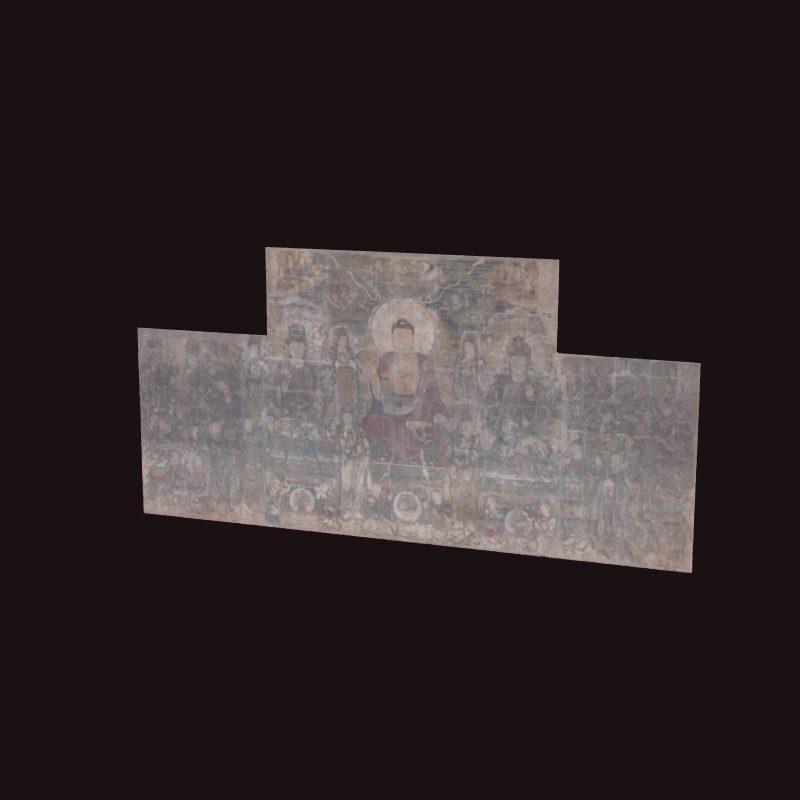
- Dataset The Metropolitan Museum of Art (1965). Buddha of Medicine Bhaishajyaguru (Yaoshi fo) (65.29.2). The Met Collection API, object 42716 (isPublicDomain: true). Read 16 Nov 2026: China, Yuan dynasty, ca. 1319; water-based pigment over clay and straw; H. 751.8 cm, W. 1511.3 cm. The Met's page shows 'View in 3D' and the Public Domain badge.
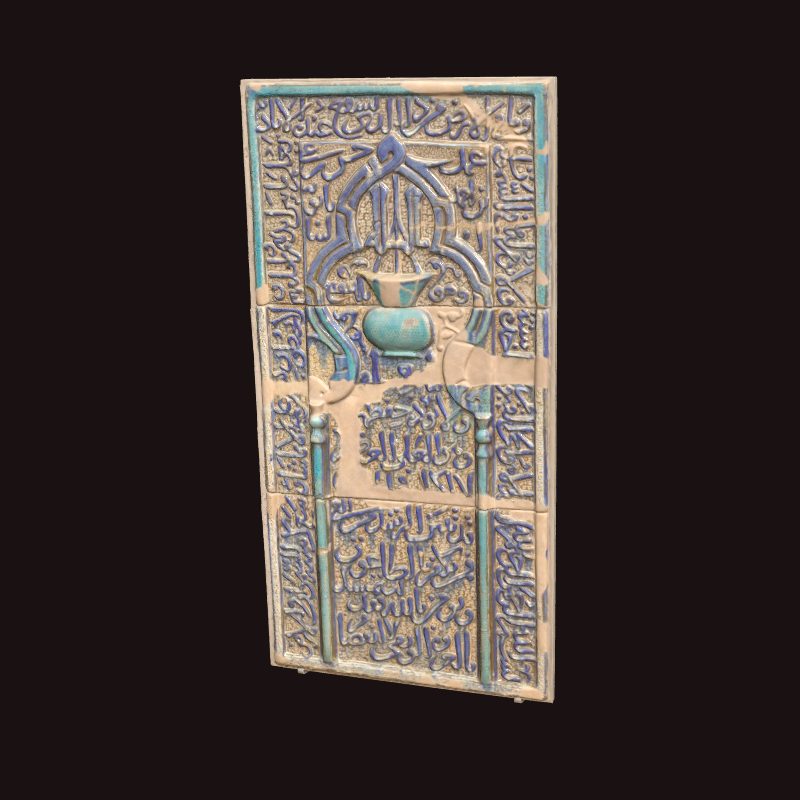
- Dataset The Metropolitan Museum of Art (1909). Tile Panel in the form of an Architectural Niche (09.87). The Met Collection API, object 445953 (isPublicDomain: true). Read 16 Nov 2026: Iran, Natanz; first half 14th century; stonepaste, inglaze painted in blue, lustre-painted on opaque white glaze; H. 123.2 cm, W. 59.7 cm. 3D and Public Domain on the page.
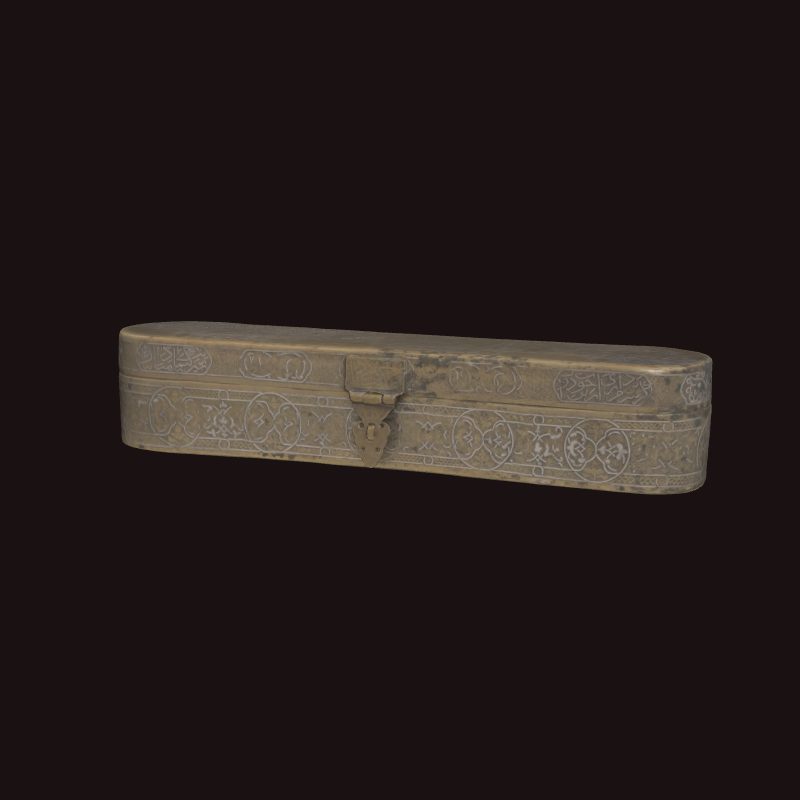
- Dataset The Metropolitan Museum of Art (1891). Inscribed Pen Box (91.1.536). The Met Collection API, object 444536 (isPublicDomain: true). Read 16 Nov 2026: 'made in early–late 14th century; altered shortly before mid-15th century'; Afghanistan, probably Herat; brass engraved and inlaid with silver, gold and black compound; L. 29.2 cm. 3D and Public Domain on the page.
- Book Silverstein, A. J. (2007). The Mongol Yām and its legacy. In Postal Systems in the Pre-Modern Islamic World, Cambridge University Press: 141–164. Opening page read (Cambridge Core): the Yām 'is generally agreed to have been adopted from the Chinese Yi (or Li) system of communication', introduced through Uighur and Khitan advisors.
- Book Jackson, P. (2018). The Mongols and the West. Routledge (2nd ed.). Publisher's description read: a survey of relations between the Catholic West and the Mongol Empire 'from the first appearance of Chinggis (Genghis) Khan's armies on Europe's horizons in 1221 to the battle of Tannenberg in 1410'.
Quantitative values from the Seshat Global History Databank (Equinox-2020), licensed CC BY 4.0. Dataset: Seshat Equinox Packaged Data (v.1). See also Seshat: The Global History Databank (Turchin et al. 2015).
Values for polities Equinox-2020 does not cover come from the Seshat Databank at seshat-db.com (Seshat: Global History Databank), snapshotted from its API on 2026-11-16. No licence is stated on seshat-db.com; used with attribution. Snapshot: Seshat Databank API (seshat-db.com), social-complexity and general variables.