Lawgivers, assemblies, lotteries, leagues
Greece: Athens, Sparta and the leagues
800 BCE – 146 BCE
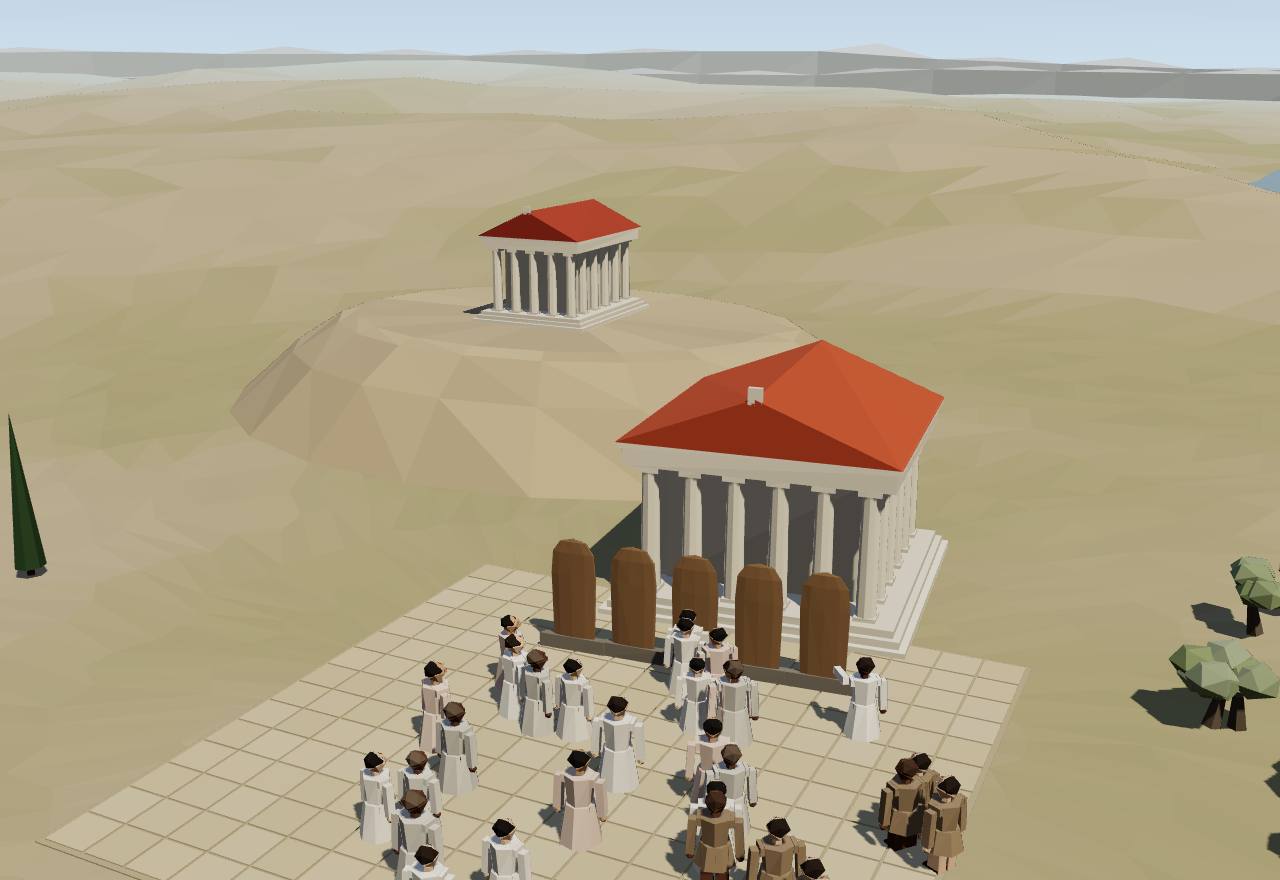
Archaic Athens: Solon's laws on wooden boards
800 BCE – 508 BCE
Archaic poleis and lawgivers
Hundreds of small city-states, most run by landowning aristocrats through yearly magistrates and councils. From about 650 BCE some of them began to write their laws on stone and wood for everyone to see. Three cases show three different answers to the question of who rules.
The Greeks wrote for about a century before anyone wrote a law: the earliest inscriptions, from about 750 to 650 BCE, are all private. Legal inscriptions appear from about 650, from all over Greece, with the greatest concentration on Crete and especially at Gortyn. 2 Consensus Excavation Texts
Most archaic laws do not say who enacted them. Where they do, the community stands behind them, either directly (the oldest law from Dreros opens 'the polis has decided') or through a lawgiver it appointed, like Draco and Solon at Athens. 2 Consensus Texts
A law from Chios, inscribed around 575 BCE, sets up a 'people's council' (boulē dēmosiē) of fifty men from each tribe, with power to inflict penalties and to hear the month's lawsuits. 2 Consensus Texts Excavation
Sara Forsdyke argues that archaic politics often meant expulsion: in Athens and elsewhere, aristocrats seized power by driving their rivals into exile, a violent pattern that elite self-regulation checked only for a while. 4 Debated Texts
Athens621 BCE – 508 BCE
Athens moved from rule by noble archons to written laws, a property-graded citizenship, a tyranny, and finally the reforms of Cleisthenes. Almost everything known comes from texts written two or three centuries later.
Terms: Greece: Athens, Sparta and the leagues: Archaic poleis and lawgivers, Athens
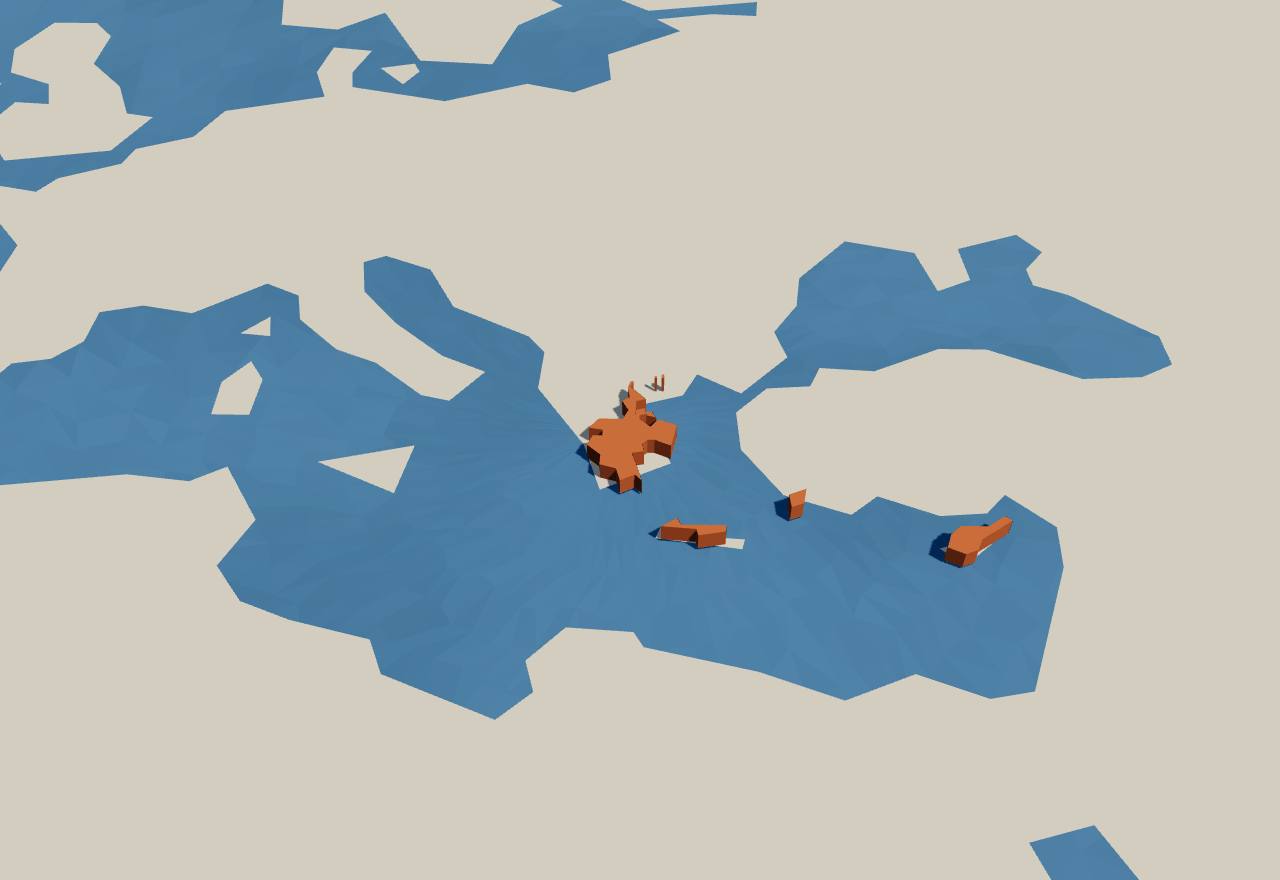
The Greek city-states spread across the Mediterranean (Cliopatria)
Territory: Cliopatria (CC BY 4.0), simplified. Height fixed: population not coded in Seshat.
According to the Athenian Constitution, the top offices first went 'by birth and wealth' and were held for life, then for ten years, then for a single year. The Council of the Areopagus, made up of former archons who sat for life, ran most affairs of state and punished offenders without appeal. 1 Debated Texts
Tradition dates Athens's first written laws to Draco in 621/0 BCE. His homicide law is the best attested: Solon kept it, and the Athenians re-inscribed it on stone in 409/8, the copy from which scholars reconstruct it. 2,1 Consensus Texts Excavation
Asked to settle a crisis in 594 BCE, Solon banned loans secured on the borrower's person and cancelled debts, the 'Shaking-off of Burdens'. In his own poem he says he freed men who had been sold into slavery. 1,2 Consensus Texts
Solon graded citizens by the yearly produce of their land into four classes: Five-hundred-measure men, Horsemen, Teamsters and Labourers. The top offices went to the first three; Labourers could sit only in the Assembly and the law-courts. 1 Consensus Texts
The Athenian Constitution says Solon had the nine archons drawn by lot from candidates each tribe had first voted onto a short list. Written some 250 years later, this is the earliest claim of lot in Athens and is not confirmed by any contemporary text. 1 Debated Texts
Solon's laws were written on wooden boards set up in the Royal Stoa, and every citizen swore to keep them. Solon himself wrote that he drafted laws 'for the lowly and the well-to-do alike', giving straight justice to each. 1,2 Consensus Texts
Peisistratus persuaded the Assembly to give him a bodyguard of club-bearers and used it to seize the Acropolis. He ruled, says the Athenian Constitution, 'more constitutionally than tyrannically', until rival factions expelled him; one of them later brought him back. 1 Consensus Texts
Cliopatria does not map Athens on its own: it draws the Greek city-states as a single block, which grows with colonisation from about 58,000 km² in 800–751 BCE to about 189,000 km² in 550–541. 5 Consensus Texts
How power worked Elected magistrates · Mixed · Written law
How power worked
- Who rules
- Elected magistrates Debated
Why?
- How chosen
- Mixed Debated
Why?
- Limits on power
- Written law Consensus
Why?
- Scale
- City-state Consensus
Why?
- Claim to rule
- Law Debated
Why?
- Who has a say
- Property owners Debated
Why?
Sparta
Two hereditary kings, a council of elders and an assembly of Spartan men who could accept or reject what was put to them but not amend it. The account rests on Herodotus and on Plutarch, writing centuries later.
Terms: Greece: Athens, Sparta and the leagues: Archaic poleis and lawgivers, Sparta
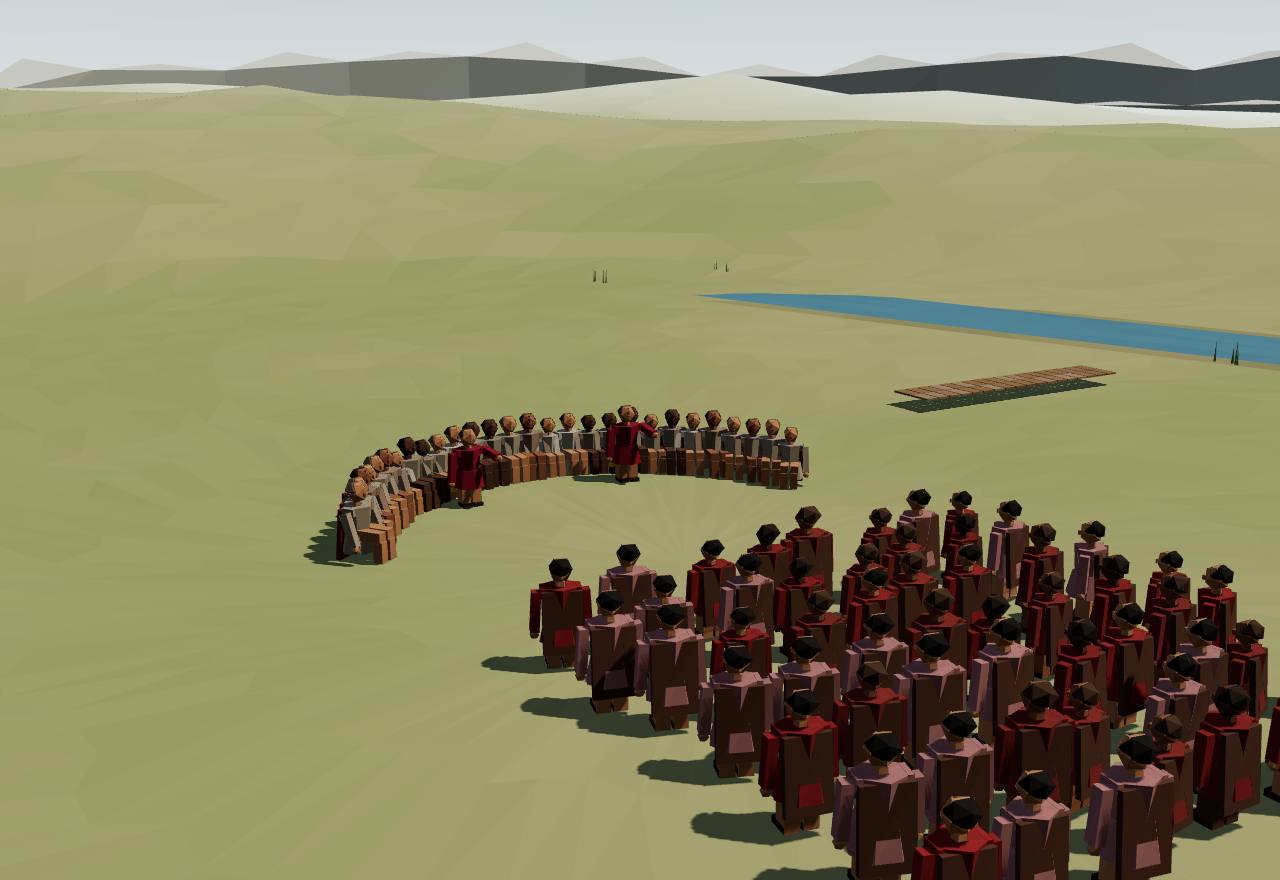
Sparta: the assembly between the bridge and the river
Plutarch quotes the 'Great Rhetra', an oracle from Delphi: divide the people into tribes and obai, set up a council of thirty including the two kings, and assemble the people from time to time between the Babyca and the Cnacion, where 'the people must have the deciding voice and the power'. They met in the open, with no hall. 3,2 Debated Texts
No one in the assembly could make a motion: the people accepted or rejected what the kings and elders laid before them. When the people began to amend motions, Plutarch says, kings Polydorus and Theopompus added a rider letting the elders and kings dissolve the meeting. 3 Debated Texts
Herodotus lists the privileges of Sparta's two kings: two priesthoods, the right to make war on any land they chose, a guard of a hundred picked men, double portions at public meals, and seats with the twenty-eight elders in council. 7 Consensus Texts
The council had twenty-eight elders, men over sixty, so that with the two kings it numbered thirty. Plutarch, following Plato, calls it the ballast that kept Sparta from veering towards tyranny or towards democracy. 3 Consensus Texts
Plutarch says the ephors were added about 130 years after Lycurgus, under King Theopompus, as a curb on the oligarchic element. The date depends on a Lycurgus who cannot himself be dated. 3,2 Debated Texts
Unlike Crete or Athens, Sparta kept its basic laws unwritten: Plutarch says one rhetra forbade writing them down, leaving education to do the work of the lawgiver. 3 Debated Texts
Plutarch credits Lycurgus with dividing the land into 9,000 equal lots for Spartans and 30,000 for the free provincials, though he reports other figures too. Stephen Hodkinson challenges this egalitarian image: property and wealth, he argues, mattered throughout Spartan history. 3,8 Debated Texts
How power worked Council of elders or heads · Mixed · Council
How power worked
- Who rules
- Council of elders or heads Debated
Why?
- How chosen
- Mixed Debated
Why?
- Limits on power
- Council Consensus
Why?
- Scale
- City-state Consensus
Why?
- Claim to rule
- Divine mandate Debated
Why?
- Who has a say
- Male citizens Debated
Why?
Crete710 BCE – 508 BCE
Crete had dozens of independent cities governed by yearly officials called kosmoi. Its stone laws are the oldest in Greece. Seshat codes Archaic Crete from 710 BCE.
Terms: Greece: Athens, Sparta and the leagues: Archaic poleis and lawgivers, Crete
- kosmos the highest official in most Cretan cities; some cities had one, others a board 2
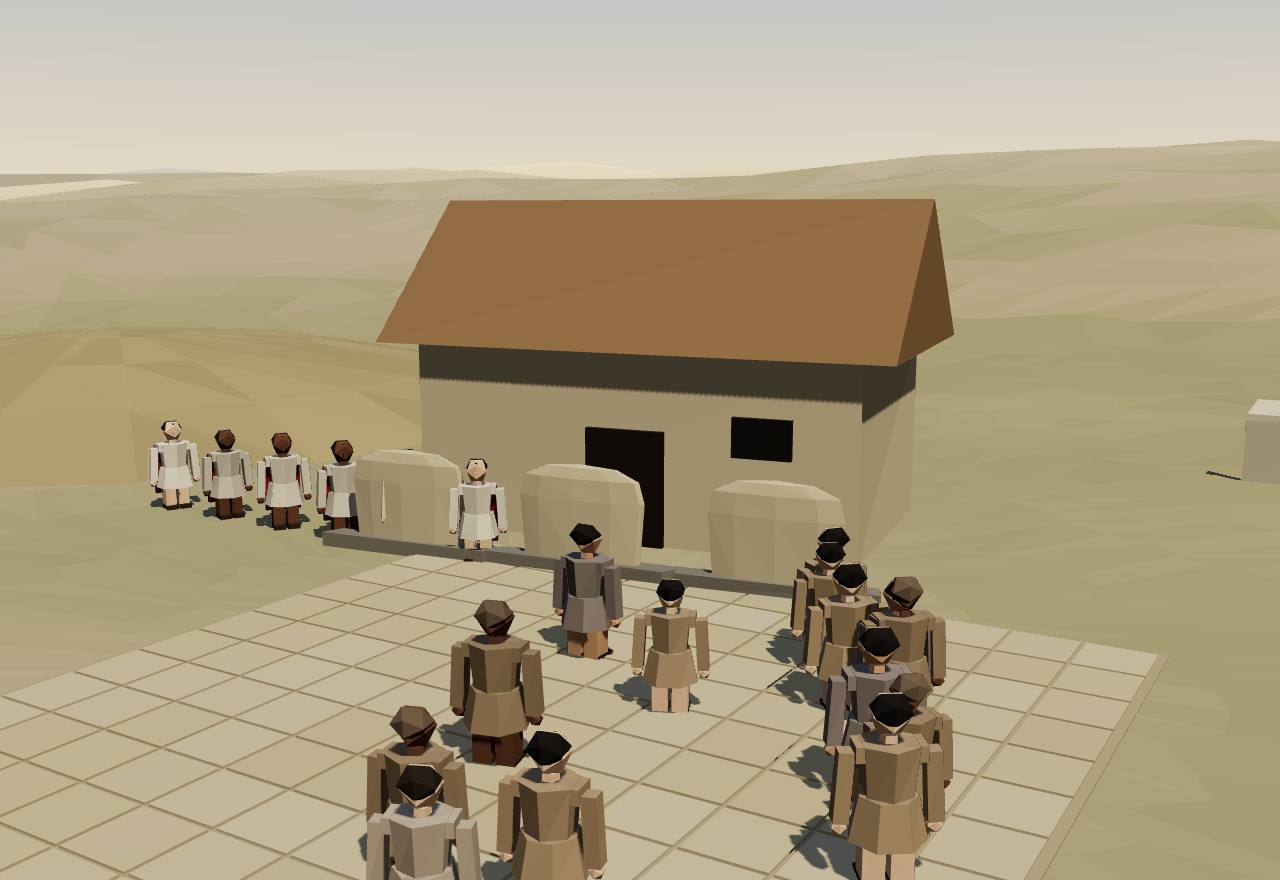
Dreros: the oldest Greek law on a temple wall
The oldest surviving Greek law, from Dreros, reads: 'The polis has decided: when someone has been kosmos, within ten years the same person is not to be kosmos again.' A man who breaks this owes double fines for any judgment he gives, loses his rights for life, and everything he does as kosmos is void. 2 Consensus Texts Excavation
French excavators found eight archaic laws in 1936 in a cistern beside Dreros's temple of Apollo Delphinios. They had been carved on blocks of the temple's east wall, which bordered the town's main gathering place, so the laws stood at the heart of the community under the god's eye. 2 Consensus Excavation
The law ends with the officials who swear to it: 'the kosmos and the damioi and the twenty of the polis'. Even the oldest Greek law shows several bodies sharing authority, not one ruler. 2 Consensus Texts
The mason cut vertical lines between words, which most early Greek inscriptions lack. Gagarin argues that this was meant to help readers with only basic reading skills, so the laws were aimed at many people, not a small elite. 2 Debated Excavation Texts
At Gortyn, the earliest laws were inscribed on the walls of the temple of Apollo Pythion, which people visited often; like those at Dreros, they set the god's protection behind the law. 2 Consensus Excavation Texts
Seshat codes Archaic Crete as a 'quasi-polity' with no capital: many small cities, not one state. It records a formal legal code, courts and judges as present, professional lawyers as absent, and no coinage of its own yet. Seshat Consensus Texts
Seshat codes hereditary elite status in Archaic Crete as 'inferred absent'. That sits awkwardly with Aristotle, who wrote later that Cretan cities chose their kosmoi only from certain clans. 9 Seshat Debated Texts
How power worked Elected magistrates · Written law · City-state · 2 unknown
How power worked
- Who rules
- Elected magistrates Consensus
Why?
- How chosen
- Unknown
Why?
No archaic text says who chose the kosmos or how. Aristotle's statement that kosmoi came from certain clans is about three centuries later (Classical Crete case).
- Limits on power
- Written law Consensus
Why?
- Scale
- City-state Consensus
Why?
- Claim to rule
- Law Consensus
Why?
- Who has a say
- Unknown
Why?
The Dreros law names 'the polis' as the body that decided, but no archaic Cretan text says who could take part in its decisions.
508 BCE – 338 BCE
Democracy and its rivals
After Cleisthenes, Athens became a democracy run by an assembly of male citizens, a council and juries filled by lot. Sparta kept its kings, elders and ephors; other cities, from Sicily to the Aegean, had democracies of their own; the cities of Crete kept rule by clans and magistrates. The phase ends with Macedon's victory at Chaeronea in 338 BCE.
Thucydides has Pericles define the word: Athens's administration 'favors the many instead of the few; this is why it is called a democracy'. 10 Consensus Texts
Josiah Ober argues that Classical Greece was unusually prosperous, densely populated and urban, and that this was no miracle but the result of political breakthroughs and economic growth in citizen-centred city-states. 11 Debated Texts
Philip and Alexander of Macedon defeated the Greek cities at Chaeronea in 338 BCE, a victory Ober attributes to the Macedonians' use of Greek innovations. 11,12 Consensus Texts
Athens
The best-documented democracy of the ancient world: male citizens voted in the Assembly, served on a council and in huge juries picked by lot, and could exile a leading politician by writing his name on a sherd.
Terms: Greece: Athens, Sparta and the leagues: Democracy and its rivals, Athens
- dēmokratiaδημοκρατία 'rule of the people': the name Thucydides' Pericles gives Athens's government 13
- boulēβουλή the Council of 500, chosen by lot, fifty from each tribe 14
- klērōtēriaκληρωτήρια allotment machines: stone slabs slotted for jurors' tickets, two for each tribe 14,15
- pinakiaπινάκια jurors' tickets, with name, father's name and deme 14
- kanonidesκανονίδες the columns of slots on an allotment machine, five on each 14
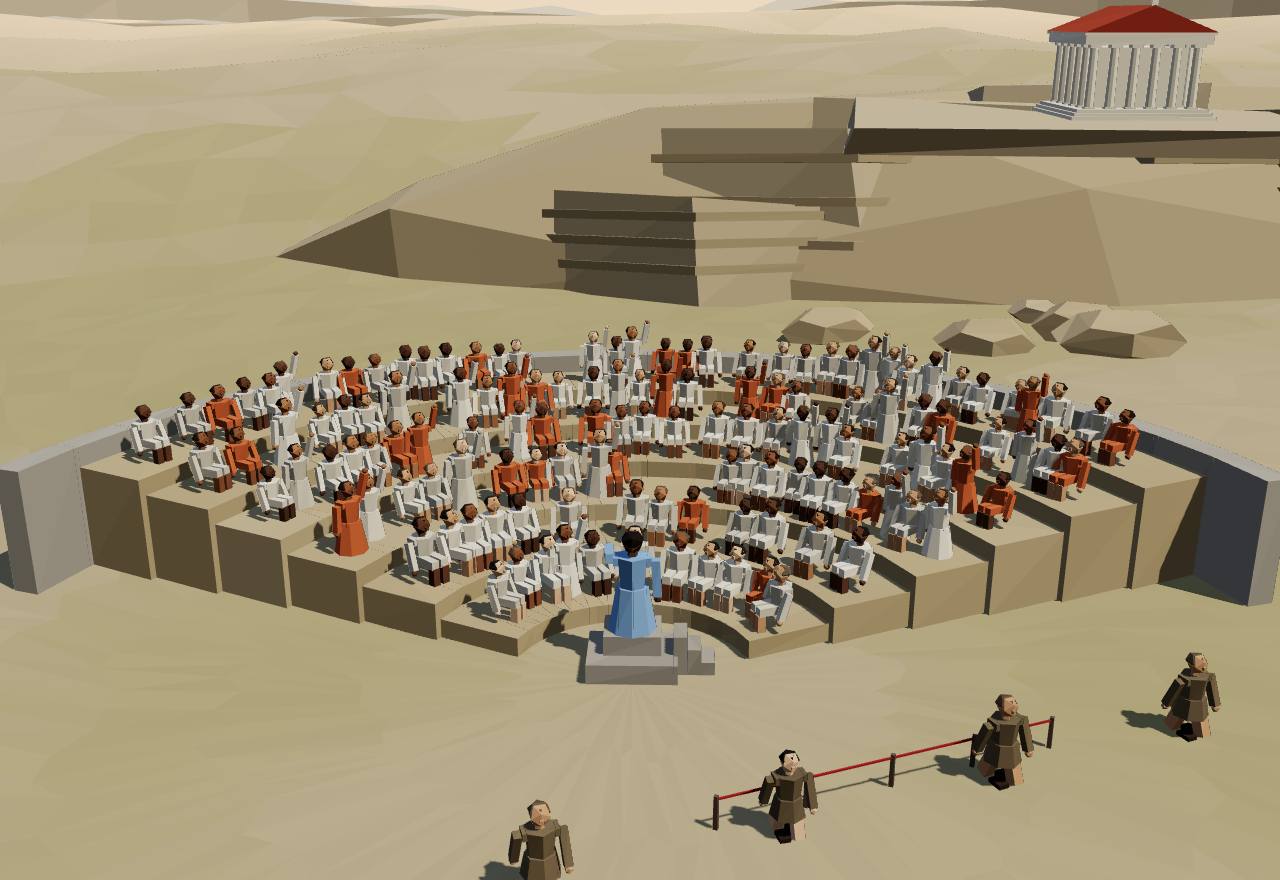
The Athenian Assembly on the Pnyx
Cleisthenes replaced the four old tribes with ten new ones 'wishing to mix them up'. He split Attica into thirty districts, ten each in the city, the coast and the inland, and gave each tribe one of each by lot, so that every tribe drew men from all over Attica. 1 Consensus Texts
The Assembly met on the Pnyx hill, four times in each presidency of the Council, under a written agenda. One meeting voted to confirm the officials in office and dealt with food supply and defence; generals and other military officers were elected there by show of hands. 1,15 Consensus Texts Excavation
Meetings began at dawn. Slaves swept reluctant citizens up from the Agora with a rope wet with red paint: anyone caught lingering had marked clothes and could be fined. 15 Consensus Texts
The Council of 500, fifty from each tribe chosen by lot, prepared the Assembly's business and met every day except holidays. Each tribe's fifty served in turn as the presidency for about a tenth of the year, dining at public expense in the round Tholos. 1,15 Consensus Texts Excavation
The presidents' chairman was chosen by lot for one day and one night and could never serve again. For that day he held the keys of the treasuries and archives and the state seal. 1 Consensus Texts
By the fourth century almost every routine office was filled by lot, for one year. Only military officers and a few financial posts were elected by show of hands. No civilian office could be held twice, except that a man could sit on the Council twice. 1,15 Consensus Texts
Jurors were allotted with stone machines. Each tribe had two, each with five columns of slots, one column for each jury section. Tickets were slotted in, and as many balls as there were tickets in the shortest column went down a tube, white for the jurors needed and black for the rest. Each white ball made a whole row of five into jurors for the day. 1,14,15 Consensus Texts Excavation
Any citizen over thirty not in debt to the treasury could serve as a juror. The Athenian Constitution counts six thousand jurors in the fifth century; juries ran from two hundred men upwards, and up to ten courts could sit at once. 1,15 Consensus Texts
Pericles introduced pay for jurors. Pay for attending the Assembly came only after the democracy was restored in 403/2 BCE, rising from one obol to three. For its own day the Athenian Constitution lists a drachma for an ordinary Assembly meeting, a drachma and a half for the main one, half a drachma for jurors and five obols for councillors. 1,2 Consensus Texts
Cleisthenes's law on ostracism was first used against Hipparchus son of Charmus, a relative of the tyrant Peisistratus. Each year the Assembly voted on whether to hold one. On the day, citizens scratched a name on a sherd; if at least 6,000 sherds were cast, the man named most often left Athens for ten years but kept his property. 1,16,15 Consensus Texts
Many sherds survive. Big deposits from the early fifth century were dumped to fill potholes in a road leaving the Agora, and they name most of Athens's leading men: Aristeides, ostracised in 483/2 BCE, Themistocles, Cimon, even Pericles, who was never exiled. One adds 'Out with him!'. 15 Consensus Excavation
Forsdyke argues that ostracism was mostly symbolic: a remarkably mild form of exile, rarely used, that stood for the people's power over who stayed in the city. 4 Debated Texts
On a proposal by Pericles, Athens restricted citizenship to sons of two citizen parents, 'owing to the large number of the citizens'. Sons were registered in their deme at eighteen after a vote on their age and free birth. 1 Consensus Texts
The Athenian Constitution says that the tribute of the allies and the taxes fed more than twenty thousand men: six thousand jurors, five hundred councillors, archers, cavalry, dock guards and some 1,400 officials at home and abroad. 1 Debated Texts
After the restoration of democracy in 403/2 BCE, new laws went through a board of law-makers (nomothetai) and the Council, and were written up in public 'for anyone who wishes to see'. 2 Consensus Texts
How power worked Citizen assembly · Lot (sortition) · Independent courts
How power worked
- Who rules
- Citizen assembly Consensus
Why?
- How chosen
- Lot (sortition) Consensus
Why?
- Limits on power
- Independent courts Consensus
Why?
- Scale
- City-state Consensus
Why?
- Claim to rule
- Popular sovereignty Debated
Why?
- Who has a say
- Male citizens Consensus
Why?
Allot a jury with the kleroterion
Model, not evidence
Each tribe's jurors belonged to ten sections, alpha to kappa. A ticket from each man was slotted down his section's column on one of the tribe's two machines, five columns each; as many balls as there were tickets in a machine's shortest column went into its tube, white for the jurors needed and black for the rest. A white ball made the whole row of five into jurors for the day. 1,15
40 jurors drawn: 4 from every section.
| Ball | Α | Β | Γ | Δ | Ε |
|---|---|---|---|---|---|
| Black | home | home | home | home | home |
| Black | home | home | home | home | home |
| Black | home | home | home | home | home |
| White | juror | juror | juror | juror | juror |
| White | juror | juror | juror | juror | juror |
| Black | home | home | home | home | home |
| Black | home | home | home | home | home |
| White | juror | juror | juror | juror | juror |
| White | juror | juror | juror | juror | juror |
| Black | home | home | home | home | home |
| – | out | out | out | out | |
| – | out | out | out | ||
| – | out | out | |||
| – | out | out | |||
| – | out |
| Ball | Ζ | Η | Θ | Ι | Κ |
|---|---|---|---|---|---|
| Black | home | home | home | home | home |
| Black | home | home | home | home | home |
| Black | home | home | home | home | home |
| Black | home | home | home | home | home |
| White | juror | juror | juror | juror | juror |
| White | juror | juror | juror | juror | juror |
| Black | home | home | home | home | home |
| White | juror | juror | juror | juror | juror |
| White | juror | juror | juror | juror | juror |
| Black | home | home | home | home | home |
| – | out | out | out | out | |
| – | out | out | out | ||
| – | out | out | |||
| – | out | ||||
| – | out | ||||
| – | out |
Neither source says how a tribe's white balls were split between its two machines; the simulator splits them equally, so the quota must be a multiple of ten and every section supplies the same number of jurors.
Count an ostracism
Model, not evidence
The archons first counted all the sherds: with fewer than 6,000 the vote was void. Otherwise the man named on the most sherds went into exile for 10 years. The names below appear on sherds found in the Agora; the numbers are yours to change, since the real tallies do not survive. 16,15
5,900 sherds: fewer than 6,000, so the ostracism is void.
Who could vote, in Athens and Sparta
Data: ancient sources, as cited
Who belonged to the body that voted. A bar appears only where a source gives a number; the rest have none that can be trusted.
Athens
- Men of two citizen parents, registered at 18 voted No count of all citizens in the sources read; the Athenian Constitution counts 6,000 jurors (men over 30) in the fifth century. 1
- Women of citizen families no vote no reliable estimate No reliable estimate. 1
- Resident foreigners (metics) no vote no reliable estimate No reliable estimate. 1
- Enslaved people no vote no reliable estimate No reliable estimate. 1
Sparta
- Spartiates who paid into a common mess voted Aristotle: 'not even a thousand' in his day, in a land able to support 30,000 hoplites; tradition said there had once been 10,000. 9
- Spartan women no vote no reliable estimate No reliable estimate. 9
- Free provincials (perioeci) no vote no reliable estimate No reliable estimate. 3
- Helots (serfs) no vote no reliable estimate No reliable estimate. 9
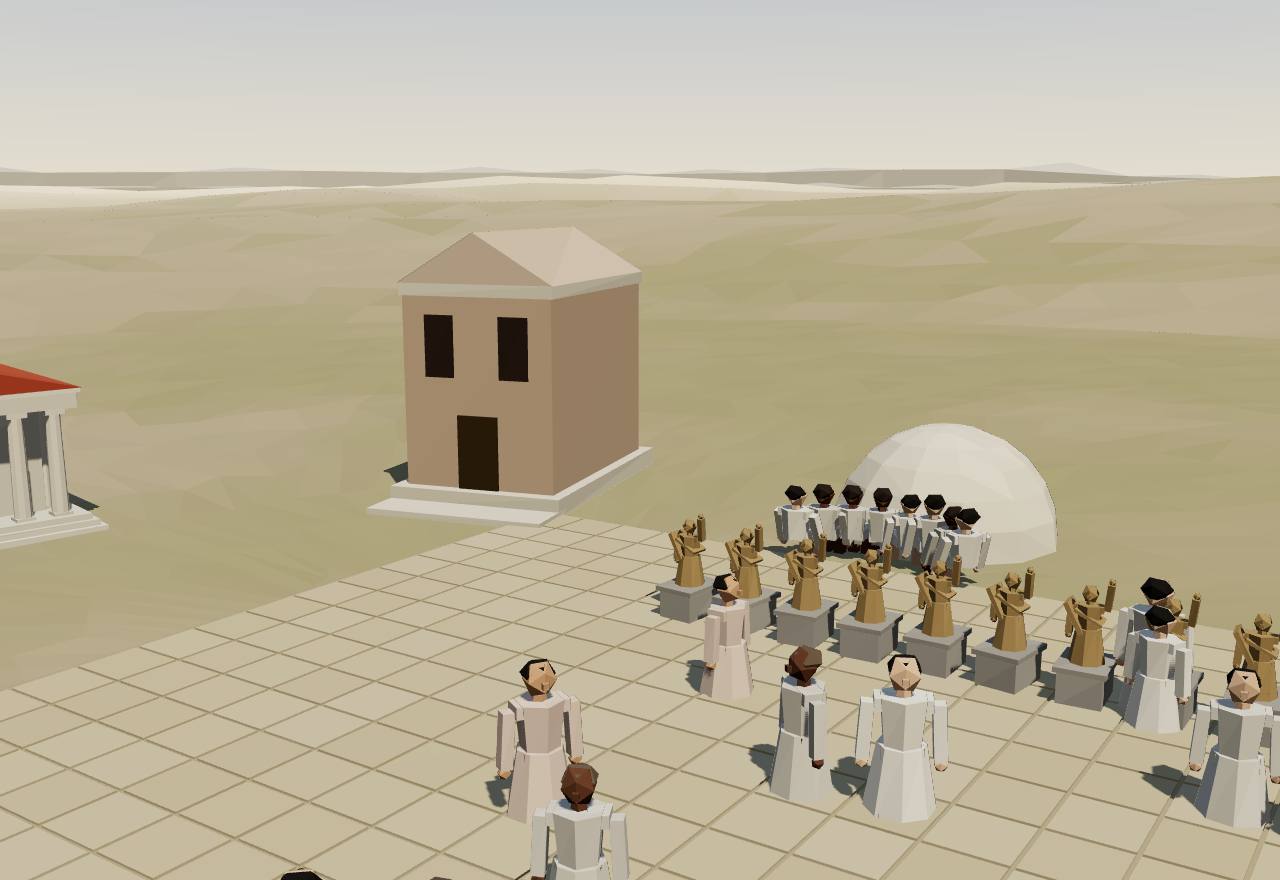
The Agora: Council House and Tholos
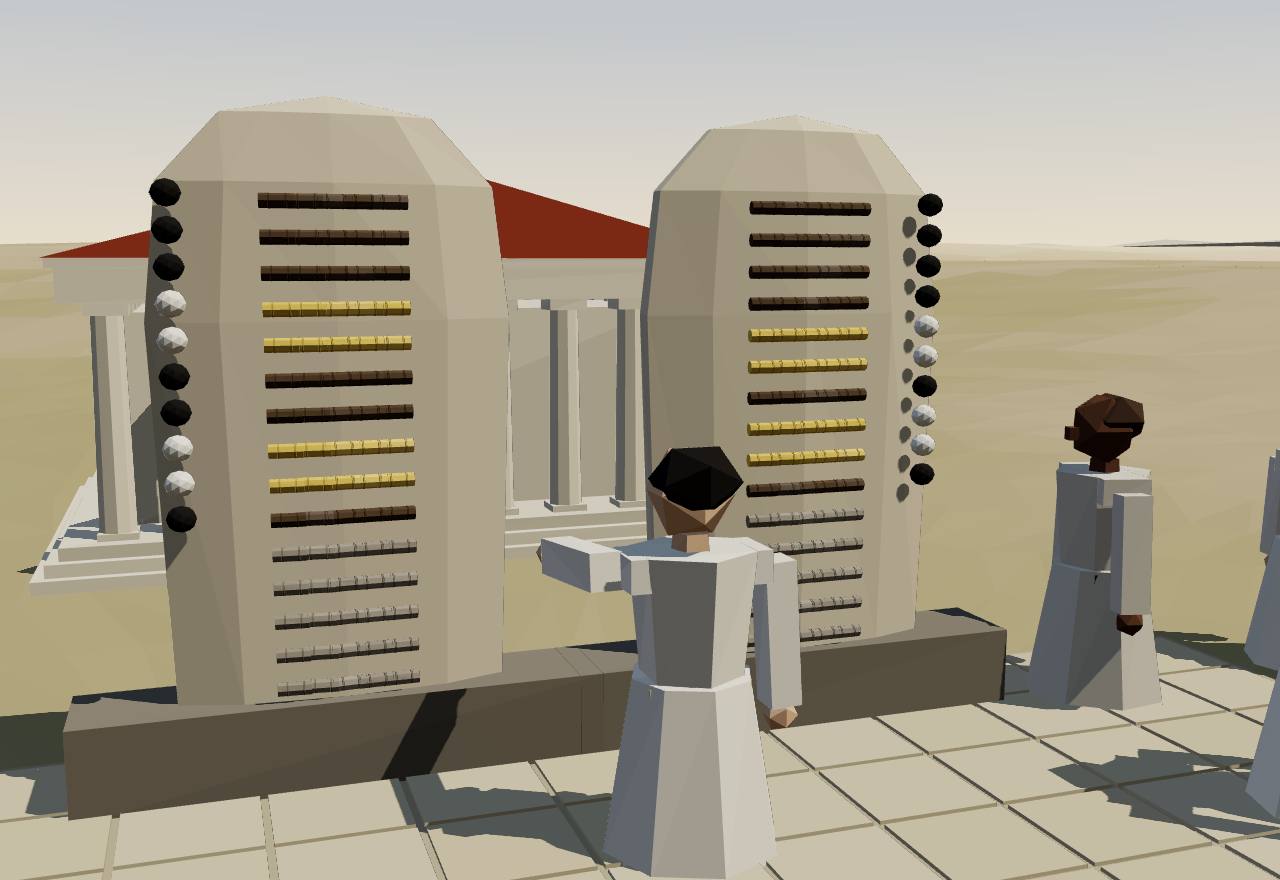
Allotting jurors with the kleroterion
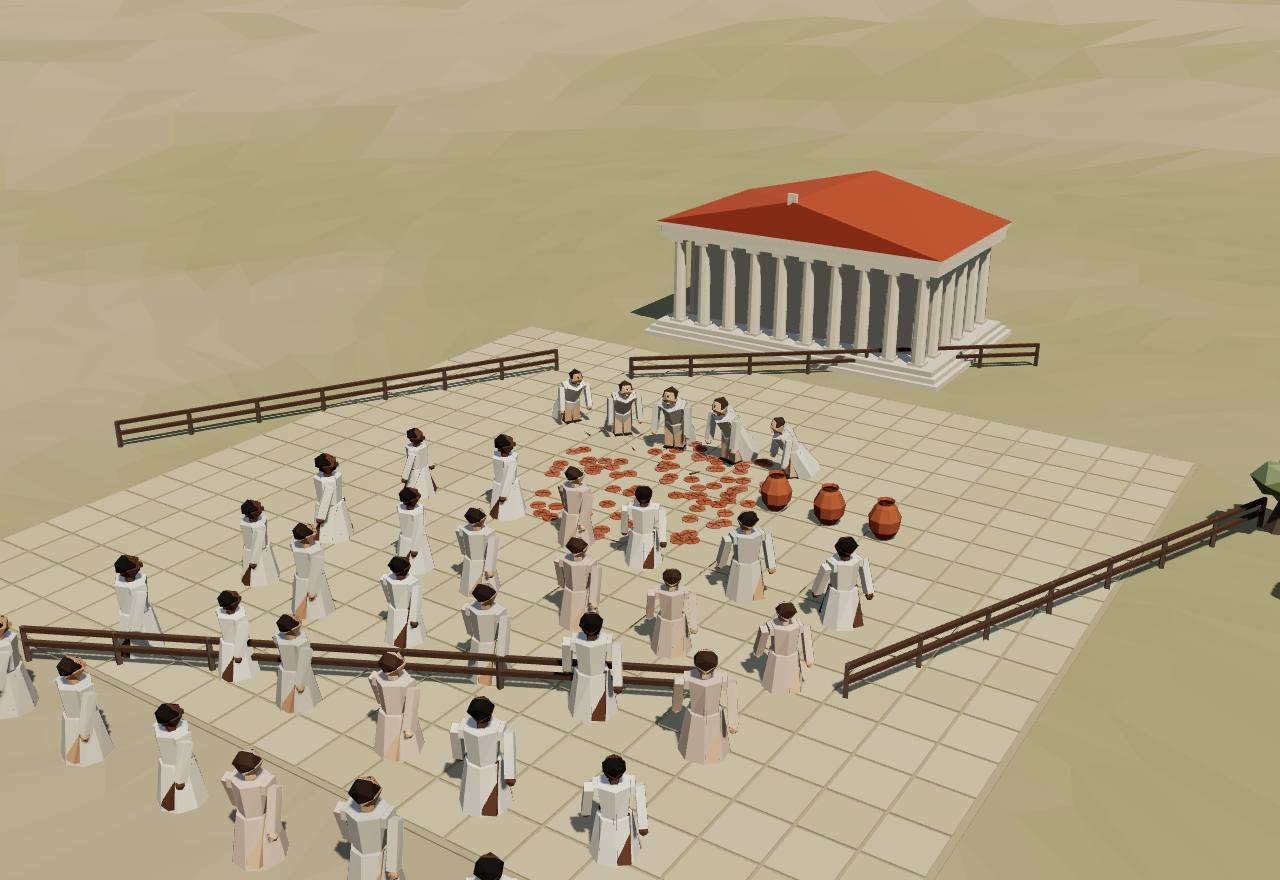
An ostracism in the Agora
Sparta
Classical Sparta's men decided by shouting. Five ephors elected from all citizens held vast powers beside the two kings and the elders, while the number of full citizens shrank.
Terms: Greece: Athens, Sparta and the leagues: Democracy and its rivals, Sparta
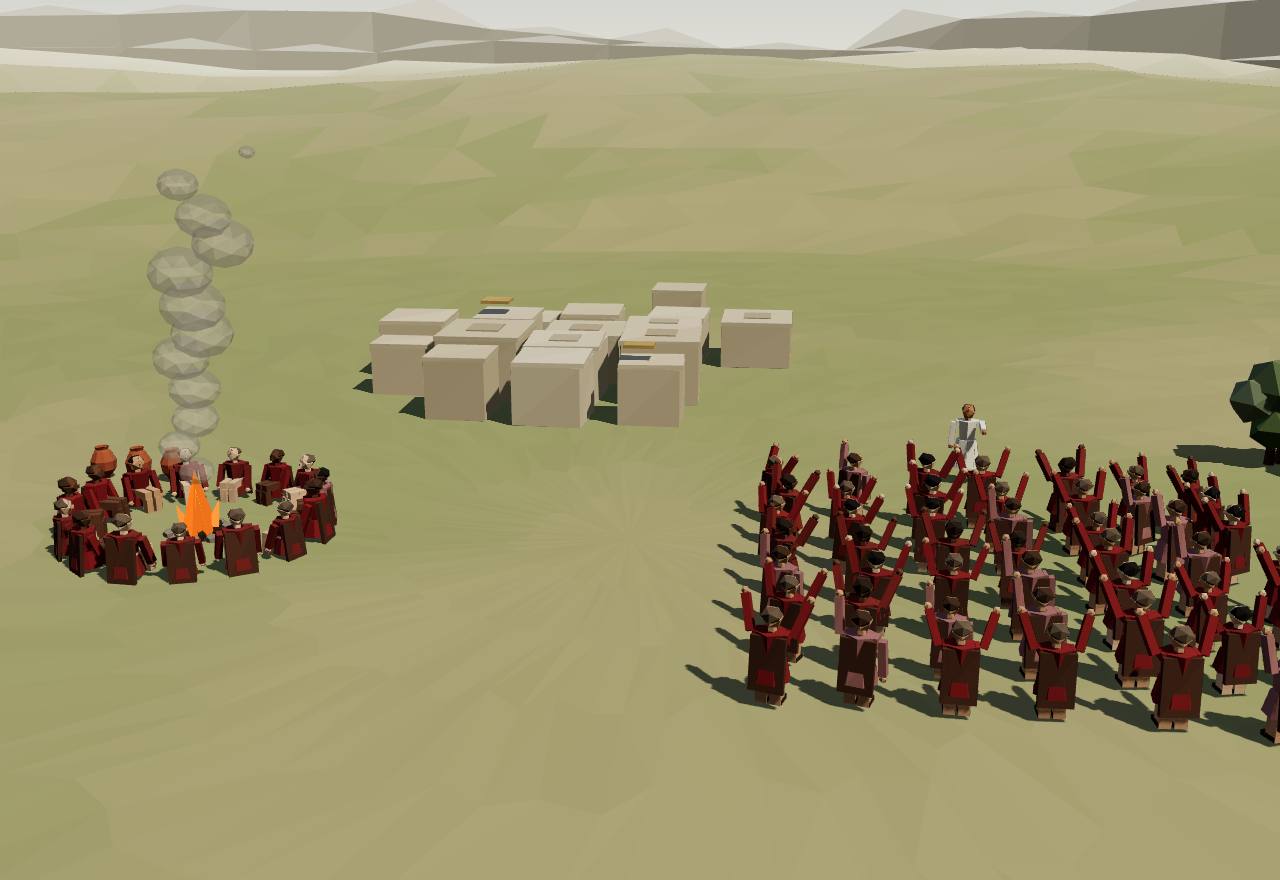
Sparta: the common mess and the assembly
The Spartan assembly decided 'by acclamation not by voting'. When it debated war with Athens, the presiding ephor said he could not tell which shout was louder and made the men walk to two sides of the meeting place; most held that Athens had broken the treaty. 10 Consensus Texts
Elders were elected for life by shouting. Candidates crossed the assembly one by one in an order set by lot, while judges shut in a nearby room, unable to see, wrote down how loud each shout was. Aristotle called the method 'childish'. 3,9 Consensus Texts
Five ephors, chosen each year from the whole citizen body, controlled Sparta's most important affairs, judged major lawsuits and held other officials to account. Aristotle thought the office 'equal to a tyranny' and complained that poor ephors were easily bribed. 9 Consensus Texts
Every citizen ate in a common mess of about fifteen men and paid in a monthly share of barley, wine, cheese and figs. Aristotle notes the catch: a man who could not pay lost his citizenship. 3,9 Consensus Texts
Aristotle says land had fallen into few hands, nearly two-fifths of it owned by women, and that a country able to support 1,500 cavalry and 30,000 hoplites had fewer than a thousand citizens. Tradition held that Spartiates had once numbered ten thousand. 9 Consensus Texts
Hodkinson argues that Sparta's success rested on a compromise between rich and poor citizens, with differences of wealth masked by a uniform way of life and shared resources. Growing inequality turned it into a plutocracy and brought down Spartan power. 8 Debated Texts
Cliopatria maps Sparta through its alliance, the Peloponnesian League: about 19,700 km² in 450–405 BCE and 22,500 km² in 404–384, shrinking to about 9,000 km² by 366–351. 5 Consensus Texts
How power worked Council of elders or heads · Acclamation · Council
How power worked
- Who rules
- Council of elders or heads Debated
Why?
- How chosen
- Acclamation Consensus
Why?
- Limits on power
- Council Consensus
Why?
- Scale
- City-state Consensus
Why?
- Claim to rule
- Law Debated
Why?
- Who has a say
- Male citizens Consensus
Why?
Democracies beyond Athens480 BCE – 338 BCE
Athens was not alone. Democracies governed cities across the Greek world, though their evidence is scattered: a few lines in a historian, an inscription, a building.
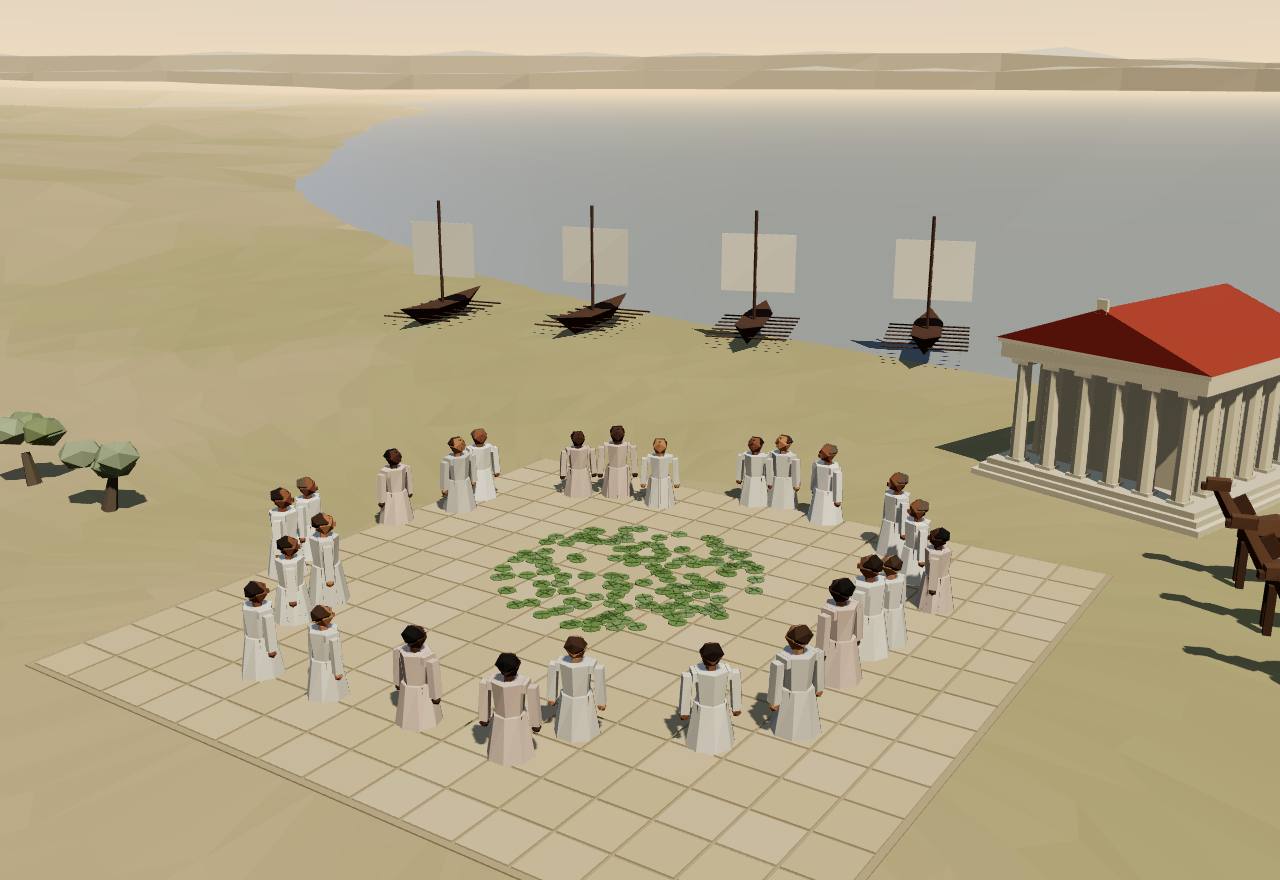
Syracuse: exile by olive leaf
Eric Robinson identifies democracies in Classical-period (480–323 BCE) city-states on the Greek mainland, in western and north-western Greece and Cyrene, and in eastern Greece, and sets out to explain why democracy spread so widely in this period. 19 Consensus Texts
The evidence outside Athens is scattered: passages in ancient authors, inscriptions and archaeology. That is why non-Athenian democracy has had only fleeting attention from historians. 19 Consensus Texts Excavation
Thucydides explains Athens's disaster in Sicily partly by this: Syracuse and its neighbours were the only cities Athens had fought that were 'under democracies like themselves', large, with ships and horses, and could not be split by promises of a change of government. 10 Consensus Texts
After attempts at tyranny, Syracuse copied Athenian ostracism as 'petalism': citizens wrote a name on an olive leaf, and the man with most leaves went into exile for five years. Diodorus says it was soon repealed because the ablest men withdrew from public life for fear of it. 20 Debated Texts
Several Greek cities passed laws rewarding whoever killed a would-be tyrant, among them Eretria and Ilion. David Teegarden argues that these laws worked by making it safe to follow the first man who struck, so that would-be plotters knew they would be overwhelmed. 21 Debated Texts
Polybius says the Achaeans of the northern Peloponnese, once ruled by kings, changed to a democracy and tried to keep their league of twelve cities democratic until the time of Philip and Alexander. 22 Debated Texts
How power worked Citizen assembly · Written law · City-state · 2 unknown
How power worked
- Who rules
- Citizen assembly Debated
Why?
- How chosen
- Unknown
Why?
How officials were chosen varied from city to city and is rarely recorded; the page does not assume Athens's lot applied elsewhere.
- Limits on power
- Written law Debated
Why?
- Scale
- City-state Consensus
Why?
- Claim to rule
- Popular sovereignty Debated
Why?
- Who has a say
- Unknown
Why?
No citizen lists survive for these cities, so who counted as a citizen, and how many took part, cannot be said.
Crete
Fifth-century Gortyn inscribed the longest law in Greek, while Aristotle saw the Cretan cities as run by clans. Seshat codes Classical Crete from 500 to 323 BCE.
Terms: Greece: Athens, Sparta and the leagues: Democracy and its rivals, Crete
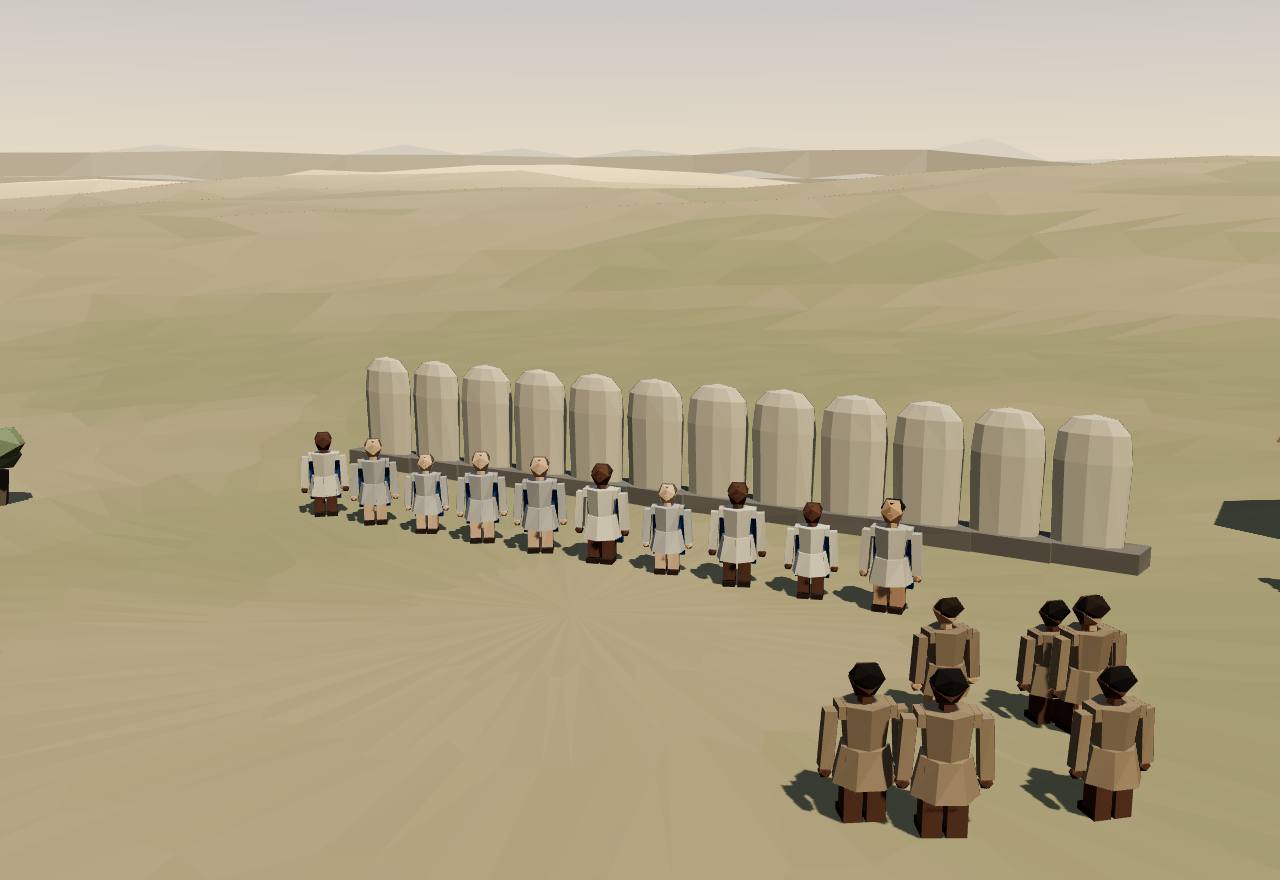
Gortyn: the Great Code
Gortyn's Great Code, probably from the middle of the fifth century BCE, fills eleven and a half columns: 621 lines and more than 3,000 words, mostly family and property law; Gagarin says its scale 'puts it in a class of its own'. 2 Consensus Excavation Texts
Gortyn's laws refer to one another with phrases like 'as is written'. Gagarin argues this gave the sense of a single, connected body of written law, which may have inspired the Great Code. 2 Debated Texts
Aristotle describes ten kosmoi in each city, like Sparta's ephors but chosen 'not from all the citizens but from certain clans'. Former kosmoi sat for life on the council of elders, answerable to no one, and the assembly of all citizens could only confirm what elders and kosmoi had decided. 9 Consensus Texts
Aristotle adds that kosmoi were often thrown out by conspiracies of colleagues or citizens, and that powerful men suspended the office to escape punishment. Crete, he concludes, was 'not actually a republic but rather a dynasty'. 9 Debated Texts
Cretan messes were paid for out of the crops and herds of public land and the tribute of the serfs, so that all citizens, women and children included, were fed from common funds. Aristotle thought this better than Sparta's, where poor men who could not pay lost their citizenship. 9 Consensus Texts
On Crete, as in Sparta, serfs worked the land; but Aristotle observes that Crete's serfs stayed quiet while Sparta's helots often revolted, and he puts this down to the island's distance from foreign wars. 9 Consensus Texts
Seshat gives Classical Crete a territory of 210–240 km², a population of 5,000–30,000 and a largest settlement of about 4,000 people, and now records coins minted on the island, which it codes as absent in the Archaic period. Seshat Consensus Texts
How power worked Elected magistrates · Election · Written law
How power worked
- Who rules
- Elected magistrates Consensus
Why?
- How chosen
- Election Debated
Why?
- Limits on power
- Written law Debated
Why?
- Scale
- City-state Consensus
Why?
- Claim to rule
- Law Debated
Why?
- Who has a say
- A narrow elite Debated
Why?
338 BCE – 146 BCE
Leagues under the kings
After Chaeronea the Macedonian kings dominated Greece, and the cities answered by banding together: federal leagues such as the Achaean and Aetolian elected generals and met in common assemblies. The phase ends in 146 BCE, when the Achaean League was dissolved.
After Chaeronea, Philip summoned a congress of the Greek cities to Corinth. According to Diodorus, the Greeks elected him general plenipotentiary for a war against Persia, and he fixed how many soldiers each city had to send. 12 Consensus Texts
In 337/6 BCE, fearing that ambitious men would court the Macedonian king, Athens passed a law declaring that whoever killed a man trying to set up a tyranny or overthrow the democracy 'shall be blameless'. Its stele carries a relief of Democracy crowning the People. 15,21 Consensus Texts Excavation
By Alexander's time, nearly half of the mainland Greek city-states had given up part of their independence to join larger states called koina, the so-called Greek federal states. Emily Mackil argues that shared cults and long economic ties made this possible. 24 Debated Texts
Laws went on being inscribed and displayed in Greek cities throughout the period, and the same procedures turn up across the Greek world: by one count, eighty-two cities let any citizen bring a prosecution. 2 Consensus Texts Excavation
Macedon338 BCE – 168 BCE
A hereditary kingdom on the northern edge of the Greek world, which under Philip II and Alexander conquered first Greece and then the Persian Empire. Seshat-db codes the Macedonian Empire; it lists the Antigonid kings who followed but codes nothing for them yet.
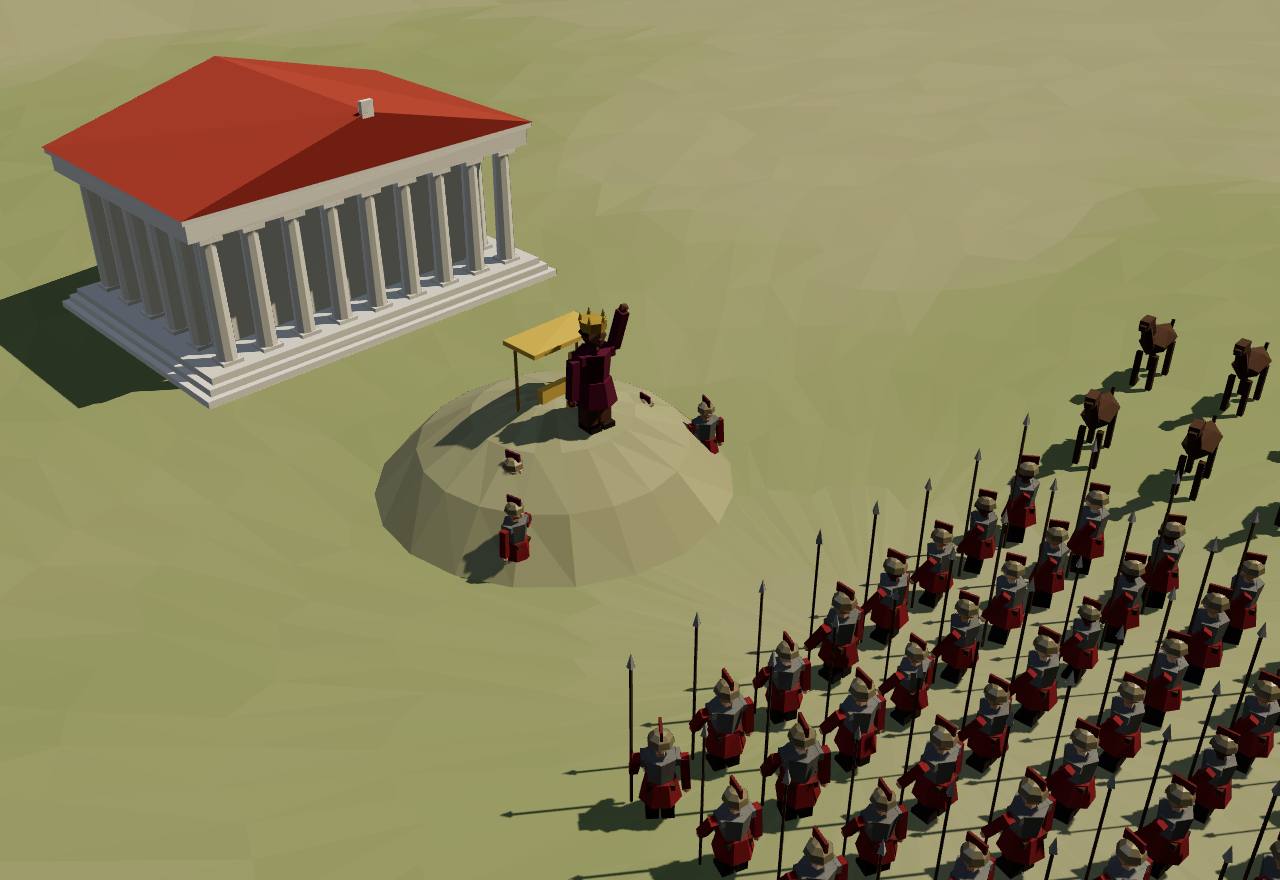
Macedon: the king addresses his army
Diodorus says Philip, son of Amyntas, took the throne in a crisis, called the Macedonians to a series of assemblies, drilled his men constantly and was the first to organise the Macedonian phalanx. 25 Consensus Texts
Seshat-db's estimates show how fast Macedon grew: about 10,000 km² in 359 BCE, 125,000 km² in 336, 2.5 million km² in 330 and 5.2 million km² in 320, with a population estimate rising from about a million (359–336 BCE) to about 20 million (321). Seshat DB Consensus Texts
In a speech Arrian gives the historian Callisthenes, protesting at Alexander's demand for prostration, the Macedonian kings are said to have ruled 'not by force, but by law'. Arrian wrote some five centuries later, and the speech is his composition. 26 Debated Texts
The same speech claims descent from Heracles and Aeacus for Alexander and objects to giving a living man the honours due to gods: in it, the king's standing rests on his ancestry, not on divinity. 26 Debated Texts
Cliopatria shows the empire breaking up after Alexander: from about 4.7 million km² in 323–319 BCE to about 151,000 km² in 301–292. 5 Consensus Texts
The Antigonid dynasty then ruled Macedon. Seshat-db dates it 311–168 BCE but codes no variables for it yet; Cliopatria maps 'Antigonid Macedonia' at about 138,000 km² in 277–273 BCE and 43,000 km² by 170–165. 27,5 Consensus Texts
The Antigonid king could also lead the leagues: Polybius describes Philip V addressing the Achaean council at Aegium and renewing the friendship the Achaeans had with his ancestors. 28 Consensus Texts
How power worked King · Heredity · Custom and kin · 1 unknown
How power worked
- Who rules
- King Consensus
Why?
- How chosen
- Heredity Consensus
Why?
- Limits on power
- Custom and kin Debated
Why?
- Scale
- Empire Consensus
Why?
- Claim to rule
- Kinship and descent Debated
Why?
- Who has a say
- Unknown
Why?
No source read says what, if anything, Philip's assemblies of Macedonians decided.
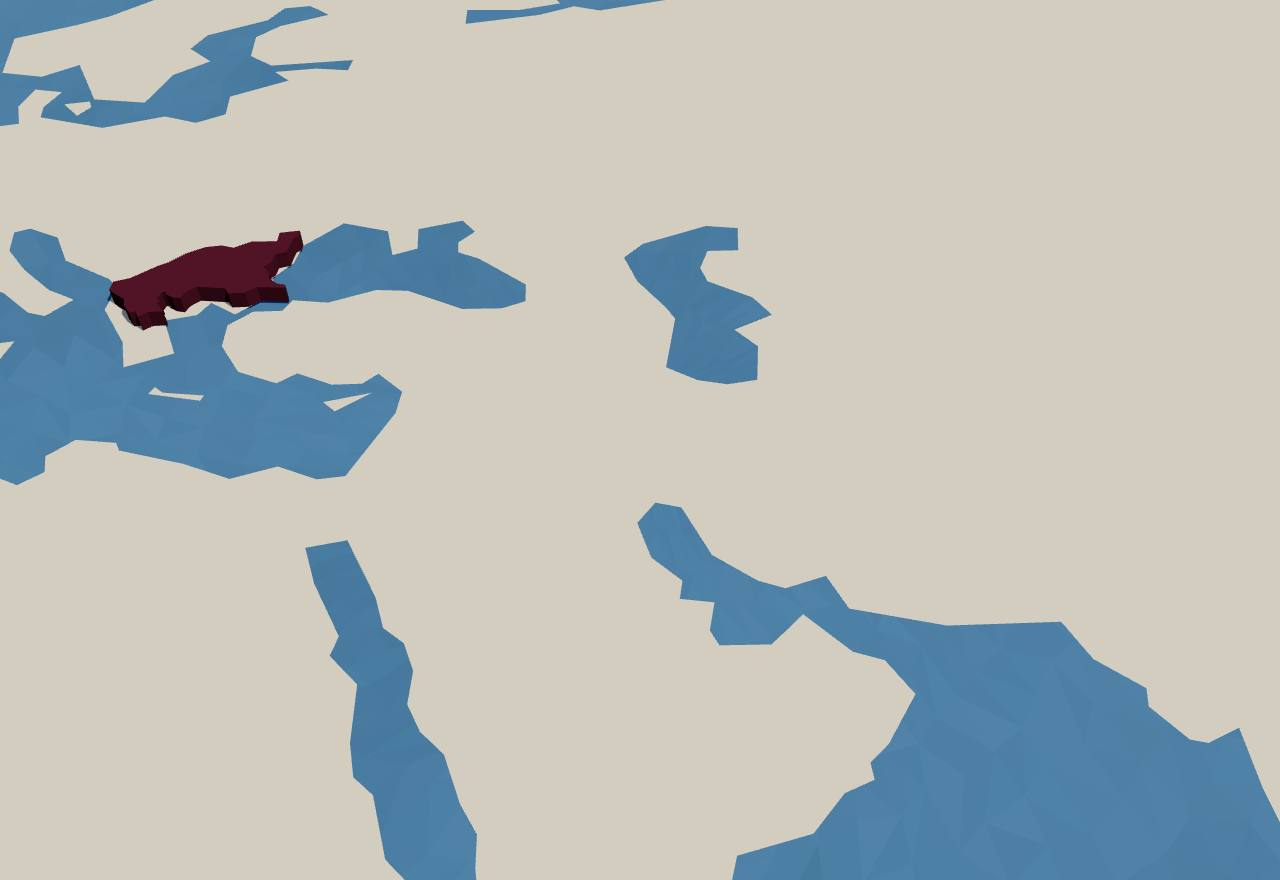
Macedonian Empire (Cliopatria)
Territory: Cliopatria (CC BY 4.0), simplified. Height: Seshat population, log scale; darker, fixed-height slices are not coded.
The Achaean League280 BCE – 146 BCE
A federation of cities in the northern Peloponnese that grew to take in most of the peninsula. Our main source, Polybius, was one of its statesmen.
Terms: Greece: Athens, Sparta and the leagues: Leagues under the kings, The Achaean League
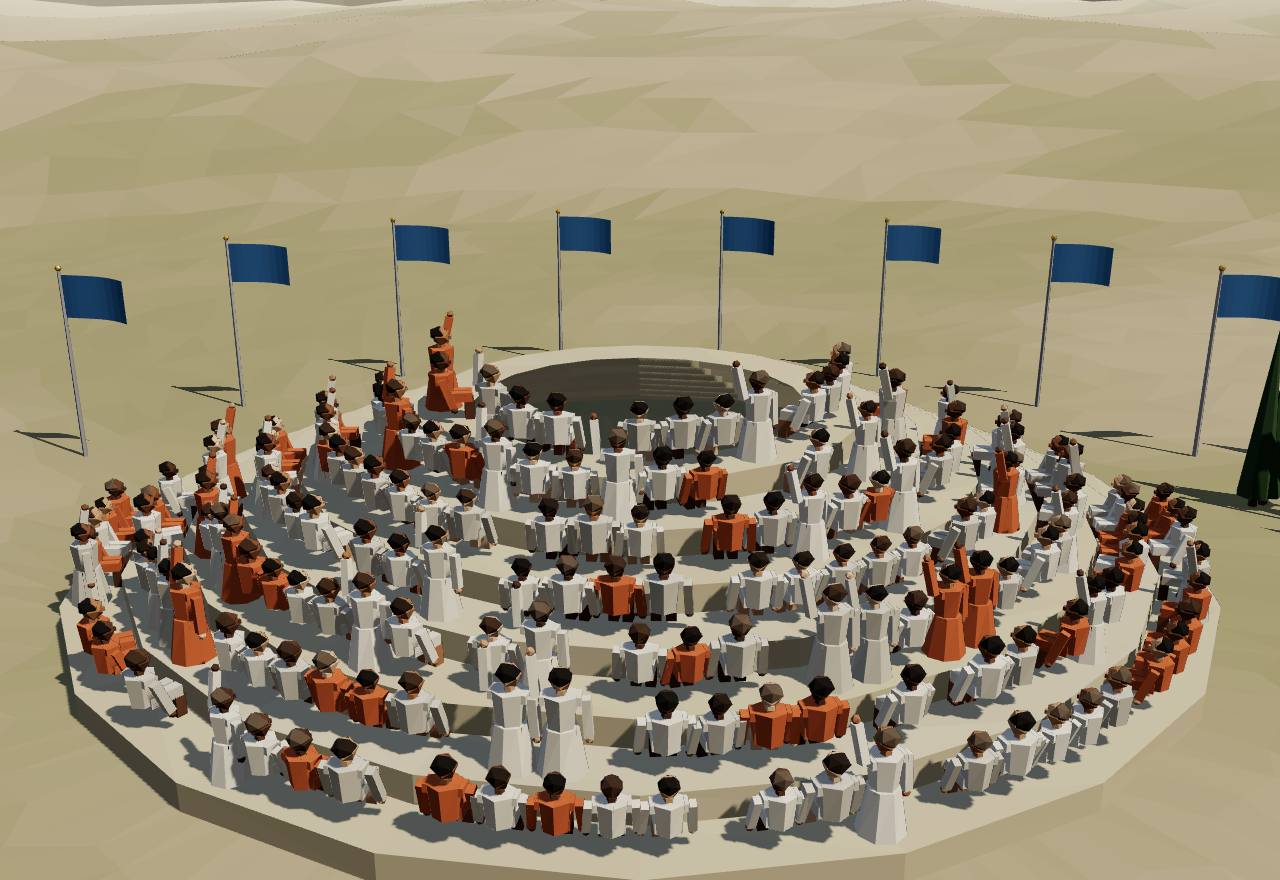
The Achaean League in assembly
Polybius dates the league's revival to the 124th Olympiad, the years Ptolemy son of Lagus, Lysimachus and Seleucus died, when Patrae and Dyme formed a league; the old league of twelve Achaean cities had been broken up by the Macedonian kings. 22 Consensus Texts
For twenty-five years the cities elected a common secretary and two generals in rotation. Then they decided to elect one general and entrust him with the direction of their affairs; the first was Margus of Caryneia. 22 Consensus Texts
Polybius says the members came to share the same laws, weights, measures and coinage, and the same magistrates, council and courts, so that the whole Peloponnese 'only falls short of being a single city' in lacking one wall. 22 Consensus Texts
In Polybius's account, the league grew by offering other cities 'equality and liberty' and making war on those who, with the kings' help, enslaved their home cities. It is the verdict of a loyal Achaean. 22 Debated Texts
Aratus of Sicyon, at twenty, freed his city from its tyrant, and the league went on to win over others, such as Mantinea, which Aratus promised security if it joined. 22 Consensus Texts
Big decisions went to the league's assembly: meeting in their regular assembly, the Achaeans unanimously confirmed a decree and proclaimed reprisals against the Aetolians. 28 Consensus Texts
Cliopatria maps the league at about 2,600 km² in 279–273 BCE and about 11,800 km² from 225 BCE until its last slice in 164–145. 5 Consensus Texts
The Achaean League ended in 146 BCE, the close of Mackil's five-century history of the koina. 24 Consensus Texts
How power worked Elected magistrates · Election · Assembly or tribune veto
How power worked
- Who rules
- Elected magistrates Consensus
Why?
- How chosen
- Election Consensus
Why?
- Limits on power
- Assembly or tribune veto Debated
Why?
- Scale
- Confederation Consensus
Why?
- Claim to rule
- Law Debated
Why?
- Who has a say
- Male citizens Debated
Why?
The Aetolian League284 BCE – 189 BCE
A federation of the mountain communities of Aetolia, north of the Gulf of Corinth, and for a time the strongest power in central Greece. Polybius, an Achaean, writes about it as an enemy.
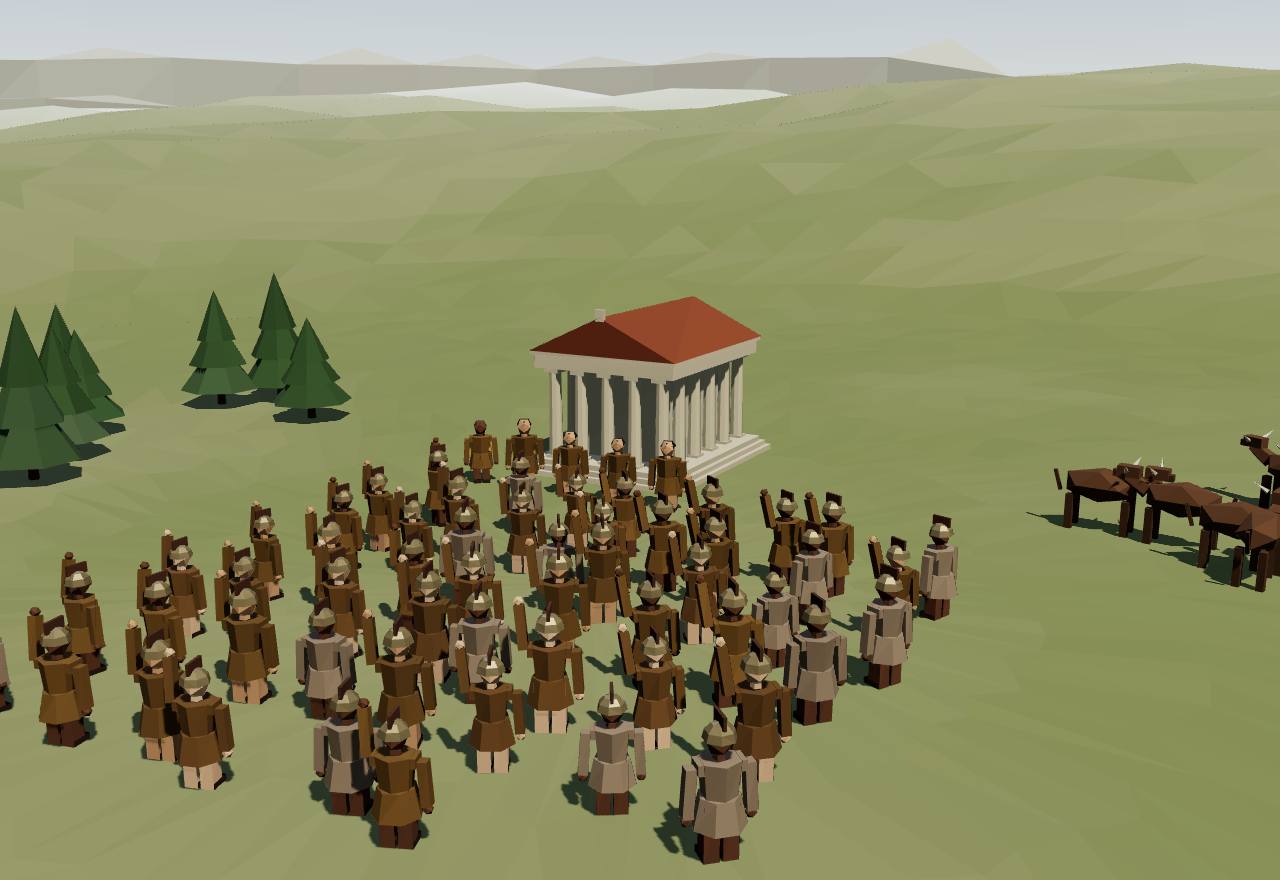
The Aetolian League elects its general
Aetolian officials could not act alone on matters of state: when Philip V asked to meet them, they replied that they could take no steps before the General Assembly of the Aetolians met. 28 Consensus Texts
The Aetolians elected their general every year; Polybius was outraged that they elected Scopas, the man most responsible for the raids on their neighbours. 28 Consensus Texts
There was competition for the office: when an Aetolian army was beaten at Medion, the townspeople mocked an Aetolian decree by inscribing the captured shields as taken from 'the present Aetolian chief magistrate and the candidates for next year's office'. 22 Consensus Texts
Polybius accuses Aetolian leaders of licensing raids in peacetime: Dorimachus, sent to guard Phigalea, let brigands drive off the cattle of the Messenians, Aetolia's own allies, and took his share of the captives. 28 Debated Texts
The league fought far from home: under an alliance, a thousand Aetolians went to Crete to help Cnossus. 28 Consensus Texts
Cliopatria maps the league from 284 BCE at about 7,500 km², growing to about 11,800 km² by 208–207; its last slice ends in 189. 5 Consensus Texts
Aitolia is one of the three best-documented koina of mainland Greece, with Boiotia and Achaia; Mackil reads its formation through shared cults and economic ties as much as war. 24 Debated Texts
How power worked Elected magistrates · Election · Assembly or tribune veto · 1 unknown
How power worked
- Who rules
- Elected magistrates Consensus
Why?
- How chosen
- Election Consensus
Why?
- Limits on power
- Assembly or tribune veto Debated
Why?
- Scale
- Confederation Consensus
Why?
- Claim to rule
- Law Debated
Why?
- Who has a say
- Unknown
Why?
Polybius mentions the Aetolians' General Assembly but not who could attend or vote in it.
Crete323 BCE – 146 BCE
The Cretan cities fought one another, made and broke alliances, and drew in outside powers. Seshat codes Hellenistic Crete from 323 BCE.
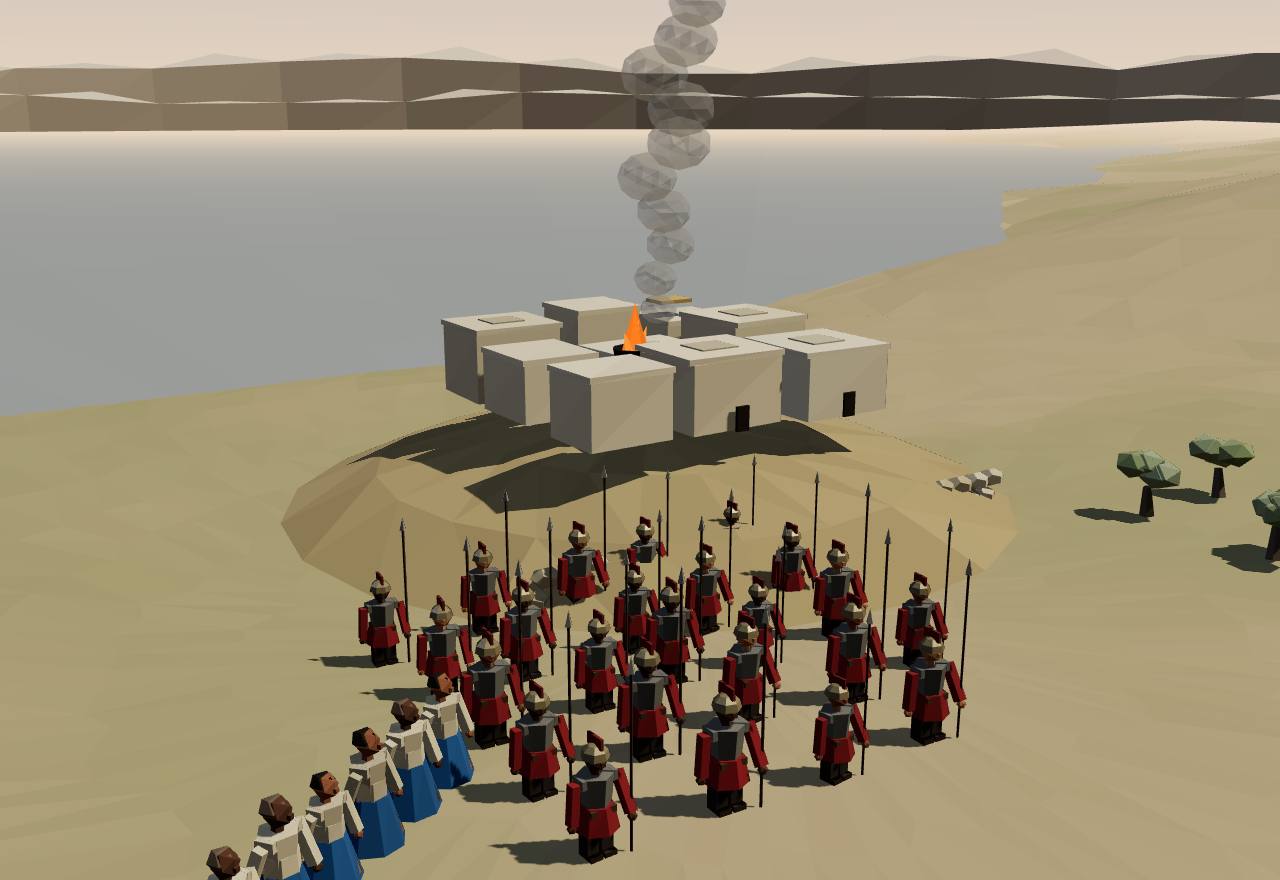
Crete: Cnossus destroys Lyttus
Polybius describes Cnossus and Gortyn subjecting all of Crete except Lyttus, then making war on Lyttus to destroy it as an example. Their allies split, and while the Lyttians were away on campaign the Cnossians took the undefended town and razed it. 28 Consensus Texts
The war split Gortyn itself: the older citizens sided with Cnossus, the younger with Lyttus. With a thousand Aetolian troops, the elders seized the citadel and exiled or killed the younger men. 28 Consensus Texts
Outside powers were drawn in: Cnossus brought in a Rhodian squadron, and Eleuthernae, suspecting the Rhodian commander of killing one of its citizens, proclaimed reprisals and went to war with Rhodes. 28 Consensus Texts
Polybius denies that Crete's constitution resembled Sparta's: Cretan laws let men acquire as much land as they could, money was held in the highest honour, and magistracies were 'annual and elected on a democratic system'. 29 Debated Texts
Seshat's largest Cretan settlement grows from about 4,000 people in the Classical period to about 24,000 in the Hellenistic, while its territory (210–240 km²) and population (5,000–30,000) figures stay the same. Seshat Consensus Texts
Across all three periods Seshat codes Crete as a 'quasi-polity' without a capital: many cities, never one state. Seshat Consensus Texts
How power worked Elected magistrates · Election · Written law · 1 unknown
How power worked
- Who rules
- Elected magistrates Consensus
Why?
- How chosen
- Election Debated
Why?
- Limits on power
- Written law Consensus
Why?
- Scale
- City-state Consensus
Why?
- Claim to rule
- Unknown
Why?
The sources read describe the Cretan cities' wars and magistracies, not what their rulers claimed as the basis of their authority.
- Who has a say
- Male citizens Debated
Why?
Artefacts
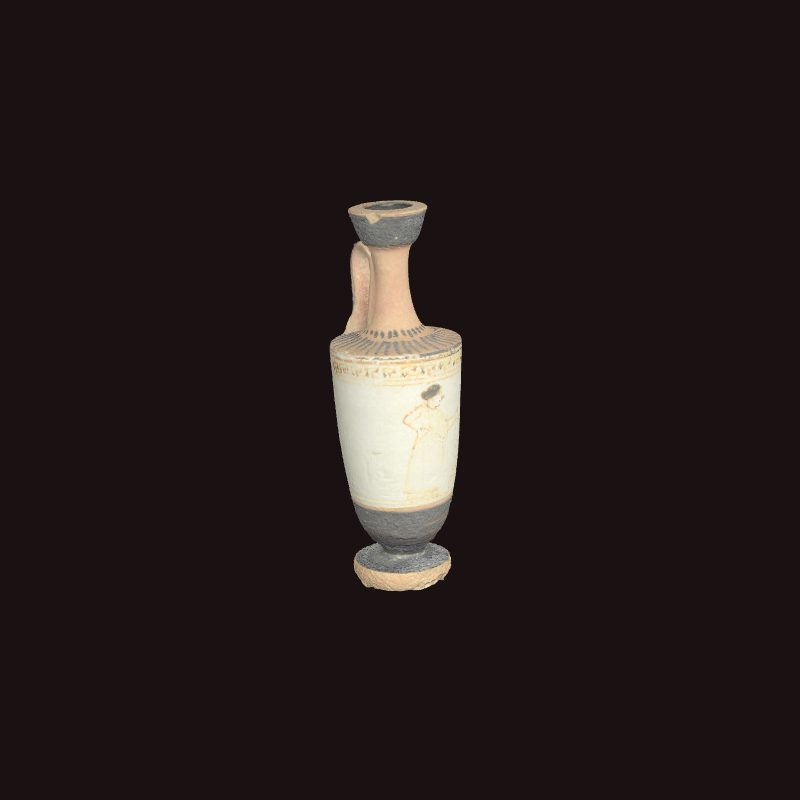
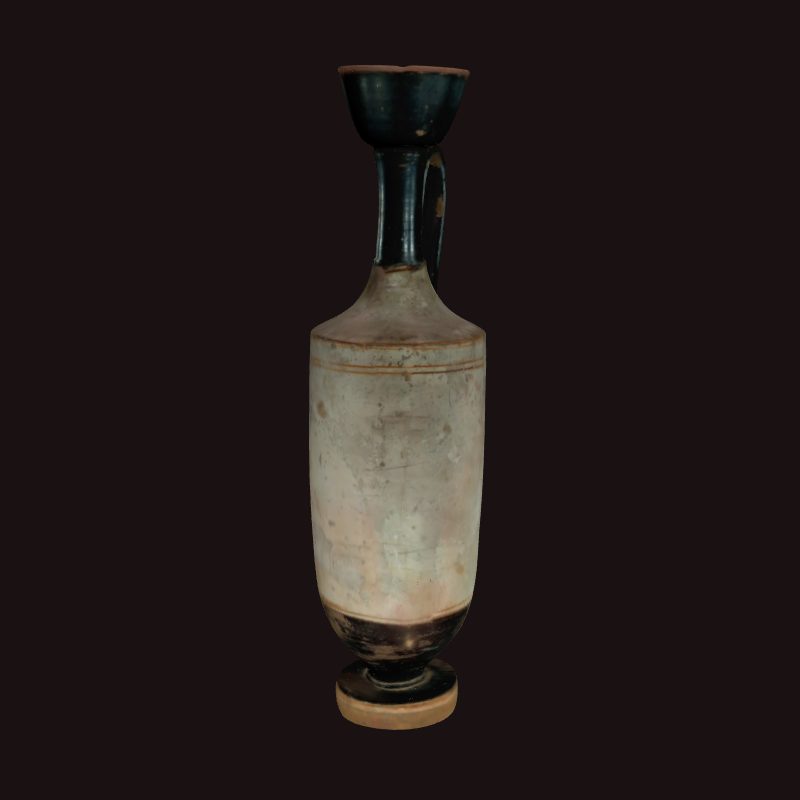
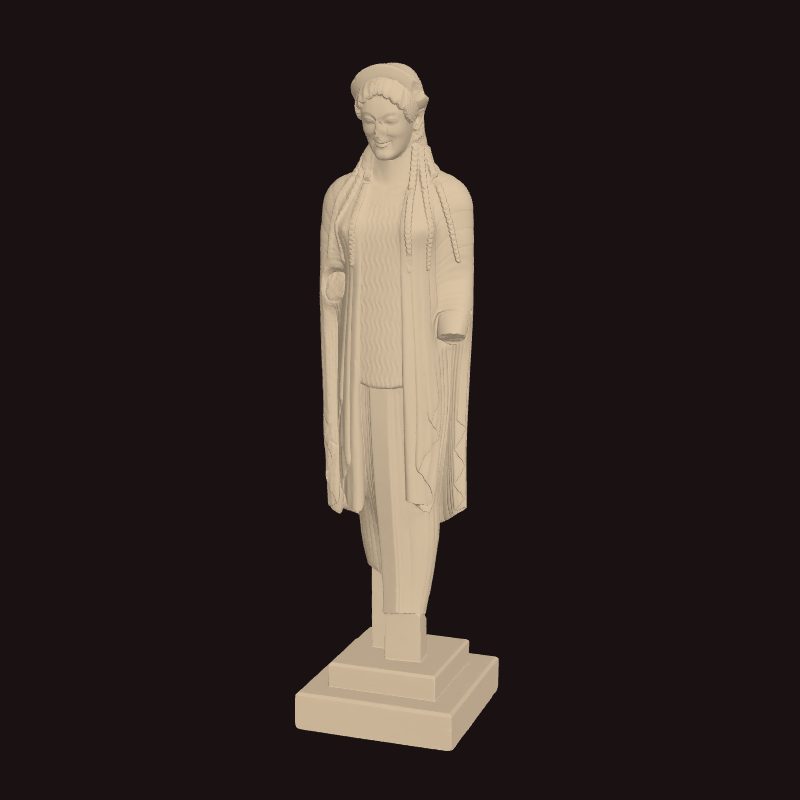 Cast
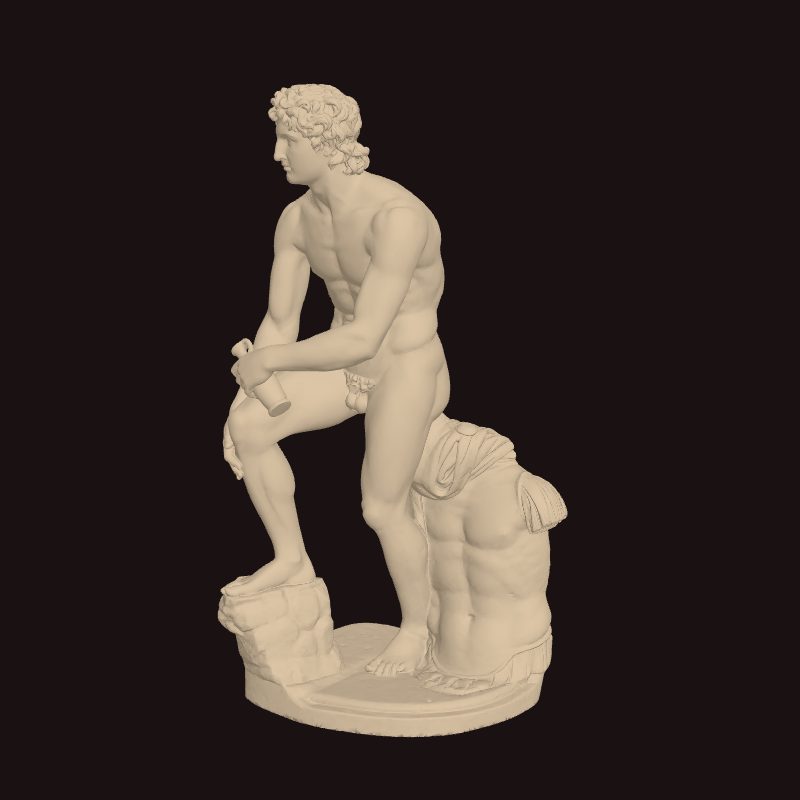 Cast
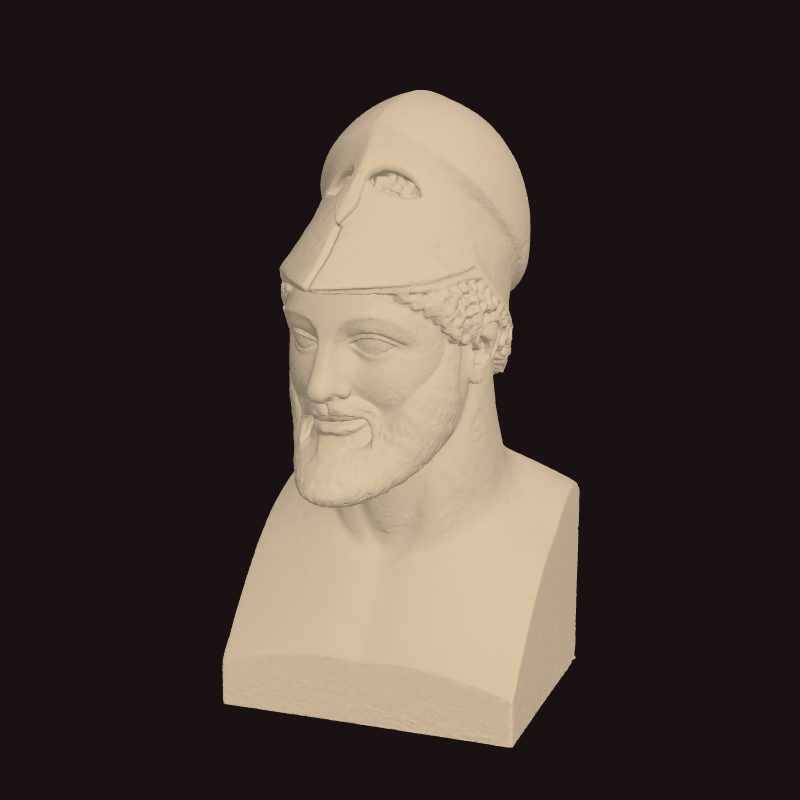 Cast
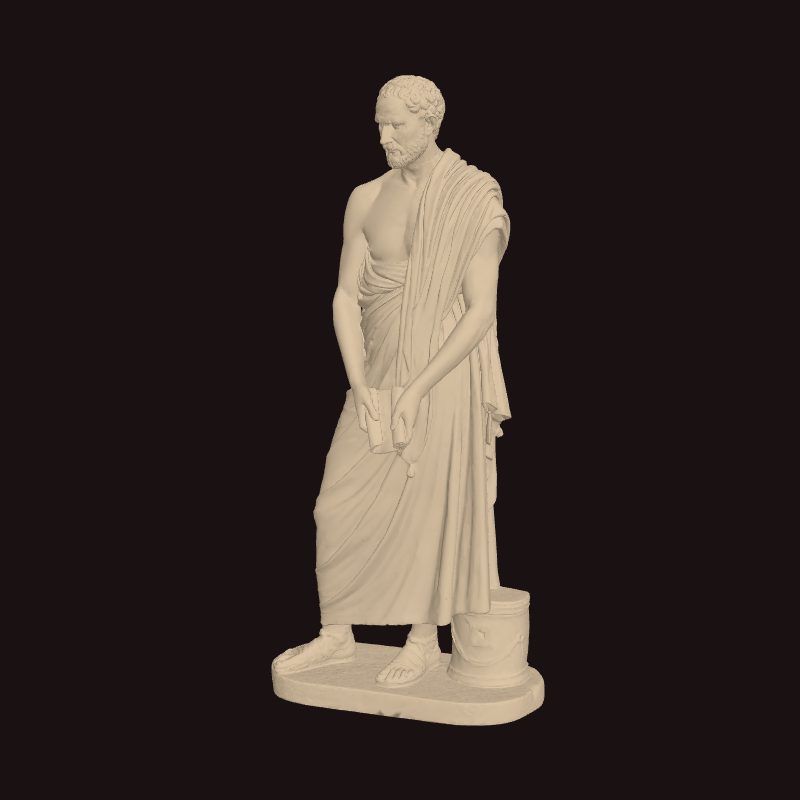 Cast
In numbers
- Marks, by Seshat polity:
- Archaic Crete
- Classical Crete
- Hellenistic Crete
- Macedonian Empire
- Background bands, by phase:
- Archaic poleis and lawgivers
- Democracy and its rivals
- Leagues under the kings
| Seshat polity | Years | Value |
|---|---|---|
| Archaic Crete | 710 BCE – 500 BCE (whole period) | 167 |
| Classical Crete | 500 BCE – 323 BCE (whole period) | 210–240 |
| Macedonian Empire | 359 BCE | 10,000 |
| Hellenistic Crete | 323 BCE – 69 BCE (whole period) | 210–240 |
| Macedonian Empire | 320 BCE | 5,200,000 |
| Macedonian Empire | 300 BCE | 4,400,000 |
| Seshat polity | Years | Value |
|---|---|---|
| Archaic Crete | 710 BCE – 500 BCE (whole period) | suspected unknown |
| Classical Crete | 500 BCE – 323 BCE (whole period) | 5,000–30,000 |
| Macedonian Empire | 359 BCE – 336 BCE | 1,000,000 |
| Hellenistic Crete | 323 BCE – 69 BCE (whole period) | 5,000–30,000 |
| Macedonian Empire | 321 BCE – 294 BCE | 20,000,000 |
| Seshat polity | Years | Value |
|---|---|---|
| Archaic Crete | 710 BCE – 500 BCE (whole period) | 4,000 |
| Classical Crete | 500 BCE – 323 BCE (whole period) | 4,000 |
| Macedonian Empire | 330 BCE – 312 BCE (whole period) | 20,000–80,000 |
| Hellenistic Crete | 323 BCE – 69 BCE (whole period) | 24,000 |
| Seshat polity | Years | Value |
|---|---|---|
| Archaic Crete | 710 BCE – 500 BCE (whole period) | 5 |
| Classical Crete | 500 BCE – 323 BCE (whole period) | 5 |
| Macedonian Empire | 359 BCE – 330 BCE | 3 |
| Macedonian Empire | 330 BCE – 294 BCE | 5 |
| Hellenistic Crete | 323 BCE – 69 BCE (whole period) | 5 |
| Seshat polity | Years | Value |
|---|---|---|
| Archaic Crete | 710 BCE – 500 BCE (whole period) | 1–5 |
| Classical Crete | 500 BCE – 323 BCE (whole period) | 1–5 |
| Macedonian Empire | 330 BCE – 312 BCE (whole period) | 5 |
| Hellenistic Crete | 323 BCE – 69 BCE (whole period) | 1–5 |
| Seshat polity | Years | Value |
|---|---|---|
| Archaic Crete | 710 BCE – 500 BCE (whole period) | 5 |
| Classical Crete | 500 BCE – 323 BCE (whole period) | 5 |
| Macedonian Empire | 330 BCE – 312 BCE (whole period) | 5–8 |
| Hellenistic Crete | 323 BCE – 69 BCE (whole period) | 5 |
Values as Seshat codes them: bands are ranges, dots single values, flat bars values given for a whole period, hatching “unknown”; from one Seshat polity to the next, marks alternate between a light tone and a darker one with dashed joining lines (the key above names each polity). Source: Seshat Global History Databank (Equinox-2020), CC BY 4.0; and the Seshat Databank, seshat-db.com (no licence stated; attribution).
Governance fingerprint
Seshat's institutional variables, phase by phase. Hover or focus a cell for the values and years.
- Present
- Inferred present
- Absent
- Inferred absent
- Unknown
- Not coded in Seshat
- Mixed: present in one Seshat polity or period, absent in another
Not coded in Seshat: Archaic poleis and lawgivers: Athens, Archaic poleis and lawgivers: Sparta, Democracy and its rivals: Athens, Democracy and its rivals: Sparta, Democracy and its rivals: Democracies beyond Athens, Leagues under the kings: The Achaean League, Leagues under the kings: The Aetolian League. The Seshat Databank has no polity for them, so their six axes rest on the cited scholarship alone.
The axes against Seshat
6 agree, 0 disagree.
Show the 6 pairs that agree
- Agree Archaic poleis and lawgivers: Crete: who rules coded “Elected magistrates”, which implies rulers are gods absent; Seshat has it inferred absent.
- Agree Archaic poleis and lawgivers: Crete: limits on power coded “Written law”, which implies formal legal code present; Seshat has it present.
- Agree Archaic poleis and lawgivers: Crete: claim to rule coded “Law”, which implies formal legal code present; Seshat has it present.
- Agree Democracy and its rivals: Crete: limits on power coded “Written law”, which implies formal legal code present; Seshat has it present.
- Agree Democracy and its rivals: Crete: claim to rule coded “Law”, which implies formal legal code present; Seshat has it present.
- Agree Leagues under the kings: Crete: limits on power coded “Written law”, which implies formal legal code present; Seshat has it present.
Only pairs where an axis value on its own implies a Seshat variable are compared; the rest is not counted as disagreement. 3 more pairs have no Seshat value.
Source: Seshat Global History Databank (Equinox-2020), CC BY 4.0; Seshat Databank, seshat-db.com (no licence stated; attribution).
Compare
| Axis | Greece: Athens, Sparta and the leagues | Rome: The kings | Achaemenid Persia: Cyrus and Cambyses | India: After the cities: the Vedic age |
|---|---|---|---|---|
| Who rules | Elected magistrates | King | Emperor | Chief |
| How chosen | Mixed | Mixed | Conquest or coup | Mixed |
| Limits on power | Written law | Council | Custom and kin | Council |
| Scale | City-state | City-state | Empire | Confederation |
| Claim to rule | Law | Divine mandate | Divine mandate | Divine mandate |
| Who has a say | Property owners | Unknown | A narrow elite | A narrow elite |
Legacy
The word itself is Greek. In the funeral speech Thucydides gives Pericles, Athens's government 'favors the many instead of the few; this is why it is called a democracy' (δημοκρατία). 10,13 Consensus Texts
Historians still treat Athens as the first western democracy and still argue about how it worked: Josiah Ober asks why it worked as well and for as long as it did. 17 Consensus Texts
Greek cities wrote their laws up in public for many to read, but made little use of writing in court; Gagarin argues that this kept Greek law from becoming technical and that no legal profession developed. 2 Debated Texts
Macedon's victory did not end the cities: Ober stresses that Greek cities stayed populous and wealthy after Alexander, and that their economy and culture passed to the Romans. 11 Debated Texts
See also forms of government.
Sources
Bibliography
35 sources, numbered as cited: 1 paper · 10 books · 2 datasets · 22 primary sources
- Primary Aristotle (attributed) (trans. H. Rackham) (330 BCE). The Athenian Constitution (Athenaion Politeia). Perseus Digital Library. Written in the 320s BCE, two to three centuries after the archaic reforms it describes. Chapters 3-8, 12, 14, 21-22, 24, 26-27, 41-44, 62-65 read.
- Book Gagarin, M. (2008). Writing Greek Law. Cambridge University Press (open access).
- Primary Plutarch (trans. B. Perrin) (100). Life of Lycurgus. Loeb Classical Library / LacusCurtius. Written about eight centuries after the events it describes. Chapters 5-8, 10-13 and 26 read.
- Book Forsdyke, S. (2009). Exile, Ostracism, and Democracy: The Politics of Expulsion in Ancient Greece. Princeton University Press (first published 2005).
- Dataset Bennett, J. S., Mutch, E., Tollefson, A., et al. (2025). Cliopatria - A geospatial database of world-wide political entities from 3400BCE to 2024CE. Scientific Data 12. Cliopatria: open geospatial dataset of over 1600 political entities, 3400 BCE–2024 CE.
- Primary Aristotle (ed. W. D. Ross) (330 BCE). Politics (Greek text). Perseus Digital Library. Source of the Greek forms ἔφοροι, κόσμοι, γέροντες, φιδίτια and ἀνδρεῖα (1272a).
- Primary Herodotus (trans. A. D. Godley) (430 BCE). The Histories. Perseus Digital Library. 5.78 and 6.56-57 read.
- Book Hodkinson, S. (2009). Property and Wealth in Classical Sparta. The Classical Press of Wales (first published 2000).
- Primary Aristotle (trans. H. Rackham) (330 BCE). Politics. Perseus Digital Library. Book 2, 1270a-1272b (Sparta and Crete) read.
- Primary Thucydides (trans. R. Crawley) (400 BCE). The History of the Peloponnesian War. Perseus Digital Library. 1.87, 2.37, 2.65 and 7.55 read.
- Book Ober, J. (2015). The Rise and Fall of Classical Greece. Princeton University Press.
- Primary Diodorus Siculus (trans. C. B. Welles) (30 BCE). The Library of History, Book XVI, 66-95. Loeb Classical Library vol. VIII (1963) / LacusCurtius. 16.85-89 (Chaeronea and the congress at Corinth) read.
- Primary Thucydides (ed. H. S. Jones, J. E. Powell) (400 BCE). Historiae (Greek text). Perseus Digital Library. Source of the Greek forms δημοκρατία (2.37) and βοῇ (1.87).
- Primary Aristotle (attributed) (ed. F. G. Kenyon) (330 BCE). Athenaion Politeia (Greek text). Perseus Digital Library. Source of the Greek forms βουλή (43.2), κληρωτήρια and πινάκια (63.2) and κανονίδες (64.2).
- Book Lang, M., rev. Camp, J. McK. (2004). The Athenian Citizen: Democracy in the Athenian Agora (Agora Picture Book 4, 2nd ed.). American School of Classical Studies at Athens. Read in full (the ASCSA PDF): the Pnyx and Agora, the Council, ostracism, the law against tyranny and the jurors' allotment machines (pp. 5-26).
- Primary Plutarch (trans. B. Perrin) (100). Life of Aristides. Loeb Classical Library / LacusCurtius. Chapter 7 (the ostracism procedure) read.
- Book Ober, J. (1989). Mass and Elite in Democratic Athens: Rhetoric, Ideology, and the Power of the People. Princeton University Press.
- Book Pritchard, D. M. (2015). Public Spending and Democracy in Classical Athens. University of Texas Press.
- Book Robinson, E. W. (2011). Democracy beyond Athens: Popular Government in the Greek Classical Age. Cambridge University Press.
- Primary Diodorus Siculus (trans. C. H. Oldfather) (30 BCE). The Library of History, Book XI. Loeb Classical Library vol. IV (1946) / LacusCurtius. 11.86-87 (petalism at Syracuse) read.
- Book Teegarden, D. A. (2014). Death to Tyrants!: Ancient Greek Democracy and the Struggle against Tyranny. Princeton University Press.
- Primary Polybius (trans. W. R. Paton) (150 BCE). The Histories, Book II. Loeb Classical Library / LacusCurtius. Polybius was an Achaean statesman before his deportation to Rome. 2.4 and 2.37-43 read.
- Paper Fleck, R. K., Hanssen, F. A. (2006). The Origins of Democracy: A Model with Application to Ancient Greece. The Journal of Law and Economics 49.
- Book Mackil, E. (2013). Creating a Common Polity: Religion, Economy, and Politics in the Making of the Greek Koinon. University of California Press.
- Primary Diodorus Siculus (trans. C. L. Sherman) (30 BCE). The Library of History, Book XVI, 1-20. Loeb Classical Library vol. VII (1952) / LacusCurtius. 16.1-4 (Philip's accession, his assemblies and the phalanx) read.
- Primary Arrian (trans. E. J. Chinnock) (150). The Anabasis of Alexander, Book IV. Wikisource. 4.11, the speech Arrian gives Callisthenes against prostration, read.
- Dataset Seshat: Global History Databank (2026). Seshat Databank API (seshat-db.com), social-complexity and general variables. Snapshot of the API responses taken 15 Nov 2026; the site states no licence. Used where Equinox-2020 has no polity for a page's period.
- Primary Polybius (trans. W. R. Paton) (150 BCE). The Histories, Book IV. Loeb Classical Library / LacusCurtius. 4.3-4, 4.26-27 and 4.53-54 read.
- Primary Polybius (trans. W. R. Paton) (150 BCE). The Histories, Book VI. Loeb Classical Library / LacusCurtius.
- Primary The Hunt Museum, Limerick (2026). Attic white-ground lekythos (HCM 228), 3D model. Zenodo, doi:10.5281/zenodo.18949666 (CC BY 4.0).
- Primary The Hunt Museum, Limerick (2026). Vase or lekythos (HCM 231), 3D model. Zenodo, doi:10.5281/zenodo.18946547 (CC BY 4.0).
- Primary Statens Museum for Kunst, Royal Cast Collection (2020). Kore in chiton and mantle (plaster cast KAS1800). SMK Open.
- Primary Statens Museum for Kunst, Royal Cast Collection (2020). Alexander the Great, standing, 'Alexander Rondanini' (plaster cast KAS538). SMK Open.
- Primary Statens Museum for Kunst, Royal Cast Collection (2020). Helmeted warrior, 'Miltiades' (plaster cast KAS519). SMK Open.
- Primary Statens Museum for Kunst, Royal Cast Collection (2020). Portrait of Demosthenes, standing (plaster cast KAS629). SMK Open.
Quantitative values from the Seshat Global History Databank (Equinox-2020), licensed CC BY 4.0. Dataset: Seshat Equinox Packaged Data (v.1). See also Seshat: The Global History Databank (Turchin et al. 2015).
Values for polities Equinox-2020 does not cover come from the Seshat Databank at seshat-db.com (Seshat: Global History Databank), snapshotted from its API on 2026-11-16. No licence is stated on seshat-db.com; used with attribution. Snapshot: Seshat Databank API (seshat-db.com), social-complexity and general variables.