Gold, salt and scholars: three West African empires, c. 700–1591
Ghana, Mali and Songhai
700 CE – 1591 CE
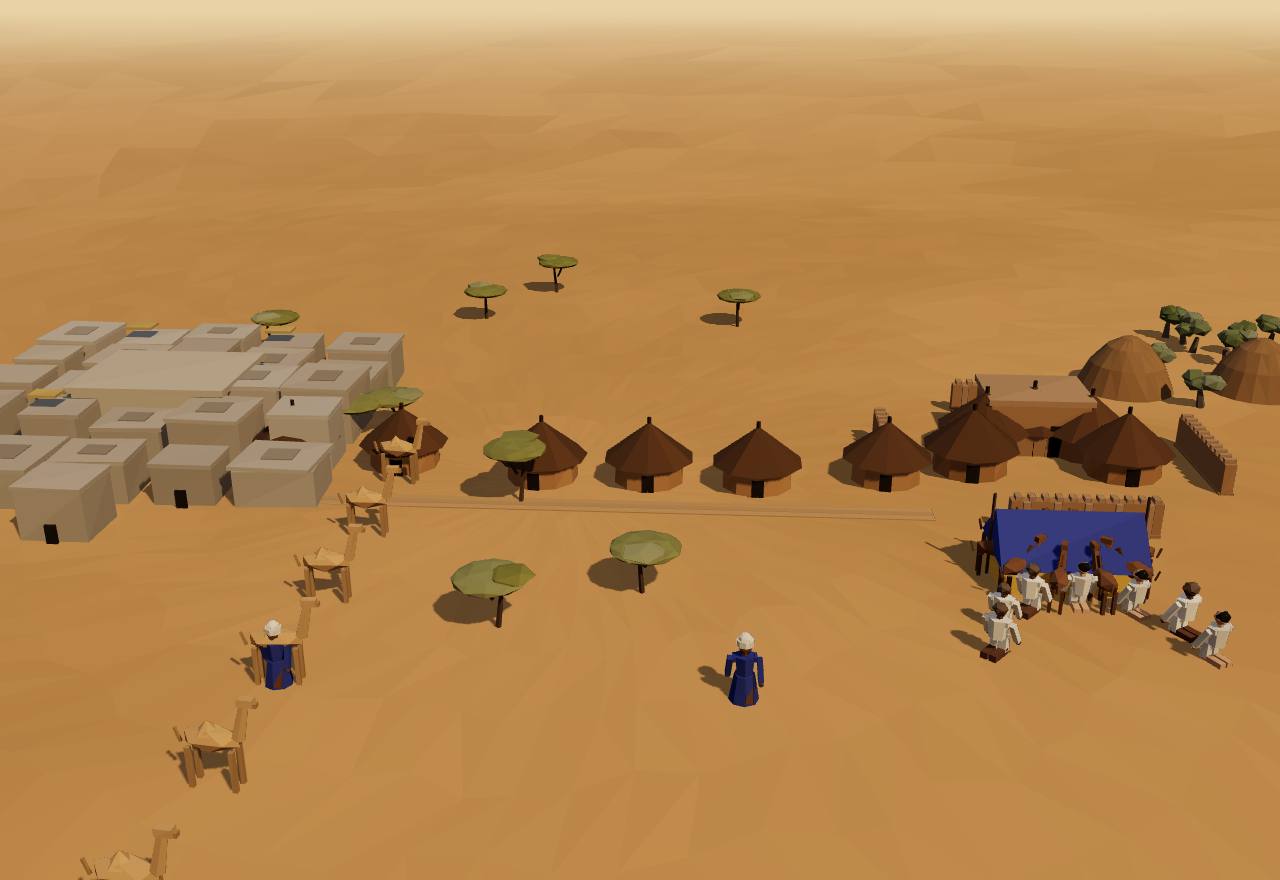
Ghana's two towns, after al-Bakrī (1067–68)
700 CE – 1203 CE
Ghana (Wagadu)
In 1067–68 a geographer who never crossed the Sahara wrote down what merchants told him of a king called Ghana: a ruler of gold and salt, with two towns, Muslim ministers and ancestors buried under great mounds. Archaeology since has found towns on the Niger far older than the trade he described.
Terms: Ghana, Mali and Songhai: Ghana (Wagadu)
- ghana the title of the king, as al-Bakrī reports it: 'Ghana is the title borne by the kings of this people' 1
- Awkar the name of the country itself in al-Bakrī (de Slane prints 'Aoukar') 1
- Wagadu the Soninke state of oral tradition; whether it was the Ghana of the Arabic sources 'has never been established' 10,11
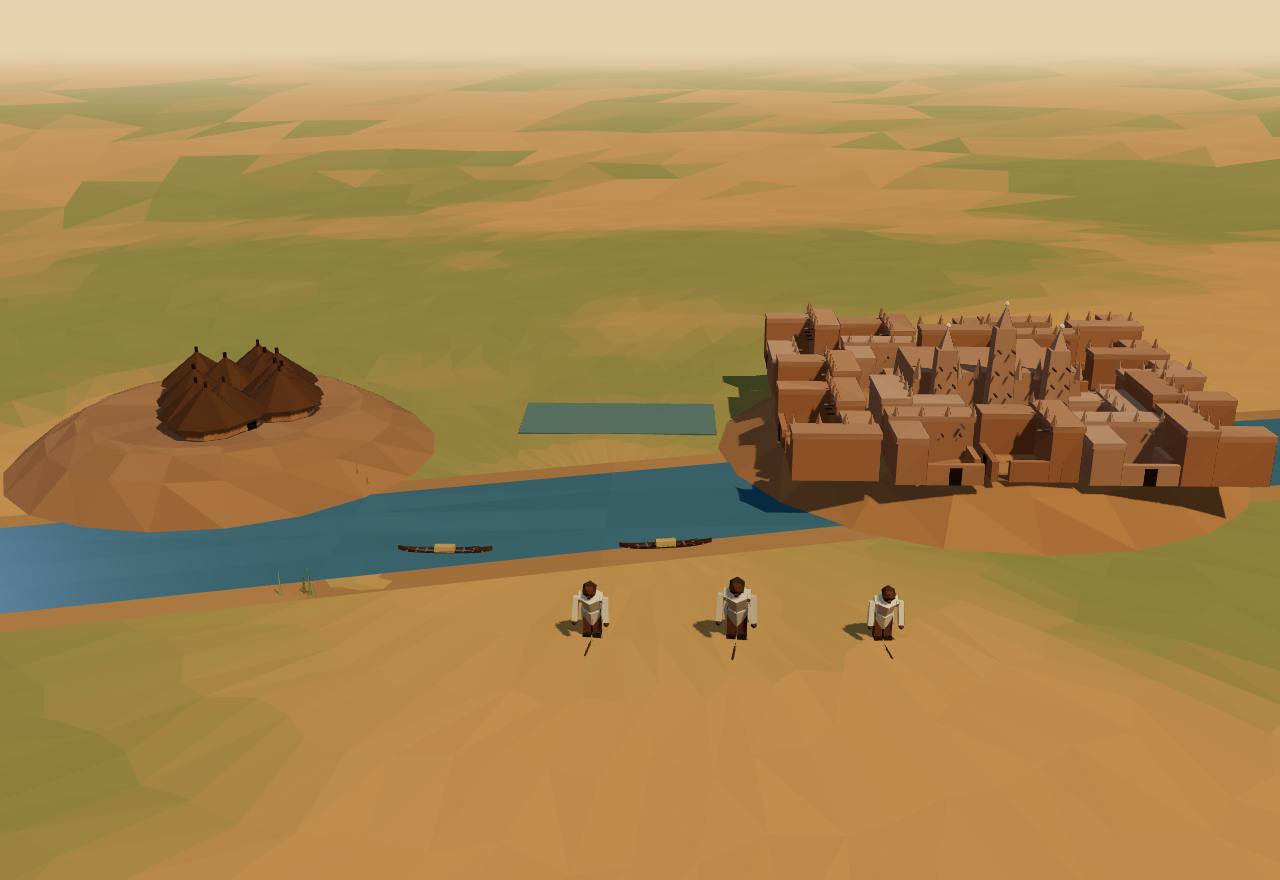
Jenne-jeno and Djenné on the inland Niger
Al-Bakrī, writing in 460 AH (1067–68), says that 'Ghana is the title borne by the kings of this people; the name of their country is Awkar'. The king then was Tenkamenin, who had come to the throne in 455 AH; al-Bakrī calls him 'master of a vast empire'. 1 Consensus Texts
Succession, in al-Bakrī's account, passed to the king's sister's son: 'custom and rules require that the king have as his successor the son of his sister', because the king can be sure his nephew is his sister's son but not that his own son is his. Tenkamenin's predecessor Basi, his maternal uncle, went blind before he died and hid it from his subjects with his viziers' help. 1 Consensus Texts
Ghana, al-Bakrī says, 'is made of two towns on a plain'. The Muslims' town was large, with twelve mosques, their imams and muezzins, jurists and scholars; the king's town, al-Ghāba ('the forest'), lay six miles away, and the land between was covered with houses. Buildings were of stone and acacia wood; the king's residence was a castle and domed huts inside a wall. 1 Consensus Texts
The court was not Muslim, but its pen was: 'the king's interpreters are chosen among the Muslims, as are the treasurer and most of the viziers'. Only the king and his heir, the sister's son, could wear tailored clothes. 1 Consensus Texts
When the king heard his people's grievances he sat in a pavilion ringed by ten horses in cloth of gold, with pages holding gold-mounted shields and swords behind him, the sons of his vassal kings on his right, and the governor of the city and the viziers seated on the ground before him. A drum called deba opened the session. People of the king's religion knelt and threw dust on their heads; Muslims greeted him by clapping their hands. 1 Consensus Texts
Around the king's town were groves where the 'magicians' in charge of the cult kept their idols and the tombs of the kings, guarded so that no one could enter. A dead king was laid under a great dome of wood with his ornaments, weapons and food, and with some of his cooks and brewers, then covered with earth into 'a great hill' ringed by a ditch. 1 Consensus Texts
The king's revenue, as al-Bakrī lists it, came from trade: one gold dinar on every donkey-load of salt entering the country and two on every load leaving, five mithqals on a load of copper, ten on other goods. Every nugget found in the mines was his, the gold dust left to the people, 'without which gold would become so abundant that it would have almost no value'. He could put 200,000 warriors in the field, al-Bakrī adds, 40,000 of them archers: a number no other source checks. 1 Consensus Texts
Koumbi Saleh in south-east Mauritania, dug since 1913, is the usual candidate for Ghana's capital: a stone town inside an enclosure more than 2,800 m round, its tell 9–12 m high, with paved floors and walls set with triangular niches; radiocarbon dates put the mosque quarter between the 10th and 15th centuries. Its excavators called the identification 'an essential working hypothesis, but not the only one', and Jean Polet wrote in 2005 that the doubts 'are not yet entirely lifted among historians'. 12,11 Debated Excavation Dating
On the inland Niger, Jenne-jeno was occupied by iron-using people from the third century BCE and reached its peak between 750 and 1100, covering more than 33 hectares, with neighbouring settlements of comparable size. Its first levels hold stone and iron brought from outside the delta, and copper, 'presumably from distant Saharan sources', by about 400: exchange began long before the Arabic accounts. 13 Seshat Consensus Excavation Survey
Djenné, al-Saʿdī says, was founded by pagans 'in the middle of the second century of the hijra' and its people became Muslim only 'towards the end of the sixth'. Its sultan Konboro abjured before the 4,200 scholars then in the town, pulled down his palace and built the great mosque in its place. Djenné, he adds, was where the salt of Teghazza met the gold of Bitu. 2,14 Consensus Texts
Whether trade made Ghana is argued, but the trade-first view is now found mostly in its critics' words. Jenne, the McIntoshes wrote in 1981, was 'widely believed' to have grown 'as an artifact of trans-Saharan trade'; their excavation suggested instead that it 'may have been a principal participant in the founding of commercial centres'. Munson argued that the stone villages of Dhar Tichitt, occupied 'as early as 1000 B.C.', developed 'without major influences from outside', though he gave trans-Saharan trade a part in Ghana's later rise. Older writers had given Ghana outside founders: al-Saʿdī's first 44 kings were 'of white race', and Gibb's 1929 note speaks of 'white immigrants'. 13,15,2,4 Debated Excavation Texts
Al-Bakrī also tells of a kingdom called Malal whose king, after years of drought, prayed through a night with a Muslim guest and saw rain at dawn; he broke the idols and expelled the magicians, and his heirs bore the title al-Muslimānī. 'But the mass of the people', al-Bakrī adds, 'is still sunk in idolatry'. 1 Consensus Texts
Seshat codes Ghana in 1000–1077 as a unitary state of 350,000–400,000 km² with four administrative levels and its capital at Kumbi Saleh, about a million people, hereditary elite status, and rulers 'inferred' to be legitimated by gods. Seshat Consensus Texts
Three centuries later, Ibn Khaldūn wrote that Ghana 'had fallen into the last stage of weakness' as the Almoravids rose; they 'extended their rule over the Blacks, devastated their territory', imposed tribute and converted many. Then the Sosso, Ghana's neighbours, 'subjugated the country and reduced its inhabitants to slavery'. 3 Debated Texts
How power worked King · Heredity · Custom and kin
How power worked
- Who rules
- King Consensus
Why?
- How chosen
- Heredity Debated
Why?
- Limits on power
- Custom and kin Debated
Why?
- Scale
- Territorial state Debated
Why?
- Claim to rule
- Divine mandate Debated
Why?
- Who has a say
- A narrow elite Consensus
Why?
1203 CE – 1230 CE
The Sosso interval
Between Ghana and Mali, Ibn Khaldūn's informants put the Sosso: Ghana's eastern neighbours, who 'subjugated the country' once its kings were weak, until Mari Jāṭa of Mali 'subdued the Sosso, occupied their towns and took sovereign authority from them'. He gives no date. 3 Debated Texts
Oral tradition remembers the Sosso king as Sumaoro Kanté. UNESCO's listing of the Sosso-Bala, a balafon kept at Nyagassola in northern Guinea by the Kouyaté griots, says he 'succeeded to the Sosso throne in the early thirteenth century', and that the instrument 'has transmitted epic poems down through the centuries, principally the Sunjata epic'. In the epic he is 'an invading blacksmith-king' whom Sundiata defeats. 16,8 Debated Ethnography
The interval's dates are modern. Gibb's 1929 note, after Delafosse, has a Soninke dynasty of Sosso retake Ghana in 1203 and its king Sumanguru killed by the Malinke in 1235; Cliopatria draws a Sosso Empire from 1202 to 1235, and Seshat lists the Sosso Kingdom as Mali's predecessor. No medieval text read here dates any of it. 4,6 Seshat Debated Texts
1230 CE – 1464 CE
Mali
The Malinke kings took Ghana's place and pushed their rule from the Atlantic to the Niger bend. Two North Africans describe them in their prime: Ibn Khaldūn, who listed every king from Mari Jāṭa to 1390 and how each came to the throne, and Ibn Baṭṭūṭa, who spent eight months at Mansa Sulaymān's court in 1352–53.
Terms: Ghana, Mali and Songhai: Mali
- mansa king: 'Mansā Sulaymān, mansā meaning [in Mande] sultan' (Ibn Baṭṭūṭa); Ibn Khaldūn: 'Mença, in their language, means sultan' 4,3
- pempi the royal dais: 'a platform under a tree, with three steps; this they call the pempi' 4
- farba the sultan's deputy in a province or town: 'farbā meaning deputy' (Gibb prints it with a long final a) 4
- mari in Ibn Khaldūn's informants' usage, 'an emir descended from a sultan'; later also a vizier's title 3
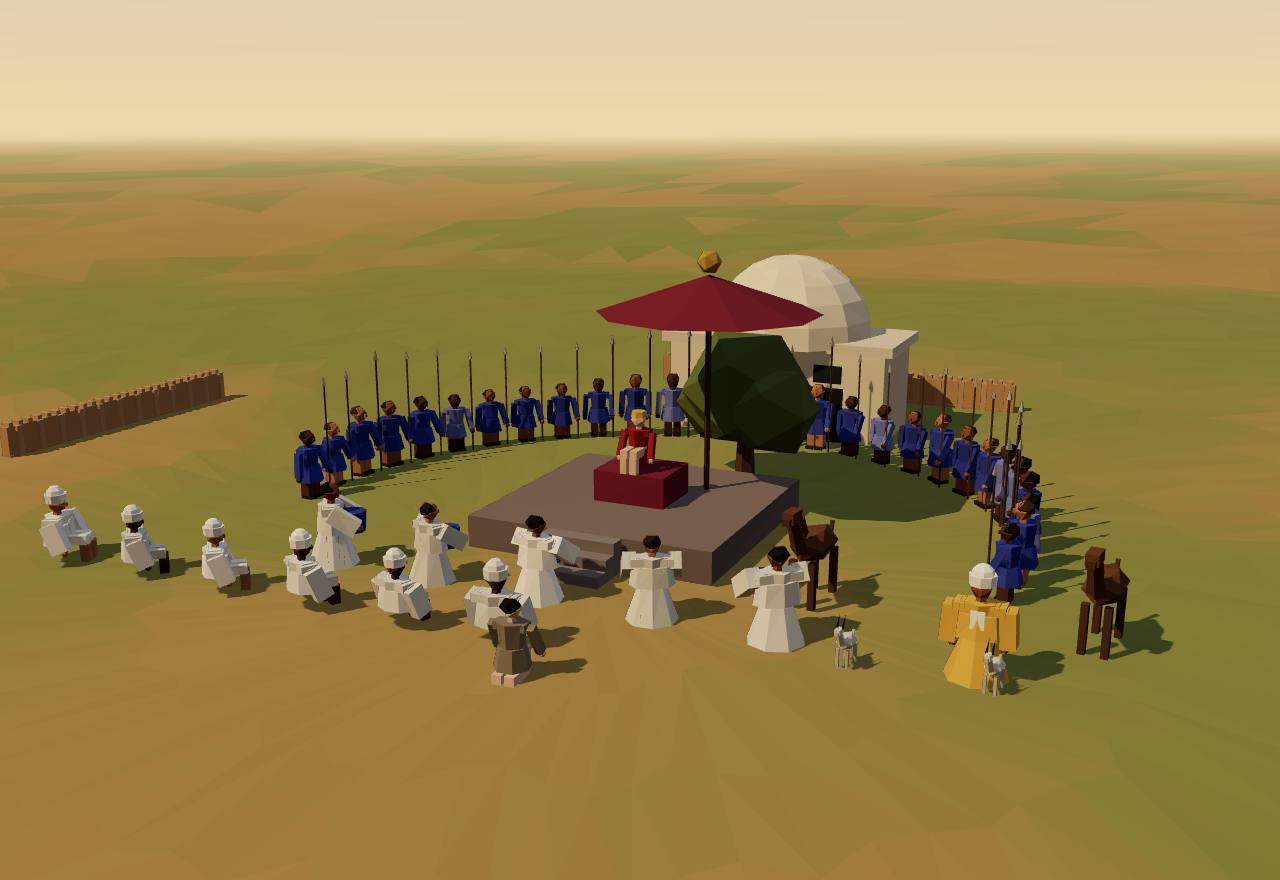
The mansa's audience at the pempi, after Ibn Baṭṭūṭa (1352–53)
Ibn Khaldūn tells it from his informants in Cairo and the Maghreb: the people of Mali grew until they 'vanquished the Sosso', took every state of the old kingdom and 'extended their rule over the kingdom of Ghana as far as the Atlantic'. Their greatest king, Mari Jāṭa, 'whose genealogy we have not learnt', reigned 25 years; 'Mari' meant 'an emir descended from a sultan', 'Jāṭa' lion. The first to embrace Islam, his informant said, was a king called Barmandana. 3 Consensus Texts
Oral tradition tells the founding as the Sunjata epic, performed by griots in dozens of versions: the buffalo woman, Sundiata's cursed childhood and exile, his return and 'triumph over Soumamarou Kanté, an invading blacksmith-king', his conquests to the Atlantic, and a meeting at Kurukan Fuga 'where the structure of the Mali Empire was established'. Scholars disagree about how much history it holds: one hypothesis makes it a creation after Mali, another sees continuity from the empire to the texts recorded from the late 19th century. 8,17 Debated Ethnography Texts
Ibn Khaldūn's list shows no one rule of succession. Sons followed fathers and brothers followed brothers; Khalīfa, who shot arrows at passers-by, was killed when 'the people rose against him'; Abū Bakr, a daughter's son of Mari Jāṭa, was chosen by the principle 'which puts the sister or the sister's son in possession of the throne'; and a freed slave of the royal house, Sākūra, 'seized power', under whom Mali 'took a great increase'. In the 1370s a vizier 'holds the sultan Mūsā in private confinement and disposes of all authority'. 3 Consensus Texts
Mansa Mūsā made the pilgrimage in 724 AH (1324). The figures that reached Ibn Khaldūn came from men who knew the court: Mali's interpreter in Cairo said Mūsā brought 'eighty loads of gold dust, each weighing three qintars', and a companion said 12,000 young slave women dressed in brocade carried his effects. Al-Saʿdī, three centuries on, gives 60,000 men and 500 slaves each holding a gold staff, and judges him not generous: only 20,000 gold pieces in alms at the holy cities, against Askia Muḥammad's 100,000. 3,2 Debated Texts
Returning from Mecca, Mūsā brought the Andalusian poet Abū Isḥāq al-Sāḥilī home with him. When the king wanted an audience hall 'solidly built and coated with plaster', 'such buildings being still unknown in his country', al-Sāḥilī built a square room under a dome, plastered and painted with arabesques, and was paid 12,000 mithqals of gold dust. 3 Consensus Texts
Ibn Baṭṭūṭa saw Mansa Sulaymān hold audience in the palace yard on 'a platform under a tree, with three steps; this they call the pempi', carpeted with silk. 'Over it is raised the umbrella, which is a sort of pavilion made of silk, surmounted by a bird in gold, about the size of a falcon.' The sultan walked out slowly behind musicians, with three hundred armed slaves; the commanders, the qadi and the preacher sat in their places, and two saddled horses and two goats were brought 'as a protection against the evil eye'. 4 Consensus Texts
Subjects approached the mansa in old clothes, struck the ground with their elbows and threw dust over themselves when he answered them; soldiers recalled their deeds, and those who knew confirmed them by twanging their bows. On feast days poets dressed as birds told the king that 'this pempi which you occupy was that whereon sat this king and that king… So do you too do good deeds whose memory will outlive you': a custom, Ibn Baṭṭūṭa was told, older than Islam. 4 Consensus Texts
Mali ruled through deputies and subject kings. At Walata the sultan's representative was 'Farba Husayn, farbā meaning deputy'; Timbuktu's governor, Farba Mūsā, installed a Massufa chief as amir in Ibn Baṭṭūṭa's presence; the towns of Kabara and Zagha had 'sultans who owe allegiance to the king of Malli'. Al-Saʿdī describes three vassal principalities, each with twelve district chiefs (koi), a dignitary who took precedence among them and spoke for them before the king, and two generals, the Sanqar-zuma for the south and the Faran-sura for the north. 4,2 Consensus Texts
Ibn Baṭṭūṭa, who disliked much of what he saw, praised the justice: 'They are seldom unjust… There is complete security in their country.' The property of a foreigner who died was kept for his heir; Friday mosques were too crowded to find a place late; children were chained until they learned the Qur'an by heart. On 27 Ramadan the sultan shared out the alms among the qadi, preachers and scholars. 4 Consensus Texts
All of this comes through outsiders. Takezawa and Cissé point out that the medieval Arabic authors whom historians treat as primary sources were 'external and second hand', written 'by authors who had never been to West Africa, with the exception of Ibn Battuta'; the Timbuktu chronicles are local but date from the 17th century. Ibn Baṭṭūṭa himself arrived prejudiced ('their lack of manners and their contempt for the whites'), and Fauvelle-Aymar notes that even his itinerary's 'complete reliability' may be questioned. 18,4,19 Debated Texts
Ibn Khaldūn's informant blamed Mari Jāṭa II (r. 14 years) for having 'ruined the empire', even selling the famous gold nugget of twenty qintars to Egyptian merchants. Al-Saʿdī adds that under Mūsā's successors the Mossi sacked Timbuktu, the Tuareg took it in 837 AH (1433–34), and the Malian realm later split into three groups under rival 'so-called sultans' while its two generals made themselves independent. 3,2 Consensus Texts
Not every town bent. Al-Saʿdī says the people of Djenné fought Mali 'up to ninety-nine times' and won every battle, and that no king took the city until Sonni ʿAlī. 2 Consensus Texts
Seshat codes Mali in 1230–1410 as an empire of 1.7–1.9 million km² and 4–5 million people with four to five administrative levels, both 'unitary state' and 'confederated state', hereditary elite status, and rulers legitimated by gods from 1312. It names Niani as the capital, the identification Fauvelle-Aymar rejects (see below). 19 Seshat Debated Texts
How power worked King · Heredity · Custom and kin
How power worked
- Who rules
- King Consensus
Why?
- How chosen
- Heredity Debated
Why?
- Limits on power
- Custom and kin Debated
Why?
- Scale
- Empire Consensus
Why?
- Claim to rule
- Divine mandate Debated
Why?
- Who has a say
- A narrow elite Consensus
Why?
Towns and routes of the Sahel, from the records
Data: UNESCO World Heritage records, Pleiades, the travellers' routes
Places, not borders: each town sits where a cited record puts it (UNESCO's World Heritage data, the Pleiades gazetteer), and each line is a journey or a relation a source describes. Niani is the proposed capital of Mali that excavation has not borne out. 19 Taghaza, the salt mine both Ibn Baṭṭūṭa and al-Saʿdī name, is left off: no source read gives its position.
- trade or a traveller's route
- submission to Mali
- war (Sonni ʿAlī's siege of Djenné)
| Place | Position | In this story |
|---|---|---|
| Koumbi Saleh | 15.77° N, 7.97° W 20,12 | 900–1450 |
| Walata (Oualata) | 17.30° N, 7.03° W 21,4 | 1100–1591 |
| Jenne-jeno | 13.89° N, 4.54° W 14,13 | 700–1300 |
| Djenné | 13.91° N, 4.56° W 14,2 | 1200–1591 |
| Timbuktu | 16.77° N, 3.00° W 22,2 | 1100–1591 |
| Gao | 16.29° N, 0.04° W 23,18 | 700–1591 |
| Niani (proposed capital of Mali, disputed) | 11.37° N, 8.30° W 4,19 | 1230–1464 |
5 links, each a journey or relation the cited text describes: Walata to Niani (trade); Timbuktu to Gao (trade); Djenné to Timbuktu (trade); Gao to Niani (submission); Gao to Djenné (war). 4,2
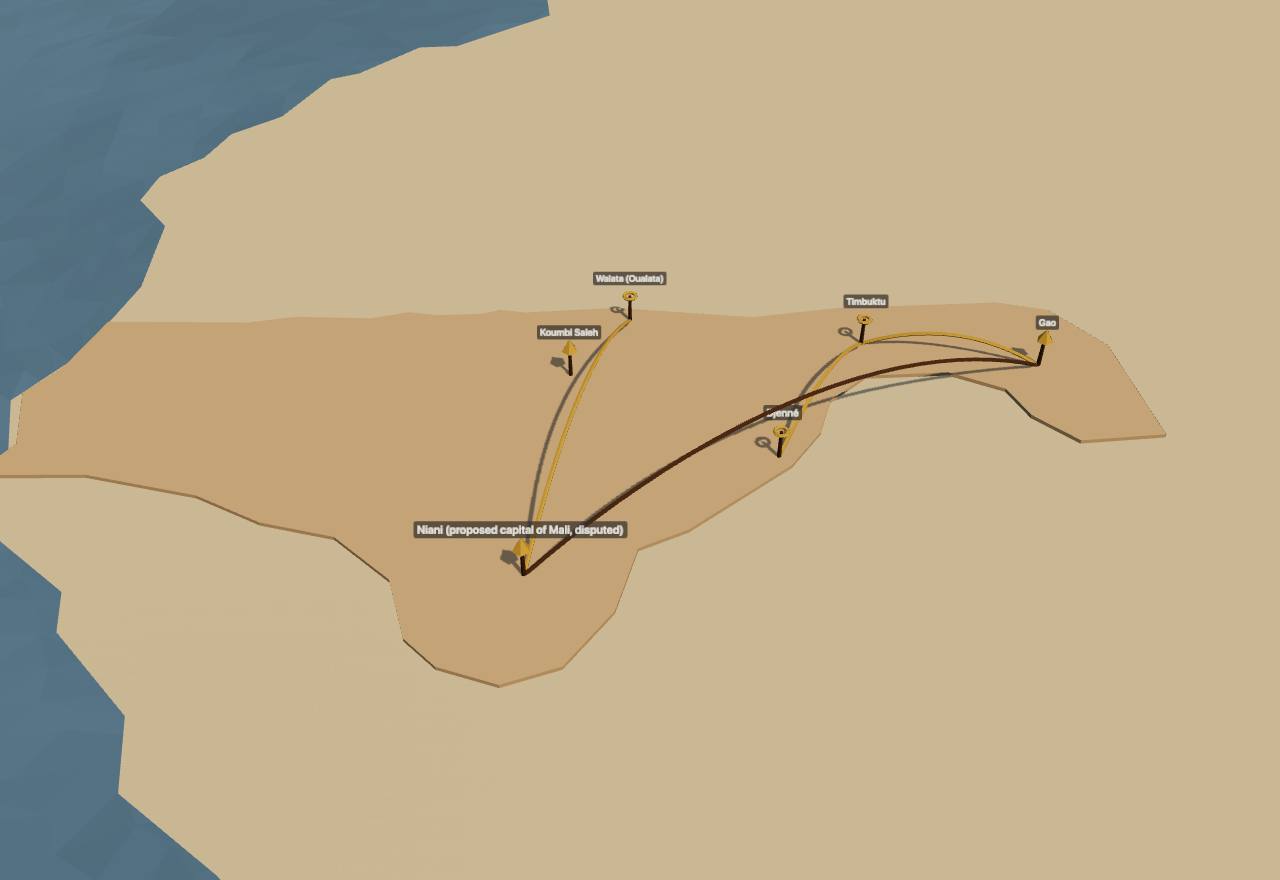
Mali on Cliopatria's map, with the towns of the sources
Places: 7 cited sites and 5 cited links over Cliopatria (CC BY 4.0) territories, drawn flat and low. Koumbi Saleh · Walata (Oualata) · Jenne-jeno · Djenné · Timbuktu · Gao · Niani (proposed capital of Mali, disputed) 20,12,21,4,14,13,2,22,23,18,19
1464 CE – 1591 CE
Songhai
Gao, a twin town on the Niger since the tenth century, broke free of Mali and under Sonni ʿAlī and the askias ruled the Niger from Djenné to beyond Gao. Its history was written in Timbuktu by men whose families the first of those kings persecuted.
Sonni ʿAlī began to reign in 869 AH (1464–65), as al-Saʿdī quotes al-ʿAlqamī, and spent 27 or 28 years at war. He took Djenné, the people say, after a siege of 'seven years, seven months and seven days', and entered Timbuktu on 4 or 5 Rajab 873 (29 or 30 January 1468), where he burned and killed. 2 Consensus Texts
The Tarikh calls Sonni ʿAlī 'this master tyrant, this famous scoundrel', because he persecuted Timbuktu's scholars as friends of the Tuareg; its author's own great-great-grandmother was a Fulani captive he gave to a scholar. Yet it also records him saying 'Without the scholars there would be neither pleasure nor charm in this world', and that he treated some of them with great regard. The chronicle's verdicts are those of the scholarly families. 2,18 Debated Texts
When Sonni ʿAlī drowned in 1492, his son was proclaimed; one of his generals, Muḥammad son of Abū Bakr, 'conceived the design of seizing sovereign power', and beat him at Ankogho on 14 Jumada I 898 (3 March 1493). Sonni ʿAlī's daughters cried 'Askia!', which al-Saʿdī glosses 'he is not it!', and Muḥammad took the insult as his title. 2 Consensus Texts
Askia Muḥammad left for Mecca in Safar of 'the second year of the tenth century' and was back in Gao by August 1497, as Houdas converts it. He took 1,500 troops and 300,000 gold pieces, gave 100,000 in alms and bought a garden in Medina as an endowment for the people of the Sudan. There, al-Saʿdī says, the Abbasid caliph made him his lieutenant for Songhai: the askia laid down his authority for three days, and on the fourth the caliph placed a cap and a turban on his head. 2 Consensus Texts
His authority, the Tarikh claims, ran 'from the frontier of the country of Bindoko to Teghazza and its dependencies'. Seshat codes the Askia empire at 600,000–700,000 km², 4–5 million people, a largest town of 60,000–70,000, four to five administrative levels and full-time bureaucrats present. 2 Seshat Consensus Texts
The end began over salt. Al-Manṣūr of Morocco demanded the Taghaza mine; Askia Isḥāq II answered 'in violent and insulting terms' and sent javelins and two iron shoes. In Muharram 999 (November 1590) a Moroccan force of 3,000 men under the pasha Judar, with twice as many followers, set out across the desert. 2 Consensus Texts
Near Tondibi, on 17 Jumada II 999 (12 April 1591), 12,500 Songhai horsemen and 30,000 foot were routed 'in the blink of an eye'; foot soldiers sat down on their shields, because they were not to flee in a rout, and were cut down. Kaba reads the invasion as al-Manṣūr's bid for the gold trade, and the long war that followed as one that 'swallowed up both the conqueror and the conquered'. 2,9 Consensus Texts
The askia court at Gao1493 CE – 1591Gao
A palace court on the river, where brothers, sons and generals held titled offices, and where nearly every succession was settled by force.
Terms: Ghana, Mali and Songhai: Songhai, The askia court at Gao
- askia the title Muḥammad took in 1493 ('Askia-Mohammed'), from the cry al-Saʿdī glosses 'he is not it!' 2
- koi Songhay 'chief', as in Melli-koi (king of Mali) or Hi-koi; Houdas notes it is also used for the head of a town 2
- fari a provincial command, as in Kurmina-fari or Dendi-fari, held by the askia's brothers and sons 2
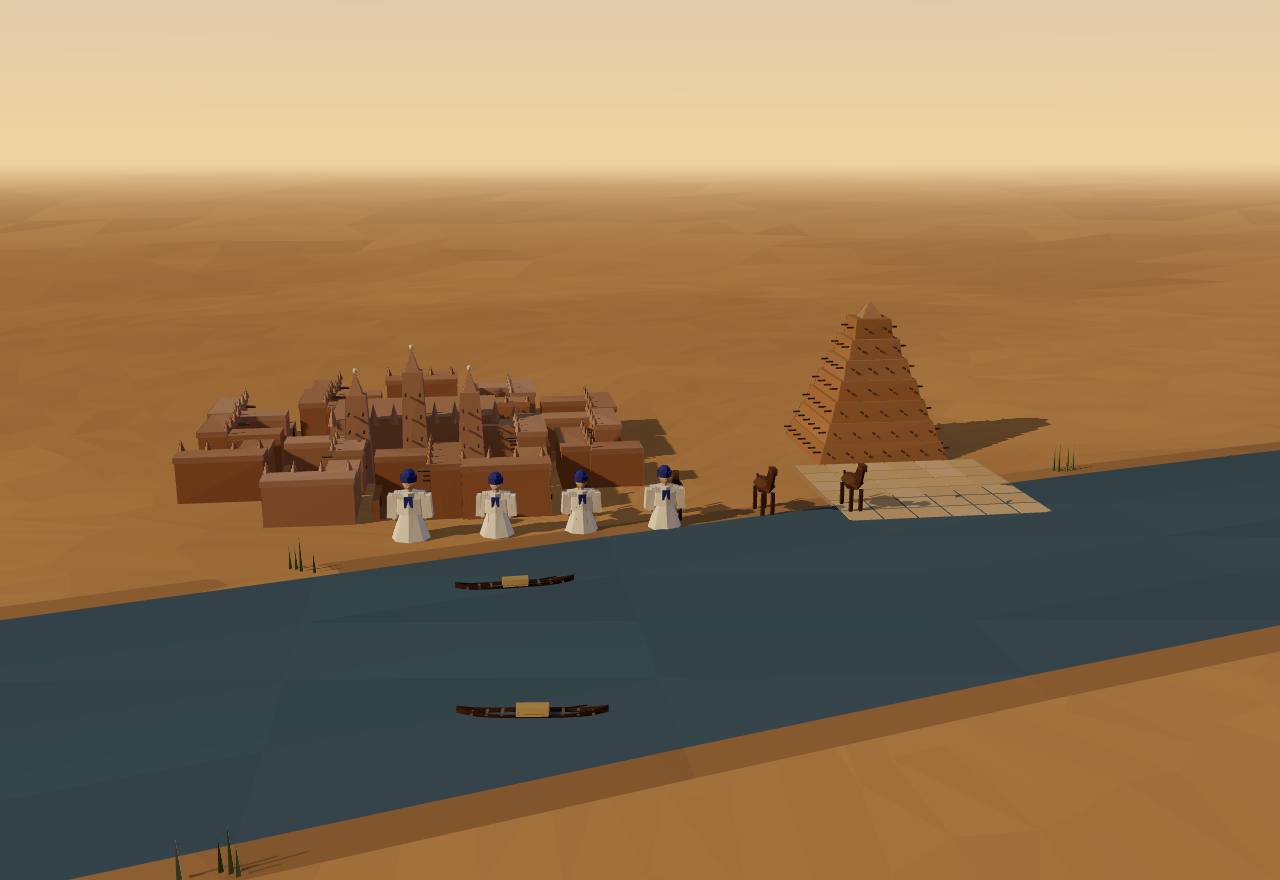
Gao on the Niger, the askias' river capital
Askia Muḥammad 'frequented the scholars and asked their advice on what it was his duty to do in matters of government', and divided the population, which under Sonni ʿAlī had all been liable for war, 'into two categories: the army and the people'. 2 Consensus Texts
The empire was run by titled offices held largely by the askia's kin: his brother ʿUmar Komzagho as Kurmina-fari, then another brother, then a son; a Dendi-fari, a Balama', a Hi-koi, a Binka-farma. Rank was public: a holder of the Binka-farma 'had the right to the drum', and only the askia's drum might sound past a certain point outside Gao. 2 Seshat Consensus Texts
At the end of his reign Askia Muḥammad went blind, 'but no one knew it, for ʿAlī Folen was always near him': the same device al-Bakrī had reported of Ghana's king Basi four centuries earlier. His son Mūsā, resenting the counsellor, deposed him at the Feast of Sacrifice, 26 August 1528, after 36 years and six months on the throne. 2,1 Consensus Texts
Succession then went by force among the askia's sons and grandsons. Mūsā killed brothers and was killed by them in 1531; Muḥammad Benkan was deposed by his general Mar-Tomzo in 1537; al-Ḥājj's brothers declared 'We admit only the right of primogeniture' in 1582, then deposed him in 1586; his successor had two brothers killed at once. Of eleven rulers from Sonni ʿAlī to Isḥāq II, the Tarikh shows four deposed and one killed. 2 Consensus Texts
Power over merchants could be arbitrary: after Askia Isḥāq I died in 1549, the sums his agent had taken 'unjustly and by violence' from Timbuktu's traders were counted at 70,000 gold pieces, and 'no one, while the prince lived, dared complain'. 2 Consensus Texts
The Niger was the court's road. In 1509 Askia Muḥammad, at the port of Kabara, took ship to Gao to meet the qadi coming home from Mecca; in 1582 Askia Dāwūd's body was carried by boat from his farm at Tondibi to be buried at Gao. Ibn Baṭṭūṭa had gone the same way in 1353, 'on a small boat, hollowed out of a single piece of wood'. 2,4 Consensus Texts
Gao's kingship is old. Excavations at Gao Saney and Gao-Ancien since 2001 found a settlement of traders and craftsmen from the 8th to 10th centuries and stone buildings of the early 10th, which Takezawa and Cissé read as a royal residence: 'for the first time' material proof of the two towns of Gao that al-Bakrī described. Royal tombstones at Gao-Saney from the 11th–12th centuries repeat the names of the first three caliphs. 18,24,1 Debated Excavation Dating
Askia Muḥammad built his tomb at Gao in 1495, after his pilgrimage: 'the dramatic 17-m pyramidal structure', with two flat-roofed mosques, a cemetery and an open-air assembly ground, its wooden beams a permanent scaffolding for replastering (the Tarikh has him back from Mecca only in 1497). UNESCO lists it as a World Heritage site in danger since 2012. 23 Consensus Excavation
Seshat's two Songhai records show the change the askias made: for 1376–1493 it codes full-time bureaucrats 'inferred absent' and judges and courts 'inferred absent'; for 1493–1591, bureaucrats, judges and courts present, five to six military levels and a formal legal code. SeshatDB Consensus Texts
How power worked Sultan · Conquest or coup · Custom and kin
How power worked
- Who rules
- Sultan Consensus
Why?
- How chosen
- Conquest or coup Debated
Why?
- Limits on power
- Custom and kin Debated
Why?
- Scale
- Empire Consensus
Why?
- Claim to rule
- Divine mandate Debated
Why?
- Who has a say
- A narrow elite Consensus
Why?
Timbuktu's scholarsTimbuktu
A merchant city of mud-brick mosques whose governor and qadi, named by the askias, ran its daily life, and whose scholarly families claimed a moral authority kings sometimes had to respect.
Terms: Ghana, Mali and Songhai: Songhai, Timbuktu's scholars
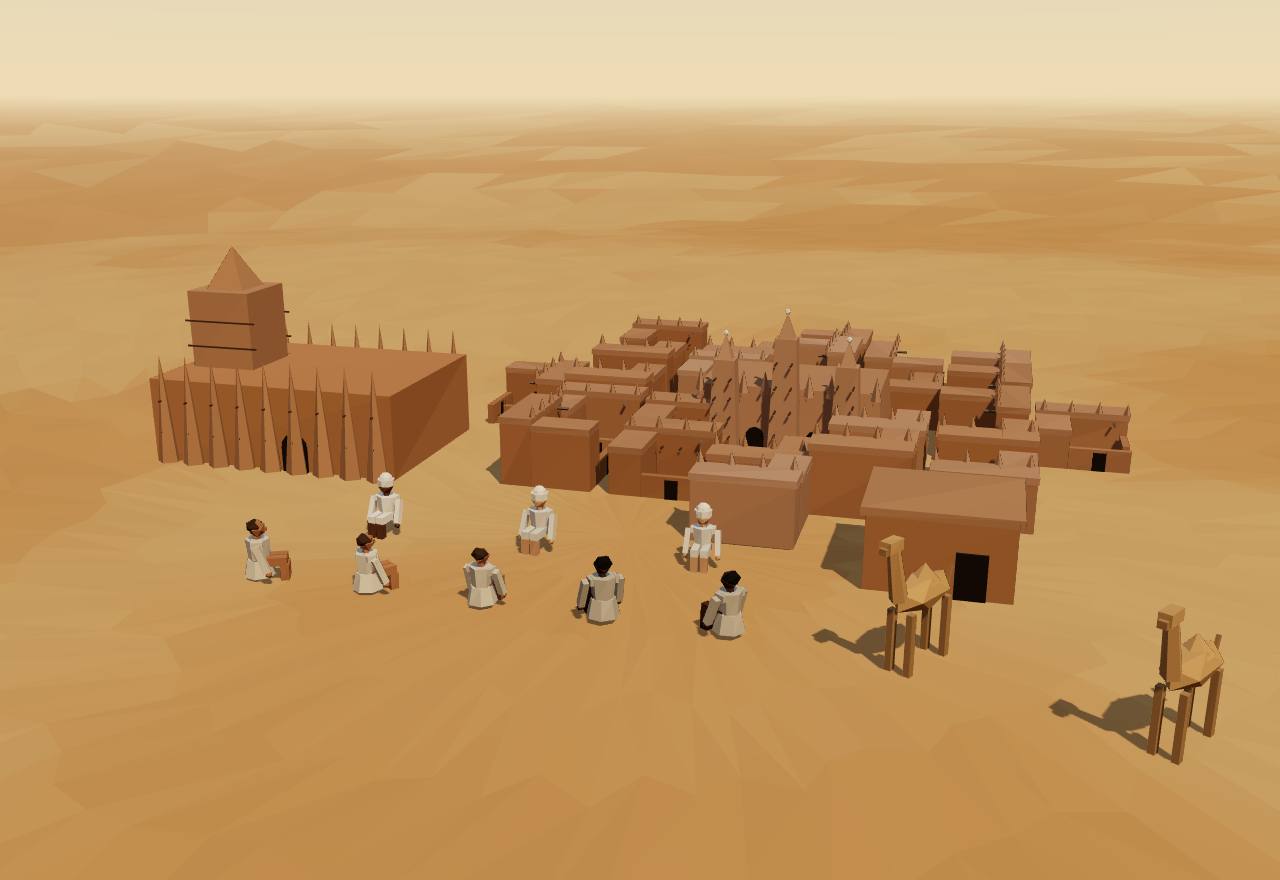
Timbuktu's scholars and mosques
Al-Saʿdī, a Timbuktu man, says Tuareg herders founded the town 'at the end of the fifth century of the hijra' as a store for travellers' goods, guarded by a slave woman whose name gave the town its own, and that trade moved there from Biru, bringing scholars and merchants from Egypt, Fezzan, Ghadames, Tuat, Fez and elsewhere; 'its civilisation came to it solely from the Maghreb'. 2 Consensus Texts
Timbuktu changed masters without changing its governor. Mali ruled it for a hundred years from 737 AH (1336–37), the Tuareg for forty from 837 (1433–34), then Sonni ʿAlī and the askias. Its governor, the Tombouctou-koï Muḥammad Naddi, served Mali and then the Tuareg chief Akil with 'all powers, administrative, financial and others'; when Akil kept the governor's third of the city's taxes, Naddi's son invited Sonni ʿAlī in. 2 Consensus Texts
When Sonni ʿAlī came in 1468, the Tuareg chief fled with a thousand camels and the scholars of Sankore, 'for their fate was what concerned him most'. Until 875 AH (1470–71) the king went on killing or humiliating the scholars who stayed; those who fled to Biru were pursued and many killed at Taʿdjit. 2 Consensus Texts
Askia Muḥammad appointed Maḥmūd ibn ʿUmar qadi 'of Timbuktu and its territory' on a scholar's advice; he was 35 and imam of the Sankore mosque, and held the office 55 years. When Maḥmūd went on pilgrimage his deputy kept the post for ten years after his return, until the askia, told of it, ordered the deputy to leave the city and hand back the seat. 2 Consensus Texts
The qadi's house was a sanctuary that kings acknowledged. When a fallen officer sought Maḥmūd's protection, Askia Mūsā replied that 'all who sought refuge in the qadi's house would be safe there', but not this man; he put books on his head, crying 'I place myself under the safeguard of these books', and the askia refused it. Under the Moroccans in 1593, the houses of the qadi's family were the only ones exempted from a search for arms. 2 Consensus Texts
Scholarship was a family estate. Ahmad Bābā, quoted by al-Saʿdī, says his grandfather al-Ḥājj Aḥmad left 'about 700 volumes', many copied in his own hand; another scholar lent his rarest books to students he did not know, and 'thus lost a great number of them'. 2 Consensus Texts
UNESCO's record dates the three great mosques: Djingareyber, first built under Kankan Mūsā on his return from Mecca and rebuilt and enlarged in 1570–83 by the qadi al-ʿĀqib; Sankore, of the 14th century, rebuilt by the same qadi in 1578–82 'according to the dimensions of the Kaaba'; and Sidi Yahia, built around 1400. The Tarikh credits Mūsā with the minaret of the great mosque, 'it is said'. 22,2 Consensus Texts Excavation
After Tondibi the scholars were the Moroccans' target. On 24 Muharram 1002 (20 October 1593) the Moroccans shut them in the Sankore mosque and arrested them (on Maḥmūd ben Zergun's order, as Ahmad Bābā wrote); fourteen were killed on the way to the citadel. In March 1594 they were sent, 'packed like arrows in a quiver', to Marrakesh; Kaba counts their exile among the revolts' consequences. 2,9 Consensus Texts
How power worked King · Appointment · Independent courts
How power worked
- Who rules
- King Consensus
Why?
- How chosen
- Appointment Consensus
Why?
- Limits on power
- Independent courts Debated
Why?
- Scale
- City-state Debated
Why?
- Claim to rule
- Law Debated
Why?
- Who has a say
- A narrow elite Consensus
Why?
Artefacts
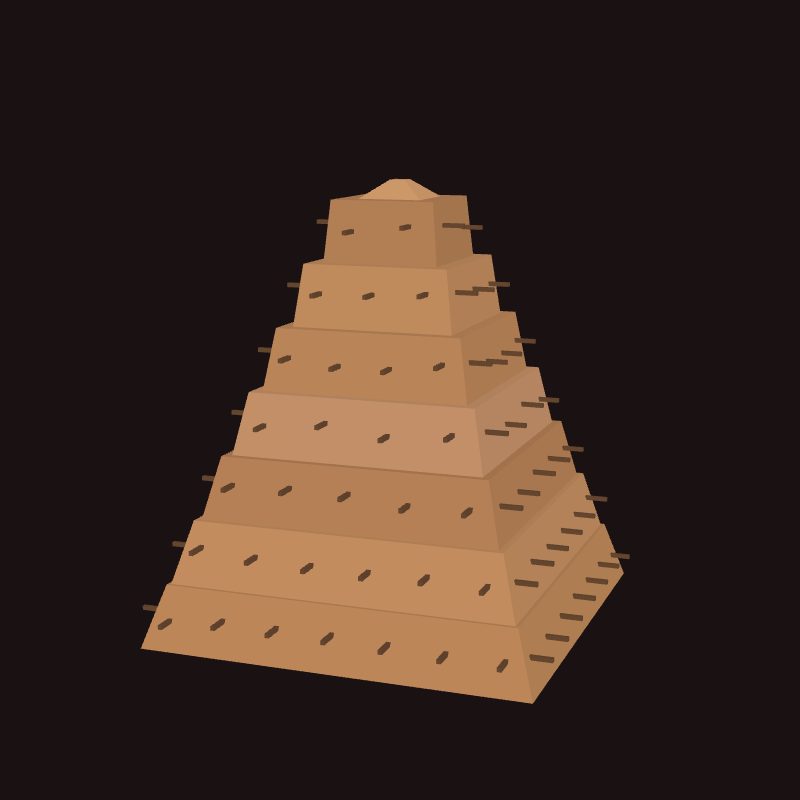 Model, not a scan
In numbers
How mansas and askias came to power, and how they left it
Data: Ibn Khaldūn (Mali), al-Saʿdī's Tarikh es-Soudan (Songhai)
Ibn Khaldūn names every king of Mali to 1390 and says how each reached the throne, but gives reign lengths, not dates. Bars mark how each reign began (a row per way) and the mark at the end how it ended; the years below for Mūsā I to Sulaymān are counted back from his fixed points. 3,4 Al-Saʿdī dates the Songhai accessions to the day in hijri; his "hundred and one years" of askias are 101 hijri years, 1493 to 1591. 2
Mali, before Mansa Mūsā: order only
- Mari Jāṭa Not recorded. Conquered the Sosso; 'we have not learnt his genealogy'; reigned 25 years. 'Mari' means an emir descended from a sultan, 'Jāṭa' lion.
- Mansa Ulī Son. One of their greatest kings; made the pilgrimage in the reign of the Mamluk sultan Baybars.
- Wātī Brother. Ulī's brother.
- Khalīfa Brother · killed. Weak of mind, he shot arrows at passers-by; 'the people rose against him and put him to death'.
- Abū Bakr Through a daughter or sister. Son of Mari Jāṭa's daughter, chosen 'according to the principle of the barbarian nations, who put the sister or the sister's son in possession of the throne'.
- Sākūra Seized or deposed a ruler · killed. A freed slave of the royal family who 'seized power'; Mali grew greatly under him; made the pilgrimage and was killed at Tajura on the way home.
- Gao Son. A son of Mari Jāṭa.
- Muḥammad ibn Gao Son. Gao's son.
- Abū Bakr Through a daughter or sister. Power 'passed from the children of Mari Jāṭa to a son of his sister'; father of Mansa Mūsā.
Ibn Khaldūn, Histoire des Berbères, t. II pp. 110–112. 3
Mansas of Mali, Mūsā I to Maḥmūd (1307–1390)
9 accessions: 4 son, 2 brother, 1 other kin, 2 force; median reign 9 years. Ended: 6 died in office, 2 killed, 1 not known.
Marks at the end of a bar: ○ died in office · × killed · ▽ deposed · | abdicated · □ conquered
Show the table: Mansas of Mali, Mūsā I to Maḥmūd (1307–1390)
| Ruler | Years | Came to power | Reign ended | Source |
|---|---|---|---|---|
| Mansa Mūsā I | 1307 CE – 1332 CE | Son | died in office (Son and successor of Abū Bakr; pilgrimage 724 AH (1324); reigned 25 years. Year counted back from Ibn Khaldūn's reign lengths (see the dating note).) | 3,4 |
| Mansa Magha I | 1332 CE – 1336 CE | Son | died in office (Mūsā's son; reigned four years. Year counted back from Ibn Khaldūn's reign lengths (see the dating note).) | 3,4 |
| Mansa Sulaymān | 1336 CE – 1359 CE | Brother | died in office (Mūsā's brother; reigned 24 years; Ibn Baṭṭūṭa's host in 1352–53. Year counted back from Ibn Khaldūn's reign lengths (see the dating note).) | 3,4 |
| Qāsā | 1359 CE – 1360 CE | Son | died in office (Sulaymān's son; died after nine months. Year counted back from Ibn Khaldūn's reign lengths (see the dating note).) | 3 |
| Mari Jāṭa II | 1360 CE – 1374 CE | Other kin | died in office (Son of Magha I, grandson of Mūsā; 14 years of 'tyranny'; sold the great gold nugget; died of sleeping sickness in 775 AH (1373–74). De Slane dates his accession 761 AH (1360).) | 3,1 |
| Mūsā II | 1374 CE – 1387 CE | Son | died in office (Son of Mari Jāṭa II; his vizier, also called Mari Jāṭa, 'holds the sultan Mūsā in private confinement and disposes of all authority'; died 789 AH (1387).) | 3 |
| Magha II | 1387 CE – 1388 CE | Brother | killed (Mūsā II's brother; killed about a year later.) | 3 |
| Sandaki | 1388 CE – 1389 CE | Force | killed (Husband of Mūsā II's mother ('Sandaki means vizier'); killed a few months after taking power by a man of Mari Jāṭa's family.) | 3 |
| Maḥmūd (Magha III) | 1390 CE | Force | not known (Claimed descent from Mansa Gao, son of Mansa Ulī; came 'from the land of the infidels' and seized the kingdom in 792 AH (1390). Ibn Khaldūn's account ends here.) | 3 |
Sonni and askias of Songhai (1464–1591)
11 accessions: 2 son, 2 brother, 1 other kin, 1 proclaimed, 4 force, 1 unrecorded; median reign 4 years. Ended: 5 died in office, 4 deposed, 1 killed, 1 conquered.
Marks at the end of a bar: ○ died in office · × killed · ▽ deposed · | abdicated · □ conquered
Show the table: Sonni and askias of Songhai (1464–1591)
| Ruler | Years | Came to power | Reign ended | Source |
|---|---|---|---|---|
| Sonni ʿAlī | 1464 CE – 1492 CE | Unrecorded | died in office (Reign begun 869 AH (1464–65), as al-ʿAlqamī is quoted; drowned in a torrent returning from Gurma, 15 Muharram 898 (6 November 1492).) | 2 |
| Sonni Abū Bakr Dāʿū | 1492 CE – 1493 CE | Son | deposed (Sonni ʿAlī's son, proclaimed at Danagha; beaten at Ankogho, 14 Jumada I 898 (3 March 1493), fled to Abar.) | 2 |
| Askia Muḥammad | 1493 CE – 1528 | Force | deposed (A general of Sonni ʿAlī who took the throne by battle; blind at the end; deposed by his son Mūsā at the Feast of Sacrifice, 26 August 1528; died 1538.) | 2 |
| Askia Mūsā | 1528 – 1531 | Force | killed (Deposed his father; killed by his brothers' conspiracy, 24 Shaʿban 937 (12 April 1531).) | 2 |
| Askia Muḥammad Benkan | 1531 – 1537 | Other kin | deposed (Son of Askia Muḥammad's brother ʿUmar Komzagho, raised the day Mūsā died; deposed by the Dendi-fari Mar-Tomzo, 12 Dhu'l-qaʿda 943 (23 April 1537).) | 2 |
| Askia Ismāʿīl | 1537 – 1539 | Force | died in office (Askia Muḥammad's son, raised to the throne by Mar-Tomzo the day of the deposition; died 4 Rajab 946 (15 November 1539).) | 2 |
| Askia Isḥāq I | 1539 – 1549 | Proclaimed | died in office (Ismāʿīl's brother: the men of Songhai 'agreed to put on the throne Ishaq' and proclaimed him, 16 Shaʿban 946 (27 December 1539); died 24 Safar 956 (23 March 1549).) | 2 |
| Askia Dāwūd | 1549 – 1582 | Brother | died in office (Isḥāq's brother, proclaimed at Kukiya, 25 Safar 956 (24 March 1549); died at his farm at Tondibi in Rajab 990 (July–August 1582).) | 2 |
| Askia al-Ḥājj Muḥammad | 1582 – 1586 | Son | deposed (Eldest of Dāwūd's sons present; his brothers said 'We admit only the right of primogeniture'; deposed by his brothers in December 1586 and died days later.) | 2 |
| Askia Muḥammad Bāni | 1586 – 1588 | Force | died in office (Made askia by the brothers who deposed al-Ḥājj; died on campaign in April 1588 ('it was anger that caused his death').) | 2 |
| Askia Isḥāq II | 1588 – 1591 | Brother | conquered (Dāwūd's son, proclaimed 18 April 1588 (as Houdas converts it) while a rival, the Balama' al-Ṣādiq, was proclaimed by his own troops; routed at Tondibi, 17 Jumada II 999 (12 April 1591).) | 2,9 |
- Marks, by Seshat polity:
- Ghana Empire I
- Ghana Empire II
- Jenne-jeno IV
- Mali Empire
- Songhai Empire
- Songhai Empire - Askiya Dynasty
- Background bands, by phase:
- Ghana (Wagadu)
- Mali
- Songhai
| Seshat polity | Years | Value |
|---|---|---|
| Ghana Empire I | 700 CE – 1077 CE (whole period) | 350,000–400,000 |
| Jenne-jeno IV | 900 CE – 1300 CE (whole period) | 1,100 |
| Ghana Empire II | 1078 CE – 1203 CE (whole period) | 350,000–400,000 |
| Mali Empire | 1230 CE – 1410 CE (whole period) | 1,700,000–1,900,000 |
| Songhai Empire | 1376 CE – 1493 CE (whole period) | 250,000–300,000 |
| Songhai Empire - Askiya Dynasty | 1493 CE – 1591 (whole period) | 600,000–700,000 |
| Seshat polity | Years | Value |
|---|---|---|
| Ghana Empire I | 700 CE – 1077 CE (whole period) | 1,000,000–1,250,000 |
| Jenne-jeno IV | 900 CE – 1300 CE (whole period) | 25,000–30,000 |
| Ghana Empire II | 1078 CE – 1203 CE (whole period) | 1,000,000–1,500,000 |
| Mali Empire | 1230 CE – 1410 CE (whole period) | 4,000,000–5,000,000 |
| Songhai Empire - Askiya Dynasty | 1493 CE – 1591 (whole period) | 4,000,000–5,000,000 |
| Seshat polity | Years | Value |
|---|---|---|
| Ghana Empire I | 700 CE – 1077 CE (whole period) | 15,000–20,000 |
| Jenne-jeno IV | 900 CE – 1300 CE (whole period) | 20,000–30,000 |
| Ghana Empire II | 1078 CE – 1203 CE (whole period) | 15,000–20,000 |
| Mali Empire | 1230 CE – 1410 CE (whole period) | 12,000–17,000 |
| Songhai Empire | 1492 CE | 15,000 |
| Songhai Empire - Askiya Dynasty | 1512 | 60,000 |
| Songhai Empire - Askiya Dynasty | 1580 | 70,000 |
| Seshat polity | Years | Value |
|---|---|---|
| Ghana Empire I | 700 CE – 1077 CE (whole period) | 4 |
| Jenne-jeno IV | 900 CE – 1300 CE (whole period) | 1–3 |
| Ghana Empire II | 1078 CE – 1203 CE (whole period) | 4 |
| Mali Empire | 1230 CE – 1410 CE (whole period) | 4–5 |
| Songhai Empire | 1376 CE – 1493 CE (whole period) | 4–5 |
| Songhai Empire - Askiya Dynasty | 1493 CE – 1591 (whole period) | 4–5 |
| Seshat polity | Years | Value |
|---|---|---|
| Ghana Empire I | 700 CE – 1077 CE (whole period) | 4 |
| Ghana Empire II | 1078 CE – 1203 CE (whole period) | 4 |
| Mali Empire | 1230 CE – 1410 CE (whole period) | 4 |
| Songhai Empire - Askiya Dynasty | 1493 CE – 1591 (whole period) | 4 |
| Seshat polity | Years | Value |
|---|---|---|
| Ghana Empire I | 700 CE – 1077 CE (whole period) | 3–4 |
| Ghana Empire II | 1078 CE – 1203 CE (whole period) | 3–4 |
| Mali Empire | 1230 CE – 1410 CE (whole period) | 4 |
| Songhai Empire - Askiya Dynasty | 1493 CE – 1591 (whole period) | 5–6 |
Values as Seshat codes them: bands are ranges, dots single values, flat bars values given for a whole period, hatching “unknown”; from one Seshat polity to the next, marks alternate between a light tone and a darker one with dashed joining lines (the key above names each polity). Source: Seshat Global History Databank (Equinox-2020), CC BY 4.0; and the Seshat Databank, seshat-db.com (no licence stated; attribution).
Governance fingerprint
Seshat's institutional variables, phase by phase. Hover or focus a cell for the values and years.
- Present
- Inferred present
- Absent
- Inferred absent
- Unknown
- Not coded in Seshat
- Mixed: present in one Seshat polity or period, absent in another
Not coded in Seshat: Songhai: Timbuktu's scholars. The Seshat Databank has no polity for it, so its six axes rest on the cited scholarship alone.
The axes against Seshat
5 agree, 0 disagree.
Show the 5 pairs that agree
- Agree Ghana (Wagadu): claim to rule coded “Divine mandate”, which implies rulers legitimated by gods present; Seshat has it present.
- Agree Ghana (Wagadu): how chosen coded “Heredity”, which implies elite status hereditary present; Seshat has it present.
- Agree Mali: claim to rule coded “Divine mandate”, which implies rulers legitimated by gods present; Seshat has it present.
- Agree Mali: how chosen coded “Heredity”, which implies elite status hereditary present; Seshat has it present.
- Agree Songhai: The askia court at Gao: claim to rule coded “Divine mandate”, which implies rulers legitimated by gods present; Seshat has it present.
Only pairs where an axis value on its own implies a Seshat variable are compared; the rest is not counted as disagreement.
Source: Seshat Global History Databank (Equinox-2020), CC BY 4.0; Seshat Databank, seshat-db.com (no licence stated; attribution).
Compare
| Axis | Ghana, Mali and Songhai | The caliphates: The first four caliphs | Aksum, Zagwe and Solomonic Ethiopia: Aksum | Great Zimbabwe and the Swahili coast: K2 and the Limpopo valley |
|---|---|---|---|---|
| Who rules | King | Caliph | King | Chief |
| How chosen | Heredity | Mixed | Heredity | Heredity |
| Limits on power | Custom and kin | Custom and kin | Unknown | Unknown |
| Scale | Territorial state | Empire | Empire | Territorial state |
| Claim to rule | Divine mandate | Divine mandate | Divine mandate | Unknown |
| Who has a say | A narrow elite | A narrow elite | A narrow elite | Unknown |
Legacy
The Manden Charter is a living institution in its own right: commemorative ceremonies are held each year at Kangaba, beside the clearing of Kurukan Fuga, backed by Mali's local, national and traditional authorities, 'who see it as a source of law'. UNESCO inscribed it in 2009. 7 Consensus Ethnography
Wagadu/Ghana 'is at the heart of the spoken and sung traditions of West Africa', remembered as a golden age when one polity united peoples now divided by borders; across Mauritania, Mali and Senegal, Polet notes, tradition and popular culture have settled on Koumbi Saleh as its capital even where scholars have not. 11 Consensus Ethnography
Djenné, Timbuktu and the Tomb of Askia are World Heritage sites, all three on the List in Danger (Timbuktu and the tomb since 2012, Djenné since 2016); Djenné's nearly 2,000 surviving earthen houses still stand on mounds against the flood. 14,22,23 Consensus Excavation
Kaba sees the Moroccan invasion as a turning point for both sides: by 1612 the musketeers 'refused to do battle with the Songhay archers', both Morocco and Songhai fell into crisis, and 'Europe's domination of international trade became uncontested'. 9 Debated Texts
See also forms of government.
Sources
Bibliography
24 sources, numbered as cited: 12 papers · 6 datasets · 6 primary sources
- Primary al-Bakrī, trans. W. Mac Guckin de Slane (1913). El Bekri-Description de l'Afrique septentrionale. Algiers: Jourdan (revised edition of the 1859 translation); archive.org scan. Read pp. 327–334 (Ghana: the royal title, Tenkamenin and Basi, succession by the sister's son, the two towns, the audience, royal burial, the salt and gold dues, the army; Malal's Muslim king) and pp. 342–343 (Kawkaw, Gao). Written in 460 AH (1067–68), by an author who never crossed the Sahara.
- Primary al-Saʿdī, trans. O. Houdas (1900). Tarikh es-Soudan par Abderrahman ben Abdallah ben 'Imran ben 'Amir es-Sa'di. Traduit de l'arabe par O. Houdas. Paris: E. Leroux; archive.org scan. Read chs. III–V and VII (Kankan Musa, the kingdom of Melli, Djenné, Timbuktu), X (scholars, extracts), XII–XXI (Sonni ʿAli, every askia, Tondibi) and XXIV (the scholars' arrest, 1593–94). Al-Saʿdī wrote in Timbuktu in the 1650s; Houdas converts his hijri dates.
- Primary Ibn Khaldūn, trans. W. Mac Guckin de Slane (1854). Histoire des Berbères et des dynasties musulmanes de l'Afrique septentrionale, tr. par le baron de Slane. Algiers: Imprimerie du Gouvernement, t. II; archive.org scan (Public Domain Mark). Read t. II pp. 109–116, the chapter on the kings of the Blacks: Ghana's fall to the Almoravids and the Sosso, then every king of Mali from Mari Jata to Mahmud (792 AH, 1390), with reign lengths, how each came to the throne and how each left it, from informants Ibn Khaldūn names (shaykh ʿUthmān of Ghana in 796 AH, Ibn Wasūl in 776 AH).
- Primary Ibn Baṭṭūṭa, trans. H. A. R. Gibb (1929). Travels in Asia and Africa (1325-1354). London: Routledge (Broadway Travellers); archive.org scan. Read ch. XIV, pp. 317–335 (Walata, Mali under Mansa Sulayman, 28 June 1352 – 27 February 1353, the pempi audience, Timbuktu, Gao) and Gibb's notes 6, 19 and 21 to that chapter, pp. 377–381 (the site of Malli, a summary chronology after Delafosse). Gibb's translation is probably still in copyright: linked and quoted briefly, not copied.
- Paper Conrad, D., Fisher, H. (1982). The Conquest that Never was: Ghana and the Almoravids, 1076. I. The External Arabic Sources. History in Africa 9, 21–59. Abstract (opening of the article) read via Crossref.
- Dataset Bennett, J. S., Mutch, E., Tollefson, A., et al. (2025). Cliopatria - A geospatial database of world-wide political entities from 3400BCE to 2024CE. Scientific Data 12. Cliopatria: open geospatial dataset of over 1600 political entities, 3400 BCE–2024 CE.
- Primary UNESCO Intangible Cultural Heritage (2009). Manden Charter, proclaimed in Kurukan Fuga. Representative List of the Intangible Cultural Heritage of Humanity (4.COM). Read in full (15 Nov 2026): the nomination's own account of the Charter, its seven chapters, and the yearly ceremonies at Kangaba.
- Paper Mann, G. (2022). The World Won’t Listen: The Mande “Hunters’ Oath” and Human Rights in Translation. Humanity 13(2). Read in full from the journal's own PDF (https://humanityjournal.org/wp-content/uploads/2022/09/Mann-The-World-Wont-Listen.pdf), esp. pp. 129–132 and the conclusion.
- Paper Kaba, L. (1981). Archers, Musketeers, and Mosquitoes: The Moroccan Invasion of the Sudan and the Songhay Resistance (1591–1612). The Journal of African History 22, 457–475. Abstract read (Crossref).
- Paper Conrad, D. C., Fisher, H. J. (1983). The Conquest That Never Was: Ghana and the Almoravids, 1076. II. The Local Oral Sources. History in Africa 10, 53–78. Abstract (opening of the article) read via Crossref.
- Paper Polet, J. (2005). Pourquoi un « cahier Koumbi Saleh » ?. Afrique : Archéologie & Arts 3, 19–22. Read in full on OpenEdition: a century of excavation at Koumbi Saleh and the still unsettled identification with Ghana's capital.
- Paper Robert-Chaleix, D., Robert, S., Saison, B. (2005). Bilan en 1977 des recherches archéologiques à Tegdaoust et Koumbi Saleh (Mauritanie). Afrique : Archéologie & Arts 3, 23–48. Read the Koumbi Saleh sections on OpenEdition: the enclosure (over 2,800 m round), the tell 9–12 m high, radiocarbon dates for the mosque quarter (10th–15th c.), the identification as a 'working hypothesis'.
- Paper McIntosh, R. J., McIntosh, S. K. (1981). The Inland Niger Delta before the Empire of Mali: Evidence from Jenne-Jeno. The Journal of African History 22, 1–22. Abstract read (Crossref).
- Dataset UNESCO World Heritage Centre (1988). Old Towns of Djenné (World Heritage List no. 116). UNESCO open data, World Heritage List dataset whc001. Record read 15 Nov 2026: description, statement of value and the five components' coordinates (Djenné-Djeno 13.8903 N, 4.5404 W).
- Paper Munson, P. J. (1980). Archaeology and the prehistoric origins of the Ghana empire. The Journal of African History 21, 457–466. Abstract read (Crossref).
- Primary UNESCO Intangible Cultural Heritage (2008). Cultural space of Sosso-Bala. Representative List (3.COM; proclaimed 2001). Read in full: the balafon said to have belonged to Sumaoro Kanté of Sosso, kept at Nyagassola by the Kouyaté griots, which carries the Sunjata epic.
- Paper Bulman, S., Belcher, S., Vydrin, V. (2023). Introduction – Towards a History of the Sunjata Epic. Corpus of Early Accounts of the Sunjata Epic, 1889-1959 (British Academy), 1–50. Abstract read (Crossref).
- Paper Takezawa, S., Cisse, M. (2012). Discovery of the earliest royal palace in Gao and its implications for the history of West Africa. Cahiers d'études africaines 208, 813–844. Read in full on OpenEdition (15 Nov 2026): the three kinds of written source on early Gao, the excavations at Gao Saney and Gao-Ancien since 2001, the radiocarbon dates of the stone buildings.
- Paper Fauvelle-Aymar, F.-X. (2012). Niani Redux: A Final Rejection of the Identification of the Site of Niani (Republic of Guinea) with the Capital of the Kingdom of Mali. Palethnologie 4 (English translation). Read in full on OpenEdition: the history of the Niani hypothesis, and what Filipowiak's excavations did not find (Islamic material, quadrangular buildings, 14th-century dates).
- Dataset Pleiades gazetteer (2026). Koumbi Saleh (Pleiades place 41177950). Pleiades: a gazetteer of past places. Place record read 15 Nov 2026 (JSON): an archaeological site, representative point 15.7657 N, 7.9687 W, from an OpenStreetMap location of stated ±20 m accuracy.
- Dataset UNESCO World Heritage Centre (1996). Ancient Ksour of Ouadane, Chinguetti, Tichitt and Oualata (World Heritage List no. 750). UNESCO open data, World Heritage List dataset whc001. Record read 15 Nov 2026: caravan towns founded in the 11th and 12th centuries; component coordinates (Oualata 17.3 N, 7.0333 W; Tichitt 18.4194 N, 9.4692 W).
- Dataset UNESCO World Heritage Centre (1988). Timbuktu (World Heritage List no. 119). UNESCO open data, World Heritage List dataset whc001. Record read 15 Nov 2026: the three mosques (Djingareyber, Sankore, Sidi Yahia) and their rebuildings; coordinates 16.7733 N, 2.9994 W.
- Dataset UNESCO World Heritage Centre (2004). Tomb of Askia (World Heritage List no. 1139). UNESCO open data, World Heritage List dataset whc001. Record read 15 Nov 2026: 'The dramatic 17-m pyramidal structure', built by Askia Mohamed in 1495 at Gao, with two flat-roofed mosques, a cemetery and an open-air assembly ground; coordinates 16.2898 N, 0.04456 W.
- Paper Leube, G. (2016). Sacred Topography: A Spatial Approach to the stelae of Gao-Saney. Islamic Africa 7, 44–59. Abstract read (Crossref).
Quantitative values from the Seshat Global History Databank (Equinox-2020), licensed CC BY 4.0. Dataset: Seshat Equinox Packaged Data (v.1). See also Seshat: The Global History Databank (Turchin et al. 2015).
Values for polities Equinox-2020 does not cover come from the Seshat Databank at seshat-db.com (Seshat: Global History Databank), snapshotted from its API on 2026-11-16. No licence is stated on seshat-db.com; used with attribution. Snapshot: Seshat Databank API (seshat-db.com), social-complexity and general variables.