Princes invited and shown the road; an archbishop drawn by lot from the altar
Kievan Rus and Novgorod
880 CE – 1478 CE
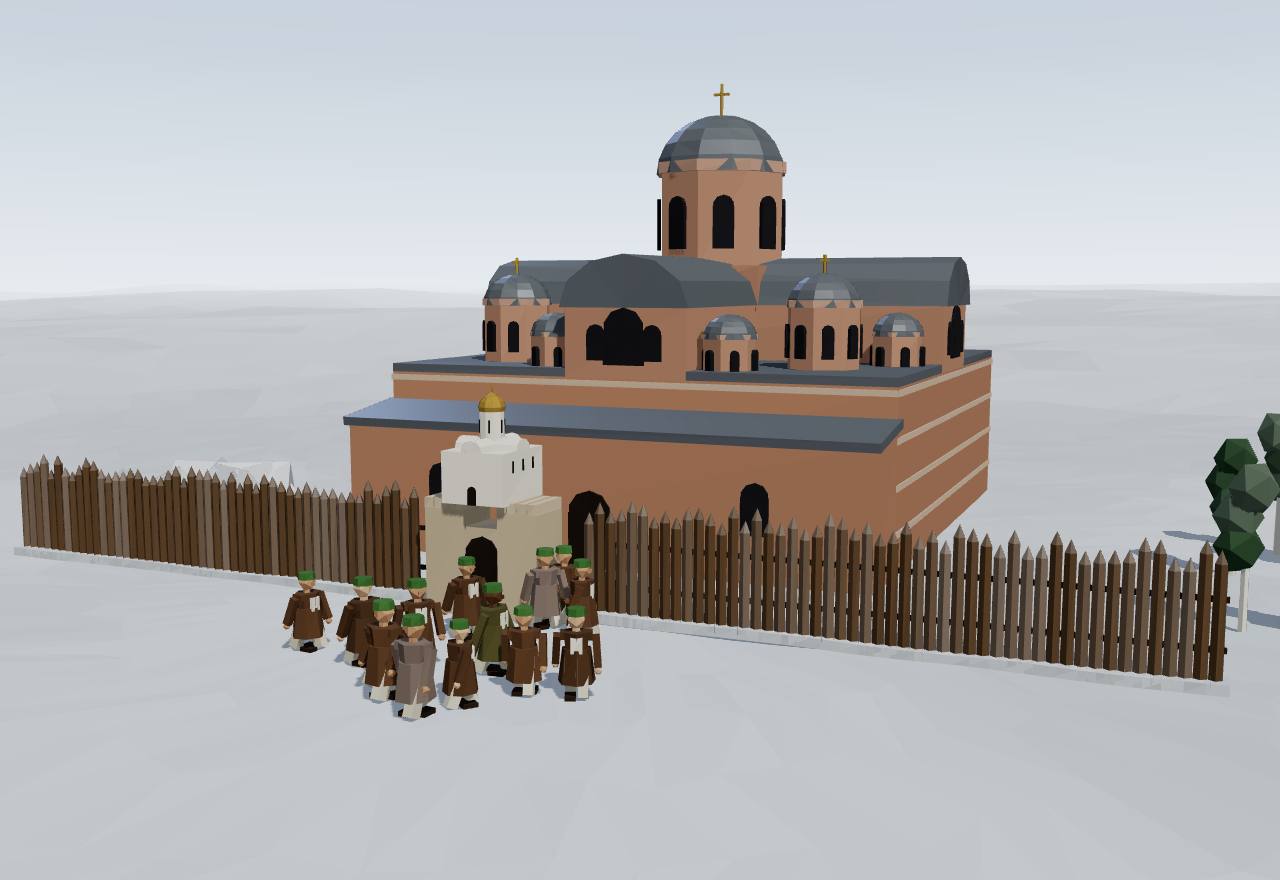
Kiev: St Sophia and the Golden Gates, and the baptism of 988
880 CE – 1132 CE
Kievan Rus
A family of princes, said to descend from a Varangian called in to rule, held Kiev and the towns along the river road from the Baltic to the Black Sea. They took tribute, made treaties with Constantinople, and in 988 took its faith. Seniority among brothers decided who sat in Kiev; it rarely settled things for long.
Terms: Kievan Rus and Novgorod: Kievan Rus
- varyag (Varangian)варѧгъ the chronicle's word for the men from over the sea; Romanchuk prints the Old Russian form and argues it should not be equated with “Scandinavian” 7,1
- grivna (pl. grivny)гривенъ a unit of silver used to count tribute and fines; printed here as the Pravda's genitive plural, “40 гривенъ” 8,1
- viraвира the fine for a killing, paid to the prince; the Expanded Pravda's word 9
- smerdсмердъ a peasant under the prince; the Short Pravda prices his life at 5 grivny, a prince's steward's at 80 8
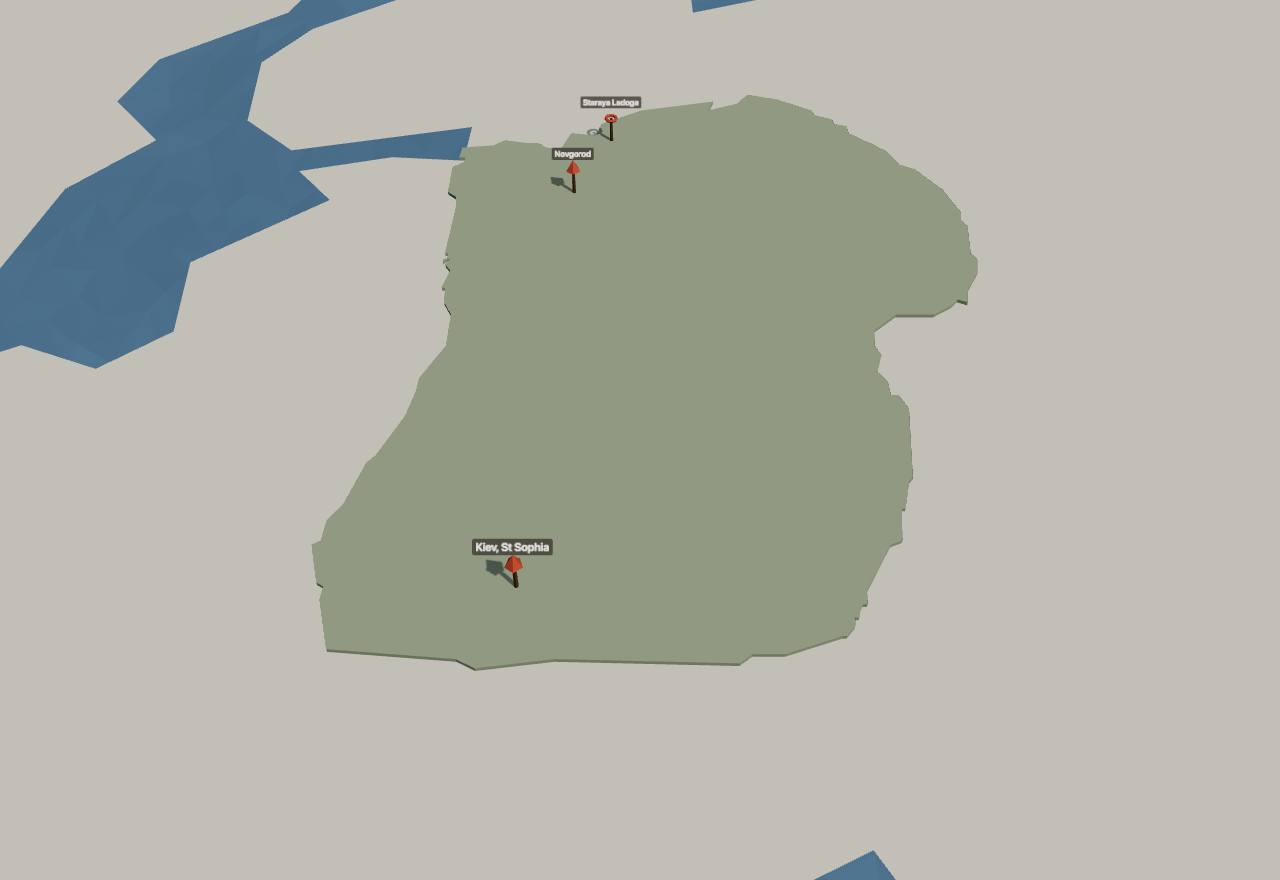
Kievan Rus', 900–1100 (Cliopatria)
Places: 3 cited sites over Cliopatria (CC BY 4.0) territories, drawn flat and low. Staraya Ladoga · Novgorod · Kiev, St Sophia 17,10
The Primary Chronicle, finished in Kiev in the early twelfth century, tells that the tribes of the north drove the Varangians out, fell to fighting (“tribe rose against tribe”) and sent overseas to “the Varangian Russes” with the message: “Our whole land is great and rich, but there is no order in it. Come to rule and reign over us.” Rurik settled in Novgorod. Its translator Samuel Cross allows “some conceivable doubt” whether Rurik and his brothers were real people. 1 Consensus Texts
The chronicle's geography opens with the river road: “a trade-route connected the Varangians with the Greeks”, up the Dnieper, by a portage to the Lovat, across lake Ilmen, down the Volkhov into lake Nevo and out to “the Varangian Sea”. Novgorod stands at its northern lakes, Kiev on the Dnieper. 1 Consensus Texts
Under the years 880–882 the chronicle has Oleg, Rurik's kinsman, take Kiev and declare “that it should be the mother of Russian cities”; he ordered Novgorod to pay the Varangians 300 grivny a year “for the preservation of peace”, a tribute paid “until the death of Yaroslav”. 1 Consensus Texts
Treaties with Constantinople are the firmest early evidence. The envoys of 912 introduce themselves as “of the Rus nation: Karl, Ingjald, Farulf, Vermund…”, sent by “Oleg, Great Prince of Rus, and by all the glorious boyars under his sway”; pagan Rus swore by their weapons and by Perun. Cross: Oleg and Igor are “soundly attested, presumably with dates, by the treaties”. 1 Consensus Texts
Vladimir's envoys reported of the Greek liturgy: “we knew not whether we were in heaven or on earth”. In 988, the chronicle says, he took Kherson and demanded the sister of the emperors Basil and Constantine; Anna was sent, Vladimir was baptised at Kherson, the idol of Perun was thrown into the Dnieper, and the people of Kiev were led into the river to be baptised, “some … up to their necks, others to their breasts”. 1 Consensus Texts Read more: Byzantium, 641–1025
Under 1037 the chronicle credits Yaroslav with “the great citadel at Kiev, near which stand the Golden Gates”, the metropolitan church of St Sophia, and scribes who “translated from Greek into Slavic”. UNESCO's record calls the cathedral the work of “local builders and Byzantine masters”, “designed to rival Hagia Sophia in Constantinople”. In 1051 Yaroslav, “after assembling the bishops”, had Hilarion made metropolitan. 1,10 Consensus Texts Excavation
Yaroslav's testament (1054) left Kiev to his eldest son Izyaslav (“Heed him as ye have heeded me”), Chernigov to Svyatoslav, Pereyaslavl to Vsevolod, Vladimir to Igor and Smolensk to Vyacheslav, “commanding them not to violate one another's boundaries”. Janet Martin's survey treats the dynasty as constant but its divisions of territory as “in flux”, beginning with “the choice of a successor” after Vladimir. 1,11 Consensus Texts
The Russkaya Pravda's oldest article lets a kinsman avenge a killing, “and if there is no avenger, 40 grivny for the head”, whether the dead man was a Rus or a Slav (renderings ours). A later heading says Yaroslav's sons Izyaslav, Svyatoslav and Vsevolod met with their men and “abolished killing for a head”, ransoming with money instead. The fine was 80 grivny for a prince's steward and 5 for a smerd or a slave. 8,9 Seshat DB Consensus Texts
In 1068, beaten by the Polovtsians, “the men of Kiev … held an assembly on the market place” and asked the prince for arms and horses; then they freed the captive prince Vseslav and set him up in the palace, and Izyaslav fled to Poland. A year later another assembly sent word: “We did wrong in expelling our Prince”. Alexei Vovin sums up the early veche: townsmen invited or expelled princes, yet the sources show “no vote counting, and not even an idea of majority”. 1,12 Consensus Texts
At Lyubech in 1097 the princes agreed “let each of us guard his own domain”: Svyatopolk kept Kiev, his father's heritage, Vladimir Monomakh his father Vsevolod's, the sons of Svyatoslav theirs. Martin describes the branches settling round “their own secondary centers, which were transformed into their hereditary principalities”. 1,11 Consensus Texts
When Svyatopolk died in 1113, “the inhabitants of Kiev took council, and invited Vladimir to ascend the ancestral throne”, and meanwhile plundered the palace of “Putyata the Thousandman” and attacked the Jews (an entry from the Hypatian text). The Expanded Pravda keeps a statute Vladimir made with his retinue at Berestovo “after Svyatopolk”, on interest. 1,9 Consensus Texts
Novgorod paid Kiev. As its prince, the chronicle says, Yaroslav sent 2,000 grivny a year to Kiev and kept 1,000 for his men, until he stopped paying his father. In 1015–1016 the Novgorodians fought for him against Svyatopolk; the Novgorod chronicle's version has him hold “a Veche in the open air” and then pay “all the men of Novgorod ten each”. 1,3 Consensus Texts
Birch-bark letters show the law at work. In letter 246 (dated 1025–1050) Zhirovit threatens a debtor who swore on the cross nine years before; in letter 109 (1100–1120) Zhiznomir writes that Mikula bought a stolen slave woman in Pskov, “and for that the princess detained me” (R. Kovalev's translation, gramoty.ru). 13,14 Consensus Texts Excavation
Seshat's Kievan Rus entry notes that the annals mention 24 towns in the ninth and tenth centuries, 86 in the eleventh and 206 in the twelfth, and codes a formal legal code, courts and indigenous coins as present. Seshat DB Consensus Survey Texts
The emperor Constantine VII's handbook on governing the empire describes the Rus coming down the Dnieper to Constantinople in “monoxyla” (the chapter's word for their boats): at the rapids they led their slaves in chains overland “six miles” and, “partly dragging their monoxyla, partly portaging them on their shoulders”, carried the boats past. He gives most of the rapids two names, one of them Slavonic. 15 Consensus Texts
How power worked King · Heredity · Written law
How power worked
- Who rules
- King Consensus
Why?
- How chosen
- Heredity Debated
Why?
- Limits on power
- Written law Debated
Why?
- Scale
- Confederation Debated
Why?
- Claim to rule
- Kinship and descent Debated
Why?
- Who has a say
- A narrow elite Debated
Why?
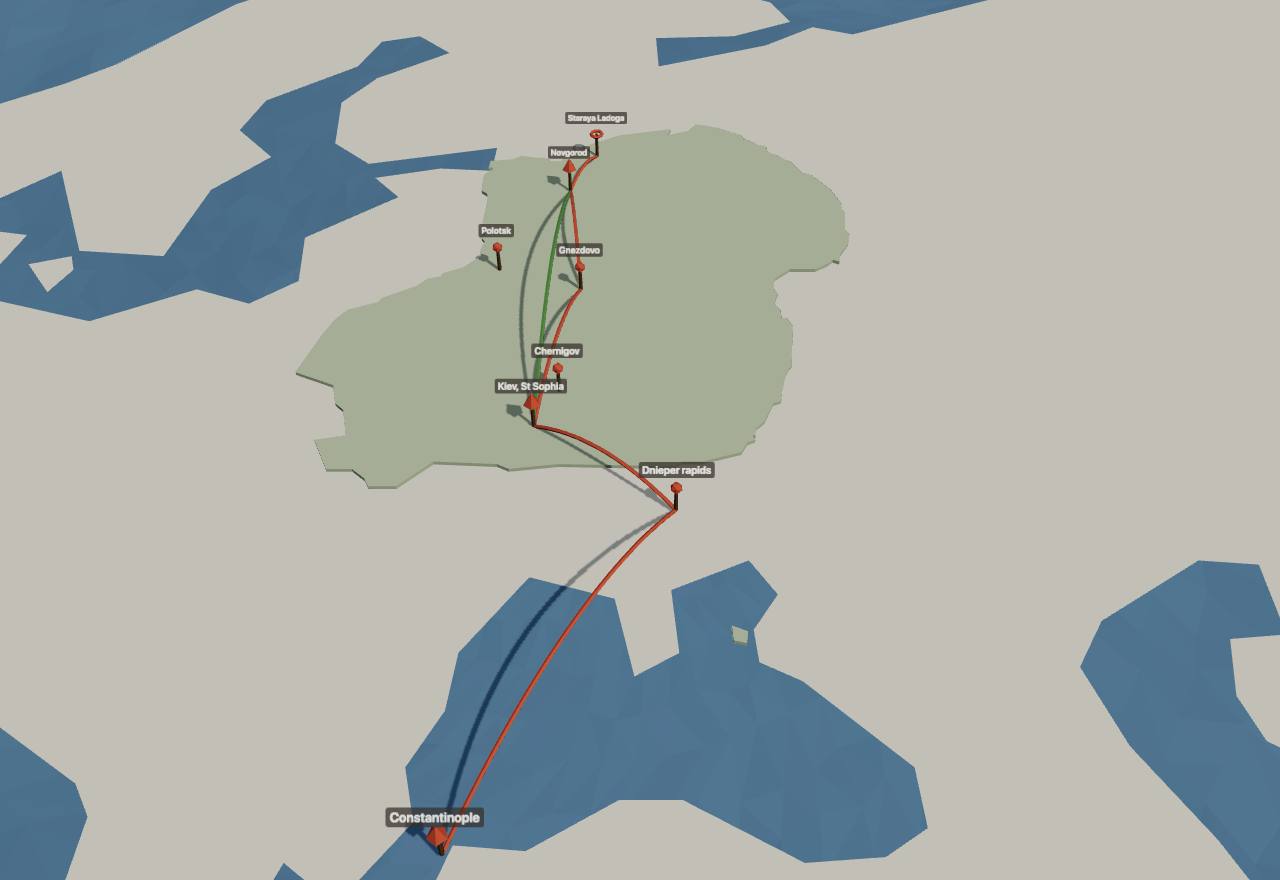
The road from the Varangians to the Greeks
Places: 8 cited sites and 6 cited links over Cliopatria (CC BY 4.0) territories, drawn flat and low. Staraya Ladoga · Novgorod · Gnezdovo · Polotsk · Chernigov · Kiev, St Sophia · Dnieper rapids · Constantinople 17,10,1,7,15
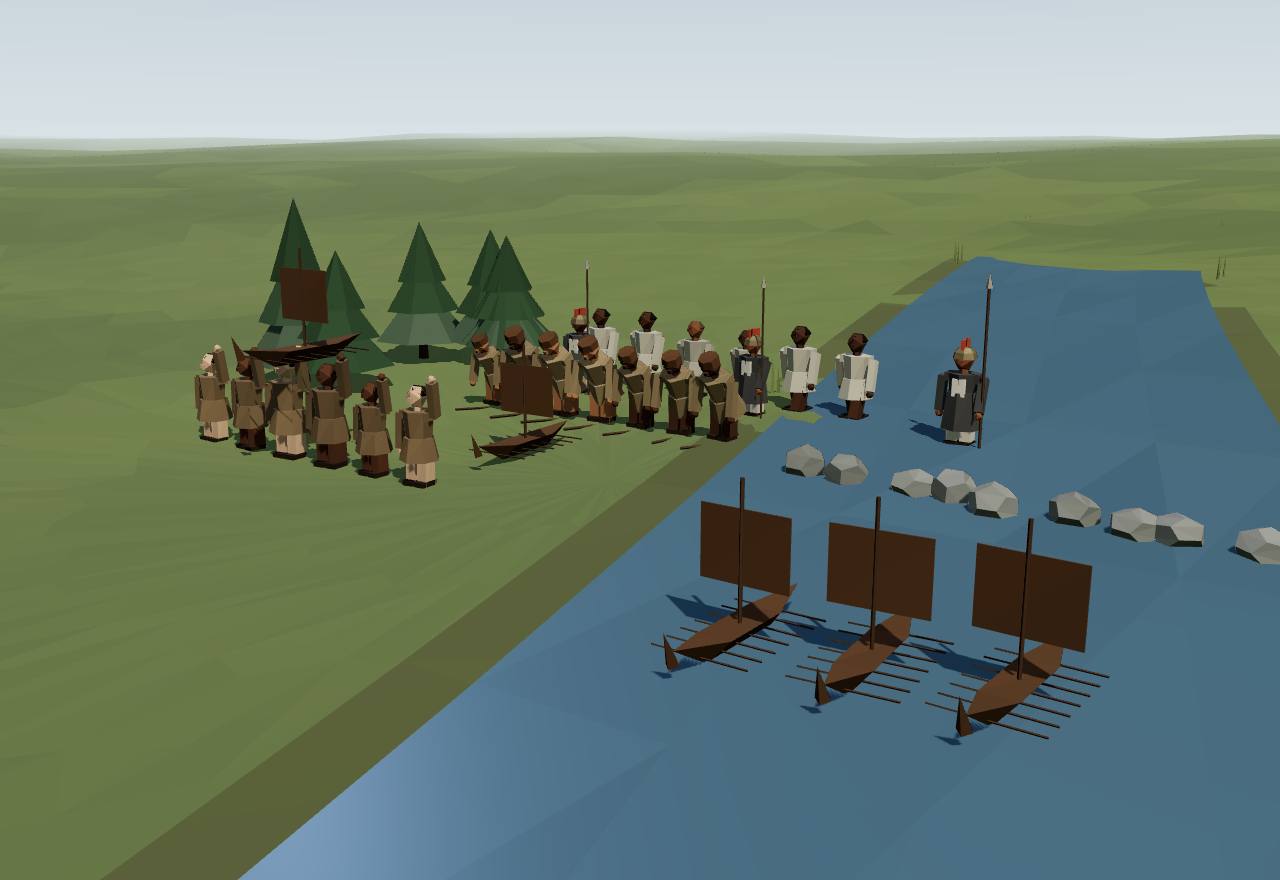
Past the Dnieper rapids
1132 CE – 1240 CE
The principalities
After 1132 Kiev was one prize among many. Branches of the dynasty held their own lands: in the north-east the princes of Vladimir built a white-stone capital and sent their sons to rule others, while in Novgorod the townsmen took princes in on terms and showed them the road when the terms were broken. The Mongol armies of 1237–1240 ended the old order.
Janet Martin's chapter on Kievan Rus's last century: Kiev “continued to be the seat of the senior Riurikid”, while each branch of the dynasty, as agreed at Lyubech in 1097, “settled around their own secondary centers, which were transformed into their hereditary principalities”. 11 Consensus Texts
The name “Novgorod the Great” first appears, Pavel Lukin found, not in a Novgorodian text but in the Hypatian Chronicle's Kievan account under 1141/2, and in north-eastern chronicle-writing under 1170, when Andrei Bogolyubsky's army besieged the city. 2 Consensus Texts
The towns multiplied as the land divided: Seshat's Kievan Rus entry counts 206 towns named in the twelfth-century annals, against 86 in the eleventh. Seshat's Novgorod Land puts the land's population at 400,000–500,000 around 1100 and its largest town at about 15,000. Seshat DB Consensus Survey Texts
Pskov's first bid to stand alone, in Vladimir Arakcheev's account, ran from 1228 to 1242, “when Pskov attempted to pursue an independent policy”; it ended with a temporary annexation by the Livonian Order. 18 Consensus Texts
Under 1224 the Novgorod chronicle notes that “unknown tribes came, whom no one exactly knows … they call them Tartars”, and tells of the princes' defeat on the Kalka. 3 Consensus Texts
In 1237–1238 the Mongols demanded of Ryazan “one-tenth of everything: of men and Knyazes and horses”, took Torzhok on 5 March 1238 and pushed on “right up to Ignati's cross, cutting down everybody like grass, to within 100 versts of Novgorod”. In Vladimir, UNESCO's record notes, most of the cathedral's twelfth-century frescoes “were destroyed by Mongols in 1238”. 3,19 Consensus Texts
Martin opens her chapter on the Golden Horde: “The Mongol onslaught marked the end of Kievan Rusˈ as a viable and integrated political entity.” Seshat's two codings for the region end at the same point, Novgorod Land in 1240 and Kievan Rus in 1242. 11,6 Consensus Texts Survey Read more: The Mongol conquests
Vladimir-Suzdal and princely rule1157 CE – 1240 CEVladimir
In the north-east the princes ruled as princes: they built in white stone, and they sent their sons, posadniks and bishops to towns that asked for none. Novgorod met them as rivals, besiegers and, more and more often, as the senior prince it had to deal with.
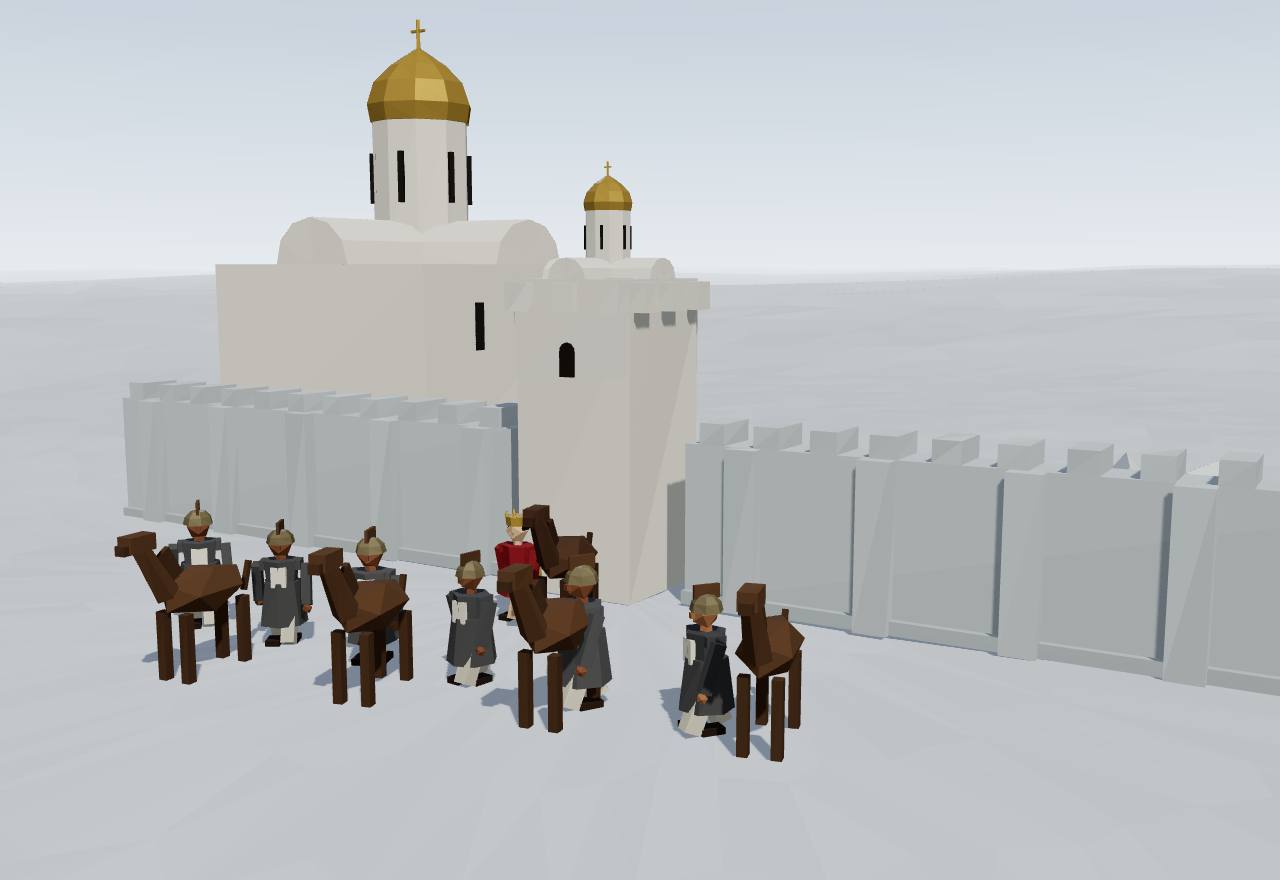
Vladimir: the Golden Gate and the Assumption
Vladimir's Golden Gate (1164), UNESCO's record says, “forms part of the 12th-century defences, now demolished. It is a cubic tower with a church … on top.” The Cathedral of the Assumption (1158) “was intended to be the religious centre of all Russia”, with three naves under “a delicate drum and a helmet dome”. 19 Consensus Excavation Texts
Andrei Bogolyubsky's army besieged Novgorod in 1170; it is under that year that the north-eastern (Laurentian) chronicle first calls the city “Novgorod the Great”. In 1171 the Novgorod chronicle has Andrei send “with his own men Zhiroslav to be Posadnik”, and in 1172 his son Yuri came to Novgorod as prince. 2,3 Consensus Texts
A birch-bark letter of 1160–1180 (no. 724) shows the rivalry at the edge of the world: Savva, collecting Novgorod's tribute in Yugra, writes to his brothers and retinue about the posadnik Zakhariya's obstacles and a quarrel with Andrei Bogolyubsky's men (the site's summary). 20 Consensus Texts Excavation
Vsevolod, Andrei's brother, governed Novgorod by sending sons. In 1199 his son Svyatoslav, sent “with the men of Novgorod”, put Mitrofan into the bishopric “until there should be a summons from the Metropolitan”; in 1205 Vsevolod told the Novgorodians “I give you my eldest son Kostyantin”. 3 Consensus Texts
Vsevolod's son Yaroslav was Novgorod's prince four times between 1215 and 1236; in 1228 the Novgorodians offered him terms (“On condition of our whole liberty and of all the charters of Yaroslav be thou our Knyaz. Or be thou to thyself, and we to ourselves”). Summoned “by the Tartar Tsar Baty” in 1242, he died “in the Horde of the Khan” in 1246. 3 Consensus Texts
Martin's chapter on princes and politics treats the dynasty as “a constant feature” whose internal divisions and relations with their princes “were in flux”, and examines “its evolving patterns of succession”; Vladimir's legacy, she writes, offered little guide to “the choice of a successor”. 11 Debated Texts
The Mongols took Vladimir's land first. UNESCO's record of the white monuments notes the destruction of the Assumption's frescoes in 1238; the cathedral was painted again in 1408 by Andrei Rublev and Daniil Chernii. 19 Consensus Texts Excavation
How power worked King · Heredity · Territorial state · 2 unknown
How power worked
- Who rules
- King Consensus
Why?
- How chosen
- Heredity Debated
Why?
- Limits on power
- Unknown
Why?
No source read for this page describes a check on the Vladimir princes inside their own land.
- Scale
- Territorial state Debated
Why?
- Claim to rule
- Kinship and descent Debated
Why?
- Who has a say
- Unknown
Why?
The sources read describe the princes, their sons and their men; none says who else had a say in Vladimir.
Novgorod: the veche and its princes1136 CE – 1240 CEYaroslav's Court, Novgorod
In 1136 the Novgorodians shut their prince in the bishop's court, listed his faults and sent him away. From then on a prince sat in Novgorod at the town's invitation, kissed the cross on its liberties and could be shown the road; the assembly met at Yaroslav's Court and at St Sophia, and gave and took away the office of posadnik.
Terms: Kievan Rus and Novgorod: The principalities, Novgorod: the veche and its princes
- vecheвече the town assembly (the translators of 1914 gloss it “the popular assembly”); what it was is the page's main debate 2,3
- posadnikпосадник first a prince's lieutenant “placed” in a town; in Novgorod and Pskov an office the town gave and took away 2,12
- knyaz prince; the 1914 translation keeps the word throughout (“Knyaz, i.e. Prince”) 3
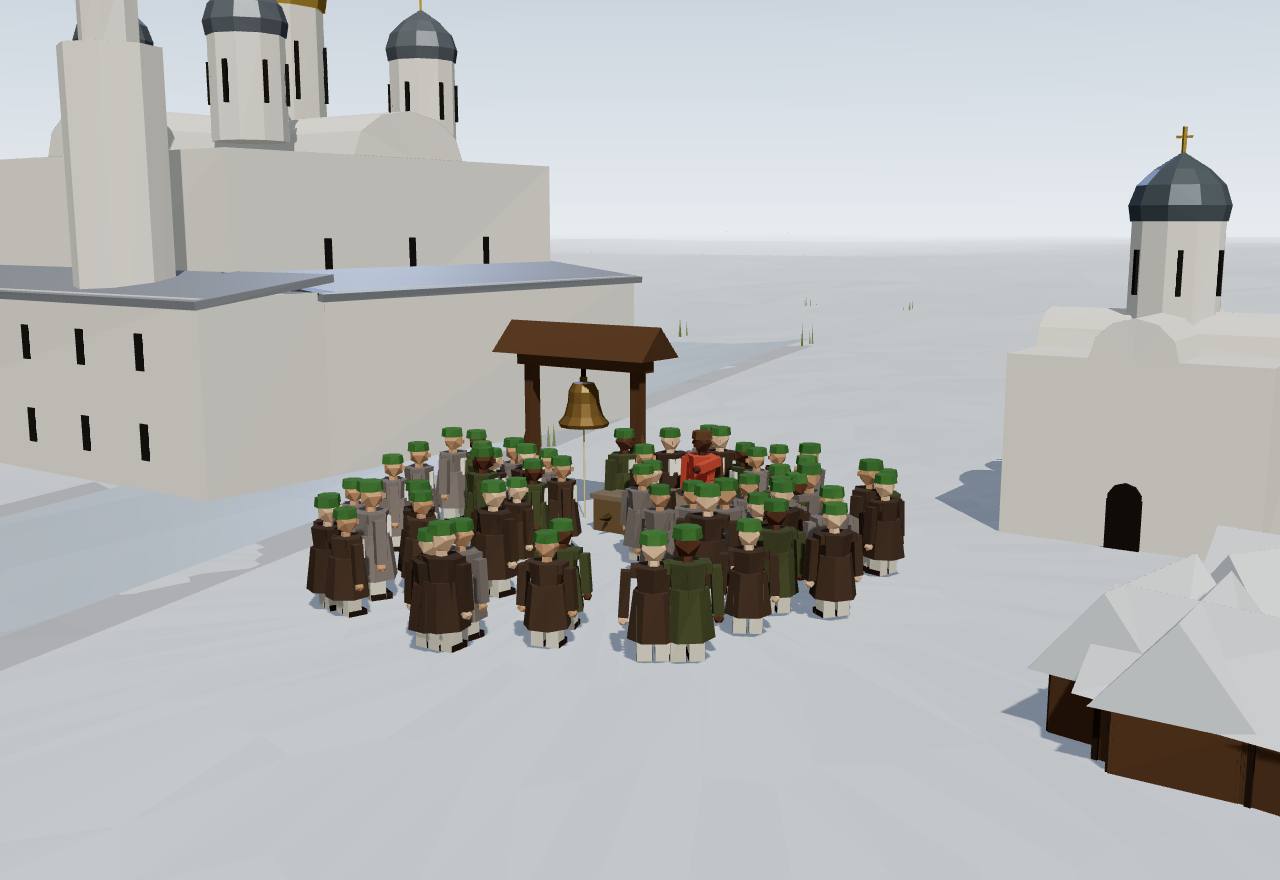
Novgorod: the veche at Yaroslav's Court
1136: “The men of Novgorod summoned the men of Pleskov and of Ladoga and took counsel how to expel their Knyaz Vsevolod”. They shut him in the bishop's court with his family on 28 May, “thirty men daily” on guard, and let him go on 15 July, naming his faults: “He has no care for the serfs”, he had wanted to sit in Pereyaslavl, and he had ridden away from the troops in battle. 3 Consensus Texts
Of the 38 princes' tenures that the chronicle has beginning between 1136 and 1240 (the strip at the end of this phase), 21 began with an invitation from the town and 19 ended with the prince expelled, shown the road or taken away; 11 princes left of their own accord or fled. Several came back: Yaroslav Vladimirovich was sent for three times, Yaroslav Vsevolodovich held the throne four times. 3 Consensus Texts
In 1196, by the chronicle's account, “all the Knyazes set Novgorod at liberty: where it pleased them, there they might take to themselves a Knyaz”; the Novgorodians at once “showed Yaroslav the road out of Novgorod, and drove him out”. 3 Consensus Texts
Princes swore to terms. In 1229 Mikhail of Chernigov “kissed the Cross on the whole liberty of Novgorod and on all the charters of Yaroslav”; in 1230 Yaroslav was sent for “with [reservation of] all the liberties of Novgorod” and the town “made a Veche and kissed [the ikon]”. 3 Consensus Texts
The town gave and took away the posadnik's office: “they took away the Posadnik-ship from Petrila and gave it to Ivanko Pavlovits” (1134). When Prince Svyatoslav tried in 1218 to remove Tverdislav, the posadnik answered “you, brethren, are free to choose Posadnik and Knyaz”, and the Novgorodians replied “this is our Posadnik, and we will not give in to this”. 3 Consensus Texts
Veches met in Yaroslav's Court (1214, 1215, 1218, 1228, 1230) and at St Sophia across the river. In 1218 the two sides rang the bells at St Nicholas and at the Forty Saints all night, raised the bridge, and “there were Veches all through the week”; in 1230 they “killed Volos Blutkinits at the Veche”. 3 Consensus Texts
Where the veche stood is less certain than the chronicle's phrase suggests. Oleg Khoruzhenko notes that it is “unclear” when and why the surviving building at Yaroslav's Court came to be linked with the veche, and quotes Tikhomirov: work in 1948–1950 showed “no grounds” for dating it to Yaroslav's time or even to the veche period (translations ours). 21 Debated Texts Excavation
Novgorod's streets were paved with logs, renewed layer on layer, and the birch-bark letters lie between them: Zaliznyak dates a letter found on a pavement between two well-dated layers to 10–15 years, most to 20–50. The first dig, in the Nerev end north of the kremlin (1951–62), cleared the old Velikaya, Kholopya and Kozmodemyanskaya streets and yielded 398 letters (translations ours). 5 Consensus Excavation Dating Texts
The letters were scratched with a stylus (only two of the corpus are in ink), most often on the bark's inner side; most whole letters are under 20 words, and “the vast majority” are private letters about household, family, money and trade. Some name the town's officers: no. 724 (1160–1180) tells of obstacles put up by the posadnik Zakhariya (translations ours). 5,20 Consensus Excavation Texts
The assembly also judged its own: in 1209 “the men of Novgorod held a Veche over Posadnik Dmitri”, and in 1228, the year they drove out the bishop Arseni, “they went from the Veche in arms against the Tysyatski”. 3 Consensus Texts
How power worked King · Acclamation · Assembly or tribune veto
How power worked
- Who rules
- King Debated
Why?
- How chosen
- Acclamation Debated
Why?
- Limits on power
- Assembly or tribune veto Debated
Why?
- Scale
- City-state Consensus
Why?
- Claim to rule
- Law Debated
Why?
- Who has a say
- A narrow elite Debated
Why?
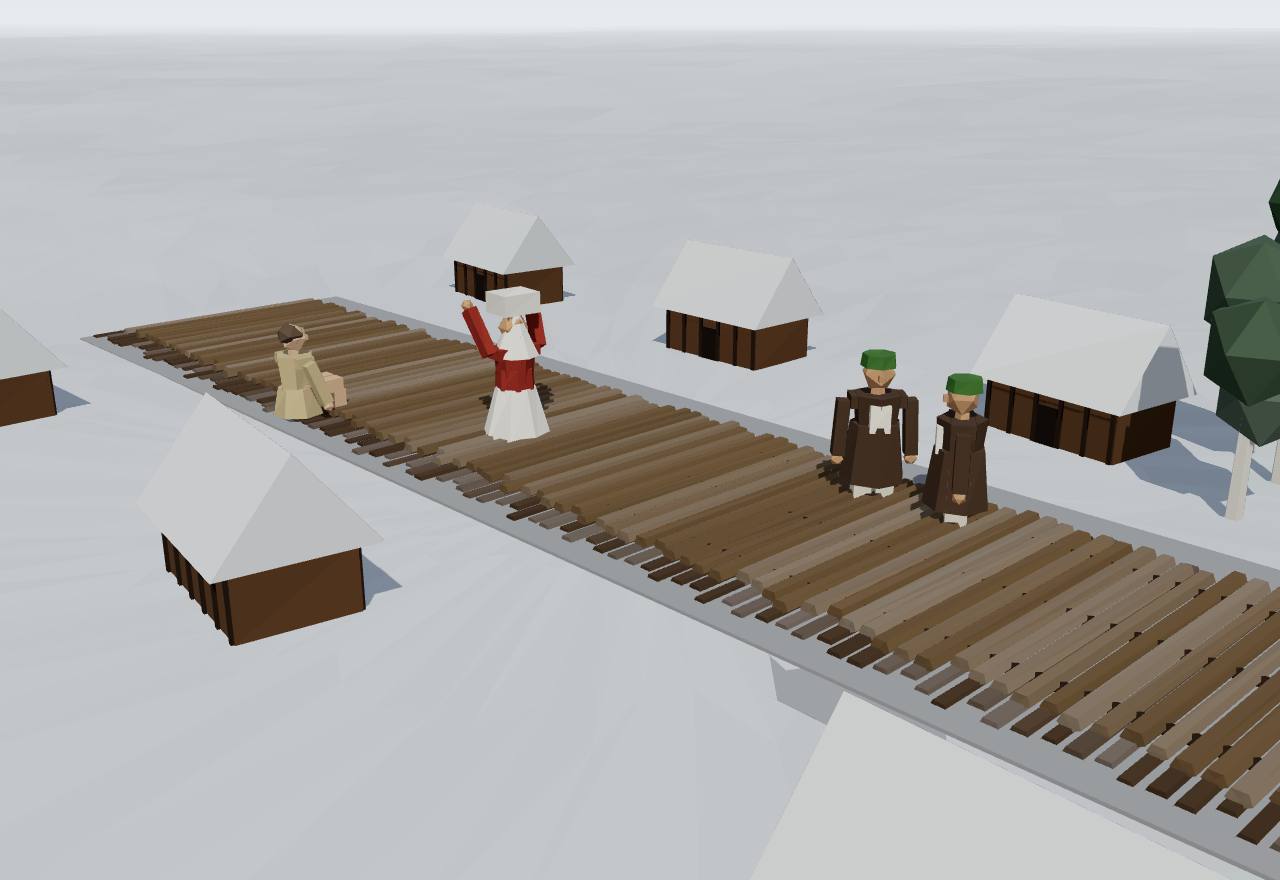
Novgorod: a log-paved street
Princes invited and shown the road
Data: the Novgorod chronicle (Michell and Forbes 1914), row by row
53 tenures from 1117 to 1346, as the Novgorod chronicle tells them. Of the 38 that began between 1136 and 1240, 21 began with Novgorod sending for the prince and 13 with a father or grand prince setting him there; 19 ended with the prince expelled, “shown the road” or taken away, and 11 with the prince leaving or fleeing. “Deposed” on the strip means any of these. Names are normalised from the 1914 translation; the years are the chronicle's. 3
- Invited by Novgorod
- The men of Novgorod sent for him, “fetched him in”, received him or asked a senior prince for him by name.
- Sent by a father or grand prince
- His father or the grand prince set him on the throne, or gave him when Novgorod asked for a prince.
- Princes' agreement
- Princes settled Novgorod between themselves (1161: Rostislav “agreed with Andrei about Novgorod”).
- Came (chooser unstated)
- The chronicle says only that he came, with no word on who chose him.
53 accessions: 30 invited by novgorod, 16 sent by a father or grand prince, 1 princes' agreement, 6 came (chooser unstated); median reign 2 years. Ended: 24 deposed, 14 abdicated, 15 not known.
Marks at the end of a bar: ○ died in office · × killed · ▽ deposed · | abdicated · □ conquered
Show the table: Princes of Novgorod, 1117–1346 (the Novgorod chronicle)
| Ruler | Years | Came to power | Reign ended | Source |
|---|---|---|---|---|
| Vsevolod Mstislavich | 1117 CE – 1136 CE | Sent by a father or grand prince | deposed (p. 9: Mstislav “put his son, Vsevolod, on the throne at Novgorod”; 1132 driven out and brought back (p. 12); 1136 shut in the bishop's court for two months, “thirty men daily” guarding him, then let out of the town (p. 14)) | 3 |
| Svyatoslav Olgovich | 1136 CE – 1138 CE | Came (chooser unstated) | deposed (pp. 14–15: came from Chernigov on 19 July; 1138 “they drove Svyatoslav … out of Novgorod, on April 17”) | 3 |
| Svyatoslav Olgovich | 1139 CE – 1141 CE | Invited by Novgorod | abdicated (pp. 16–17: they “sent to Kiev for Svyatoslav Olgovits, having given their oath”; 1141 he “fled secretly in the night”) | 3 |
| Rostislav Yurievich | 1141 CE – 1142 CE | Sent by a father or grand prince | deposed (p. 17: Yuri's son took the throne on 26 November after nine months without a prince; held in the bishop's court) | 3 |
| Svyatopolk Mstislavich | 1142 CE – 1148 CE | Invited by Novgorod | deposed (pp. 17, 19: “they did not wish for any other Knyaz than Svyatopolk; and he gave them Svyatopolk”; 1148 Izyaslav “took Svyatopolk away”) | 3 |
| Yaroslav Izyaslavich | 1148 CE – 1154 CE | Sent by a father or grand prince | deposed (pp. 19, 21: sent by his father; 1154 “drove out Knyaz Yaroslav on March 26”) | 3 |
| Rostislav Mstislavich | 1154 CE – 1154 CE | Invited by Novgorod | not known (p. 21: “fetched in Rostislav”; he left the same year) | 3 |
| Mstislav Yurievich | 1154 CE – 1157 CE | Invited by Novgorod | deposed (pp. 21–22: “fetched in Mstislav, son of Gyurgi”; 1157 “they rose against” him and he fled by night) | 3 |
| Svyatoslav Rostislavich | 1158 CE – 1160 CE | Sent by a father or grand prince | deposed (pp. 22–23: “he set his son, Svyatoslav, on the throne”; 1160 sent off to Ladoga) | 3 |
| Mstislav Rostislavich | 1160 CE – 1161 CE | Invited by Novgorod | deposed (p. 23: “fetched in Mstislav Rostislavits”; 1161 taken away when Rostislav and Andrei agreed) | 3 |
| Svyatoslav Rostislavich | 1161 CE – 1167 CE | Princes' agreement | deposed (pp. 23, 25: “fetched in Svyatoslav again with his full liberty”; 1167 “We do not want him”) | 3 |
| Roman Mstislavich | 1168 CE – 1170 CE | Invited by Novgorod | deposed (pp. 26–27: the Novgorodians “were glad at [the fulfilment of] their wishes”; 1170 “showed Knyaz Roman the road”) | 3 |
| Rurik Rostislavich | 1170 CE – 1171 CE | Came (chooser unstated) | abdicated (p. 27: “Rurik went out from Novgorod, and the men of Novgorod sent to Ondrei for a Knyaz”) | 3 |
| Yuri Andreyevich | 1172 CE – 1175 CE | Sent by a father or grand prince | deposed (pp. 27–28: sent by Andrei; 1175 “They led out Knyaz Gyurgi Andreyevits from Novgorod”) | 3 |
| Roman Rostislavich | 1178 CE – 1179 CE | Invited by Novgorod | abdicated (p. 30: “sent for Roman to Smolensk”; 1179 “Roman went from Novgorod to Smolensk”) | 3 |
| Mstislav Rostislavich | 1179 CE – 1180 CE | Invited by Novgorod | not known (p. 30: “sent into Russia for his brother Mstislav”) | 3 |
| Vladimir Svyatoslavich | 1180 CE – 1181 CE | Invited by Novgorod | deposed (pp. 30–31: set on the throne on 17 August at the town's request; 1181 “they showed the road to Volodimir Svyatoslavits”) | 3 |
| Yaroslav Vladimirovich | 1182 CE – 1184 CE | Invited by Novgorod | deposed (pp. 31–32: they “applied to Vsevolod for a Knyaz, and he gave them his brother-in-law”; 1184 the Novgorodians, “indignant with him”, asked Smolensk for another prince) | 3 |
| Mstislav Davidovich | 1184 CE – 1187 CE | Invited by Novgorod | deposed (pp. 32–33: asked of his father David of Smolensk; 1187 “drove out Mstislav Davidovits”) | 3 |
| Yaroslav Vladimirovich | 1187 CE – 1196 CE | Invited by Novgorod | deposed (pp. 33, 39: sent for again; 1196 they “showed Yaroslav the road out of Novgorod, and drove him out”) | 3 |
| Yaropolk Yaroslavich | 1197 CE – 1197 CE | Came (chooser unstated) | deposed (p. 40: from Chernigov; after six months “they drove him out of Novgorod, and sent again for Yaroslav”) | 3 |
| Yaroslav Vladimirovich | 1197 CE – 1199 CE | Invited by Novgorod | deposed (pp. 40–41: sent for a third time; 1199 Vsevolod “fetched Yaroslav out of Novgorod”) | 3 |
| Svyatoslav Vsevolodovich | 1199 CE – 1205 CE | Sent by a father or grand prince | not known (pp. 41–42: Vsevolod's son, set “on the throne in St. Sophia” on 1 January) | 3 |
| Konstantin Vsevolodovich | 1205 CE – 1209 CE | Sent by a father or grand prince | not known (pp. 48–49: Vsevolod: “I give you my eldest son Kostyantin”; later taken away) | 3 |
| Svyatoslav Vsevolodovich | 1209 CE – 1210 CE | Sent by a father or grand prince | deposed (pp. 50–51: sent by Vsevolod on Sexagesima Sunday; 1210 set “with his men in the Vladyka's court” under guard) | 3 |
| Mstislav Mstislavich | 1210 CE – 1215 CE | Invited by Novgorod | abdicated (pp. 51, 53: “Come, Knyaz, to the throne”; 1215 he left, saying “you are free to choose your Knyaz”) | 3 |
| Yaroslav Vsevolodovich | 1215 CE – 1216 CE | Invited by Novgorod | not known (pp. 53–54: sent for; withdrew to Torzhok, and war followed) | 3 |
| Mstislav Mstislavich | 1216 CE – 1218 CE | Invited by Novgorod | abdicated (pp. 54, 59: “Come to thy patrimony, to St. Sophia”; 1218 left for Galich) | 3 |
| Svyatoslav Mstislavich | 1218 CE – 1219 CE | Invited by Novgorod | not known (pp. 59, 61: “sent to Smolensk for Svyatoslav”; replaced at his father's order) | 3 |
| Vsevolod Mstislavich | 1219 CE – 1221 CE | Sent by a father or grand prince | deposed (pp. 61–62: “Receive to yourselves Knyaz Vsevolod … the men of Novgorod did his will”; 1221 “We do not want thee, go whither thou wilt”) | 3 |
| Vsevolod Yurievich | 1222 CE – 1222 CE | Invited by Novgorod | abdicated (p. 63: asked of Yuri, with a “guarantee of all the liberties of Novgorod”; “fled by night secretly”) | 3 |
| Yaroslav Vsevolodovich | 1223 CE – 1224 CE | Sent by a father or grand prince | abdicated (p. 63: given by Yuri; “he went according to his will”) | 3 |
| Vsevolod Yurievich | 1224 CE – 1224 CE | Sent by a father or grand prince | abdicated (p. 67: given by Yuri; went “a second time from Novgorod secretly by night”) | 3 |
| Mikhail Vsevolodovich of Chernigov | 1225 CE – 1225 CE | Sent by a father or grand prince | abdicated (pp. 67–68: “I do not want to be Knyaz amongst you”; escorted out with honour) | 3 |
| Yaroslav Vsevolodovich | 1226 CE – 1228 CE | Invited by Novgorod | abdicated (pp. 68, 72: requested; 1228 his sons fled (“we did not drive them out”)) | 3 |
| Mikhail Vsevolodovich of Chernigov | 1229 CE – 1229 CE | Invited by Novgorod | not known (p. 72: “kissed the Cross on the whole liberty of Novgorod and on all the charters of Yaroslav”; left his son Rostislav) | 3 |
| Rostislav Mikhailovich | 1229 CE – 1230 CE | Sent by a father or grand prince | deposed (p. 75: “showed young Knyaz Rostislav the road”) | 3 |
| Yaroslav Vsevolodovich | 1230 CE – 1236 CE | Invited by Novgorod | not known (pp. 75, 81: sent for “with [reservation of] all the liberties of Novgorod”; 1236 left his son Alexander) | 3 |
| Alexander Yaroslavich | 1236 CE – 1240 CE | Sent by a father or grand prince | abdicated (pp. 81, 86: set by his father; 1240 left “having quarelled with the men of Novgorod”) | 3 |
| Alexander Yaroslavich | 1241 CE | Invited by Novgorod | not known (p. 86: “came to Novgorod, and the men of Novgorod rejoiced”) | 3 |
| Yaroslav Yaroslavich | 1255 CE – 1255 CE | Invited by Novgorod | deposed (pp. 94–95: “led out Yaroslav Yaroslavich from Pleskov and set him on the throne”; Alexander came in arms and took his seat) | 3 |
| Vasily Alexandrovich | 1256 CE – 1257 CE | Sent by a father or grand prince | abdicated (pp. 95–96: set by his father; fled in 1257) | 3 |
| Dmitry Alexandrovich | 1259 CE – 1264 CE | Sent by a father or grand prince | deposed (pp. 97, 99: set by his father; 1264 “drove out Knyaz Dmitri Alexandrovich, because the Knyaz was still young”) | 3 |
| Yaroslav Yaroslavich | 1265 CE – 1270 CE | Invited by Novgorod | deposed (pp. 99, 104: set on the throne on 27 January; 1270 “Knyaz, go away, we do not want thee”, later taken back) | 3 |
| Dmitry Alexandrovich | 1272 CE – 1272 CE | Invited by Novgorod | abdicated (p. 106: “declared for Dmitri, and sent for him”; he withdrew) | 3 |
| Dmitry Alexandrovich | 1276 CE – 1282 CE | Invited by Novgorod | deposed (pp. 107–108: set on the throne on All Saints' Sunday; 1282 “the men of Novgorod showed him the way”) | 3 |
| Andrei Alexandrovich | 1282 CE – 1284 CE | Invited by Novgorod | abdicated (p. 109: set “honourably on the throne”; 1284 “he ceded the Novgorod throne to his brother Dmitri”) | 3 |
| Andrei Alexandrovich | 1293 CE | Invited by Novgorod | not known (p. 112: “took his seat on the throne on Quinquagesima Sunday”) | 3 |
| Mikhail Yaroslavich of Tver | 1308 CE | Came (chooser unstated) | not known (p. 116: “took his seat on the throne in Novgorod”) | 3 |
| Yuri Danilovich of Moscow | 1314 CE | Invited by Novgorod | not known (p. 119: “sent to Moscow for Knyaz Yuri, with reservation of all the rights of Novgorod”) | 3 |
| Ivan Danilovich of Moscow | 1329 CE | Came (chooser unstated) | not known (p. 125: “came to the throne in Novgorod on March 26”) | 3 |
| Narimont (Gleb) of Lithuania | 1333 CE – 1338 CE | Invited by Novgorod | not known (p. 129: they “gave him Ladoga, and Orekhov … for patrimony”) | 3 |
| Simeon Ivanovich of Moscow | 1346 CE | Came (chooser unstated) | not known (p. 140: “came to Novgorod to the throne”) | 3 |
1240 CE – 1478 CE
Novgorod, Pskov and Moscow
After the Mongol conquest the princes of north-eastern Rus held their thrones by the khan's patent and collected his tribute; the veche vanished from most towns. Novgorod and Pskov kept theirs, with elected magistrates and, in Novgorod, an archbishop drawn by lot. Moscow's princes rose by serving the Horde, and in 1478 Ivan III annexed Novgorod.
Princes now travelled to the khan. “Knyaz Yaroslav Vsevolodich summoned by the Tartar Tsar Baty, went to him to the Horde” (1242); he died there in 1246, and his son Alexander “went to the Tartars” and returned from the Horde in 1250. Martin: the Riurikid princes “acknowledged Golden Horde suzerainty”, paid tribute, and “the khans issued patents confirming each prince's right to rule”. 3,11 Consensus Texts Read more: The Golden Horde
In 1257 “the Tartars desired the tamga and tithe on Novgorod”; in 1259 the town was told “If you do not number yourselves for tribute there is already a force in the Low Country”. “The greater men bade the lesser be counted for tribute”, and “the accursed ones began to ride through the streets, writing down the Christian houses”. 3 Consensus Texts
Vovin: “After the Mongol invasion the veche disappears from the political life of most Russian cities with the two key exceptions of Novgorod and Pskov”, which kept theirs until Moscow absorbed them, Novgorod in 1478 and Pskov in 1510. 12 Consensus Texts
The Horde had its own officers in the land: the chronicle names, under 1269, “the great Baskak of Vladimir, named Amragan”. Martin writes that the Mongols later shifted such functions “from their own baskaki to the Riurikid princes”. 3,11 Consensus Texts
Lithuania was the other pole. In 1440, the chronicle says, “all the Lithuanian and Russian towns chose Kasimir, Yagoilo's son, for their Veliki Knyaz”; in 1444 Casimir asked Novgorod to “Receive my lieutenants into the Gorodishche; I shall defend you”, “And the men of Novgorod did not agree to this.” 3 Consensus Texts
The Novgorod chronicle thins out at the end. Its editors note that the Synodal text ends with 1352, the next text with 1446, and that the entry for 1471 was “edited in the sixteenth century, under Ivan the Terrible”, a Muscovite account; it has nothing for 1478. 3 Consensus Texts
Lord Novgorod the GreatNovgorod Kremlin and St Sophia
In the fourteenth and fifteenth centuries Novgorod spoke of itself as a lord: “Lord Novgorod the Great” sealed treaties with the posadnik and the thousand-man. Rival veches met on either side of the Volkhov and fought on the bridge between them, and from 1359 the head of its church was drawn by lot from the altar of St Sophia.
Terms: Kievan Rus and Novgorod: Novgorod, Pskov and Moscow, Lord Novgorod the Great
- Gospodin Velikii NovgorodГосподин Великий Новгород “Lord Novgorod the Great”, in Lukin's reading the town's political people, not its territory; in the 1392 Niebur peace 2
- tysiatskiiтысяцкий the “thousand-man”, at first the prince's commander of the town militia, later one of its highest officers 2 Seshat DB
- boyarstvoбоярство the boyars as a class; Yanin, as Lukin reports him, equated “Novgorod the Great” with them 2
- vladyka “lord”: the chronicle's title for the bishop, later archbishop, of Novgorod 3
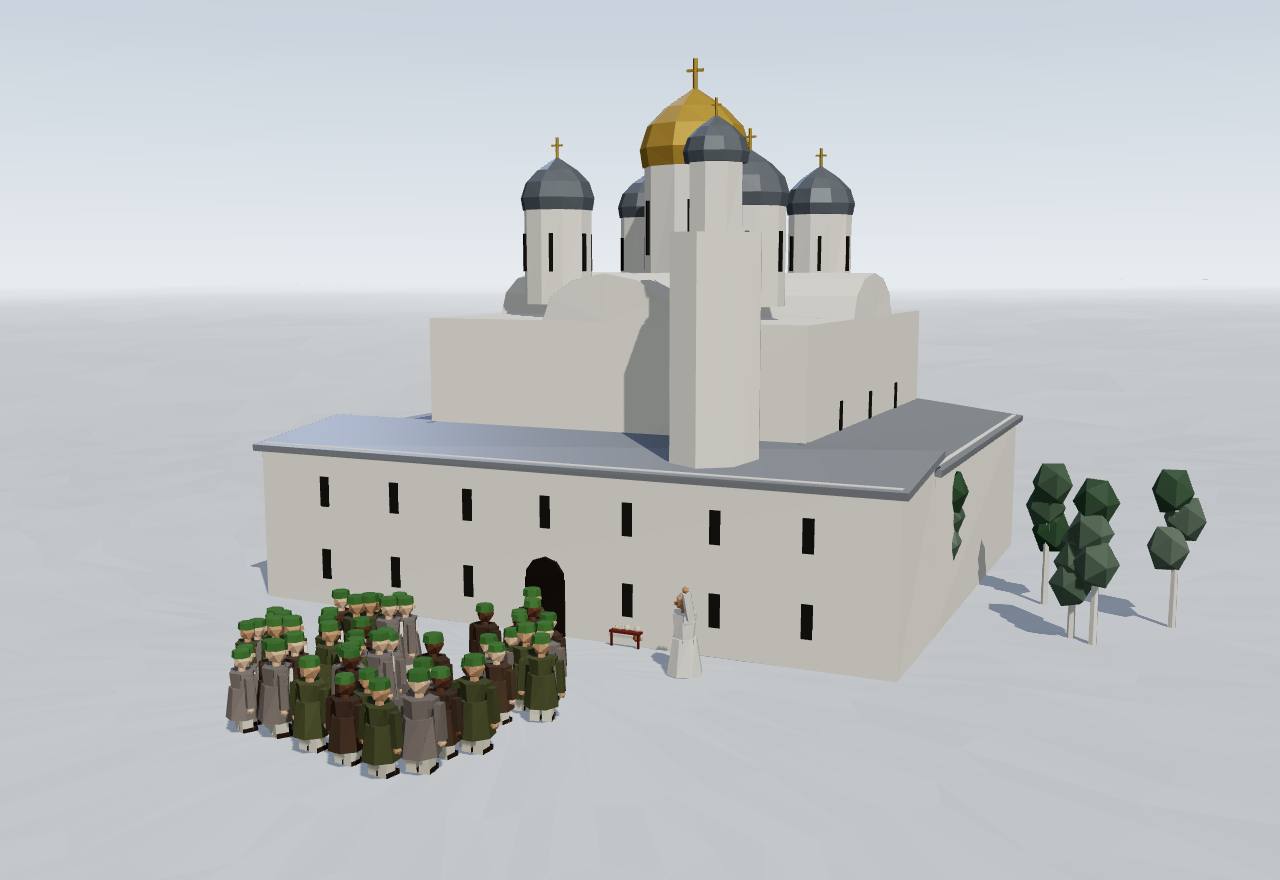
St Sophia, Novgorod: three lots on the altar
1359: rather than choose a man themselves, the Novgorodians “decided to take advice from God”, named three (the monk Olexei, the igumen Sava and the priest Ivan) and “placed three lots on the altar in St. Sophia”, declaring that God would leave the lot of the man He wanted on His altar. Olexei's lot stayed. 3 Consensus Texts
The chronicle records seven elections by lot: 1229 (three names on “the holy table”, the boy prince Rostislav drew), 1359, 1388, 1415, 1421, 1424 and 1429. In 1388, 1415 and 1421 a priest brought the losing lots out to the veche one by one. Before 1229 the bishop had been chosen by the townsmen (1156), put in by a prince (1199) or installed by the metropolitan (1165). 3 Consensus Texts
The lot chose; the metropolitan consecrated. Spiridon was set in the bishop's court in 1229 “until he should go to Kiev to be appointed”; Samson, drawn in 1415, was confirmed by the metropolitan Foti and “named Simeon”; Evfimi, raised by lot in 1424, “was appointed Vladyka by the Metropolitan Foti in Moscow”. 3 Consensus Texts
In 1342 one party “summoned a Vladyka Veche at St. Sophia, while … another in Yaroslav's Court”, “this side for itself, and that side for itself”; in 1384 “both were in arms as for battle, and they dismantled the great bridge”. In 1418 the archbishop stopped a fight by blessing both sides “on reaching the middle of the bridge”. 3 Consensus Texts
Lukin finds “Novgorod the Great” in Hanseatic documents from the 1330s, sixty years earlier than the usual view: envoys “who had come from the veche” told German merchants in 1337 that “Novgorod the Great has taken pity on you”. A charter of 1390 to Dorpat is sent by the grand prince's lieutenants, the posadnik, the tysiatskii “and from all Novgorod the Great” (translations ours). 2 Consensus Texts
In the Niebur peace with the Hanseatic towns (1392) “Lord Novgorod the Great” “looks into” the old charters and “commands” together with the posadnik and the tysiatskii; in the fifteenth century the formula grew to “lord sovereign Novgorod the Great”, comprising, Lukin argues, all the full citizens organised in the five ends and taking part in the veche (translations ours). 2 Debated Texts
1471: Ivan III marched “against Novgorod the Great because of its wrong doing and lapsing into Latinism”, the Muscovite account says; on 14 July the Novgorod army was beaten on the Shelon and Ivan had “the chief Posadniks” executed. V. A. Kuchkin's abstract: the Korostyn treaty of 11 August 1471 forbade Novgorod's dealings with Lithuanian princes and “placed local courts under the control of Ivan III”. 3,23 Consensus Texts
Gail Lenhoff and Janet Martin: Moscow campaigned against Novgorod in 1456, 1471 and “finally 1478”; the last was followed by “the introduction of Muscovite governors into Novgorod, the wholesale eviction and resettlement of the local land-owning elite”. Khoruzhenko notes that the seal thought to have sealed the veche's decisions was in use until 1478. 24,21,25 Consensus Texts
How power worked Elected magistrates · Mixed · Assembly or tribune veto
How power worked
- Who rules
- Elected magistrates Consensus
Why?
- How chosen
- Mixed Debated
Why?
- Limits on power
- Assembly or tribune veto Debated
Why?
- Scale
- City-state Consensus
Why?
- Claim to rule
- Law Debated
Why?
- Who has a say
- A narrow elite Debated
Why?
Three lots on the altar: choosing the archbishop
Model, not evidence: the draw is simulated; names, rules and results are the chronicle's
Three names were written and laid on the altar of St Sophia. From 1359 the lots were taken out one by one and the name left on the altar was taken as God's choice; in 1229, the first time, a boy prince drew one lot and the name drawn was chosen. Pick an election to see its candidates and the chronicle's words, then draw the lots again: each name has the same chance, and the chronicle's result is shown beside the simulated one. The lots of 1424 and 1429 are in the table below but cannot be drawn here: the chronicle names only the man chosen. 3
- Spiridon deacon at St George's
- Osaf Bishop of Vladimir in Volynia
- a Greek unnamed
“Let us cast three lots, whom God will give us. And having written out the names they laid them on the holy table and sent out the young Knyaz Rostislav … and Spiridon was drawn” (1229, p. 73)
- 3 names written and laid on the altar
- 1. Lot the young prince Rostislav draws one lot from the holy table; the name drawn is chosen (1229, p. 73) 3
Drawn by: the young prince Rostislav. The chronicle's result: Spiridon.
- Olexei monk and almoner
- Sava igumen of the Ontonov monastery
- Ivan priest of St Barbara's
“they placed three lots on the altar in St. Sophia, declaring: ‘Whomsoever God and St. Sophia … may desire, to have as servant at his altar, his lot will he leave on His altar.’” (1359, p. 147)
- 3 names written and laid on the altar
- 1. Lot The first lot is brought out from the altar in St Sophia; two names stay (1359, p. 147) 3
- 2. Lot The second lot is brought out; the name left on the altar is chosen 3
Drawn by: not named. The chronicle's result: Olexei.
- Ioan igumen of Khutin
- Parfeni monk
- Afanasi monk
“the men of Novgorod held a Veche at St. Sophia, and at the end of the service the arch-priest Ismaelo brought out the lot of Afanasi, then that of Parfeni” (1388, p. 162)
- 3 names written and laid on the altar
- 1. Lot The first lot is brought out from the altar in St Sophia; two names stay (1388, p. 162) 3
- 2. Lot The second lot is brought out; the name left on the altar is chosen 3
Drawn by: the archpriest Ismaelo. The chronicle's result: Ioan; brought out first Afanasi, then Parfeni.
- Samson monk at Khutin
- Mikhail igumen at Skovorodka
- Lev igumen at Kolmovo
“placed three lots with their names written on the altar … the old Archpriest Vasili brought out to the Veche, first Lev's lot, then Mikhail's, and Samson's remained on the altar” (1415, p. 183–184)
- 3 names written and laid on the altar
- 1. Lot The first lot is brought out from the altar in St Sophia; two names stay (1415, p. 183–184) 3
- 2. Lot The second lot is brought out; the name left on the altar is chosen 3
Drawn by: the old archpriest Vasili. The chronicle's result: Samson; brought out first Lev, then Mikhail.
- Feodosi of Klopsko
- Zakhari monk
- Arseni the archbishop's steward
“having held a Veche at St. Sophia placed three written lots on the altar in St. Sophia … the priest Trifan brought out first the lot of Arseni, then that of Zakhari, and Feodosi's lot remained” (1421, p. 190–191)
- 3 names written and laid on the altar
- 1. Lot The first lot is brought out from the altar in St Sophia; two names stay (1421, p. 190–191) 3
- 2. Lot The second lot is brought out; the name left on the altar is chosen 3
Drawn by: the priest Trifan. The chronicle's result: Feodosi; brought out first Arseni, then Zakhari.
Simulated draw (1415): brought out Mikhail, then Samson; Lev chosen.
How the head of the Novgorod church was chosen, 1156–1471
Chosen by the Novgorodians: 11 · Drawn by lot: 7 · Put in by a prince: 1 · Installed by the metropolitan: 2
| Year | Who | How | The chronicle |
|---|---|---|---|
| 1156 | Arkadi | Chosen by the Novgorodians | “the whole town of people gathered together, and decided to appoint as Bishop for themselves, Arkadi” (p. 22) |
| 1165 | Ilya | Installed by the metropolitan | “appointed Vladyka of Novgorod by the Metropolitan Ioan” (p. 24) |
| 1186 | Gavrilo | Chosen by the Novgorodians | the men of Novgorod, with the prince, igumens and priests, “thought good to appoint for themselves” Ilya's brother (p. 33) |
| 1193 | Marturi | Chosen by the Novgorodians | “decided on Marturi chosen by God, and sent for him and brought him from Russa” (p. 36) |
| 1199 | Mitrofan | Put in by a prince | Vsevolod's son “put into the Episcopate Mitrofan” (p. 41) |
| 1211 | Antoni | Chosen by the Novgorodians | Mitrofan was led away to Toropets; “Knyaz Mstislav and all the people of Novgorod came to love” Dobrynya, who returned consecrated as Antoni (p. 51–52) |
| 1223 | Arseni | Chosen by the Novgorodians | “they led the monk Arseni from Khutin into the [Bishop's] Court”; a veche drove him out in 1228 (p. 71) (p. 63) |
| 1229 | Spiridon | Drawn by lot | three lots on the holy table; the boy prince Rostislav drew (p. 73) |
| 1251 | Dalmat | Installed by the metropolitan | the metropolitan Kirill and the bishop of Rostov “established Dalmat” (p. 93) |
| 1274 | Kliment | Chosen by the Novgorodians | the dying Dalmat named two igumens; the posadnik “called the men of Novgorod together … And all preferred Kliment” (p. 107) |
| 1299 | Feoktist | Chosen by the Novgorodians | chosen “after much consultation with Posadnik Andrei”, then “having rung together a Veche at St. Sophia” led in (p. 114) |
| 1308 | David | Chosen by the Novgorodians | “the men of Novgorod with all the Igumens and all the hierarchy chose his spiritual father David” (p. 116) |
| 1324 | Moisei | Chosen by the Novgorodians | “all Novgorod having consulted, chose Moisei” (p. 123) |
| 1330 | Vasili Kaleka | Chosen by the Novgorodians | “all Novgorod and the Igumens and priests chose Grigori Kaleka” (p. 126) |
| 1359 | Olexei | Drawn by lot | three lots on the altar of St Sophia; his lot was left on it (p. 147) |
| 1388 | Ioan | Drawn by lot | the archpriest Ismaelo brought out two lots during a veche at St Sophia (p. 162) |
| 1415 | Samson (Simeon) | Drawn by lot | Lev's and Mikhail's lots brought out; renamed Simeon at his consecration (p. 183–184) |
| 1421 | Feodosi | Drawn by lot | three written lots; Arseni's and Zakhari's brought out (p. 190–191) |
| 1424 | Emelian (Evfimi I) | Drawn by lot | Feodosi sent back to his monastery; “they raised Emelian by lot to the altar in St. Sophia” (p. 191) |
| 1429 | Evfimi II | Drawn by lot | “elected by lot and raised to the threshold in the House of St. Sophia” (p. 192) |
| 1471 | Feofil | Chosen by the Novgorodians | chosen “without reference to the Veliki Knyaz Ivan Vasilievich” (the sixteenth-century Muscovite account) (p. 207) |
PskovPskov Krom
Pskov, on the Velikaya river west of Novgorod, ran its own veche, wrote its own law and minted its own coin. Its treaties were made in the name of “all Pskov”; the prince and the posadniks are named in them but did not rule. It kept that order until Moscow took it in 1510.
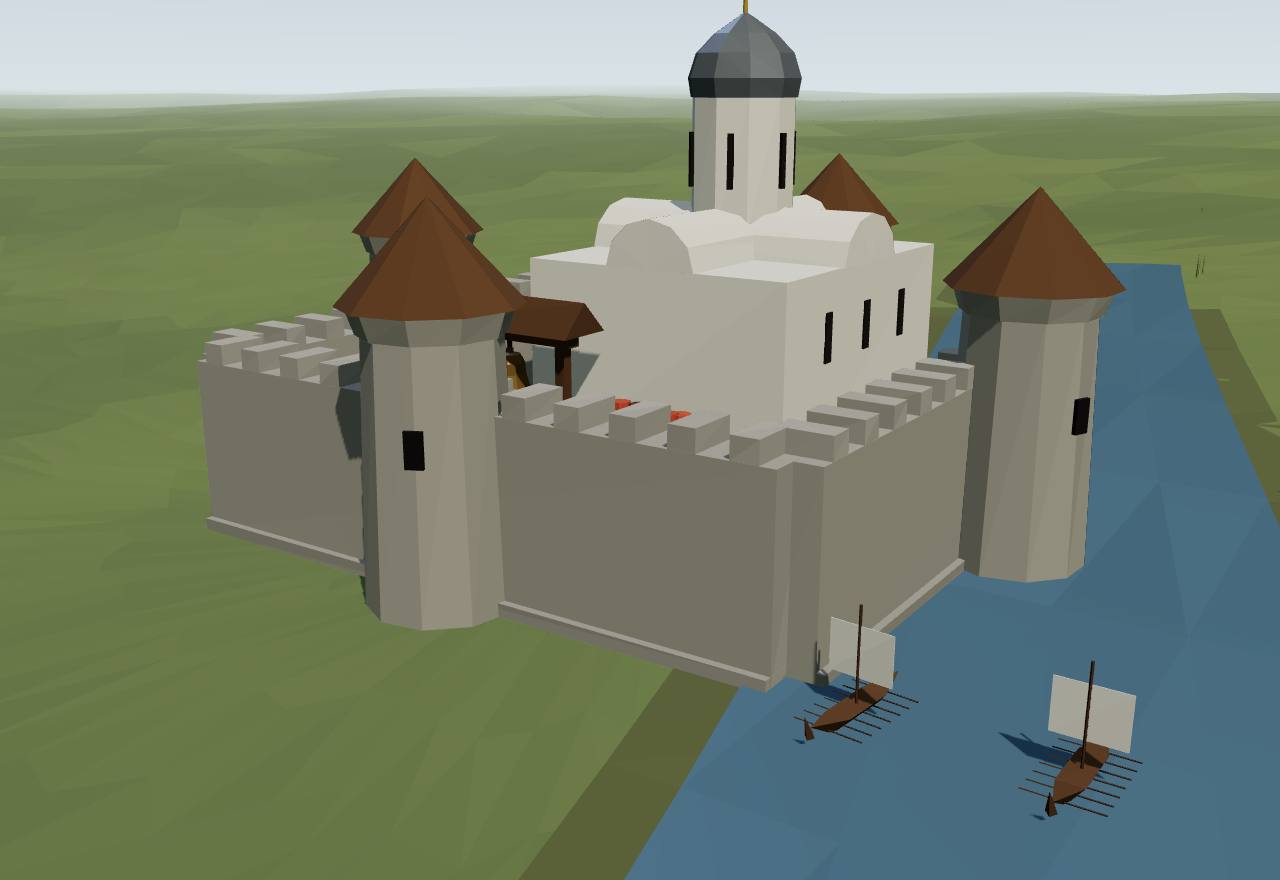
Pskov: the Krom and the veche bell
Arakcheev argues that Pskov was a sovereign state between 1340 and 1510: it legislated, set its own taxes, declared war and made peace, and “started making coins in 1425”. The one right it gave up in part was alliance-making: “from 1468 alliances were supported by Moscow”. 18 Debated Texts
Pskov's law was the veche's law: “both the Pskov Judicial Charter's first redaction, of 1397, and its last redaction, of 1460, were ratified at the veche, as was unambiguously declared in the preamble”; the charter arose from the princes' local charters and was edited at the veche. 18 Consensus Texts
In Pskov's treaties, Vovin observes, “the only part of these formulae that was never omitted was the expression ‘all Pskov’”; the prince and the posadniks are included “but they are not its rulers, who might conclude a treaty”. 12 Consensus Texts
The posadnik changed with the town: “Originally, ‘posadnik’ was a prince lieutenant ‘placed’ in a city in his stead. Later, when the princely power in Pskov declined, ‘posadnik’ became an independent city magistrate (mayor).” 12 Consensus Texts
“The fact that the veche always gathered at the ringing of the bell is undoubted,” Vovin writes; it elected the city magistrates “in its own way, of course”, dealt with war and peace, and was the court for the most serious crimes. 12 Consensus Texts
Vovin compares fourteenth- and fifteenth-century Pskov with the early communes of western Europe in the eleventh and twelfth centuries, and argues the likeness came “not due to a borrowing of political institutions … but independently because of similar conditions arising, albeit after a two-century delay”. 12 Debated Texts
Pskov learned its republic from Novgorod, Arakcheev argues: its princes “did not show autocratic tendencies”, and its “veche-based statehood developed under Novgorod's direct influence right up until the mid-fourteenth century”. In 1136 the Novgorodians had summoned “the men of Pleskov” to decide on their own prince's expulsion. 18,3 Debated Texts
Pskov's builders made their own school: UNESCO's record describes churches of “cubic volumes, domes, porches and belfries, with the oldest elements dating back to the 12th century”, inspired by the Byzantine and Novgorod traditions and at their peak in the fifteenth and sixteenth centuries. 26 Consensus Excavation Texts
How power worked Citizen assembly · Election · Written law · 1 unknown
How power worked
- Who rules
- Citizen assembly Debated
Why?
- How chosen
- Election Debated
Why?
- Limits on power
- Written law Consensus
Why?
- Scale
- City-state Consensus
Why?
- Claim to rule
- Popular sovereignty Debated
Why?
- Who has a say
- Unknown
Why?
Vovin poses the question whether power in Pskov was elitist or egalitarian; the sources read do not say who could stand in the veche.
Moscow under the HordeMoscow Kremlin
Moscow's princes won the senior title of grand prince of Vladimir by the khan's patent, against Tver, and kept it by delivering the Horde's tribute. By the end of the fourteenth century the title stayed in their family; in the fifteenth they turned on Novgorod.
Terms: Kievan Rus and Novgorod: Novgorod, Pskov and Moscow, Moscow under the Horde
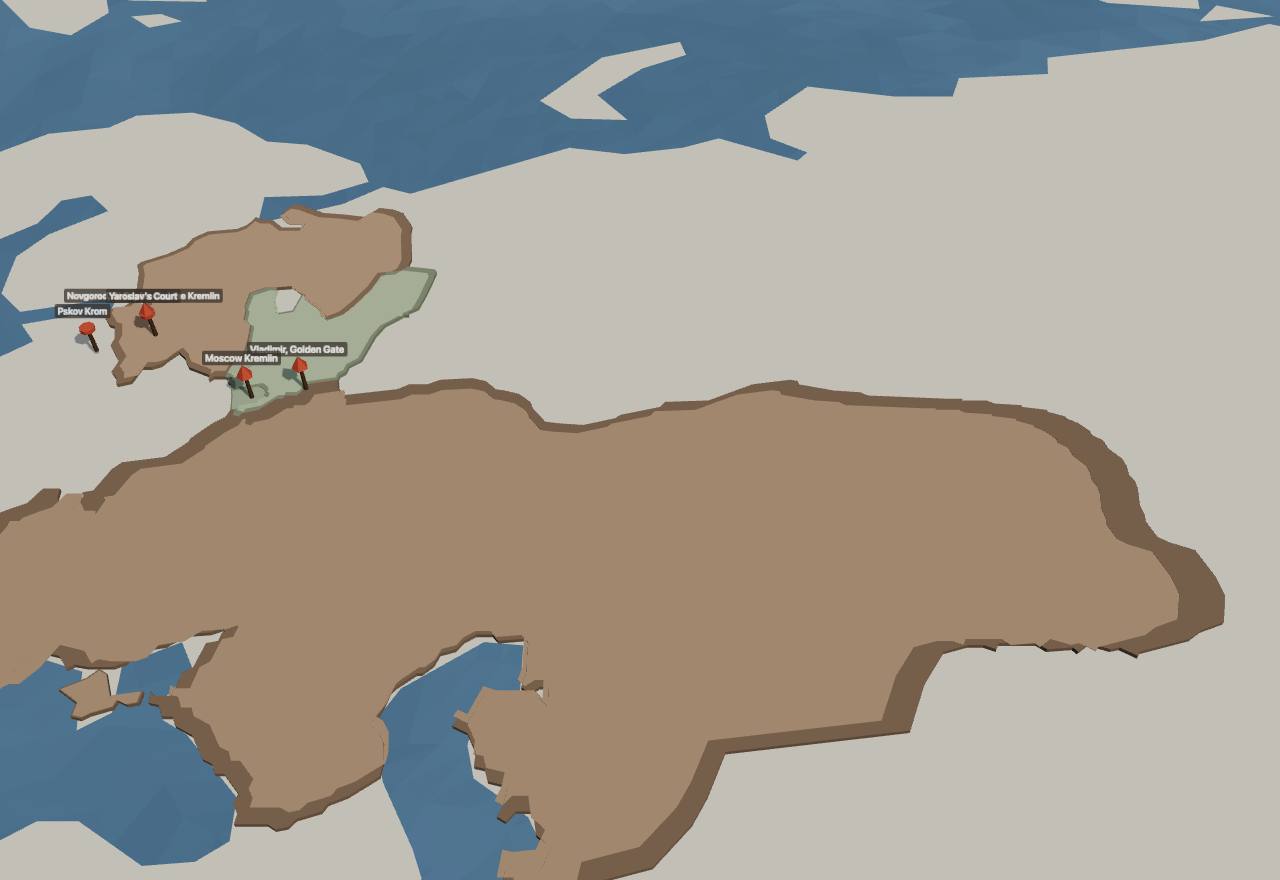
Moscow and the Golden Horde, 1300–1470 (Cliopatria)
Places: 5 cited sites over Cliopatria (CC BY 4.0) territories, drawn flat and low. Novgorod, St Sophia and the Kremlin · Yaroslav's Court · Pskov Krom · Vladimir, Golden Gate · Moscow Kremlin 25,17,19,28
Martin: the princes “paid tribute to the khans … The khans issued patents confirming each prince's right to rule”, and as the Mongols handed tax collection to the princes they “favored those princes who demonstrated the best ability to raise and deliver revenue to the Horde and maintain peace and stability”. 11 Consensus Texts
In 1304 “Mikhail Yaroslavich of Tver and Yuri Danilovich of Moscow disputed for the place of Veliki Knyaz, and both journeyed to the Horde”; in 1319 “The Tsar killed Knyaz Mikhail of Tver in the Horde and gave the title of Veliki Knyaz to Yuri”. After a Tatar army sacked Tver in 1327–28, the chronicle notes, “God and St. Sophia preserved Novgorod alone”. 3 Consensus Texts
“By the end of the fourteenth century,” Martin writes, “the Daniilovich princes, more specifically the descendants of Ivan I Kalita, had monopolized the position of grand prince of Vladimir.” 11 Consensus Texts
Even then the khan's word mattered. Irina Ponomareva's study of Ulugh Muhammad's patent for Vasily II concludes that it “was possibly obtained toward the end of 1424 to the beginning of 1425”, and notes that historians explain the clarity of the grand prince's final will by “the presence of the Khan's sanction to transfer power to the son of the Grand Prince”. 27 Debated Texts
Moscow's princes also sat in Novgorod: the chronicle has Yuri Danilovich sent for in 1314 “with reservation of all the rights of Novgorod”, Ivan Danilovich come to the throne in 1329 and his son Simeon in 1346. Lenhoff and Martin: Novgorod “had repeatedly defied successive Moscow princes, disrupting trade, defaulting on tax and rent payments, and refusing to accept the jurisdiction of Muscovite legal authorities”. 3,24 Consensus Texts
The Moscow Kremlin, in UNESCO's words, “was the residence of the Great Prince”; the World Heritage record dates its building between the fourteenth and seventeenth centuries. 28 Consensus Texts Excavation
How far the Horde shaped Moscow's state is argued: Martin calls “the precise nature of the Mongol influence” on the Rus lands' development “the subject of wide-ranging debate”. The works on either side named in the spec (Halperin 1987 among them) could not be read for this page. 11 Debated Texts
How power worked King · Appointment · Territorial state · 2 unknown
How power worked
- Who rules
- King Consensus
Why?
- How chosen
- Appointment Debated
Why?
- Limits on power
- Unknown
Why?
The sources read describe the khan's patents and the princes' rivalries, not any check inside Moscow.
- Scale
- Territorial state Debated
Why?
- Claim to rule
- Kinship and descent Debated
Why?
- Who has a say
- Unknown
Why?
No source read for this page says who took part in the Moscow princes' decisions.
Artefacts
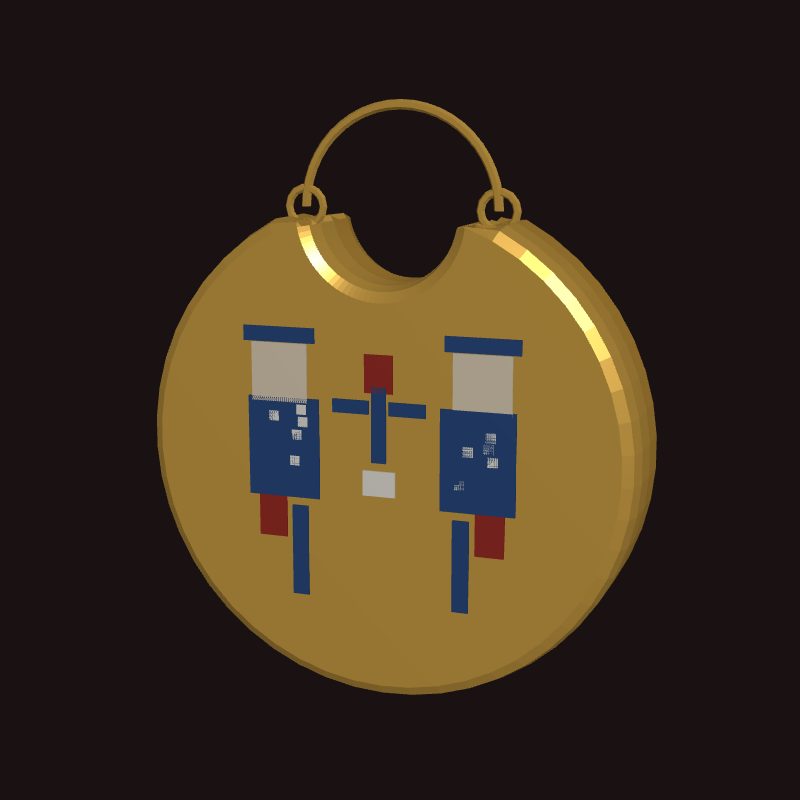 Model, not a scan
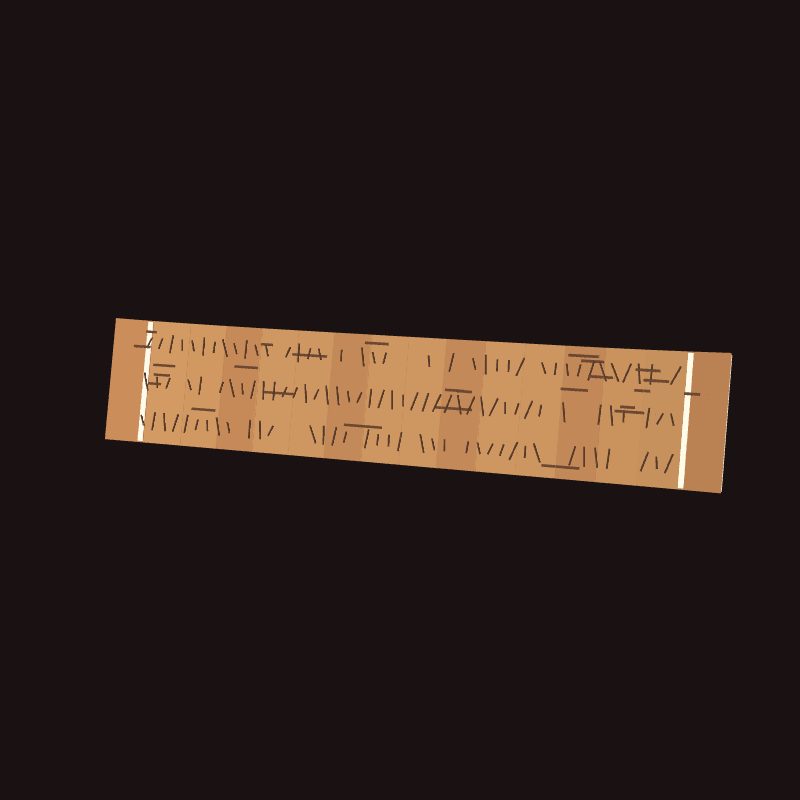 Model, not a scan
In numbers
Letters on birch bark
Data: gramoty.ru (Zaliznyak's account to 2017; the database, November 2026)
By the end of 2017, 1,209 letters had been found in thirteen places, 1,102 of them in Novgorod itself. 5 In November 2026 the gramoty.ru database listed 1,319. 30 Bars on a log scale.
- Novgorod1,102
- Staraya Russa48
- Torzhok19
- Smolensk15
- Pskov8
- Tver5
- Moscow4
- Zvenigorod Galitsky3
- Novgorod Gorodishche (Ryurikovo)1
- Vitebsk1
- Mstislavl1
- Vologda1
- Staraya Ryazan1
- First found
- 1951, in the excavations in Novgorod
- Usual size
- 15–40 cm long, 2–8 cm wide
- Whole
- only about a quarter survive whole
- Written with
- a stylus, pressing or scratching the letters; only two (nos. 13 and 496) in ink
- Length
- most whole letters under 20 words; the longest, 176 and 166 words
- Mostly
- private letters, on household, family, money and trade
- Dated
- by the street pavements they lie between: to 10–15 years at best, most to 20–50
- First dig
- the Nerev end, 1951–62: 398 letters
Facts from Zaliznyak's account (translations ours). 5
Five letters
-
No. 246 1025–1050 (probably somewhat later)
Zhirovit to Stoyan: a threat to a bad debtor 13
“It is the ninth year since you swore on the cross … and have not sent me the money.”
-
No. 109 1100–1120
Zhiznomir to Mikula: the stolen slave woman 14
“You bought a female slave in Pskov; and for that the princess detained me”
-
No. 9 1160–1180
Gostyata to Vasily: a wife turned out 31
“Now, having married a new wife, he gives me nothing.”
-
No. 724 1160–1180
Savva to his brothers and retinue: tribute from Yugra 20
The site's summary: Savva's expedition to Yugra to collect tribute, the obstacles the posadnik Zakhariya put in his way, and a quarrel with Andrei Bogolyubsky's men.
-
No. 199 1240–1260
The boy Onfim's alphabet 32
The site classes it among school texts: a drawing with a caption, the alphabet, syllables and an address formula.
- Marks, by Seshat polity:
- Kievan Rus
- Novgorod Land
- Background bands, by phase:
- Kievan Rus
- The principalities
- Novgorod, Pskov and Moscow
Not coded in Seshat
| Seshat polity | Years | Value |
|---|---|---|
| Novgorod Land | 1100 CE | 400,000–500,000 |
| Seshat polity | Years | Value |
|---|---|---|
| Novgorod Land | 1100 CE | 15,000 |
| Seshat polity | Years | Value |
|---|---|---|
| Kievan Rus | 880 CE – 1242 CE (whole period) | 5 |
| Seshat polity | Years | Value |
|---|---|---|
| Novgorod Land | 880 CE – 1240 CE (whole period) | 2 |
| Kievan Rus | 1000 CE | 2–3 |
| Seshat polity | Years | Value |
|---|---|---|
| Novgorod Land | 880 CE – 1240 CE (whole period) | 4 |
Not coded in Seshat: territory.
Values as Seshat codes them: bands are ranges, dots single values, flat bars values given for a whole period, hatching “unknown”; from one Seshat polity to the next, marks alternate between a light tone and a darker one with dashed joining lines (the key above names each polity). Source: Seshat Global History Databank (Equinox-2020), CC BY 4.0; and the Seshat Databank, seshat-db.com (no licence stated; attribution).
Governance fingerprint
Seshat's institutional variables, phase by phase. Hover or focus a cell for the values and years.
- Present
- Inferred present
- Absent
- Inferred absent
- Unknown
- Not coded in Seshat
- Mixed: present in one Seshat polity or period, absent in another
Not coded in Seshat: Novgorod, Pskov and Moscow: Lord Novgorod the Great, Novgorod, Pskov and Moscow: Pskov, Novgorod, Pskov and Moscow: Moscow under the Horde. The Seshat Databank has no polity for them, so their six axes rest on the cited scholarship alone.
The axes against Seshat
2 agree, 0 disagree.
Show the 2 pairs that agree
- Agree Kievan Rus: limits on power coded “Written law”, which implies formal legal code present; Seshat has it present.
- Agree The principalities: Novgorod: the veche and its princes: claim to rule coded “Law”, which implies formal legal code present; Seshat has it present.
Only pairs where an axis value on its own implies a Seshat variable are compared; the rest is not counted as disagreement. 3 more pairs have no Seshat value.
Source: Seshat Global History Databank (Equinox-2020), CC BY 4.0; Seshat Databank, seshat-db.com (no licence stated; attribution).
Compare
| Axis | Kievan Rus and Novgorod | Byzantium: After the West: Justinian's empire | The steppe empires: The Türk and Uyghur khaganates | Norse assemblies: Things in the Viking age |
|---|---|---|---|---|
| Who rules | King | Emperor | King | Citizen assembly |
| How chosen | Heredity | Mixed | Heredity | Acclamation |
| Limits on power | Written law | Written law | Custom and kin | Custom and kin |
| Scale | Confederation | Empire | Empire | Confederation |
| Claim to rule | Kinship and descent | Divine mandate | Divine mandate | Kinship and descent |
| Who has a say | A narrow elite | A narrow elite | A narrow elite | Property owners |
Legacy
Russia, Ukraine and Belarus all trace their history to Kievan Rus, “the medieval East Slavic state based in the capital of present-day Ukraine”. Serhii Plokhy shows how it became a “battleground” between Russian and Ukrainian historians from the 1840s, how Soviet historians described one all-Rus nationality giving way to three, and argues against attempts to “nationalize” the Rus past on behalf of any present nation. 33 Debated Texts
The Varangian question has been political too. Hillerdal: the debate “in many cases has been steered by nationalistic feelings and political aims”; the anti-Normanist view was strongest in Soviet Russia, where the Normanist one was “unpatriotic”, while in the 1930s Varangians were used in the West as an example of Germanic superiority. Her conclusion: the Norsemen in Rus “were not Scandinavians … no more than the Slavic tribes they encountered in the East were Russians”. 16 Consensus Texts
Novgorod's waterlogged ground (UNESCO: cultural layers of about 347 hectares, 7–8 metres deep) keeps yielding letters: 1,209 had been found by the end of 2017 and the gramoty.ru database listed 1,319 in November 2026, first published by Artsikhovsky and Tikhomirov in 1953. 25,5,30 Consensus Excavation Texts
See also forms of government and the country edition.
Sources
Bibliography
33 sources, numbered as cited: 11 papers · 3 books · 9 datasets · 10 primary sources
- Primary Cross, S. H. (tr.) (1930). The Russian Primary Chronicle (Laurentian text). Harvard Studies and Notes in Philology and Literature 12 (Cambridge, Mass.: Harvard University Press), pp. 75–320. Read in full through archive.org (freely downloadable). Translated from Karskii's 1926 edition; the Povest ends in 1110, the colophon of Sylvester is dated 1116, Appendix III gives 1110–1113 from the Hypatian text.
- Paper Lukin, P. V. (2018). “Novgorod the Great”. Slověne 7 (2): 383–413 (Russian, with an English abstract). Open access (CC BY-ND 4.0), read in full: pp. 384–388, 392–393, 405–408 quoted; translations from the Russian ours.
- Primary Michell, R., Forbes, N. (trs.); Beazley, C. R. (intro.); Shakhmatov, A. A. (text) (1914). The Chronicle of Novgorod, 1016–1471. Camden Third Series, vol. 25 (London: Royal Historical Society). Read in full (archive.org, not in copyright). The Synodal text to 1333/1352, then the Archaeographical Commission's text to 1446; the 1471 entry is a sixteenth-century Muscovite account added by the editors (pp. 204–205). Page numbers are the printed ones. Crossref DOI of the volume: 10.1017/s2042171000006415.
- Paper Sevastyanova, O. (2010). In Quest of the Key Democratic Institution of Medieval Rus’: Was the Veche an Institution that Represented Novgorod as a City and a Republic?. Jahrbücher für Geschichte Osteuropas 58 (1): 1–23. Only the abstract (biblioscout.net) was read.
- Book Зализняк, А. А. (2017). Общие сведения о берестяных грамотах (из «Древненовгородский диалект», 2-е изд., 2004, с дополнением 2017 г.). Древнерусские берестяные грамоты (gramoty.ru), Институт славяноведения РАН и НИУ ВШЭ. Read 16 Nov 2026: the corpus by town at the end of 2017 (1,209 letters), sizes, writing with a stylus, dating by the street pavements, the excavations (translations ours).
- Dataset Seshat: Global History Databank (2026). Seshat Databank API (seshat-db.com), social-complexity and general variables. Snapshot of the API responses taken 15 Nov 2026; the site states no licence. Used where Equinox-2020 has no polity for a page's period.
- Paper Romanchuk, A. (2023). ‘Blind Spots’ of the ‘Scandinavian-Centric’ Hypothesis on the Origin of the Old Russian State. Social Evolution & History 22 (2): 94–110. Read in full. It argues one side of the debate (against the 'Normanist' reading).
- Primary Тихомиров, М. Н. (ed.) (1953). Краткая Русская Правда (по Академическому списку половины XV в.). Пособие для изучения Русской Правды (Москва: Издание Московского университета), electronic edition of MSU's history faculty. Old Russian text without translation; renderings on the page are ours. Article numbers and page numbers are Tikhomirov's.
- Primary Тихомиров, М. Н. (ed.) (1953). Пространная Русская Правда (по Троицкому списку второй половины XIV в.). Пособие для изучения Русской Правды (Москва: Издание Московского университета), electronic edition of MSU's history faculty. Old Russian text without translation; renderings on the page are ours.
- Dataset UNESCO World Heritage Centre (1990). Kyiv: Saint-Sophia Cathedral and Related Monastic Buildings, Kyiv-Pechersk Lavra (World Heritage List no. 527). UNESCO open data, World Heritage List dataset whc001. Read 16 Nov 2026: built 'during the reign of the Great Prince of Kyiv, Yaroslav the Wise' with 'local builders and Byzantine masters'; 'Designed to rival Hagia Sophia in Constantinople'. Saint-Sophia Cathedral component 50.4528555556 N, 30.5143277778 E.
- Book Martin, J. (2007). Medieval Russia, 980–1584. Cambridge University Press (2nd ed.). The Cambridge Core description and the chapter-opening extracts of chs. 2, 4, 6, 7 and 8 were read.
- Paper Vovin, A. A. (2020). Veche and the terms “All Pskov” and “Pskov Men”: The Russian Medieval City Assembly as a Communal Structure. Mesto a dejiny 9 (2): 6–25. Read in full (the Zenodo copy, record 5091600).
- Primary Институт славяноведения РАН; НИУ «Высшая школа экономики» (2023). Новгород, грамота № 246: от Жировита к Стояну (угроза злостному должнику). Древнерусские берестяные грамоты (gramoty.ru).
- Primary Институт славяноведения РАН; НИУ «Высшая школа экономики» (2023). Новгород, грамота № 109: от Жизномира к Микуле (дело о покупке краденой рабыни). Древнерусские берестяные грамоты (gramoty.ru).
- Primary Constantine Porphyrogenitus; Jenkins, R. J. H. (tr.); Waugh, D. (excerpts) (1967). De Administrando Imperio, ch. 9: Of the coming of the Russians in monoxyla from Russia to Constantinople. Dumbarton Oaks Texts 1 (1967), pp. 57–63, as excerpted on D. Waugh's teaching pages (University of Washington). The chapter's excerpt is free to read; the translation is in copyright (the page asks permission for other than non-profit educational use), so it is quoted only briefly.
- Paper Hillerdal, C. (2021). Vikings, Rus, Varangians: The "Varangian Problem" in View of Ethnicity in Archaeology. Current Swedish Archaeology 14 (1): 87–108 (printed 2006; Crossref dates the online deposit 2021). Open access (CC BY), read in full.
- Dataset Wikidata contributors (2026). Coordinates of places of Rus and Novgorod (items listed in the note). Wikidata (CC0), read 16 Nov 2026. P625 coordinates of Q1980481 (Yaroslav's Court, Novgorod), Q1427503 (Golden Gate, Kyiv), Q216794 (Staraya Ladoga), Q2626066 (Gnezdovo), Q157053 (Chernihiv), Q2337 (Smolensk), Q200797 (Polotsk), Q258016 (Pskov Krom), Q2684 (Vladimir), Q16869 (Constantinople), Q4163154 (Dnieper rapids). Town points, not medieval walls.
- Paper Arakcheev, V. (2013). Political Organization in the Pskov Republic: the Prince, the Veche and Sovereignty. Quaestio Rossica 1: 101–116. Read in full (English text).
- Dataset UNESCO World Heritage Centre (1992). White Monuments of Vladimir and Suzdal (World Heritage List no. 633). UNESCO open data, World Heritage List dataset whc001. Read 16 Nov 2026: 'The Golden Gate (1164) … a cubic tower with a church … on top'; 'the Cathedral of the Assumption (1158) … three naves surmounted by a delicate drum and a helmet dome'; 'Most of the 12th-century frescoes were destroyed by Mongols in 1238'. Golden Gate 56.1269177807 N, 40.3973646343 E.
- Primary Институт славяноведения РАН; НИУ «Высшая школа экономики» (2023). Новгород, грамота № 724: грамота с упоминанием посадника Захарии и Андрея Боголюбского. Древнерусские берестяные грамоты (gramoty.ru).
- Paper Khoruzhenko, O. I. (2021). The Seal of Novgorod Veche in Publications and Researches. Vestnik of Saint Petersburg University. History 66 (2): 630–643. Read in full (Russian; translations ours): p. 631 abstract, p. 641 on Yaroslav's Court.
- Paper Petrov, A. V. (2016). Social and political evolution of Novgorod the Great in the veche period. Vestnik of Saint Petersburg University. History 61 (4): 44–57. Read in full (SPbU repository PDF).
- Paper Kuchkin, V. A. (2022). The First Campaign of Ivan III to Novgorod in 1471. Herald of the Russian Academy of Sciences 92 (S5): S355–S366. Only the abstract was read.
- Paper Lenhoff, G., Martin, J. (2000). Marfa Boretskaia, Posadnitsa of Novgorod: A Reconsideration of Her Legend and Her Life. Slavic Review 59 (2): 343–368. Only the abstract (the article's opening paragraph) was read.
- Dataset UNESCO World Heritage Centre (1992). Historic Monuments of Novgorod and Surroundings (World Heritage List no. 604). UNESCO open data, World Heritage List dataset whc001. Read 16 Nov 2026: 'the Kremlin with its 15th-century fortifications … the church of St. Sophia from the mid-11th century'; cultural layers 'about 347 ha, with a depth of 7-8 metres', waterlogged; 'the conquest of the two republics (1478, in the case of Novgorod)'. Components: Kremlin 58.53333 N, 31.28333 E (as printed); Yaroslav's Court cluster 58.5186002396 N, 31.2826037138 E.
- Dataset UNESCO World Heritage Centre (2019). Churches of the Pskov School of Architecture (World Heritage List no. 1523). UNESCO open data, World Heritage List dataset whc001. Read 16 Nov 2026: 'cubic volumes, domes, porches and belfries, with the oldest elements dating back to the 12th century'; 'Inspired by the Byzantine and Novgorod traditions'. Spaso-Mirozhsky component 57.8065555556 N, 28.3286666667 E.
- Paper Ponomareva, I. G. (2021). About the Yarliq of Ulugh Muhammad Khan Approving the Rule of Grand Prince Vasily II. Golden Horde Review 9 (3): 583–592. Only the abstract was read.
- Dataset UNESCO World Heritage Centre (1990). Kremlin and Red Square, Moscow (World Heritage List no. 545). UNESCO open data, World Heritage List dataset whc001. Read 16 Nov 2026: the Kremlin 'was the residence of the Great Prince'. Point 55.7540277778 N, 37.6204166667 E.
- Dataset The Metropolitan Museum of Art (2026). Temple Pendant with Two Sirens Flanking a Tree of Life (front) and Confronted Birds (back) (17.190.680). The Met Collection (Open Access, public domain). Read 16 Nov 2026: 'Kyivan Rus’', '11th–12th century', 'Cloisonné enamel, gold', 6 × 5.7 × 1.4 cm, isPublicDomain true; no 3D model on the record.
- Dataset Институт славяноведения РАН; НИУ «Высшая школа экономики» (2026). Древнерусские берестяные грамоты: список грамот (поиск). gramoty.ru database. Read 16 Nov 2026: «Найдено грамот: 1319» with no filter set.
- Primary Институт славяноведения РАН; НИУ «Высшая школа экономики» (2023). Новгород, грамота № 9: от Гостяты к Василю (жалоба прогнанной мужем жены). Древнерусские берестяные грамоты (gramoty.ru).
- Primary Институт славяноведения РАН; НИУ «Высшая школа экономики» (2023). Новгород, грамота № 199: грамота мальчика Онфима. Древнерусские берестяные грамоты (gramoty.ru).
- Book Plokhy, S. (2006). The Origins of the Slavic Nations: Premodern Identities in Russia, Ukraine, and Belarus. Cambridge University Press. The Cambridge Core description and the chapter-opening extracts of the introduction and chs. 1–2 were read.
Quantitative values from the Seshat Global History Databank (Equinox-2020), licensed CC BY 4.0. Dataset: Seshat Equinox Packaged Data (v.1). See also Seshat: The Global History Databank (Turchin et al. 2015).
Values for polities Equinox-2020 does not cover come from the Seshat Databank at seshat-db.com (Seshat: Global History Databank), snapshotted from its API on 2026-11-16. No licence is stated on seshat-db.com; used with attribution. Snapshot: Seshat Databank API (seshat-db.com), social-complexity and general variables.