Free farmers at the thing, a republic of chieftains, and kings who had to ask
Norse assemblies: Iceland, Norway and the Isles
800 CE – 1397 CE
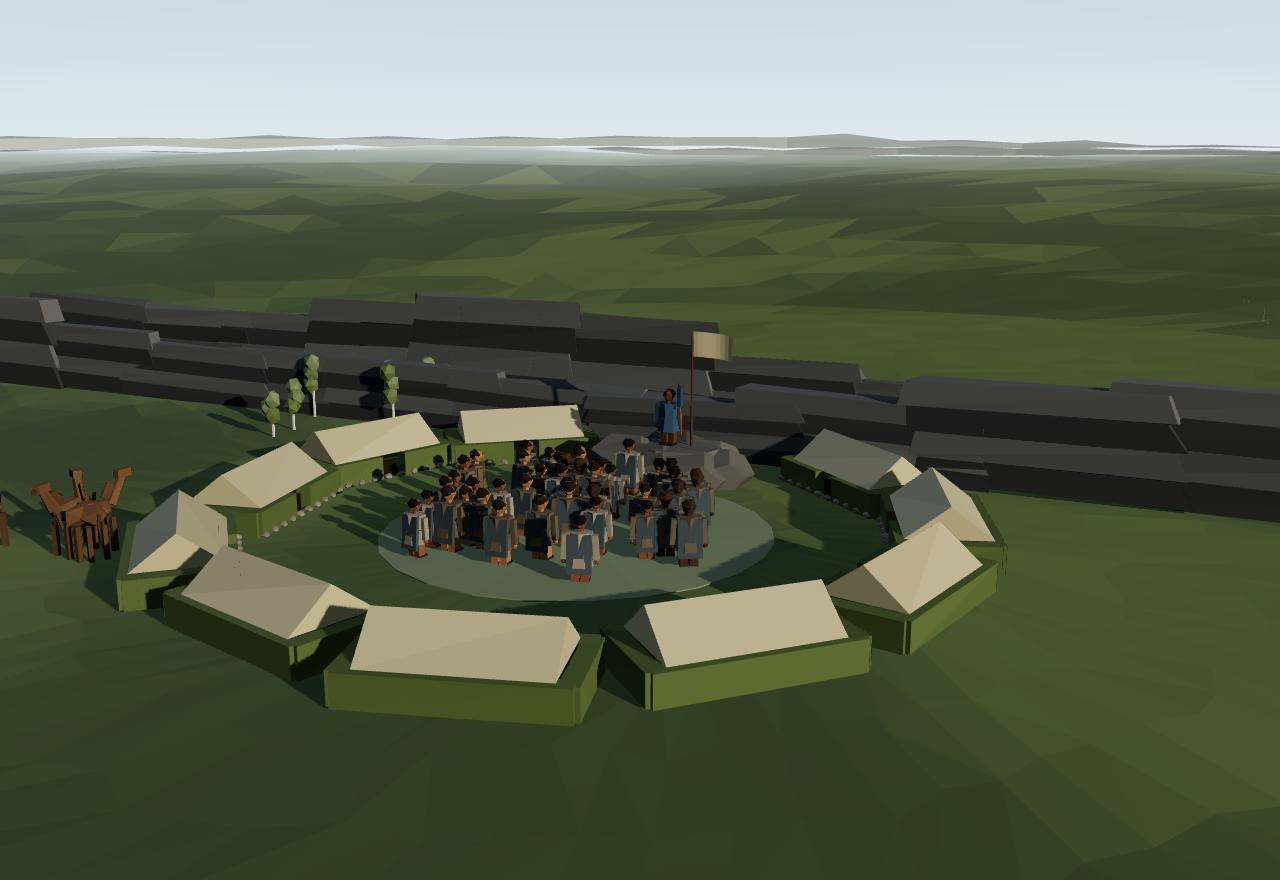
Þingvellir: the Althing at the Law-Rock
800 CE – 930 CE
Things in the Viking age
Across Scandinavia free men met in the open at assemblies, things, to settle disputes, declare law and take kings. Norse settlers carried the custom west over the sea. Iceland, settled from about 870, had local assemblies before its people founded one for the whole island around 930.
Terms: Norse assemblies: Iceland, Norway and the Isles: Things in the Viking age
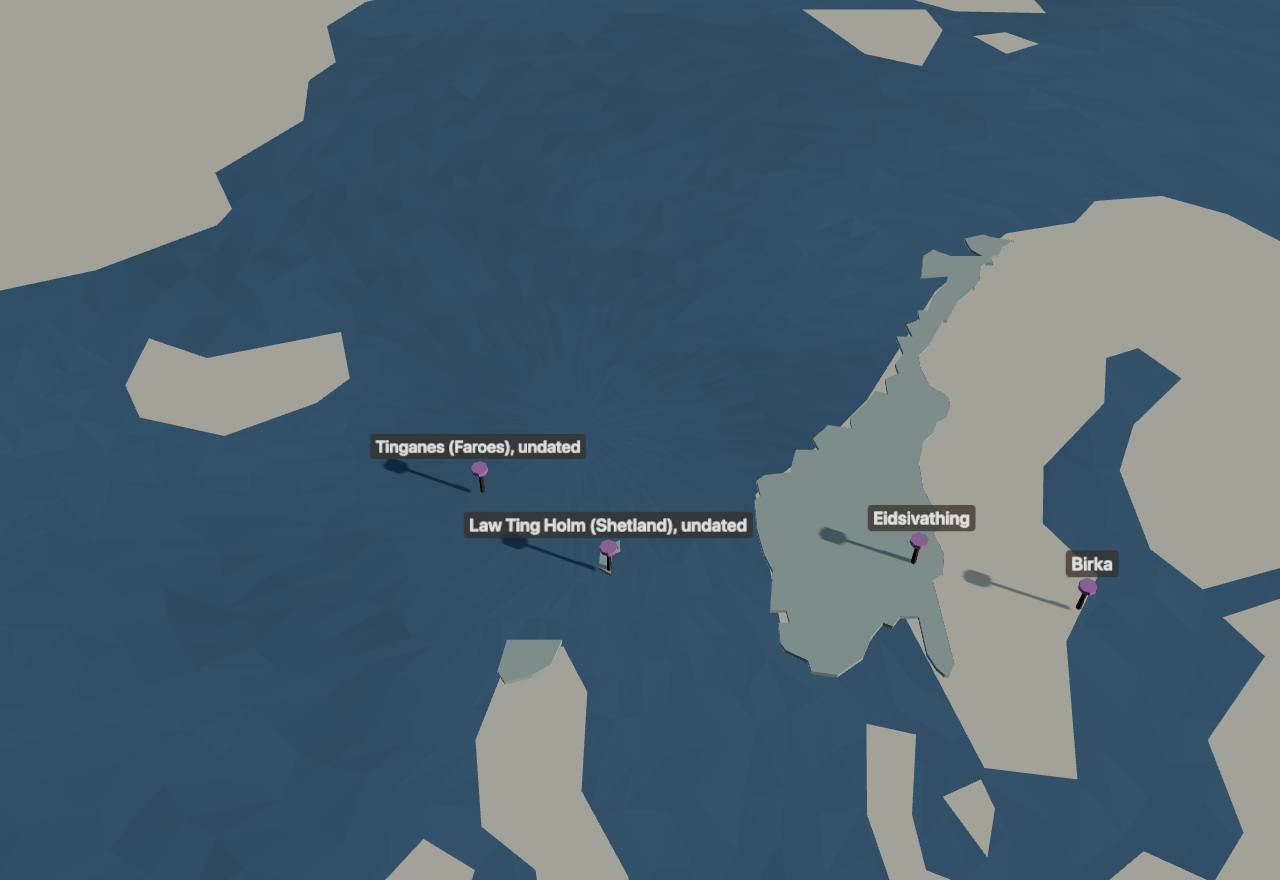
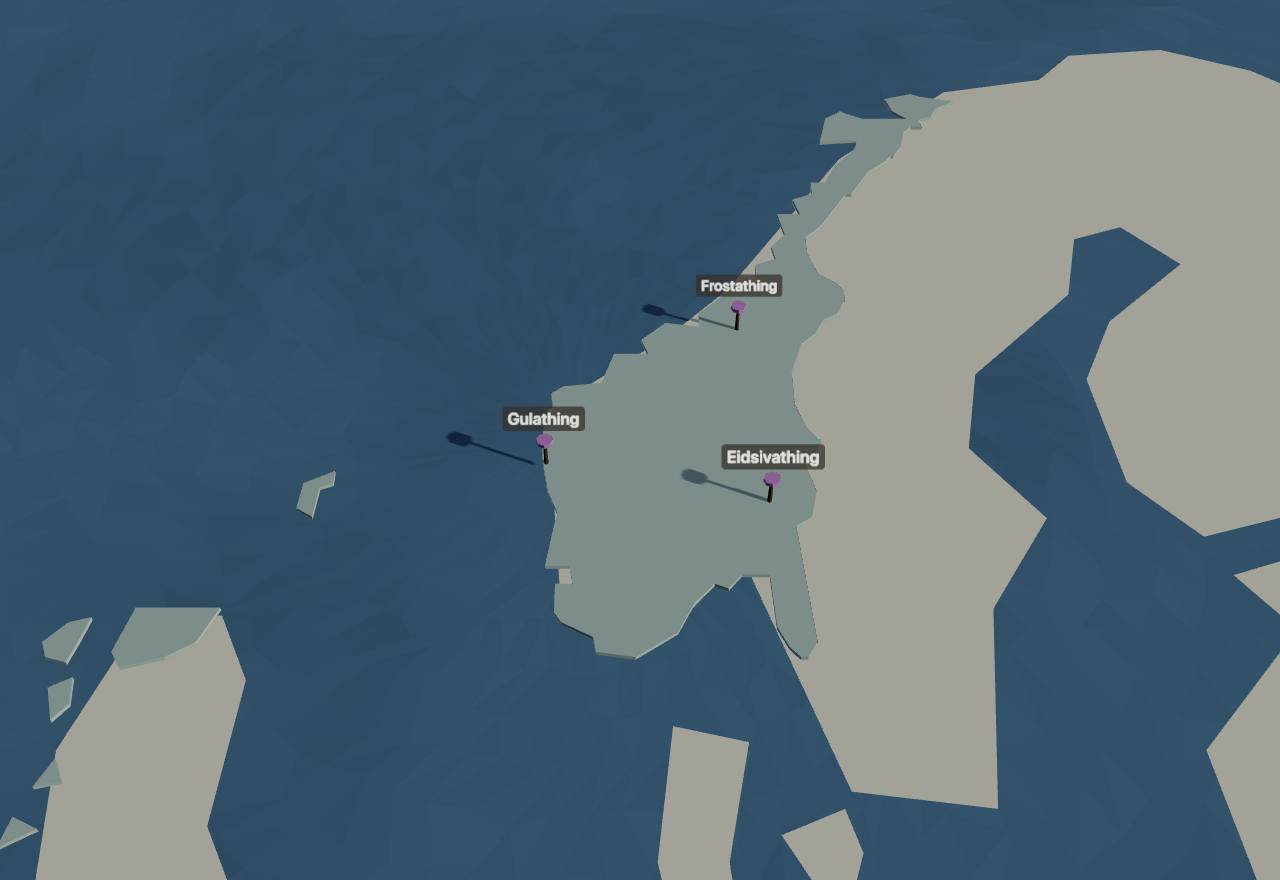
Norway and the thing sites, 880–930 (Cliopatria and cited sites)
Places: 7 cited sites over Cliopatria (CC BY 4.0) territories, drawn flat and low. Birka · Eidsivathing · Kjalarnes · Þórsnes · Þingvellir (the Althing) · Tinganes (Faroes), undated · Law Ting Holm (Shetland), undated 14,13,22,5,3,23,1,24,2,29,17,30,18
Alexandra Sanmark’s survey of thing sites across Scandinavia, Scotland and the North Atlantic finds that “the assembly institution was brought to all Norse settlements”. She places it in a Germanic tradition of law and assembly that “can be traced back to the first century AD”, and finds outdoor thing sites “the norm until the late sixteenth or the seventeenth century”. 11,12 Consensus Survey Excavation Texts
The one ninth-century description of a thing at work is a missionary’s. Rimbert, writing the life of Anskar, says King Olef of Birka (probably in 852) would not approve the mission “until I can consult our gods by the casting of lots and until I can enquire the will of the people”. The chiefs “went out, therefore, to the plain” to cast the lots; at the assembly a herald proclaimed the request, an old man spoke, and “all the people unanimously decided” to let the priests stay. The king then had it put to a second assembly in another part of his kingdom. 13,14 Consensus Texts
Sanmark finds that “a shared idea of what constituted an assembly site existed in the minds of the Norse”: a chosen topography, often old burials, and a pool of features combined in shifting patterns. The top-level sites have “the most striking monuments and design”, so the archaeology “reflects the hierarchy spelt out in the written sources”. 15 Consensus Excavation Survey
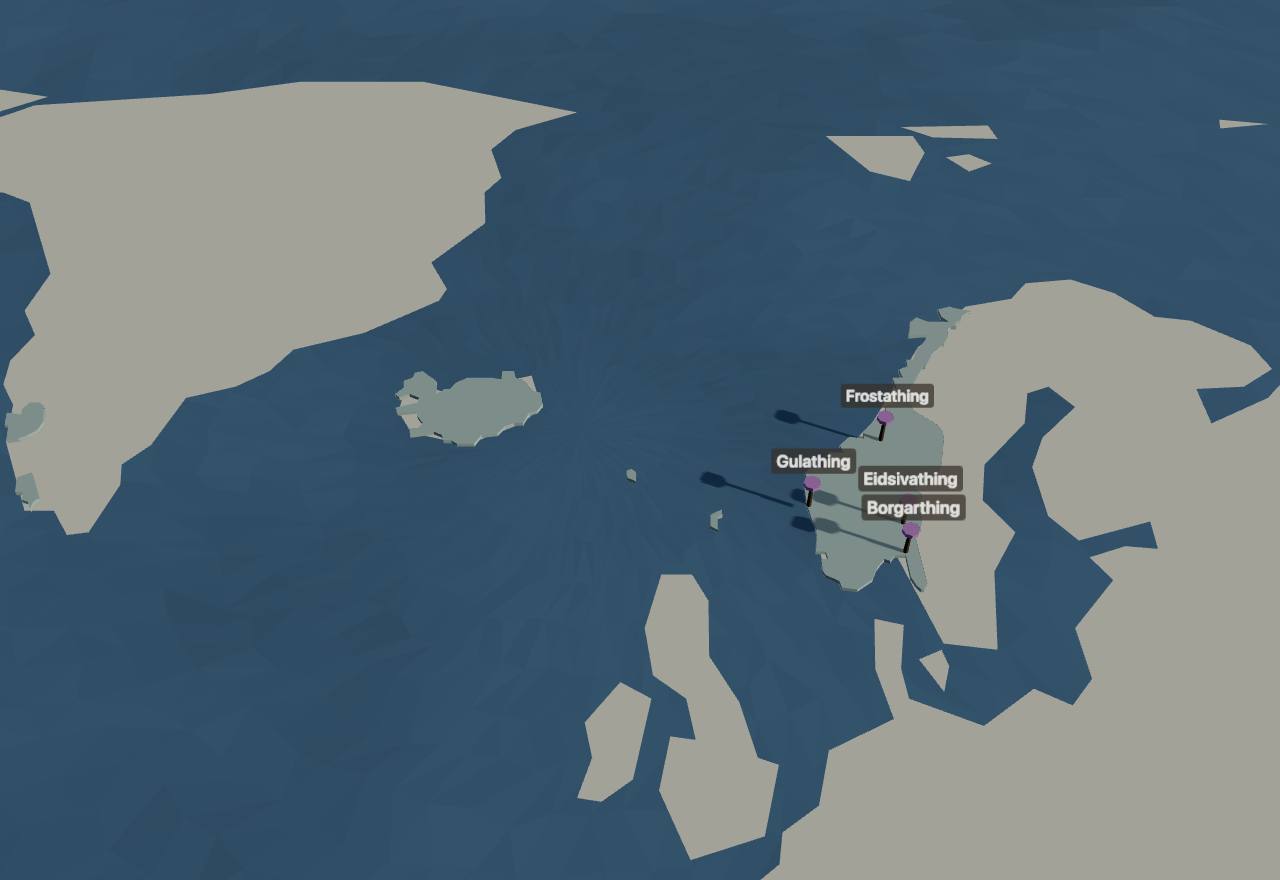
Norway had no assembly for the whole kingdom. The 1911 Britannica’s history notes that Harald Fairhair “established no common Thing”; the country stayed in parts with “separate laws until the second half of the 13th century”: the Frostathing district round Trondheim, the Gulathing, which “met at Gula in Hordaland”, and the Eidsivathing by Lake Mjøsa, to which St Olaf later added the Borgarthing at Sarpsborg. 5 Consensus Texts
Snorri Sturluson, writing in Iceland about 1230, says the Eidsivathing’s laws were “first established” by Halfdan the Black and that Hakon the Good “gave out the Gula-thing’s laws on the advice of Thorleif Spake”. Grønlie warns that Norway’s laws then were “orally transmitted customs rather than codified wholes”, and that it is not clear the Gulathing laws existed as early as 930. 3,1 Debated Texts
Ari the Learned, writing in 1122–33, says an Easterner called Úlfljótr “first brought laws out here from Norway”, modelled on “how the laws of Gulaþing were at the time”. Grønlie thinks it more likely that Úlfljótr went to Norway to learn “what was or was not valid custom” than that he brought back a code. 1 Debated Texts
Before the Althing there were local assemblies. Ari names one at Kjalarnes, held by Þorsteinn, son of the first settler Ingólfr, “together with those chieftains who attended it”; Landnámabók and Eyrbyggja saga name another at Þórsnes, though Grønlie calls that information uncertain and thinks the Althing grew out of the Kjalarnes assembly. 1 Debated Texts
Ari: “The Althing was established where it now is by the decision of Úlfljótr and everyone in the country”. The land of a man outlawed for murder became public property, set apart so the assembly had wood and grazing for horses. UNESCO’s record gives 930 for its founding and says it met at Þingvellir until 1798. 1,2 Consensus Texts Read more: The Althing in chapter 13
No written source survives from Iceland’s first centuries: “no narratives, documents, or runic inscriptions of any kind”, Jakobsson writes. Archaeology is the main evidence for the settlement; the later sagas about it are “of less value except as objects of analysis of the cultural memory”. 16 Consensus Texts Excavation
In the North Atlantic, Sanmark finds the same idea of a thing site as in Scandinavia, with two differences: in Iceland, the Faroes and Greenland “assembly booths were constructed and there is no coincidence between burials and assemblies”, because the islands had no older monuments to reuse. In Scotland the Norse took over existing monuments, “above all large mounds”. 17,18 Consensus Excavation Survey
How power worked Citizen assembly · Acclamation · Custom and kin
How power worked
- Who rules
- Citizen assembly Debated
Why?
- How chosen
- Acclamation Debated
Why?
- Limits on power
- Custom and kin Debated
Why?
- Scale
- Confederation Speculative
Why?
- Claim to rule
- Kinship and descent Debated
Why?
- Who has a say
- Property owners Debated
Why?
Where the Norse met: thing sites in the sources
Data: positions from UNESCO and Wikidata; dates from the sources cited
Pins mark the places where a source puts a thing, from the year it first does. Hollow pins are the Faroese and Shetland thing sites, which Sanmark describes without a date. A pin for a Norwegian law-thing marks the place that holds its name today. 17,18
| Site | First | How it is dated |
|---|---|---|
| Birka 14 | c. 852 | Rimbert: two assemblies decide on Anskar’s mission (probably 852) 13 |
| Eidsivathing (pin: Eidsvoll, by Lake Mjøsa) 22,5 | by 866 | Snorri (c. 1230): its laws ‘first established’ by Halfdan the Black, whose son Harald held the south by 866 (EB 1911) 3,5 |
| Kjalarnes 23 | before 930 | Ari: an assembly here before the Althing (no year given) 1 |
| Þórsnes 24 | before 930 | Landnámabók and Eyrbyggja saga put an assembly here before the Althing; Grønlie calls the information uncertain 1 |
| Þingvellir (the Althing) 2 | c. 930 | Ari: established c. 930; met until 1798 (UNESCO) 1,2 |
| Gulathing (pin: Eivindvik, Gulen) 25,5 | 933–60 | Snorri (c. 1230): Hakon the Good (933–60) gave out the Gula-thing’s laws 3,1 |
| Frostathing (pin: Logtun, Frosta) 26,5 | 950 | Snorri (c. 1230): the Frosta-thing refuses Hakon’s Christianity, 950 3 |
| Borgarthing (pin: Sarpsborg) 27,5 | 1016–29 | EB 1911: established by St Olaf (king 1016–29) 5 |
| Tynwald Hill 28 | 1228/9 | Chronicle of Man: ‘the place called Tynwald’ (1228/9); a meeting of all the people there in 1237 4 |
| Tinganes (Faroes) 29,17 | undated | Sanmark surveys the Faroese thing sites but gives no date 17 |
| Law Ting Holm (Shetland) 30,18 | undated | Sanmark: the best Norse assembly evidence in Scotland is from Shetland and Orkney, but gives no date 18 |
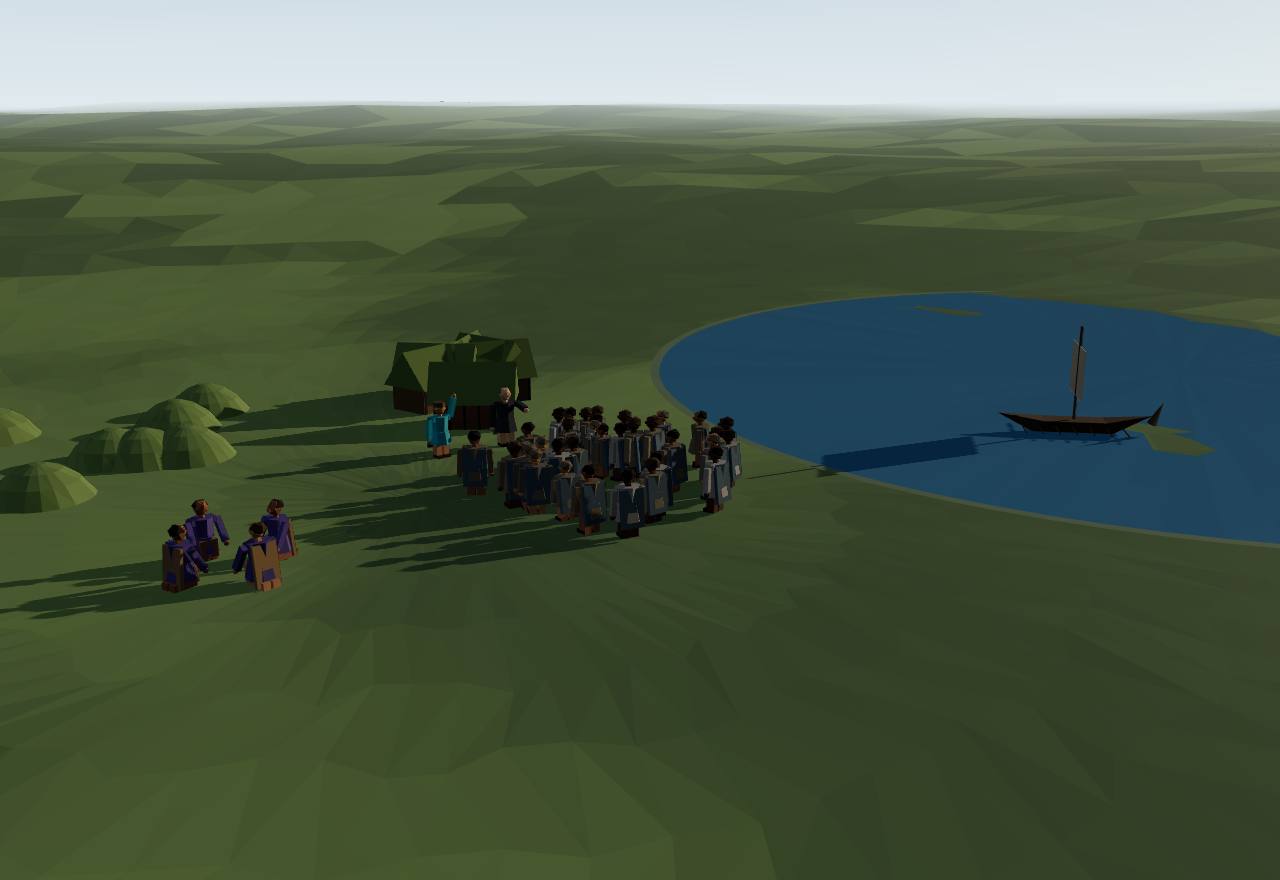
Birka, c. 852: the people asked
930 CE – 1262 CE
The Althing and the regional things
For three centuries the Norse world held three kinds of assembly government side by side. Iceland had no king: its chieftains made law at the Althing and judged in its courts. Norway’s kings were taken and bargained with at regional things. In the Irish Sea a dynasty of sea-kings ruled Man and the Hebrides, and its people met at Tynwald.
Cliopatria draws the Icelandic Commonwealth in two slices, 936–1259 and 1260–1271, the Old Kingdom of Norway in slices from 866, and the Kingdom of the Isles from 1085 to 1176. Seshat codes the Commonwealth (930–1262) with no capital, a territory of 103,000 km² and “nominal” centralisation. 31 Seshat Consensus Survey
The laws came to be written. Iceland decided in 1117 that its laws “should be written down in a book” the following winter; the 1911 Britannica dates the surviving Codex Regius of Grágás to about 1235. Norway’s laws were “still different for the four different districts” until Magnus the Law-Mender’s code of 1274. 1,32,5 Consensus Texts
Christianity changed the assemblies on both sides of the sea. Iceland accepted it by a decision at the Althing in 999/1000; in Norway, by Snorri’s account, the Frosta-thing refused Hakon’s call to be baptised in 950. Sanmark traces changes to thing sites from the late tenth century, driven by Christianisation and towns; by the late Middle Ages top-level assemblies were merging with trade and bishops’ sees in the towns. 1,3,33 Consensus Texts Excavation
Iceland was small. Seshat codes the Commonwealth’s population at 5,000–20,000 in 930, about 30,000 by 1100 and 30,000–50,000 by 1200; its largest settlement held 200–300 people. Estimates differ: Gogłoza works with about 60,000 people for the Commonwealth, a figure Seshat reaches only from 1262 (50,000–60,000). 10 Seshat Consensus Survey
The Church tied Iceland to the Norwegian world before the crown did. Iceland had two bishoprics, Skálholt (1056) and Hólar (1106), under the archbishops of Bremen, then Lund, then Nidaros in Norway from 1237; the 1911 Britannica notes that the bishops were “elected by the people at the Althing till 1237”. 32 Consensus Texts
The 1911 Britannica’s historian judged that after Skapti’s Fifth Court “constitutional growth ceased”: the Law Council changed custom little, “the courts were still too weak for the chiefs who misused and defied them”, and the lawspeaker never became more than “a highly respected lord chief justice”. 32 Debated Texts
Only Iceland has Seshat data in this phase. Seshat’s record for early Norway is empty, and medieval Denmark and Sweden have one record each, so the Norwegian kingdom before 1262 has no chart. 8,9 Consensus Survey
Iceland930 CE – 1262 CEÞingvellir
Iceland had no king and, until 1262, no executive at all. Chieftains (goðar) made law in the Law Council, named the judges of the Althing’s courts and gathered followers among the farmers, who could change chieftain. One elected official, the lawspeaker, kept the law in his head.
Terms: Norse assemblies: Iceland, Norway and the Isles: The Althing and the regional things, Iceland
- Alþingi the Althing, the assembly of the whole island at Þingvellir 10
- lögsögumaðr the lawspeaker, the Commonwealth’s one public official, with ‘no executive powers’ 10
- goði, goðar a chieftain (pl. goðar), holder of a goðorð 10
- goðorð a chieftaincy: the right to a vote in the Law Council and to name judges; bought, sold, given or inherited 10
- lögrétta the Law Council, the legislative council of the Althing 10
- fjórðungar the four quarters into which Iceland was divided c. 965 10
- þingfararkaup the assembly attendance dues that qualified a farmer for full rights 10
- Þjóðveldið the Commonwealth, Iceland’s kingless order to 1262–64 10
- Grágás ‘Greygoose’, the collections of the Commonwealth’s laws 10,34
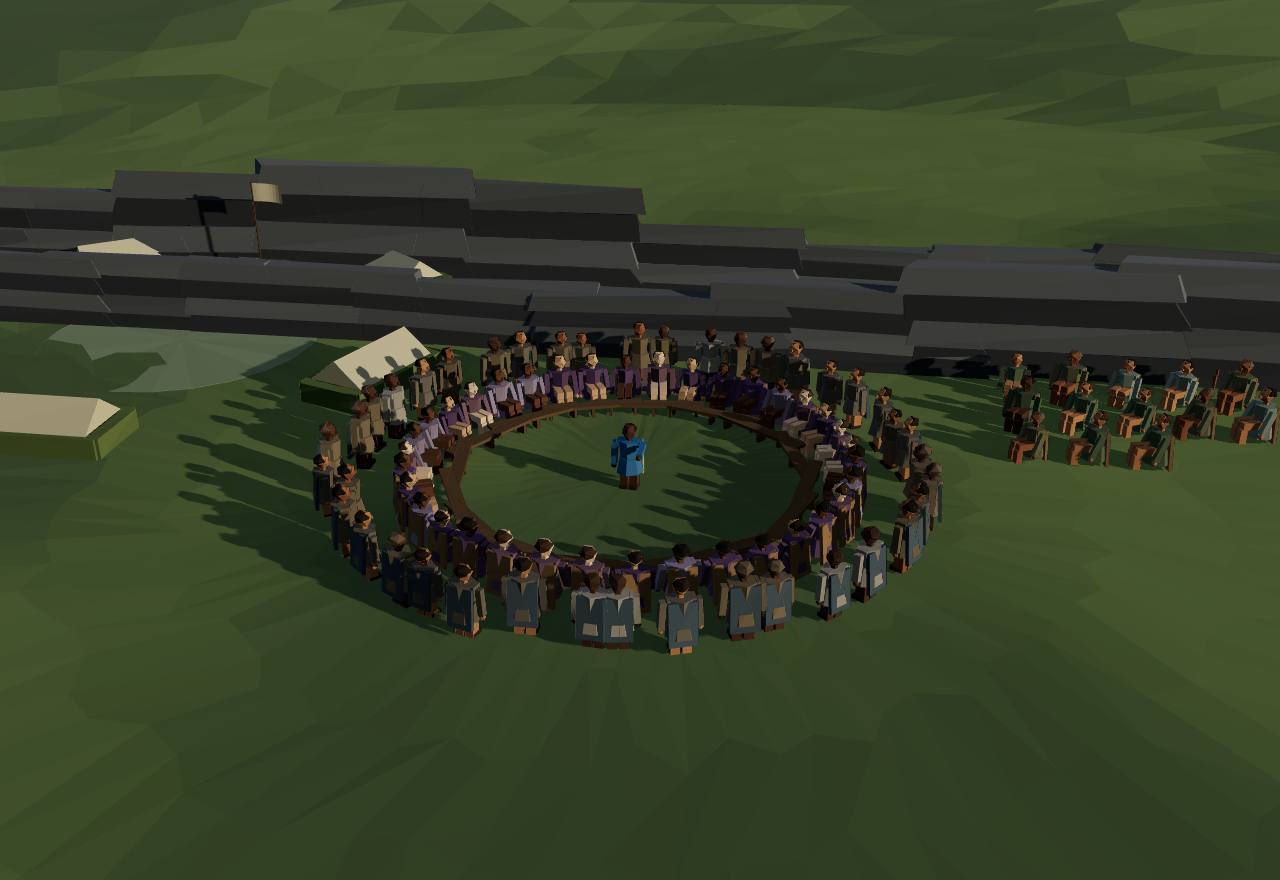
The Law Council at the Althing
The Althing met each summer at Þingvellir for two weeks; after 999 it was convened between 18 and 24 June. Every chieftain had to come with one-ninth of his assembly men. At the Law-Rock, on the eastern side of the Almannagjá rift, the lawspeaker had his seat, the assembly was opened and closed, the courts set out and the law was spoken. UNESCO counts the remains of about 50 turf-and-stone booths. 1,2 Consensus Texts Excavation
The lawspeaker was “Iceland’s only paid secular official”, elected for a three-year term that could be renewed. He presided over the Althing, declared the rules of procedure each year and had to speak the whole law from memory in the course of his term; his fee was 240 ells of homespun and half of the fines from lawsuits. He “had no executive powers”. 1,10,35 Consensus Texts
Around 965, after a killing case could not be prosecuted for fighting, Iceland was divided into quarters with three spring assemblies each, four in the north. The chieftains went from 36 to 48, three to each assembly, and nine new chieftains from the southern, western and eastern quarters sat in the Law Council to redress the imbalance of the north’s fourth assembly. Four quarter courts of 36 judges sat at the Althing. 1 Consensus Texts
The Law Council (lögrétta) was the chieftains, each with two advisors, the lawspeaker, and later the two bishops. It passed and amended laws, interpreted them when their meaning was disputed, granted exemptions and elected the lawspeaker. Friedman reads the sources as majority voting, “subject apparently to attempts to first achieve unanimity”. 1,35 Consensus Texts
Skapti Þóroddsson, lawspeaker from 1004, “instituted the Fifth Court”. It heard cases of false witness and broken procedure, and cases on which a quarter court could not agree: each of the 48 chieftains nominated a judge and 36 judged, by majority. A quarter court, by Friedman’s reading, needed at most six of its 36 judges dissenting. Njáls saga tells the founding as Njáll’s proposal, but its account “is not usually taken to be historically accurate”. 1,35,36 Consensus Texts
A goðorð was a bundle of rights, a vote in the Law Council and the right to name judges, and “could be purchased, offered as a gift, or inherited”. A farmer joined a chieftain by a public declaration and could leave him the same way, but only for another chieftain in his own quarter unless the Law Council allowed it. 10,35 Consensus Texts
There was no executive. A court gave a verdict, almost always a fine; if the loser did not pay, the winner could sue again and have him outlawed, and the outlaw’s killer could not be prosecuted. A man too weak to pursue a case could hand it to someone stronger, “either gratis or in return for a consideration”. 35,10 Consensus Texts
Political rights were narrow. Bishop Gizurr had the householders counted about 1100: 840, 1,200, 1,080 and 1,440 in the four quarters, 4,560 in all, not counting those who paid no assembly dues. Gogłoza sets that against a population of about 60,000: servants (griðmenn) followed their master’s chieftain, and slaves had no political rights at all. 1,10 Consensus Texts
In 999/1000 the Christians and heathens at the Law-Rock declared themselves “under separate laws”. The lawspeaker Þorgeirr, still a heathen, lay a day and a night under his cloak, then told them: “if we tear apart the law, we will also tear apart the peace.” Both sides accepted the one law he proclaimed: everyone was to be baptised, with exposure of children, horse-flesh and private sacrifice tolerated for a time. 1 Consensus Texts
The houses show the inequality. Gogłoza, from excavated Viking-age longhouses, gives 40–80 m² for a typical floor and over 100 m² for a fair share; the largest recorded, at Hofstaðir in Mývatnssveit, had 276 m². The largest and best-placed farms, he argues, were the chieftains’. 10 Consensus Excavation
The balance broke in the thirteenth century. In 1190 secular and church offices were separated, many chieftains being priests; the leading chieftains then claimed territorial domains (ríki), and by about 1220 “fewer than ten such domains existed in the country”. Their wars are the Sturlung Age; Friedman notes that the richest men then held wealth worth “about a thousand cows”. 16,35 Consensus Texts
How power worked Council of elders or heads · Mixed · Independent courts
How power worked
- Who rules
- Council of elders or heads Debated
Why?
- How chosen
- Mixed Debated
Why?
- Limits on power
- Independent courts Consensus
Why?
- Scale
- Confederation Debated
Why?
- Claim to rule
- Law Consensus
Why?
- Who has a say
- Property owners Debated
Why?
Two weeks at the Althing, and how a court reached a verdict
Model, not evidence
- May: the spring assemblies. Each spring assembly, convened by three chieftains, met when four to six weeks of summer had passed, for four to seven days, mainly to judge. 1
- Late June: the ride to Þingvellir. After 999 the Althing was convened on the Thursday after ten weeks of summer (between 18 and 24 June); before that, people came a week earlier. Every chieftain had to attend with one-ninth of his assembly men; the householders who stayed at home paid the assembly attendance dues. 1
- The opening at the Law-Rock. The chieftain who held the allsherjargoði’s office hallowed the assembly at its opening. At the Law-Rock, on the eastern side of Almannagjá, the assembly was inaugurated and the lawspeaker had his seat. 1
- The lawspeaker speaks the law. Each year he declared the rules of procedure; over his three-year term he had to speak the whole law from memory, and he advised anyone who asked what the law was. 1,35
- The Law Council (lögrétta) sits. The chieftains, each with two advisors, the lawspeaker and later the two bishops: it passed and amended laws, interpreted them when disputed, granted exemptions and elected the lawspeaker. After the reforms Friedman attributes to Njáll, it decided by majority vote, after first trying for unanimity. 1,35
- The courts go out. The courts started out from the Law-Rock: four quarter courts, each of 36 judges named by the chieftains, judged cases first heard there and appeals from the spring assemblies. 1,35
- The Fifth Court (from c. 1004). Cases of false witness and broken procedure, and cases on which a quarter court could not agree, went to the Fifth Court: 48 judges nominated, 36 judging, by majority. 1
- The close, two weeks on. The assembly was concluded at the Law-Rock, where all official announcements were made. A man who lost and would not pay could be sued again and outlawed; enforcement was left to the winner and his friends. 1,35
24 to 12: more than 6 dissent, so the quarter court gives no verdict; the case goes to the Fifth Court.
After a verdict the court almost always imposed a fine. If the loser did not pay, the winner could sue again and have him outlawed; enforcement was left to the winner and his friends. 35
The model applies the stated rules only. What happened on an 18-to-18 tie in the Fifth Court is not in the sources, and Njáls saga’s account of the court’s founding “is not usually taken to be historically accurate”. 1,36
Four quarters, thirteen spring assemblies, forty-eight chieftains
Data: Íslendingabók chs 5 and 10 with Grønlie’s notes; Gogłoza
About 965 Iceland was divided into four quarters with three spring assemblies each, four in the north. Three chieftains convened each assembly, so the chieftains went from 36 to 48: 39 who convened the 13 assemblies, and nine more from the south, west and east so that every quarter had the same number in the Law Council. 1 About 1100 Bishop Gizurr had the householders who paid the assembly dues counted: 4,560 in all. 1,10
Breiðafjörður Quarter (west)
- Spring assemblies
- 3
- Law Council seats
- 12 (9 convening + 3 added)
- Householders, c. 1100
- 1,080
Eyjafjörður Quarter (north)
- Spring assemblies
- 4
- Law Council seats
- 12 (12 convening)
- Householders, c. 1100
- 1,440
Eastern Fjords Quarter (east)
- Spring assemblies
- 3
- Law Council seats
- 12 (9 convening + 3 added)
- Householders, c. 1100
- 840
Rangá Quarter (south)
- Spring assemblies
- 3
- Law Council seats
- 12 (9 convening + 3 added)
- Householders, c. 1100
- 1,200
Equal seats did not mean equal numbers: the north had the most householders and the east the fewest. And householders were a small part of the people. Gogłoza sets the 4,560 against a population of about 60,000; servants followed their master’s chieftain, and slaves had no political rights at all. 10
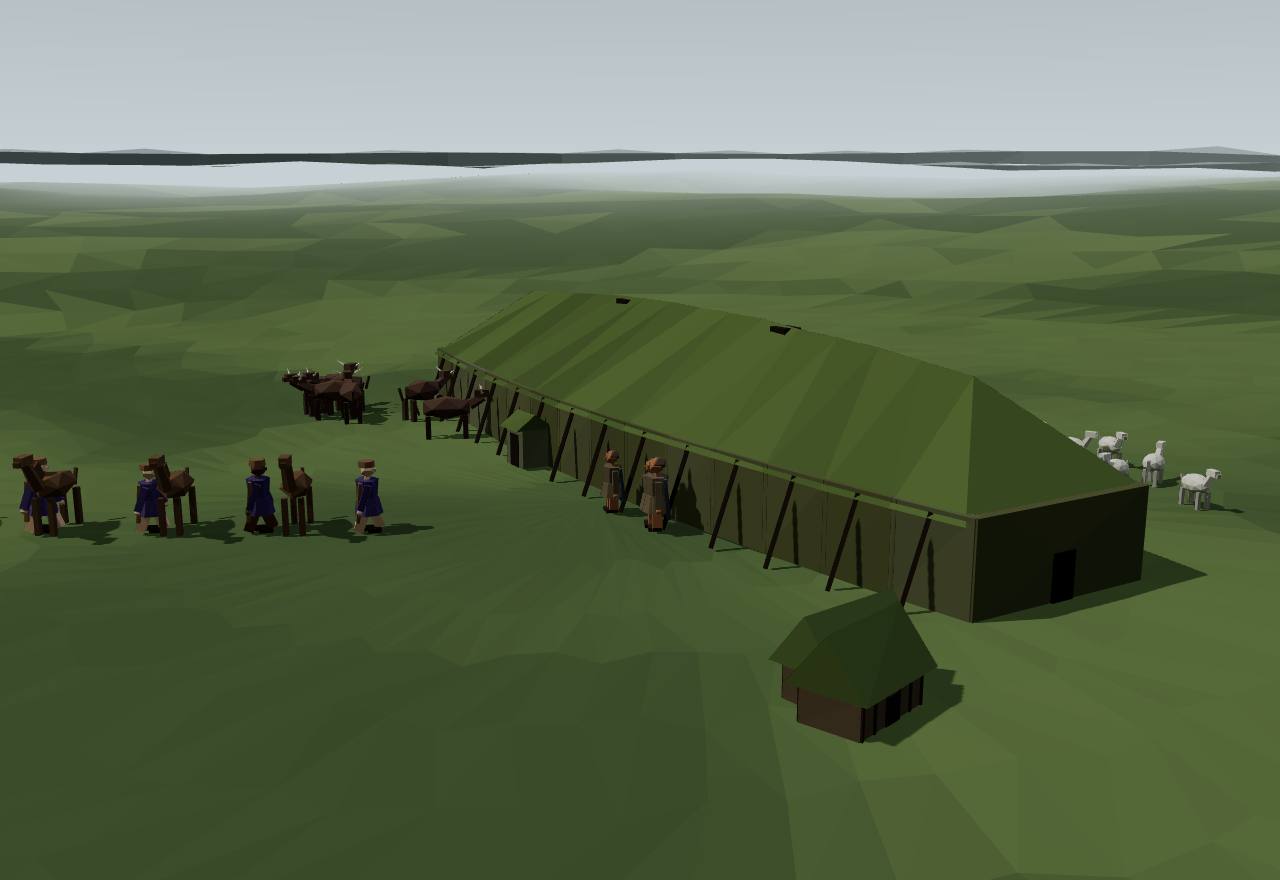
A chieftain’s farm
Norway930 CE – 1262 CEFrosta
Norway’s kings came from one family, but each had to be taken as king at the things, and the law was the things’ law: four districts, each with its own. By Snorri’s thirteenth-century telling the farmers could make a king back down. From the twelfth century the Church crowned kings, and civil wars ended in a stronger monarchy.
Terms: Norse assemblies: Iceland, Norway and the Isles: The Althing and the regional things, Norway
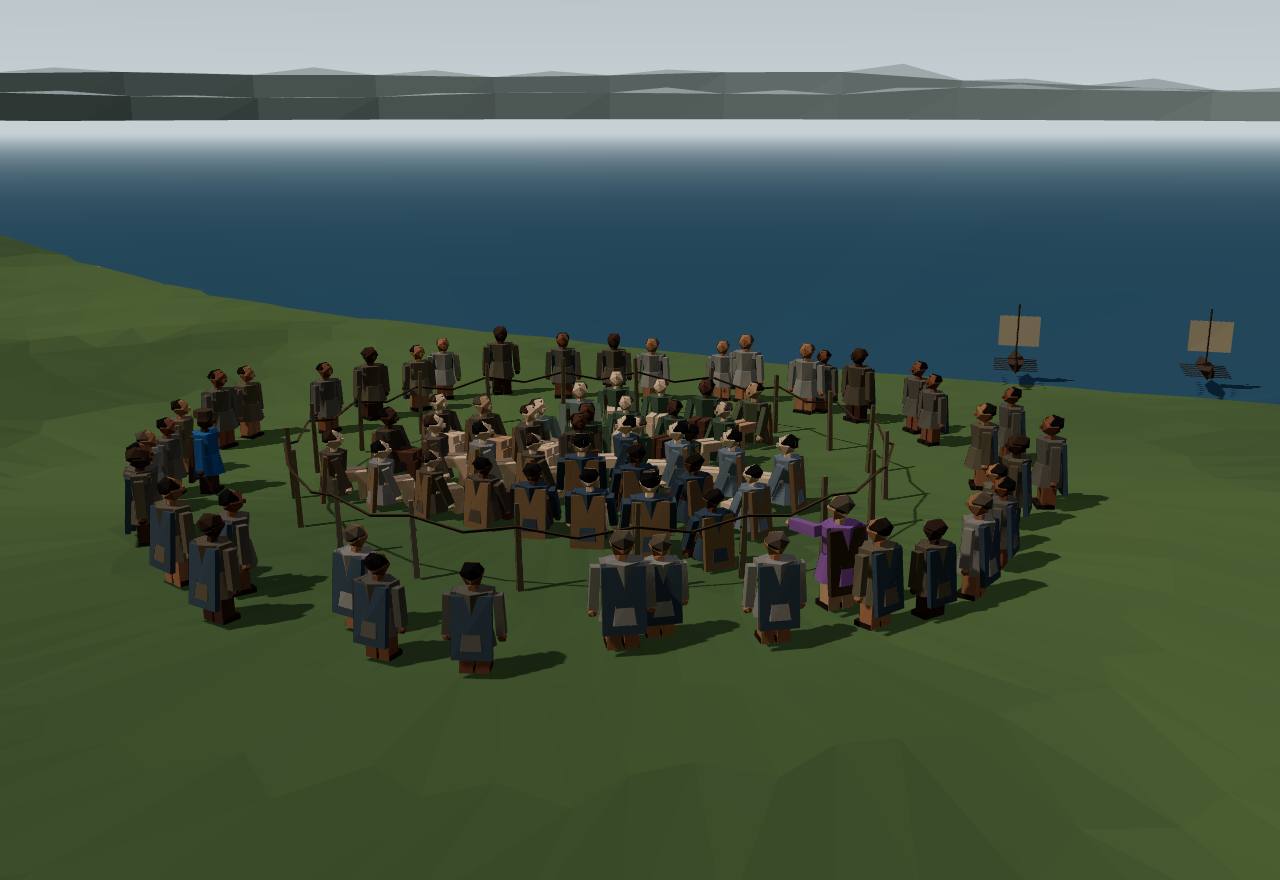
The Gulathing: a court inside the hazel ring
Snorri tells how Hakon, Harald Fairhair’s son, came from England in 934 and offered himself at a thing in Trøndelag: he “desired from them the title of king” and promised the farmers their udal rights back. “The whole public cried and shouted that they would take him to be king”, and he was then “proclaimed king at every Thing”. This is a story written about 1230. 3,1 Debated Texts
In Snorri’s account of the Frosta-thing of 950, Hakon asked the farmers to be baptised. Asbjorn of Medalhus answered that they had let him “rule and give law and right to all the country”, but if he forced them, “we bondes have resolved among ourselves to part with thee, and to take to ourselves some other chief”. Earl Sigurd announced that the king would give way. 3 Debated Texts
Kings were made at a thing. When Magnus, Olaf’s son, came to Nidaros he “summoned the people to the Eyra-thing”, where he “was taken to be king over the whole land”. Laing’s note: “At the Thing held here the kings of Norway were chosen and proclaimed.” 3 Debated Texts
Egil’s saga, another thirteenth-century Icelandic text, describes the court at the Gulathing as “a level plot, with hazel-poles planted in a ring, and outside were twisted ropes all around”, with “twelve judges of the Firth-folk, twelve of the Sogn-folk, twelve of the Horda-folk” inside. In its story the queen’s brother and his men “cut in sunder the precinct-ropes and tore down the poles, and scattered the judges”. 38 Debated Texts
The king had no fixed council. In the 1911 Britannica’s account it “was composed of the local lendermænd”, the barons of whichever district he was in, which helped with local law but hindered unification; a permanent council came only in 1319. 5 Consensus Texts
The Church entered king-making. In 1164 the archbishop of Trondheim crowned Magnus Erlingsson, “demanding that the crown should be held as a fief of the Norwegian Church”. Sverre, who defeated him in 1184, answered with “his own divine right as king”. Haakon IV was chosen king in 1217, but the Church refused to recognise him until 1223 because of his birth. 5,39 Consensus Texts
Under Haakon IV, “the Icelandic chiefs acknowledged the Norwegian king as overlord in 1262”, and the Norse in Greenland followed. In 1263 he sailed against Scotland over the Hebrides and died in Orkney that December. 39 Consensus Texts
How power worked King · Heredity · Assembly or tribune veto
How power worked
- Who rules
- King Consensus
Why?
- How chosen
- Heredity Debated
Why?
- Limits on power
- Assembly or tribune veto Debated
Why?
- Scale
- Territorial state Consensus
Why?
- Claim to rule
- Divine mandate Debated
Why?
- Who has a say
- Property owners Debated
Why?
Man and the Isles1079 CE – 1262 CETynwald Hill
In 1079 Godred Crovan, a Norse warlord, conquered the Isle of Man and founded a kingdom of Man and the Isles that reached up the Hebrides. Its kings were sons of the dynasty, chosen or acclaimed by the chiefs of the islands and at times vassals of Norway; its people met at Tynwald.
Terms: Norse assemblies: Iceland, Norway and the Isles: The Althing and the regional things, Man and the Isles
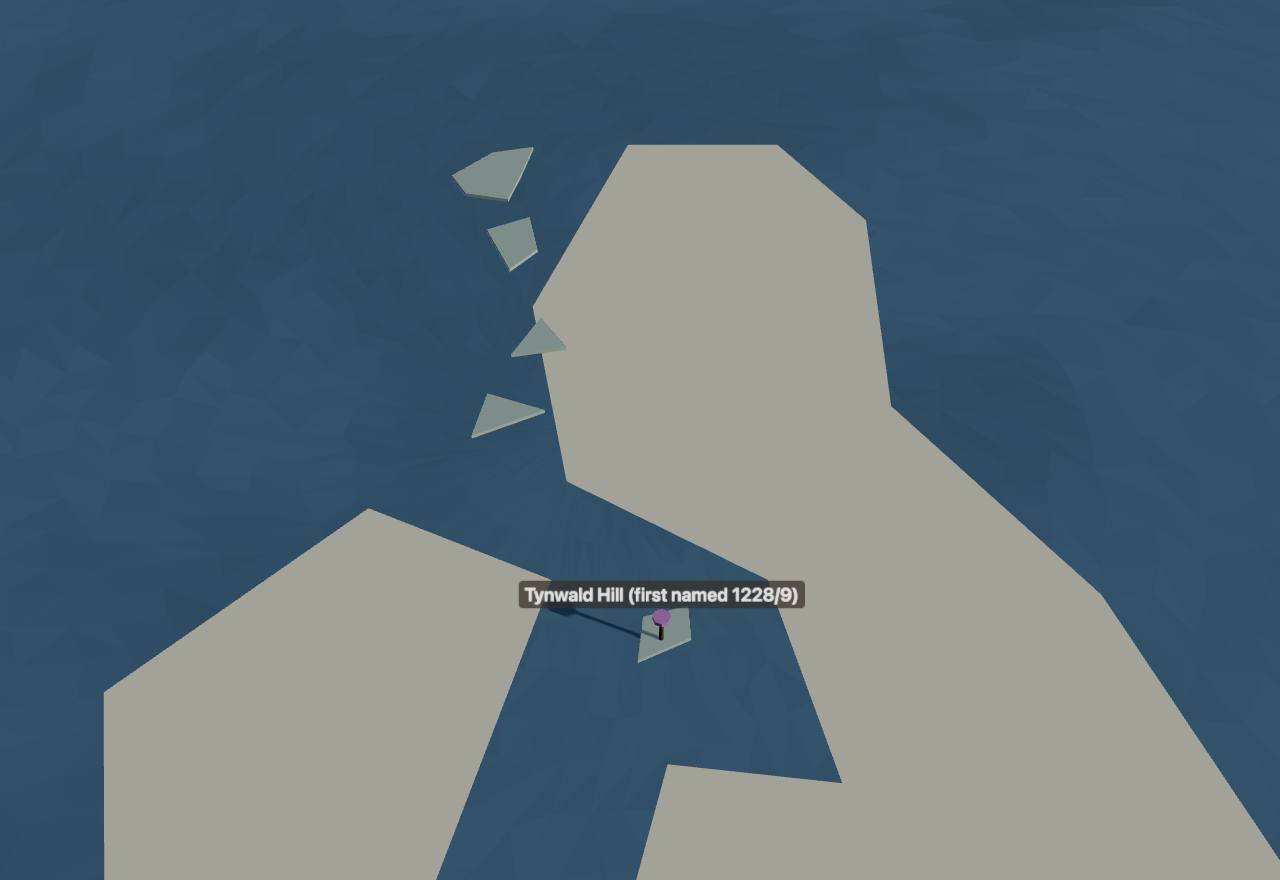
The Kingdom of the Isles, 1085–1176 (Cliopatria)
Places: 1 cited site over Cliopatria (CC BY 4.0) territories, drawn flat and low. Tynwald Hill (first named 1228/9) 28,4
The Chronicle of Man tells how Godred Crovan took Man at his third attempt (the 1911 Britannica dates it 1079), then gave the south of the island to the islanders who had fought for him and the north to the Manx “on condition that none of them should ever presume to claim any of the land by hereditary right”, so that “the whole island belongs to the king alone”. 4,40 Consensus Texts
The chiefs of the Isles had a say in who was king. After Godred’s son Lagman, they asked the king of Ireland for “some competent person of the royal race to be their king, till Olave, son of Godred should have grown up”; later Ingemund, sent by the king of Norway “to take possession of the kingdom of the Isles”, summoned them “to assemble and declare him king”. 4 Consensus Texts
Olave’s son Godred “crossed over the sea to the King of Norway … and did homage to him”. When his father was killed, “all the chiefs of the Isles … assembling together, unanimously elected him for their king”, and he came to Man and avenged the killing. 4 Consensus Texts
The kingdom split in the 1150s. Olave’s daughter married Somerled, Lord of Argyll, which the chronicler calls “the cause of the ruin of the whole kingdom of the Isles”; Somerled’s descendants held the southern Hebrides as a kingdom of their own and “the kingdom has remained divided”. Cliopatria’s Kingdom of the Isles ends in 1176. 4,7,31 Consensus Texts Survey
The first assembly the Chronicle records at Tynwald is in 1237: on 25 October “a meeting was held of all the people of Man at Tynwald”, where the king’s guardian and the sons of Nel came with their followers; “they were unable to come to terms, rushed out of the assembly, and came to blows”, and two of Nel’s sons were killed. The Chronicle names “the place called Tynwald” earlier, as the scene of a fight between rival kings in 1228/9. 4,41 Consensus Texts
Edge and Pearce describe the early Tynwald as “a ‘law-speaking’ assembly: two Deemsters learned in the customary law expounded and applied that law with the assistance of twenty-four respected men from all parts of the kingdom”. Wolf adds that keys came from across the kingdom of Man and the Isles, and that after the split it kept twenty-four. 6,7 Debated Texts
How old Tynwald is cannot be settled from the record. Edge and Pearce note that its origins “are often dated to 979, making it the oldest continuous legislature in the world”, and Tynwald’s own history says “no other parliament in the world has such a long unbroken record”, placing its final establishment under Godred Crovan. Against that, a Virginia Tech master’s thesis calls 979 “backwards speculation”, since Tynwald appears in the Chronicle only in 1237; no peer-reviewed study settles it. 6,41,7,4 Debated Texts
How power worked King · Mixed · Custom and kin
How power worked
- Who rules
- King Consensus
Why?
- How chosen
- Mixed Debated
Why?
- Limits on power
- Custom and kin Debated
Why?
- Scale
- Territorial state Consensus
Why?
- Claim to rule
- Kinship and descent Debated
Why?
- Who has a say
- A narrow elite Debated
Why?
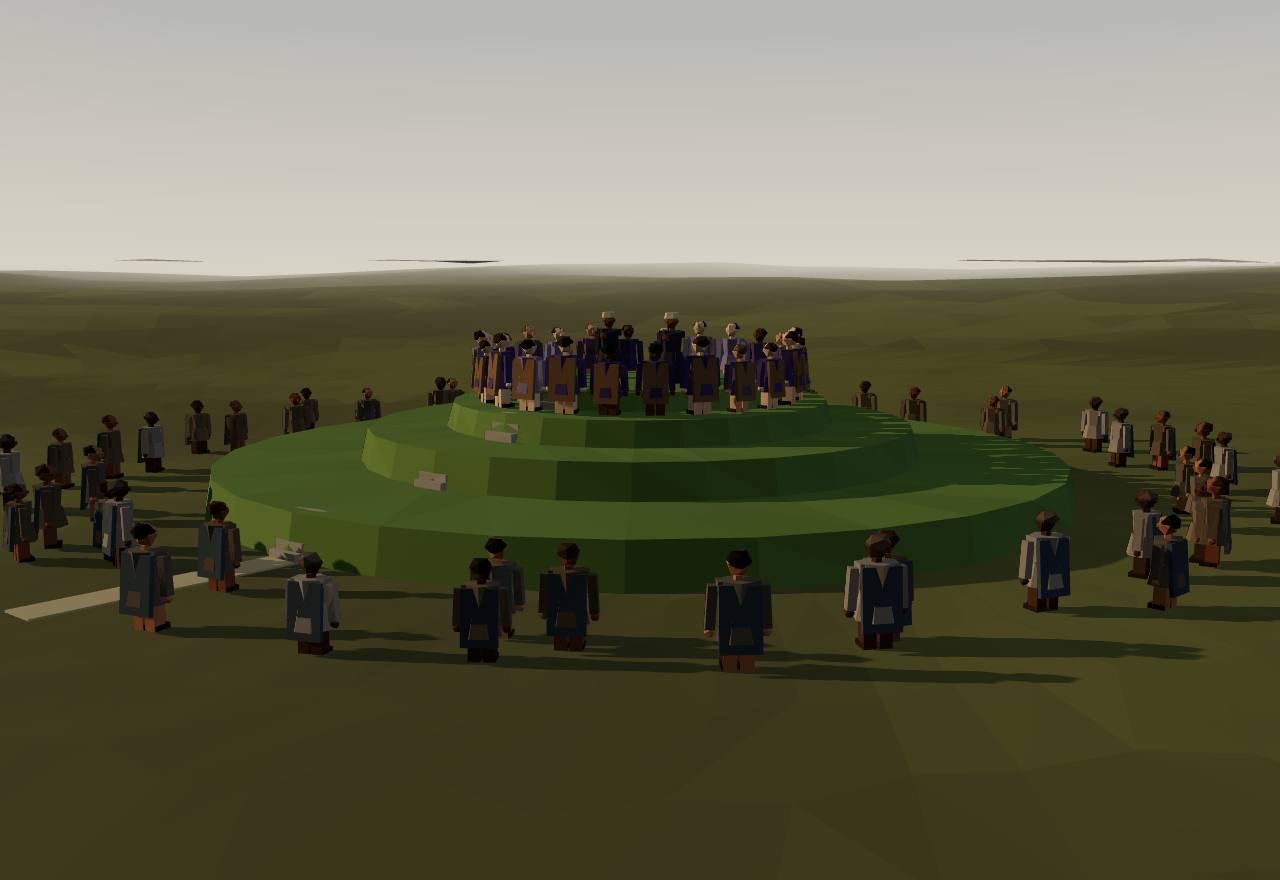
Tynwald Hill: law-speaking, and 25 October 1237
1262 CE – 1397 CE
Under the Norwegian crown
Between 1262 and 1264 Iceland accepted the king of Norway. The king’s code replaced the Commonwealth’s laws, but the Althing still met. Norway lost Man and the Hebrides to Scotland, gave itself a single law and a standing council, and in 1397 entered a union with Denmark and Sweden under one crowned king. Man passed between Scottish and English lords, and Tynwald went on meeting.
Cliopatria draws the Old Kingdom of Norway to 1401, in personal union with Sweden in slices from 1326 to 1374 and with Denmark from 1385, and the Kalmar Union from 1402. The Isle of Man is drawn on its own only from 1344. 31 Consensus Survey
Norway’s line of kings ended in 1387 with Olaf V. The 1911 Britannica: the throne was filled “by election—an innovation in Norway”; the choice fell on Olaf’s mother Margrete and then on her great-nephew Erik of Pomerania, who “in 1397, at Kalmar, … was solemnly crowned king over the three countries, which entered into a union ‘never to be dissolved.’” 5 Consensus Texts
The crown’s sea-realm was widest just as it began to shrink. In the 1911 Britannica’s account, the acquisition of Iceland “was at length realized” under Haakon IV; after his death in 1263 his son Magnus gave up the Hebrides and Man, seeing “the worthlessness of a doubtful suzerainty over islands which had lost their value to Norway since the decay of Viking enterprise”. 5 Consensus Texts
In Iceland the old assembly order was dismantled. The 1911 Britannica lists what came instead: a royal governor, counties (sýslur) under sheriffs appointed by the king, and “a royal court” in place of the Althing courts, so that the goðorð, the local things and the quarter courts “were swept away by these innovations”. 32 Consensus Texts
Sanmark finds the assemblies moving into towns: the “most striking pattern to emerge in the late Middle Ages is the gradual merging of top-level assemblies, trade and episcopal sees in the towns”. Even so the meetings themselves stayed outdoors until the late sixteenth or seventeenth century. 33,12 Consensus Excavation Survey
Iceland1262 CE – 1397 CEÞingvellir
Iceland submitted quarter by quarter in 1262–64. In return the king promised ships. Within twenty years Norwegian codes replaced the old laws, a royal governor and sheriffs appeared, and Iceland had an executive for the first time, though a light one. The Althing still met at Þingvellir, now as part of the king’s government.
Terms: Norse assemblies: Iceland, Norway and the Isles: Under the Norwegian crown, Iceland
- ríki a chieftain’s territorial domain in the last decades of the Commonwealth 16
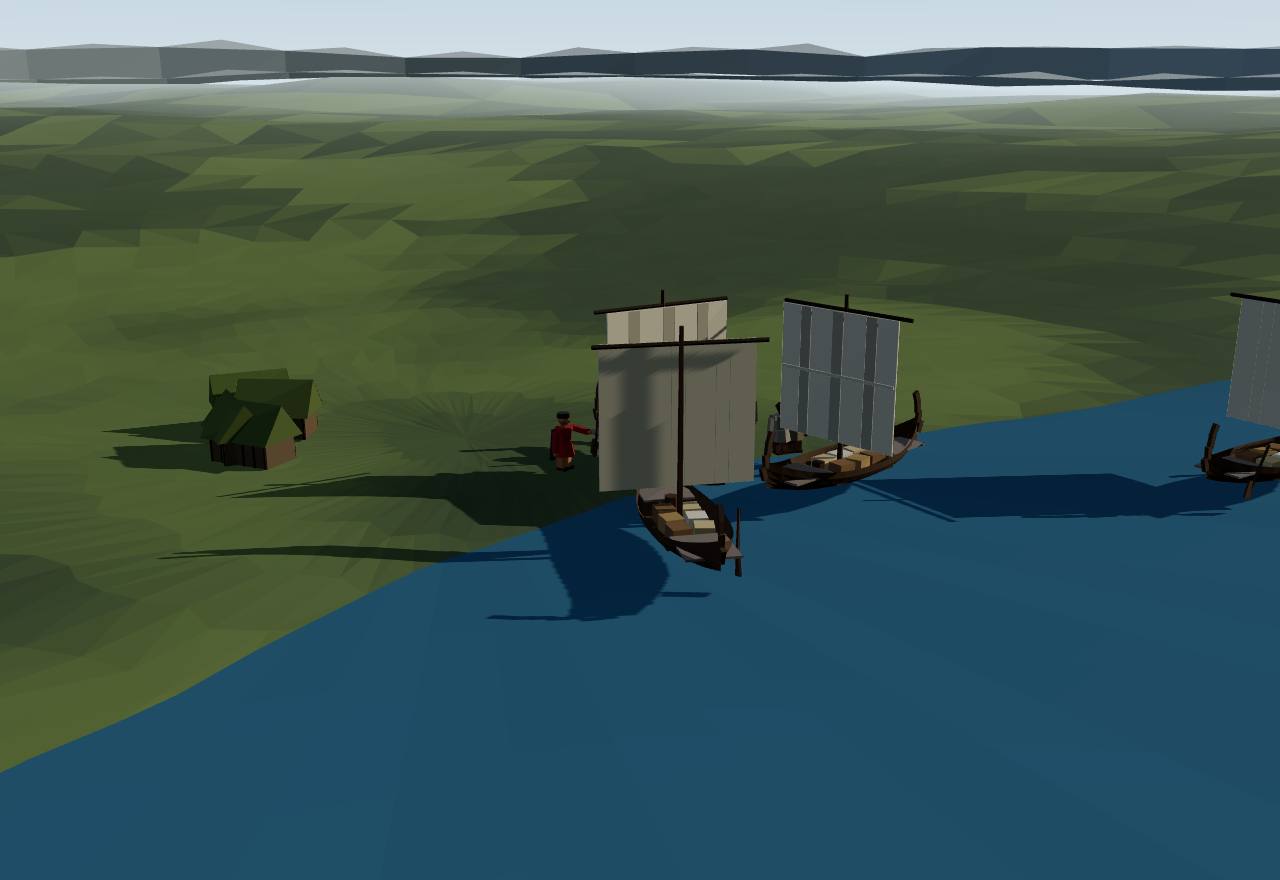
Six ships a summer: the Old Covenant
After the civil wars the island submitted “quarter after quarter” in 1262–1264, and the Commonwealth’s law was replaced by the Norwegian code “Ironside” in 1271, according to the 1911 Britannica. Jakobsson dates the end of incorporation to the acceptance of the law code “known as the Jónsbók in 1281”. 32,16 Consensus Texts
The agreement of 1262, later called the Old Covenant, has the king guarantee “that six ships would sail from Norway to Iceland in the following two summers” and after that as many as he and the leading farmers thought fit. The clause was restated in 1302; about twenty years later Icelanders asked for two ships to the south, two to the north, one to the West Fjords and one to the east. 42 Consensus Texts
Jakobsson: Norwegian rule “marked the introduction of executive power in the country”, a novelty, though “the impact of government was relatively light the first centuries and the number of government officials was small”. Regulating trade was one of its main functions; in the fourteenth century trade ran by monopoly through Bergen. 16 Consensus Texts
Seshat’s coding of the change: the Commonwealth has no full-time bureaucrats and no professional soldiers before 1201; Iceland under Norway has both, and five administrative levels from the king through a governor (hirðstjóri), “but lawmen and Alþingi at the same level”, to sheriffs, communes and households. SeshatDB Consensus Survey
The king’s demands grew. Þórhallsson, after Þorsteinsson and Jónsson: in the fourteenth century Icelandic exports paid a five per cent tariff, the six ships had to give the crown a quarter of their space, and the king rented out the “tax province” for three years at a time; Bergen became Iceland’s commercial and administrative centre, and foreigners were barred from sailing there. 42 Consensus Texts
Icelanders served the new order. Sturla Þórðarson, historian of the civil wars, “came back in 1271, with the new Norse law-book, and served a second time as lawman”, the 1911 Britannica records; he wrote the sagas of King Haakon and King Magnus at Magnus’s request. 32 Consensus Texts
Iceland passed with Norway into a Danish-led union. The 1911 Britannica’s table puts “Danish rule, 1380”; Seshat ends its period of Norwegian rule in 1380 and codes the next polity as the Kalmar Union, and seshat-db records a personal union in 1362–1364. 32 SeshatDB Consensus Texts Survey
How power worked King · Heredity · Written law
How power worked
- Who rules
- King Consensus
Why?
- How chosen
- Heredity Debated
Why?
- Limits on power
- Written law Consensus
Why?
- Scale
- Territorial state Consensus
Why?
- Claim to rule
- Divine mandate Consensus
Why?
- Who has a say
- Property owners Debated
Why?
Norway1262 CE – 1397 CEFrosta
After 1262 Norway’s king ruled from Greenland to the Barents Sea. Magnus the Law-Mender gave the kingdom one law in place of the districts’ four; councils of royal officials replaced the local barons. In 1319 a permanent council was formed, and when the royal line died out the throne was filled by election and joined to Denmark and Sweden.
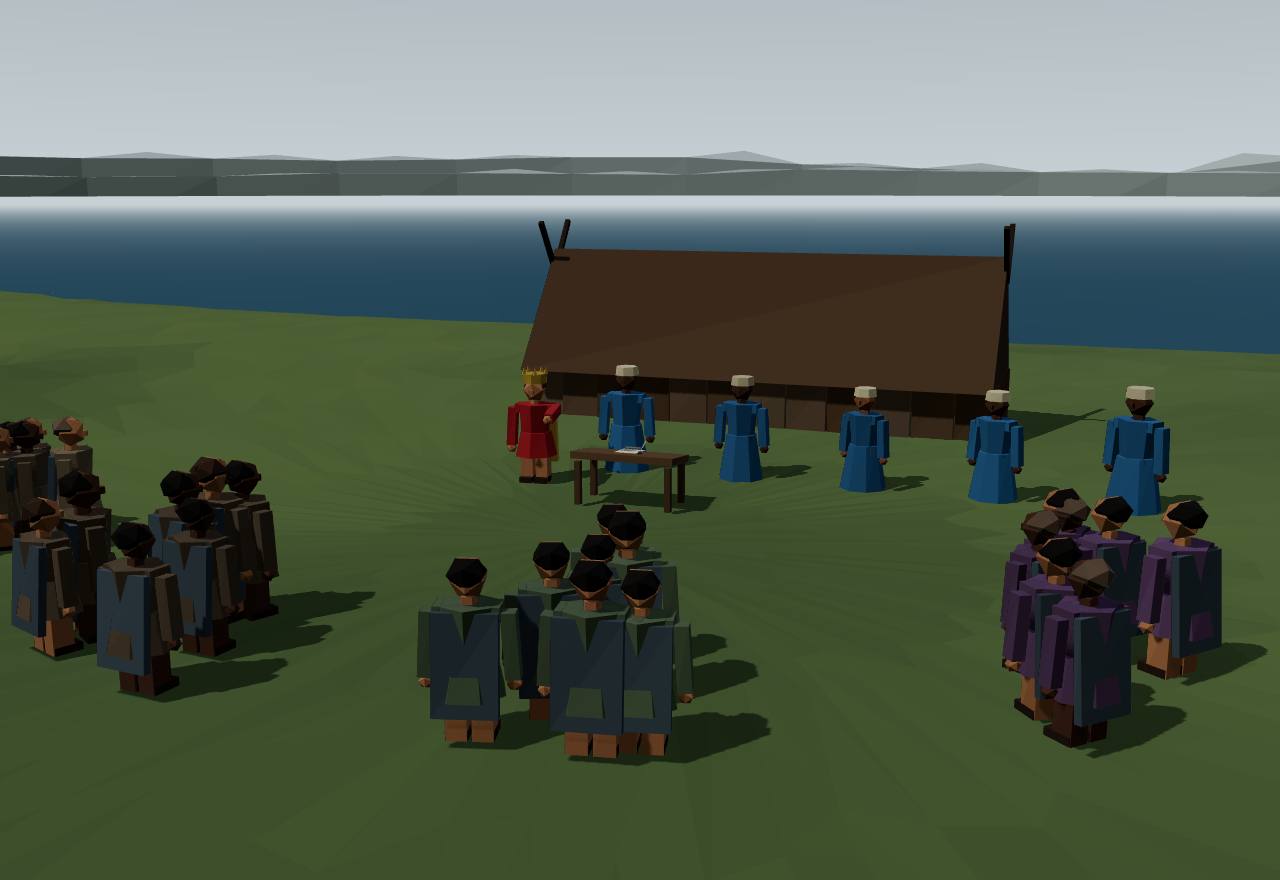
Magnus the Law-Mender’s code, 1274
Magnus, Haakon IV’s son, took his name, the Law-Mender, from revising the laws, “still different for the four different districts”. By 1274 he had “secured the acceptance of a revised compilation of the older law-books”, which repealed the old wergild laws: most of the fine for a killing went to the victim’s heir, “the remainder to the king”. 5 Consensus Texts
Magnus gave up the Hebrides and Man to Scotland. The Chronicle of Man records that in 1266 “the kingdom of Man and the Isles was transferred to Alexander King of the Scots”, for 4,000 marks by the 1911 Britannica’s article on Man; the Britannica’s Norway article dates the treaty of Perth to 1268. 4,40,5 Consensus Texts
The council changed. From Magnus’s reign it “comes more and more to be composed of the king’s court officials” instead of the barons of whatever district the king was in, and a larger council, “occasionally called palliment (parliament)”, met at the king’s wish. Haakon V abolished the barons’ dignity (lendermænd) in 1308, and in 1319 a permanent council was formed. 5 Consensus Texts
Haakon V’s three-year-old grandson Magnus succeeded to the Norwegian and Swedish thrones in 1319, “the two countries entering into a union which was not definitely broken till 1371”. The Black Death ravaged Norway in his reign. His grandson Olaf V, already king of Denmark, succeeded in 1380. 5 Consensus Texts
The 1911 Britannica’s historian saw a “paralysis of the aristocracy”: trade was “almost monopolized by Germans”, Viking enterprise was past, and Magnus’s laws show “the class of thralls had practically disappeared”, so the class that “had once been the chief factor in the government of Norway” lost its wealth. 5 Debated Texts
Seshat does not chart Norway itself in this period: its two records for the “Kingdom of Norway” after 1262 are coded for Iceland as part of the realm, and its record for Norway before 1262 is empty. This case has no Seshat column. 8 SeshatDB Consensus Survey
How power worked King · Heredity · Council
How power worked
- Who rules
- King Consensus
Why?
- How chosen
- Heredity Debated
Why?
- Limits on power
- Council Debated
Why?
- Scale
- Territorial state Consensus
Why?
- Claim to rule
- Divine mandate Debated
Why?
- Who has a say
- A narrow elite Debated
Why?
Man1266 CE – 1397 CETynwald Hill
In 1266 Man passed to the king of Scots, who took it by battle in 1275. For seventy years it changed hands between Scotland and England, then was granted and sold among English lords. The lords kept the Norse assembly: in the early fifteenth century Tynwald still met in the open, with a lord’s court added to the law-speaking of the Deemsters and Keys.
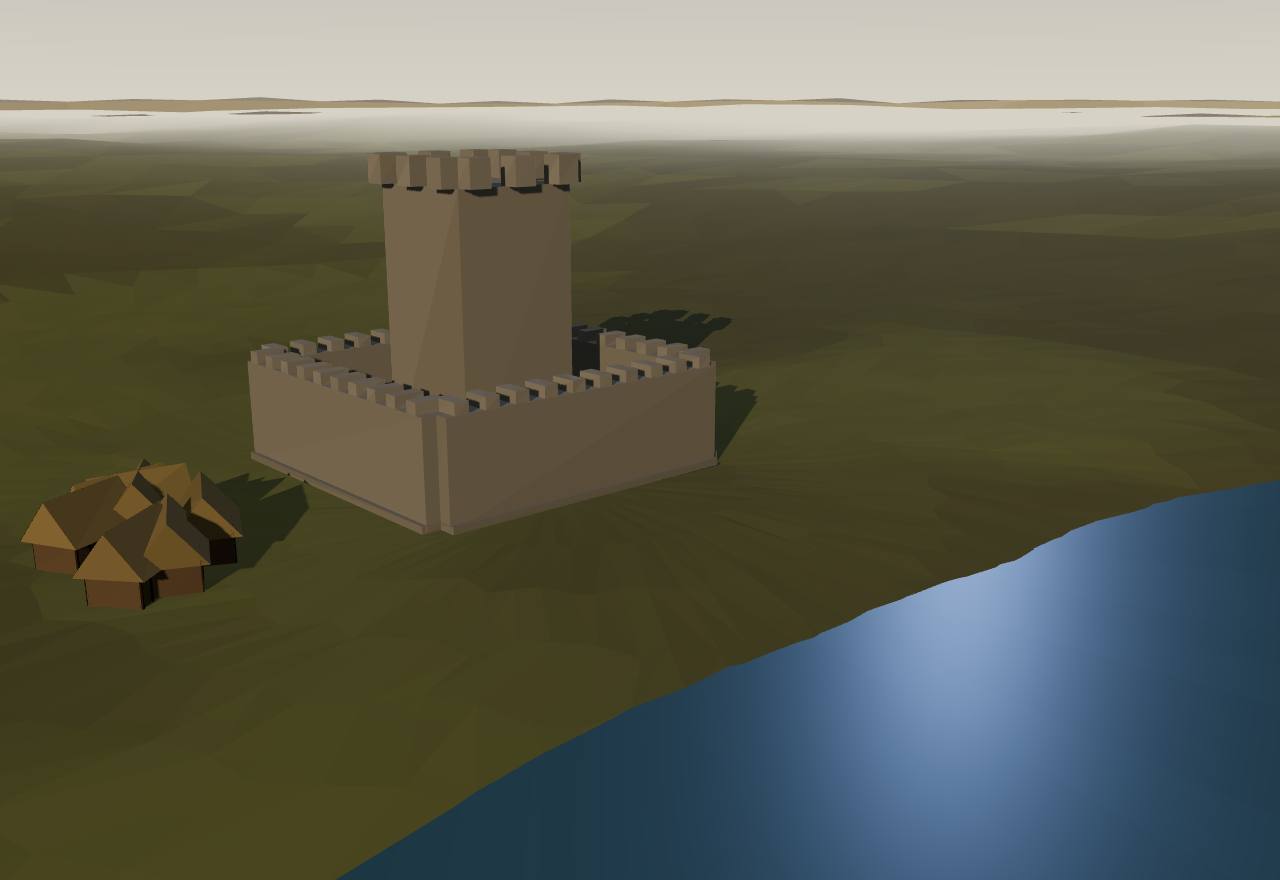
Castle Rushen and Ronaldsway, 1265–1313
The last king of the dynasty, Magnus, “died … at Rushen castle” on 24 November 1265, the Chronicle records; “in the year 1266, the kingdom of Man and the Isles was transferred to Alexander King of the Scots”. 4 Consensus Texts
The Manx resisted. On 7 October 1275 a Scottish fleet put in at Ronaldsway and “the Scots prevailing slew 537 Manxmen”, the Chronicle says; the 1911 Britannica calls it the battle that firmly established Scotland’s rule. 4,40 Consensus Texts
Then Man changed hands. Edward I of England held it by 1290; Robert Bruce took it in 1313 after besieging Castle Rushen (the Chronicle: he landed at Ramsey on 18 May). Until 1346 it went between England and Scotland; about 1333 Edward III granted it to William de Montacute; in 1392 his son sold it “with the crowne” to William Le Scroope, and in 1399 it fell to the English crown. 40,4,6 Consensus Texts
Edge and Pearce read the early fifteenth-century account prefixed to the first entry of the Manx statute book (the session of 18 January 1417) as adding a second element to Tynwald: a feudal ceremony at which the barons owed the lord suit of court and fealty. “The feudal court and the law-speaking assembly remained two quite distinct elements of the annual Tynwald gathering.” 6 Consensus Texts
Wolf’s thesis describes the post-Norse Tynwald as meeting irregularly, as a court “to decide on matters of law and advise the king or deemsters”, more for “recalling and proclaiming ancient ordinances” than for making new law; in 1420 Sir John Stanley II had the traditional law recorded for the first time. 7 Debated Texts
Tynwald’s own account stresses continuity: the Norse “had firmly imposed their own administrative system, which continued even while the Island’s ownership passed between Scotland and England”, under the Stanley Lords of Mann (from 1405 by Tynwald’s count; the 1911 Britannica dates Henry IV’s grant to 1406) “a number of accounts have survived of the remarkably unchanging Tynwald Day ceremonies”. 41 Debated Texts
Cliopatria draws the Isle of Man as a separate polity in two slices, 1344–1394 and 1395–1401; before 1344 it is drawn only within the Kingdom of the Isles (to 1176). 31 Consensus Survey
How power worked King · Conquest or coup · Custom and kin
How power worked
- Who rules
- King Consensus
Why?
- How chosen
- Conquest or coup Consensus
Why?
- Limits on power
- Custom and kin Debated
Why?
- Scale
- Empire Debated
Why?
- Claim to rule
- Force Consensus
Why?
- Who has a say
- A narrow elite Debated
Why?
Artefacts
 Cast
In numbers
Who spoke the law? Ari’s lawspeakers, 930–1134
Data: Íslendingabók, dated in Grønlie’s table
Ari lists 18 terms held by 16 men between about 930 and 1134. Terms ran from one summer (Gunnarr the Wise, 1075) to 27 summers (Skapti Þóroddsson, 1004–1030); Gellir Bǫlverksson and Gunnarr the Wise served twice. The office was elected by the Law Council for three years at a time and could be renewed, so long terms mean re-election; Ari had the list from the lawspeaker Markús Skeggjason, who had it from his family. 1
- Elected (the rule)
- chosen by the Law Council; Ari names the holder and his summers, not the vote
- Passed on by the holder
- 1004: Grímr, hoarse, “got permission for his sister’s son” Skapti to take it
18 accessions: 17 elected (the rule), 1 passed on by the holder; median reign 8 years. Ended: 1 died in office, 1 abdicated, 16 not known.
Marks at the end of a bar: ○ died in office · × killed · ▽ deposed · | abdicated · □ conquered
Show the table: Lawspeakers of the Commonwealth, 930–1134 (Ari’s list)
| Ruler | Years | Came to power | Reign ended | Source |
|---|---|---|---|---|
| Hrafn Hœngsson | 930 CE – 949 CE | Elected (the rule) | not known (‘held it for twenty summers’) | 1 |
| Þórarinn Ragi’s brother | 950 CE – 969 CE | Elected (the rule) | not known | 1 |
| Þorkell Moon | 970 CE – 984 CE | Elected (the rule) | not known (fifteen summers; consented to the calendar reform) | 1 |
| Þorgeirr Þorkelsson | 985 CE – 1001 CE | Elected (the rule) | not known (proclaimed the conversion in 999/1000) | 1 |
| Grímr Svertingsson | 1002 CE – 1003 CE | Elected (the rule) | abdicated (gave it up because he was hoarse) | 1 |
| Skapti Þóroddsson | 1004 CE – 1030 CE | Passed on by the holder | died in office (instituted the Fifth Court; died the year Óláfr the Stout fell) | 1 |
| Steinn Þorgestsson | 1031 CE – 1033 CE | Elected (the rule) | not known | 1 |
| Þorkell Tjǫrvason | 1034 CE – 1053 CE | Elected (the rule) | not known | 1 |
| Gellir Bǫlverksson | 1054 CE – 1062 CE | Elected (the rule) | not known | 1 |
| Gunnarr the Wise | 1063 CE – 1065 CE | Elected (the rule) | not known | 1 |
| Kolbeinn Flosason | 1066 CE – 1071 CE | Elected (the rule) | not known (took office the summer King Haraldr fell in England) | 1 |
| Gellir Bǫlverksson (again) | 1072 CE – 1074 CE | Elected (the rule) | not known | 1 |
| Gunnarr the Wise (again) | 1075 CE – 1075 CE | Elected (the rule) | not known | 1 |
| Sighvatr Surtsson | 1076 CE – 1083 CE | Elected (the rule) | not known | 1 |
| Markús Skeggjason | 1084 CE – 1107 CE | Elected (the rule) | not known (Ari’s source for the earlier terms; the tithe law under his guidance) | 1 |
| Úlfheðinn Gunnarsson | 1108 CE – 1116 CE | Elected (the rule) | not known | 1 |
| Bergþórr Hrafnsson | 1117 CE – 1122 CE | Elected (the rule) | not known (the laws written down in the winter of 1117–18) | 1 |
| Guðmundr Þorgeirsson | 1123 CE – 1134 CE | Elected (the rule) | not known | 1 |
- Marks, by Seshat polity:
- Icelandic Commonwealth
- Kingdom of Norway
- Kingdom of Norway II
- Background bands, by phase:
- Things in the Viking age
- The Althing and the regional things
- Under the Norwegian crown
| Seshat polity | Years | Value |
|---|---|---|
| Icelandic Commonwealth | 930 CE – 1262 CE (whole period) | 103,000 |
| Kingdom of Norway | 1262 CE – 1380 CE (whole period) | 103,000 |
| Kingdom of Norway II | 1262 CE – 1396 CE (whole period) | 103,000 |
| Seshat polity | Years | Value |
|---|---|---|
| Icelandic Commonwealth | 930 CE | 5,000–20,000 |
| Icelandic Commonwealth | 1100 CE | 30,000 |
| Icelandic Commonwealth | 1200 CE | 30,000–50,000 |
| Icelandic Commonwealth | 1262 CE | 50,000–60,000 |
| Kingdom of Norway | 1262 CE – 1380 CE (whole period) | 50,000–90,000 |
| Kingdom of Norway II | 1262 CE – 1396 CE (whole period) | 50,000–90,000 |
| Seshat polity | Years | Value |
|---|---|---|
| Icelandic Commonwealth | 930 CE – 1262 CE (whole period) | 200–300 |
| Kingdom of Norway | 1262 CE – 1380 CE (whole period) | 200–300 |
| Kingdom of Norway II | 1262 CE – 1396 CE (whole period) | 200–300 |
| Seshat polity | Years | Value |
|---|---|---|
| Icelandic Commonwealth | 930 CE – 1262 CE (whole period) | 4 |
| Kingdom of Norway | 1262 CE – 1380 CE (whole period) | 5 |
| Kingdom of Norway II | 1262 CE – 1396 CE (whole period) | 5 |
| Seshat polity | Years | Value |
|---|---|---|
| Icelandic Commonwealth | 930 CE – 1050 CE | 1 |
| Icelandic Commonwealth | 1051 CE – 1200 CE | 2 |
| Icelandic Commonwealth | 1201 CE – 1262 CE | 3 |
| Kingdom of Norway | 1262 CE – 1380 CE (whole period) | 3 |
| Kingdom of Norway II | 1262 CE – 1396 CE (whole period) | 3 |
| Seshat polity | Years | Value |
|---|---|---|
| Icelandic Commonwealth | 930 CE – 1200 CE | 2 |
| Icelandic Commonwealth | 1201 CE – 1262 CE | 3 |
| Kingdom of Norway | 1262 CE – 1380 CE (whole period) | 3 |
| Kingdom of Norway II | 1262 CE – 1396 CE (whole period) | 3 |
Values as Seshat codes them: bands are ranges, dots single values, flat bars values given for a whole period, hatching “unknown”; from one Seshat polity to the next, marks alternate between a light tone and a darker one with dashed joining lines (the key above names each polity). Source: Seshat Global History Databank (Equinox-2020), CC BY 4.0; and the Seshat Databank, seshat-db.com (no licence stated; attribution).
Governance fingerprint
Seshat's institutional variables, phase by phase. Hover or focus a cell for the values and years.
- Present
- Inferred present
- Absent
- Inferred absent
- Unknown
- Not coded in Seshat
- Mixed: present in one Seshat polity or period, absent in another
Not coded in Seshat: Things in the Viking age, The Althing and the regional things: Norway, The Althing and the regional things: Man and the Isles, Under the Norwegian crown: Norway, Under the Norwegian crown: Man. The Seshat Databank has no polity for them, so their six axes rest on the cited scholarship alone.
The axes against Seshat
4 agree, 1 disagree.
- Disagree The Althing and the regional things: Iceland: limits on power coded “Independent courts”, which implies courts present; Seshat has it absent.
Show the 4 pairs that agree
- Agree The Althing and the regional things: Iceland: claim to rule coded “Law”, which implies formal legal code present; Seshat has it present.
- Agree Under the Norwegian crown: Iceland: claim to rule coded “Divine mandate”, which implies rulers legitimated by gods present; Seshat has it present.
- Agree Under the Norwegian crown: Iceland: limits on power coded “Written law”, which implies formal legal code present; Seshat has it present.
- Agree Under the Norwegian crown: Iceland: how chosen coded “Heredity”, which implies elite status hereditary present; Seshat has it present.
Only pairs where an axis value on its own implies a Seshat variable are compared; the rest is not counted as disagreement. 1 more pair has no Seshat value.
Source: Seshat Global History Databank (Equinox-2020), CC BY 4.0; Seshat Databank, seshat-db.com (no licence stated; attribution).
Compare
| Axis | Norse assemblies: Iceland, Norway and the Isles | Latin Europe: The Merovingians | Greece: Athens | Kievan Rus and Novgorod: Kievan Rus |
|---|---|---|---|---|
| Who rules | Citizen assembly | King | Elected magistrates | King |
| How chosen | Acclamation | Heredity | Mixed | Heredity |
| Limits on power | Custom and kin | Custom and kin | Written law | Written law |
| Scale | Confederation | Territorial state | City-state | Confederation |
| Claim to rule | Kinship and descent | Kinship and descent | Law | Kinship and descent |
| Who has a say | Property owners | A narrow elite | Property owners | A narrow elite |
Legacy
The Althing met at Þingvellir until 1798. UNESCO inscribed the site in 2004 as the place of “an open-air assembly representing the whole of Iceland”, with the remains of about 50 turf-and-stone booths. 2 Consensus Texts Excavation
Tynwald still meets. Its own history says “no other parliament in the world has such a long unbroken record”; Edge and Pearce note the common claim that it is “the oldest continuous legislature in the world”, which rests on the 979 tradition. 41,6 Debated Texts
The Commonwealth became a test case in political theory. Friedman’s 1979 article read it as law made and enforced privately; Gogłoza’s 2018 critique of the “anarchist visions” it inspired answers that the free farmers were a small part of the people, and that their political rights “were in reality privileges of a narrow elite”. 35,10 Consensus Texts
See also forms of government.
Sources
Bibliography
45 sources, numbered as cited: 6 papers · 14 books · 16 datasets · 8 primary sources · 1 popular
- Primary Ari Þorgilsson; Kristni saga (trans. S. Grønlie) (2006). Íslendingabók — Kristni saga: The Book of the Icelanders — The Story of the Conversion. Viking Society for Northern Research, Text Series XVIII. Read in full: the introduction on dating (Íslendingabók 1122–33), the table of dates and the list of lawspeakers (pp. xlvii–xlviii), Íslendingabók chs 2–10 and notes 25–99 (the Law-Rock, the Law Council, quarter courts, the Fifth Court, the lawspeaker’s duties, the assembly dues), which cite Grágás (Dennis, Foote and Perkins) by page.
- Dataset UNESCO World Heritage Centre (2004). Þingvellir National Park (World Heritage List no. 1152). UNESCO open data, World Heritage List dataset whc001. Record read 16 Nov 2026: ‘an open-air assembly representing the whole of Iceland, was established in 930 and continued to meet until 1798’; ‘fragments of around 50 booths built from turf and stone’; position 64.25381 N, 21.03725 W.
- Primary Snorri Sturluson (trans. S. Laing) (1844). Heimskringla; Or, The Chronicle of the Kings of Norway. Project Gutenberg eBook 598. Written in Iceland c. 1230 (Grønlie 2006, intro.). Read: Saga of Hakon the Good chs 1–2, 11, 17 (Hakon taken as king at a Thing, the Gula-thing and Frosta-thing laws, the Frosta-thing of 950), Saga of Magnus the Good ch. 3 and Laing’s note on the Eyra-thing.
- Primary P. A. Munch and A. Goss (eds and trans.) (1874). Chronica Regum Manniae et Insularum: The Chronicle of Man and the Sudreys, vol. I. Manx Society vol. XXII (transcribed by F. Coakley, A Manx Notebook). Latin text with Goss’s English translation. Read pp. 44–122: Godred Crovan’s conquest, Godred son of Olave’s homage in Norway and his election by the chiefs, the place called Tynwald (1228/9), the meeting of all the people of Man at Tynwald (1237), Magnus’s death (1265), the transfer to Scotland (1266), Ronaldsway (1275), Robert Bruce (1313). The chronicle’s own years run ahead or behind in places; Munch’s corrections are printed beside them.
- Book Encyclopaedia Britannica, 11th edition (1911). Norway (Encyclopædia Britannica, 1911). Wikisource. History section (B. S. Phillpotts) read: the Frostathing, Gulathing, Eidsivathing and Borgarthing districts; the king’s council; Sverre; Magnus the Law-Mender’s code (1274); the council of 1319; the elections of 1388–89 and Kalmar 1397; the table of reigns. It dates the treaty of Perth to 1268 (the Chronicle of Man: 1266).
- Paper Edge, P. W. and Pearce, A. (2006). The Development of the Lord Bishop’s Role in the Manx Tynwald. The Journal of Ecclesiastical History 57 (3). Read in full (Oxford Brookes RADAR copy): the introduction and ‘Ecclesiastical membership of Tynwald before the nineteenth century’ (the law-speaking assembly, the Deemsters and the twenty-four Keys, the 1417 session).
- Paper Wolf, C. (2014). Exploring Legal Multiculturalism in the Irish Sea: Irish and Norse Influence on State Formation on the Isle of Man from 900-1300. MA thesis, Virginia Tech. A master’s thesis. Read the introduction and historical background: the 979 date as ‘backwards speculation’, the first chronicle entry in 1237, the twenty-four keys.
- Dataset Seshat: Global History Databank (2026). Kingdom of Norway I: Seshat Databank record (no_norway_k_1). seshat-db.com, read 15–16 Nov 2026. The record has no variables with data, so early Norway is not charted.
- Dataset Seshat: Global History Databank (2026). Medieval Denmark and Sweden: Seshat Databank records (dk_danish_k, sv_swedish_k_1). seshat-db.com, read 15–16 Nov 2026. One record each, so medieval Denmark and Sweden are not charted.
- Paper Gogłoza, W. (2018). Anarchist Visions of the Medieval Icelandic Non-State Socio-Political Order – an Outline of a Critique. Krakowskie Studia z Historii Państwa i Prawa (special issue, English version), pp. 47–67. Read in full (ejournals.eu PDF): sections I–III on the goðar, the goðorð, the bændr, the griðmenn, slaves, longhouse floor areas and the hreppr, with Grágás references.
- Book Sanmark, A. (2017). Viking Law and Order: Places and Rituals of Assembly in the Medieval North. Edinburgh University Press. Book abstract read: ‘the assembly institution was brought to all Norse settlements’.
- Book Sanmark, A. (2017). Assemblies in the Longue Durée. Viking Law and Order: Places and Rituals of Assembly in the Medieval North (Edinburgh University Press). Chapter abstract read: a Germanic tradition ‘traced back to the first century AD’; outdoor thing sites ‘the norm until the late sixteenth or the seventeenth century’.
- Primary Rimbert (trans. C. H. Robinson) (1921). Anskar, the Apostle of the North, 801-865. Internet Medieval Sourcebook, Fordham University. Rimbert’s Life of Anskar, written in the ninth century. Read chs 26–27: Anskar’s second visit to Birka, the lots cast on the plain and the two assemblies.
- Dataset UNESCO World Heritage Centre (1993). Birka and Hovgården (World Heritage List no. 555). UNESCO open data, World Heritage List dataset whc001. Record read 16 Nov 2026: Birka ‘one of the most important mercantile towns in Northern Europe between about AD 750 and AD 980’, governed from the royal residence at Hovgården; Anskar’s mission; position 59.33514 N, 17.54264 E (Birka).
- Book Sanmark, A. (2017). Introducing the Assembly Sites of Scandinavia. Viking Law and Order: Places and Rituals of Assembly in the Medieval North (Edinburgh University Press). Chapter abstract read: a ‘shared idea of what constituted an assembly site existed in the minds of the Norse’; top-level sites have ‘the most striking monuments and design’.
- Book Jakobsson, S. (2024). Medieval Iceland. Routledge (Studies in Medieval History and Culture). The open PDF from Taylor & Francis has the front matter, the introduction (‘Long-Term Economic and Social Trends’, §§ 0.1–0.4) and the bibliography; only these were read.
- Book Sanmark, A. (2017). The Norse in the North Atlantic: Iceland, Faroe Islands and Greenland. Viking Law and Order: Places and Rituals of Assembly in the Medieval North (Edinburgh University Press). Chapter abstract read: the same concept as in Scandinavia, but ‘assembly booths were constructed and there is no coincidence between burials and assemblies’.
- Book Sanmark, A. (2017). The Norse in Scotland: Assembly and New Ancestors. Viking Law and Order: Places and Rituals of Assembly in the Medieval North (Edinburgh University Press). Chapter abstract read: the Norse appropriated existing monuments, ‘above all large mounds’; the best evidence is from Orkney and Shetland.
- Book Sanmark, A. (2017). Assembly Sites in Scandinavia: Activities and Rituals of the Community. Viking Law and Order: Places and Rituals of Assembly in the Medieval North (Edinburgh University Press). Chapter abstract read: feasting, games, trade; ‘kings were elected and ruled through the assembly, while at the same time continuously dependent on the endorsement of the people’.
- Book Sanmark, A. (2017). Early Germanic and Norse Assembly Organisations. Viking Law and Order: Places and Rituals of Assembly in the Medieval North (Edinburgh University Press). Chapter abstract read: who could take part; ‘the elite was the most influential’; the male-female division ‘shown to be invalid’.
- Book Sanmark, A. (2017). Elite Rituals at Scandinavian Assemblies. Viking Law and Order: Places and Rituals of Assembly in the Medieval North (Edinburgh University Press). Chapter abstract read: rituals ‘elite-driven’; the elite ‘competed with rivals through the design of their thing sites’.
- Dataset Wikidata contributors (2026). Eidsvoll: location (Wikidata Q11186060). Wikidata, CC0. Read 16 Nov 2026: 60.3283 N, 11.2583 E.
- Dataset Wikidata contributors (2026). Kjalarnes: location (Wikidata Q786704). Wikidata, CC0. Read 16 Nov 2026: 64.2333 N, 21.9 W.
- Dataset Wikidata contributors (2026). Þórsnes: location (Wikidata Q8079574). Wikidata, CC0. Read 16 Nov 2026: 65.02869 N, 22.75993 W.
- Dataset Wikidata contributors (2026). Eivindvik, Gulen: location (Wikidata Q1926397). Wikidata, CC0. Read 16 Nov 2026: 60.98111 N, 5.07361 E; the Wikidata item for the Gulathing site (Q11973182) has no coordinates, so the pin is the settlement in Gulen.
- Dataset Wikidata contributors (2026). Logtun, Frosta: location (Wikidata Q15094676). Wikidata, CC0. Read 16 Nov 2026: 63.5675 N, 10.70222 E; the Frostathing item (Q1770089) has no coordinates, so the pin is the village of Logtun on Frosta.
- Dataset Wikidata contributors (2026). Sarpsborg: location (Wikidata Q10661956). Wikidata, CC0. Read 16 Nov 2026: 59.28391 N, 11.10962 E.
- Dataset Wikidata contributors (2026). Tynwald Hill: location (Wikidata Q62647872). Wikidata, CC0. Read 16 Nov 2026: 54.20375 N, 4.642352 W.
- Dataset Wikidata contributors (2026). Tinganes, Tórshavn: location (Wikidata Q513509). Wikidata, CC0. Read 16 Nov 2026: 62.00806 N, 6.76972 W.
- Dataset Wikidata contributors (2026). Law Ting Holm, thingstead, Loch of Tingwall: location (Wikidata Q56666566). Wikidata, CC0. Read 16 Nov 2026: 60.173308 N, 1.2480563 W.
- Dataset Bennett, J. S., Mutch, E., Tollefson, A., et al. (2025). Cliopatria - A geospatial database of world-wide political entities from 3400BCE to 2024CE. Scientific Data 12. Cliopatria: open geospatial dataset of over 1600 political entities, 3400 BCE–2024 CE.
- Book Encyclopaedia Britannica, 11th edition (1911). Iceland (Encyclopædia Britannica, 1911). Wikisource. History and literature sections read: the civil wars, the submission ‘quarter after quarter’ in 1262–1264, the code ‘Ironside’ (1271), Sturla Þórðarson as lawman, ‘Danish rule, 1380’.
- Book Sanmark, A. (2017). Centralisation of Power: Christianity and Urbanisation. Viking Law and Order: Places and Rituals of Assembly in the Medieval North (Edinburgh University Press). Chapter abstract read: ‘the gradual merging of top-level assemblies, trade and episcopal sees in the towns’ in the late Middle Ages.
- Primary Dennis, A., Foote, P. and Perkins, R. (trans.) (1980). Laws of Early Iceland. University of Manitoba Press (Grágás I). Publisher’s description read: ‘Known collectively as Gragas (Greygoose), this great legal code…’. The volume is not open; its provisions are cited on this page through Grønlie’s notes and Gogłoza, who give its page and paragraph numbers.
- Paper Friedman, D. (1979). Private Creation and Enforcement of Law: A Historical Case. The Journal of Legal Studies 8. Read in full in the author’s scanned copy (daviddfriedman.com/Academic/Iceland/Iceland.html): sections I, III–V and the note on the Sturlung period.
- Primary Brennu-Njáls saga (trans. G. W. Dasent) (1861). The Story of Burnt Njal. Project Gutenberg eBook 17919. A thirteenth-century saga; its account of the founding of the Fifth Court ‘is not usually taken to be historically accurate’ (Grønlie 2006, note 80). Read the chapter in which Njal proposes the Fifth Court.
- Paper Jakobsson, S. (2009). The Process of State-Formation in Medieval Iceland. Viator 40 (2). Abstract read on Brepols Online (pp. 151–170).
- Primary Egils saga Skallagrímssonar (trans. W. C. Green) (1893). Egil’s Saga. Icelandic Saga Database. A thirteenth-century Icelandic saga set in the tenth century. Read chs 56–57: Egil’s suit at the Gula-thing, the court in its ring of hazel poles and ropes, the three twelves of judges, and the court broken up.
- Book Encyclopaedia Britannica, 11th edition (1911). Haakon (Encyclopædia Britannica, 1911). Wikisource. Read: Haakon I the Good and Haakon IV the Old (chosen king in 1217; the Icelandic chiefs ‘acknowledged the Norwegian king as overlord in 1262’).
- Book Encyclopaedia Britannica, 11th edition (1911). Man, Isle of (Encyclopædia Britannica, 1911). Wikisource. History section (A. W. Moore) read: the Scandinavian epochs before and after Godred Crovan’s conquest in 1079, the cession of 1266 for 4000 marks, Ronaldsway 1275, English and Scottish rule to 1346, Montacute (c. 1333), the sale of 1392 and the grant of 1406.
- Popular Tynwald (Isle of Man parliament) (2026). Tynwald Day In History. tynwald.org.im. The parliament’s own account, read 16 Nov 2026: ‘No other parliament in the world has such a long unbroken record’; Godred Crovan’s conquest in 1079 and the view that ‘the institution of Tynwald was finally and permanently established during his reign’; Broderick’s translation of the 1237 entry; the account of the Tynwald of 1691.
- Paper Þórhallsson, B. (2012). Iceland’s external affairs in the Middle Ages: The shelter of Norwegian sea power. Stjórnmál og stjórnsýsla 8 (1). Read in full (ojs.hi.is PDF): the abstract, the trade section (the six-ship clause of 1262 and its restatement in 1302, the 14th-century tariff), and the political section.
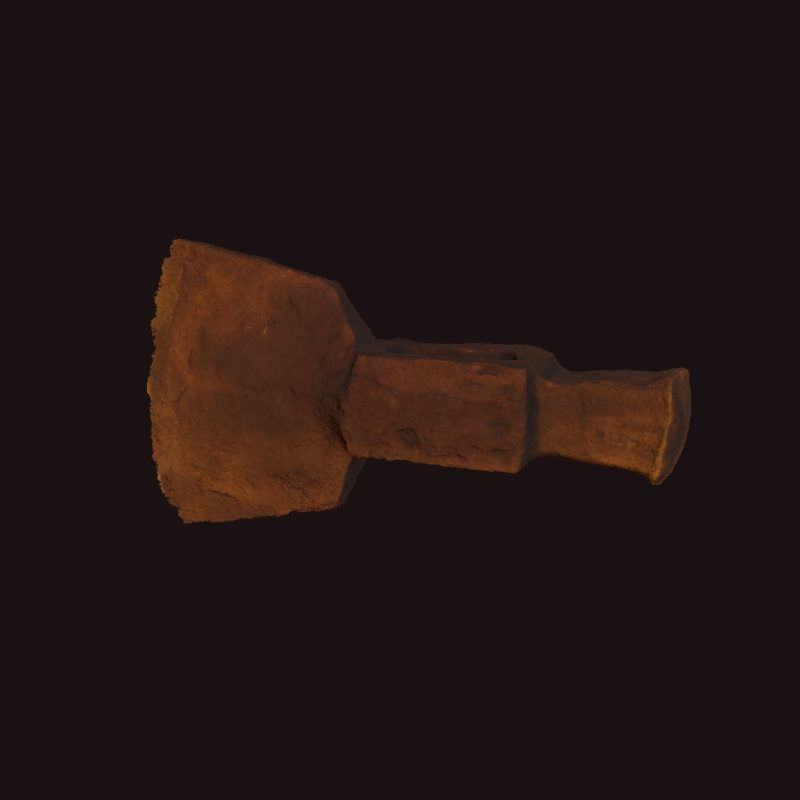
- Dataset National Historical Museums (Statens historiska museer), Stockholm (2026). Viking Age iron axe from Birka (3D model, SHM 1206487). Zenodo (3D model and record, CC BY 4.0). Record read 16 Nov 2026: a photogrammetric model of ‘an iron axe from the Swedish Viking Age’, ‘collected from Birka in Adelsö Parish in the province of Uppland’, held by the National Historical Museums; licence cc-by-4.0 in the record’s metadata.
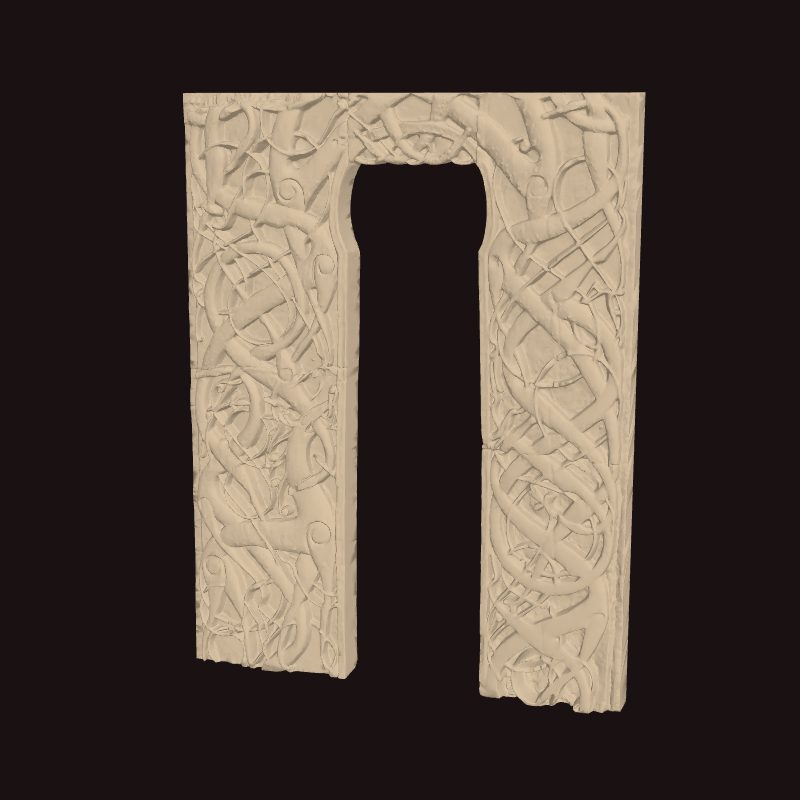
- Primary SMK – Statens Museum for Kunst (2020). Reliefs and portal from Urnes (Relieffer og portal, KAS2912): plaster cast and 3D scan. Royal Cast Collection, Copenhagen. Record read 16 Nov 2026 (api.smk.dk): rights Public Domain Mark 1.0, public_domain true; plaster cast, mould made in Bergen. The original (ORIG2625) is wood, ‘Ca. 1050-1100’, from the first stave church at Urnes in Luster, Sogn, reused on the north side of the second church (c. 1125); owner listed as Historisk Museum, Oslo.
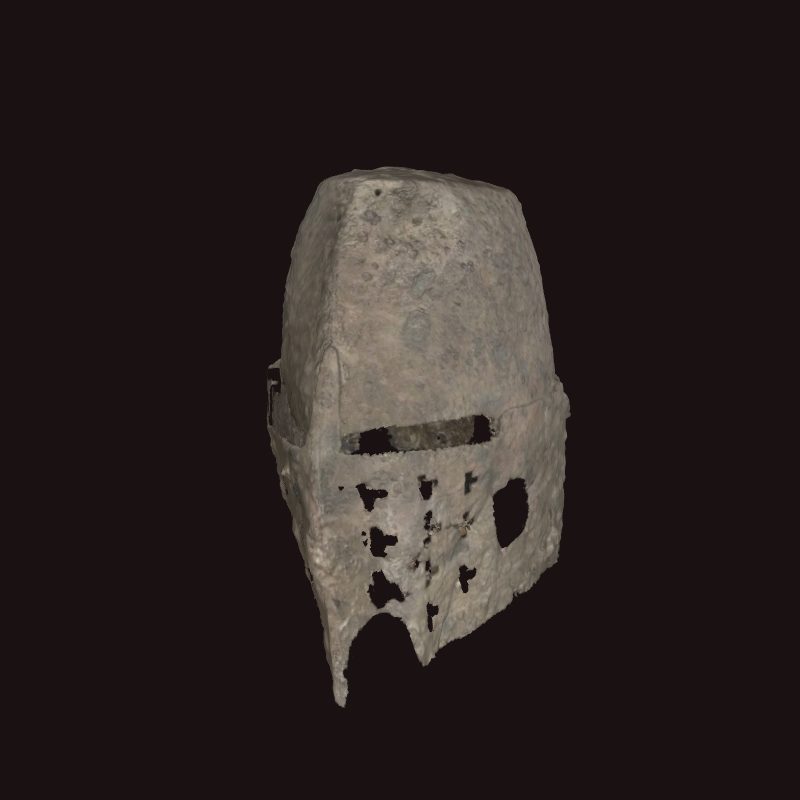
- Dataset National Historical Museums (Statens historiska museer), Stockholm; T. Eriksson (2026). The Aranäs helmet (3D model, SHM 116708). Zenodo (3D model and record, CC BY 4.0). Record read 16 Nov 2026: a structured-light model of ‘a great helm style helmet made of iron around 1300 CE during the Swedish Middle Ages’, from Västergötland; licence cc-by-4.0 in the record’s metadata.
Quantitative values from the Seshat Global History Databank (Equinox-2020), licensed CC BY 4.0. Dataset: Seshat Equinox Packaged Data (v.1). See also Seshat: The Global History Databank (Turchin et al. 2015).
Values for polities Equinox-2020 does not cover come from the Seshat Databank at seshat-db.com (Seshat: Global History Databank), snapshotted from its API on 2026-11-16. No licence is stated on seshat-db.com; used with attribution. Snapshot: Seshat Databank API (seshat-db.com), social-complexity and general variables.