Skip to content

Kings made by warriors, popes and princes, and the assemblies that learned to say no

Latin Europe: Franks, emperors, charters and parliaments

481 CE – 1500 CE

Grey spring light over a wide field before the timber halls of a royal estate, thatched roofs reaching almost to the ground. Armed Franks stand in a long double line with spears and round shields at their sides; the king, in a red cloak, walks the line with a few companions, inspecting their weapons. Switch to the raising: the warriors close into a ring and lift a man in a cloak above their heads, the old Frankish way of making a king that Gregory of Tours describes. The halls and figures are generic, not a survey of any royal site.

A Frankish muster on the Field of March

481 CE – 888 CE

The Frankish kingdoms

The Franks took over Roman Gaul in the fifth century. Their kings came from one family and split the kingdom among their sons; armed men gathered each spring to be reviewed and consulted. In 751 the family that had run the palace took the crown, and in 800 Charles, called the Great, was crowned emperor in Rome. His grandsons divided the empire, and by 888 each part chose a king of its own.

Cliopatria draws the Kingdom of the Franks in fifty slices from 462 to 849, small in its first slices and largest under Charles the Great. Seshat puts the early Merovingian kingdom at 200,000–300,000 km² and Charles's empire at about 1.1 million. 12 Seshat Consensus Survey Texts

Frankish law assumed that free men answered a summons: the Salic law fines anyone summoned “before the ‘Thing’ by the king's law” who did not come 600 denars, “which make 15 shillings”. Charles's capitulary of 802 still sent its orders out “through the envoys”, to be “made known to our counts and centenars and officials”. 13,14 Consensus Texts

The empire did not fall to an invader. At Tribur in November 887 the magnates abandoned Charles the Fat (“after three days scarcely anyone was left”), and in 888, Regino writes, the kingdoms “each elected a king from among its own inhabitants”. By Thatcher and McNeal's count there were six. 15 Consensus Texts

The Merovingians481 CE – 751 CEParis

Clovis's descendants ruled for 270 years. The kingdom was family property, shared out among sons; counts governed the cities for the king, and the free Franks met in arms each March.

Terms: Latin Europe: Franks, emperors, charters and parliaments: The Frankish kingdoms, The Merovingians

  • Martis Campus the Field of March, the Franks' annual armed assembly; Prou notes it moved to May in 755 (Campus Madius) 16,1
  • grafio, comes the count, the king's representative in a county: grafio in the Salic law, comes in later documents 15
  • wergeld the 'compounding money' owed for killing a person, set by rank 13
  • maior domus the Mayor of the Palace, 'the chief officer of the court' 17,15

Clovis made the kingdom. Gregory of Tours, writing in the late sixth century, says he took “an appointment to the consulship from the emperor Anastasius” and then “went to Paris and there he established the seat of his kingdom”; he died there after a reign of thirty years, aged forty-five. Gregory counts regnal years and gives no years of the era. 1 Consensus Texts

Each year Clovis “ordered the whole army to come with their equipment of armor, to show the brightness of their arms on the field of March”. Gregory tells it to show a soldier punished for an insult the year before, when the man had refused the king a share of booty beyond his lot: “You shall get nothing here except what the lot fairly bestows on you.” 1 Consensus Texts

Kings were made by their warriors' acclaim. When Clovis took over the Franks of Cologne, they gave “applause with both shields and voices”, “raised him on a shield, and made him their king”. Gregory also shows a king being chosen from outside the family: the Franks deposed Childeric I and “with one accord selected as king Egidius”, a Roman commander, before restoring him. 1 Consensus Texts

Royal blood was marked by long hair. Gregory says Clovis had the shorn king Chararic and his son killed because “they were threatening to let their hair grow”, and Einhard says the last Merovingians had nothing left but “to be content with his name of King, his flowing hair, and long beard, to sit on his throne and play the ruler”. 1,17 Consensus Texts

The kingdom was divided like an estate. At Clovis's death “his four sons, namely, Theodoric, Chlodomer, Childebert and Chlothar, received his kingdom and divided it among them in equal parts”, and it was divided again among Chlothar's sons. Cliopatria's slices show the outline changing every few years through the sixth and seventh centuries. 1,12 Consensus Texts Survey

Bishop Remi baptised and anointed Clovis, but Gregory has Clovis ask his men first (“the people who follow me cannot endure to abandon their gods; but I shall go and speak to them”); then “of his army more than 3000 were baptized”. Gregory gives no year for it. 1 Consensus Texts

The Salic law priced a life by rank and people: killing “a free Frank” cost 8,000 denars, killing “a Roman who eats in the king's palace” 12,000; Salic land passed to “the male sex” only. When it was written down is uncertain: Fordham's note says the codes were set down from the seventh century on, Thatcher dates the Lex Salica to about 500, under Clovis. 13,15 Debated Texts

Cities were governed by counts the king appointed: Gregory's enemy Leudast “was sent as count to Tours”. Thatcher and McNeal describe the county as “governed by a representative of the king”, the grafio of the Salic law, later the comes. Seshat codes full-time bureaucrats as “inferred absent” and four levels of administration. 1,15 Seshat Consensus Texts Survey

By the eighth century the Mayors of the Palace governed. Einhard, writing for the Carolingians, says the king rode in an ox cart “to the palace and to the general assembly of the people, that met once a year for the welfare of the kingdom”, while the mayor held office “one might almost say, by hereditary right”. His picture serves the family that took the crown. 17 Debated Texts

How power worked King · Heredity · Custom and kin

How power worked

Who rules
King Consensus
How chosen
Heredity Consensus
Limits on power
Custom and kin Debated
Scale
Territorial state Consensus
Claim to rule
Kinship and descent Debated
Who has a say
A narrow elite Consensus

The Carolingians751 CE – 888 CEAachen

Pippin made himself king with the pope's blessing and the bishops' oil. His son Charles conquered from the Elbe to Rome, was crowned emperor in 800 and governed through counts, travelling envoys (missi) and assemblies; his grandsons divided the empire at Verdun in 843.

Terms: Latin Europe: Franks, emperors, charters and parliaments: The Frankish kingdoms, The Carolingians

  • missi dominici the lord's envoys: 'regular envoys who were to radiate from the emperor as a centre' (Henderson) 14,19
  • placitum an assembly; 'the official term used in the capitularies and charters' (Prou) 16
  • capitulare a capitulary: an edict or instruction issued in chapters 15,17
  • lingua romana, lingua teudisca the two vernaculars of the oaths of Strasbourg, 842 15
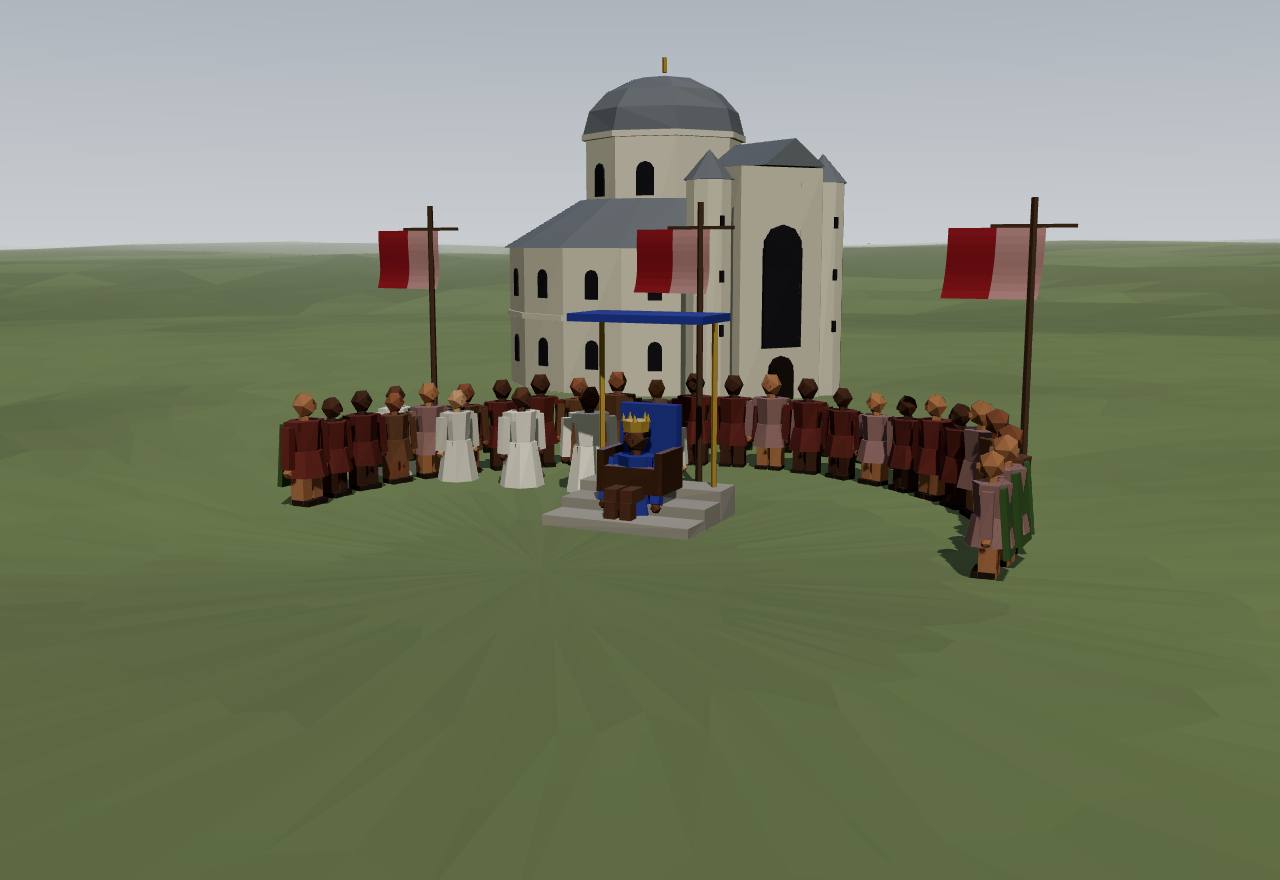
Grey northern daylight over Charlemagne's palace at Aachen. Behind, the palace chapel: a sixteen-sided ring of walls in two storeys round a taller octagon with windows and a domed roof, and a tall entrance front flanked by two round stair-towers; the rest of the palace is not drawn. On the open field, the king sits on a dais under a cloth canopy while counts and bishops in long cloaks stand in a wide ring, a few mounted men waiting at the edge and banners on poles. Switch to the missi: two envoys, a churchman and a layman, ride out from the ring with the king's written orders. The people are generic; no one figure stands for a named person.

Aachen: the palace chapel and the assembly

In 749, the annals say, envoys asked Pope Zacharias about kings without power, and he answered “it would be better that he who actually had the power should be called king”. Pippin was then “anointed with the holy oil” at Soissons by Boniface and “raised to the throne after the custom of the Franks”; the last Merovingian was shorn and sent to a monastery. The annal is printed under “750 [751]”. 2,17 Consensus Texts

In 754 Pope Stephen “anointed the king and his two sons, Karl and Karlmann, with the holy oil”. Einhard credits the change of dynasty to “decree of the Roman pontiff” and names Stephen, where the annals name Zacharias in 749: the sources disagree on which pope. 2,17 Debated Texts

Heredity still needed the Franks' assent. In 768 “the Franks, in a general assembly of the people, made them both kings … on condition that they should divide the whole kingdom equally”, and when Carloman died, “Charles was unanimously elected King of the Franks”. In 813 Charles made his son Louis co-emperor before “all the chief men of the whole kingdom … in a solemn assembly”, “with their unanimous consent”. 17 Consensus Texts

On 25 December 800 in Rome, the papal biography says, “the venerable pope crowned Karl with his own hands”, the Romans acclaimed him, “and thus he was made emperor of the Romans by all”; then the pope anointed him. Einhard claims Charles disliked the titles so much that he would not have gone to church that day had he known. 15,17 Consensus Texts

In 802 Charles “has chosen from his nobles the wisest and most prudent men, both archbishops and some of the other bishops also, and venerable abbots and pious laymen” and sent them through the kingdom; what they could not put right “together with the provincial counts” they were to refer “to the judgment of the emperor”. Thompson describes them working in pairs, one lay lord and one churchman. 19,20 Consensus Texts

The same capitulary made every man swear again: those who had promised fidelity to Charles as king “should now promise to him as emperor”, and those who had not yet sworn should do so, “down to those who were twelve years old”. The oath now covered more than “fidelity to the lord emperor as regards his life”. 19 Consensus Texts

Hincmar of Reims, writing in 882, remembered that “twice a year, two assemblies were held” (placita duo): a general one, and one “with the seniors and the chief counsellors only”, at which next year's business was prepared. Simon MacLean warns that this smaller meeting “made irrevocable decisions which the larger one was meant only to endorse”, and that Hincmar was reworking a lost older treatise. 16,21 Debated Texts

The king's assembly moved with the king and the army: the annals put a general assembly at Paderborn in Saxony in 777 and one “at the source of the River Lippe” in 782. Aachen became Charles's seat (Seshat names it the capital); he died there on 28 January 814, and Louis opened his reign with “a general assembly of his people at Aachen”. 22,17 Seshat Consensus Texts Survey

Law stayed the peoples' law. Einhard says Charles “went no further … than to supplement the laws by a few capitularies”, but had “the unwritten laws of all the tribes” written down. Seshat codes no formal legal code for the Carolingian empire, where it codes one for the Merovingians. 17 Seshat Consensus Texts Survey

In 817 Louis the Pious tried to stop the partitions. The Ordinatio imperii, made at an Aachen assembly, says the wishes of “our whole people concurred in the election of our beloved first-born Lothar” as co-emperor, and that a sub-king's lands were not to be divided among his sons: “the people, coming together in common, shall elect one of them”. 23 Consensus Texts

Louis's sons fought anyway. At Strasbourg in 842 Louis the German and Charles the Bald swore alliance, “each leader … in the language of the followers of the other”, the lingua romana and the lingua teudisca; at Verdun in 843 the empire was split three ways. No authentic text of the treaty survives, Henderson notes; Regino dates it “842 (843)”. 15,23 Consensus Texts

The Capitulary of Quierzy (877) let a dead count's son expect his father's offices until the king could act (“until we are notified … and have an opportunity to give the son of the count his father's honors”), while warning that “no one shall feel aggrieved, if we give the county to another”. 15 Debated Texts

Seshat codes the early Carolingian empire at about 1.1 million km² and 15–20 million people around 811, falling to 4–5 million in its later period, after 900; it codes its rulers as legitimated by the gods (by God), which it does not for the Merovingians. Modern work stresses how such an empire was held: Jennifer Davis asks how Charles learned “how to delegate authority and how to manage diversity”. 24 Seshat Consensus Survey Texts

How power worked Emperor · Mixed · Council

How power worked

Who rules
Emperor Consensus
How chosen
Mixed Debated
Limits on power
Council Debated
Scale
Empire Consensus
Claim to rule
Divine mandate Consensus
Who has a say
A narrow elite Consensus

888 CE – 1215 CE

Kings, emperors and the Church

After 888 the Frankish lands had kings again, each made in his own way: chosen by the princes in Germany, elected and then crowned with his heir in France, picked by the counsellors in England, anointed everywhere. Popes claimed the right to judge kings; kings made laws and charters with their great men, and in 1188 the king of León met his bishops, magnates and the elected citizens of his towns.

Cliopatria draws the kingdoms that came out of the Frankish lands and the Christian north of Iberia side by side: the Holy Roman Empire from 962, the Kingdom of France from 990, England, Norman England from 1072, and the kingdoms of León, Castile and Aragon. Its France is the royal domain, small until Philip II's conquests: Seshat puts the early Capetian kingdom at only 12,000–18,000 km². 12 Seshat Consensus Survey

Thomas Bisson's book, as its publisher describes it, “traces the origins of European government to a crisis of lordship and its resolution” in the twelfth century: power held by castle-lords as personal domination, slowly turned into accountable office. Others doubt there was a crisis at all (see the debate below). 27 Debated Texts

In Thatcher and McNeal's 1905 summary, “the feudal king was in origin one of the great feudal lords … who was chosen by the great lords and became their overlord”. That is the textbook picture of fiefs and vassals; Susan Reynolds's reading of the evidence questions how far such a system existed. 15,28 Debated Texts

East Francia and the Empire911 CE – 1215 CEFrankfurt

The German princes chose their kings, usually the last king's son; from 962 the king they chose went to Rome to be crowned emperor. Popes and emperors fought over who appointed bishops and who could depose whom; the princes kept the last word.

Terms: Latin Europe: Franks, emperors, charters and parliaments: Kings, emperors and the Church, East Francia and the Empire

  • regalia 'the rights of the crown': the lands and powers a bishop received from the king, from 1122 'through the lance' 15,29
  • investiture the giving of a bishop's office, by 'ring and staff' until 1122 29
  • Reichskirchensystem German historians' 'imperial church system': kings ruling through bishops they appointed 30
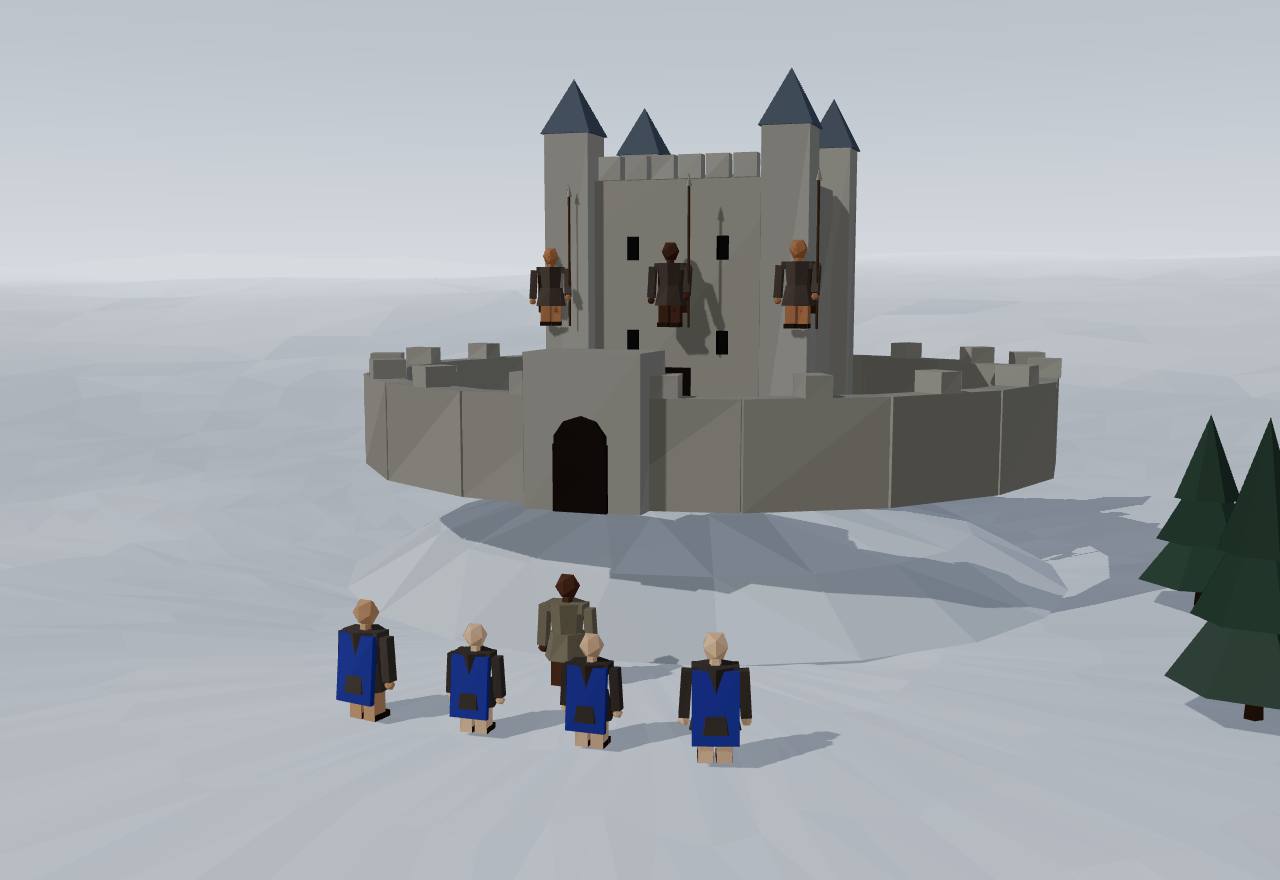
Winter in the northern Apennines: a stone castle with a square keep and corner turrets stands inside a curtain wall on a snow-covered crag. Outside the closed gatehouse, in the snow, a man stands bareheaded in a plain woollen tunic with a few companions behind him, while armed men watch from the wall. Switch to the absolution: the gate is open and the same man kneels before a churchman in white inside the court, with clergy and nobles looking on. The castle is a generic keep, not a survey of Canossa, and the figures are generic.

Canossa, January 1077

Widukind of Corvey describes Otto I's making at Aachen in 936 in stages: the Franks and Saxons chose the son “whom Henry had already designated”; the dukes “raised Otto upon the throne” in the portico of Charles the Great's church; inside, the people were asked to “raise your right hands”; then two archbishops “anointed him with the sacred oil and crowned him”. Thatcher and McNeal list five steps: designation, election, elevation, presentation, anointing. 31,15 Consensus Texts

Ottonian and Salian kings appointed bishops and endowed churches. The older view, as Timothy Reuter sums it up, is that “these rulers used bishops and abbots, whom they appointed, as a counterweight to a turbulent and unreliable lay nobility”; his 1982 article reconsiders whether that “imperial church system” was a system at all. 30 Debated Texts

Gregory VII's Dictatus Papae claims “that it may be permitted to him to depose emperors” and to “absolve subjects from their fealty to wicked men” (its date and authorship are disputed). In January 1076 Henry IV wrote as king “not through usurpation but through the holy ordination of God”, telling Gregory to “descend”; Gregory replied by deposing him: “I absolve all Christians from the bonds of the oath which they have made or shall make to him.” 32,33,34 Consensus Texts

To keep his crown Henry went to the pope. Gregory's own letter says Henry “presented himself at the gate of the castle, barefoot and clad only in wretched woollen garments, beseeching us with tears”, and “continued to do this for three days” before he was absolved. Gregory told the princes the matter was not settled “until we have held consultation with you”. The letter is dated to about 28 January 1077. 8 Consensus Texts

The princes elected another king anyway. At Forchheim in March 1077, Bruno of Merseburg writes, Saxons and Swabians resolved that “nobody should be granted royal power by hereditary right”, and that a king's son “should become king by a free election and not by line of succession”; they chose Rudolf of Swabia, crowned at Mainz “on 26th March”. 9 Consensus Texts

The Concordat of Worms (1122) settled the bishops: the emperor gave up “all investiture through ring and staff” and granted “canonical election and free consecration”, while the one elected might “receive the regalia from thee through the lance”, as a lord's grant. 29 Consensus Texts

When Henry V died without a son in 1125, an anonymous account says the princes “chose ten princes from each of the provinces of Bavaria, Swabia, Franconia and Saxony” to make the election, forty in all; when Lothar was named, the cry went up “Let it be King Lothar!” and he was “raised up on men's shoulders”. 35 Consensus Texts

Frederick I told the pope in 1152 that “all the princes of the kingdom came together at Frankfurt, and on the day of their assembling elected us king”, and that five days later he was anointed at Aachen. He “merely informs the pope of his election”, the editors note: he did not ask for approval. 15 Consensus Texts

In 1198 rival parties elected two kings. Innocent III wrote that “three persons have lately been elected king by different parties”, and in 1202 (Venerabilem, as the Catholic Encyclopedia summarises it) granted that “the German princes have the right to elect the king”, while claiming for the pope the right “to investigate and decide whether a king thus elected is worthy”. 15,36 Consensus Texts

Seshat codes the Ottonian–Salian empire at about 1 million km² around 1050, with no fixed capital (“None”), and a population of 21.5 million that its note calls a guess; Peter Wilson's history argues that the Empire's “continuity rested on the ideal of a unified Christian civilization”, not on a central state. 37 Seshat DB Debated Survey Texts

How power worked Emperor · Mixed · Council

How power worked

Who rules
Emperor Consensus
How chosen
Mixed Debated
Limits on power
Council Debated
Scale
Empire Debated
Claim to rule
Divine mandate Consensus
Who has a say
A narrow elite Consensus

The Capetians987 CE – 1215 CEReims

In 987 the magnates of West Francia elected Hugh Capet over the last Carolingian's heir. His family held on by crowning each eldest son while the father lived; for two centuries the king's own domain was small, and bishops' peace councils tried to curb the castle-lords' wars.

Terms: Latin Europe: Franks, emperors, charters and parliaments: Kings, emperors and the Church, The Capetians

  • Truce of God 'the peace which is commonly called the truce of God': no fighting on set days 38
  • rex designatus the king-designate, the heir crowned in his father's lifetime 39
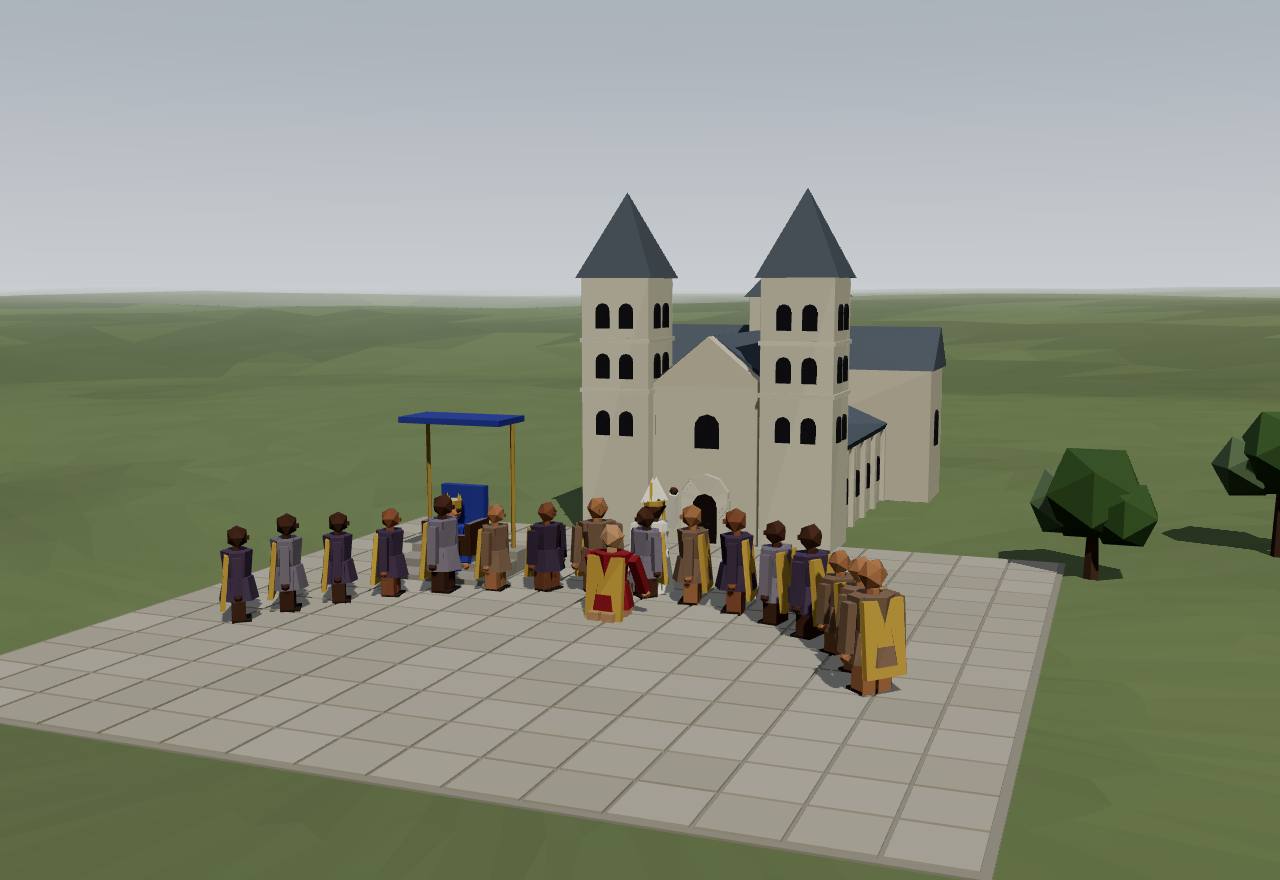
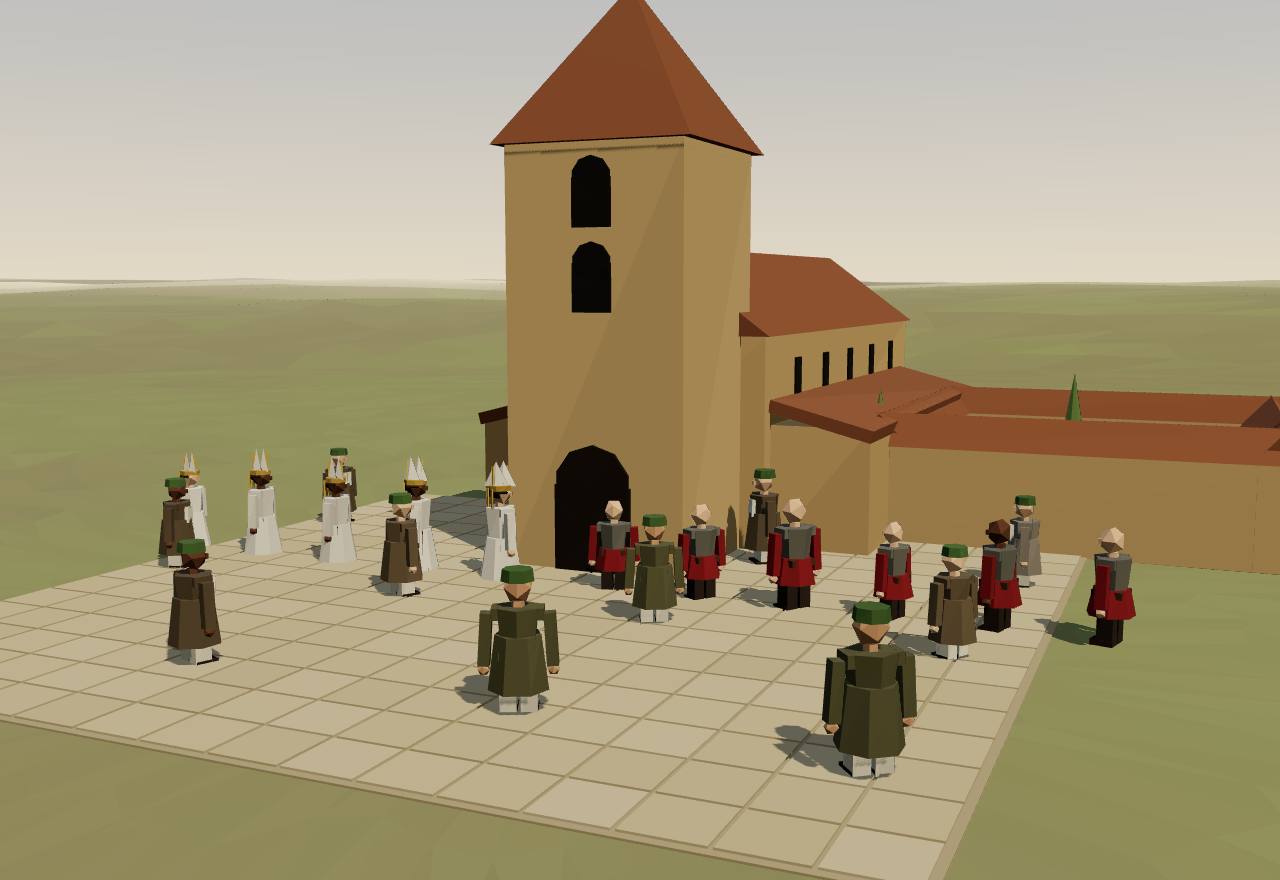
A Romanesque church of pale stone with twin west towers and a crossing tower under a soft northern sky. Switch between two scenes. In 987, magnates in cloaks and mail stand in a wide ring on open ground, one of them raised up in their midst while the rest lift their arms. In 1179, before the church door, an old king sits enthroned while a young man in a red cloak kneels before an archbishop in a white mitre, with bishops and lords looking on: the son crowned while his father still reigns. The church is generic and the figures are generic.

A Capetian court: choosing and crowning

At Senlis in 987, in the speech Richer gives Archbishop Adalbero, “the throne is not acquired by hereditary right, and no one ought to be placed at the head of the kingdom unless he is distinguished”; the Carolingian Charles of Lorraine “has his partisans who claim that the throne belongs to him by right of birth”. Then “by unanimous consent the duke was raised to the throne”. The speech is Richer's composition, not a record. 40 Debated Texts

The Capetians made election a formality by crowning their heirs early. Suger, abbot of Saint-Denis, says he “counselled that he should crown his son Louis … and make him king with him, in order to prevent any disturbance from his rivals”, and Rigord records Philip II anointed at Reims in 1179 “while his father the most Christian king Louis still lived”. 39,41 Consensus Texts

Where a king was made mattered. Suger tells how Louis VI was anointed at Orléans by the archbishop of Sens, and how Reims protested that “the first fruits of the royal coronations belonged totally by right to the church of Rheims”. 39 Consensus Texts

Where kings could not keep order, bishops tried. The synod of Charroux (989) declared: “If anyone robs a peasant or any other poor person of a sheep, ox, ass, cow, goat, or pig, he shall be anathema”; the Truce of God at Thérouanne (1063) forbade violence from “sunset on Wednesday” until “sunrise on Monday”, on pain of exile and excommunication. 42,38 Consensus Texts

Seshat codes the early Capetian kingdom (987–1150) at 12,000–18,000 km² and half a million to a million people, its capital Paris, with no formal legal code and no professional courts; by 1250 it codes 330,000 km² and 14 million people. Seshat Consensus Survey

Philip II's victory at Bouvines in 1214 over Otto IV and the counts of Flanders and Boulogne secured the enlarged kingdom. A chronicle of Marchiennes dates it “on the sixth calend of August” (27 July); the website that publishes the translations gives “July 12”. It calls Otto the man “we refrain from calling Emperor” by the pope's authority. 3 Consensus Texts

How power worked Feudal monarch · Mixed · Custom and kin

How power worked

Who rules
Feudal monarch Debated
How chosen
Mixed Debated
Limits on power
Custom and kin Debated
Scale
Territorial state Consensus
Claim to rule
Divine mandate Consensus
Who has a say
A narrow elite Consensus

England from the witan to the Normans888 CE – 1215 CEWinchester

Anglo-Saxon kings made law with their witan, the wise men; the counsellors chose between royal claimants. The Norman conquerors kept the shires and the crown-wearings, surveyed the land in Domesday and ruled by charter and sworn inquest; Henry II's quarrel with Archbishop Becket ended in murder.

Terms: Latin Europe: Franks, emperors, charters and parliaments: Kings, emperors and the Church, England from the witan to the Normans

  • witan the king's counsellors, 'the most distinguished witan of my people' (Ini); the sources read print witan, not witenagemot 43,44
  • gemot a moot or meeting: 'each reeve have a gemot always once in four weeks' 43
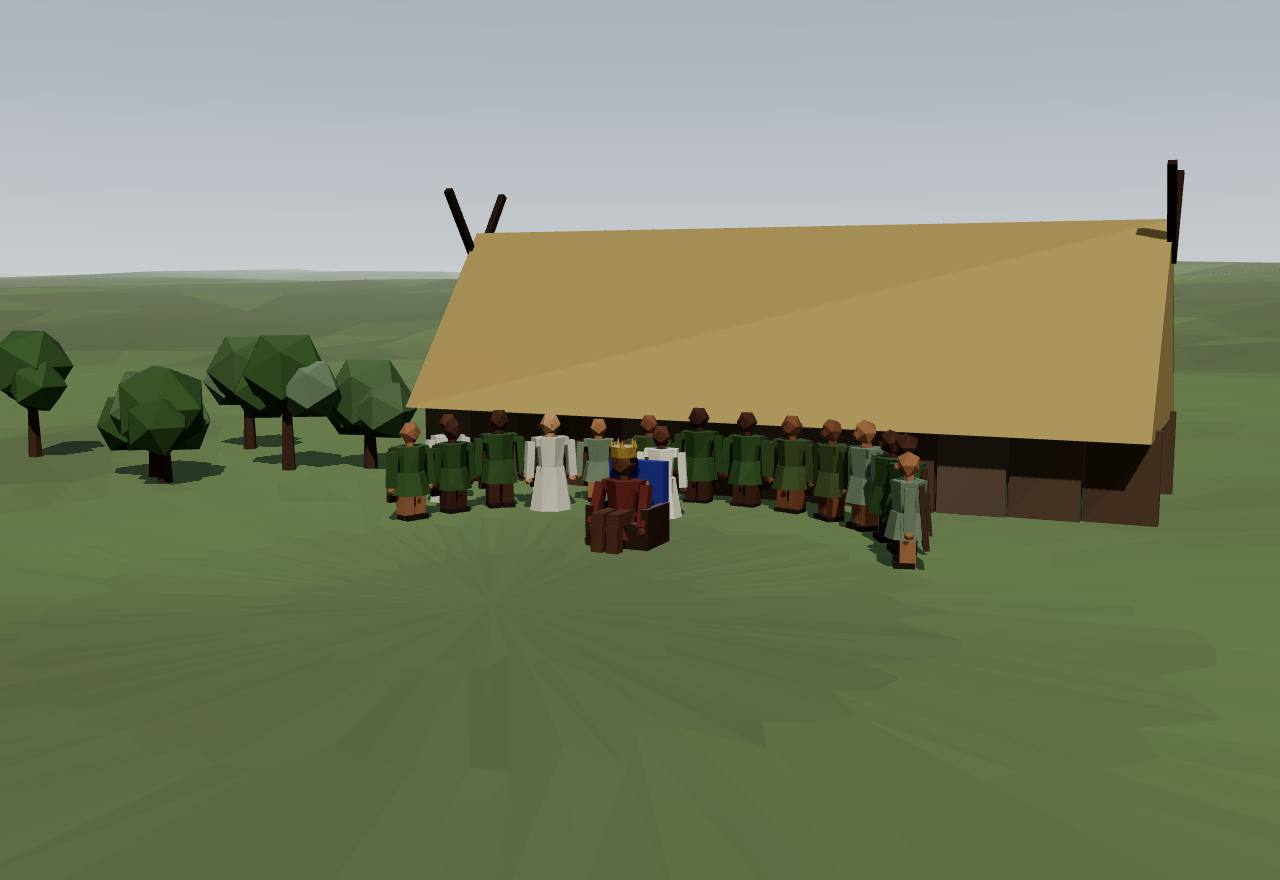
Low green hills under a grey English sky. Before a long timber hall with a steep thatched roof, a king sits on a carved chair while his counsellors, churchmen in plain robes and thegns in cloaks, stand round him in a half circle to hear and approve his laws. Switch to 1086: on a mound behind a palisade rises a square stone keep with corner turrets, and before it a line of landholders kneels to a crowned king to become his men. The buildings and figures are generic.

England: the witan and the Norman keep

Anglo-Saxon laws were issued with counsel: Ini of Wessex legislated “with all my ealdormen and the most distinguished ‘witan’ of my people”; Alfred chose laws and “shewed these to all my ‘witan’ and they then said that it seemed good to them all”. Later codes open “King Edgar, with the counsel of his witan” and “King Ethelred and his witan ordained”. 43 Consensus Texts

The counsellors chose kings when the succession was open. In 1035–36 “there was a meeting of all the witan at Oxford”, where Earl Leofric and the thanes north of the Thames “chose Harold” while Earl Godwin withstood it; in 1042 “all people chose Edward for king in London”; in 1066 Harold succeeded “even as the king had granted it to him, and men also had chosen him thereto”. 44 Consensus Texts

William the Conqueror was crowned at Westminster at midwinter 1066, the Chronicle says, after swearing “that he would so well govern this nation as any before him best did”. He wore his crown three times a year, “at Easter … at Winchester, at Pentecost at Westminster, and at Christmas at Gloucester”. 44,46 Consensus Texts

Domesday began in council: at Gloucester in 1085 the king “had important deliberations and exhaustive discussions with his council about this land and how it was peopled”. The returns were sworn by the sheriff, the barons and, from each manor, “the priests, reeves, and six villains”, giving each holding's value at three dates; in 1086 all the landholders of account swore to be his men. 46,47,44 Consensus Texts

Henry I's coronation charter (1100) says he was crowned “by the mercy of God and the common counsel of the barons of the whole kingdom of England”, and promises: “I restore to you the law of King Edward.” Fordham's editors note that it later “served as the model for the Great Charter in 1215”. 48 Consensus Texts

Henry II wrote the crown's claims down. The Constitutions of Clarendon (1164) required that a bishop's election “be held in the lord king's own chapel with the assent of the lord king”; the Assize of Clarendon (1166) had crimes reported on oath “by twelve more lawful men of the hundred and by four more lawful men of each vill”. 49,50 Consensus Texts

The archbishop of Canterbury, Thomas Becket, refused the Constitutions. On 29 December 1170 knights from Henry's court killed him in his cathedral; Edward Grim, who was there, gives him the words “Here I am, not a traitor of the king but a priest”, and a knight the reply that he owed no faith to him “in opposition to the fealty I owe my lord king”. 51 Consensus Texts

Seshat codes late Anglo-Saxon England at about 130,000 km² and 1.5 million people with Winchester as capital, and Norman England at 1.1 million people in 1086, its capital moving to London by 1100. Seshat DB Consensus Survey

How power worked King · Mixed · Custom and kin

How power worked

Who rules
King Consensus
How chosen
Mixed Debated
Limits on power
Custom and kin Debated
Scale
Territorial state Consensus
Claim to rule
Divine mandate Consensus
Who has a say
A narrow elite Consensus

León and the curia of 11881188 CE – 1215 CELeón

In 1188 the new king of León, Alfonso IX, held his royal council with the archbishop, the bishops, the magnates and citizens chosen by each city, and swore to rule by their counsel. UNESCO lists the decrees as the oldest record of a parliament with town representatives.

Terms: Latin Europe: Franks, emperors, charters and parliaments: Kings, emperors and the Church, León and the curia of 1188

  • Curia Regia the royal council (UNESCO's gloss), here enlarged by the towns 52
  • decreta the decrees of 1188, seventeen in the Spanish version 52,53
  • hombres buenos 'good men', townsmen of standing; the nomination glosses the term as an arbiter and witness 54,53
Bright, dry Castilian light on a Romanesque church of golden stone with round-arched windows, a square west tower and a cloister along its side. In the open court before it a young king sits on a dais; to his right stand bishops in white mitres, to his left magnates in mail and cloaks, and facing him, in a separate group, townsmen in plain coats and caps, the citizens chosen from each city. Switch to the oath: the king stands with his right hand raised, the three groups turned towards him. The church is a generic Romanesque church, not a survey of San Isidoro; the figures are generic.

León, 1188: a curia with the cities

UNESCO's register describes the decreta as coming from “the celebration of a Curia Regia (Royal council) during the reign of Alfonso IX of León (1188-1230)”, where representation “occurs for the first time through the elected representatives of the towns and cities”. The text names who sat: “the archbishop and the bishops and the magnates of my kingdom and the citizens elected from each of the cities”. 52,53 Consensus Texts

The king promised not to make “war or peace or pact except with the counsel of the bishops, nobles and good men, by whose counsel I must be ruled” (decretum IV; translation ours from the Spanish version). 53 Consensus Texts

Other decrees protected persons and houses: the king would do no harm to an accused man “until I summon him by letter to answer before justice in my curia” (III), and no one, the king included, was to “enter by force into another's house” (XII). At the end bishops, knights and citizens swore “to be faithful in my counsel, to maintain justice and keep the peace” (XVII). Translations ours from the Spanish version. 53 Consensus Texts

Spain's nomination to UNESCO places the curia in “the first year of his reign” and links it to “the cancellation of many of the donations” Alfonso's father had made; it reads the decreta as “a strategy to strengthen royal power” rather than a weakening of the monarch's power. 54 Debated Texts

No original survives. The oldest copy is in the “Tumbo Viejo” cartulary of Lugo Cathedral (1231–1232), and the nomination's own summary misdates the meeting (“July and August 1181”), so the year 1188 rests on the copies and the reign. 54 Consensus Texts

Where the curia met is not in the official texts. A local newspaper places it “en el atrium de la Colegiata de San Isidoro de León”; neither the UNESCO page nor the Spanish version of the decrees names a building. 55,52,53 Speculative Texts

Seshat has no data for the Kingdom of León (seshat-db's es_leon_k record is empty), so this case has no Seshat chart; Cliopatria draws the kingdom from 911 to 1235, when it is merged into the Crown of Castile. 10,12 Consensus Survey

How power worked King · Heredity · Council · 1 unknown

How power worked

Who rules
King Consensus
How chosen
Heredity Consensus
Limits on power
Council Debated
Scale
Territorial state Consensus
Claim to rule
Unknown
Why?

The texts read do not say on what the king's title rested beyond his father's succession.

Who has a say
A narrow elite Debated

1215 CE – 1500 CE

Charters, parliaments and electors

Between 1215 and 1500 assemblies of clergy, nobles and elected townsmen became a regular part of government across Latin Europe. They granted taxes, presented petitions and in England deposed a king; in the Empire seven princes won a written rule for electing the king. Where kings could tax without them, as in France after the Hundred Years War, they faded.

Van Zanden, Buringh and Bosker count the years in each century in which a parliament met (an “activity index”, 100 = every year). Across their 30 European regions the average rises from 0.3 in the twelfth century to 17 in the fourteenth and 28 in the fifteenth; they date the first parliament to León in 1188, because “the elected citizens of each city” were there. 59,60 Consensus Survey Texts

Cliopatria draws the four monarchies of this phase: the Kingdom of England, the Kingdom of France (which grows from the Paris region to most of modern France), and from 1236 the Crown of Castile and the Crown of Aragon. It draws no Holy Roman Empire between 1260 and 1618, only its minor states, so the Empire's case is mapped by places instead. 12 Seshat Consensus Survey

England: Magna Carta and ParliamentWestminster

In 1215 the barons forced King John to grant a charter that tied extraordinary taxes to the kingdom's counsel. Reissued without that clause, it was confirmed again and again for grants of tax; by 1295 knights and burgesses were elected to come with full powers, and in 1399 Parliament's estates deposed a king.

Terms: Latin Europe: Franks, emperors, charters and parliaments: Charters, parliaments and electors, England: Magna Carta and Parliament

  • commune consilium regni 'common counsel of our kingdom' (Avalon's translation of clause 12; the British Library's has 'general consent') 64,65
  • quod omnes tangit 'what affects all, by all should be approved', quoted in the summons of 1295 66
  • knights of the shire, burgesses the elected members for the counties and the towns 66,67
  • Speaker 'the mouth of the speaker of the said commons' (1407) 67
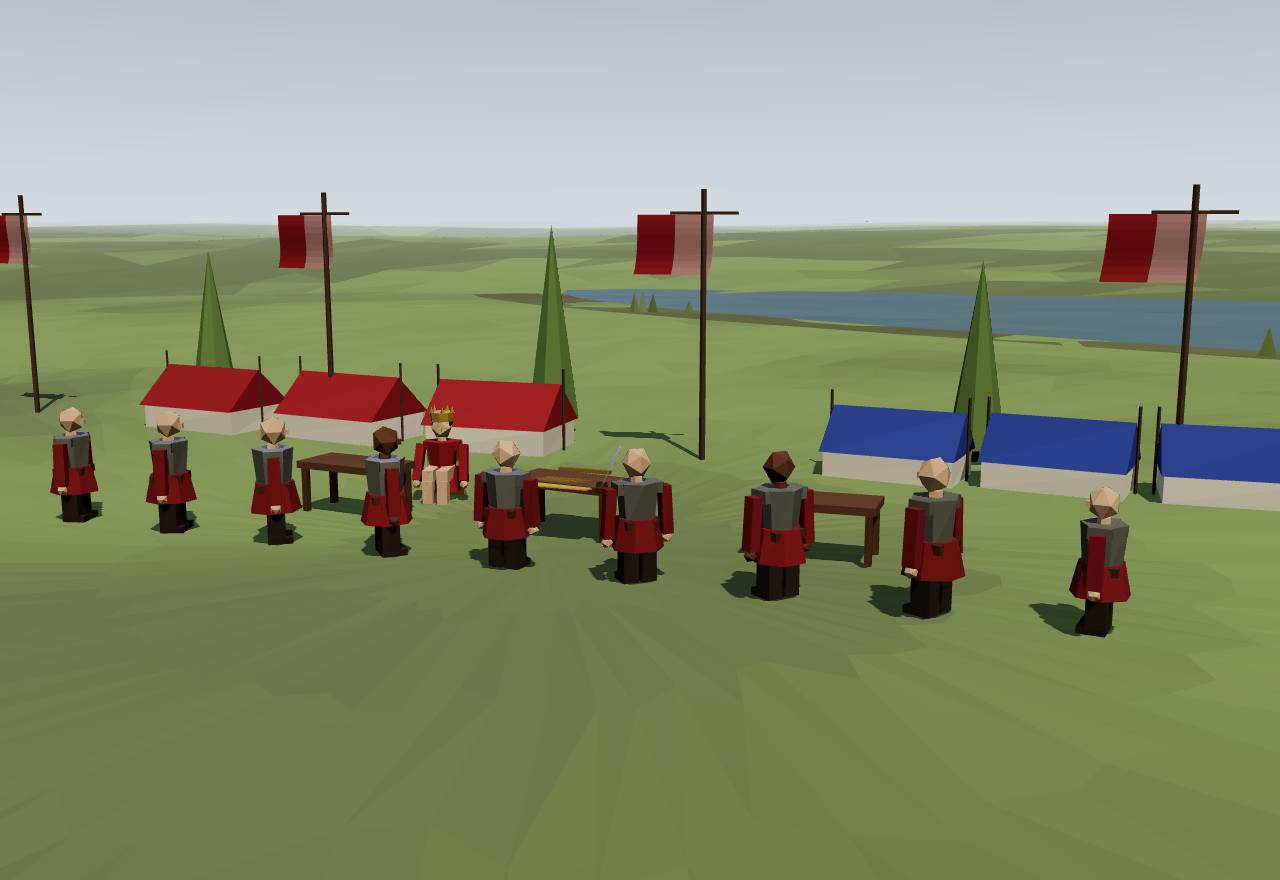
A flat green meadow beside a slow river under a pale June sky. Striped pavilions stand in two camps, the king's to one side and the barons' to the other, banners on poles before them; between the camps a long table holds a sealed parchment on a writing slope, a crowned man seated at its head and armed barons standing along the other side. Switch to the twenty-five: the barons who were to hold the king to the charter stand in a ring of their own, away from the royal tent. The tents, banners and figures are generic.

Runnymede, June 1215

Clause 12 of Magna Carta: “No ‘scutage’ or ‘aid’ may be levied in our kingdom without its general consent”, unless to ransom the king, knight his eldest son or marry his eldest daughter once (British Library translation; Avalon's reads “unless by common counsel of our kingdom”). 64,65 Consensus Texts

Clause 14 defined that counsel: the king would summon “archbishops, bishops, abbots, earls, and greater barons … individually by letter” and those who held directly of him by a general summons, with at least forty days' notice, and business would go ahead “even if not all those who were summoned have appeared”. 64,65 Consensus Texts

Clause 39: “No free man shall be seized or imprisoned … except by the lawful judgement of his equals or by the law of the land” (Avalon: “his peers”). Clause 40: “To no one will we sell, to no one deny or delay right or justice.” 64,65 Consensus Texts

Clause 61 set up enforcement: “The barons shall elect twenty-five of their number”; if the king made “no redress within forty days” of a complaint, they could distrain him, and among the twenty-five “the verdict of the majority present shall have the same validity as a unanimous verdict”. 64 Consensus Texts

The charter did not survive as written. In the reissue of 1216 “the controversial ‘security clause’ was quietly omitted”; the British Library's key marks clauses 12, 14 and 61 as left out of the 1225 text, and in 1225 “Henry III issued the Charter freely in return for taxation”, a fifteenth on movables (those who did not pay would “not share in the freedom” granted by the charters). The 1225 version became statute in 1297. 68,64,61 Consensus Texts

In 1258 the barons' Provisions of Oxford ordained “three parliaments a year” and had “four discreet and lawful knights” chosen in each county to hear complaints. In December 1264 Simon de Montfort summoned to his parliament “two of the more law-worthy, honest and prudent knights from each of the counties” and burgesses of York, Lincoln and other towns. The National Archives notes knights had come before, but this time Montfort “was not looking for money”. 67,5,69 Consensus Texts

Edward I's summons of 1295 quotes the maxim “what affects all, by all should be approved” and orders “two knights from the aforesaid county, two citizens from each city … and two burgesses from each borough … to be elected”, beside two archbishops, eighteen bishops, seventy abbots, seven earls and forty-one barons. Møller counts 211 English assemblies from 1216 to 1330 and finds knights and burgesses summoned regularly only “from 1295 onward”. 66,70 Consensus Texts

In 1297 Edward promised that “for no business from henceforth will we take such manner of aids, mises, nor prises … but by the common assent of all the realm”, and gave up the wool toll of “forty shillings for every sack”. The National Archives judges that the exchange of taxation for political concessions “became the main topic of discussion in medieval parliament”. 71,61 Consensus Texts

The elected members became a house. In the Good Parliament of 1376 “the knights of the shire … diligently treated together” and would not answer the king's request for money without counsel; in 1407 it was declared “lawful for the commons, on their part, to discuss together”, and grants were to be reported “by the mouth of the speaker”. From 1429 county voters had to hold “free tenement to the value of forty shillings by the year at the least”. 72,67 Consensus Texts

In 1399 “all the abovesaid estates unanimously agreed” to proceed to Richard II's deposition, through commissioners speaking “for the commons of the realm, representing all the estates”; Henry of Lancaster then claimed the throne. The record does not name the room. 67 Consensus Texts

Westminster Hall's hammer-beam roof was “commissioned for Richard II in 1393” and built by the king's carpenter Hugh Herland, who came to it from work at Winchester “in the early 1390s”, Robert Beech's study of its structure says. No source read gives the year it was finished. 73,74 Consensus Texts

Seshat codes Plantagenet England at about 5 million people in 1300 and 3.5 million in 1350, after the plague, with London as capital and six levels of administration; van Zanden's index puts England's parliament at 78 in the fourteenth century, the highest of any region they count. 59 Seshat DB Consensus Survey

How power worked King · Heredity · Assembly or tribune veto

How power worked

Who rules
King Consensus
How chosen
Heredity Debated
Limits on power
Assembly or tribune veto Debated
Scale
Territorial state Consensus
Claim to rule
Divine mandate Debated
Who has a say
Property owners Debated

Two charters side by side: León 1188 and Runnymede 1215

Data: the texts in the cited translations

Consent: war, peace and taxes

León, 1188 · decretum IV

I will not make war or peace or pact except with the counsel of the bishops, nobles and good men, by whose counsel I must be ruled.

no haré guerra ni paz ni pacto a no ser con el consejo de los obispos, nobles y hombres buenos, por cuyo consejo debo regirme

English rendered for this page from the Spanish version. 53

Magna Carta, 1215 · clause 12 left out in 1225

No ‘scutage’ or ‘aid’ may be levied in our kingdom without its general consent, unless it is for the ransom of our person, to make our eldest son a knight, and (once) to marry our eldest daughter.

Avalon's translation: “No scutage not aid shall be imposed on our kingdom, unless by common counsel of our kingdom, except for ransoming our person, for making our eldest son a knight, and for once marrying our eldest daughter”

British Library translation. 64,65

Who counsels the king

León, 1188 · decretum I

With the archbishop and the bishops and the magnates of my kingdom and with the citizens elected from each of the cities … I swore that I would respect for all of my kingdom the good customs established by my predecessors.

con el arzobispo y los obispos y los magnates de mi reino y con los ciudadanos elegidos de cada una de las ciudades … establecí y confirmé bajo juramento que a todos los de mi reino … les respetaría las buenas costumbres que tienen establecidas por mis antecesores

English rendered for this page from the Spanish version. 53

Magna Carta, 1215 · clause 14 left out in 1225

To obtain the general consent of the realm for the assessment of an ‘aid’ … we will cause the archbishops, bishops, abbots, earls, and greater barons to be summoned individually by letter. To those who hold lands directly of us we will cause a general summons to be issued … (of which at least forty days notice shall be given) … the business appointed for the day shall go forward in accordance with the resolution of those present, even if not all those who were summoned have appeared.

British Library translation. 64

Justice before punishment

León, 1188 · decretum III

I will never cause him harm or damage in his person or goods until I summon him by letter to answer before justice in my curia.

nunca le causaré mal o daño en su persona o bienes, hasta citarlo por carta para que responda ante la justicia en mi curia

English rendered for this page from the Spanish version. 53

Magna Carta, 1215 · clause 39 kept in 1225

No free man shall be seized or imprisoned … except by the lawful judgement of his equals or by the law of the land.

Avalon's translation: “No freemen shall be taken or imprisoned or disseised or exiled or in any way destroyed … except by the lawful judgment of his peers or by the law of the land”

British Library translation. 64,65

Holding the king to it

León, 1188 · decretum XVII

All the bishops promised, and all the knights and the citizens confirmed by oath, to be faithful in my counsel, in order to maintain justice and keep the peace.

prometieron todos los obispos, y todos los caballeros y los ciudadanos confirmaron con juramento, ser fieles en mi consejo, a fin de mantener la justicia y conservar la paz

English rendered for this page from the Spanish version. 53

Magna Carta, 1215 · clause 61 left out in 1225

The barons shall elect twenty-five of their number … If we … make no redress within forty days … the verdict of the majority present shall have the same validity as a unanimous verdict.

British Library translation. 64

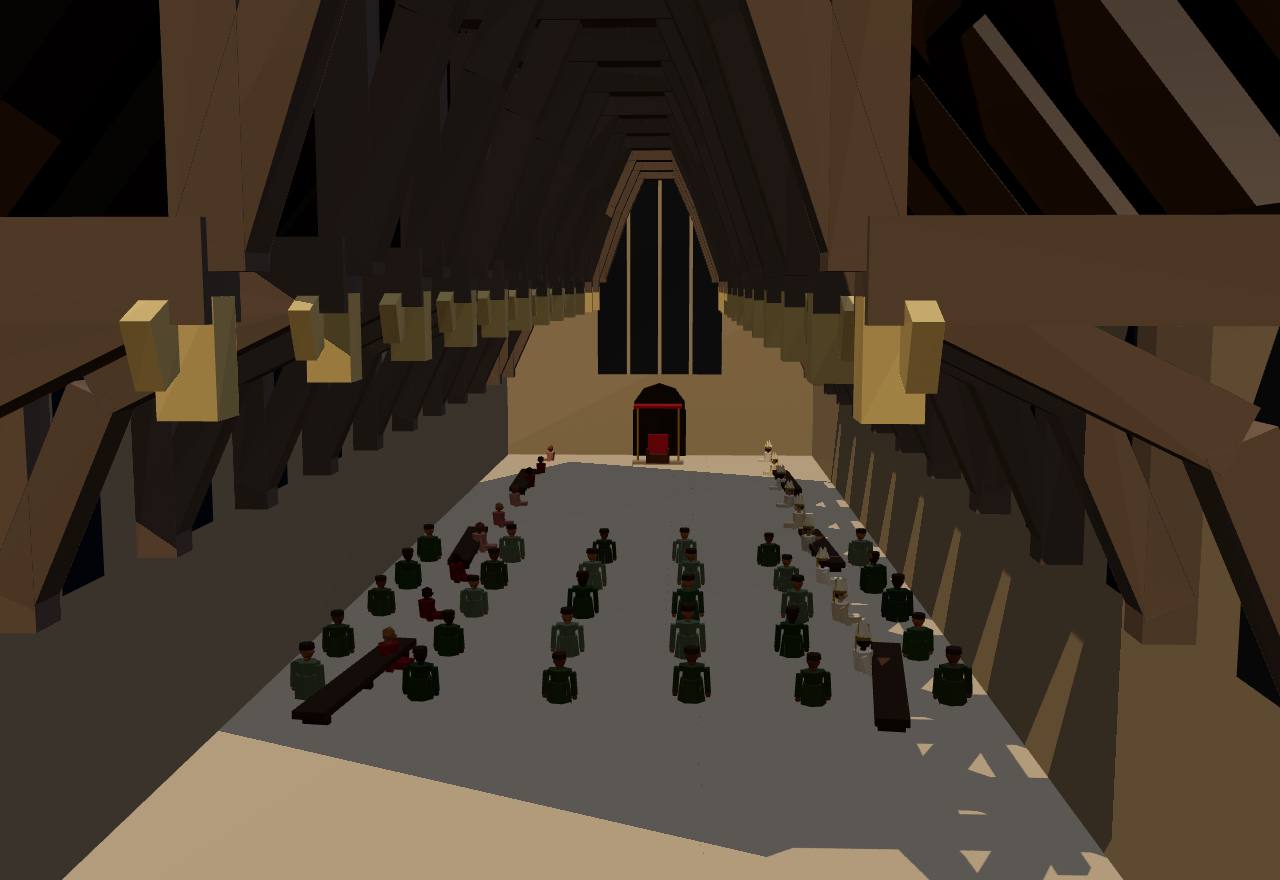
Inside Westminster Hall, seen from the open south end: a long stone hall under a great oak roof of hammer beams, each beam ending in a carved angel, rising in arched ribs to the ridge. At the far end, under a tall window, a throne stands on a dais with a cloth of state; prelates and lords sit on benches along both walls and a crowd of knights and townsmen stands at the near end. Switch to the empty hall. The roof is drawn after the published span and heights; the figures are generic.

Westminster Hall

Castile and Aragon: the CortesZaragoza

Iberian kings met their prelates, nobles and town proctors in Cortes (Corts in Catalonia) from the late twelfth century. In Aragon a league of nobles and towns won a general privilege in 1283 and a judge, the Justicia, to hear complaints against royal officers; in Castile the Cortes granted taxes until only seventeen, then eighteen, cities still sent members.

Terms: Latin Europe: Franks, emperors, charters and parliaments: Charters, parliaments and electors, Castile and Aragon: the Cortes

  • Cortes, Corts the assemblies of the Iberian kingdoms (Catalan Corts) 75,70
  • brazos the estates (literally 'arms') in which the cortes sat, 'four or three' 70
  • procuradores town representatives, carrying letters of proxy (cartas de procuración) 62
  • Justicia de Aragón a judge 'de contrafuero', of breaches of the law (Sarasa); an 'ombudsman office' (Møller) 76,70
  • servicio a grant of money voted by the Cortes 77
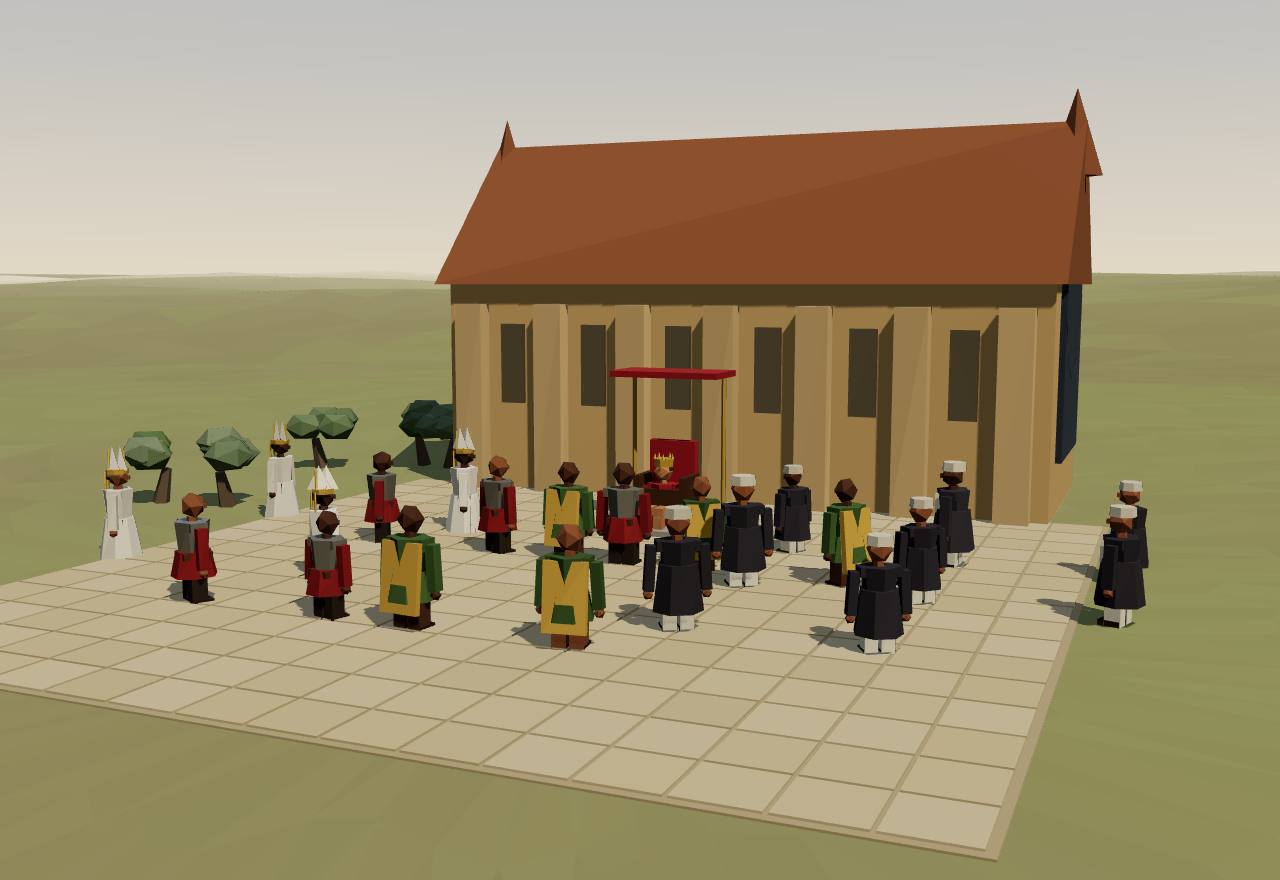
Strong Iberian light on a long stone hall with tall windows. Before it the king sits on a dais, and four groups stand apart facing him: prelates in white mitres, nobles in mail, knights in cloaks, and town proctors in dark coats and caps holding their letters of proxy. Switch to Castile in the fifteenth century: only townsmen stand before the king, in seventeen pairs, two procuradores for each city that still had a vote. The hall and figures are generic.

Cortes: the king and the estates

Which kingdom came first depends on the count. Van Zanden and colleagues start with León in 1188; Jørgen Møller finds that in Aragon “the first representative institution is convoked as early as 1164 … 24 years before”, though he calls it “a false start”. He then dates assemblies at Lérida in 1214, the first purely Catalan one at Barcelona in 1228, and one at Monzón in December 1232 to prepare the conquest of Valencia. 59,70 Debated Texts

Møller codes 107 Aragonese and Catalan assemblies between 1100 and 1327: 39 “preparliaments” of notables, 63 representative institutions in which towns sent “genuine representatives (proctors), normally appointed by the town councils”, and five unclear. They come in bursts (“1217–36, 1275–93, and 1307–25”), and early on “the establishment of public order (land peace and the regulation of succession) is by far the most prominent cause for summoning”. 70 Consensus Texts

At Tarazona in September 1283 the Aragonese nobles protested that they “had not been consulted over Peter III's conquest of Sicily”. Their league, the Unión, won the Privilegio General in October 1283, 31 articles, among them that the king “faga cort general de aragoneses en cada un ayno una vegada en la ciutat de Çaragoça” (hold a general cort every year at Zaragoza); Sarasa notes that annual meetings were never kept. 70,76 Consensus Texts

The Cortes of Ejea in 1265 fixed the office of the Justicia of Aragon “como juez de contrafuero”, a judge of acts against the law; Møller describes James I's decision to establish “the ombudsman office of the Justicia”. 76,70 Consensus Texts

In December 1283 the Catalan Corts in turn “extracted the promise of annual convocations” and “stipulated that the taxes were to be collected by members of the corts”. Rogerio Tostes warns against reading the Corts of 1283 as a constitution in the modern sense. 70,78 Consensus Texts

In Castile the towns sent procuradores with letters of proxy giving them “los poderes suficientes”; Tomás Puñal counts up to four per town in the fourteenth century and two as the rule from the fifteenth, when the office fell to “sólo unos pocos individuos pertenecientes al regimiento”, a few members of each town's ruling council. “El rey y sólo el rey las convoca”: only the king summoned and closed the Cortes. 62 Consensus Texts

Fewer towns kept their seats. At Valladolid in 1425 Juan II “sólo convocó a los procuradores de 12 ciudades”; from 1435 the number was fixed at 17, and at 18 from 1498–99, so the king called 36 procuradores in all (Clemente, after Piskorski). Puñal calls the fourteenth century the Cortes' peak and the fifteenth their conventional decline. 79,62 Debated Texts

The Cortes paid for that. In 1432 they granted 45 million maravedís (“15 monedas y pedido y medio”), and at Palencia the procuradores asked that the petitions the king answered should have “vigor y fuerza de ley” and complained of losing the freedom to choose their own procuradores (César Olivera's reading of the record, whose scan is poor). 77 Consensus Texts

Van Zanden's activity index for Castile and León is 30 in the thirteenth century, 59 in the fourteenth and 52 in the fifteenth; Catalonia's rises to 61 in the fifteenth, Aragon's to 41. Seshat has little on the Crown of Castile beyond courts, judges, a legal code and full-time bureaucrats (all present), and one record for the Crown of Aragon, so neither is charted. 59,11 Seshat DB Consensus Survey

How power worked King · Heredity · Assembly or tribune veto · 1 unknown

How power worked

Who rules
King Consensus
How chosen
Heredity Consensus
Limits on power
Assembly or tribune veto Debated
Scale
Territorial state Consensus
Claim to rule
Unknown
Why?

The sources read describe the assemblies and their privileges, not what the kings' title rested on.

Who has a say
A narrow elite Debated

France: the EstatesTours

The Capetian and Valois kings called the Estates-General when they needed backing or money: in 1302 against the pope, in the 1350s, and in 1484, when a regency was in question. They never met regularly, and once the taille became permanent the king no longer needed them.

Terms: Latin Europe: Franks, emperors, charters and parliaments: Charters, parliaments and electors, France: the Estates

  • états généraux the Estates-General: clergy, nobles and the towns' elected procureurs 63
  • bonnes villes the privileged towns, the only places called on to send elected deputies at first 63
  • taille the royal direct tax, permanent from the reign of Charles VII 63,4
A Gothic church with flying buttresses and two spired towers rises over a square under a pale French sky. In front, three groups stand apart facing a royal dais: clergy in white robes and mitres, nobles in mail and bright cloaks, and the deputies of the towns in dark coats. Switch to Tours, 1484: the deputies have come from every bailliage, the throne stands empty under its canopy, and one nobleman steps forward with a raised arm to speak. The church and figures are generic.

The Estates-General

“It was the dispute between Philip IV. the Fair and Boniface VIII. which led to the States-General of 1302”, the 1911 Britannica's article on the States-General says, and that assembly “had been called upon only to give counsel”. Only the bonnes villes were called on, “represented by elected procureurs”; “the country districts, the plat pays, were not represented”. 63 Consensus Texts

For a few years the Estates took over the taxes: “from 1355 to 1358, not only the voting, but through their commissaries, the administration of and jurisdiction over the taxes”. Led by Étienne Marcel, they named “a committee of eighty members” in October 1356 and won “a great edict of reform” in 1357; King John “forbade its being put into effect”, and Marcel was killed in July 1358. 63,80 Consensus Texts

The power did not last. King John's ransom was raised “for twenty years … without a vote of the States-General”, Under Charles VII the estates voted subsidies almost every year of the war, and when it was over they “renounced, through weariness and a longing for peace, their most precious right, the power of the purse”; in the second half of the fifteenth century “the taille, aids and gabelle became definitely permanent”. 63 Consensus Texts

Philippe de Commynes, a royal counsellor, asked whether “any king or prince upon earth … has power to raise one penny of money, except on his own demesnes, without the consent of the poor subject who is to pay it, unless it be by tyranny and violence”, and noted that Charles VII never raised more than 1,800,000 francs a year, while Louis XI, in the year of his death, raised 4,700,000. 4 Consensus Texts

For the Estates of Tours in 1484 the electors met “at the chief town of their bailliage or sénéchaussée” and there seems to have been “universal and direct suffrage for all the three orders”. The Estates voted the taille “for two years only” (2,500,000 francs, Commynes says) and asked to meet again; “the promise was not kept”, and they were not summoned until 1560. Commynes's translator dates the session “1483”, old style. 63,4 Consensus Texts

At Tours the Burgundian deputy Philippe Pot argued, in Jehan Masselin's journal, that “initio domini rerum populi suffragio reges fuisse creatos”, that kings were first made by the people's vote, that “rempublicam rem populi esse”, and that a regency fell first to the Estates-General. Others answered that the estates' consent was needed “sinon pour lever des impôts”, only to raise taxes. 81 Consensus Texts

Seshat codes early Valois France at 390,000 km² and 11.5 million people in 1350, 9 million in 1400, with Paris the capital and professional lawyers present; van Zanden's index for the Estates-General is 8 in the fourteenth century and 19 in the fifteenth, against 78 and 67 for England (it leaves out France's provincial estates). 59 Seshat Consensus Survey

How power worked King · Heredity · Council

How power worked

Who rules
King Consensus
How chosen
Heredity Debated
Limits on power
Council Debated
Scale
Territorial state Consensus
Claim to rule
Divine mandate Debated
Who has a say
A narrow elite Debated

The Empire: the Golden BullFrankfurt

In 1356 Charles IV issued a law that fixed who elected the king of the Romans and how: seven electors, three archbishops and four lay princes, meeting at Frankfurt and deciding by majority. It ended most disputed elections and made the electors princes no one else could match.

Terms: Latin Europe: Franks, emperors, charters and parliaments: Charters, parliaments and electors, The Empire: the Golden Bull

  • Kurfürsten, Kurkolleg the prince-electors and their college 82
  • electio per unum election 'by one', the older form in which a single elector named the king for all; Machida says it was given up in 1346 83
  • leges fundamentales fundamental laws; Lück's term for the Bull's later standing 84
  • Kurlande the electoral lands, made indivisible by the Bull 84
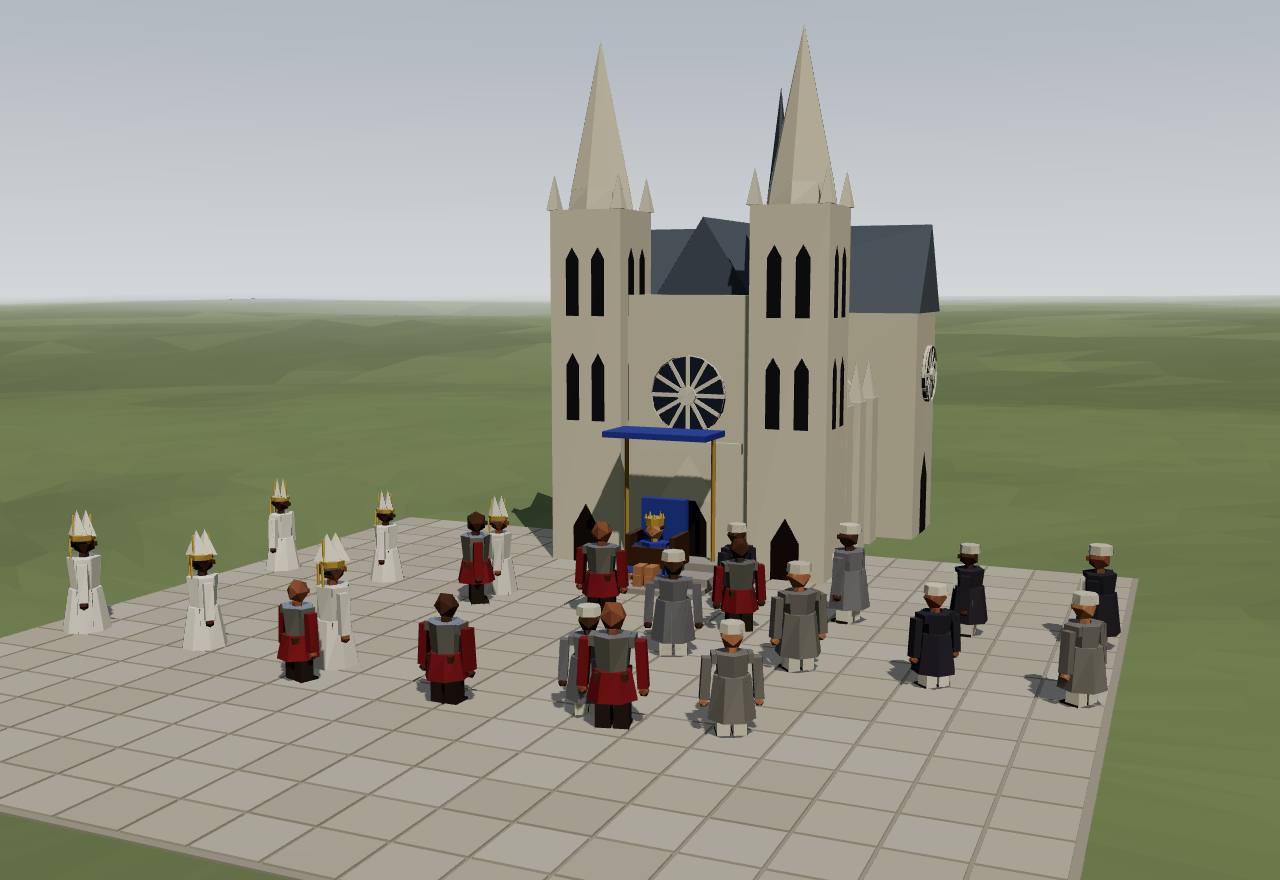
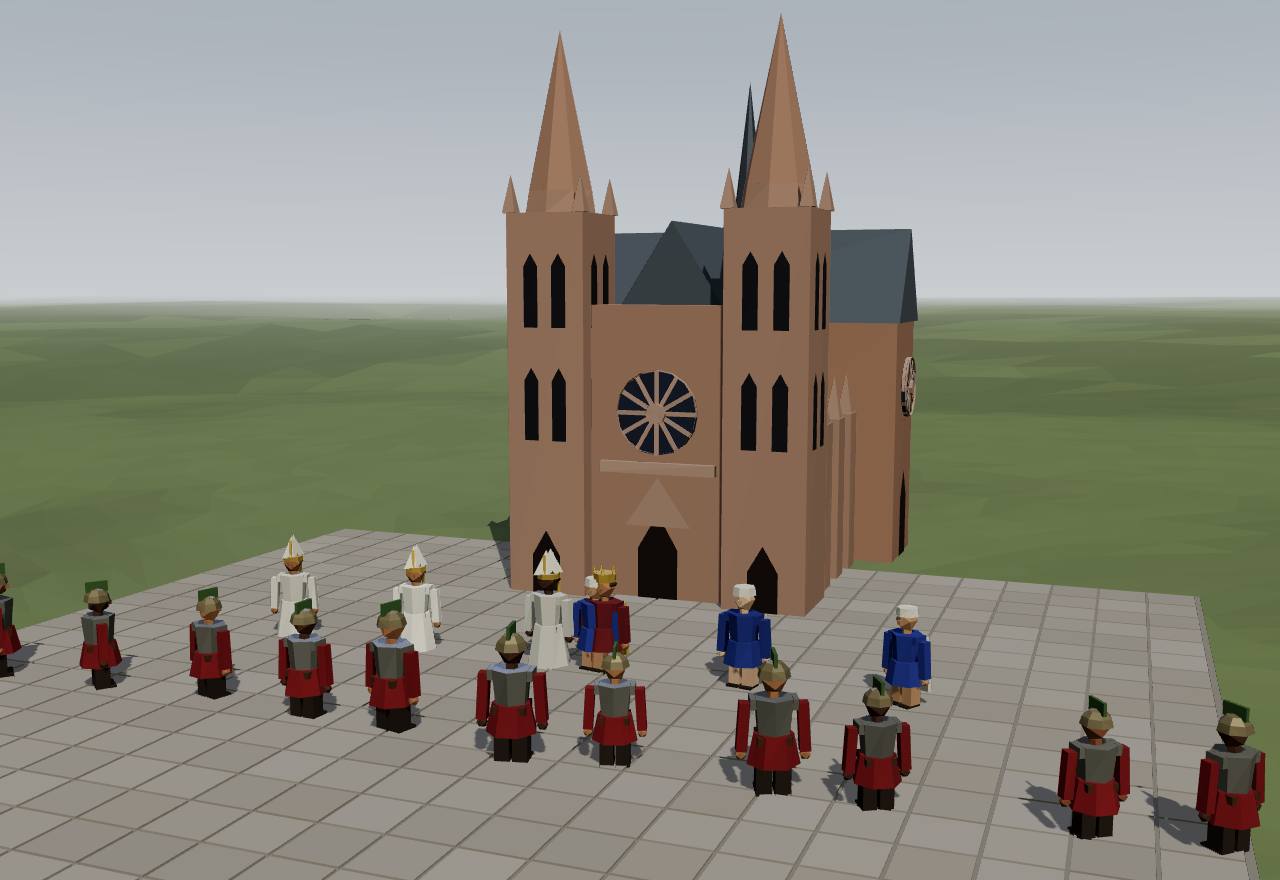
A grey morning in Frankfurt. A tall Gothic church with buttresses, pointed windows and twin spired towers stands over a paved square; before its west door seven men stand in a line, three churchmen in white mitres and four lay princes in fur-trimmed cloaks, one of them crowned, each with a couple of attendants behind him. Switch to the shut city: a town gate in a stone wall, its doors closed and armed citizens in front of it turning riders away. The church is a generic Gothic church and the figures are generic.

Frankfurt: seven electors, 1356 rules

The Golden Bull names the electors: the archbishops of Mainz, Trier and Cologne, and “the king of Bohemia and the count palatine of the Rhine, the duke of Saxony and the margrave of Brandenburg”, who “are considered and are the true and lawful prince electors”. Its translator explains why it was needed: the archbishops and Bohemia were not in doubt, but there were rival lines in Saxony and Brandenburg, “and the seventh vote was claimed alike by Bavaria and by the Palatinate”. 85 Consensus Texts

When a king died, the archbishop of Mainz was to announce it and summon the electors within a month; they were to be at Frankfurt within three months, each with “not more than two hundred mounted followers”, fifty armed. At dawn they heard mass in the church of St Bartholomew and swore to give their vote “without any pact, payment, price, or promise”. 85 Consensus Texts

They were not to leave Frankfurt “until the majority of them shall have elected”; after thirty days “they shall live on bread and water”; and a majority's choice “shall in future be considered … as if it had been unanimously carried through by all of them”. Sanehide Machida reads the majority as “the majority of all Electors”, so “four or more was necessary”, and notes that individual votes replaced the older electio per unum. 85,83 Consensus Texts

The archbishop of Mainz alone called for the votes “one by one”: Trier first, then Cologne, Bohemia, the count palatine, Saxony and Brandenburg, and then the others asked Mainz for his. Each elector also had a household office at the emperor's court: Brandenburg “shall present the water for washing”, Bohemia offers drink, the count palatine food, Saxony acts as marshal. 85 Consensus Texts

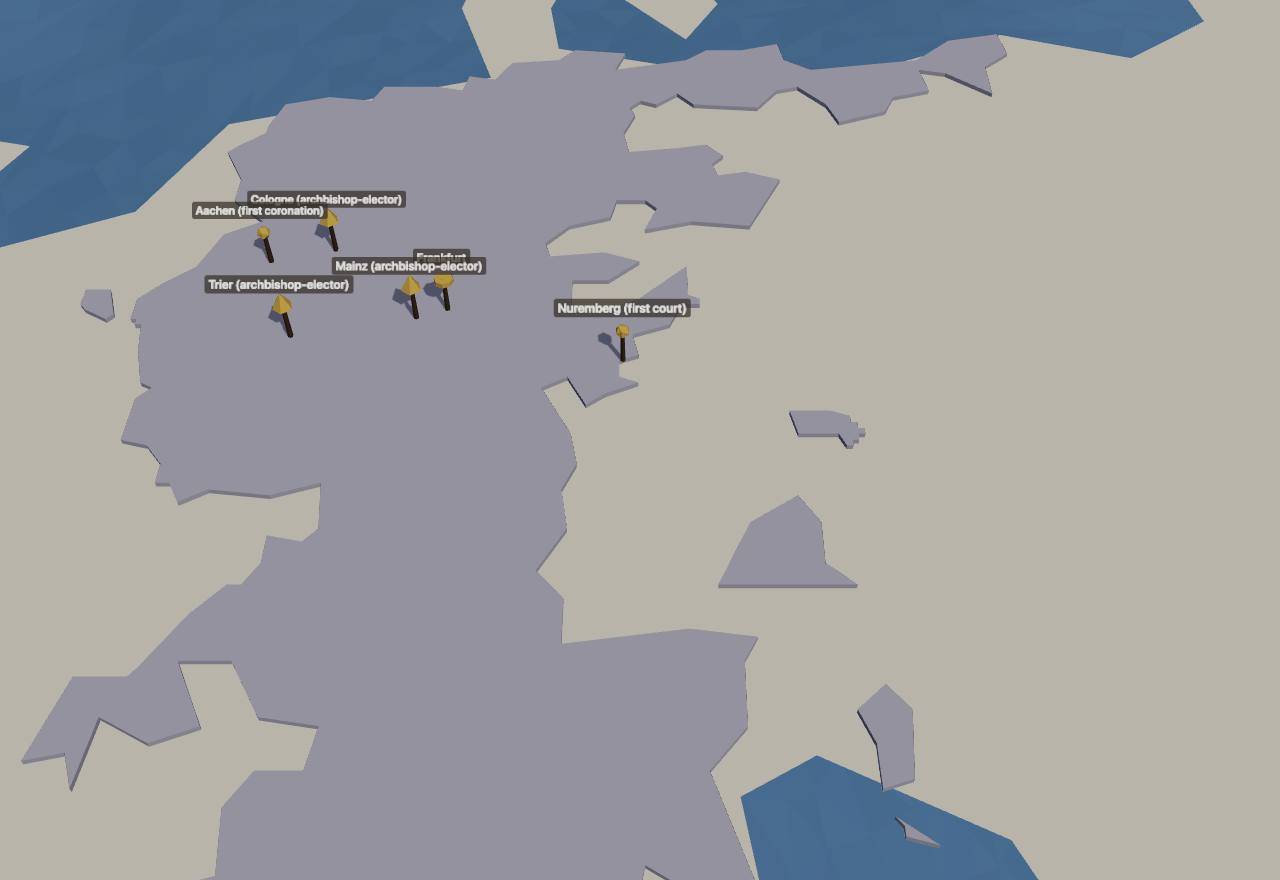
The Bull fixed the places by “ancient” custom: the election at Frankfurt, “the first coronation in Aix” (Aachen) and the first imperial court at Nuremberg, where Charles issued the law “in our solemn court … in session with all the electoral princes”. 85 Consensus Texts

The newly elected king had to “confirm and approve” all the electors' privileges before any other business. Their lands were not to be divided and passed to the first-born son; their subjects could not appeal beyond them. Heiner Lück calls the Bull “a clear programme for the organisation of imperial rule involving the privileged electoral group”. 85,84 Consensus Texts

The towns lost. The Bull banned the “pfalburgers”, subjects of a lord who were “received among the citizens of other cities” while still living on the lord's land, and it voided confederations of cities made “without the authority of the lords”; its translator judged it “oppressive to the lesser nobility as well as to the cities”. Frankfurt's own citizens had to guard the electors and keep everyone else out while they sat. 85 Debated Texts

The rule did not end every quarrel. Charles's son Wenceslas was elected in his father's lifetime in 1376; in 1400 “the four Rhenish electors … declared Wenceslaus deposed” and chose Rupert, and in 1410 three electors chose Sigismund while others chose Jobst of Moravia. Bryce judged that under the Bull “disputed elections became far less frequent” until 1618. 86,87,88,6 Consensus Texts

Seshat calls the empire of 1255–1453 its “Fragmented Period” and codes its centralisation as “loose”; it codes little else for it, and Cliopatria draws only its minor states, so this case has a map of the places the Bull names rather than borders. 12 Seshat DB Consensus Survey

How power worked Emperor · Election · Council

How power worked

Who rules
Emperor Consensus
How chosen
Election Consensus
Limits on power
Council Debated
Scale
Confederation Debated
Claim to rule
Divine mandate Consensus
Who has a say
A narrow elite Consensus

Elect a king of the Romans by the rules of 1356

Model, not evidence

  1. Death and summons. The archbishop of Mainz announces the death and summons the electors within 1 month: “within one month of that time … the death itself and the summons of which we have spoken shall be announced by the archbishop of Mainz” (ch. 1 § 16). 85
  2. Frankfurt within 3 months, each elector with at most 200 mounted followers, 50 of them armed (ch. 1 § 17). One who neither comes nor sends envoys “shall forfeit for that time the vote or right which he had in that election” (ch. 1 § 18). 85
  3. Mass and oath in the church of St Bartholomew at dawn: “my voice and vote … I will give without any pact, payment, price, or promise” (ch. 2 § 2). 85
  4. The vote, called one by one, Trier first and Mainz last: “it shall pertain to the said archbishop of Mainz and to no other to call for the votes of these his co-electors, one by one” (ch. 4). 85
The seven electors, in calling order

3 for Candidate A, 2 for Candidate B: no king yet (4 votes of the seven needed).

Day 1: the electors stay in Frankfurt until a majority has chosen.

Majority: four of seven
“they shall not disperse from the said city of Frankfort until the majority of them shall have elected a temporal head for the world and for the Christian people” (ch. 2 § 3). Three electors who choose a fourth from among themselves: his own vote “the vote of that person who has been elected … shall have full vigour and shall increase the number of those electing, and shall constitute a majority” (ch. 2 § 5). Machida reads this as a majority of all seven electors, not of those present: four votes. 85,83
Thirty days
“when those thirty days are over, from that time on they shall live on bread and water” (ch. 2 § 3). 85
Counted as unanimous
“such election shall in future be considered and looked upon as if it had been unanimously carried through by all of them, no one dissenting” (ch. 2 § 4). 85
The price
The king-elect must at once “without delay or contradiction, confirm and approve, by his letters and seals, to each and all of the elector princes … all their privileges” (ch. 2 § 4). 85
A relief map of the Rhineland and Franconia seen from the south at an angle, with six raised pins on the land: a disc for Frankfurt, where the electors met; markers for Aachen, the place of the first coronation, and Nuremberg, the place of the first court; and three for the archbishoprics of Mainz, Trier and Cologne, whose archbishops were electors. Cliopatria's minor states of the Empire for 1360 are drawn pale underneath. Places are modern city points from Wikidata. Coastline from Natural Earth.

The Golden Bull's places (sites, not borders)

Places: 6 cited sites over Cliopatria (CC BY 4.0) territories, drawn flat and low. Frankfurt · Aachen (first coronation) · Nuremberg (first court) · Mainz (archbishop-elector) · Trier (archbishop-elector) · Cologne (archbishop-elector) 89,85,90,91,92,93,94

How often did parliaments meet?

Data: van Zanden, Buringh and Bosker 2010, Appendix A.1

The activity index counts the years in a century in which a region's parliament met: 0 means never, 100 every year. In the fourteenth century England led with 78; in the fifteenth, England with 67. France counts only the Estates-General. 59

12th century
Castile and León 2 Catalonia 3 Aragon 2 Valencia 0 Navarre 2 Portugal 0 England 0 France 0 Average, 30 regions 0.3
13th century
Castile and León 30 Catalonia 29 Aragon 25 Valencia 7 Navarre 7 Portugal 9 England 6 France 4 Average, 30 regions 5
14th century
Castile and León 59 Catalonia 41 Aragon 38 Valencia 28 Navarre 17 Portugal 27 England 78 France 8 Average, 30 regions 17
15th century
Castile and León 52 Catalonia 61 Aragon 41 Valencia 29 Navarre 33 Portugal 47 England 67 France 19 Average, 30 regions 28
Activity index by century (Appendix A.1)
Region12th13th14th15th
Castile and León2305952
Catalonia3294161
Aragon2253841
Valencia072829
Navarre271733
Portugal092747
England067867
France (the Estates-General only)04819
Average, 30 regions0.351728

Artefacts

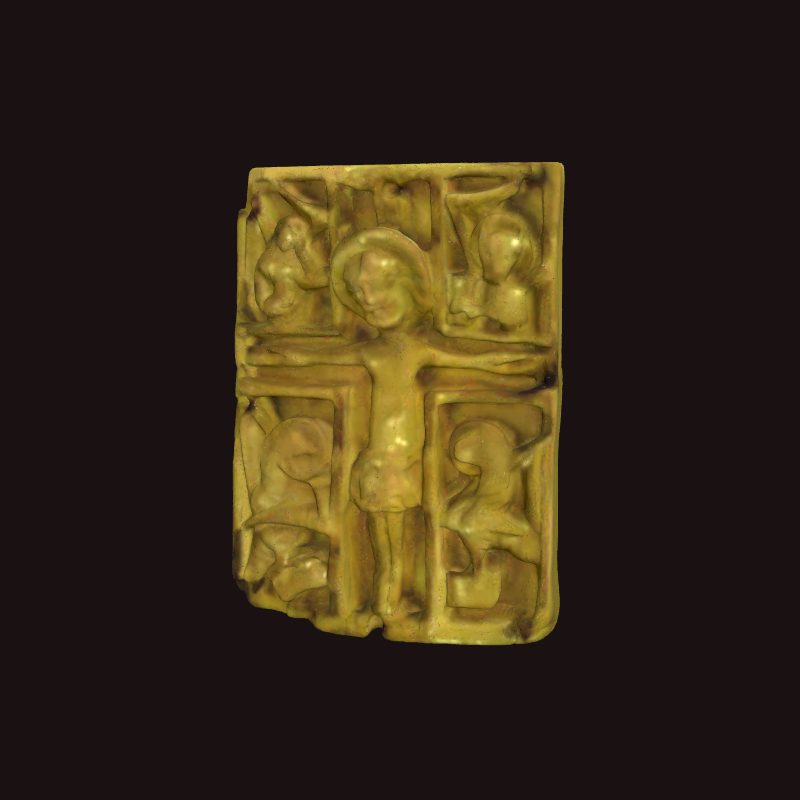
Walrus-ivory plaque of the Crucifixion, English, Anglo-Saxon (11th century)
Walrus-ivory plaque of the Crucifixion, English, Anglo-Saxon (11th century), 1050 CE. The Hunt Museum, Limerick (BM 005). 98 3D model: The Hunt Museum, via Zenodo (CC BY 4.0) (source record) · CC BY 4.0
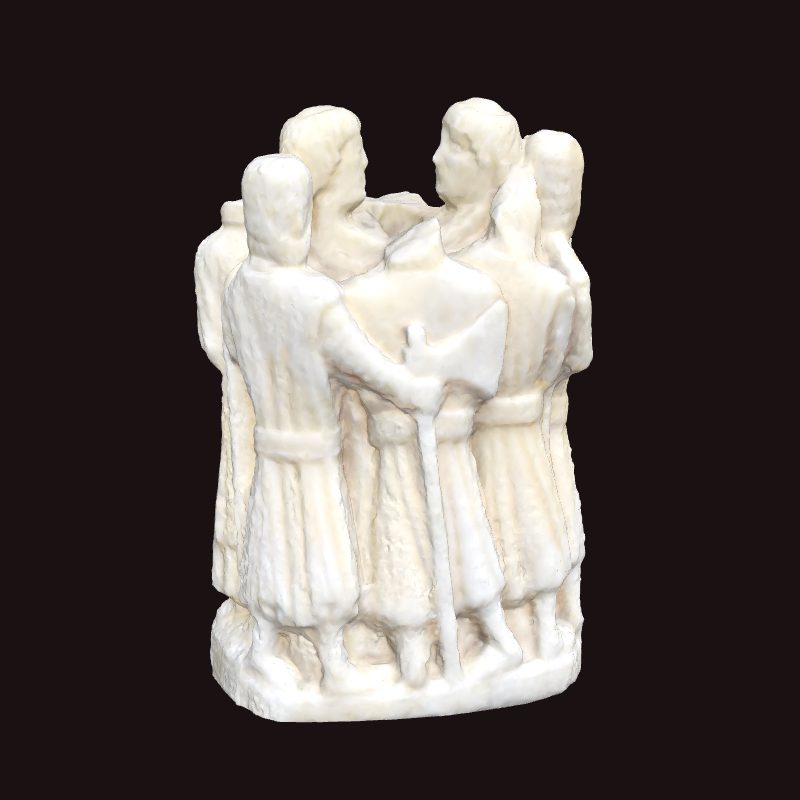
Walrus-ivory carving of the moments before Thomas Becket's murder in 1170 (12th century)
Walrus-ivory carving of the moments before Thomas Becket's murder in 1170 (12th century), 1175 CE. The Hunt Museum, Limerick (MG 027). 99,51 3D model: The Hunt Museum, via Zenodo (CC BY 4.0) (source record) · CC BY 4.0
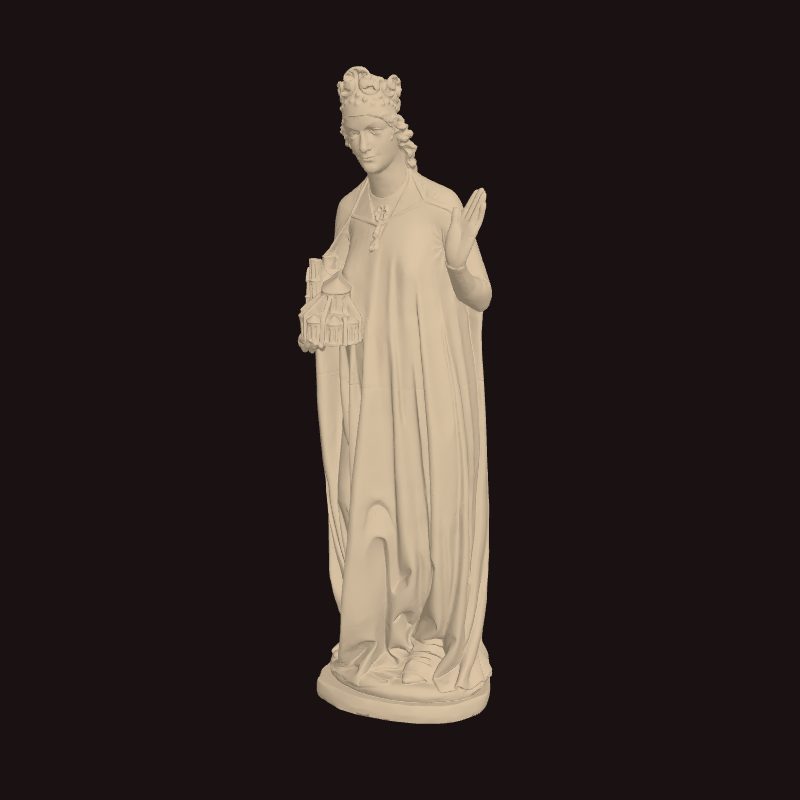
Empress Kunigunde holding a church, from the south-east portal of Bamberg Cathedral (c. 1240; plaster cast) Cast
Empress Kunigunde holding a church, from the south-east portal of Bamberg Cathedral (c. 1240; plaster cast), 1240 CE. Cast: SMK, Royal Cast Collection, Copenhagen (KAS862); original: Bamberg Cathedral. 100 3D scan: SMK, Statens Museum for Kunst (Public Domain Mark) (source record) · Public domain
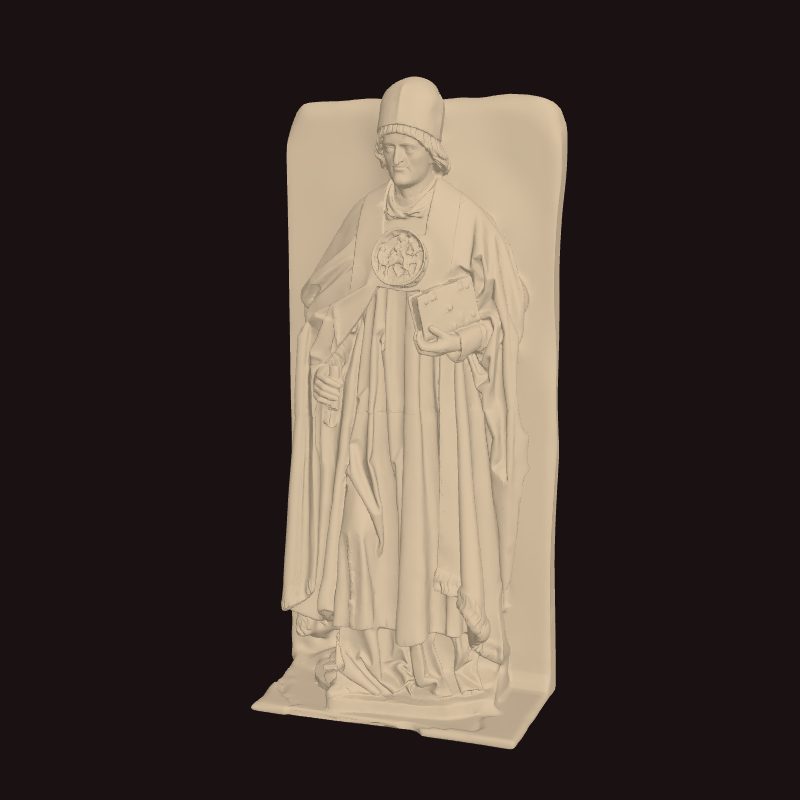
Tomb relief of Adalbert of Saxony, administrator of Mainz (c. 1484; plaster cast) Cast
Tomb relief of Adalbert of Saxony, administrator of Mainz (c. 1484; plaster cast), 1484 CE. Cast: SMK, Royal Cast Collection, Copenhagen (KAS1704); original: Mainz Cathedral. 101,85 3D scan: SMK, Statens Museum for Kunst (Public Domain Mark) (source record) · Public domain

3D model

In numbers

Who made the king of the Romans?

Data: Encyclopaedia Britannica (1911), one article per king, as cited

39 kings and rival kings from 911 to 1486. 14 were chosen when the throne was empty and 11 in their father's lifetime; 6 were set up against a reigning king and 8 came out of double elections. 4 reigns ended in deposition and 4 in a killing. Bryce's 1871 table differs by a year for four of them. 6

Elected (14)
chosen by the princes (later the electors) when the throne was empty
Co-king (11)
chosen as king while his father still reigned, to succeed him
Anti-king (6)
chosen by a party of princes against a king who still reigned
Double (8)
two rivals chosen by different groups of electors in the same vacancy

39 accessions: 14 elected, 11 co-king, 6 anti-king, 8 double; median reign 15 years. Ended: 26 died in office, 4 deposed, 4 killed, 3 abdicated, 2 not known.

Kings of the Romans, 911–1493: one bar per reign, in a row per way of coming to power Elected Co-king Anti-king Double Conrad I, 911 CE – 918 CE: Elected; died in office Henry I, 919 CE – 936 CE: Elected; died in office Otto I, 936 CE – 973 CE: Elected; died in office Otto II, 961 CE – 983 CE: Co-king; died in office Otto III, 983 CE – 1002 CE: Co-king; died in office Henry II, 1002 CE – 1024 CE: Elected; died in office Conrad II, 1024 CE – 1039 CE: Elected; died in office Henry III, 1028 CE – 1056 CE: Co-king; died in office Henry IV, 1053 CE – 1105 CE: Co-king; abdicated Rudolf of Swabia, 1077 CE – 1080 CE: Anti-king; killed Henry V, 1098 CE – 1125 CE: Co-king; died in office Lothar III, 1125 CE – 1137 CE: Elected; died in office Conrad III, 1138 CE – 1152 CE: Elected; died in office Frederick I, 1152 CE – 1190 CE: Elected; died in office Henry VI, 1169 CE – 1197 CE: Co-king; died in office Frederick II, 1196 CE – 1250 CE: Co-king; died in office Philip of Swabia, 1198 CE – 1208 CE: Double; killed Otto IV, 1198 CE – 1211 CE: Double; deposed Henry (VII), 1220 CE – 1235 CE: Co-king; deposed Conrad IV, 1237 CE – 1254 CE: Co-king; died in office Henry Raspe, 1246 CE – 1247 CE: Anti-king; died in office William of Holland, 1247 CE – 1256 CE: Anti-king; killed Richard of Cornwall, 1257 CE – 1272 CE: Double; died in office Alfonso X of Castile, 1257 CE: Double; not known Rudolf I, 1273 CE – 1291 CE: Elected; died in office Adolf of Nassau, 1292 CE – 1298 CE: Elected; deposed Albert I, 1298 CE – 1308 CE: Anti-king; killed Henry VII, 1308 CE – 1313 CE: Elected; died in office Louis IV, 1314 CE – 1347 CE: Double; died in office Frederick the Fair, 1314 CE – 1325 CE: Double; abdicated Charles IV, 1346 CE – 1378 CE: Anti-king; died in office Günther of Schwarzburg, 1349 CE – 1349 CE: Anti-king; abdicated Wenceslas, 1376 CE – 1400 CE: Co-king; deposed Rupert, 1400 CE – 1410 CE: Elected; died in office Sigismund, 1410 CE – 1437 CE: Double; died in office Jobst of Moravia, 1410 CE – 1411 CE: Double; died in office Albert II, 1438 CE – 1439 CE: Elected; died in office Frederick III, 1440 CE – 1493 CE: Elected; died in office Maximilian I, 1486 CE: Co-king; not known 900 CE1000 CE1100 CE1200 CE1300 CE1400 CE1500

Marks at the end of a bar: ○ died in office · × killed · ▽ deposed · | abdicated · □ conquered

Show the table: Kings of the Romans, 911–1493
RulerYearsCame to powerReign endedSource
Conrad I 911 CE – 918 CE Elected died in office (“chosen German king at Forchheim on the 8th of November 911”) 7
Henry I 919 CE – 936 CE Elected died in office (“the Franks and the Saxons met at Fritzlar in May 919 and chose Henry as German king”) 102
Otto I 936 CE – 973 CE Elected died in office (named by his father, then chosen after his death) 103,31
Otto II 961 CE – 983 CE Co-king died in office (“chosen German king at Worms in 961”; sole ruler from 973) 104
Otto III 983 CE – 1002 CE Co-king died in office (“chosen as his father's successor at Verona in June 983”) 105
Henry II 1002 CE – 1024 CE Elected died in office (“chosen German king by the Franks and Bavarians on the 7th of June 1002”) 106
Conrad II 1024 CE – 1039 CE Elected died in office (“elected German king early in September 1024”) 107
Henry III 1028 CE – 1056 CE Co-king died in office (designated in 1026, crowned German king in 1028; sole ruler from 1039) 108
Henry IV 1053 CE – 1105 CE Co-king abdicated (“chosen German king at Tribur in 1053”; “compelled to abdicate” at Mainz in December 1105) 109
Rudolf of Swabia 1077 CE – 1080 CE Anti-king killed (elected at Forchheim; “severely wounded at Hohenmolsen, and died the next day”) 110,9
Henry V 1098 CE – 1125 CE Co-king died in office (“chosen as his successor in 1098”) 111
Lothar III 1125 CE – 1137 CE Elected died in office (“after a protracted election, was chosen German king at Mainz on the 30th of August 1125” (Britannica's “Lothair II.”)) 112,35
Conrad III 1138 CE – 1152 CE Elected died in office (chosen against Lothar in 1127, then by “some of the princes” at Coblenz in 1138) 113
Frederick I 1152 CE – 1190 CE Elected died in office (“chosen German king at Frankfort on the 4th or 5th of March 1152”; drowned in 1190) 114,15
Henry VI 1169 CE – 1197 CE Co-king died in office (“chosen German king, or king of the Romans, at Bamberg in June 1169”) 115
Frederick II 1196 CE – 1250 CE Co-king died in office (“chosen German king at Frankfort in 1196”, chosen again against Otto IV in 1212) 116
Philip of Swabia 1198 CE – 1208 CE Double killed (“elected German king at Mühlhausen on the 8th of March 1198”; murdered at Bamberg) 117
Otto IV 1198 CE – 1211 CE Double deposed (“chosen king at Cologne on the 9th of June 1198”; princes at Nuremberg “declared Otto deposed” in 1211) 118,116
Henry (VII) 1220 CE – 1235 CE Co-king deposed (chosen at Frankfort in 1220; rebelled and was “kept for some time as a prisoner”) 119
Conrad IV 1237 CE – 1254 CE Co-king died in office (“chosen king of the Romans, or German king, at Vienna” in 1237) 120
Henry Raspe 1246 CE – 1247 CE Anti-king died in office (elected at Veitshöchheim in May 1246, “called the Pfaffenkönig”) 121
William of Holland 1247 CE – 1256 CE Anti-king killed (ready “to accept the proffered crown” against Frederick II; the election itself is not described; died when his horse broke through ice) 122
Richard of Cornwall 1257 CE – 1272 CE Double died in office (“a bare majority of the German electors nominated Richard”) 123
Alfonso X of Castile 1257 CE Double not known (“chosen German king in 1257”; later persuaded to recognise Rudolf (year not stated)) 124
Rudolf I 1273 CE – 1291 CE Elected died in office (“His election at Frankfort on the 29th of September 1273”) 124
Adolf of Nassau 1292 CE – 1298 CE Elected deposed (chosen in May 1292; deposed at Mainz in June 1298, then killed in battle) 125
Albert I 1298 CE – 1308 CE Anti-king killed (“chosen German king by some of the princes, who were dissatisfied with Adolph”, then again at Frankfort; murdered 1308) 126
Henry VII 1308 CE – 1313 CE Elected died in office (“elected to the vacant throne on the 27th of November 1308”) 127
Louis IV 1314 CE – 1347 CE Double died in office (“chosen at Frankfort on the 20th of October 1314 by a majority of the electors”) 128
Frederick the Fair 1314 CE – 1325 CE Double abdicated (chosen “by a minority of the electors”; acknowledged Louis's kingship by the treaty of Trausnitz) 129
Charles IV 1346 CE – 1378 CE Anti-king died in office (“chosen German king in opposition to Louis by some of the princes at Rense on the 11th of July 1346”; issued the Golden Bull in 1356) 130
Günther of Schwarzburg 1349 CE – 1349 CE Anti-king abdicated (elected at Frankfort “by four of the electors”; renounced his claims and died three weeks later) 131
Wenceslas 1376 CE – 1400 CE Co-king deposed (elected at Frankfort in 1376 in his father's lifetime; “the four Rhenish electors … declared Wenceslaus deposed” in 1400) 86
Rupert 1400 CE – 1410 CE Elected died in office (elected at Rense by the electors who had deposed Wenceslas) 87
Sigismund 1410 CE – 1437 CE Double died in office (chosen “first by three of the electors on the 20th of September 1410, and again after the death of his rival, Jobst”) 88
Jobst of Moravia 1410 CE – 1411 CE Double died in office (“chosen German king at Frankfort on the 1st of October 1410 in opposition to Sigismund”) 132
Albert II 1438 CE – 1439 CE Elected died in office (“chosen German king at Frankfort” on 18 March 1438 (the electors are not named)) 133
Frederick III 1440 CE – 1493 CE Elected died in office (“On the 2nd of February 1440 Frederick was chosen German king at Frankfort”) 134
Maximilian I 1486 CE Co-king not known (chosen at Frankfort in 1486, an election his father “vainly opposed”; died 1519, after the page's span) 135,134
  • Marks, by Seshat polity:
  • Early Merovingian
  • Middle Merovingian
  • Proto-Carolingian
  • Carolingian Empire I
  • Carolingian Empire II
  • Proto-French Kingdom
  • French Kingdom - Late Capetian
  • French Kingdom - Early Valois
  • East Francia
  • Holy Roman Empire - Ottonian-Salian Dynasty
  • Anglo-Saxon England I
  • Anglo-Saxon England II
  • Norman England
  • Plantagenet England
  • Castile Kingdom
  • Background bands, by phase:
  • The Frankish kingdoms
  • Kings, emperors and the Church
  • Charters, parliaments and electors
Territory km², log scale
The Frankish kingdoms Kings, emperors and the Church Charters, parliaments and electors 10k 100k 1M 10M 500 CE 1000 CE 1500 Early Merovingian: 200,000–300,000 km² (range), 481 CE – 543 CE (for the whole period). Seshat Equinox-2020. Middle Merovingian: 230,000 km², 600 CE. Seshat Equinox-2020. Proto-Carolingian: 250,000 km², 687 CE – 751 CE (for the whole period). Seshat Equinox-2020. Carolingian Empire I: 1,100,000 km², 752 CE – 840 CE (for the whole period). Seshat Equinox-2020. East Francia: 450,000–500,000 km² (range), 842 CE – 919 CE (for the whole period). Seshat Databank (seshat-db.com). Carolingian Empire II: 1,200,000 km², 850 CE. Seshat Equinox-2020. Carolingian Empire II: 800,000 km², 900 CE. Seshat Equinox-2020. Anglo-Saxon England II: 130,279 km², 927 CE – 1065 CE (for the whole period). Seshat Databank (seshat-db.com). Carolingian Empire II: 675,000 km², 950 CE. Seshat Equinox-2020. Proto-French Kingdom: 12,000–18,000 km² (range), 987 CE – 1150 CE (for the whole period). Seshat Equinox-2020. Holy Roman Empire - Ottonian-Salian Dynasty: 1,000,000 km², 1050 CE. Seshat Databank (seshat-db.com). Castile Kingdom: 100,000 km², 1065 CE – 1230 CE (for the whole period). Seshat Databank (seshat-db.com). Norman England: 135,000–138,000 km² (range), 1066 CE – 1153 CE (for the whole period). Seshat Databank (seshat-db.com). French Kingdom - Late Capetian: 75,000 km², 1150 CE. Seshat Equinox-2020. Plantagenet England: 130,279 km², 1154 CE – 1485 CE (for the whole period). Seshat Databank (seshat-db.com). French Kingdom - Late Capetian: 80,000 km², 1200 CE. Seshat Equinox-2020. French Kingdom - Late Capetian: 330,000 km², 1250 CE. Seshat Equinox-2020. French Kingdom - Late Capetian: 350,000 km², 1300 CE. Seshat Equinox-2020. French Kingdom - Early Valois: 390,000 km², 1350 CE. Seshat Equinox-2020. French Kingdom - Early Valois: 390,000 km², 1400 CE. Seshat Equinox-2020. French Kingdom - Early Valois: 340,000 km², 1450 CE. Seshat Equinox-2020. The Frankish kingdoms Kings, emperors and the Church Charters, parliaments and electors 0 500k 1M 1.5M 500 CE 1000 CE 1500 Early Merovingian: 200,000–300,000 km² (range), 481 CE – 543 CE (for the whole period). Seshat Equinox-2020. Middle Merovingian: 230,000 km², 600 CE. Seshat Equinox-2020. Proto-Carolingian: 250,000 km², 687 CE – 751 CE (for the whole period). Seshat Equinox-2020. Carolingian Empire I: 1,100,000 km², 752 CE – 840 CE (for the whole period). Seshat Equinox-2020. East Francia: 450,000–500,000 km² (range), 842 CE – 919 CE (for the whole period). Seshat Databank (seshat-db.com). Carolingian Empire II: 1,200,000 km², 850 CE. Seshat Equinox-2020. Carolingian Empire II: 800,000 km², 900 CE. Seshat Equinox-2020. Anglo-Saxon England II: 130,279 km², 927 CE – 1065 CE (for the whole period). Seshat Databank (seshat-db.com). Carolingian Empire II: 675,000 km², 950 CE. Seshat Equinox-2020. Proto-French Kingdom: 12,000–18,000 km² (range), 987 CE – 1150 CE (for the whole period). Seshat Equinox-2020. Holy Roman Empire - Ottonian-Salian Dynasty: 1,000,000 km², 1050 CE. Seshat Databank (seshat-db.com). Castile Kingdom: 100,000 km², 1065 CE – 1230 CE (for the whole period). Seshat Databank (seshat-db.com). Norman England: 135,000–138,000 km² (range), 1066 CE – 1153 CE (for the whole period). Seshat Databank (seshat-db.com). French Kingdom - Late Capetian: 75,000 km², 1150 CE. Seshat Equinox-2020. Plantagenet England: 130,279 km², 1154 CE – 1485 CE (for the whole period). Seshat Databank (seshat-db.com). French Kingdom - Late Capetian: 80,000 km², 1200 CE. Seshat Equinox-2020. French Kingdom - Late Capetian: 330,000 km², 1250 CE. Seshat Equinox-2020. French Kingdom - Late Capetian: 350,000 km², 1300 CE. Seshat Equinox-2020. French Kingdom - Early Valois: 390,000 km², 1350 CE. Seshat Equinox-2020. French Kingdom - Early Valois: 390,000 km², 1400 CE. Seshat Equinox-2020. French Kingdom - Early Valois: 340,000 km², 1450 CE. Seshat Equinox-2020.
Population people, log scale
The Frankish kingdoms Kings, emperors and the Church Charters, parliaments and electors 100k 1M 10M 100M 500 CE 1000 CE 1500 Anglo-Saxon England I: 3,000,000 people, 410 CE. Seshat Databank (seshat-db.com). Dated before the chart's span: drawn at its left edge. Early Merovingian: 1,250,000–1,750,000 people (range), 481 CE – 543 CE (for the whole period). Seshat Equinox-2020. Middle Merovingian: 800,000–1,200,000 people (range), 600 CE. Seshat Equinox-2020. Proto-Carolingian: 800,000–1,200,000 people (range), 687 CE – 751 CE (for the whole period). Seshat Equinox-2020. Carolingian Empire I: 15,000,000 people, 811 CE. Seshat Equinox-2020. Carolingian Empire I: 20,000,000 people, 811 CE. Seshat Equinox-2020. Carolingian Empire II: 7,000,000–9,000,000 people (range), 840 CE – 856 CE. Seshat Equinox-2020. East Francia: 3,800,000–4,000,000 people (range), 842 CE – 919 CE (for the whole period). Seshat Databank (seshat-db.com). Carolingian Empire II: 5,000,000–7,000,000 people (range), 857 CE – 899 CE. Seshat Equinox-2020. Carolingian Empire II: 4,000,000–5,000,000 people (range), 900 CE – 987 CE. Seshat Equinox-2020. Holy Roman Empire - Ottonian-Salian Dynasty: 21,500,000 people, 919 CE – 1125 CE (for the whole period). Seshat Databank (seshat-db.com). Anglo-Saxon England II: 1,500,000 people, 927 CE – 1065 CE (for the whole period). Seshat Databank (seshat-db.com). Proto-French Kingdom: 500,000–1,000,000 people (range), 987 CE – 1150 CE (for the whole period). Seshat Equinox-2020. Norman England: 1,100,000 people, 1086 CE. Seshat Databank (seshat-db.com). French Kingdom - Late Capetian: 3,000,000 people, 1150 CE. Seshat Equinox-2020. French Kingdom - Late Capetian: 4,000,000 people, 1200 CE. Seshat Equinox-2020. French Kingdom - Late Capetian: 14,000,000 people, 1250 CE. Seshat Equinox-2020. French Kingdom - Late Capetian: 17,000,000 people, 1300 CE. Seshat Equinox-2020. Plantagenet England: 5,000,000 people, 1300 CE. Seshat Databank (seshat-db.com). French Kingdom - Early Valois: 11,500,000 people, 1350 CE. Seshat Equinox-2020. Plantagenet England: 3,500,000 people, 1350 CE. Seshat Databank (seshat-db.com). French Kingdom - Early Valois: 9,000,000 people, 1400 CE. Seshat Equinox-2020. French Kingdom - Early Valois: 9,500,000 people, 1450 CE. Seshat Equinox-2020. The Frankish kingdoms Kings, emperors and the Church Charters, parliaments and electors 0 10M 20M 30M 500 CE 1000 CE 1500 Anglo-Saxon England I: 3,000,000 people, 410 CE. Seshat Databank (seshat-db.com). Dated before the chart's span: drawn at its left edge. Early Merovingian: 1,250,000–1,750,000 people (range), 481 CE – 543 CE (for the whole period). Seshat Equinox-2020. Middle Merovingian: 800,000–1,200,000 people (range), 600 CE. Seshat Equinox-2020. Proto-Carolingian: 800,000–1,200,000 people (range), 687 CE – 751 CE (for the whole period). Seshat Equinox-2020. Carolingian Empire I: 15,000,000 people, 811 CE. Seshat Equinox-2020. Carolingian Empire I: 20,000,000 people, 811 CE. Seshat Equinox-2020. Carolingian Empire II: 7,000,000–9,000,000 people (range), 840 CE – 856 CE. Seshat Equinox-2020. East Francia: 3,800,000–4,000,000 people (range), 842 CE – 919 CE (for the whole period). Seshat Databank (seshat-db.com). Carolingian Empire II: 5,000,000–7,000,000 people (range), 857 CE – 899 CE. Seshat Equinox-2020. Carolingian Empire II: 4,000,000–5,000,000 people (range), 900 CE – 987 CE. Seshat Equinox-2020. Holy Roman Empire - Ottonian-Salian Dynasty: 21,500,000 people, 919 CE – 1125 CE (for the whole period). Seshat Databank (seshat-db.com). Anglo-Saxon England II: 1,500,000 people, 927 CE – 1065 CE (for the whole period). Seshat Databank (seshat-db.com). Proto-French Kingdom: 500,000–1,000,000 people (range), 987 CE – 1150 CE (for the whole period). Seshat Equinox-2020. Norman England: 1,100,000 people, 1086 CE. Seshat Databank (seshat-db.com). French Kingdom - Late Capetian: 3,000,000 people, 1150 CE. Seshat Equinox-2020. French Kingdom - Late Capetian: 4,000,000 people, 1200 CE. Seshat Equinox-2020. French Kingdom - Late Capetian: 14,000,000 people, 1250 CE. Seshat Equinox-2020. French Kingdom - Late Capetian: 17,000,000 people, 1300 CE. Seshat Equinox-2020. Plantagenet England: 5,000,000 people, 1300 CE. Seshat Databank (seshat-db.com). French Kingdom - Early Valois: 11,500,000 people, 1350 CE. Seshat Equinox-2020. Plantagenet England: 3,500,000 people, 1350 CE. Seshat Databank (seshat-db.com). French Kingdom - Early Valois: 9,000,000 people, 1400 CE. Seshat Equinox-2020. French Kingdom - Early Valois: 9,500,000 people, 1450 CE. Seshat Equinox-2020.
Largest settlement people, log scale
The Frankish kingdoms Kings, emperors and the Church Charters, parliaments and electors 1,000 10k 100k 1M 500 CE 1000 CE 1500 Early Merovingian: 20,000–30,000 people (range), 481 CE – 543 CE (for the whole period). Seshat Equinox-2020. Middle Merovingian: 20,000–30,000 people (range), 543 CE – 687 CE (for the whole period). Seshat Equinox-2020. Proto-Carolingian: 20,000–30,000 people (range), 687 CE – 751 CE (for the whole period). Seshat Equinox-2020. Anglo-Saxon England I: 5,000 people, 700 CE. Seshat Databank (seshat-db.com). Carolingian Empire I: 20,000–30,000 people (range), 752 CE – 840 CE (for the whole period). Seshat Equinox-2020. Carolingian Empire II: 10,000 people, 840 CE – 987 CE (for the whole period). Seshat Equinox-2020. East Francia: 23,000–40,000 people (range), 842 CE – 919 CE (for the whole period). Seshat Databank (seshat-db.com). Holy Roman Empire - Ottonian-Salian Dynasty: 100,000 people, 919 CE – 1125 CE (for the whole period). Seshat Databank (seshat-db.com). Anglo-Saxon England II: 12,000 people, 927 CE – 1065 CE (for the whole period). Seshat Databank (seshat-db.com). Proto-French Kingdom: 25,000 people, 987 CE – 1150 CE (for the whole period). Seshat Equinox-2020. Norman England: 17,850 people, 1086 CE. Seshat Databank (seshat-db.com). French Kingdom - Late Capetian: 25,000 people, 1150 CE. Seshat Equinox-2020. Plantagenet England: 70,000 people, 1154 CE – 1485 CE (for the whole period). Seshat Databank (seshat-db.com). French Kingdom - Late Capetian: 25,000–30,000 people (range), 1200 CE. Seshat Equinox-2020. French Kingdom - Late Capetian: 150,000 people, 1250 CE. Seshat Equinox-2020. French Kingdom - Late Capetian: 200,000 people, 1300 CE. Seshat Equinox-2020. French Kingdom - Early Valois: 200,000 people, 1350 CE. Seshat Equinox-2020. French Kingdom - Early Valois: 300,000 people, 1400 CE. Seshat Equinox-2020. French Kingdom - Early Valois: 150,000 people, 1450 CE. Seshat Equinox-2020. The Frankish kingdoms Kings, emperors and the Church Charters, parliaments and electors 0 100k 200k 300k 500 CE 1000 CE 1500 Early Merovingian: 20,000–30,000 people (range), 481 CE – 543 CE (for the whole period). Seshat Equinox-2020. Middle Merovingian: 20,000–30,000 people (range), 543 CE – 687 CE (for the whole period). Seshat Equinox-2020. Proto-Carolingian: 20,000–30,000 people (range), 687 CE – 751 CE (for the whole period). Seshat Equinox-2020. Anglo-Saxon England I: 5,000 people, 700 CE. Seshat Databank (seshat-db.com). Carolingian Empire I: 20,000–30,000 people (range), 752 CE – 840 CE (for the whole period). Seshat Equinox-2020. Carolingian Empire II: 10,000 people, 840 CE – 987 CE (for the whole period). Seshat Equinox-2020. East Francia: 23,000–40,000 people (range), 842 CE – 919 CE (for the whole period). Seshat Databank (seshat-db.com). Holy Roman Empire - Ottonian-Salian Dynasty: 100,000 people, 919 CE – 1125 CE (for the whole period). Seshat Databank (seshat-db.com). Anglo-Saxon England II: 12,000 people, 927 CE – 1065 CE (for the whole period). Seshat Databank (seshat-db.com). Proto-French Kingdom: 25,000 people, 987 CE – 1150 CE (for the whole period). Seshat Equinox-2020. Norman England: 17,850 people, 1086 CE. Seshat Databank (seshat-db.com). French Kingdom - Late Capetian: 25,000 people, 1150 CE. Seshat Equinox-2020. Plantagenet England: 70,000 people, 1154 CE – 1485 CE (for the whole period). Seshat Databank (seshat-db.com). French Kingdom - Late Capetian: 25,000–30,000 people (range), 1200 CE. Seshat Equinox-2020. French Kingdom - Late Capetian: 150,000 people, 1250 CE. Seshat Equinox-2020. French Kingdom - Late Capetian: 200,000 people, 1300 CE. Seshat Equinox-2020. French Kingdom - Early Valois: 200,000 people, 1350 CE. Seshat Equinox-2020. French Kingdom - Early Valois: 300,000 people, 1400 CE. Seshat Equinox-2020. French Kingdom - Early Valois: 150,000 people, 1450 CE. Seshat Equinox-2020.
Administrative levels
The Frankish kingdoms Kings, emperors and the Church Charters, parliaments and electors 0 2 4 6 500 CE 1000 CE 1500 Anglo-Saxon England I: 3 levels, 410 CE – 926 CE (for the whole period). Seshat Databank (seshat-db.com). Early Merovingian: 4 levels, 481 CE – 543 CE (for the whole period). Seshat Equinox-2020. Middle Merovingian: 4–5 levels (range), 543 CE – 687 CE (for the whole period). Seshat Equinox-2020. Proto-Carolingian: 4–5 levels (range), 687 CE – 751 CE (for the whole period). Seshat Equinox-2020. Carolingian Empire I: 4 levels, 752 CE – 840 CE (for the whole period). Seshat Equinox-2020. Carolingian Empire II: 4 levels, 840 CE – 987 CE (for the whole period). Seshat Equinox-2020. East Francia: 5 levels, 842 CE – 919 CE (for the whole period). Seshat Databank (seshat-db.com). Anglo-Saxon England II: 5 levels, 927 CE – 1065 CE (for the whole period). Seshat Databank (seshat-db.com). Proto-French Kingdom: 4 levels, 987 CE – 1150 CE (for the whole period). Seshat Equinox-2020. Castile Kingdom: 4 levels, 1065 CE – 1230 CE (for the whole period). Seshat Databank (seshat-db.com). Norman England: 5 levels, 1066 CE – 1153 CE (for the whole period). Seshat Databank (seshat-db.com). French Kingdom - Late Capetian: 5 levels, 1150 CE – 1328 CE (for the whole period). Seshat Equinox-2020. Plantagenet England: 6 levels, 1154 CE – 1485 CE (for the whole period). Seshat Databank (seshat-db.com). French Kingdom - Early Valois: 5 levels, 1328 CE – 1450 CE (for the whole period). Seshat Equinox-2020.
Settlement hierarchy tiers
The Frankish kingdoms Kings, emperors and the Church Charters, parliaments and electors 0 2 4 6 500 CE 1000 CE 1500 Anglo-Saxon England I: 6 tiers, 410 CE – 926 CE (for the whole period). Seshat Databank (seshat-db.com). Early Merovingian: 4 tiers, 481 CE – 543 CE (for the whole period). Seshat Equinox-2020. Middle Merovingian: 4 tiers, 543 CE – 687 CE (for the whole period). Seshat Equinox-2020. Proto-Carolingian: 4 tiers, 687 CE – 751 CE (for the whole period). Seshat Equinox-2020. Carolingian Empire I: 3 tiers, 752 CE – 840 CE (for the whole period). Seshat Equinox-2020. Carolingian Empire II: 3 tiers, 840 CE – 987 CE (for the whole period). Seshat Equinox-2020. East Francia: 6 tiers, 842 CE – 919 CE (for the whole period). Seshat Databank (seshat-db.com). Holy Roman Empire - Ottonian-Salian Dynasty: 5 tiers, 919 CE – 1125 CE (for the whole period). Seshat Databank (seshat-db.com). Anglo-Saxon England II: 5 tiers, 927 CE – 1065 CE (for the whole period). Seshat Databank (seshat-db.com). Proto-French Kingdom: 4 tiers, 987 CE – 1150 CE (for the whole period). Seshat Equinox-2020. Norman England: 6 tiers, 1066 CE – 1153 CE (for the whole period). Seshat Databank (seshat-db.com). French Kingdom - Late Capetian: 5 tiers, 1150 CE – 1328 CE (for the whole period). Seshat Equinox-2020. Plantagenet England: 4 tiers, 1154 CE – 1485 CE (for the whole period). Seshat Databank (seshat-db.com). French Kingdom - Early Valois: 5 tiers, 1328 CE – 1450 CE (for the whole period). Seshat Equinox-2020.
Military levels
The Frankish kingdoms Kings, emperors and the Church Charters, parliaments and electors 0 5 10 15 500 CE 1000 CE 1500 Anglo-Saxon England I: 3 levels, 410 CE – 926 CE (for the whole period). Seshat Databank (seshat-db.com). Early Merovingian: 4 levels, 481 CE – 543 CE (for the whole period). Seshat Equinox-2020. Middle Merovingian: 4 levels, 543 CE – 687 CE (for the whole period). Seshat Equinox-2020. Proto-Carolingian: 4 levels, 687 CE – 751 CE (for the whole period). Seshat Equinox-2020. Carolingian Empire I: 4–5 levels (range), 752 CE – 840 CE (for the whole period). Seshat Equinox-2020. Carolingian Empire II: 4–5 levels (range), 840 CE – 987 CE (for the whole period). Seshat Equinox-2020. East Francia: 5 levels, 842 CE – 919 CE (for the whole period). Seshat Databank (seshat-db.com). Anglo-Saxon England II: 3 levels, 927 CE – 1065 CE (for the whole period). Seshat Databank (seshat-db.com). Proto-French Kingdom: 5 levels, 987 CE – 1090 CE. Seshat Equinox-2020. Norman England: 5 levels, 1066 CE – 1153 CE (for the whole period). Seshat Databank (seshat-db.com). Proto-French Kingdom: 5–6 levels (range), 1091 CE – 1150 CE. Seshat Equinox-2020. French Kingdom - Late Capetian: 5–6 levels (range), 1150 CE – 1328 CE (for the whole period). Seshat Equinox-2020. Plantagenet England: 11 levels, 1154 CE – 1485 CE (for the whole period). Seshat Databank (seshat-db.com). French Kingdom - Early Valois: 5–6 levels (range), 1328 CE – 1450 CE (for the whole period). Seshat Equinox-2020.
Territory (km²)
Seshat polityYearsValue
Early Merovingian 481 CE – 543 CE (whole period) 200,000–300,000
Middle Merovingian 600 CE 230,000
Proto-Carolingian 687 CE – 751 CE (whole period) 250,000
Carolingian Empire I 752 CE – 840 CE (whole period) 1,100,000
East Francia 842 CE – 919 CE (whole period) 450,000–500,000
Carolingian Empire II 850 CE 1,200,000
Carolingian Empire II 900 CE 800,000
Anglo-Saxon England II 927 CE – 1065 CE (whole period) 130,279
Carolingian Empire II 950 CE 675,000
Proto-French Kingdom 987 CE – 1150 CE (whole period) 12,000–18,000
Holy Roman Empire - Ottonian-Salian Dynasty 1050 CE 1,000,000
Castile Kingdom 1065 CE – 1230 CE (whole period) 100,000
Norman England 1066 CE – 1153 CE (whole period) 135,000–138,000
French Kingdom - Late Capetian 1150 CE 75,000
Plantagenet England 1154 CE – 1485 CE (whole period) 130,279
French Kingdom - Late Capetian 1200 CE 80,000
French Kingdom - Late Capetian 1250 CE 330,000
French Kingdom - Late Capetian 1300 CE 350,000
French Kingdom - Early Valois 1350 CE 390,000
French Kingdom - Early Valois 1400 CE 390,000
French Kingdom - Early Valois 1450 CE 340,000
Population (people)
Seshat polityYearsValue
Anglo-Saxon England I 410 CE 3,000,000
Early Merovingian 481 CE – 543 CE (whole period) 1,250,000–1,750,000
Middle Merovingian 600 CE 800,000–1,200,000
Proto-Carolingian 687 CE – 751 CE (whole period) 800,000–1,200,000
Carolingian Empire I 811 CE 15,000,000
Carolingian Empire I 811 CE 20,000,000
Carolingian Empire II 840 CE – 856 CE 7,000,000–9,000,000
East Francia 842 CE – 919 CE (whole period) 3,800,000–4,000,000
Carolingian Empire II 857 CE – 899 CE 5,000,000–7,000,000
Carolingian Empire II 900 CE – 987 CE 4,000,000–5,000,000
Holy Roman Empire - Ottonian-Salian Dynasty 919 CE – 1125 CE (whole period) 21,500,000
Anglo-Saxon England II 927 CE – 1065 CE (whole period) 1,500,000
Proto-French Kingdom 987 CE – 1150 CE (whole period) 500,000–1,000,000
Norman England 1086 CE 1,100,000
French Kingdom - Late Capetian 1150 CE 3,000,000
French Kingdom - Late Capetian 1200 CE 4,000,000
French Kingdom - Late Capetian 1250 CE 14,000,000
French Kingdom - Late Capetian 1300 CE 17,000,000
Plantagenet England 1300 CE 5,000,000
French Kingdom - Early Valois 1350 CE 11,500,000
Plantagenet England 1350 CE 3,500,000
French Kingdom - Early Valois 1400 CE 9,000,000
French Kingdom - Early Valois 1450 CE 9,500,000
Largest settlement (people)
Seshat polityYearsValue
Early Merovingian 481 CE – 543 CE (whole period) 20,000–30,000
Middle Merovingian 543 CE – 687 CE (whole period) 20,000–30,000
Proto-Carolingian 687 CE – 751 CE (whole period) 20,000–30,000
Anglo-Saxon England I 700 CE 5,000
Carolingian Empire I 752 CE – 840 CE (whole period) 20,000–30,000
Carolingian Empire II 840 CE – 987 CE (whole period) 10,000
East Francia 842 CE – 919 CE (whole period) 23,000–40,000
Holy Roman Empire - Ottonian-Salian Dynasty 919 CE – 1125 CE (whole period) 100,000
Anglo-Saxon England II 927 CE – 1065 CE (whole period) 12,000
Proto-French Kingdom 987 CE – 1150 CE (whole period) 25,000
Norman England 1086 CE 17,850
French Kingdom - Late Capetian 1150 CE 25,000
Plantagenet England 1154 CE – 1485 CE (whole period) 70,000
French Kingdom - Late Capetian 1200 CE 25,000–30,000
French Kingdom - Late Capetian 1250 CE 150,000
French Kingdom - Late Capetian 1300 CE 200,000
French Kingdom - Early Valois 1350 CE 200,000
French Kingdom - Early Valois 1400 CE 300,000
French Kingdom - Early Valois 1450 CE 150,000
Administrative levels (levels)
Seshat polityYearsValue
Anglo-Saxon England I 410 CE – 926 CE (whole period) 3
Early Merovingian 481 CE – 543 CE (whole period) 4
Middle Merovingian 543 CE – 687 CE (whole period) 4–5
Proto-Carolingian 687 CE – 751 CE (whole period) 4–5
Carolingian Empire I 752 CE – 840 CE (whole period) 4
Carolingian Empire II 840 CE – 987 CE (whole period) 4
East Francia 842 CE – 919 CE (whole period) 5
Anglo-Saxon England II 927 CE – 1065 CE (whole period) 5
Proto-French Kingdom 987 CE – 1150 CE (whole period) 4
Castile Kingdom 1065 CE – 1230 CE (whole period) 4
Norman England 1066 CE – 1153 CE (whole period) 5
French Kingdom - Late Capetian 1150 CE – 1328 CE (whole period) 5
Plantagenet England 1154 CE – 1485 CE (whole period) 6
French Kingdom - Early Valois 1328 CE – 1450 CE (whole period) 5
Settlement hierarchy (tiers)
Seshat polityYearsValue
Anglo-Saxon England I 410 CE – 926 CE (whole period) 6
Early Merovingian 481 CE – 543 CE (whole period) 4
Middle Merovingian 543 CE – 687 CE (whole period) 4
Proto-Carolingian 687 CE – 751 CE (whole period) 4
Carolingian Empire I 752 CE – 840 CE (whole period) 3
Carolingian Empire II 840 CE – 987 CE (whole period) 3
East Francia 842 CE – 919 CE (whole period) 6
Holy Roman Empire - Ottonian-Salian Dynasty 919 CE – 1125 CE (whole period) 5
Anglo-Saxon England II 927 CE – 1065 CE (whole period) 5
Proto-French Kingdom 987 CE – 1150 CE (whole period) 4
Norman England 1066 CE – 1153 CE (whole period) 6
French Kingdom - Late Capetian 1150 CE – 1328 CE (whole period) 5
Plantagenet England 1154 CE – 1485 CE (whole period) 4
French Kingdom - Early Valois 1328 CE – 1450 CE (whole period) 5
Military levels (levels)
Seshat polityYearsValue
Anglo-Saxon England I 410 CE – 926 CE (whole period) 3
Early Merovingian 481 CE – 543 CE (whole period) 4
Middle Merovingian 543 CE – 687 CE (whole period) 4
Proto-Carolingian 687 CE – 751 CE (whole period) 4
Carolingian Empire I 752 CE – 840 CE (whole period) 4–5
Carolingian Empire II 840 CE – 987 CE (whole period) 4–5
East Francia 842 CE – 919 CE (whole period) 5
Anglo-Saxon England II 927 CE – 1065 CE (whole period) 3
Proto-French Kingdom 987 CE – 1090 CE 5
Norman England 1066 CE – 1153 CE (whole period) 5
Proto-French Kingdom 1091 CE – 1150 CE 5–6
French Kingdom - Late Capetian 1150 CE – 1328 CE (whole period) 5–6
Plantagenet England 1154 CE – 1485 CE (whole period) 11
French Kingdom - Early Valois 1328 CE – 1450 CE (whole period) 5–6

Values as Seshat codes them: bands are ranges, dots single values, flat bars values given for a whole period, hatching “unknown”; from one Seshat polity to the next, marks alternate between a light tone and a darker one with dashed joining lines (the key above names each polity). Source: Seshat Global History Databank (Equinox-2020), CC BY 4.0; and the Seshat Databank, seshat-db.com (no licence stated; attribution).

Governance fingerprint

Seshat's institutional variables, phase by phase. Hover or focus a cell for the values and years.

The Frankish kingdomsKings, emperors and the ChurchCharters, parliaments and electors
Seshat variable The MerovingiansThe CarolingiansEast Francia and the EmpireThe CapetiansEngland from the witan to the NormansEngland: Magna Carta and ParliamentCastile and Aragon: the CortesFrance: the EstatesThe Empire: the Golden Bull
Rulers are gods Rulers are gods, The Frankish kingdoms: The Merovingians: Absent. Early Merovingian: absent; Middle Merovingian: absent; Proto-Carolingian: absent. Rulers are gods, The Frankish kingdoms: The Carolingians: Absent. Carolingian Empire I: absent; Carolingian Empire II: absent. Rulers are gods, Kings, emperors and the Church: East Francia and the Empire: Unknown. no value in Seshat. Rulers are gods, Kings, emperors and the Church: The Capetians: Absent. Proto-French Kingdom: absent. Rulers are gods, Kings, emperors and the Church: England from the witan to the Normans: Unknown. no value in Seshat. Rulers are gods, Charters, parliaments and electors: England: Magna Carta and Parliament: Unknown. no value in Seshat. Rulers are gods, Charters, parliaments and electors: Castile and Aragon: the Cortes: Unknown. no value in Seshat. Rulers are gods, Charters, parliaments and electors: France: the Estates: Absent. French Kingdom - Late Capetian: absent; French Kingdom - Early Valois: absent. Rulers are gods, Charters, parliaments and electors: The Empire: the Golden Bull: Unknown. no value in Seshat.
Rulers legitimated by gods Rulers legitimated by gods, The Frankish kingdoms: The Merovingians: Absent. Early Merovingian: absent; Middle Merovingian: absent; Proto-Carolingian: absent. Rulers legitimated by gods, The Frankish kingdoms: The Carolingians: Present. Carolingian Empire I: present; Carolingian Empire II: present. Rulers legitimated by gods, Kings, emperors and the Church: East Francia and the Empire: Unknown. no value in Seshat. Rulers legitimated by gods, Kings, emperors and the Church: The Capetians: Unknown. no value in Seshat. Rulers legitimated by gods, Kings, emperors and the Church: England from the witan to the Normans: Unknown. no value in Seshat. Rulers legitimated by gods, Charters, parliaments and electors: England: Magna Carta and Parliament: Unknown. no value in Seshat. Rulers legitimated by gods, Charters, parliaments and electors: Castile and Aragon: the Cortes: Unknown. no value in Seshat. Rulers legitimated by gods, Charters, parliaments and electors: France: the Estates: Unknown. no value in Seshat. Rulers legitimated by gods, Charters, parliaments and electors: The Empire: the Golden Bull: Unknown. no value in Seshat.
Executive checked by government Executive checked by government, The Frankish kingdoms: The Merovingians: Unknown. no value in Seshat. Executive checked by government, The Frankish kingdoms: The Carolingians: Unknown. no value in Seshat. Executive checked by government, Kings, emperors and the Church: East Francia and the Empire: Unknown. no value in Seshat. Executive checked by government, Kings, emperors and the Church: The Capetians: Unknown. no value in Seshat. Executive checked by government, Kings, emperors and the Church: England from the witan to the Normans: Unknown. no value in Seshat. Executive checked by government, Charters, parliaments and electors: England: Magna Carta and Parliament: Unknown. no value in Seshat. Executive checked by government, Charters, parliaments and electors: Castile and Aragon: the Cortes: Unknown. no value in Seshat. Executive checked by government, Charters, parliaments and electors: France: the Estates: Unknown. no value in Seshat. Executive checked by government, Charters, parliaments and electors: The Empire: the Golden Bull: Unknown. no value in Seshat.
Executive checked from outside Executive checked from outside, The Frankish kingdoms: The Merovingians: Unknown. no value in Seshat. Executive checked from outside, The Frankish kingdoms: The Carolingians: Unknown. no value in Seshat. Executive checked from outside, Kings, emperors and the Church: East Francia and the Empire: Unknown. no value in Seshat. Executive checked from outside, Kings, emperors and the Church: The Capetians: Unknown. no value in Seshat. Executive checked from outside, Kings, emperors and the Church: England from the witan to the Normans: Unknown. no value in Seshat. Executive checked from outside, Charters, parliaments and electors: England: Magna Carta and Parliament: Unknown. no value in Seshat. Executive checked from outside, Charters, parliaments and electors: Castile and Aragon: the Cortes: Unknown. no value in Seshat. Executive checked from outside, Charters, parliaments and electors: France: the Estates: Unknown. no value in Seshat. Executive checked from outside, Charters, parliaments and electors: The Empire: the Golden Bull: Unknown. no value in Seshat.
Impeachment Impeachment, The Frankish kingdoms: The Merovingians: Unknown. no value in Seshat. Impeachment, The Frankish kingdoms: The Carolingians: Unknown. no value in Seshat. Impeachment, Kings, emperors and the Church: East Francia and the Empire: Unknown. no value in Seshat. Impeachment, Kings, emperors and the Church: The Capetians: Unknown. no value in Seshat. Impeachment, Kings, emperors and the Church: England from the witan to the Normans: Unknown. no value in Seshat. Impeachment, Charters, parliaments and electors: England: Magna Carta and Parliament: Unknown. no value in Seshat. Impeachment, Charters, parliaments and electors: Castile and Aragon: the Cortes: Unknown. no value in Seshat. Impeachment, Charters, parliaments and electors: France: the Estates: Unknown. no value in Seshat. Impeachment, Charters, parliaments and electors: The Empire: the Golden Bull: Unknown. no value in Seshat.
Elite status hereditary Elite status hereditary, The Frankish kingdoms: The Merovingians: Present. Early Merovingian: present; Middle Merovingian: present; Proto-Carolingian: present. Elite status hereditary, The Frankish kingdoms: The Carolingians: Present. Carolingian Empire I: present; Carolingian Empire II: present. Elite status hereditary, Kings, emperors and the Church: East Francia and the Empire: Unknown. no value in Seshat. Elite status hereditary, Kings, emperors and the Church: The Capetians: Present. Proto-French Kingdom: present. Elite status hereditary, Kings, emperors and the Church: England from the witan to the Normans: Unknown. no value in Seshat. Elite status hereditary, Charters, parliaments and electors: England: Magna Carta and Parliament: Unknown. no value in Seshat. Elite status hereditary, Charters, parliaments and electors: Castile and Aragon: the Cortes: Unknown. no value in Seshat. Elite status hereditary, Charters, parliaments and electors: France: the Estates: Present. French Kingdom - Late Capetian: present; French Kingdom - Early Valois: present. Elite status hereditary, Charters, parliaments and electors: The Empire: the Golden Bull: Unknown. no value in Seshat.
Formal legal code Formal legal code, The Frankish kingdoms: The Merovingians: Present. Early Merovingian: present; Middle Merovingian: present; Proto-Carolingian: present. Formal legal code, The Frankish kingdoms: The Carolingians: Absent. Carolingian Empire I: absent; Carolingian Empire II: absent. Formal legal code, Kings, emperors and the Church: East Francia and the Empire: Present. East Francia: present; Holy Roman Empire - Ottonian-Salian Dynasty: present. Formal legal code, Kings, emperors and the Church: The Capetians: Absent. Proto-French Kingdom: absent. Formal legal code, Kings, emperors and the Church: England from the witan to the Normans: Present. Anglo-Saxon England II: present; Norman England: present. Formal legal code, Charters, parliaments and electors: England: Magna Carta and Parliament: Present. Plantagenet England: present. Formal legal code, Charters, parliaments and electors: Castile and Aragon: the Cortes: Present. Crown of Castile: present. Formal legal code, Charters, parliaments and electors: France: the Estates: Present (mixed). French Kingdom - Late Capetian: absent; French Kingdom - Early Valois: present (1350 CE – 1450 CE). Formal legal code, Charters, parliaments and electors: The Empire: the Golden Bull: Unknown. no value in Seshat.
Courts Courts, The Frankish kingdoms: The Merovingians: Present. Early Merovingian: present; Middle Merovingian: present; Proto-Carolingian: present. Courts, The Frankish kingdoms: The Carolingians: Inferred absent. Carolingian Empire I: inferred absent; Carolingian Empire II: suspected unknown. Courts, Kings, emperors and the Church: East Francia and the Empire: Present (mixed). East Francia: absent; Holy Roman Empire - Ottonian-Salian Dynasty: present. Courts, Kings, emperors and the Church: The Capetians: Inferred absent. Proto-French Kingdom: inferred absent. Courts, Kings, emperors and the Church: England from the witan to the Normans: Present (mixed). Anglo-Saxon England II: present; Norman England: absent. Courts, Charters, parliaments and electors: England: Magna Carta and Parliament: Present. Plantagenet England: present. Courts, Charters, parliaments and electors: Castile and Aragon: the Cortes: Present. Crown of Castile: present. Courts, Charters, parliaments and electors: France: the Estates: Present. French Kingdom - Late Capetian: present; French Kingdom - Early Valois: present. Courts, Charters, parliaments and electors: The Empire: the Golden Bull: Unknown. no value in Seshat.
Judges Judges, The Frankish kingdoms: The Merovingians: Present. Early Merovingian: present; Middle Merovingian: present; Proto-Carolingian: present. Judges, The Frankish kingdoms: The Carolingians: Inferred present (mixed). Carolingian Empire I: inferred present; Carolingian Empire II: inferred absent. Judges, Kings, emperors and the Church: East Francia and the Empire: Present (mixed). East Francia: absent; Holy Roman Empire - Ottonian-Salian Dynasty: present. Judges, Kings, emperors and the Church: The Capetians: Inferred absent. Proto-French Kingdom: inferred absent. Judges, Kings, emperors and the Church: England from the witan to the Normans: Absent. Anglo-Saxon England II: inferred absent; Norman England: absent. Judges, Charters, parliaments and electors: England: Magna Carta and Parliament: Present. Plantagenet England: present. Judges, Charters, parliaments and electors: Castile and Aragon: the Cortes: Present. Crown of Castile: present. Judges, Charters, parliaments and electors: France: the Estates: Present. French Kingdom - Late Capetian: present; French Kingdom - Early Valois: present. Judges, Charters, parliaments and electors: The Empire: the Golden Bull: Unknown. no value in Seshat.
Professional lawyers Professional lawyers, The Frankish kingdoms: The Merovingians: Absent. Early Merovingian: inferred absent; Proto-Carolingian: absent. Professional lawyers, The Frankish kingdoms: The Carolingians: Inferred absent. Carolingian Empire I: inferred absent; Carolingian Empire II: suspected unknown. Professional lawyers, Kings, emperors and the Church: East Francia and the Empire: Present (mixed). East Francia: absent; Holy Roman Empire - Ottonian-Salian Dynasty: present. Professional lawyers, Kings, emperors and the Church: The Capetians: Inferred absent. Proto-French Kingdom: inferred absent. Professional lawyers, Kings, emperors and the Church: England from the witan to the Normans: Absent. Norman England: absent. Professional lawyers, Charters, parliaments and electors: England: Magna Carta and Parliament: Unknown. Plantagenet England: unknown. Professional lawyers, Charters, parliaments and electors: Castile and Aragon: the Cortes: Unknown. no value in Seshat. Professional lawyers, Charters, parliaments and electors: France: the Estates: Present. French Kingdom - Late Capetian: present; French Kingdom - Early Valois: present. Professional lawyers, Charters, parliaments and electors: The Empire: the Golden Bull: Unknown. no value in Seshat.
Full-time bureaucrats Full-time bureaucrats, The Frankish kingdoms: The Merovingians: Inferred absent. Early Merovingian: inferred absent; Middle Merovingian: inferred absent; Proto-Carolingian: inferred absent. Full-time bureaucrats, The Frankish kingdoms: The Carolingians: Inferred present. Carolingian Empire I: suspected unknown; Carolingian Empire II: inferred present. Full-time bureaucrats, Kings, emperors and the Church: East Francia and the Empire: Present (mixed). East Francia: absent; Holy Roman Empire - Ottonian-Salian Dynasty: present. Full-time bureaucrats, Kings, emperors and the Church: The Capetians: Inferred absent. Proto-French Kingdom: inferred absent. Full-time bureaucrats, Kings, emperors and the Church: England from the witan to the Normans: Absent. Norman England: absent. Full-time bureaucrats, Charters, parliaments and electors: England: Magna Carta and Parliament: Present. Plantagenet England: present. Full-time bureaucrats, Charters, parliaments and electors: Castile and Aragon: the Cortes: Present. Crown of Castile: present. Full-time bureaucrats, Charters, parliaments and electors: France: the Estates: Present. French Kingdom - Late Capetian: present; French Kingdom - Early Valois: present. Full-time bureaucrats, Charters, parliaments and electors: The Empire: the Golden Bull: Unknown. no value in Seshat.
Examination system Examination system, The Frankish kingdoms: The Merovingians: Unknown. Early Merovingian: suspected unknown; Middle Merovingian: suspected unknown; Proto-Carolingian: suspected unknown. Examination system, The Frankish kingdoms: The Carolingians: Inferred absent. Carolingian Empire I: suspected unknown; Carolingian Empire II: inferred absent. Examination system, Kings, emperors and the Church: East Francia and the Empire: Absent. East Francia: absent; Holy Roman Empire - Ottonian-Salian Dynasty: unknown. Examination system, Kings, emperors and the Church: The Capetians: Unknown. Proto-French Kingdom: suspected unknown. Examination system, Kings, emperors and the Church: England from the witan to the Normans: Absent. Norman England: absent. Examination system, Charters, parliaments and electors: England: Magna Carta and Parliament: Unknown. no value in Seshat. Examination system, Charters, parliaments and electors: Castile and Aragon: the Cortes: Unknown. no value in Seshat. Examination system, Charters, parliaments and electors: France: the Estates: Inferred present. French Kingdom - Late Capetian: inferred present; French Kingdom - Early Valois: inferred present. Examination system, Charters, parliaments and electors: The Empire: the Golden Bull: Unknown. no value in Seshat.
Merit promotion Merit promotion, The Frankish kingdoms: The Merovingians: Absent. Early Merovingian: suspected unknown; Middle Merovingian: absent; Proto-Carolingian: absent. Merit promotion, The Frankish kingdoms: The Carolingians: Present. Carolingian Empire I: suspected unknown; Carolingian Empire II: present. Merit promotion, Kings, emperors and the Church: East Francia and the Empire: Absent. East Francia: absent; Holy Roman Empire - Ottonian-Salian Dynasty: unknown. Merit promotion, Kings, emperors and the Church: The Capetians: Inferred absent. Proto-French Kingdom: inferred absent. Merit promotion, Kings, emperors and the Church: England from the witan to the Normans: Absent. Norman England: absent. Merit promotion, Charters, parliaments and electors: England: Magna Carta and Parliament: Present. Plantagenet England: present. Merit promotion, Charters, parliaments and electors: Castile and Aragon: the Cortes: Unknown. no value in Seshat. Merit promotion, Charters, parliaments and electors: France: the Estates: Inferred present. French Kingdom - Late Capetian: inferred present; French Kingdom - Early Valois: inferred present. Merit promotion, Charters, parliaments and electors: The Empire: the Golden Bull: Unknown. no value in Seshat.
Government buildings Government buildings, The Frankish kingdoms: The Merovingians: Present. Early Merovingian: inferred present; Middle Merovingian: present; Proto-Carolingian: present. Government buildings, The Frankish kingdoms: The Carolingians: Present. Carolingian Empire II: present. Government buildings, Kings, emperors and the Church: East Francia and the Empire: Present (mixed). East Francia: absent; Holy Roman Empire - Ottonian-Salian Dynasty: present. Government buildings, Kings, emperors and the Church: The Capetians: Unknown. Proto-French Kingdom: suspected unknown. Government buildings, Kings, emperors and the Church: England from the witan to the Normans: Present. Anglo-Saxon England II: present; Norman England: present. Government buildings, Charters, parliaments and electors: England: Magna Carta and Parliament: Present. Plantagenet England: present. Government buildings, Charters, parliaments and electors: Castile and Aragon: the Cortes: Unknown. no value in Seshat. Government buildings, Charters, parliaments and electors: France: the Estates: Present. French Kingdom - Late Capetian: present; French Kingdom - Early Valois: present. Government buildings, Charters, parliaments and electors: The Empire: the Golden Bull: Unknown. no value in Seshat.
  • Present
  • Inferred present
  • Absent
  • Inferred absent
  • Unknown
  • Not coded in Seshat
  • Mixed: present in one Seshat polity or period, absent in another

Not coded in Seshat: Kings, emperors and the Church: León and the curia of 1188. The Seshat Databank has no polity for it, so its six axes rest on the cited scholarship alone.

The axes against Seshat

3 agree, 0 disagree.

Show the 3 pairs that agree
  • Agree The Frankish kingdoms: The Merovingians: how chosen coded “Heredity”, which implies elite status hereditary present; Seshat has it present.
  • Agree The Frankish kingdoms: The Carolingians: claim to rule coded “Divine mandate”, which implies rulers legitimated by gods present; Seshat has it present.
  • Agree Charters, parliaments and electors: France: the Estates: how chosen coded “Heredity”, which implies elite status hereditary present; Seshat has it present.

Only pairs where an axis value on its own implies a Seshat variable are compared; the rest is not counted as disagreement. 14 more pairs have no Seshat value.

Source: Seshat Global History Databank (Equinox-2020), CC BY 4.0; Seshat Databank, seshat-db.com (no licence stated; attribution).

Compare

Latin Europe: Franks, emperors, charters and parliaments Rome: The kings Byzantium: After the West: Justinian's empire Norse assemblies: Things in the Viking age ? = unknown or not coded
Comparison: Latin Europe: Franks, emperors, charters and parliaments, Rome: The kings, Byzantium: After the West: Justinian's empire, Norse assemblies: Things in the Viking age
AxisLatin Europe: Franks, emperors, charters and parliamentsRome: The kingsByzantium: After the West: Justinian's empireNorse assemblies: Things in the Viking age
Who rulesKingKingEmperorCitizen assembly
How chosenHeredityMixedMixedAcclamation
Limits on powerCustom and kinCouncilWritten lawCustom and kin
ScaleTerritorial stateCity-stateEmpireConfederation
Claim to ruleKinship and descentDivine mandateDivine mandateKinship and descent
Who has a sayA narrow eliteUnknownA narrow eliteProperty owners

Legacy

Spain asked UNESCO to register the decreta of 1188 as “the oldest documentary manifestation of the European parliamentary system”, and UNESCO inscribed them in 2013; the claim to be first is the nomination's, and Møller's count puts an Aragonese assembly with town proctors in 1164. 52,54,70 Debated Texts

Clauses 39 and 40 of Magna Carta survived every reissue; the 1225 text “became statutory law in 1297”, as the British Library's edition notes. The National Archives' view is that the bargain of taxes for liberties made consent to taxation “the main topic of discussion in medieval parliament”. 64,61 Consensus Texts

“The election of an emperor took place according to its articles so long as the empire lasted”, its translator wrote of the Golden Bull; Lück calls it “a legislative masterstroke” that came to count among the Empire's fundamental laws (leges fundamentales), and Bryce found that disputed elections became “far less frequent” after it. 85,84,6 Consensus Texts

See also forms of government.

Sources

Bibliography

135 sources, numbered as cited: 15 papers · 55 books · 14 datasets · 44 primary sources · 7 popular syntheses

  1. Primary Gregory of Tours (trans. E. Brehaut) (1916). Gregory of Tours (539-594): History of the Franks: Books I-X. Internet Medieval Sourcebook, Fordham University. Brehaut's abridged translation; read II.12, 27, 31, 38, 40, 41, 43, III.1, the Book IV chapter list and V.48. Some chapters are headings only.
  2. Primary Frankish annals (trans. O. J. Thatcher and E. H. McNeal) (1905). Annals of Lorsch: The pope makes the Carolingians kings. Internet Medieval Sourcebook, Fordham University. Entries for 749, 750 [751], 753 and 754. Thatcher prints the same annal as 'Einhard's Annals'.
  3. Primary De Re Militari (translated extracts) (2014). The Battle of Bouvines (1214). De Re Militari: The Society for Medieval Military History. The Marchiennes account, the Anonymous of Béthune and the Philippiad.
  4. Primary Philippe de Commynes (trans. A. R. Scoble) (1877). The Memoirs of Philip de Commines, vol. I. George Bell and Sons, Bohn's Standard Library (Internet Archive). Book V, ch. XIX, pp. 384–388.
  5. Popular The National Archives (UK) (2015). List of people summoned to the 1265 Parliament. The National Archives, Record revealed. C 54/82, Latin and translation.
  6. Book Bryce, J. (1871). The Holy Roman Empire. Macmillan, 3rd edition (Project Gutenberg #44101). Ch. XIV and the chronological table.
  7. Book Encyclopaedia Britannica, 11th edition (1911). Conrad I. (Encyclopædia Britannica, 1911). Wikisource.
  8. Primary Gregory VII and others (1908). Letters on the Conflict with Emperor Henry IV. Internet Medieval Sourcebook, Fordham University. Nos. 77–81, including Gregory's letter to the German princes on Canossa (c. 28 Jan 1077).
  9. Primary Bruno of Merseburg (trans. G. A. Loud) (2011). The Saxon War, by Bruno of Merseburg (extracts). Institute for Medieval Studies, University of Leeds. Loud's introduction and extract (a): Oppenheim, Forchheim, the election of Rudolf.
  10. Dataset Seshat: Global History Databank (2026). Seshat Databank API: polity es_leon_k (Kingdom of León). seshat-db.com, read 15–16 Nov 2026. The record has no variables with data, so León is not charted.
  11. Dataset Seshat: Global History Databank (2026). Seshat Databank API: polity es_aragon_crown (Crown of Aragon). seshat-db.com, read 15–16 Nov 2026. One record only, so the Crown of Aragon is not charted.
  12. Dataset Bennett, J. S., Mutch, E., Tollefson, A., et al. (2025). Cliopatria - A geospatial database of world-wide political entities from 3400BCE to 2024CE. Scientific Data 12. Cliopatria: open geospatial dataset of over 1600 political entities, 3400 BCE–2024 CE.
  13. Primary The Salian Franks (trans. E. F. Henderson) (1910). The Law of the Salian Franks. Internet Medieval Sourcebook, Fordham University. Headnote; Titles I, XIV, XLI, LVII, LIX, LXII.
  14. Primary Charlemagne (trans. E. F. Henderson) (1896). Charlemagne: Capitulary of 802AD. Internet Medieval Sourcebook, Fordham University. Henderson's note and chs. 1, 7, 9, 14, 25, 28, 32, 40.
  15. Primary Thatcher, O. J., McNeal, E. H. (1905). A source book for mediæval history; selected documents illustrating the history of Europe in the Middle Age. Charles Scribner's Sons, New York (Internet Archive). Read nos. 4 (intro), 6, 8, 9, 16 (the Strasbourg oaths, Nithard III.5), 17 and 18 (Verdun), 22 (Regino for 879, 887, 888) and 196 (Quierzy, 877).
  16. Primary Hincmar of Reims (ed. and French trans. M. Prou) (1884). Hincmar De ordine palatii. F. Vieweg, Paris (Internet Archive). Chs. XXIX–XXXI and XXXIV in Latin and French, with Prou's notes (p. 71 n. 3 on the Martis Campus). No open English translation was found.
  17. Primary Einhard (trans. S. E. Turner) (1880). Einhard: The Life of Charlemagne. Internet Medieval Sourcebook, Fordham University. Read chs. 1–3, 17, 26, 28–30, 33.
  18. Book Wickham, C. (2005). Framing the Early Middle Ages: Europe and the Mediterranean, 400–800. Oxford University Press.
  19. Primary Charlemagne (trans. D. C. Munro) (1900). Charlemagne: General Capitulary of the Missi (802). Internet Medieval Sourcebook, Fordham University. Read the whole page: chs. 1–9 translated, the rest summarised.
  20. Book Thompson, J. W. (1903). The decline of the missi dominici in Frankish Gaul. University of Chicago Press (Internet Archive). pp. 291–293 (the missi of 802 and 853).
  21. Popular MacLean, S. (2018). Carolingian nostalgia and Carolingian assemblies. After Empire (blog), University of St Andrews. The whole post, on Hincmar's De ordine palatii as a reworking of Adalard's lost treatise.
  22. Primary Royal Frankish Annals (trans. B. W. Scholz, excerpted by A. Winroth) (2006). Viking Sources in Translation: Royal Frankish Annals. Yale University course page, read through the Internet Archive. Excerpts only: entries for 777, 782, 808, 810, 814, 823, 826, 828.
  23. Primary Louis the Pious (trans. E. F. Henderson) (1896). The Ordinance of Louis the Pious Division of the Empire of the Year 817. Internet Medieval Sourcebook, Fordham University. The whole text and Henderson's note.
  24. Book Davis, J. R. (2015). Charlemagne's Practice of Empire. Cambridge University Press.
  25. Paper Airlie, S. (2003). Talking Heads: Assemblies in Early Medieval Germany. Political Assemblies in the Earlier Middle Ages (Studies in the Early Middle Ages), Brepols. Only the volume's blurb was readable.
  26. Book Innes, M. (2000). State and Society in the Early Middle Ages. Cambridge University Press.
  27. Book Bisson, T. N. (2009). The Crisis of the Twelfth Century. Princeton University Press. The publisher's summary (Project MUSE).
  28. Book Reynolds, S. (1994). The Problem of Feudalism. Fiefs and Vassals: The Medieval Evidence Reinterpreted, Oxford University Press. The chapter abstract and the book's abstract on Oxford Academic.
  29. Primary Calixtus II and Henry V (trans. E. F. Henderson) (1910). The Concordat of Worms 1122. Internet Medieval Sourcebook, Fordham University. Both instruments.
  30. Paper Reuter, T. (1982). The ‘Imperial Church System’ of the Ottonian and Salian Rulers: a Reconsideration. The Journal of Ecclesiastical History 33.
  31. Primary Widukind of Corvey (trans. O. J. Thatcher and E. H. McNeal) (1905). 27. The Election of Otto I, 936.. A Source Book for Mediæval History (Project Gutenberg #42707). Widukind II.1–2 with the editors' note on the five steps; the same book as thatcher1905.
  32. Primary Gregory VII (trans. E. F. Henderson) (1910). Gregory VII: Dictatus Papae 1090. Internet Medieval Sourcebook, Fordham University. The whole text and Fordham's note on its disputed authorship and date (page title as printed).
  33. Primary Henry IV (trans. E. F. Henderson) (1910). Letter to Gregory VII, Jan 24 1076. Internet Medieval Sourcebook, Fordham University. The whole letter.
  34. Primary Gregory VII (trans. E. F. Henderson) (1910). Gregory VII: First Deposition and Banning of Henry IV (February 22, 1076). Internet Medieval Sourcebook, Fordham University. The sentence absolving Henry's subjects from their oaths.
  35. Primary Anonymous (Narratio de electione Lotharii; Leeds IMS translation) (2011). An Account of the Election of Lothar III as King of the Romans. Institute for Medieval Studies, University of Leeds. The whole text (six pages). The translator is not named in the file; the year is that of the series.
  36. Book Ott, M. (1910). Pope Innocent III. The Catholic Encyclopedia, vol. 8 (New Advent). The paragraphs on the double election of 1198 and Venerabilem (1202).
  37. Book Wilson, P. H. (2016). Heart of Europe. Harvard University Press. The publisher's description, as recorded in wave2-sources-c.md.
  38. Primary Drogo of Thérouanne (in Thatcher and McNeal 1905) (1905). Truce of God - Bishopric of Terouanne, 1063. Internet Medieval Sourcebook, Fordham University. The whole text.
  39. Primary Suger of Saint-Denis (trans. J. Dunbabin) (1992). Suger: The Life of King Louis the Fat. Internet Medieval Sourcebook, Fordham University. Chs. I, X, XIV and XXXII.
  40. Primary Richer of Reims (in F. A. Ogg, ed.) (1907). The Election of Hugh Capet, 987. Internet Medieval Sourcebook, Fordham University. The whole extract; the speech is Richer's composition.
  41. Primary Rigord (trans. P. Hyams) (1997). Rigord: Deeds of Philip II Augustus. Internet Medieval Sourcebook, Fordham University. Sections 3–4 (the coronation of 1179).
  42. Primary Synod of Charroux (in Thatcher and McNeal 1905) (1905). Peace of God - Synod of Charroux, 989. Internet Medieval Sourcebook, Fordham University. The whole text.
  43. Primary W. Stubbs (ed.), Select Charters (1900) (1900). Anglo-Saxon Law - Extracts From Early Laws of the English.. The Avalon Project, Lillian Goldman Law Library, Yale Law School. Ini, Alfred, Alfred and Guthrum, Edward, Edgar, Ethelred.
  44. Primary The Anglo-Saxon Chronicle (trans. J. Ingram) (1823). The Anglo-Saxon Chronicle : Eleventh Century. The Avalon Project, Lillian Goldman Law Library, Yale Law School. Entries 1035–36, 1041–43, 1066, 1086.
  45. Book Roach, L. (2013). Kingship and Consent in Anglo-Saxon England, 871–978. Cambridge University Press.
  46. Primary The Anglo-Saxon Chronicle (1996). The Anglo-Saxon Chronicle: The Domesday Book. Internet Medieval Sourcebook, Fordham University. The survey of 1085–86 and the assessment of William.
  47. Primary Inquisitio Eliensis (1996). THE DOMESDAY BOOK 1086 - Instructions and Extract. Internet Medieval Sourcebook, Fordham University. The instructions and the Norfolk extract.
  48. Primary Henry I (trans. A. B. White and W. Notestein) (1915). Charter of Liberties of Henry I, 1100. Internet Medieval Sourcebook, Fordham University. The whole charter.
  49. Primary Henry II (trans. A. B. White and W. Notestein) (1915). Constitutions of Clarendon, 1164. Internet Medieval Sourcebook, Fordham University. All sixteen articles.
  50. Primary Henry II (trans. A. B. White and W. Notestein) (1915). Assize of Clarendon, 1166. Internet Medieval Sourcebook, Fordham University. Preamble and articles 1–11.
  51. Primary Edward Grim (1996). Edward Grim: The Murder of Thomas Becket. Internet Medieval Sourcebook, Fordham University. Chs. 80–82.
  52. Primary UNESCO Memory of the World (2013). The Decreta of León of 1188 - The oldest documentary manifestation of the European parliamentary system. UNESCO Memory of the World Register. The register's summary, read in full with a browser user agent on 16 Nov 2026.
  53. Primary Subdirección General de los Archivos Estatales (Spanish version by J. M. Fernández Catón, 1993) (2013). Versión española de los Decreta de León de 1188. Universidad de León, Biblioteca. All seventeen decreta. English renderings on the page are this site's.
  54. Primary Spain (nomination to the Memory of the World Register) (2012). The Decreta of León of 1188 / The oldest documentary manifestation of the European parliamentary system (Spain). UNESCO Memory of the World, nomination form. Summary, §§ 3.1 and 3.4. Its summary misdates the curia to 1181 and its precedence claims are advocacy.
  55. Popular Saiz, L. (2022). León celebra las primeras Cortes en 1188. Digital de León. Only the sentence on the meeting place.
  56. Paper Brown, E. A. R. (1974). The Tyranny of a Construct: Feudalism and Historians of Medieval Europe. The American Historical Review 79. Read in a course copy of the JSTOR file; always paired with an abstract or open source.
  57. Book Stephenson, C. (1942). Mediaeval Feudalism. Cornell University Press (Internet Archive). Ch. 1; a later Cornell paperback printing, noisy OCR.
  58. Paper Blaydes, L., Chaney, E. (2013). The Feudal Revolution and Europe's Rise: Political Divergence of the Christian West and the Muslim World before 1500 CE. American Political Science Review 107.
  59. Dataset van Zanden, J. L., Buringh, E., Bosker, M. (2010). The Rise and Decline of European Parliaments, 1188-1789. CEPR Discussion Paper 7809 (Utrecht copy, read through the Internet Archive). pp. 1–13 and Appendix A.1 (pp. 35–36). No data licence is stated; the figures are shown as printed, with the citation.
  60. Paper van Zanden, J. L., Buringh, E., Bosker, M. (2012). The rise and decline of European parliaments, 1188–1789. Economic History Review 65.
  61. Popular The National Archives (UK) (2015). Magna Carta 1214–1225. The National Archives, education resources. Sources 11, 12 and 14 and the background notes.
  62. Paper Puñal Fernández, T. (2005). Documentos cancillerescos de Cortes en la Corona de Castilla en la Baja Edad Media. Documenta & Instrumenta 3. pp. 51–60.
  63. Book Encyclopaedia Britannica, 11th edition (1911). States-General (Encyclopædia Britannica, 1911). Wikisource. By J. P. H. E. A. Esmein and W. A. Phillips; the French section.
  64. Primary G. R. C. Davis (trans.), British Library (1989). Magna Carta (1215). University of Minnesota Law Library (the British Library's translation, CC licence). The whole text and the key marking clauses kept (+) or omitted (*) in 1225.
  65. Primary King John of England (trans. Avalon Project, Yale Law School) (1215). Magna Carta. The Avalon Project, Lillian Goldman Law Library.
  66. Primary Edward I (trans. E. P. Cheyney) (1897). Three Summonses to the Parliament of 1295. Internet Medieval Sourcebook, Fordham University. The whole page.
  67. Primary Adams, G. B., Stephens, H. M. (eds.) (1901). Select Documents of English Constitutional History. Macmillan (Internet Archive). Nos. 34 (Provisions of Oxford), 102–103 (1399), 112 (1407), 121 (1429).
  68. Popular The Magna Carta Project (University of East Anglia) (2015). Historical Introduction. The Magna Carta Project.
  69. Popular History of Government (UK government blog) (2015). Simon de Montfort's 1265 Parliament. history.blog.gov.uk.
  70. Paper Møller, J. (2017). The Birth of Representative Institutions: The Case of the Crown of Aragon. Social Science History 41. Full text (Cambridge Core).
  71. Primary Edward I (trans. A. B. White and W. Notestein) (1297). Confirmation of the Charters, 1297. The Avalon Project, Lillian Goldman Law Library, Yale Law School.
  72. Primary Thomas Walsingham (1996). The Good Parliament of 1376. Internet Medieval Sourcebook, Fordham University. The first part of the account.
  73. Popular Wikipedia contributors (2026). Westminster Hall. Wikipedia. Only the roof's commissioning date; its date for Richard II's deposition (1398) is wrong and not used.
  74. Paper Beech, R. (2016). The Hammer-beam Roof of Westminster Hall and the Structural Rationale of Hugh Herland. Architectural History 59.
  75. Book O'Callaghan, J. F. (1989). The Cortes of Castile-León, 1188-1350. University of Pennsylvania Press. Cited only for the term Cortes, as in its title.
  76. Book Sarasa Sánchez, E. (ed.) (1984). El Privilegio General de Aragón: La defensa de las libertades aragonesas en la Edad Media. Cortes de Aragón (university course copy). Study pp. 22, 34–35 and the edited text p. 87.
  77. Paper Olivera Serrano, C. (1988). Las Cortes de Castilla y el poder real (1431-1444). En la España Medieval 11. pp. 223–227 (poor OCR).
  78. Paper Tostes, R. R. (2018). Els artificis i la tècnica del dret dins dels arguments de la representativitat en el regnat de Pere el Cerimoniós. Revista de Dret Històric Català 17. pp. 81–82. The DOI resolves but is in neither Crossref nor DataCite.
  79. Paper Clemente Campos, M. B. (1993). La adquisición del privilegio del voto por la "provincia" de Extremadura: Notas para el estudio de las Cortes de Castilla en la Edad Moderna. Anuario de la Facultad de Derecho, Universidad de Extremadura 11. pp. 358–360 (after Piskorski 1977).
  80. Book Encyclopaedia Britannica, 11th edition (1911). Marcel, Étienne (Encyclopædia Britannica, 1911). Wikisource.
  81. Primary Jehan Masselin (ed. and trans. A. Bernier) (1835). Journal des États généraux de France tenus à Tours en 1484 sous le règne de Charles VIII. Imprimerie royale, Collection de documents inédits (Internet Archive). The list of deputies and Philippe Pot's speech, pp. 141–148, Latin and French.
  82. Book Begert, A. (2010). Die Entstehung und Entwicklung des Kurkollegs. Duncker & Humblot. The publisher's German abstract and table of contents.
  83. Paper Machida, S. (1955). The Establishment of the Majority-rule Principle in the Golden Bull. Legal History Review (Hōseishi kenkyū) 5. Article in Japanese; the English abstract on J-STAGE was read.
  84. Paper Lück, H. (2023). The Golden Bull of 1356 : A Legislative Masterstroke by Emperor Charles IV. Legal Heritage: Golden Bulls and Chartas, Central European Academic Publishing. pp. 109–138, read in the open PDF of the volume.
  85. Primary Charles IV (trans. E. F. Henderson, 1896) (1356). The Golden Bull of the Emperor Charles IV 1356 A.D.. The Avalon Project, Lillian Goldman Law Library, Yale Law School. Henderson, Select Historical Documents of the Middle Ages (1896); read in full, 16 Nov 2026.
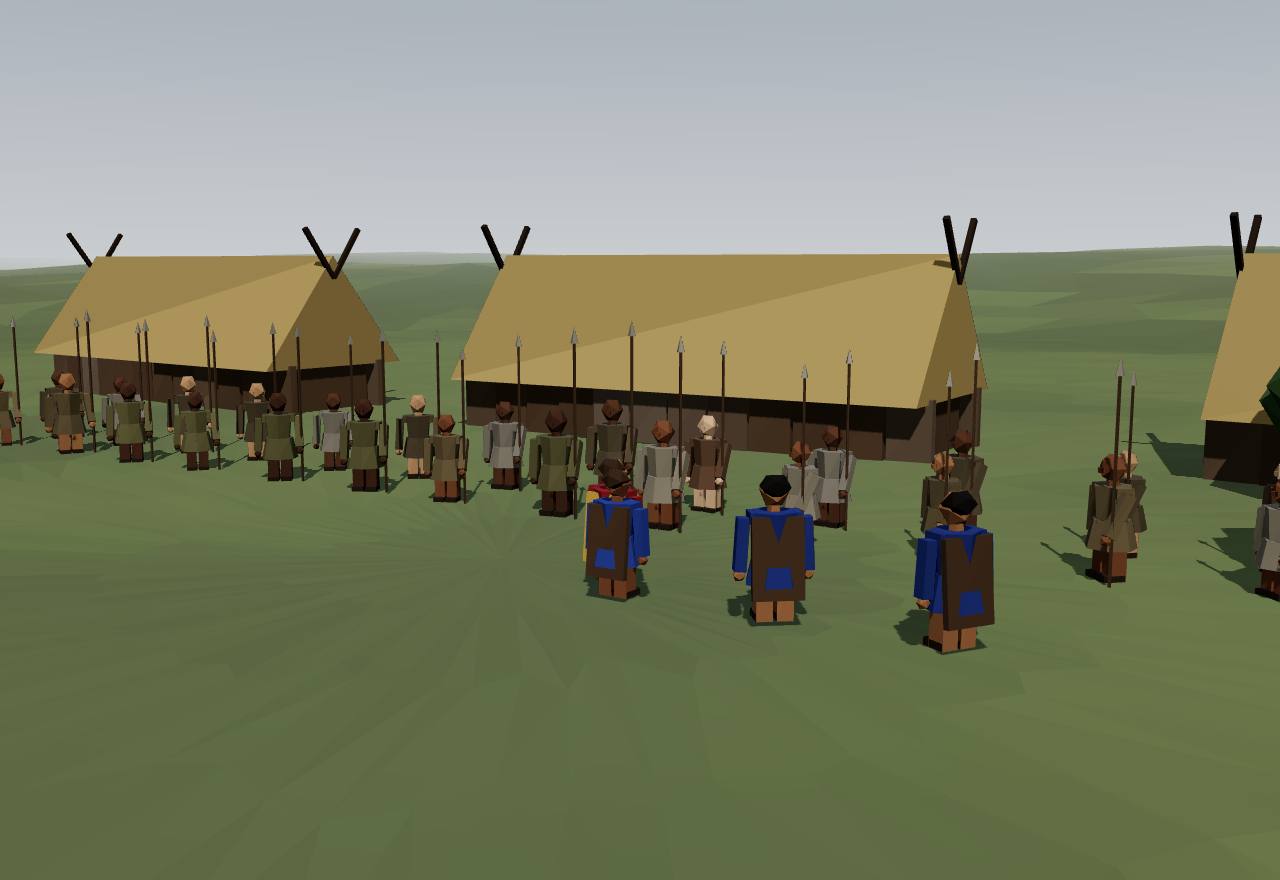
  86. Book Encyclopaedia Britannica, 11th edition (1911). Wenceslaus (Encyclopædia Britannica, 1911). Wikisource.
  87. Book Encyclopaedia Britannica, 11th edition (1911). Rupert (king) (Encyclopædia Britannica, 1911). Wikisource.
  88. Book Encyclopaedia Britannica, 11th edition (1911). Sigismund (Encyclopædia Britannica, 1911). Wikisource.
  89. Dataset Wikidata contributors (2026). Frankfurt am Main (Wikidata Q1794), coordinate location (P625). Wikidata, CC0.
  90. Dataset Wikidata contributors (2026). Aachen (Wikidata Q1017), coordinate location (P625). Wikidata, CC0.
  91. Dataset Wikidata contributors (2026). Nuremberg (Wikidata Q2090), coordinate location (P625). Wikidata, CC0.
  92. Dataset Wikidata contributors (2026). Mainz (Wikidata Q1720), coordinate location (P625). Wikidata, CC0.
  93. Dataset Wikidata contributors (2026). Trier (Wikidata Q3138), coordinate location (P625). Wikidata, CC0.
  94. Dataset Wikidata contributors (2026). Cologne (Wikidata Q365), coordinate location (P625). Wikidata, CC0.
  95. Paper Stasavage, D. (2010). When Distance Mattered: Geographic Scale and the Development of European Representative Assemblies. American Political Science Review 104.
  96. Paper Abramson, S. F., Boix, C. (2019). Endogenous Parliaments: The Domestic and International Roots of Long-Term Economic Growth and Executive Constraints in Europe. International Organization 73.
  97. Book Boucoyannis, D. (2021). Kings as Judges: Power, Justice, and the Origins of Parliaments. Cambridge University Press.
  98. Dataset The Hunt Museum, Limerick (2026). Walrus Ivory Plaque. Zenodo (Hunt Museum 3D collection), CC BY 4.0.
  99. Dataset The Hunt Museum, Limerick (2026). Ivory figure: St Thomas Becket. Zenodo (Hunt Museum 3D collection), CC BY 4.0.
  100. Dataset SMK, Statens Museum for Kunst (Royal Cast Collection) (2026). Kejserinde Kunigunde med kirkemodel (ikke Bamberg), KAS862. SMK Open, Public Domain Mark.
  101. Dataset SMK, Statens Museum for Kunst (Royal Cast Collection) (2026). Relief fra gravmæle. Frontalt stående Adalbert (-1484) med stav og bibel, KAS1704. SMK Open, Public Domain Mark.
  102. Book Encyclopaedia Britannica, 11th edition (1911). Henry I. "the Fowler" (Encyclopædia Britannica, 1911). Wikisource.
  103. Book Encyclopaedia Britannica, 11th edition (1911). Otto I. (Encyclopædia Britannica, 1911). Wikisource.
  104. Book Encyclopaedia Britannica, 11th edition (1911). Otto II. (Encyclopædia Britannica, 1911). Wikisource.
  105. Book Encyclopaedia Britannica, 11th edition (1911). Otto III. (Encyclopædia Britannica, 1911). Wikisource.
  106. Book Encyclopaedia Britannica, 11th edition (1911). Henry II. "the Saint" (Encyclopædia Britannica, 1911). Wikisource.
  107. Book Encyclopaedia Britannica, 11th edition (1911). Conrad II. (Encyclopædia Britannica, 1911). Wikisource.
  108. Book Encyclopaedia Britannica, 11th edition (1911). Henry III. "the Black" (Encyclopædia Britannica, 1911). Wikisource.
  109. Book Encyclopaedia Britannica, 11th edition (1911). Henry IV. (Roman emperor) (Encyclopædia Britannica, 1911). Wikisource.
  110. Book Encyclopaedia Britannica, 11th edition (1911). Rudolph, duke of Swabia (Encyclopædia Britannica, 1911). Wikisource.
  111. Book Encyclopaedia Britannica, 11th edition (1911). Henry V. (Roman emperor) (Encyclopædia Britannica, 1911). Wikisource.
  112. Book Encyclopaedia Britannica, 11th edition (1911). Lothair II. (Encyclopædia Britannica, 1911). Wikisource.
  113. Book Encyclopaedia Britannica, 11th edition (1911). Conrad III. (Encyclopædia Britannica, 1911). Wikisource.
  114. Book Encyclopaedia Britannica, 11th edition (1911). Frederick I., Roman Emperor (Encyclopædia Britannica, 1911). Wikisource.
  115. Book Encyclopaedia Britannica, 11th edition (1911). Henry VI. (Roman emperor) (Encyclopædia Britannica, 1911). Wikisource.
  116. Book Encyclopaedia Britannica, 11th edition (1911). Frederick II., Roman Emperor (Encyclopædia Britannica, 1911). Wikisource.
  117. Book Encyclopaedia Britannica, 11th edition (1911). Philip, duke of Swabia (Encyclopædia Britannica, 1911). Wikisource.
  118. Book Encyclopaedia Britannica, 11th edition (1911). Otto IV. (Encyclopædia Britannica, 1911). Wikisource.
  119. Book Encyclopaedia Britannica, 11th edition (1911). Henry VII. of Germany (Encyclopædia Britannica, 1911). Wikisource.
  120. Book Encyclopaedia Britannica, 11th edition (1911). Conrad IV. (Encyclopædia Britannica, 1911). Wikisource.
  121. Book Encyclopaedia Britannica, 11th edition (1911). Henry Raspe (Encyclopædia Britannica, 1911). Wikisource.
  122. Book Encyclopaedia Britannica, 11th edition (1911). William, King of the Romans (Encyclopædia Britannica, 1911). Wikisource.
  123. Book Encyclopaedia Britannica, 11th edition (1911). Richard, Earl of Cornwall (Encyclopædia Britannica, 1911). Wikisource.
  124. Book Encyclopaedia Britannica, 11th edition (1911). Rudolph I. (Encyclopædia Britannica, 1911). Wikisource.
  125. Book Encyclopaedia Britannica, 11th edition (1911). Adolph of Nassau (Encyclopædia Britannica, 1911). Wikisource.
  126. Book Encyclopaedia Britannica, 11th edition (1911). Albert I. (German king) (Encyclopædia Britannica, 1911). Wikisource.
  127. Book Encyclopaedia Britannica, 11th edition (1911). Henry VII. (Roman emperor) (Encyclopædia Britannica, 1911). Wikisource.
  128. Book Encyclopaedia Britannica, 11th edition (1911). Louis IV. (emperor) (Encyclopædia Britannica, 1911). Wikisource.
  129. Book Encyclopaedia Britannica, 11th edition (1911). Frederick III. of Germany (Encyclopædia Britannica, 1911). Wikisource. Frederick the Fair, rival of Louis IV.
  130. Book Encyclopaedia Britannica, 11th edition (1911). Charles IV. (Roman Emperor) (Encyclopædia Britannica, 1911). Wikisource.
  131. Book Encyclopaedia Britannica, 11th edition (1911). Günther of Schwarzburg (Encyclopædia Britannica, 1911). Wikisource.
  132. Book Encyclopaedia Britannica, 11th edition (1911). Jobst (Encyclopædia Britannica, 1911). Wikisource.
  133. Book Encyclopaedia Britannica, 11th edition (1911). Albert II. (German king) (Encyclopædia Britannica, 1911). Wikisource.
  134. Book Encyclopaedia Britannica, 11th edition (1911). Frederick III., Roman Emperor (Encyclopædia Britannica, 1911). Wikisource.
  135. Book Encyclopaedia Britannica, 11th edition (1911). Maximilian I. (emperor) (Encyclopædia Britannica, 1911). Wikisource.

Quantitative values from the Seshat Global History Databank (Equinox-2020), licensed CC BY 4.0. Dataset: Seshat Equinox Packaged Data (v.1). See also Seshat: The Global History Databank (Turchin et al. 2015).

Values for polities Equinox-2020 does not cover come from the Seshat Databank at seshat-db.com (Seshat: Global History Databank), snapshotted from its API on 2026-11-16. No licence is stated on seshat-db.com; used with attribution. Snapshot: Seshat Databank API (seshat-db.com), social-complexity and general variables.