A doge chosen by ten rounds of lot and vote; priors drawn from leather purses
Venice and the Italian communes
697 CE – 1500 CE
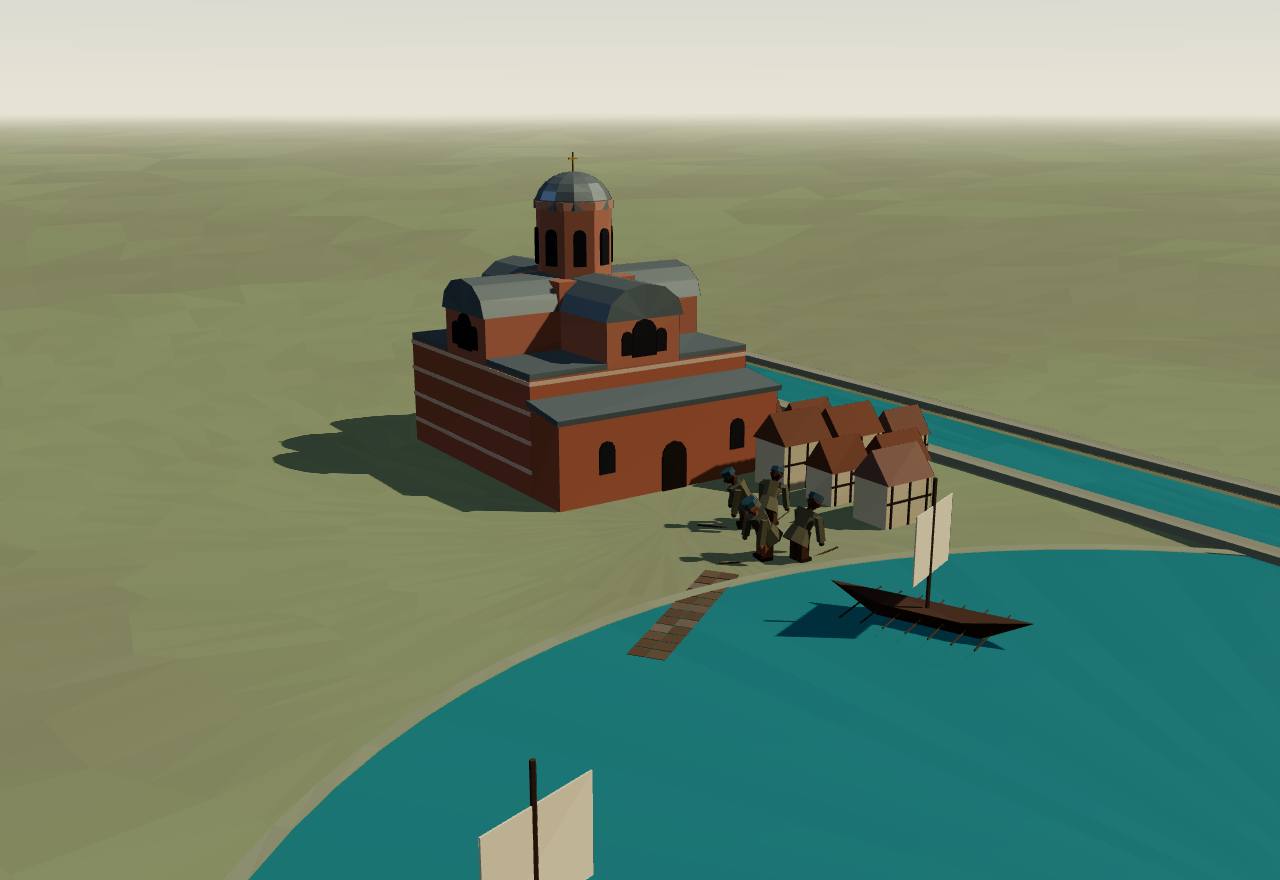
The lagoon: the duchy of Venice
697 CE – 1080 CE
From Byzantine duchy to doge
On the islands of the lagoon, a province of the Byzantine empire chose a duke of its own: the doge. For three centuries he was elected by the assembly of the people and held office for life, and three families passed the office from father to son, until in 1032 a merchant doge accepted that he could no longer name his successor and must take the advice of judges.
Terms: Venice and the Italian communes: From Byzantine duchy to doge
- doge the Venetian form of dux, duke: the head of the state, elected and serving for life 11,3
- Concio the General Assembly of the Venetians, whose voice was needed to elect a doge and ratify a treaty (Brown); Brown also prints arengo 1
- Hypatos a Byzantine honorific, “or Consul”, given to the doge 1
- Doge Consort Brown's term for a doge's son raised to rule beside him: in effect his successor 1
The later histories open with an election. Brown: in 697, on the advice of the patriarch of Grado, the Venetians chose “one man as head of the State, instead of twelve as heretofore”, and “elected Paolo Lucio Anafesto as their first Doge”; Hazlitt calls him Pauluccio Anafesto, “a native of Heraclia”. The 1911 Britannica is more careful: the office was “first instituted about 700”, and John the Deacon, writing about 1000, says the Venetians judged it “more honourable henceforth to be under dukes than under tribunes”. 1,2,3 Debated Texts
The doge did not rule alone in the early accounts. Brown: he had “the right of summoning the Concio, or General Assembly”, whose voice “was necessary also for the ratification of a treaty and for the election of a Doge”. Puga and Trefler's earliest documented election, of 1071, had “no slate of candidates and the Doge was ‘elected’ by acclamation”. 1,4 Consensus Texts
In 810 Pepin, King of Italy, attacked the lagoon and menaced Malamocco, then the seat of government; the Venetians made a stand at Albiola and moved their women, children and goods to “the midmost island of the lagoons, Rialto, the present city of Venice”, and there “elected as their first Doge in the township of Rialto, Agnello Particiaco”. 1 Consensus Texts Read more: The Carolingians
Elected for life, the office still ran in families. Puga and Trefler count three dynasties between 810 and 1032, the Participazio, the Candiano (four generations of Pietro Candiano in succession) and the Orseolo: “every Doge had a direct family relationship to another Doge and most Doges belonged to one of three dynasties”. Brown describes the device: Agnello “obtained leave to renew the pernicious custom of creating the Doge's son, Doge Consort.” 4,1 Consensus Texts
In 1026 a revolt drove out Otto Orseolo, who had made his brothers patriarch of Grado and bishop of Torcello; in 1032 the silk merchant Domenico Flabanico became doge. Puga and Trefler see two changes from then on: “a Doge would no longer be allowed to appoint his successor”, and doges were “required to consult with a two-member dogal court of judges and abide by the court's decisions”. The principles were old; what was new was that merchant doges respected them. 4 Consensus Texts
Mowbray and Gollmann count 43 doges before 1268: seven came from the previous doge's family, “in six of these cases the Dogeship passed from father to son”, and none from the incumbent family after the mid-eleventh-century abolition of the co-regent. These doges served 11.35 years on average (median 11). 11 Consensus Texts
Who counted in the duchy can be glimpsed in the names that endorsed the doges' documents. Puga and Trefler count 48, 72 and 128 legible names in 960, 971 and 982, of which 50%, 81% and 51% were new: a widening circle of merchants that, in their reading, made the 1032 change possible. 4 Debated Texts
The doge was a Byzantine official in form. Brown: he was “honoured by the Byzantine title of Hypatos or Consul”; Hazlitt lists the honorific titles the emperors gave him, “Hypatos, Protospatarios, or Protosebastos”. 1,2 Consensus Texts Read more: Byzantium's themes and titles
How power worked Elected magistrates · Acclamation · Custom and kin
How power worked
- Who rules
- Elected magistrates Debated
Why?
- How chosen
- Acclamation Debated
Why?
- Limits on power
- Custom and kin Debated
Why?
- Scale
- City-state Consensus
Why?
- Claim to rule
- Law Speculative
Why?
- Who has a say
- A narrow elite Debated
Why?
1080 CE – 1250 CE
The communes
As the kingdom of Italy came apart, the towns of the north and centre began to govern themselves: sworn associations of leading families chose consuls for a year, then invited a foreign magistrate, the podestà, to judge between them. Venice, never part of that kingdom, built its own councils round the doge. Wickham: by no means a democracy in the modern sense, but so novel that outsiders did not know what to make of it.
Terms: Venice and the Italian communes: The communes
Wickham: “amid the disintegration of the Kingdom of Italy in the eleventh and twelfth centuries, a new form of collective government—the commune—arose” in the cities of the north and centre, “governed by consular elites ‘chosen by the people,’ and subject to neither emperor nor king”. The elites developed “one of the first nonmonarchical forms of government in medieval Europe”, unaware that they were making something new. 14 Consensus Texts
Guiso, Sapienza and Zingales sketch the steps: first a “patto giurato” (sworn pact) of leading families, such as the Genoese compagna, enforced by the threat of exclusion from trade and politics; then the consulate, “a committee of a limited number of citizens, endowed with significant power that remained in office for a specified period of time (initially one year)”; then, over two centuries, a council of elected members. 12 Consensus Texts
Then came the podestà. Guiso et al.: social mobility brought new merchants who threatened the older families, and the remedy was to invite “a third party, possibly a foreigner”, a foreign podestà, for a fixed term. Duffy notes that podestà “were appointed by the communes themselves, just as the consuls had been”. 12,6 Consensus Texts
The communes could fight the emperor together. A league of Lombard cities defeated Frederick Barbarossa “at Legnano on the 29th of May 1176”, and the peace of Constance followed in 1183; its text let the League “maintain its organization as it now is or to renew it as often as it desires”. Not all cities joined: some, Guiso et al. note, “sided with him in exchange for concessions”. 15,16,12,14 Consensus Texts Read more: The empire
Guiso et al. stress what was new: in the commune the political entity was “the entire community”, legitimacy came “from the people” rather than from religion or dynasty, and life was ruled by statutes that applied to all citizens, “though in practice elites and families are very important”. 12 Debated Texts
Dean and Waley: from the eleventh century “many Italian towns achieved independence as political entities”, and until the fourteenth, when “the regimes of individual ‘tyrants’ took over in most towns”, the communes were “a precocious, and very well-documented, experiment in republican self-government”, marked by patriotism and by “factional strife”. 17 Consensus Texts
Why some towns became communes earlier than others is still studied. Belloc, Drago and Galbiati find that an earthquake “retarded institutional transition from autocratic regimes to self-government” in cities whose bishop was also their ruler, but not elsewhere, which they read as a shock that strengthened religious leaders. 18 Debated Texts Model
Did self-rule pay? Stasavage finds that “politically autonomous cities initially had higher population growth rates than nonautonomous cities, but over time this situation reversed itself”, and suggests their own institutions, rather than military weakness, made them obsolete. 19 Debated Texts Model
Venice: the commune and the Great CouncilDoge's Palace, Venice
Venice grew rich on the Byzantine trade and in 1172, after a doge was killed in the street, set up a Great Council to share out offices among the leading families. The doge now swore an oath that listed what he might not do, and six councillors watched him.
Terms: Venice and the Italian communes: The communes, Venice: the commune and the Great Council
- Maggior Consiglio the Great Council, founded in 1172 (Brown), the electorate of every office 1,4
- promissione the oath each new doge swore, listing what he might not do; five correctors reviewed it at each election 3,4
- Pregadi “the invited”: the councillors the doge called on for advice, later the Senate 1
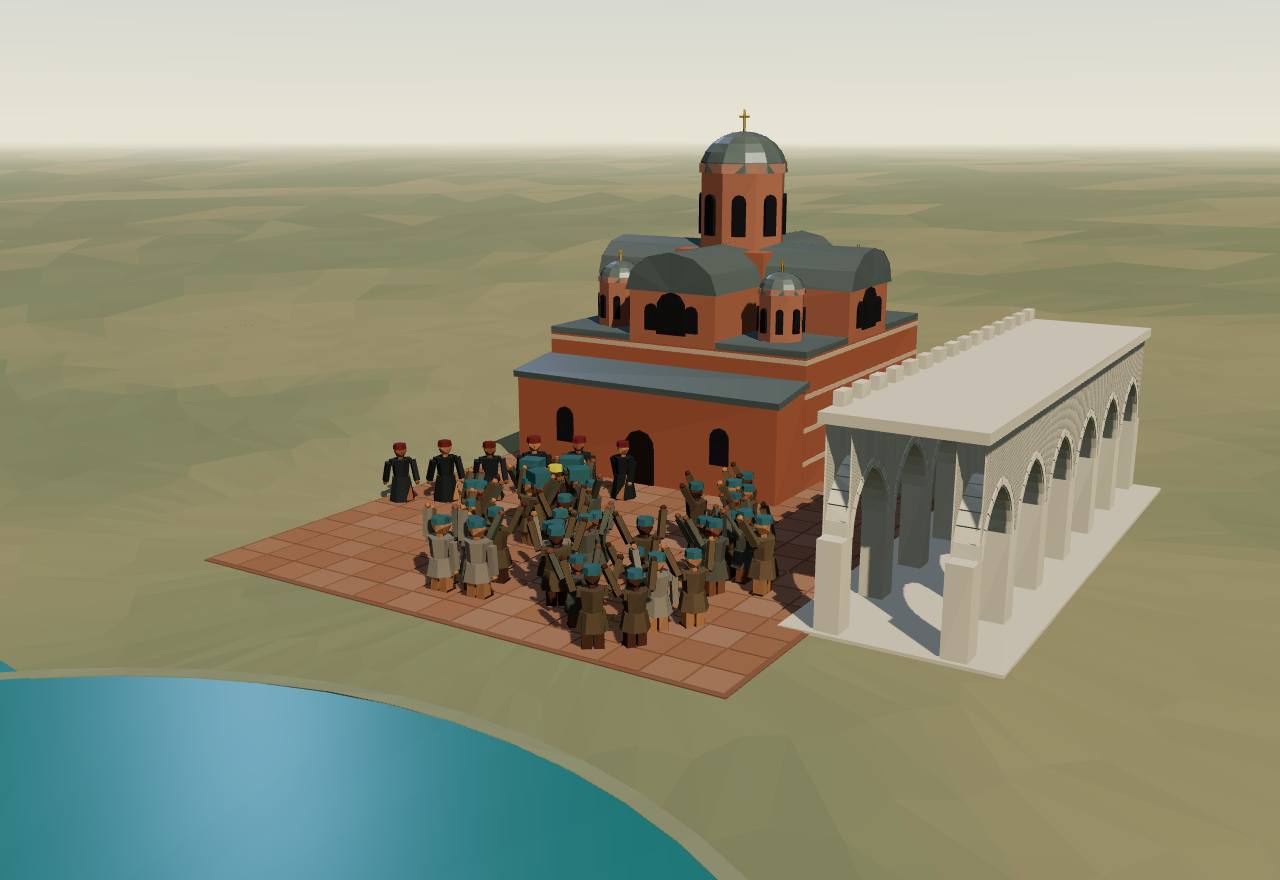
Venice: a new doge carried round the Piazza
In return for naval help against the Normans, a Byzantine Golden Bull gave Venice duty-free access to 23 of the empire's most important ports and its own quarter in Constantinople: in Puga and Trefler's reading the start of “a period of unprecedented prosperity and globalization”. Puga and Trefler date it 1082; Brown places it after 1085 and Hazlitt calls it “the charter wrung from Alexios Comnenos in 1085”. 4,1,2 Debated Texts Read more: The chrysobull on the Byzantium page
In 1171 the emperor arrested the Venetians in his empire (10,000, says a thirteenth-century Venetian history); the doge Vitale Michiel II's fleet failed, and in May 1172 he was mobbed and killed. Puga and Trefler: “the dogal court and leading merchant families immediately filled” the vacuum, and the first change was “a limited-franchise elected parliament known as the Great Council”. 4 Consensus Texts
Brown describes the first Great Council: each sestiere elected two representatives, each of these six pairs named forty members from its sestiere, “thus an assembly of 480 members was created”, sitting for a year; at the end the assembly itself named the next electors. In its source, he writes, it was “a democratic body”, but it “already contained the element of a close oligarchy”. 1 Consensus Texts
The doge was boxed in. Four more ducal councillors raised their number to six (Brown), a council “elected by and accountable to the Great Council”, and the doge's oath of office now “explicitly listed what the Doge could not do”, the Great Council adding to the list at each election. Puga and Trefler quote Madden: “by 1192 the doge could do almost nothing without approval of the council.” 1,4 Consensus Texts
The doge's election was rebuilt by trial and error. In 1178, Mowbray and Gollmann report, “the assembly of all the voters elected a college of 4, who elected a college of 40, who elected the Doge by majority voting”. In 1229 the forty tied, the tie “was finally resolved by a drawing of lots”, and the final college became 41. 11 Consensus Texts
Venetian law was written down in these decades: its codification “was begun under Doge Enrico Dandolo (1192–1205) and completed in 1242 by Doge Jacopo Tiepolo”, in step with the communes elsewhere, which began writing statutes “governing their constitutions and commerce” in the later twelfth century. 4 Consensus Texts
1204 turned an Adriatic power into a Mediterranean one. After the Fourth Crusade Venice “gained control of three-eighths of Constantinople, including important ports and trading districts”, and its merchants spread “as far as the Black Sea”. 20 Consensus Texts Read more: The Latin empire, 1204–1261
Other councils grew beside it. Brown: the Pregadi, “the invited”, had advised the doge only when he asked, and “nothing was done to make this body permanent till the reforms under Tiepolo between the years 1229 and 1249”; under the doge Orio Malipiero appears the Council of Forty, “which eventually became the high court”. 1 Consensus Texts
How power worked Elected magistrates · Mixed · Council
How power worked
- Who rules
- Elected magistrates Consensus
Why?
- How chosen
- Mixed Debated
Why?
- Limits on power
- Council Consensus
Why?
- Scale
- City-state Debated
Why?
- Claim to rule
- Law Debated
Why?
- Who has a say
- A narrow elite Consensus
Why?
Florence: consuls, towers and the first podestàFlorence
Florence was ruled by consuls and a council of a hundred until a podestà from Milan was invited in 1207. Its leading families lived in towers and fought from them; after 1215 their feud took the names Guelf and Ghibelline, and in 1250 the people rose and chose a captain of their own.
Terms: Venice and the Italian communes: The communes, Florence: consuls, towers and the first podestà
- Towers of the Fellowships towers fortified from neighbourhood funds during the war of 1177 (Villani); Duffy's Associations of the Towers were the grandi's 7,6
- Primo Popolo the popular government set up in October 1250 (Villani) 7
- Ancients the twelve councillors of the people's captain, two for each sesto, from 1250 7,6
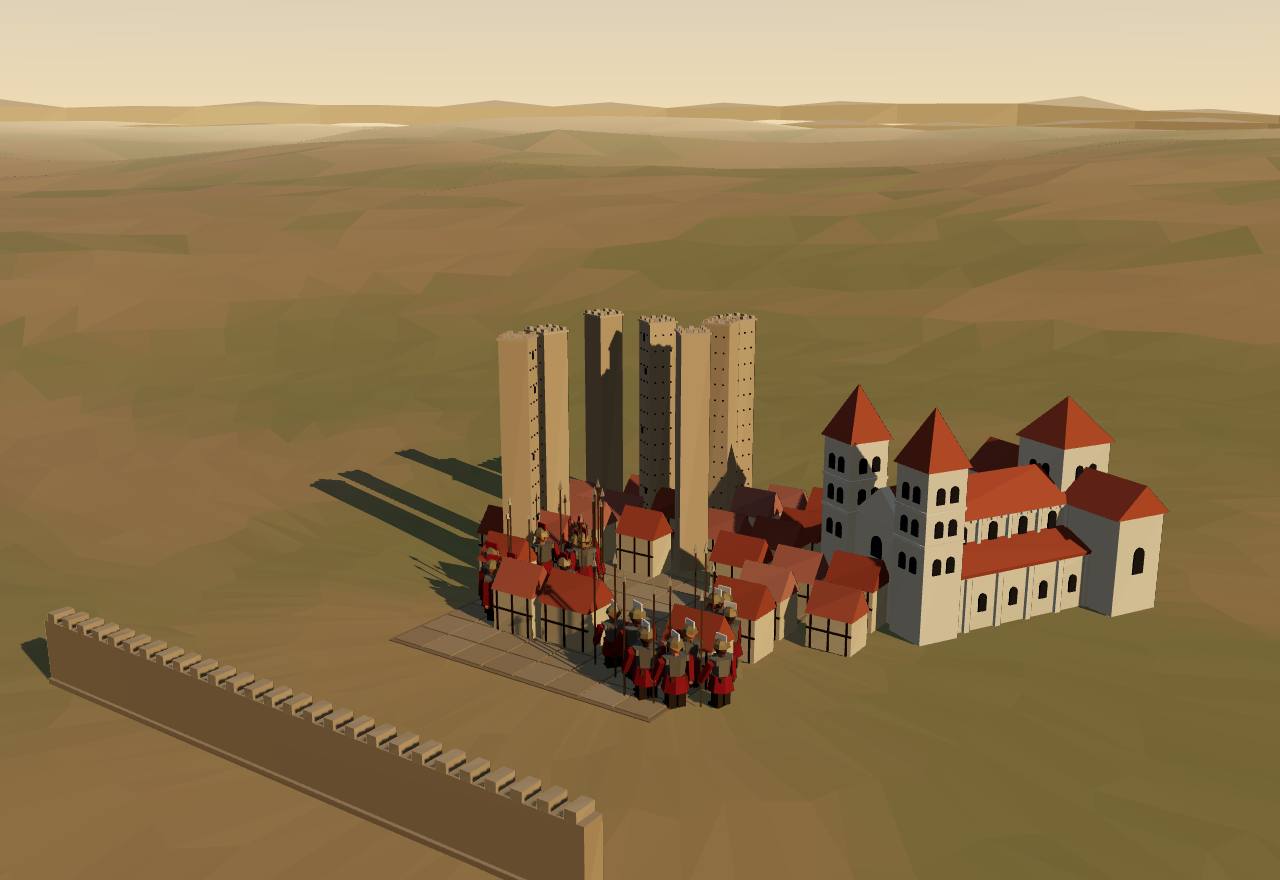
Florence: towers and factions
Villani: until 1207 Florence was ruled by “citizen consuls, of the greatest and best of the city, with the council of the senate, to wit, of 100 good men”, in office for a year, “four consuls so long as the city was divided into quarters … and afterwards there were six, when the city was divided into sesti”. 7 Consensus Texts
The great families fought from their towers. Villani, under the year 1177, tells how the Uberti and their allies made war on the consuls “from district to district, according as the factions were, and as they had fortified their towers, whereof there was great number in the city”; neighbourhoods fortified “Towers of the Fellowships” from common funds. It lasted more than two years and ended because “it irked them for very weariness”. 7 Consensus Texts
The podestà came in stages. Duffy: in Florence the change was gradual, “the Podesta first appearing in 1193” in a citizen from a consular family, the two offices alternating for some years. Villani dates to 1207 the first “foreign magistrate”, Gualfredotto of Milan, invited for a year “to the end … that justice might not miscarry by reason of prayers, or fear, or private malice”; he lived in the bishop's palace, “forasmuch as there was as yet no palace of the commonwealth”. 6,7 Consensus Texts
Villani dates the factions to a broken betrothal: in 1215 Buondelmonte dei Buondelmonti jilted a girl of the Amidei, and her kin killed him at the foot of the Ponte Vecchio on Easter morning; from this, “the city of Florence was destroyed and divided”. The names Guelf and Ghibelline came from Germany: “Italianized forms of the German words Welf and Waiblingen”, says the 1911 Britannica. 7,21 Debated Texts
In 1250 the people, burdened by the Ghibelline nobles, gathered under arms, “forcibly elected thirty-six corporals of the people, and took away the rule from the Podesta”. They chose a captain of the people, Uberto da Lucca, and “twelve Ancients of the people, two for each sesto”, on 20 October 1250, and gave out twenty standards to companies by district. 7,6 Consensus Texts
The result, in the editor Wicksteed's words: the podestà became the head of the nobles and the captain the head of the people, “two bodies of citizens, each with its own constitution and magistracy, encamped within the same walls”. 7 Debated Texts
How power worked Elected magistrates · Election · Council
How power worked
- Who rules
- Elected magistrates Consensus
Why?
- How chosen
- Election Debated
Why?
- Limits on power
- Council Debated
Why?
- Scale
- City-state Consensus
Why?
- Claim to rule
- Popular sovereignty Speculative
Why?
- Who has a say
- A narrow elite Consensus
Why?
Genoa: consuls and podestàGenoa
In Genoa the commune grew out of sworn companies of the leading families, ruled by consuls, until in 1190 the city turned to a foreign podestà. Its clans kept their towers and their retainers; Greif studies its government as a set of agreements that had to enforce themselves.
Terms: Venice and the Italian communes: The communes, Genoa: consuls and podestà
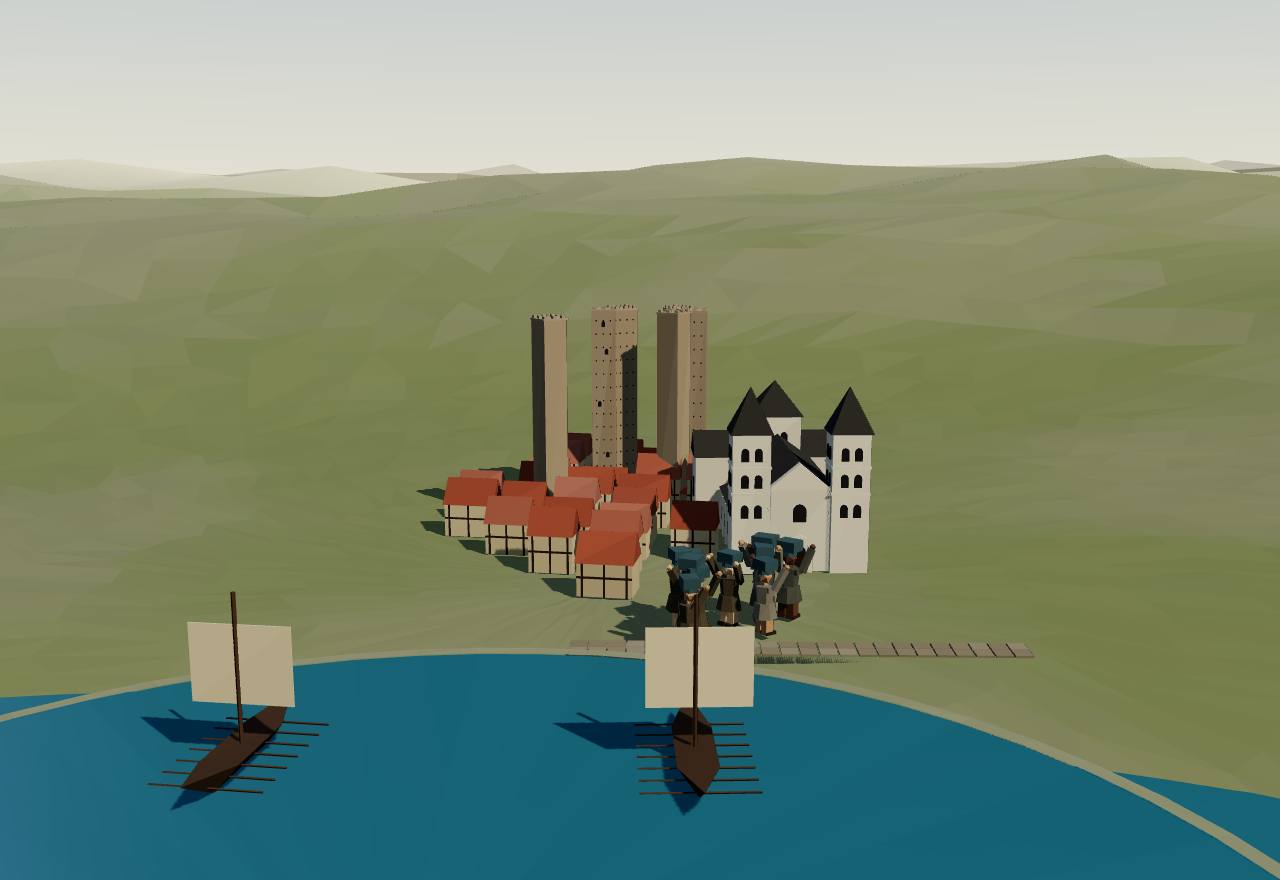
Genoa: a harbour of family towers
Bent: the sworn companies “in their entirety formed the commune, and, later on, the republic of Genoa, over whom the consuls were the recognized rulers”, at first as executors of the bishop's power, until “they gradually got the reins of government entirely into their own hands”. 22 Consensus Texts
Guiso et al. take the Genoese compagna as their example of a sworn pact: “an alliance among the most prominent families of the marine aristocracy who swore to collaborate to solve problems of common interest”, kept by the threat of exclusion from trade and politics. 12 Consensus Texts
Strife among the families grew “until in 1190 a change of government was adopted, and the Ghibelline institution of a foreign podestà to superintend the government became the order of the day”. Bent regrets it: the consulate had sown “all her greatness”. 22 Consensus Texts
The podestà was “legally a foreigner”, usually from Bologna, Florence, Lucca or the Lombard towns; podestà were “elected by the general council, came into office on the first of September, and remained in it a year”, under a council of eight. In 1233 one was “pulled up for non-observance of the laws”, and in 1237 another was punished for meddling in the election of his successor. 22 Consensus Texts
Greif treats Genoa's “political institutions as self-enforcing agreements rather than as exogenous rules” and traces how its political systems and its economic growth shaped each other in the twelfth and thirteenth centuries. Puga and Trefler summarise his view: Genoese merchants “needed an executive to keep merchant clans off each other's backs”. 23,4 Debated Texts Model
The clans stayed armed. Bent ties the strength of families such as the Doria and Spinola to “the large army of retainers and kinsmen” they could raise, and notes the “Torre degli Embriaci”, almost the last of “the private towers of which Genoa was once full”. 22 Consensus Texts
In 1257, Bent writes, the people, tired of strife between Guelf and Ghibelline and of a corrupt podestà, “elected one Guglielmo Boccanegra to be their captain and defender”: the first time, he says, the voice of the people was heard “to some purpose”. 22 Consensus Texts
How power worked Elected magistrates · Election · Council
How power worked
- Who rules
- Elected magistrates Consensus
Why?
- How chosen
- Election Debated
Why?
- Limits on power
- Council Debated
Why?
- Scale
- City-state Consensus
Why?
- Claim to rule
- Law Speculative
Why?
- Who has a say
- A narrow elite Consensus
Why?
1250 CE – 1400 CE
Lot, closure and lordship
Venice and Florence turned to the lot: a ten-round mix of lot and vote to choose the doge from 1268, and from 1328 name slips drawn from purses to fill Florence's highest offices every two months. Venice then closed its Great Council to new families, and in Milan a single family made itself lord of the city.
Terms: Venice and the Italian communes: Lot, closure and lordship
The lot was rarely used on its own. Tanzini, on the Italian towns of the thirteenth and fourteenth centuries: chance “enters into a complex mix with other means of designation, such as indirect choice or co-optation”, each justified by the political moment, until in the fourteenth century most towns settled on the rotation of offices among the “qualified” strata of urban society (translation ours). 25 Consensus Texts
A second government grew beside the first. In Florence in 1250 the popolo deposed the podestà and appointed “a capitano del popolo, or captain of the people, and twelve anziani”, with armed companies under their standards (Browning); in Genoa the people chose a captain in 1257 (Bent). 24,7,22 Consensus Texts
Guiso et al. describe the way out of the commune: the podestà “acquired more power and retained it for longer periods, ultimately forever”, and as cities gave life-long power to one man the commune became a signoria. Yet in several cases the signoria kept the commune's institutions, “including the principle that power originated from the people and was exercised in the people's name”. 12 Debated Texts
Dean and Waley date the end of the communal experiment to the fourteenth century, “when the regimes of individual ‘tyrants’ took over in most towns”; Jones traces the tension between civic and patrician traditions to its culmination “in two rival regimes of communes and despots”. 17,26 Consensus Texts
The machinery puzzled observers even then. Browning, after describing Florence's scrutiny of 1328, could “not resist the impression that Italian citizens were led quite as much by a sense of quaintness or artistic propriety … as by a desire to avert impending dangers”; Mowbray and Gollmann suggest that Venice's complexity was “security theatre”, a ritual in which the electors showed one another that they took the choice seriously. 24,11 Debated Texts
Siena shows the same struggle: Duffy describes the city as “torn by three factions”, the Ordine dei Nove, the Ordine dei Dodici and the Ordine dei Riformatori, the last the largest, taking in some old families and the popolo minuto. 6 Consensus Texts
Venice: the doge's election and the SerrataDoge's Palace, Venice
From 1268 the doge was chosen by ten rounds of lot and vote, from the Great Council's members aged 30 or over. From 1297 the Council itself was closed: first enlarged by co-opting new families, then, by 1323, made hereditary.
Terms: Venice and the Italian communes: Lot, closure and lordship, Venice: the doge's election and the Serrata
- ballotino the ballot-boy who drew the lots (from 1328); from balota, the Venetian word for the ballot ball 1,11
- Serrata “closure”: the measures of 1297–1323 that made a seat in the Great Council hereditary 4,20
- Quarantia the Council of Forty, which balloted the Great Council's members from 1297 1,20
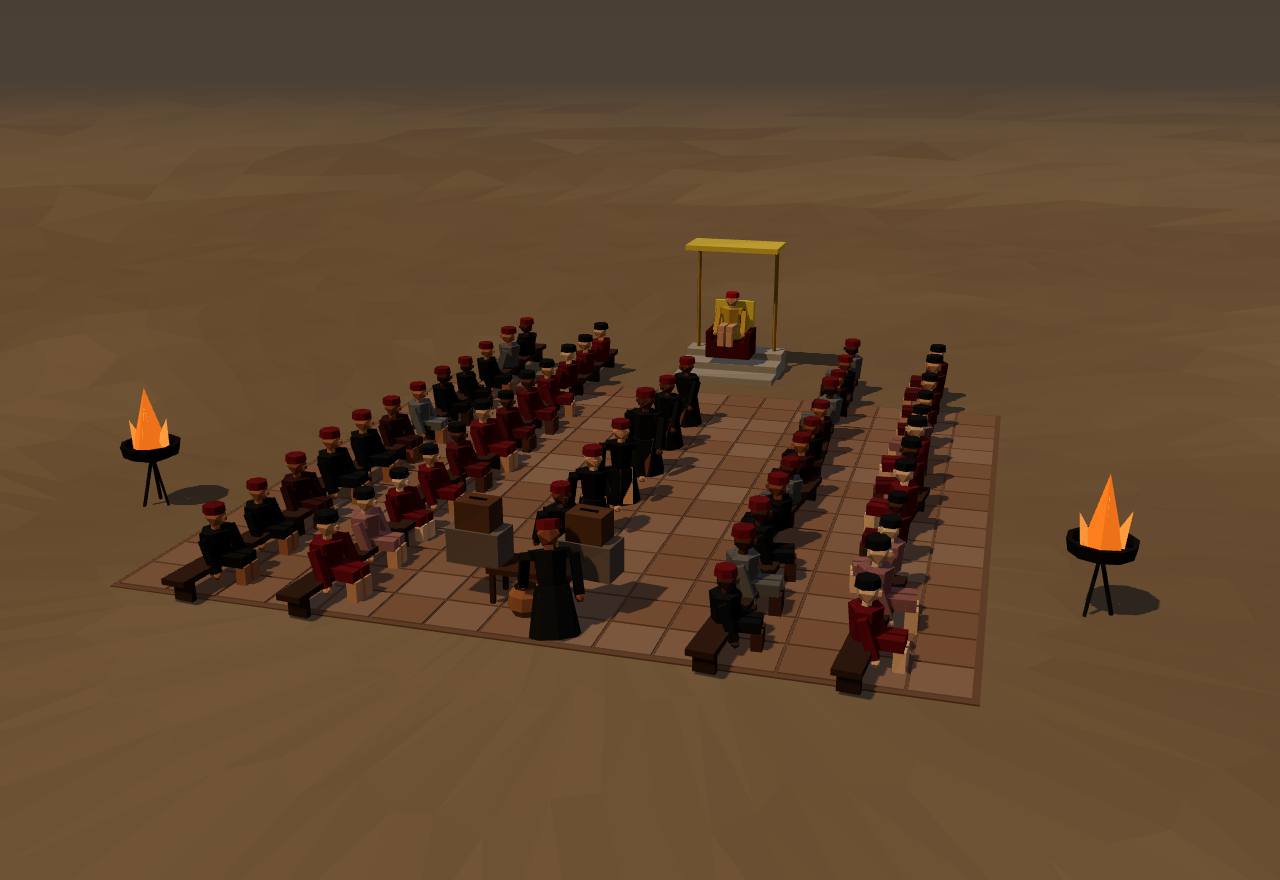
Venice: the Great Council draws lots
The protocol of 1268, as Mowbray and Gollmann tabulate it: from the Great Council's members aged 30 or over, 30 drawn by lot; 9 drawn from the 30; the 9 elect 40, each name needing 7 approvals; 12 drawn from the 40; the 12 elect 25 (9 approvals); 9 drawn from the 25; the 9 elect 45 (7); 11 drawn from the 45; the 11 elect 41 (9); and the 41 elect the doge with at least 25 approvals. “No two members of the same family were allowed in the same college.” Brown prints the same table. 11,1 Consensus Texts
Brown ties it to family rivalry: the Great Council had just forbidden any Venetian to display “the arms or badge of a Venetian family”, and there was “imminent danger that this spirit of rivalry would spread to the candidature for the Dukedom, and breed corruption. Accordingly, on the death of Zeno, that extraordinarily complicated system of election was introduced”. Mowbray and Gollmann note that it ran, “with only minor changes”, until 1797. 1,11 Consensus Texts
Who drew the lots mattered. At first, Mowbray and Gollmann write, “an oligarch appointed for the task”; from 1328 a balotino, “a boy who was selected as the first boy seen” by the youngest member of the inner council after he had prayed in St Mark's. Brown has him draw “slips of paper from the urn”; Contarini, in the sixteenth century, describes a pot holding a ball for each elector, thirty of gold and the rest of silver, and “a little boy which pulleth out the lottes”. 11,1,8 Consensus Texts
The last round, in Brown's account: each of the 41 placed in an urn a slip with the name he wanted; a name was drawn, that man (if present) withdrew while his merits were discussed, then he was balloted, and “if he obtained twenty-five ballots in his favour he was declared Doge”; if not, another name was drawn. 1 Consensus Texts
The lot did not open the dogeship to all. The 75 doges elected this way, Mowbray and Gollmann count, “have only 44 surnames between them”; 70 came from families that sat in the Great Council in 1297, and over a third from the twenty-four families held to have founded Venice. 11 Consensus Texts
The Serrata began with a law of the last day of February 1297: “the Council of Forty are to ballot, one by one, the names of all those who during the last four years have had a seat in the Great Council. Those who receive twelve votes and upwards are to belong to the Great Council” (Brown). Others could be put forward by three electors “on the authority and approval of the Doge”, in Merelo-Guervós and Molinari's words admission per gratiam. 1,4,20 Consensus Texts
Puga and Trefler: in 1310 “the concept of nobility was formally introduced”, a noble being a man “who was or could be a member of the [Great] Council”; in 1319 elections of new members ended; and the law of 1323 “unequivocally made membership in the Great Council a hereditary position”. 4,20 Consensus Texts
Puga and Trefler call 1300–1355 the most internally violent period in Venetian history: a commoner's plot in 1300, an armed rising on 15 June 1310, after which “the first meeting of the infamous Council of Ten was convened” on 10 July; it hunted down the plotters and in 1355 handled the doge Marino Falier's attempt to overthrow the Great Council. Brown: Falier “was condemned to be beheaded on Friday, 17th April, 1355.” 4,1 Consensus Texts
How power worked Elected magistrates · Mixed · Council
How power worked
- Who rules
- Elected magistrates Consensus
Why?
- How chosen
- Mixed Consensus
Why?
- Limits on power
- Council Consensus
Why?
- Scale
- Empire Debated
Why?
- Claim to rule
- Law Debated
Why?
- Who has a say
- A narrow elite Consensus
Why?
Ten rounds to a doge: the election of 1268
Model, not evidence: round sizes and quotas are the source's; factions, families and votes are simulated
From 1268 the doge was chosen in ten rounds: the Great Council's members aged 30 or over were cut down by lot, the survivors elected a larger college, that college was cut down by lot again, and so on, until 41 electors chose the doge with at least 25 approvals. No two members of one family could sit in the same college. 11 Below, the Great Council of 1268 (480 men in 206 families, the paper's figures) is split into two factions. Choose how large faction A is and run the election: watch how many of its men survive each round, and how often it wins.
- 480 members of the Great Council in 1268
- 1. Lot 30 drawn by lot from the Great Council 11
- 2. Lot 9 drawn by lot from the 30 11
- 3. Vote The 9 elect 40, each name needing 7 approvals 11
- 4. Lot 12 drawn by lot from the 40 11
- 5. Vote The 12 elect 25, each needing 9 approvals 11
- 6. Lot 9 drawn by lot from the 25 11
- 7. Vote The 9 elect 45, each needing 7 approvals 11
- 8. Lot 11 drawn by lot from the 45 11
- 9. Vote The 11 elect 41, each needing 9 approvals 11
- 10. Vote The 41 elect the doge with at least 25 approvals 11
| Round | How | College | Faction A | Per family |
|---|---|---|---|---|
| 1 | Lot | 30 | 8 | 1 |
| 2 | Lot | 9 | 5 | 1 |
| 3 | Vote (7 approvals) | 40 | 18 | 1 |
| 4 | Lot | 12 | 7 | 1 |
| 5 | Vote (9 approvals) | 25 | 8 | 1 |
| 6 | Lot | 9 | 1 | 1 |
| 7 | Vote (7 approvals) | 45 | 1 | 1 |
| 8 | Lot | 11 | 0 | 1 |
| 9 | Vote (9 approvals) | 41 | 1 | 1 |
| 10 | Vote (25 approvals) | 1 | 0 | 1 |
Simulated election (40% faction): the doge comes from faction B.
Model, not evidence: the sizes and quotas are the source's; the two factions, the families (the 480 dealt evenly into 206 families) and the way electors vote are simulated. In 1268 each name was put to the college in turn; the model votes on all of them at once. 11
Florence: guilds and the pursesPalazzo Vecchio (della Signoria), Florence
From 1282 Florence was governed by priors of the guilds sitting for two months; from 1293 the magnates were barred. From 1328 the names of approved citizens were written on slips, put in purses and drawn by lot; the drawing went on until enough men free of any bar were found.
Terms: Venice and the Italian communes: Lot, closure and lordship, Florence: guilds and the purses
- Priori delle Arti the priors of the guilds, the Signoria's members (Compagni: Priors of the Guilds) 28,29
- Gonfaloniere di Giustizia the standard-bearer of justice, added to the priors by the Ordinances of 1293 28,29
- borse the leather purses holding the qualified names 28
- cedole the name slips, rolled and tied for a drawing 28
- squittinio the scrutiny that decided whose names went into the purses (Machiavelli: Squittini) 24,9
- divieti the bars that kept a man drawn (veduto) from being seated (seduto) 28
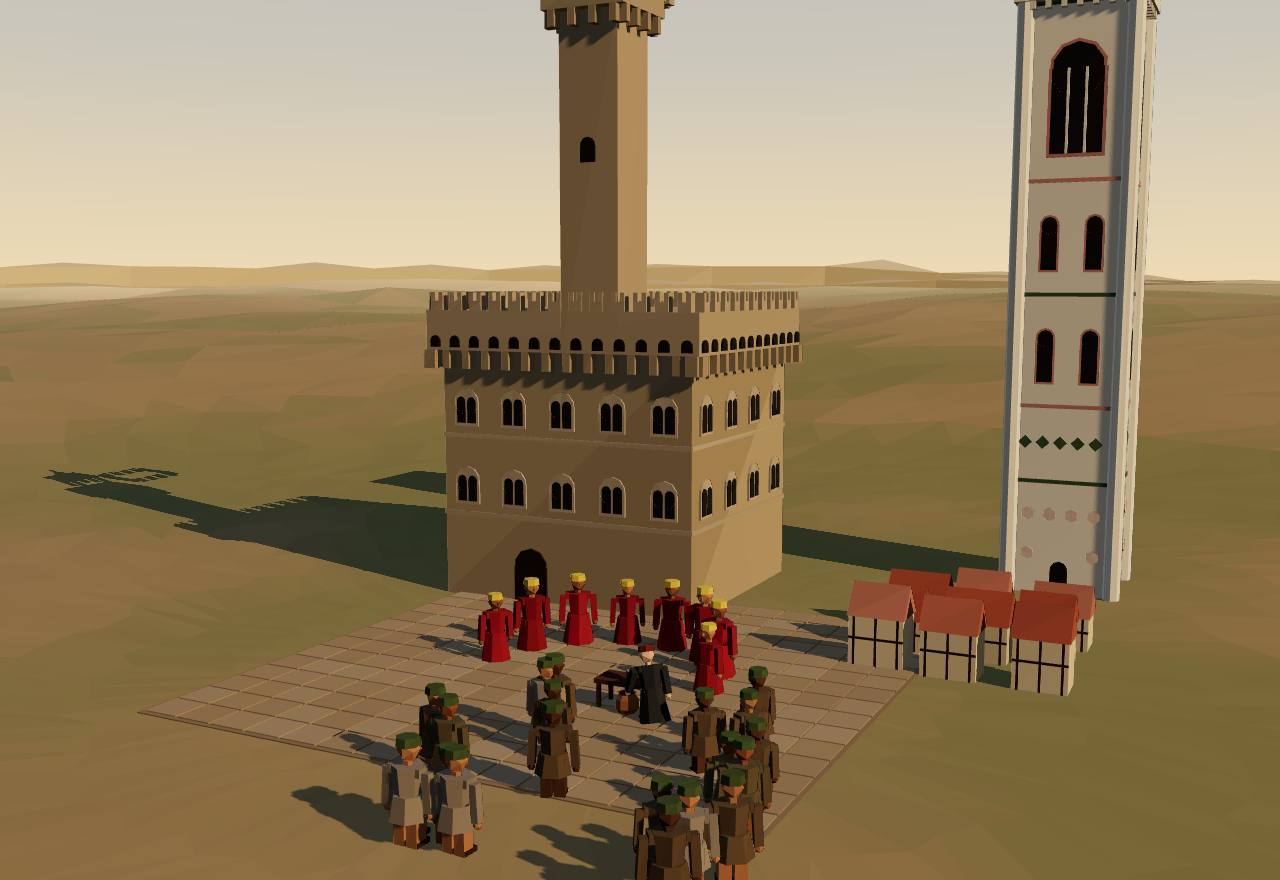
Florence: drawing the Signoria
Compagni, who sat among them, dates the priors from 15 June 1282: three at first, for two months, then from 15 August “six citizens were appointed, one for each sestiero, for two months”. They were “called Priors of the Guilds, and they lived shut up in the Torre della Castagna … so that they might not fear the menaces of the nobles.” Villani: they were elected by the outgoing priors with the consuls of the twelve greater guilds “by secret votes; and whosoever had most votes the same was made prior”. 29,7 Consensus Texts
The Ordinances of Justice (law on 18 January 1293, the translator notes) added a Gonfalonier of Justice to the priors and made every member of a family that had had knights a magnate, “ineligible for the office of Prior, or Gonfalonier of Justice, or for their Colleges”; the twenty-one guilds were bound to keep them. Villani adds 1,000 citizens under arms to enforce them, later 2,000 and 4,000. 29,7,28 Consensus Texts
In 1298, Villani writes, the commune began the Palace of the Priors because the city was “always in jealousy and commotion, at the election of the Priors afresh every two months”. It stands where the houses of the Ghibelline Uberti had been, a piazza laid out “so that they might never be rebuilt”, and its tower was raised on an older one, the Torre della Vacca. 7 Consensus Texts
In 1328 the lot arrived. Browning describes the scrutiny: lists of eligible citizens were voted on by a board of 98 (the Gonfalonier, six priors, twelve anziani, nineteen gonfalonieri of the guilds, twenty-four consuls of the higher guilds and thirty-six chosen citizens); “they voted with black and white beans”, and “any one who obtained sixty-eight favourable votes” had his name written on a slip and put in one of six bags, one for each sestiere, from which “the priori and the Capitano del popolo were chosen by lot”. 24,28 Consensus Texts
The Online Tratte describe the drawing as it settled. The purses were kept locked in the sacristy of Santa Croce and opened in the palace before the Signoria; names were drawn and checked, and a man drawn was “veduto” (seen) but not necessarily “seduto” (seated): he was barred if he had held office too recently, had a close relative in office, was in tax arrears (speculo), absent or under age. “The extractions … continued until the right number of office holders was ‘seated’.” 28 Consensus Texts
After the fall of Walter of Brienne in 1343 the Signoria became a Gonfaloniere di Giustizia, a notary and “eight Priori (two from each quarter)”; from the late 1340s two of the eight came from the minor guilds, chosen from the quarter whose turn it was to give the Gonfaloniere. Age limits were 40 for the Gonfaloniere, 30 for other offices. 28 Consensus Texts
In 1378 the wool workers rose. Machiavelli: three new guilds were made, the third “for the lowest class of people”; the wool comber Michele di Lando held the standard of the Gonfalonier of Justice; and the rebels “burned the balloting purses containing the names of those eligible to office under the former government.” One Signoria was chosen under the Ciompi's rules, from three purses for three sets of guilds. 9,28 Consensus Texts
The purses could be steered. About 1387 half the priors due to the greater guilds began to be drawn from a special “Borsellino” of guildsmen thought loyal to the group in power; already in the 1340s “accoppiatori” were sometimes used “to preselect candidates in the drawings”. 28 Consensus Texts
How power worked Elected magistrates · Lot (sortition) · Written law
How power worked
- Who rules
- Elected magistrates Consensus
Why?
- How chosen
- Lot (sortition) Consensus
Why?
- Limits on power
- Written law Debated
Why?
- Scale
- City-state Consensus
Why?
- Claim to rule
- Law Debated
Why?
- Who has a say
- Property owners Debated
Why?
Names in the purses: drawing a Signoria
Model, not evidence: the rules are the sources'; the purses and names are invented
From 1328 Florence's highest offices were filled by drawing name slips from leather purses, the borse, filled at a scrutiny held, ideally, every five years. 28 Every two months a new Signoria was drawn: from the 1340s a Gonfaloniere di Giustizia and eight priors, two from each quarter, two of the eight from the minor guilds. A slip drawn was “seen”; a man too recently in office, with a close relative in office, in tax arrears, absent or under age was not “seated”, and the drawing went on until every place was filled. 28,7
Who got into the purses: the scrutiny of 1328
A board of 98 voted on the names proposed, “with black and white beans”; a man needed 68 favourable votes to have his name put in one of 6 bags, one per sestiere, refilled every 2 years. 24 The board:
- 1 the Gonfaloniere della Giustizia
- 6 the six Priori
- 12 the twelve anziani
- 19 the nineteen gonfalonieri delle arti
- 24 two consuls from each of the twelve higher guilds
- 36 six men chosen from each of the six sestieri
- 128 name slips in the purses (invented)
- 1. Lot The Gonfaloniere di Giustizia, from the Santo Spirito quarter this time (age 40) 28
- 2. Lot Two priors for Santo Spirito, from the minor guilds 28
- 3. Lot Two priors for Santa Croce 28
- 4. Lot Two priors for Santa Maria Novella 28
- 5. Lot Two priors for San Giovanni 28
Slips are labelled by quarter (SSp Santo Spirito, SCr Santa Croce, SMN Santa Maria Novella, SGi San Giovanni) and guild: major or minor.
- Gonfaloniere di Giustizia, Santo Spirito SSp major 23 seated · seen and set aside: SSp major 16 (held office too recently), SSp major 1 (held office too recently), SSp major 13 (absent from Florence), SSp major 24 (under age)
- Priore, Santo Spirito (minor guilds) SSp minor 3 seated
- Priore, Santo Spirito (minor guilds) SSp minor 7 seated · seen and set aside: SSp minor 6 (held office too recently)
- Priore, Santa Croce SCr major 3 seated · seen and set aside: SCr major 11 (a close relative in office), SCr major 24 (under age), SCr major 12 (held office too recently), SCr major 13 (under age)
- Priore, Santa Croce SCr major 9 seated
- Priore, Santa Maria Novella SMN major 6 seated
- Priore, Santa Maria Novella SMN major 4 seated
- Priore, San Giovanni SGi major 12 seated
- Priore, San Giovanni SGi major 10 seated · seen and set aside: SGi major 2 (under age)
This drawing: 9 seated, 10 seen and set aside.
Model, not evidence: no source read gives how many names a scrutiny qualified or how many were barred at a drawing, so each quarter's purse here holds 24 invented major-guild and 8 minor-guild slips, about 30% of them barred. The order of seats and the spread of Borsellino seats are the model's. 28
Milan: the signoriaMilan
Milan, which had led the league against Barbarossa, was the first commune to give a single man the title of lord. The archbishop Otto Visconti took the city in 1277; his family ruled it, with one break, until 1447, held it from the emperor as vicars and in 1395 bought the title of duke.
Terms: Venice and the Italian communes: Lot, closure and lordship, Milan: the signoria
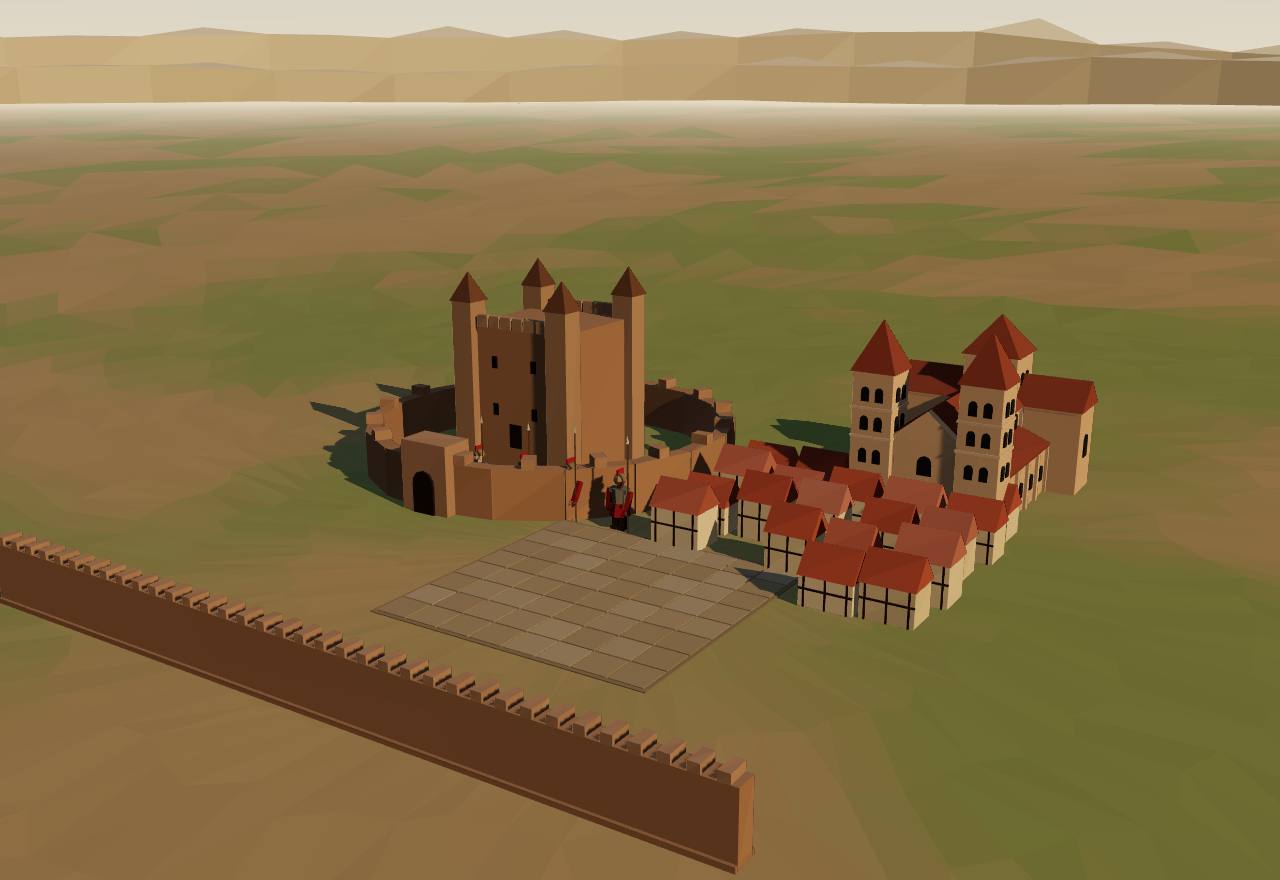
Milan: from commune to lordship
The commune before the lords: Milan is one of the three cities Wickham studies, a commune governed by consuls; the 1911 Britannica describes them as “the executive, elected for one year, and compelled to report to the great council at the term of their office”. 14,13 Consensus Texts
The first lord came from a podestà. Martino della Torre “followed as podestà in 1256, and in 1259 as signore of Milan—the first time such a title was heard in Italy”. Browning: “The house of Della Torre was established at Milan, to be succeeded in its turn by the houses of Visconti and Sforza.” 13,24 Consensus Texts
Then the archbishop. “Otto Visconti, archbishop of Milan (1262), the victor of Desio, became lord of Milan, and founded the house of Visconti, who ruled the city—except from 1302 to 1310—till 1447.” 13,24 Consensus Texts
Lordship needed a title. The emperor Henry VII “instituted Matteo Visconti as imperial vicar in the city and district of Milan” (Browning, after his coronation of 1311); the 1911 Britannica dates his restoration to 1310 and calls him “imperial vicar of Lombardy”. 24,30 Debated Texts
In 1395 the title was bought. The emperor Wenceslaus “sold to the lord of Milan the title of duke. On May 1, 1395, by a decree signed at Prague, he erected the town and diocese of Milan into an imperial fief or duchy”, which took in Brescia, Bergamo, Como, Novara and other cities (Browning). 24 Consensus Texts
The podestà survived as an officer of the lords. Ady, on Milan: “The Podesta who failed to pass the scrutiny to which he was subjected at the end of his annual term of office met with prompt dismissal.” 31 Consensus Texts
The emperor's arrival showed how divided the city was. Browning: Henry VII reached Milan “at the end of December 1310”, when it “was at this time divided between the two factions of the della Torre and the Visconti, Guido della Torre having for the moment the upper hand”; he ordered the exiles home, and on 6 January 1311 was crowned with the iron crown of Lombardy in Sant'Ambrogio. 24 Consensus Texts
How power worked Feudal monarch · Heredity · Territorial state · 2 unknown
How power worked
- Who rules
- Feudal monarch Debated
Why?
- How chosen
- Heredity Debated
Why?
- Limits on power
- Unknown
Why?
No source read describes a body that could check the Visconti once they ruled.
- Scale
- Territorial state Consensus
Why?
- Claim to rule
- Law Debated
Why?
- Who has a say
- Unknown
Why?
No source read says who, if anyone, the Visconti consulted.
1400 CE – 1500 CE
Republics and princes
By the fifteenth century a few states shared northern Italy: the duchy of Milan, the republics of Venice, Florence and Genoa, and the Papal States. Venice's closed nobility ran its galley convoys as a business of a few families; in Florence the Medici kept the forms of election by lot while choosing who could be drawn.
Terms: Venice and the Italian communes: Republics and princes
Cliopatria draws the Duchy of Milan from 1402, the Republic of Florence from 1260, and Venice, Genoa and the Papal States across the century: a few territorial states where the communes had been. 34,10 Consensus Survey
Milan passed from one dynasty to another. In 1450 the condottiere Francesco Sforza rode into the city “not as a conqueror, but as the successor of the Visconti Dukes”, and in the cathedral, still on horseback, “Francesco was hailed on all sides as Duke” (Ady). 31 Consensus Texts
Genoa too had a doge, but later and weaker: “In Genoa the institution of the doge dates from 1339”, when Simone Boccanegra became “the first doge of Genoa … and he was to hold the office for life”. Its creditors' society, the Bank of St. George, “was founded in 1407, but its origin must be sought for in 1371” (Duffy). 3,22,6 Consensus Texts
Guiso et al. stress that a signoria was not always a clean break: “In some cities, as in Florence and Genoa, the Signoria also preserved the political institutions and the personal freedoms present during the commune period”, which, they suggest, let civic culture take deeper root. 12 Debated Texts
Seshat's record of the Venetian republic dates its peak to 1481–1550 and, quoting its source, gives a city of “nearly 170,000 souls” at its sixteenth-century height, with more than two million people in its subject lands; Commynes observed at the end of the fifteenth century that in Venice “most of the people are foreigners”. Seshat DB Consensus Texts Survey
Much of what this page says about the Medici and the purses is in Machiavelli's words, so his bias matters. His History of Florence was commissioned in 1520 by a Medici, “written between 1521 and 1525, and dedicated to Clement VII”, and its 1901 edition warns that “in its details the authority of his History is often questionable”. 9 Consensus Texts
Venice: a closed nobility and its galleysDoge's Palace, Venice
After the Serrata the noble families that sat in the Great Council hardly changed. They elected short-lived old doges by the ten-round procedure, and they alone could bid for the state's trading galleys, which by the end of the century a few families controlled.
Terms: Venice and the Italian communes: Republics and princes, Venice: a closed nobility and its galleys
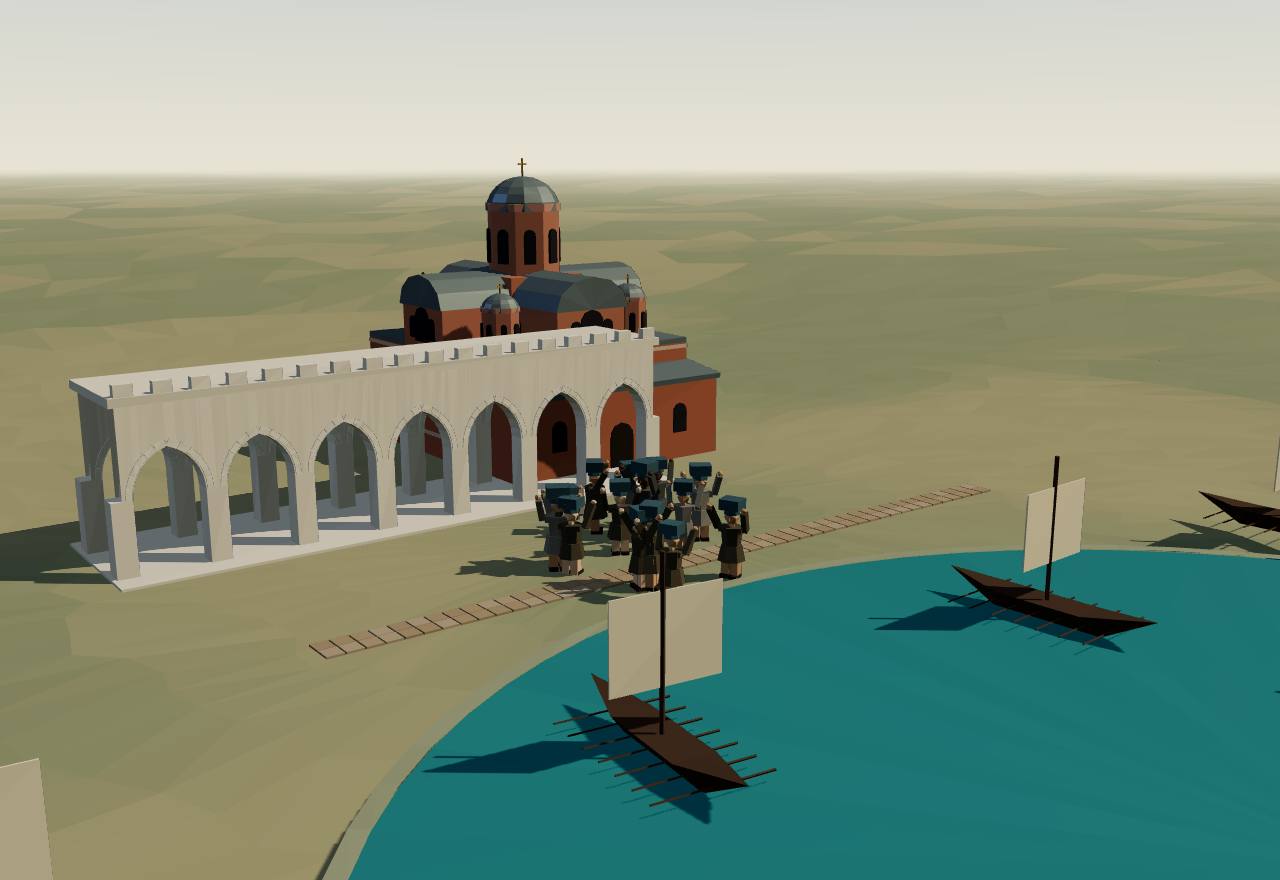
Venice: the galleys of the muda
The nobility barely changed. Of the 165 families that sat in the Great Council in 1293–1296, Puga and Trefler find that “only 36 exited the Great Council between 1323 and 1500”, an exit rate of 0.14% a year against 1.2% before the Serrata. 4 Consensus Texts
The state ran the richest trade. Under a system built between 1321 and 1329, it chose the destinations and dates of galley convoys and auctioned each galley for the voyage, and “only nobles were allowed to participate in this auction”. Charter costs reached 9,200 ducats by the late 1400s; the five galleys of the 1409 convoy to Flanders carried goods worth 460,000 ducats. 4 Consensus Texts
In the fifteenth century a few families took the galleys over. In 121 galleys of 1445–1452 the patrono's family held 56% of the shares on average; the brothers Alvise, Andrea and Pietro Marcello held all 24 shares of a galley in 1496 and all 48 shares of two galleys in 1500. Puga and Trefler call it a step back to kin-based finance and “a period of spectacular inequality at the top”. 4 Consensus Texts
The ten rounds could still be played. In 1423, Mowbray and Gollmann report, the underdog Francesco Foscari received 17 approvals out of 41 in the ninth ballot and 26 in the tenth; it was claimed his supporters had first voted for a candidate nobody wanted, then switched. He then served 34 years, the longest of any doge elected under the protocol. 11 Debated Texts
Doges were chosen old and served briefly. The 75 elected under the 1268 protocol served 6.85 years on average (median 6), against 11.35 for the 43 before; Mowbray and Gollmann cite the view that older candidates were preferred “to mitigate the risk of elections for life”. 11 Consensus Texts
Young nobles entered by lot too. Puga and Trefler: men “took their seats at age 25 unless they won the Balla D'Oro lottery”, which seated them at 18. Contarini, a century later, describes the drawing each December: the names of young men past their twentieth year in one pot, balls in another, “the fift part of these balles is guilded with gold”; a gold ball admitted the young man to the Great Council. 4,8 Consensus Texts
How power worked Elected magistrates · Mixed · Council
How power worked
- Who rules
- Elected magistrates Consensus
Why?
- How chosen
- Mixed Consensus
Why?
- Limits on power
- Council Consensus
Why?
- Scale
- Empire Debated
Why?
- Claim to rule
- Law Debated
Why?
- Who has a say
- A narrow elite Consensus
Why?
Florence under the MediciPalazzo della Signoria, Florence
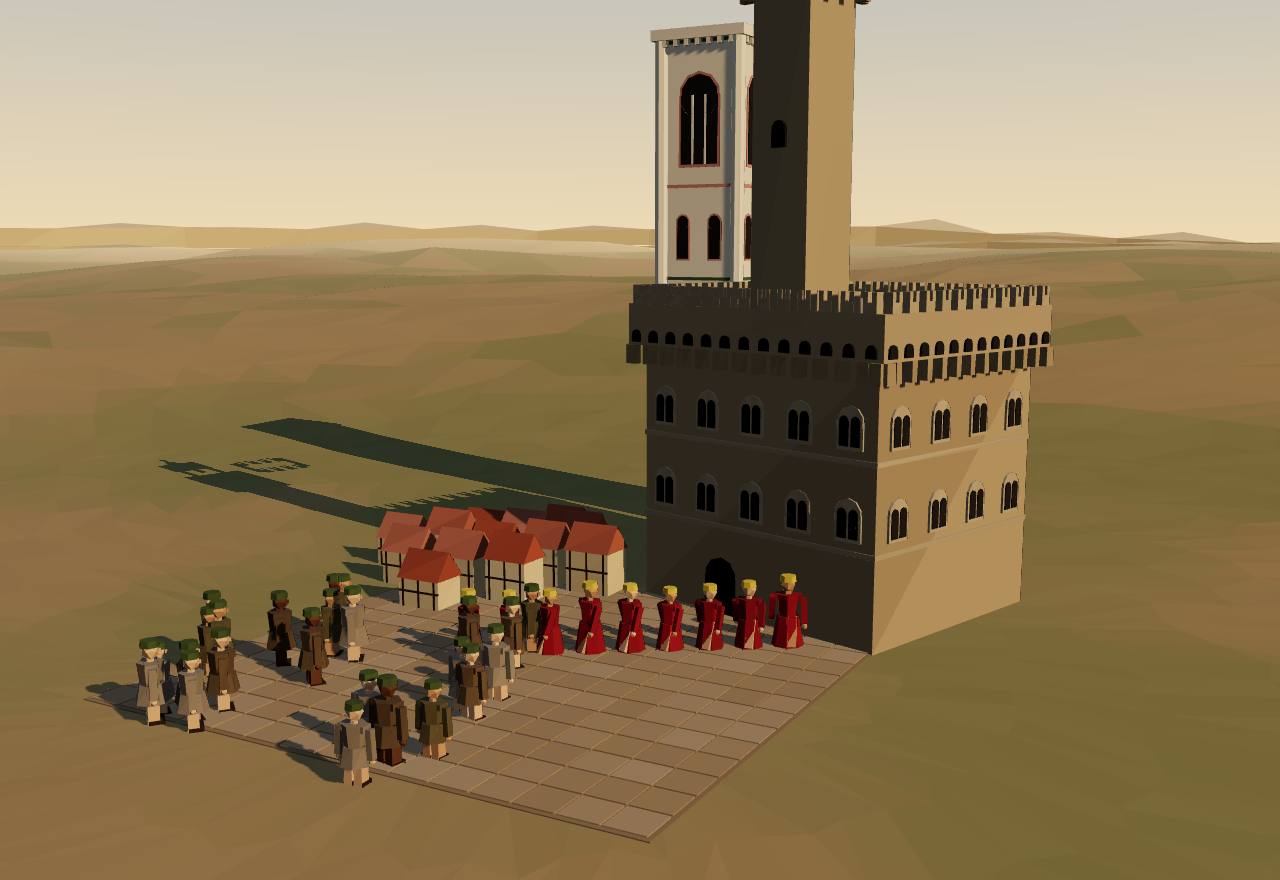
In 1434 a Signoria drawn by lot recalled Cosimo de' Medici from exile. His party then kept the lot but controlled the purses: officials called accoppiatori picked who could be drawn for the Signoria, while most offices were still filled by sortition. In 1494 the Medici fell and a Great Council of more than 3,000 replaced their system.
Terms: Venice and the Italian communes: Republics and princes, Florence under the Medici
- accoppiatori the officials who filled (and could choose from) the purses for the Signoria 9,35,28
- a mano “by hand”: names chosen by the accoppiatori rather than drawn at random 33,28
- Balia a council given full powers for a time (Machiavelli prints Balia) 9
- Consiglio Maggiore the Great Council of 1494, more than 3,000 members 28
Florence: the Medici and the purses
The lot brought the Medici back. Rubinstein: Cosimo de' Medici, exiled in 1433, was recalled a year later because “the appointment by lot, as was the custom in Florence, of the Signoria which entered office on 1 September 1434” produced a Signoria in his favour. Machiavelli: at the end of August 1434 “Niccolo di Cocco was drawn Gonfalonier for the two succeeding months, and with him eight signors, all partisans of Cosmo.” 36,9 Consensus Texts
The winners then remade the purses. They “made new Squittini, withdrawing the names of their adversaries from the purses, and filling them with those of their friends”, and since “to allow the great offices to be filled by mere chance of drawing, did not afford the government sufficient security”, the accoppiatori, with the outgoing Signoria, were to make the new appointments (Machiavelli). 9 Consensus Texts
Rubinstein shows the limits of the control: the accoppiatori's power to fill the purses a mano “concerned only the Signoria; the vast majority of the magistracies inside and outside the city were still filled by the normal method of sortition”, and the a mano system itself presupposed scrutiny qualifications, adding “an additional stage … between the scrutiny and the drawing of the name-tickets”. 33 Consensus Texts
Holding the purses open broke the republic's habits. Rubinstein: appointments normally lasted “from two months to one year, office holders being normally allowed to be reappointed only after intervals of up to three years”; the accoppiatori's long terms were “contrary to the letter and the spirit of the Florentine constitution”, and they closed the bags “for the last time, in 1449”, only for control to return. 35 Consensus Texts
Emergency councils were the other tool. Machiavelli: “from 1434 to 1455, during a period of twenty-one years, the authority of a balia was granted to it six times”; in 1456 those in power were openly advised “not to renew the power of the balia, but to close the balloting purses, and appoint the magistrates by drawing from the pollings or squittini previously made.” 9 Consensus Texts
After the Pazzi conspiracy a Council of Seventy (1480) took some of the Signoria's powers. When the Medici fell in 1494, a Parlamento and Balia created on 24 December a Consiglio Maggiore of “more than 3,000 members”, open to anyone who, or whose close family, had been drawn for the highest offices; a hall was hastily built for it in the Palazzo della Signoria, and in 1495 it suspended the Tratte. 28 Consensus Texts
How power worked Elected magistrates · Mixed · Council
How power worked
- Who rules
- Elected magistrates Consensus
Why?
- How chosen
- Mixed Consensus
Why?
- Limits on power
- Council Debated
Why?
- Scale
- Territorial state Consensus
Why?
- Claim to rule
- Law Debated
Why?
- Who has a say
- A narrow elite Debated
Why?
Artefacts
 Model, not a scan
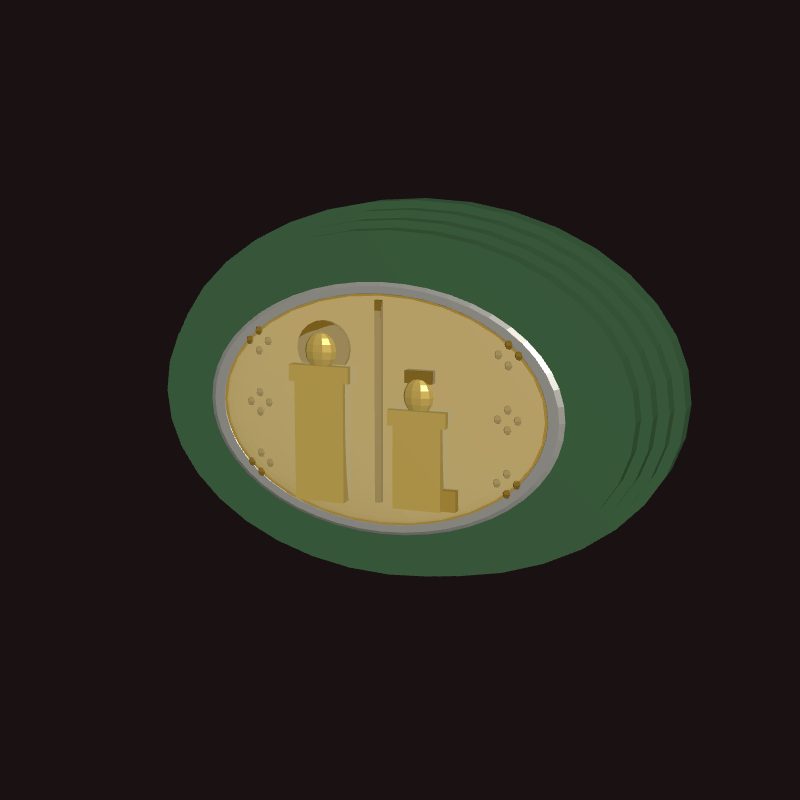 Model, not a scan
 Cast
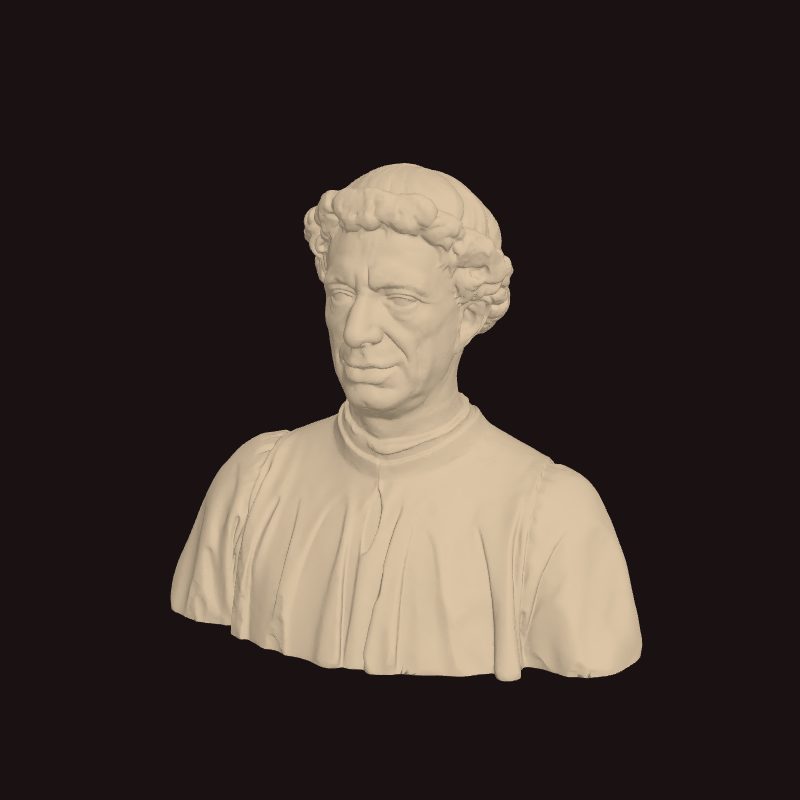 Cast
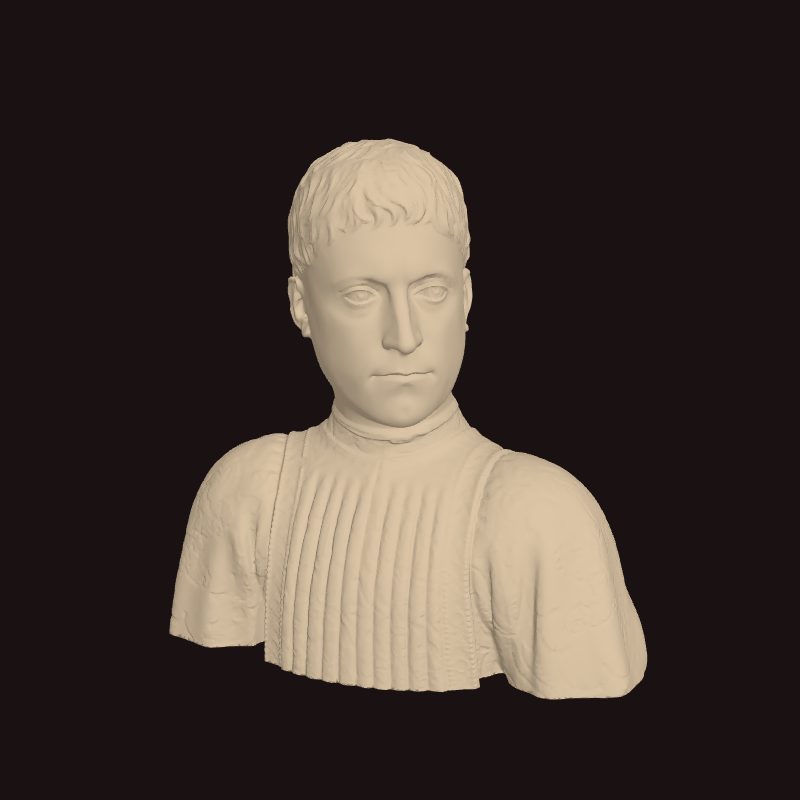 Cast
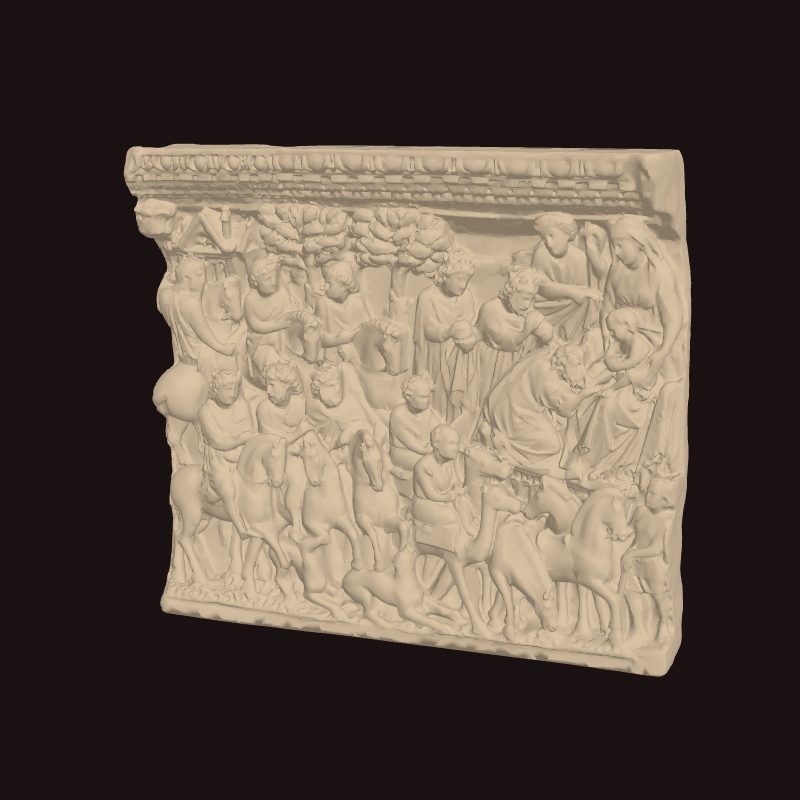 Cast
In numbers
Seventy-four doges: how they were chosen
Data: Brown's list of the doges (1895), the method of each period from the sources
Brown lists 74 doges elected from 697 to 1486. Each bar runs from one election to the next. The colour is the method of the period, not a record of each election: the assembly until 1172, electors named by the Great Council from 1172, and the ten rounds of lot and vote from 1268. 1,11 Mowbray and Gollmann, counting from Norwich's list, find 43 doges before 1268 where Brown has 45.
- Elected by the assembly: 38 doges, 12.5 years on average between elections
- Electors named by the Great Council: 7 doges, 13.7 years on average between elections
- Ten rounds of lot and vote (1268): 29 doges, 7.8 years on average between elections
74 accessions: 38 elected by the assembly, 7 electors named by the great council, 29 ten rounds of lot and vote (1268); median reign 9 years. Ended: 1 deposed, 2 killed, 71 not known.
Marks at the end of a bar: ○ died in office · × killed · ▽ deposed · | abdicated · □ conquered
Show the table: Doges of Venice, 697–1486
| Ruler | Years | Came to power | Reign ended | Source |
|---|---|---|---|---|
| Paolo Lucio Anafesto | 697 CE – 717 CE | Elected by the assembly | not known | 1,4 |
| Marcello Tegaliano | 717 CE – 726 CE | Elected by the assembly | not known | 1,4 |
| Orso Ipato | 726 CE – 742 CE | Elected by the assembly | not known | 1,4 |
| Deodato | 742 CE – 756 CE | Elected by the assembly | not known | 1,4 |
| Galla Gaulo | 756 CE – 756 CE | Elected by the assembly | not known | 1,4 |
| Domenico Monegario | 756 CE – 764 CE | Elected by the assembly | not known | 1,4 |
| Maurizio Galbaio | 764 CE – 787 CE | Elected by the assembly | not known | 1,4 |
| Giovanni Galbaio | 787 CE – 804 CE | Elected by the assembly | not known | 1,4 |
| Obelerio Antenorio | 804 CE – 811 CE | Elected by the assembly | not known | 1,4 |
| Agnello Particiaco | 811 CE – 827 CE | Elected by the assembly | not known | 1,4 |
| Giustiniano Particiaco | 827 CE – 829 CE | Elected by the assembly | not known | 1,4 |
| Giovanni Particiaco I | 829 CE – 836 CE | Elected by the assembly | not known | 1,4 |
| Pietro Tradonico | 836 CE – 864 CE | Elected by the assembly | not known | 1,4 |
| Orso Particiaco I | 864 CE – 881 CE | Elected by the assembly | not known | 1,4 |
| Giovanni Particiaco II | 881 CE – 887 CE | Elected by the assembly | not known | 1,4 |
| Pietro Candiano I | 887 CE – 888 CE | Elected by the assembly | not known | 1,4 |
| Pietro Tribuno | 888 CE – 912 CE | Elected by the assembly | not known | 1,4 |
| Orso Particiaco II | 912 CE – 932 CE | Elected by the assembly | not known | 1,4 |
| Pietro Candiano II | 932 CE – 939 CE | Elected by the assembly | not known | 1,4 |
| Pietro Particiaco | 939 CE – 942 CE | Elected by the assembly | not known | 1,4 |
| Pietro Candiano III | 942 CE – 959 CE | Elected by the assembly | not known | 1,4 |
| Pietro Candiano IV | 959 CE – 976 CE | Elected by the assembly | not known | 1,4 |
| Pietro Orseolo I | 976 CE – 978 CE | Elected by the assembly | not known | 1,4 |
| Vitale Candiano | 978 CE – 979 CE | Elected by the assembly | not known | 1,4 |
| Tribuno Memo | 979 CE – 991 CE | Elected by the assembly | not known | 1,4 |
| Pietro Orseolo II | 991 CE – 1008 CE | Elected by the assembly | not known | 1,4 |
| Otto Orseolo | 1008 CE – 1026 CE | Elected by the assembly | deposed (A revolt in 1026 ended in “Otto's exile” (Puga and Trefler).) | 1,4 |
| Pietro Centranico | 1026 CE – 1032 CE | Elected by the assembly | not known | 1,4 |
| Domenico Flabianico | 1032 CE – 1043 CE | Elected by the assembly | not known | 1,4 |
| Domenico Contarini | 1043 CE – 1071 CE | Elected by the assembly | not known | 1,4 |
| Domenico Selvo | 1071 CE – 1085 CE | Elected by the assembly | not known | 1,4 |
| Vitale Falier | 1085 CE – 1096 CE | Elected by the assembly | not known | 1,4 |
| Vitale Michiel I | 1096 CE – 1102 CE | Elected by the assembly | not known | 1,4 |
| Ordelafo Falier | 1102 CE – 1118 CE | Elected by the assembly | not known | 1,4 |
| Domenico Michiel | 1118 CE – 1130 CE | Elected by the assembly | not known | 1,4 |
| Pietro Polani | 1130 CE – 1148 CE | Elected by the assembly | not known | 1,4 |
| Domenico Morosini | 1148 CE – 1156 CE | Elected by the assembly | not known | 1,4 |
| Vitale Michiel II | 1156 CE – 1172 CE | Elected by the assembly | killed (Mobbed and killed at a gathering in May 1172 after his fleet's failure.) | 1,4 |
| Sebastian Ziani | 1172 CE – 1178 CE | Electors named by the Great Council | not known | 1,11 |
| Orio Malipiero | 1178 CE – 1193 CE | Electors named by the Great Council | not known | 1,11 |
| Enrico Dandolo | 1193 CE – 1205 CE | Electors named by the Great Council | not known | 1,11 |
| Pietro Ziani | 1205 CE – 1229 CE | Electors named by the Great Council | not known | 1,11 |
| Jacopo Tiepolo | 1229 CE – 1249 CE | Electors named by the Great Council | not known | 1,11 |
| Marino Morosini | 1249 CE – 1253 CE | Electors named by the Great Council | not known | 1,11 |
| Renier Zeno | 1253 CE – 1268 CE | Electors named by the Great Council | not known | 1,11 |
| Lorenzo Tiepolo | 1268 CE – 1275 CE | Ten rounds of lot and vote (1268) | not known | 1,11 |
| Jacopo Contarini | 1275 CE – 1280 CE | Ten rounds of lot and vote (1268) | not known | 1,11 |
| Giovanni Dandolo | 1280 CE – 1289 CE | Ten rounds of lot and vote (1268) | not known | 1,11 |
| Pietro Gradenigo | 1289 CE – 1311 CE | Ten rounds of lot and vote (1268) | not known | 1,11 |
| Marin Zorzi | 1311 CE – 1312 CE | Ten rounds of lot and vote (1268) | not known | 1,11 |
| Giovanni Soranzo | 1312 CE – 1329 CE | Ten rounds of lot and vote (1268) | not known | 1,11 |
| Francesco Dandolo | 1329 CE – 1339 CE | Ten rounds of lot and vote (1268) | not known | 1,11 |
| Bartolomeo Gradenigo | 1339 CE – 1343 CE | Ten rounds of lot and vote (1268) | not known | 1,11 |
| Andrea Dandolo | 1343 CE – 1354 CE | Ten rounds of lot and vote (1268) | not known | 1,11 |
| Marin Falier | 1354 CE – 1355 CE | Ten rounds of lot and vote (1268) | killed (“Condemned to be beheaded on Friday, 17th April, 1355” (Brown p. 205).) | 1,11 |
| Giovanni Gradenigo | 1355 CE – 1356 CE | Ten rounds of lot and vote (1268) | not known | 1,11 |
| Giovanni Dolfin | 1356 CE – 1361 CE | Ten rounds of lot and vote (1268) | not known | 1,11 |
| Lorenzo Celsi | 1361 CE – 1365 CE | Ten rounds of lot and vote (1268) | not known | 1,11 |
| Marco Corner | 1365 CE – 1368 CE | Ten rounds of lot and vote (1268) | not known | 1,11 |
| Andrea Contarini | 1368 CE – 1382 CE | Ten rounds of lot and vote (1268) | not known | 1,11 |
| Michele Morosini | 1382 CE – 1382 CE | Ten rounds of lot and vote (1268) | not known | 1,11 |
| Antonio Venier | 1382 CE – 1400 CE | Ten rounds of lot and vote (1268) | not known | 1,11 |
| Michele Steno | 1400 CE – 1414 CE | Ten rounds of lot and vote (1268) | not known | 1,11 |
| Tommaso Mocenigo | 1414 CE – 1423 CE | Ten rounds of lot and vote (1268) | not known | 1,11 |
| Francesco Foscari | 1423 CE – 1457 CE | Ten rounds of lot and vote (1268) | not known | 1,11 |
| Pasquale Malipiero | 1457 CE – 1462 CE | Ten rounds of lot and vote (1268) | not known | 1,11 |
| Cristoforo Moro | 1462 CE – 1471 CE | Ten rounds of lot and vote (1268) | not known | 1,11 |
| Nicolò Tron | 1471 CE – 1472 CE | Ten rounds of lot and vote (1268) | not known | 1,11 |
| Nicolò Marcello | 1472 CE – 1474 CE | Ten rounds of lot and vote (1268) | not known | 1,11 |
| Pietro Mocenigo | 1474 CE – 1476 CE | Ten rounds of lot and vote (1268) | not known | 1,11 |
| Andrea Vendramin | 1476 CE – 1478 CE | Ten rounds of lot and vote (1268) | not known | 1,11 |
| Giovanni Mocenigo | 1478 CE – 1485 CE | Ten rounds of lot and vote (1268) | not known | 1,11 |
| Marco Barbarigo | 1485 CE – 1486 CE | Ten rounds of lot and vote (1268) | not known | 1,11 |
| Agostino Barbarigo | 1486 CE | Ten rounds of lot and vote (1268) | not known | 1,11 |
- Marks, by Seshat polity:
- Republic of Venice III
- Republic of Venice III
- Republic of St Peter I
- Rome - Republic of St Peter II
- Papal States - High Medieval Period
- Background bands, by phase:
- From Byzantine duchy to doge
- The communes
- Lot, closure and lordship
- Republics and princes
| Seshat polity | Years | Value |
|---|---|---|
| Republic of St Peter I | 711 CE – 904 CE (whole period) | 50,000 |
| Rome - Republic of St Peter II | 1000 CE | 14,000 |
| Rome - Republic of St Peter II | 1100 CE | 6,000 |
| Papal States - High Medieval Period | 1198 CE – 1309 CE (whole period) | 44,000 |
| Seshat polity | Years | Value |
|---|---|---|
| Republic of St Peter I | 800 CE | 440,000–1,333,000 |
| Republic of St Peter I | 900 CE | 335,000–1,500,000 |
| Rome - Republic of St Peter II | 1000 CE | 300,000–1,250,000 |
| Rome - Republic of St Peter II | 1100 CE | 300,000–1,115,000 |
| Papal States - High Medieval Period | 1198 CE – 1309 CE (whole period) | 300,000–1,500,000 |
| Republic of Venice III | 1205 CE – 1564 (whole period) | 2,000,000–2,500,000 |
| Republic of Venice III | 1205 CE – 1564 (whole period) | 2,000,000–2,500,000 |
| Seshat polity | Years | Value |
|---|---|---|
| Republic of St Peter I | 800 CE | 70,000–100,000 |
| Republic of St Peter I | 900 CE | 40,000 |
| Rome - Republic of St Peter II | 1000 CE | 35,000 |
| Rome - Republic of St Peter II | 1100 CE | 35,000 |
| Papal States - High Medieval Period | 1198 CE – 1309 CE (whole period) | 35,000 |
| Republic of Venice III | 1205 CE – 1564 (whole period) | 170,000 |
| Republic of Venice III | 1205 CE – 1564 (whole period) | 170,000 |
| Seshat polity | Years | Value |
|---|---|---|
| Republic of St Peter I | 711 CE – 904 CE (whole period) | 6 |
| Rome - Republic of St Peter II | 904 CE – 1198 CE (whole period) | 6 |
| Papal States - High Medieval Period | 1198 CE – 1309 CE (whole period) | 5–6 |
| Republic of Venice III | 1205 CE – 1564 (whole period) | 5–6 |
| Republic of Venice III | 1205 CE – 1564 (whole period) | 5–6 |
| Seshat polity | Years | Value |
|---|---|---|
| Republic of St Peter I | 711 CE – 904 CE (whole period) | 5 |
| Rome - Republic of St Peter II | 904 CE – 1198 CE (whole period) | 5 |
| Papal States - High Medieval Period | 1198 CE – 1309 CE (whole period) | 4 |
| Republic of Venice III | 1205 CE – 1564 (whole period) | 5 |
| Republic of Venice III | 1205 CE – 1564 (whole period) | 5 |
| Seshat polity | Years | Value |
|---|---|---|
| Republic of St Peter I | 711 CE – 904 CE (whole period) | 5 |
| Rome - Republic of St Peter II | 904 CE – 1198 CE (whole period) | 6 |
| Papal States - High Medieval Period | 1198 CE – 1309 CE (whole period) | 5 |
| Republic of Venice III | 1205 CE – 1564 (whole period) | 15 |
| Republic of Venice III | 1205 CE – 1564 (whole period) | 15 |
Values as Seshat codes them: bands are ranges, dots single values, flat bars values given for a whole period, hatching “unknown”; from one Seshat polity to the next, marks alternate between a light tone and a darker one with dashed joining lines (the key above names each polity). Source: Seshat Global History Databank (Equinox-2020), CC BY 4.0; and the Seshat Databank, seshat-db.com (no licence stated; attribution).
Governance fingerprint
Seshat's institutional variables, phase by phase. Hover or focus a cell for the values and years.
- Present
- Inferred present
- Absent
- Inferred absent
- Unknown
- Not coded in Seshat
- Mixed: present in one Seshat polity or period, absent in another
Not coded in Seshat: From Byzantine duchy to doge, The communes: Venice: the commune and the Great Council, The communes: Florence: consuls, towers and the first podestà, The communes: Genoa: consuls and podestà, Lot, closure and lordship: Florence: guilds and the purses, Lot, closure and lordship: Milan: the signoria, Republics and princes: Florence under the Medici. The Seshat Databank has no polity for them, so their six axes rest on the cited scholarship alone.
The axes against Seshat
2 agree, 0 disagree.
Show the 2 pairs that agree
- Agree Lot, closure and lordship: Venice: the doge's election and the Serrata: claim to rule coded “Law”, which implies formal legal code present; Seshat has it present.
- Agree Republics and princes: Venice: a closed nobility and its galleys: claim to rule coded “Law”, which implies formal legal code present; Seshat has it present.
Only pairs where an axis value on its own implies a Seshat variable are compared; the rest is not counted as disagreement. 4 more pairs have no Seshat value.
Source: Seshat Global History Databank (Equinox-2020), CC BY 4.0; Seshat Databank, seshat-db.com (no licence stated; attribution).
Compare
| Axis | Venice and the Italian communes | Greece: Athens | Rome: The kings | Latin Europe: The Merovingians |
|---|---|---|---|---|
| Who rules | Elected magistrates | Elected magistrates | King | King |
| How chosen | Acclamation | Mixed | Mixed | Heredity |
| Limits on power | Custom and kin | Written law | Council | Custom and kin |
| Scale | City-state | City-state | City-state | Territorial state |
| Claim to rule | Law | Law | Divine mandate | Kinship and descent |
| Who has a say | A narrow elite | Property owners | Unknown | A narrow elite |
Legacy
The ballot is Venetian. Mowbray and Gollmann: the ballot-boy's title “is derived from ‘balota’, the Venetian word for the ballot ball used in the Doge's election; the modern English word ‘ballot’ is derived from the same Venetian word.” They also propose the 1268 principle, reducing a college by lot and enlarging it by election, for leader-election protocols in computing. 11 Consensus Texts
The communes are still measured in today's Italy. Guiso, Sapienza and Zingales find more voluntary associations in Centre-Northern towns that were once free city-states; Tarrow doubts that the history behind such claims holds. 12,37 Debated Texts Model
Venice's constitution was read abroad as a model: Lewkenor's 1599 English translation of Contarini, The Commonwealth and Government of Venice, describes its councils, ballots and the election of the prince in detail for English readers. 8 Consensus Texts
See also forms of government and the country edition.
Sources
Bibliography
44 sources, numbered as cited: 10 papers · 13 books · 10 datasets · 5 primary sources · 6 popular syntheses
- Book Brown, H. F. (1895). Venice: an historical sketch of the Republic. Rivington, Percival & Co., London, 2nd edn. Read in the archive.org scan (not in copyright): pp. 18–19, 27, 38–43, 55, 77, 104–105, 115, 150–151, 162–163, 205, 398.
- Book Hazlitt, W. C. (1900). The Venetian Republic: its rise, its growth, and its fall 421-1797, Volume 1. A. and C. Black, London. Read in the archive.org scan: pp. 19, 171–172, 400.
- Encyclopaedia Anon. (1911). Doge. Encyclopædia Britannica, 11th edn, vol. 8, pp. 379–380 (Wikisource). The 1268 summary and the Genoese doges (p. 380).
- Paper Puga, D., Trefler, D. (2014). International Trade and Institutional Change: Medieval Venice’s Response to Globalization*. The Quarterly Journal of Economics 129(2): 753–821. Read in full in the authors' copy of the QJE version (diegopuga.org/papers/venice.pdf); pages cited are the journal's.
- Encyclopaedia Brown, H. R. F., et al. (1911). Venice. Encyclopædia Britannica, 11th edn, vol. 27, pp. 995–1007 (Wikisource). History section; page per quote approximate.
- Book Duffy, B. (1893). The Tuscan republics (Florence, Siena, Pisa, and Lucca) with Genoa. T. Fisher Unwin, London (The Story of the Nations). Read in the archive.org scan: pp. 16, 54, 70–78, 112–113.
- Primary Villani, G.; tr. R. E. Selfe, ed. P. H. Wicksteed (1906). Villani's Chronicle: Being Selections from the First Nine Books of the Croniche Fiorentine of Giovanni Villani. Archibald Constable, London. Read on Project Gutenberg: Book VII ch. 79 (1282) and Book VIII ch. 1 (1293). The selections stop before 1328.
- Primary Contarini, G.; tr. L. Lewkenor (1599). The Commonwealth and Government of Venice. John Windet for Edmund Mattes, London (STC 5642); EEBO-TCP text A19232 (CC0). Contarini wrote in the 1520s–40s; read in the TCP transcription, pages from its page breaks (pp. 19–25, 53). A sixteenth-century account: it describes the procedure of its own day.
- Primary Machiavelli, N. (1901). History of Florence and of the Affairs of Italy. Universal Classics Library, W. Walter Dunne, New York and London (translator not named). Written 1521–25 (the edition's introduction). Read on Project Gutenberg: the introduction and Books II–VII, cited by book and chapter.
- Dataset Seshat: Global History Databank (2026). Seshat Databank API (seshat-db.com), social-complexity and general variables. Snapshot of the API responses taken 15 Nov 2026; the site states no licence. Used where Equinox-2020 has no polity for a page's period.
- Paper Mowbray, M., Gollmann, D. (2007). Electing the Doge of Venice: Analysis of a 13th Century Protocol. 20th IEEE Computer Security Foundations Symposium (CSF'07), pp. 295–310. Read in full (the IEEE version) through the open mirror at gwern.net/doc/cs/security/2007-mowbray.pdf; the HP Labs report did not resolve. Table 1 and §§ 1, 3.1–3.2, 5–8 used.
- Paper Guiso, L., Sapienza, P., Zingales, L. (2016). Long-term persistence. Journal of the European Economic Association 14(6). Read as the open NBER working paper w14278 (2008), §§ 1–1.3; the abstract matches the journal's.
- Encyclopaedia Brown, H. R. F., Ashby, T. (1911). Milan. Encyclopædia Britannica, 11th edn, vol. 18, pp. 437–441 (Wikisource). History section, about pp. 439–440.
- Book Wickham, C. (2015). Sleepwalking into a New World: The Emergence of Italian City Communes in the Twelfth Century. Princeton University Press. Publisher's description read (OpenAlex abstract, 16 Nov 2026).
- Encyclopaedia Anon. (1911). Lombard League. Encyclopædia Britannica, 11th edn, vol. 16, pp. 931–932 (Wikisource). Legnano and the peace of Constance.
- Primary Halsall, P. (ed.), after Thatcher and McNeal 1905 (1998). Barbarossa and the Lombards (incl. The Peace of Constance, excerpt). Internet Medieval Sourcebook, Fordham University.
- Book Dean, T., Waley, D. (2022). The Italian City-Republics. Routledge, 5th edn. Publisher's description read (OpenAlex, 16 Nov 2026).
- Paper Belloc, M., Drago, F., Galbiati, R. (2016). Earthquakes, Religion, and Transition to Self-Government in Italian Cities*. The Quarterly Journal of Economics 131(4): 1875–1926. Abstract read (OpenAlex, 16 Nov 2026).
- Paper Stasavage, D. (2014). Was Weber Right? The Role of Urban Autonomy in Europe's Rise. American Political Science Review 108(2): 337–354. Abstract read (OpenAlex, 16 Nov 2026).
- Paper Merelo-Guervós, J. J., Molinari, M. C. (2025). An analysis of colleganza contracts in the Republic of Venice and its relationship to the Serrata of the Great Council. Social Network Analysis and Mining 15: 36. Open access (CC BY 4.0). Read in full on the publisher's page, 16 Nov 2026 (§§ 1, 3 and 5).
- Encyclopaedia Anon. (1911). Guelphs and Ghibellines. Encyclopædia Britannica, 11th edn, vol. 12, pp. 668–669 (Wikisource). The origin of the names (p. 668).
- Book Bent, J. T. (1881). Genoa, how the Republic rose and fell. C. Kegan Paul, London. Read in the archive.org scan (not in copyright): pp. 29, 50–62, 209, 224.
- Paper Greif, A. (1994). On the Political Foundations of the Late Medieval Commercial Revolution: Genoa During the Twelfth and Thirteenth Centuries. The Journal of Economic History 54(2): 271–287. Abstract read (Cambridge Core, OpenAlex, 16 Nov 2026).
- Book Browning, O. (1894). Guelphs and Ghibellines. Methuen, London (University Extension Series). Read in the archive.org scan: pp. 22, 40–41, 64, 180–181.
- Paper Tanzini, L. (2019). Langages et pratiques du tirage au sort dans la vie publique des communes médiévales italiennes (xiii e - xiv e siècles). Participations, hors-série: 195–213. French abstract read (Crossref, 16 Nov 2026); translations ours.
- Book Jones, P. (1997). The Italian City-State. Oxford University Press. Abstract read (Oxford Academic, via OpenAlex, 16 Nov 2026).
- Book Lane, F. C. (1971). The enlargement of the great council of Venice. Florilegium Historiale (University of Toronto Press). Not read: named only for the position its title states; merelo2025 and puga2014 are the readable sources for it.
- Dataset Herlihy, D., Litchfield, R. B., Molho, A., Barducci, R. (eds) (2002). Brief Historical Overview, in Florentine Renaissance Resources: Online Tratte of Office Holders 1282-1532. Brown University (database 2000; version 1.1). The overview page read in full, 16 Nov 2026 (the database itself was under maintenance); its sections 1282, 1293, 1328, 1343, 1378, Scrutinies, Extractions and Divieti, Electoral controls.
- Primary Compagni, D.; tr. E. C. M. Benecke and A. G. Ferrers Howell (1906). The Chronicle of Dino Compagni. J. M. Dent, London (Temple Classics). Compagni (c. 1260–1324) sat among the priors. Read in the archive.org scan: Book I ch. 4–5, 11, 18; Book II ch. 5, 10; Appendix II (pages of the 1906 edition).
- Encyclopaedia Hayes, C. J. H. (1911). Visconti. Encyclopædia Britannica, 11th edn, vol. 28, pp. 128–129 (Wikisource). Matteo Visconti's restoration and vicariate (p. 128).
- Book Ady, C. M. (1907). A history of Milan under the Sforza. Methuen, London. Read in the archive.org scan: pp. 32, 60.
- Paper Molinari, M. C. (2019). How the Republic of Venice chose its Doge: lot-based elections and supermajority rule. Constitutional Political Economy 31(2): 169–187. Abstract read on the publisher's page (16 Nov 2026); the article is closed. Published online 2019, in the 2020 volume.
- Book Rubinstein, N. (1997). Electoral Scrutinies. The Government of Florence Under the Medici (1434 To 1494), 2nd edn, Oxford University Press, pp. 60–76. Chapter abstract read (Crossref, 16 Nov 2026); its OCR prints “horse” for borse.
- Dataset Bennett, J. S., Mutch, E., Tollefson, A., et al. (2025). Cliopatria - A geospatial database of world-wide political entities from 3400BCE to 2024CE. Scientific Data 12. Cliopatria: open geospatial dataset of over 1600 political entities, 3400 BCE–2024 CE.
- Book Rubinstein, N. (1997). The Accoppiatori. The Government of Florence Under the Medici (1434 To 1494), 2nd edn, Oxford University Press, pp. 34–59. Chapter abstract read (Crossref, 16 Nov 2026).
- Book Rubinstein, N. (1997). The Beginnings of Electoral Controls. The Government of Florence Under the Medici (1434 To 1494), 2nd edn, Oxford University Press, pp. 1–33. Chapter abstract read (Crossref, 16 Nov 2026).
- Paper Tarrow, S. (1996). Making Social Science Work Across Space and Time: A Critical Reflection on Robert Putnam's Making Democracy Work. American Political Science Review 90(2). Abstract read (Crossref/OpenAlex, 16 Nov 2026).
- Dataset The Cleveland Museum of Art (2026). Seal of Doge Michele Steno (1985.198). Cleveland Museum of Art Open Access (CC0), read 16 Nov 2026. 1400–1409, Italy, Venice; repoussé gold over a core of wax and resin; diameter 4.8 cm; the doge and St Mark identified by the inscription.
- Dataset The Cleveland Museum of Art (2026). Votive or Civic Badge with a Crowned Figure Kneeling before Christ (1985.61). Cleveland Museum of Art Open Access (CC0), read 16 Nov 2026. c. 1300, Italy, Venice; gold repoussé medallion under glass inset within a bronze clasp; 3.4 × 2.4 cm.
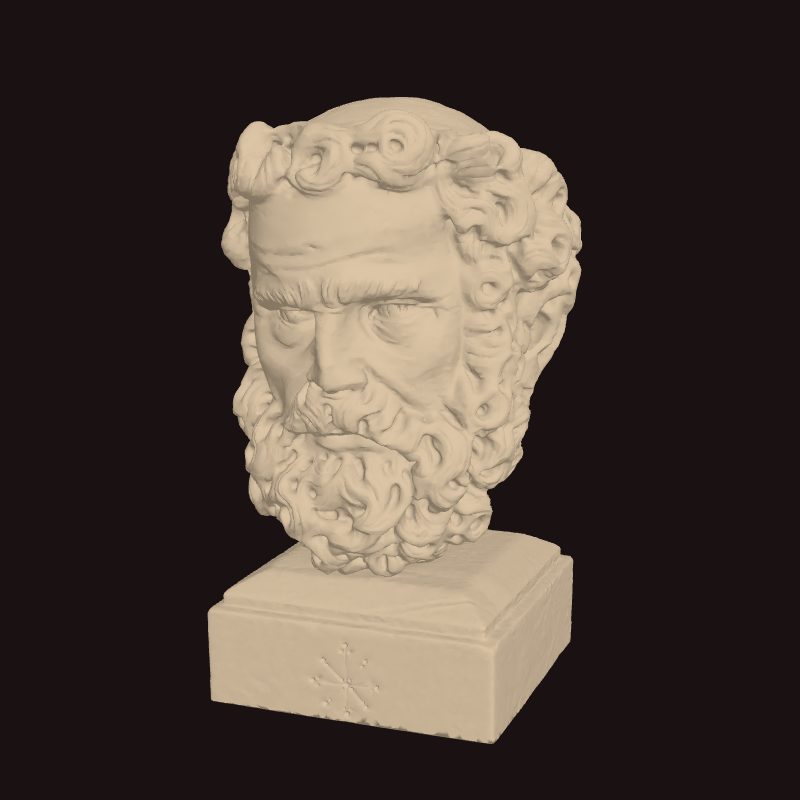
- Dataset Statens Museum for Kunst (2026). Giovanni Pisano, Head of a Bearded Man (KMS5962). SMK Open (api.smk.dk), Public Domain Mark 1.0, read 16 Nov 2026. Marble, 1312–1314; 17.5 × 12 × 13.5 cm; the label: probably from the tomb of Margaret of Luxembourg (1311).
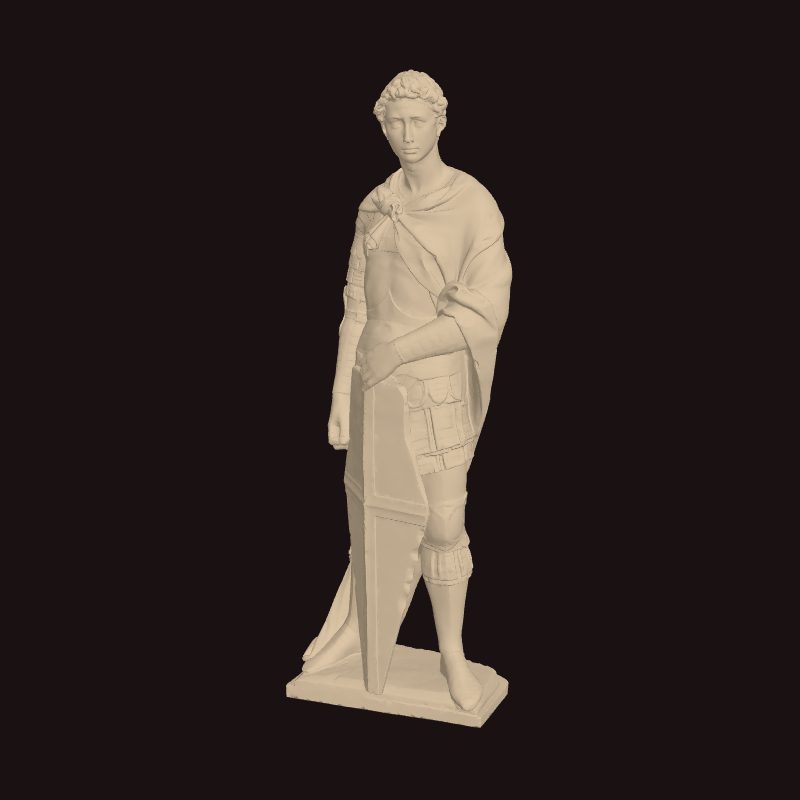
- Dataset Statens Museum for Kunst (2026). St. Georg iklædt rustning og kappe, med skjold (KAS82). SMK Open (api.smk.dk), Public Domain Mark 1.0, read 16 Nov 2026. Plaster cast, 219 × 78.5 × 55 cm; original marble by Donatello, Museo Nazionale Bargello.
- Dataset Statens Museum for Kunst (2026). Portræt af Matteo Palmieri (KAS220). SMK Open (api.smk.dk), Public Domain Mark 1.0, read 16 Nov 2026. Plaster cast, 55 cm; original by Antonio Rossellino, Bargello; the record: it stood outside Casa Palmieri until 1832.
- Dataset Statens Museum for Kunst (2026). Portræt af Piero (I) de' Medici (1416-1469) (KAS469). SMK Open (api.smk.dk), Public Domain Mark 1.0, read 16 Nov 2026. Plaster cast, 55 cm; original by Mino da Fiesole, Bargello.
- Dataset Statens Museum for Kunst (2026). Kongernes tilbedelse (KAS2032). SMK Open (api.smk.dk), Public Domain Mark 1.0, read 16 Nov 2026. Plaster cast, 96 × 93 cm; original by Nicola Pisano on the Siena cathedral pulpit (Domkirken i Siena).
Quantitative values from the Seshat Global History Databank (Equinox-2020), licensed CC BY 4.0. Dataset: Seshat Equinox Packaged Data (v.1). See also Seshat: The Global History Databank (Turchin et al. 2015).
Values for polities Equinox-2020 does not cover come from the Seshat Databank at seshat-db.com (Seshat: Global History Databank), snapshotted from its API on 2026-11-16. No licence is stated on seshat-db.com; used with attribution. Snapshot: Seshat Databank API (seshat-db.com), social-complexity and general variables.