Kings of kings, chosen founders, slave sultans and captains who held the land: twelve centuries of rule between the Himalaya and the Tungabhadrā, 320–1565
North India and the Deccan: Guptas to Vijayanagara
320 CE – 1565 CE
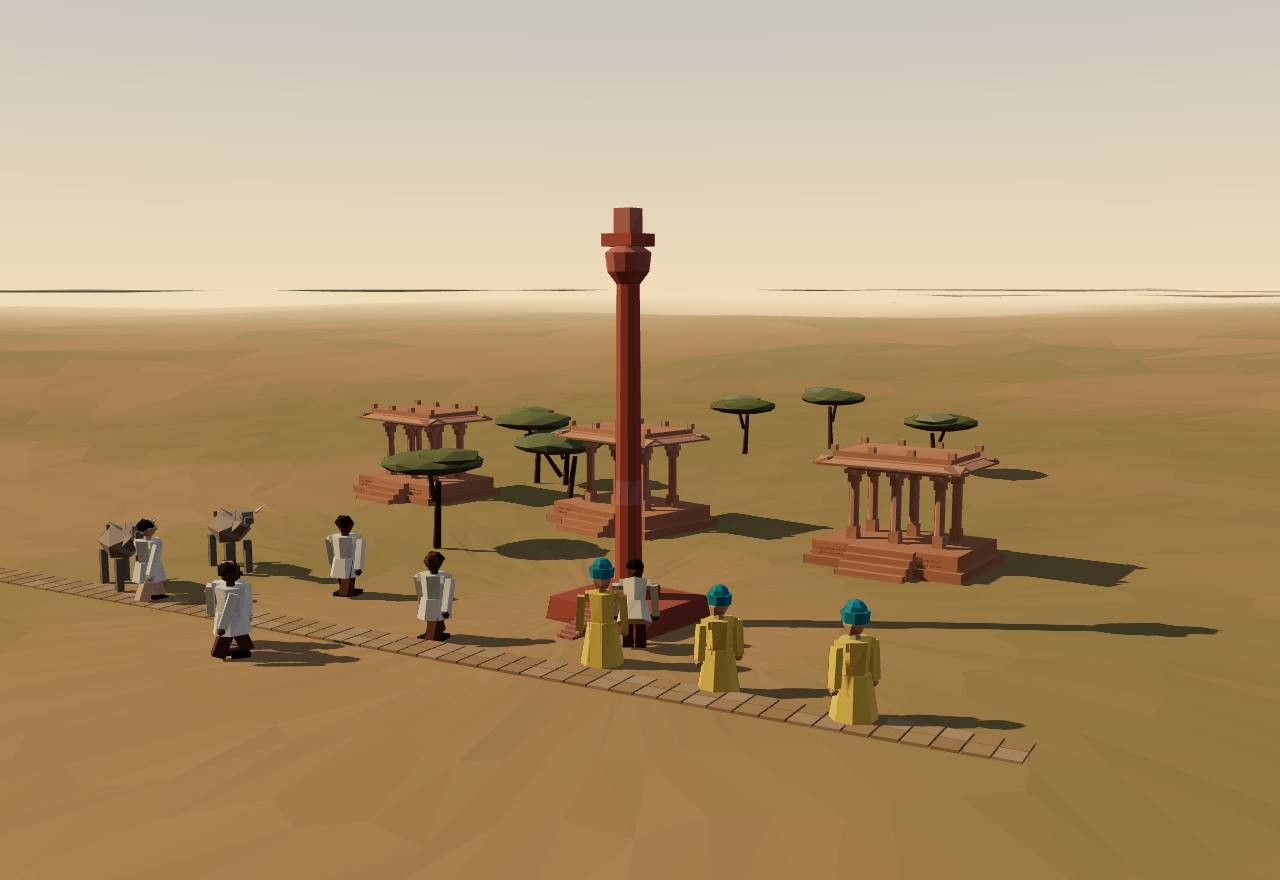
Eran, Gupta year 165 (484–85): a feudatory's column for Vishnu
320 CE – 550 CE
The Guptas
From the Ganges plain the Guptas called themselves kings over kings. Their inscriptions boast of rivals uprooted and of distant rulers who paid tribute and came to bow, and their governors and feudatories set up pillars in their name. How much of this was rule and how much was homage is the question the stones leave open.
Terms: North India and the Deccan: Guptas to Vijayanagara: The Guptas
- mahārājādhirāja “Supreme king of great kings”: the title of the Gupta sovereigns from Chandragupta I. Mahārāja alone, Fleet notes, was by then a rank for feudatories. 1
- sāmanta A neighbour, then a vassal: Sharma traces the word from conquered chiefs (c. 500) to the great officers of Harsha's grants. 9
- dhvaja-stambha “Flag-staff” of a god: the name the Eran inscription gives its stone column, set up to Vishnu as Janārdana. 1
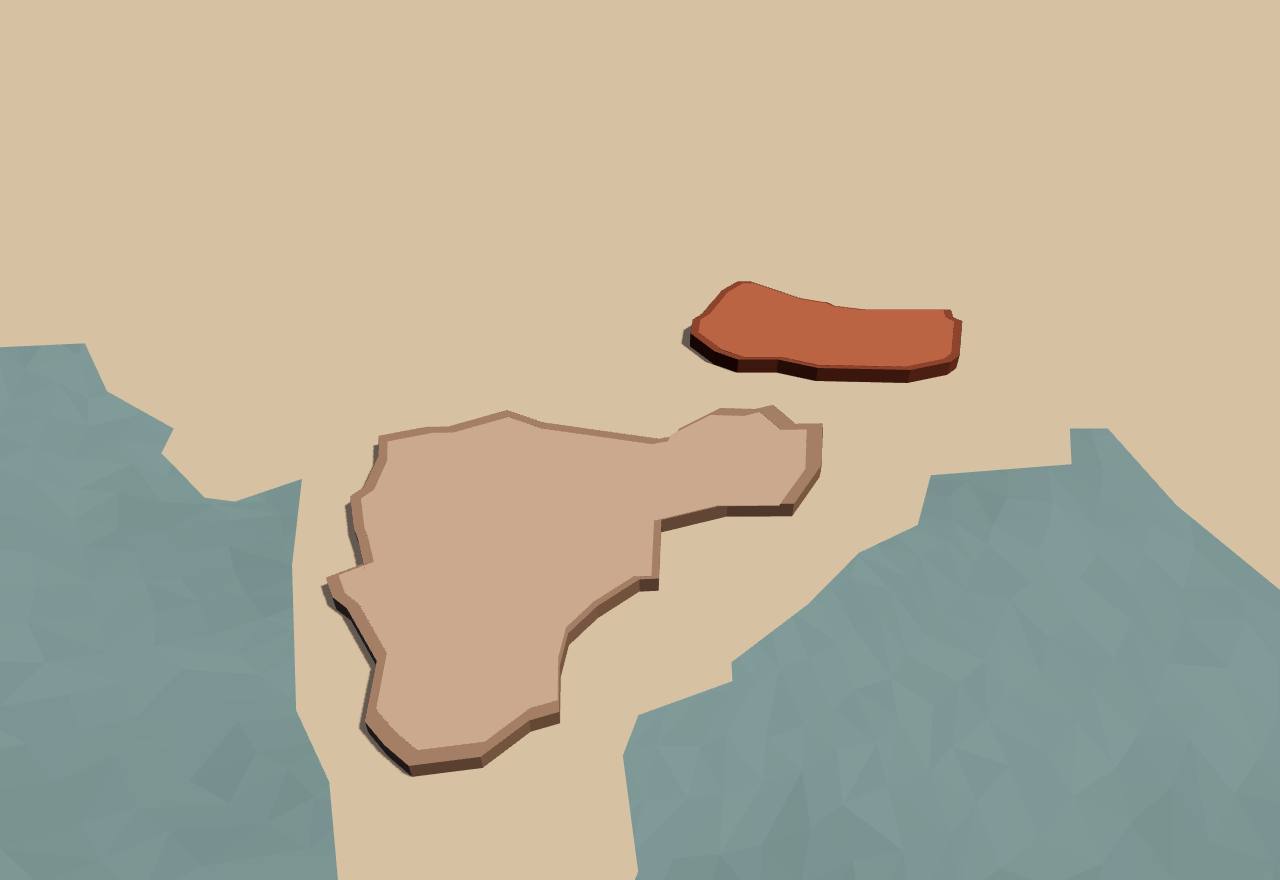
The Gupta empire (Cliopatria), 340–500
Territory: Cliopatria (CC BY 4.0), simplified. Height fixed: population not coded in Seshat.
In the Gupta records the founder, Gupta, is only a Mahārāja; Chandragupta I is the first Mahārājādhirāja of the family. Fleet notes that in this period Mahārāja “was habitually used simply as a technical official title … applied only to feudatories, not to paramount sovereigns”. 1 Consensus Texts
A verse of the Allahabad pillar, as Fleet read it, shows that “Chandragupta I. specially selected Samudragupta, from among several brothers, to conquer the land and to succeed him”; Chandragupta II is called tat-parigṛhīta, “accepted (as his favourite son and chosen successor)”. The throne stayed in the family, but the father chose among his sons. 1 Debated Texts
The Allahabad praise of Samudragupta sorts the conquered: kings of Āryāvarta “violently exterminated”, the kings of the forest countries made “servants”, and a dozen kings of the south captured and then set free, from Kosala to Kāñchī. 1 Consensus Texts
The frontier kings of Samataṭa, Ḍavāka, Kāmarūpa, Nepāla and Kartṛipura, and peoples such as the Mālavas and Yaudheyas, gave “all (kinds of) taxes”, obeyed orders and came “to perform obeisance”. Fleet warned that the phrase may mean kings inside those countries or just beyond them: whether the empire included them depends on the reading. 1 Debated Texts
The same inscription calls Samudragupta “a mortal only in celebrating the rites of the observances of mankind, (but … otherwise) a god, dwelling on the earth”, “equal to (the gods) Dhanada and Varuna and Indra and Antaka”, whose officers were busy “restoring the wealth” of the kings he had conquered. 1 Consensus Texts
At Junagadh, Skandagupta is said to have deliberated “for many days and nights” before appointing Parṇadatta to govern Surāṣṭra; Parṇadatta put his son Chakrapālita over the city. When the Sudarśana lake burst its dam in Gupta year 136 (455–56), Chakrapālita had it rebuilt in two months, in year 137. 1 Consensus Texts
At Eran, in Gupta year 165 (484–85), a Mahārāja Mātṛviṣṇu and his younger brother set up a red-sandstone column, the “flag-staff” of Vishnu as Janārdana, while “the Mahārāja Suraśmichandra” governed for Budhagupta the country between the Yamunā and the Narmadā: imperial rule here runs through local Mahārājas. 1 Consensus Texts Excavation
R. S. Sharma argued that grants of land and its revenue, made “for as long as the existence of the sun and the moon”, broke up the state's fiscal hold: “the widespread practice of making land grants in the Gupta period paved the way for the rise of brāhmaṇa feudatories”. 9 Debated Texts
The Bhitari pillar has Skandagupta join “in close conflict with the Hūṇas”. Later, Yaśodharman's pillar at Mandasor (c. 525–535, as Sharma dates it) claims lands “not enjoyed (even) by the lords of the Guptas” and the homage of the Hūṇa king Mihirakula. 1,9 Consensus Texts
The iron column at Meharauli, by the Qutb Minar, is 23 ft 8 in high, 16 in across at the base and 12 at the top. Its inscription is the posthumous praise of a king named Chandra who raised this “standard” of Vishnu on a hill called Viṣṇupada. Which Chandra is not stated; Fleet first thought of Chandragupta I. 1 Debated Texts Excavation Read more: The pillar in the Delhi mosque
Gupta gold carried the king's image: a coin of Chandragupta II, which the Met dates c. 376–414, 1.9 cm across, shows him standing with a bow and an arrow beside a bird-topped standard, a legend running round the edge. 10 Consensus Excavation
Seshat codes the Gupta empire at 800,000–900,000 km² with capitals at Ujjain and Pāṭaliputra, nine levels of administration and a “loose” degree of centralisation, and counts Pāṭaliputra at 150,000 people in 360. Cliopatria draws the Gupta Empire from 324 to 554. 3 SeshatDB Debated Survey
How power worked King · Heredity · Custom and kin
How power worked
- Who rules
- King Consensus
Why?
- How chosen
- Heredity Consensus
Why?
- Limits on power
- Custom and kin Debated
Why?
- Scale
- Empire Debated
Why?
- Claim to rule
- Divine mandate Debated
Why?
- Who has a say
- A narrow elite Consensus
Why?
550 CE – 1000 CE
Kanauj and the regional kingdoms
After the Guptas no single house held the north for long. Kanauj on the Ganges became the prize: Harsha ruled from it, and for two centuries the Palas of Bengal, the Gurjara-Pratiharas of the west and the Rashtrakutas of the Deccan fought over it. Each court spoke of its king as overlord of many kings; much of the land was granted away to temples, brahmins and vassals.
A Western Chalukya grant of Śaka 622 calls Harsha “the warlike lord of all the region of the north” (uttarāpatha), set against the dakṣiṇāpatha, the south. Fleet notes the phrase is constant in connection with Harsha of Kanauj. 1 Consensus Texts
The Khalimpur plate has the Pala Dharmapāla install a king at Kanyakubja (Kanauj) with the assent of nine peoples of the north; Altekar describes the Pratihara Nāgabhaṭa II defeating Dharmapāla and his Kanauj protégé Chakrāyudha, and the Rashtrakuta Govinda III marching on Nāgabhaṭa in 806 or 807. Kanauj changed hands between the three. 5,11 Consensus Texts
The merchant Sulaiman, writing in 851, says Indians and Chinese count four great kings in the world: the caliph, the king of China, the king of the Greeks (Rūm) and the Balhara. In India “every prince … is master in his own state, but all pay homage to the supremacy of the Balhara.” 12 Consensus Texts
Altekar, reading the Arab writers, holds that the Rashtrakuta, Pala and Gurjara-Pratihara armies “were famous for their infantry, elephant battalions and cavalry respectively”. 11,12 Debated Texts
Sharma saw the three kingdoms deepen what began under the Guptas: “landed intermediaries, restrictions on the movement of artisans and peasants, and the decline of trade … were strengthened under the rule of the Palas, Pratīhāras and Rāṣṭrakūṭas.” 9 Debated Texts
Sharma argues that constant war between principalities, each with “its army, its police system, its court, its revenue machinery, its judiciary, its feudatories, and its priests and temples”, bore heavily on the peasantry. 9 Debated Texts
Seshat's Kanauj panel (InKanau, 650–780) codes a largest settlement of 120,000 people, five or six levels of administration and full-time bureaucrats. Harsha's empire and the Pala empire have seshat-db records with no variables coded, so they are not charted here. Seshat Debated Survey
Harsha of Kanauj606 CE – 647 CEKanyakubja (Kannauj)
Harshavardhana came to the throne of Thanesar and Kanauj after his brother was murdered, at the urging of his ministers, and spent six years at war. The Chinese pilgrim Xuanzang, who knew his court, tells how the kingdom chose him.
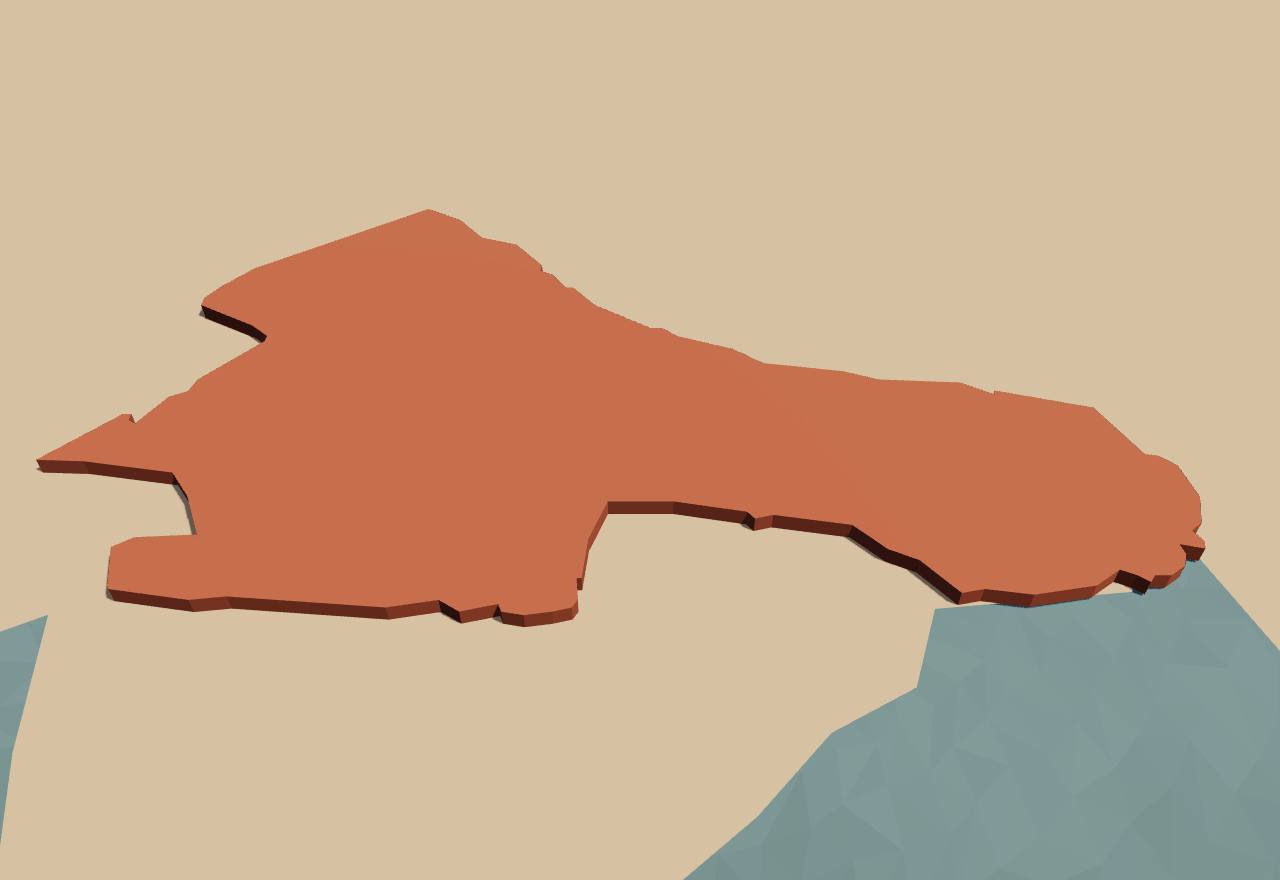
Harsha's empire (Cliopatria), 612–645
Territory: Cliopatria (CC BY 4.0), simplified. Height fixed: population not coded in Seshat.
Xuanzang's account: the elder brother Rājyavardhana “came to the throne as the elder brother”, and was lured to a conference and murdered by Śaśāṅka, king of Karṇasuvarṇa in eastern India. “The people having lost their ruler, the country became desolate.” 2 Consensus Texts
The great minister Bhaṇḍi then addressed “the assembled ministers”: “The destiny of the nation is to be fixed to-day.” He proposed the dead king's brother and asked that each “give his opinion on this matter, whatever he thinks.” “They were all agreed”, and the chief ministers and magistrates exhorted the prince to take authority. 2 Consensus Texts
Harsha hesitated and asked an image of Avalokiteśvara on the Ganges, which told him, in Xuanzang's telling: “Ascend not the lion-throne, and call not yourself Mahārāj.” He ruled as “the King's Kumāra”, the prince, with the title Śīlāditya. 2 Consensus Texts
With 5,000 elephants, 2,000 horse and 50,000 foot he “went from east to west subduing all who [were] not obedient”; after six years he had subdued “the Five Indies”, and his forces grew to 60,000 war elephants and 100,000 cavalry. The numbers are the pilgrim's. 2 Debated Texts
One king did not submit: in Mahārāṣṭra, Xuanzang writes, Pulakeśi's subjects “obey him with perfect submission”, and while Śīlāditya “has conquered the nations from east to west … the people of this country alone have not submitted to him.” 13 Consensus Texts
Bāṇa's life of Harsha names half a dozen kinds of vassal (sāmanta, mahāsāmanta, āptasāmanta, pradhānasāmanta, conquered and hostile ones). Sharma reads him as showing vassals who supplied the troops of Harsha's army and attended his court. 9 Debated Texts
Xuanzang found that “a commission of officers hold the land” in Harsha's home country, and observed elsewhere that families were not registered. Sharma takes this as the state leaving tax collection to intermediaries. 2,9 Debated Texts
How power worked King · Mixed · Council
How power worked
- Who rules
- King Consensus
Why?
- How chosen
- Mixed Debated
Why?
- Limits on power
- Council Debated
Why?
- Scale
- Empire Debated
Why?
- Claim to rule
- Divine mandate Debated
Why?
- Who has a say
- A narrow elite Consensus
Why?
The Palas750 CE – 1000 CEGauḍa (Bengal)
The Pala kings of Bengal and Bihar said their founder had been made king by the people to end an age of disorder. Their copper plates, issued from a Ganges war camp, grant villages to temples and monasteries alike.
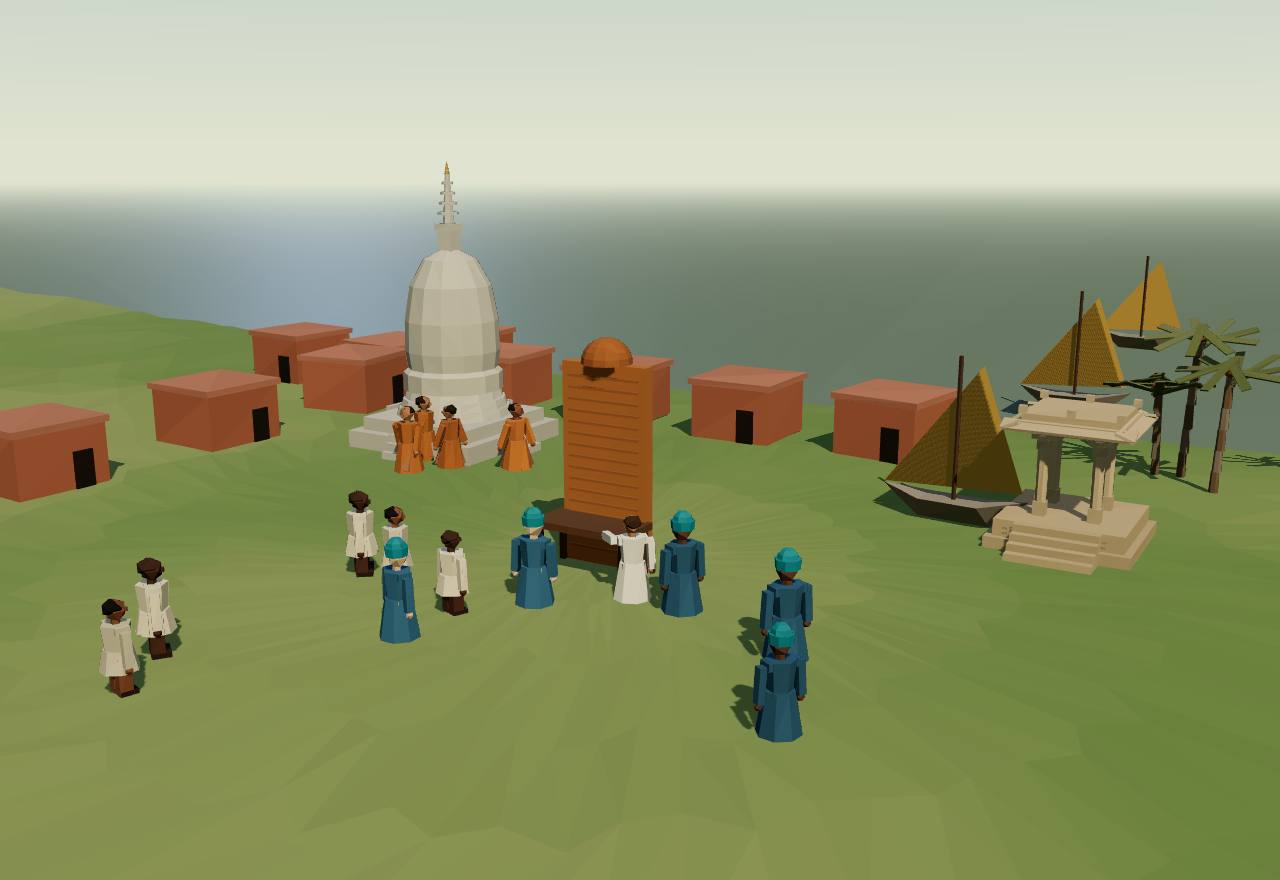
A Pala copper plate read out, c. 800
The Khalimpur plate calls Gopāla the king “whom the people made take the hand of Fortune, to put an end to the practice of fishes”: in Kielhorn's gloss, he “was made king by the people to put an end to a lawless state of things in which everyone was the prey of his neighbour” (mātsya-nyāya, the law of the fish). 5,14 Debated Texts
His son Dharmapāla, the plate says, “with a sign of his gracefully moved eye-brows … installed the illustrious king of Kanyakubja”, accepted by the Bhoja, Matsya, Madra, Kuru, Yadu, Yavana, Avanti, Gandhāra and Kīra kings, while “the delighted elders of Pañchāla” lifted his golden coronation jar. Kielhorn placed the event in the earlier part or middle of the ninth century. 5 Debated Texts
The grant is issued “from his royal camp of victory, pitched at Pāṭaliputra”, among fleets of boats on the Ganges, ranks of elephants, horses “presented by many kings of the north” and the foot-soldiers “of all the kings of Jambudvīpa, assembled to render homage to their supreme lord”. 5 Consensus Texts
The king, “the devout worshipper of Sugata” (the Buddha), grants four villages to a temple of Vishnu as Nunna-Nārāyaṇa, built by the Mahāsāmantādhipati (“chief of the great vassals”) Nārāyaṇavarman, whose request came through the crown prince Tribhuvanapāla. 5 Consensus Texts
The order is addressed to the kings, princes, ministers, army chiefs and district heads, to the officer for the king's sixth of the produce, to inspectors of elephants, horses, cows, goats and boats, and to the resident cultivators, who are told to pay the grantees all their dues. 5 Consensus Texts
Found in 1893 near Gaur in Maldah by a cultivator ploughing a paddy field, it is a single copper plate inscribed on both sides (33 and 29 lines), about 1 ft 4 in high, crowned by a seal in which a wheel between two deer stands above the legend Śrīmān Dharmapāladevaḥ. It is dated in the king's 32nd year. 5 Consensus Texts Excavation
Sharma counts the Palas' grants as making religious landlords: Nālandā, he notes, owned 200 villages in the later seventh century and gained five more under Devapāla, and Uddaṇḍapura, Vikramaśīla and Jagaddala “may similarly have possessed hundreds of villages”. 9 Debated Texts
Sulaiman's kingdom of “Ruhmi” goes to war “followed by about 50,000 elephants” and trades in cowries and a cotton so fine a dress passes through a ring; Altekar reads the Arab reports as making the Pala army famous for its elephants. Seshat has no coded record for the Pala empire. 12,11 Debated Texts
How power worked King · Mixed · Custom and kin
How power worked
- Who rules
- King Consensus
Why?
- How chosen
- Mixed Debated
Why?
- Limits on power
- Custom and kin Debated
Why?
- Scale
- Empire Debated
Why?
- Claim to rule
- Divine mandate Debated
Why?
- Who has a say
- A narrow elite Consensus
Why?
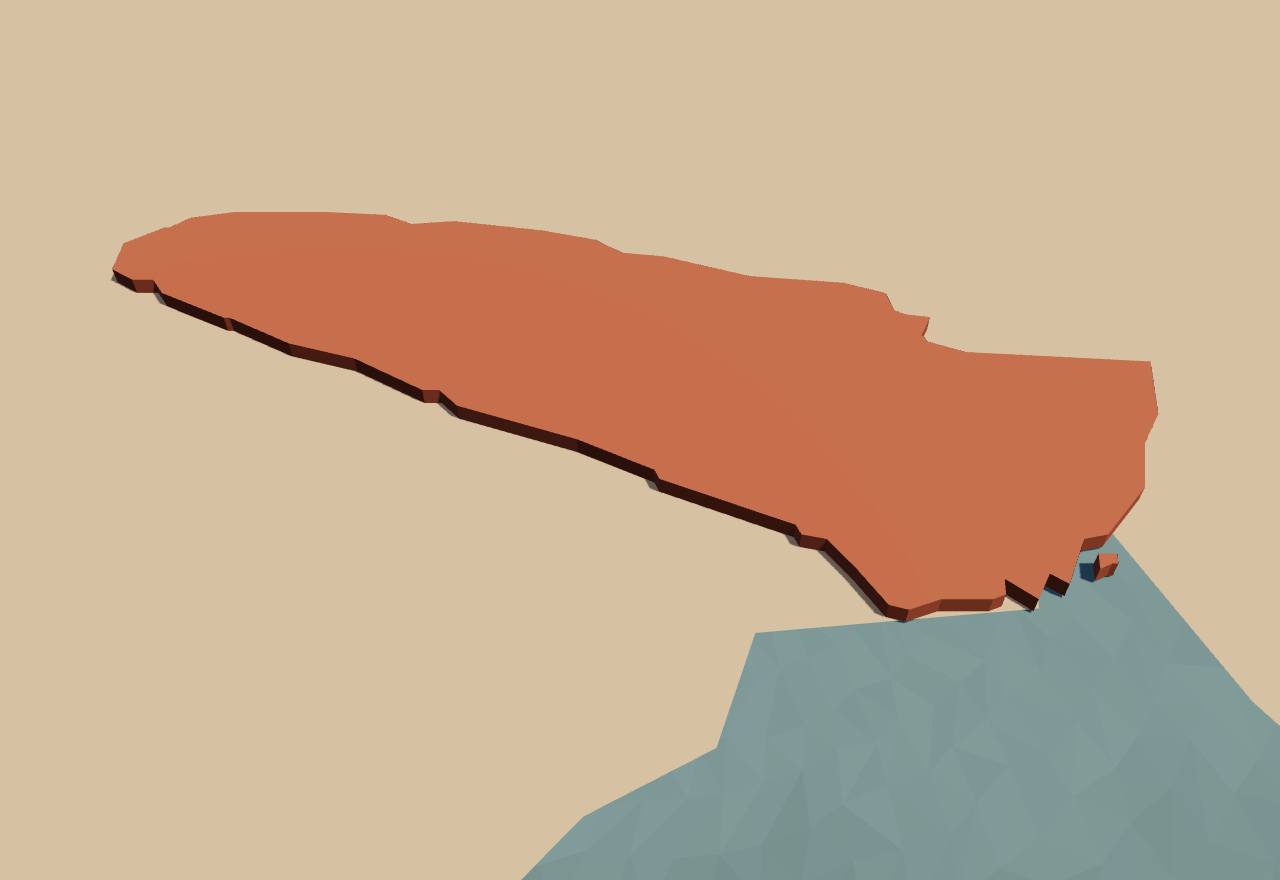
The Pala empire (Cliopatria), 800–950
Territory: Cliopatria (CC BY 4.0), simplified. Height fixed: population not coded in Seshat.
The Gurjara-Pratiharas750 CE – 1000 CEKanyakubja (Kannauj)
The Gurjara-Pratiharas came out of the west and made Kanauj their capital. Arab travellers knew their king as the master of India's finest cavalry and the sultans' sharpest enemy on the Multan frontier.
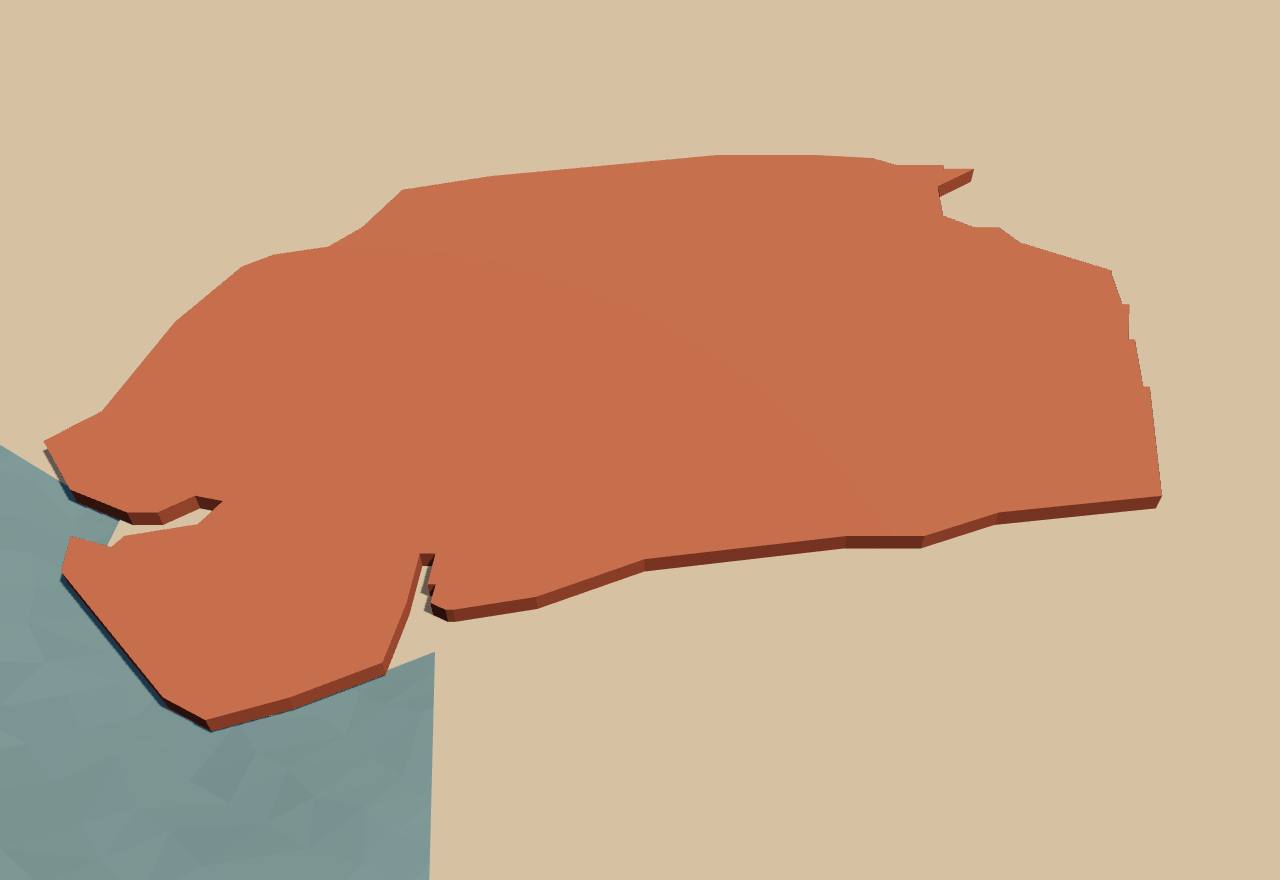
The Gurjara-Pratiharas (Cliopatria), 800–950
Territory: Cliopatria (CC BY 4.0), simplified. Height fixed: population not coded in Seshat.
Sulaiman (851) describes the king of “Jurz” as keeping numerous forces, “no other Indian prince has so fine a cavalry”, unfriendly to the Arabs, and adds: “There is no country in India more safe from robbers.” Elliot and Dowson note the name and Reinaud's suggestion that his seat was Kanauj. 12 Debated Texts
Al-Mas'ūdī gives the Baūra, king of Kanauj, four armies, one for each quarter of the wind, of 700,000 or 900,000 men each: the army of the north fights the prince of Multan, the army of the south the Balhara, king of Mankir. The figures are his. 12 Debated Texts
Altekar describes Nāgabhaṭa II recovering Pratihara power, defeating Dharmapāla and Chakrāyudha and subduing chiefs in Malwa and Gujarat, until Govinda III's northern expedition came against him in 806 or 807. 11 Consensus Texts
Pratihara kings, Sharma notes, granted villages with “all the income” to brahmins and temples: Mahendrapāla, son of Bhoja, in the bhukti of Śrāvastī; Mahīpāla near Banaras in 931. Their feudatories granted more, with fines and freedom from royal agents. 9 Debated Texts
In 1018–19 Maḥmūd of Ghazna reached Kanauj. Al-'Utbī says its king fled across the Ganges and the sultan took its seven forts in a day; Haig adds that the king, Rājyapāla, swore fealty to Maḥmūd and was then defeated and killed by a Chandella prince for it. 6,14 Debated Texts
After that submission, Haig writes, Pratihara power declined: Trilochanapāla moved to Bāri, and shortly before 1090 the Gahadavala Chandradeva took Banaras and Ayodhya and “extinguished the last vestiges” of their authority. 14 Consensus Texts
Seshat codes the Gurjara-Pratihara state (InGurjr, 810–1030) at about 1,000,000 km², with a largest settlement of 80,000 people to 950 and 72,000 after. Cliopatria draws the dynasty from 732 to 1039. 3 Seshat Debated Survey
How power worked King · Empire · Divine mandate · 2 unknown
How power worked
- Who rules
- King Consensus
Why?
- How chosen
- Unknown
Why?
None of the sources read says how Pratihara kings came to the throne, and Seshat leaves the panel's succession variables uncoded.
- Limits on power
- Unknown
Why?
No source read here describes a council, assembly or law that bound the Pratihara king.
- Scale
- Empire Debated
Why?
- Claim to rule
- Divine mandate Debated
Why?
- Who has a say
- A narrow elite Debated
Why?
The Rashtrakutas753 CE – 973 CEMānyakheṭa (Malkhed)
From the Deccan the Rashtrakutas overthrew the Chalukyas, cut a temple out of the hillside at Ellora and raided to the Ganges. To the Arab merchants their king, the Balhara, was the greatest in India.
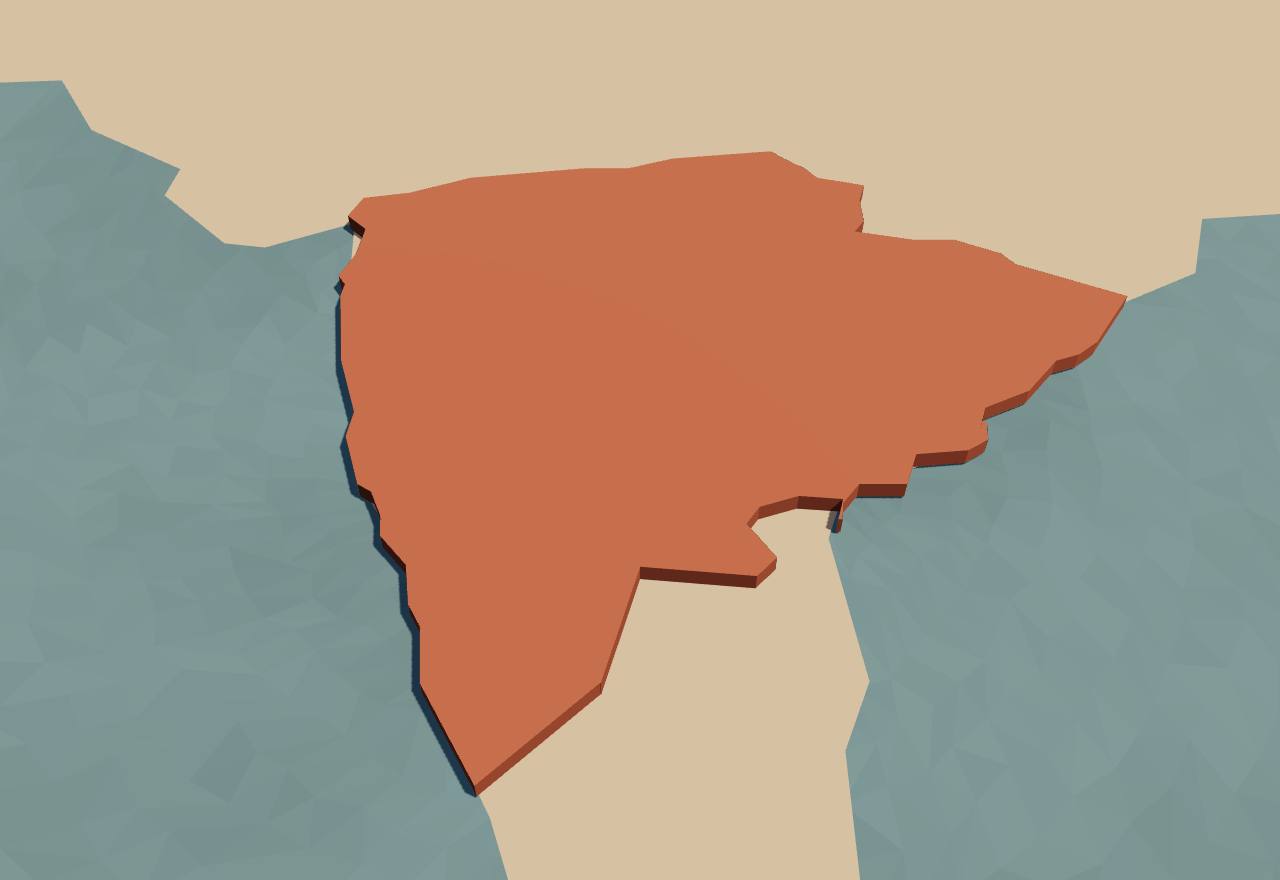
The Rashtrakutas (Cliopatria), 780–940
Territory: Cliopatria (CC BY 4.0), simplified. Height fixed: population not coded in Seshat.
Dantidurga's Samangad plates, dated Śaka 675 (753–54), say he “acquired supreme dominion by conquering Vallabha”, the Chalukya king. His uncle Krishna I followed him: one set of plates says Dantidurga died childless, another that he “fell into evil ways” and Krishna ousted him. 4 Debated Texts
Krishna I, Altekar writes, “caused to be excavated the Ellora Kailasa temple which is one of the architectural wonders of the world, since the whole structure is hewn out of solid rock.” 11 Consensus Texts Excavation
Sulaiman's Balhara, “the most eminent of the princes of India”, pays his troops regularly “as the practice is among the Arabs”, is the king most “partial to the Arabs”, and uses a title borne by every king of the dynasty. Altekar identifies the Balhara with the Rashtrakuta king. 12,11 Consensus Texts
Altekar concludes that “the kingship was thus hereditary … and the crown passed usually to the eldest, and sometimes to the ablest son”. Feudatories and ministers had “sometimes a determining voice”, as when Govinda II was deposed c. 780 or Amoghavarsha III installed c. 936, but statements that the feudatories requested a king to take the throne are “more figurative than real”. 11 Debated Texts
Rashtrakuta grants address “Rashtrapatis, Vishayapatis and Grāmakūṭas in the stated order”: the rāṣṭra was the largest unit and the viṣaya its subdivision, the reverse of the usage of their predecessors. 11 Consensus Texts
The last record of Kakka III, the Kardā plates of Śaka 894 (972–73), was issued at Mānyakheṭa. In Śaka 895 (973–74) he “succumbed to, and probably was slain by, Taila II of the Chalukya family; and the Rāṣṭrakūṭa dynasty then ceased to exist.” His daughter married Taila. 4 Consensus Texts
Seshat codes the Rashtrakuta empire (InRasht, 753–973) at 600,000 km² and 5–6 million people, with its capital at Malkhed, seven levels of administration, full-time bureaucrats and a “loose” degree of centralisation. Seshat Debated Survey
How power worked King · Heredity · Council
How power worked
- Who rules
- King Consensus
Why?
- How chosen
- Heredity Consensus
Why?
- Limits on power
- Council Debated
Why?
- Scale
- Empire Debated
Why?
- Claim to rule
- Divine mandate Debated
Why?
- Who has a say
- A narrow elite Consensus
Why?
1000 CE – 1206 CE
Turks, Rajputs and the Deccan
Around 1000 the north was a patchwork of kingdoms, most of them ruled by the clans later called Rajputs. From Ghazna in Afghanistan Turkish sultans raided across the Indus for thirty years; two centuries later the Ghurids stayed. In the Deccan the Chalukyas of Kalyani ruled through great vassals who in the end divided their kingdom.
Haig's survey of India about 1000 lists the Pratiharas at Kanauj, the Chandellas south of the Yamunā, the Chalukyas (Solankis) of Gujarat, the Kalachuris of Chedi, the Paramaras of Malwa, the Palas of Bengal and the Tomaras of Delhi, among others: no power held the whole north. 14 Consensus Texts
The Turkish dynasties were made by slave soldiers rising to rule: Alptigin had been a slave of the Samanids, Sabuktigin “the slave and son-in-law of Alptigin”, and Qutb-ud-dīn Aibak was the Ghurid Muḥammad's viceroy in India before he was freed and succeeded his master in the Indian conquests. 14 Consensus Texts
Sharma notes that the Brāhmaṇa Shāhis of the Panjab and the Chaulukyas of Gujarat “waged a bitter war against Mahmud of Ghazni, and the Caulukyas, Cāhamānas and Gāhaḍavālas fought Muhammad of Ghur”, while their own wars with each other went on. 9 Consensus Texts
In the Deccan the Chalukya house was restored by Taila II in 973–74 on the ruins of the Rashtrakutas, and lost again in the 1160s to its own commander-in-chief, Bijjala; by the 1190s the Hoysalas had crossed the Tungabhadrā and the Kākatīyas of Warangal held the east. 4 Consensus Texts
Cynthia Talbot maps Kakatiya overlordship by the inscriptions that acknowledge it, and finds that “local chiefs and princes” were later “superseded by a more humble class of warrior officers”, bound to the rulers by joint military service. 17 Debated Texts Survey
Seshat codes the Hoysala kingdom (1108–1346) as a “unitary state” of 100,000–200,000 km² with full-time bureaucrats, and the Kakatiya state at 100,000 km² by 1200 with a largest settlement of 83,000 people by 1300, but no full-time bureaucrats. SeshatDB Debated Survey
Ghaznavids and GhuridsDelhi
Maḥmūd of Ghazna raided north India again and again between 1000 and 1027 and kept the Panjab. The Ghurid Muḥammad came back after a defeat in 1191 and won at the same field the next year; his slave Aibak took Delhi.
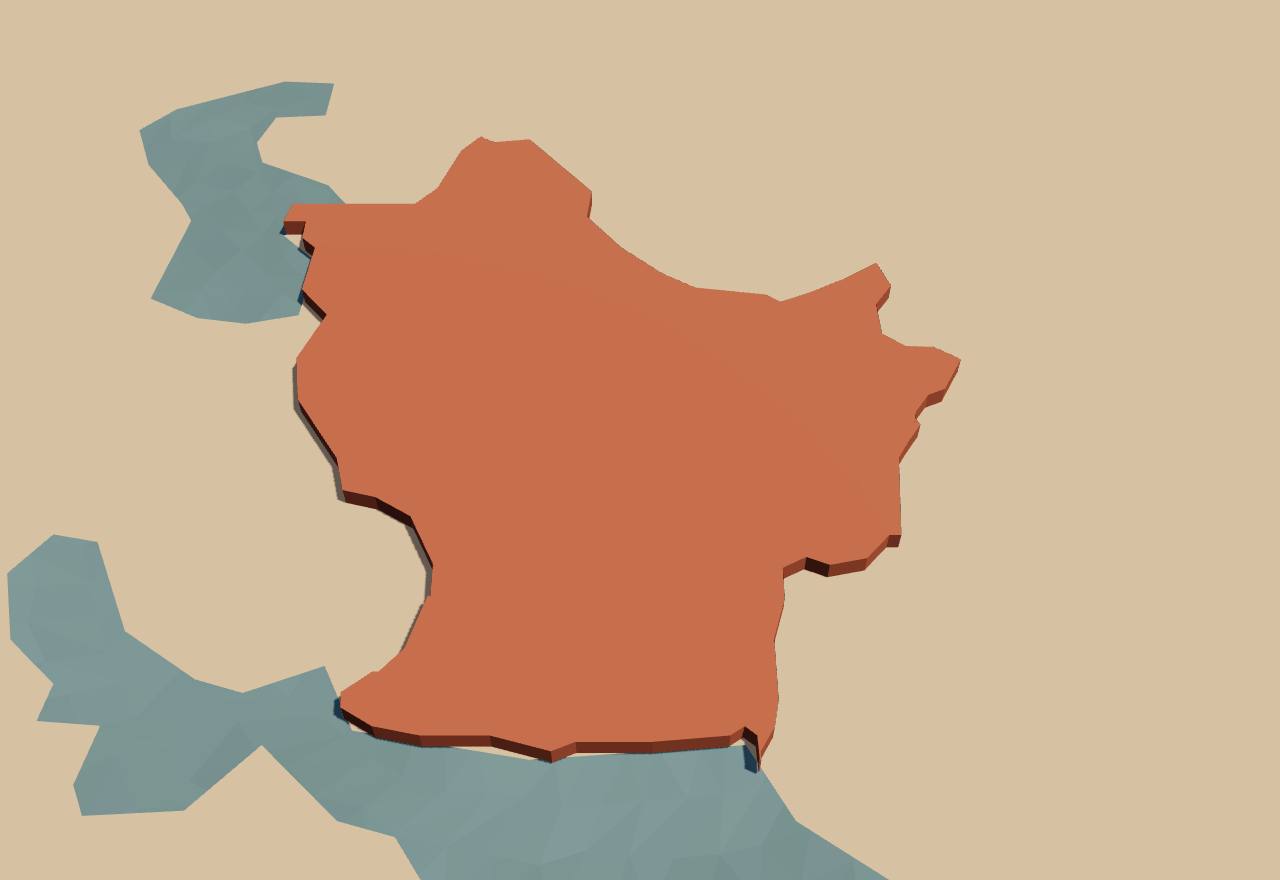
The Ghaznavid empire (Cliopatria), 1010–1180
Territory: Cliopatria (CC BY 4.0), simplified. Height fixed: population not coded in Seshat.
Alberuni, who lived at the Ghaznavid court, writes that Sabuktagin “chose the holy war as his calling, and therefore called himself Al-ghāzī”, and built the roads on which his son Maḥmūd “marched into India during a period of thirty years and more.” 19 Consensus Texts
He judged the result plainly: Maḥmūd “utterly ruined the prosperity of the country”, the Hindus were scattered “like atoms of dust”, and their survivors “cherish … the most inveterate aversion towards all Muslims”; Hindu learning had fled to Kashmir, Banaras and places “which our hand cannot yet reach”. 19 Consensus Texts
Ibn al-Athīr's account of Somnāt, the oldest extant, describes a temple endowed with “more than 10,000 villages”, served daily by a thousand brahmins, and Maḥmūd resolving to destroy its image after hearing that its god was displeased with the other idols he had broken. Ibn al-Athīr puts it in 414 H; Elliot's appendix prefers 416–17 H (1025–26). 6 Debated Texts
Minhāj-us-Sirāj tells how at Narain (Tarain), against Rai Pithaura (Prithvirāj) and “all the Rais of Hindustan”, the Ghurid sultan was wounded by Gobind Rai of Delhi and carried from the field; his army fled, and Pithaura besieged the fort of Sarhind for thirteen months. 6 Consensus Texts
The next year, by an informant's count of 120,000 armoured horsemen, the sultan returned; four divisions of 10,000 light horse archers harassed Pithaura's army on every side until it broke. Pithaura was captured and killed, and Ajmer, the Siwalik hills, Hansi and Sarsuti were taken, “in the year 588 H. (1192 A.D.)”. 6 Consensus Texts
The sultan left his slave Qutb-ud-dīn in command; he took Meerut and Delhi and, the following year, the fort of Kol. Lane-Poole sums up the Ghurid conquest: the sultan “appointed his slave Kutb-ad-dīn Aybak to act as his viceroy at Dehlī”. 6,7 Consensus Texts
Cliopatria draws the Ghaznavid Empire from 962 to 1209 and the Ghurid dynasty from 1152 to 1209; neither has a Seshat panel among this page's ids. 3 Debated Survey
How power worked Sultan · Mixed · Empire · 1 unknown
How power worked
- Who rules
- Sultan Consensus
Why?
- How chosen
- Mixed Debated
Why?
- Limits on power
- Unknown
Why?
The Ghaznavid and Ghurid sources read here are campaign narratives; they do not describe what bound the sultan.
- Scale
- Empire Debated
Why?
- Claim to rule
- Divine mandate Debated
Why?
- Who has a say
- A narrow elite Debated
Why?
The Rajput kingdomsKanauj (Gahadavala seat)
Rajput clans ruled most of north India between the Pratiharas and the sultans: Gahadavalas at Kanauj and Banaras, Chauhans at Ajmer, Paramaras in Malwa, Chandellas in Bundelkhand. They fought each other as well as the Turks.
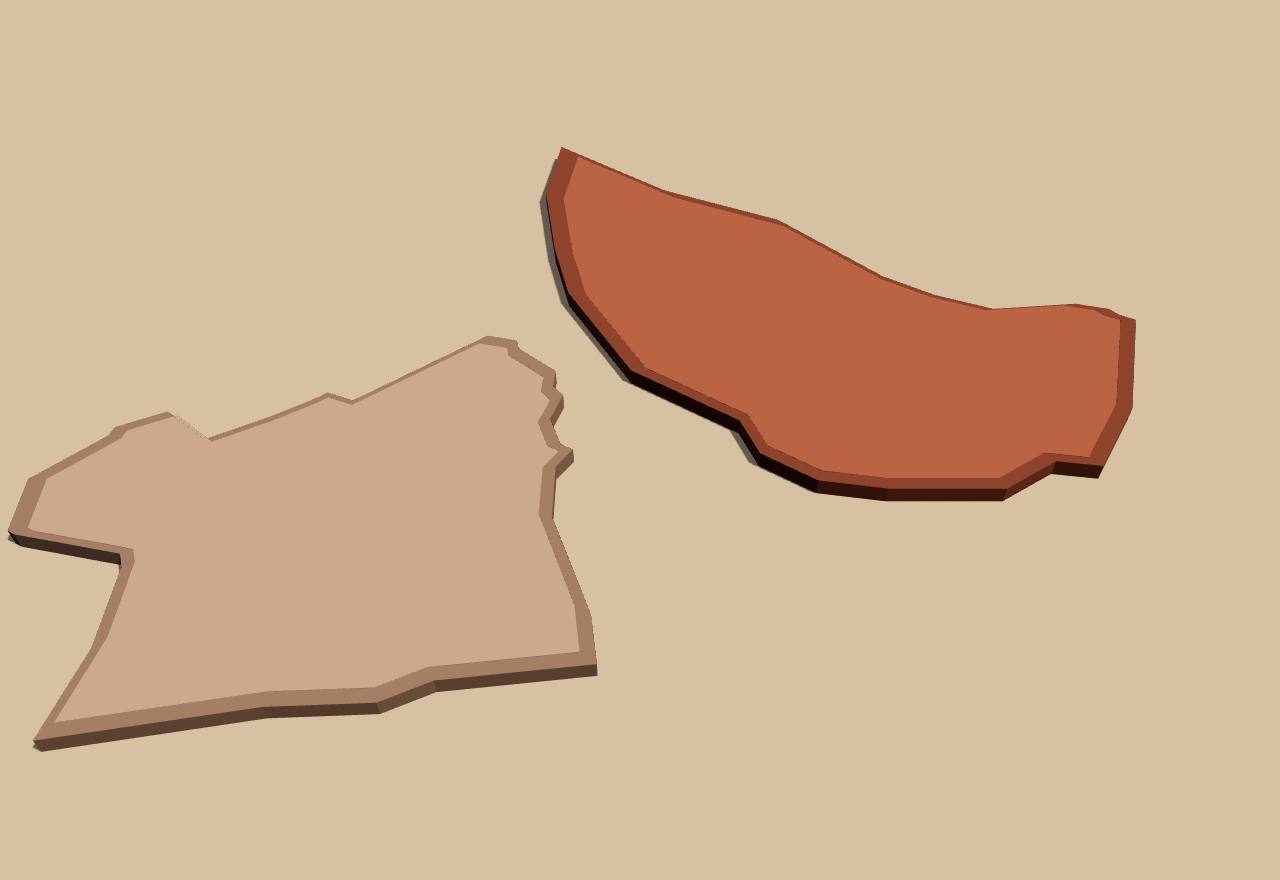
The Gahadavala and Paramara kingdoms (Cliopatria), 1100–1190
Territory: Cliopatria (CC BY 4.0), simplified. Height fixed: population not coded in Seshat.
Haig describes the confederacy of 1001 against Maḥmūd: Anandpal of the Panjab, the Chauhan Visaladeva of Ajmer in chief command, the Tomara of Delhi, Rājyapāla of Kanauj and others shared “the disastrous defeat”. In 1021 the Chandella Ganda's confederate army is put at 36,000 horse, 105,000 foot and 640 elephants. 14 Debated Texts
Shortly before 1090 Chandradeva of the Gahadavala (Gaharwar) clan took Banaras and Ayodhya, once part of Kanauj, and is said to have reached Delhi and made its Tomaras his vassals. 14 Consensus Texts
In Malwa the Paramaras, whose line was “honourably distinguished by its love for and encouragement of learning”, lost Bhoj, “the learned king of Malwa”, to an attack by the Kalachuri Karṇa and Bhīm of Gujarat in 1060. 14 Consensus Texts
Sharma calls the twelfth century “a tripartite struggle between the Candellas, the Gāhaḍavālas, and the Cāhamānas for supremacy over Northern India”: Prithvirāja the Chauhan sacked the Chandella seat of Mahoba, and the Paramaras fought the Chaulukyas and the Chauhans. 9 Consensus Texts
Sharma reads the Gahadavala grants as loading peasants with “the formidable list of taxes imposed on them under the Gāhaḍavālas”, and counts the dynasty's own feudatories, such as the Khayaravālas of Japla. 9 Debated Texts
The last great Gahadavala, Jayachandra (Jaichand), was killed at Chandwar on the Yamunā when, as Haig tells it, “a fortunately aimed arrow struck Jaichand in the eye”; Minhāj dates the battle 590 H and has the victors take more than 300 elephants. 14,6 Consensus Texts
Seshat codes the Gahadavala kingdom (InGhdvl, 1085–1193) at 300,000–350,000 km² with a largest settlement of 80,000–92,000 people and three to seven levels of administration. Cliopatria draws the Gahadavala dynasty from 1085 to 1201 and the Paramaras from 980 to 1235. 3 Seshat Debated Survey
How power worked King · Heredity · Territorial state · 1 unknown
How power worked
- Who rules
- King Consensus
Why?
- How chosen
- Heredity Consensus
Why?
- Limits on power
- Unknown
Why?
No source read here describes a council or law that bound a Rajput king of this period.
- Scale
- Territorial state Debated
Why?
- Claim to rule
- Divine mandate Debated
Why?
- Who has a say
- A narrow elite Consensus
Why?
The Chalukyas of KalyaniKalyāṇa (Basavakalyan)
In the western Deccan the Chalukyas of Kalyani ruled for two centuries through great vassals, the mahāmaṇḍaleśvaras, who governed named districts in their name. One of them took the throne; the Hoysalas, Yadavas and Kakatiyas inherited the rest.
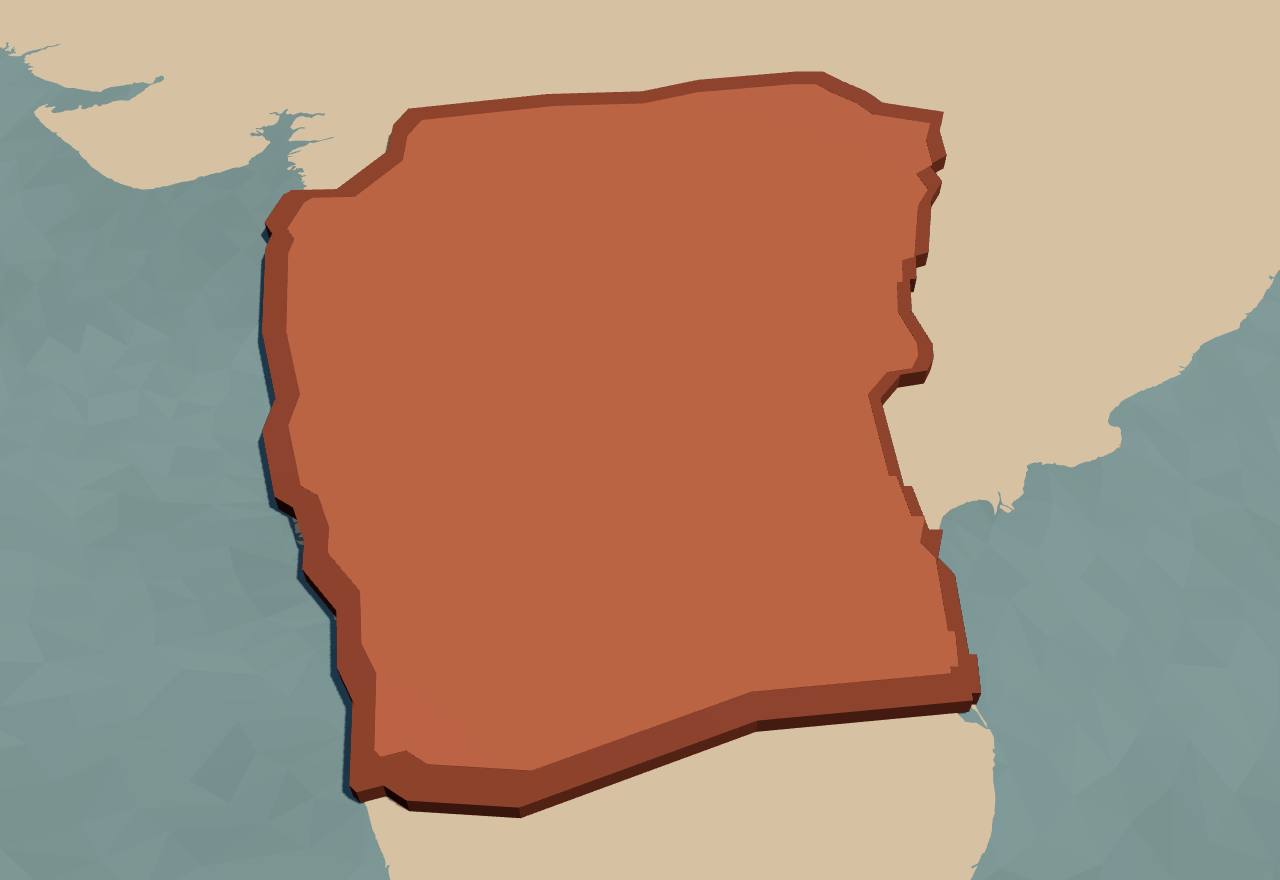
The Chalukyas of Kalyani (Cliopatria), 1000–1150
Territory: Cliopatria (CC BY 4.0), simplified. Height fixed: population not coded in Seshat.
Taila II, Chalukya inscriptions say, “uprooted the Rattas” and lifted up “the royal fortunes of the kingly favourites of the Chālukya family, which had been made to sink down by the deceitful practices of the Rāṣṭrakūṭas”. 4 Consensus Texts
Somesvara I's inscriptions claim that he “beautified Kalyāṇa so that it surpassed in splendour all the other cities of the earth”; Kalyāṇa remained the capital into the 1150s. 4 Consensus Texts
Vikramāditya VI, who came to the throne in Śaka 997 (1076), “abolished that (era) which has the name of Śaka, and made that (era) which has the Chālukya figures”: a king who dated time from his own reign. 4 Consensus Texts
The inscriptions name the great vassals and officers who governed for the king and the districts they held, such as the Sinda Mahāmaṇḍaleśvara over “the Kisukāḍ Seventy, the Bāgaḍage Seventy”, or a daṇḍanāyaka over “the Belvola Three-hundred”. 4 Debated Texts
Taila III's commander-in-chief, the Mahāmaṇḍaleśvara Bijjala of the Kalachuri family, “abused the trust reposed in him, and used his sovereign's own armies to deprive the latter of his kingdom” in 1161–62, then took the full regal titles. 4 Consensus Texts
A Kakatiya inscription at Anamkonda boasts that Prolarāja “in an instant made captive in war the glorious Tailapadeva, the ornament of the Chālukyas … and then at once … let him go”: the vassals of the east were already independent powers. 4 Consensus Texts
Somesvara IV restored “the semblance of a Chālukya sovereignty” in 1182–83, thanks to his general Barmarasa; his last inscription is dated Śaka 1111 (1189–90), after which “the power of the Western Chālukyas, as a dynasty, may be considered to have been then finally extinguished.” The Hoysalas under Ballāla II had crossed the Tungabhadrā. 4 Consensus Texts
Seshat codes the Chalukyas of Kalyani (InChaKl, 973–1191) as a “unitary state” with capitals at Mānyakheṭa and Kalyāṇa, a population of 7–8 million around 1000, a largest settlement of 50,000–125,000 and five or six levels of administration. Seshat Debated Survey
How power worked King · Heredity · Custom and kin
How power worked
- Who rules
- King Consensus
Why?
- How chosen
- Heredity Consensus
Why?
- Limits on power
- Custom and kin Debated
Why?
- Scale
- Empire Debated
Why?
- Claim to rule
- Divine mandate Debated
Why?
- Who has a say
- A narrow elite Consensus
Why?
1206 CE – 1336 CE
The Delhi Sultanate
A slave general of the Ghurids made Delhi a kingdom of its own in 1206. For a century its sultans were chosen, raised and killed by an elite of Turkish slave officers, while revenue assignments, the iqṭā', paid an army that carried Delhi's rule to Bengal and the Deccan.
Terms: North India and the Deccan: Guptas to Vijayanagara: The Delhi Sultanate
- iqṭā' An assignment of revenue “conditional on future service” (Moreland); in the thirteenth century also a province, as in Barani's “twenty iqṭā's”. 18
- muqṭī' The holder of an iqṭā' charge: a governor appointed, moved and audited by the sultan, who kept troops and sent the surplus revenue to Delhi. 18
- Hazār Sutūn “A thousand pillars”: the wooden-pillared audience hall of Muḥammad bin Tughluq's palace at Delhi, as Ibn Battuta describes it. 20
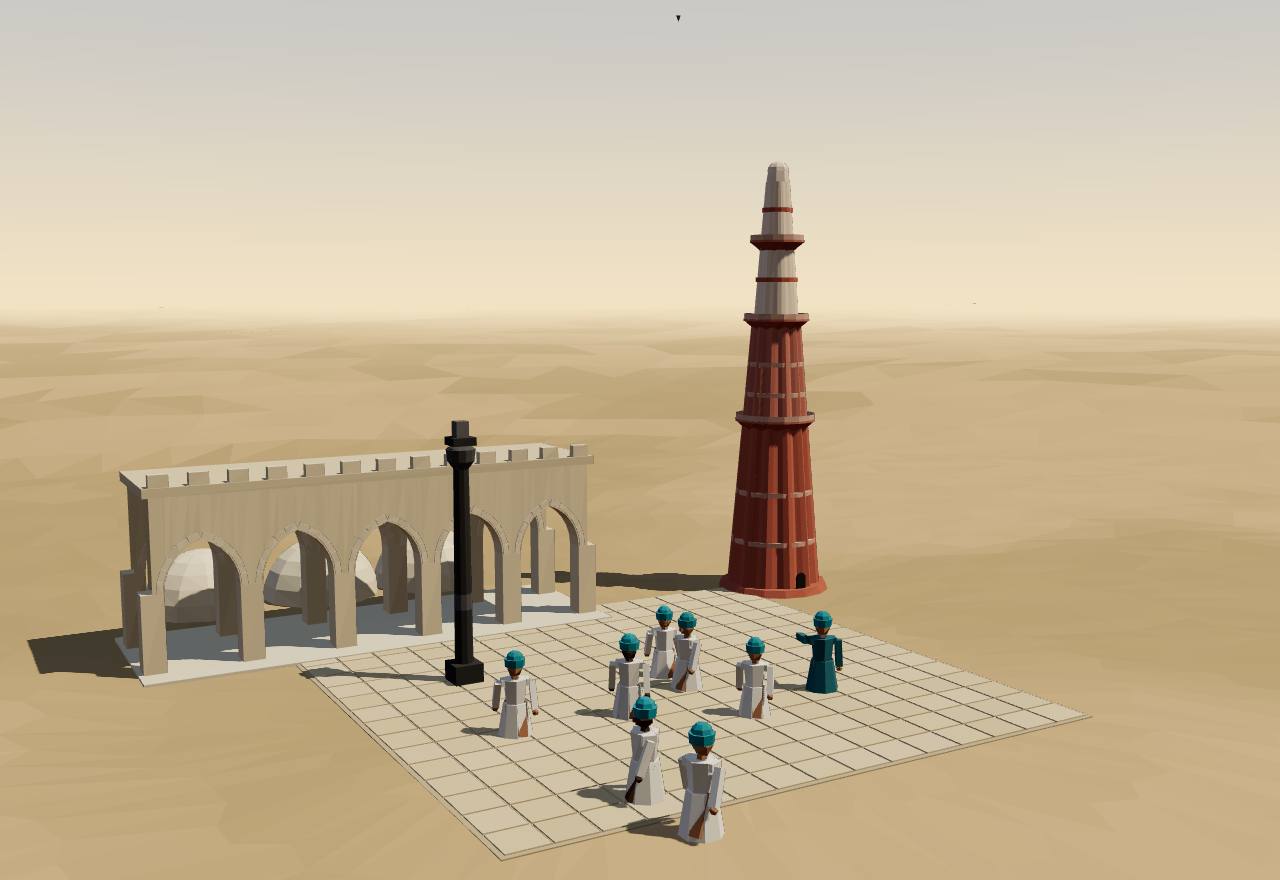
The mosque at Delhi with its iron pillar and red minaret, 1330s
On the death of his master in 1206, Lane-Poole writes, the slave Qutb-ud-dīn Aibak “proclaimed himself sovereign of Hindustan, and founded the first Mohammadan dynasty which ruled exclusively in India”, called the Slave Kings. 7 Consensus Texts
When Aibak died in a fall at polo, “the nobles and princes of Hindustan” set his son Ārām Shāh on the throne; “the chief men of Dehli” then invited Iltutmish, Aibak's son-in-law and foremost slave, from Badaun “and raised him to the throne”. He defeated Ārām Shāh before the city. 6,14 Consensus Texts
Under Iltutmish “the leading Turks formed themselves into a college of forty, which divided among its members all the great fiefs … and all the highest offices” (Haig). Barani introduces Balban as “one of the Shamsi slaves” who “belonged to the band of Turk slaves which was known as ‘The Forty’”. 14,21 Consensus Texts
In Rabī' I 626 H (February 1229) envoys “bringing splendid robes from the seat of the Khilafat” reached Delhi, and the king, his sons and nobles were “honoured with robes sent from the metropolis of Islam”. Lane-Poole reads it as the caliph's first formal recognition of a separate Muslim kingdom of India. 6,7 Consensus Texts
Iltutmish named his daughter Raziya his heir. When his servants asked what wisdom there could be “in making a woman the heir”, he answered that his sons were unfit. After her brother's brief reign “the guards and Turkish nobles” raised her to the throne; she reigned three years and six days and was killed in 1240. 6 Consensus Texts
Moreland: “The ordinary meaning of Iqta in Indo-Persian literature is an Assignment of revenue conditional on future service.” Troopers held such assignments as iqṭādārs; a muqṭī' held a whole charge, one of “the twenty iqtas” into which Barani divides the bulk of the kingdom. 18 Consensus Texts
Moreland denied that the muqṭī's were feudal barons: almost every one in the mid-thirteenth century “began his career as a royal slave”, and could be appointed, moved “from Lahore to Lakhnauti at the King's discretion”, fined or dismissed. The muqṭī' kept troops whose pay the king fixed, remitted the surplus revenue and was audited by the revenue ministry: “essentially a bureaucracy”. 18 Debated Texts
Accession by force became common. In 1296 'Alā'-ud-dīn Khaljī had his uncle Jalāl-ud-dīn killed and was proclaimed in his camp; Barani says he won over the maliks and amirs “by a large outlay of money” and that the people of Delhi “easily forgot the murder of the late Sultan”. 21,14 Consensus Texts
'Alā'-ud-dīn fixed the revenue demand at “one-half of the produce without any allowances or deductions”, abolished the perquisites of the rural chiefs, assessed by measurement and added a grazing tax. Moreland judges that the demand cannot have left the ordinary peasant any substantial surplus. 18 Consensus Texts
'Alā'-ud-dīn's general Malik Kāfūr “seized Deogiri and Warangal, and founded a Deccan province”; Muḥammad bin Tughluq later tried “to transplant by force both court and population” to Devagiri, renamed Daulatabad (Lane-Poole). 7 Consensus Texts
Ibn Battuta saw the cathedral mosque of Delhi, built on the site of “an idol temple … converted into a mosque on the conquest of the city”: in its centre an iron column “thirty cubits high” that no one knew the metal of, in its court a minaret of red stone “which has no parallel in the lands of Islam”, and the stump of a larger one Sultan Qutb-ud-dīn had begun. 20 Consensus Texts
The minaret was begun while Qutb-ud-dīn was still viceroy (his titles are on the lowest band) and finished by Iltutmish, whose inscriptions fill the second and third storeys. As first built it had four storeys and stood some 225 feet; the top storey Ibn Battuta saw was replaced by two smaller ones, faced with marble, after lightning struck under Fīrūz Shāh (Haig). The stage shows the four-storey tower. 14 Consensus Texts Excavation
He describes the palace at Delhi: three gates, scribes noting who came at which hour for the sultan's evening report, and the audience hall Hazār Sutūn, “a thousand pillars”, of carved wood, where the sultan sat cross-legged on a throne on a white dais while chamberlains cried “Bismillah” as each man bowed, and elephants trained to bow stood on either side. 20 Consensus Texts
Muḥammad bin Tughluq made Ibn Battuta Mālikī qāḍī of Delhi, gave him villages yielding 5,000 dinars a year and a pension of 12,000 dinars. “This king is of all men the fondest of making gifts and of shedding blood,” he wrote, and also that the sultan once walked unarmed to a qāḍī's court and accepted judgment against himself. 20 Consensus Texts
Sunil Kumar argues that the Persian chronicles cast Delhi as a “sanctuary of Islam” against the Mongols while ignoring that “a large number of Sultanate elites and monarchs were of Turkish/Mongol ethnicity or had a history of prior service in their armed contingents”, and that steppe traditions were alive in fourteenth-century Delhi. 22 Debated Texts
Seshat codes the Delhi sultanate (InDelh*, 1206–1526) at 2,800,000–3,200,000 km² at its height, as a “confederated state” with nine levels of administration, full-time bureaucrats, a largest settlement of 200,000–400,000 and rulers legitimated by gods but not themselves divine; its peak is put at 1296–1316. Seshat Debated Survey
How power worked Sultan · Mixed · Custom and kin
How power worked
- Who rules
- Sultan Consensus
Why?
- How chosen
- Mixed Debated
Why?
- Limits on power
- Custom and kin Debated
Why?
- Scale
- Empire Consensus
Why?
- Claim to rule
- Divine mandate Debated
Why?
- Who has a say
- A narrow elite Consensus
Why?
How Delhi's sultans came to power, and how they left
Data: Lane-Poole 1894's regnal years; Minhaj, Barani, Afif and Haig 1928 on each accession
Every sultan of Delhi from Aibak to Ibrāhīm Lodī, by how he came to the throne and how his reign ended. Of 32 reigns, 15 began when nobles or commanders raised a candidate and 8 by a son or kinsman succeeding; 7 were taken by killing a ruler or by war. 14 of the 32 ended in murder or deposition. Years are Lane-Poole's A.D. equivalents of the hijri year of each accession, so a reign can look a year early beside a chronicle's day.
32 accessions: 8 kinsman, 15 nobles, 2 slave officer, 4 coup, 3 war; median reign 5 years. Ended: 14 died in office, 6 deposed, 8 killed, 1 abdicated, 2 conquered, 1 not known.
Marks at the end of a bar: ○ died in office · × killed · ▽ deposed · | abdicated · □ conquered
Show the table: Sultans of Delhi, 1206–1526
| Ruler | Years | Came to power | Reign ended | Source |
|---|---|---|---|---|
| Qutb-ud-dīn Aibak | 1206 CE – 1210 CE | Slave officer | died in office (the Ghurid sultan's slave and viceroy; killed by a fall at polo) | 7,6 |
| Ārām Shāh | 1210 CE – 1210 CE | Nobles | deposed (set up by the nobles at Lahore; defeated and captured by Iltutmish) | 7,6,14 |
| Iltutmish | 1210 CE – 1235 CE | Nobles | died in office (Aibak's slave and son-in-law, invited by the chief men of Delhi) | 7,6,14 |
| Rukn-ud-dīn Fīrūz | 1235 CE – 1236 CE | Kinsman | deposed (the eldest son, placed by the princes and nobles; died in confinement) | 7,6 |
| Raziya | 1236 CE – 1239 CE | Nobles | killed (named heir by her father, raised by the guards and Turkish nobles) | 7,6 |
| Mu'izz-ud-dīn Bahrām | 1239 CE – 1241 CE | Nobles | killed (raised by the generals; slain when the nobles took the city) | 7,6,14 |
| 'Alā'-ud-dīn Mas'ūd | 1241 CE – 1246 CE | Nobles | deposed (chosen by the nobles at Iltutmish's tomb; imprisoned and died) | 7,6,14 |
| Nāṣir-ud-dīn Maḥmūd | 1246 CE – 1265 CE | Nobles | died in office (invited by the princes and nobles) | 7,6,14 |
| Ghiyāth-ud-dīn Balban | 1265 CE – 1287 CE | Slave officer | died in office (one of the Forty and the late king's regent) | 7,21,14,18 |
| Mu'izz-ud-dīn Kaiqubād | 1287 CE – 1290 CE | Nobles | killed (Balban's grandson, enthroned by counsellors who set aside the heir Balban named; his infant son Kayumars was enthroned briefly in 1290) | 7,21,14 |
| Jalāl-ud-dīn Fīrūz Khaljī | 1290 CE – 1295 CE | Coup | killed (the Khalji commander; Kaiqubad was killed in his palace) | 7,21,14 |
| Rukn-ud-dīn Ibrāhīm | 1295 CE – 1295 CE | Kinsman | deposed (placed on the throne by his mother; fled to Multan) | 7,21 |
| 'Alā'-ud-dīn Khaljī | 1295 CE – 1315 CE | Coup | died in office (had his uncle killed and won the nobles with gold) | 7,21,14 |
| Shihāb-ud-dīn 'Umar | 1315 CE – 1316 CE | Kinsman | deposed (a child enthroned by Malik Kāfūr under the late sultan's will; blinded) | 7,21,14 |
| Qutb-ud-dīn Mubārak | 1316 CE – 1320 CE | Coup | killed (regent for his brother, then blinded him and took the throne) | 7,21,14 |
| Khusrau Khān | 1320 CE – 1320 CE | Coup | killed (his followers killed Mubarak in the palace; beheaded after his defeat) | 7,21,14 |
| Ghiyāth-ud-dīn Tughluq | 1320 CE – 1324 CE | War | not known (a frontier governor who defeated Khusrau; crushed when a pavilion roof fell, accident or design) | 7,21,14 |
| Muḥammad bin Tughluq | 1324 CE – 1351 CE | Kinsman | died in office (the heir apparent; died on the Indus near Thatta) | 7,21 |
| Fīrūz Shāh Tughluq | 1351 CE – 1388 CE | Nobles | died in office (asked by the chief men in camp, as nephew and legatee) | 7,21,14 |
| Tughluq Shāh II | 1388 CE – 1388 CE | Kinsman | killed | 7,14 |
| Abū Bakr Shāh | 1388 CE – 1389 CE | Nobles | deposed (acclaimed by the nobles at Delhi; driven out to Mewat) | 7,14 |
| Nāṣir-ud-dīn Muḥammad Shāh | 1389 CE – 1392 CE | War | died in office (proclaimed at Samana, entered Delhi with his army) | 7,14 |
| Sikandar Shāh | 1392 CE – 1392 CE | Kinsman | died in office (fell sick almost at once) | 7,14 |
| Nāṣir-ud-dīn Maḥmūd Shāh | 1392 CE – 1412 CE | Nobles | died in office (a rival, Nusrat Shah, claimed the throne 1394–99; Timur sacked Delhi in 1398) | 7,14 |
| Daulat Khān Lodī | 1412 CE – 1414 CE | Nobles | conquered (the nobles transferred their allegiance to him; besieged and imprisoned by Khizr Khan) | 7,14 |
| Khizr Khān | 1414 CE – 1421 CE | War | died in office (founder of the Sayyids) | 7,14 |
| Mubārak Shāh | 1421 CE – 1433 CE | Kinsman | killed (designated by his father; murdered at his minister's instigation) | 7,14 |
| Muḥammad Shāh | 1433 CE – 1443 CE | Nobles | died in office (his nephew, raised by the nobles at Delhi) | 7,14 |
| 'Ālam Shāh | 1443 CE – 1451 CE | Kinsman | abdicated (resigned the throne to Bahlul and retired to Budaun) | 7,14 |
| Bahlūl Lodī | 1451 CE – 1488 CE | Nobles | died in office (heir designate of a king who abdicated, and the choice of a faction) | 7,14 |
| Sikandar Lodī | 1488 CE – 1517 | Nobles | died in office (raised by a minority of the nobles against strong opposition) | 7,14 |
| Ibrāhīm Lodī | 1517 – 1526 | Nobles | conquered (the eldest son, the Lodi nobles' choice; killed at Panipat by Babur's army) | 7,14 |
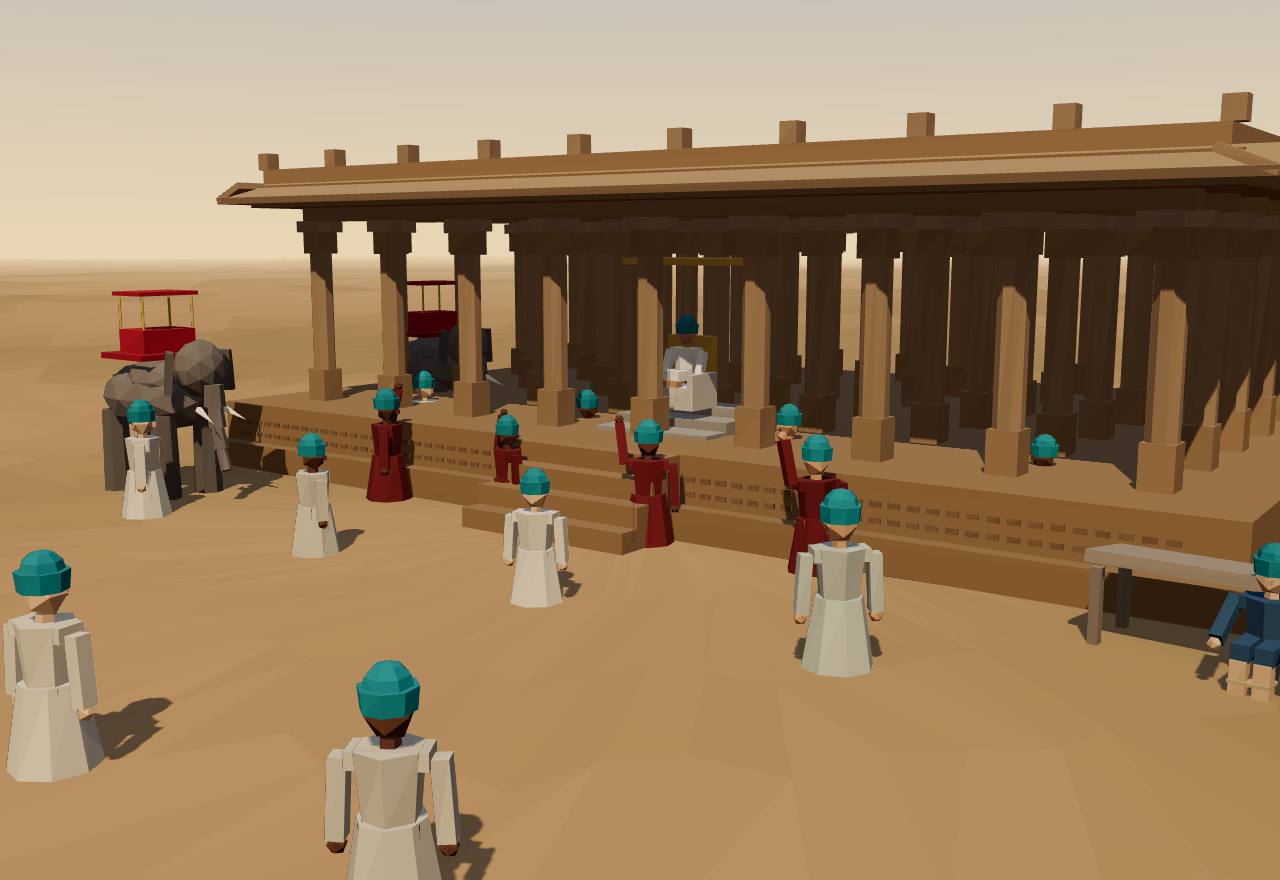
The sultan's audience in the hall of a thousand pillars, Delhi, 1330s
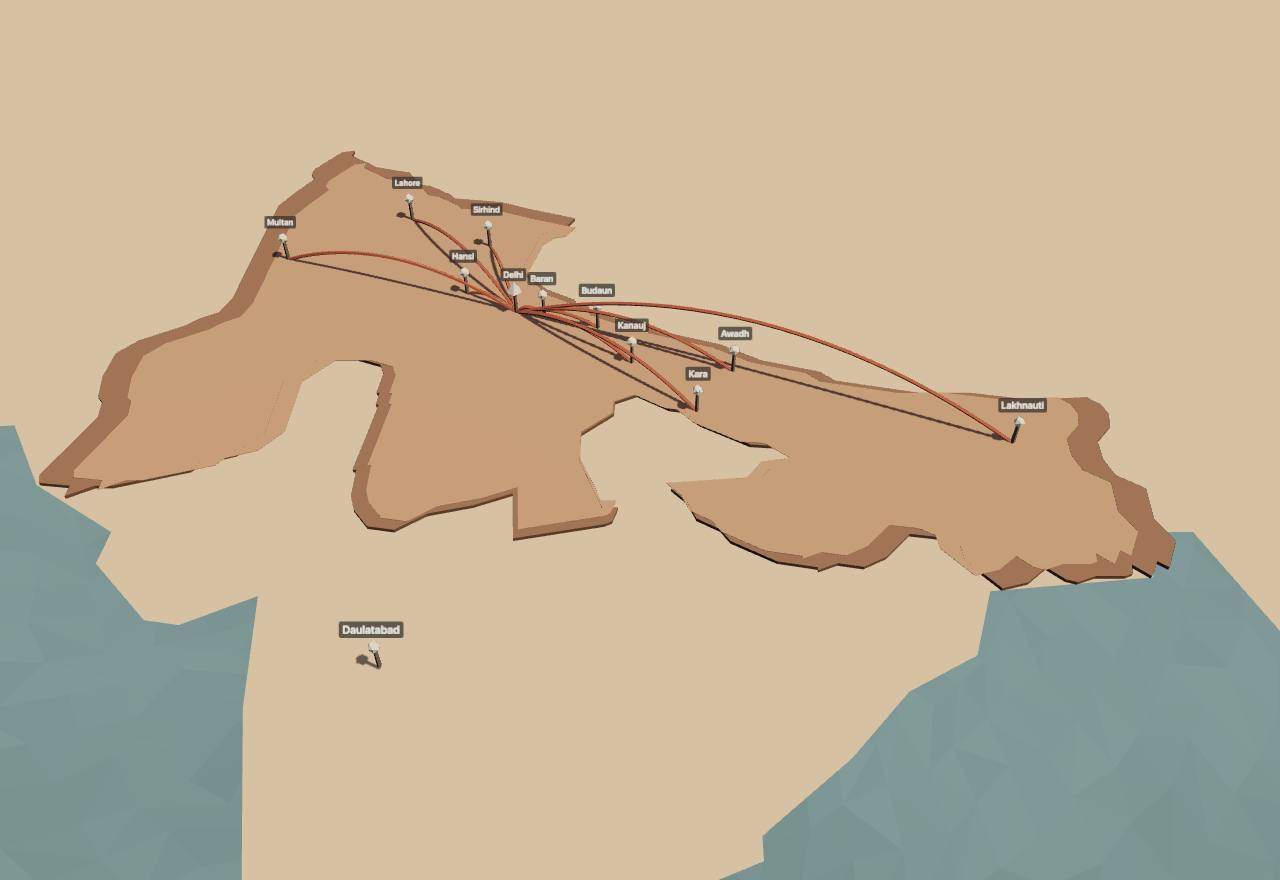
Iqṭā' charges and Delhi: where the slave officers governed, 13th–14th century
Places: 12 cited sites and 10 cited links over Cliopatria (CC BY 4.0) territories, drawn flat and low. Delhi · Budaun · Lakhnauti · Baran · Sirhind · Lahore · Kanauj · Awadh · Hansi · Multan · Kara · Daulatabad 23,20,18,14,7
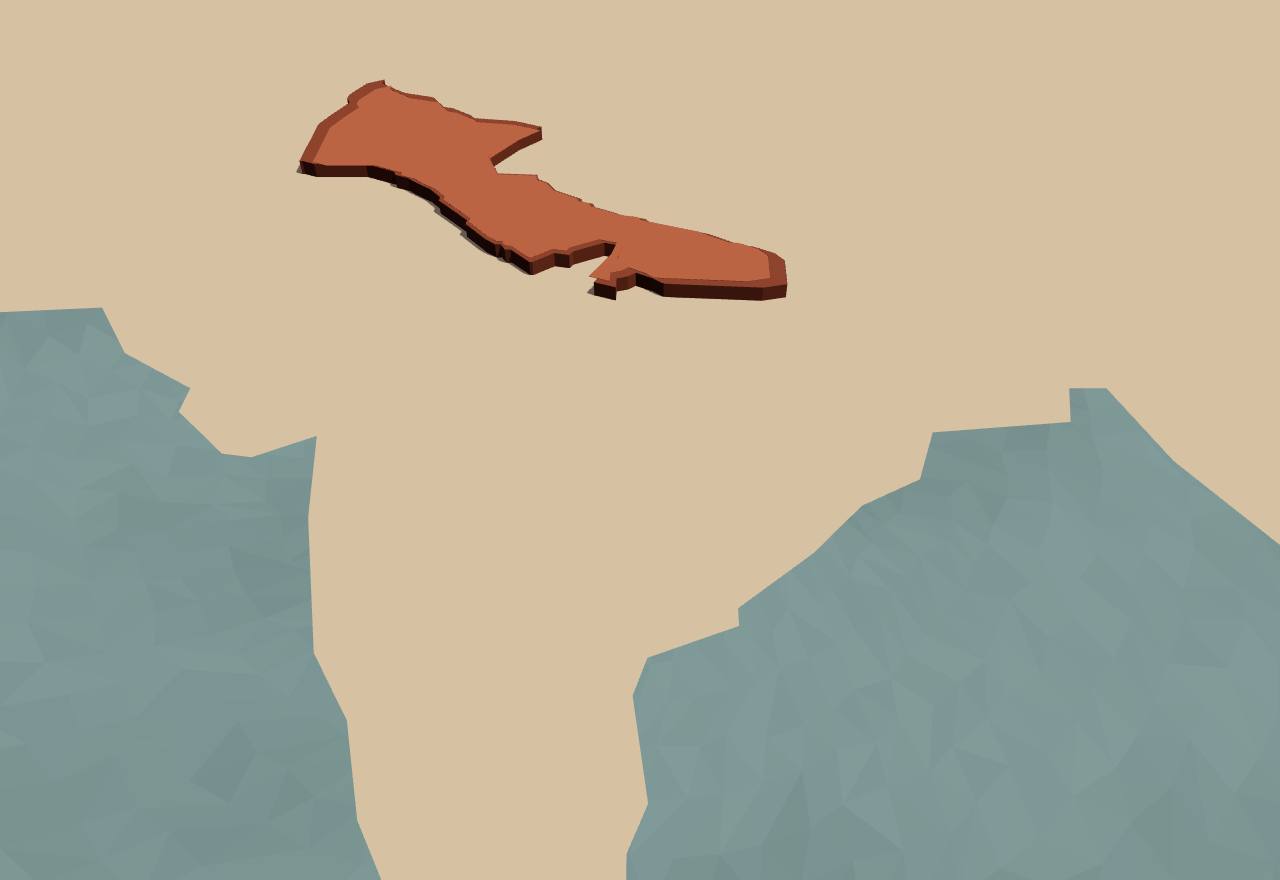
The Delhi sultanate (Cliopatria), 1210–1333
Territory: Cliopatria (CC BY 4.0), simplified. Height fixed: population not coded in Seshat.
1336 CE – 1565 CE
Vijayanagara and the sultanates
Delhi's hold on the south broke within a generation. Two states rose from the wreck in the Deccan: Vijayanagara on the Tungabhadrā and the Bahmani sultanate to its north, at war with each other for a century and a half. In the north the sultanate of Delhi shrank to a kingdom among many until Babur's guns at Panipat.
From their capital on the Tungabhadrā, the kings of Vijayanagara “ruled over a territory of more than 140,000 square miles, and their state survived three changes of dynasty to endure for a period of nearly three hundred years” (Wagoner, after Stein). 24 Consensus Texts
After Muḥammad bin Tughluq the north broke apart, Lane-Poole writes: Bengal, Jaunpur, Malwa and Gujarat became seats of independent dynasties, “the Rajputs and the Hindus of the Deccan had recovered much of their former possessions”, and Timur's invasion of 1398–99 left the sultan of Delhi sometimes commanding “but a small district round his capital”. 7 Consensus Texts
The Bahmani sultanate itself split: by 1527, when its last king fled from Bidar, five kingdoms (Bijapur, Ahmadnagar, Golkonda, Berar and Bidar) had taken its place, in “almost continuous strife” with each other (Haig). 14 Consensus Texts
On 23 January 1565 an alliance of the Deccan sultans met the army of Rāma Rāya, who held power at Vijayanagara, near Talikota. Rāma Rāya was captured and beheaded on the order of Ḥusain Niẓām Shāh, his army broke, and the capital was sacked. 8,14 Consensus Texts
Sewell wrote of the sack: “Never perhaps in the history of the world has such havoc been wrought, and wrought so suddenly, on so splendid a city”. Haig called Talikota “one of the decisive battles of India”, explaining the result by the sultans' artillery and mounted archers. 8,14 Debated Texts
Sewell framed Vijayanagara as “a Hindu bulwark against Muhammadan conquests”, “one of the enduring axioms of Vijayanagara historiography” in Phillip Wagoner's words; Wagoner's study of the court's dress and titles, such as “sultan among Hindu kings”, reads the court as taking up Islamicate culture instead. 24,8 Debated Texts
VijayanagaraVijayanagara (Hampi)
Two Portuguese visitors, Domingo Paes about 1520 and Fernão Nuniz in the 1530s, left the fullest accounts of how Vijayanagara was ruled: a king at a great festival, and more than two hundred captains who held the land from him, paid him rent and kept his troops.
Terms: North India and the Deccan: Guptas to Vijayanagara: Vijayanagara and the sultanates, Vijayanagara
- nāyaka A holder of land from the king, owing him a fixed yearly contribution and a contingent of troops; the word came to cover many offices and castes (Mahalingam). 15
- nāyankara The system of such holdings, which Mahalingam calls the chief feature of Vijayanagara's provincial order. 15
- amaram “Land or revenue granted by a chief to his retainers” (Mahalingam). 15
- Mahānavamī The nine days' festival in September at which, Paes and Nuniz say, the captains came to court, the troops were reviewed and the rents were paid. 8
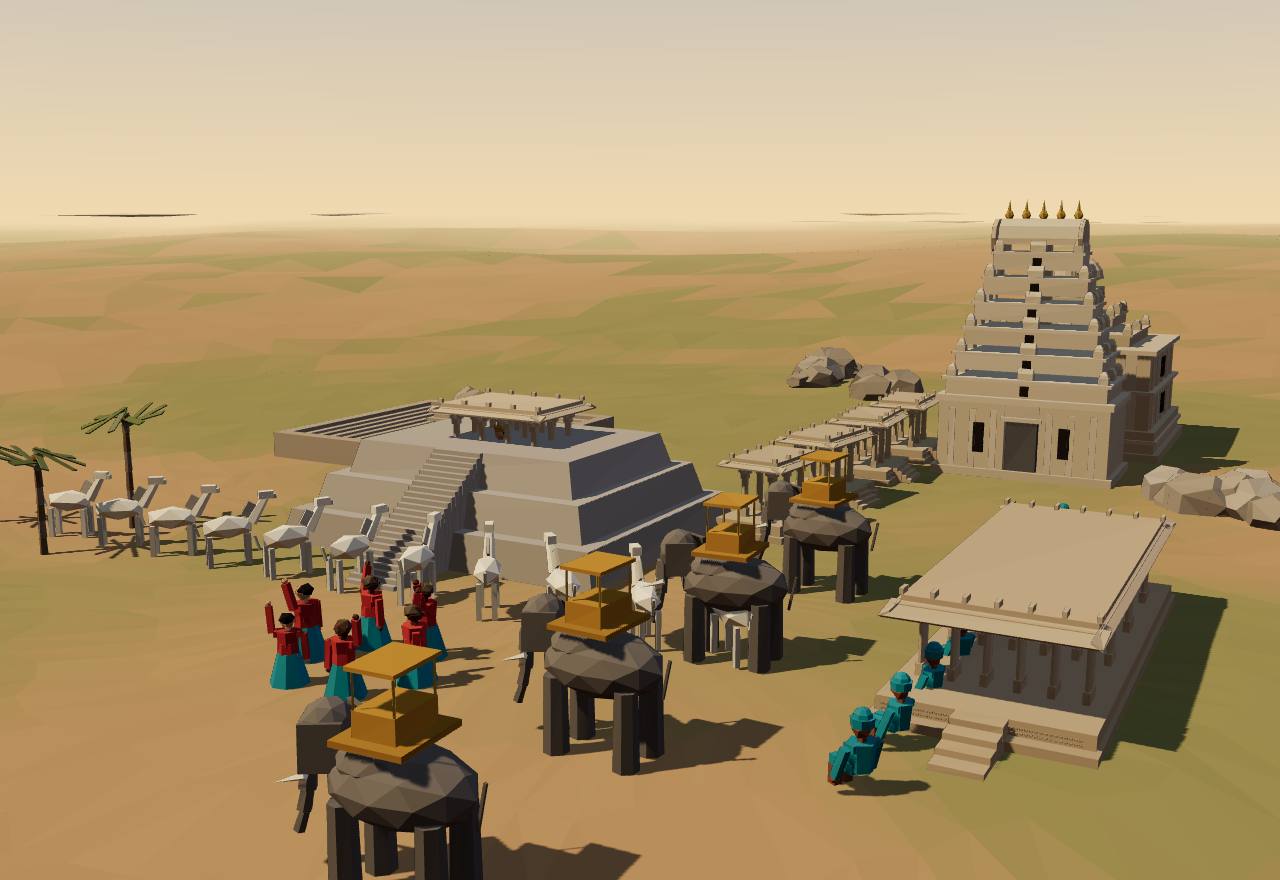
The Mahanavami at Vijayanagara, about 1520
The city is “generally supposed to have been founded in the year 1336”, Sewell wrote, and gave his reasons: an inscription of Harihara I dated 1340, and Ibn Battuta's account of a southern raid by Muḥammad bin Tughluq in 1334, which tallies with the tradition Nuniz recorded of the events before the foundation. 8 Debated Texts
Paes climbed a hill and could not see the whole city “because it lies between several ranges of hills”; what he saw “seemed to me as large as Rome”, with groves in the gardens of the houses, “many conduits of water” and lakes. 8 Consensus Texts
The feasts “begin on the 12th of September, and they last nine days, and take place at the king's palace”. The king watched from the House of Victory, “made when the king came back from the war against Orya”: a building on pillars carved as elephants, reached by stone staircases, with captains and chief men seated in verandahs round the square. 8 Consensus Texts Excavation
During the feasts “all these captains, who are thus like renters, must always attend the court”, Nuniz says; more than two hundred were always with the king, had to keep their full number of soldiers or lose their estates, and were “never suffered to settle themselves in cities or towns because they would there be beyond reach of his hand”. 8 Consensus Texts
“The kingdom of Bisnaga is divided between more than two hundred captains”: the king fixes the forces each must keep and the revenue each must pay “during the first nine days of the month of September”, gives no receipts, and ruins those who do not pay. 8 Consensus Texts
Under Achyuta Rāya, Nuniz reckons, the nobles must keep 600,000 foot and 24,000 horse; their lands yield 120 lakhs, “of which they must pay sixty to the King”, and of those sixty the king “does not enjoy a larger sum than twenty-five lakhs” after paying for his own horses, elephants and troops. 8 Debated Texts
Nuniz lists the king's officers: the minister, “the second person” in the kingdom, the treasurers, the commander of the palace guards and the master of the horse; “the King has no controller of the revenues nor other officers … but only the captains of his kingdom”. 8 Consensus Texts
Mahalingam: under the nāyankara system “the king was considered to be the owner of the soil”; nāyakas held land from him, paid “a fixed annual financial contribution to the imperial exchequer”, by Nuniz's account generally half their revenue, and kept troops for his wars. It “reminds us of the feudal organisation in mediaeval Europe”, but only in some respects. 15,8 Debated Texts
Noboru Karashima reports that “many nayakas were sent by the kings to Tamil Nadu from Karnataka or Andhra Pradesh as military leaders as well as administrators”, and sets out to prove that kings transferred them from place to place, which he calls a crucial point for the state's structure. 25 Debated Texts Read more: The Tamil country before the nāyakas
Seshat codes Vijayanagara (InVijay, 1336–1646) at 350,000–370,000 km² with about 25 million people, a capital of 100,000 to 1499 and 150,000–250,000 after, and a degree of centralisation coded as “loose”, “confederated” and “nominal” at once: the coders' own disagreement. Seshat Debated Survey
How power worked King · Heredity · Custom and kin
How power worked
- Who rules
- King Consensus
Why?
- How chosen
- Heredity Debated
Why?
- Limits on power
- Custom and kin Debated
Why?
- Scale
- Empire Consensus
Why?
- Claim to rule
- Divine mandate Debated
Why?
- Who has a say
- A narrow elite Consensus
Why?
Nuniz's captains: revenue, rent to the king, and the troops they kept
Data: Fernão Nuniz, written probably 1535–37, in Sewell's translation (1900), pp. 373–389
Nuniz names eleven of the “more than two hundred captains” among whom the kingdom was divided, and for each the lands, the revenue in gold pardaos, the rent paid to the king and the troops kept for him. His rule for the kingdom as a whole is half: 60 of 120 lakhs. The named captains pay a median of 33 % of their revenue; the minister Salvanayque owes a third. 8
| Captain | Revenue | To the king | Share | Foot | Horse | Elephants |
|---|---|---|---|---|---|---|
| Salvanayque the present minister Charamdodel, Nagapatio, Tamgor … Caullim (Coromandel, Negapatam, Tanjore) “obliged to give a third to the King”; Nuniz adds that he “never maintains the whole force” Sewell, p. 384–385 | 1,100,000 | a third | 33 % | 30,000 | 3,000 | 30 |
| Ajaparcatimapa minister of Crisnarao Hudogary, Condovim, Penagundim, Codegaral, Cidaota (Udayagiri, Kondavid, Penukonda) the foot-soldiers are Sewell's reading of a defective passage Sewell, p. 385–386 | 800,000 | 300,000 | 38 % | 25,000 | 1,500 | 40 |
| Gapanayque Rosyl, Tipar, Ticalo, Bigolom, on the border of the Ydallcão Sewell, p. 386 | 600,000 | 150,000 | 25 % | 20,000 | 2,500 | 20 |
| Lepapayque Vimgapor (Bankapur) Sewell, p. 386–387 | 300,000 | 80,000 | 27 % | 20,000 | 1,200 | 28 |
| Narvara treasurer of the jewels Ondegema, Diguoty, Darguem, Entarem, “bordering on the lands of Bisnaga” Sewell, p. 387 | 400,000 | 200,000 | 50 % | 12,000 | 600 | 20 |
| Chinapanayque the King's marshal Calalí, toward Cochin (Kalale, Sewell suggests) no elephants named Sewell, p. 387 | 300,000 | 100,000 | 33 % | 10,000 | 800 | – |
| Crisnapanayque Adsel, “a large city”, and other villages not named “as they have very difficult names” no elephants named Sewell, p. 387–388 | 20,000 | 7,000 | 35 % | 700 | 500 | – |
| Bajapanarque Bodial and Guiana, by Mangalore on the coast Sewell, p. 388 | 300,000 | 10,000 | 3 % | 10,000 | 800 | 15 |
| Mallpanarque chief master of the horse to Crisnarao Avaly, inland from Calicut no elephants named Sewell, p. 388 | 15,000 | 5,000 | 33 % | 6,000 | 400 | – |
| Adapanayque chief counsellor of the King Gate, “whence come the diamonds” precious stones excluded; diamonds over twenty mangelins go to the King. The same passage later says he “pays the King every year one hundred thousand”: 40,000 is the first figure given Sewell, p. 388–389 | 300,000 | 40,000 | 13 % | 8,000 | 800 | 30 |
| Bajapanayque Mumdoguel (Mudkal), taken from the Ydalcão Sewell, p. 389 | 400,000 | 150,000 | 38 % | 10,000 | 1,000 | 50 |
| The eleven named | 4,535,000 | 1,042,000of 3,435,000 | 30 % | 151,700 | 13,100 | 233 |
| All the nobles, by Nuniz's count Sewell, pp. 373–374 | 120 lakhs | 60 lakhs | 50 % | 600,000 | 24,000 | – |
The eleven keep 25 % of the foot and 55 % of the horse Nuniz says the nobles must maintain. Of the sixty lakhs paid, he adds, the king “does not enjoy a larger sum than twenty-five”, the rest going on his own 700-odd horses, 400 elephants and troops. Mahalingam reads the same figures as the nāyankara system's fixed contribution. 8,15
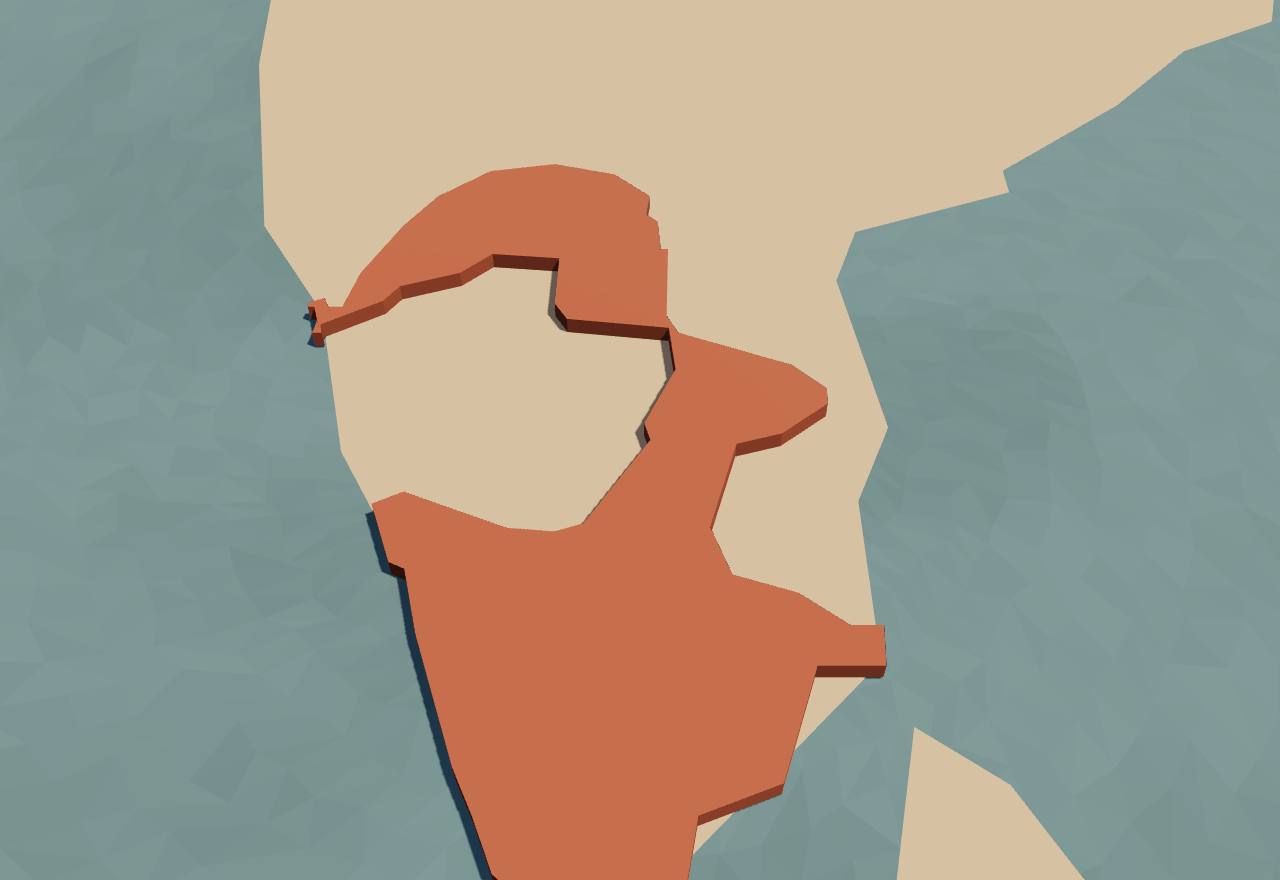
The Vijayanagara empire (Cliopatria), 1350–1550
Territory: Cliopatria (CC BY 4.0), simplified. Height fixed: population not coded in Seshat.
The Bahmani sultanate1347 CE – 1527Gulbarga (Kalaburagi)
In 1346 the amirs of the Deccan rose against Muḥammad bin Tughluq and chose a king from among themselves. The sultanate they founded ruled from Gulbarga and then Bidar until its provinces became kingdoms of their own.
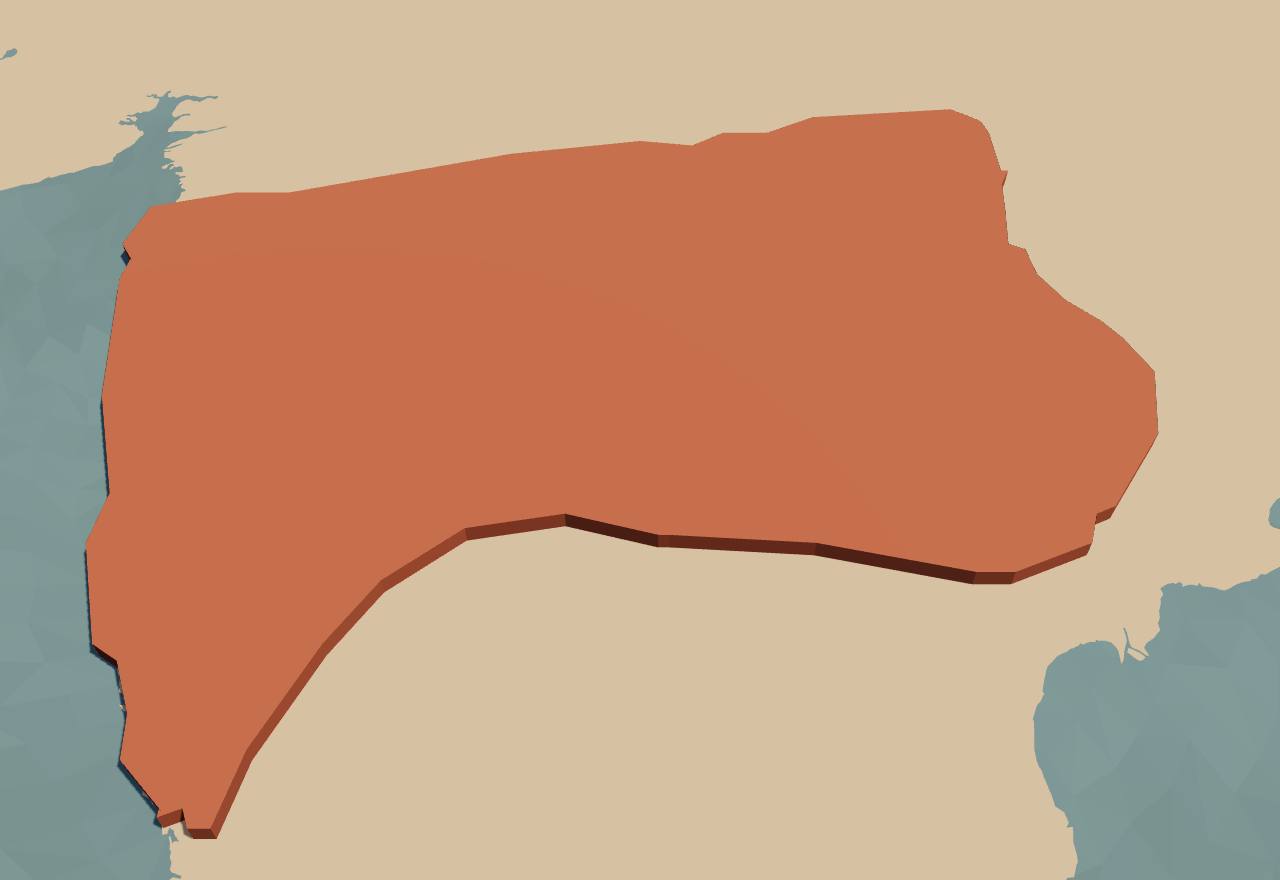
The Bahmani sultanate (Cliopatria), 1360–1490
Territory: Cliopatria (CC BY 4.0), simplified. Height fixed: population not coded in Seshat.
Sherwani: having taken Daulatabad's palace and citadel, the Deccani amirs “made history by electing one of their own number, Ismael as the first independent Sultan of the Deccan”, a senior amir of Deogir “in charge of 2,000 villages”. 26 Consensus Texts
The amirs, Sherwani argues, knew that risings against the sultan had been suppressed “for want of a definite assertion of independence”, and that “only an insurrection which a visible head elected unanimously had any chance of permanent success”. 26 Debated Texts
Ismā'īl then abdicated in favour of Zafar Khān, saying he had held the kingdom in trust for him; “the army as well as the concourse of the people present” unanimously chose Zafar Khān, crowned on 3 August 1347 at Daulatabad as 'Alā'-ud-dīn Ḥasan Bahman Shāh. 26 Consensus Texts
Sherwani himself warns against reading too much into the choice: “I do not think that there was an election of the so-called democratic type at all”, he notes against an earlier claim that there was. 26 Debated Texts
Aḥmad Shāh moved the capital from Gulbarga to Bidar, which Sherwani compares to Muḥammad bin Tughluq's choice of Daulatabad: Gulbarga was unsuited to a kingdom much enlarged in seventy-five years, and Bidar “much safer”. 26 Consensus Texts
Newcomers from Iran, Transoxiana and Iraq settled at the Bahmanis' invitation or on their own; the earlier northern colonists called them Āfāqīs, “Cosmopolitans”, and began to call themselves Dakhnīs, southerners, a rivalry that ran through the court. 26 Consensus Texts
Each provincial governor (tarafdār) had become “a small potentate”. The minister Maḥmūd Gāwān divided the four provinces into eight, took tracts from each into the royal domain, left each governor one fortress and had the commandants of the others appointed by the centre. He was executed on 5 April 1481, aged 73. 26 Consensus Texts
How power worked Sultan · Mixed · Custom and kin · 1 unknown
How power worked
- Who rules
- Sultan Consensus
Why?
- How chosen
- Mixed Debated
Why?
- Limits on power
- Custom and kin Debated
Why?
- Scale
- Territorial state Debated
Why?
- Claim to rule
- Unknown
Why?
Sherwani records a coronation by the king's preceptor in a mosque, but none of the sources read says on what the Bahmani claim to rule rested.
- Who has a say
- A narrow elite Consensus
Why?
Delhi from the Tughluqs to the Lodis1336 CE – 1526Delhi
Delhi's sultans after Muḥammad bin Tughluq were often chosen by their nobles and as often dropped by them. Timur's sack of 1398 left a small kingdom; the Lodi Afghans revived it until Babur came.

Delhi from the Tughluqs to the Lodis (Cliopatria), 1375–1526
Territory: Cliopatria (CC BY 4.0), simplified. Height fixed: population not coded in Seshat.
Muḥammad bin Tughluq died on 21 Muḥarram 752 H on the banks of the Indus, fourteen kos from Thatta, Barani records, with his army far from home and in despair. 21 Consensus Texts
As the leaderless army was plundered on its retreat, the chief men went to Fīrūz and “with one voice said, ‘Thou art the heir apparent and legatee of the late Sultan; he had no son …’”, and begged him to ascend the throne (Afif). 21 Consensus Texts
Fīrūz restored grants his predecessor had resumed and made new ones daily; Moreland judges that “in this reign … we come within measurable distance of the idea of a property-right in Grants”, an idea that did not last. 18 Debated Texts
In 1389 “the nobles at Delhi acclaimed Abu Bakr Shah as their king”; on Maḥmūd's death in 1413 they “transferred their allegiance to the strongest of their number, Daulat Khan Lodi”, until Khizr Khān took Delhi in 1414 and founded the Sayyid line (Haig). 14 Consensus Texts
The last Sayyid, 'Ālam Shāh, “freely and cheerfully resigned his throne to Buhlul as to an elder brother”, so that Bahlūl Lodī took Delhi in 1451 “not merely as the creature of a successful faction, but as the heir designate of a king who had voluntarily abdicated” (Haig). 14 Consensus Texts
On Sikandar Lodī's death in 1517 “the choice of the Lodi nobles fell upon his eldest son, Ibrahim”, while a faction pressed for a partition of the kingdom. Ibrāhīm was defeated and killed by Babur at Panipat on 18 April 1526 (Haig). 14 Consensus Texts
How power worked Sultan · Mixed · Council
How power worked
- Who rules
- Sultan Consensus
Why?
- How chosen
- Mixed Consensus
Why?
- Limits on power
- Council Debated
Why?
- Scale
- Territorial state Debated
Why?
- Claim to rule
- Force Debated
Why?
- Who has a say
- A narrow elite Consensus
Why?
Artefacts
 Model, not a scan
 Model, not a scan
In numbers
- Marks, by Seshat polity:
- Gupta Dynasty
- Gupta Empire
- Kanauj
- Gurjar
- Rashtrakuta Empire
- Chalukyas of Kalyani
- Gahadavala
- Hoysala Kingdom
- Kakatiya Dynasty
- Delhi Sultanate
- Delhi Sultanate
- Vijayanagara Empire
- Vijayanagara Empire
- Background bands, by phase:
- The Guptas
- Kanauj and the regional kingdoms
- Turks, Rajputs and the Deccan
- The Delhi Sultanate
- Vijayanagara and the sultanates
| Seshat polity | Years | Value |
|---|---|---|
| Gupta Dynasty | 320 CE – 515 CE (whole period) | 800,000–900,000 |
| Gupta Empire | 320 CE – 550 CE (whole period) | 800,000–900,000 |
| Rashtrakuta Empire | 753 CE – 973 CE (whole period) | 600,000 |
| Gurjar | 810 CE – 1030 CE (whole period) | 1,000,000 |
| Chalukyas of Kalyani | 973 CE – 1191 CE (whole period) | 600,000–7,000,000 |
| Gahadavala | 1085 CE – 1193 CE (whole period) | 300,000–350,000 |
| Hoysala Kingdom | 1108 CE – 1346 CE (whole period) | 100,000–200,000 |
| Kakatiya Dynasty | 1200 CE | 100,000 |
| Delhi Sultanate | 1206 CE – 1526 (whole period) | 2,800,000–3,200,000 |
| Delhi Sultanate | 1206 CE – 1526 (whole period) | 2,800,000–3,200,000 |
| Vijayanagara Empire | 1336 CE – 1646 (whole period) | 350,000–370,000 |
| Vijayanagara Empire | 1336 CE – 1646 (whole period) | 350,000–370,000 |
| Seshat polity | Years | Value |
|---|---|---|
| Rashtrakuta Empire | 753 CE – 973 CE (whole period) | 5,000,000–6,000,000 |
| Chalukyas of Kalyani | 1000 CE | 7,000,000–8,000,000 |
| Gahadavala | 1085 CE – 1193 CE (whole period) | suspected unknown |
| Chalukyas of Kalyani | 1100 CE | 7,500,000–8,500,000 |
| Vijayanagara Empire | 1336 CE – 1646 (whole period) | 25,000,000 |
| Vijayanagara Empire | 1336 CE – 1646 (whole period) | 25,000,000 |
| Seshat polity | Years | Value |
|---|---|---|
| Gupta Dynasty | 320 CE – 515 CE (whole period) | 150,000 |
| Gupta Empire | 320 CE – 550 CE (whole period) | 150,000 |
| Kanauj | 650 CE – 780 CE (whole period) | 120,000 |
| Rashtrakuta Empire | 753 CE – 973 CE (whole period) | 100,000 |
| Gurjar | 810 CE – 950 CE | 80,000 |
| Gurjar | 951 CE – 1030 CE | 72,000 |
| Chalukyas of Kalyani | 973 CE – 1191 CE (whole period) | 50,000–125,000 |
| Gahadavala | 1085 CE – 1193 CE (whole period) | 80,000–92,000 |
| Delhi Sultanate | 1206 CE – 1526 (whole period) | 200,000–400,000 |
| Delhi Sultanate | 1206 CE – 1526 (whole period) | 200,000–400,000 |
| Kakatiya Dynasty | 1300 CE | 83,000 |
| Vijayanagara Empire | 1337 CE – 1499 CE | 100,000 |
| Vijayanagara Empire | 1337 CE – 1499 CE | 100,000 |
| Vijayanagara Empire | 1500 – 1646 | 150,000–250,000 |
| Vijayanagara Empire | 1500 – 1646 | 150,000–250,000 |
| Seshat polity | Years | Value |
|---|---|---|
| Gupta Dynasty | 320 CE – 515 CE (whole period) | 9 |
| Gupta Empire | 320 CE – 550 CE (whole period) | 9 |
| Kanauj | 650 CE – 780 CE (whole period) | 5–6 |
| Rashtrakuta Empire | 753 CE – 973 CE (whole period) | 7 |
| Chalukyas of Kalyani | 973 CE – 1191 CE (whole period) | 5–6 |
| Gahadavala | 1085 CE – 1193 CE (whole period) | 3–7 |
| Hoysala Kingdom | 1108 CE – 1346 CE (whole period) | 2–5 |
| Kakatiya Dynasty | 1175 CE – 1324 CE (whole period) | 4 |
| Delhi Sultanate | 1206 CE – 1526 (whole period) | 9 |
| Delhi Sultanate | 1206 CE – 1526 (whole period) | 9 |
| Vijayanagara Empire | 1336 CE – 1646 (whole period) | 4–5 |
| Vijayanagara Empire | 1336 CE – 1646 (whole period) | 4–5 |
| Seshat polity | Years | Value |
|---|---|---|
| Gupta Dynasty | 320 CE – 515 CE (whole period) | 4–5 |
| Gupta Empire | 320 CE – 550 CE (whole period) | 4–5 |
| Rashtrakuta Empire | 753 CE – 973 CE (whole period) | 3 |
| Chalukyas of Kalyani | 973 CE – 1191 CE (whole period) | 3 |
| Gahadavala | 1085 CE – 1193 CE (whole period) | suspected unknown |
| Hoysala Kingdom | 1108 CE – 1346 CE (whole period) | 3 |
| Delhi Sultanate | 1206 CE – 1526 (whole period) | 6 |
| Delhi Sultanate | 1206 CE – 1526 (whole period) | 6 |
| Vijayanagara Empire | 1336 CE – 1646 (whole period) | 3–4 |
| Vijayanagara Empire | 1336 CE – 1646 (whole period) | 3–4 |
| Seshat polity | Years | Value |
|---|---|---|
| Gupta Dynasty | 320 CE – 515 CE (whole period) | 5 |
| Gupta Empire | 320 CE – 550 CE (whole period) | 5 |
| Kanauj | 650 CE – 780 CE (whole period) | 5–6 |
| Rashtrakuta Empire | 753 CE – 973 CE (whole period) | 5 |
| Chalukyas of Kalyani | 973 CE – 1191 CE (whole period) | 5–7 |
| Hoysala Kingdom | 1108 CE – 1346 CE (whole period) | 4–5 |
| Kakatiya Dynasty | 1175 CE – 1324 CE (whole period) | 5 |
| Delhi Sultanate | 1206 CE – 1526 (whole period) | 8 |
| Delhi Sultanate | 1206 CE – 1526 (whole period) | 8 |
| Vijayanagara Empire | 1336 CE – 1646 (whole period) | 5–6 |
| Vijayanagara Empire | 1336 CE – 1646 (whole period) | 5–6 |
Values as Seshat codes them: bands are ranges, dots single values, flat bars values given for a whole period, hatching “unknown”; from one Seshat polity to the next, marks alternate between a light tone and a darker one with dashed joining lines (the key above names each polity). Source: Seshat Global History Databank (Equinox-2020), CC BY 4.0; and the Seshat Databank, seshat-db.com (no licence stated; attribution).
Governance fingerprint
Seshat's institutional variables, phase by phase. Hover or focus a cell for the values and years.
- Present
- Inferred present
- Absent
- Inferred absent
- Unknown
- Not coded in Seshat
- Mixed: present in one Seshat polity or period, absent in another
Not coded in Seshat: Kanauj and the regional kingdoms: Harsha of Kanauj, Kanauj and the regional kingdoms: The Palas, Turks, Rajputs and the Deccan: Ghaznavids and Ghurids, Vijayanagara and the sultanates: The Bahmani sultanate, Vijayanagara and the sultanates: Delhi from the Tughluqs to the Lodis. The Seshat Databank has no polity for them, so their six axes rest on the cited scholarship alone.
The axes against Seshat
12 agree, 0 disagree.
Show the 12 pairs that agree
- Agree The Guptas: claim to rule coded “Divine mandate”, which implies rulers legitimated by gods present; Seshat has it present.
- Agree The Guptas: how chosen coded “Heredity”, which implies elite status hereditary present; Seshat has it present.
- Agree Kanauj and the regional kingdoms: The Gurjara-Pratiharas: claim to rule coded “Divine mandate”, which implies rulers legitimated by gods present; Seshat has it present.
- Agree Kanauj and the regional kingdoms: The Rashtrakutas: claim to rule coded “Divine mandate”, which implies rulers legitimated by gods present; Seshat has it present.
- Agree Kanauj and the regional kingdoms: The Rashtrakutas: how chosen coded “Heredity”, which implies elite status hereditary present; Seshat has it present.
- Agree Turks, Rajputs and the Deccan: The Rajput kingdoms: claim to rule coded “Divine mandate”, which implies rulers legitimated by gods present; Seshat has it present.
- Agree Turks, Rajputs and the Deccan: The Rajput kingdoms: how chosen coded “Heredity”, which implies elite status hereditary present; Seshat has it present.
- Agree Turks, Rajputs and the Deccan: The Chalukyas of Kalyani: claim to rule coded “Divine mandate”, which implies rulers legitimated by gods present; Seshat has it present.
- Agree Turks, Rajputs and the Deccan: The Chalukyas of Kalyani: how chosen coded “Heredity”, which implies elite status hereditary present; Seshat has it present.
- Agree The Delhi Sultanate: claim to rule coded “Divine mandate”, which implies rulers legitimated by gods present; Seshat has it present.
- Agree Vijayanagara and the sultanates: Vijayanagara: claim to rule coded “Divine mandate”, which implies rulers legitimated by gods present; Seshat has it present.
- Agree Vijayanagara and the sultanates: Vijayanagara: how chosen coded “Heredity”, which implies elite status hereditary present; Seshat has it present.
Only pairs where an axis value on its own implies a Seshat variable are compared; the rest is not counted as disagreement. 1 more pair has no Seshat value.
Source: Seshat Global History Databank (Equinox-2020), CC BY 4.0; Seshat Databank, seshat-db.com (no licence stated; attribution).
Compare
| Axis | North India and the Deccan: Guptas to Vijayanagara | India: After the cities: the Vedic age | The Tamil kingdoms: The Pallavas of Kanchi | The caliphates: The first four caliphs |
|---|---|---|---|---|
| Who rules | King | Chief | King | Caliph |
| How chosen | Heredity | Mixed | Heredity | Mixed |
| Limits on power | Custom and kin | Council | Council | Custom and kin |
| Scale | Empire | Confederation | Territorial state | Empire |
| Claim to rule | Divine mandate | Divine mandate | Divine mandate | Divine mandate |
| Who has a say | A narrow elite | A narrow elite | A narrow elite | A narrow elite |
Legacy
The iqṭā' outlived the sultans as the Mughal jāgīr: Moreland notes the word an assignment of revenue in the Mughal period went by the same word, “(along with tuyul) of the more familiar jagir”. 18 Consensus Texts
Vijayanagara's captains became dynasties. At Madurai, Sewell notes, Viśvanātha Nāyaka “founded an hereditary dynasty, though himself only a deputy of the crown”, and Muttu Krishnappa (1602–09) seems to have been the first there to take royal titles. 8 Consensus Texts Read more: The Tamil kingdoms
The city did not recover: the Italian traveller Cesare Federici, there in 1567, found that Tirumala Rāya had tried to repopulate it and failed. Haig writes that Tirumala was allowed to hold Anegondi as a vassal of Bijapur. 8,14 Consensus Texts
The argument over “Indian feudalism” carried into the study of modern India: Stein notes that its adherents include scholars of modern India who find in it “a proper basis for their twin concerns with the rise of nationalism and the development of capitalism”. 16 Debated Texts
See also forms of government and the country edition.
Sources
Bibliography
26 sources, numbered as cited: 5 papers · 8 books · 3 datasets · 10 primary sources
- Primary Fleet, J. F. (1888). Inscriptions of the Early Gupta Kings and their Successors (Corpus Inscriptionum Indicarum, vol. III). Calcutta: Superintendent of Government Printing (Digital Library of India scan, Internet Archive). Read in the text layer: the introduction on the Gupta era (pp. 25, 69), the Allahabad pillar (pp. 12–15), Junagadh (pp. 56–63), Bhitari, the Eran pillar of Budhagupta (pp. 88–90), the Meharauli iron pillar (pp. 139–142) and Yasodharman's Mandasor pillar (pp. 145–147). The texts are printed in Devanagari type; none is reproduced.
- Primary Beal, S. (trans.) (1884). Si-yu-ki: Buddhist Records of the Western World, translated from the Chinese of Hiuen Tsiang, vol. I. London: Trübner (Internet Archive scan). Read in the text layer: Kanyakubja and Harshavardhana (Siladitya), Book V, pp. 209–215.
- Dataset Bennett, J. S., Mutch, E., Tollefson, A., et al. (2025). Cliopatria - A geospatial database of world-wide political entities from 3400BCE to 2024CE. Scientific Data 12. Cliopatria: open geospatial dataset of over 1600 political entities, 3400 BCE–2024 CE.
- Book Fleet, J. F. (1882). The Dynasties of the Kanarese Districts of the Bombay Presidency from the Earliest Historical Times to the Musalman Conquest of A.D. 1318. Bombay: Government Central Press (Internet Archive scan). Read in the text layer: the Rāṣṭrakūṭas from Dantidurga to Kakka III and their overthrow by Taila II (pp. 32–40). Written before Elapura was identified with Ellora.
- Primary Kielhorn, F. (1897). No. 34. Khalimpur plate of Dharmapaladeva. Epigraphia Indica IV (1896–97), 243–254 (Digital Library of India scan, Internet Archive). Read in the text layer: the description of the plate and seal (p. 243), Kielhorn's remarks on the installation at Kanauj (p. 246) and the translation (pp. 251–254).
- Primary Elliot, H. M., Dowson, J. (eds.) (1869). The History of India, as Told by its Own Historians: The Muhammadan Period, vol. II. London: Trübner (Internet Archive scan). Read in the text layer: al-'Utbī on Kanauj (pp. 45–46), Minhāj-us-Sirāj's Ṭabaqāt-i Nāṣirī on Narain/Tarain (pp. 295–297) and the Delhi sultans to 1246 (pp. 301–346), and the appendix on Somnāt with Ibn al-Athīr (pp. 468–469). The chroniclers write as partisans; their wording is quoted as theirs.
- Book Lane-Poole, S. (1894). The Mohammadan Dynasties: Chronological and Genealogical Tables with Historical Introductions. Internet Archive scan. Read in the text layer: no. 105, the Sultans of Dehli 1206–1554 (pp. 295–303), whose hijri years and A.D. equivalents date the accession rows.
- Primary Sewell, R. (1900). A Forgotten Empire (Vijayanagar): A Contribution to the History of India. London: Swan Sonnenschein, with the chronicles of Domingo Paes and Fernão Nuniz translated (Internet Archive scan). Read in the text layer: the origin (pp. 16–24), Talikota and the sack (pp. 199–209), Paes on the city and the Mahanavami (pp. 256–278) and Nuniz on the court, the army and the captains (pp. 372–389).
- Book Sharma, R. S. (1965). Indian Feudalism: c. 300–1200. University of Calcutta (Internet Archive scan). Read in the text layer: chapter I (pp. 3–29: land grants, sāmantas), the Pratīhāra grants (pp. 79–80), chapter III on the Pālas, Pratīhāras and Rāṣṭrakūṭas (pp. 110–123) and the twelfth-century wars (pp. 158–159).
- Dataset The Metropolitan Museum of Art (2025). Gold Coin Showing King Chandragupta II as an Archer (1990.319.2). Collection record and Open Access photograph; Collection API metadata of 20 Dec 2025, read 16 Nov 2026 (isPublicDomain: true). Gold, ca. 376–414, diameter 3/4 in. (1.9 cm); Gift of Barbara Stoller-Miller, 1990. Source of the procedural coin model's size and design. Linked through the Collection API record because the collection page sits behind a bot check that answers scripts with 429; the page is https://www.metmuseum.org/art/collection/search/39406.
- Book Altekar, A. S. (1934). The Rashtrakutas and their Times. Poona: Oriental Book Agency (Digital Library of India scan, Internet Archive). Read in the text layer: Krishna I and Ellora (p. 46), Nāgabhaṭa II and Govinda III (pp. 63–65), political divisions (p. 136), kingship and succession (pp. 151–152), the army and Arab reports (pp. 246–248).
- Primary Elliot, H. M., Dowson, J. (eds.) (1867). The History of India, as Told by its Own Historians: The Muhammadan Period, vol. I. London: Trübner (Internet Archive scan). Read in the text layer: the merchant Sulaiman (pp. 3–5), al-Mas'ūdī on the Baūra of Kanauj (p. 23) and the editors' note on Mankir (pp. 355–356). Translations of the 1860s, with their editors' identifications.
- Primary Beal, S. (trans.) (1884). Si-yu-ki: Buddhist Records of the Western World, translated from the Chinese of Hiuen Tsiang, vol. II. London: Trübner (Internet Archive scan). Read in the text layer: Maharashtra and Pulakesi, Book XI, pp. 255–257.
- Book Haig, W. (ed.) (1928). The Cambridge History of India, vol. III: Turks and Afghans. Cambridge: Cambridge University Press (Internet Archive scan). Read in the text layer: the slave kings to the Lodis (chs. III–IX: accessions, depositions and deaths), Jaichand at Chandwar (p. 41) and the Rajput states (ch. XX, pp. 507–510). A survey of its time; its judgements of character are not repeated here.
- Book Mahalingam, T. V. (1940). Administration and Social Life under Vijayanagar. University of Madras (Digital Library of India scan, Internet Archive). Read in the text layer: amaram (p. 140 n. 28) and the nāyankara system (pp. 195–201).
- Paper Stein, B. (1991). The Segmentary State: Interim Reflections. In De la royauté à l'État dans le monde indien (Puruṣārtha 13), Éditions de l'EHESS, 217–238. Read in full on OpenEdition (free HTML; paragraph numbers ¶ are OpenEdition's): the definition of the segmentary state (¶ 11), the nadu as segment (¶ 7), the Chola core's 'highly centralized resource command' (¶ 15), the small royal standing force (¶ 34).
- Paper Talbot, C. (2001). The Kakatiya Political Network. In Precolonial India in Practice, New York: Oxford University Press, 126–173. Abstract read (Oxford Academic, via Crossref).
- Book Moreland, W. H. (1929). The Agrarian System of Moslem India: A Historical Essay with Appendices. Digital Library of India scan (Internet Archive). Read in the text layer: 'Alā'-ud-dīn's demand (pp. 32–34), Fīrūz Shāh (pp. 54–57) and Appendix B, the iqṭā' and the muqṭī' (pp. 216–220).
- Primary Sachau, E. C. (trans.) (1888). Alberuni's India: An Account of the Religion, Philosophy, Literature, Geography, Chronology, Astronomy, Customs, Laws and Astrology of India about A.D. 1030, vol. I. London: Trübner (Internet Archive scan). Read in the text layer: chapter I on Sabuktigin and Maḥmūd (p. 22).
- Primary Gibb, H. A. R. (trans.) (1929). Ibn Battúta: Travels in Asia and Africa 1325–1354. London: Routledge & Kegan Paul (the scan is the 1953 impression; Digital Library of India, Internet Archive). Read in the text layer: Delhi and Sultan Muḥammad bin Tughluq (pp. 193–208). Selections, translated by Gibb.
- Primary Elliot, H. M., Dowson, J. (eds.) (1871). The History of India, as Told by its Own Historians: The Muhammadan Period, vol. III. London: Trübner (Internet Archive scan). Read in the text layer: Barani's Tārīkh-i Fīrūz Shāhī on the accessions from Balban to Muḥammad bin Tughluq (pp. 97–236) and Shams-i Sirāj 'Afīf on Fīrūz Shāh's accession (pp. 266–267).
- Paper Kumar, S. (2009). The Ignored Elites: Turks, Mongols and a Persian Secretarial Class in the Early Delhi Sultanate. Modern Asian Studies 43(1), 45–77. Abstract read (Crossref).
- Dataset Wikidata contributors (2026). Coordinates of medieval Indian capitals and iqṭā' seats (items listed in the note). Wikidata (CC0), read 16 Nov 2026. P625 coordinates of Q1074330 (Qutb complex, Delhi), Q798839 (Budaun), Q1496277 (Gauḍa, Lakhnauti), Q861248 (Bulandshahr, medieval Baran), Q2672955 (Sirhind), Q11739 (Lahore), Q614890 (Kannauj), Q186040 (Ayodhya, Awadh), Q1707791 (Hansi), Q185453 (Multan), Q6367451 (Kara), Q88667786 (Daulatabad Fort), Q712521 (Basavakalyan, medieval Kalyāṇa), Q191771 (Manyakheta), Q26732 (Hampi), Q37112 (Kalaburagi, Gulbarga), Q461922 (Bidar). Town points, not the medieval walls.
- Paper Wagoner, P. B. (1996). “Sultan among Hindu Kings”: Dress, Titles, and the Islamicization of Hindu Culture at Vijayanagara. The Journal of Asian Studies 55(4), 851–880. Only the opening paragraph Crossref carries as the abstract was read.
- Paper Karashima, N. (2001). The Family of Mallappa Nayaka: Transferability of vijayanagar Nayakas in Tamil Nadu. The Medieval History Journal 4(1), 35–42. Abstract read (Crossref).
- Book Sherwani, H. K. (1946). The Bahmanis of the Deccan. Digital Library of India scan (Internet Archive). Read in the text layer: the rising of 1346–47 (pp. 29–37 and the notes to ch. 3), the Newcomers or Āfāqīs (ch. 5) and the move to Bidar (p. 183) and Maḥmūd Gāwān's reforms and death (pp. 323–336).
Quantitative values from the Seshat Global History Databank (Equinox-2020), licensed CC BY 4.0. Dataset: Seshat Equinox Packaged Data (v.1). See also Seshat: The Global History Databank (Turchin et al. 2015).
Values for polities Equinox-2020 does not cover come from the Seshat Databank at seshat-db.com (Seshat: Global History Databank), snapshotted from its API on 2026-11-16. No licence is stated on seshat-db.com; used with attribution. Snapshot: Seshat Databank API (seshat-db.com), social-complexity and general variables.